




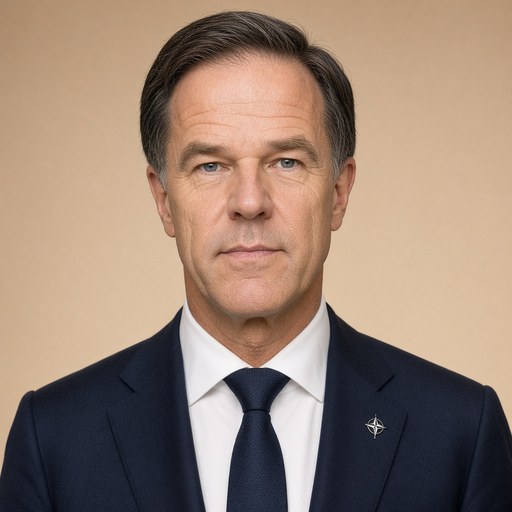
TV address by Prime Minister Mark Rutte on the lockdown
 Mark Rutte · Prime Minister of the Netherlands
- Context
- Rutte addressed the Dutch nation in a televised speech on 14 December 2020 to announce a strict five-week lockdown due to rapidly rising COVID-19 infection rates.
- Main themes
- COVID-19 lockdown announcement, coronavirus infection rates, public health measures, Christmas restrictions, economic hardship, mental health and loneliness, vaccine hope, national resilience, hospital capacity, mortality statistics
- Duration
- ~20 min
- Words
- 2,443
- Sentences
- 187
- Readability
- 66
- Grade
- 7.1
- Syntax
- 2.67
- Vocabulary
- 1.90
Translated from Dutch
The broad sphere of national life a sentence belongs to. Every sentence has an Arena, so it is the denominator the other indices are read against.
Other187 sentences in 78 paragraphs
Good evening,
When I gave my first television address about corona nearly 9 months ago, I really hoped it would also be the last. And for a long time, it seemed that way. But unfortunately, I must once again address you in this manner today. With yet another significant message.
Less than a week ago, I said in the press conference that we were at a crossroads. I mentioned that stricter measures were conceivable if the infection rates continued to rise.
And that is unfortunately exactly what we have been witnessing at a rapid pace since then. The coronavirus is spreading even faster than we anticipated last week. And therefore, the Netherlands will go into lockdown for a period of at least 5 weeks. The Netherlands is shutting down.
This means that we will close all places where people gather in groups, with a few exceptions that are necessary to keep society functioning or to protect vulnerable individuals. Everything is aimed at minimizing the number of contacts.
Because without contact, the virus cannot spread.
We all still remember the images from this spring. Empty highways, empty trains and buses, empty offices and classrooms, empty shopping streets. We need to return to that.
I want to explain to you today why this is necessary. And I also want to take you step by step through the various measures.
But first, I need to get a few things off my chest. Because we, as a cabinet, are very aware of how intense and far-reaching the decision we are making today is. Especially so close to Christmas.
2020 has become a year of mourning, loss, and sadness for many people. Because they have lost a loved one to corona. Because they have been ill themselves and are still not back to normal. Because they are losing their jobs or seeing their businesses go under, for example in the hospitality sector.
We see young people who have to put their future plans on hold. We see elderly individuals who are afraid of getting sick. And we see stress and loneliness as major and growing problems across all generations.
We all feel and understand: especially after this year, the need to gather around the Christmas tree, for simple and real human contact, is greater than ever. And that is why I want to ask all of you to keep an eye out for those who are struggling during Christmas, within all the limitations. For people who are sad. For people who are alone. Attention for one another helps us get through this miserable period.
That we will get through this is certain for me. Because of the vaccine that is coming, but even more so because of the resilience we have shown together.
Of course, we are all imperfect humans. And we all find it difficult to adhere 100 percent, always and everywhere, to the rules. That is often a topic of conversation among people, online and in the media – and I understand that.
But what I also see is that the vast majority of the Dutch people realize very well that we must protect ourselves and each other by adjusting our behavior. I see an incredible number of people trying to make the best of it. People who keep their spirits up and help others not to lose hope. We are experiencing something unprecedented with 17 million people, something that is greater than we have ever experienced in peacetime, and yet we are getting through it. It is important to keep seeing that, and it also helps us to face the next phase.
The point is: we must, as humans, be alert throughout the day, dozens or hundreds of times, to keep the virus at bay. The virus only needs to be lucky once to spread, and we must be lucky with every contact.
That is an unequal struggle. And it is exactly what we are looking at now. Because the virus is spreading – and far too often. Every day, an average of 60 people die from corona. Every day, we record an average of about 9,000 new infections. That is a full Kuip in less than 6 days.
The numbers in hospitals and nursing homes are also rising. In the second wave, more people are being hospitalized than in the first wave.
I know: numbers are abstract. And they certainly do not tell the whole story. But the reality is that more than a million regular treatments in hospitals have been postponed. Imagine waiting for a treatment.
The reality is that the people in hospitals and nursing homes have been running on empty for three months. They are really stretched thin. And the flu season has yet to begin.
And the reality is also that we are not dealing with an innocent flu, as some – for example, the demonstrators outside still think, but with a virus that can hit everyone hard. So not just the very elderly among us.
By now, about 30,000 people with corona have been hospitalized, of which 6,000 were in intensive care. Of those 6,000, the group under 50 years old was 2.5 times larger than the group over 80.
The harsh truth is that almost all of these 6,000 people would have died if they had not been treated in intensive care. And that they almost without exception continue to experience shortness of breath, extreme fatigue, and other complaints long after being discharged from the hospital.
That is what corona does. That is why it is so important that healthcare remains accessible. That there is a bed for you when you need it.
And that is also why I want to say once again to all the workers in hospitals, nursing homes, home care, and public health services: thank you.
A lot is being asked of all of us during this time, but from you the most.
I have, we all have, great admiration for you.
(...)
That is the background of the lockdown in brief. We have no choice: the number of contacts between people must decrease. Everything must now be focused on that.
The next question is: what will the lockdown look like?
It involves a large package of measures and urgent advice that will take effect tomorrow and will apply at least until Tuesday, January 19. In the week before that, on Tuesday, January 12, Hugo de Jonge and I will hold a press conference to explain what things will look like after the 19th. For schools, for practical reasons, this Wednesday will be the starting date and Monday, January 18, will be the provisional end date.
I have categorized the measures for clarity into 7 points, and I will go through the list with you completely. I will start with the most far-reaching decisions.
First: from Wednesday, December 16, until at least Monday, January 18, distance education will be the norm – from primary education to universities. Just like this spring.
This is, of course, a significant decision for teachers, for students, and for parents. But it is also an unavoidable decision.
Just like this spring, we will make a few exceptions, including for students in their final year, for practical education, and for the personal guidance of students who need special attention.
Childcare will also remain open only for vulnerable children and for children of parents with crucial professions. So, for example, for people in healthcare, the police, or public transport. Again: just like this spring.
Second, starting tomorrow morning, all non-essential shops will close. Only shops for basic necessities will remain open.
These include supermarkets, bakers, butchers, and other food stores, including weekly markets.
They also include drugstores, dry cleaners, opticians, and home care shops.
But all clothing boutiques, hardware stores, department stores, furniture stores, garden centers, electronics stores, shops for household goods, and anything else you can think of must close their doors.
Special arrangements will be made for hardware stores to pick up pre-ordered items, as sometimes things break at home. And of course, shops can continue to deliver.
This is an incredibly tough message for many entrepreneurs, but given the sometimes extreme crowds in shopping streets in large cities, we must make this decision now. Of course, we will do what is necessary to support entrepreneurs and preserve jobs. We have a substantial support package for that, which was expanded last week and is flexible: the more loss of revenue, the more support. From tomorrow until December 27, it will also be possible to apply for subsidies to pay your staff – the so-called NOW scheme.
And we will continue to look in the coming period at what can be done and what is necessary to ensure that as few businesses as possible go under.
Third, starting tomorrow, all publicly accessible locations will be closed. Indoors and outdoors. This really includes a lot. For example, zoos and amusement parks, museums and Christmas markets, cinemas and theaters, casinos and saunas.
In this category, there are a few exceptions. Hotels can remain open, but starting tomorrow without restaurant service or room service.
Too many people went to a hotel just to eat out, with all the associated risks.
Libraries will close, but picking up books is allowed.
Banks, municipal offices, and locations where funerals take place will remain open.
And in community centers, activities can only take place for vulnerable groups in the coming weeks.
For contact professions, we will make a distinction between medical and non-medical professions. Dentists, physiotherapists, and midwives may keep their practices open. Unfortunately, hairdressers, nail salons, and masseurs must close their doors again.
Fourth: the urgent advice is to receive no more than 2 guests aged 13 and over at home per day. We do make an exception for Christmas. On December 24, 25, and 26, the maximum remains 3, excluding children under 13. So on those 3 days, a little more is allowed, but to be honest: Christmas will unfortunately remain modest.
And if you have symptoms, you must of course stay home. No one wants to infect family or friends. If you do visit, wash your hands thoroughly and maintain a distance of one and a half meters. Those basic rules remain crucial.
Also, starting tomorrow, there will be a maximum group size of 2 outdoors, unless you are out with your own household. So walking together is allowed, but not with more than 1 friend. And of course, also at a distance of one and a half meters.
Fifth: sports. Starting tomorrow, gyms, swimming pools, and sports halls will close, so all indoor sports locations. Outdoor sports locations can remain open, and young people up to 18 years old can continue to train in teams outdoors. But from 18 years old, a maximum of 2 people at a distance of one and a half meters applies, no team training, no matches, no group lessons, and no competitions. And going for a run or cycling alone is of course always possible and is also recommended.
Sixth: travel. The urgent advice is and remains: stay home as much as possible and do not make unnecessary trips. And of course, if you have rented a holiday home somewhere in the Netherlands around the holidays, you can certainly go there. But once you are there, the same rules apply as at home. So no unnecessary outings.
For non-essential travel abroad, the urgent advice is also: do not do it and do not book a trip for the period until mid-March. That was previously mid-January. The risks and uncertainties are simply too great.
And we will also ask our neighboring countries to discourage travel to the Netherlands. Starting tomorrow, all citizens from non-EU countries must provide a negative test when coming to our country from outside Europe.
Seventh and finally, the very urgent advice: work from home unless it is really not possible. We see from all the data we have that this advice is being followed much less than in the spring. And I understand well: at some point, the walls of your home office close in on you. We miss contact with colleagues.
And yet we must all reduce the number of travel movements and contact moments related to work. Too much is at stake. Too many infections are occurring at work.
I therefore make that call once again, also to employers. Ensure that your people can work from home, give them that opportunity, and make arrangements about it.
And this means that public transport is only for necessary travel. Once again: just like this spring.
And I say openly: there can be a long discussion about each of these measures, about every location, every profession, every target group. Because with us, it can still be quite safe with some adjustments, right? There haven’t been any infections here, right? Or what is the contribution of this specific group to the spread of the virus?
These are all understandable questions and arguments. And if the numbers had decreased in the last few weeks instead of rising, we would have asked ourselves these kinds of questions to see where perhaps a little more could be allowed.
But that is not the situation we are in. We do not have that luxury. It is now: the fewer contacts, the better.
We must do everything now. We must bite through this very bitter apple before things get better again.
And yes, it will get better. There will come a moment when we leave corona behind us. When our lives will return to normal, with very few or no restrictions.
That is not immediate. It is not over in a week or a month. But with the vaccine, 2021 will indeed be a year of hope and light at the end of the tunnel.
(…)
I can imagine that many of you have practical questions after this speech.
Because which professions are crucial?
Can my shop remain open?
Which contact professions fall into which category?
For all those questions, I refer you to rijksoverheid.nl. There you will find as many answers as possible, or you will be further assisted.
What matters in the coming weeks is even more resilience. It sounds so simple, limit your contacts as much as possible, but how difficult it is.
Continue to help each other. Also, remain patient with one another and with the people in healthcare and other places who are working so incredibly hard for all of us day in and day out.
And make it, despite all the restrictions, a beautiful and warm Christmas. That is my wish for you all.
We will get through this. Together. And for each other.
Thank you.
The original Dutch. The tags above are read on the English translation's sentences.
Goedenavond,
Toen ik bijna 9 maanden geleden voor het eerst een televisietoespraak hield over corona hoopte ik heel erg dat het ook voor het laatst zou zijn. En daar leek het ook lang op. Maar helaas moet ik mij vandaag opnieuw op deze manier tot u richten. Met opnieuw een ingrijpende boodschap.
Minder dan een week geleden zei ik in de persconferentie nog dat we op een tweesprong stonden. Ik zei toen dat strengere maatregelen denkbaar waren als de besmettingscijfers verder zouden stijgen.
En dat is helaas precies wat we sindsdien in sneltreinvaart zien gebeuren. Het coronavirus grijpt nog sneller om zich heen dan waar we vorige week mee rekenden. En daarom gaat Nederland voor een periode van in ieder geval 5 weken in lockdown. Nederland gaat op slot.
Dat betekent dat we alle plekken sluiten waar mensen in groepen samenkomen, met een paar uitzonderingen die nodig zijn om de samenleving te laten draaien of kwetsbare mensen te beschermen. Alles is erop gericht het aantal contacten tot een minimum te beperken.
Want zonder contact kan het virus niet overspringen.
We herinneren ons allemaal nog de beelden van dit voorjaar. Lege snelwegen, lege treinen en bussen, lege kantoren en schoolklassen, lege winkelstraten. Daar moeten we naar terug.
Ik wil u vandaag uitleggen waarom dat nodig is. En ik wil u ook stap voor stap meenemen door de verschillende maatregelen.
Maar eerst moeten mij een paar dingen van het hart. Want we realiseren ons als kabinet heel goed hoe heftig en ingrijpend het besluit is dat we vandaag nemen. Zeker zo vlak voor Kerst.
2020 is voor veel mensen een jaar geworden van rouw, verlies en verdriet. Omdat ze een geliefde aan corona hebben verloren. Omdat ze zelf ziek zijn geweest en nog steeds niet de oude zijn. Omdat ze hun baan kwijt raken of hun bedrijf over de kop zien gaan, bijvoorbeeld in de horeca.
We zien jonge mensen die hun toekomstplannen in de wacht moeten zetten. We zien ouderen die bang zijn om ziek te worden. En we zien stress en eenzaamheid als grote en groeiende problemen door alle generaties heen.
We voelen en begrijpen allemaal: juist na dit jaar is de behoefte aan samen rond de kerstboom, aan gewoon en echt menselijk contact, groter dan ooit. En daarom wil ik u allemaal vragen rond de Kerst, binnen alle beperkingen, oog te blijven houden voor mensen die het zwaar hebben. Voor mensen die verdrietig zijn. Mensen die alleen zijn. Aandacht voor elkaar helpt ons door deze ellendige periode heen te komen.
Dat we er doorheen komen, staat voor mij vast. Vanwege het vaccin dat eraan komt, maar meer nog vanwege de veerkracht die we met elkaar hebben laten zien.
Natuurlijk, we zijn allemaal mensen die niet perfect zijn. En we vinden het allemaal moeilijk ons 100 procent, altijd en overal, aan de regels te houden. Daar gaat het ook veel over in gesprekken tussen mensen, online en in de media – en dat snap ik.
Maar wat ik ook zie is dat het overgrote deel van de Nederlanders zich heel goed realiseert dat we onszelf en elkaar moeten beschermen door ons gedrag aan te passen. Ik zie ongelooflijk veel mensen die er het beste van proberen te maken. Mensen die de moed erin houden en die andere mensen helpen de moed niet te verliezen. We maken met 17 miljoen mensen iets mee dat ongekend is, iets dat groter is dan we ooit in vredestijd hebben meegemaakt, en toch slaan we ons er doorheen. Het is goed dat te blijven zien en het helpt ook de volgende fase aan te kunnen.
Het punt is: wij moeten als mensen de hele dag door, tientallen of honderden keren, alert zijn om het virus op afstand te houden. Het virus hoeft maar 1 keer geluk te hebben om over te springen en wij moeten bij elk contact geluk hebben.
Dat is een ongelijke strijd. En het is precies waar we nu naar kijken. Want het virus springt over – en veel te vaak. Elke dag overlijden gemiddeld 60 mensen aan corona. Elke dag noteren we gemiddeld zo’n 9.000 nieuwe besmettingen. Dat is een volle Kuip in minder dan 6 dagen.
Ook in de ziekenhuizen en verpleeghuizen stijgen de cijfers. In de 2e golf komen meer mensen in het ziekenhuis terecht dan in de eerste golf.
Ik weet: getallen zijn abstract. En ze vertellen ook zeker niet het hele verhaal. Maar de realiteit is dat inmiddels meer dan een miljoen reguliere behandelingen in het ziekenhuis zijn uitgesteld. Het zal je maar overkomen als je op een behandeling zit te wachten.
De realiteit is dat de mensen in de ziekenhuizen en verpleeghuizen alweer drie maanden op hun tandvlees lopen. De rek is er echt uit. En dan moet het griepseizoen nog beginnen.
En de realiteit is ook dat we niet te maken hebben met een onschuldige griep, wat sommigen – bijvoorbeeld de demonstraten hierbuiten nog steeds denken, maar met een virus dat iedereen hard kan raken. Dus niet alleen de alleroudsten onder ons.
Inmiddels hebben ongeveer 30.000 mensen met corona in het ziekenhuis gelegen waarvan
6000 op de intensive care. Van die 6000 was de groep jonger dan 50 jaar 2,5 keer groter dan de groep boven de 80.
De harde waarheid is dat bijna al deze 6000 mensen zouden zijn overleden als ze niet op de intensive care behandeld waren. En dat ze bijna zonder uitzondering nog lang na hun ontslag uit het ziekenhuis te maken hebben met kortademigheid, extreme moeheid en andere klachten.
Dat is wat corona doet. Dat is waarom het zo belangrijk is dat de zorg toegankelijk blijft. Dat er een bed voor je is als je dat nodig hebt.
En dat is ook waarom ik vandaag nog een keer tegen alle werkers in de ziekenhuizen, in de verpleeghuizen, in de thuiszorg en bij de GGD’s wil zeggen: dank jullie wel.
Er wordt van ons allemaal veel gevraagd in deze tijd, maar van jullie wel het meest.
Ik heb, wij allemaal hebben, grote bewondering voor jullie.
(...)
Tot zover in het kort de achtergrond van de lockdown. We hebben geen keus: het aantal contacten tussen mensen moet omlaag. Daar moet nu alles op gericht zijn.
De volgende vraag is: hoe ziet de lockdown er dan uit?
Het gaat alles bij elkaar om een groot pakket maatregelen en dringende adviezen die morgen ingaan en die in ieder geval gelden tot en met dinsdag 19 januari. In de week daarvoor, op dinsdag 12 januari, zullen Hugo de Jonge en ik in een persconferentie vertellen hoe het er na de 19e uit gaat zien. Voor scholen geldt om praktische redenen aanstaande woensdag als ingangsdatum en maandag 18 januari als voorlopige einddatum.
Ik heb de maatregelen voor de overzichtelijkheid ingedeeld in 7 punten en ik loop de lijst helemaal met u langs. Ik begin met de meest ingrijpende besluiten.
Ten 1e: vanaf woensdag 16 december tot tenminste maandag 18 januari wordt onderwijs op afstand de norm – van het primair onderwijs tot en met de universiteiten. Net als dit voorjaar.
Dit is natuurlijk een ingrijpend besluit, voor docenten, voor leerlingen en studenten, en voor ouders. Maar het is ook een onvermijdelijk besluit.
Net als dit voorjaar, maken we wel een paar uitzonderingen, onder andere voor leerlingen in het examenjaar, voor praktijkonderwijs en voor de persoonlijke begeleiding van leerlingen die speciale aandacht nodig hebben.
Ook de kinderopvang blijft alleen open voor kinderen die kwetsbaar zijn en voor kinderen van ouders met cruciale beroepen. Dus bijvoorbeeld voor de mensen in de zorg, bij de politie of in het openbaar vervoer. Ook weer: net als dit voorjaar.
Ten 2e gaan vanaf morgenochtend alle niet-noodzakelijke winkels dicht. Alleen de winkels voor 1e levensbehoeften blijven open.
Dat zijn dus de supermarkten, de bakkers, de slagers en andere levensmiddelenzaken, inclusief de weekmarkten.
Het zijn ook de drogisterijen, stomerijen, opticiens en thuiszorgwinkels.
Maar verder moeten dus alle kledingboetieks, bouwmarkten, warenhuizen, meubelzaken, tuincentra, elektronicazaken, winkels voor huisraad en wat u verder ook maar kunt bedenken de deuren sluiten.
Speciaal voor bouwmarkten wordt het wel mogelijk vooraf bestelde spullen af te halen, omdat er ook wel eens iets kapot gaat in huis. En natuurlijk kunnen winkels gewoon blijven bezorgen.
Dit is een ongelooflijk harde boodschap voor heel veel ondernemers, maar zeker gezien de soms extreme drukte in de winkelstraten in de grote steden, moeten we dit besluit nu nemen. Uiteraard doen we wat nodig is om ondernemers te steunen en banen te behouden. Daar hebben we een fors steunpakket voor dat vorige week is uitgebreid en dat mee-ademt : hoe meer omzetverlies, hoe meer steun. Vanaf morgen tot en met 27 december is het ook weer mogelijk subsidie aan te vragen waarmee je je personeel door kunt betalen - de zogeheten NOW-regeling.
En ook verder zullen we de komende tijd blijven kijken wat kan en nodig is om te zorgen dat zo min mogelijk bedrijven omvallen.
Ten 3e zijn vanaf morgen alle publiek toegankelijke locaties gesloten. Binnen en buiten. Dit omvat dus echt heel veel. Bijvoorbeeld dierentuinen en pretparken, musea en kerstmarkten, bioscopen en theaters, casino’s en sauna’s.
In deze categorie zijn er een paar bijzonderheden. Hotels kunnen openblijven, maar vanaf morgen zonder restaurantfunctie of roomservice.
Teveel mensen gingen naar een hotel alleen maar om uit eten te gaan, met alle risico’s van dien.
Bibliotheken gaan dicht, maar boeken afhalen mag wel.
Banken, gemeentehuizen en locaties waar uitvaarten plaatsvinden blijven open.
En in wijkcentra kunnen de komende weken alleen activiteiten plaatsvinden voor kwetsbare groepen.
Voor de contactberoepen maken we een knip tussen de medische en niet-medische beroepen. De tandartsen, fysiotherapeuten en verloskundigen mogen de praktijk openhouden. De kappers, nagelstudio’s en masseurs moeten de deur helaas weer sluiten.
Ten 4e: het dringende advies wordt thuis per dag niet meer dan 2 gasten vanaf 13 jaar te ontvangen. We maken wel een uitzondering voor de Kerst. Op 24, 25 en 26 december blijft 3 het maximum, kinderen onder 13 jaar uitgezonderd. Op die 3 dagen kan er dus net iets meer, maar eerlijk is eerlijk: Kerst blijft helaas sober.
En als je klachten hebt, blijf je natuurlijk thuis. Niemand wil familie of vrienden besmetten. Ga je wel op bezoek, dan was je je handen stuk en houd je anderhalve meter afstand. Die basisregels blijven cruciaal.
Ook geldt vanaf morgen buiten een maximale groepsgrootte van 2, tenzij je op pad gaat met het eigen huishouden. Dus samen wandelen kan, maar niet met meer dan 1 vriend of vriendin. En uiteraard ook op anderhalve meter afstand
Ten 5e: de sport. Vanaf morgen sluiten de sportscholen, zwembaden en sporthallen, dus alle binnensportlocaties. Buitensportlocaties kunnen openblijven en jongeren tot 18 jaar kunnen buiten ook blijven trainen in teamverband. Maar vanaf 18 jaar geldt een maximum van 2 mensen op anderhalve meter, geen teamtrainingen, geen wedstrijden, geen groepslessen en geen competitie. En een rondje in je eentje hardlopen of fietsen kan natuurlijk altijd en is ook aan te raden.
Ten 6e: reizen. Het dringende advies is en blijft: blijf zoveel mogelijk thuis en maak geen onnodige reizen. En natuurlijk, als je rond de feestdagen ergens in Nederland een huisje hebt gehuurd, kun je daar best heen. Maar als je daar eenmaal bent, gelden wel dezelfde regels als thuis. Dus geen onnodige uitstapjes.
Voor niet-noodzakelijke reizen naar het buitenland geldt ook het dringende advies: doe dat niet en boek geen reis voor de periode tot half maart. Dat was eerder half januari. De risico’s en onzekerheden zijn gewoon te groot.
En we zullen natuurlijk ook onze buurlanden vragen het reizen naar Nederland te ontmoedigen. Vanaf morgen moeten sowieso alle burgers uit niet EU-landen een negatieve test kunnen overleggen als zij van buiten Europa naar ons land komen.
Ten 7e en als laatste het zeer dringende advies: werk thuis tenzij het echt niet anders kan. We zien uit alle gegevens die we hebben dat dit advies veel minder goed wordt nageleefd dan in het voorjaar. En ik snap goed: op een gegeven moment komen de muren van je thuiskantoor op je af. We missen het contact met collega’s.
En toch moeten we met zijn allen het aantal reisbewegingen en contactmomenten die met werk te maken hebben, terugdringen. Er staat teveel op het spel. Er vinden op het werk teveel besmettingen plaats.
Die oproep doe ik daarom nog een keer, ook in de richting van werkgevers. Zorg dat uw mensen thuis kunnen werken, geef ze die mogelijkheid en maak daar afspraken over.
En daar hoort bij dat het openbaar vervoer er alleen is voor noodzakelijke reizen. Nog een keer: net als dit voorjaar.
En ik zeg in alle openheid: over elk van deze maatregelen, over elke locatie, elk beroep, elke doelgroep valt een lange discussie te voeren. Want bij ons kan het met wat aanpassingen toch best veilig? Bij ons zijn toch geen besmettingen geweest? Of wat is nou de bijdrage van specifiek deze groep aan de verspreiding van het virus?
Het zijn allemaal begrijpelijke vragen en argumenten. En als de cijfers de laatste weken zouden zijn gedaald in plaats van gestegen, zouden we onszelf dit soort vragen ook hebben gesteld om te kijken waar misschien weer iets meer zou kunnen.
Maar dat is niet de situatie waarin we zitten. Die luxe hebben we niet. Het is nu: hoe minder contacten, hoe beter.
We moeten nu alles doen We moeten door deze heel zure appel heen bijten, voordat het weer beter wordt.
En ja, het wordt beter. Er komt een moment dat we corona achter ons laten. Dat ons leven weer gewoon wordt, met heel weinig of geen beperkingen.
Dat is niet meteen. Het is ook niet over een week of over een maand. Maar met het vaccin wordt 2021 wel een jaar van hoop en van licht aan het einde van de tunnel.
(…)
Ik kan me voorstellen dat velen van u na dit verhaal met praktische vragen zitten.
Want welke beroepen zijn cruciaal?
Mag mijn winkel wel open blijven?
Welke contactberoepen vallen in welke categorie?
Voor al die vragen verwijs ik naar rijksoverheid.nl. Daar vindt u zoveel mogelijk antwoorden, of u wordt verder geholpen.
Waar het de komende weken op aankomt, is nog meer veerkracht. Het klinkt zo eenvoudig, beperk zoveel mogelijk je contacten, maar wat is het moeilijk.
Blijf elkaar daarbij helpen. Blijf ook geduldig naar elkaar en naar de mensen die in de zorg en op andere plekken dag in dag uit zo verschrikkelijk hun best doen voor ons allemaal.
En maak er, ondanks alle beperkingen, een mooie en warme Kerst van. Dat wens ik u allemaal toe.
We komen hier doorheen. Met elkaar. En voor elkaar.
Dank u wel.