




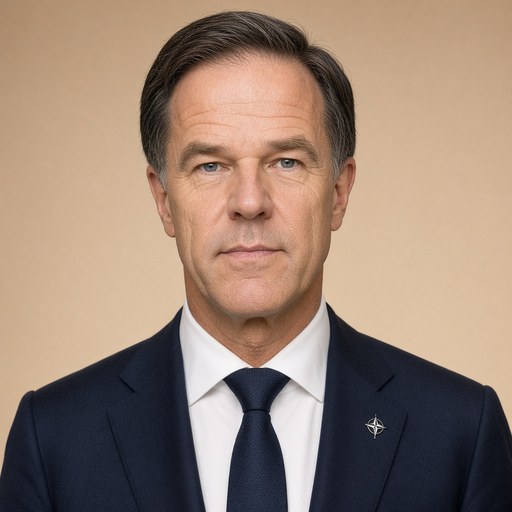
Speech by Prime Minister Mark Rutte at the commemoration of former Prime Minister and Minister of State Wim Kok in the Senate.
 Mark Rutte · Prime Minister of the Netherlands
- Context
- Rutte addressed the Dutch Senate on 29 October 2018 to commemorate former Prime Minister Wim Kok following his death.
- Main themes
- Commemoration of Wim Kok, Dutch polder model, political leadership, personal integrity and responsibility, Srebrenica resignation, social emancipation, trade union roots, Dutch prosperity in the 1990s, statesmanship in crisis, European project
- Duration
- ~6 min
- Words
- 698
- Sentences
- 49
- Readability
- 68
- Grade
- 7.4
- Syntax
- 2.64
- Vocabulary
- 2.24
Translated from Dutch
The broad sphere of national life a sentence belongs to. Every sentence has an Arena, so it is the denominator the other indices are read against.
Other49 sentences in 48 paragraphs
Madam Chair,
For Wim Kok, becoming Prime Minister was not a childhood dream.
He recently said in an interview: ‘I never had the ideal image of wanting to go to the Torentje. I never dreamed of the premiership.’
Yet despite this, Wim Kok was indeed the dream Prime Minister of the Netherlands.
Completely reliable and one hundred percent committed.
A man who combined sober pragmatism with genuine involvement.
For 8 years he was at the helm, above the parties, as the Prime Minister of everyone.
That this carpenter's son from Bergambacht was destined for a great political career was not immediately obvious.
But that his career began in the service of the public good with the trade union was far from strange.
The experiences of his youth had shaped him.
He witnessed the consequences of unemployment up close, and it was no coincidence that ‘work, work, work’ became his motto.
Wim Kok never exploited his background and trade union past for political gain.
And he didn’t need to.
He was himself the example of uplift and emancipation, which gave him a natural credibility as a champion of the ideals he stood for.
As a son of the river landscape of South Holland, Wim Kok always remained a bit of the boy from the polder.
Even when he later held the reins as Prime Minister, he stood firmly with both feet in the clay.
Wim Kok was, like no one else, the man of the polder model.
He had the ability to look beyond his own correctness and to keep sight of the bigger picture.
To also give the other person space and allow them to come into their own.
To arrive at the best solution for everyone.
Did that always come naturally?
No.
For Wim Kok, patience and impatience were two sides of the same coin.
When things didn’t move fast enough for him, he would drum his fingers on the table.
But he also knew when to take the time.
He compared it to running a marathon: you know that the finish line is far away, and you have to pace yourself well along the way.
And you have to accept that you can’t always finish first.
After 3 years in the Torentje, he expressed it as follows: ‘I had to learn that sometimes you have to be more satisfied with what you have already achieved than dissatisfied with what has not yet been accomplished.’
With that approach, Wim Kok achieved a great deal: kneading and tinkering with the Netherlands and the European project, he left his mark on the last decade of the twentieth century.
After the difficult 1980s, our country experienced prosperity and wealth that had been unprecedented until then.
Wim Kok opened the shutters.
The Dutch polder became world-famous, and Wim Kok an internationally respected example for many.
Within him also resided a leader with a paternal touch.
In moments of great confusion and unrest, such as the attacks on September 11, 2001, and the murder of Pim Fortuyn, he remained calm.
Although he admitted that at such moments, it was ‘complete chaos’ in his head.
But – as he said – ‘there is always a sense that says: wait a minute, you may be just as desperate as anyone else, but there are still a number of things that need to be done.’
And Wim Kok then did the right thing – as a statesman does.
Madam Chair,
Taking responsibility is the common thread throughout Wim Kok's life.
The ultimate example is his resignation after the Srebrenica report.
As Willy Brandt once said: ‘Even where guilt is absent, responsibility can be felt.’
For Wim Kok, the book on Srebrenica would never close again.
This shows that he was more than just a skilled statesman who kept his cool.
He was also a socially engaged person with a warm heart.
This is how we will remember him.
As a man who left his mark on our country and who has permanently influenced the lives of many people.
We owe Wim Kok a great deal of gratitude.
I wish strength to his wife, children, and grandchildren, his family, and friends in processing this great loss.
The original Dutch. The tags above are read on the English translation's sentences.
Mevrouw de Voorzitter,
Voor Wim Kok was minister-president worden geen jongensdroom.
Hij zei het onlangs nog in een interview: ‘Ik heb nooit het ideaalbeeld gehad om naar het Torentje te willen. Over het premierschap heb ik nooit gedroomd.’
Maar desondanks was Wim Kok wel de gedroomde minister-president van Nederland.
Volkomen betrouwbaar en honderd procent betrokken.
Een man die nuchter pragmatisme paarde aan oprechte betrokkenheid.
8 jaar lang stond hij aan het roer, boven de partijen, als premier van iedereen.
Dat deze timmermanszoon uit Bergambacht een grote politieke carrière te wachten stond, lag niet direct voor de hand.
Maar dat zijn loopbaan in dienst van de publieke zaak begon bij de vakbond was verre van vreemd.
De ervaringen in zijn jeugd hadden hem gevormd.
Hij maakte van dichtbij de gevolgen van werkloosheid mee en niet voor niets werd ‘werk, werk, werk’ zijn motto.
Wim Kok ventte zijn afkomst en vakbondsverleden nooit uit voor politiek gewin.
En dat hoefde ook niet.
Hij was zelf hét voorbeeld van verheffing en emancipatie en dat gaf hem een natuurlijke geloofwaardigheid als voorvechter van de idealen waarvoor hij stond.
Als zoon van het Zuid-Hollandse rivierenland is Wim Kok altijd een beetje de jongen van de polder gebleven.
Ook toen hij later als premier het stuur in handen had, stond hij met beide benen stevig in de klei.
Wim Kok was als geen ander de man van het poldermodel.
Hij had het vermogen om voorbij het eigen gelijk te kijken en zicht te houden op het grotere geheel.
Om ook de ander ruimte te geven en tot zijn recht te laten komen.
Om te komen tot de beste oplossing voor iedereen.
Ging dat altijd vanzelf?
Nee.
Bij Wim Kok waren geduld en ongeduld twee kanten van dezelfde medaille.
Als het hem niet snel genoeg ging, trommelde hij met zijn vingers op tafel.
Maar hij wist ook wanneer je de tijd moest nemen.
Hij vergeleek het zelf met het lopen van een marathon: je weet dat de finish ver weg ligt en je moet de weg er naartoe dus goed indelen.
En je moet accepteren dat je niet iedere keer als eerste kan eindigen.
Na 3 jaar Torentje verwoordde hij dat als volgt: ‘Ik heb moeten leren dat je soms tevredener moet zijn met wat je al wel bereikt hebt, dan ontevreden over wat nog niet is binnengehaald.’
Met die insteek heeft Wim Kok veel bereikt: al knedend en klussend aan Nederland én het Europese project heeft hij zijn stempel gedrukt op het laatste decennium van de twintigste eeuw.
Na de moeilijke jaren 80 maakte ons land kennis met welvaart en voorspoed die tot dan toe ongekend waren.
Wim Kok zette de luiken open.
De Nederlandse polder werd wereldberoemd en Wim Kok een internationaal een gerespecteerd voorbeeld voor velen.
In hem ging ook een leider met vaderlijke inslag schuil.
Op momenten van grote verwarring en onrust, zoals de aanslagen op 11 september 2001 en de moord op Pim Fortuyn, bleef hij kalm.
Al gaf hij toe dat het op zo’n moment ook in zijn hoofd ‘even complete chaos’ was.
Maar – zo zei hij – ‘er is dan altijd een zintuig dat zegt: wacht eens even, je bent misschien wel even radeloos als ieder ander, maar er moet wél een aantal dingen gedaan worden’.
En Wim Kok deed dan het juiste – zoals een staatsman dat doet.
Mevrouw de Voorzitter,
Verantwoordelijkheid nemen is de rode draad door het leven van Wim Kok.
Het ultieme voorbeeld is zijn aftreden na het Srebrenica-rapport.
Zoals Willy Brandt ooit zei: ‘Ook waar schuld ontbreekt, kan verantwoordelijkheid gevoeld worden.’
Voor Wim Kok zou het boek Srebrenica nooit meer dicht gaan
Dat laat zien dat hij meer was dan alleen een kundig staatsman die zijn hoofd koel hield.
Hij was ook een sociaal bewogen mens met een warm hart.
Zo zullen we hem herdenken.
Als een man die zijn stempel heeft gedrukt op ons land en die de levens van heel veel mensen blijvend heeft beïnvloed.
We zijn Wim Kok veel dank verschuldigd.
Zijn vrouw, kinderen en kleinkinderen, zijn familie en vrienden wens ik kracht toe bij het verwerken van dit grote verlies.