




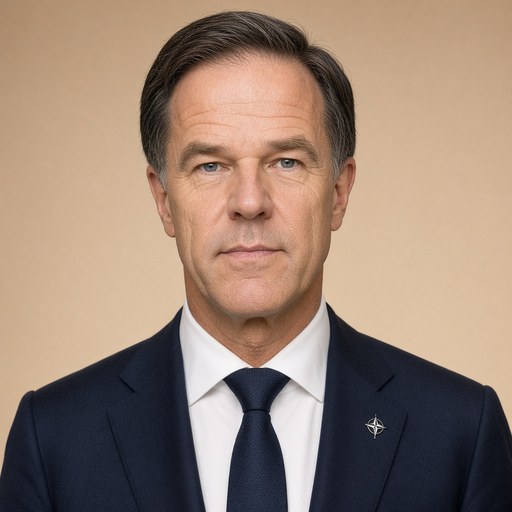
Speech by Prime Minister Mark Rutte at the opening of the exhibition 'Power – 800 Years of Binnenhof' at the Hague Historical Museum.
 Mark Rutte · Prime Minister of the Netherlands
- Context
- Rutte spoke at the Hague Historical Museum on 29 September 2021 at the opening of an exhibition marking 800 years of the Binnenhof.
- Main themes
- Binnenhof history, Dutch political power, architectural symbolism, parliamentary democracy, historical preservation, renovation plans, Dutch sobriety and accessibility, key historical events, The Hague identity, national heritage
- Duration
- ~8 min
- Words
- 968
- Sentences
- 58
- Readability
- 61
- Grade
- 8.8
- Syntax
- 2.96
- Vocabulary
- 2.45
Translated from Dutch
The broad sphere of national life a sentence belongs to. Every sentence has an Arena, so it is the denominator the other indices are read against.
Other58 sentences in 16 paragraphs
And what struck me immediately: the title is not ‘800 years of power at the Binnenhof’, but ‘Power - 800 years of Binnenhof’. So with a dash between the words ‘power’ and ‘Binnenhof’. As if those two are not entirely one-to-one synonyms. That is very subtle, and not without meaning.
Let me say right away: I recognize that image and I would like to cherish it. The Binnenhof is power on a Dutch scale. Some time ago, I showed Emmanuel Macron around the Torentje – you may have seen the footage. That tour, of course, did not last for hours and was a somewhat alienating experience for him. Because, was this it seriously? Or was there still a door somewhere to my real office?
Anyone who has ever been to, or near, the Élysée understands that. Or near the Bundeskanzleramt. Or the White House. Or the Kremlin. Those are buildings and government centers that have been deliberately built to impress, where you feel insignificant as a visitor. And that is something we can hardly say about the Binnenhof, let alone the Torentje.
We did try that once, by the way, when the States General commissioned the construction of the Trêveszaal at the end of the 17th century, to impress foreign envoys. I always find that an interesting fact as a historian, how an overripe Republic apparently thought it had to compensate for a loss of power and prestige with splendor and pomp. I always imagine how such a powdered, perfumed, and wigged French diplomat, accustomed to the grandeur of Versailles, first had to pass through a number of corridors and rooms of Dutch Reformed sobriety before he arrived in that one room where everything that shone was indeed gold. So even then: power on a Dutch scale.
At the same time, the Binnenhof and its surroundings have certainly been the backdrop for ruthless power politics throughout history. That may not have been visible in the architecture, but all the more in human behavior.
The execution in 1619, in front of the main entrance of the Ridderzaal, of Johan van Oldenbarnevelt – for me the greatest statesman in our history – is an absolute highlight in that regard. Or rather, a low point.
But of course also here nearby: the murder and lynching of the De Wit brothers in the disaster year of 1672. Or closer to our own time and somewhat less bloody: the Night of Schmelzer in 1966. And of course there is also that sadly failed coup attempt by Messrs. Jacobse and Van Es of the Opposition in 1981, which ended in a shooting at the Binnenhof. That was a terrible day in our political history.
But above all, the Binnenhof has been an iconic place throughout the centuries, and still is. Iconic as the historical heart of the beautiful city of The Hague. Iconic as a government center, from the counts of Holland to the present day. And of course iconic for our parliamentary democracy, especially on Prinsjesdag.
At the same time, the Binnenhof – and this is also very Dutch – is a very accessible place. A place where day-trippers have been enjoying ice cream from ice cream vendor Moes for 45 years and where you can encounter politicians in the wild. It is therefore also a bit of a national living room and in that sense, the Binnenhof symbolizes the healthy Dutch aversion to formalized power. One of the beautiful characteristics of our country.
And precisely that living room function of the Binnenhof makes it so unfortunate that it will be deserted in the coming years due to renovations. I am personally a man of traditions and a child of The Hague, so I feel that personally as well. But unfortunately, it must be done. Because the history of the Binnenhof itself teaches us that periodic maintenance is unavoidable, indeed: that postponement can even be threatening.
For example, during the time of King Louis Napoleon, who ruled our country from Amsterdam between 1806 and 1810. One of his advisors reported to him that the Binnenhof was in such poor condition that it would be better to demolish large parts. Among them the Ridderzaal, all the count's halls, and the stadtholder's wing. Fortunately, Napoleon called his brother back to France in 1810.
In the years following the constitutional revision of 1848, the idea arose to make the power of Parliament visible in a new government center, at the expense of the old one. So again, demolition was threatened. But there was fierce resistance from the people of The Hague.
Ferry Mingelen once wrote a nice little book about the Binnenhof and its surroundings, in which he mentions building plans from that time featuring a colossal white neoclassical building and even a bridge over the Hofvijver. Even then, the poor condition of the buildings was used as an additional argument for the demolition plans. And so we almost had our own White House.
In short, maintenance is preservation and five years is long, but compared to 800 years of history, it is not that bad. Moreover, we want generations of school classes, tourists, residents of The Hague, and – let’s be honest – also politicians to enjoy that unique atmosphere at the Binnenhof. An atmosphere of power on a Dutch scale, with a touch of Dutch homeliness. And let that especially remain so after the renovation.
I want to give a big compliment to the Haags Historisch Museum, because you are ensuring that the Binnenhof remains in view during the renovation. For that, I am grateful to you as a neighbor, as a resident of The Hague, as a historian, and as a temporary tenant of the Torentje. And I certainly wish you many visitors and little construction dust or other renovation nuisance.
Thank you.
The original Dutch. The tags above are read on the English translation's sentences.
En wat mij meteen opviel: de titel is niet ‘800 jaar macht op het Binnenhof’, maar ‘Macht - 800 jaar Binnenhof’. Dus met een streepje tussen de woorden ‘macht’ en ‘Binnenhof’. Alsof die 2 niet helemaal 1-op-1 synoniem zijn. Dat is heel subtiel, en niet zonder betekenis.
Laat ik maar meteen zeggen: ik herken dat beeld en ik zou het ook willen koesteren. Het Binnenhof is macht op Nederlandse schaal. Een tijdje geleden leidde ik Emmanuel Macron rond in het Torentje – u hebt de beelden misschien gezien. Die rondleiding duurde natuurlijk geen uren en was voor hem een licht vervreemdende ervaring. Want, was dit het serieus? Of zat er toch nog ergens een deur naar mijn echte werkkamer?
Wie ooit in, of in de buurt van het Élysée is geweest, begrijpt dat. Of in de buurt van het Bundeskanzleramt . Of het Witte Huis. Of het Kremlin. Dat zijn gebouwen en regeringscentra die doelbewust zijn gebouwd om te imponeren, waar je je als bezoeker nietig voelt. En dat is iets dat we over het Binnenhof, laat staan over het Torentje, toch moeilijk kunnen zeggen.
We hebben dat wel ooit geprobeerd overigens, toen de Staten-Generaal aan het einde van de 17e eeuw de opdracht gaven de Trêveszaal te bouwen, om indruk te maken op buitenlandse gezanten. Ik vind dat zelf als historicus altijd een interessant gegeven, hoe een overrijpe Republiek blijkbaar dacht verlies aan macht en aanzien met pracht en praal te moeten compenseren. Ik stel me dan altijd voor hoe zo’n gepoederde, geparfumeerde en bepruikte Franse diplomaat, gewend aan de grandeur van Versailles, eerst een aantal gangen en zalen van Hollandse gereformeerde soberheid moest passeren, voordat hij in die ene zaal kwam waar wél alles goud was wat er blonk. Dus ook toen al: macht op Hollandse schaal.
Tegelijkertijd is het Binnenhof en omgeving door de geschiedenis heen natuurlijk wel degelijk het decor geweest van snoeiharde machtspolitiek. Die was misschien niet zichtbaar in de architectuur, maar des te meer in menselijk gedrag.
De executie in 1619, voor de hoofdingang van de Ridderzaal, van Johan van Oldenbarnevelt – voor mij de allergrootste staatsman uit onze geschiedenis – is daarin een absoluut hoogtepunt. Of dieptepunt eigenlijk.
Maar natuurlijk ook hier vlakbij: de moord en de lynchpartij op de gebroeders De Wit in het rampjaar 1672. Of dichter bij onze eigen tijd en iets minder bloederig: de Nacht van Schmelzer in 1966. En natuurlijk is er ook die jammerlijk mislukte couppoging van de heren Jacobse en Van Es van de Tegenpartij in 1981, die eindigde in een schietpartij op het Binnenhof. Dat was een vreselijke dag in onze politieke geschiedenis.
Maar bovenal is het Binnenhof door de eeuwen heen een iconische plek geweest, en nog steeds. Iconisch als het historische hart van de mooie stad Den Haag. Iconisch als regeringscentrum, van de graven van Holland tot nu. En natuurlijk iconisch voor onze parlementaire democratie, zeker op Prinsjesdag.
Tegelijkertijd is het Binnenhof – en dat is ook heel Nederlands - een heel toegankelijke plek Een plek waar dagjesmensen al 45 jaar een ijsje eten bij ijscoman Moes en waar je politici in het wild kunt tegenkomen. Het is dus ook een beetje een nationale huiskamer en in die zin staat het Binnenhof ook symbool voor de gezonde Nederlandse afkeer van geformaliseerde macht. 1 van de mooie eigenschappen van ons land.
En precies die huiskamerfunctie van het Binnenhof maakt het natuurlijk zo jammer dat het er de komende jaren verlaten bij ligt vanwege de verbouwing. Ik ben zelf een man van tradities en een kind van Den Haag, dus ik vind dat persoonlijk ook. Maar helaas, het moet. Want de geschiedenis van het Binnenhof zelf leert dat periodiek onderhoud onvermijdelijk is, sterker nog: dat uitstel zelfs bedreigend kan zijn.
Bijvoorbeeld in de tijd van koning Lodewijk Napoleon, die ons land tussen 1806 en 1810 vanuit Amsterdam regeerde. 1 van zijn adviseurs rapporteerde hem dat het Binnenhof in zo’n slechte staat was, dat het beter was grote delen te slopen. Daaronder de Ridderzaal, alle grafelijke zalen en de stadhouderlijke vleugel. Gelukkig floot Napoleon zijn broer in 1810 terug naar Frankrijk.
In de jaren na de Grondwetsherziening van 1848 ontstond het idee de macht van het Parlement zichtbaar te maken in een nieuw regeringscentrum, ten koste van het oude. Dus opnieuw dreigde sloop. Maar daartegen kwam fel verzet van de bevolking van Den Haag.
Ferry Mingelen schreef ooit een mooi boekje over het Binnenhof en omgeving, waarin hij melding maakt van bouwtekeningen uit die tijd met daarop een kolossaal wit neoclassicistisch gebouw en zelfs een brug over de Hofvijver. Ook toen werd de slechte staat van de gebouwen als extra argument gebruikt voor de sloopplannen. En zo hadden we dus bijna ons eigen Witte Huis gehad.
Kortom, onderhoud is behoud en 5 jaar is lang, maar afgezet tegen 800 jaar geschiedenis valt het natuurlijk ook wel weer mee. Bovendien willen we dat nog generaties schoolklassen, toeristen, Hagenezen en – vooruit – ook politici kunnen genieten van die unieke sfeer op het Binnenhof. Een sfeer van macht op Nederlandse schaal, met een vleugje Hollandse huiselijkheid. En laat dat na de verbouwing vooral zo blijven.
Ik wil het Haags Historisch Museum een groot compliment maken, omdat u tijdens de verbouwing zorgt dat het Binnenhof toch in beeld blijft. Daarvoor ben ik u dankbaar als buurman, als inwoner van Den Haag, als historicus en als tijdelijk huurder van het Torentje. En ik wens u natuurlijk graag veel bezoekers toe en weinig bouwstof of andere verbouwingsoverlast.
Dank u wel.