




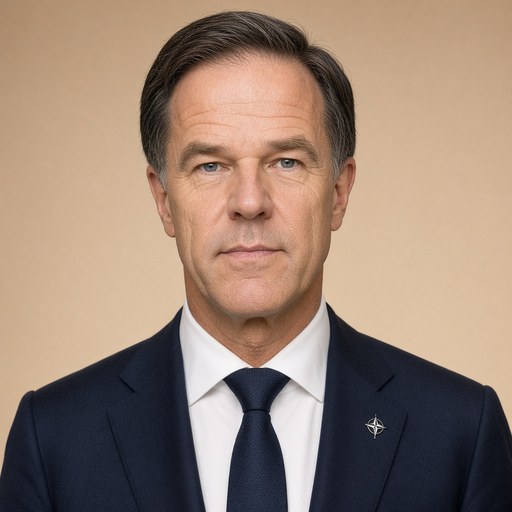
Speech by Prime Minister Rutte at the opening of the Vermeer exhibition in Dresden
 Mark Rutte · Prime Minister of the Netherlands
- Context
- Rutte addressed guests at the opening of a Vermeer exhibition at the Gemäldegalerie Alte Meister in Dresden on 9 September 2021, alongside Chancellor Merkel and Prime Minister Kretschmer.
- Main themes
- Johannes Vermeer exhibition, Dutch-German cultural ties, Angela Merkel tribute, European cooperation, COVID-19 pandemic impact on society, art as bridge-builder, restoration of 'Girl Reading a Letter at an Open Window', Dutch Golden Age art
- Duration
- ~7 min
- Words
- 850
- Sentences
- 55
- Readability
- 55
- Grade
- 9.4
- Syntax
- 2.73
- Vocabulary
- 2.16
Translated from German
The broad sphere of national life a sentence belongs to. Every sentence has an Arena, so it is the denominator the other indices are read against.
Other55 sentences in 23 paragraphs
Professor Ackermann,
Mr. Prime Minister,
Chancellor Merkel, dear Angela,
Dr. Koja,
Dr. Neidhardt,
ladies and gentlemen!
Just last February, I had the privilege of attending the ceremony for the reopening of the Gemäldegalerie Alte Meister just a stone's throw from here. A very special event. Above all, an event that made it clear how closely Germany and the Netherlands are connected through art and culture.
Today, just a year and a half later, I am back here in Dresden. I simply could not decline the invitation to the opening of this magnificent Vermeer exhibition.
First, because with a bit of imagination, one could say that Johannes Vermeer is my neighbor. I only need to take a few steps from my office, and I find myself in the famous Mauritshuis museum, face to face with Vermeer’s world-renowned "Girl with a Pearl Earring." Or I let myself be transported to 17th-century Delft, as Vermeer so wonderfully depicted it. You will understand that this Dutch master is particularly dear to me.
The second reason I was eager to come: Chancellor Merkel personally invited me to be a guest today at this opening alongside Prime Minister Kretschmer. And how could I say no to her?
Angela, when you became Chancellor, I was still a young and inexperienced Secretary of State. Many years later, I became Prime Minister, and I have found our collaboration from the very first moment to be pleasant, friendly, and constructive.
This has to do with the way you approach things. Breaking down large, seemingly insurmountable problems into smaller, manageable issues and then solving them one by one. Your motto "Step by Step" has become a catchphrase for us. I also use it occasionally.
Another, perhaps even more important explanation is your personality. On the European stage, I repeatedly experience up close what you achieve with that combination of warmth in personal interaction, interest in the people around you, and sovereign expertise. Your precise knowledge of the subject gives you a natural authority. When you speak in the European Council, you can hear a pin drop.
You do not speak in a raised voice, but with great persuasive power. You are always there when it matters, have creative solutions at hand, and are willing to take risks.
When it comes to Europe, you always act on the principle: I cannot do it alone, none of us can do it alone, we can only succeed together. And with that, you have kept Europe on course in crucial moments.
Angela, I know you do not like praise, but this had to be said today. And it is an honor and a great joy for me to be here today with you at the opening of this exhibition.
Ladies and gentlemen, I already mentioned that my last visit to the Gemäldegalerie Alte Meister was just a year and a half ago, also as a guest of Prime Minister Kretschmer. But when I think back to that time today, it almost feels like a journey to another era. Social distancing rules and strict hygiene measures were not yet an issue then. That we were forced to close the internal borders of Europe shortly thereafter was very painful for all those whose hearts beat for Europe. And that we had to give up a piece of our personal freedom of movement in the interest of public health was difficult, indeed until then actually unthinkable, but it was necessary.
The pandemic has also made us aware of how closely we are globally interconnected and how much we form a community of fate. And not least, how important cooperation is in times of great crises. In the European context, but of course also among direct neighbors.
Despite all the necessary restrictions, we kept the channels of communication open across the German-Dutch border the whole time. And in July, we even managed to organize a very successful state visit of our royal couple. It concluded a series of working visits, including here in Saxony in 2017. I am very pleased about that.
Especially on a day like today, we realize that art and culture can always and everywhere build bridges, even in times of closed borders and other restrictions. It is wonderful that it has been possible to bring together high-profile works of Vermeer from London, Washington, and the Rijksmuseum in Amsterdam here in Dresden. And so I hope that circumstances will allow visitors from all over the world to view the united Vermeers in this wonderful city.
The opening of this exhibition with its international appeal marks a new beginning. Slowly but surely, the heavy veil that the coronavirus pandemic has cast over our society is lifting.
And so the unique restoration of Vermeer’s "Girl Reading a Letter at an Open Window" carries great symbolic weight. The work has been freed from the dirt, overpainting, and varnish layers of past centuries and now shines again in its original splendor – just as it left Vermeer’s studio. For this world-class achievement, I would like to extend my heartfelt compliments to you today. Not least as Vermeer’s neighbor.
Thank you.
The original German. The tags above are read on the English translation's sentences.
Frau Professor Ackermann,
Herr Ministerpräsident,
Frau Bundeskanzlerin, liebe Angela,
Herr Dr. Koja,
Frau Dr. Neidhardt,
meine sehr verehrten Damen und Herren!
Erst im Februar letzten Jahres durfte ich einen Steinwurf von hier entfernt dem Festakt zur Wiedereröffnung der Gemäldegalerie Alte Meister beiwohnen. Ein ganz besonderes Ereignis. Vor allem auch ein Ereignis, das deutlich gemacht hat, wie eng Deutschland und die Niederlande auch durch Kunst und Kultur miteinander verbunden sind.
Heute, nur anderthalb Jahre später, bin ich wieder hier in Dresden. Ich konnte die Einladung zur Eröffnung dieser großartigen Vermeer-Ausstellung einfach nicht ausschlagen.
Erstens, weil man mit etwas Phantasie sagen kann, dass Johannes Vermeer mein Nachbar ist. Ich brauche nämlich von meinem Büro aus nur ein paar Schritte zu gehen, und schon stehe ich im berühmten Museum Mauritshuis, Auge in Auge mit Vermeers weltbekanntem »Mädchen mit dem Perlenohrgehänge«. Oder ich lasse mich entführen ins Delft des 17. Jahrhunderts, wie es Vermeer so wunderbar dargestellt hat. Sie werden verstehen, dass dieser holländische Meister mir besonders am Herzen liegt.
Der zweite Grund, warum ich gern gekommen bin: Bundeskanzlerin Merkel persönlich hat mich eingeladen, heute bei dieser Eröffnung gemeinsam zu Gast zu sein bei Ministerpräsident Kretschmer. Und wie könnte ich ihr absagen?
Angela, als du Bundeskanzlerin wurdest, war ich noch ein junger und unerfahrener Staatssekretär. Viele Jahre später wurde ich dann Ministerpräsident, und ich habe unsere Zusammenarbeit ab dem ersten Moment als angenehm, freundschaftlich und konstruktiv empfunden.
Das hat zu tun mit der Art, wie du die Dinge angehst.Große, schier unlösbar erscheinende Probleme in kleine, überschaubare Probleme zerlegen und diese dann nacheinander lösen. Dein Motto »Schritt für Schritt« ist bei uns inzwischen zu einem geflügelten Wort geworden.Auch ich benutze es gelegentlich.
Eine weitere, vielleicht noch wichtigere Erklärung ist Deine Persönlichkeit.Auf dem europäischen Parkett erlebe ich immer wieder aus nächster Nähe, was du alles erreichst mit jener Kombination aus Herzlichkeit im persönlichen Umgang, Interesse für die Menschen um dich herum und souveränem Sachverstand.Die präzise Kenntnis der Materie verleiht dir eine natürliche Autorität. Wenn du im Europäischen Rat das Wort ergreifst, kann man eine Stecknadel fallen hören.
Du sprichst nicht mit erhobener Stimme, wohl aber mit großer Überzeugungskraft.Du bist immer zur Stelle, wenn es darauf ankommt, hast kreative Lösungen parat und lehnst dich auch mal weit aus dem Fenster.
Wenn es um Europa geht, handelst du stets nach der Maxime: Ich kann es nicht allein, niemand von uns kann es allein, wir schaffen es nur gemeinsam. Und damit hast du Europa in entscheidenden Momenten auf Kurs gehalten.
Angela, ich weiß, du magst keine Lobeshymnen, aber das musste heute einmal gesagt werden. Und es ist für mich eine Ehre und eine große Freude, heute hier gemeinsam mit dir der Eröffnung dieser Ausstellung beizuwohnen.
Meine Damen und Herren, ich sagte es bereits, mein letzter Besuch in der Gemäldegalerie Alte Meister liegt erst anderthalb Jahre zurück, auch damals zu Gast bei Ministerpräsident Kretschmer. Aber wenn ich heute daran denke, kommt es mir fast vor wie eine Reise in eine andere Zeit. Abstandsregeln und strenge Hygienemaßnahmen waren damals noch kein Thema. Dass wir schon kurz danach gezwungen waren, die europäischen Binnengrenzen zu schließen, war für alle, deren Herz für Europa schlägt, sehr schmerzlich. Und dass wir im Interesse der öffentlichen Gesundheit auf ein Stück unserer persönlichen Bewegungsfreiheit verzichten mussten, war schwierig, ja bis dahin eigentlich undenkbar, aber es war notwendig.
Die Pandemie hat uns aber auch vor Augen geführt, wie eng wir global miteinander verbunden sind und wie sehr wir eine Schicksalsgemeinschaft bilden. Und nicht zuletzt, wie wichtig Zusammenarbeit in Zeiten großer Krisen ist. Im europäischen Rahmen, aber natürlich auch unter direkten Nachbarn.
Trotz aller notwendigen Beschränkungen haben wir die Gesprächskanäle über die deutsch-niederländische Grenze hinweg die ganze Zeit offen gehalten. Und im Juli ist es uns sogar gelungen, einen sehr erfolgreichen Staatsbesuch unseres Königspaares zu organisieren. Er bildete den Abschluss einer Reihe von Arbeitsbesuchen, darunter auch hier in Sachsen im Jahr 2017.Darüber bin ich sehr froh.
Gerade an einem Tag wie heute wird uns bewusst, dass Kunst und Kultur immer und überall Brücken schlagen können, auch in Zeiten geschlossener Grenzen und sonstiger Einschränkungen. Es ist großartig, dass es gelungen ist, hochkarätige Werke Vermeers etwa aus London, Washington und aus dem Rijksmuseum in Amsterdam hier in Dresden zusammenzuführen. Und so wünsche ich mir, dass die Umstände es zulassen, dass Besucher aus der ganzen Welt die vereinten Vermeers in dieser wunderbaren Stadt besichtigen können.
Die Eröffnung dieser Ausstellung mit ihrer internationalen Ausstrahlung markiert einen Neubeginn. Langsam, aber sicher lichtet sich der schwere Schleier, den die Coronapandemie auf unsere Gesellschaft gelegt hat.
Und so hat die einzigartige Restaurierung von Vermeers »Brieflesendem Mädchen am offenen Fenster« hohe Symbolkraft. Das Werk wurde befreit von den Verschmutzungen, Übermalungen und Firnisschichten vergangener Jahrhunderte und erstrahlt nun wieder in seiner alten Farbenpracht – ganz so, wie es einst Vermeers Atelier verließ. Für diese Leistung von Weltformat möchte ich Ihnen heute ein großes Kompliment machen.Nicht zuletzt als Vermeers Nachbar.
Ich danke Ihnen.