




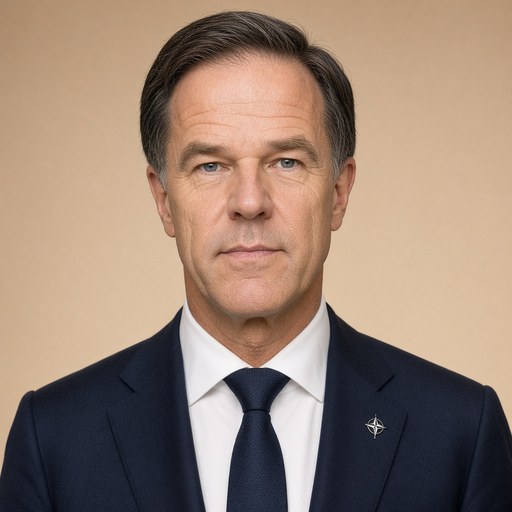
Statement by the Prime Minister on the situation in Israel and Gaza, prior to the debate on the European Council.
 Mark Rutte · Prime Minister of the Netherlands
- Context
- Rutte addressed the Dutch parliament on October 24, 2023, reporting on his visit to Israel and the West Bank amid the ongoing Israel-Hamas war following the October 7 attacks.
- Main themes
- Israel-Hamas conflict, humanitarian crisis in Gaza, two-state solution, civilian protection, hostages, humanitarian aid corridors, diplomatic visits and mediation, international cooperation, Palestinian rights, restraint and humanitarian law, regional escalation prevention
- Duration
- ~8 min
- Words
- 944
- Sentences
- 72
- Readability
- 61
- Grade
- 7.9
- Syntax
- 2.55
- Vocabulary
- 2.06
Translated from Dutch
The broad sphere of national life a sentence belongs to. Every sentence has an Arena, so it is the denominator the other indices are read against.
Other72 sentences in 28 paragraphs
Madam Chair, thank you for giving me the opportunity to briefly reflect on my visit to Israel and the West Bank yesterday and on the situation that has arisen since October 7.
We are now 2.5 weeks after the horrific massacres in Israel. 2.5 weeks of destruction and violence. Of deep human suffering. Of intense sorrow and also of great concern.
How does this continue? How does this end? What is needed to silence the weapons again? That is the question that occupies everyone.
We in the Netherlands, people around the world, mourn the victims of the atrocities committed by Hamas. We mourn the death of our 33-year-old compatriot Islam al-Ashqar and all the injured and dead in Gaza. And we mourn the uncertain fate of the Israeli hostages, including 18-year-old Ofir Engel, whose family I spoke to yesterday – it was heartbreaking.
Every victim is one too many. Every human life is equally valuable. There is no gradation between grief and loss.
Madam Chair, I say this clearly because after the attacks by Hamas on Israel, some have come to believe that the cabinet supports Israel blindly in everything that is happening now. I want to say the following about that.
The atrocities of Saturday, October 7, can in no way be justified and can only be condemned in the strongest terms. And yes, Israel has every right to defend itself against the terrorist violence of Hamas, within the bounds of humanitarian law.
Is that the whole story? No, it is not.
The tragedy of this war is that the thinking about it is often black and white – for or against. Even in our country. While the reality is that so many things are true at the same time.
It is true that October 7 shows that Israel cannot exist safely if it does not act against Hamas. The ability of Hamas to carry out attacks must be eliminated. Hamas must be stopped.
At the same time, it is also true that innocent people in Gaza must not become victims of this.
It is true that both Israel and the Palestinian people have the right to their own independent state, which provides security. A future perspective.
And it is also true that a two-state solution is ultimately the only way out. All these truths coexist.
Yesterday, I spoke on the West Bank with Palestinians who have family in Gaza. They live in fear every day now that their family members have nowhere to go. A woman I spoke to yesterday lost 5 loved ones in one bombing.
In Israel, I spoke with people who told me how they have to flee to shelters three times a day during yet another air raid. Hundreds of thousands of people in Israel have been displaced from their homes.
A girl told me about her grandfather, the only Holocaust survivor in his family, and how afraid she is that it could happen again. This morning, I met with families of Israeli hostages, some of whom saw their relatives being murdered or abducted on their phones on October 7. A moment they have relived over and over since then. In fear for the fate of their loved ones. Barbaric – there is no other word for it.
And this afternoon, I spoke with Palestinian Dutch citizens, who sometimes have not heard from their families for days. Who are afraid of every message, every phone call, that could bring terrible news.
These people have almost lost hope for peace and an end to the violence. Those are conversations that leave you speechless. Emotional.
And you realize once again how important it is that humanity ultimately prevails again. How we must hold on to hope for that.
Madam Chair, yesterday I had an open and honest conversation with Prime Minister Netanyahu. I reaffirmed that Israel's military deterrence against acts of terrorism, from any quarter, must be restored.
I also emphasized that innocent civilians must be protected as much as possible from the conflict against Hamas. I advocated for allowing aid and essential goods into Gaza. So water, food, medicine, and also fuel. And not just one convoy of trucks, but a well-organized and sustainable corridor.
I called for humanitarian pauses to ensure that aid can arrive safely. And I called for restraint in the use of violence.
With President Abbas, I discussed that the terrorist acts of Hamas do nothing positive for the future of the Palestinians. We completely agreed on that. It was good to hear from him that he also condemns the actions of Hamas.
It is now crucial to prevent the violence from spilling over into the West Bank. And rightly, President Abbas drew attention to illegal settlements and the violence of settlers. That must also stop, and I had urged Prime Minister Netanyahu on that earlier in the day.
Madam Chair, we must be realistic: the Dutch influence is limited, but we do what we can. All of us. And we do this in close cooperation with other EU member states, with the United States, and with countries in the region: Egypt, Qatar, Jordan, and the United Arab Emirates.
The more united the international community is, the greater the chance that regional escalation can be prevented. The greater also the chance that the humanitarian situation in Gaza can improve somewhat. And the sooner the hostages can be released – which must happen! – and that the Dutch present there and other people from other countries can leave Gaza.
For that, we must do everything we can. And that will of course also be our commitment during the European Council on Thursday and Friday.
Thank you.
The original Dutch. The tags above are read on the English translation's sentences.
Mevrouw de voorzitter, dank dat u mij de gelegenheid wilt bieden kort stil te staan bij mijn bezoek aan Israël en de Westelijke Jordaanoever gisteren en bij de situatie zoals die is ontstaan na 7 oktober.
We leven inmiddels 2,5 week na de gruwelijke moordpartijen in Israël. 2,5 week van verwoesting en geweld. Van diep menselijk leed. Van intens verdriet en ook van grote bezorgdheid.
Hoe gaat dit verder? Hoe loopt dit af? Wat is er nodig om de wapens weer te laten zwijgen? Dat is de vraag die iedereen bezig houdt.
Wij in Nederland, mensen over de hele wereld, treuren om de slachtoffers van de gruweldaden van Hamas. We treuren om de dood van onze 33-jarige landgenote Islam al-Ashqar en alle gewonden en doden in Gaza. En we treuren over het onzekere lot van de Israëlische gijzelaars, onder wie de 18-jarige Ofir Engel, wiens familie ik gister sprak – dat was hartverscheurend.
Elk slachtoffer is er een teveel. Elk mensenleven is evenveel waard. Er is geen gradatie tussen rouw en verlies.
Mevrouw de voorzitter, ik zeg dat zo duidelijk omdat na de aanslagen van Hamas op Israël bij sommigen het beeld heeft postgevat dat het kabinet Israël blind steunt in alles wat er nu gebeurt. Ik wil daar het volgende over zeggen.
De gruwelijkheden van zaterdag 7 oktober zijn op geen enkele manier te rechtvaardigen en kunnen alleen in de scherpste bewoordingen worden veroordeeld. En ja, Israël heeft het volste recht zich te verdedigen tegen het terroristisch geweld van Hamas, binnen de grenzen van het humanitair oorlogsrecht.
Is dat dan het hele verhaal? Nee, dat is het niet.
De tragiek van deze oorlog is dat het denken erover vaak zwart-wit is – vóór of tegen. Ook in ons land. Terwijl de realiteit is dat zoveel dingen tegelijk waar zijn.
Het is waar dat 7 oktober laat zien dat Israël niet veilig kan bestaan als het niet optreedt tegen Hamas. Het vermogen van Hamas aanvallen uit te voeren, moet verdwijnen. Hamas moet een halt worden toegeroepen.
Tegelijkertijd is het ook waar dat onschuldige mensen in Gaza hiervan niet het slachtoffer mogen worden.
Het is waar dat zowel Israël als de Palestijnse bevolking recht hebben op een eigen zelfstandige staat, die veiligheid biedt. Een toekomstperspectief.
En het is ook waar dat een tweestatenoplossing uiteindelijk de enige uitweg is. Al die waarheden bestaan naast elkaar.
Gisteren sprak ik op de Westelijke Jordaanoever met Palestijnen die familie hebben in Gaza. Zij staan iedere dag doodsangsten uit nu hun familieleden geen kant op kunnen. Een vrouw die ik gisteren sprak verloor 5 dierbaren bij 1 bombardement.
In Israël sprak ik met mensen die vertelden hoe ze 3 keer per dag in schuilkelders moeten vluchten bij het zoveelste luchtalarm. Honderdduizenden mensen in Israël zijn verdreven van huis en haard.
Een meisje vertelde over haar opa, de enige holocaustoverlevende in zijn familie, en hoe bang zij is dat het nog een keer kan gebeuren. Vanmorgen had ik een ontmoeting met families van Israëlische gegijzelden, van wie sommigen op 7 oktober op hun telefoon zagen hoe familieleden werden vermoord of ontvoerd. Een moment dat ze sindsdien keer op keer herbeleven. In angst voor het lot van hun geliefden. Barbaars - een ander woord is er niet voor.
En vanmiddag sprak ik met Palestijnse Nederlanders, die soms al dagen niks horen van hun familie. Die bang zijn voor elk appje, elk telefoontje, dat verschrikkelijk nieuws kan brengen.
Deze mensen hebben de hoop op vrede en een einde aan het geweld bijna verloren. Dat zijn gesprekken waar je stil van wordt. Emotioneel.
En je realiseert je nog eens opnieuw hoe belangrijk het is dat de menselijkheid uiteindelijk weer de overhand krijgt. Hoe we daar hoop op moeten houden.
Mevrouw de voorzitter, gisteren heb ik een openhartig gesprek gevoerd met premier Netanyahu. Ik heb nogmaals bevestigd dat Israëls militaire afschrikking tegen terreurdaden, uit welke hoek dan ook, moet worden hersteld.
Ook heb ik benadrukt dat onschuldige burgers zo min mogelijk het slachtoffer mogen worden van de strijd tegen Hamas. Ik heb ervoor gepleit hulp en essentiële goederen door te laten naar Gaza. Dus water, voedsel, medicijnen en ook brandstof. En dan niet 1 keer een konvooi vrachtwagens, maar een goed georganiseerde en duurzame corridor.
Ik heb gepleit voor humanitaire pauzes, om die hulp veilig aan te laten komen. En ik heb gepleit voor terughoudendheid bij het gebruik van geweld.
Met president Abbas besprak ik dat de terreurdaden van Hamas helemaal niets positiefs doen voor de toekomst van de Palestijnen. Daar waren we het volledig over eens. Het was goed van hemzelf te horen dat ook hij de daden van Hamas veroordeelt.
Het is nu zaak te voorkomen dat het geweld overslaat naar de Westelijke Jordaanoever. En terecht vroeg president Abbas daarbij de aandacht voor illegale nederzettingen en het geweld van kolonisten. Ook dat moet stoppen, en ik had daar eerder op de dag op aangedrongen bij premier Netanyahu.
Mevrouw de voorzitter, we moeten realistisch zijn: de Nederlandse invloed is beperkt, maar we doen wat we kunnen. Wij allemaal. En dat doen we in nauwe samenwerking met andere EU-lidstaten, met de Verenigde Staten en met landen in de regio: Egypte, Qatar, Jordanië en de Verenigde Arabische Emiraten.
Hoe eensgezinder de internationale gemeenschap is, des te groter de kans dat regionale escalatie kan worden voorkomen. Des te groter ook de kans dat de humanitaire situatie in Gaza iets kan verbeteren. En des te sneller kunnen de gijzelaars vrijkomen – wat moet! – en kunnen de daar aanwezige Nederlanders en andere mensen uit andere landen uit Gaza vertrekken.
Daarvoor moeten we alles op alles zetten. En dat zal natuurlijk ook onze inzet zijn tijdens de Europese Raad van donderdag en vrijdag.
Dank u wel.