




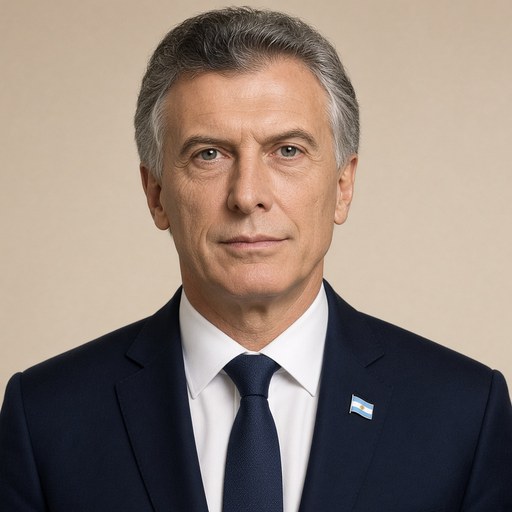
President Macri led the launch of the program Learn Connected at the initial educational level.
 Mauricio Macri · President of Argentina
- Context
- Macri launched the 'Learn Connected' program at an early education center in Tres de Febrero, Argentina, expanding digital tools and programming to four-year-old children nationwide.
- Main themes
- Digital education initiative, early childhood education, technology in schools, programming and robotics for children, teacher training, connectivity in schools, Argentina's educational progress, digital classrooms, technological revolution and future workforce, rural school connectivity
- Duration
- ~9 min
- Words
- 1,080
- Sentences
- 35
- Readability
- 49
- Grade
- 14.1
- Syntax
- 3.65
- Vocabulary
- 1.85
Translated from Spanish
The broad sphere of national life a sentence belongs to. Every sentence has an Arena, so it is the denominator the other indices are read against.
Other35 sentences in 10 paragraphs
Good day, good day, good day. Thank you, Gabriela, for welcoming us to your garden, where there is so much joy. Thank you, Mayor Diego, especially for the work you have been doing. Since we called you with María Eugenia four or five years ago and you set out to be the mayor of Tres de Febrero, many positive things have happened for Tres de Febrero, so thank you.
And the truth is, María Eugenia, along with Alejandro and Gabriel, what a lovely way to start Tuesday, what a lovely way because if there is something that stimulates, if there is something that generates enthusiasm, hope, it is doing things related to the improvement of education, of education for all equally. As Diego just said, that everything we do also reaches the most vulnerable, especially the most vulnerable.
And Learning Connected is about that, about understanding what is happening in the world, a world that is spinning at an unprecedented speed, witnessing a technological revolution that is transforming work. And, therefore, we all need to think together about how we can provide these kids with the tools to be part of that future work.
And, in addition, understanding that we have already done quite a bit, because today we can proudly say that Argentina is among the five countries that provide digital tools in robotics, programming, and artificial intelligence to all students at all levels of compulsory education. This places us on the same level as Malaysia, Singapore, the United Kingdom, and Estonia. And there is Argentina, recognized for this path it has begun to tread, which, as the Governor said, starts and never ends because technology will continue to evolve.
And, for that reason, we decided, in this evolution, on two things. First, to move away from a model where we provided a computer to the kids, which ages quickly, and create digital classrooms, classrooms that renew their technological content so that kids always have access to the latest tools. And, second, to start from the initial level with four-year-old kids, which has a huge coherence with what we did when I was the head of Government and María Eugenia was the Minister of Social Development, with the Early Childhood Spaces because a long time ago, studying and preparing to govern the City of Buenos Aires, traveling, we saw how the world had already focused on what happens between zero and five years. Between zero and five years of the kids is the foundation of their entire life, and what you do not do in stimulation at that moment, what you do not do in prevention, in nutrition, you cannot recover later, and the child arrives at school age without the ability to learn. And there we went, and we have been advancing not only in the City but throughout the country, with thousands of Early Childhood Spaces that are ensuring that kids grow up with that strength we need so that, really, the day we want to start providing the tools, they can absorb them, they can understand them.
And what better than this new language to start at four years old, where they are still really beginning to incorporate the language, so that they also incorporate programming. And this that we are seeing today, here, that is playing, from playing, creativity without limits develops, curiosity without limits develops in all the kids, and they lead us because we see it at home. They are digital natives; we are all making an effort to understand this digital world.
And, there, I join what the Governor said in thanking the teachers because you must be as hacked as the doctors. Have you seen that doctors study every night because the content of medicine renews very quickly? And, on top of that, now doctors have transformed into technologists because they have to handle some very strange equipment and really learn to coexist with technology. And a bit of that is the challenge that teachers have today, that they have to assume that it is essential for kids to understand and be part of this world, and you are the golden bridge that society has between the kids and the future. And we need you to embrace this that many of us find difficult and to do it with that love that only you are capable of having, thinking that this is the way for the kids to have that better future.
So I am very happy that, in this program, Alejandro, we are going for 16,000 gardens, 80,000 teachers that we are going to train, all together learning to handle all these new technologies. And the truth is that this, hand in hand with connectivity, because this entire revolution in education, which is fundamental, if we did not have a revolution in connectivity and had schools that were not connected, we would not be able to do much because it is necessary to have internet. So we are very happy because we already have more than five million students connected, which includes 3,600 rural schools because not all are in such an urban place as Tres de Febrero. We have some in the middle of nowhere, and today with satellite internet they are connected in these three years of work. And we will continue connecting more than nine million students shortly. This year, yes, shortly we will have them all connected, because the truth is that what we want most is for all kids, absolutely all, no matter where they were born in this wonderful country, to have the same opportunities, to have the same tools to get ahead.
So congratulations to the Ministers of Education, congratulations on all the joint work. Clearly, the ability to work as a team, as is done here with the province, makes a big difference. And, especially, at times when education is so politicized instead of thinking about the kids, that we can work as a team with the vast majority of teachers makes a huge difference in the future of the kids who, through this path of work, dialogue, and truth, will have a great future and we will all be happy because there is nothing more beautiful for a parent than to see their child grow and even surpass them. It is one of the most beautiful things one has from that unique love that exists between a father and a child.
Thank you all, a big hug, and let’s keep working.
The original Spanish. The tags above are read on the English translation's sentences.
Buen día, buen día, buen día. Gracias, Gabriela, por recibirnos en tu jardín, donde hay tanta alegría. Gracias, Intendente, Diego, sobre todo por la tarea que venís haciendo. Desde que te convocamos con María Eugenia hace cuatro o cinco años y te propusiste ser intendente de Tres de Febrero han pasado muchas cosas positivas para Tres de Febrero, así que gracias.
Y la verdad, María Eugenia, junto a Alejandro y Gabriel, qué linda manera de empezar el martes, qué linda manera porque si hay algo que estimula, si hay algo que genera entusiasmo, esperanza, es estar haciendo cosas ligadas a la mejora de la educación, de la educación de todos por igual. Como decía Diego recién, que todo lo que hagamos llegue también a los más vulnerables, especialmente a los más vulnerables.
Y Aprender Conectados tiene que ver con eso, con entender lo que está pasando en el mundo, un mundo que gira a una velocidad nunca vista antes, que asiste a una revolución tecnológica y que está transformando el trabajo. Y, por eso, tenemos que todos juntos pensar cómo logramos darles las herramientas a estos chicos para que sean parte de ese trabajo del futuro.
Y, además, entendiendo que ya hemos hecho bastante, porque hoy podemos decir con mucho orgullo que la Argentina está entre los cinco países que les da herramientas digitales en robótica, en programación, en inteligencia artificial a todos los alumnos en todos los niveles de educación obligatoria. Eso nos pone en el mismo lugar que Malasia, Singapur, Reino Unido y Estonia. Y ahí está la Argentina, reconocida por este camino que empezó a recorrer y que, como decía la Gobernadora, empieza y nunca termina porque la tecnología va a seguir evolucionando.
Y, por eso, decidimos, en esa evolución, dos cosas. Primero, salir de un modelo en que le llevábamos una computadora a los chicos, que envejece rápidamente, y crear las aulas digitales, las aulas que se renuevan en su contenido tecnológico para que siempre los chicos tengan acceso a las últimas herramientas. Y, segundo, empezar desde el nivel inicial con los chicos de cuatro años, que tiene una coherencia enorme con lo que hicimos cuando yo era jefe de Gobierno y María Eugenia era ministra de Desarrollo Social, con los Espacios de Primera Infancia porque hace mucho tiempo, estudiando y preparándonos para gobernar la Ciudad de Buenos Aires, viajando, vimos cómo ya el mundo había puesto el ojo en lo que pasa entre los cero y los cinco años. Entre cero y cinco años de los chicos es la base de toda la vida y lo que no hacés en estimulación en ese momento, lo que no hacés en prevención, en nutrición, después no lo podés recuperar, y ya el chico llega a la edad escolar sin la capacidad de aprender. Y ahí fuimos y hemos avanzando no sólo en la Ciudad sino en todo el país, con miles de Espacios de Primera Infancia que están asegurándose que los chicos crezcan con esa fortaleza que necesitamos para que, realmente, el día que queremos empezar a dar las herramientas las puedan absorber, las puedan entender.
Y qué mejor que este nuevo idioma empiece a los cuatro años, donde todavía están realmente empezando a incorporar el idioma, entonces que también incorporen el de programar. Y esto que estamos viendo hoy, acá, que es jugando, a partir de jugar se desarrolla la creatividad sin límites, se desarrolla la curiosidad sin límites de todos los chicos, y ellos nos llevan porque lo vemos en casa. Ellos son nativos digitales, nosotros estamos haciendo todos un esfuerzo por entender este mundo digital.
Y, ahí, me sumo a lo que dijo la Gobernadora de agradecerles a los docentes porque ustedes deben estar tan hackeados como los médicos. ¿Vieron que los médicos todas las noches estudian porque se renueva muy rápido el contenido de la medicina? Y, encima, ahora se han transformado en tecnólogos los médicos porque tienen que manejar unos equipos rarísimos y tienen que aprender realmente a convivir con la tecnología. Y un poco es el desafío que tienen los docentes hoy, que tienen que asumir que es fundamental que los chicos entiendan y que sean parte de este mundo, y ustedes son el puente de oro que tiene la sociedad entre los chicos y el futuro. Y necesitamos que ustedes abracen esto que a muchos nos cuesta y que lo hagan con ese amor que ustedes solas son capaces de tener, pensando que este es el camino a que los chicos tengan ese mejor futuro.
Así que estoy muy contento de que, en este programa, Alejandro, vamos por 16 mil jardines, 80 mil docentes que vamos a capacitar, todos juntos aprendiendo a manejar todas estas nuevas tecnologías. Y la verdad es que eso, de la mano de la conectividad, porque toda esta revolución en la educación, que es fundamental, si no teníamos una revolución en la conectividad y teníamos escuelas no conectadas, poco íbamos a poder hacer porque se necesita tener internet. Así que estamos muy contentos porque ya vamos por más de cinco millones de alumnos conectados, eso incluye 3.600 escuelas rurales porque no todas están en un lugar tan urbano como Tres de Febrero. Tenemos algunas en la nada, y hoy con internet satelital están conectadas en estos tres años de trabajo. Y vamos a seguir conectando a los más de nueve millones de alumnos en breve. Este año, sí, en breve los tendremos a todos conectados, porque la verdad es que lo que más queremos es que todos los chicos, absolutamente todos, hayan nacido donde les haya tocado nacer en este maravilloso país, tengan las mismas oportunidades, tengan las mismas herramientas para salir adelante.
Así que felicitaciones a los ministros de Educación, felicitaciones a todo el trabajo en conjunto. Claramente, el poder trabajar en equipo, como se hace acá con la provincia, hace una gran diferencia. Y, especialmente, en momentos en que se tata de politizar tanto la educación en vez de pensar en los chicos, que podamos trabajar en equipo con la enorme mayoría de los docentes, hace una enorme diferencia en el futuro de los chicos que, por este camino de trabajo, de diálogo, de verdad, van a tener un enorme futuro y vamos a ser todos felices porque no hay nada más lindo para un padre que ver que su hijo crece y hasta lo supera. Es de esas cosas más lindas que uno tiene de ese amor único que existe entre el padre y el hijo.
Gracias a todos, un cariño muy grande y a seguir trabajando.