





- Context
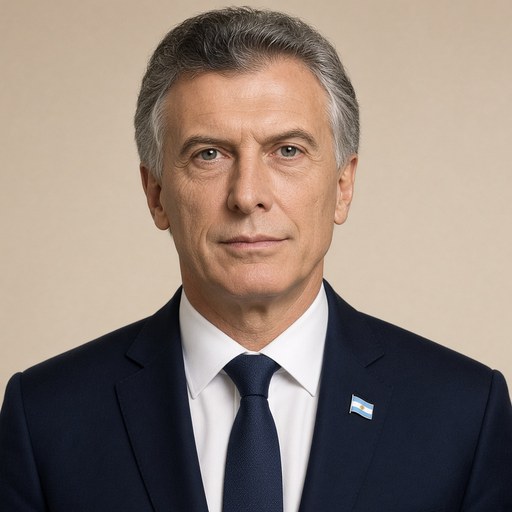
- Macri addressed Argentinians in a national broadcast on December 6, 2019, reviewing his four-year presidency as his term neared its end.
- Main themes
- Assessment of four-year presidential term, democratic institutions and rule of law, infrastructure development, energy policy and Vaca Muerta, economic reforms and crisis, renewable energy, drug trafficking and security, Argentina's integration into the world, social progress, political legacy
- Duration
- ~49 min
- Words
- 5,896
- Sentences
- 371
- Readability
- 59
- Grade
- 9.0
- Syntax
- 2.70
- Vocabulary
- 2.04
Translated from Spanish
The broad sphere of national life a sentence belongs to. Every sentence has an Arena, so it is the denominator the other indices are read against.
Other371 sentences in 151 paragraphs
Dear Argentinians. For the only time in these four years, except for the broadcasts of the opening speeches of the Congress sessions, I will use the national broadcast to speak to all of you.
During these years of government, many people asked me to make a broadcast detailing the state in which I found the country. And I did not do it. I believe it is more constructive to do it today.
We are close to the end of the year; it is a moment for assessment and reflection, and I think it is important that we take a few minutes to clearly review the place where we stand, because today our country is very different from that of December 2015.
Each one of us, from Jujuy to Tierra del Fuego, will be assessing a time in which many things changed in our lives and in our collective and family projects. We have all grown.
I humbly believe that in these four years there were many difficulties that we could not resolve, and that there are also many advances that we Argentinians have achieved, which mark a before and after for the Republic.
We have valued our institutions. Our democracy is stronger, more solid. Our justice system is more independent. Our press is freer. We have integrated into the world. We are safer against crime and drug trafficking. Politics is more decent.
If we take a little perspective, it is the first time in 100 years that a non-Peronist government with a minority in both chambers is finishing its term. This is not the achievement of a president or a party. This is an achievement of all Argentinians. It is a step forward in our democracy, especially in this delicate context for Latin America.
Today I want to talk about what we did in these four years of government, what we were able to achieve and what we could not.
I am convinced that in many important aspects we are better off than we were four years ago. I know, of course, that the results of our economic reforms did not arrive on time. And I regret that we could not recover from the crisis that began a year and a half ago.
When we arrived in 2015, we set six objectives:
- Improve the culture of power and the quality of our democracy
- Resolve our relationship with the world
- Combat drug trafficking and insecurity
- Promote human development beyond assistance
- Recover our energy and our infrastructure
- And correct the economic imbalances that we have had for so long, to initiate a period of growth on solid foundations.
In all these areas, we have made very important progress. I want to review them in detail, to tell you how we were four years ago, how we are now, and what we did in between.
I START WITH THE INFRASTRUCTURE AND ENERGY AXIS
When we arrived, we found a country without energy and with outdated infrastructure that did not allow Argentinians to connect with each other or with the rest of the world.
Energy was in a dramatic situation. We had gone from being an exporting country to an importing country, investments had been lacking for years, there were recurrent power outages, and renewable energy was almost nonexistent.
All those problems are fixed, thanks to measures we took and also thanks to the effort of all Argentinians, who in 2015 paid 15 percent of the cost of their gas bills and now pay around 80 percent.
Today we have resumed gas exports after 11 years, and this year we will achieve balance in the energy trade: exporting the same amount that we import. This is a very important saving for the country, which the next government will be able to take advantage of. Between 2011 and 2015, the country spent 40 billion dollars to import energy.
We also increased electrical capacity by almost 30 percent, thanks to new plants and renewable energy. This has already allowed us to reduce power outages by 40 percent, and this summer there will be even fewer, because the system has a much higher reserve capacity than before, capable of adapting to demand on very hot days.
In addition, we set Vaca Muerta in motion, which was almost paralyzed. Activity in Vaca Muerta has quadrupled in these years, with investments of several billion dollars and the increasingly close possibility of becoming a country with abundant and accessible energy for all.
Today we produce more gas than in 2015, after almost a decade of decline. Unconventional gas production has tripled, and unconventional oil production has quadrupled.
A key part of this process is the push for renewable energy, which when we arrived contributed less than 2 percent of our electricity, and we already have days when it contributes more than 15 percent. We started and completed 43 projects in 21 provinces, and there are another 98 projects underway. When they are finished, we will be able to reach 20 percent of the energy matrix supplied by renewables.
We leave a country with more energy, with investments underway, with natural gas in the Northeast, which it did not have before, with a social tariff for 3 million households, and with a less polluting matrix better prepared for climate change.
In infrastructure, we launched an ambitious plan across the country to update roads, trains, and airports that had become obsolete.
After four years, we left 700 kilometers of highways completed and another 1,600 kilometers underway. And more than 16,000 kilometers of national roads paved and improved.
We also improved a freight train system that had been in decline for 90 years. The Belgrano line, for example, used to take 15 days to go from Salta to Rosario, and now it makes trips with 100 wagons in just 7 days, and we have already conducted tests to reach in 3 days. Today it transports three times the amount of tons it did four years ago. This is only possible because we rehabilitated 900 kilometers of tracks.
And we did all this with transparency, without corruption, and at lower prices for the state, starting and finishing the works. After a decade in which the norm was the opposite: corruption, overpricing, works that were never completed.
For example, in these years, each kilometer of highway cost us 2.5 million dollars. Before it cost 4.7 million, almost double.
We also left a revolution in our way of flying and connecting as a country. When we arrived, flying was a privilege for a few; almost all routes passed through Buenos Aires, and Aerolíneas was in a critical situation. Many airports had become small or old, and radar and security technology was outdated.
In these years, the number of people traveling by plane in the country increased by almost 60 percent. We estimate that more than a million Argentinians traveled by plane for the first time. And we improved the infrastructure of 30 airports across the country, including Ezeiza, where the works are about to finish and it will be the most modern airport in South America.
The number of passengers who do not have to pass through Buenos Aires has multiplied by two and a half. The Córdoba hub, for example, went from having 17 connections to 30. The new airport in Mar del Plata now has double the passengers it did four years ago.
We also made a great effort to improve public transport. We created 10 new Metrobus corridors, which are now used by 2.5 million people. And we improved wagons, more than 100 stations, and thousands of kilometers of urban train tracks and cables.
This effort has been appreciated by users. Today, for example, 1.3 million people travel daily on metropolitan trains, 50 percent more than four years ago, thanks to greater comfort and safety. When we arrived, the SUBE card could only be used in 12 cities. Now it can be used in 39.
We also improved the ports so that our products can better reach the world. The expansion of the port of Comodoro Rivadavia, for example, allowed us to double its capacity. And for the first time, exporting a container from the Port of Buenos Aires is cheaper than doing so from the port of Santos in Brazil.
We also left a country connected to the Internet that was previously only partially connected. We brought the Internet to the smallest towns and to places where it had not reached before. The number of households with fixed Internet increased by 43 percent, and 4G is now available where 93 percent of the population lives.
The ARSAT fiber optic network previously had only 6,000 operational kilometers. Today it has 30,000 kilometers in operation.
SECOND AXIS. CULTURE OF POWER AND DEMOCRATIC QUALITY
When we started four years ago, one of the first things you proposed I change was the way we relate to each other. A change that had been demanded by society itself.
We were tired, fed up, with our collective failure. And that change began. I know it is still far from being completed. But the good news is that it has already begun and that there is no turning back. It does not belong to a President. Nor to a party or a government. It belongs to all of us. It is a common heritage.
It is an achievement of which we can be proud, regardless of how we think and how we voted.
I am glad to have been part of it, but I am even more glad and proud that today we can be a little more tolerant, more respectful of those who think differently, that we can recognize that in our differences lies not our weakness but our strength. That we can be better if we listen to each other, if we agree, if we work together.
Being President was an honor and an immense responsibility. I tried at all times to be at the service of all, seeking the best way to solve our problems, both the oldest and the newest.
I wanted to hear all points of view to choose the best and avoid making mistakes. And when I made mistakes, I sought to correct my errors as quickly as possible. And always, always, I told you the truth, as it should be in this Argentina that we are building.
We must be proud of having transformed a culture of power that was the protagonist of many decades of our history. There is no longer room for messianic leadership.
We lived four years of total freedom of expression and press. Without a war against journalism or attacks from the government against those who think differently. It is a collective achievement that we deserve to maintain.
In these years, I never criticized a journalist nor denied information that I thought was incorrect. We also ended the use of official advertising as a tool to reward or punish the media. In these years, the official advertising budget decreased by 70 percent.
I am also very proud of the improvements we made in the justice system. We left a justice system that functions much better than it did four years ago, with faster processes, closer to citizens and to victims of crime. We also left more than 300 judges and prosecutors appointed through a competitive process and approved by the Senate.
I give you two examples. Civil trials used to take an average of 5 years. Thanks to the changes we promoted, such as oral hearings, they now take only 1 year and 4 months.
The other example is the new Criminal Procedure Code. In Salta and Jujuy, where it is already functioning, drug trafficking cases are resolved in two weeks, when before they could take up to 3 years. More provinces will soon join.
In these years, we respected the independence of judges and gave them tools to investigate better. The law of the repentant is one of those tools. The law of flagrancy, which allows cases to be resolved in a few days, is another.
A paragraph on corruption. Argentinians have suffered for a long time the consequences of corruption in the state, partly because we had a state that did not control itself. After four years of reforms, we left a state in which it is much more difficult to steal the money of Argentinians.
There will always be rogues and thieves in all governments, but the state must ensure that they leave marked trails and be able to catch them.
The National State functions much better today than in 2015. When we arrived, we found a state without information or statistics, everything on paper, with little execution capacity, that poorly served citizens and mismanaged the money of Argentinians. And in which it was difficult to detect the corrupt.
Today we have a more effective state, with public information and reliable statistics. With more technology and execution (no more paper), that serves citizens better, as in ANSES or PAMI, uses the money of Argentinians better, and is much more transparent. All purchases and all decisions are recorded and can be accessible to citizens thanks to the Public Information Access Law, which we also enacted.
This new state, more modern and more transparent, will be good for the future government and those that come after, because they will be able to make better decisions. And it is good for citizens, because they have greater control and because they no longer feel like mere couriers of the state.
There are almost 2,000 procedures that used to be done in person and can now be done online. And we created Mi Argentina, where every Argentinian has a unique account to interact with the state, request appointments, and initiate and follow procedures remotely. It already has more than two million users.
We were the most federal government in a long time. In these years, we delivered funds and works to all provinces, even if the governors were from another party. We had good dialogue with everyone and solved concrete problems, such as the Conurbano Fund, which had been pending for almost 20 years. Or the contributions of the provinces to ANSES, another conflict that had lasted 25 years.
We left a State in which the provinces are no longer subject to the National Government's checkbook, but have the right to receive their funds automatically. When we arrived, many provinces could not even pay salaries.
Today, almost all of them are in good standing. When we arrived, 40 percent of national taxes went to the provinces. Now it is 50 percent.
I put my body into this federalist conviction: in these years I traveled more than 300,000 kilometers across the country.
State-owned companies. We turned around state-owned companies that were bankrupt and directionless. Today, all state-owned companies are better than they were four years ago. They have a strategy, are more transparent in their operations, and need less funding from the State. In 2015, the National State dedicated 1 percent of GDP to finance nearly bankrupt companies with no clear mission. This year it will be just over half.
I will give two examples. One is FADEA, the aircraft factory in Córdoba. In 2015, FADEA was idle, having produced its last plane in 2008. Its employees went to the plant but had no tasks. Now it is fully operational. It has delivered five Pampa aircraft, provides maintenance for commercial airlines, and has a record number of clients outside the State.
Tandanor, the shipyard, is another case that went from abandonment to being a thriving and successful company. It was losing one and a half million pesos a day in 2015. And this year it earned almost a million pesos a day, focusing on the repair of ships, mostly foreign.
I want to close the chapter on democratic quality with the recovery of INDEC and public statistics. We received an INDEC that manipulated and hid information about how Argentines live. We also received false or nonexistent statistics in many areas, such as education or security.
You cannot imagine how difficult it was to make decisions without having information. That is why I made sure that the next mandate has the information it needs to know where it stands.
After four years, we left a credible and professional INDEC, statistics recognized in security and education. A culture of open government and access to information. A State that tells the truth and does not hide information from citizens.
Two weeks ago, we sent a very good bill to Congress to consolidate the independence of INDEC and the public statistics system. I trust that Congress will approve it next year.
The most important thing in these years was realizing that it is possible to manage the State differently, with a healthy relationship with power, without corruption, without arrogance, with a desire to build. And I will demonstrate starting next week that it is also possible to do opposition differently, supporting the things we agree on and proposing alternatives when we do not agree. But always thinking about what is best for Argentines.
THIRD PILLAR. HUMAN DEVELOPMENT
Social protection is a State policy in Argentina. We promised four years ago to maintain and expand it, and that is what we did.
We believe in universal programs. And we believe that the State should help families in need. Our main effort in these years was to make the plans bridges to employment and that each family has a direct relationship with the State, without intermediaries or clientelism. We have fulfilled that.
Ninety-five percent of the beneficiaries of Hacemos Futuro, our most important plan, are finishing or have finished their studies. When we arrived, it was less than 50 percent.
In addition, today there are more than 4 million children receiving the AUH, 10 percent more than four years ago, because we expanded and sought out those who were not receiving it. And there are almost five million children covered by family allowances, 40 percent more than four years ago.
Among the elderly, we reached the highest coverage level in our history. Currently, more than 98 percent of those over 65 have some pension coverage.
In addition, thanks to the Historical Reparation, more than a million retirees are finally receiving what they are entitled to. Five hundred thousand stopped receiving the minimum pension. The percentage of retirees receiving the minimum is the lowest since the system was nationalized.
I am very proud of the progress we made in education. We believe in public education, and that is why we initiated a series of reforms to improve its quality.
When we arrived, we saw that there were no evaluation systems, that statistics had been altered, and that teachers and provinces did not know if what they were doing was working.
We launched the Aprender Tests to see where we stood, and from there we proposed a series of improvements that are already succeeding. The number of students with good performance in Language improved by almost 9 points, from 66 to 75 percent. The improvement was even greater, from 40 to 60 percent, in the group of vulnerable schools where we made an extra effort.
Soon we will start to see the same improvements in mathematics, where since last year we have been changing the entire teaching method, with a lot of support from teachers and provinces.
After four years, we also left systems for teaching programming, robotics, and English throughout the country that will help our children be better prepared and more connected to the world of the future. We are one of the five countries that teach digital tools best, according to UNESCO.
Gender. In these years, we supported the growing demand for equality between men and women coming from society. We took important measures to combat gender violence and developed the first comprehensive equality plan. We enabled a broad and respectful debate on abortion and passed several laws, such as the Brisa Law, which better protect victims of gender violence.
We also successfully launched the first national program to combat unintentional teenage pregnancy. We worked with 10 provinces to strengthen sexual education and facilitate access to long-acting contraceptive methods. This allowed, among other reasons, to reduce births to mothers under 19 by more than 20 percent. I hope the programs can soon be expanded to the entire country.
PAMI. The change in PAMI in recent years is truly impressive. When we arrived, it was an agency known for corruption and poor care for its affiliates. Today it is financially sound, negotiates better prices with laboratories, is transparent, and, most importantly, has improved the quality of life for five million retirees.
PAMI affiliates today have benefits that those of other social security or prepaid plans do not have, such as the electronic prescription, which we launched a few months ago and will soon reach the entire country. And thanks to the better prices we negotiated in these years, retirees pay 30 percent less for their medications than affiliates of other social security systems.
I want to end this chapter on human development with the more than 1,000 early childhood spaces we inaugurated across the country, which each day welcome 115,000 children to provide them with quality care. These are children between 45 days and 3 years old who grow up stimulated and nourished while their parents can go out to work or study peacefully.
We also left El Estado en tu Barrio, a program that resolved more than 7 million procedures in places where the State had not reached before.
And we left a contemporary environmental policy, aligned with the rest of the world. We created nine national parks and protected areas, such as the Esteros del Iberá and Traslasierra, more than any other government. In addition, we started the most important work in 70 years to clean up the Riachuelo.
FOURTH PILLAR. ECONOMY
I want to explain what we tried to do in these years. And why I am convinced that, although the results of our reforms did not arrive on time, today we are better prepared to grow than we were four years ago.
First, let’s talk about the results. I do not leave satisfied with how much the economy grew during my term, or what the results of our fight against inflation and poverty were.
We faced a delicate situation in 2015, which we wanted to solve gradually. And for just over two years, we were successful. In 2017, the economy grew, salaries improved, and we had the lowest poverty rate in 25 years.
But we put ourselves in a too fragile situation. When we had the drought and the end of financing, we entered a crisis from which we could not recover.
By mid-year, it seemed we were turning the corner. Inflation had dropped for four consecutive months, and in July, the wholesale rate was only 0.1 percent. The economy was beginning to wake up. It grew almost 2 percent in July and had already recorded three consecutive months of year-on-year growth.
But then came the results of the PASO, which generated another jump in the dollar due to the fear of millions of Argentines who rushed to sell their pesos. That fear of the future and the lack of a sufficiently solid macroeconomic framework made us regress several steps.
And now here we are. The message I want to convey to you today is that, despite these results, in these years we worked hard, you and we, to organize our economy. And that a significant part of the work is already done. The next government will be able to rely on many of our reforms to initiate a period of growth.
I want to explain this effort to you in a bit more detail. When we arrived, we had the triple mission of simultaneously reducing the deficit, spending, and taxes, all at record levels. In all three, we managed to halt the trend and move in the right direction.
Let’s look, for example, at how the size of the State moved. After stable decades, it began to increase 15 years ago, nearly doubling. When we arrived, the State accounted for 41.5 percent of the economy, including provinces and municipalities. In these four years, we managed to change the trend and reduce that spending by 4 points. We are still well above our historical average, but at a more reasonable level.
With taxes, something very similar happened. After decades of stability, taxes began to rise 15 years ago to unprecedented levels. And, as we did with spending, we managed to break the trend and reduce the tax burden by three points. Still, taxes in Argentina remain too high. Small and medium-sized enterprises know it, entrepreneurs know it, and anyone who wants to grow and create jobs knows it. We must continue looking for ways to lower taxes.
A couple of paragraphs about the debt. There has been much talk in recent years about the growth of public debt and how it is a problem for the next government. I want to explain both things.
On one hand, there is a feeling that in 2015 the Argentine State had no debts. This is not true. In December 2015, the National State owed 240 billion dollars, and the debt had been growing for many years. Now we owe more, it is true, about 310 billion dollars, but that has a cause.
I already said this in the debate, but I think it is necessary to clarify it. In these years we had to borrow money, but two out of every three pesos we took were to pay off debts incurred by previous governments. The remaining peso was to cover the deficit we had in the first years and which this year, after a great effort, we almost no longer have.
An example of previous debts is the nationalization of Aguas Argentinas. During our administration, we faced the resolution of claims that began in the last 20 years and that we had to resolve. In addition to the nationalization of Aguas Argentinas, we also had to take on the pesification of rates and the breaking of electricity service concession contracts.
Today, public debt with the private sector is 50 percent of GDP. It is higher than in 2015, but it is not a worrying level for a country like ours. The problem we have with the debt is that we do not have credit to refinance it. This is where it is important for all political sectors to agree to give a signal of confidence. I commit to making my contribution in the future, from the role that I will have.
Another confusion in recent months is about what we did with the money the Fund gave us. Again, there is no mystery. And the numbers show it. Ninety-five percent of the Fund's loan was used to pay other dollar debts we had. And part of it is still in the reserves of the Central Bank. The government’s accounting works transparently, and the Fund's disbursements have 100 percent traceability.
In addition, since the debt with the Fund is cheaper than that of the private sector, over the life of the loan, the country will have saved 10 billion dollars in interest.
Let’s talk a little about the deficit. We received a very high fiscal deficit, of more than 5 percent, with a dangerous inertia, as it had been worsening year after year. During our term, we broke this trend and balanced the State's accounts. This is important. And I feel that it is an achievement of these years that fiscal balance has become part of the common sense of Argentine politics.
The path is to maintain budgetary balance, recover our currency, and dare to go out into the world. If we want to grow for many consecutive years, we must export more. In these years, our government also advanced in several ways to increase exports, which have been successful.
We made life easier for exporters, we removed obstacles of all kinds, we launched the Single Window for Foreign Trade, we created Exporta Simple, we opened more than 200 markets around the world. And our exporters responded.
Today we export 10 billion dollars more, or 16 percent, than four years ago.
That is why I say we are better prepared to grow. It is true that we could not see the fruits in these years, and that inflation is higher, but we have organized the foundations of our economy.
We have, for example, robust reserves in the Central Bank, something that did not exist in 2015. When we arrived, the Central Bank had negative net reserves. Today we leave 20 billion dollars more than we received.
We also have a dollar at a reasonable price. The next government will not be obliged to clarify a fictitious dollar as we and other Argentine governments had to do in the past.
In addition, for more than a year we have been exporting more than we import, so there is no need to generate extra dollars to pay for our imports. And our total external balance, the difference between the dollars we generate and those we consume, is the best in many years.
To recap: reserves, trade surplus, fiscal balance, external balance, competitive dollar, recovered energy, less spending, and lower taxes. All of this that we have now, and that we did not have in 2015, are important foundations for a solid economy that wants to grow.
These foundations can also be difficult to see, and some of you may wonder, “what does all this matter to me if my salary does not improve.” It is true, and it is a great frustration for me that it is so. But it is also true that all these conditions are essential for growth and to have more jobs and better salaries.
I regret not having been able to offer better results in these years. We ran into the same stone of so many decades in the lives of Argentines: the dollar. With each rise of the dollar came inflation and an increase in poverty.
But I want to make it clear to you that the effort has not been in vain. We did not lose four years. Only when we all agree on how to have a strong currency will we be able to grow and generate employment. That is something I learned in these years. The main problems of our economy cannot be solved by a single government. We have to do it together.
FIFTH AXIS. OUR RELATIONSHIP WITH THE WORLD
When we arrived, we were isolated, we had few allies, and a foreign policy based on confrontation and distrust. Mercosur was stagnant, with no progress, and we had one of the most closed economies in the world.
After four years, we leave an Argentina integrated into global conversations, a protagonist and respected, as we saw, for example, in the G-20 meeting we hosted a year ago.
In these years we led the condemnation of human rights violations in Venezuela and defended democracy in the region, as we also did in these last weeks.
We left a stronger Mercosur, and we left important trade agreements, with the European Union and other countries, that will allow us to integrate into globalization with time and a clear roadmap. Let us not lose that. Let us not retreat into ourselves believing that we can develop without engaging with the world.
This openness is what has allowed our companies like INVAP to shine in these years, which secured contracts in the Netherlands and other countries. And that is bringing our products and services, such as meat and software, to more and more countries. This is thanks to the push we gave and the more than 200 markets we opened in these years.
SIXTH AXIS. SECURITY AND DRUG TRAFFICKING
It was one of the priorities of our government and one of the areas where we had the most success. We wanted Argentine families to feel safe in their neighborhoods again, for the State to regain authority over the borders and areas taken by drug traffickers. And we have achieved that.
When we arrived, there was a sense of defeat against drug trafficking, as if it were a lost battle, not worth fighting. The security forces were demotivated and uncoordinated. And cooperation with other countries had been lost.
After four years, we leave organized and professional federal forces, respected by society and respectful of the law, with a clear role and committed to serving society.
And we leave a peaceful society, with fewer crimes. In these years, homicides have decreased by more than 30 percent, there are almost no more kidnappings, and there are fewer reports of thefts, and we had historic records of drug seizures.
This fight must continue. Argentina is no longer a safe place for drug trafficking networks. Let us do everything possible to keep it that way.
Argentina knew and could challenge years of “it cannot be done” to find a path for its development. Those advances will not be undone.
I am sure that what is in our hearts will not change, because when a people is determined to live based on certain values such as truth, freedom, and peace, there is no turning back.
It is not true that we must accept the limitations of what the country has been throughout its history. History is written in the present, and that attitude is the only one capable of building the future we deserve.
These were four years in which Argentines learned to face our problems head-on.
These were four years of learning, of concrete achievements, and of a maturity of which I am deeply proud.
I never doubted what this country could and will be able to do. Leaders are temporary. And that is something that all leaders must be clear about: it is not about us, it is about millions of people who want to live differently and have the right to do so.
In a few days, a new president will take office and a new stage will begin.
And he will receive the country with an unprecedented amount of information in the history of Argentina, with the details of each public policy that we promoted.
I do this because I know how the lack of information hinders and delays solutions. And I would never do anything to hinder the work of the incoming government.
Nothing can ever come before the Argentines.
I will continue to support them from the opposition, always in a constructive and responsible manner. Today there is a healthy alternative of power in Argentina. We will continue together with a solid presence in Congress, to keep working for everything that is still needed.
I have no intention of putting obstacles in the way of sensible and transparent proposals.
The future of Argentines depends no more and no less than on all Argentines. Each one from the place they choose to be.
Let us all make the effort of these years worthwhile.
The dream of this Argentina that we began to build together does not end today or ever.
Thank you very much, Argentines.
This was the greatest honor of my life, and I feel blessed by your affection and your trust.
See you soon.
The original Spanish. The tags above are read on the English translation's sentences.
Queridos argentinos. Por única vez en estos cuatro años, exceptuando las transmisiones de los discursos de la Apertura de Sesiones del Congreso, voy a utilizar la cadena nacional para hablarles a todos.
Durante estos años de gobierno muchísimas personas me pidieron que hiciera una cadena contando el estado en el que había encontrado el país. Y no lo hice. Creo que es más constructivo hacerlo hoy.
Estamos cerca de fin de año, es un momento de balances y de reflexión, y me parece importante que podamos tomarnos unos minutos para repasar de manera clara el lugar en el que estamos parados, porque hoy nuestro país es muy diferente de aquel de diciembre de 2015.
Cada uno de nosotros, desde Jujuy a Tierra del Fuego irá haciendo el balance de un tiempo en el que cambiaron muchas cosas en nuestras vidas y en nuestros proyectos colectivos y familiares. Todos hemos crecido.
Creo con mucha humildad que en estos cuatro años hubo muchas dificultades que no pudimos resolver, y que también hay muchos avances que los argentinos hemos conquistado y que son un antes y un después para la República.
Hemos valorado nuestras instituciones. Nuestra democracia es más fuerte, más sólida. Nuestra Justicia es más independiente. Nuestra prensa es más libre. Nos integramos al mundo. Estamos más seguros frente al delito y frente al narcotráfico. La política es más decente.
Si tomamos un poco de perspectiva, es la primera vez en 100 años que un gobierno no peronista y con minoría en ambas cámaras está terminando su mandato. Esto no es logro de un presidente o de un partido. Este es un logro de todos los argentinos. Es un avance en nuestra democracia, sobre todo en este contexto delicado para América Latina.
Hoy quiero hablar de qué hicimos en estos cuatro años de gobierno, de qué cosas pudimos lograr y cuáles no pudimos.
Estoy convencido de que en muchos aspectos importantes estamos mejor que hace cuatro años. Sé, por supuesto, que los resultados de nuestras reformas económicas no llegaron a tiempo. Y lamento que no hayamos podido recuperarnos de la crisis que empezó hace un año y medio.
Cuando llegamos en 2015 nos pusimos seis objetivos:
-Mejorar la cultura del poder y la calidad de nuestra democracia
-Resolver nuestro vínculo con el mundo
-Combatir el narcotráfico y la inseguridad
-Impulsar el desarrollo humano más allá de la asistencia
-Recuperar nuestra energía y nuestra infraestructura
-Y corregir los desequilibrios económicos que tenemos hace tanto tiempo, para iniciar un período de crecimiento con bases sólidas.
En todos estos ejes hemos logrado avances muy importantes. Quiero repasarlos en detalle, para contarles cómo estábamos hace cuatro años, cómo estamos ahora y que hicimos en el medio.
EMPIEZO POR EL EJE DE INFRAESTRUCTURA Y ENERGÍA
Cuando llegamos recibimos un país sin energía y con una infraestructura vieja que no permitía conectar a los argentinos entre sí ni con el resto del mundo.
La energía estaba en una situación dramática. Habíamos pasado de ser un país exportador a un país importador, faltaban inversiones desde hacía años, había cortes de luz recurrentes y casi no existían las energías renovables.
Todos esos problemas están arreglados, gracias a medidas que tomamos y también gracias al esfuerzo de todos los argentinos, que en 2015 pagaban el 15 por ciento del costo de sus facturas de gas y ahora pagan alrededor del 80 por ciento.
Hoy volvimos a exportar gas después de 11 años y este año vamos a alcanzar el equilibrio en la balanza energética: exportar lo mismo que importamos. Esto es un ahorro muy importante para el país, que el próximo gobierno va a poder aprovechar. Entre 2011 y 2015 el país había gastado 40.000 millones de dólares para importar energía.
También aumentamos casi un 30 por ciento la capacidad eléctrica, gracias a plantas nuevas y a las energías renovables. Esto ya nos permitió bajar un 40 por ciento los cortes de luz y este verano habrá menos todavía, porque el sistema tiene una capacidad de reserva muy superior a la de antes, capaz de adaptarse a la demanda en los días de mucho calor.
Además, pusimos en movimiento a Vaca Muerta, que estaba casi paralizada. La actividad en Vaca Muerta se multiplicó por cuatro en estos años, con inversiones por varios miles de millones de dólares y la posibilidad, cada vez más cercana, de convertirnos en un país con energía abundante y accesible para todos.
Hoy producimos más gas que en 2015, después de casi una década de caída. La producción de gas no convencional se multiplicó por tres y la de petróleo no convencional, por cuatro.
Una parte clave de este proceso es el impulso a las energías renovables, que cuando llegamos aportaban menos del 2 por ciento de nuestra electricidad y ya tenemos días en los que aportan más del 15 por ciento. Se empezaron y terminaron 43 proyectos, en 21 provincias, y hay otros 98 proyectos en obra. Cuando estén terminados vamos a poder llegar al 20 por ciento de la matriz energética abastecida por renovables.
Dejamos un país con más energía, con inversiones en marcha, con gas natural en el Noreste, que antes no tenía, con una tarifa social para 3 millones de hogares y con una matriz menos contaminante y mejor preparada para el cambio climático.
En infraestructura pusimos en marcha un plan ambicioso, en todo el país, para actualizar rutas, trenes y aeropuertos que habían quedado obsoletos.
Después de cuatro años dejamos 700 kilómetros de autopistas terminados y otros 1.600 kilómetros en marcha. Y más de 16.000 kilómetros de rutas nacionales pavimentadas y mejoradas.
Mejoramos también un sistema de trenes de carga que llevaba 90 años de decadencia. La línea Belgrano, por ejemplo, tardaba 15 días en ir desde Salta hasta Rosario y ahora ya hace viajes con 100 vagones en sólo 7 días, y ya hicimos pruebas para llegar en 3 días. Hoy transporta el triple de toneladas que hace cuatro años. Esto sólo es posible porque rehabilitamos 900 kilómetros de vías.
Y todo esto lo hicimos con transparencia, sin corrupción y precios más bajos para el Estado, empezando y terminando las obras. Después de una década en la que la norma era todo lo contrario: corrupción, sobreprecios, obras que nunca se terminaban.
Por ejemplo, en estos años cada kilómetro de autopista nos costó 2 millones y medio de dólares. Antes costaba 4,7 millones, casi el doble.
Dejamos también una revolución en nuestra manera de volar y de conectarnos como país. Cuando llegamos volar era un privilegio para pocos, casi todas las rutas pasaban por Buenos Aires y Aerolíneas estaba en una situación crítica. Muchos aeropuertos habían quedado chicos o viejos y la tecnología de radares y seguridad era anticuada.
En estos años aumentó casi un 60 por ciento la cantidad de gente que viaja en avión por el país. Calculamos que más de un millón de argentinos viajaron en avión por primera vez. Y mejoramos la infraestructura de 30 aeropuertos de todo el país, incluido Ezeiza, donde las obras están a punto de terminar y va a ser el aeropuerto más moderno de Sudamérica.
La cantidad de pasajeros que no tienen que pasar por Buenos Aires se multiplicó por dos y medio. El hub de Córdoba, por ejemplo, pasó de tener 17 conexiones a 30. Por el nuevo aeropuerto de Mar del Plata ya pasan el doble de pasajeros que hace cuatro años.
También hicimos un gran esfuerzo por mejorar el transporte público. Hicimos 10 corredores nuevos de Metrobus, que hoy usan 2 millones y medio de personas. Y mejoramos vagones, más de 100 estaciones y miles de kilómetros de vías y cables de los trenes urbanos.
Este esfuerzo fue valorado por los usuarios. Hoy, por ejemplo, viajan 1 millón 300 mil personas por día en los trenes metropolitanos, un 50 por ciento más que hace cuatro años, gracias a que tienen más comodidad y seguridad. Cuando llegamos, además, la SUBE se podía usar sólo en 12 ciudades. Ahora se puede usar en 39.
También mejoramos los puertos, para que nuestros productos puedan salir mejor al mundo. La ampliación del puerto de Comodoro Rivadavia, por ejemplo, permitió duplicar su capacidad. Y por primera vez exportar un contenedor desde el Puerto de Buenos Aires es más barato que hacerlo desde el puerto de Santos en Brasil.
Dejamos, también, un país conectado a Internet que antes sólo estaba conectado parcialmente. Llevamos Internet a los pueblos más chicos y a los lugares donde antes no llegaba. La cantidad de hogares con Internet fija aumentó un 43 por ciento y el 4G ya está donde vive el 93 por ciento de la población.
La red de fibra óptica de ARSAT antes sólo tenía 6.000 kilómetros operativos. Hoy tiene 30.000 kilómetros en funcionamiento.
SEGUNDO EJE. CULTURA DEL PODER Y CALIDAD DEMÓCRATICA
Cuando comenzamos hace cuatro años, una de las primeras cosas que ustedes me propusieron cambiar fue la manera de relacionarnos. Un cambio que venía siendo reclamado por la propia sociedad.
Estábamos cansados, hastiados, de nuestro fracaso colectivo. Y ese cambio comenzó. Yo sé que está aún muy lejos de haber concluido. Pero la buena noticia es que ya comenzó y que no tiene vuelta atrás. No pertenece a un Presidente. Ni a un partido ni a un gobierno. Nos pertenece a todos. Es un patrimonio común.
Es un logro del que podemos sentirnos orgullosos pensemos como pensemos y hayamos votado como hayamos votado.
Me alegra haber sido parte, pero más me alegra y me enorgullece que hoy podamos ser un poco más tolerantes, más respetuosos con los que piensan diferente, que podamos reconocer que en nuestras diferencias no reside nuestra debilidad sino nuestra fuerza. Que podemos ser mejores si nos escuchamos, si acordamos, si trabajamos juntos.
Ser Presidente fue un honor y una responsabilidad inmensa. Intenté en todo momento estar al servicio de todos, buscando la mejor manera de resolver nuestros problemas, los más antiguos y los más nuevos.
Quise escuchar todos los puntos de vista para elegir el mejor y evitar equivocarme. Y cuando me equivoqué, busqué corregir mis errores lo más rápido posible. Y siempre, siempre les dije la verdad, como debe ser en esta Argentina que estamos construyendo.
Tenemos que estar orgullosos de haber transformado una cultura del poder que fue protagonista de muchas décadas de nuestra historia. Ya no hay lugar para liderazgos mesiánicos.
Vivimos cuatro años de libertad total de expresión y de prensa. Sin guerra contra el periodismo ni ataques del Gobierno a quienes piensan distinto. Es un logro colectivo que nos merecemos mantener.
En estos años jamás critiqué a un periodista ni desmentí una información que me pareció incorrecta. También se acabó con nosotros el uso de la publicidad oficial como una herramienta para premiar o castigar a los medios. En estos años el presupuesto de publicidad oficial bajó un 70 por ciento.
Estoy muy orgulloso también de las mejoras que hicimos en la Justicia. Dejamos una Justicia que funciona mucho mejor que hace cuatro años, con procesos más rápidos, más cercanos a los ciudadanos y a las víctimas del delito. Dejamos también más de 300 jueces y fiscales designados por concurso y aprobados por el Senado.
Les doy dos ejemplos. Los juicios civiles antes tardaban 5 años en promedio. Gracias a los cambios que impulsamos, como las audiencias orales, ahora solo tardan 1 año y 4 meses.
El otro ejemplo es el nuevo Código Procesal Penal. En Salta y Jujuy, donde ya está funcionando, se resuelven casos por narcotráfico en dos semanas, cuando antes podían tardar hasta 3 años. Pronto se sumarán más provincias.
En estos años respetamos la independencia de los jueces y les dimos herramientas para que puedan investigar mejor. La ley del arrepentido es una de esas herramientas. La ley de flagrancia, que permite resolver casos en pocos días, es otra.
Un párrafo sobre corrupción. Los argentinos sufrimos durante mucho tiempo las consecuencias de la corrupción en el Estado, en parte porque teníamos un Estado que no se controlaba a sí mismo. Después de cuatro años de reformas, dejamos un Estado en el que es mucho más difícil robar la plata de los argentinos.
Siempre habrá pillos y ladrones, en todos los gobiernos, pero el Estado tiene que asegurarse de que dejen las huellas marcadas y poder atraparlos.
El Estado Nacional funciona hoy mucho mejor que en 2015. Cuando llegamos encontramos un Estado sin información ni estadísticas, todo en papel, con poca capacidad de ejecución, que atendía mal a los ciudadanos y gastaba mal la plata de los argentinos. Y en el que era difícil detectar a los corruptos.
Hoy tenemos un Estado más eficaz, con información pública y estadísticas confiables. Con más tecnología y ejecución (ya no hay más papel), que atiende mejor a los ciudadanos, como en el ANSES o el PAMI, usa mejor la plata de los argentinos y es mucho más transparente. Todas las compras y todas las decisiones quedan registradas, y pueden estar al alcance de los ciudadanos gracias a la Ley de Acceso a la Información Pública, que también sancionamos nosotros.
Este nuevo Estado, más moderno y más transparente, será bueno para el futuro Gobierno y los que vengan después, porque podrán tomar mejores decisiones. Y es bueno para los ciudadanos, porque tienen un mayor control y porque que ya no se sienten cadetes del Estado.
Hay casi 2.000 trámites que antes se hacían presenciales y hoy se pueden hacer por Internet. Y creamos Mi Argentina, donde cada argentino tiene una cuenta única para interactuar con el Estado, pedir turnos, iniciar y seguir trámites a distancia. Ya tiene más de dos millones de usuarios.
Fuimos el gobierno más federal en mucho tiempo. En estos años entregamos fondos y obras a todas las provincias, aunque los gobernadores fueran de otro partido. Con todos tuvimos buen diálogo y solucionamos problemas concretos, como el Fondo del Conurbano, que llevaba casi 20 años. O los aportes de las provincias a la ANSES, otro conflicto, que llevaba 25 años.
Dejamos un Estado en el que las provincias ya no están sometidas a la chequera del Gobierno Nacional, sino que tienen derecho a recibir sus fondos automáticamente. Cuando llegamos, muchas provincias no tenían ni para pagar los sueldos.
Hoy están casi todas saneadas. Cuando llegamos, el 40 por ciento de los impuestos nacionales iba a las provincias. Ahora es el 50 por ciento.
A esta convicción federalista le puse el cuerpo: en estos años hice más de 300.000 kilómetros de viajes por el país.
Empresas estatales. Dimos vuelta las empresas estatales, que estaban quebradas, sin dirección. Hoy todas las empresas estatales están mejor que hace cuatro años. Tienen una estrategia, son más transparentes en sus operaciones y necesitan menos financiamiento del Estado. En 2015 el Estado Nacional dedicó 1 punto del PBI para financiar empresas casi quebradas y sin una misión clara. Este año va a ser poco más de la mitad.
Doy dos ejemplos. Uno es FADEA, la fábrica de aviones en Córdoba. En 2015 FADEA estaba parada, había producido su último avión en 2008. Sus empleados iban a la planta pero no tenían tareas. Ahora está en plena actividad. Lleva entregados cinco aviones Pampa, hace mantenimiento para aerolíneas comerciales, y tiene récord de clientes por fuera del Estado.
Tandanor, el astillero, es otro caso que pasó del abandono a ser una empresa pujante y exitosa. Perdía un millón y medio de pesos por día en 2015. Y este año ganó casi un millón de pesos por día, enfocándose en la reparación de barcos, la mayoría extranjeros.
Quiero cerrar el capítulo de calidad democrática con la recuperación del INDEC y las estadísticas públicas. Recibimos un INDEC que manipulaba y escondía la información sobre cómo vivimos los argentinos. Además recibimos estadísticas falsas o inexistentes en muchas áreas, como educación o seguridad.
No imaginan lo difícil que fue tomar decisiones sin contar con información. Por eso me aseguré de que el mandato siguiente tenga la información que necesita para saber dónde está parado.
Después de cuatro años dejamos un INDEC creíble y profesional, estadísticas reconocidas en seguridad y educación. Una cultura de gobierno abierto y acceso a la información. De un Estado que dice la verdad y no esconde la información a los ciudadanos.
Hace dos semanas enviamos al Congreso un muy buen proyecto de ley para consolidar la independencia del INDEC y el sistema de estadísticas públicas. Confío en que el Congreso lo aprobará el año que viene.
Lo más importante de estos años fue darnos cuenta de que se puede gestionar el Estado de una manera distinta, con una relación sana con el poder, sin corrupción, sin prepotencia, con ganas de construir. Y voy a demostrar desde la semana que viene que también se puede hacer oposición de una manera distinta, apoyando las cosas con las que estamos de acuerdo y proponiendo alternativas cuando no estemos de acuerdo. Pero siempre pensando en qué es lo mejor para los argentinos.
TERCER EJE. DESARROLLO HUMANO
La protección social es una política de Estado en la Argentina. Prometimos hace cuatro años mantenerla y ampliarla y eso es lo que hicimos.
Creemos en los programas universales. Y creemos que el Estado debe ayudar a las familias que lo necesitan. Nuestro principal esfuerzo en estos años fue hacer que los planes sean puentes hacia el empleo y que cada familia tenga relación directa con el Estado, sin intermediarios ni clientelismo. Eso lo hemos cumplido.
El 95 por ciento de los titulares de Hacemos Futuro, nuestro plan más importante, está terminando o terminó sus estudios. Cuando llegamos eran menos del 50 por ciento.
Además, hoy hay más de 4 millones de chicos que reciben la AUH, un 10 por ciento más que hace cuatro años, porque ampliamos y fuimos a buscar a los que no la recibían. Y hay casi cinco millones de niños cubiertos por asignaciones familiares, un 40 por ciento más que hace cuatro años.
Entre los adultos mayores alcanzamos el nivel de cobertura más alto de nuestra historia. Actualmente más del 98 por ciento de los mayores de 65 años cuenta con alguna cobertura previsional.
Además, gracias a la Reparación Histórica, más de un millón de jubilados finalmente está cobrando lo que le corresponde. 500 mil dejaron de cobrar la mínima. El porcentaje de jubilados que cobra la mínima es el más bajo desde que se estatizó el sistema.
Estoy muy orgulloso de los progresos que hicimos en la educación. Creemos en la educación pública y por eso iniciamos una serie de reformas para mejorar su calidad.
Cuando llegamos vimos que no había sistemas de evaluación, que se habían alterado las estadísticas y que los maestros y las provincias no sabían si lo que hacían estaba funcionando.
Lanzamos las Pruebas Aprender, para ver dónde estábamos parados, y a partir de ahí planteamos una serie de mejoras que ya están teniendo éxito. La cantidad de alumnos con buen rendimiento en Lengua mejoró casi 9 puntos, del 66 al 75 por ciento. La mejora fue todavía mayor, del 40 al 60 por ciento, en el grupo de escuelas vulnerables donde hicimos un esfuerzo extra.
Pronto empezaremos a ver las mismas mejoras en matemática, donde desde el año pasado estamos cambiando todo el método de enseñanza, con mucho apoyo de los maestros y las provincias.
Dejamos también, después de cuatro años, sistemas de enseñanza de programación, robótica e inglés en todo el país que ayudarán a nuestros chicos a estar más preparados y mejor conectados con el mundo del futuro. Somos uno de los cinco países que mejor enseñan herramientas digitales, según la UNESCO.
Género. En estos años acompañamos la creciente demanda de igualdad entre hombres y mujeres que viene de la sociedad. Tomamos medidas importantes para combatir la violencia de género y elaboramos el primer plan integral de igualdad. Habilitamos un debate amplio y respetuoso sobre el aborto y sancionamos varias leyes, como la Ley Brisa, que cuidan mejor a las víctimas de la violencia de género.
También lanzamos con éxito el primer programa nacional para combatir el embarazo adolescente no intencional. Trabajamos con 10 provincias para fortalecer la educación sexual y facilitar el acceso a métodos anticonceptivos de larga duración. Esto permitió, entre otras razones, bajar más de un 20 por ciento los nacimientos de madres menores de 19 años. Ojalá los programas puedan ampliarse pronto a todo el país.
PAMI. Es realmente impresionante el cambio en el PAMI en los últimos años. Cuando llegamos era un organismo conocido por la corrupción y por la mala atención a sus afiliados. Hoy está saneado económicamente, pelea mejor sus precios con los laboratorios, es transparente y, lo más importante, mejoró la calidad de vida de cinco millones de jubilados.
Los afiliados al PAMI hoy tienen beneficios que no tienen los de otras obras sociales o prepagas, como la receta electrónica, que lanzamos hace unos meses y pronto llegará a todo el país. Y gracias a que en estos años negociamos mejores precios, los jubilados pagan por sus medicamentos un 30 por ciento menos que los afiliados de otras obras sociales.
Quiero terminar este capítulo sobre desarrollo humano con los más de 1.000 espacios de primera infancia que inauguramos en todo el país, y que cada día reciben a 115.000 niños y niñas para darles una atención de calidad. Son chicos de entre 45 días y 3 años que crecen estimulados y alimentados mientras sus padres o madres pueden salir a trabajar o estudiar tranquilos.
Dejamos también El Estado en tu Barrio, un programa que resolvió más de 7 millones de trámites en lugares a donde el Estado antes no llegaba.
Y dejamos una política ambiental contemporánea, alineada con la del resto del mundo. Creamos nueve parques nacionales y áreas protegidas, como los Esteros del Iberá y Traslasierra, más que ningún otro gobierno. Además, empezamos la obra más importante en 70 años para limpiar el Riachuelo.
CUARTO EJE. ECONOMÍA
Quiero explicarles qué intentamos hacer en estos años. Y por qué estoy convencido de que, aunque los resultados de nuestras reformas no llegaron a tiempo, hoy estamos mejor preparados para crecer que hace cuatro años.
Primero hablemos de los resultados. No me voy satisfecho con cuánto creció la economía en mi mandato, o cuáles fueron los resultados de nuestra lucha contra la inflación y la pobreza.
Enfrentamos en 2015 una situación delicada, que quisimos solucionar de a poco. Y durante algo más de dos años tuvimos éxito. En 2017 creció la economía, mejoraron los salarios y tuvimos la pobreza más baja en 25 años.
Pero nos pusimos nosotros mismos en una situación demasiado frágil. Cuando tuvimos la sequía y el fin del financiamiento, entramos en una crisis de la que no pudimos recuperarnos.
A mediados de este año parecía que estábamos dando la curva. La inflación había bajado cuatro meses seguidos y en julio la mayorista había sido sólo del 0,1 por ciento. La economía empezaba a despertarse. Creció casi 2 por ciento en julio y ya llevaba tres meses seguidos de crecimiento interanual.
Pero después vinieron los resultados de las PASO, que generaron otro salto en el dólar por el miedo de millones de argentinos que salieron a vender sus pesos. Ese miedo al futuro y la falta de un esquema macroeconómico lo suficientemente sólido nos hicieron retroceder varios casilleros.
Y ahora acá estamos. El mensaje que quiero darles hoy es que, a pesar de estos resultados, en estos años trabajamos mucho, ustedes y nosotros, para ordenar nuestra economía. Y que una parte importante del trabajo ya está hecho. El próximo gobierno va a poder apoyarse en muchas de nuestras reformas para iniciar un período de crecimiento.
Quiero explicarles ahora este esfuerzo con algo más de detalle. Cuando llegamos tuvimos la triple misión de bajar al mismo tiempo el déficit, el gasto y los impuestos que estaban todos en niveles récord. En los tres logramos frenar la tendencia y avanzar en el sentido correcto.
Miremos por ejemplo como se movió el tamaño del Estado. Después de décadas estables, hace 15 años empezó a aumentar, hasta casi duplicarse. Cuando llegamos, el Estado ocupaba el 41,5 por ciento de la economía, incluyendo a las provincias y los municipios. En estos cuatro años logramos cambiar la tendencia y bajar 4 puntos ese gasto. Todavía estamos muy por encima de nuestro promedio histórico, pero en un nivel más razonable.
Con los impuestos pasó algo muy similar. Después de décadas de estabilidad, los impuestos empezaron a subir hace 15 años hasta niveles nunca vistos. Y, como hicimos con el gasto, logramos romper la tendencia y bajar la presión impositiva tres puntos. Igual los impuestos en Argentina siguen siendo demasiado altos. Lo saben las pymes, lo saben los emprendedores y lo sabe cualquiera que quiere crecer y dar trabajo. Tenemos que seguir buscando maneras de bajar los impuestos.
Un par de párrafos sobre la deuda. Se ha hablado mucho en estos años sobre el crecimiento de la deuda pública y de cómo es un problema para el próximo gobierno. Quiero explicar las dos cosas.
Por un lado, existe la sensación de que en 2015 el Estado argentino no tenía deudas. Esto no es cierto. En diciembre de 2015 el Estado Nacional debía 240.000 millones de dólares y la deuda venía creciendo hacía muchos años. Ahora debemos más, es cierto, unos 310.000 millones de dólares, pero eso tiene una causa.
Esto ya lo dije en el debate, pero me parece necesario aclararlo. En estos años tuvimos que pedir plata prestada, pero dos de cada tres pesos que tomamos fueron para pagar vencimientos de deudas tomadas por gobiernos anteriores al nuestro. El peso restante fue para pagar el déficit que tuvimos los primeros años y que este año, después de un gran esfuerzo, ya casi no tenemos.
Un ejemplo de deudas anteriores es la estatización de Aguas Argentinas. Enfrentamos durante nuestra administración la resolución de reclamos que se iniciaron en los últimos 20 años y que nos tocó resolver a nosotros. Además de la estatización de Aguas Argentinas también nos tocó hacernos cargo de la pesificación de tarifas y ruptura de contratos de concesión de servicios de electricidad.
Hoy la deuda pública con el sector privado es del 50 por ciento del PBI. Es más alto que en 2015, pero no es un nivel preocupante para un país como el nuestro. El problema que tenemos con la deuda es que no tenemos crédito para refinanciarla. Es acá donde es importante ponernos de acuerdo entre todos los sectores políticos para dar una señal de confianza. Yo me comprometo a hacer mi aporte en el futuro, desde el rol que me toque.
Otra confusión de los últimos meses es sobre qué hicimos con la plata que nos dio el Fondo. Otra vez, no hay misterio. Y los números lo muestran. El 95 por ciento del préstamo del Fondo los usamos para pagar otros vencimientos en dólares que teníamos. Y una parte todavía está en las reservas del Banco Central. La contabilidad del gobierno funciona de manera transparente y los desembolsos del Fondo tienen 100 por ciento de trazabilidad.
Además, como la deuda con el Fondo es más barata que la del sector privado, a lo largo de la vida del préstamo el país se habrá ahorrado 10.000 millones de dólares de intereses.
Hablemos un poco de déficit. Recibimos un déficit fiscal altísimo, de más del 5 por ciento, y con una inercia peligrosa, porque venía empeorando año a año. En nuestro mandato rompimos esta tendencia y equilibramos las cuentas del Estado. Esto es importante. Y siento que es una conquista de estos años que el equilibrio fiscal se haya convertido en parte del sentido común de la política argentina.
El camino pasa por mantener el equilibrio presupuestario, recuperar nuestra moneda y animarnos a salir al mundo. Si queremos crecer muchos años seguidos, tenemos que exportar más. En estos años nuestro gobierno también avanzó en varios caminos para aumentar las exportaciones, que tuvieron éxito.
Les hicimos la vida más fácil a los exportadores, quitamos trabas de todo tipo, lanzamos la Ventanilla Única de Comercio Exterior, creamos Exporta Simple, abrimos más de 200 mercados en todo el mundo. Y nuestros exportadores respondieron.
Hoy exportamos 10.000 millones de dólares más, o un 16 por ciento, que hace cuatro años.
Por eso digo que estamos mejor preparados para crecer. Es cierto que no pudimos ver los frutos en estos años, y que la inflación es más alta, pero ordenamos las bases de nuestra economía.
Tenemos, por ejemplo, reservas robustas en el Banco Central, algo que en 2015 no había. Cuando llegamos el Banco Central tenía reservas netas negativas. Hoy dejamos 20.000 millones de dólares más de los que recibimos.
Tenemos también un dólar a un precio razonable. El próximo gobierno no va a estar obligado a sincerar un dólar ficticio como sí tuvimos que hacer nosotros y otros gobiernos argentinos en el pasado.
Además, hace más de un año que exportamos más de lo que importamos, por lo que no hace falta generar dólares extra para pagar nuestras importaciones. Y nuestro balance externo total, la diferencia entre los dólares que generamos y los que consumimos, es el mejor en muchos años.
Repasando: reservas, superávit comercial, equilibrio fiscal, equilibrio externo, dólar competitivo, energía recuperada, menos gasto y menos impuestos. Todo esto que tenemos ahora, y que no teníamos en 2015, son cimientos importantes para una economía sólida que quiere crecer.
Estos cimientos también pueden ser difíciles de ver, y alguno de ustedes puede preguntarse “qué me importa a mí todo eso si mi salario no mejora”. Es cierto, y es una gran frustración para mí que sea así. Pero también es cierto que todas estas condiciones son indispensables para crecer y tener más trabajo y mejores salarios.
Lamento no haber podido ofrecer mejores resultados en estos años. Nos chocamos contra la misma piedra de tantas décadas en la vida de los argentinos: el dólar. Con cada suba del dólar venían después la inflación y el aumento de la pobreza.
Pero quiero dejarles en claro que el esfuerzo no ha sido en vano. No perdimos cuatro años. Solo cuando todos nos pongamos de acuerdo sobre cómo tener una moneda fuerte vamos a poder crecer y generar empleo. Eso es algo que aprendí en estos años. Los problemas principales de nuestra economía no puede solucionarlos un solo gobierno. Tenemos que hacerlo entre todos.
QUINTO EJE. NUESTRA RELACIÓN CON EL MUNDO
Cuando llegamos estábamos aislados, teníamos pocos aliados y una política exterior basada en la confrontación y la desconfianza. El Mercosur estaba estancado, sin progresos, y teníamos una de las economías más cerradas del mundo.
Dejamos, después de cuatro años, una Argentina integrada en las conversaciones globales, protagonista y respetada, como vimos, por ejemplo, en la reunión del G-20 que recibimos hace un año.
En estos años lideramos la condena a las violaciones a los derechos humanos en Venezuela y defendimos la democracia en la región, como hicimos también en estas últimas semanas.
Dejamos un Mercosur más fuerte, y dejamos acuerdos comerciales importantes, con la Unión Europea y otros países, que nos permitirán incorporarnos a la globalización con tiempo y una hoja de ruta clara. No perdamos eso. No volvamos a refugiarnos dentro de nosotros mismos creyendo que podemos desarrollarnos sin salir al mundo.
Esta apertura es lo que en estos años permitió brillar a empresas nuestras como el INVAP, que consiguió contratos en Holanda y otros países. Y que está llevando nuestros productos y nuestros servicios, como la carne y el software, a cada vez más países. Esto es gracias al impulso que le dimos y a los más de 200 mercados que abrimos en estos años.
SEXTO EJE. SEGURIDAD Y NARCOTRAFICO
Fue una de las prioridades de nuestro gobierno y una de las áreas donde más éxito tuvimos. Quisimos que las familias argentinas volvieran a sentirse seguras en sus barrios, que el Estado recupere la autoridad sobre las fronteras y las zonas tomadas por el narco. Y lo hemos logrado.
Cuando llegamos había una sensación de derrota contra el narcotráfico, como si fuera una lucha perdida, que no valía la pena. Las fuerzas de seguridad estaban desmotivadas y sin coordinación. Y se había perdido la cooperación con otros países.
Después de cuatro años dejamos unas fuerzas federales ordenadas y profesionales, respetadas por la sociedad y respetuosas de la ley, con un rol claro y comprometidas en servir a la sociedad.
Y dejamos una sociedad en paz, con menos delitos. En estos años bajaron más de un 30 por ciento los homicidios, ya casi no hay más secuestros, y hay menos denuncias de robos y tuvimos récords históricos de incautaciones de droga.
Esta lucha debe continuar. Argentina ya no es un lugar seguro para las redes de narcotráfico. Hagamos lo posible para que siga así.
La Argentina supo y pudo desafiar años de “no se puede” para encontrar un cauce para su desarrollo. Esos avances no serán desandados.
Estoy seguro de que lo que está en nuestros corazones no va a cambiar, porque cuando un pueblo está decidido a vivir a partir de ciertos valores como la verdad, la libertad y la paz, no hay vuelta atrás.
No es cierto que debamos aceptar las limitaciones de lo que el país fue a lo largo de su historia. La historia se escribe en el presente, y esa actitud es la única capaz de construir el futuro que merecemos.
Fueron 4 años en los que los argentinos aprendimos a mirar de frente nuestros problemas.
Fueron 4 años de aprendizajes, de logros concretos, y de una madurez de la que estoy profundamente orgulloso.
Nunca tuve dudas de lo que este país podía y podrá. Los dirigentes somos circunstanciales. Y eso es algo que todos los líderes debemos tener en claro: no se trata de nosotros, se trata de millones de personas que quieren vivir de otra manera y tienen derecho a hacerlo.
En unos días asumirá un nuevo presidente y empieza una nueva etapa.
Y va a recibir el país con una cantidad de información inédita en la historia de la Argentina, con el detalle de cada política pública que impulsamos.
Lo hago porque sé cómo la falta de información entorpece y retrasa las soluciones. Y jamás haría algo para entorpecer el trabajo del gobierno entrante.
Nada nunca puede estar por delante de los argentinos.
Voy a seguir acompañándolos desde la oposición, siempre de manera constructiva y responsable. Hoy hay una alternativa sana de poder en la Argentina. Vamos a seguir juntos con una presencia sólida en el Congreso, para seguir trabajando por todo lo que falta.
No tengo ninguna intención de poner trabas a propuestas sensatas y transparentes.
El futuro de los argentinos depende ni más ni menos que de todos los argentinos. Cada uno desde el lugar que decida estar.
Hagamos entre todos que el esfuerzo de estos años valga la pena.
El sueño de esta Argentina que empezamos a construir juntos no se termina hoy ni nunca.
Muchas gracias argentinos.
Éste fue el honor más grande de mi vida y me siento bendecido por su cariño y por su confianza.
Hasta pronto.