




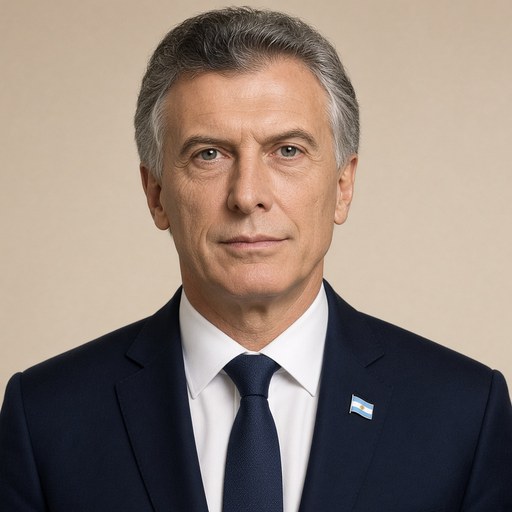
President Mauricio Macri visited the "José Manuel Estrada" Normal School in the city of Corrientes.
 Mauricio Macri · President of Argentina
- Context
- Macri addressed students, teachers, and officials at the José Manuel Estrada Normal School in Corrientes during a school renovation visit in November 2017.
- Main themes
- Education reform, digital skills and technology in education, equality of opportunity, teacher evaluation, 21st century jobs, public school quality, Argentina's reform agenda, regional development in Corrientes, school renovation
- Duration
- ~10 min
- Words
- 1,189
- Sentences
- 29
- Readability
- 45
- Grade
- 17.0
- Syntax
- 3.51
- Vocabulary
- 1.81
Translated from Spanish
The broad sphere of national life a sentence belongs to. Every sentence has an Arena, so it is the denominator the other indices are read against.
Other29 sentences in 14 paragraphs
Good morning, dear people of Corrientes; good morning, dear Governor. I have lost count of how many times I have come to Corrientes as president, nine? Nine times; and that is few considering how lovely it is for me to come, because every time I come back to the Capital filled with energy, filled with joy, the kind that only you can express with such vitality.
And I am also happy to be here, Ricardo, to have been part of bringing this establishment, which is a historical monument, up to date, which has been educating for one hundred thirty years. I was told that the building will turn one hundred in two more years, but the Institution has been around for one hundred thirty years. One hundred thirty years of creating dreams, because that is what a school is, the place, the space where children begin to dream about what they can do, what they want to do tomorrow. And they dream hand in hand with our wonderful teachers, who are the fundamental protagonists of this very important stage for the children. And they learn much more than mathematics - which almost everyone hates, but which is becoming increasingly important - or physics, or chemistry, or geography: they learn to work as a team; they learn the value of friendship; they learn to respect the rules set by their teachers; they learn that by overcoming challenges and making an effort, things can be achieved. And these are the fundamental tools for what comes next, which is life and work.
And we are in a very special stage of the world, the world has accelerated, the technological change has accelerated, the digital world has advanced, and it is a huge challenge, Minister, for teachers, for all of us who are immigrants to technology, it is something that is difficult for us, but we realize that if we do not acquire these tools, we will be left out for many years from all the things we can do. And the most important thing is that if our teachers do not acquire these tools, and cannot pass them on to the children, the children will not have access to the jobs of the 21st century. And we are talking about all the tools of digitalization, we are talking about programming, we are talking about robotics, we are talking about 3D printers, all these new accesses we have to technology to be able to - I insist - acquire that work that allows us to be what we want to develop as a person; that allows us to choose, choose where to live, where to work; and that those people from Corrientes who love their place, their city, do not have to leave it due to lack of work, because they will have the tools to carry it out.
And the most important thing is that this revolution we have embarked on, and that we have agreed upon with all the governors back in Purmamarca, aims for equality of opportunity; that children, whether they were born in the place, in the province, in the city they were assigned, have access to all those tools, so that from there, from a quality public education, they have the same opportunities as anyone else.
That is why it is very important, very important!, that we deepen the dialogue. When I see the union leaders of the teachers - who I feel represent less and less what the teachers tell me when I visit them - opposing evaluation, how can we oppose evaluation? If we do not know where we are failing, how are we going to improve? We need to have information.
And the most important thing - and I have committed to this from day one with all Argentines - is that we need to know the truth, we need to know that the children who finish school are really prepared to enter university or acquire a good job. And we all know today, from the first evaluations, that it is not true, that it does not happen, that only one in four children who starts public education in Argentina is in a position to access a good job.
So we have a lot to improve, and we want to make that improvement together, government, unions, teachers, parents, all agreeing on what values we want to transmit to our children.
It is a path that is just beginning, I have said that Argentina has entered a stage of permanent reformism, because that is how the world is. But I want to tell you - as we approach two years of government - that we have made a lot of progress since day one: this change generates respect, admiration, and support around the world, we have seen it with this tragedy we are experiencing with the disappearance of the submarine, people from all over the world have come to say: “we want to help you, Argentines, we want to give you all our support, the best technology, to see if together we can find the submarine.” That shows that the world is giving us an opportunity.
And now more than ever it depends on us to be able to show them that we have truly learned from our mistakes, and that now we want to work together, respecting one another, without seeking shortcuts and tricks that have only generated a lot of poverty throughout the country.
To conclude, since the Governor got a bit romantic, saying that this might be the last time - fortunately as Governor he has done much better than as a goalkeeper, otherwise Corrientes would be like he did - But the truth is, Ricardo, I want to tell you that even though you are a bit dry always, it is a bit difficult to get a word out of the Governor, but as one gets to know him, one grows fond of him, because what one sees is that he has a huge heart full of love for his province, for all of you.
So I want to say that we will continue to work together, because there are many things to do in Argentina, and I trust, and the people of Corrientes trust, that while the new governor takes care of the day-to-day in the province, he will be helping us think about what other tools we need to build for the growth of Argentina to advance.
Thank you, dear people of Corrientes for believing, thank you for continuing to support this cultural change we have started in Argentina, an Argentina where we believe in the values that have to do with the fact that those who are good people, those who strive, who work, who coexist and respect their neighbor are the ones who should do well, and never again those who lie, those who cheat.
We are on the path to building a country based on love and good coexistence, and moving away forever from intolerance and violence that have only been accomplices of the poverty we are fighting against today.
Thank you all and let’s keep working.
The original Spanish. The tags above are read on the English translation's sentences.
Buenos días queridos correntinos; buenos días querido Gobernador. Ya perdí la cuenta de la cantidad de veces que he venido como presidente a Corrientes, ¿nueve? Nueve veces; y son pocas por lo lindo que es para mí venir, porque cada vez que vengo me vuelvo para la Capital lleno de energía, lleno de alegría, esa que solamente ustedes pueden expresar con tanta vitalidad.
Y feliz también de estar acá, Ricardo, para haber sido parte de poner al día este establecimiento que es un monumento histórico, que tiene ciento treinta años de educar, me dijeron que el edificio va a cumplir cien en dos años más, pero la Institución lleva ciento treinta años. Ciento treinta años de fabricar sueños, porque eso es lo que es una escuela, el lugar, el espacio donde los chicos empiezan a soñar en qué es lo que pueden hacer, qué quieren hacer en día de mañana. Y sueñan de la mano de nuestros maravillosos docentes, que son los protagonistas fundamentales de esta etapa tan importante para los chicos. Y aprenden mucho más que matemática -que la odian casi todos, pero que es cada vez más importante- o física, o química o geografía: aprenden a trabajar en equipo; aprenden el valor de la amistad; aprenden el respetar las reglas que les ponen los maestros; aprenden que superándose y esforzándose las cosas se alcanzan. Y son las herramientas fundamentales para lo que viene después, que es la vida y el trabajo.
Y estamos en una etapa muy especial del mundo, el mundo aceleró, aceleró el cambio tecnológico, avanzó el mundo digital, y es un desafío enorme, Ministra, para los docentes, para todos los que somos inmigrantes a la tecnología es una cosa que nos cuesta, pero nos damos cuenta que si no adquirimos esas herramientas nos vamos a quedar afuera por muchos años de todas las cosas que podemos hacer. Y lo más importante es que si nuestros docentes no adquieren esas herramientas, y no se las pueden transmitir a los chicos, los chicos no van a tener acceso a los trabajos del Siglo XXI. Y hablamos de todas las herramientas de la digitalización, hablamos de programación, hablamos de robótica, hablamos de impresoras 3D, de todos estos nuevos accesos que tenemos a la tecnología para poder -insisto- adquirir ese trabajo que nos permita ser lo que queremos desarrollar como persona; que nos permita elegir, elegir dónde vivir, dónde trabajar; y que aquellos correntinos que aman su lugar, su ciudad, no tengan que abandonarla por falta de trabajo, porque van a tener las herramientas para llevarlas a cabo.
Y lo más importante es que esta revolución que hemos emprendido, y que hemos acordado junto a todos los gobernadores allá en Purmamarca, tiene como objetivo la igualdad de oportunidades; que los chicos, hayan nacido en el lugar, en la provincia, en la ciudad que les haya tocado, tengan acceso a todas esas herramientas, para desde ahí, desde una educación pública de calidad, tener las mismas oportunidades que cualquier otro.
Por eso es muy importante, ¡muy importante!, que logremos profundizar el diálogo. Cuando veo a los líderes gremiales de los docentes -que siento que cada vez representan menos lo que los docentes me dicen a mí cuando los visito- oponerse a la evaluación, ¿cómo nos vamos a oponer a la evaluación? Si no sabemos en qué estamos fallando, ¿cómo vamos a mejorar? Necesitamos tener información.
Y lo más importante -y que yo me he comprometido desde el primer día con todos los argentinos- es que necesitamos saber la verdad, necesitamos saber que realmente los chicos que terminan el colegio están preparados para ingresar a la universidad o adquirir un buen trabajo. Y eso todos hoy sabemos, por las primeras evaluaciones, que no es verdad, que no sucede, que solamente uno de cada cuatro chicos que comienza hoy en la Argentina la educación pública está en condiciones de acceder a un buen trabajo.
Entonces tenemos muchísimo por mejorar, y esa mejora la queremos hacer en conjunto, Gobierno, gremios, docentes, padres, todos poniéndonos de acuerdo en cuáles son los valores que queremos transmitirles a nuestros chicos.
Es un camino que recién comienza, yo he dicho que la Argentina entró en una etapa de reformismo permanente, porque así está el mundo. Pero yo quiero decirles -a punto de cumplir dos años de gobierno- que hemos avanzado mucho desde el primer día: este cambio genera respeto, admiración y apoyo en el mundo entero, lo hemos visto con esta tragedia que estamos viviendo con la desaparición del submarino, han venido de todas partes del mundo a decir: “queremos ayudarlos, argentinos, queremos darles todo nuestro apoyo, la mejor tecnología, para ver si juntos encontramos el submarino”. Eso demuestra que el mundo nos está dando una oportunidad.
Y ahora más que nunca depende de nosotros que seamos capaces de demostrarles que aprendimos de verdad de nuestros errores, y que ahora queremos trabajar juntos, respetándonos unos a otros, sin más búsqueda de atajos y de avivadas que lo único que han generado es mucha pobreza por todo el país.
Para terminar, dado que se me puso un poco romántico el Gobernador, de que por ahí es la última vez -por suerte como Gobernador anduvo mucho mejor que como arquero, sino Corrientes estaría así como hizo él (RISAS)-. Pero la verdad, Ricardo, quiero decirte que por más que sos medio seco siempre, es medio difícil sacarle una palabra al Gobernador, pero cuando uno lo va conociendo se va encariñando, porque lo que ve es que tiene un corazón enorme y lleno de amor por su provincia, por todos ustedes. (APLAUSOS).
Entonces quiero decirle que vamos a seguir trabajando juntos, porque hay muchas cosas por hacer en la Argentina, y confío, y los correntinos confían, que mientras el nuevo gobernador se ocupa del día a día en la provincia, él va a estar ayudándonos a pensar qué otras herramientas necesitamos construir para que el crecimiento de la Argentina avance.
Gracias queridos correntinos por creer, gracias por seguir apoyando este cambio cultural que hemos empezado en la Argentina, una Argentina donde creemos en los valores que tienen que ver con que a aquel que es buena persona, aquel que se esfuerza, que trabaja, que convive y respeta a su vecino es al que le tiene que ir bien, y nunca más al que miente, al que estafa.
Estamos en el camino de construir un país basado en el amor y la buena convivencia, y alejarnos para siempre de la intolerancia y la violencia que solamente han sido cómplices de la pobreza contra la cual hoy luchamos.
Gracias a todos y a seguir trabajando. (APLAUSOS)