




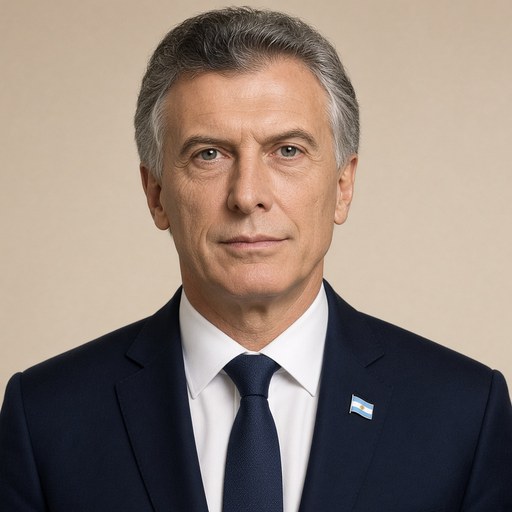
Words of the President of the Nation, Mauricio Macri, at the opening ceremony of the First National Day of Energy Efficiency.
 Mauricio Macri · President of Argentina
- Context
- Macri spoke at the opening of Argentina's First National Day of Energy Efficiency in Buenos Aires on December 15, 2016, addressing energy policy reform.
- Main themes
- Energy efficiency, energy policy reform, energy self-sufficiency, tariff reform and consumption culture, infrastructure investment, corruption in energy sector, climate change and flooding, job creation, regulatory reform, national recovery and hope
- Duration
- ~15 min
- Words
- 1,749
- Sentences
- 42
- Readability
- 37
- Grade
- 18.4
- Syntax
- 3.84
- Vocabulary
- 1.97
Translated from Spanish
The broad sphere of national life a sentence belongs to. Every sentence has an Arena, so it is the denominator the other indices are read against.
Other42 sentences in 22 paragraphs
Good morning.
Thank you, Horacio, for welcoming us into your home, this wonderful building that you described so well, and that amazes all those who visit it. When I was receiving the people from Huawei, the president and founder of Huawei, who had just met with you, told me, "How crazy, I already told my team about the next Huawei building that we have to make for eight thousand people—they grow at that speed at Huawei—we want one just like the one the Government of the City of Buenos Aires has."
Thank you, Juanjo, for inviting me to participate in this First Energy Efficiency Day, and especially for the work you have done throughout this year, which has been the most complicated of all.
I also want to deeply thank the former secretaries of Energy who are here, because in a country where we have to learn the culture of dialogue, the culture of responsibility, the culture of telling the truth, of committing to things that are sometimes not politically correct, that terrible phrase that has been invented and that generally shelters things that are wrong but that must be done anyway, I do not understand why we have to do something that is wrong, if it is wrong, just because it is "politically correct."
The former secretaries of Energy have been saying politically incorrect things for many years, and they reiterated them during all these months of deep debate about what happened with our energy model, about what happened with our energy reality, that a terrible energy policy from the previous government led us to run out of energy, to lose self-sufficiency, to lose independence, to create dependency, and to generate a tremendous fiscal deficit.
And also, given that the prices of tariffs were ridiculously low, they led to unusually high consumption compared to any other citizen in the region. So that generated a bad cultural behavior throughout the country, because of course, since we thought it was free, we started to waste something that is scarce. But much worse than that, to waste something that harms, because the more energy is consumed, the more pollution is generated. And the world has been reflecting on this due to the consequences it has had.
In Argentina itself, we do not have to go very far to realize the problems we have had with flooding, what we have suffered with Horacio due to the flooding in the City of Buenos Aires. And we had to tell people the same thing we are telling them today about energy, that these mistakes we have made cannot be resolved overnight, they take time, just as it took to resolve the issue of the Maldonado flooding, because we had to think of a project, tender it, award it, and carry it out. And carrying it out took three years and something, and during those three years the City continued to flood, which is what is going to happen to us now with the issue of energy.
Recovering not self-sufficiency, because this dependency on Bolivia can continue, because it is good for both countries, but a greater solidity, a greater independence, will take us six or more years. And recovering a reliable service, because this mess of not paying what energy was worth also led to a process where there was no investment not only in having our own energy resources but also in the infrastructures to bring it to our homes.
This campaign we have launched aims to generate awareness, which those present here are clear about, that every time we turn on a light, which is one of the simplest things in the world, it is so simple, no training course is needed to turn on the light, but there are a lot of things that happen behind that instant when the light is turned on. That requires investment, requires work, which is good because in today's world we are looking for work and Argentina is looking to generate work to reduce poverty, because it is the only way. But those investments will also take time for, once again, there to be an expansion of networks, improvement of networks, so that people have access to this very basic thing that is energy that allows us to grow, and that has certainty, security.
We have done a lot of things that will slightly reduce the levels of outages this summer, but we will have outages again because, we insist, this is day after day, not overnight, recovering a process of transparent investment, because the previous energy policy was also accompanied by high and scandalous levels of corruption, so not only was there no investment but there was theft and lack of control.
Now we have re-established, and from the place where it should be, which are the regulatory bodies, that is why Juanjo rightly pointed out that there are competitions again. The truth is, Argentines, that I was surprised when he showed me the life experiences, extremely high levels of training, incredible backgrounds, both local and international, and all with the vocation to help Argentina recover. This is the wonderful thing about this moment we are living, of high hope, of the vocation to build a different Argentina.
I also want to highlight in this process, before getting to the issue of energy efficiency, the commitment we made in Paris and that we ratified in Congress, the first G20 country to do so, many more have since joined, which is with renewable energies. Once again, Argentines are touched by a magic wand, because we have, they say, the second and third most important reserves in solar and wind energy in the world, and the first results we have had in the tenders show that we have high potential, which is also a source of the future, not only for the energy it will give us, but because it generates a technical, productive, and work development environment. Like Alexis, the kid who started his first SME to make these solar water heaters in Mendoza and who wrote to me on Facebook. I contacted him and bought some solar water heaters for the Quinta de Olivos, which are already installed and work wonderfully well. This led to his SME expanding with several more people, because obviously it gave him exposure, because I did it clearly because I wanted everyone to know that it was accessible for every citizen to also contribute in that way.
Or like in this town of Susques, there in the Puna, where neither light nor gas reaches, nothing reaches. The PAMI also installed solar panels with which they now cook for the people they serve every day, and now the Governor is working on a project to provide the entire Puna, without interconnection, with its source of supply through solar panels.
Argentina today has a field that is opening up, and with this very successful tender we have had, it has set in motion something that we hope will continue to multiply in Renovar 2 and not stop.
The last point, and it is the one that brings us together, is what each of us can do. There, obviously, the bet on education from the beginning in all fields, just as we have strongly bet on the curriculum on the issue of fighting addictions, on the fight against gender violence, also in raising awareness among our kids about the importance of climate change. Fortunately, that started a few years ago and has had enormous success, in the City we verify it, the kids are educating their parents in this field, and I would say that in several more they educate us.
But I want to reaffirm that what each citizen does is not indifferent, it is really important, and we know that the path of price signals will undoubtedly help that awareness, because everyone will come into contact with the reality that it is a scarce and expensive resource, and that no one here wants to sell more expensive energy, what we want is for less energy to be consumed.
It is very important that all of us from our places put into action all that incredible creativity that we Argentines have, unique I would say, to propose other ways that escape our current knowledge, but I am sure that many are thinking about it and that it also connects with our Entrepreneurship Program, which we have and are promoting throughout the country.
We have to reduce per capita energy consumption, we have to achieve that. Now we launched a campaign with 24 degrees, because air conditioning is one of the most disruptive elements that has come to integrate into this explosive and sinister cocktail that the previous government invented, and that needs to be corrected, I insist, educating that 24 degrees generates sufficient comfort levels, that it is not necessary to set it to 18 degrees.
From that campaign, from what the City launched a few years ago with LEDs, which we are now promoting throughout the country, because there are different calculations, in the end, I never know which is the definitive one, if it is 800 megawatts per year, 600, 1,000, there are different numbers that if we manage to replace all public lighting with LEDs, we would save practically an important power plant, one of the ones we have to plan and build in the coming years.
From those public policies to individual policies, they are all the ones that must call us to carry out this work together, because it is also another excuse, another wonderful area for us to work together, to continue betting on uniting Argentina, to stop thinking that there are owners of the truth on one side and the other, and for all of us to connect with progress, with shared effort, with these real challenges that the world poses to us.
So thank you, Juanjo, I insist, for the work of this year, I hope that together we will understand that this is a path of shared efforts, and that it is inevitable, that there is no other way to guarantee a future for Argentina, because without energy we have no future, and we must talk about energy in terms of the medium and long term, not in terms of tomorrow. That is the path we have embarked on, and thanks to the collaboration of many of you I am sure it will be a success.
Thank you and let’s work together
The original Spanish. The tags above are read on the English translation's sentences.
Buenos días.
Gracias Horacio por recibirnos en tu casa, este maravilloso edificio que vos tan bien describiste, y que maravilla a todos aquellos que lo visitan. Cuando estuve recibiendo a la gente de Huawei, la presidenta y fundadora de Huawei, que venía de reunirse con vos, me dijo “qué loco, ya le dije a mi equipo del próximo edificio de Huawei que tenemos que hacer para ocho mil persona- crecen a esa velocidad los de Huawei-, queremos uno igual al que tiene el Gobierno de la Ciudad de Buenos Aires”.
Gracias Juanjo por invitarme a participar de esta Primera Jornada de Eficiencia Energética, y sobre todo por el trabajo que has realizado durante todo este año, que te ha tocado bailar con la más complicada de todas.
También quiero agradecerle profundamente a los ex secretarios de Energía que están acá, porque en un país donde tenemos que aprender la cultura del diálogo, la cultura de la responsabilidad, la cultura de decir la verdad, de comprometernos en aquello que a veces no es lo políticamente correcto, esa frase espantosa que se ha inventado y que generalmente ampara cosas que están mal pero que hay que hacerlas igual, no entiendo por qué hay que hacer algo que está mal, si está mal, porque es “políticamente correcto”.
Los ex secretarios de Energía vienen diciendo cosas políticamente no correctas hace muchos años, y las reiteraron durante todos estos meses de profundo debate acerca de lo que pasó con nuestro modelo energético, de lo que pasó con nuestra realidad energética, que una pésima política energética del gobierno anterior nos llevó a quedarnos sin energía, a perder autoabastecimiento, perder la independencia, generarnos dependencia y generarnos un tremendo déficit fiscal.
Y además, dado que los precios de las tarifas eran ridículamente bajos, llevaron a consumos inusualmente altos comparados con cualquier otro ciudadano de la región. Entonces eso generó un mal comportamiento cultural de todo el país, porque claro, como pensábamos que era gratis, empezamos a despilfarrar algo que es escaso. Pero mucho peor que eso, a despilfarrar algo que daña, porque cuanta más energía se consume, más se contamina. Y el mundo viene reflexionando alrededor de esto por las consecuencias que ha tenido.
En la Argentina misma, no tenemos que ir muy lejos para darnos cuenta de los problemas que hemos tenido con las inundaciones, lo que hemos penado con Horacio por las inundaciones en la Ciudad de Buenos Aires. Y tuvimos que decirle a la gente lo mismo que le decimos hoy con la energía, que estas macanas que hemos hecho no se resuelven de un día para el otro, llevan su tiempo, como llevó resolver el tema de las inundaciones del Maldonado, porque hubo que pensar una obra, licitarla, adjudicarla y hacerla. Y el hacerla llevó tres años y algo, y durante esos tres años se siguió inundando la Ciudad, que es lo que nos va a pasar ahora con el tema de la energía.
Volver a recuperar no el autoabastecimiento, porque esta dependencia con Bolivia se puede continuar, porque es buena para ambos países, pero una mayor solidez, una mayor independencia, nos va a llevar seis o más años. Y volver a recuperar un servicio confiable, porque este desbarajuste de que no se pagase lo que valía la energía, también llevó a un proceso de que no se invierta no sólo en tener recursos energéticos propios, sino en las infraestructuras para que llegue a nuestras casas.
Esta campaña que hemos lanzado trata de generar la conciencia, que los aquí presentes lo tienen claro, que cada vez que prendemos una luz, que es de las cosas más pavas que hay en el mundo, es tan simple, no hace falta ningún curso de capacitación para prender la luz, pero hay un montón de cosas que suceden detrás de ese instante que se prende la luz. Eso lleva inversión, lleva trabajo, que eso es bueno porque en el mundo de hoy estamos buscando por trabajo y la Argentina busca por generar trabajo para reducir la pobreza, porque es el único camino. Pero esas inversiones van a llevar también un tiempo para que, de vuelta, haya expansión de redes, mejora de redes, para que la gente tenga acceso a esto tan elemental que es la energía que nos permite crecer, y que tenga certeza, seguridad.
Hemos hecho un montón de cosas que van a disminuir un poco los niveles de corte este verano, pero vamos a volver a tener cortes porque, insistimos, esto es un día tras el otro, no de un día para el otro, el volver a recuperar un proceso de inversión transparente, porque además la política energética anterior estuvo acompañada de elevados y escandalosos niveles de corrupción, con lo cual no sólo no se invirtió sino que se robó y no se controló.
Ahora hemos vuelto a establecer, y desde el lugar donde tiene que ser, que son los entes de control, por eso Juanjo rescató muy bien que volvieron a haber concursos. La verdad, argentinos, que a mí me sorprendió cuando me mostró las experiencias de vida, elevadísimos niveles de capacitación, trayectorias increíbles, locales e internacionales, y todos con la vocación de ayudar a que la Argentina se recupere. Esto es lo maravilloso de este momento que estamos viviendo de altísima esperanza, de vocación de construir una Argentina distinta.
También quiero destacar en este proceso, antes de llegar al tema de la eficiencia energética, el tema del compromiso que asumimos en París y que ratificamos en el Congreso, primer país del G20 que lo hizo, ya se han sumado muchos más, que es con las energías renovables. Otra vez los argentinos estamos tocados por una varita mágica, porque tenemos dicen la segunda y tercer reservas más importantes en solar y eólico en el mundo, y los primeros resultados que hemos tenido en las licitaciones demuestran que tenemos altísima potencialidad, que también vuelve a ser una fuente de futuro, no sólo por la energía que nos va a dar, sino porque genera un ámbito de desarrollo técnico, productivo, de trabajo. Como Alexis, el pibe que puso su primer pyme para hacer estos termotanques solares en Mendoza y que me escribió por Facebook. Lo contacté y le compré unos termotanques solares para la Quinta de Olivos, que ya están instalados y funcionan maravillosamente bien. Eso llevó a que su pyme se amplíe en varias personas más, porque obviamente le dio difusión, porque lo hice claramente porque quería que todo el mundo supiese que estaba al acceso de cada ciudadano poder también contribuir de esa manera.
O como en este pueblo de Susques, ahí en la Puna, donde no llega ni la luz, ni el gas, no llega nada. El PAMI instaló también paneles solares con los cuales ya hoy cocina para la gente que atiende todos los días, y ahora el Gobernador está en un proyecto para darle a toda la Puna, sin interconexión, su fuente de provisión con paneles solares.
La Argentina tiene hoy un campo que se le abre, y con esta exitosísima licitación que hemos tenido ha puesto en marcha, algo que esperemos que en el Renovar 2 se siga multiplicando y no pare.
El último punto, y es el que nos convoca, es qué podemos hacer cada uno. Ahí obviamente la apuesta de la educación desde el principio en todos los campos, así como hemos apostado fuerte en la currícula al tema de la lucha contra las adicciones, en la lucha contra la violencia de género, también en concientizar a nuestros chicos a la importancia del cambio climático. Por suerte eso empezó ya hace algunos años y ha tenido un éxito enorme, en la Ciudad lo verificamos, los chicos están educando a los padres en este campo, y yo diría que en varios más nos educan.
Pero quiero de vuelta ratificar que no es indiferente lo que hace cada ciudadano, es realmente importante, y sabemos que el camino de los senderos de precios sin duda va a ayudar a esa conciencia, porque todos van a tomar contacto con la realidad de que es un recurso escaso y caro, y que acá nadie quiere vender más energía cara, lo que queremos es que se consuma menos energía.
Es muy importante que todos desde nuestros lugares pongamos en marcha toda esa increíble creatividad que tenemos los argentinos, única diría yo, para proponer otras formas que escapan hoy a nuestro conocimiento, pero estoy seguro que muchos están pensando y que también se conecta con nuestro Programa de Emprendedorismo, que tenemos y estamos impulsando en todo el país.
Tenemos que reducir el consumo per cápita de energía, lo tenemos que lograr. Ahora lanzamos una campaña con 24 grados, porque el aire acondicionado es de los elementos más disruptivos que ha venido a integrarse a este coctel explosivo y siniestro que inventó el gobierno anterior, y que hay que corregirlo, insisto, educando que 24 grados genera los niveles de confort suficientes, que no hace falta ponerlo a 18 grados.
Desde esa campaña, desde lo que lanzó la Ciudad hace algunos años LED´s, que ahora estamos impulsando en todo el país, porque hay distintos cálculos, al final nunca sé cuál es el definitivo, si es 800 megas por año, 600, 1.000, hay distintos números de que si logramos reemplazar toda la iluminación pública por LED’s, ahorraríamos prácticamente una central importantísima, de las que tenemos que planificar y construir en los próximos años.
Desde esas políticas públicas a las políticas individuales, son todas las que nos tienen que convocar a llevar este trabajo en conjunto, porque también es otra excusa, otro ámbito maravilloso para que trabajemos en conjunto, para que sigamos apostando a unir a la Argentina, a dejar de pensar que hay dueños de la verdad de un lado y del otro, y todos conectarnos con el progreso, con el esfuerzo compartido, con realmente estos desafíos que nos plantea el mundo.
Así que gracias Juanjo, insisto, por el trabajo de este año, espero que entre todos vayamos entendiendo que este es un camino de esfuerzos compartidos, y que es inevitable, que no hay otra forma de garantizarle a la Argentina futuro, porque sin energía no tenemos futuro, y hay que hablar de la energía en términos de mediano y largo plazo, no en términos de mañana. Ese es el camino que hemos emprendido, y gracias a la colaboración de muchos de ustedes estoy seguro que va a ser un éxito.
Gracias y a trabajar en conjunto (APLAUSOS)