




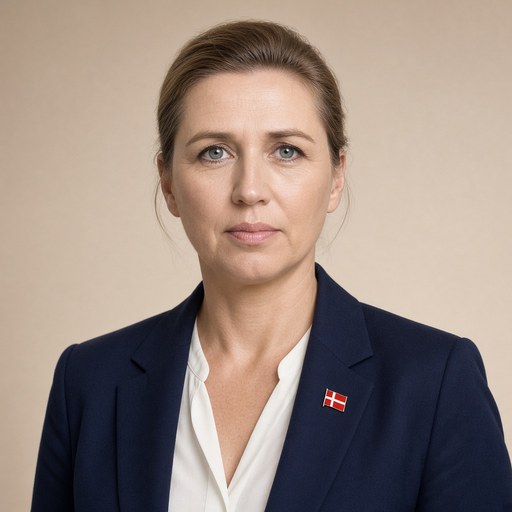
Prime Minister Mette Frederiksen's introduction at the press conference in the Prime Minister's Office about the coronavirus on Monday, March 30, 2020.
 Mette Frederiksen · Prime Minister of Denmark
- Context
- Frederiksen addressed a press conference at the Prime Minister's Office on March 30, 2020, updating Danes on COVID-19 developments and announcing plans for a gradual post-Easter reopening.
- Main themes
- COVID-19 pandemic response, hospitalization and death statistics, flattening the infection curve, gradual societal reopening, healthcare system capacity, economic relief packages, collective solidarity and social distancing, cautious optimism, Danish public health strategy
- Duration
- ~21 min
- Words
- 2,505
- Sentences
- 247
- Readability
- 67
- Grade
- 6.3
- Syntax
- 2.36
- Vocabulary
- 1.97
Translated from Danish
This is an interview, press conference or exchange with other speakers. It is split into sentences and counted in the corpus, but its sentences are not tagged on the twelve indices.
247 sentences in 136 paragraphs
Welcome to the press conference.
We closely follow the developments of corona in Denmark every day and every week.
Today, 533 are hospitalized. Of those, 137 are in intensive care.
Behind every number is a person and their loved ones. It deeply affects me. It affects you. It affects all of us.
And the greatest impact, of course, comes from the numbers of those who have died with corona. We now have 77 deaths in Denmark.
Every lost life is a tragedy.
The numbers of hospitalized and deceased continue to rise. We expected that.
The situation is serious. We knew it would become so.
But – we can also see signs that we have succeeded in delaying the spread of corona in Denmark. The infection is spreading more slowly than feared.
This gives – against a deeply serious backdrop – reason for cautious optimism.
Denmark stands together – by keeping our distance. Only in this way can we break the chain of infection.
That is the Danish strategy. All parties in the Folketing support it.
We are carrying it out together. Each individual's behavior matters.
We can now see the effect. It helps. It works. By collective effort.
The first positive sign was a significantly lower number of influenza cases. From the day we closed down large parts of Denmark, we have almost eradicated common influenza. We are simply infecting each other less.
The next positive sign is the numbers for corona.
Over the past week, the number of hospitalizations has increased slightly more slowly than the week before. And without the explosion in numbers that we have seen in other countries.
So far, the Danish healthcare system can keep up. That is a good sign.
The government has always had three goals in mind:
First, to save lives. If fewer people are infected, fewer will die. We must take care of our elderly and most vulnerable.
So far, we have succeeded in slowing the growth of infections.
Second, to prevent our healthcare system from collapsing. If that happens, it will affect all of us.
We have so far avoided too many people being infected at once.
There are signs that the curve is flattening. And thus hope that Denmark can stay on the green curve, not the red curve, on the figure that the Minister of Health has shown at several press conferences.
Third, to ensure that our economy and our unique societal model come through the crisis. So that Denmark will also be a rich and safe society on the other side of corona.
Three aid packages for employees and businesses. In total, more than 285 billion kroner.
As recently as today, the labor market parties and the government have agreed to strengthen the temporary wage compensation. Together, we are supporting Danish jobs.
We have acted consistently both in health and in the economy.
We have reacted quickly to get ahead of the infection and the disease.
We have done this with our eyes wide open. In unknown terrain.
We closed down large parts of Denmark. The alternative is frightening.
We have acted together. In time. And there are many signs that it is working.
And thus the time has come to – cautiously – look further ahead. I will appeal for us to do this together.
I will do so here at today's press conference.
I am deeply impressed that the vast majority in Denmark have taken it all in stride. Making things work. In workplaces. In schools. Among volunteers. In families.
Our collective effort is absolutely crucial.
And therefore, I almost hesitate to say what I intend to say.
But now I will say it:
If we, over the next two weeks. During Easter. Continue to stand together – by keeping our distance.
And if the numbers remain stable and reasonable over the next two weeks.
Then the government will begin a gradual, quiet, and controlled reopening of our society on the other side of Easter.
When I was nervous about saying this, it is because the worst thing that can happen after this press conference is that you or others think: It is getting brighter, so we can ease the requirements.
No, we cannot.
We must do the opposite. You must hold on, for then we can see the light ahead.
This is our chance to get through the first half well.
I will also honestly say that if we do not succeed in the next two weeks. If the numbers start to rise too sharply. Or if we begin to gather indoors or outdoors again. Not keeping our distance. Then we cannot begin to open – perhaps we will have to tighten even more instead.
We are – in a literal sense – deeply dependent on each other. You and me. Each one of us is helping to determine when and how we can reopen Denmark.
Much rests on the shoulders of the Danes.
And I will say it as it is: The second half will also be difficult.
The virus will be among us for a long time yet. More will be infected. More will be hospitalized. More will unfortunately die.
The corona outbreak has not peaked yet. Healthcare personnel will have to work even harder.
It will be a strange time.
On one side, more sick people.
On the other side – if each of us does what we must – we will gradually and gently reopen society again.
Can you do both things at once?
Yes, you can.
It requires that we have the situation under control.
But reopening Denmark will be at least as difficult as closing Denmark down.
I actually believe it will be harder.
Of course, I cannot present a detailed plan today.
But I will share my thoughts with you.
When we open society, we must do it gradually. And staggered.
For example, we may need to work, educate ourselves, and go to school at different times of the day. We need to spread ourselves out over the hours of the day. Prevent rush hour in public transport.
And when we are at work, we must do it in a different way.
The government has agreed with the trade union movement and business organizations that we will establish partnerships in various sectors.
Here, companies, employees, and authorities will together create guidelines for how we can go to work – without infecting each other.
Without being too many gathered in one place at the same time.
That will be the direction.
We must continuously follow the development in the numbers. We must listen to the experts' forecasts. Adjust the efforts step by step.
Responsibly. With consideration.
So that we neither move too quickly. Nor keep society closed for too long.
In other countries, we have seen setbacks. And the need to reintroduce some of the measures we would rather do without. We must learn from those experiences.
We must also remember that we are connected with the rest of the world. That is why the corona virus has spread so quickly. And that is why we cannot open the borders now. We must not bring in new infections from outside.
In the coming days, I will talk with the leaders of the parties in the Folketing.
I hope that by the end of the week we can present a plan for what we can call the first phase of reopening Danish society.
It is important for me today to send a signal to businesses: Hold on to your employees. If the development continues as it is now, then we can begin the first cautious phase after Easter.
In the last two weeks, 40,000 have registered as unemployed.
With all that it entails for the individual and for the family. Bills that cannot be paid. Concerns about whether there will be a job to get.
The government will in the coming time discuss with the parties in the Folketing how we can best stimulate the economy, so we can get employment going again.
We will also enter into an agreement about the media and cultural life, which is economically strained. And this at a time when I am sure many people feel that they need art for reflection and hope.
* * *
We must open society where it is most needed. And where it is responsible in terms of the risk of infection.
And therefore, I have a message for a special group. It is not you who shout the loudest. You do not make a big deal out of yourselves. But you are having a hard time during this time.
I must say to our elderly and to the most vulnerable: You must continue to expect to have to adjust to the risk of infection for some time yet.
We ask the weakest to be the strongest. It is a harsh message.
I know that many with mental vulnerabilities are having an especially hard time. It is difficult to suffer from anxiety in a time of corona. It is heavy to be lonely when the few contacts you have must keep their distance.
But you must trust that we are only just beginning to get parts of society going. And when the disease further subsides, it will again be possible to have more visits.
Until then: We must take the best possible care of you who need care and help and support the most.
You have the right to be heard – even if you do not shout out. And you are not alone.
Thank you to those who hear you and help you: Municipalities, volunteers, neighbors, friends, and family. Those who call an extra time to grandpa or place a flower in front of the neighbor's door.
* * *
When the health authorities start testing more, it will also help the most vulnerable. If we know, for example, that both the relative and the elderly are healthy, then they can visit each other.
More testing is a prerequisite for us to reopen society again.
I am glad that the authorities have announced that they will test many more in hospitals.
But testing in the healthcare system requires many resources – also personnel.
Therefore, we will also follow another testing track. We will conduct a broadly based test outside the healthcare system – with help from several companies.
This will make it possible to test many, many more than today. Both for infection – but also for whether one has had corona.
It must happen in broad collaboration.
Many have volunteered to help with this task. Large companies and small companies.
To you, there is only one thing to say: Thank you very much!
It makes me incredibly proud to live in a country where the business community, as something completely natural, shows tremendous social responsibility. Danish companies are taking on their responsibility and more. You, along with your employees, are helping to carry Denmark through a historic crisis. That is truly unique.
* * *
We are a society built on community, solidarity, trust. That is also my starting point when I get the question:
Can we not see the calculations?
That is what some are asking.
We save so many lives. They cost us so much. Is it worth the money now? is being asked.
I am painfully aware of the costs that many people are bearing right now. Unemployment. Uncertainty.
Still, my answer is: That calculation is too simple.
The situation we are in is far more complicated than putting a price on a human life.
The strategy we are following is a political choice. I stand by it.
If we had made a different choice and followed a different strategy, there would probably have been questions as well.
The most important thing is that as few as possible die from corona.
But there is also the broader goal that we as a society cannot withstand if our healthcare sector collapses. That affects everyone who needs treatment. We all experience that at some point in life.
And even broader, we must protect the trust we have in each other and in our societal model. We must be able to recognize Denmark again on the other side of corona.
In other countries, the military has to retrieve body bags in trucks. An ice rink is converted into a morgue. And people lie dead in their beds for days before they are found.
All of this is happening here in Europe.
Denmark must never go there.
And we must also have the disease under control for the sake of all of Denmark, our businesses, and workplaces.
We must do this in a world that has completely changed. It may be that planes can take off from Copenhagen – but where will they land? And we cannot sell Danish goods if there is no one in the world who wants to buy them.
According to the International Monetary Fund, the world is now in an economic downturn of at least the same depth as the financial crisis of 2008-09.
We cannot calculate what the shutdown of society costs us isolated here in Denmark.
We also cannot read in a textbook – either health-related or economic – what the right thing to do is.
We cannot put two lines under it.
But when the crisis is over, we can see what went well and poorly in the different countries. We must of course evaluate that. But we cannot wait for it.
We have not made such large decisions in Denmark in such a short time since World War II. Of course, they must be based on evidence and on a professional basis. To the extent that it exists. But we are fighting against a new disease.
And there is one thing that is completely evident: The Danish community works.
In Denmark, we have chosen our path. We find common solutions to common problems. We have a long tradition of doing so.
We are fighting for the generation that laid the first stones of our welfare society. And who now stands at the forefront when the disease unfortunately claims its victims.
We are fighting for our entire social contract. For the Denmark we are and will be.
We all know that we are in a historic time. In uncharted territory.
It sets thoughts in motion for all of us. I hear people who miss the workday. I also hear those who are becoming aware of the close things at home.
But first and foremost, it is crystal clear that we are deeply dependent on each other. We are a community. We share concerns and hopes.
And thus we also share a strength that cannot be formulated. But which has proven invaluable. Social responsibility.
We know that we need each other.
I have no doubt that when we are on the other side by collective effort, we will be even stronger as a community.
Take good care of yourselves and each other in the coming weeks. They will be crucial for whether we succeed.
The original Danish. The tags above are read on the English translation's sentences.
Velkommen til pressemødet.
Vi følger hver dag og hver uge nøje udviklingen i corona i Danmark.
I dag er 533 indlagt. Af dem er 137 på intensiv.
Bag hvert tal er et menneske og dets pårørende. Det gør dybt indtryk på mig. På jer. På os alle sammen.
Og størst indtryk gør naturligvis tallene for, hvor mange der er døde med corona. Vi har nu 77 dødsfald i Danmark.
Hvert mistet liv er en tragedie.
Tallene for indlagte og døde bliver ved med at stige. Det forventede vi.
Situationen er alvorlig. Det vidste vi, den ville blive.
Men – vi kan også se tegn på, at vi er lykkedes med forsinke udbredelsen af corona i Danmark. Smitten spreder sig langsommere, end frygtet.
Det giver – på en dybt alvorlig baggrund – anledning til forsigtig optimisme.
Danmark står sammen – ved at holde afstand. Kun på den måde kan vi bryde smittekæden.
Det er den danske strategi. Alle Folketingets partier står bag.
Vi udfører den i fællesskab. Hver enkelt menneskes adfærd har betydning.
Vi kan nu se effekten. Det nytter. Det virker. Ved fælles kraft.
Første positive tegn var langt færre tilfælde af influenza. Fra den dag, vi lukkede store dele af Danmark ned, har vi næsten udryddet almindelig influenza. Vi smitter ganske enkelt hinanden mindre.
Det næste positive tegn er tallene for corona.
Gennem den seneste uge er antallet af indlæggelser steget lidt langsommere end ugen før. Og uden den eksplosion i tallene, som vi har set i andre lande.
Indtil videre kan det danske sundhedsvæsen følge med. Det er et godt tegn.
Regeringen har hele tiden haft tre mål for øje:
For det første at redde menneskeliv. Hvis færre bliver smittet, vil færre dø. Vi skal passe på vores ældre og mest sårbare.
Det er hidtil lykkedes at bremse væksten i smittede.
For det andet at forhindre vores sundhedsvæsen i at bryde sammen. Hvis det sker, vil det gå ud over os alle sammen.
Vi har indtil videre undgået, at alt for mange bliver smittet på én gang.
Der er tegn på, at kurven flader ud. Og dermed håb om, at Danmark kan holde sig på den grønne kurve, ikke den røde kurve, på den figur, som sundhedsministeren har vist på flere pressemøder.
For det tredje at sørge for, at vores økonomi og vores unikke samfundsmodel kommer igennem krisen. Så Danmark også på den anden side af corona vil være et rigt og trygt samfund.
Tre hjælpepakker til lønmodtagere og virksomheder. I alt mere end 285 milliarder kroner.
Så sent som i dag er arbejdsmarkedets parter og regeringen blevet enige om at styrke den midlertidige lønkompensation. Vi holder i fællesskab hånden under danske arbejdspladser.
Vi har handlet konsekvent både på sundhedsområdet og i økonomien.
Vi har reageret hurtigt for at komme foran smitten og før sygdommen.
Det har vi gjort med åbne øjne. I et ukendt terræn.
Vi lukkede store dele af Danmark ned. Alternativet er skræmmende.
Vi har handlet i fællesskab. I tide. Og meget tyder på, at det nytter.
Og dermed er tiden kommet til – forsigtigt – at se længere frem. Det vil jeg appellere til, at vi også gør i fællesskab.
Det vil jeg gøre her på dagens pressemøde.
Jeg er dybt imponeret over, at langt de fleste i Danmark har taget det hele med åben pande. Fået tingene til at fungere. På arbejdspladserne. I skolerne. Hos de frivillige. I familierne.
Vores fælles indsats er helt afgørende.
Og derfor tør jeg næsten ikke sige det, som jeg har tænkt mig at sige.
Men nu siger jeg det:
Hvis vi de næste to uger. Henover påsken. Fortsætter med at stå sammen – ved at holde afstand.
Og hvis tallene fortsat er stabile og fornuftige i de næste to uger.
Så vil regeringen begynde på en gradvis, stille og kontrolleret åbning af vores samfund på den anden side af påske.
Når jeg var nervøs ved at sige det. Så er det jo, fordi det værste, der kan ske efter det her pressemøde, er, at du eller andre tænker: Det lysner, så kan vi slække på kravene.
Nej, det kan vi ikke.
Vi skal gøre det modsatte. I skal holde ud, for så kan vi se lyset forude.
Det er vores chance for at komme godt gennem første halvleg.
Jeg vil også ærligt sige, at hvis vi ikke lykkes de næste to uger. Hvis tallene begynder at stige for voldsomt. Eller hvis vi igen begynder at samles indenfor eller udenfor. Ikke holder afstand. Så kan vi ikke begynde at åbne – måske må vi i stedet stramme endnu mere.
Vi er – i bogstavelig forstand – dybt afhængige af hinanden. Dig og mig. Hver eneste af os er med til at afgøre om, hvornår og hvordan vi kan åbne Danmark igen.
Meget hviler på danskernes skuldre.
Og jeg vil sige det, som det er: Anden halvleg bliver også svær.
Virussen vil være blandt os længe endnu. Flere vil blive smittet. Flere vil blive indlagt. Flere vil desværre dø.
Corona-udbruddet har ikke toppet endnu. Sundhedspersonalet kommer til at arbejde endnu hårdere.
Det bliver en mærkelig tid.
På den ene side flere syge.
På den anden side – hvis vi hver især gør det, vi skal – vil vi gradvist og nænsomt åbne samfundet op igen.
Kan man begge ting på én gang?
Ja, det kan man godt.
Det kræver, at vi har situationen under kontrol.
Men at åbne Danmark op, bliver mindst lige så svært som at lukke Danmark ned.
Jeg tror faktisk, det bliver sværere.
Jeg kan selvfølgelig ikke lægge en detaljeret plan frem i dag.
Men jeg vil dele mine overvejelser med jer.
Når vi skal åbne samfundet, skal vi gøre det gradvist. Og forskudt.
Det kan for eksempel være, at vi skal arbejde, uddanne os og gå i skole på forskellige tidspunkter af dagen. Vi skal fordele os ud over døgnets timer. Forhindre myldretid i den kollektive trafik.
Og når vi er på arbejde, skal vi være det på en anden måde.
Regeringen har aftalt med fagbevægelse og erhvervsorganisationer, at vi vil etablere partnerskaber i forskellige sektorer.
Her skal virksomheder, lønmodtagere og myndigheder sammen lave retningslinjer for, hvordan vi kan gå på arbejde – uden at smitte hinanden.
Uden at være for mange samlet på ét sted på samme tid.
Det bliver retningen.
Vi skal hele vejen følge udviklingen i tallene. Vi skal lytte til eksperternes prognoser. Justere indsatsen skridt for skridt.
Ansvarligt. Med omtanke.
Så vi hverken går for hurtigt frem. Eller holder samfundet lukket for længe.
I andre lande har vi set tilbageslag. Og behov for at genindføre nogle af de tiltag, vi helst er foruden. Vi skal lære af de erfaringer.
Vi må også huske, at vi hænger sammen med resten af verden. Derfor har corona-virus spredt sig så hurtigt. Og derfor kan vi selvfølgelig ikke åbne grænserne nu. Vi skal ikke hente ny smitte udefra.
I de kommende dage vil jeg tale med formændene for Folketingets partier.
Jeg håber, at vi sidst på ugen kan fremlægge en plan for det, vi kan kalde første fase af genåbningen af det danske samfund.
Det er vigtigt for mig her i dag at sende et signal til virksomhederne: Hold på jeres medarbejdere. Hvis udviklingen fortsætter som nu, så kan vi efter påske begynde på den første, forsigtige fase.
De seneste to uger har 40.000 meldt sig ledige.
Med alt, hvad det indebærer for den enkelte og for familien. Regninger, der ikke kan betales. Bekymringer for, om der vil være et job at få.
Regeringen vil i den kommende tid drøfte med Folketingets partier, hvordan vi kan stimulere økonomien klogest, så vi igen kan få gang i beskæftigelsen.
Vi vil også indgå en aftale om medier og kulturliv, som er trængt økonomisk. Og det i en tid, hvor jeg er sikker på, at mange mennesker oplever, at de netop har brug for kunsten til refleksion og håb.
* * *
Vi skal åbne samfundet dér, hvor der er mest brug for det. Og hvor det er ansvarligt af hensyn til smittefaren.
Og derfor har jeg en besked til en særlig gruppe. Det er ikke jer, der råber højest. I gør ikke et stort nummer ud af jer selv. Men I har det hårdt i den her tid.
Jeg nødt til at sige til vores ældre og til de mest sårbare: I må fortsat forvente at skulle indrette jer efter smitterisikoen noget tid endnu.
Vi beder de svageste om at være de stærkeste. Det er et barskt budskab.
Jeg ved godt, at mange med psykisk sårbarhed har det ekstra svært. Det er vanskeligt at lide af angst i en tid med corona. Det er tungt at være ensom, når de få kontakter, man har, skal holde afstand.
Men I må stole på, at vi først så småt sætter gang i dele af samfundet. Og når sygdommen klinger yderligere af, så bliver det igen muligt med flere besøg.
Indtil da: Vi skal passe bedst muligt på jer, der har mest brug for omsorg og hjælp og pleje.
I har krav på at blive hørt – selvom I ikke råber op. Og I er ikke alene.
Tak til dem, der hører jer og hjælper jer: Kommuner, frivillige, naboer, venner og familie. Dem, som ringer en ekstra gang til morfar eller sætter en blomst foran naboens dør.
* * *
Når sundhedsmyndighederne går i gang med at teste flere, så vil det også hjælpe de mest sårbare. Hvis vi for eksempel ved, at både den pårørende og den ældre er raske, så kan man jo besøge hinanden.
Flere test er en forudsætning for, at vi igen kan åbne samfundet.
Jeg er glad for, at myndighederne har meldt ud, at man vil teste langt flere på sygehusene.
Men test i sundhedsvæsenet kræver mange ressourcer – også personale.
Derfor vil vi også følge et andet testspor. Vi vil gennemføre en bredt funderet test uden for sundhedsvæsenet – med hjælp fra flere virksomheder.
Det vil gøre det muligt at teste langt, langt flere end i dag. Både for smitte – men også for, om man har haft corona.
Det skal ske i et bredt samarbejde.
Mange har meldt sig for at hjælpe med den opgave. Store virksomheder og små virksomheder.
Til jer er der kun en ting at sige: Tusind tak!
Det gør mig utrolig stolt at leve i et land, hvor erhvervslivet, som noget helt naturligt, udviser et kæmpe samfundssind. Danske virksomheder løfter jeres ansvar og mere til. I er, sammen med jeres medarbejdere, med til at bære Danmark gennem en historisk krise. Det er helt unikt.
* * *
Vi er et samfund, der bygger på fællesskab, solidaritet, tillid. Det er også mit udgangspunkt, når jeg får spørgsmålet:
Kan vi ikke se regnestykket?
Det er der nogen, der spørger om.
Vi redder så og så mange liv. De koster os så og så meget. Er det nu pengene værd? bliver der spurgt.
Jeg er smerteligt bevidst om de omkostninger, som mange mennesker bærer lige nu. Arbejdsløshed. Usikkerhed.
Alligevel er mit svar: Det regnestykke er for simpelt.
Den situation, vi står i, er langt mere kompliceret end at sætte en pris på et menneskeliv.
Den strategi, vi følger, er et politisk valg. Det står jeg ved.
Hvis vi havde truffet et andet valg og fulgt en anden strategi, så var der nok også kommet spørgsmål.
Det vigtigste er, at færrest muligt dør af corona.
Men der er også det bredere mål, at vi som samfund ikke kan holde til, hvis vores sundhedssektor bryder sammen. Så rammer det alle, der har brug for behandling. Det får vi alle sammen på et tidspunkt i livet.
Og endnu bredere skal vi skærme den tillid, vi har til hinanden og til vores samfundsmodel. Vi skal kunne kende Danmark igen på den anden siden af corona.
I andre lande må militæret hente ligposer i lastbiler. En skøjtehal omdannes til lighus. Og mennesker ligger døde i deres senge i dage, før de bliver fundet.
Alt det sker her i Europa.
Dér skal Danmark aldrig hen.
Og vi skal også have sygdommen under kontrol af hensyn til hele Danmark, vores virksomheder og arbejdspladser.
Det skal vi i en verden, som er helt forandret. Det kan godt være, at flyene kan lette fra København – men hvor skal de lande? Og vi kan ikke sælge de danske varer, hvis der ikke er nogen ude i verden, som vil købe dem.
Ifølge Den Internationale Valutafond er verden nu i en økonomisk tilbagegang af mindst samme dybde som finanskrisen i 2008-09.
Vi kan ikke beregne, hvad nedlukningen af samfundet koster os isoleret her i Danmark.
Vi kan heller ikke læse i en lærebog – hverken sundhedsfaglig eller økonomisk – hvad der er det rigtige at gøre.
Vi kan ikke sætte to streger under.
Men når krisen er slut, kan man se, hvad der gik godt og dårligt i de forskellige lande. Det skal vi selvfølgelig evaluere. Men vi kan ikke vente på det.
Vi har ikke på noget tidspunkt siden anden verdenskrig truffet så store beslutninger på så kort tid i Danmark. Selvfølgelig skal de hvile på evidens og på et fagligt grundlag. I den udstrækning det findes. Men vi kæmper mod en ny sygdom.
Og der er én ting, som er helt evident: Det danske fællesskab virker.
I Danmark har vi valgt vores vej. Vi finder fælles løsninger på fælles problemer. Det har vi en lang tradition for at gøre.
Vi kæmper for den generation, som lagde de første sten til vores velfærdssamfund. Og som nu står i forreste række, når sygdommen desværre kræver sine ofre.
Vi kæmper for hele vores samfundskontrakt. For det Danmark, vi er og vil være.
Vi ved alle sammen, at vi står i en historisk tid. På ubetrådt land.
Det sætter tanker i gang i os alle sammen. Jeg hører folk, der savner arbejdsdagen. Jeg hører også dem, der får øjnene op for det nære derhjemme.
Men først og fremmest står det lysende klart, at vi er dybt afhængige af hinanden. Vi er et fællesskab. Vi deler bekymringer og håb.
Og dermed deler vi også en kraft, som ikke kan sættes på formel. Men som har vist sig uvurderlig. Samfundssind.
Vi ved, at vi har brug for hinanden.
Jeg er ikke i tvivl om, at når vi ved fælles kraft er ude på den anden side. Så er vi endnu stærkere som fællesskab.
Pas godt på jer selv og hinanden i de kommende uger. De bliver helt afgørende for, om vi lykkes.