




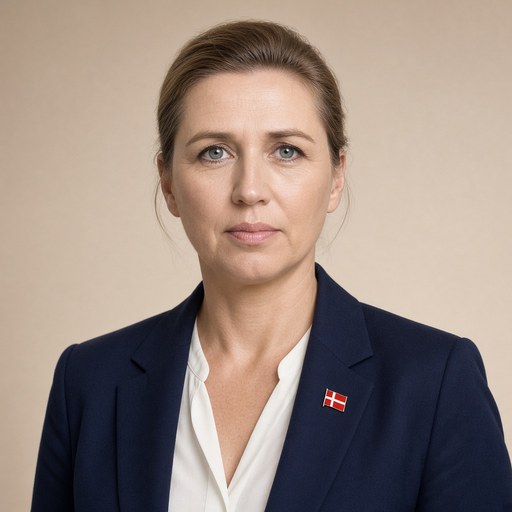
Prime Minister Mette Frederiksen's speech at the DI Summit on September 29, 2020.
 Mette Frederiksen · Prime Minister of Denmark
- Context
- Frederiksen addressed the Confederation of Danish Industry (DI) Summit on September 29, 2020, praising business contributions during COVID-19 and outlining economic and green recovery priorities.
- Main themes
- Danish business resilience during COVID-19, digitalization strategy, green transition, export promotion, Denmark-India green partnership, economic recovery, public-private research collaboration, digital security, manufacturing competitiveness, DI 2030 plan
- Duration
- ~9 min
- Words
- 1,062
- Sentences
- 101
- Readability
- 61
- Grade
- 7.4
- Syntax
- 2.44
- Vocabulary
- 2.08
Translated from Danish
The broad sphere of national life a sentence belongs to. Every sentence has an Arena, so it is the denominator the other indices are read against.
Other101 sentences in 59 paragraphs
Thank you for the floor.
We will stick to short speeches today. It is a healthy principle. I will get straight to the point.
I will do so with a story that, for me, is an iconic image of how you – Denmark's proud manufacturing companies – stepped up without hesitation when it mattered.
Some time ago, I visited Carlsberg and spoke with the drivers who made the maiden journey from Fredericia to Kalundborg with alcohol base for hand sanitizer.
They told me that the most moving moment was when the first trucks drove over Funen and arrived at the Great Belt, and the employees there just waved them on.
It was a golden moment.
You have saved lives.
I want to express my warm thanks for that today.
Thank you to you business leaders. Thank you to DI.
Thank you, Lars, for a constructive, honest, and exceptionally wise conversation and dialogue.
I would like to acknowledge that DI's new 2030 plan has a strong focus on both economic progress, green transition, and ensuring that increased prosperity benefits all groups in Denmark.
No DI plan without tax cuts for high earners. That must be the case. We will not agree on this.
But the new 2030 plan is, above all, a solid and constructive contribution to the debate. Thank you for that.
The Danish economy is fundamentally sound. We have a solid labor market. Skilled employees. Forward-looking companies.
Fortunately, private consumption is on the rise again. Add to that the latest forecast from the National Bank, which is a bit more optimistic than in the spring.
The Danish economy is performing better than one might have feared.
But we have two important points of attention.
They are the experience economy. And they are the export companies.
The markets are faltering.
The world has become more uncertain.
The government is very mindful that we must support Danish export companies.
About 800,000 Danish jobs depend on exports. Denmark is a manufacturing country.
You are one of the reasons we are managing the crisis as well as we are. We must build on all that you can do.
Today, DI has published an analysis showing that 28 percent of your companies have emerged from the crisis stronger.
And that the reason for this is largely digitalization: Improved use of technology and effective use of remote meetings.
In a situation where physical contact is limited, it is also a great advantage to be ahead in areas such as virtual servicing and automated production.
And whether due to corona or not – this is crucial for competitiveness.
Danish companies are far ahead in digitalization. The same goes for the public sector. The UN has declared Denmark to be digital world champions.
The government will – also at your request – initiate work on a new digitalization strategy. We will do this with the ambition that Denmark should continue to be a digital showcase. Let us make this our common ambition.
An important aspect is also that we need to get a handle on our vulnerabilities.
There is a clear need for stronger cooperation on digital security in the EU. That will be my message when I meet with my colleagues at the European summit later this week.
We must use the recovery of the economy for a digital transition. And for a green transition.
An important part of the green transition is a new collaboration on targeted research.
Several of us have been talking for some time about how we can once again bring public and private research – universities and companies – closer together. Create greater synergy.
Before the summer, your tax deduction for research and development was increased.
Now we are ready to take a decisive step if we receive support from the Folketing. Yesterday, the government launched a green research strategy. Where we set a direction with very clear priorities.
Power-to-X, where you take electricity from, for example, wind turbines and convert it into liquid hydrogen.
Technologies that can capture and store greenhouse gases.
Here are huge opportunities to create the green industrial jobs of the future.
I will conclude with a look out into the world.
Yesterday, I met with India's Prime Minister Modi – virtually, of course. At the meeting, we entered into – and hold on – India's first green strategic partnership. Imagine that India, of all countries in the world, chooses Denmark.
As Prime Minister Modi of India has said: India has the size – Denmark has the solutions.
It is a fantastic starting point.
It is completely unique.
Water, wind, waste.
Areas where Denmark has strong, recognized competencies. Which India is seeking for their green transition.
India is expected to soon overtake China as the world's most populous country. But India is not even among our 30 largest export markets.
There is a very large potential here.
We are also in the midst of the largest reform of the Ministry of Foreign Affairs' export efforts in recent times.
This means that Danish ambassadors will need to have an even stronger focus on Danish companies. They are ready out there – all over the world – to help you. And thus to help Danish employees and Danish competitiveness.
And we will fiercely defend the international order with fair rules of the game. Free trade was under pressure before COVID-19. It is under even greater pressure today.
COVID-19 has clearly exposed our vulnerabilities. We must protect critical infrastructure. We cannot avoid that. We cannot be naive.
But we must also not end up in protectionism – for your success and thus our prosperity is a reflection of the exact opposite.
There is no contradiction between addressing the new vulnerabilities that globalization has brought – and the desire to clearly support free and fair trade. That takes place under common and transparent rules.
Free trade. An effective global market.
Not the right of the strong. But equal conditions for all.
This is central for Danish companies. It is important for Danish jobs. It is crucial for Denmark.
The world has become more uncertain. It will remain so as long as COVID-19 rages. We cannot eliminate that uncertainty. But we must together do everything we can to support Danish exports.
We here at home live off all that you achieve in the world. Denmark was, is, and will always be a manufacturing country.
The original Danish. The tags above are read on the English translation's sentences.
Tak for ordet.
Vi holder os til korte taler i dag. Det er et sundt princip. Jeg vil gå lige på.
Det vil jeg med en historie, som for mig er et ikonisk billede på den måde, hvorpå I – Danmarks stolte produktionsvirksomheder – uden tøven trådte til, da det gjaldt.
For noget tid siden besøgte jeg Carlsberg og talte med de chauffører, der kørte jomfruturen fra Fredericia til Kalundborg med alkoholbase til håndsprit.
De fortalte, at det mest gribende øjeblik var, da de første lastbiler kørte over Fyn og kom til Storebælt, og medarbejderne dér bare vinkede dem over.
Det var et gyldent øjeblik.
I har reddet menneskeliv.
Det vil jeg sige jer en varm tak for i dag.
Tak til jer virksomhedsledere. Tak til DI.
Tak til dig, Lars, for en konstruktiv og ærlig og ualmindeligt klog samtale og dialog.
Jeg vil gerne kvittere for, at DI’s nye 2030-plan har et stærkt fokus både på økonomisk fremgang, på grøn omstilling og på, at øget velstand skal komme alle grupper i Danmark til gode.
Ingen DI-plan uden topskattelettelser. Sådan må det være. Her bliver vi ikke enige.
Men den nye 2030-plan er først og fremmest et solidt og konstruktivt bidrag til debatten. Tak for det.
Dansk økonomi er grundlæggende sund. Vi har et solidt arbejdsmarked. Dygtige medarbejdere. Fremsynede virksomheder.
Heldigvis er privatforbruget igen på vej op. Læg dertil, at den seneste prognose fra Nationalbanken er lidt mere optimistisk end i foråret.
Dansk økonomi klarer den bedre, end man kunne have frygtet.
Men vi har to vigtige opmærksomhedspunkter.
Det er oplevelsesøkonomien. Og det er eksportvirksomhederne.
Markederne svigter.
Verden er blevet mere usikker.
Det ligger regeringen meget på sinde, at vi skal understøtte danske eksportvirksomheder.
Omkring 800.000 danske job afhænger af eksport. Danmark er et produktionsland.
I er en af grundene til, at vi klarer os så godt gennem krisen, som vi gør. Vi skal bygge videre på alt det, I kan.
I dag har DI offentliggjort en analyse, der viser, at 28 procent af jeres virksomheder er kommet styrket ud af krisen.
Og at årsagen til det i høj grad er digitalisering: Forbedret brug af teknologi og effektiv brug af fjernmøder.
I en situation, hvor fysisk kontakt er begrænset. Er det også en stor fordel at være foran på områder som virtuel servicering og automatiseret produktion.
Og corona eller ej – er det er helt afgørende for konkurrencekraften.
Danske virksomheder er langt fremme med digitalisering. Det samme er den offentlige sektor. FN har udråbt Danmark til digitale verdensmestre.
Regeringen vil – også på opfordring fra jer – sætte et arbejde i gang med en ny digitaliseringsstrategi. Det vil vi med den ambition, at Danmark fortsat skal være et digitalt udstillingsvindue. Lad os gøre det til vores fælles ambition.
Et vigtigt aspekt er desuden, at vi skal have styr på vores sårbarheder.
Der er entydigt behov for et stærkere samarbejde om digital sikkerhed i EU. Det vil være mit budskab, når jeg mødes med mine kolleger til europæisk topmøde senere på ugen.
Vi skal bruge genopretning af økonomien til en digital omstilling. Og til en grøn omstilling.
En vigtig del af den grønne omstilling er et nyt samarbejde om målrettet forskning.
Flere af os har gennem et stykke tid talt om, hvordan vi igen kan bringe den offentlige og den private forskning – universiteter og virksomheder – tættere sammen. Skabe en større synergi.
Før sommer blev jeres skattefradrag til forskning og udvikling forhøjet.
Nu er vi klar til at tage et afgørende skridt, hvis vi får opbakning fra Folketinget. I går lancerede regeringen en grøn forskningsstrategi. Hvor vi sætter en retning med meget klare prioriteter.
Power-to-X, hvor man tager strøm fra fx vindmøller og omdanner til flydende brint.
Teknologier, hvor man kan fange og lagre drivhusgasser.
Her er kæmpe muligheder for at skabe fremtidens grønne industriarbejdspladser.
Jeg vil slutte af med et blik ud i verden.
I går mødtes jeg med Indiens premierminister Modi – virtuelt naturligvis. På mødet indgik vi – og hold nu fast – Indiens første grønne strategiske partnerskab. Tænk, at Indien af alle lande i verden vælger Danmark.
Som Indiens premierminister Modi har sagt: Indien har størrelsen – Danmark har løsningerne.
Det er et fantastisk afsæt.
Det er helt unikt.
Vand, vind, affald.
Områder hvor Danmark har stærke, anerkendte kompetencer. Som Indien efterspørger til deres grønne omstilling.
Indien forventes snart at overhale Kina som verdens største land målt på indbyggere. Men Indien er ikke engang blandt vores 30 største eksportmarkeder.
Her er et meget stort potentiale.
Vi er desuden i fuld gang med den største reform af Udenrigsministeriets eksportindsats i nyere tid.
Det betyder, at danske ambassadører skal have et endnu stærkere fokus på danske virksomheder. De står klar derude – over hele verden – til at hjælpe jer. Og dermed til at hjælpe danske lønmodtagere og dansk konkurrencekraft.
Og vi vil indædt forsvare den internationale orden med fair spilleregler. Den frie handel var under pres før covid-19. Den er under endnu større pres i dag.
Vel udstillede corona vores sårbarhed. Vel skal vi beskytte kritisk infrastruktur. Det kommer vi ikke uden om. Vi kan ikke være naive.
Men vi må heller ikke ende i protektionisme – for jeres succes og dermed vores velstand er udtryk for det stik modsatte.
Der er ikke modstrid mellem at håndtere de nye sårbarheder, som globaliseringen har medført – og ønsket om at støtte klart op om en fri og fair handel. Der foregår efter fælles og gennemsigtige regler.
Fri handel. Et effektivt globalt marked.
Ikke de stærkes ret. Men lige vilkår for alle.
Det er helt centralt for danske virksomheder. Det er vigtigt for danske arbejdspladser. Det er afgørende for Danmark.
Verden er blevet mere usikker. Det vil den være, så længe corona raser. Den usikkerhed kan vi ikke fjerne. Men vi skal sammen gøre alt, hvad vi kan for at understøtte dansk eksport.
Vi herhjemme lever af alt det, I udretter i verden. Danmark var, er og skal altid være et produktionsland.