




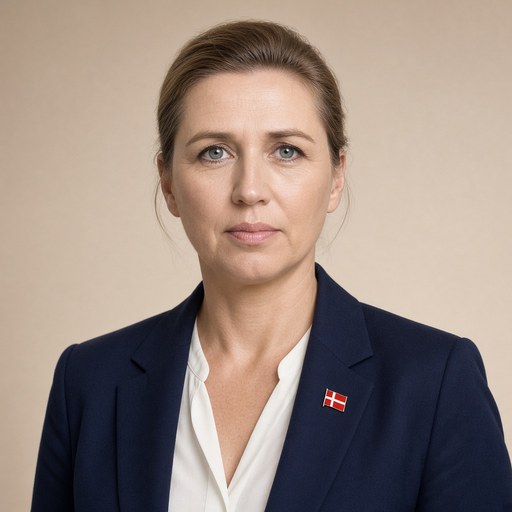
Prime Minister Mette Frederiksen's speech at the meeting with the Green Business Forum (climate partnerships) on September 16, 2020.
 Mette Frederiksen · Prime Minister of Denmark
- Context
- Frederiksen addressed the Green Business Forum on climate partnerships in September 2020, discussing Denmark's 70% emissions target and COVID-19 restrictions.
- Main themes
- Climate partnerships, 70 percent emissions reduction target, green transition, COVID-19 restrictions, technological solutions, carbon taxes, business compensation, social responsibility, Denmark's climate policy, collective action
- Duration
- ~20 min
- Words
- 2,443
- Sentences
- 227
- Readability
- 68
- Grade
- 6.3
- Syntax
- 2.44
- Vocabulary
- 2.03
Translated from Danish
The broad sphere of national life a sentence belongs to. Every sentence has an Arena, so it is the denominator the other indices are read against.
Other227 sentences in 120 paragraphs
Welcome everyone.
I need to start my speech a little differently than I had planned.
In recent days, we have seen the highest COVID-19 infection rates since the spring. Therefore, I will first say a few words about that before I move on to climate.
The situation is particularly serious in Greater Copenhagen and among some of the young people.
We have seen how the virus has spread both through private parties and in nightlife.
Many people gathered in one place. An increased risk that one relaxes on distance and good hygiene after a couple of beers.
And if one gets infected, the subsequent contact tracing becomes more difficult because one is with people one may not meet regularly or know beforehand.
That is why we presented new restrictions in Greater Copenhagen yesterday, with a particular focus on parties and nightlife.
And that is why I will today make a direct appeal to the young people:
Cut down on the parties for the next while. Follow the guidelines. And avoid seeing too many people.
I know it is difficult for you young people. Many are returning to school or studies at this time. Making new friends. The sun is shining. But we must hold on.
What we are seeing now is hopefully not a new normal state. But we must make an extra effort in the next few weeks. Bring the infection down. And then hopefully it will brighten up again.
It has worked in Hjørring, Ringsted, Aarhus, and most recently in Odense. It must also work here in Copenhagen and in the Capital Region.
But the infection is not only in Greater Copenhagen. Not only among the young.
The virus is present in all age groups and in most parts of the country. More than 50 municipalities are above the "concern threshold" of 20 infected per 100,000 inhabitants in the past seven days.
Therefore, I want to emphasize – and this is an appeal to everyone in Denmark:
The prerequisite for keeping society running as much as possible, and not shutting down, is that each of us adheres to the guidelines.
Keep your distance. Use hand sanitizer. Wear face masks. Stay home if you have symptoms.
But we must also acknowledge that even more is needed. Therefore, the Serum Institute has made a clear appeal. Which I would like to support:
Cut down on social contacts this autumn. We need to get used to seeing fewer people when we are off work for a while. And to see them in smaller groups.
The new restrictions unfortunately also have consequences for restaurants, bars, and cafes, which must once again adjust their operations and adapt to the new conditions.
Therefore, the government will look at whether we need to adjust the compensation schemes for businesses affected by, for example, bans on opening in connection with regional lockdowns.
I know that this has significant economic costs for many of you. But what we are doing now is to avoid having to resort to even stricter measures.
We are in the midst of the dance with COVID-19. It will not be easy. But if we all take responsibility, we will succeed – again.
We must take care of each other. We have shown that we can.
* * *
So much for COVID-19. Now to the theme of our meeting today.
It has been ten months since we last met. It was at Marienborg. Where we kicked off the climate partnerships.
Since then, you have provided your recommendations to the government. Thank you very much for your efforts. We need that. We need collective action.
In ten years, we must achieve the 70 percent target.
This means that in one decade, we must reduce emissions almost as much as we have done over the past three decades.
Succeeding in this will require the most profound changes to our society and our economy since we began building the modern welfare state in the post-war period.
The way we transport ourselves. How we heat our homes. How we produce food. Everything must change.
It will require something from all of us: politicians, businesses, trade unions, and citizens.
The climate debate often becomes somewhat caricatured. Broadly speaking, two different paths are drawn to reach the 70 percent target.
The linear path – where we only use the tools we have available today.
Imposing taxes on meat. Banning gasoline cars within a couple of years. Imposing significantly higher taxes on the industries that pollute the most.
In contrast, the so-called "hockey stick" is drawn. Where one bets on technological solutions. And where greenhouse gas reductions only come as we approach 2030.
But I believe that the two paths are a false dichotomy. The real conflict is between those who want the 70 percent and those who are against it.
For both paths contain a truth about the challenge we face.
One is that the green transition is urgent. All the initiatives we can wisely take here and now, which provide greenhouse gas reductions – we must take.
The other is that technological solutions do not come by themselves – they require investments and regulation. Political decisions here and now.
And at the same time, it is an important point that if one decided on the path to 70 percent now, with the technological possibilities we have today, it would have far too great consequences. We would lose businesses. Lose jobs. Lose competitiveness. Society would become more unequal.
And we would lose one more thing. Something that is important – absolutely crucial – for us to succeed.
Support for the green transition. We risk that the broad green engagement crumbles. And that Denmark, which is currently a green showcase for the rest of the world, will lose that position.
Why should other countries follow us if we do not do the right thing? If they can see that we are putting important parts of our societal model at risk?
I believe that together we can find a way.
Where we both take the wise initiatives that provide greenhouse gas reductions – here and now. At the same time, we purposefully prioritize investments, development, and research in the technologies that hold the solutions of the future.
Where we do not lose jobs. But instead create jobs and competitiveness and are a green showcase for the rest of the world.
Let us call that path the investment path.
I would like to spend some time describing the investment path. How do we tackle the challenges?
One example. The debate about electric cars.
The models from the Car Commission show that with half a million electric cars, we will achieve a CO2 reduction of 0.2 million tons by 2030.
The cost to society for each ton of CO2 will be 200 kroner.
With one million electric cars, we will achieve a CO2 reduction of 1.5 million tons by 2030.
Here, the cost for each ton is up to 4,000 kroner. Almost 20 times higher.
The reduction of 1.5 million tons must be weighed against the fact that we are missing 16.6 million tons of greenhouse gases to reach our goal.
One million electric cars can bring us less than one-tenth of the way.
If we are to exempt electric cars from registration tax, there will be a hole in the budget. What will then finance our welfare?
One million electric cars today will cost the economy more than 5 billion kroner by 2030.
Add to that the importance for the individual who needs a car. To drive to work, pick up and drop off children. To shop in everyday life.
Especially outside the larger cities, it is the car that makes everyday life work for many. A car is a significant investment. And it is expensive to replace the car.
Therefore, we must make wise decisions. I believe we can.
We know that the technology for electric cars is advancing. The world's car manufacturers are investing massively in development. They will break through at some point – also in Denmark. With the latest projections, we expect already 1 million green cars by 2035. Yet we are currently having this discussion:
Should we have half a million electric cars or a million electric cars by 2030?
I believe that is the wrong question to ask.
The right question is: How do we transition our entire transport sector so that we achieve the maximum possible CO2 reduction at the lowest possible cost – for society and for consumers?
What is the answer to that question?
The answer is that we need to be much more ambitious.
We need to find solutions that are both beneficial for the climate and make sense in citizens' everyday lives and in financing our welfare.
Can we make the fuel greener?
Perhaps mix more biofuel into gasoline and diesel?
But biofuels cost more. Here we also need to make choices. Who will pay? And how much reduction does it provide?
Power-to-X is the technology that many are talking about these days.
Here, you take electricity from, for example, wind turbines and convert it into liquid hydrogen. So it can be stored, transported, and used as green fuel for ships, trucks, and planes.
A few years ago, it was pure Star Wars.
This summer, it was one of the cornerstones of the climate agreement for energy and industry.
It is the technology that the whole world hopes for. And which we have good opportunities to develop and utilize right here in Denmark.
Denmark offers such good opportunities that other countries are willing to invest in Danish Power-to-X. The Netherlands has invested around one billion kroner.
So much for cars and the entire transport sector.
Another example: Aalborg Portland.
Aalborg Portland accounts for 4 percent of the total greenhouse gas emissions in Denmark. And is the single company in Denmark that emits the most.
It is hard to be anything else when you use chalk and limestone to make cement. These raw materials release large amounts of CO2 when heated. In addition, the production requires a lot of energy.
Globally, the cement industry accounts for 7 percent of emissions. In comparison, air transport accounts for 2 percent.
What do we do about that?
At Aalborg Portland, you are doing quite a bit. Aalborg Portland is probably one of the cement producers in the world that focuses the most on green transition.
And we need to go even further together.
We need to look at whether the CO2 that comes out of Aalborg Portland's chimney can be captured and stored.
Perhaps out in the North Sea. Perhaps in the ground – just as we already store gas. Perhaps even used for other purposes.
In the spring, the parties in the Folketing reached a climate agreement for energy and industry. Which is based, among other things, on recommendations from you in the climate partnerships.
In the agreement, we have set aside almost 4 billion kroner to support the development of technology to capture and store greenhouse gases by 2030.
Technologies that hold huge opportunities. But which require that we politically dare to invest in them. So they can mature, develop, and be implemented together with you in the business sector.
That is the investment path.
It contains a recognition that the green transition is urgent.
Therefore, we must also use the smart solutions that already exist today. And we are on it.
Energy efficiency improvements in industrial processes. Increased use of biogas. More recycling. Phasing out oil and gas boilers. All that we have agreed upon in the previous parliamentary year. We need to agree on even more in the new year.
This week, the framework for Denmark's Green Future Fund has been established. The fund is ready to send billions out to green technologies and solutions.
This autumn, we will tackle the transition of the transport sector, agriculture, and a green tax reform. Huge decisions.
The task is to initiate today those things that have good economic sense and that make sense. And at the same time, make massive investments in targeted research and development. So we reach our goal.
A few words about another debate: The debate on a uniform tax on greenhouse gases. It is part of the solution. But there are difficult choices.
We know how much CO2 is emitted when we burn a liter of gasoline. Therefore, it makes sense that there is a tax on fuel and gasoline today.
But how much methane comes from a cow?
There is a need to develop accurate climate accounts for livestock in agriculture.
Therefore, we need to invest in new knowledge. About the effects of feed. About the significance of the barns. And I could go on.
A tax on greenhouse gases is the right way to go. It sends a signal to you in the business sector – about where we want to go. It makes the investment decision for each individual company concrete.
Yes, just the fact that a broad majority in the Folketing now agrees that we should have such a tax – that gives you a good framework.
To put it more directly, it will in the future be such that companies will compete to become the greenest. That is already largely the case. In many areas, that is precisely what gives Danish companies an advantage.
The government has increased funding for green research. This year from 1.2 billion kroner to 2.3 billion kroner. Close to a doubling.
Later this month, we will present a green research strategy.
I am well aware of the old resistance to "picking the winners." Should we even have that conversation?
I believe it is absolutely crucial.
In the new green research strategy, we will set very clear priorities.
We need to bring public and private research closer together.
We know what the challenge is. You have provided really good recommendations.
We need to achieve a green transition while managing a global pandemic. At the same time, you are digitalizing and automating.
It is a huge task.
I am pleased with the impact Denmark is already having on the world. And I am pleased that the EU Commission has proposed to raise the EU's climate target to at least 55 percent.
Denmark can show other countries that the choice is not between green transition on one side and prosperity and welfare on the other side.
I have high expectations for the continued collaboration in the climate partnerships, in the Green Business Forum, and in the Folketing.
We must show a way where the green transition does not increase inequality, does not threaten jobs, does not make us poorer – but makes us richer.
The original Danish. The tags above are read on the English translation's sentences.
Velkommen alle sammen.
Jeg er nødt til at begynde min tale lidt anderledes, end jeg havde tænkt mig.
Vi har de seneste dage set de højeste corona-smittetal siden foråret. Derfor først et par ord om det, inden jeg kommer til klimaet.
Situationen er særligt alvorlig i Storkøbenhavn og blandt nogle af de unge.
Vi har set, hvordan smitten har spredt sig både via private fester og i nattelivet.
Mange mennesker samlet på ét sted. En øget risiko for, at man slækker på afstand og god hygiejne efter et par øl.
Og bliver man smittet. Ja, så er den efterfølgende smitteopsporing vanskeligere, fordi man er sammen med folk, man måske ikke mødes med til daglig eller kender i forvejen.
Derfor præsenterede vi i går nye restriktioner i Storkøbenhavn med særligt fokus på fester og natteliv.
Og derfor vil jeg i dag komme med en direkte opfordring til de unge:
Skru ned for festerne det næste stykke tid. Overhold retningslinjerne. Og lad være med se for mange mennesker.
Jeg ved godt, at det er svært for jer unge. Mange vender tilbage til skole eller studier i denne tid. Får nye venner. Solen skinner. Men vi er nødt til at holde fast.
Det, vi ser nu, er forhåbentlig ikke en ny normaltilstand. Men vi må gøre en ekstra indsats de næste par uger. Få smitten ned. Og så lysner det forhåbentlig igen.
Det har virket i Hjørring, Ringsted, Aarhus og senest i Odense. Det skal også virke her i København og i Hovedstadsregionen.
Men smitten er ikke kun i Storkøbenhavn. Ikke kun hos de unge.
Smitten er til stede hos alle aldersgrupper og i de fleste dele af landet. Mere end 50 kommuner er over ”bekymringsgrænsen” på 20 smittede per 100.000 indbyggere de seneste syv dage.
Derfor vil jeg understrege – og det er en appel til alle i Danmark:
Forudsætningen for at holde samfundet i gang så meget som muligt, og ikke lukke ned, er, at vi hver især efterlever retningslinjerne.
Holder afstand. Spritter af. Bruger mundbind. Bliver hjemme, hvis man har symptomer.
Men vi må også erkende, at der skal endnu mere til. Derfor er Seruminstituttet kommet med en klar opfordring. Som jeg gerne vil bakke op:
Skru ned for de sociale kontakter i efteråret. Vi er nødt til i en periode at vænne os til at se færre mennesker, når vi har fri fra arbejde. Og til at se dem i mindre grupper.
De nye restriktioner har desværre også konsekvenser for restauranter, barer og cafeer, der igen må omlægge driften og indrette sig på de nye vilkår.
Derfor vil regeringen se på, om vi skal justere kompensationsordningerne for virksomheder, der er ramt af fx forbud mod at holde åbent i forbindelse med regionale nedlukninger.
Jeg ved, at det har store økonomiske omkostninger for mange af jer. Men det, vi gør nu, er for at undgå, at vi skal tage endnu skrappere midler i brug.
Vi er i gang med dansen med corona. Det bliver ikke nemt. Men hvis vi alle tager ansvar, så lykkes vi – igen.
Vi skal passe på hinanden. Det har vi vist, at vi kan.
* * *
Så vidt corona. Nu til temaet for vores møde i dag.
Det er ti måneder siden, vi mødtes sidst. Det var på Marienborg. Hvor vi gav startskuddet til klimapartnerskaberne.
Siden er I kommet med jeres anbefalinger til regeringen. Tusind tak for indsatsen. Den har vi brug for. Vi har brug for fælles handlekraft.
Om ti år skal vi være i mål med de 70 procent.
Det betyder, at vi på ét årti skal sænke udledningerne næsten lige så meget, som vi har gjort det over de seneste tre årtier.
At lykkes med det vil kræve de mest gennemgribende forandringer af vores samfund og vores økonomi, siden vi begyndte opbygningen af det moderne velfærdssamfund i efterkrigstiden.
Måden vi transporterer på. Opvarmer vores huse på. Producerer fødevarer. Alt skal forandres.
Det vil kræve noget af os alle sammen: Politikere, erhvervsliv, fagbevægelse og borgere.
Klimadebatten bliver ofte noget karikeret. Groft sagt tegnes der to forskellige veje til at nå 70 procents målet.
Den lineære vej – hvor vi alene bruger de redskaber, vi har til rådighed i dag.
Lægger afgifter på kød. Forbyder benzinbiler inden for et par år. Lægger markant højere afgifter på de industrier, der forurener mest.
Over for den tegnes den såkaldte ”hockey-stav”. Hvor man satser på teknologiske løsninger. Og hvor drivhusgasreduktionerne først kommer, når vi nærmer os 2030.
Men jeg mener, de to veje er en falsk modsætning. Den rigtige konflikt står mellem dem, der vil de 70 pct., og dem, der er imod.
For begge veje rummer en sandhed om den udfordring, vi står overfor.
Det ene er, at det haster med den grønne omstilling. Alle de initiativer, vi klogt kan tage her og nu, og som giver drivhusgasreduktioner – dem skal vi tage.
Det andet er, at de teknologiske løsninger ikke kommer af sig selv – de kræver investeringer og regulering. Politiske beslutninger her og nu.
Og samtidig er det en vigtig pointe, at hvis man besluttede vejen til de 70 procent nu. Med de teknologiske muligheder, vi har i dag. Så ville det have alt for store konsekvenser. Vi ville miste virksomheder. Miste arbejdspladser. Miste konkurrencekraft. Samfundet ville blive mere ulige.
Og vi ville miste endnu en ting. Noget, som er vigtigt – helt afgørende – for, at vi kan lykkes.
Opbakningen til den grønne omstilling. Vi risikerer, at hele det brede grønne engagement smuldrer. Og at Danmark, der lige nu er et grønt udstillingsvindue for resten af verden, vil miste den position.
Hvorfor skulle andre lande følge os, hvis vi ikke gør det rigtige? Hvis de kan se, at vi sætter vigtige dele af vores samfundsmodel på spil?
Jeg tror på, at vi i fællesskab kan finde en vej.
Hvor vi både tager de kloge initiativer, der giver drivhusgasreduktioner – her og nu. Samtidig med at vi målrettet prioriterer investeringer, udvikling og forskning i de teknologier, der rummer fremtidens løsninger.
Hvor vi ikke mister arbejdspladser. Men derimod skaber arbejdspladser og konkurrencekraft og er et grønt udstillingsvindue for resten af verden.
Lad os kalde den vej for investeringsvejen.
Jeg vil gerne bruge lidt tid på at beskrive investeringsvejen. Hvordan griber vi udfordringerne an?
Et eksempel. Debatten om elbiler.
Bilkommissionens modeller viser, at med en halv million elbiler får vi en CO2-reduktion på 0,2 millioner ton i 2030.
Den pris, samfundet betaler for hvert ton CO2, vil være 200 kroner.
Med en million elbiler, får vi en CO2- reduktion på 1,5 millioner ton i 2030.
Her er prisen for hvert ton op mod 4.000 kroner. Altså næsten 20 gange så høj.
Reduktionen på 1,5 millioner ton skal holdes op mod, at vi mangler 16,6 millioner ton drivhusgasser for at nå i mål.
En million elbiler kan bringe os mindre end en tiendedel ad vejen.
Hvis vi skal fritage elbilerne fra registreringsafgift, vil der komme et hul i kassen. Hvad skal så finansiere vores velfærd?
En million elbiler i dag vil koste samfundsøkonomien mere end 5 milliarder kroner i 2030.
Læg dertil betydningen for den enkelte, der har brug for en bil. Til at køre på arbejde, hente og bringe børnene. Købe ind i hverdagen.
Særligt uden for de større byer er det bilen, der får hverdagen til at hænge sammen for mange. En bil er en stor investering. Og det er dyrt at skifte bilen ud.
Derfor skal vi træffe kloge beslutninger. Det tror jeg, vi kan.
Vi ved, at teknologien for elbiler rykker sig. Verdens bilproducenter investerer massivt i udviklingen. De kommer til at bryde igennem på et tidspunkt – også i Danmark. Med de seneste fremskrivninger forventer vi allerede 1 million grønne biler i 2035 Alligevel har vi lige nu den her diskussion:
Skal vi have en halv million elbiler eller en hel million elbiler i 2030?
Jeg mener, det er det forkerte spørgsmål at stille.
Det rigtige spørgsmål er: Hvordan får vi omstillet hele vores transportsektor, så vi får mest mulig CO2-reduktion til den lavest mulige pris – for samfundet og for forbrugerne?
Hvad er svaret på dét spørgsmål?
Svaret er, at vi skal være langt mere ambitiøse.
Vi skal finde løsninger, som både er til gavn for klimaet. Og giver mening i borgernes hverdag og i finansieringen af vores velfærd.
Kan vi gøre brændstoffet grønnere?
Måske blande mere biobrændstof i benzin og diesel?
Men biobrændstofferne koster mere. Her skal vi også træffe valg. Hvem skal betale? Og hvor meget reduktion giver det?
Power-to-X er den teknologi, som rigtig mange taler om for tiden.
Her tager man strøm fra for eksempel vindmøller og omdanner den til flydende brint. Så den kan lagres, flyttes, og anvendes som grønt brændstof til skibe, lastbiler og fly.
For få år siden var det ren Star Wars.
I sommer var den en af hjørnestenene i klimaaftalen for energi og industri.
Det er den teknologi, hele verden håber på. Og som vi har gode muligheder for at udvikle og benytte netop her i Danmark.
Danmark tilbyder så gode muligheder, at andre lande er villige til at investere i dansk Power-to-X. Holland har investeret omkring en milliard kroner.
Så vidt bilerne og hele transportsektoren.
Et andet eksempel: Aalborg Portland.
Aalborg Portland står for 4 procent af den samlede drivhusgasudledning i Danmark. Og er den enkeltvirksomhed i Danmark, der udleder mest.
Det er svært at være andet, når man bruger kridt og kalksten til at lave cement. Det er råstoffer, som frigiver store mængder CO2, når de bliver varmet op. Hertil kommer, at produktionen kræver meget energi.
På verdensplan står cementindustrien for 7 procent af udledningen. Til sammenligning står flytransport for 2 procent.
Hvad gør vi ved det?
På Aalborg Portland gør I selv en hel del. Aalborg Portland er nok en af de cementproducenter i verden, som har mest fokus på grøn omstilling.
Og vi skal endnu længere sammen.
Vi skal se på, om den CO2, som kommer ud af Aalborg Portlands skorsten, kan fanges ind og lagres.
Måske ude i Nordsøen. Måske i jorden – ligesom vi allerede lagrer gas. Måske endda anvendes til andre formål.
I foråret indgik Folketingets partier en klimaaftale for energi og industri. Som blandt andet bygger på anbefalinger fra jer i klimapartnerskaberne.
I aftalen har vi frem mod 2030 sat næsten 4 milliarder kroner af til at støtte udvikling af teknologi til netop at fange og lagre drivhusgasser.
Teknologier, der rummer kæmpe muligheder. Men som kræver, at vi politisk tør investere i dem. Så de kan modnes, udvikles og implementeres sammen med jer i erhvervslivet.
Det er investeringsvejen.
Den rummer en erkendelse af, at det haster med den grønne omstilling.
Derfor skal vi også bruge de kloge løsninger, der allerede findes i dag. Og vi er i gang.
Energieffektiviseringer af industriens processer. Øget brug af biogas. Mere genanvendelse. Udfasning af olie og gasfyr. Alt det, vi har aftalt i det gamle folketingsår. Vi skal aftale endnu mere i det nye år.
I denne uge er rammerne for Danmarks Grønne Fremtidsfond faldet på plads. Fonden er klar til at sende milliarder ud til grønne teknologier og løsninger.
I det her efterår tager vi fat på omstillingen af transportsektoren, landbruget og en grøn skattereform. Kæmpestore beslutninger.
Opgaven er, at vi sætter de ting i gang i dag, som der er god samfundsøkonomi i, og som giver mening. Og samtidig sætter massivt ind med målrettet forskning og udvikling. Så vi når helt i mål.
Et par ord om en anden debat: Debatten om en ensartet skat på drivhusgasser. Det er en del af løsningen. Men der er svære valg.
Vi ved, hvor meget CO2 der udledes, når vi brænder en liter benzin af. Derfor giver det mening, at der er afgift på brændstof og benzin i dag.
Men hvor meget metan kommer der ud af en ko?
Der er brug for at udvikle retvisende klimaregnskaber for husdyrene i landbruget.
Derfor skal vi investere i ny viden. Om effekterne af foderet. Om staldenes betydning. Og jeg kunne blive ved.
En skat på drivhusgasser er den rigtige vej at gå. Den sender et signal til jer i erhvervslivet – om, hvor vi vil hen. Den gør investeringsbeslutningen på den enkelte virksomhed konkret.
Ja, bare det, at et bredt flertal i Folketinget nu er enige om, at vi skal have sådan en afgift – det giver jer en god ramme.
Sagt mere direkte, så bliver det i fremtiden sådan, at virksomheder vil konkurrere om at blive mest grønne. Sådan er det vel allerede i stor stil. På mange områder er det netop det, der giver danske virksomheder en fordel.
Regeringen har hævet midlerne til grøn forskning. I år fra 1,2 milliarder kroner til 2,3 milliarder kroner. Tæt på en fordobling.
Senere på måneden fremlægger vi en grøn forskningsstrategi.
Jeg kender godt den gamle modstand mod ”pick the winners.” Må man overhovedet have den samtale?
Jeg mener, den er helt afgørende.
I den nye grønne forskningsstrategi vil vi sætte meget klare prioriteter.
Vi skal have bragt den offentlige og den private forskning tættere sammen.
Vi ved, hvad der er udfordringen. I har afleveret rigtig gode anbefalinger.
Vi skal have grøn omstilling samtidig med, at vi håndterer en global i epidemi. Samtidig med, at I digitaliserer og automatiserer.
Det er en kæmpe opgave.
Jeg glæder mig over den påvirkning, Danmark allerede har på verden. Og jeg glæder mig over, at EU-kommissionen har foreslået at hæve EU’s klimamål til mindst 55 procent.
Danmark kan vise andre lande, at valget ikke står mellem grøn omstilling på den ene side og velstand og velfærd på den anden side.
Jeg har store forventninger til det fortsatte samarbejde i klimapartnerskaberne, i Grønt Erhvervsforum og i Folketinget.
Vi skal vise en vej, hvor den grønne omstilling ikke øger uligheden, ikke truer arbejdspladserne, ikke gør os fattigere – men gør os rigere.