




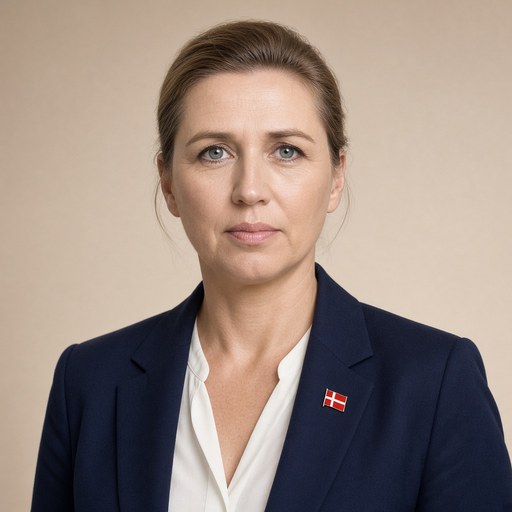
Prime Minister Mette Frederiksen's speech at the Regional Political Summit.
 Mette Frederiksen · Prime Minister of Denmark
- Context
- Frederiksen addressed a Regional Political Summit on April 11, 2024, focusing on the impact of screens and social media on Danish children's mental health and the future of healthcare.
- Main themes
- Children and youth mental health, screen time and social media harms, digital technology impact on well-being, healthcare system reform, youth loneliness and unhappiness, parental and societal responsibility, mobile-free schools initiative, public health policy
- Duration
- ~28 min
- Words
- 3,400
- Sentences
- 288
- Readability
- 69
- Grade
- 6.2
- Syntax
- 2.53
- Vocabulary
- 1.83
Translated from Danish
The broad sphere of national life a sentence belongs to. Every sentence has an Arena, so it is the denominator the other indices are read against.
Other288 sentences in 115 paragraphs
Thank you for the invitation.
Thank you to all of you who are here today for taking responsibility and bearing the burden, whatever it may be – both in our democracy and in our welfare society.
It is wonderful to be in a gathering where everyone cares about health. By the way, something we share with all Danes. And we are fantastic at talking about medicine, treatment methods, structures, "the local" and "the specialized."
It is all important. And in my speech today, I will give my take on what the future healthcare system should be able to do.
But I would like to start in a completely different place. Because I want to talk about something that I believe has a massive impact on our society. On the health of Danes. And thus our healthcare system.
It is about our children and young people. But it is almost absent when we talk about health policy.
For what if what is most harmful to our children and young people. Yes, to all of us. Are the screens that tend to stick to our hands? That lie next to our bed fully charged when we wake up. And that follow us like a shadow wherever we go.
It is, of course, positive that our children and young people can acquire knowledge in a completely different way than we could before. Engage in digital communities. With their friends. Classmates. Family.
But we must also acknowledge that we adults have uncritically shoved screens into far too many places.
In primary schools, where they take up too much space. And in our daycare centers and kindergartens, where they do not belong at all.
And there is something fundamentally wrong when too many children and young people – not only in Denmark but in the whole of the West – are struggling. In Denmark, there are too many children and young people who are lonely and unhappy. In one of the world's happiest countries.
I am afraid that in the health discussion we are missing the warning lights that are blinking. And that we as a society will look back on this time and, at best, think that we were naive. At worst, deeply irresponsible.
A group of American researchers has investigated the struggles of children and young people in the West. They found a correlation that it started in 2010. The year the iPhone was introduced.
Most of us here are old enough to remember how much it hurts to fall from a tree. I am not talking about political trees, but a real tree, where you climb.
Are we sure that all children and young people are allowed to have that good experience today?
To put it bluntly, we are today much better at wrapping our children in cotton wool when it comes to the physical world. But when they are on social media, they are far too often left completely to themselves. And we adults have no real idea of what is going on.
I hope that all of you who work with health policy have seen the documentary that Denmark's Radio aired some time ago.
Our children experience such terrible things that I can hardly repeat it in my speech today. But I will get to it if some of you have not seen it.
Noah, 15 years old, and he is a Danish boy. It is now, while we are responsible for his health. He tells that he sees a man on social media raping a dead body and cutting off limbs.
Diana – also 15 – saw a man shoot himself, with brain matter and blood spraying out.
And Stephanie, who is one year older, has seen videos of suicides and people bowling with the heads of dead people.
No human can withstand seeing that. And I promise you that a healthy child or a healthy young person will get sick from seeing it. It is neither strange nor wrong that our children and young people react. It is simply dangerous, what they see.
In the old days, our parents would turn off the television when there was something we children should not see. It is not that easy today.
And yes, we undoubtedly need to get better at talking to our children and young people about what they experience online. It is just not enough. Even though we are on the back foot, we still need to be parents.
Why are there Danish children who have TikTok when they are 9 years old, when the age limit is 13?
But the problem – and the reason I start here – is that it extends far beyond the individual. As it does with most things when we talk about health.
The American health advisor – the US Surgeon General – has stated it outright: That social media is a significant driving force behind the mental health crisis among young people.
As a society, we are faced with a bound task. And if we do not break the curve, I believe that much of what we talk about in the health sector will become almost irrelevant.
And that requires us to look at both the amount of hours they spend in front of a screen. And what they are watching. We are in the process of taking some initiatives:
We have recommended mobile-free school and leisure activities – and that tablets and computers be put away when they are not used in teaching.
We have allocated half a billion kroner for books in primary schools. Because the pendulum has probably swung too far away from the physical book.
We have increased pressure in the EU so that tech giants begin to take greater responsibility.
And in the fall, we entered into an agreement – by the way with all parties in the Folketing, and thank you for that – about a much more restrictive approach to screens in daycare centers and kindergartens.
Are we there yet? No. We need to do more. We need to do it faster. And we will.
Our challenge – those of us sitting here – is that you cannot read it out of the budget. And it is going to require a lot. It will require more than laws or regulations. Namely, a cultural change.
When we teach our children to swim, we give them floaties. Start in shallow water. And never lose sight of them.
But when it comes to our children and young people's use of screens, it is completely the opposite. Directly into deep water. And we have no idea what is happening around them. We must acknowledge that this is one of our greatest health challenges. And if we do not do that, childhood will disappear. It will disappear into a screen.
This is primarily a task for the tech giants. And make no mistake. They spend billions fine-tuning algorithms so that children and young people stay engaged just a little bit longer. So they just watch the next video and miss out on life.
* * *
The reason I start here is that I know that the next few months will be about all sorts of other things. I just want us to understand what it is that makes Danes sick. Because if we do not understand that, I do not think we can solve the problems.
Because health policy is more than anything else about lived life. And we need to know what makes Danes sick. So that we can actually pass on a society that is better and healthier.
And I agree with you, Anders, that we have, in many ways, a strong healthcare system. This is especially true for hospitals and specialized treatments.
I could put it very simply. When my own uncle – back home in Aalborg – was diagnosed with cancer many years ago, it was a death sentence. When my father had cancer a few years ago, it was some tough years. But he is still alive. And that is really well done.
It is also a reflection that we have prioritized it across changing governments and parliamentary majorities, and not least you in the regions. We have prioritized it politically, economically, and socially.
Now we need to take the next steps. But before that, a question: What should our healthcare system be able to do?
I think – boiled down to the essentials – it is two things: First, that as many Danes as possible should be able to live as long a life with as little illness as possible.
And second: That there should be equal access for all of us. No one should be left alone and kept out. That must be the measure.
* * *
A long life where illness takes up as little space as possible.
Most Danes are in contact with our healthcare system every single year. At the hospital. In psychiatry. With their general practitioner. In the municipalities.
And many – not least our elderly – do so very often.
We are looking at a future with significantly more elderly Danes. That is fortunate. And it is well done that so many Danes are living to such an old age. And most of our elderly will have a wonderful old age. Where they can do most things themselves. And where they have the time and energy for the life they want to live.
But many more elderly also means many more chronic patients with, for example, diabetes and COPD. This will place entirely new demands on the local healthcare system.
Because regardless of whether you are chronically ill with kidney disease, where lifelong treatment with dialysis is an unavoidable part of your everyday life.
Or you are a young person who is hit by mental illness that puts your life and future plans on hold.
You should be met with competent and present help no matter where you are in the country. So that you have the best opportunities to recover and exit our healthcare system again.
* * *
And what does that require? It requires more than what I can cover here. But some highlights: Strong hospitals, shorter waiting times.
Which was also the reason we together created an acute plan last year.
Because we need to make our emergency departments more robust. To get staff closer to patients. And to reduce waiting lists.
The government has prioritized 2 billion kroner for the acute plan.
Given a significant pay increase, both to nurses, midwives, and not least to many of our social and health assistants and helpers. This especially applies to those who take shifts.
We have also made a broad political agreement that it should be easier to recruit foreign healthcare personnel. You need to achieve your part of the acute plan. We obviously have an expectation of that. Conversely, it is entirely reasonable that you have an expectation that we know that it is not least medication costs that are putting pressure on the economy.
We are jointly well underway in strengthening psychiatry. And thank you for that. There has been a lot of talk about it. Now we are doing it. Now there is a ten-year plan. Now there is financing in the government's economic policy.
I believe we agree that psychiatry needs to come out of the shadow of the somatic area. It is really good that we are focusing on children and young people. But as per my introduction, much of the prevention is out of your hands. And we need to think that into all other areas of society.
And then perhaps one of the most important things, and that is what you have already talked about: The local healthcare system.
Because a coin always has two sides. And now we are at the point where we can look at each other and say, "now we have world-class hospitals."
It is going really well in many places, with the highly specialized.
But that has also come at a price. Because it has meant an underprioritization of the local healthcare system. And that can no longer continue.
We have – and I believe this is a shared recognition – neglected to develop health initiatives in our own homes. In the local environment. Get people out of hospitals and, just as importantly, prevent so many from going in. We need to correct that.
We know that even a short time in a hospital bed can mean a long time of rehabilitation. It must be a goal in itself to prevent so many of our elderly from being admitted. And especially readmitted. They need help closer to their homes.
It can be from home care nurses. It can be in nursing homes. And not least, many of our skilled social and health helpers and assistants play a very important role in our healthcare system.
We need to get help closer. Into our own homes. And here in Denmark, we have some fantastic opportunities. Because we are both fully digitalized and not particularly afraid of new technology, as long as it is used for the right purposes. And here we can use it for the right purposes.
And all of this, of course, to avoid some of the transport. And some of the waiting time that especially affects some of our patients, where there is a longer distance to a proper offer in our healthcare system.
* * *
Achieving a daily life where illness takes up as little space as possible is not only important for citizens who need surgery, are fighting cancer, or dealing with complex processes. But for all of us.
Because it is also about the very basics. Namely, our own doctor.
It is not always the case that the phone is answered when you call. And it is also not my impression that all Danes are equally satisfied with the medical coverage that exists today. And we are fully on board to discuss that it should be attractive to be a doctor where the patients are. But conversely, it is also not an unreasonable demand for us to have that doctors are actually where the patients are.
* * *
And that brings me to the next point. Because if we are to measure our health, I would like to measure it on two things: Are we living good and long lives without too much illness? And is there actually equal access?
On the latter, it is a bit lacking. It is actually lacking a lot. And I think we have some blind spots. Because as Danes, we believe that when there is formally equal access, there is also actually equal access. But there is not. Because our conditions for seizing the opportunities that exist are very unevenly distributed.
It looks worse in other countries, of course. One of the reasons it is better in Denmark is that we have chosen to have a solidarity-funded healthcare system. It is not our wallet, residence, or social status that, on paper, determines how we are treated.
But when there is a ten-year difference in life expectancy in my old area in Aalborg: Aalborg Øst and Sydøst. And then out to Hasseris. Then we have not delivered what we are supposed to deliver.
It is not fair that it is our working life, our family background, or the living conditions we have that determine how old we become. And even worse: how good the old age we have will be.
So there is far too great a difference in how long we can expect to live. It is, of course, about many things.
It is also about how we are received when we are patients. What happens when we enter the healthcare system. So thank you for that you also have that in mind.
* * *
And then there is the issue with general practitioners. Because there is a connection.
Today, there are the fewest doctors where there are the most sick. That sentence is quite wild. There are the fewest doctors where there are the most sick. It makes no sense. We need to do something about that. Because there are some who have more need for a doctor than others. And there are some who more often need a doctor than some others.
There are parts of Denmark where it is difficult to get a permanent doctor. It is no longer unusual that when the local doctor retires, no one wants to take over the clinic. I actually believe that some of our young medical students, who are right outside the door, have some pretty good ideas on how we can solve some of this. Because it is not sustainable. So thank you for actively engaging in that discussion.
* * *
Most things work well, and that applies broadly to our welfare society. But that is not the impression one gets when following the health debate. Miracles are performed every single day, but it is not always that you receive the praise.
I spoke just yesterday with someone who had had two premature babies and had been hospitalized for two months in a Danish hospital, and they just thought everything had been just as it should be. I meet so many who come and tell me how well things are going. How skilled the staff are. How fantastic the nurses are at showing care. How good the treatment has been.
You often hear about what is not going well. So now I just want to share with you that a lot is working well.
But now comes a little but
.
I am afraid we must also be honest and say that the simpler a challenge you have, the easier it is to navigate our healthcare system. If you are a patient in one area. Or if you are hit by cancer once, which can be cured. Or something very specific.
I believe that people most often experience challenges when they have many illnesses at once. And go for check-ups and treatment and follow-ups at several different hospitals. Then there are some patients who feel they have to be project managers in their own lives.
I believe we can do better. We must do better.
* * *
I have already spoken far too long. And I also hope that some of the priorities we have in the government are ones you can recognize in the reality you are in.
I started a bit untraditionally, and I will probably also end a bit untraditionally.
We will have many structural discussions with each other. I would like us to also remember research in the coming years.
Historically, women's bodies have been far too underrepresented when it comes to disease research.
In fertility treatment, we treat the healthy, and not necessarily the one who has a challenge.
It is estimated that up to one in ten Danish women of childbearing age today suffer from endometriosis. A condition that can lead to chronic pain and involuntary infertility.
Many women experience being diagnosed too late and waiting for the right treatment.
And there is a backlog when it comes to diseases that relate to one gender. Perhaps because most medicine has been tested and developed on male bodies.
And that is really just to say that we from the government want to cover all aspects when we talk about health.
* * *
Let me therefore say here at the end. I am very pleased that we have implemented a salary increase in our healthcare system. In my eyes, it came at the right time. Our employees are the absolutely most important resource. Therefore, the recognition that is coming now is important. Thank you for your efforts.
In a few months, the Health Structure Commission will present their recommendations. And later this year, the government will present our health proposal.
We have already allocated billions for salary increases. Psychiatric boost. Emergency plan. Health package. New cancer plan.
We know that money does not solve all challenges. Therefore, we need to work with you to find new solutions. So that we fundamentally change some of what needs to be changed. Because everything is about giving the Danes the best healthcare system in the world. Because every single Dane – no matter where they live in this country – has the right and claim to that.
Thank you for your attention.
The original Danish. The tags above are read on the English translation's sentences.
Tak for invitationen.
Tak til alle jer, der er her i dag for at tage ansvaret og slæbet, hvad det også er – både i vores demokrati og i vores velfærdssamfund.
Det er dejligt at være i en forsamling, hvor alle går op i sundhed. I øvrigt noget, vi deler med alle danskere. Og vi er fantastisk gode til at snakke om medicin, behandlingsmetoder, strukturer, ”det nære” og ”det specialiserede”.
Det er vigtigt alt sammen. Og i min tale i dag vil jeg give mit bud på, hvad fremtidens sundhedsvæsen skal kunne.
Men jeg vil gerne starte et helt andet sted. For jeg vil gerne tale om noget, jeg tror, har massiv indflydelse på vores samfund. På danskernes sundhed. Og dermed vores sundhedsvæsen.
Det handler om vores børn og unge. Men det er næsten fraværende, når vi taler sundhedspolitik.
For hvad nu, hvis det, der er mest skadeligt for vores børn og unge. Ja, for os alle sammen. Er de skærme, der har det med at klistre sig fast til vores hænder? Som ligger ved siden af vores seng fuldt opladt, når vi vågner. Og som følger os som en skygge overalt, hvor vi går.
Det er selvfølgelig positivt, at vores børn og unge kan tilegne sig viden på en helt anden måde, end vi kunne tidligere. Indgå i digitale fællesskaber. Med deres venner. Klassekammerater. Familie.
Men vi må også erkende, at vi voksne for ukritisk har proppet skærmene ind alt for mange steder.
I folkeskolen, hvor de fylder for meget. Og i vores vuggestuer og børnehaver, hvor de slet ikke hører hjemme.
Og der er jo noget fundamentalt galt, når for mange børn og unge – ikke alene i Danmark, men i hele Vesten – mistrives. I Danmark er der for mange børn og unge, der er ensomme og ulykkelige. I et af verdens lykkeligste lande.
Jeg er bange for, at vi i sundhedsdiskussionen misser de advarselslamper, der står og blinker. Og at vi som samfund kommer til at kigge tilbage på denne tid, og i bedste fald vil tænke, at vi var naive. I værste fald dybt uansvarlige.
En gruppe amerikanske forskere har undersøgt mistrivslen hos børn og unge i Vesten. De fandt en sammenhæng med, at det startede i år 2010. Det år, at iPhone’en kom frem.
De fleste af os herinde er gamle nok til at kunne huske, hvor ondt det gør, når man falder ned fra et træ. Altså jeg taler ikke om politiske træer, men sådan et
rigtigt
træ, hvor man klatrer.
Er vi sikker på, at alle børn og unge får lov til at få den ret gode erfaring med sig i dag?
Lidt firkantet sagt, så er vi i dag langt bedre til at pakke vores børn ind i vat og bomuld, når det handler om den fysiske verden. Men når de færdes på sociale medier. Så er de alt for ofte overladt helt til sig selv. Og vi voksne aner reelt ikke, hvad der foregår.
Jeg håber, at alle jer, der arbejder med sundhedspolitik, har set den dokumentar som Danmarks Radio viste for noget tid siden.
Vores børn oplever så grumme ting, at jeg næsten ikke kan gengive det i min tale i dag. Men jeg kommer til det, hvis nu nogle af jer ikke har set den.
Noah på 15 år, og det er altså en dansk dreng. Det er nu, mens vi har ansvar for hans sundhed. Han fortæller, at han et sted på de sociale medier, ser en mand voldtage en død krop og skære lemmer af.
Diana – også 15 – så en mand skyde sig selv, så der sprøjtede hjernemasse og blod ud.
Og Stephanie, hun er ét år ældre, hun har set videoer med selvmord og folk, der bowler med døde menneskers hoveder.
Det er der ingen mennesker, der kan tåle at se. Og jeg lover jer, at et raskt barn eller et raskt ungt menneske bliver syg af at se det. Det er hverken mærkeligt eller forkert, at vores børn og unge reagerer. Det er ganske enkelt farligt, det de ser.
I gamle dage slukkede vores forældre fjernsynet, når der var noget, vi børn ikke skulle se. Så nemt er det ikke i dag.
Og jo, vi skal uden tvivl blive bedre til at tale med vores børn og unge om, hvad de oplever på nettet. Det er bare ikke nok. Selvom vi er på udebane. Så skal vi stadig være forældre.
Hvorfor er der danske børn der har TikTok, når de er 9 år, når aldersgrænsen er 13 år.
Men problemet – og grunden til, at jeg starter her – er, at det rækker langt ud over den enkelte. Som det gør med det meste, når vi taler sundhed.
Den amerikanske sundhedsrådgiver – US Surgeon General – har sagt det lige ud: At sociale medier er en vigtig drivkraft bag den mentale sundhedskrise blandt unge.
Som samfund står vi altså med en bunden opgave. Og hvis ikke vi knækker kurven, så tror jeg, at meget af det andet, vi snakker om på sundhedsområdet, bliver nærmest ligegyldigt.
Og det kræver, at vi både ser på mængden af timer, de tilbringer foran en skærm. Og hvad de ser på. Vi er i gang med at tage nogle initiativer:
Vi har anbefalet mobilfri skole– og fritidstilbud – og at tablets og computere lægges væk, når de ikke bruges i undervisningen.
Vi har afsat en halv milliard kroner til bøger i folkeskolen. Fordi pendulet nok kom til at svinge for meget væk fra den fysiske bog.
Vi har øget presset i EU, så tech–giganterne begynder at tage et større ansvar.
Og i efteråret indgik vi en aftale – i øvrigt med alle partier i Folketinget, og tak for det – om en langt mere restriktiv tilgang til skærme i vuggestuer og børnehaver.
Er vi i mål? Nej. Vi skal gøre mere. Vi skal gøre det hurtigere. Og det kommer vi også til.
Vores udfordring – os der sidder her – er, at man ikke kan læse det ud af budgettet. Og det kommer til at kræve meget. Det kommer til at kræve mere end love eller bekendtgørelser. Nemlig en kulturændring.
Når vi lærer vores børn at svømme, giver vi dem svømmevinger på. Starter på det lave vand. Og mister dem aldrig af syne.
Men når det gælder vores børn og unges brug af skærme, så er det fuldstændig modsat. Direkte ud på dybt vand. Og vi aner ikke, hvad der sker omkring dem. Vi bliver nødt til at erkende, at det her er en af vores allerstørste sundhedsudfordringer. Og hvis ikke vi gør det, så forsvinder barndommen. Den forsvinder ind i en skærm.
Det her er først og fremmest en opgave for tech–giganterne. Og tag ikke fejl. De bruger milliarder på at fintune algoritmerne, så børn og unge bliver hængende en lille smule mere. Så de lige tager den næste video med og går glip af livet.
* * *
Grunden til, at jeg starter her, er fordi, at jeg godt ved, at de næste par måneder kommer til at handle om alt muligt andet. Jeg vil bare så gerne have os til at forstå, hvad det er, der gør danskerne syge. For hvis ikke, vi forstår det, så tror jeg ikke, vi kan løse problemerne.
For sundhedspolitik handler mere end noget andet om det levede liv. Og vi bliver nødt til at vide, hvad der gør danskerne syge. Så vi faktisk kan give et samfund videre, der er bedre og sundere.
Og jeg er enig med dig Anders i, at vi på mange leder og kanter har et stærkt sundhedsvæsen. Det gælder ikke mindst for sygehusene og de specialiserede behandlinger.
Jeg kunne sige det meget enkelt. Da min egen onkel – hjemme i Aalborg – for mange år siden fik konstateret kræft, var det en dødsdom. Da min far fik kræft for nogle år tilbage, var det nogle hårde år. Men han lever stadig. Og det er rigtig godt gået.
Det er også et udtryk for, at vi har prioriteret det på tværs af skiftende regeringer og folketingsflertal, og ikke mindst jer i regionerne. Vi har prioriteret det politisk, økonomisk og samfundsmæssigt.
Nu skal vi så tage de næste skridt. Men inden da, et spørgsmål: Hvad er det, vores sundhedsvæsen skal kunne?
Jeg synes – kogt ind til benet – det er to ting: For det første, at så mange danskere som muligt skal kunne leve et så langt liv med så lidt sygdom som muligt.
Og to: At der skal være lige adgang for os allesammen. Ingen skal efterlades alene og holdes ude. Det må være målestokken.
* * *
Et langt liv, hvor sygdom fylder mindst muligt.
De fleste danskere er hvert år i kontakt med vores sundhedsvæsen hvert eneste år. På sygehuset. I psykiatrien. Hos egen læge. I kommunerne.
Og rigtig mange – ikke mindst vores ældre og gamle – er det rigtig ofte.
Vi ser ind i en fremtid med markant flere ældre danskere. Det er lykkeligt. Og det er godt gået, at så mange danskere bliver så gamle. Og de fleste af vores ældre kommer til at få en pragtfuld alderdom. Hvor man kan det meste selv. Og hvor man har tid og overskud til det liv, man gerne vil leve.
Men mange flere ældre betyder også mange flere kronikere med eksempelvis diabetes og KOL. Det kommer til at stille helt nye krav til det nære sundhedsvæsen.
For uanset, om du er kronisk nyresyg, hvor livslang behandling med dialyse er en uundgåelig del af din hverdag.
Eller du er et ungt menneske, der rammes af psykisk sygdom, der sætter dit liv og dine fremtidsplaner på pause.
Så skal du mødes af kompetent og nærværende hjælp ligegyldigt, hvor du er i landet. Så du får de bedste muligheder for at blive rask og komme ud af vores sundhedsvæsen igen.
* * *
Og hvad kræver det så? Det kræver mere, end hvad jeg kan nå at redegøre for her. Men nogle nedslag: Stærke sygehuse, kortere ventetider.
Hvilket også var grunden til, at vi sidste år sammen lavede en akutplan.
For vi skal gøre vores akutmodtagelser mere robuste. For at få medarbejdere tættere på patienterne. Og for at få nedbragt ventelisterne.
Regeringen har prioriteret 2 mia. kr. til akutplanen.
Givet et markant lønløft, både til sygeplejersker, jordemødre og ikke mindst til mange af vores social– og sundhedsassistenter og -hjælpere. Det gælder især dem, der tager vagter.
Vi har også lavet en bred politisk aftale om, at det skal være nemmere at rekruttere udenlandsk sundhedspersonale. I skal i mål med jeres del af akutplanen. Det har vi selvfølgelig en forventning om. Omvendt er det helt rimeligt, at I har en forventning om, at vi ved, at det ikke mindst er medicinudgifter, der presser økonomien.
Vi er i fællesskab godt i gang med at styrke psykiatrien. Og tak for det. Der har været talt meget om det. Nu gør vi det. Nu er der en ti–års plan. Nu er der finansiering i regeringens økonomiske politik.
Jeg tror, vi er enige om, at psykiatrien skal ud af skyggen af det somatiske område. Det er rigtig godt, at vi har fokus på børn og unge. Men jævnfør min indledning, så er meget af forebyggelsen ude af jeres hænder. Og det skal vi have tænkt ind på alle andre samfundsområder.
Og så måske noget af det allervigtigste, og det er dét, I allerede har talt om: Det nære sundhedsvæsen.
For en mønt har altid to sider. Og nu er vi så der, hvor vi kan kigge på hinanden og sige ”nu har vi sygehuse i verdensklasse”.
Det kører rigtig godt mange steder, med det højt specialiserede.
Men også dét er kommet med en pris. For det har betydet en underprioritering af det nære sundhedsvæsen. Og det går ikke længere.
Vi har – og det, tror jeg, er en fælles erkendelse – forsømt at udvikle sundhedsindsatser i eget hjem. I de nære omgivelser. Få folk ud af sygehusene og lige så vigtigt, at forhindre at så mange kommer derind. Det skal vi rette op på.
Vi ved, at selv kort tid i en hospitalsseng kan betyde lang tids genoptræning. Det må være et mål i sig selv at hindre, at så mange af vores ældre bliver indlagt. Og især genindlagt. De skal have hjælp tættere på deres hjem.
Det kan være af hjemmesygeplejersken. Det kan være på plejehjemmet. Og ikke mindst mange af vores dygtige social– og sundhedshjælpere og -assistenter udfylder en meget vigtig rolle i vores sundhedsvæsen.
Vi skal have hjælpen tættere på. Ind i vores eget hjem. Og der har vi jo i Danmark, nogle fantastiske muligheder. Fordi vi både er gennemdigitaliserede og ikke særlig forskrækkede over ny teknologi, hvis den ellers bruges til det rigtige. Og her kan vi bruge den til det rigtige.
Og alt det her, selvfølgelig for at undgå noget af alt den transport. Og noget af den ventetid, som rammer især nogle af vores patienter, hvor der er længere til et ordentligt tilbud i vores sundhedsvæsen.
* * *
At få en hverdag, hvor sygdom fylder mindst muligt, er ikke kun vigtigt for borgere, der skal opereres, kæmper med kræft eller komplekse forløb. Men for os alle sammen.
For det handler også om det helt basale. Nemlig vores egen læge.
Det er ikke altid, at telefonen bliver taget, når man ringer. Og det er heller ikke mit indtryk, at alle danskere er lige tilfredse med den lægedækning, der er i dag. Og vi er helt med på at diskutere, at det skal være attraktivt at være læge der, hvor patienterne er. Men det er omvendt heller ikke noget urimelig krav for os at have, at lægerne så rent faktisk er der, hvor patienterne er.
* * *
Og det fører mig frem til det næste. For hvis vi skal måle vores sundhed, vil jeg gerne måle det på to ting: Lever vi gode og lange liv uden alt for meget sygdom. Og er der reelt lige adgang.
På det sidste, der kniber det lidt. Det kniber faktisk rigtig meget. Og jeg tror, vi har nogle blinde vinkler. For som danskere tror vi, at når der formelt er lige adgang, så er der også reelt lige adgang. Det er der bare ikke. For vores forudsætninger for at gribe de muligheder, der er, er meget skævt fordelt.
Det ser selvfølgelig værre ud i andre lande. En af grundene til, at det går bedre i Danmark, er fordi, at vi har valgt at have et solidarisk finansieret sundhedsvæsen. Det er ikke vores pengepung, bopæl eller sociale status, der på papiret afgør, hvordan vi bliver behandlet.
Men når der er ti års forskel i levetid på mit gamle område i Aalborg: Aalborg Øst og Sydøst. Og så ud til Hasseris. Så har vi ikke leveret det, vi skal levere.
Det er jo ikke rimeligt, at det er vores arbejdsliv, vores familiebaggrund eller de levevilkår, vi har, der afgør, hvor gamle vi bliver. Og endnu værre: hvor god den alderdom vi har, så bliver.
Så der er alt for stor forskel på, hvor længe vi kan forvente, at vi lever. Det handler selvfølgelig om rigtig mange ting.
Det handler også om, hvordan vi bliver modtaget, når vi er patienter. Hvad der sker, når vi kommer ind i sundhedsvæsenet. Så tak for, at I også har det med.
* * *
Og så er der det med de praktiserende læger. For der er en sammenhæng.
I dag er der færrest læger, hvor der er flest syge. Den sætning er jo ret vild. Der er færrest læger, hvor der er flest syge. Det giver ikke nogen mening. Det skal vi da have gjort noget ved. For der er nogen, der har mere behov for lægen end andre. Og der er nogle, der oftere har behov for lægen, end nogle andre.
Der er dele af Danmark, hvor det er svært at få en fast læge. Det er ikke længere unormalt, at når den lokale læge går på pension, så er der ingen, der ønsker at overtage klinikken. Jeg tror faktisk, at nogle af vores unge lægestuderende, der står lige uden foran døren, har nogle ret gode bud på, hvordan vi kan løse noget af det her. For det er ikke holdbart. Så tak for, at I så aktivt går ind i den diskussion.
* * *
Det meste fungerer godt, og det gælder bredt i forhold til vores velfærdssamfund. Men det er ikke det indtryk, man får, når man følger sundhedsdebatten. Der udvirkes mirakler hver eneste dag, men det er ikke altid, at I får rosen.
Jeg talte så sent som i går med en, der havde fået to for tidligt fødte børn og været indlagt to måneder på et dansk sygehus, og havde bare syntes, det hele havde været lige som det skulle. Jeg møder så mange, der kommer og fortæller mig, hvor godt det går. Hvor dygtige medarbejderne er. Hvor fantastisk sygeplejerskerne er til at vise omsorg. Hvor god en behandling, man har fået.
I får tit det at vide, som ikke går godt. Så nu deler jeg bare med jer, at rigtig meget fungerer godt.
Men nu kommer der et lille
men
.
Jeg tror desværre også, vi må være ærlige at sige, at jo enklere en udfordring, du har, jo lettere er det også at overskue vores sundhedsvæsen. Hvis du er patient på ét område. Eller én gang bliver ramt af kræft, der kan helbredes. Eller noget meget specifikt.
Jeg tror, at folk oftest oplever udfordringer, når man har mange sygdomme på én gang. Og går til kontrol og behandling og opfølgning på flere forskellige sygehuse. Så er der nogle patienter, der har en oplevelse af, at skulle være projektmager i deres eget liv.
Det tror jeg godt, vi kan gøre bedre. Det skal vi gøre bedre.
* * *
Jeg har allerede talt alt for længe. Og håber også, at nogle af de prioriteringer, vi har i regeringen, er nogle, I kan genkende i den virkelighed, I sidder i.
Jeg startede lidt utraditionelt, og jeg vil nok også slutte lidt utraditionelt.
Vi kommer til at have mange strukturdiskussioner med hinanden. Jeg kunne godt tænkte mig, at vi også husker forskningen i de kommende år.
Historisk set har kvinders kroppe været alt for underbelyste, når det drejer sig om sygdomsforskning.
I fertilitetsbehandlingen behandler vi på den raske, og ikke nødvendigvis på den, der har en udfordring.
Man regner med, at op mod hver tiende danske kvinde i den fødedygtige alder i dag lider af endometriose. En tilstand, der kan give anledning til kronisk smertetilstand og ufrivillig barnløshed.
Rigtig mange kvinder oplever at blive diagnosticeret for sent og vente på den rigtige behandling.
Og der er et efterslæb, når det handler om sygdomme, der relaterer sig til det ene køn. Måske fordi det meste medicin er testet og udviklet på mandekroppen.
Og det er egentlig bare for at sige, at vi fra regeringen side ønsker at komme hele vejen rundt, når vi snakker sundhed.
* * *
Lad mig derfor sige her til sidst. Jeg er meget glad for, at vi har fået lavet et lønløft i vores sundhedsvæsen. Det kom i mine øjne på det rigtige tidspunkt. Vores medarbejdere er den absolut vigtigste resurse. Derfor er den anerkendelse, der kommer nu, vigtig. Tak for jeres indsats.
Om få måneder kommer Sundhedsstrukturkommissionen med deres anbefalinger. Og senere på året kommer regeringen med vores sundhedsudspil.
Vi har allerede afsat milliarder til lønløft. Psykiatriløft. Akutplan. Sundhedspakke. Ny kræftplan.
Vi ved godt, at penge ikke løser alle udfordringer. Derfor har vi behov for sammen med jer at finde de nye løsninger. Så vi grundlæggende får forandret noget af det, som skal forandres. For alting handler om at give danskerne verdens bedste sundhedsvæsen. For det har hver eneste dansker – uanset, hvor de bor i det her land – ret og krav til.
Tak for opmærksomheden.