




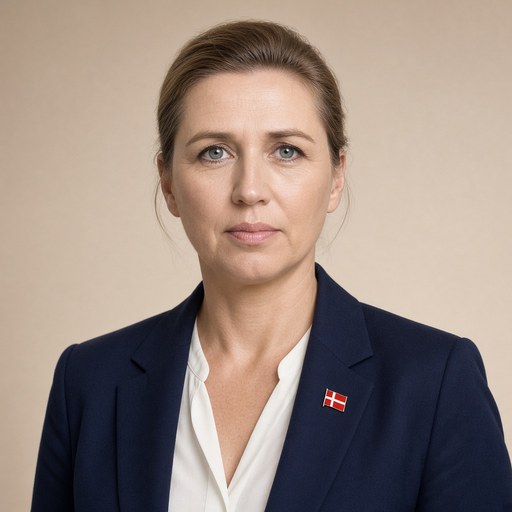
Prime Minister Mette Frederiksen's speech at the Think Tank Europe's annual Europe Conference on February 25, 2021.
 Mette Frederiksen · Prime Minister of Denmark
- Context
- Frederiksen addressed Think Tank Europe's annual Europe Conference on February 25, 2021, focusing on EU vaccine shortfalls and the need to build European production capacity.
- Main themes
- COVID-19 vaccine rollout in Europe, EU pandemic preparedness, vaccine production capacity, public-private partnerships in life sciences, European strategic autonomy, supply chain dependence, RNA vaccine technology, EU collective action, Danish leadership in EU, health security policy
- Duration
- ~16 min
- Words
- 1,860
- Sentences
- 149
- Readability
- 54
- Grade
- 8.6
- Syntax
- 2.51
- Vocabulary
- 2.11
Translated from Danish
The broad sphere of national life a sentence belongs to. Every sentence has an Arena, so it is the denominator the other indices are read against.
Other149 sentences in 72 paragraphs
Thank you for the invitation.
Ambitious climate goals. The Brexit agreement. A new budget – 7 years. Elections in the USA.
When I spoke at the European Conference in January last year, those were the headlines we all expected for 2020.
We knew that there were things we could not possibly foresee. There always are.
But no one – certainly not the EU – was prepared for a pandemic of the nature we have experienced and are still in the midst of.
It has been a very challenging year in every way. For the world, for Europe. For the EU. And for Denmark.
Covid-19 has been a stress test of the EU’s preparedness, of trade relations, of supply chains, and of our capacities and thus also of our competencies.
Last spring was a rude awakening. In all countries, there was a shortage of face masks and medical equipment.
Prices exploded. How could Denmark procure more protective equipment so that we could take care of our own population? Many private companies stepped up at home to an impressive extent and helped at a crucial time.
But unfortunately, Europe’s great dependence on supplies from countries outside of Europe became very clear. So did our lack of cooperation on preparedness.
In recent months, we have unfortunately seen that we have not been sufficiently secured in relation to vaccines on our own continent either.
In Israel, over half of the population has now received at least one dose. In the United Kingdom, it is over a quarter. In the USA, it is over 13 percent.
In EU countries, the numbers vary. But with an average of only about four percent of citizens having received at least one dose, we Europeans are far from the rollout we see in other countries we would normally compare ourselves with.
There are several reasons for this. A different purchasing strategy. More thorough approval procedures. Differences in the risks and responsibilities that have been willing to be taken on.
But regardless of the explanations, the result remains. And it is unfortunately unequivocal.
It is simply not good enough.
In particular, the capacity to produce vaccines in Europe has been completely insufficient. And therefore, we are currently delayed in the necessary fight against the pandemic and for our populations.
The challenge is enormous. When we look further ahead, it seems likely that we will need to continue vaccinating our populations.
There may be a need for revaccination as time goes on. But right now, it is also the mutations that challenge us the most and that will challenge the vaccines.
Vaccines will – also in the future – be a crucial defense for our societies. That is how we must view the challenge.
It is not going away. Therefore, we must prepare our societies. We must gear up.
There is a need for action here and now. We need many more vaccines if we are to get ahead of the development and not find ourselves in the same situation as a year ago, where we did not have enough protective equipment. And as today, where we do not have enough vaccines.
I will not hide the fact that I have been one of the prime ministers from one of the countries that has pushed hardest in the EU.
The Commission has taken a number of initiatives recently.
A new task force at the European level, which will explore opportunities for increased production in the short term in collaboration with the industry. And proposals have been made for a strengthened bio-defense preparedness.
For me, it is clear that we need to maintain and strengthen our European competencies. This applies to technology, medicine, research, and development.
While the past year has also been the story of unique competencies that have created the foundation of vaccines we now stand on in a historically short time – long live science – it is also a story of a Europe that does not deliver what Europe should. Here we can and must stand even stronger.
My overarching message today – also when I meet with my European colleagues in a few hours – is that there is a need for a significant and collective effort to build our production capacity. Not least for the RNA vaccines, which everyone points to as part of the future.
Existing facilities must be developed and expanded. New ones must be built. We must think big and untraditionally. And we must think in public-private partnerships. As we do at home, where we have initiated a partnership with our life-science sector, which is uniquely skilled both in Danish and international contexts.
This collaboration must also equip our own industry in an area where Danish business has much to offer.
We cannot remain dependent on production chains that we do not control in Europe.
This is society-critical. It is security policy. It must be seen as part of the preparedness that must protect our populations. It is not just health policy.
Going forward, we in Europe must be absolutely sure that we have the vaccines we need when we are to vaccinate our own populations. But also when it comes to vaccinating in our neighboring areas. It is about geopolitics, that is, Europe’s ability to provide vaccines, for example, to the African continent.
We must ensure that we scale up research and vaccine production. So that we have that security – regardless of whether the world shuts down again.
I might as well say it directly: The EU and the West will lose if we leave this task to our strategic competitors. The EU must be at the forefront when it comes to global vaccine rollout.
There will be much to discuss at the EU summit this afternoon, this evening, and tomorrow. And it must not just be talk.
* * *
The Covid crisis is also an economic crisis.
The temporary recovery instrument that was agreed upon in the summer was a response to the truly extraordinary situation we are in. A fund of more than 750 billion euros. It provides a good starting point for a recovery.
A large part of the funds is targeted at the green and digital sectors. That points forward.
It is not only good for Europe, but also for Danish exports and thus Danish jobs. It is an opportunity we must seize. And which we are already pursuing purposefully in close collaboration with Danish business and Danish trade unions.
When Denmark has so far fared better through the pandemic than we feared – both health-wise and economically – it is largely due to a skilled and adaptable Danish production.
Danish companies are far ahead in digitalization. It is a huge advantage during a pandemic.
Another great strength for Danish business is sustainability. Green transition. Exports from Denmark of green goods and services were more than 90 billion kroner in 2019.
In December, we agreed on a significant upward adjustment of the EU’s climate goals for 2030 to at least 55 percent, not least after massive pressure from Denmark.
In the USA, the green transition is already well underway in many states. And under President Joe Biden, the new administration will go the same way. That is very good news for the climate.
And it is also good news for Denmark. Because it is good for Danish exports of green solutions. The USA will seek solutions in areas where Danish companies are strong: onshore wind, offshore wind, water technology, energy efficiency, and sustainable food.
Denmark and Europe must take advantage of that.
In trade with the rest of the world, we Europeans must remember and stand stronger on who we are. We are one of the world’s largest economies, even after Brexit. We are one of the world’s most purchasing-powerful and attractive markets.
We must demand and stand firm when global rules are not followed. When European interests are opposed – openly or covertly. Without ending up in protectionism.
This applies to our trading partners. It also applies to certain sectors.
It is a priority for the Danish government that the largest digital companies must, of course, pay their fair share of taxes.
If results are not achieved soon in the OECD, where negotiations are currently taking place, then the EU must lead the way.
The demands must not stop solely at taxation. They must also be heard loud and clear when it comes to data security and better protection against the misinformation that risks undermining our entire democratic discourse.
Europe must move forward in the digital area. It is a difficult and extremely important debate that we will address at the spring summit in Brussels next month.
* * *
Corona or not. A challenge that European politicians are rightly being measured on is migration.
Last year, the Commission presented its proposal for a new asylum and migration pact. There are good elements in the pact – such as strengthening work in countries of origin and transit. More focus on returning people who should not be here. A strengthening of Europe’s external borders.
But the proposals do not go far enough. We are faced with a European asylum system that has effectively collapsed.
The government is working on a model for asylum processing at a reception center outside the EU.
At the same time, we are working closely with European partners. More and more are seeing the need for new solutions.
* * *
I began by saying that the pandemic was a stress test of European preparedness. It has also been a stress test of European cooperation.
There were those who doubted the cooperation – after a fumbling start. Mistakes have been made. But in far, far most cases, Denmark is stronger and better equipped when we stand together with our friends in Europe.
Let us learn from the experiences of corona to create a more self-sufficient Europe that stands stronger in its own right.
And now that I am talking about a stronger Europe: When the corona fog eventually lifts, Europe must navigate a new reality. A reality where the United Kingdom has left the EU. And where the EU’s most important partner, the USA, with Biden has again got a cooperative and transatlantic-oriented president.
It is important that we in Europe seize this opportunity – that we bring new positive dynamics into the cooperation with the USA. We must invest much more in transatlantic cooperation again.
For we must be honest: Without the USA in the lead, it will be extremely difficult, indeed almost impossible, to address the many challenges that the free world faces.
This applies, as mentioned earlier, in relation to climate. But it also applies to multilateral cooperation. The changed geopolitical landscape. And the promotion of the common values we share across the Atlantic.
And not least the security policy cooperation. The USA remains, through NATO, the ultimate guarantor of the security of the Danes.
With a strong EU and a new president in the USA, we can do more to defend and develop our democratic, open societies in a world where authoritarian tendencies are unfortunately on the rise.
Thank you for your attention and have a good conference.
The original Danish. The tags above are read on the English translation's sentences.
Tak for invitationen.
Ambitiøse klimamål. Aftale om Brexit. Nyt budget – 7-årigt. Valg i USA.
Da jeg talte på Europakonferencen i januar sidste år, var det de overskrifter, vi alle forventede for 2020.
Vi vidste godt, at der var ting, vi umuligt ville kunne forudse. Det er der altid.
Men ingen – bestemt heller ikke EU – var forberedt på en pandemi af den karakter, vi har oplevet og stadig står midt i.
Det har været et på alle måder meget udfordrende år. For verden, for Europa. For EU. Og for Danmark
Covid-19 har været en tryktest af EU’s beredskab, af handelsrelationer, af forsyningskæder og af vores kapaciteter og dermed også af vores kompetencer.
Sidste forår blev en brat opvågning. I alle lande manglede man mundbind og medicinsk udstyr.
Priserne eksploderede. Hvordan kunne Danmark skaffe flere værnemidler, så vi kunne passe på vores egen befolkning? Herhjemme trådte mange private virksomheder til i et imponerende omfang og hjalp i en helt afgørende tid.
Men desværre blev Europas store afhængighed af leverancer fra lande uden for Europa meget tydelig. Det blev vores manglende samarbejde om beredskabet også.
I de seneste måneder har vi desværre set, at vi heller ikke i forhold til vacciner har været sikret tilstrækkeligt på vores eget kontinent.
I Israel har over halvdelen af befolkningen nu modtaget mindst en dosis. I Storbritannien er det over en fjerdedel. I USA er det over 13 procent.
I EU-landene varierer tallene. Men med i gennemsnit kun omkring fire procent af borgerne, som har fået mindst en dosis, er vi europæere milevidt fra den udrulning, vi ser i andre lande, vi normalt ville sammenligne os med.
Det er der flere grunde til. En anden indkøbsstrategi. Grundigere godkendelsesprocedurer. Forskelle i de risici og det ansvar, man har villet påtage sig.
Men uanset forklaringerne, så står resultatet tilbage. Og det er desværre entydigt.
Det er ganske enkelt ikke godt nok
Især har kapaciteten til at producere vaccine i Europa været helt utilstrækkelig. Og derfor forsinkes vi lige nu i den nødvendige kamp imod pandemien og for vores befolkninger.
Udfordringen er enorm. Når vi ser længere frem, tyder meget på, at vi får behov for at blive ved med at vaccinere befolkningerne.
Der kan være et behov for at revaccinere, som tiden går. Men lige nu er det også mutationerne, der udfordrer os allermest, og som vil udfordre vaccinerne.
Vacciner bliver – også fremover – et helt afgørende værn for vore samfund. Det er sådan, vi må betragte udfordringen.
Det går ikke væk. Derfor skal vi forberede vores samfund. Vi skal op i gear.
Der er behov for handling her og nu. Vi har brug for mange flere vacciner, hvis vi skal komme på forkant med udviklingen og ikke stå i den samme situation som for et år siden, hvor vi ikke havde værnemidler nok. Og som i dag hvor vi ikke har vacciner nok.
Jeg vil ikke lægge skjul på, at jeg har været en af de statsministre, vi er et af de lande, som har presset hårdest på i EU.
Kommissionen har taget en række initiativer den seneste tid.
En ny task force på europæisk niveau, som skal afsøge muligheder for øget produktion på kort sigt i samarbejde med industrien. Og der er fremsat forslag om et styrket bioforsvarsberedskab.
For mig står det klart, at vi er nødt til at fastholde og styrke vores europæiske kompetencer. Det gælder inden for teknologi, medicin, forskning og udvikling.
Hvor det forgangne år samtidig har været fortællingen om unikke kompetencer, der på historisk kort tid har skabt det fundament af vacciner, vi nu står på – længe leve videnskaben – så er det også en fortælling om et Europa, der ikke levere det, Europa skal. Her kan og skal vi stå endnu stærkere.
Mit alt overskyggende budskab i dag – også når jeg mødes med mine europæiske kolleger om nogle få timer – er, at der er behov for et stort og kollektivt løft for at opbygge vores produktions-kapacitet. Ikke mindst af de RNA vacciner, som alle peger på, er en del af fremtiden.
Eksisterende faciliteter skal udvikles og udbygges. Nye skal bygges. Der skal tænkes stort og utraditionelt. Og der skal tænkes i offentlige-private partnerskaber. Som vi gør herhjemme, hvor vi har igangsat et partnerskab med vores life-science sektor, som er unikt dygtig både i dansk og international sammenhæng.
Det samarbejde skal også ruste vores egen industri på et område, hvor dansk erhvervsliv har meget at byde på.
Vi kan ikke forblive afhængige af produktionskæder, som vi ikke har kontrol over i Europa.
Det her er samfundskritisk. Det er sikkerhedspolitik. Det skal ses som en del af det beredskab, der skal værne vores befolkninger. Det er ikke alene sundhedspolitik.
Fremadrettet skal vi i Europa være helt sikre på, at vi har de vacciner, vi har behov for, når vi skal vaccinere vores egne befolkninger. Men også når det handler om at vaccinere i vores nærområder. Det handler om geopolitik, altså Europas evne til at tilvejebringe vacciner, eksempelvis til det afrikanske kontinent.
Vi skal sørge for at opskalere forskning og vaccineproduktion. Så vi har den sikkerhed – uanset om verden lukker ned igen.
Jeg kan ligeså godt sige det direkte: EU og vesten taber, hvis vi overlader denne opgave til vore strategiske konkurrenter. EU skal være med helt i front, når det gælder den globale vaccineudrulning.
Der bliver meget at tale om på EU-topmødet i eftermiddag, i aften og i morgen. Og det må ikke blive ved snakken.
* * *
Covid-krisen er også en økonomisk krise.
Det midlertidige genopretnings-instrument, som blev aftalt i sommer var et svar på den helt ekstraordinære situation, som vi står i. En fond på mere end 750 milliarder euro. Det giver et godt udgangspunkt for en genopretning.
En stor del af midlerne er målrettet det grønne og det digitale. Det peger fremad.
Det er ikke kun godt for Europa, men også for dansk eksport og dermed danske arbejdspladser. Det er en mulighed, vi skal gribe. Og som vi allerede forfølger målrettet i tæt samarbejde med dansk erhvervsliv og dansk fagbevægelse.
Når Danmark hidtil er kommet bedre gennem pandemien, end vi frygtede – både sundhedsmæssigt og økonomisk – så skyldes det i høj grad en dygtig og omstillingsparat dansk produktion.
Danske virksomheder er langt fremme med digitalisering. Det er en kæmpe fordel under en pandemi.
En anden stor styrke for dansk erhvervsliv er bæredygtighed. Grøn omstilling. Eksporten fra Danmark af grønne varer og tjenester var i 2019 mere end 90 milliarder kroner.
I december blev vi enige om en markant opjustering af EU’s klimamål for 2030 til mindst 55 procent, ikke mindst efter massivt pres fra Danmark.
I USA er den grønne omstilling allerede i fuld gang i mange delstater. Og under præsident Joe Biden vil den nye administration den samme vej. Det er rigtig godt nyt for klimaet.
Og det er også godt nyt for Danmark. For det er godt for dansk eksport af grønne løsninger. USA vil søge løsninger på områder, hvor danske virksomheder står stærkt: landvind, havvind, vandteknologi, energieffektivisering og bæredygtige fødevarer.
Det skal Danmark og det skal Europa udnytte.
I samhandelen med resten af verden skal vi europæere huske på og stå stærkere på, hvem vi er. Vi er en af verdens største økonomier, også efter Brexit. Vi er et af verdens mest købestærke og attraktive markeder.
Vi skal stille krav og sætte foden ned, når spilleregler globalt ikke bliver overholdt. Når europæiske interesser bliver modarbejdet – åbent eller fordækt. Uden at ende i protektionisme.
Det gælder i forhold til vores samhandelspartnere. Det gælder også i forhold til enkelte sektorer.
Det er en mærkesag for den danske regering, at de største digitale virksomheder selvfølgelig skal betale deres rimelige andel i skat.
Lykkes det ikke snart at nå resultater i OECD, hvor der nu forhandles, så skal EU vise vejen.
Kravene skal ikke stoppe alene ved beskatning. De skal også kunne høres klart og tydeligt, når det gælder datasikkerhed og bedre værn mod den misinformation, der risikerer at underminere hele vores demokratiske samtale.
Europa skal videre på det digitale område. Det er en vanskelig og uhyre vigtig debat, som vi tager fat på til forårstopmødet i Bruxelles i næste måned.
* * *
Corona eller ej. En udfordring, som Europas politikere med god grund bliver målt på, er migration.
Sidste år kom Kommissionen med sit forslag til en ny asyl- og migrationspagt. Der er gode elementer i pagten – som at styrke arbejdet i oprindelses- og transitlande. Mere fokus på at tilbagesende folk, der ikke skal være her. En styrkelse af Europas ydre grænser.
Men forslagene går ikke langt nok. Vi står med et europæisk asylsystem, som reelt er brudt sammen.
Regeringen arbejder på en model for asylbehandling på et modtagecenter uden for EU.
Samtidig arbejder vi tæt sammen med europæiske partnere. Der er flere og flere, som ser behovet for nye løsninger.
* * *
Jeg indledte med at sige, at pandemien var en tryktest af det europæiske beredskab. Det har også være en tryktest af det europæiske samarbejde.
Der var dem, som tvivlede på samarbejdet – efter en famlende start. Der bliver begået fejl. Men i langt, langt de fleste tilfælde står Danmark stærkere og bedre rustet, når vi står sammen med vores venner i Europa.
Lad os lære af erfaringerne fra corona til at skabe et mere selvhjulpent Europa, som står stærkere i sin egen ret.
Og nu jeg taler om et stærkere Europa: Når coronatågen engang letter, skal Europa navigere i en ny virkelighed. En virkelighed hvor Storbritannien har forladt EU. Og hvor EU’s vigtigste partner, USA, med Biden igen har fået en samarbejdende og transatlantisk orienteret præsident.
Det er vigtigt, at vi i Europa griber denne chance – at vi får nye positive dynamikker ind i samarbejdet med USA. Vi skal igen investere langt mere i det transatlantiske samarbejde.
For vi må være ærlige: Uden USA i førertrøjen vil det blive yderst vanskeligt, ja nærmest umuligt, at håndtere de mange udfordringer, den frie verden står over for.
Det gælder som nævnt tidligere i forhold til klima. Men det gælder også det multilaterale samarbejde. Det ændrede geopolitiske landskab. Og fremme af de fælles værdier, vi deler henover Atlanten.
Og ikke mindst det sikkerhedspolitiske samarbejde. USA er fortsat gennem NATO den ultimative garant for danskernes sikkerhed.
Med et stærkt EU og en ny præsident i USA kan vi gøre mere for at forsvare og udvikle vores demokratiske, åbne samfund i en verden, hvor autoritære tendenser desværre vinder frem.
Tak for ordet og god konference.