




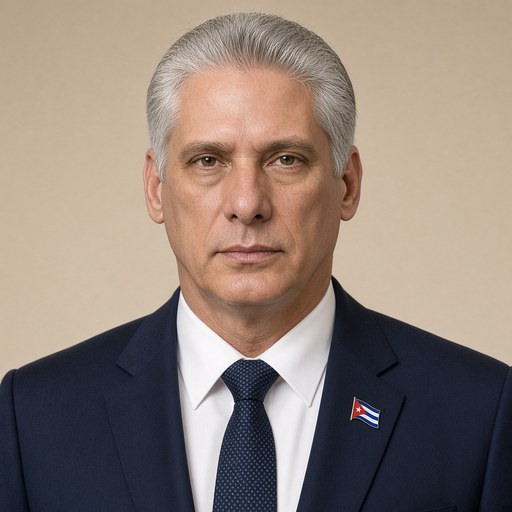
Intervention at the closing of the Sixth Ordinary Session of the National Assembly of People's Power in its Tenth Legislature.
 Miguel Díaz-Canel · President of Cuba
- Context
- Díaz-Canel addressed the closing of Cuba's National Assembly Sixth Ordinary Session on December 19, 2025, reviewing approved legislation and condemning U.S. aggression.
- Main themes
- Cuban economic crisis, U.S. imperialism and hegemony, defense of Venezuela, blockade of Cuba, multilateralism and international law, Palestinian genocide, ALBA solidarity, science and technology law, national budget and economic plan, Latin American and Caribbean security, Zone of Peace, anti-terrorism list injustice
- Duration
- ~36 min
- Words
- 4,286
- Sentences
- 182
- Readability
- 31
- Grade
- 14.7
- Syntax
- 3.13
- Vocabulary
- 2.36
Translated from Spanish
The broad sphere of national life a sentence belongs to. Every sentence has an Arena, so it is the denominator the other indices are read against.
Other182 sentences in 125 paragraphs
Dear colleagues:
I thank everyone for the profound, responsible, and brief debates that allowed us to address crucial issues of our reality. Only a genuine Assembly of the people is capable of facing, with a sense of urgency, serenity, realism, and commitment, the colossal challenges that the nation is facing at this moment and projecting itself into the future.
Today we have discussed and approved the Economic Plan, the Budget, the Government Program to correct distortions, and the General Law on Science, Technology, and Innovation, among other topics. All of them are connected by a challenging web of necessary tasks to confront the complex current situation of the country and the risks and threats looming over the Latin American and Caribbean region.
We are living in an extremely complex moment for the economy and the daily life of the people, which demands deeper, faster, and more responsible responses.
This is not just another crisis: it is the accumulation of distortions, adversities, difficulties, and our own errors, exacerbated by an extremely aggressive external siege, in an uncertain and dangerous context for the objectives of protecting peace, promoting cooperation, and advancing social justice, among other vital issues on the international agenda.
This context has also become dangerous for the survival of multilateralism, International Law, the Charter of the United Nations, and the norms and practices on which international relations have rested for eight decades.
This threat manifests itself, in a singular way, in the impunity with which the genocidal crime against the Palestinian people has been allowed and continues to be allowed. It is also expressed in the new doctrine promoted by the United States, which they call, with outrageous arrogance, "peace through strength," but which essentially consists of imposing on everyone the arbitrary will and dominance of American imperialism through threats, coercion, and even direct aggression.
The abhorrent Trump corollary of the Monroe Doctrine and the recently published National Security Strategy of the United States leaves no doubt about the hegemonic pretensions against the peoples and nations of our America, ignoring and endangering the region as a Zone of Peace, firmly and officially proclaimed since 2014.
The text shamelessly displays the ambitions of a unipolar power already in decline. It responds to the interests of large transnational corporations, at the expense of the inalienable rights of the countries in the region. It openly declares the American intention to appropriate the resources and natural wealth that belong to sovereign nations of the Western Hemisphere and their respective peoples.
This explains the push for plans to establish U.S. military bases in various countries, the exaggerated and aggressive military presence in the Caribbean Sea, and the increasing and provocative threats against Venezuela, with pretexts so unsustainable that they change within hours.
The Secretary of State, the Secretary of Defense, and other shadowy figures of the dirty wars against the region have managed to corner the U.S. foreign policy apparatus in a conflict that seems to have no way out or solution. The threat of open or covert war against Venezuela is a criminal act that violates International Law.
The assault and hijacking of a fuel tanker and the illegal appropriation of its cargo, acts classified as piracy and maritime terrorism; the nearly 100 extrajudicial executions carried out in full view of the world with airstrikes against vessels on the high seas; the provocative incursions of U.S. warplanes over Venezuelan airspace; the intention to forcibly replace the Bolivarian Government for a second time and impose one selected in Washington, as was attempted with a certain Guaidó, are all acts contrary to International Law.
The Government of the United States has gone so far as to propose the dangerous intention of completely blocking oil tankers entering and leaving Venezuela. This is a brutal and risky wartime measure against a country that poses no danger to them.
This shows the impotent desperation of those who have bet on the surrender of that sister nation in the face of the violent and ruthless offensive of a cabal that has taken over the foreign and hemispheric policy of the United States.
At the recent ALBA Summit, we had the opportunity to reaffirm the condemnation, in the strongest and most categorical terms, of the threats and aggressive actions against the sister Bolivarian Republic of Venezuela, and the absolute support and solidarity of Cuba with that Latin American and Caribbean nation.
Almost in parallel, and for much longer as well, Cuba has been subjected to incessant economic aggression, with a criminal escalation of the blockade and the unjustified inclusion of the country in the spurious and arbitrary list of states that supposedly sponsor terrorism. This translates into constant sabotage of commercial and financial transactions with practically any market in the world.
It is also manifested in the direct and indirect actions promoted by the Government of the United States, which we have repeatedly denounced, aimed at interfering in the internal macroeconomic performance, promoting inflation, and substantially depressing the purchasing power of the population.
The aggression of imperialism has continued to make use of its monopolistic power over the media and the technological infrastructures of digital networks to promote hopelessness and disenchantment, irritate, disorient, and confuse, fuel speculation, and erode trust in the leadership of the Revolution, deeply attacking the emotional fiber of the Cuban nation.
Even employing the pernicious and mendacious activity of its diplomatic representative in Cuba, they insist on trying to damage ties with other governments, a purpose that escalates with immoral methods in the persistent and defamatory attack against our country's international medical cooperation.
Even under these conditions and in a year of great challenges, the authority, prestige, and history of solidarity of the country have become evident.
The resolution in the United Nations General Assembly that once again called for the end of the blockade received, as always, the overwhelming support of the international community, despite the dirty maneuvers and brutal pressures from the Government of the United States and the fallacies they spread about Cuba, some shamefully repeated by very few delegations.
It has been the year in which Cuba joined as a Partner Country in the BRICS Group, in a demonstration of recognition of the role and leadership of the Cuban Revolution among the nations of the South.
It is also a year of conscious mobilization of solidarity movements with Cuba, of political forces, popular movements, and civil society organizations in all latitudes, in which we have continued to expand ties in various regions of the world and directing foreign policy to expand commercial ties and investment opportunities.
Relations with Cubans residing in other nations continue to strengthen, with whom, in the year that is ending, contacts have been expanded, their participation in national events, their involvement in commercial, economic, and development projects for the good of our society.
Colleagues:
I now return to the many challenges we must face and resolve internally, starting with the decisive economy.
In analyzing the current situation of the country, we have been realistic and self-critical, but we have also reaffirmed our confidence in the resilience and victory of the Cuban people. The homeland does not surrender! We follow a principle: "Unity, Continuity, and Creative Resistance." Unity around the Party, the Revolution, and the Marxist, Martian, and Fidelist ideology. Continuity of the historical legacy and the work we build together. Creative resistance to create, innovate, and move forward amid shortages.
Today we conclude an intense, profound, and vitally important working session for the present and future of the nation. We have addressed, with the critical, unitary, and revolutionary spirit that characterizes us, core issues that touch the heart of the socialist project we defend and build together.
No one in Cuba needs to be told that the economy is under strain: it is felt in the lines, in the pocket, in the blackout, in the transportation that does not arrive, and in the plate of food that becomes more expensive. We come from years of GDP contraction, high inflation, shortages, energy crisis, and falling external revenues.
In this context, it is crucial that Parliament sends a clear signal: the magnitude of the crisis is recognized, reality is not sugar-coated, and at the same time, the political will to change what needs to be changed to defend social justice and national sovereignty is reaffirmed.
Yesterday in the Economic Commission, we had an intense debate about the urgency of increasing national production, to position it as a fundamental pillar in the economic recovery.
Today that production is burdened by distortions, insufficiencies, and bureaucratic obstacles that we have not yet eradicated, which on one hand affect national consumption, and also affect exports, depriving us of important financial resources.
A country whose finances are pursued with malice is obliged to manage its foreign currency revenues with maximum efficiency, essential to face problems with fuels, investments in thermal generation, in the pharmaceutical industry, in public transportation, among other areas.
All analyses must put faces to the non-compliers, because in their failures lie millions of dollars that were in the Economic Plan and that were counted on.
In summary: accountability and timely analysis of what is failing, with concrete solutions for each case, are imperative. As long as we do not do that, and remain in the analysis of descriptive reports and diagnostics that end up being useless autopsies, we will not resolve anything nor change the current situation.
The XI Plenary of the Central Committee exposed the economic situation with total bluntness and, at the same time, outlined a working method: macroeconomic stabilization, correction of distortions, and productive re-boosting, not as slogans, but as a system of concrete decisions, with deadlines and responsible parties.
There we insisted on three ideas that we reaffirm here today:
There is no room for the resigned management of the crisis.
Macroeconomic stability is not a technocratic luxury; it is a condition for the salary to have value, for the market to function, not for itself, but to guarantee a sustainable social policy.
The Government Program to correct distortions cannot continue to be a reference document: it must become the mandatory roadmap for all agencies, enterprises, and territories.
The debates of this session have confirmed the main challenges:
Reducing energy vulnerability and dependence on fuel imports.
Recovering productive capacities, especially in food, energy, and basic industry, with the articulated and committed participation of all economic actors.
Keeping the fiscal deficit and inflation in check, to stop the loss of purchasing power of salaries and pensions.
Sustaining and diversifying external revenues, particularly tourism, export of goods and services, remittances, and foreign investment.
Protecting the most vulnerable sectors from the impacts of adjustments and the correction of prices and subsidies.
All these objectives were already being worked on, and decisions must continue to be made.
Once again, I insist: the transformations we must make are not only structural but also mental. We see it in day-to-day life, things that get stuck or simply do not advance due to a lack of flexibility or because of schemes that do not work for these times, nor under circumstances of such siege.
The only limit to flexibility is that which threatens our principles, our self-determination, sovereignty, and national independence. Beyond that, we must promote more and more, and without fear, every initiative that helps us navigate the powerful obstacles posed by the enemy and move forward.
No one has written how socialism is built in a country that emerged to its real independence after more than four centuries of colonization and 60 years of neocolonial subordination. No one like Cuba can speak of what it means to promote its development with social justice in the favorable conditions of its integration into a socialist camp that suddenly disappeared. No one can tell us what it is to resist exemplarily, but at a high economic and, therefore, social cost, an infamous policy of intensified blockade and fierce persecution like the one Cuba faces. That history is being written by us, the Cubans, the people of Cuba every day and right now!
We have analyzed and supported the Economic Plan and the State Budget for the coming year. They are tools that, far from being mere numbers, express the political will to prioritize attention to the people, investment in strategic areas, and the constant pursuit of efficiency.
We recognize the enormous difficulties we face, exacerbated by an economic, commercial, and financial blockade that criminally suffocates. But there is no room for defeatism here!
Our response is greater creativity, greater discipline, greater control, and an unrelenting fight against the burdens that hold us back: bureaucracy, indolence, and corruption.
Bureaucrats, the indifferent, and the corrupt are the very negation of the Revolution, because in their attitudes lies a deep contempt for the people, who are the essence and meaning of the Revolution. And I say more: because in them resides betrayal.
We have seen this several times throughout history, but we have also witnessed the natural antidote of the Revolution to save itself from traitors. And that antidote lies in the people, who sooner or later make the mask of the pretender fall.
Ladies and gentlemen:
Regarding the Economic Plan and the Budget, we have recognized the tensions: inflation, a decline in GDP, an energy crisis. But we have also reaffirmed that correcting distortions and revitalizing the economy is not a slogan, but a concrete battle for the stability of daily life. That battle demands economic rigor, but also social justice, because we do not accept a model that sacrifices equity in the name of efficiency.
The Economic Plan for 2026, as analyzed here, is a plan of offensive and profound adjustment that seeks to:
Prioritize food production by removing obstacles, guaranteeing basic inputs, and above all generating real incentives for both state and non-state producers.
Accelerate investments and operational solutions in the national electro-energy system, combining the repair of thermoelectric plants, greater efficiency, and the growth of renewable energies.
Organize and make transparent the allocation of foreign currency, so that sectors that export, substitute imports, and supply the domestic market with local productions are favored.
Give real autonomy to the socialist state enterprise to raise productivity and efficiency, demanding measurable results, without tolerating inertia or immobilism.
The challenge for 2026 is not only to fulfill the Plan but to demonstrate that the Plan translates into visible changes in the territories and in the lives of the people.
Regarding the Budget we approved in this session, focused on food production, essential services, and social programs, it must be executed with transparency and rigor, and it is our responsibility to ensure that this happens.
As has been seen, this Budget is based on severe restrictions, but it preserves the priority of health, education, social security, and protection for the most vulnerable. The transition from subsidies for products to subsidies for people must be done carefully, transparently, and with participation, so as not to leave anyone unprotected.
From the Assembly, we must demand:
That every peso of the Budget has verifiable productive or social backing.
That unproductive expenses, projects that do not add value, and structures that do not generate results are drastically reduced.
That the territories assume greater responsibility in revenue collection and in the efficient use of resources.
It is not about adjusting for the sake of adjusting; it is about adjusting in order to continue redistributing justly.
At the center of our debates has also been the Government Program to correct distortions in the economy. This is not a technical adjustment; it is a revolutionary necessity to perfect the socialism under construction, making it more prosperous, sustainable, and just.
We understand the concerns and impacts that some measures may have on daily life. But, as has been explained in this forum and in all spaces of the country, inaction would be the greatest risk. We must organize what is disordered, properly value our work, stimulate productive effort, and close the door to illegalities and imbalances.
This program is a call for the conscious participation of all, for every Cuban, from their position, to be a protagonist of the rectification and progress.
The Government Program to correct distortions and revitalize the economy has clear objectives: to organize prices and tariffs, to confront the currency chaos, to improve the relationship between the state and non-state sectors, to incentivize production, and to protect those who have the least. All of this will be refined with the debates currently taking place at the grassroots level.
The Government Program we have approved seeks precisely that: to correct distortions, to strengthen the socialist state enterprise as a development engine, and to open space for all forms of management that contribute to collective well-being. We cannot allow monetary duality, the lack of productive incentives, or bureaucracy to hinder the people's efforts.
The problem is no longer the lack of diagnosis, but the speed and consistency of implementation. Therefore, from these conclusions, it is necessary to emphasize:
Each organization, enterprise, and territorial government must present concrete schedules for the execution of the program, with quarterly goals and public accountability.
Measures that prove to be ineffective or counterproductive must be rectified without dogmas, with political humility and technical agility.
Communication with the people must be prioritized and attended to: explaining what is being done, why it is being done, what effects are expected, and in what timeframes. We lack innovation in communication as a science. It is not just about saying, but knowing how to say it.
A program that is not understood or controlled ends up being perceived as a sum of improvisations. To avoid this, it is essential to perfect and strengthen it with the contribution of the popular consultation that is already underway.
Deputies:
In recent days, we have debated and approved the General Law on Science, Technology, and Innovation, an essential legal instrument to chart the path toward technological sovereignty and the development we need. We must turn science and innovation into a driving force for every sector of society. This Law is a firm step in that direction, so that the knowledge created by our talented people translates into solutions, efficiency, and well-being.
Science cannot remain in laboratories; it must become practical solutions for production, energy, health, and the daily life of the people.
The country does not have infinite reserves of material resources, but it does have reserves of scientific, technical, and academic talent that are not always utilized.
Key economic decisions must be based on evidence, studies, modeling, and impact evaluation. It is essential to shorten the distance between research and production: university-enterprise-territory must be part of the same innovative cycle. Innovation is not only technological; it is also organizational, managerial, participatory, communicative, and social control.
Science and innovation must stop being a complement and become the engines of the economic change we need.
Compatriots:
The challenges facing Cuba in 2025 and 2026 can only be resolved with concrete work, systematic control, and active popular participation. The XI Plenary and this very session of the Assembly coincide on one idea: it is not enough to approve; we must comply, and it is not enough to comply; we must be accountable.
From this Assembly, we must assume several political commitments:
Reinforce the link of each deputy with their base, communicating, listening, explaining, and gathering concrete proposals to feed public policies.
Fight head-on against bureaucracy, corruption, waste, the diversion of resources, and the lack of sensitivity to the problems of the people.
Strengthen unity not as uncritical unanimity, but as the construction of consensus based on responsible debate and participation.
The country is experiencing a tough crisis, but it is not defeated and will never be defeated. The history of Cuba shows that when the political leadership, institutions, and the people work in the same direction, with truth, discipline, and creativity, there is no blockade or crisis that can take away our future.
The decision to postpone the IX Congress of the Party cannot be seen as a setback. It is a necessary and timely decision that will allow us to consolidate forces, improve the nation's situation, increase the people's trust, and create the conditions for a better and fruitful congress, which consolidates, as the Constitution affirms, the construction of socialism and the advance toward a communist society. That is what the Army General has called us to!
This decision will be an opportunity to dedicate the year 2026 to recover as much as possible and to advance in fulfilling our commitments.
It will also allow us to make the adjustments we need to make in the structures of the Party, the Government, and the State to facilitate, without haste, the exchanges of opinions and criteria that this process demands.
All the forces and energies of the Party, the State, and the Government, together with the people, must be dedicated to improving the situation of the country:
Advancing in the implementation of the approved economic measures with discipline and control; reinforcing attention to territories affected by natural disasters; promoting youth participation in all areas of national life; intensifying the ideological, cultural, and communicational battle, and defending the truth of Cuba against manipulation and misinformation.
During this period, the popular debate on the Government Program aimed at strengthening it must also conclude, and we will continue implementing actions to achieve its objectives.
In addition, we will continue working on the preparation of the documents that, after popular consultation, will be debated at the Congress and that are already well advanced.
We close this session with the conviction that the National Assembly has been and will be up to its historical responsibility. It is now our duty to transform into action what we have approved here. May every law, every plan, and every budget become tangible actions in the lives of the people. May science and innovation translate into concrete solutions. May the economy regain its vitality without renouncing social justice.
May we never neglect unity, "the apple of our eye," as the Army General and leader of the Revolution, comrade Raúl, has called it. That is our greatest strength against all threats.
We trust in our capacity for revolutionary offensive, in our resilience, and in our creativity, and no one will be able to defeat us. As I said in the XI Plenary, the greatest gain lies in the quality of discussions and in the superior way of addressing problems when they are touched with hands. We are fully engaged in solving these problems and charting a path to overcome them.
The decisions we adopt cannot remain in press summaries. They will be seen in the improvement of the country's daily life.
That will be the real test of the shared and assumed commitment, the true measure of the transformative power of this Parliament and the vitality of the Cuban Revolution.
Here, in the National Assembly, the Assembly of the people of Cuba, with its talented youth, its women and men from the most diverse professions and trades, white, black, mulatto, seasoned in a thousand battles, critical and committed, the Cuban Revolution beats, alive and active!
The greatest proof of its existence is precisely the relentless effort of its enemies to suffocate it and destroy even its smallest foundations.
This Assembly has the honor of raising a proposal of profound patriotic and revolutionary significance. Inspired by the everlasting legacy of our guide and in the call for unity and continuity, gathering the sentiments expressed in these times by several compatriots, comrade president Lazo, we propose that the year 2026 be officially proclaimed as the "Year of the Centenary of Commander in Chief Fidel Castro Ruz".
It will be the year to study his thought more deeply, to emulate his example of tireless work, fidelity to principles, and absolute trust in the people and in the victory of ideas.
May every task we undertake in 2026, from the most complex economic transformations to the simplest gesture of solidarity, carry the fidelista spirit of struggle, his deep love for the people, and his unwavering commitment to social justice.
It will be the most consistent way to honor the man whose centenary calls us to be better, to defend what has been achieved, and to build the future with optimism.
We leave this session with precise mandates and an immense responsibility. The path is not easy, but it is ours, the one we chose with sovereignty and dignity. The key is to turn every problem into a solution, every limitation into a reason to create, and every threat into a reason to unite even more.
We will not lower our guard. We will deepen the ideological and cultural battle, defend the achievements, and work tirelessly for the sovereign and prosperous country that this people deserves.
The task is complex, but the will of this people is invincible.
The National Assembly, united in the will to save independence, sovereignty, and the Revolution from the many dangers that threaten us today, cannot be seen apart from the history that brought us here, overcoming trials that seemed impossible.
Let us say it loud and clear, with the conviction of that December 18, 1956, when the two brothers embraced and, after counting the few survivors and the scarce rifles gathered in the reunion, the older brother said without a shadow of doubt: "Now we have won the war!"
And today here we ratify that: Now we have won the war!
This is the people of Fidel and Raúl: victors of the impossible!
May 2026, the Year of the Centenary of Commander in Chief Fidel Castro Ruz, find us fighting and more united than ever!
Long live Free Cuba!
Long live the Revolution!
Long live Fidel and Raúl!
Socialism or Death!
Homeland or Death!
We will overcome!
The original Spanish. The tags above are read on the English translation's sentences.
Estimadas compañeras y compañeros:
Agradezco a todos por los profundos debates, responsables y breves, que nos permitieron abordar asuntos cruciales de nuestra realidad. Solo una auténtica Asamblea del pueblo está en condiciones de enfrentar, con sentido de urgencia, serenidad, realismo y compromiso, los colosales desafíos que enfrenta la nación en este momento y proyectarse hacia el futuro.
Hoy hemos discutido y aprobado el Plan de la Economía, el Presupuesto, el Programa de Gobierno para corregir distorsiones y la Ley General de Ciencia, Tecnología e Innovación, entre otros temas. Todos ellos están conectados por un desafiante entramado de tareas necesarias, para hacer frente a la compleja situación actual del país y a los riesgos y amenazas que se ciernen sobre la región latinoamericana y caribeña.
Vivimos un momento extremadamente complejo para la economía y la vida cotidiana del pueblo, que exige respuestas más profundas, rápidas y responsables.
No se trata de una crisis más: es la acumulación de distorsiones, adversidades, dificultades y errores propios, exacerbados por un cerco externo extremadamente agresivo, en un contexto incierto y peligroso para los objetivos de proteger la paz, promover la cooperación y avanzar en la justicia social, entre otros asuntos vitales de la agenda internacional.
Este contexto se ha vuelto peligroso también para la supervivencia del multilateralismo, el Derecho Internacional, la Carta de las Naciones Unidas y las normas y prácticas sobre las que han descansado las relaciones internacionales durante ocho décadas.
Esta amenaza se manifiesta, de modo singular, en la impunidad con que se ha permitido y se permite aún el crimen genocida contra el pueblo palestino. Se expresa también en la nueva doctrina impulsada por Estados Unidos, que ellos llaman, con indignante prepotencia, “paz mediante la fuerza”, pero que en esencia consiste en imponer a todos la voluntad arbitraria y el dominio del imperialismo estadounidense mediante amenazas, coerción e incluso la agresión directa.
El aberrante corolario Trump de la Doctrina Monroe y la Estrategia de Seguridad Nacional de Estados Unidos, recientemente publicada, no deja dudas sobre las pretensiones hegemónicas contra los pueblos y naciones de nuestra América, ignorando y poniendo en peligro a la región como Zona de Paz, firme y oficialmente proclamada desde 2014.
El texto exhibe sin pudor las ambiciones de un poderío unipolar ya en declive. Responde a los intereses de las grandes corporaciones transnacionales, a costa de los derechos inalienables de los países de la región. Declara sin tapujos la pretensión estadounidense de apropiarse de los recursos y riquezas naturales que pertenecen a naciones soberanas del hemisferio occidental y sus respectivos pueblos.
Esto explica el impulso a los planes para establecer bases militares de Estados Unidos en diversos países, la presencia militar exagerada y agresiva en el Mar Caribe, y las amenazas crecientes y provocadoras contra Venezuela, con pretextos tan insostenibles que cambian en cuestión de horas.
El Secretario de Estado, el de Guerra y otros oscuros personajes de las guerras sucias contra la región han logrado arrinconar al aparato de política exterior de Estados Unidos en un conflicto aparentemente sin salida ni solución. La amenaza de guerra abierta o encubierta contra Venezuela es un acto criminal violatorio del Derecho Internacional.
El asalto y secuestro de un buque tanquero de combustible y la apropiación ilegal de su carga, actos calificados como piratería y terrorismo marítimo; las cerca de 100 ejecuciones extrajudiciales realizadas a la vista del mundo con ataques aéreos contra embarcaciones en alta mar; las incursiones provocadoras de aviones de guerra estadounidenses sobre el espacio aéreo venezolano; la pretensión de sustituir por la fuerza y por segunda vez al Gobierno bolivariano, e imponer uno seleccionado en Washington, como se intentó con un tal Guaidó, son todos actos contrarios al Derecho Internacional.
El Gobierno de Estados Unidos ha llegado al colmo de plantear la peligrosa intención de bloquear total y completamente a buques petroleros que entren y salgan de Venezuela. Se trata de una brutal y riesgosa medida de tiempo de guerra contra un país que no representa ningún peligro para ellos.
Esto muestra la desesperación impotente de quienes han apostado a la rendición de esa hermana nación frente a la ofensiva violenta y despiadada de una camarilla que se ha apoderado de la política exterior y hemisférica de Estados Unidos.
En la reciente Cumbre del ALBA tuvimos la oportunidad de reafirmar la condena, en los términos más firmes y categóricos, a las amenazas y acciones agresivas contra la hermana República Bolivariana de Venezuela, y el absoluto respaldo y solidaridad de Cuba con esa nación latinoamericana y caribeña.
De manera casi paralela, y desde mucho antes también, contra Cuba se ejerce una agresión económica incesante, con un recrudecimiento criminal del bloqueo y la injustificada inclusión del país en la espuria y arbitraria lista de Estados que supuestamente patrocinan el terrorismo. Esto se traduce en sabotajes constantes a las transacciones comerciales y financieras prácticamente con cualquier mercado del mundo.
También se manifiesta en las acciones directas e indirectas promovidas por el Gobierno de Estados Unidos y que hemos denunciado reiteradamente, dirigidas a interferir en el desempeño macroeconómico interno, promover la inflación y deprimir sustancialmente el nivel adquisitivo de la población.
La agresión del imperialismo ha continuado haciendo uso de su poder monopólico sobre los medios de comunicación y las infraestructuras tecnológicas de las redes digitales para promover desesperanza y desencanto, irritar, desorientar y confundir, alimentar la especulación y erosionar la confianza en el liderazgo de la Revolución, atacando a fondo la fibra emocional de la nación cubana.
Empleando incluso la actividad perniciosa y mendaz de su representante diplomático en Cuba, insisten en tratar de dañar los vínculos con otros gobiernos, propósito que escala con métodos inmorales en el ataque persistente y difamatorio contra la solidaria cooperación médica internacional de nuestro país.
Aun en esas condiciones y en un año de grandes desafíos, la autoridad, el prestigio y la trayectoria de solidaridad del país se hicieron patentes.
La resolución que en la Asamblea General de las Naciones Unidas reclamó una vez más el fin del bloqueo recibió, como siempre, el respaldo abrumador de la comunidad internacional, a pesar de las sucias gestiones y brutales presiones del Gobierno de Estados Unidos y de las falacias que difundieron sobre Cuba, algunas repetidas innoblemente por muy contadas delegaciones.
Ha sido el año en que Cuba se insertó como País Socio en el Grupo BRICS, en una muestra del reconocimiento al papel y liderazgo de la Revolución Cubana entre las naciones del Sur.
Es también un año de movilización consciente de los movimientos de solidaridad con Cuba, de las fuerzas políticas, movimientos populares y organizaciones de la sociedad civil en todas las latitudes, en que hemos continuado ampliando los vínculos en diversas regiones del mundo y dirigiendo la política exterior a expandir los lazos comerciales y las oportunidades de inversión.
Continúan fortaleciéndose las relaciones con los cubanos que residen en otras naciones, con quienes, en el año que culmina, se han ampliado los contactos, su participación en eventos nacionales, su involucramiento en proyectos comerciales, económicos y de desarrollo para bien en nuestra sociedad.
Compañeras y compañeros:
Vuelvo ahora a lo mucho que nos toca enfrentar y resolver en lo interno, comenzando por la determinante economía.
Al analizar la situación actual del país hemos sido realistas y autocríticos, pero también hemos reafirmado la confianza en la capacidad de resistencia y victoria del pueblo cubano. ¡La patria no se rinde! Seguimos un principio: “Unidad, Continuidad y Resistencia Creativa”. Unidad en torno al Partido, a la Revolución y al ideario marxista, martiano, fidelista. Continuidad del legado histórico y de la obra que construimos. Resistencia creativa para, en medio de las carencias, crear, innovar y salir adelante.
Hoy concluimos una sesión de trabajo intensa, profunda y de vital importancia para el presente y el futuro de la nación. Hemos abordado, con el espíritu crítico, unitario y revolucionario que nos caracteriza, temas medulares que tocan el corazón del proyecto socialista que defendemos y construimos entre todos.
Nadie en Cuba necesita que le expliquen que la economía está en tensión: se siente en las colas, en el bolsillo, en el apagón, en el transporte que no llega y en el plato de comida que se encarece. Venimos de años de decrecimiento del producto interno bruto, alta inflación, desabastecimiento, crisis energética y caída de ingresos externos.
En este contexto es decisivo que el Parlamento transmita una señal clara: se reconoce la magnitud de la crisis, no se maquilla la realidad, y, al mismo tiempo, se ratifica la voluntad política de cambiar lo que tenga que ser cambiado para defender la justicia social y la soberanía nacional.
Ayer en la Comisión Económica tuvimos un intenso debate sobre la urgencia de incrementar la producción nacional, para posicionarla como un pilar fundamental en el despegue económico.
Hoy esa producción está lastrada por distorsiones, insuficiencias y trabas burocráticas que no acabamos de erradicar, que por una parte afectan el consumo nacional, y también afectan las exportaciones, privándonos de importantes recursos financieros.
Un país cuyas finanzas son perseguidas con saña está obligado a gestionar con la máxima eficiencia sus ingresos en divisas, imprescindibles para enfrentar los problemas con los combustibles, las inversiones en la generación térmica, en la industria de medicamentos, en el transporte público, entre otros ámbitos.
Todos los análisis deberán ponerles rostro a los incumplidores, porque en sus incumplimientos van millones de dólares que estaban en el Plan de la Economía y que se contaba con ellos.
En síntesis: se impone la rendición de cuentas y el análisis oportuno de qué está fallando, con soluciones concretas para cada caso. Mientras no hagamos eso, y nos quedemos en el análisis de informes descriptivos y diagnósticos que terminan resultando autopsias inútiles, no vamos a resolver nada ni a cambiar la actual situación.
El XI Pleno del Comité Central expuso con total crudeza la situación económica y, al mismo tiempo, trazó un método de trabajo: estabilización macroeconómica, corrección de distorsiones y reimpulso productivo, no como consignas, sino como sistema de decisiones concretas, con plazos y responsables.
Allí insistimos en tres ideas que hoy aquí ratificamos:
No hay espacio para la administración resignada de la crisis.
La estabilidad macroeconómica no es un lujo tecnocrático; es condición para que el salario valga, para que el mercado funcione, no para sí mismo, sino para garantizar una política social sostenible.
El Programa de Gobierno para corregir distorsiones no puede seguir siendo un documento de referencia: tiene que convertirse en la hoja de ruta obligatoria de todos los organismos, las empresas y los territorios.
Los debates de esta sesión han confirmado los principales retos:
Reducir la vulnerabilidad energética y la dependencia de la importación de combustibles.
Recuperar capacidades productivas, en especial en alimentos, energía e industria básica, con la participación articulada y comprometida de todos los actores económicos.
Mantener a raya el déficit fiscal y la inflación, para detener la pérdida del poder adquisitivo del salario y de las pensiones.
Sostener y diversificar los ingresos externos, en particular turismo, exportación de bienes y servicios, remesas e inversión extranjera.
Proteger a los sectores más vulnerables de los impactos de los ajustes y de la corrección de precios y subsidios.
Todos esos objetivos ya se estaban trabajando y hay que seguir tomando decisiones.
Una vez más insisto: las transformaciones que debemos hacer no son solo estructurales, sino de mentalidad. Lo vemos en el día a día, cosas que se traban o simplemente que no avanzan por falta de flexibilidad o por esquemas que no funcionan para estos tiempos, ni bajo circunstancias de tanto asedio.
El único límite a la flexibilidad es aquello que atente contra nuestros principios, contra la autodeterminación, la soberanía y la independencia nacional. Fuera de eso, debemos promover cada vez más y sin temor toda iniciativa que nos ayude a sortear los poderosos obstáculos que pone el enemigo y salir adelante.
Nadie ha escrito cómo se construye el socialismo en un país que emergió a su real independencia luego de más de cuatro siglos de coloniaje y 60 años de subordinación neocolonial. Nadie como Cuba puede hablar de lo que significa impulsar su desarrollo con justicia social en las favorables condiciones de su integración a un campo socialista repentinamente desaparecido. Nadie puede contarnos qué es resistir ejemplarmente, pero con un costo económico y, por tanto, social elevado, una política infame de bloqueo recrudecido y de persecución feroz como la que tiene Cuba. ¡Esa historia la estamos escribiendo nosotros, los cubanos, el pueblo de Cuba cada día y ahora mismo! (Aplausos.)
Hemos analizado y respaldado el Plan de la Economía y el Presupuesto del Estado para el próximo año. Son herramientas que, lejos de ser meros números, expresan la voluntad política de priorizar la atención al pueblo, la inversión en lo estratégico y la búsqueda constante de la eficiencia.
Reconocemos las enormes dificultades que enfrentamos, agravadas por un bloqueo económico, comercial y financiero que asfixia de manera criminal. ¡Pero aquí no hay espacio para el derrotismo!
Nuestra respuesta es mayor creatividad, mayor disciplina, mayor control y una lucha sin cuartel contra los lastres que nos frenan: burocracia, indolencia y corrupción.
Los burócratas, los indolentes y los corruptos son la negación misma de la Revolución, porque en sus actitudes se esconde un desprecio profundo por el pueblo que es la esencia y el sentido de la Revolución. Y digo más: porque en ellos anida la traición.
Lo hemos visto varias veces a lo largo de la historia, pero también hemos sido testigos del antídoto natural de la Revolución para salvarse de los traidores. Y ese antídoto está en el pueblo, que tarde o temprano hace caer la máscara del simulador.
Diputadas y diputados:
En cuanto al Plan de la Economía y el Presupuesto hemos reconocido las tensiones: inflación, caída del PIB, crisis energética. Pero también hemos reafirmado que corregir distorsiones y reimpulsar la economía no es un eslogan, sino una batalla concreta por la estabilidad de la vida cotidiana. Esa batalla exige rigor económico, pero también justicia social, porque no aceptamos un modelo que sacrifique la equidad en nombre de la eficiencia.
El Plan de la Economía para el 2026, tal como se ha analizado aquí, es un plan de ofensiva y reajuste profundo que busca:
Priorizar la producción de alimentos, liberando trabas, garantizando insumos básicos y sobre todo generando incentivos reales para el productor estatal y no estatal.
Acelerar las inversiones y las soluciones operativas en el sistema electroenergético nacional, combinando reparación de termoeléctricas, mayor eficiencia y el crecimiento de las energías renovables.
Ordenar y transparentar la asignación de divisas, de modo que se favorezcan sectores que exportan, sustituyen importaciones y abastecen el mercado interno con producciones propias.
Darle autonomía real a la empresa estatal socialista para elevar la productividad y la eficiencia, exigiéndole resultados medibles, sin tolerar la inercia ni el inmovilismo.
El desafío para 2026 no es solo cumplir el Plan, sino demostrar que el Plan se convierte en cambios visibles en los territorios y en la vida del pueblo.
En cuanto al Presupuesto que aprobamos en esta sesión, centrado en la producción de alimentos, los servicios esenciales y los programas sociales, debe ejecutarse con transparencia y rigor, y nos corresponde velar celosamente porque así ocurra.
Como se ha visto, este Presupuesto parte de restricciones severas, pero preserva la prioridad de la salud, la educación, la seguridad social y la protección a los más vulnerables. La transición de subsidios a productos hacia subsidios a personas tiene que hacerse con cuidado, con transparencia y con participación, para no dejar a nadie desamparado.
Desde la Asamblea debemos exigir:
Que cada peso del Presupuesto tenga respaldo productivo o social verificable.
Que se reduzcan drásticamente los gastos improductivos, los proyectos que no aportan valor y las estructuras que no generan resultados.
Que los territorios asuman mayor responsabilidad en la captación de ingresos y en el uso eficiente de los recursos.
No se trata de ajustar por ajustar; se trata de ajustar para poder seguir redistribuyendo con justicia.
En el centro de nuestros debates ha estado también el Programa de Gobierno para corregir distorsiones en la economía. Este no es un ajuste técnico; es una necesidad revolucionaria para perfeccionar el socialismo en construcción, hacerlo más próspero, sostenible y justo.
Comprendemos las preocupaciones y los impactos que algunas medidas pueden tener en la vida cotidiana. Pero, tal como se ha explicado en esta tribuna y en todos los espacios del país, la inacción sería el mayor de los riesgos. Debemos ordenar lo que está desordenado, valorar adecuadamente nuestro trabajo, estimular el esfuerzo productivo y cerrar paso a las ilegalidades y desequilibrios.
Este programa es un llamado a la participación consciente de todos, a que cada cubana y cubano, desde su puesto, sea protagonista de la rectificación y el avance.
El Programa de Gobierno para corregir distorsiones y reimpulsar la economía tiene objetivos claros: ordenar precios y tarifas, enfrentar el caos cambiario, mejorar la relación entre el sector estatal y no estatal, incentivar la producción y proteger a quienes menos tienen. Todo esto será perfeccionado con los debates que están teniendo lugar en la base en estos momentos.
El Programa de Gobierno que hemos aprobado busca precisamente eso: corregir las distorsiones, fortalecer la empresa estatal socialista como motor de desarrollo y abrir espacio a todas las formas de gestión que aporten al bienestar colectivo. No podemos permitir que la dualidad monetaria, la falta de incentivos productivos o la burocracia lastren el esfuerzo del pueblo.
El problema ya no está en la falta de diagnóstico, sino en la velocidad y consistencia de la implementación. Por eso, desde estas conclusiones, es necesario subrayar:
Cada organismo, empresa y gobierno territorial debe presentar cronogramas concretos de ejecución del programa, con metas trimestrales y rendición de cuentas pública.
Las medidas que demuestren ser ineficaces o contraproducentes deben rectificarse sin dogmas, con humildad política y agilidad técnica.
Debe priorizarse y atender la comunicación con el pueblo: explicar qué se hace, por qué se hace, qué efectos se esperan y en qué plazos. Nos falta innovación en la comunicación como ciencia. No es decir, es saber cómo se dice.
Un programa que no se entiende o que no se controla termina siendo percibido como una suma de improvisaciones. Para evitarlo es imprescindible perfeccionar y robustecer el mismo con el aporte de la consulta popular que ya está en marcha.
Diputados:
En estos días hemos debatido y aprobado la Ley General de Ciencia, Tecnología e Innovación, un instrumento jurídico esencial para trazar el camino hacia la soberanía tecnológica y el desarrollo que necesitamos. Debemos convertir a la ciencia y la innovación en motor que impulse cada sector de la sociedad. Esta Ley es un paso firme en esa dirección, para que el conocimiento creado por nuestro talentoso pueblo se traduzca en soluciones, eficiencia y bienestar.
La ciencia no puede quedar en los laboratorios; debe convertirse en soluciones prácticas para la producción, la energía, la salud y la vida cotidiana del pueblo.
El país no tiene reservas infinitas de recursos materiales, pero sí tiene reservas de talento científico, técnico y académico que no siempre se aprovechan.
Las decisiones económicas claves deben apoyarse en evidencias, estudios, modelaciones y evaluación de impacto. Es imprescindible acortar la distancia entre la investigación y la producción: universidad-empresa-territorio tienen que ser parte del mismo ciclo innovador. La innovación no es solo tecnológica; también es organizativa, de gestión, de participación popular, de comunicación y de control social.
La ciencia y la innovación tienen que dejar de ser un complemento para convertirse en motores del cambio económico que necesitamos.
Compatriotas:
Los retos que enfrenta Cuba en 2025 y 2026 solo se resolverán con trabajo concreto, control sistemático y participación popular activa. El XI Pleno y esta propia sesión de la Asamblea coinciden en una idea: no basta con aprobar, hay que cumplir, y no basta con cumplir, hay que rendir cuentas.
Desde esta Asamblea debemos asumir varios compromisos políticos:
Reforzar el vínculo de cada diputado y diputada con su base, comunicando, escuchando, explicando y recogiendo propuestas concretas para alimentar las políticas públicas.
Luchar frontalmente contra la burocracia, la corrupción, el despilfarro, el desvío de recursos y la falta de sensibilidad ante los problemas del pueblo.
Fortalecer la unidad no como unanimidad acrítica, sino como construcción de consensos a partir del debate responsable y la participación.
El país vive una crisis dura, pero no está derrotado y nunca será derrotado (Aplausos). La historia de Cuba demuestra que cuando la dirección política, las instituciones y el pueblo trabajan en la misma dirección, con verdad, con disciplina y con creatividad, no hay bloqueo ni crisis que nos puedan arrebatar el futuro.
La decisión de aplazar el IX Congreso del Partido no se puede ver como un retroceso. Es una decisión necesaria y oportuna que nos permitirá cohesionar las fuerzas, mejorar la situación de la nación, incrementar la confianza del pueblo y crear las condiciones para un mejor y fructífero congreso, que consolide, como refrenda la Constitución, la construcción del socialismo y el avance hacia la sociedad comunista. ¡A eso nos ha llamado el General de Ejército!
Esta decisión será una oportunidad para dedicar el año 2026 a recuperarnos en todo lo que sea posible y para avanzar en el cumplimiento de los compromisos.
También permitirá ejecutar los ajustes que debemos hacer en las estructuras del Partido, el Gobierno y el Estado para facilitar, sin apresuramientos, los intercambios de opiniones y criterios que este proceso demanda.
Todas las fuerzas y energías del Partido, el Estado y el Gobierno, junto al pueblo, deben consagrarse al mejoramiento de la situación del país:
Avanzando en la implementación de las medidas económicas aprobadas con disciplina y control; reforzando la atención a los territorios afectados por desastres naturales; promoviendo la participación de la juventud en todos los ámbitos de la vida nacional; intensificando la batalla ideológica, cultural y comunicacional, y defendiendo la verdad de Cuba ante la manipulación y la desinformación.
En este periodo también deberá concluir el debate popular del Programa de Gobierno dirigido a robustecerlo, y continuaremos implementando las acciones para lograr el cumplimiento de sus objetivos.
Además, seguiremos trabajando en la elaboración de los documentos que, después de consulta popular, serán debatidos en el Congreso y que ya están muy adelantados.
Clausuramos esta sesión con la convicción de que la Asamblea Nacional ha estado y estará a la altura de su responsabilidad histórica (Aplausos). Nos corresponde ahora transformar en hechos lo que aquí hemos aprobado. Que cada ley, cada plan y cada presupuesto se convierta en acciones palpables en la vida de la gente. Que la ciencia y la innovación se traduzcan en soluciones concretas. Que la economía recupere su vitalidad sin renunciar a la justicia social.
Que jamás descuidemos la unidad, “niña de nuestros ojos”, como la ha llamado el General de Ejército y líder de la Revolución, el compañero Raúl. Esa es nuestra mayor fortaleza frente a todas las amenazas.
Confiamos en nuestra capacidad para la ofensiva revolucionaria, en nuestra resistencia y en nuestra creatividad, y nadie podrá vencernos (Aplausos). Como dije en el XI Pleno, la mayor ganancia está en la calidad de las discusiones y en el modo superior de abordar los problemas cuando se tocan con las manos. Estamos de lleno volcados en la solución de estos problemas y trazando un camino para superarlos.
Las decisiones que adoptamos no pueden quedarse en los resúmenes de la prensa. Se verán en el mejoramiento de la cotidianidad del país.
Esa será la prueba real del compromiso compartido y asumido, la medida verdadera de la fuerza transformadora de este Parlamento y de la vitalidad de la Revolución Cubana.
Aquí, en la Asamblea Nacional, la Asamblea del pueblo de Cuba, con sus jóvenes talentosos, sus mujeres y sus hombres de las más disímiles profesiones y oficios, blancos, negros, mulatos, fogueados en mil batallas, críticos y comprometidos, ¡late la Revolución Cubana, viva y actuante! (Aplausos.)
La mayor prueba de su existencia es justamente el empeño a fondo de sus enemigos por asfixiarla y destruir hasta sus mínimos cimientos.
Esta Asamblea tiene el honor de elevar una propuesta de profundo significado patriótico y revolucionario. Inspirados en el legado imperecedero de nuestro guía y en el llamado a la unidad y la continuidad, recogiendo el sentir expresado en estos tiempos por varios compatriotas, compañero presidente Lazo, proponemos que el año 2026 sea proclamado oficialmente como el “Año del Centenario del Comandante en Jefe Fidel Castro Ruz” (Aplausos prolongados).
Será el año para estudiar más profundamente su pensamiento, para emular su ejemplo de trabajo incansable, de fidelidad a los principios y de confianza absoluta en el pueblo y en la victoria de las ideas.
Que cada tarea que emprendamos en el 2026, desde las más complejas transformaciones económicas hasta el más sencillo gesto de solidaridad, lleve impregnado el espíritu fidelista de lucha, su profundo amor por el pueblo y su inclaudicable compromiso con la justicia social.
Será la manera más consecuente de honrar al hombre cuyo centenario nos convoca a ser mejores, a defender lo conquistado y a construir con optimismo el futuro.
Salimos de esta sesión con mandatos precisos y una responsabilidad inmensa. El camino no es fácil, pero es el nuestro, el que elegimos con soberanía y dignidad. La clave está en hacer de cada problema una solución, de cada limitación un motivo para crear y de cada amenaza una razón para unirnos más.
No bajaremos la guardia. Profundizaremos la batalla ideológica y cultural, defenderemos las conquistas y trabajaremos sin descanso por el país soberano y próspero que merece este pueblo.
La tarea es compleja, pero la voluntad de este pueblo es invencible.
La Asamblea Nacional, unida en la voluntad de salvar la independencia, la soberanía y la Revolución de los muchos peligros que nos acechan hoy, no puede verse separada de la historia que nos trajo hasta aquí, superando pruebas que parecían imposibles.
Digámoslo fuerte y claro, con la convicción de aquel 18 de diciembre de 1956, cuando los dos hermanos se abrazaron y, después de contar los pocos sobrevivientes y los escasos fusiles reunidos en el reencuentro, el hermano mayor dijo sin sombra de duda: “¡Ahora sí ganamos la guerra!” (Aplausos.)
Y hoy aquí ratificamos que: ¡Ahora sí ganamos la guerra! (Aplausos.)
Este es el pueblo de Fidel y de Raúl: ¡vencedores de imposibles!
¡Que el 2026, Año del Centenario del Comandante en Jefe Fidel Castro Ruz, nos encuentre peleando y más unidos que nunca!
¡Viva Cuba Libre! (Exclamaciones de: “¡Viva!”)
¡Viva la Revolución! (Exclamaciones de: “¡Viva!”)
¡Vivan Fidel y Raúl! (Exclamaciones de: “¡Vivan!”)
¡Socialismo o Muerte!
¡Patria o Muerte!
¡Venceremos!
(Ovación.)