





- Context
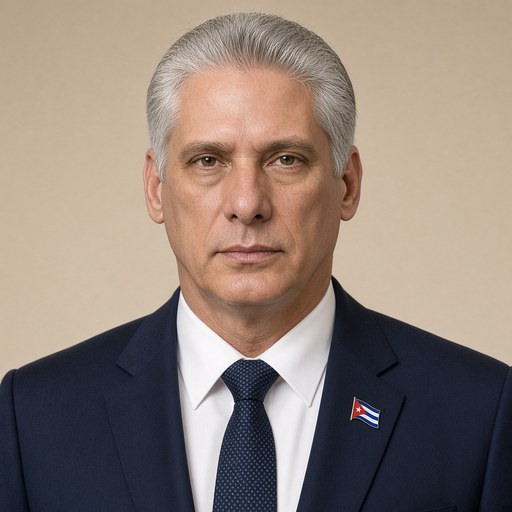
- Díaz-Canel addressed the Cuban population via the Round Table broadcast on July 14, 2021, analyzing the July 11 protests and their geopolitical context.
- Main themes
- US blockade of Cuba, social unrest and July 11 protests, unconventional warfare and soft coup attempts, COVID-19 pandemic, Abdala vaccine, energy crisis, Cuban-American opposition, revolutionary vigilance, economic hardship, US-Cuba relations
- Duration
- ~63 min
- Words
- 7,557
- Sentences
- 185
- Readability
- 36
- Grade
- 18.3
- Syntax
- 3.57
- Vocabulary
- 2.17
Translated from Spanish
The broad sphere of national life a sentence belongs to. Every sentence has an Arena, so it is the denominator the other indices are read against.
Other185 sentences in 72 paragraphs
Once again, I would like to thank you for the space of the Round Table to be able to exchange with the Cuban population, to provide information, to present viewpoints on complex problems.
I believe that after this description of the recent analyses carried out by the Government's activities, it would also be good to update the assessments we have from the perspective of feelings, emotions, and convictions regarding the current situation, which, as we know, is a complex and challenging situation. Complex due to the contextual elements and the relationship between those contextual elements; and challenging because it also demands our capacity to overcome adversities, to overcome situations, to face all that defamation that exists in the enormous brutal media campaign being waged against our country, and that has been this complex situation fueled by the recent disturbances that occurred concentrated on Sunday, which had some minor incidence on Monday, and have been almost without incidents on Tuesday and today.
I believe that all of this undoubtedly responds, as our Foreign Minister denounced yesterday, to a deliberate plan and a plan that is in process, which is why revolutionary vigilance, the actions of our institutions, and the perception we must have of the situation are very important and respond to all the precepts of Unconventional Warfare, to the well-known manual for soft coups.
We know, and we have shared, I believe it was part of the information we provided on Tuesday morning, that several things have coincided here: the intensified 60-year blockade and, even more, supported by 243 restrictive measures from the Trump administration that have also been sustained, and the pandemic peak we have experienced in recent weeks. There is an element that we cannot overlook; in the midst of the pandemic peak and the situations we were facing, the results of Abdala emerged, which is recognized as the first vaccine in Latin America, and which allows us to take a further step in the successful confrontation of the pandemic, which is also one of the hopes we have to limit the effects of this pandemic peak as soon as possible.
On the other hand, there was already talk, and there were some signs, of the current administration's intentions in the United States to review some points of the policy towards Cuba; the electro-energy situation today, more than describing problems, has also described the results of the actions that were being undertaken to improve the electro-energy service to the Cuban population and had a group of problems, shortages, dissatisfactions, and accumulated issues that we have.
This situation analyzed by those who do not truly want the development of the Cuban Revolution, by those who do not aspire to a civilized and respectful relationship with the United States, by those who have other intentions, marked that they either took advantage of this moment or it was never going to happen, and everyone knows that I am referring to that very conservative sector linked to the Cuban-American mafia. In other words, around that have been precisely the main aspirations of that conservative sector and trying to apply a soft coup policy at that moment against our country.
Here we must then talk about the blockade and the measures. There is a difference in context; we have always been blocked, we are a generation that has been born, has grown, and has lived under a blockade, and we are among the generations that have constantly participated in a whole group of programs to prevent the country from falling behind or from being unable to overcome the blockade. But the current conditions are not the same as those we had during the Special Period, which was for us another period and another very complex situation. Back then, we were practically left without many possibilities with all the rupture and dependence we had on the socialist camp; but in these times, and after the lessons we learned from the Special Period, in the way we had to face the Special Period, we developed programs, for example, for oil extraction, for oil production.
Therefore, today an important part or the basic part of our electric generation is mounted on thermoelectric plants that consume national crude oil. We are capable of self-supplying national crude oil, and our fuel consumption today is more adjusted than at that time when we received and wasted more than 13 million tons of fuel a year.
We were able to develop an investment process in tourism that boosted a group of tourist poles in the country, which provides us with significant foreign currency income to sustain other activities; investment processes were developed that favored productive processes, which served to supply goods and services to the population and also to increase our exports and to create reserves that the country needed in certain contingencies.
With the intensification of the blockade at this time and with the famous 243 measures from the Trump administration, all sources of income that fostered those experiences or that fostered those opportunities and potentialities that we have been developing are cut off; in the midst of that situation, we are today facing a tremendous shortage of foreign currency to take on anything. There are people who continue to say that there is no blockade, and that is one of the narratives that has tried to promote this fierce defamation campaign against Cuba.
Look, here we are three of those who have to analyze every week what comes into the country, what we owe, and what we need, and that balance is always very unfavorable. I would tell you that there is a huge list of what the country needs, a huge list of the commitments we have to honor in debts, and a small inflow of foreign currency at this time. I would say that is a practical example; I will not handle it in figures, because I will not give the pleasure to those who are always spying on us, to those who are always applying measures to have more information than they already have.
But let’s put a more practical example, the retention of a fuel ship or a food ship in the country: first, it is something we need, in the midst of that situation of low foreign currency income, it is something we have to prioritize, that is, from the little we have against this list and against this other list, we have to say that we need that food ship or that fuel ship; we make the effort and we pay, and as we owe that supplier, the ship enters Cuba with what we need, and the company itself tells us that it will not unload that ship until we pay the debt, that is called financial retention. At that moment, we have to find money from nowhere to pay that financial retention, or worse, we have to incur or renegotiate a debt with that company that, in addition, continues to work with us, that has evaded the blockade or that tries in some way to support and have a commercial commitment with Cuba.
Examples like that are lived every day. For example, in these days, it is stated here that we have made significant progress in important investments and in important maintenance to our main energy plants; today we are entering with a tremendous effort with the three blocks: a new investment in one of the Felton blocks, a capital repair in another block, and a repair to the Guiteras as well. Those are our three blocks of greatest generation, the ones that provide stability to the country; but we have a base of generator groups in Moa, it is the largest base of generator groups, Liván, in the country that today, being able to function and being able to contribute to the national electro-energy system, cannot function because we have a ship retained with fuel.
In addition, two things: it is retained, that has already been resolved, but now there is bad weather, and due to the swells, we have not been able to transport the unloading of the fuel with a transporter. Those are the things that happen in Cuba and that are very linked to the blockade. Almost one could find the impact of the blockade in everything one does during the day, and that is not always understood or remains in the conception of what affects us daily.
I would tell you more: the blockade surpasses desires. I believe that all our Government, all the comrades and companions of the leadership of the Party, of the Government of the different institutions have a tremendous will, have a tremendous desire, have a tremendous sense of responsibility for the country to develop as quickly as possible, for us to reach the prosperity we aspire to; our dreams and our desires that, of course, we share as a people because we are part of it, are surpassed by that blockade. That blockade surpasses what we want to do, that blockade delays us, that blockade does not allow us to advance at the speed we need, and that then causes that, although we act on the problems, more unresolved problems accumulate than those we can solve due to the speeds that shorten us, and that then provokes an accentuation of misunderstandings, of discontent, and we could also say that it affects what has to do with the hopes, with the aspirations of the people.
That is why I always do not tire of saying that it is cruel, that it is genocidal, that it is low, and that it demeans the powerful country that, before a nation like ours, small, hardworking, that has the desire to succeed, that has demonstrated that it can achieve social justice, is then attacked and assaulted in that way with the blockade because of that vision, because of that concept of a better world. And that may seem like more of the same, but above all, I wanted to exemplify with things that are very close to the lives of all.
And there is no doubt that we want a more prosperous country and we have the dissatisfaction that we have not achieved it, knowing that if we are left alone, if we are allowed to act with our own forces, with our own talent, if we are not hindered, if we are not put obstacles, we can achieve it. And if we achieve it, if we reach that economic prosperity, I am convinced then that we can multiply the immense social work that the Revolution has generated and that I believe no one can deny; there may be dissatisfaction, but the Revolution has generated an enormous social work, of social justice with that war economy, with that blocked economy, with that truncated economy, and in which we are also not as efficient as possible. That is why we have to be constantly, and in recent years as part of the Economic and Social Model of Cuba, its perfection, introducing changes, reforms, applying experiences, trying to advance more and also suffering the blows of the things that do not turn out as we want.
For example, and it is another element of context, of reality, in the midst of all that, in the midst of this situation we are talking about, in the midst of this situation with which they are trying to suffocate and choke us with a soft coup, this country has created five vaccine candidates that we do not tire of saying, that has tremendous merit.
But why were we forced to seek the five vaccine candidates? Simply, first, because we did not have the money, the blockade does not allow us to have the money to buy vaccines made by other countries; secondly, the blockade attacks our sovereignty, therefore, we have to be capable of doing things for ourselves, which is why we went to the vaccines, and we can do it because we have a social work, a work of the Revolution, a conquest of the Revolution that has been the scientific-technological development based on the visionary idea of the Commander in Chief, and it was almost our only alternative.
Has a vaccine from another place arrived here in Cuba at this time? With whom have we vaccinated almost 30% of the population with the first dose? With Cuban vaccines. With whom are we aspiring to meet those vaccination percentages that Marrero explained, to which we aspire in July, in August, in September, and before the year to have the entire Cuban population vaccinated? With whom are we conducting clinical trials in convalescent people? With what vaccines are we conducting clinical trials to also protect our children and adolescents? And we have done it in the worst situations of a pandemic and in the worst situations of intensified blockade and financial persecution and now with all this encouragement for disturbances.
Let us then talk a little about the disturbances, what have these disturbances meant that have occurred?
First, because we must also draw experiences from the disturbances, we must make a critical analysis of our problems in order to act, to overcome, to prevent them from repeating, to be able to transform situations.
In the disturbances, I would say that there have participated, I do not think it is an exact classification, but it can be distinguished, first, an annexationist participation, people who respond to a foreign plan, who are irreconcilably opposed to the Cuban Revolution, who do not think like Cubans, they think under the dictates of the empire, who when they make a gesture against Cuba, when they provoke, when they star in an action, do not resort to a Cuban flag, they resort to an American flag, and there are photos circulating these days of those that have been presented that are precisely those images, the annexationist with the American flag.
But there are three other groups of people, Cuban citizens who have unfortunately been involved in these things, some who act like criminals, others who are dissatisfied people, who have vehicles, have the means to express their dissatisfaction in other ways, but they got confused and when they saw this they said: well, here I take advantage, also legitimate because they have aspirations, they have dissatisfactions, they have not always received the proper attention, and young people.
With the young people, I contrast, because we have met, especially during this time of pandemic, with young people in all places. There you can see images (Points), for example, to what I will refer to later in the way they acted and for them to tell me that this is a peaceful demonstration, and it is not a violent demonstration, and it is not a vandalistic demonstration, and it is not a demonstration where the crime is clear. There you saw one with shorts, look (Points), there was the American flag, look at the audacity, look at the way they act, look at the broken glass, look at the disorder, the civic behavior. These are supposedly defended demonstrations as non-aggressive demonstrations, but peaceful, which is a lie.
But, well, a group of young people that contrasts their attitude with the way Cuban youth have acted in the midst of this situation. We have met throughout the country with university students who have been on the front lines, who have been called to the most difficult places, who have been doing all kinds of tasks in the fight against the pandemic alongside their people.
The criminals and the dissatisfied who participated in these events are also part of our people, and it hurts us, it bothers us that there are people who carry that attitude. They are fractures that we have in our attention to certain social problems, they are a consequence of those fractures, of those things that we have to perfect and that we have to take on.
And I refer to the Commander in Chief, to his thinking, to social programs that he promoted. I remember his thesis regarding the missing links in society and how we had to act differently from social work, from community work, from particular attention to each family in those neighborhoods that were disadvantaged, or in those neighborhoods that were vulnerable, that regardless of the social work that the Revolution has promoted, we have not reached them with the same dimension as other places, where there are dysfunctional families, where there are children from dysfunctional families who are then in more vulnerable conditions to become dropouts from our school system. If they drop out of our school system and do not receive adequate attention, or adequate connection to other social tasks, they commit crimes, they become criminals, they are arrested, because justice must be applied to them, we are not capable of re-educating them adequately in our penitentiary centers, regardless of the effort that is made, because today in our penitentiary centers one can even pursue a university degree. What happens is that I am being blunt, I am not stopping at the achievements, I am stopping at the things that hurt us and that we have to analyze and move forward to overcome all these problems. And then society itself is not capable, when they leave prison, of always incorporating them in the most humanistic, most transformative way and they continue with those vulnerabilities and then these situations repeat themselves.
Among the dissatisfied, there are also problems of attention on the part of our institutions to the concerns of the population, problems of sensitivity to those problems, timely argumentation to those problems, clear and precise responses. There are problems that we do not have the conditions to solve today, it would be a lie to tell people: your problem and I will solve it: no, we have to tell them: your problem and now I am not in a position to solve it, but let’s see what we can do, but, in addition, your problem is not that I want to bother you or that I do not want to solve it, your problem is given by this, this, and this.
It must also be said that there are people who have problems because of their way of approaching life, because there are people who have been benefited —I have the experiences of two provinces that I directed—, people who were benefited with housing when they had cyclone problems and shortly after they sold that housing and went to a worse place, because with the money they wanted to drink or wanted to do other things.
Now, with the harshness with which I am analyzing it, starting from our dissatisfactions, we have not been able to achieve all the transformation in vulnerable neighborhoods nor all the transformation in addressing the problems, the overcoming of the problems that these dissatisfied people have, among other things, due to the blockade. If we had the construction materials, the fuels, the productions, the raw materials necessary for a group of processes that are associated with the solution of these problems, we would have solved those problems, and we would have been able to fix the communities, and we could have more communities than have been made in better habitat conditions for all these problems, and then the influences would be different.
But I am talking about dissatisfaction when evaluating the things that happened and that is telling us that we have to continue enhancing —a topic that we have debated a lot— the attention to the population, the sensitivity to the problems of the population, the humanist vocation of the Revolution to be concretized in actions, and we also have to revive our forms of social participation, we have to revive and reactivate the work of the organizations and institutions that function in the neighborhood.
These were topics that I had highlighted in the closing report of the Eighth Congress of the Party, and we are already working on the implementation of the Eighth Congress of the Party and these complex situations are also coming.
What has been the outcome? Well, there is one deceased, which was communicated yesterday with complete transparency regarding the incident that occurred in a neighborhood here in Havana, in La Güinera, there are dozens of injured —I cannot specify the exact number now—, there are many injured who are from the part of the people who tried to prevent those vandalistic acts, from the part of the people who went to defend order, security, and the tranquility of citizens, which we ourselves feel is a chimera in our society, material damages like those seen in a group of facilities, and then in the midst of the problems we have now we have to replenish, and we have to repair, and we have to resolve other things.
Randy Alonso.- Attacks against the law enforcement.
Miguel M. Díaz-Canel.- Attacks against the law enforcement, vulgarity, and that also wounds the feelings of Cubans, of revolutionaries. That is not the behavior we want in a Cuban, that is not the behavior that solves the problems we have.
Therefore, that mode of action is also an outcome on which we have to stop, because that has to be transformed in our society. Our society is not a society that generates hate, and those people acted with hate. Our society does not know hate, the feeling of Cubans is not a feeling of hate, the feeling of Cubans is a feeling of solidarity. And these people came to these events or starred in these events armed, with vandalism, shouting and announcing death and lynching to revolutionary people, to communists, planning to storm public places, breaking glass, stealing, attacking, throwing stones, a savage behavior, overturning equipment, and then also manipulated.
For example, there is a group, this one that acted in La Güinera —look at the young people (Points)—, we regret that those young people who have had all the possibilities of instruction, education, and improvement behave that way. They were going directly to take a police station, to burn it down and, in addition, with the conviction that after they did that act the American ships were already arriving and they were going to be part of the supported.
Now, it must also be said, regardless of this critical or self-critical reasoning that I am making about these realities, that acts were committed that violate the Constitution of the Republic, against the constitutional precepts, and that Constitution was ratified by more than 86% of the Cuban people, therefore it is a Constitution of the majority, and it is a Constitution that must be respected, that must be supported and, therefore, there are people here who will receive the response contemplated by Cuban legislation, which will be vigorous, but also respectful in each case of the procedural guarantees established in our legal system. There will be no abuses, there will be the application of the laws in their just measure, here we must also evaluate the young people, and a whole group of circumstances like these that we have talked about in terms of nature, origin, and cause.
Perhaps we will also have to apologize to someone who, in the midst of all the confusion that arises in events like this, has been confused, has been mistreated, but I also believe that it is legitimate that a part of the people, an important part, the majority of our people, and an important part of the internal law enforcement, tried to prevent these events and countered these events, because if not what would have happened? Violence, and this would have been what would have prevailed and we would still be like this with the whole city disordered, experiencing more things, worsening our situation, and undermining that security that people feel living in Cuba, living in their neighborhood, living in the community. And I know that there are people, especially elderly people, grandmothers, neighborhood people who are anxious because this has happened, some perhaps fearful that society will become disordered and, of course, that is not going to happen, we will never give them the opportunity and that is why there was an action.
I believe they have tried to interpret as they please the call I made to the revolutionaries to take to the streets. It is not because the concept that the street is for revolutionaries is a concept that does not include, what happens is that at a moment like this, the revolutionaries at the forefront with all those who are included have the duty to protect what is the heritage of all, which are those constitutional rights that we approved with the majority. And there they are, look (Points) they are people from the neighborhood who went out to confront those disturbances.
So I believe that the other outcome that this leaves us is that it provokes us to improve, it provokes us to depth, it provokes us to critical thinking, the Revolution was made to transform this reality, to reach everyone, to open horizons of improvement to all, and I believe that everyone in the Revolution, without distinction of skin color, without distinction of gender, without distinction of sex, have had the possibilities to nourish themselves from all these horizons. We must then see what is failing us, why there are people like these who reach these states and can then be manipulated by a campaign that disinforms, that creates virtual realities that are not what we live in the country, that respond to other foreign projects, to interventionist projects, to destabilizing projects, and that makes criminals and then annexationists converge.
We have to address that and we have to cut those causes, and this in the midst of terribly adverse conditions; but we have to reach more to those neighborhoods, with all the institutions, with all the structures, with all the organizations and revive —as I told you— our forms of popular participation and our forms of functioning of mass organizations, also of neighborhood organizations and, above all, the institutions.
Here all the companies that are in a neighborhood, all the ministries, all the institutions that are in a neighborhood can help address the social problems we have in each place, which in fact is done, but life is showing us that what we have done is still insufficient. Therefore, what I am calling for, based on the previous analyses and on the basis of the self-criticism of the things we have to overcome, is that we must continue multiplying the feelings of solidarity, sensitivity, respect, and social responsibility, of everything: individual, family, collective, and, of course, institutional.
We must strive more, because I am convinced that we strive, that we do, but not only strive more, but also concretize it more in results. We must help each other more with all the potential we have and overcome our disagreements among all. What we have to promote, even if we have different viewpoints on certain issues or different situations, is to try to find solutions together.
We must strengthen from the Government, with the direction of the Party, with the participation of all, a profound social work that is precisely based on that: on solidarity, on reconciliation, and on the commitment to reach the most vulnerable, and that those people, also to the same extent that they are supported, that they continue to be given opportunities, change their concepts about life. In other words, it is also a call for peace, for harmony among Cubans, and for respect, because a few, no matter how affected they are, no matter how many shortages they have, because they overvalue that their situation is worse than that of others, cannot act against the others who are a majority, they do not have the right to act against others, they have the right to express it peacefully, they have the right to go to the institutions that have to attend to them, because the others, that majority, also have been affected and, however, do not behave in that vandalistic manner and in that way that, as I continue to insist, does not solve problems, but rather increases problems that, then, opportunistically, are taken advantage of by those who do not want the solution to the problems of anyone, those who have no commitment to overcoming the problems in our society. Why? Because those are the ones who block us, why do they block us? Why don’t they let us do things the way we want? Let us prove to ourselves, without a blockade, on equal terms, that we are incapable, that we are ineffective, that we cannot respond to the problems and that the leadership we have is illusory, why don’t they let us do it? Why haven’t they let us do it for sixty years? And how, despite everything, we have built a social justice that surpasses what countries that present themselves to us with this perversity and this malice can exhibit.
Let us also pause for a moment on the background and what readings we can make, or some of the readings we can make of the background. There was all this situation, we were starting to enter a pandemic peak, results were beginning to emerge consecutively from the vaccines. The pandemic peak has not been a problem for Cuba alone; all countries have had a pandemic peak, we were able to postpone the pandemic peak, and we have better indicators in confronting COVID-19 —as I presented the other day in tables, with international data— than even in the United States. In the United States, there was a pandemic peak, why was there no SOS for the United States?
Randy Alonso.- It has a resurgence now.
Miguel M. Díaz-Canel.- And it has a resurgence now. Why was there no SOS for European countries, to which we even sent medical support brigades? Who has cared and who has given an SOS for the African continent and for African countries? Who has given an SOS for the situation in Latin America, which is the most affected area by the pandemic?
They took Matanzas and started heating up the SOS for Matanzas, the disturbances come and they have forgotten the SOS for Matanzas, the SOS for Matanzas has been extinguished. Was the objective really to support Matanzas or was it to take advantage of a situation, as it is in the manuals, of soft coup? A situation that could create irritation, that could create insecurity to then enhance social discontent, to provoke demonstrations, to provoke clashes between forces, and to seek to destabilize the country. Life has shown who has taken care of Matanzas.
In Matanzas, immediately entering the pandemic, what was done? A team was sent headed by a member of the Secretariat of the Central Committee of the Party, by a vice prime minister of the Government, and by the Minister of Public Health, who has to attend to all of Cuba, they went to Matanzas with a group of comrades from other organizations. A work team where Marrero and I were, along with other comrades, in less than a month and a half we have visited Matanzas three times to analyze the strategies for Matanzas. Those work teams are the ones that organized and requested the medical brigades that the country has sent to reinforce primary care in Matanzas, that team was the one that cleared the wood that was needed to manufacture the beds that were missing in Matanzas, the one that made the decisions about which schools, which centers, which hotels could be converted into hospitals, it was that Cuban Government that offered solutions for Matanzas; everything else was a pretext and a double standard discourse, a lie, a falsehood, a slander, and I tell you that when you work with concepts and principles like those they have proposed, it demonstrates the perversity, it demonstrates the malice, it demonstrates the base feelings of the people who defend those attitudes.
One has no doubts making those readings and in this way with which they have acted, based on backgrounds and realities, is that they want to rob us of tranquility, they are bothered by the citizen tranquility that is lived in Cuba, they are bothered by how we live, in the midst of adversities in community; how there is that Cuban grace among all of us to help each other with food, with those who have more needs in the neighborhood, to help each other, they are bothered by that tranquility, they want to alter that tranquility to achieve their purposes, and for that they have relied on a huge media campaign.
When you go to the networks, I tell you that if one does not have conviction and if one does not have firmness, one gets anxious, because everything they have raised about Cuba is totally absurd: there is a virtual reality on the networks and there is a real reality in the life of this country, without ceasing to be shocked or worried about the things that have happened; but, above all, it is a campaign full of hate. Can you think well of someone who calls for hate, to lynch? But, in addition, how they have moved family feelings.
There are friends, relatives of Cubans who live here, who from abroad have called to fill them with insults, to tell them to leave the country, when they have taken a position contrary to that, they have almost offended them, full of lies. Here I noted some: they said that the Army General had gone to Caracas, the Army General is in Cuba with his boots on and with his feet in the stirrup, as he confirmed at the Eighth Congress of the Party; they said that the Deputy Minister of the Ministry of the Interior had deserted, another lie, and they put all that together with photos that are lies. That photo corresponds to when the Army General, due to his functions as President of the country, visited the XIV Summit of ALBA. They say that there is total repression here in Cuba and there are thousands dead, where are the thousands of dead? Where are the cases of dead in Cuba? We acknowledged that there was one deceased and we are conducting the entire investigation; that there are thousands of missing persons in Cuba, that there is absolute repression. A person came out with a totally grotesque gesture in a live broadcast saying: “My people, Camagüey is the first free city in Cuba, the first liberated city!”, and what we saw this morning in Buenos Días was an act of reaffirmation in the park of Camagüey.
Randy Alonso.- Yesterday we talked with Camagüey on the Mesa Redonda.
Miguel M. Díaz-Canel.- Yes, the city has been liberated since the Revolution triumphed; that the Party Secretary in Camagüey had been kidnapped. Look at that: “Gentlemen, Camagüey has fallen!”. Look, look.
Randy Alonso.- Today they said that the First Deputy Minister of the Ministry of the Interior had resigned, ABC, a Spanish Francoist newspaper, launched that “rumor”.
Miguel M. Díaz-Canel.- They put photos of mobilizations from the Plaza and the Malecón: one was from Egypt, another from the celebration of the Argentines of the Copa América, look at them there (Points), that is not the Malecón of Havana, that is from Alexandria. There is another one they put with the celebration events in Argentina.
Randy Alonso.- At the Obelisk in Buenos Aires.
Miguel M. Díaz-Canel.- At the Obelisk in Buenos Aires, look at it there (Points), that is not Cuba. And to top it off, they have used the very photos of the Cuban revolutionaries, of those who faced the events, of our acts as if they were their demonstrations. What slander, what lies, what dishonor! How a country is impoverished that supports plans like those, how they also impoverish and dehumanize, how the people who can support things like those become undignified, not to mention the number of people who have already left the country, who have abandoned the country. There is a lot of courage here, not to say anything else, in all our people, and here we will be —I said not long ago— until our last consequences. I am indeed one of those who is convinced that for this Revolution we give our lives, for the future of Cubans, for the future of our children, for the future of our grandchildren, because we have had a present and also a future in this country, regardless of all the dreams that we have not been able to achieve due to all this criminal policy over the years; but we are also convinced that we ourselves are the ones who can build them and achieve them.
In other words, it is a media campaign loaded with hate, with false news, with ridiculous and lying images calling for violent acts. I do not know where this construction has come from that we do not listen to the people, that we do not share with the people, that peaceful demonstrations have been repressed here, I do not know where it comes from; because there is a permanent call for violent acts. Today there were posts circulating where they said how to build devices or weapons to attack, devices or weapons to attack!, offenses, threats, and intimidation.
Look, I am one of those who has defended the process of computerization of Cuban society, of the need to use the Internet, but we have always seen it with a humanistic conception, that the Internet has to be to promote culture, to share knowledge, to be more educated. As the Army General said, unfortunately it is like Aesop's fables: the tongue serves for good and for evil; but the way they are using the Internet at this moment and are using social networks is really intoxicating, it is alienating, it provokes a lot of anguish with so many lies, and I believe it is an expression of media terrorism, because it is calling to kill, it is calling to lynch, it is calling to murder on social networks, to create insecurity, to create panic, to distort.
I am totally mistreated on social networks: I am a tyrant, a dictator, an oppressor, a murderer, a criminal. Those who know me know how far removed those qualities are from the values that the empire promotes with the values with which one has grown, the values that my family instilled in me, that the Revolution instilled in me, the influence I have received from my groups of friends and my work colleagues over all these years, and I am not talking about myself, I am talking about how we Cubans are, and how we revolutionaries are. So, how can such a perverse portrayal of a person be constructed with that? Then they confuse young people, they confuse residents of those neighborhoods where we have these types of problems, but we always have the conviction that we can do more, that we can face those problems, that we can solve them, that we can overcome them with profound work, and precisely for that, for the values that our people have, for the shared values that our society has.
Roger Waters, bassist of the famous rock group Pink Floyd, described this in a way, I would say, super genius: if you are interested in my house and cannot buy it, it is because I do not want to sell it to you, nor do I want to rent or lease it to you.
So, you lock me in my house and do not let me go out to the supermarket, nor to the pharmacy, nor to the bank, and you also do not let them sell me the spare parts for the car or the motorcycle, and along with this, you cancel my accounts and credit and savings cards.
After a while, my relatives will become desperate, some will escape through the window, and you from the outside will start shouting that I am inept to run the reins of my house and that I am a dictator, that I make my family suffer, and then they will start to say that the government of my house is in crisis, and that the neighbors will have permission to intervene and throw me out with the purpose of addressing the humanitarian crisis of my family. Of course, you will never say that what interests you is to keep my house, and that is why you put me in this critical situation before my family. That metaphorically captures what the United States intends, what the empire intends, what this Cuban-American mafia intends with all these actions against our people.
I believe that from this analysis we can say: What is Cuba today, in these hours, in real time? There is peace in our cities, there is peace in our people, we continue to function, all structures are working, the Government is working. Here we have conclusions from meetings that took place between yesterday and today and that were not meetings called due to this situation; they were the meetings that ordinarily corresponded to sessions of the Political Bureau, the Secretariat of the Central Committee, and the Executive Committee of the Council of Ministers today, and therefore, we continue in working sessions, analyzing, working on political measures, economic issues, those that were described here and, above all, reoriented with all this analysis we have done to reenergize our forms of social participation, working with young people, listening to them as the important people they are, which are concepts that are in the priorities, in the guidelines, of the Eighth Congress of the Party, how we strengthen attention to communities. We also know that in part of the population there are certain concerns about social tranquility, but that social tranquility the Revolution will sustain, will guarantee, will defend always. In addition to that, we are vaccinating; on Monday all vaccination centers opened in all provinces and municipalities that were starting vaccination.
We continue to exchange, we continue to listen, we continue to analyze proposals, we continue to strengthen ourselves from within in the midst of this onslaught. Life tells us that our principles are just and that we must defend them with passion and integrity; we continue to draw lessons, firm and serene, in function of the people and in function of the homeland.
I believe that it is also a moment to reaffirm convictions. In this regard, I want to bring up ideas from Fidel from the year 1992, the Special Period; Fidel said: “Difficult times are difficult times. In difficult times, the number of wavering increases; in difficult times — and that is a law of history — there are those who get confused, there are those who get discouraged, there are those who become cowardly, there are those who weaken, there are those who betray, there are those who desert. That happens in all times and in all revolutions. But also in difficult times is when men and women are truly tested; in difficult times is when those who are worth something are truly tested.” I believe that the majority of our people, our people are worth something, they are worth a lot and will act that way: without disappointments, without fear, with great bravery and with great courage. “Difficult times are the best measure of each person, of the character of each person, of the courage and valor of each person, of the conscience of each person, of the virtues of each person and, above all, of the virtues of a people...”, and this is in our people. This is a people of virtues that will never lack patriotic and revolutionary virtues, as Fidel explained; they have never lacked and will never lack for that people. I believe that these are words that could be said today in light of this situation and are part of his visionary legacy.
Therefore, feeding those convictions, we are calling for peace, for understanding, to continue enhancing the Revolution for its concept of justice, which is how the Revolution won. We will defend the Revolution to the last consequences, and that is a conviction.
We call for solidarity, for social responsibility, for harmony, to not let hatred take over the Cuban soul and for others to introduce hatred into the Cuban soul; the Cuban soul is a soul of kindness, it is a soul of solidarity, it is a soul of dedication, it is a soul of affection, and it is a soul of love. We will not allow those who do not want the best for our land or for our nation to divide us, to fracture us.
Our problems are resolved among Cubans in the Revolution; that has always been the case in these 60 years. Therefore, we must defend, ensure, and sustain our sovereign tranquility, calling for the unity of all the people, for the unity of all Cuban families, for the unity of all institutions with our population, developing that creative resistance that always gives us the potential to overcome adversity; peace and citizen tranquility, respect, solidarity among compatriots and towards others in need around the world, saving Cuba to continue building, growing, dreaming, and achieving the greatest possible prosperity. That is our message to our people today.
The original Spanish. The tags above are read on the English translation's sentences.
Un vez más, agradecer a ustedes el espacio de la Mesa Redonda para poder intercambiar con la población cubana, para poder brindar información, para presentar puntos de vista sobre problemas complejos.
Creo que después de esta descripción que han existido de los últimos análisis que se han hecho por parte de la actividad del Gobierno, sería bueno también actualizar las valoraciones que tenemos desde el punto de vista de sentimientos, de emociones y de convicciones de la problemática de la situación actual que, como sabemos, es una situación compleja y retadora. Compleja por los elementos de contexto y la relación entre esos elementos de contexto; y retadora porque también exige una capacidad de nosotros para superar adversidades, para superar situaciones, para enfrentar toda esa difamación que hay en la enorme campaña mediática brutal que se ejerce sobre nuestro país, y que ha sido esa situación compleja atizada por los disturbios recientes que se produjeron de manera concentrada el domingo, que tuvieron alguna incidencia menor, el lunes que ya han estado casi sin hechos, el martes y en el día de hoy.
Creo que todo esto responde, indudablemente, y nuestro Canciller ayer lo denunciaba, a un plan deliberado y a un plan que está en proceso, por eso la vigilancia revolucionaria, la actuación de nuestras instituciones, la percepción que tenemos que tener de la situación es muy importante y responden a todo los preceptos de la Guerra No Convencional, al conocido manual para el golpe suave.
Nosotros sabemos y lo hemos compartido, creo que fue parte de la información que dimos el martes en la mañana, de que aquí han coincidido varias cosas: el bloqueo de los 60 años recrudecido y, aún más, apoyado por 243 medidas restrictivas de la administración Trump que, además, han sido sostenidas, y el pico pandémico que hemos vivido en las últimas semanas. Hay un elemento que no podemos dejar escapar; en medio del pico pandémico y de las situaciones que estábamos enfrentando aparecen los resultados de Abdala, que la reconocen como primera vacuna en Latinoamérica, y que nos permite dar un paso más en el enfrentamiento exitoso a la pandemia, lo cual es también una de las esperanzas que tenemos para, en el menor tiempo posible, limitar los efectos de este pico pandémico.
Por otra parte, ya se empezaba a hablar, y había algunas señas, de las intenciones de la actual administración de los Estados Unidos de hacer una revisión de algunos puntos de la política hacia Cuba; la situación electroenergética que hoy, más que describir problemas, ya también se han descrito los resultados de las acciones que se estaban acometiendo para mejorar el servicio electroenergético a la población cubana y tuvo un grupo de problemas, de carencias, insatisfacciones, problemas acumulados que tenemos.
Esta situación analizada por los que no quieren de verdad un desarrollo de la Revolución Cubana, por los que no aspiran a una relación civilizada y de respeto con los Estados Unidos, por los que tienen otras intenciones, marcó como que o aprovechaban este momento o era el nunca por el que se ha apostado, y todos conocen que me estoy refiriendo a ese sector tan conservador que vincula a la mafia cubanoamericana. O sea, alrededor de eso han estado, precisamente, las principales aspiraciones de ese sector conservador y tratar de aplicar una política de golpe suave en ese momento contra nuestro país.
Aquí hay que hablar entonces del bloqueo y de las medidas. Hay una diferencia de contexto, siempre hemos estado bloqueados, nosotros somos una generación que ha nacido, ha crecido y ha vivido bloqueada, y somos de las generaciones que constantemente hemos participado en todo un grupo de programas para evitar que el país se atrase o que el país no pueda superar el bloqueo. Pero las condiciones actuales no son las mismas que teníamos en el Periodo Especial, que fue para nosotros otro periodo y otra situación muy compleja. Cuando aquello, prácticamente, quedamos sin muchas posibilidades con toda la ruptura y la dependencia que teníamos del campo socialista; pero en estos tiempos y después de los aprendizajes que tuvimos del Periodo Especial, de la manera en que tuvimos que enfrentar el Periodo Especial, desarrollamos programas, por ejemplo, de extracción de petróleo, de producción petrolera.
Por lo tanto, hoy una parte importante o la parte básica de nuestra generación eléctrica está montada en termoeléctricas que consumen crudo nacional. Nosotros somos capaces de autoabastecernos de crudo nacional, y nuestros consumos de combustible hoy son más ajustados que en aquel momento que lo recibíamos y malgastábamos más de 13 000 millones de toneladas de combustible al año.
Pudimos desarrollar un proceso inversionista en el Turismo que nos potenció un grupo de polos turísticos del país, que nos da ingresos en divisas importantes para sostener otras actividades; se desarrollaron procesos inversionistas que favorecieron procesos productivos, los cuales sirvieron para abastecer de bienes y servicios a la población y también para incrementar nuestras exportaciones y para crear reservas que el país necesitaba en condiciones de determinadas contingencias.
Con el recrudecimiento del bloqueo en estos momentos y con las famosas 243 medidas de la administración Trump se cortan todas las fuentes de ingresos que propiciaban esas experiencias o que propiciaban esas oportunidades y potencialidades que hemos ido desarrollando; en medio esa situación estamos hoy con una carencia tremenda de divisas para asumir cualquier cosa. Hay gente que sigue diciendo que no hay bloqueo y esa es una de las matrices que ha tratado de potenciar esta campaña feroz de difamación contra Cuba.
Mira, aquí estamos tres de los que todas las semanas tenemos que hacer un análisis de lo que entra al país, lo que debemos y lo que necesitamos, y siempre esa balanza es muy desfavorable. Yo te diría que hay acá una enorme lista de lo que necesita el país, una enorme lista de los compromisos que tenemos que honrar en deudas y una pequeña entrada de divisas en estos momentos. Eso yo te diría que es un ejemplo práctico, no lo voy a manejar en cifras, porque tampoco voy a dar el gusto de que los que siempre nos están espiando, de los que siempre nos están aplicando medidas tengan más información que la que tienen.
Pero vamos a poner un ejemplo más práctico, la retención de un barco de combustibles o de un barco de alimentos en el país: primero, es algo que necesitamos, en medio de esa situación de poco ingreso de divisas es algo que tenemos que priorizar, o sea, de lo poquito contra esta lista y contra esta otra lista tenemos que ese barco de alimentos lo necesitamos o ese barco de combustible lo necesitamos; hacemos el esfuerzo y lo pagamos y como debemos a ese suministrador, el barco entra a Cuba con lo que necesitamos y la propia compañía nos dice que no descarga ese barco hasta que no paguemos la deuda, eso se llama retención financiera. A esa hora hay que buscar de donde no hay el dinero para pagar esa retención financiera, o peor, hay que volver a contraer o renegociar una deuda con esa compañía que, además, sigue trabajando con nosotros, que ha evadido el bloqueo o que trata de alguna manera de apoyar y de tener un compromiso comercial con Cuba.
Ejemplos como ese se viven todos los días. Por ejemplo, en estos días que aquí se plantea que hemos avanzado en inversiones importantes y en mantenimientos importantes a nuestras principales plantas de energía, hoy estamos entrando con un esfuerzo tremendo con los tres bloques: una inversión nueva en uno de los bloques de Felton, una reparación capital en otro de los bloques y una reparación a la Guiteras también. Esos son nuestros tres bloques de más generación, los que dan estabilidad al país; pero tenemos una base de grupos electrógenos en Moa, es la mayor base de grupos electrógenos, Liván, del país que hoy pudiendo funcionar y pudiendo aportar al sistema electroenergético nacional no puede funcionar porque tenemos un barco retenido con combustible.
Además, dos cosas: está retenido, ya eso se solucionó, pero ahora hay mal tiempo y por las marejadas no hemos podido llevar con un transportador la descarga del combustible. Esas son de las cosas que pasan en Cuba y que están muy vinculadas al bloqueo. Casi que uno podría a todo lo que hace en el día encontrarle la afectación del bloqueo, y eso siempre no se entiende o no queda en la concepción de lo que diariamente nos afecta.
Yo te diría más: el bloqueo supera los deseos. Creo que todo nuestro Gobierno, todos los compañeros y compañeras de la dirección del Partido, del Gobierno de las diferentes instituciones tienen una voluntad tremenda, tiene un deseo tremendo, tiene un sentido tremendo de responsabilidad para que el país se desarrolle lo más rápido posible, para que lleguemos a la prosperidad a la que aspiramos; nuestros sueños y nuestros deseos que, por supuesto, los compartimos como pueblo porque somos parte de él, son superados por ese bloqueo. Ese bloqueo supera lo que nosotros queremos hacer, ese bloqueo nos retrasa, ese bloqueo no nos permite avanzar a la velocidad que necesitamos y eso ocasiona entonces que, aunque actuamos sobre los problemas, se acumulan más los problemas sin resolver que los que podemos resolver por las velocidades que nos acortan y eso entonces lo que provoca acentuamiento de incomprensiones, de inconformidades y también diríamos que afecta lo que tiene que ver con las esperanzas, con las aspiraciones de las personas.
Por eso yo siempre no me canso de decir que es cruel, que es genocida, que es bajo y que demerita al país poderoso que ante una nación como la nuestra, pequeña, laboriosa, que tiene deseos de triunfar, que ha demostrado que puede conquistarse la justicia social, es entonces por esa visión, por ese concepto de un mundo mejor, es atacada y agredida de esa manera con el bloqueo. Y eso puede parecer más de lo mismo pero, sobre todo, quise ejemplificar con cosas que son muy cercanas a la vida de todos.
Y no quepa duda de que nosotros queremos un país más próspero y tenemos la insatisfacción de que no lo hemos alcanzado, sabiendo que si nos dejan tranquilos, si nos dejan actuar por nuestras propias fuerzas, con nuestro propio talento, si no nos dificultan, si no nos ponen trabas, si no nos ponen obstáculos nosotros lo podemos alcanzar. Y si nosotros lo alcanzamos, si nosotros alcanzamos esa prosperidad económica, estoy convencido entonces de que podemos multiplicar la inmensa obra social que la Revolución ha gestado y que creo que nadie la puede negar; podrá haber insatisfacciones, pero la Revolución ha gestado una enorme obra social, de justicia social con esa economía de guerra, con esa economía bloqueada, con esa economía truncada y en la que también no somos todo lo eficientes posible. Es por eso que tenemos que estar constantemente, y en los últimos años como parte del Modelo Económico y Social de Cuba, su perfeccionamiento, introduciendo cambios, reformas, aplicando experiencias, tratando de avanzar más y también sufriendo los embates de las cosas que no nos quedan como queremos.
Por ejemplo, y es otro elemento de contexto, de realidad, en medio de todo eso, en medio de esta situación que estamos diciendo, en medio de esta situación con la que nos tratan de ahogar y asfixiar con un golpe suave, este país ha creado cinco candidatos vacunales que no nos cansamos de decirlo, eso tiene un mérito tremendo.
Pero, ¿por qué nos vimos obligados a buscar los cinco candidatos vacunales? Sencillamente, en primer lugar, porque no teníamos el dinero, el bloqueo no nos deja tener el dinero para comprar vacunas hechas por otros países; en segundo lugar, el bloqueo atenta contra nuestra soberanía, por lo tanto, nosotros tenemos que ser capaces por nosotros mismos de hacer las cosas, por eso fuimos a las vacunas, y lo podemos hacer porque tenemos una obra social, una obra de la Revolución, una conquista de la Revolución que ha sido el desarrollo científico-tecnológico a partir de la idea visionaria del Comandante en Jefe, y casi que era nuestra única alternativa.
¿Ha llegado una vacuna de otro lugar aquí a Cuba en estos momentos? ¿Con quién hemos vacunado ya casi un 30 % de la población con primera dosis?, con vacunas cubanas. ¿Con quién estamos aspirando a cumplir esos porcentajes de vacunación que Marrero explicaba, a los que aspiramos en julio, en agosto, en septiembre y antes del año tener toda la población cubana vacunada? ¿Con quiénes estamos haciendo los ensayos clínicos en personas convalecientes? ¿Con qué vacunas estamos haciendo los ensayos clínicos para también proteger a nuestros niños y a nuestros adolescentes? Y lo hemos hecho en las peores de las situaciones de una pandemia y en la peor de las situaciones de bloqueo y persecución financiera recrudecida y ahora con todo este aliento a los disturbios.
Vamos entonces a hablar un poco de los disturbios, ¿qué han significado estos disturbios que han ocurrido?
Primero, porque de los disturbios también hay que sacar experiencias, tenemos que hacer un análisis crítico de nuestros problemas para poder actuar, para poder superar, para evitar que se repitan, para poder transformar situaciones.
En los disturbios yo diría que han participado, no creo que sea una clasificación exacta, pero se puede distinguir, primero, una participación anexionista, personas que responden a un plan extranjero, que están irreconciliablemente opuestas a la Revolución Cubana, que no piensan como cubanos, piensan bajo los designios del imperio, que cuando hacen un gesto contra Cuba, cuando hacen una provocación, cuando protagonizan una acción, no acuden a una bandera cubana, acuden a una bandera norteamericana, y por ahí andan fotos en estos días de las que tanto se han estado presentando que, precisamente, son esas imágenes, el anexionista con la bandera norteamericana.
Pero hay otros tres grupos de personas, de ciudadanos cubanos que han estado involucrados lamentablemente en estas cosas, algunos que tienen un actuar de delincuentes, otros que son personas insatisfechas, que tienen vehículos, tienen posibilidades de mostrar su insatisfacción por otras vías, pero se confundieron y cuando vieron esto dijeron: bueno, aquí mismo yo aprovecho, legítimo también porque tienen aspiraciones, tienen insatisfacciones, no siempre han recibido la atención adecuada, y jóvenes.
Con los jóvenes me contrasta, porque nosotros nos hemos reunido, sobre todo en este tiempo de pandemia, con jóvenes en todos los lugares. Ahí se están viendo imágenes (Señala), por ejemplo, a lo que me voy a referir después en la manera en que actuaron y que me digan que eso es una manifestación pacífica, y no es una manifestación violenta, y no es una manifestación vandálica, y no es una manifestación donde está claro el delito. Ahí se vio uno con un short, mira (Señala), ahí estaba la bandera americana, mira el desparpajo, mira la manera en que se actúa, miren los cristales rotos, miren el desorden, el comportamiento cívico. Esos son manifestaciones supuestamente defendidas como manifestaciones no agresivas, sino pacíficas, lo cual es una mentira.
Pero, bueno, un grupo de jóvenes que nos contrasta su actitud con la manera en que han actuado jóvenes cubanos en medio de esta situación. Nosotros nos hemos reunido a lo largo de todo el país con jóvenes universitarios que han estado en línea roja, que se han convocado para los lugares más difíciles, que han estado haciendo tareas de todo tipo en las tareas de enfrentamiento a la pandemia junto a su pueblo.
Los delincuentes y los insatisfechos que participaron en estos hechos son parte también de nuestro pueblo, y nos duele, nos molesta que haya personas que lleven esa actitud. Son fracturas que tenemos en nuestra atención a determinados problemas sociales, son consecuencia de esas fracturas, de esas cosas que tenemos que perfeccionar y que tenemos que asumir.
Y yo me remito al Comandante en Jefe, a su pensamiento, a programas sociales que él potenció. Recuerdo su tesis con relación a los eslabones perdidos en la sociedad y como había que actuar diferenciadamente desde el trabajo social, desde el trabajo comunitario, desde la atención particular a cada familia en aquellos barrios que estaban en desventaja, o en aquellos barrios que eran vulnerables, que independientemente de la obra social que ha potenciado la Revolución no les hemos llegado con la misma dimensión que a otros lugares, donde hay familias disfuncionales, donde hay hijos de familias disfuncionales que entonces están en más condiciones de vulnerabilidad para ser entonces desertores de nuestro sistema escolar. Si desertan de nuestro sistema escolar y no tienen una adecuada atención, o una adecuada vinculación a otras tareas sociales, delinquen, se convierten en delincuentes, son apresados, porque hay que aplicarles la justicia, no somos capaces de reeducarlos adecuadamente en nuestros centros penitenciarios, independientemente del esfuerzo que se hace, porque hoy en nuestros centros penitenciarios incluso se puede cursar una carrera universitaria. Lo que pasa es que estoy siendo descarnado, no me estoy deteniendo en los logros, me estoy deteniendo en las cosas que nos duelen y que tenemos que analizar y sacar adelante para superar todos estos problemas. Y después la propia sociedad no es capaz, cuando salen de prisión, de siempre incorporarlos de la manera más humanista posible, más transformadora y siguen con esas vulnerabilidades y entonces se repiten estas situaciones.
En los insatisfechos hay problemas también de atención por parte de nuestras instituciones a planteamientos de la población, problemas de sensibilidad hacia esos problemas, la argumentación oportuna a esos problemas, la respuesta clara y precisa. Hay problemas que no tenemos condiciones hoy para resolverlos, eso sería una mentira decirle a la gente: sé tú problema y te lo voy a resolver: no, hay que decirle: se tú problema y ahora no estoy en condiciones de resolverlo, pero vamos a ver qué podemos hacer, pero, además, tu problema no es que yo quiera molestarte o yo no te lo quiera resolver, tu problema está dado por esto, por esto y por esto.
También hay que decir que hay personas que tienen los problemas por su manera de asumir la vida, porque aquí hay personas que han sido beneficiadas, —tengo las experiencias de dos provincias que dirigí—, personas que fueron beneficiadas con viviendas cuando tuvieron problemas de ciclón y al poco tiempo vendían esa vivienda y se iban a un lugar más malo, porque con el dinero entonces querían beber o querían hacer otro tipo de cosas.
Ahora, con la crudeza con que lo estoy analizando, partiendo de nuestras insatisfacciones, nosotros no hemos podido lograr toda la transformación en barrios vulnerables ni toda la transformación en la atención a los problemas, la superación de los problemas que tienen estas personas insatisfechas, entre otras cosas, por el bloqueo. Si nosotros tuviéramos los materiales de la construcción, los combustibles, las producciones, las materias primas necesarias para un grupo de procesos que están asociados a la solución de estos problemas nosotros hubiéramos resuelto esos problemas, y hubiéramos podido arreglar las comunidades, y pudiéramos tener más comunidades de las que se han hecho en mejores condiciones de hábitat para todos estos problemas, y entonces las influencias serían de otra manera.
Pero estoy hablando de la insatisfacción al evaluar las cosas que ocurrieron y eso nos está diciendo entonces también que nosotros tenemos que seguir potenciando —un tema que hemos debatido mucho— la atención a la población, la sensibilidad por los problemas de la población, la vocación humanista de la Revolución concretarla en hechos, y también hay que reanimar nuestras formas de participación social, hay que reanimar y reactivar el trabajo de las organizaciones y de las instituciones que funcionan en el barrio.
Esos eran temas que yo había destacado en el informe de clausura del Octavo Congreso del Partido, y ya nosotros estamos trabajando en la implementación del Octavo Congreso del Partido y vienen también estas situaciones de complejidad.
¿Cuál ha sido el saldo? Bueno, hay un fallecido, que ayer se comunicó con toda transparencia en el suceso que ocurrió en un barrio aquí en La Habana, en La Güinera, hay decenas de heridos —no puedo precisar la cifra exacta ahora—, hay muchos heridos que son de la parte del pueblo que trató de evitar esos hechos vandálicos, de la parte del pueblo que fue a defender el orden, la seguridad y la tranquilidad ciudadana de la cual nosotros mismos sentimos que es una quimera en nuestra sociedad, daños materiales como esos que se ven en un grupo de instalaciones, y entonces en medio de los problemas que tenemos ahora tenemos que reponer, y tenemos que reparar, y tenemos que resolver otros cosas.
Randy Alonso .- Ataques contra las fuerzas del orden.
Miguel M. Díaz-Canel .- Ataques contra las fuerzas del orden, vulgaridad, y eso lacera también los sentimientos de los cubanos, de los revolucionarios. Ese no es el comportamiento que queremos en un cubano, ese no es el comportamiento que resuelve los problemas que tenemos.
Por lo tanto, ese modo de actuación también es un saldo en el que nos tenemos que detener, porque eso hay que transformarlo en nuestra sociedad. Nuestra sociedad no es una sociedad que genera odio, y esas personas actuaron con odio. Nuestra sociedad no conoce el odio, el sentimiento de los cubanos no es un sentimiento de odio, el sentimiento de los cubanos es un sentimiento de solidaridad. Y estas personas acudieron a estos hechos o protagonizaron estos hechos armados, con vandalismo, vociferando y anunciando muerte y linchamiento a personas revolucionarias, a comunistas, planeando asaltar lugares públicos, rompiendo cristales, robando, agrediendo, lanzando piedras, un comportamiento salvaje, virando equipos, y entonces también manipulados.
Por ejemplo, hay un grupo, este que actuó en La Güinera —miren los jóvenes (Señala)—, lamentamos que esos jóvenes que han tenido todas las posibilidades de instrucción, de educación, de superación, se comporten de esa manera. Iban directo a tomar una estación de la policía, a quemarla y, además, con la convicción de que después que hicieran ese hecho ya estaban llegando los barcos norteamericanos y ellos iban a ser parte de los apoyados.
Ahora, hay que decir también, independientemente de este razonamiento crítico o autocrítico que estoy haciendo de estas realidades, que se cometieron hechos que atentan contra la Constitución de la República, contra los preceptos constitucionales, y esa Constitución fue refrendada por más del 86 % del pueblo cubano, por lo tanto es una Constitución de la mayoría, y es una Constitución que tiene que ser respetada, que tiene que ser apoyada y, por lo tanto, aquí hay personas que van a recibir la respuesta que contempla la legislación cubana, que va a ser enérgica, pero también de respeto en cada caso a las garantías procesales establecidas en nuestro ordenamiento jurídico. No habrá abusos, habrá la aplicación de las leyes en su justa medida, aquí hay que evaluar también los jóvenes, y todo un grupo de circunstancias como estas que hemos hablado de naturaleza, de origen, de causa.
También a lo mejor habrá que pedir alguna disculpa con alguien que en medio de toda la confusión que se arma en sucesos como este haya sido confundido, haya sido maltratado, pero yo creo también que es legítimo que una parte del pueblo, una parte importante, la mayoría de nuestro pueblo, y una parte importante de las fuerzas del orden interior, trataron de evitar estos hechos y contrarrestaron estos hechos, ¿porque si no qué hubiera pasado?, la violencia, y esto fuera lo que hubiera primado y todavía hoy estuviéramos así con la ciudad toda desordenada, pasando más cosas, agravándosenos la situación, y resquebrajando esa seguridad que la gente sienten de vivir en Cuba, de vivir en su barrio, de vivir en la comunidad. Y yo sé que hay personas, sobre todo personas de edad, abuelas, gente de barrio que están angustiadas porque haya pasado esto, algunas tal vez temerosas de que se nos vaya a desordenar la sociedad y, por supuesto, eso no va a pasar, a eso nunca les vamos a dar posibilidades y por eso hubo una actuación.
Yo creo que han tratado de interpretar como les da la gana el llamado que yo hice de los revolucionarios a tomar las calles. No es porque el concepto que la calle es para los revolucionarios sea un concepto que no incluye, lo que pasa es que en un momento como este, los revolucionarios al frente con todos los que se incluyan tienen el deber de proteger lo que es patrimonio de todos, que son esos derechos constitucionales que aprobamos con la mayoría. Y ahí están, miren (Señala) son gente de pueblo que salieron a enfrentar esos disturbios.
Entonces yo creo que también el otro saldo que nos deja esto es que nos provoca perfeccionamiento, nos provoca profundidad, nos provoca sentido crítico, la Revolución se hizo para transformar esta realidad, para llegar a todos, para abrir horizontes de superación a todos, y yo creo que todos en la Revolución, sin distinción de color de la piel, sin distinción de género, sin distinción de sexo, han tenido las posibilidades de nutrirse de todos estos horizontes. Hay que ver entonces qué nos falla, por qué hay personas como estas que llegan a estos estados y que pueden ser entonces manipuladas por una campaña que desinforma, que crea realidades virtuales que no son las que vivimos en el país, que responden a otros proyectos ajenos, a proyectos injerencistas, a proyectos desestabilizadores, y ahí hace que confluyan personas de la población delincuentes y, entonces, anexionistas.
Eso lo tenemos que atender y tenemos que cortar esas causas, y esto en medio de condiciones terriblemente adversas; pero tenemos que llegar más a esos barrios, con todas las instituciones, con todas las estructuras, con todas las organizaciones y reanimar —como yo te decía— nuestras formas de participación popular y nuestras formas de funcionamiento de las organizaciones de masa, también de las organizaciones barriales y, sobre todo, las instituciones.
Aquí todas las empresas que están en un barrio, todos los ministerios, todas las instituciones que hay en un barrio pueden ayudar a atender los problemas sociales que tenemos en cada lugar, que de hecho se hace, pero la vida nos está demostrando que lo que hemos hecho todavía es insuficiente. Por lo tanto, a lo que estoy llamando, a partir de los análisis previos y sobre la base de la autocrítica de las cosas que tenemos que superar, es a que tenemos que seguir multiplicando los sentimientos de solidaridad, de sensibilidad, de respeto y de responsabilidad social, de todo: los individuales, los familiares, los colectivos y, por supuesto, los institucionales.
Esforzarnos más, porque estoy convencido de que nos esforzamos, que hacemos, pero no solo esforzarnos más, sino concretarlo más en resultados. Ayudarnos más entre todos con todas las potencialidades que tenemos y superar nuestros desencuentros entre todos. Nosotros lo que tenemos que propiciar, aunque tengamos puntos de vistas en ocasiones diferentes sobre determinados temas o situaciones diferentes, es entre todos tratar de encontrar soluciones.
Tenemos que potenciar desde el Gobierno, con la dirección del Partido, con la participación de todos un profundo trabajo social que se apoye precisamente en eso: en la solidaridad, en la conciliación y en el compromiso por llegar a los más vulnerables, y que esas personas también en la misma medida en que se apoyan, que se les sigan dando posibilidades cambien también sus conceptos sobre la vida. O sea, es también un llamado a la paz, a la concordia entre los cubanos y al respeto, porque unos pocos por muy afectados que estén, por muchas carencias que tengan, porque sobrevaloren que su situación es peor que la de otros, no pueden atentar contra los demás que son una mayoría, no tienen derecho a atentar contra los demás, tienen derecho a expresarlo pacíficamente, tienen derecho a ir a las instituciones que tienen que atenderlos, porque también los otros, esa mayoría también tienen afectación y, sin embargo, no se comporta de esa manera vandálica y de esa manera que, como sigo insistiendo, no resuelve problemas, sino que acrecenta problemas que, entonces, de manera oportunista los aprovechan los que no quieren la solución de los problemas de ninguno, los que no tienen ningún compromiso con la superación de los problemas en nuestra sociedad. ¿Por qué?, porque esos son los que nos bloquean, ¿por qué nos bloquean?, ¿por qué no nos dejan hacer las cosas como nosotros queremos? Déjennos demostrarnos a nosotros, sin bloqueo, en igualdad de condiciones que somos incapaces, que somos inefectivos, que no podemos dar respuesta a los problemas y que las conducciones que tenemos son ilusas, ¿por qué no nos lo dejan hacer?, ¿por qué en sesenta años no nos lo han dejado hacer?, y cómo a pesar de todo hemos construido una justicia social que supera la que pueden exhibir países que se nos presentan con esta perversidad y con esta maldad.
Vamos a detenernos también un momentico en los antecedentes y qué lecturas podemos hacer, o algunas de las lecturas que podemos hacer de los antecedentes. Estaba toda esta situación, empezábamos a entrar en pico pandémico, empezaban a darse resultados que se fueron dando consecutivamente de las vacunas. El pico pandémico no ha sido un problema de Cuba nada más, el pico pandémico lo han tenido todos los países, nosotros pudimos aplazar el pico pandémico, y nosotros tenemos mejores indicadores en el enfrentamiento a la COVID-19 —como lo presenté el otro día en tablas, con datos internacionales— que, incluso, en los Estados Unidos. En los Estados Unidos hubo un pico pandémico, ¿por qué no hubo un SOS para los Estados Unidos?
Randy Alonso .- Tiene un resurgimiento ahora.
Miguel M. Díaz-Canel .- Y tiene un resurgimiento ahora. ¿Por qué no hubo SOS para los países europeos, a los cuales nosotros, incluso, mandamos brigadas médicas de apoyo? ¿Quién se ha preocupado y quién ha dado un SOS por el continente africano y por los países africanos? ¿Quién ha dado un SOS por la situación de América Latina, que es el área más afectada con la pandemia?
Tomaron a Matanzas y empezaron calentando el SOS a Matanzas, vienen los disturbios y se han olvidado del SOS de Matanzas, se apagó el SOS a Matanzas. ¿El objetivo era realmente apoyar a Matanzas o era aprovechar una situación, que es como está en los manuales, de golpe suave?, una situación que podía crear irritación, que podía crear inseguridad para entonces potenciar el descontento social, para provocar manifestaciones, para provocar choques entre fuerzas y para buscar que el país se desestabilice. La vida ha demostrado quiénes son los que se han ocupado de Matanzas.
En Matanzas, inmediatamente entrando en pandemia, ¿qué se hizo?, se envió un equipo presidido por un miembro del Secretariado del Comité Central del Partido, por un viceprimer ministro del Gobierno y por el Ministro de Salud Pública, que tiene que atender a toda Cuba, se fueron para Matanzas con un grupo de compañeros de otros organismos. Un equipo de trabajo donde estuvimos Marrero y yo, con otros compañeros, en menos de mes y medio hemos visitado Matanzas tres veces para analizar las estrategias de Matanzas. Esos equipos de trabajo son los que organizaron y pidieron las brigadas médicas que el país ha llevado a reforzar la atención primaria a Matanzas, ese equipo fue el que despejó la madera que hizo falta para fabricar las camas que faltaban en Matanzas, el que tomó las decisiones de qué escuelas, de qué centros, de qué hoteles se podían convertir en hospitales, fue ese Gobierno cubano el que ofreció soluciones para Matanzas; todo lo otro fue un pretexto y un discurso de doble rasero, una mentira, una falsedad, una calumnia, y yo te digo que cuando se trabaja con conceptos y principios como esos que ellos han planteado demuestra la perversidad, demuestra la maldad, demuestra los sentimientos ruines de las personas que defienden esas actitudes.
A uno no le quedan dudas haciendo esas lecturas y de esta manera con que han actuado, a partir de antecedentes y de realidades, es que nos quieren robar la tranquilidad, les molesta la tranquilidad ciudadana que se vive en Cuba, les molesta cómo nosotros vivimos, en medio de adversidades en comunidad; cómo hay esa gracia cubana entre todos ayudarnos con la comida, con los que tienen más necesidades en el barrio, de ayudarnos los unos a los otros, les molesta esa tranquilidad, quieren alterar esa tranquilidad para lograr sus propósitos, y para eso se han apoyado en una enorme campaña mediática.
Cuando tú vas a las redes, yo les digo que si uno no tiene convicción y si uno no tiene firmeza, se angustia, porque todo lo que han levantado de Cuba es totalmente absurdo: hay una realidad virtual en las redes y hay una realidad real en la vida de este país, sin dejar de estar conmocionada la gente ni preocupada por las cosas que han pasado; pero, sobre todo, es una campaña llena de odio. ¿Tú puedes pensar bien de alguien que llama al odio, a linchar?, pero, además, como han movido los sentimientos familiares.
Hay amigos, familiares de cubanos que viven aquí, que desde el exterior han llamado para llenarlos de insultos, para decirles que abandonen el país, cuando estos han asumido una posición contraria a eso casi que los han ofendido, llenos de mentiras. Aquí apunté algunas: dijeron que el General de Ejército se había ido para Caracas, el General de Ejército está en Cuba con las botas puestas y con el pies en el estribo, como lo ratificó en el Octavo Congreso del Partido; dijeron que desertó el Viceministro del Ministerio del Interior, otra mentira, y ahí todo eso lo arman con fotos que son mentiras. Esa foto corresponde a cuando el General de Ejército, por sus funciones como Presidente del país, visitó la XIV Cumbre del ALBA. Dicen que aquí en Cuba hay una represión total y hay miles muertos, ¿dónde están los miles de muertos?, ¿dónde están los casos de muertos en Cuba?, reconocimos que hubo un fallecido y estamos haciendo toda la investigación; que hay miles de desaparecidos en Cuba, que hay una represión absoluta. Salió una persona con un gesto totalmente grotesco en una directa diciendo: “¡Mi gente, Camagüey primera ciudad libre de Cuba, primera ciudad libertada!”, y lo que vimos hoy por la mañana en Buenos Días era un acto de reafirmación en el parque de Camagüey.
Randy Alonso .- Ayer hablamos con Camagüey en la Mesa Redonda (Risas).
Miguel M. Díaz-Canel .- Sí, la ciudad está liberada desde que triunfó la Revolución; que el Secretario del Partido en Camagüey había sido secuestrado. Miren eso: “¡caballeros, cayó Camagüey!”. Mira, mira.
Randy Alonso .- Hoy al Viceministro Primero del Ministerio del Interior lo ponían como que había dimitido, el ABC, un diario franquista español, lanzaba ese “bulo”.
Miguel M. Díaz-Canel .- Pusieron fotos de movilizaciones de la Plaza y del malecón: una era de Egipto, otra de la celebración de los argentinos de la Copa de América, mírenlas ahí (Señala), ese no es el malecón de La Habana, ese es el de Alejandría. Hay otra que ponen con los hechos de celebración en Argentina.
Randy Alonso .- En el Obelisco de Buenos Aires.
Miguel M. Díaz-Canel .- En el Obelisco de Buenos Aires, mírenlo ahí (Señala), eso no es Cuba. Y para colmo han usado las propias fotos de los revolucionarios cubanos, de los que enfrentaron los hechos, de los actos nuestros como si fueran las manifestaciones de ellos. ¡Qué calumnia, qué mentira, qué deshonra! Como se empobrece un país que apoya planes como esos, como se empobrecen también y se deshumanizan, se convierten en indignas las personas que pueden apoyar cosas como esas, para no decir de la cantidad de gente que ya nos hemos ido del país, que hemos abandonado el país. Aquí hay mucho coraje, para no decir otra cosa, en toda nuestra gente, y aquí vamos a estar —lo dije no hace mucho— hasta nuestras últimas consecuencias. Yo sí soy de los que está convencido de que por esta Revolución damos la vida, por el futuro de los cubanos y de las cubanas, por el futuro de nuestros hijos, por el futuro de nuestros nietos, porque nosotros hemos tenido un presente y también futuro en este país, independientemente de todos los sueños que no hemos podido alcanzar por toda esta política criminal en todos estos años; pero estamos convencidos también de que nosotros mismos somos los que los podemos construir y los podemos lograr.
O sea, es una campaña mediática cargada de odio, de falsas noticias, de ridículas y mentirosas imágenes llamando a hechos violentos. Yo no sé esa construcción que han hecho de que nosotros no oímos al pueblo, de que nosotros no compartimos con el pueblo, de que aquí se han reprimido manifestaciones pacíficas, no sé de donde sale; porque hay una llamada permanente a hechos violentos. Hoy estaban circulando pos donde decían cómo construir artefactos o armas para agredir, ¡artefactos o armas para agredir!, ofensas, amenazas e intimidación.
Fíjate, yo soy uno de los que ha defendido el proceso de informatización de la sociedad cubana, de la necesidad de usar Internet, pero siempre lo hemos visto con una concepción humanista, que Internet tiene que ser para fomentar la cultura, para compartir el conocimiento, para ser más cultos. Como decía el General de Ejército, lamentablemente es como las fábulas de Esopo: la lengua sirve para lo bueno y para lo malo; pero la manera en que están usando Internet en estos momentos y están usando las redes sociales, es realmente intoxicante, es enajenante, provoca muchas angustias con tantas mentiras, y creo que es una expresión de terrorismo mediático, porque se está llamando a matar, se está llamando a linchar, se está llamando a asesinar en las redes sociales, para crear inseguridad, para crear pánico, para desvirtuar.
Yo estoy totalmente maltratado en las redes sociales: yo soy un tirano, un dictador, un opresor, un asesino, un criminal. Los que me conocen saben cuán alejadas están esas cualidades que fomenta el imperio de los valores con los que uno ha crecido, los valores que me inculcó mi familia, que me inculcó la Revolución, la influencia que he recibido de mis colectivos de amigos y de mis compañeros de trabajo en todos estos años, y no estoy hablando de mí, estoy hablando de que así somos los cubanos, y así somos los revolucionarios. Entonces, cómo se puede construir con tanta perversidad una semblanza de una persona con eso. Entonces confunden a jóvenes, confunden a pobladores de esos barrios donde tenemos estos tipos de problemas, pero siempre nos queda la convicción de que podemos hacer más, de que podemos enfrentar esos problemas, de que los podemos resolver, de que los podemos superar con un trabajo profundo, y precisamente por eso, por los valores que tiene nuestro pueblo, por los valores compartidos que tiene nuestra sociedad.
Roger Waters, bajista del famoso grupo rock Pink Floyd, describió esto de una manera, yo diría, súper genial: si le interesa mi casa y no me la puede comprar es porque no se la quiero vender, ni tampoco se la quiero alquilar o arrendar.
Entonces, usted me encierra en mi casa y no me deja salir para ir al supermercado, ni a la farmacia, ni al banco, y tampoco deja que me vendan los repuestos del carro o la moto, y unido a esto me cancela las cuentas y tarjetas de crédito y de ahorro.
Al cabo de un tiempo mis familiares se van a desesperar, algunos escaparán por la ventana, y usted desde afuera empezará a vociferar que soy un inepto para conducir las riendas de mi casa y que soy un dictador, que hago sufrir a mi familia, y entonces van a comenzar a decir que el gobierno de mi casa está en crisis, y que los vecinos tendrán permiso para intervenir y echarme con el propósito de atender la crisis humanitaria de mi familia. Eso sí, nunca usted dirá que lo que le interesa es quedarse con mi casa, y que por eso fue que usted me puso a mí en esta situación tan crítica ante mi familia. Eso metafóricamente recoge lo que pretende Estados Unidos, lo que pretende el imperio, lo que pretende esta mafia cubanoamericana con todas estas acciones contra nuestro pueblo.
Creo que ya a partir de este análisis podemos decir: ¿Qué es Cuba hoy, en estas horas, en tiempo real? Hay paz en nuestras ciudades, hay paz en nuestro pueblo, seguimos funcionando, todas las estructuras están trabajando, el Gobierno está laborando. Aquí se dieron conclusiones de reuniones que sesionaron entre ayer y hoy y que no eran reuniones citadas por esta situación, eran las reuniones que correspondían ordinariamente a sesiones del Buró Político, del Secretariado del Comité Central y del Comité Ejecutivo del Consejo de Ministros hoy y, por lo tanto, seguimos en sesiones de trabajo, de análisis, trabajando medidas políticas, temas económicos, los que se describieron aquí y, sobre todo, reorientados con todo este análisis que hemos hecho a reanimar nuestras formas de participación social, el trabajo con los jóvenes, escucharlos como las importantes personas que son, que son conceptos que están en las prioridades, en las directrices, del Octavo Congreso del Partido, cómo fortalecemos la atención a las comunidades. Sabemos, además, que en una parte de la población hay determinadas preocupaciones con la tranquilidad social, pero esa tranquilidad social la Revolución la va a sostener, la va a garantizar, la va a defender siempre. Además de eso estamos vacunando, el lunes abrieron todos los centros de vacunación en todas las provincias y municipios que iniciaban la vacunación.
Seguimos intercambiando, seguimos escuchando, seguimos analizando propuestas, seguimos fortaleciéndonos por dentro en medio de este embate. La vida nos dice que nuestros principios son justos y que hay que defenderlos con pasión y con entereza, seguimos sacando lecciones, firmes y serenos, en función del pueblo y en función de la patria.
Creo que también es un momento de reafirmar convicciones. A colación quiero traer ideas de Fidel del año 1992, Período Especial, Fidel decía: “Los tiempos difíciles son los tiempos difíciles. En los tiempos difíciles el número de vacilantes aumenta; en los tiempos difíciles —y eso es una ley de la historia— hay quienes se confunden, hay quienes se desalientan, hay quienes se acobardan, hay quienes se reblandecen, hay quienes traicionan, hay quienes desertan. Eso pasa en todas las épocas y en todas las revoluciones. Pero también en los tiempos difíciles es cuando realmente se prueban los hombres y las mujeres; en los tiempos difíciles es cuando se prueban, realmente, los que valen algo”. Creo que la mayoría de nuestro pueblo, nuestro pueblo vale algo, vale mucho y va a actuar de esa manera: sin decepciones, sin miedo, con mucha valentía y con mucho coraje. “Los tiempos difíciles son la mejor medida de cada cual, del carácter de cada cual, del coraje y el valor de cada cual, de la conciencia de cada cual, de las virtudes de cada cual y, sobre todo, de las virtudes de un pueblo...”, y esto está en nuestro pueblo. Este es un pueblo de virtudes al que no le faltarán las virtudes patrióticas y revolucionarias, como explicaba Fidel, no le faltaron ni le faltarán jamás a ese pueblo. Creo que son palabras que podrían ser dichas hoy mismo ante esta situación y es parte de su legado visionario.
Por lo tanto, alimentando esas convicciones, estamos llamando a la paz, al entendimiento, a seguir potenciando la Revolución por su concepto de justicia, que es como ganó la Revolución. La Revolución la vamos a defender hasta las últimas consecuencias, y esa es una convicción.
Hacemos un llamado a la solidaridad, a la responsabilidad social, a la armonía, a no dejar que el odio se apropie del alma cubana y que otros introduzcan el odio en el alma cubana; el alma cubana es un alma de bondad, es un alma de solidaridad, es un alma de entrega, es un alma de cariño y es un alma de amor. No permitir que nos desunan, que nos fracturen los que no quieren lo mejor para nuestra tierra ni para nuestra nación.
Nuestros problemas se resuelven entre cubanos en la Revolución, así ha sido siempre en estos 60 años. Por lo tanto, hay que defender, asegurar y sostener nuestra tranquilidad soberana, llamando a la unidad de todo el pueblo, a la unidad de todas las familias cubanas, a la unidad de todas las instituciones con nuestra población, desarrollando esa resistencia creativa que nos da siempre potencialidades de vencer ante la adversidad; paz y tranquilidad ciudadanas, respeto, solidaridad entre compatriotas y hacia los otros necesitados del mundo, salvando a Cuba para seguir construyendo, creciendo, soñando y alcanzando la mayor prosperidad posible. Ese es nuestro mensaje para nuestro pueblo en el día de hoy.