





- Context
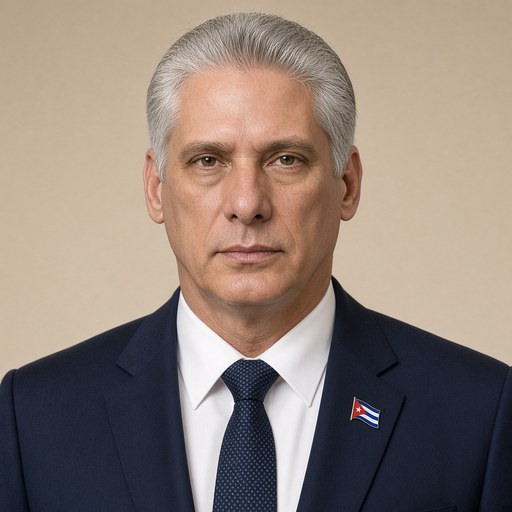
- Díaz-Canel addressed a commemorative event on October 3, 2025, marking the 60th anniversary of the Cuban Communist Party's founding and naming in 1965.
- Main themes
- Cuban Communist Party unity, 60th anniversary of Party founding, single-party socialist system, Cuban Revolution history, resistance to US blockade, China and Vietnam as socialist models, Fidel Castro's legacy, Central Committee formation, anti-imperialism, national unity
- Duration
- ~18 min
- Words
- 2,136
- Sentences
- 71
- Readability
- 25
- Grade
- 17.2
- Syntax
- 3.28
- Vocabulary
- 2.41
Translated from Spanish
The broad sphere of national life a sentence belongs to. Every sentence has an Arena, so it is the denominator the other indices are read against.
Other71 sentences in 51 paragraphs
Comrade Army General Raúl Castro Ruz, leader of the Cuban Revolution and a present protagonist of the events we commemorate here today;
Dear Machado and Ramiro;
Comrades of the leadership of the Party, the State, the Government, the Revolutionary Armed Forces, the Ministry of the Interior, the Union of Young Communists, and the mass and social organizations of our country;
Comrades of the Historical Generation present;
Comrades:
October 3rd is a date loaded with symbolism. On that day in 1965, four significant events coincided in time and place for the history of our Party and therefore for the history of the Cuban Revolution. Remembering them and interpreting their meaning in light of the 60 years that have passed is the reason that brings us together today. But first, I would like to share with you a recent experience related to this.
One of the most pleasant moments of our recent visit to the People's Republic of China was the tour of the impressive halls of the Museum of the History of the Communist Party of China, which is, in fact, the history of that admirable nation over the last 80 years.
The remarkable prosperity of China, which today dazzles and inspires, is inseparable from the history of the struggle of the Chinese communists to overcome the burdens of feudalism and the widespread poverty and hunger that the revolutionary leaders, led by Mao Zedong, encountered upon coming to power after 14 years of war against the Japanese invasion.
Walking through those spacious and modern halls, one understands why the name of the museum cannot be anything else: the prosperity of modern China is not magic nor the fruit of imagination. It is the triumph of the socialist ideal, adjusted to Chinese characteristics, but always under the guidance of the Communist Party. Without that effort, without that central purpose, without that essential unity, the history of China would be different.
The single Party, which is above all the Party that unites all the forces interested in the well-being of the nation, has been condemned for more than a century by the enemies of socialism.
The Chinese experience and also the Vietnamese one, to cite two examples, refute the theories of the adversaries and confirm the centrality of the principle of the single Party, in the eight decades of socialist practice, particularly in the face of the challenging decisions of reforms and opening.
Our Communist Party reaffirms this every day. Six decades of resistance to the cruel onslaught of a blockade, now intensified in search of the total suffocation of the Cuban socialist system, cannot be explained without the existence of the single Party that was born from the unity of the political forces that made the Revolution.
Moreover, our Party has a history strongly linked to independence and anti-imperialism since its origins. Last August, along with the emotional commemoration of the birth of our Commander in Chief, we celebrated the centenary of the first Communist Party founded, among others, by Carlos Baliño, who came from the Cuban Revolutionary Party, founded by José Martí to guide the Necessary War and establish a Republic “With all and for the good of all.” That first Communist Party of Cuba, which had among its most brilliant founders the very Martian and radical anti-imperialist Julio Antonio Mella, is the precursor of the Communist Party that today guides and convenes us, which acquired its current and definitive name, Communist, on that October 3rd, 1965.
That the revolutionary and progressive forces of a society that had just emerged from six decades of colonial dependence, which included the permanent subjugation to a deep and widespread anti-communist campaign, decided to integrate into a single political organization defined as communist is, without discussion, an extraordinary historical event.
From those formidable roots and from the unity built step by step by Fidel emerged, along with the Party of revolutionary unity, the first Central Committee of our Communist Party of Cuba.
This date, therefore, marks a second fundamental event in the consolidation of the unity of the forces that made the Revolution and came together to achieve victory.
The election of the Central Committee was the culmination of an integration process that began in 1961 with the formation of the Integrated Revolutionary Organizations (ORI), with the 26th of July Movement, the Popular Socialist Party, and the Revolutionary Directorate of March 13, which would immediately give way to the United Party of the Socialist Revolution of Cuba, known as PURSC.
That first Central Committee had a unique and profoundly significant composition. In Fidel's words, on that memorable day, efforts were made to choose those who represented, in the most complete way, the history of our Revolution and the merit of its children, those who, both in the struggle for the Revolution and for its consolidation, defense, and development, worked and fought tirelessly and relentlessly.
It was made up of women and men from all walks of life: workers, peasants, intellectuals, young people, and veterans of the struggle, who shared a common purpose: to build a free, democratic, and socialist homeland. That diversity did not dissolve the unity but strengthened the Party and confirmed that in integration lies strength.
Its constitution consolidated the organic structure of the Party by providing for organs, bodies, and grassroots organizations throughout the nation and in the revolutionary armed institutions.
The essences of that historic Central Committee are the same as those that accompany its members today: the absolute commitment to the people and to the socialist cause and the progressive forces, beyond borders and regardless of the circumstances and conditions of each historical moment.
On that October 3rd, in a true crucible of talent, dedication, and fidelity, comrades joined together, carrying the voice and feelings of the entire people. Together they formed the highest symbol of revolutionary unity not only as a political fact but as an ethical and moral decision that still mobilizes from dedication and example.
We will always remember October 3rd, 1965, because it was a day loaded with other symbols that have not lost their relevance, such as the creation of the newspaper Granma, the official organ of the Communist Party of Cuba, named after the yacht that brought the 82 expeditionaries from Tuxpan to eastern Cuba, determined to be free or martyrs.
Juan Marrero, founding journalist of the newspaper and one of the tireless defenders of the memory of the profession, recalls that day in his book Two Centuries of Journalism in Cuba:
“For the revolutionary press, 1965 is another crucial moment. October 3rd culminates the process of unity of the main revolutionary forces that participated in the struggle against Batista's tyranny. The Communist Party of Cuba is constituted and, as the organ of its Central Committee, the newspaper Granma emerges […].
“Revolución and Hoy disappear, until then organs of the 26th of July Movement and the Popular Socialist Party, respectively. Shortly before, Combate, the organ of the Revolutionary Directorate of March 13, had ceased publication. Human resources, machinery, and facilities are concentrated in a new and unique political newspaper that would be published every morning.
“‘To unite all those resources and create a new newspaper that would bear the name Granma, a symbol of our revolutionary conception and our path,’ Fidel Castro would point out when making the announcement. Granma has been the main voice of the revolution since then […], the flagship of the Cuban press.”
In that same book, Marrero recalls Fidel's constant presence at Granma, guiding work, writing editorials and sections himself, updating and dialoguing with directors and journalists until the early hours of the morning, as in his times linked to the newspaper La Calle.
As a truthful and solid press organ, which positioned itself since then as a space of mandatory consultation, both for Cubans and for those interested in the reality of Cuba outside our borders, Granma now faces a renewed challenge: to once again be the “flagship” of Cuban journalism, in times of multimedia platforms and intensified media warfare.
Let us now talk about a momentous event that shook and moved the country on that October 3rd. In the final minutes of his historic speech presenting the Central Committee, Fidel made public Che's farewell letter. It was the only way to explain the absence of the exemplary combatant and minister from the list of members of the newly created Central Committee.
The solemnity of the moment, the content of the letter, and the emotions carried by the very document and its reading remain, 60 years later, one of the most significant and emotional events in revolutionary history at the continental level.
The words of the Commander in Chief still resonate in the memory of those who witnessed that reading when, visibly moved and as a preamble, he expressed: “Those who speak of revolutionaries, those who consider revolutionaries as cold men, insensitive men, or men without guts, will find in this letter the example of all the feeling, of all the sensitivity, of all the purity that can be contained in the soul of a revolutionary.”
After the reading of the historic letter, the intrigues, lies, and manipulations that the enemies of the Revolution had woven around Che's absence from the list of elected members of the Central Committee were dispelled.
Thus, a brutal defamation campaign was extinguished, very consistent with the way of acting of the lackeys of the empire, which has changed little or nothing to this day, when manipulation and lies reach grotesque levels, only to collide with the solid truth and the irrefutable arguments that we defend.
Comrades:
The first Central Committee of the Party was like a synthesis of the best of Cuban society at that time, called to build on new foundations the future, sovereign, just, and supportive.
Thus it was and thus it must continue to be our Party, an inclusive, open, and united Party, capable of bringing together forces from all generations, from all sectors of labor and social life, and from all Cuban revolutionary thought.
But above all, it must continue to be a vanguard Party, that proudly displays its communist, Marxist, and Leninist ideology, the legacy of Fidel, knowing that our enemies, who are the enemies of the peoples, will always try to tarnish and weaken those convictions.
This is not something new. Fidel already warned of it in that early moment we now commemorate: “The imperialists, as if they were going to offend us, or as if it were an offense, speak of the communist government of Cuba, just as they also used the word ‘mambí’ against our liberators as an offense, so they also try to use the word ‘communist’ as an offense, and the word ‘communist’ is not an offense to us, but an honor”.
Now more than ever, it is our duty to preserve and exalt that history and the ideas that sustain it, with coherence, modesty, ethics, and a sense of duty, always keeping in mind that the Central Committee is not an abstract entity, just as the Party itself is not.
It is vocation, action, and the definitive expression of militant participation from the grassroots, from the communities, from every neighborhood and every workplace. Its formation taught us that diversity and inclusion are essential to strengthen the single Party, which is to strengthen the Revolution.
As Army General Raúl Castro Ruz, leader of the Cuban Revolution, has defined it, this, our only Party, represents the guarantee of the unity of our nation, which we must care for as the apple of our eye.
If we are consistent with the ideal that “the most revolutionary thing within the Revolution is and must always be the Party,” it is up to us militants, and especially to the cadres, to rise to the commitment we have with the past and the present, but above all with the future of the country.
The IX Congress of the Party, convened for April of next year, is the next and most important opportunity to reaffirm the foundational principles that we remember today and to mobilize the nation in pursuit of the great tasks that must lead us, as soon as possible, to the improvement of the living conditions of the population, providing solid support to the social advances of the Revolution and overcoming the enormous obstacles raised by the war imposed on us by the empire and our own mistakes and shortcomings.
Compatriots:
Just as we move towards the centenary of our Commander in Chief, may this anniversary of the First Central Committee of the Party be another call to revolutionary unity, to limitless dedication, and to the deepest commitment to the Cuban people, the motivation and glorious support of our work.
Long live the Communist Party of Cuba!
Long live Fidel and Raúl forever!
Homeland or Death!
Socialism or Death!
We will overcome!
The original Spanish. The tags above are read on the English translation's sentences.
Compañero General de Ejército Raúl Castro Ruz, líder de la Revolución Cubana y protagonista presente de los hechos que hoy conmemoramos aquí;
Queridos Machado y Ramiro;
Compañeros de la dirección del Partido, del Estado, del Gobierno, las Fuerzas Armadas Revolucionarias, el Ministerio del Interior, la Unión de Jóvenes Comunistas y de las organizaciones de masas y sociales de nuestro país;
Compañeros de la Generación Histórica presentes;
Compañeras y compañeros:
El 3 de octubre es una fecha cargada de simbolismo. Ese día de 1965 coincidieron en tiempo y lugar cuatro acontecimientos relevantes para la historia de nuestro Partido y por tanto para la historia de la Revolución Cubana. Recordarlos e interpretar su significado a la luz de los 60 años transcurridos es el motivo que nos convoca y reúne hoy. Pero antes quisiera compartirles, en relación con esto, una experiencia reciente.
Uno de los más gratos momentos de nuestra reciente visita a la República Popular China fue el recorrido por las impresionantes salas del Museo de Historia del Partido Comunista Chino que es, en realidad, la historia de esa admirable nación en los últimos 80 años.
La apreciable prosperidad de China, que hoy deslumbra e inspira, es inseparable de la historia de la lucha de los comunistas chinos por vencer los lastres del feudalismo y la extendida pobreza y hambruna que los líderes revolucionarios, encabezados por Mao Zedong, encontraron al acceder al poder después de 14 años de guerra contra la invasión japonesa.
Recorriendo aquellas amplias y modernas salas se comprende por qué no puede ser otro el nombre del museo: la prosperidad de la China moderna no es magia ni fruto de la imaginación. Es el triunfo del ideal socialista, ajustado a las características chinas, pero siempre bajo la guía del Partido Comunista. Sin ese empeño, sin ese propósito central, sin esa unidad esencial, la historia de China sería otra.
El Partido único, que es sobre todo el Partido que une todas las fuerzas interesadas en el bienestar de la nación, ha sido condenado durante más de un siglo por los enemigos del socialismo.
La experiencia china y también la vietnamita, por citar dos ejemplos, desmienten las teorías de los adversarios y confirman la centralidad del principio de Partido único, en las ocho décadas de práctica socialista, particularmente ante las desafiantes decisiones de reformas y apertura.
Nuestro Partido Comunista lo ratifica todos los días. Seis décadas de resistencia a la cruel embestida de un bloqueo, hoy recrudecido en busca de la asfixia total del sistema socialista cubano, no pueden explicarse sin la existencia del Partido único que nació de la unidad de las fuerzas políticas que hicieron la Revolución.
Tiene, además, nuestro Partido una historia fuertemente enlazada a la independencia y al antimperialismo desde sus orígenes. El pasado agosto, junto con la emotiva conmemoración del natalicio de nuestro Comandante en Jefe, celebramos el centenario del primer Partido Comunista fundado, entre otros, por Carlos Baliño, quien provenía del Partido Revolucionario Cubano, fundado por José Martí para guiar la Guerra Necesaria y fundar una República “Con todos y para el bien de todos”. Ese primer Partido Comunista de Cuba, que tuvo entre sus más brillantes fundadores al muy martiano y radical antimperialista Julio Antonio Mella, es el precursor del Partido Comunista que hoy nos guía y convoca, que adquirió su nombre actual y definitivo, Comunista, aquel 3 de octubre de 1965.
Que las fuerzas revolucionarias y progresistas de una sociedad que recién salía de seis décadas de dependencia colonial, que incluía el sometimiento permanente a una profunda y extendida campaña anticomunista, decidieran integrarse en una sola organización política definida como comunista es, sin discusión, un acontecimiento histórico extraordinario.
De esas formidables raíces y de la unidad construida paso a paso por Fidel emergió, junto con el Partido de la unidad revolucionaria, el primer Comité Central de nuestro Partido Comunista de Cuba.
Esta fecha, por tanto, marca un segundo acontecimiento fundamental en la consolidación de la unidad de las fuerzas que hicieron la Revolución y se integraron para alcanzar la victoria.
La elección del Comité Central fue el punto culminante de un proceso de integración que comenzó en 1961 con la formación de las Organizaciones Revolucionarias Integradas (ORI), con el Movimiento 26 de Julio, el Partido Socialista Popular y el Directorio Revolucionario 13 de Marzo, lo que daría paso de inmediato al Partido Unido de la Revolución Socialista de Cuba, conocido como PURSC.
Aquel primer Comité Central tuvo una composición singular y profundamente significativa. Al decir de Fidel, en la memorable jornada, se procuró escoger a quienes representaban, de la manera más cabal, la historia de nuestra Revolución y el mérito de sus hijos, aquellos que, tanto en la lucha por la Revolución como por su consolidación, defensa y desarrollo, trabajaban y combatían tesonera e incansablemente.
Lo integraban mujeres y hombres de todos los ámbitos de la sociedad: trabajadores, campesinos, intelectuales, jóvenes y veteranos de la lucha, quienes coincidían en un propósito común: construir una patria libre, democrática y socialista. Esa diversidad no disolvió la unidad, sino que fortaleció al Partido y confirmó que en la integración está la fuerza.
Su constitución consolidó la estructura orgánica del Partido al disponer de órganos, organismos y organizaciones de base en toda la nación y en las instituciones armadas revolucionarias.
Las esencias de ese histórico Comité Central son las mismas que acompañan a quienes lo integran hoy: el compromiso absoluto con el pueblo y con la causa socialista y de las fuerzas progresistas, más allá de las fronteras y cualesquiera sean las circunstancias y condiciones de cada momento histórico.
Aquel 3 de octubre, en un verdadero crisol de talento, consagración y fidelidad, se unieron compañeras y compañeros portadores de la voz y el sentir de todo el pueblo. Juntos conformaron el símbolo más alto de la unidad revolucionaria no solo como un hecho político, sino como una decisión ética y moral que aún moviliza desde la consagración y el ejemplo.
Siempre recordaremos el 3 de octubre de 1965, porque fue una jornada cargada de otros símbolos que no han perdido vigencia, como la creación del periódico Granma, órgano oficial del Partido Comunista de Cuba, bautizado con el nombre del yate que trajo a los 82 expedicionarios, desde Tuxpan hasta el oriente cubano, decididos a ser libres o mártires.
Juan Marrero, periodista fundador del diario y uno de los infatigables defensores de la memoria del gremio, recuerda así aquel día en su libro Dos siglos de periodismo en Cuba:
“Para la prensa revolucionaria, 1965 es otro momento trascendental. El 3 de octubre culmina el proceso de unidad de las principales fuerzas revolucionarias que participaron en la lucha contra la tiranía de Batista. Se constituye el Partido Comunista de Cuba y, como órgano de su Comité Central, surge el periódico Granma […].
“Desaparecen Revolución y Hoy, hasta entonces órganos del Movimiento 26 de Julio y el Partido Socialista Popular, respectivamente. Poco antes había cesado de publicarse Combate, órgano del Directorio Revolucionario 13 de Marzo. Los recursos humanos, las maquinarias, las instalaciones, se concentran en un nuevo y único periódico de carácter político que se editaría cada mañana.
“‘Unir todos esos recursos y hacer un nuevo periódico que llevará el nombre de Granma, símbolo de nuestra concepción revolucionaria y de nuestro camino’, apuntaría Fidel Castro al hacer el anuncio. Granma ha sido el principal vocero de la revolución desde entonces […], nave insignia de la prensa cubana”.
En ese propio libro, Marrero recuerda la presencia constante de Fidel en Granma, orientando trabajos, escribiendo él mismo editoriales y secciones, actualizándose y dialogando con directivos y periodistas hasta altas horas de la madrugada, como en sus tiempos vinculado al periódico La Calle.
Como un órgano de prensa veraz y sólido, que se posicionó desde entonces como espacio de obligada consulta, tanto para los cubanos como para aquellos interesados en la realidad de Cuba fuera de nuestras fronteras, Granma tiene hoy un renovado desafío: volver a ser la “nave insignia” del periodismo cubano, en tiempos de plataformas multimediales y recrudecida guerra mediática.
Hablemos ahora de un momento trascendental que aquel 3 de octubre sacudió y estremeció al país. En los minutos finales de su histórico discurso de presentación del Comité Central, Fidel hizo pública la carta de despedida del Che. Era el único modo de explicar la ausencia del combatiente y ministro, ejemplar entre ejemplares, en la lista de integrantes del recién creado Comité Central.
La solemnidad del momento, el contenido de la carta y las emociones que transportaban el mismo documento y su lectura siguen siendo, 60 años después, uno de los hechos más trascendentes y emotivos de la historia revolucionaria a nivel continental.
Todavía resuenan en la memoria de los testigos de aquella lectura las palabras del Comandante en Jefe cuando, visiblemente emocionado y a manera de preámbulo expresó: “Los que hablan de los revolucionarios, los que consideran a los revolucionarios como hombres fríos, hombres insensibles, u hombres sin entrañas, tendrán en esta carta el ejemplo de todo el sentimiento, de toda la sensibilidad, de toda la pureza que se puede encerrar en el alma de un revolucionario”.
Tras la lectura de la histórica carta quedaron deshechas las intrigas, mentiras y manipulaciones que los enemigos de la Revolución habían tejido en torno a la ausencia del Che en la lista de electos al Comité Central.
Se extinguía así una atroz campaña de difamación, muy coherente con el modo de actuar de los lacayos del imperio, que poco o nada ha variado hasta el día de hoy, cuando la manipulación y la mentira alcanzan niveles grotescos, para terminar chocando con la verdad sólida y los argumentos irrefutables que defendemos.
Compañeras y compañeros:
El primer Comité Central del Partido fue como una síntesis de lo mejor de la sociedad cubana de entonces, llamada a construir sobre bases nuevas la del futuro, soberana, justa y solidaria.
Así fue y así debe seguir siendo nuestro Partido, un Partido inclusivo, abierto y unido, capaz de sumar fuerzas de todas las generaciones, de todos los sectores de la vida laboral y social y de todo el pensamiento revolucionario cubano.
Pero sobre todo debe seguir siendo un Partido de vanguardia, que exhiba con honor su ideología comunista, marxista y leninista, el legado de Fidel, a sabiendas de que siempre nuestros enemigos, que son los enemigos de los pueblos, tratarán de enlodar y debilitar esas convicciones.
No es algo nuevo. Ya lo advirtió Fidel en aquel temprano momento que ahora conmemoramos: “Los imperialistas, como si nos fuesen a ofender, o como si fuese una ofensa, hablan del gobierno comunista de Cuba, al igual que también la palabra ‘mambí’ la emplearon contra nuestros libertadores como una ofensa, así también intentan emplear la palabra ‘comunista’ como una ofensa, y la palabra ‘comunista’ no es para nosotros una ofensa, sino una honra” (Aplausos).
Hoy más que nunca nos toca preservar y exaltar esa historia y las ideas que la sostienen, con coherencia, modestia, ética y sentido del deber, teniendo siempre presente que el Comité Central no es un ente abstracto, como no lo es el propio Partido.
Es vocación, acción y expresión definitiva de la participación militante desde la base, desde las comunidades, desde cada barrio y cada centro laboral. Su conformación nos enseñó que la diversidad y la inclusión son indispensables para fortalecer al Partido único, que es fortalecer la Revolución.
Como lo ha definido el General de Ejército Raúl Castro Ruz, líder de la Revolución Cubana, este, nuestro único Partido, representa la garantía de la unidad de nuestra nación, esa que debemos cuidar como a la niña de nuestros ojos (Aplausos).
Si somos consecuentes con el ideal de que “lo más revolucionario dentro de la Revolución es y debe ser siempre el Partido”, nos corresponde a los militantes, y especialmente a los cuadros, estar a la altura del compromiso que tenemos con el pasado y el presente, pero sobre todo con el futuro del país.
El IX Congreso del Partido, convocado para abril del año venidero, es la más próxima e importante oportunidad para reafirmar los principios fundacionales que hoy recordamos y movilizar a la nación en función de las grandes tareas que deberán llevarnos, en el más breve plazo posible, al mejoramiento de las condiciones de vida de la población, dando sólido sostén a los avances sociales de la Revolución y superando los enormes obstáculos levantados por la guerra que nos imponen el imperio y nuestros propios errores e insuficiencias.
Compatriotas:
Justo cuando avanzamos hacia el centenario de nuestro Comandante en Jefe, que sea este aniversario del Primer Comité Central del Partido otro llamado a la unidad revolucionaria, a la entrega sin límites y al más profundo compromiso con el pueblo cubano, motivación y sostén glorioso de nuestra obra.
¡Viva el Partido Comunista de Cuba! (Exclamaciones de: “¡Viva!”)
¡Vivan por siempre Fidel y Raúl! (Exclamaciones de: “¡Vivan!”)
¡Patria o Muerte!
¡Socialismo o Muerte!
¡Venceremos!
(Ovación.)