




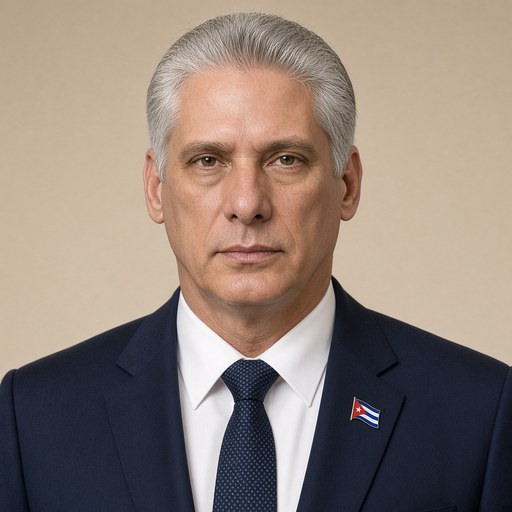
Political-cultural event for the 150th Anniversary of the beginning of the independence struggles, in La Demajagua.
 Miguel Díaz-Canel · President of Cuba
- Context
- Díaz-Canel addressed a political-cultural event at La Demajagua on October 10, 2018, commemorating the 150th anniversary of Cuba's independence struggle.
- Main themes
- Cuban independence anniversary, Carlos Manuel de Céspedes, Cuban revolutionary continuity, La Demajagua historical site, Fidel Castro's legacy, national identity, founding of the Cuban nation, emancipation and equality, sacrifice and patriotism, historical memory, revolutionary struggle
- Duration
- ~20 min
- Words
- 2,375
- Sentences
- 87
- Readability
- 43
- Grade
- 13.7
- Syntax
- 3.32
- Vocabulary
- 2.31
Translated from Spanish
The broad sphere of national life a sentence belongs to. Every sentence has an Arena, so it is the denominator the other indices are read against.
Other87 sentences in 59 paragraphs
Comrade Army General Raúl Castro Ruz, First Secretary of the Central Committee of the Communist Party of Cuba;
Compatriots:
We are once again in La Demajagua, the place where, with the greatest sum of patriotic feelings, we can say: We are Cuba.
We are Cuba: you, us, history, and this formidable landscape, which seems like a canvas of the nation, with the sea and the mountains in the background and in the center, the old ironworks embraced by a powerful jagüey.
According to legend, which is the poetic version of history, no artist raised this monument (Shows). It was the work of nature.
After the uprising, in an act of ridiculous impotence, Spanish troops set the place on fire; and time passed, and the jagüey that eternalizes the event flowed through the wheel of the old sugar mill.
It is impossible to arrive at this site and not be moved in front of such a mystery. One more among the many that have accompanied us since the fight for a free Cuba began.
Today we come to ask history for permission to enter one of its sacred spaces, to pay tribute to those who gave us a nation and to those who rescued it later, taking for themselves nothing but sacrifices.
This site is beautiful and at the same time sublime, because here Carlos Manuel de Céspedes raised the soul of a newly born people against the metropolis that had tyrannized it for more than three centuries and declared all free and citizens, without distinction of race or sex, forever undermining the decayed foundations of a slaveholding and patriarchal society.
It is legitimate to revere the ground where the old master and those who until that day were his slaves rode together, under a torrential downpour.
Here, 150 years ago, the Cuban Revolution was born, and here, a century later, Fidel marked its unique character, from October 10, 1868, to the present day.
It is also moving to think that this bell, rung on that glorious day to decree equal rights for all in Cuba for the first time, would be taken in his hands in 1947 by a young student, the same one who would return in 1968, now transformed into the revolutionary leader Fidel Castro Ruz, to give us an unsurpassed lesson in history.
The October 10 of the hundred years is another event worthy of celebration. That day, the name of Carlos Manuel de Céspedes acquired deeper meanings as Father of the Homeland.
Until then, the well-known phrase that his children were all Cubans, when he refused to hand over the weapons in exchange for Oscar's freedom, was the explanation of the Cuban basic school for us to call him Father.
We lacked the powerful arguments of the significance for Cuba of his first libertarian acts, a topic that was always much debated among academics, but not in anniversary speeches or school books.
The reflections of a passionate historian like Fidel were, that day, more than a speech, a sensitive invitation to revisit with hearts and minds definitively free from old imported and reductionist lessons, the dramatic course of the process that began a hundred years earlier, in this valley — so close to the swamp through which he himself would re-enter the country in 1956, with the expedition destined to rescue the revolution frustrated by foreign intervention — and in view of the mountains, where the Centennial generation would fight again for independence, with the same dedication as the founders of the nation.
I have reviewed many times the words of Fidel on that solemn evening and have barely been able to extract phrases that mark their historical transcendence. All are transcendent and retain a relevance that shakes, despite the fact that they were pronounced when most of those gathered here were not yet born and we were primary school students.
Those older will surely remember that day, also rainy, as Fidel himself said. And I have no doubt that everyone knows that it was here and then when he said: “...in Cuba there has been only one revolution: the one that Carlos Manuel de Céspedes began on October 10, 1868. And that our people are carrying forward at this moment.”
However, remembering it is not enough. We must invite our children and grandchildren, today’s students, to unravel the meaning of that phrase with which the first public political analysis of the most transcendent chapter of national history begins.
Let us start with the assessment he makes of Céspedes' decisions. Fidel says: “...the history of many revolutionary movements ended, in its vast majority, in prison or on the gallows.
“It is unquestionable that Céspedes had the clear idea that that uprising could not wait too long nor could it risk going through the long process of a perfect organization, of an armed army, of large quantities of weapons, to initiate the struggle…
“…the history of our people in these hundred years confirms that axiomatic truth: and that is, if we wait to fight until we first gather the ideal conditions, have all the weapons, ensure a supply, then the struggle would have never begun…”.
In the face of the enormous challenges of present-day Cuba, condemned by the American blockade to a scarcity of material resources that makes prosperity seem impossible, it is imperative to revisit that analysis of Fidel in 1968.
In the face of the reality of that first day of being Cuban, an idea that then was reduced to a few dozen men, almost all unarmed and soaked by the rain, the extraordinary power of a revolutionary ideal reveals itself. Instead of waiting for better times, the rebels in La Demajagua eagerly launched themselves to make a revolution that would cost them, at the first moment, all the capital they possessed, if not their very lives.
Those who see their fortune or that of the country through their possessions will say: “They lost everything.” Only those who believe in the Homeland will understand the truth: “They gave us everything. Even what they did not have: freedom.”
Since then we know that it is indeed possible to overcome starting from zero, sometimes with no more weapons than morality and patriotism. And that from the struggle under the worst circumstances comes the enormous flow of courage and resistance that has turned the Cuban people into what we are: a sovereign, independent nation proud of its history, something that remains a dream to be conquered for many nations in our region and the world.
Céspedes' decision to free the slaves, which would not find consensus among all the rebels until the following year at the Guáimaro Assembly, is another act that, in his words in 1968, Fidel qualifies as radically revolutionary.
With it, once again Céspedes was ahead of his contemporaries and perhaps it was then and not later, when he earned the title of father of all Cubans.
Because the new nation could not disregard one of its great forces: the sons of men and women, African emigrants by the force of the whip and colonial power, whose descendants would reach the highest ranks in the war for independence and in the dignification of the national being, as Antonio Maceo would prove throughout his exemplary life, he who in Baraguá, according to Fidel: “...saves the flag, saves the cause and places the revolutionary spirit of the nascent Cuban people at its highest level…”.
We are Cuba, we say again when invoking the bravest of warriors, the mestizo, son of a lion and a lioness, who did not settle for the glories of the most feared mambí chief by his adversaries and filled the book of his life with pages of such dignity that, when reviewing them today, the persistent demand of Army General Raúl Castro Ruz, to protect and stimulate that humanist legacy of Céspedes that placed the black man alongside the white man and not behind him, seems more just and more necessary. Not in his service, but as his equal.
Citizens he called them immediately, without making distinctions. Heir to that first law which, even without being written, already dignified the human being in the midst of the wilderness, our National Assembly, the supreme power of the nation, today carries and must always carry the colors that made Cuba invincible. Blacks, mulattos, and mestizos are as necessary to the country of our future as they brought glory to the country of our honorable past.
Compatriots:
On the same date as today, almost 20 years after the uprising of La Demajagua, in an act with emigrants in New York, a José Martí, exalted by the emotions of an audience of Cuban patriots, said:
“This date, this religious enthusiasm, the presence (...) of those who on a day like this abandoned well-being to obey honor (...) those who fell to the ground giving light, as heroes always fall, demands from the lips of man words such that when one cannot speak with rays of sun, with the transports of victory, with the holy joy of the armies of freedom, the only language worthy of them is silence. I do not know of any words worthy of this moment.”
One then feels the need to be silent when, reading him, he hears Martí. If the owner of words considers that there are none that deserve to be said, who would dare to speak. But the Apostle himself left us in that speech a guide not to remain silent, by asking: “Why are we here? What encourages us, beyond our gratitude, to gather to commemorate our parents?”.
And our generation responds: If in 1968 it was the need to analyze history in light of Marxist concepts, to give all the laurels that had been denied by the interveners, today that same history is demanding reviews and learnings, essential for the transition to a new stage of the same Revolution that has not ceased 150 years later.
The two years of 68 that precede us are loaded with lessons and from the first to the other the country we are today has been shaped.
Fidel said in 1968 that if we do not understand the historical process of the Revolution, “we will know nothing of politics.” And he called us to know and study history. Why, for what? the naive or those who believe that subjectivities do not weigh in the destinies of a country might ask. Well, for the same reasons that our adversaries have asked us to turn the page and forget history.
Because there lie the keys to all our defeats and failures, which there have been and very painful, over 150 years of struggles. But there are also the keys to resistance and victories.
The Cuban school, at all its grades and levels, has the inescapable duty to study this chapter of our history through Fidel's speech in 1968, along with two others, inseparable from that one: the one of March 13, 1965, on the steps of the University of Havana and the one of May 11, 1973, in Jimaguayú. In that magnificent triad, worthy of the extraordinary intellectual and orator who made it, one can drink, as in no other source, the value of unity and understand the profound meaning of the brief phrase we have chosen to identify ourselves on social networks and other spaces that current communication imposes: We are Cuba.
When on October 10, 1868, Carlos Manuel de Céspedes reads his vibrant manifesto to “compatriots and to all nations,” he is laying down unchanging principles, which make the Revolution a unique and continuous fact:
“Cuba aspires to be a great and civilized nation, to extend a friendly arm and a fraternal heart to all other peoples, and if Spain itself consents to leave it free and tranquil, it will embrace it in its bosom like a loving daughter of a good mother; but if it persists in its system of domination and extermination, it will sever all our necks and the necks of those who come after us, before achieving to make Cuba, forever, a vile herd of slaves.”
Let us change in those words the name of Spain for that of the contemporary power that for 60 years now has been stalking us, and we will find the solution and the unchanging position in the chosen destiny. The Revolution is the same.
And the challenges are also identical: an imperial siege from the outside; an annexationist vocation of a few from within — those who do not believe that the Homeland can rise with its own strength — and as the only salvation: unity.
Martí and Fidel saw and warned, each in his time. Both learned, from the preceding history, that only disunity has been able to defeat the nation.
Currently, when we all discuss what attire to dress the model of society we owe ourselves, it is essential to think of Céspedes, of the men and women who alongside him became heroes and of all that frustrated their dreams, so close to ours. The break of unity has always been the fundamental cause of losses and setbacks.
A century after Martí's birth, the generation emerged on the historical horizon of Cuba that would reclaim his noble aspiration to regroup and unite the defenders of the continuity of the Revolution. I speak of our historical generation, venerable vanguard that has never strayed from its responsibility and commitment to the humble.
Today here, the youngest children of the Homeland have ratified the message to the new generations that expresses our firm determination that we will not yield, we will not betray, and we will never surrender.
Let us assume as our own and as a firm decision of continuity, the words of Fidel, that October 10, 1968: “Because this people, just as it has fought for a hundred years for its destiny, is capable of fighting another hundred for that same destiny.”
Compatriots:
We have fought for 150 years and we will continue fighting until victory always.
Long live Free Cuba!
Eternal glory to Carlos Manuel de Céspedes!
Long live October 10!
Long live the heroic Cuban people and their centuries-old struggles!
Long live Fidel and Raúl!
Socialism or Death!
Homeland or Death!
We will overcome!
The original Spanish. The tags above are read on the English translation's sentences.
Compañero General de Ejército Raúl Castro Ruz, Primer Secretario del Comité Central del Partido Comunista de Cuba;
Compatriotas:
Estamos otra vez en La Demajagua, el lugar donde con mayor suma de sentimientos patrios, podemos decir: Somos Cuba.
Somos Cuba: ustedes, nosotros, la historia y este paisaje formidable, que parece un lienzo de la nación, con el mar y la montaña al fondo y en el centro, los viejos hierros del ingenio abrazados a un poderoso jagüey.
Según la leyenda, que es la versión poética de la historia, ningún artista levantó este monumento (Muestra). Fue obra de la naturaleza.
Después del alzamiento, en un acto de ridícula impotencia, tropas españolas incendiaron el lugar; y pasó el tiempo, y pasó por entre la rueda del viejo molino de caña el jagüey que eterniza el acontecimiento.
Es imposible llegar a este sitio y no emocionarse frente a tal misterio. Uno más entre los muchos que nos acompañan desde que se empezó a pelear por Cuba libre.
Hoy venimos a pedirle permiso a la historia para entrar en uno de sus recintos sagrados, a rendir culto a quienes nos dieron nación y a quienes la rescataron después, sin tomar para sí más que los sacrificios.
Es bello y a la vez sublime este sitio, porque aquí Carlos Manuel de Céspedes levantó el alma de un pueblo recién nacido contra la metrópoli que lo tiranizó por más de tres siglos y declaró libres y ciudadanos a todos, sin distinción de raza o sexo, socavando para siempre las carcomidas bases de una sociedad esclavista y patriarcal.
Es legítimo reverenciar el suelo por donde cabalgaron juntos, bajo un torrencial aguacero, el antiguo amo y los que hasta ese día fueron sus esclavos.
Aquí nació hace 150 años, la Revolución Cubana y aquí, un siglo después, Fidel marcó su carácter único, desde el 10 de octubre de 1868 hasta nuestros días.
También conmueve pensar que esta campana, tañida aquel día glorioso para decretar por primera vez iguales derechos a todos en Cuba, en 1947 la tomaría en sus manos para sacudir la conciencia nacional, un joven estudiante, el mismo que volvería en 1968, ya convertido en el líder revolucionario Fidel Castro Ruz, para darnos una insuperable lección de historia.
El 10 de Octubre de los cien años es otro acontecimiento digno de celebrarse. Ese día, el nombre de Carlos Manuel de Céspedes adquirió significados más profundos como Padre de la Patria.
Hasta entonces, la conocida frase de que sus hijos eran todos los cubanos, al negarse a entregar las armas a cambio de la libertad de Oscar, era la explicación de la escuela básica cubana para que le llamáramos Padre.
Nos faltaban los poderosos argumentos del significado para Cuba de sus primeros actos libertarios, un tema que siempre se debatió mucho entre académicos, pero no en los discursos de efeméride o en los libros escolares.
Las reflexiones de un apasionado de la historia como Fidel, fueron, aquel día, más que discurso, una sensible invitación a revisitar con el corazón y la mente definitivamente libres de viejas lecciones importadas y reduccionistas, el dramático curso del proceso iniciado cien años antes, en este valle —tan próximo al pantano por donde él mismo reingresaría al país, en 1956, con la expedición destinada a rescatar la Revolución frustrada por la intervención extranjera— y a la vista de las montañas, donde la generación del Centenario pelearía otra vez por la independencia, con la misma entrega que los fundadores de la nación.
He repasado muchas veces las palabras de Fidel en aquella velada solemne y apenas he podido entresacar frases que marquen su trascendencia histórica. Todas son trascendentes y conservan una vigencia que estremece, a pesar de que fueron pronunciadas cuando la mayoría de los reunidos hoy aquí no estaban nacidos y nosotros éramos estudiantes de primaria.
Los de más edad seguramente recordarán ese día, también lluvioso, según el propio Fidel dejó dicho. Y no dudo que todos conozcan que fue aquí y entonces cuando dijo: “...en Cuba ha habido una sola revolución: la que comenzó Carlos Manuel de Céspedes el 10 de octubre de 1868. Y que nuestro pueblo lleva adelante en estos instantes”.
Recordarlo, sin embargo, no basta. Hay que invitar a nuestros hijos y nietos, a los estudiantes de hoy, a desentrañar el significado de aquella frase con la que comienza el primer análisis político público del capítulo más trascendente de la historia nacional.
Empecemos por la valoración que hace de las decisiones de Céspedes. Dice Fidel: “…la historia de muchos movimientos revolucionarios terminó, en su inmensa mayoría, en la prisión o en el cadalso.
“Es incuestionable que Céspedes tuvo la clara idea de que aquel alzamiento no podía esperar demasiado ni podía arriesgarse a recorrer el largo trámite de una organización perfecta, de un ejército armado, de grandes cantidades de armas, para iniciar la lucha…
“…la historia de nuestro pueblo en estos cien años confirma esa verdad axiomática: y es que, si para luchar esperamos primero reunir las condiciones ideales, disponer de todas las armas, asegurar un abastecimiento, entonces la lucha no habría comenzado nunca…”.
Ante los enormes desafíos de la Cuba actual, condenada por el bloqueo norteamericano a una escasez de recursos materiales que hacen parecer imposible la prosperidad, resulta un imperativo retomar aquel análisis de Fidel en 1968.
Frente a la realidad de aquel primer día de ser cubanos, idea que entonces se reducía a unas decenas de hombres, casi todos desarmados y empapados por la lluvia, se revela el poder extraordinario de un ideal revolucionario. En lugar de esperar mejores tiempos, los alzados en La Demajagua se lanzaron eufóricos a hacer una revolución que les costaría, al primer instante, todo el capital que poseían, cuando no la propia vida.
Quienes ven su suerte o la del país a través de sus posesiones, dirán: “Lo perdieron todo”. Sólo quienes creen en la Patria, entenderán lo verdadero: “Nos lo dieron todo. Hasta lo que no tenían: la libertad”.
Desde entonces sabemos que sí es posible vencer partiendo de cero, a veces sin más armas que la moral y el patriotismo. Y que de la lucha bajo las peores circunstancias proviene el enorme caudal de coraje y resistencia que ha convertido al pueblo cubano en lo que somos: una nación soberana, independiente y orgullosa de su historia, algo que no pasa de ser un sueño por conquistar para muchas naciones de nuestra región y del mundo.
La decisión de Céspedes de liberar a los esclavos, que no encontraría consenso entre todos los alzados hasta el año siguiente en la Asamblea de Guáimaro, es otro acto, que en sus palabras en 1968, Fidel califica como radicalmente revolucionario.
Con el, otra vez Céspedes se adelantó a sus contemporáneos y quizás fue entonces y no luego, cuando ganó el título de padre de todos los cubanos.
Porque la nación nueva no podía desentenderse de una de sus grandes fuerzas: los hijos de los hombres y mujeres, emigrantes africanos por la fuerza del látigo y del poder colonial, cuyos descendientes alcanzarían los más altos grados en la guerra por la independencia y en la dignificación del ser nacional, como probaría lo largo de su ejemplar vida, Antonio Maceo, aquel que en Baraguá, al decir de Fidel: “...salva la bandera, salva la causa y sitúa el espíritu revolucionario del pueblo naciente de Cuba en su nivel más alto…”.
Somos Cuba decimos otra vez al invocar al más bravo de los guerreros, al mestizo, hijo de león y leona, que no se conformó con las glorias del jefe mambí más temido por sus adversarios y llenó el libro de su vida con páginas de tal dignidad, que, al repasarlas hoy, se nos hace más justa y más necesaria la persistente demanda del General de Ejército Raúl Castro Ruz, de proteger y estimular aquel legado humanista de Céspedes que puso al hombre negro al lado del hombre blanco y no detrás. No a su servicio, sino como su igual.
Ciudadanos les llamó enseguida, sin hacer distinciones. Heredera de esa primera ley que, aun sin escribirse, ya dignificó al ser humano en medio de la manigua, nuestra Asamblea Nacional, poder supremo de la nación, lleva hoy y deberá llevar siempre, los colores que hicieron invencible a Cuba. Negros, mulatos y mestizos le hacen tanta falta al país de nuestro futuro como le dieron gloria al país de nuestro honroso pasado.
Compatriotas:
En igual fecha que la de hoy, casi 20 años después del alzamiento de La Demajagua, en un acto con los emigrados en Nueva York, un José Martí, exaltado por las emociones de un auditorio de patriotas cubanos, decía:
“Esta fecha, este religioso entusiasmo, la presencia (...) de los que en un día como éste abandonaron el bienestar para obedecer al honor (…) los que cayeron sobre la tierra dando luz, como caen siempre los héroes, exige de los labios del hombre palabras tales que cuando no se puede hablar con rayos de sol, con los transportes de la victoria, con el júbilo santo de los ejércitos de la libertad, el único lenguaje digno de ellas es el silencio. No sé que haya palabras dignas de este instante”.
Siente entonces uno la necesidad de callar cuando, leyéndolo, escucha a Martí. Si el dueño de las palabras considera que no existen las que merecen decirse, quién se atrevería a hablar. Pero el propio Apóstol nos dejó en ese discurso una guía para no quedar en silencio, al preguntarse: “¿Por qué estamos aquí? ¿Qué nos alienta, a más de nuestra gratitud, para reunirnos a conmemorar a nuestros padres?”.
Y nuestra generación responde: Si en 1968 fue la necesidad de analizar la historia a la luz de los conceptos marxistas, para ponerle todos los laureles que le habían escamoteado los interventores, hoy esa misma historia nos está exigiendo repasos y aprendizajes, indispensables para el tránsito hacia una nueva etapa de la misma Revolución que no ha cesado 150 años después.
Los dos años 68 que nos preceden, están cargados de lecciones y del primero al otro ha ido modelándose el país que hoy somos.
Decía Fidel en 1968 que, si no entendemos el proceso histórico de la Revolución, “no sabremos nada de política”. Y nos convocaba a conocer y estudiar la historia. ¿Por qué, para qué?, podrían preguntarse los ingenuos o los que creen que las subjetividades no pesan en los destinos de un país. Pues bien, por las mismas razones que nuestros adversarios nos han pedido pasar página y olvidar la historia.
Porque ahí están las claves de todas nuestras derrotas y fracasos, que los hubo y muy dolorosos, a lo largo de 150 años de luchas. Pero también están las claves de la resistencia y de las victorias.
La escuela cubana, en todos sus grados y niveles, tiene el deber inexcusable de estudiar este capítulo de nuestra historia a través del discurso de Fidel en 1968, junto a otros dos, inseparables de aquel: el del 13 de marzo de 1965, en la escalinata de la Universidad de La Habana y el del 11 de mayo de 1973, en Jimaguayú. En esa tríada magnífica, digna del extraordinario intelectual y orador que la hizo, se puede beber, como en ninguna otra fuente, el valor de la unidad y entender el sentido profundo de la breve frase que hemos escogido para identificarnos en redes sociales y otros espacios que la comunicación actual impone: Somos Cuba.
Cuando el 10 de octubre de 1868, Carlos Manuel de Céspedes lee su vibrante manifiesto a “compatriotas y a todas las naciones”, está sentando principios invariables, que hacen de la Revolución un hecho único y continuo:
“Cuba aspira a ser una nación grande y civilizada, para tender un brazo amigo y un corazón fraternal a todos los demás pueblos, y si la misma España consiente en dejarla libre y tranquila, la estrechará en su seno como una hija amante de buena madre; pero si persiste en su sistema de dominación y exterminio segará todos nuestros cuellos y los cuellos de los que en pos de nosotros vengan, antes de conseguir hacer de Cuba, para siempre, un vil rebaño de esclavos”.
Cambiemos en esas palabras el nombre de España por el de la potencia contemporánea que por 60 años ya, nos acecha, y encontraremos la solución y la posición invariable en el destino elegido. La Revolución es la misma.
Y también son idénticos los desafíos: un asedio imperial desde afuera; una vocación anexionista de unos pocos desde dentro —de los que no creen que la Patria pueda levantarse con sus propias fuerzas— y como única salvación: la unidad.
Martí y Fidel lo vieron y advirtieron, cada uno en su tiempo. Ambos aprendieron, de la historia precedente, que sólo la desunión ha podido contra la nación.
Actualmente, cuando entre todos discutimos con qué traje vestir al modelo de sociedad que nos debemos, es imprescindible pensar en Céspedes, en los hombres y mujeres que a su lado se convirtieron en próceres y en todo lo que frustró sus sueños, tan cercanos a los nuestros. El quiebre de la unidad fue siempre la causa fundamental de las pérdidas y los retrocesos.
Un siglo después del nacimiento de Martí, emergió en el horizonte histórico de Cuba, la generación que reivindicaría su noble aspiración de reagrupar y unir a los defensores de la continuidad de la Revolución. Hablo de nuestra generación histórica, venerable vanguardia que jamás se apartó de su responsabilidad y compromiso con los humildes.
Hoy aquí, los hijos más jóvenes de la Patria han ratificado el mensaje a las nuevas generaciones que expresa nuestra firme determinación de que no claudicaremos, no traicionaremos y no nos rendiremos jamás.
Asumamos como nuestras y como firme decisión de continuidad, las palabras de Fidel, aquel 10 de octubre de 1968: “Porque este pueblo, igual que ha luchado cien años por su destino, es capaz de luchar otros cien por ese mismo destino”.
Compatriotas:
Hemos luchado 150 años y seguiremos luchando hasta la victoria siempre.
¡Viva Cuba Libre! (Exclamaciones de: “¡Viva!”)
¡Gloria eterna a Carlos Manuel de Céspedes! (Exclamaciones de: “¡Gloria!”)
¡Viva el 10 de Octubre! (Exclamaciones de: “¡Viva!”)
¡Viva el heroico pueblo cubano y sus centenarias luchas! (Exclamaciones de: “¡Viva!”)
¡Vivan Fidel y Raúl! (Exclamaciones de: “¡Vivan!”)
¡Socialismo o Muerte!
¡Patria o Muerte!
¡Venceremos! (Ovación).