




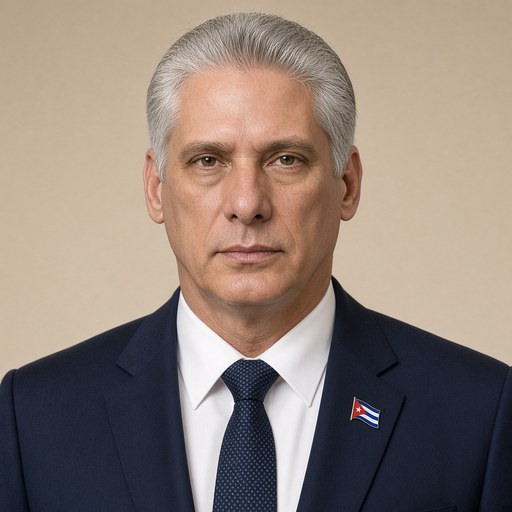
Culmination of the participation of the Cuban Medical Brigade in the More Doctors Program for Brazil.
 Miguel Díaz-Canel · President of Cuba
- Context
- Díaz-Canel addressed returning Cuban medical personnel and Party leadership in Havana on December 20, 2018, marking the end of Cuba's participation in Brazil's More Doctors Program.
- Main themes
- Cuban medical internationalism, More Doctors Program in Brazil, medical solidarity and cooperation, Fidel Castro's legacy in medicine, Bolsonaro's challenge to Cuban dignity, Cuban medical brigade homecoming, history of Cuban medical missions, health worker recognition, internationalist principles, Cuban Revolution and healthcare
- Duration
- ~18 min
- Words
- 2,160
- Sentences
- 78
- Readability
- 38
- Grade
- 14.6
- Syntax
- 3.29
- Vocabulary
- 2.21
Translated from Spanish
The broad sphere of national life a sentence belongs to. Every sentence has an Arena, so it is the denominator the other indices are read against.
Other78 sentences in 59 paragraphs
(Verbatim Transcripts - State Council) Comrade José Ramón Machado Ventura, Second Secretary of the Central Committee of our Party;
Comrades members of the leadership of the Political Bureau and the Secretariat of the Central Committee of the Party;
Comrades members of the Councils of State and Ministers and leaders of the Union of Young Communists and the political and mass organizations present here;
Comrades;
Dear health workers:
This is a necessary meeting to together welcome you and recognize those who made your return possible.
I was wondering what to say to you today, after all that has been said in these days, under the emotion of your return, whose attitude honors and elevates the Homeland.
And as we have done so many times and will do again, I turned back to Fidel and his founding word.
On October 17, 1962, at a transcendent moment for Cuban medicine, which is to say historic for the Revolution and for internationalism, the Institute of Basic and Preclinical Sciences Victoria de Girón was inaugurated.
There, conversing with students and professors, Fidel, whom we must evoke every time we talk about Medicine and internationalism, announced what would be the most formidable program for training health specialists in the country and for cooperation with other nations.
On that occasion he said: “…the Revolution today has forces and has resources and has organization and has men —men!, which is the most important— to begin a plan for training doctors in the quantities that are necessary. And not only many, but above all good ones; and not only good as doctors, but good as men and women, as patriots and as revolutionaries!
“And who says that the Revolution cannot do that? We are already able!”.
This was expressed as early as October 1962, the fourth year of a Revolution, not only newly born but also besieged and already plundered in its human resources, especially the doctors.
Let us not forget that more than half of the health professionals who practiced in Cuba in 1959 emigrated in the early years, summoned by the market.
Exactly the same old formula that Mr. Jair Bolsonaro has now appealed to in order to fracture cooperation, in his attempt to put a price on the dignity of our professionals.
What Mr. Bolsonaro does not understand is that the dignity of a people is not broken by breaking that of some individuals.
He and those who think like him ignore the history of Cuban cooperation in this field, which just in 2018 celebrated 55 years.
Precisely at that event in October 1962, Fidel announced the first internationalist mission of the Revolution, in newly independent Algeria, which then had a much larger population and fewer doctors than Cuba.
The Second Secretary of the Party, Dr. José Ramón Machado Ventura, then Minister of Public Health, led that mission, the first of tens of thousands that, guided by solidarity and humanitarian principles, have taken many of Cuba's best children to remote places around the world forgotten by the selective medical services of the savage capitalism that Bolsonaro advocates and defends.
Cuban doctors have written a dignified, heroic, glorious, and internationalist history, known and recognized by prestigious international organizations, including the Pan American Health Organization and the World Health Organization.
As the Ministry of Public Health has reported in recent weeks, our professionals have accumulated 600,000 internationalist missions in 164 nations, in which more than 400,000 health workers have participated, many of whom have fulfilled this honorable task more than once.
Some of those missions are true feats, such as the fight against Ebola in Africa, against cholera in Haiti; against the aftermath of natural disasters, such as those carried out by 26 brigades of the Henry Reeve International Contingent in Pakistan, Indonesia, Mexico, Ecuador, Peru, Chile, and Venezuela, among other countries, and also against blindness in Latin America and the Caribbean, the luminous Miracle Mission.
As has also been said, in the overwhelming majority of the missions carried out, the expenses have been borne by the Cuban government. Likewise, in Cuba, 35,613 health professionals from 138 countries have been trained free of charge, as an expression of our solidarity and internationalist vocation.
The United Nations Development Program and the World Health Organization qualify Cuban medical collaboration as an example of good practices in triangular cooperation and the implementation of the 2030 Agenda with its Sustainable Development Goals.
These are the historical backgrounds of the mission that took our doctors, you, to Brazil at the request of its authorities and through international organizations.
As expressed in the Declaration of the Ministry of Public Health on November 14:
“The initiative of Dilma Rousseff, at that time President of the Federative Republic of Brazil, had the noble purpose of ensuring medical care for the largest number of the Brazilian population, in accordance with the principle of universal health coverage promoted by the World Health Organization.
“This program anticipated the presence of Brazilian and foreign doctors to work in poor and remote areas of that country.
“The Cuban participation in it is carried out through the Pan American Health Organization and has been distinguished by occupying positions not covered by Brazilian doctors or those of other nationalities.
“In these five years of work, nearly 20,000 Cuban collaborators attended to 113,359,000 patients, in more than 3,600 municipalities, reaching a coverage of up to 60 million Brazilians at a time when they constituted 80% of all doctors participating in the program. More than 700 municipalities had a doctor for the first time in history.
“The work of Cuban doctors in places of extreme poverty, in favelas of Rio de Janeiro, São Paulo, Salvador de Bahia, in the 34 Special Indigenous Districts, especially in the Amazon, was widely recognized by the federal, state, and municipal governments of that country and by its population, which granted them a 95% acceptance rate, according to a study commissioned by the Ministry of Health of Brazil to the Federal University of Minas Gerais.”
Among them, some formed families with Brazilian citizens and honorably fulfilled their mission and commitment to Cuban public health, even when they were already residents in that country.
On November 14, when the decision was made not to continue participating in the More Doctors Program, there were 8,471 collaborators in Brazil; of these, 7,635 professionals completed their mission, representing more than 90% of the total. So far, 836 have not returned.
A few days ago we read in the news that less than 10% of the positions occupied by Cubans have been filled by professionals from Brazil.
Not everyone is willing to face the noble profession under the worst conditions. More Doctors was born for that reason, due to the enormous gaps left by the market in the majority of the lower-income population.
In Cuba, professionals of life are trained with an attitude contrary to mercantilist calculations. Altruism, generosity, the willingness to save lives without thinking of the cost is a fundamental principle in professional training.
It was very moving to welcome the first group that returned. Army General Raúl Castro Ruz, who led two welcome events alongside Comrade Machado, was also very impacted by the meeting to welcome those arriving.
I believe these were common feelings, because the newcomers came with emotions on the surface, after leaving difficult and poor places, some extremely needy in material terms; but I know, from what they have told, that absolutely everyone was seen off with hugs and tears by thousands of Brazilians with noble hearts and human values far superior to those of the new President whose statements and threats provoked your return.
I reiterate what the Minister of Public Health of Cuba has said: “Be convinced that this return to the homeland is not an end, but a beginning. Your work will always be useful and of extreme value; you will have the possibility of reintegrating into your jobs, new tasks in the professional order, or you may opt for a new mission abroad, where your presence is required and you are welcomed and respected.”
From the announcement of the return, on social media, the hashtag More Doctors became one of the most shared messages. “More than doctors, they are heroes and heroines,” many wrote. Dignity was one of the most used words.
“Compatriots return converted into #MoreThanDoctors because they reached places where no one else reached, to heal and attend to diseases and to uplift the souls of those in need.” “They demonstrated that a better world is possible. A heartfelt tribute to #FidelCastro,” we wrote.
You arrive at an important moment for Cuba, when we are about to approve the new Constitution that will be submitted to a referendum on February 24; when programs such as the Computerization of Society and housing construction are advancing. When we have declared the economic battle fundamental, which allows us to face more efficiently the cruel economic, financial, and commercial blockade that has intensified against the country.
In the sessions of Parliament that have taken place in recent days, we have talked about those challenges, but also about the certainties with which we will receive the 60th anniversary of the triumph of the Revolution. The new generation that, under the guidance of the Army General and the Party, takes on responsibilities in the Government is firmly committed to the history and future of the nation.
We work to fulfill and enforce the legacy of the Commander in Chief and the Centennial Generation with our ears to the ground, that is, listening to and addressing the opinions and demands of the people, trying to bring closer, in the complex conditions of today's world and the renewed hostility of the neighboring empire, the prosperity that our people deserve and demand.
You, who will reintegrate into your workplaces or depart to fulfill other missions, are part of that people that gives us proof of heroism in the arduous daily life.
On behalf of the Party and the Government, I want to reiterate that we are deeply proud of each one of you, as we are of the rest of the Cuban health collaborators who are on missions in 66 other countries, as well as of those who guarantee the health of the people, in what we could call the first front of combat.
You are a symbol of the country that trained you and a demonstration of the type of men and women we aspire to in Cuban society, based on justice and humanism, not on the law of the strongest.
It is logical the sorrow that may accompany you today for the unfinished work, for the patients left without follow-up, for the fate of those populations in Brazil deprived of the highly professional medical service of the Cubans. But we had no other option than the withdrawal of Cuba from the More Doctors Program.
It was impossible for us to remain with our arms crossed in the face of a proud and insensitive government, incapable of understanding that our doctors came to their country driven by the impulse to serve the people, to attend to their health and their souls, not to negotiate with them.
You left for Brazil defending your humanitarian vocation, something that cannot be paid for with all the money in the world. You went to fill positions that other Brazilian doctors did not want, nor want to occupy, and arrived in places whose inhabitants had never received medical assistance.
The reactionary position of the elected President of Brazil has made a part of its population vulnerable, risking the most precious thing that every human being has: their health and their life.
You assumed that dignity is not negotiable, demonstrating that Cuban doctors do not work thinking about the money they might be paid, but trying to solve the ailment of the human being in front of us.
These are the values and principles that the Cuban medical school instills, where not only sciences are learned, but also humanism and internationalism, which ennoble them to distinguish them from other professionals in the world.
We are glad that the venue for this recognition event is the Central Unit for Medical Cooperation, through which tens of thousands of Cuban doctors have passed on their way to other sister nations, where with their dedication and exemplary behavior they have proven and continue to prove how much they have learned from Fidel.
As I embrace you again, now all together, I invite you to remember what he said about the doctors trained in Cuba: “The most important thing will be their total dedication to the noblest and most human of professions: saving lives and preserving health. More than doctors, they will be zealous guardians of the most precious thing of the human being; apostles and creators of a more humane world.”
The work of Fidel and his heroic generation lives in you. Happy return to the Homeland that watches over you proudly!
Until victory always!
Homeland or Death!
We will overcome!
The original Spanish. The tags above are read on the English translation's sentences.
(Versiones Taquigráficas - Consejo de Estado) Compañero José Ramón Machado Ventura, Segundo Secretario del Comité Central de nuestro Partido;
Compañeros miembros de la dirección del Buró Político y el Secretariado del Comité Central del Partido;
Compañeros miembros de los Consejos de Estado y de Ministros y dirigentes de la Unión de Jóvenes Comunistas y las organizaciones políticas y de masas aquí presentes;
Compañeras y compañeros;
Queridos trabajadores de la salud:
Es este un encuentro necesario para juntos recibirles y reconocer a los que hicieron posible el regreso.
Me preguntaba qué decirles hoy, después de todo lo que se ha dicho en estos días, bajo la emoción del regreso de ustedes, cuya actitud honra y enaltece a la Patria.
Y como tantas veces hemos hecho y haremos, volví a Fidel y a su palabra fundadora.
El 17 de octubre de 1962, en un momento trascendente para la medicina cubana, que es decir histórico para la Revolución y para el internacionalismo, se inauguraba el Instituto de Ciencias Básicas y Preclínicas Victoria de Girón.
Allí, conversando con los estudiantes y profesores, Fidel, a quien debemos evocar cada vez que se hable de Medicina y de internacionalismo, anunciaba lo que sería el más formidable programa de formación de especialistas de la salud en el país y para la cooperación con otras naciones.
En esa ocasión decía: “…la Revolución tiene hoy fuerzas y tiene recursos y tiene organización y tiene hombres —¡hombres!, que es lo más importante— para comenzar un plan de formación de médicos en las cantidades que sean necesarias. Y no solo muchos, sino sobre todo buenos; y no solo buenos como médicos, ¡sino buenos como hombres y como mujeres, como patriotas y como revolucionarios!
“¿Y quién dice que la Revolución no puede hacer eso? ¡Estamos ya pudiendo!”.
Esto fue expresado tan temprano como octubre de 1962, cuarto año de una Revolución, no solo recién nacida, sino también asediada y ya saqueada en sus recursos humanos, especialmente los médicos.
No olvidemos que más de la mitad de los profesionales de la salud que ejercían en Cuba en 1959, emigraron en los primeros años, convocados por el mercado.
Exactamente la misma vieja fórmula a la que apeló ahora el señor Jair Bolsonaro para fracturar la cooperación, en su intento de poner precio a la dignidad de nuestros profesionales.
Lo que desconoce el señor Bolsonaro es que no se quiebra la dignidad de un pueblo quebrando la de algunos individuos.
Él y quienes piensan así ignoran la historia de la cooperación cubana en este campo, que justo en 2018 cumplió 55 años.
Precisamente en aquel acto de octubre de 1962, Fidel anuncia la primera misión internacionalista de la Revolución, en la recién independizada Argelia, que entonces tenía mucha más población y menos médicos que Cuba.
El Segundo Secretario del Partido, el doctor José Ramón Machado Ventura, Ministro de Salud Pública entonces, encabezó aquella misión, la primera de decenas de miles que, guiadas por principios solidarios y humanistas han llevado durante 55 años a muchos de los mejores hijos de Cuba a sitios remotos de todo el mundo olvidados por los selectivos servicios médicos del capitalismo salvaje que preconiza y defiende Bolsonaro.
Los médicos cubanos han escrito una historia digna, heroica, gloriosa e internacionalista, conocida y reconocida por prestigiosos organismos internacionales entre los que destacan la Organización Panamericana de la Salud y la Organización Mundial de la Salud.
Como ha informado el Ministerio de Salud Pública en estas semanas, nuestros profesionales acumulan 600 000 misiones internacionalistas en 164 naciones, en las que han participado más de 400 000 trabajadores de la salud, que en no pocos casos han cumplido esta honrosa tarea en más de una ocasión.
Algunas de esas misiones son verdaderas hazañas, como la lucha contra el ébola en África, contra el cólera en Haití; contra las secuelas de desastres naturales, como las que cumplieron 26 brigadas del Contingente Internacional Henry Reeve en Pakistán, Indonesia, México, Ecuador, Perú, Chile y Venezuela, entre otros países y también contra la ceguera en América Latina y el Caribe, luminosa misión Milagro.
Como también se ha dicho, en la abrumadora mayoría de las misiones cumplidas, los gastos han sido asumidos por el Gobierno cubano. Igualmente, en Cuba se han formado de manera gratuita 35 613 profesionales de la salud de 138 países, como expresión de nuestra vocación solidaria e internacionalista.
El Programa de las Naciones Unidas para el Desarrollo y la Organización Mundial de la Salud califican la colaboración médica cubana como ejemplo de buenas prácticas en cooperación triangular y la implementación de la Agenda 2030 con sus Objetivos de Desarrollo Sostenible.
Estos son los antecedentes históricos de la misión que llevó a nuestros médicos, a ustedes, a Brasil a pedido de sus autoridades y a través de organismos internacionales.
Como se expresó en la Declaración del Ministerio de Salud Pública del pasado 14 de noviembre:
“La iniciativa de Dilma Rousseff, en ese momento presidenta de la ¬República Federativa de Brasil, tenía el noble propósito de asegurar la atención médica a la mayor cantidad de la población brasileña, en correspondencia con el principio de cobertura sanitaria universal que promueve la Organización Mundial de la Salud.
“Este programa previó la presencia de médicos brasileños y extranjeros para trabajar en zonas pobres y apartadas de ese país.
“La participación cubana en el mismo se realiza a través de la Organización Panamericana de la Salud y se ha distinguido por ocupar plazas no cubiertas por médicos brasileños ni de otras nacionalidades.
“En estos cinco años de trabajo, cerca de 20 000 colaboradores cubanos atendieron a 113 359 000 pacientes, en más de 3 600 municipios, llegando a cubrirse por ellos un universo de hasta 60 millones de brasileños en el momento en que constituían el 80% de todos los médicos participantes en el programa. Más de 700 municipios tuvieron un médico por primera vez en la historia.
“La labor de los médicos cubanos en lugares de pobreza extrema, en favelas de Río de Janeiro, Sao Paulo, Salvador de Bahía, en los 34 Distritos Especiales Indígenas, sobre todo en la Amazonía, fue ampliamente reconocida por los gobiernos federal, estaduales y municipales de ese país y por su población, que le otorgó un 95% de aceptación, según estudio encargado por el Ministerio de Salud de Brasil a la Universidad Federal de Minas Gerais”.
Dentro de ellos, algunos formaron familias con ciudadanos brasileños y cumplieron honrosamente su misión y su compromiso con la salud pública cubana, incluso cuando ya eran residentes en ese país.
El 14 de noviembre cuando se tomó la decisión de no continuar participando en el Programa Más Médicos se encontraban en Brasil 8 471 colaboradores; de ellos culminaron su misión 7 635 profesionales, que representan más del 90% del total. Hasta el momento no han regresado 836.
Hace unos días leímos en las noticias que menos de un 10% de las plazas que ocupaban los cubanos han podido ser cubiertas por profesionales de Brasil.
No todo el mundo está dispuesto a enfrentar el noble oficio en las peores condiciones. Más Médicos nació por eso, por los vacíos enormes que deja el mercado en las mayoritarias capas de la población de menos recursos.
En Cuba se forma a los profesionales de la vida con una actitud contraria a cálculos mercantilistas. El altruismo, la generosidad, la disposición a salvar vidas sin pensar en el costo es un principio fundamental en la formación profesional.
Fue muy emocionante recibir al primer grupo que regresó. El General de Ejército Raúl Castro Ruz, quien encabezó dos actos de bienvenida junto al compañero Machado, también quedó muy impactado por el encuentro en la bienvenida a los que llegaban.
Creo que eran sentimientos comunes, porque los recién llegados venían con las emociones a flor de piel, después de dejar lugares difíciles y pobres, algunos extremadamente necesitados en el orden material; pero sé, por lo que han contado, que absolutamente todos fueron despedidos con abrazos y lágrimas por miles de brasileños de corazón noble y valores humanos muy superiores a los del nuevo Presidente cuyas declaraciones y amenazas provocaron el regreso de ustedes.
Les reitero lo que ha dicho el Ministro de Salud Pública de Cuba: “Estén convencidos de que este retorno a la patria no es un final, sino un comienzo. Su labor siempre será útil y de extremo valor, tendrán la posibilidad de reincorporarse a sus puestos de trabajo, nuevas tareas en el orden profesional o podrán optar por una nueva misión en el exterior, donde se requiera su presencia y sean bienvenidos y respetados”.
A partir del anuncio del regreso, en las redes sociales la etiqueta Más Médicos se convirtió en uno de los mensajes más compartidos. “Más que médicos son héroes y heroínas”, escribieron muchos. Dignidad fue una de las palabras más utilizadas.
“Regresan compatriotas convertidos en #MásQueMédicos porque llegaron a donde nadie llegó, para curar y atender enfermedades y para animar el alma de los necesitados”. “Demostraron que un mundo mejor es posible. Sentido homenaje a #FidelCastro”, escribimos nosotros.
Ustedes llegan en un momento importante para Cuba, cuando estamos a punto de aprobar la nueva Constitución que será sometida a Referendo el próximo 24 de febrero; cuando avanzan programas como la Informatización de la Sociedad y la construcción de viviendas. Cuando hemos declarado fundamental la batalla económica que nos permita enfrentar con mayor eficiencia el cruel bloqueo económico, financiero y comercial que se ha recrudecido contra el país.
En las sesiones del Parlamento que han tenido lugar en estos días hemos hablado de esos desafíos, pero también de las certezas con las que recibiremos el aniversario 60 del triunfo de la Revolución. La nueva generación que, bajo la guía del General de Ejército y del Partido, asume tareas de responsabilidad en el Gobierno está firmemente comprometida con la historia y con el futuro de la nación.
Trabajamos por cumplir y hacer cumplir el legado del Comandante en Jefe y la Generación del Centenario con el oído pegado a la tierra, es decir, escuchando y atendiendo las opiniones y demandas del pueblo, tratando de aproximar, en las complejas condiciones del mundo actual y la renovada hostilidad del imperio vecino, la prosperidad que merece y reclama nuestra gente.
Ustedes que se incorporarán a sus centros de trabajo o partirán a cumplir otras misiones son parte de ese pueblo que nos da pruebas de heroísmo en la ardua cotidianidad.
En nombre del Partido y del Gobierno, les quiero reiterar que estamos profundamente orgullosos de cada uno de ustedes, como lo estamos del resto de los colaboradores cubanos de la salud que cumplen misión en otros 66 países, así como de quienes garantizan la salud del pueblo, en lo que podríamos llamar el primer frente de combate.
Ustedes son un símbolo del país que los formó y una muestra del tipo de hombres y mujeres a los que aspiramos en la sociedad cubana, basada en la justicia y el humanismo, no en la ley del más fuerte.
Es lógico el pesar que puede acompañarlos hoy por la obra inconclusa, por los pacientes que quedan sin seguimiento, por la suerte de esas poblaciones de Brasil privadas del servicio médico altamente profesional de los cubanos. Pero no teníamos otra opción que la retirada de Cuba del Programa Más Médicos.
Era imposible quedarnos de brazos cruzados ante un gobierno soberbio e insensible, incapaz de entender que nuestros médicos llegaron a su país movidos por el impulso de servir al pueblo, a atender su salud y su alma, no a negociar con ellas.
Ustedes partieron a Brasil defendiendo su vocación humanista, algo que no se paga con todo el dinero del mundo. Fueron a cubrir plazas que otros médicos brasileños no quisieron, ni quieren ocupar, y llegaron a lugares cuyos pobladores jamás habían recibido asistencia médica.
La posición reaccionaria del Presidente electo de Brasil ha vuelto vulnerable a una parte de su población, arriesgando lo más preciado que tiene todo ser humano: su salud y su vida.
Ustedes asumieron que la dignidad no se negocia, demostraron que los médicos cubanos no trabajan pensando en el dinero que les puedan pagar, sino tratando de solucionar la dolencia del ser humano que tenemos delante.
Esos son los valores y principios que la escuela de medicina cubana inculca, donde no solo se aprende ciencias, sino humanismo e internacionalismo, lo que los enaltece para distinguirlos de otros profesionales en el mundo.
Nos alegra que la sede para este acto de reconocimiento sea la Unidad Central de Cooperación Médica, por donde han pasado decenas de miles de galenos cubanos rumbo a otras naciones hermanas, donde con su entrega y ejemplaridad probaron y prueban cuánto han aprendido de Fidel.
Al abrazarlos nuevamente, ahora todos juntos, los invito a recordar lo que él dijo de los médicos formados en Cuba: “Lo más importante habrá de ser su consagración total al más noble y humano de los oficios: salvar vidas y preservar la salud. Más que médicos, serán celosos guardianes de lo más preciado del ser humano; apóstoles y creadores de un mundo más humano”.
La obra de Fidel y de su generación heroica vive en ustedes. ¡Feliz regreso a la Patria que los contempla orgullosa!
¡Hasta la victoria siempre!
¡Patria o Muerte!
¡Venceremos! (Aplausos.)