





- Context
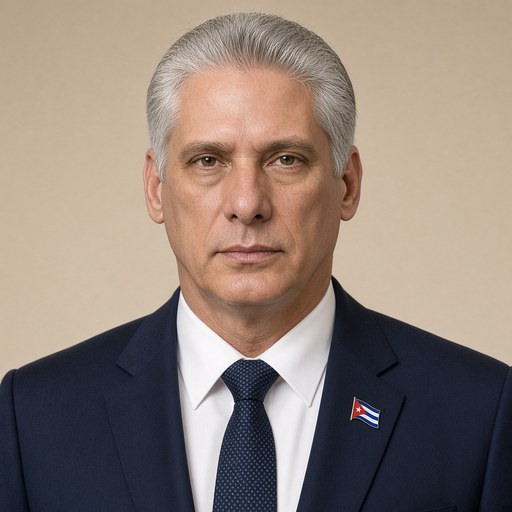
- Díaz-Canel addressed solidarity supporters at Riverside Church in New York on the sidelines of the 2018 UN General Assembly, evoking Fidel Castro's legacy.
- Main themes
- Cuban solidarity, US blockade against Cuba, Venezuelan Bolivarian Revolution, Latin American solidarity, Fidel Castro's legacy, Cuban medical cooperation, Riverside Church history, UN General Assembly address, support for Nicaragua and Puerto Rico, Palestinian and Sahrawi peoples' causes, Cuba-Harlem historical ties
- Duration
- ~15 min
- Words
- 1,858
- Sentences
- 57
- Readability
- 31
- Grade
- 17.0
- Syntax
- 3.52
- Vocabulary
- 2.22
Translated from Spanish
The broad sphere of national life a sentence belongs to. Every sentence has an Arena, so it is the denominator the other indices are read against.
Other57 sentences in 38 paragraphs
All Cubans who have passed through this Cathedral always say the same thing: Wonderful things happen here. And today, after an intense and hard day, we are experiencing emotions with you here at Riverside Church.
Today at the United Nations, two brotherly peoples raised their voices: Venezuela denounced all the aggression to which it has been subjected and also reaffirmed its decision to continue the Bolivarian Revolution, as a faithful legacy to Commander Chávez. And Cuba also raised its voice alongside Venezuela, to support Venezuela, to support Nicaragua, to support Puerto Rico, to support Latin America, to support the Palestinian people and the Sahrawi people, and to support all just causes in the world! And also to denounce, once again, the unjust blockade that the Government of the United States has imposed on us for almost 60 years!
Therefore, for Maduro, for the Venezuelan delegation, for the Cuban delegation, it is very exciting, after that hard day, to be sharing these emotions with you, friends of Venezuela and friends of Cuba in New York. And miracles like this only happen in this city, here at Riverside Cathedral. That is why we are very grateful for this meeting.
This is a meeting of solidarity, and this is a Cathedral of faith and solidarity, and therefore, there is no need to speak of names or positions here; we are all sisters and brothers here; we are all friends here. Therefore, good evening friends; good evening sisters and brothers:
It seems unbelievable to us today to be here, where more than once you warmly embraced Fidel and with him Cuba, in the name of the best of the American people.
For those moments, and for this one in particular, the first thing we want to say to you is thank you!
To get here, we crossed Harlem, the neighborhood of the legendary Theresa Hotel, which opened its doors to our first revolutionary delegation at the UN and hosted meetings of great figures of the 20th century, where Fidel met Malcolm X, Nasser, Nehru, and Khrushchev.
The beautiful Riverside Church, with its Gothic-style tower that until today we only knew through photographs and accounts of that intense night in the year 2000, when the hospitable friends of Harlem gave a massive welcome of more than 3,000 people to our leader and his companions.
Right here, that night Fidel recalled that, during his first visit to the UN in 1960, he personally told his companions: "I am going to Harlem because my best friends are there".
And today here we want to remember with you that precisely from that visit in 1960, today marks 58 years, and that Fidel raised his voice at the UN to denounce the aggression against Cuba by the United States.
When he repeated the gesture in 2000, in this church, it is said that he felt so comfortable with the crowd gathered to greet him that his speech ended with a good morning; it had started at 10:00 PM and ended after 2:00 AM. Of course, I would not be able to repeat such a feat, nor do I think the visitors could endure so much.
But if there is one place we could not miss coming to, as part of our delegation attending the UN General Assembly, it is this doubly sacred temple, for its mission and for its history.
At Riverside Cathedral, it can be said that the training program for young Americans from the humblest districts of this great nation was born, at the Latin American School of Medical Sciences, our beloved ELAM, where until last year the number you presented here today graduated.
This church also reminds us of the heartfelt friendship between Fidel and Reverend Lucius Walker, who was an emissary of solidarity during the darkest years of the deep economic crisis that the exacerbation of the blockade caused in our country, following the fall of European socialism. That is why here tonight we are going to talk about solidarity.
Cuba is not a large or powerful country, nor is it rich in natural or financial resources, but those limitations have not prevented us from practicing solidarity based on sharing not what we have left over, but what we have, but above all, sharing our effort and our sacrifice. It is a solidary sacrifice practiced with humility and that has had an impact, after several decades, on the lives of millions of people across several continents.
The most visible manifestation of that solidarity is the cooperation provided by more than 42,000 Cuban professionals, mainly medical personnel, in more than 75 countries. They represent the more than one million Cuban professionals who, since the triumph of the Revolution, have collaborated in Africa, Asia, and Latin America and the Caribbean, providing medical services and health services, working in engineering projects, with advice in agronomy, sports, and other important areas of development.
They also represent the effort of Cuban educational and university centers and the staff of these institutions, which over these decades have trained tens of thousands of technicians and professionals from Third World countries and helped eliminate illiteracy in many of them.
The most significant effort of that internationalist solidarity of the Cuban Revolution was the support for liberation movements in Africa. With that effort, we safeguarded the sovereign integrity of Angola, achieved the independence of Namibia, and dealt a devastating and demoralizing blow to the war machine of the apartheid regime in South Africa.
That is why, when Cuba comes to the United Nations General Assembly and promotes cooperation and solidarity, in the face of threat, competition, racism, and selfishness, it does so with the authority of a people that has demonstrated that such purposes are possible and that has turned declarations into concrete actions.
Especially this year, which marks the centenary of Nelson Mandela's birth, to whose memory a peace summit has been dedicated, Cuba cannot fail to express the feeling that overwhelms us when the names of great leaders in the struggle for social justice and equality among all men are raised as a banner by representatives of nations enriched at the expense of the plunder of oppressed and vilified peoples of the Third World, to which those leaders dedicated their lives.
Those who keep peace in suspense, strengthening their arsenals with increasingly sophisticated and threatening weapons, those who foment conflicts and threaten invasions, those who just a decade ago considered Mandela a terrorist and delivered nuclear weapons to the racist regime of that time should apologize to the peoples who suffer the cost of wars when they could enjoy the benefits of disarmament.
Fifty-eight years ago today, in his memorable first speech at the UN, Fidel warned that with one-fifth of what the world spends on armaments, the development of all underdeveloped countries could be promoted, with a growth rate of 10% per year.
There is no need to calculate what part of the investment in armaments would be enough today to finance the development of the most economically backward countries; but given the enormous prices that everything has in our time, especially weapons, I dare to repeat that with one-fifth of that expenditure, many poor people would cease to be so.
Defending that a world of peace and cooperation is essential for development, the foreign policy of the Cuban Revolution maintains its unwavering position in favor of total disarmament and international solidarity. That is our commitment to those who have suffered and still suffer injustice and exclusion, to those who have suffered and still suffer as a consequence of colonialism, neocolonialism, imperialism, and racism. It is a foreign policy that stands in solidarity with the dispossessed, the marginalized, and the exploited.
Fidel taught us that "Cooperating with other exploited and poor peoples has always been a political principle and a duty to humanity for Cuban revolutionaries".
Cuba also owes much to international solidarity and to the solidarity of thousands of friends and activists here in the United States, among whom there are also many Cubans residing here. The most recent demonstration was the massive international movement in favor of the release of the Five Cuban anti-terrorist fighters who were unjustly imprisoned and, previously, for the return of the child Elián González to his home in Cuba.
As you all know, our bilateral relationship with the United States continues to be characterized, above all, by the economic blockade, which constitutes a fundamental obstacle to the development and well-being of Cubans, and which causes deprivations in our families.
The ties between both countries continue to be influenced by the pretensions of minority groups, but politically powerful within this country, that promote tension and hostility. These are groups that aspire for Cuba to return to the past; to do so, they use deception and defamation, have powerful financial resources, and the manipulative support of influential media. They have managed to promote new political measures aimed at strangling the Cuban economy. These measures further hinder bilateral exchanges between our peoples and complicate the relations of the nation and emigration.
But they will always stumble upon the patriotic unity of Cubans and the ideals of independence and rebellion on which our nation was forged. They will also stumble upon the rejection and activism of Cuba's friends in many parts of the world, including our sisters and brothers here in the United States.
What currently mobilizes the Cuban nation and the task that concentrates the attention of our people is the process of massive and popular discussion of the Draft Constitution that we intend to adopt at the beginning of next year, as an expression of the country we desire, as a commitment to continue building socialism, with loyalty to the ideals that have accompanied the struggle for independence and social justice in our country throughout its history.
In a few days, on October 10, we will commemorate 150 years since our cry for independence, when a group of Cuban patriots, under the guidance of Carlos Manuel de Céspedes, proclaimed the beginning of the armed struggle for independence and the abolition of slavery.
In honor of that date, in remembrance of the martyrs and heroes of our homeland, in gratitude to the citizens of other countries who, in a gesture of solidarity, sacrificed their lives in the struggle for Cuba's independence, among whom were prominent American fighters, and in fraternal recognition of the extraordinary effort of the tireless friends who have fought against the economic blockade and demanded a policy of respect towards Cuba, I reaffirm the unwavering and solidary commitment of the Cuban Revolution to the cause of justice and the right of peoples to dream and achieve a better world, which is possible.
Sisters and brothers, this is our greeting, because this is what the best friends do when they meet after a long time, or when – as is our case – they bring the heartfelt memory of their parents and their parents' friends. Today with you we feel that Fidel and Chávez are present here.
Long live the Bolivarian Revolution of Venezuela!
Long live the Cuban Revolution!
Long live the friendship between our peoples!
Until victory always!
Thank you very much.
The original Spanish. The tags above are read on the English translation's sentences.
Todos los cubanos que han pasado por esta Catedral siempre dicen lo mismo: Aquí ocurren cosas maravillosas. Y hoy, después de un intenso y duro día, estamos viviendo emociones con ustedes aquí en Riverside Church.
Hoy en Naciones Unidas dos pueblos hermanos levantaron su voz: Venezuela denunció toda la agresión a la cual ha sido sometida y también ratificó su decisión de continuar la Revolución Bolivariana, como un fiel legado al Comandante Chávez (Aplausos y exclamaciones). ¡Y Cuba también alzó su voz junto a Venezuela, para apoyar a Venezuela, para apoyar a Nicaragua, para apoyar a Puerto Rico, para apoyar a América Latina, para apoyar al pueblo palestino y al pueblo saharaui y para apoyar todas las causas justas del mundo! (Aplausos y exclamaciones.) ¡Y también para denunciar, una vez más, el injusto bloqueo que durante casi 60 años nos ha impuesto el Gobierno de Estados Unidos!
Por lo tanto, para Maduro, para la delegación de Venezuela, para la delegación cubana es muy emocionante, después de ese duro día, estar compartiendo estas emociones con ustedes, amigos de Venezuela y amigos de Cuba en Nueva York (Aplausos). Y milagros como este solo ocurren en esta ciudad, aquí en la Catedral de Riverside. Por eso les agradecemos mucho este encuentro.
Este es un encuentro de solidaridad y esta es una Catedral de fe y de solidaridad y, por lo que, aquí no hace falta hablar ni de nombres, ni de cargos, aquí todos somos hermanas y hermanos; aquí todos somos amigas y amigos. Por lo tanto, buenas noches amigos y amigas; buenas noches hermanas y hermanos:
Nos parece mentira hoy estar aquí, donde más de una vez ustedes abrazaron cálidamente a Fidel y con él a Cuba, en nombre de lo mejor del pueblo norteamericano.
Por esos momentos, y por este en particular, lo primero que queremos decirles es ¡gracias!
Para llegar hasta aquí atravesamos Harlem, el barrio del legendario hotel Theresa, que se abrió a nuestra primera delegación revolucionaria en la onu y cobijó encuentros de grandes del siglo xx, donde Fidel recibió a Malcolm x, a Nasser, a Nehru y a Jruschov.
La bellísima iglesia Riverside, con su torre de estilo gótico que hasta hoy solo conocíamos por fotografías y crónicas de aquella intensa noche del año 2000, en la cual los hospitalarios amigos de Harlem dieron una multitudinaria bienvenida de más de 3 000 personas a nuestro líder y sus acompañantes.
Justamente aquí, esa noche recordó Fidel que, en su primera visita a la ONU, en 1960, él personalmente les había dicho a sus compañeros: «Me voy a Harlem, porque ahí están mis mejores amigos» (Aplausos y exclamaciones).
Y hoy aquí queremos recordar con ustedes que precisamente de esa visita en el año 1960 se cumplen hoy 58 años, y de que Fidel alzó su voz en la ONU para denunciar la agresión a Cuba por parte de Estados Unidos.
Al repetir el gesto en el 2000, en esta iglesia, cuentan que se sintió tan a gusto con la multitud reunida para saludarle, que su discurso terminó con un buenos días, había comenzado a las 10:00 de la noche y terminó pasadas las 2:00 de la madrugada. Claro que yo no sería capaz de repetir tal proeza, ni creo que los visitantes resistan tanto.
Pero si a un lugar no podíamos dejar de venir, en composición de nuestra delegación que asiste a la Asamblea General de la ONU, es a este doblemente sagrado templo, por su misión y por su historia.
En la Catedral de Riverside, puede decirse que nació el programa de formación de jóvenes norteamericanos de los distritos más humildes de esta gran nación, en la Escuela Latinoamericana de Ciencias Médicas, nuestra querida ELAM, donde hasta el pasado año se habían graduado la cantidad que ustedes expusieron hoy aquí (Aplausos).
Esta iglesia nos recuerda también la entrañable amistad entre Fidel y el reverendo Lucius Walker, quien fue un emisario de la solidaridad en los años más oscuros de la profunda crisis económica que en nuestro país provocó la exacerbación del bloqueo, tras la caída del socialismo europeo. Por eso aquí esta noche vamos a hablar de solidaridad.
Cuba no es un país grande ni poderoso, ni rico en recursos naturales o financieros, pero esas limitaciones no nos han impedido practicar la solidaridad sobre la base de compartir no lo que nos sobra, si no lo que tenemos, pero, ante todo, compartir nuestro esfuerzo y nuestro sacrificio. Se trata de un sacrificio solidario practicado con humildad y que ha tenido un impacto, al cabo de varias décadas, en la vida de millones de personas de varios continentes (Aplausos).
La muestra más visible de esa solidaridad es la cooperación que prestan más de 42 000 profesionales cubanos, sobre todo personal médico, en más de 75 países. Ellos representan a los más de un millón de profesionales cubanos que desde el triunfo de la Revolución colaboraron en África, Asia y América Latina y el Caribe, prestando servicios médicos y servicios de salud, trabajando en obras de ingeniería, con asesoría en agronomía, deportes y otras áreas importantes del desarrollo.
También representan el esfuerzo de centros educacionales y universitarios cubanos y del personal de estas instituciones, que a lo largo de estas décadas formaron a decenas de miles de técnicos y profesionales de países del Tercer Mundo y ayudaron a que en muchos de ellos se eliminara el analfabetismo.
El empeño más significativo de esa solidaridad internacionalista de la Revolución Cubana fue el apoyo a los movimientos de liberación en África (Aplausos). Con ese esfuerzo salvaguardamos la integridad soberana de Angola, alcanzamos la independencia de Namibia y asestamos un golpe demoledor y desmoralizante a la maquinaria de guerra del régimen del apartheid en Sudáfrica (Aplausos).
Por eso, cuando Cuba viene a la Asamblea General de las Naciones Unidas y promueve la cooperación y la solidaridad, frente a la amenaza, la competencia, el racismo y el egoísmo, lo hace con la autoridad de un pueblo que demostró que tales propósitos son posibles y que convirtió las declaraciones en acciones concretas (Aplausos).
Especialmente este año en que se conmemora el centenario del nacimiento de Nelson Mandela, a cuya memoria se ha dedicado una cumbre de paz, Cuba no puede dejar de expresar el sentimiento que nos embarga cuando los nombres de grandes líderes de la lucha por la justicia social y la igualdad entre todos los hombres se levantan como bandera por representantes de naciones enriquecidas a costa del saqueo de los pueblos oprimidos y vilipendiados del Tercer Mundo, al que aquellos líderes consagraron sus vidas.
Quienes mantienen en vilo la paz, fortaleciendo sus arsenales con armamentos cada vez más sofisticados y amenazadores, quienes fomentan conflictos y amenazan con invasiones, quienes hace apenas una década consideraban a Mandela terrorista y entregaron armas nucleares al régimen racista de entonces deberían pedir perdón a los pueblos que sufren el costo de las guerras, cuando podrían disfrutar los beneficios del desarme (Aplausos).
Hace 58 años hoy, en su memorable primer discurso en la ONU, Fidel advertía que con la quinta parte de lo que el mundo se gasta en armamentos se podía promover un desarrollo de todos los países subdesarrollados, con una tasa de crecimiento del 10 % anual.
No hace falta calcular qué parte de la inversión en armamentos bastaría hoy para financiar el desarrollo de los países más atrasados económicamente; pero por los descomunales precios que todo tiene en nuestra época, especialmente las armas, me atrevo a repetir que con un quinto de ese gasto muchos pobres dejarían de serlo (Aplausos).
Defendiendo que un mundo de paz y cooperación es indispensable para el desarrollo, la política exterior de la Revolución Cubana mantiene invariable su posición a favor del desarme total y de la solidaridad internacional (Aplausos). Ese es nuestro compromiso con los que han padecido y aún padecen la injusticia y la exclusión, con los que han sufrido y aún sufren como consecuencia del colonialismo, el neocolonialismo, el imperialismo y el racismo. Es una política exterior que hace causa común con los desposeídos, los marginados y los explotados (Aplausos).
Fidel nos enseñó que «Cooperar con otros pueblos explotados y pobres fue siempre para los revolucionarios cubanos un principio político y un deber con la humanidad» (Aplausos).
Cuba también le debe mucho a la solidaridad internacional y a la solidaridad de miles de amigos y de activistas aquí en los Estados Unidos, entre los que se encuentran también muchos cubanos residentes aquí (Aplausos). La demostración más reciente fue el movimiento masivo internacional a favor de la liberación de los Cinco luchadores antiterroristas cubanos que fueron injustamente encarcelados y, antes, por el regreso del niño Elián González a su hogar en Cuba (Aplausos).
Como todos conocen, nuestra relación bilateral con los Estados Unidos sigue caracterizada, ante todo, por el bloqueo económico que constituye un obstáculo fundamental al desarrollo y al bienestar de los cubanos, y que provoca privaciones en nuestras familias.
Los vínculos entre ambos países continúan influidos por las pretensiones de grupos minoritarios, pero políticamente poderosos dentro de este país que promueven la tensión y la hostilidad. Son grupos que aspiran a que Cuba regrese al pasado; para ello utilizan el engaño y la difamación, cuentan con poderosos recursos financieros y el respaldo manipulador de influyentes medios de prensa. Han logrado promover nuevas medidas políticas dirigidas a estrangular la economía cubana. Son medidas que entorpecen aún más los intercambios bilaterales entre nuestros pueblos y que dificultan las relaciones de la nación y la emigración.
Pero siempre tropezarán con la unidad patriótica de los cubanos y con el ideario de independencia y rebeldía en que se forjó nuestra nación. Tropezarán también con el rechazo y el activismo de los amigos de Cuba en muchas partes del mundo, incluidos nuestras hermanas y hermanos aquí en los Estados Unidos (Aplausos).
Lo que en estos momentos moviliza a la nación cubana y la tarea que concentra la atención de nuestro pueblo es el proceso de discusión masiva y popular del Proyecto de Constitución que nos proponemos adoptar a inicios del próximo año, como expresión del país que deseamos, como compromiso de continuar edificando el socialismo, con lealtad a los ideales que han acompañado la lucha por la independencia y la justicia social en nuestro país a lo largo de su historia.
Dentro de pocos días, el próximo 10 de octubre, se cumplirán 150 años de nuestro grito de independencia, cuando un grupo de patriotas cubanos, bajo la guía de Carlos Manuel de Céspedes, proclamó el inicio de la lucha armada por la independencia y por la abolición de la esclavitud (Aplausos).
En honor a esa fecha, en recordación de los mártires y héroes de nuestra patria, en gratitud hacia los ciudadanos de otros países que en gesto de solidaridad sacrificaron sus vidas en la lucha por la independencia de Cuba, entre los que se incluyeron prominentes luchadores estadounidenses, y en reconocimiento fraterno al esfuerzo extraordinario de los incansables amigos que durante todos estos años han luchado en contra del bloqueo económico y en demanda de una política de respeto hacia Cuba, ratifico el compromiso solidario e inquebrantable de la Revolución Cubana con la causa de la justicia y del derecho de los pueblos a soñar y a alcanzar un mundo mejor, que es posible (Aplausos).
Hermanas y hermanos, este es nuestro saludo, porque esto es lo que hacen los mejores amigos cuando se encuentran después de mucho tiempo, o cuando –como es nuestro caso– traen la entrañable memoria de sus padres y de los amigos de sus padres. Hoy con ustedes sentimos que aquí están presentes Fidel y Chávez (Aplausos).
¡Viva la Revolución Bolivariana de Venezuela! (Exclamaciones de: “¡Viva!”)
¡Viva la Revolución Cubana! (Exclamaciones de: “¡Viva!”)
¡Viva la amistad entre nuestros pueblos! (Exclamaciones de: “¡Viva!”)
¡Hasta la victoria siempre!
Thank you very much.
(Ovación.)