




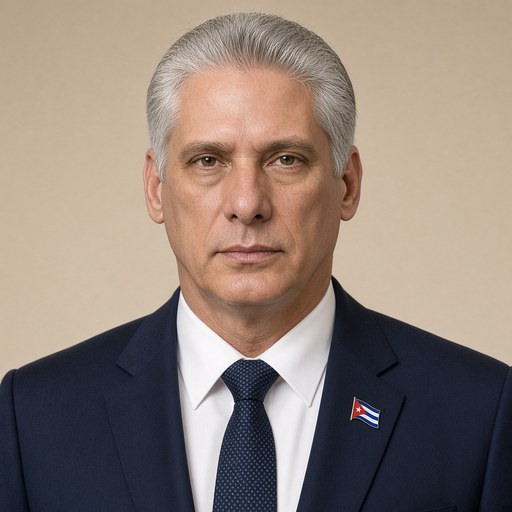
Speech delivered at the closing of the II National Council of the Uneac, at the Palace of Conventions.
 Miguel Díaz-Canel · President of Cuba
- Context
- Díaz-Canel addressed the closing session of the II National Council of UNEAC at the Palace of Conventions in Havana on July 13, 2022.
- Main themes
- Cuban culture and identity, resistance to cultural colonization, UNEAC national council, role of artists and intellectuals, revolutionary principles, U.S. blockade, COVID-19 pandemic impact, cultural universality and originality, José Martí's legacy, education and culture in society
- Duration
- ~21 min
- Words
- 2,512
- Sentences
- 75
- Readability
- 34
- Grade
- 16.8
- Syntax
- 3.47
- Vocabulary
- 2.36
Translated from Spanish
The broad sphere of national life a sentence belongs to. Every sentence has an Arena, so it is the denominator the other indices are read against.
Other75 sentences in 47 paragraphs
Dear friends:
We arrive at this National Council three years after the Congress and two of them in a pandemic, but without pause in following up on the agreements from that long, profound, and critical meeting that opened the way to some solutions and a thousand more challenges.
I have been studying the documents, which are extensive but essential, and, without a doubt, the Congress has been worked on and updated. Not all problems have been resolved, but good pieces have been wrested from them.
It is to be appreciated, even if you yourselves may not be aware of what you are doing: this Council has become a declaration of principles, of revolutionary principles.
The country thanks its artists and intellectuals for the contributions they have made from the commissions to follow up on the majority of the agreements and proposals from the Ninth Congress. The ten commissions have results to show, and some have been contributing for over 20 years on issues that are crucial for the nation, such as the comprehensive education of our citizens or the contribution of art to society.
I speak, of course, of the Commission on Education, Culture, and Society, whose first mission was designed with the contribution of intellectuals of the stature of Retamar, Graziella, Helmo, and others. I highlight the contribution of this Commission for its reach, impact, and years of work, but all ten commissions deserve recognition.
The Council, its debates, the quality of the discussions, and the proposals confirm that the Congress did not end when its sessions finished in June 2019, something I already knew, because it did not end even for me, who month after month, regardless of where the sun rises, receives artists, writers, and teachers at our work headquarters to continue discussing the agreements, systematically following up in what have become meeting spaces between Cuban intellectuals and the leadership of the Party and the Government in the country.
The two years and a little more that the pandemic lasted have been more productive than one might expect. And we owe that, without a doubt, to the engines ignited by the Congress and to the undeniable jolt that any patriot feels when faced with the direct clash with the subversive plans that first target, and with particular ferocity, the soul of the homeland, which is you and your works.
Never before has the reason of Fidel been so clear when he said that culture is the first thing that must be saved.
COVID-19 did not paralyze Uneac, it did not paralyze artists and intellectuals, whose drive was decisive in restoring and reassembling the spirits of a society battered by two pandemics: COVID-19 and the blockade, but the intensified blockade. All this despite the fact that it has also been a guild severely hit by the loss of valuable comrades, of creators who just two years ago shared with us the sessions of the Ninth Congress.
I believe that one of the merits of this Council is having provoked a debate around the challenges of Uneac and its membership in the face of the colonizing wave that threatens to invade all cultural spaces through the most sophisticated and diverse channels.
I want to focus on this issue, because I would say it is central to any of the tasks that the membership of Uneac has proposed, even before the organization was born, from the days of "Words to the Intellectuals." That is why it was so important that the plenary debates pointed in that direction.
It is difficult to talk to you about a topic we have worked on thanks to you; I particularly thank the vigilance on these matters that are always conveyed to us by Víctor Fowler, Helmo, Graziella, Torres Cuevas, Limia, Israel, José Ernesto, Elier, Javier, and Abel, among others, every month.
A truth that makes us proud has accompanied us since 1868: our artistic and cultural vanguard is distinguished by having always fought a long and deep battle against cultural colonization, but no one is in a position to assert that there is an absolute understanding of the gravity of the phenomenon by all those who carry out some type of work related to culture.
The historical selectivity of Uneac has been a purifying filter of rejection to uncritical, banal, and impoverishing cultural consumption; but closing the doors is not enough, it is necessary to create, show, and viralize, as they say now, the genuine and powerful Cuban culture and also universal culture, in all areas, to win the fight against mediocrity. I say universal because I believe in the value of culture in its broadest sense. "Let the world be grafted into our republics; but the trunk must be that of our republics," wrote José Martí.
Universality and identity are inseparable in Cuban culture, one feeding the other and both contributing to the formation of the originality that distinguishes us. That originality is a key piece in the history of peoples, it is at the base of our resistance. That is why the empire places so much importance on the cultural war, which is why the siege, the harassment, the constant interest in buying artists, intellectuals, athletes, doctors, scientists, in short, personalities with social recognition. To do this, they rely on a powerful apparatus of ideological reproduction with large media conglomerates, material and financial resources, that constantly bombard ideas, values, and ways of being.
In the face of that colossal deployment of resources aimed at winning the minds and hearts of young people in particular and the people in general, our resources and production capacities that would allow us to replace a good part of those products made for uncritical enchantment are now very limited and in some cases nonexistent.
What then to do in the face of this painful but undeniable certainty? First of all, it will always be necessary to appeal to one of the fundamental weapons in Fidel's political arsenal: to educate the people, to foster a critical consciousness, a critical thought that guarantees an educated discernment of what is valuable and what is not. We have to form that consciousness, but we must also induce it, keeping in mind that the media and the audiences are no longer the same. In that sense, a greater push for audiovisual education and culture in the digital space is needed.
You, like almost no other professional group, have the capacity and the possibility to stimulate, from knowledge and artistic sensitivity, the development of a culture of debate from early school ages through highly creative extracurricular activities, contests, digital publications, opinion meetings, cultural festivals in schools, tributes to great figures, among others.
We have, and it is a great strength, our well-established and consolidated institutional organization in different work systems: a national media system, an education system, a national system of cultural institutions, a system of publications and sites in the digital space.
If we manage to articulate these systems for the coordinated dissemination of ideas, concepts, and tools, the material shortages will weigh less, but our ideological or communicational responses, which traverse these systems, must stop being formal and bureaucratized.
We must eliminate the triumphalist or empty rhetoric that often ends up distancing us from all audiences, causing the people or certain segments to distrust and distance themselves from our institutions and our discourses.
We need an absolutely creative offensive against imperial aggression, and the use we make of new technologies for digital communication, podcasts, YouTube videos, author blogs, chat forums, social media debate groups, web series, is still very poor.
We need more and more options that invite and offer spaces for expression and enjoyment to the youth of today and the future.
There is a design and a work program for cultural decolonization that we have been discussing from the Presidency and the leadership of the Party with many of you. It is broad, comprehensive, ambitious, but it is necessary to socialize it, it is imperative to make the leap, to generate content that matches the potential of our culture. But for that to be possible, there is still much to transform and to work hard on.
In recent years and, in my view, with the very impetus of the debates we have held monthly, reviewing ideas, projects, achievements, and potentialities, audiovisual and dramatized production has regained breath; television, cinema, and theater have confirmed how deeply our own works can resonate and what beautiful feelings they awaken in the sensitive souls of Cubans. It is enough to mention the series "Lucha contra bandidos," "Duaba," "Entrega," "Calendario," the documentary "Soberanía," the productions "Nave Oficio de Isla," and "Luz," the films "El Mayor" and "Inocencia," and the documentary "Volverán los abrazos," as important works of Cuban production.
And forgive me for the incomplete recount, but there is the proof that under the worst attacks and the greatest shortages, with culture as the sword and shield of the Cuban nation, Cuba lives and promotes the best human values.
It is those results that inspire and drive new projects and impacts on audiences like the guide for others who await their opportunity; the more we see, the more are already emerging.
Also, the meeting spaces like "Miradas de mujer," addressing our feminist successes, and events of literature, traditions, and humor, like the one that just concluded; the rise of music commercialization, which is still below its potential but shows unstoppable development, dance or ballet, are telling us from the daily news in our media that, despite the blows and above them, Cuba is culture.
These challenging years will remain in popular memory not only for the supreme creation of scientists but also for the inseparable sounds of triumphs. Buena Fe, Arnaldo, Fabré, Raúl Torres — I apologize again for the always incomplete list — both exalted the brave in the red zone and the creators of vaccines that directly responded to the toxic media attacks against Cuba, consecrating resistance through music and social networks.
Those sounds associated with a heroic time are moving, just as it is a source of pride to see the great Silvio filling plazas in Mexico or Madrid, where "El Necio" was heard energetically, but also in our neighborhoods.
Today it is essential to elevate that enormous work, impossible to synthesize in a discourse for traditional media and, above all, for social networks, considering artistic hierarchies without censorships of natures alien to creation and promoting the best, what distinguishes and contributes to us the most. Let good art be combined with good practices in the use of all platforms.
We must intelligently address the cultural consumption of new generations, avoiding excluding, out of prejudice, what they sometimes consume uncritically. We must listen, debate, and move the formation of other consumptions through real dialogue and participation that guarantees greater social integration.
The Comprehensive Attention Program for our neighborhoods is, at the same time, a process of cultural growth in the ways of living together, socializing that is strengthened in the rescue of essences and traditions. I reiterate that it is not about invading the neighborhood or intervening in it, it is a matter of accompanying growth without trauma and without traps, and I am glad to know that we have counted on you for the program to improve life in the neighborhoods.
Uneac has been a pioneer in such difficult days as the current ones. The work of cultural promoters and artists in their neighborhoods, the projects that became paradigms like that of Villafaña, that of Alden Knight, like the Palomas Project, for its extension to all areas of life in the community and the expression of that life in audiovisuals that are, at the same time, inquiry and testimony of a crucial time, opened paths through which our efforts to conquer all possible social justice now walk.
And if proof were needed, the pandemic period came to provide it: the positive response to the demand for artistic work in communities, in vaccination centers, in Uneac headquarters, and in projects like Kcho's in Romerillo, cinema, television, radio, artistic brigades in hospitals and isolation centers in all provinces. Everything was less hard because of that and remained in the memory of the Cuban soul, thanks to the work of Cuban creators.
That militancy with life, not alongside but within the people, has placed Cuban culture under the fire of the media war that is stoked against Cuba, with the empire believing its own lie that the Revolution is living its final days. They do know, however, the direct impact of creators and artists on the spiritual fabric of the nation, which is why they go all out against culture.
Harassed, attacked on social networks and on stages, with the same ferocity that is pursued in the economy and finances of the country, our most valuable intellectuals and artists have responded with serenity, courage, and professionalism to the worst attacks. They have not allowed themselves to be dragged into the spiral of ignorance and hatred of adversaries without morals, without ethics, and without work.
Valga, just to cite one example: when, in the name of culture, a boycott was organized against a historic event of the visual arts, the Havana Biennial, and freedom of creation was invoked to tarnish the symbols of the homeland and disrespect the new Constitution as the first step towards the perverse goal of dismantling the profound emancipatory process of 63 years of the Revolution, it was not renounced, the "sofa was not thrown out," and the Biennial triumphed over hate.
You — and when I say you, I am speaking of all the creators recognized by Uneac, whom you represent — have been tireless artisans of the alternative, defending spaces and works of national heritage and new creation, as proof of your vitality. That is also creative resistance!
And you have also been powerful shields against hate, reminding us of that tremendous phrase by Martí in Our America: "A vigorous idea, unfurled in time before the world, to, like the mystical flag of the final judgment, a squadron of battleships."
I see no other way to be and act when coming from a tradition of greats like your founders, especially Nicolás Guillén, the first president of Uneac, a uniquely personal and universal voice whose 120th birthday we celebrate with these sessions.
Each meeting with intellectuals and artists, whether this plenary or our month-to-month check-in meetings, greatly nourishes our senses and fills us with enthusiasm to undertake new projects.
We increasingly feel more a part of you, always confident that the present and the future must be socialist. Socialism saved us in the face of the pandemic, socialism triumphed over the attempt of a vandal coup, and what we will truly celebrate as the first anniversary of July 11 is that the Cuban people and the Cuban Revolution dismantled a vandal coup d'état.
I am convinced that by defending socialism we will overcome the harsh current situation and defeat imperialist hate.
In short, may a vigorous sun always rise among our veins! In short, here we are!
Thank you very much.
The original Spanish. The tags above are read on the English translation's sentences.
Queridas amigas, queridos amigos:
Llegamos a este Consejo Nacional a tres años del Congreso y dos de ellos en pandemia, pero sin pausa en el seguimiento a los acuerdos de aquella reunión larga, honda y crítica que nos abrió el camino a algunas soluciones y a mil desafíos más.
Estuve estudiando los documentos, que son extensos pero esenciales, y, sin lugar a dudas, se ha trabajado y además se ha actualizado el Congreso. No se han resuelto todos los problemas, pero se les han arrancado buenos pedazos.
Es de agradecer, aunque ni ustedes mismos sean conscientes de lo que están haciendo: este Consejo ha devenido en una declaración de principios, de principios revolucionarios.
El país agradece a sus artistas e intelectuales el aporte que han hecho desde las comisiones para dar seguimiento a la mayoría de los acuerdos y planteamientos del Noveno Congreso. Las diez comisiones tienen resultados que mostrar, y algunas llevan más de 20 años aportando en asuntos trascendentales para la nación como la formación integral de nuestros ciudadanos o la contribución del arte a la sociedad.
Hablo, por supuesto, de la Comisión de Educación, Cultura y Sociedad, cuya primera misión fue diseñada con la contribución de intelectuales de la talla de Retamar, Graziella, Helmo y otros. Resalto el aporte de esta Comisión por el alcance, el impacto y los años de trabajo, pero las diez comisiones merecen reconocimiento.
El Consejo, sus debates, la calidad de las discusiones y las propuestas confirman que el Congreso no terminó cuando acabaron sus sesiones en junio de 2019, cosa que ya yo sabía, porque no terminó ni siquiera para mí, que mes a mes, salga el sol por donde salga, recibo en nuestra sede de trabajo a artistas, escritores y maestros para continuar sobre los acuerdos, dando seguimiento sistemático en lo que se han convertido espacios de encuentro entre la intelectualidad cubana y la dirección del Partido y del Gobierno en el país.
Los dos años y un poco más que duró la pandemia han sido más productivos de lo que podría esperarse. Y eso se lo debemos, sin dudas, a los motores que prendió el Congreso y a la indudable sacudida que provoca en cualquier patriota el choque directo con los planes de subversión que apuntan primero, y con particular saña, al alma de la patria que son ustedes y sus obras.
Nunca como ahora se hizo tan nítida la razón de Fidel al decir que la cultura es lo primero que hay que salvar.
La COVID-19 no paralizó a la Uneac, no paralizó a los artistas y a los intelectuales, cuyo empuje fue decisivo para restaurar y recomponer los ánimos de una sociedad golpeada por dos pandemias: la COVID-19 y el bloqueo, pero el bloqueo recrudecido. Todo ello a pesar de que ha sido también un gremio duramente golpeado por la pérdida de valiosas compañeras y compañeros, de creadores que hace apenas dos años compartían con nosotros las sesiones del Noveno Congreso.
Creo que uno de los méritos de este Consejo es haber provocado un debate en torno a los desafíos de la Uneac y su membresía frente a la ola colonizadora que amenaza con invadir todos los espacios culturales por los canales más sofisticados y diversos.
Quiero centrarme en este tema, porque diría que es medular en cualquiera de las tareas que se haya propuesto la membresía de la Uneac, aun antes de nacer la organización, desde los días de Palabras a los intelectuales. Por eso fue tan importante que los debates en plenaria apuntaran a esa dirección.
Cuesta hablarles de un tema en el que hemos trabajado gracias a ustedes; en particular agradezco el desvelo por estos asuntos que siempre nos transmiten Víctor Fowler, Helmo, Graziella, Torres Cuevas, Limia, Israel, José Ernesto, Elier, Javier y Abel, entre otros, todos los meses.
Una verdad que enorgullece nos acompaña desde 1868: nuestra vanguardia artística y cultural se distingue por haber librado siempre una larga y profunda batalla contra la colonización cultural, pero nadie está en condiciones de afirmar que existe una comprensión absoluta de la gravedad del fenómeno por parte de todos los que realizan algún tipo de trabajo vinculado a la cultura.
La histórica selectividad de la Uneac ha sido un filtro purificador de rechazo al consumo cultural acrítico, banal y empobrecedor; pero cerrarle las puertas no basta, es preciso crear, mostrar, viralizar, como se dice ahora, la genuina y poderosa cultura cubana y también universal, en todos los ámbitos, para ganarle la pelea a la mediocridad. Digo universal, porque creo en el valor de la cultura en su sentido más amplio. “Injértese en nuestras repúblicas el mundo; pero el tronco ha de ser el de nuestras repúblicas”, escribió José Martí.
Universalidad e identidad resultan inseparables en la cultura cubana, uno alimentando a la otra y ambas tributando a la conformación de la originalidad que nos distingue. Esa originalidad es pieza clave en la historia de los pueblos, está en la base de nuestra resistencia. Por eso el imperio le confiere tanta importancia a la guerra cultural, por eso el asedio, el acoso, el permanente interés por comprar artistas, intelectuales, deportistas, médicos, científicos, en fin, personalidades con reconocimiento social. Para ello se valen de un potente aparato de reproducción ideológica con grandes conglomerados de medios de comunicación, recursos materiales y financieros, que bombardean constantemente ideas, valores y modos de ser.
Frente a ese descomunal despliegue de recursos en función de ganar las mentes y corazones de los jóvenes en particular y del pueblo en general, nuestros recursos y las capacidades de producción que nos permitirían sustituir buena parte de esos productos hechos para el encantamiento acrítico, hoy resultan muy limitados y en algunos casos inexistentes.
¿Qué hacer entonces frente a esta dolorosa pero innegable certeza? En primer lugar, siempre será preciso apelar a una de las armas fundamentales del arsenal político de Fidel: educar al pueblo, fomentar una conciencia crítica, un pensamiento crítico que garantice un discernimiento culto de lo que vale y lo que no. Esa conciencia tenemos que formarla, pero también inducirla, teniendo muy en cuenta que los medios y los públicos ya no son los mismos. Se precisa en ese sentido un mayor impulso a la educación audiovisual y a la cultura en el espacio digital.
Ustedes, como casi ningún otro grupo profesional, tienen la capacidad y la posibilidad de estimular, desde el conocimiento y la sensibilidad artística, el desarrollo de una cultura del debate desde edades escolares tempranas mediante actividades extracurriculares altamente creativas, concursos, publicaciones digitales, encuentros de opinión, festivales culturales en la escuela, homenaje a grandes figuras, entre otros.
Tenemos, y es una gran fortaleza, nuestra organización institucional bien establecida y consolidada en diferentes sistemas de trabajo: un sistema nacional de medios de comunicación, un sistema de educación, un sistema nacional de instituciones culturales, un sistema de publicaciones y sitios en el espacio digital.
Si logramos la articulación de estos sistemas para la difusión coordinada de ideas, conceptos y herramientas, las carencias materiales pesarán menos, pero nuestras respuestas ideológicas o comunicacionales, que transitan por estos sistemas, tienen que dejar de ser formales y burocratizadas.
Tenemos que eliminar las retóricas triunfalistas o vacías que muchas veces terminan alejándonos de todos los públicos, provocando que el pueblo o determinados segmentos desconfíen y se distancien de nuestras instituciones y de nuestros discursos.
Necesitamos una ofensiva absolutamente creadora frente a la agresividad imperial, y aún es muy pobre el uso que les damos a las nuevas tecnologías para la comunicación digital, los podcast, los videos en YouTube, los blogs de autor, los foros de chat, los grupos de debate en redes sociales, las series para la web o webseries.
Necesitamos cada vez más opciones que inviten y ofrezcan espacios de expresión y disfrute a los jóvenes de ahora y del futuro.
Existen un diseño y un programa de trabajo para la descolonización cultural que hemos estado discutiendo desde la Presidencia y la dirección del Partido con muchos de ustedes. Es amplio, abarcador, ambicioso, pero es preciso socializarlo, es imperativo dar el salto, generar contenidos a la altura de las potencialidades de nuestra cultura. Pero para que eso sea posible, aún hay mucho que transformar y que emplearse a fondo en ello.
En los últimos años y, a mi modo de ver, con el propio empuje de los debates que hemos sostenido mensualmente, revisando ideas, proyectos, realizaciones, potencialidades, han vuelto a tomar aliento la producción audiovisual y dramatizada; la televisión, el cine y el teatro han confirmado cuánto pueden calar las obras propias y qué hermosos sentimientos despiertan en el alma sensible de las cubanas y los cubanos. Basta mencionar las series Lucha contra bandidos, Duaba, Entrega, Calendario, el documental Soberanía, las puestas de Nave Oficio de Isla, y Luz, las películas El Mayor e Inocencia, y el documental Volverán los abrazos, como obras importantes de la realización cubana.
Y perdonen el recuento incompleto, pero he ahí la prueba de que bajo los peores ataques y las mayores carencias, con la cultura como espada y escudo de la nación cubana, Cuba vive y promueve los mejores valores humanos (Aplausos).
Son esos resultados los que inspiran e impulsan nuevos proyectos e impactos en las audiencias como la guía de otros que esperan su oportunidad; mientras más vemos, más están surgiendo ya.
También los espacios-encuentros como Miradas de mujer, atendiendo nuestros aciertos feministas, y eventos de la literatura, las tradiciones, del humor, como el que recién concluyó; el despegue de la comercialización de la música que sigue estando por debajo de su potencialidad pero que muestra un desarrollo imparable, la danza o el ballet, nos están diciendo desde la noticia cotidiana en nuestros medios que, pese a los golpes y por sobre ellos, Cuba es cultura (Aplausos).
Estos años desafiantes quedarán en la memoria popular no solo por la suprema creación de los científicos, sino también por los sonidos inseparables de los triunfos. Buena Fe, Arnaldo, Fabré, Raúl Torres —otra vez me disculpo por la lista siempre incompleta—, lo mismo exaltando a los valientes de la zona roja y a los creadores de vacunas que respondiendo directamente a los ataques de los medios tóxicos contra Cuba, consagraron la resistencia desde la música y desde las redes.
Emocionan esos sonidos asociados a un tiempo heroico, como enorgullece ver al enorme Silvio llenando plazas en México o en Madrid, donde se escuchó energéticamente El Necio, pero también en nuestros barrios.
Hoy es imprescindible elevar esa obra enorme e imposible de sintetizarse en un discurso a los medios tradicionales y, sobre todo, a las redes sociales, considerando las jerarquías artísticas sin censuras de naturalezas ajenas a la creación y promocionando lo mejor, lo que más nos distingue y nos aporta. Que se combine el buen arte con buenas prácticas en el uso de todas las plataformas.
Hay que atender con inteligencia los consumos culturales de las nuevas generaciones, evitando excluir, por prejuicio, lo que en ocasiones consumen acríticamente. Hay que escuchar, debatir y mover la formación de otros consumos a través del diálogo real y la participación que garantiza mayor integración social.
El Programa de atención integral a nuestros barrios es, a la vez, un proceso de crecimiento cultural en las formas de convivir, de socializar que se fortalece en el rescate de esencias y tradiciones. Reitero que no se trata de invadir el barrio ni de intervenirlo, es cuestión de acompañar el crecimiento sin traumas y sin trampas, y me alegra saber que hemos contado con ustedes para el programa de mejoramiento de la vida en los barrios.
La Uneac ha sido pionera en días tan difíciles como los actuales. La obra de los promotores culturales y de los artistas en sus barrios, los proyectos que se convirtieron en paradigma como el de Villafaña, el de Alden Knight, como el Proyecto Palomas, por su extensión a todos los ámbitos de la vida en la comunidad y la expresión de esa vida en audiovisuales que son, a la vez, indagación y testimonio de un tiempo crucial, abrieron caminos por los que hoy transitan nuestros esfuerzos por conquistar toda la justicia social posible.
Y por si faltara una prueba, llegó el periodo de la pandemia para ponerla: la respuesta positiva a la demanda de trabajo artístico en las comunidades, en los vacunatorios, en sedes de la Uneac y en proyectos como el de Kcho en Romerillo, el cine, la televisión, la radio, las brigadas artísticas en hospitales y centros de aislamiento de todas las provincias. Todo fue menos duro por eso y quedó en la memoria del alma cubana, gracias a la obra de los creadores cubanos (Aplausos).
Esa militancia con la vida, no al lado sino dentro del pueblo, ha puesto a la cultura cubana bajo el fuego de la guerra mediática que se atiza contra Cuba, creyéndose el imperio su propia mentira de que la Revolución vive sus días finales. Conocen, eso sí, el impacto directo de los creadores y artistas en el tejido espiritual de la nación, por eso van con todo contra la cultura.
Acosados, agredidos en las redes y en los escenarios, con la misma saña que se persigue en la economía y las finanzas del país, nuestros más valiosos intelectuales y artistas han respondido con serenidad, con valor y con profesionalidad a los peores ataques. No se han dejado arrastrar por la espiral de la ignorancia y el odio de los adversarios sin moral, sin ética y sin obra.
Valga, por solo citar un ejemplo: cuando en nombre de la cultura se organizó el boicot contra un evento histórico de las artes visuales, la Bienal de La Habana, y se apeló a la libertad de creación para mancillar los símbolos de la patria e irrespetar la nueva Constitución como primer paso al objetivo perverso de desmontar el profundo proceso emancipatorio de 63 años de la Revolución, no se renunció a hacerlo, no se “botó el sofá” y la Bienal triunfó sobre el odio (Aplausos).
Ustedes —y cuando digo ustedes hablo de todos los creadores reconocidos por la Uneac, a los que ustedes representan— han sido infatigables artesanos de la alternativa, defendiendo espacios y obras del patrimonio nacional y de nueva creación, como prueba de su vitalidad. ¡Eso es también resistencia creativa!
Y han sido también escudos poderosos contra el odio, recordándonos aquella frase tremenda de Martí en Nuestra América: “Una idea enérgica, flameada a tiempo ante el mundo, para, como la bandera mística del juicio final, a un escuadrón de acorazados”.
No veo otra manera de ser y actuar cuando se viene de una tradición de grandes como sus fundadores, especialmente Nicolás Guillén, primer presidente de la Uneac, voz personalísima y universal cuyo 120 cumpleaños celebramos con estas sesiones.
Cada encuentro con intelectuales y artistas, sea este pleno o sean nuestras reuniones de chequeo mes a mes, alimenta mucho nuestros sentidos y nos llena de entusiasmo para emprender nuevos proyectos.
Cada vez nos sentimos más parte de ustedes, seguros siempre de que el presente y el futuro tiene que ser socialista. El socialismo nos salvó ante la pandemia, el socialismo venció al intento de golpe vandálico, y lo que realmente nosotros vamos a festejar como un primer aniversario del 11 de julio es que el pueblo cubano y la Revolución Cubana desmontaron un golpe de Estado vandálico (Aplausos).
Estoy convencido de que defendiendo el socialismo superaremos la dura situación actual y venceremos al odio imperialista.
¡En fin, que un sol enérgico nos amanezca siempre entre las venas! ¡En fin, aquí estamos!
Muchas gracias (Aplausos prolongados).