




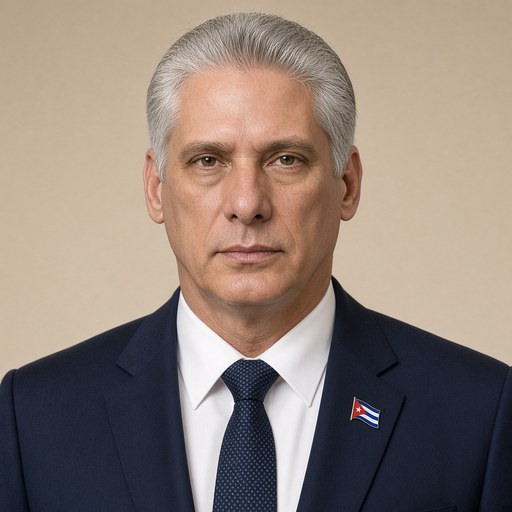
Speech delivered at the closing of the Ninth Ordinary Session of the National Assembly of People's Power in its IX Legislature, at the Palace of Conventions, on July 22, 2022.
 Miguel Díaz-Canel · President of Cuba
- Context
- Díaz-Canel addressed the National Assembly at the Palace of Conventions on July 22, 2022, closing the Ninth Ordinary Session and marking approval of the Family Code ahead of a September referendum.
- Main themes
- Family Code referendum, affection as legal value, constitutional rights in family matters, human rights treaties, public consultation process, socialist state of law and social justice, positive upbringing, gender and disability inclusion, multidisciplinary legal drafting, Cuban legislative process
- Duration
- ~42 min
- Words
- 5,073
- Sentences
- 188
- Readability
- 35
- Grade
- 14.9
- Syntax
- 3.14
- Vocabulary
- 2.30
Translated from Spanish
The broad sphere of national life a sentence belongs to. Every sentence has an Arena, so it is the denominator the other indices are read against.
Other188 sentences in 97 paragraphs
Dear Army General Raúl Castro Ruz, leader of the Cuban Revolution;
My embrace also goes to President Lazo, who I am sure will soon be fully recovered;
Dear Deputies:
The sessions of the current Legislature that we are closing today are of enormous importance. Here we have approved the Family Code, an indispensable norm for Cuban society, which will be taken to a referendum in September for the people, the Sovereign, to express their opinion on it.
That alone makes this moment significant. But I would like to elaborate on the essence, supported by the arguments of the brilliant jurists and specialists from other fields, who are here with us today, and who make up the drafting commission of a legal norm, now endowed with constitutional hierarchy due to the value of the topic for Cuban society.
When on April 10, 2019, we approved the Constitution of the Republic of Cuba, the foundations of our socialist state of law and social justice were consolidated.
Among the subjects most reflected in the constitutional regulation, family law stands out for its vital role in the formation of generations and thus in the transmission of values, customs, traditions, and civic patterns, which has been generating a paradigm shift.
The Family Code is undoubtedly one of the legal norms that has had the most social and political significance in the legal history of the country, because it not only develops constitutional rights in family matters and other related areas, but also responds to the international commitments assumed by Cuba by ratifying human rights treaties such as the Convention on the Elimination of All Forms of Discrimination against Women in 1979; the Convention on the Rights of the Child in 1989; and the Convention on the Rights of Persons with Disabilities in 2006, whose values and principles are enshrined in the Code.
This is a law that has traveled a long road, seeking social and academic consensus. Its construction has involved the coexistence of knowledge contributed from different sciences. Each draft used in this monumental legal work confirms the importance of erecting the legal norms of the country from a scientific, multidisciplinary, and holistic approach, as demanded by modern scientific and Marxist thought today.
To unveil the face of this norm, it has not only been necessary to use the chisel and hammer provided by the Academy, expressed through the specialized consultation developed during the months of September and October of last year. In that face is the popular sap of the nation, as it reflects the feelings of thousands of Cubans who, during the public consultation, expressed their support or simply their diverse opinions about each of the institutions included in its articles.
Cuban society, through its students, workers, farmers, intellectuals, fighters, youth, women, the elderly, and people with disabilities, has shared the most diverse opinions on a law that has captured their attention, as its focus is none other than families.
With that consultation, we have all won. The people, because they have been direct participants in a legal norm that offers its protective mantle to every person, regardless of their age, sex, gender, sexual orientation or gender identity, disability status, or potential vulnerability in any of its manifestations. All through a Code that makes a present-day commitment to settle the debts of the past and educate future generations.
We win as a society, because being the main recipients of legal norms, we become their most faithful architects.
The result of the public consultation is not only an arsenal of knowledge put to use in the drafting of the Family Code, but also of great utility for deriving public policies and for supporting the foundations of other legal norms contained in the legislative schedule approved by this very National Assembly, which are still pending to be concretized in what remains of this Legislature and in the next.
This Code, which will undergo social scrutiny in September through a referendum, something unprecedented in Cuba for this type of regulatory provision, has developed something extraordinarily novel: affection as a legal value. That is why it has been called the Code of Affections, which is not a slogan, but an essence. This norm has an undisputed ethical value, teaches us to think, and gives us the reins to educate future generations.
The positive upbringing that has been so much talked about is nothing but educating from closeness and support for our daughters and sons. It is not about excluding the power of blood, of DNA, but about reconciling it with other ways of building motherhood and fatherhood in which that genetic component may not exist, but where heart and love abound.
Affection is the continuous commitment of this Code for the constitution of legal bonds, essentially familial ones. In this regard, the Law has had to adapt a scenario of rigidity to one of openness to flexibility and interdisciplinarity.
Based on the protection of human dignity, family law today is grounded in a new constitutional and legislative order, which looks at families as a union of people linked by an affective, psychological, and sentimental bond, who commit to a communion of life, so that they support one another.
We can speak of a Code that recognizes rights for all, that makes visible the elderly, but not from weakness, pain, or compassion, but as protagonists of their destiny, transmitters of values, customs, and principles within families; as bearers of new energies and, consequently, protagonists of their family environment. The elderly are not only subjects of rights but also of duties for the education of the younger ones at home. We owe them what we are today.
The Code also opens the doors to the legal protection of people with disabilities and regulates the right to self-determination, to write their own biography based on their life history. It recognizes the right of every person to exercise their legal capacity and to be part, as a protagonist and not a secondary actor, of their socio-family environment; it is a norm that anticipates the need to respond, from the Law, to the aging population, which is very significant in Cuban society. Hence the need to recognize care with affection as a right that every person has in the family environment.
Families are the main refuge to receive not only affection but also care and, in turn, to educate the younger ones in culture, respect, and the reciprocal nature of care.
Like its predecessor from 1975, which at the time constituted a milestone in Cuban legislative and social history, the current Family Code also focuses on children and adolescents. The principle of the best interests of the child, which we have all learned about through various media, is the cornerstone for interpreting and applying the Code.
José Martí said that children are the hope of the world; for them, we build and will continue to build this nation. Each article of this Code is designed with children in mind, their rights, their duties, their education, their family inclusion, the value of their voice, their civic formation. The vision of children as subjects of rights is exalted.
The replacement of parental authority with the new vision of parental responsibility sets aside a patriarchal and stereotypical view that does not align today with family pluralism.
Children and adolescents must be accompanied in their moral and spiritual growth, in the development of their personality by their parents in a harmonious relationship, where mutual respect, loyalty, honesty, and the complicity of affection and love prevail, free from any manifestation of violence in the domestic space, to which the Code is intolerant.
If a norm offers alternatives, opportunities, and options, it is the one we have just approved. The Code has not constructed a family model, nor has it designed an institution from a legal laboratory. It was not made to design a family or to assume a family construction that does not align with the ethical or religious convictions of a person. It does not seek tolerance but respect. That is the key word: respect for the rights of people in terms of the free development of personality and the right to form a family, both enshrined in the 2019 Constitution.
The Code we approved lays the foundations for a more democratic, more supportive family law, but also much more responsible.
It is true that autonomy and decision-making power are given to people to marry or not, to choose their partner, whether of the same or different sex; to determine the economic regime of marriage; to form or not a de facto union, to delegate or not — in exceptional situations and within the limits of the Law — the exercise of parental responsibility in favor of third parties; to mutually agree on the order of surnames of daughters and sons, the number of them, and the moment they wish to have them; to foresee self-protection tools for people in the event of unforeseen disabilities. But in the same measure, the quotas of responsibility are established, so that they are placed in the balance of justice, autonomy, and responsibility. It is not just about giving but about delivering. That is one of the messages that the Code conveys to us.
There are no precedents in our hemispheric geography, both continental and insular, of a code of the same nature that has had the democratic legitimacy that this one possesses. It has been patiently crafted, and the number of versions explains its lengthy journey, but it has been worth it.
Today our socialist society is strengthened; we have a cutting-edge legal norm that will serve as a reference for future reforms in this area both within and outside the borders of our continent, and that also serves as an example for future legal norms that continue the Cuban legislative process.
There is no better occasion than this to express and pay a well-deserved tribute, as alluded to in the explanatory part of the Code — with the strength of justice and virtue — to the thought of our beloved and eternal President of the Federation of Cuban Women, Vilma Espín, tireless fighter for women's rights, social inclusion, and the protection of girls, boys, and adolescents, in her unwavering effort to achieve social justice and human improvement.
Let this Code also serve as a great bedside book that our educators should have on hand, especially the primary school teachers who accompany Cuban children in the first steps of their humanistic formation, and as a reference text for the civic education of the men and women of tomorrow, who will continue this great work that is the Revolution.
Each family is a particular, unique, unrepeatable path, just as each person is unrepeatable. Families are an expression of the most delicate social fabric. We come from them, we are formed in them, and there we receive the highest values and principles with which we educate ourselves. Families are like the Homeland; they provide us with identity, civility, solidarity, respect, and altruism.
The commitment to the approval of the Family Code in the referendum is also a commitment to democracy, to the virtue of being Cuban, to the happiness of every girl, boy, or adolescent, to the autonomy and decision-making power of every elderly person, to the inclusion of every person with disabilities, to the condemnation of domestic abuse, and to respect for family diversities.
It is a commitment to life, to the dignity of Cubans, to the continuity of those who have guided us. It is the realization of the Martian maxim: “With everyone, and for the good of everyone.”
It is a code of love, a code of peace!
For all these reasons, which in the course of its elaboration taught us to look at ourselves and know ourselves better as individuals and as a society, I feel moved and proud to call upon our people to say Yes to the Family Code!
Deputies:
International relations are traversing a dangerous scenario. The cost is already being borne by millions of people. The U.S. offensive aimed at subjugating states and groups of states through the expansion of NATO inevitably leads to a climate of tension and conflict whose consequences are unpredictable.
The world has changed. We are not at the beginning of the 1990s, when the United States believed it enjoyed unquestioned unipolar hegemony, with the capacity to impose its will on any state.
Nor does the criminal practice of subjecting entire populations of sovereign states to economic hardships through coercive measures yield political successes, in order to extract concessions from them.
That is why so many around the world admire the Cuban Revolution, the indomitable resistance of our people against the aggression of U.S. imperialism, and the work of justice and humanism that we defend. Others simply reject the abuse and the immoral policy of the United States against Cuba, even if they may not ideologically identify with the Revolution.
Anyone can see that the U.S. government acts dishonestly when it claims that the economic blockade and the ruthless war against Cuba are due to its "concerns for the well-being of the Cuban people," to its commitment to human rights, or to a desire to promote democracy. They lie! The disastrous historical trajectory of the United States regarding human rights and democracy is well known. As are the abuses that occur daily in that country.
People are increasingly aware of the complicity and direct responsibility of the U.S. government in the most atrocious crimes committed in this hemisphere by repressive forces trained and educated in U.S. military schools and subordinate to the special services, and even to the embassies of that country in various Latin American nations. There are historical records that prove it.
That history makes it abundantly clear that what they seek is to destroy the Cuban revolutionary process and what it represents, issuing the warning that anyone who dares to embark on an alternative path to their manual of instructions for the world runs, like Cuba, the risk of suffering perpetual hostility from the United States of America.
This explains the aggression against Cuba, Venezuela, and Nicaragua, the coup d'état against Bolivia in 2019, and other coups suffered in Latin America and the Caribbean. It is the reason for the pressures and threats exerted on many governments, not only in Latin America and the Caribbean but also elsewhere, to prevent them from meeting the just demands and expectations of their peoples. It is the reason for the exclusions at the failed Hemispheric Summit held in Los Angeles, California, last June.
In that scenario, the selective and exclusionary behavior of the United States backfired. Instead of isolating Cuba and other countries, the Summit ended up showcasing the isolation of U.S. policy towards the hemisphere. The tone of the debates was set by the statements rejecting the exclusions, the demand to end the economic blockade against Cuba, and the questioning of the OAS, particularly its current Secretary General.
A People's Summit also took place in Los Angeles, a true summit, a parallel event of popular representation, with the participation of many progressive forces, as well as social, community, and trade groups. They went there to claim their rights, to defend peace, to demand an end to the injustices of an unjust economic and political order that privileges corporate elites and transnational capital at the expense of the majority and the limitless exploitation of the environment.
Returning to the aggression against our country, the U.S. Department of State has no way or basis to argue the designation of Cuba as a state that sponsors terrorism. There is no politician or official in the U.S. government who can honestly uphold that accusation. No one has been able to present credible evidence to support such slander.
The consequences of such a designation are markedly harmful to a small nation like ours. It greatly hinders international financial and commercial transactions. It obstructs access to financial institutions and the possibilities of payments and credits. It imposes a stigma on our entities and institutions, making it extremely difficult for them to interact, even with foreign entities with which they have maintained productive relationships for years.
What is unacceptable is that the U.S. government unilaterally and without anyone's mandate assumes the prerogative to judge other governments, without feeling obligated to substantiate its accusations. The Department of State and similar lists use this as instruments of political coercion. They opportunistically manipulate sensitive issues such as terrorism, religion, human rights, corruption, and many others to extract concessions from sovereign countries or punish them when they go against their interests.
Since 2019, the measures of reinforcement and maximum pressure applied by the Trump administration had already taken the economic war to a qualitatively more aggressive dimension, with the consequent impact on the lives of all Cubans and against efforts to promote the development of the nation. This aggression is further reinforced by subversion programs that do not cease in their attempts to politically destabilize the country.
The U.S. government dedicates tens of millions of dollars annually from the federal budget, funded by taxpayers, to that purpose.
Supported by a sophisticated technological infrastructure dedicated to disinformation campaigns, slander, discrediting, and informational assassination, they apply against Cuba the formulas of Unconventional Warfare already tested and applied, with severe human and material costs, in other parts of the world.
They succumb to the political influence of the anti-Cuban mafia primarily based in South Florida, which has taken the front line of aggression against Cuba and against the revolutionary and progressive processes in the region, promoting intolerance, threats, extortion, blackmail, and any other violent means to prohibit dissenting thought, to punish anyone in their own community who expresses respect, friendship, fraternal feelings, or even solidarity with their country of origin.
Deceptively, they try to identify that gang of criminals with the universe of people of Cuban origin residing in the United States, a significant part of whom are close to Cuba, are in contact with their relatives and friends, respect the country, and oppose the relentless punishment of a foreign superpower against a small nation. Many of them express their solidarity vocally; others do so more discreetly.
The U.S. government attempted once again to force a popular uprising in Cuba during this month of July, and it failed. Just as it attempted and failed in 2021. It did so openly and launched a broad propaganda campaign, anchored in powerful digital platforms, with the active participation of high-ranking officials. It relied, to achieve this, on its policy of maximum economic pressure, aimed at depressing the standard of living of our population, creating problems in ensuring essential services such as electricity, and hitting consumption levels and access to basic goods, among others. And I do not speak in the past; that perverse policy is alive and active today.
We must get used to the idea that the blockade will last. Imperialism will not easily abandon that ruthless weapon against Cuba. The solution to our economic problems will have to be found through our effort and creativity, under the effects of the blockade and despite them. That is the immediate and long-term challenge. The duty is to denounce and combat the economic war in every corner and at every opportunity that arises.
We do not rule out the eventual possibility of a better understanding with the U.S. government towards a relationship of respect, and it is known that Cuba is willing to move in that direction and to dialogue on any topic, without undermining our sovereignty.
We will continue to promote and facilitate the broadest possible ties with the numerous sectors of that country that are willing to approach Cuba. We include among them Americans or residents in the United States who are of Cuban origin. We are convinced that there are mutual benefits in the exchange between the two nations, despite the great differences.
Cuba's trajectory in developing its foreign relations demonstrates that the promotion of peace, cooperation, and solidarity are defining characteristics of our international projection. We have demonstrated this in our Latin American and Caribbean region and also in other latitudes.
We do not have the power to change imperial logic; but we do not renounce, from our anti-imperialist and socialist logic, the socialist construction, because it is the only path to the greatest possible social justice.
The easiest thing would be to surrender and let all the dreams for which so many generations have fought and resisted be destroyed. The simplest thing would be to sell the country, as so many neoliberal governments in this very region have done.
Our socialist logic is humanistic, contrary to exclusions. We are inspired by the ideal of a better society, where there is economic growth, yes, but with equitable distribution of wealth. We fight for development with social equality.
Comrades:
In these sessions, important changes have been reported to unlock and promote mechanisms that mobilize, as far as possible, productive forces. There is still much to be done, but it is worth insisting on what everyone knows and some try to underestimate: our economy is navigating through an extremely complex scenario, in which it is extremely difficult to achieve the foreign currency revenues that the country needs.
In the midst of a brutal intensification of the blockade, we are impacted, like the rest of the nations, by the international economic crisis resulting from the effects of two years of pandemic and the European war conflict, all factors that have triggered the rise in prices of fuels, food, medicines, and other essential supplies that must be imported.
As has been reported, the Gross Domestic Product at constant prices in 2021 achieved a slight growth of 1.3%, halting the decline experienced in 2019 and 2020; however, activity levels are still lower than those we had reached in the years prior to the pandemic.
So far, no significant recovery is seen in our main productions, nor in tourism. With the low levels of foreign currency we have been able to access, a permanent effort is being made to ensure a level of basic products and services for the population and to prioritize attention to vulnerable individuals and communities.
Under these conditions, an unofficial market for currency exchange has proliferated, and inflation continues to affect the purchasing power of income from work.
No one is going to come to solve our problems. The control we have achieved over COVID-19 is a fundamental step for the recovery of the economy and allows us to advance in the implementation of a set of measures that have been developed taking into account the opinions of the population and the criteria of scientists and experts in these matters.
In the last year, we have traveled throughout the country to closely address the problems and have held meetings with the most diverse sectors, during which, more than speaking, we listened. This is complemented by the review of hundreds of opinions and proposals from our population.
We are very aware that the economy is the main challenge we face, and we must tackle it with bold measures, adjusted to our economic and social model, without allowing ourselves to be paralyzed by the risks. It is urgent to confront them, revolutionizing the Revolution.
The measures announced here by the Deputy Prime Minister and Minister of Economy, which are part of those advances and those risks, are aimed at stimulating the internal market, based on the capture of foreign currency, increasing revenues from exports, and reactivating national production.
To that end, it has been decided to restore the currency exchange market through the buying and selling of currencies, including the dollar, with an economically grounded exchange rate; to expand the secondary scheme for the allocation of foreign currency for state and non-state economic actors; to approve the participation of micro, small, and medium private enterprises in mixed businesses with state entities and foreign investment, and to relax imports for non-commercial purposes.
All of this should allow us to gradually increase the supply of goods and services for economic actors and for the internal market in national currency; to organize the currency exchange market; to have financial resources, which are currently insufficient, for the care of individuals and families in vulnerable situations; to sustain and expand social programs, and to honor debts and withheld payments.
I take this opportunity to reiterate our willingness to meet our commitments to creditors. We sincerely thank those who have accompanied us in our resistance.
It is clear that we will not be able to advance solely through the application of measures in the monetary and financial sphere. For these measures to have a favorable impact on the economy, it is crucial to increase national production and foreign currency revenues from exports; to reduce the budget deficit, improve its structure, and achieve greater efficiency and control of public spending, the establishment of appropriate pricing systems, and effective control, with popular participation, of cost sheets, which must be addressed from the management of municipal governments.
In all of this, we will make progress; we are not with our arms crossed. A program is in place to evaluate and implement the measures that will allow us to advance, preserving the greatest degree of equity and social justice possible.
Work, mobilize, stimulate, and demand that the talent and effort of all transform into results! Insisting on the endless task of taking a piece out of the problems, every day, is the commitment! We see it and feel it constantly: in the epic struggle of the workers in the power plants and in the heroism of our doctors and scientists against COVID-19 and dengue.
Regarding the energy contingency that has brought the efforts of the workers in the sector to the forefront, it is my duty to clarify that there are still difficult days ahead. What cannot be lacking, along with recognition of the effort, is timely and useful information for the population. The truth, the sincere explanation, and the planning that can only be guaranteed with foresight are decisive aspects, as will always be the responsible and solidary savings of our population.
I can guarantee that work is being done tirelessly to overcome every difficulty, whether it is the result of the blockade or our own limitations and deficiencies.
Today we are simultaneously battling to maintain control over COVID-19 and face another dengue epidemic; to recover the economic and social life of the country; to break the economic and financial siege that prevents the supply of fuel, productive inputs, supplies, and financing in foreign currency; to stabilize the national electro-energy system; to increase food production; to recover the sugar harvest; to restore the homes and institutions affected by the explosion of the Saratoga in Havana and by the intense rains in several provinces; to support the transformation of neighborhoods with special emphasis on families in vulnerable situations, and to guarantee a summer with recreational options accessible to the majority of the population throughout the country.
Of course, this list of tasks that immediately defines priorities is not the only thing occupying the Party and the Government. The country is systematically working on short, medium, and long-term programs on central issues for the future, such as the digital transformation of society, food sovereignty, the advancement of women, combating racial discrimination, policies for youth, mechanisms of democracy and popular participation, the environment, animal welfare, social communication, cultural decolonization, and others, including confronting the permanent aggression of the Government of the United States.
What I want to signify is that this country is not stopped. They want to stop this country; but we are not stopped and we will not stop. Our alternative is clear and it will never be surrender. We neither surrender nor will we be defeated!
These statements are confirmed by the sessions of this Assembly that we are closing today, not only for what we discussed and approved this time, but for the greater connection we feel with the problems in the municipalities, in the neighborhoods, in the communities, which have a protagonism, still insufficient but already visible, in what is said and in what is done.
The neighborhood is the Homeland in its smallest dimension. It is the hard core of our resistance. There, the daily struggle against the blockade has been fought, through support and solidarity among neighbors. But there, the problems derived from that brutal siege of 63 years and from our weaknesses in management to navigate the siege have also accumulated.
What the commissions discuss and what is finally approved will be more effective the more that neighborhood-municipality-Assembly link is systematized. And the Assembly will resemble Cuban society more and more as it connects more deeply with its bases. This is the platform of the people aware of their power, who demand to change everything that must be changed. And we will do it! We are an archipelago surrounded by water, but that does not mean we can live free from the harsh impacts of the world, profoundly unequal and unjust.
The appeal to science and innovation as instruments of collective leadership provides us with valuable keys, but it is not enough to make use of them; they must be adjusted to the real conditions in which our will to advance must unfold.
Comrades:
In a few days we will be celebrating the 69th anniversary of the assault on the Moncada barracks in Santiago de Cuba and the Carlos Manuel de Céspedes barracks in Bayamo. The date, always inspiring, will be another opportunity to reflect and look, from the present and from history, at the horizon we owe ourselves as a reward for so much effort and heroism, for so much nobility and creativity.
In a recent tour of Mayabeque, I spoke of this tremendous people, of this beautiful people, who when they want, they really want, who are distinguished by their feelings and their stoicism and who will never again be slaves, and for that reason defend the Revolution with all their energies. I then specified that, as servants of that people and as Fidel, Raúl, and history have taught us from 1868 to the present day, our duty is to make the Revolution advance and to prevent the Revolution from making mistakes.
That is our struggle, in which we hope all of you will accompany us.
For Cuba, for its history and its present, we continue, inspired and determined to fight!
Until Victory, Always!
Homeland or Death!
We will overcome!
The original Spanish. The tags above are read on the English translation's sentences.
Querido General de Ejército Raúl Castro Ruz, líder de la Revolución Cubana;
Mi abrazo también para el Presidente Lazo, que estoy seguro de que pronto estará ya recuperado;
Queridas Diputadas, queridos diputados:
Las sesiones de la actual Legislatura que hoy clausuramos tienen enorme importancia. Aquí hemos aprobado el Código de las Familias, una norma indispensable para la sociedad cubana, que en septiembre será llevada a referendo para que se pronuncie por ella el pueblo, el Soberano.
Ese solo hecho hace ya trascendente el momento. Pero me gustaría extenderme sobre las esencias, apoyado en los argumentos de los brillantes juristas y especialistas de otras materias, aquí con nosotros hoy, que integran la comisión redactora de una norma jurídica, ahora dotada de jerarquía constitucional por el valor del tema para la sociedad cubana.
Cuando el 10 de abril de 2019 aprobamos la Constitución de la República de Cuba, se consolidaban las bases de nuestro Estado socialista de derecho y justicia social.
Entre las materias más reflejadas en la regulación constitucional, destaca el Derecho de familia, por su papel vital en la formación de generaciones y con ello en la transmisión de valores, costumbres, tradiciones y patrones cívicos, lo cual ha ido generando un cambio de paradigma.
El Código de las Familias es, sin duda, una de las normas legales que más trascendencia social y política han tenido en la historia jurídica del país, porque no solo desarrolla los derechos constitucionales en materia familiar y otros afines, sino que también responde a los compromisos internacionales asumidos por Cuba al ratificar tratados de derechos humanos como la Convención sobre la Eliminación de Todas las Formas de Discriminación contra la Mujer, en 1979; la Convención sobre los Derechos del Niño, en 1989; y la Convención sobre los Derechos de las Personas con Discapacidad, en 2006, cuyos valores y principios están recogidos en el Código.
Esta es una ley que ha recorrido un largo camino, buscando consensos sociales y académicos. Su construcción ha supuesto la coexistencia de saberes aportados desde distintas ciencias. Cada boceto empleado en esta monumental obra jurídica, confirma la importancia de erigir las normas legales del país desde un enfoque científico, multidisciplinario y holístico, como lo exige hoy el pensamiento científico moderno y marxista.
Para develar el rostro de esta norma, no solo ha sido necesario el cincel y el martillo que aporta la Academia, expresado a través de la consulta especializada, desarrollada durante los meses de septiembre y octubre del pasado año. En ese rostro está la savia popular de la nación, en tanto se recoge el sentir de miles de cubanas y cubanos que en ocasión de la consulta popular expresaron su apoyo o, sencillamente, su diverso parecer acerca de cada una de las instituciones que recoge su articulado.
La sociedad cubana, a través de sus estudiantes, obreros, campesinos, intelectuales, combatientes, jóvenes, mujeres, adultos mayores, personas en situación de discapacidad, ha vertido las más disímiles opiniones sobre una ley que ha concitado su atención, en tanto su punto de mira no es otro que las familias.
Con esa consulta hemos ganado todos. El pueblo, porque ha sido partícipe directo de una norma legal que ofrece su manto protector a toda persona, cualquiera que sea su edad, su sexo, su género, su orientación sexual o de género, su situación de discapacidad, o su posible situación de vulnerabilidad en cualquiera de sus manifestaciones. Todo, a través de un Código que hace una apuesta en tiempo presente para saldar las deudas del pasado y educar a las generaciones del futuro.
Ganamos como sociedad, porque siendo los principales destinatarios de las normas jurídicas nos convertimos en sus más fieles artífices.
El resultado de la consulta popular no es solo un arsenal de conocimientos puesto en función de la redacción del Código de las Familias, sino de gran utilidad para derivar políticas públicas y además para sustentar las bases de otras normas jurídicas contenidas en el cronograma legislativo aprobado por esta propia Asamblea Nacional y pendiente aún de concretar en lo que queda de esta Legislatura y en la próxima.
Este Código, que en septiembre pasará el escrutinio social a través de un referendo, algo hasta ahora inédito en Cuba para este tipo de disposición normativa, ha desarrollado algo extraordinariamente novedoso: el afecto como valor jurídico. Por eso se le ha llamado el Código de los afectos, que no es un lema, es una esencia. Esta norma tiene un indiscutido valor ético, nos enseña a pensar y nos da las riendas para educar a las futuras generaciones.
La crianza positiva de la que tanto se ha hablado, no es sino educar desde la cercanía y el acompañamiento a nuestras hijas e hijos. No se trata de excluir el poder de la sangre, del ADN, sino de compatibilizarlo con otras maneras de construir maternidades y paternidades en las que en ocasiones no existe ese componente genético, pero sí sobra corazón y amor.
El afecto es la apuesta continua de este Código para la constitución de vínculos jurídicos, esencialmente los familiares. En función de ello, el Derecho ha tenido que amoldar un escenario de rigidez hacia una apertura a la flexibilidad y la interdisciplinariedad.
Sobre la base de la protección de la dignidad humana, el Derecho de las familias hoy se sustenta en un nuevo orden constitucional y legislativo, que vuelca la mirada en las familias como unión de personas vinculadas por un lazo afectivo, psicológico, sentimental, que se obligan a una comunión de vida, de modo que se apoyen los unos a los otros.
Podemos hablar de un Código que reconoce derechos a todas y todos, que visibiliza a la persona adulta mayor, pero no desde la endeblez, el dolor, la compasión, sino como un protagonista de su destino, transmisor hacia el interior de las familias de valores, costumbres y principios; como portador de nuevas energías y, en consecuencia, protagonista de su entorno familiar. Los adultos mayores no son solo sujetos de derechos, sino también de deberes para la formación de los más jóvenes en el hogar. A ellos debemos lo que somos hoy.
El Código también abre las puertas de la protección jurídica de las personas en situación de discapacidad y regula el derecho a su autodeterminación, a escribir su propia biografía a partir de su historia vital. Reconoce el derecho de toda persona a ejercer su capacidad jurídica y a formar parte, como actor protagónico y no secundario, de su entorno socio-familiar; se trata de una norma que avizora la necesidad de dar respuesta, desde el Derecho, al envejecimiento poblacional, muy significativo en la sociedad cubana. De ahí la necesidad de reconocer el cuidado con afecto como un derecho que tiene toda persona en el medio familiar.
Las familias son el principal recaudo para recibir no solo afecto, sino también cuidados y a su vez educar a los más jóvenes en la cultura, el respeto y la naturaleza recíproca del cuidado.
Como su antecesor de 1975, que en su momento constituyó un hito en la historia legislativa y social cubana, el presente Código de las Familias centra también la mirada en los niños, niñas y adolescentes. El principio del interés superior, del que todos hemos aprendido a través de los distintos medios de comunicación, es la piedra angular para interpretar y aplicar el Código.
Decía José Martí que los niños son la esperanza del mundo, para ellos construimos y seguiremos construyendo esta nación. Cada artículo de este Código está pensando en los niños, en sus derechos, sus deberes, su educación, su inclusión familiar, el valor de su palabra, su formación cívica. Se enaltece la visión de los niños como sujetos de derechos.
La sustitución de la patria potestad por la nueva visión de la responsabilidad parental deja a un lado una mirada patriarcal y estereotipada que no se aviene hoy con el pluralismo familiar.
Los niños, niñas y adolescentes deben ser acompañados en su crecimiento moral, espiritual, en el desarrollo de su personalidad por sus padres y madres en una relación armónica, en la que prevalezca el respeto recíproco, la lealtad, la honestidad y la complicidad del afecto y del amor, ajenos a cualquier manifestación de violencia en el espacio doméstico, ante lo cual el Código es intolerante.
Si una norma ofrece alternativas, oportunidades, opciones, es la que acabamos de aprobar. El Código no ha construido un modelo familiar, no ha diseñado desde un laboratorio jurídico una institución. No se hizo para diseñar una familia o para asumir una construcción familiar que no se avenga a las convicciones éticas o religiosas de una persona. Tampoco busca la tolerancia, sino el respeto. Esa es la palabra clave: respeto a los derechos de las personas en razón del libre desarrollo de la personalidad y el derecho a constituir una familia, consagrados ambos en la Constitución de 2019.
El Código que aprobamos sienta las bases de un Derecho familiar más democrático, más solidario, pero también mucho más responsable.
Es cierto que se da autonomía y poder de decisión a las personas para casarse o no, para escoger su pareja, sea del mismo o diferente sexo; para determinar el régimen económico del matrimonio; para formar o no una unión de hecho, delegar o no —ante situaciones excepcionales y en los límites de la Ley— el ejercicio de la responsabilidad parental a favor de terceros; para determinar de común acuerdo el orden de los apellidos de hijas e hijos, el número de estos y el momento en que se desea tenerlos; para prever herramientas de autoprotección de las personas ante situaciones de discapacidad sobrevinientes. Pero en esa misma medida se establecen las cuotas de responsabilidad, de manera que se ubican en el equilibrio de la balanza que significa la justicia, la autonomía y la responsabilidad. No se trata solo de dar, sino de entregar. Ese es uno de los mensajes que nos transmite el Código.
No hay precedentes en nuestra geografía hemisférica, tanto continental como insular, de un código de igual naturaleza que haya tenido la legitimidad democrática que este posee. Se ha hecho pacientemente y el número de versiones explica su dilatado trayecto, pero ha valido la pena.
Hoy nuestra sociedad socialista se fortalece, contamos con una norma jurídica de vanguardia que será referente para futuras reformas en este ámbito dentro y fuera de las fronteras de nuestro continente, y que a la vez sirve de ejemplo para las futuras normas legales que dan continuidad al proceso legislativo cubano.
No hay mejor ocasión que esta para expresar y rendir un merecido homenaje, tal y como se alude en la parte expositiva del Código —con la fuerza de la justeza y la virtud— al pensamiento de nuestra querida y eterna Presidenta de la Federación de Mujeres Cubanas, Vilma Espín, incansable luchadora por los derechos de la mujer, la inclusión social y la protección de niñas, niños y adolescentes, en su empeño denodado por lograr justicia social y mejoramiento humano (Aplausos).
Sirva este Código, además, como un gran libro de cabecera que deberían tener a mano nuestros educadores, esencialmente los maestros primarios que acompañan a la niñez cubana en los primeros pasos de su formación humanística, y como texto de referencia para la formación cívica de mujeres y hombres del mañana, quienes darán continuidad a esta gran obra que es la Revolución.
Cada familia es un camino particular, único, irrepetible, como irrepetible es cada persona. Las familias son expresión del más delicado tejido social. De ellas venimos, en ellas nos formamos, allí recibimos los más altos valores y principios con los cuales nos educamos. Las familias son como la Patria, nos dotan de identidad, de civismo, de solidaridad, de respeto, de altruismo.
La apuesta por la aprobación del Código de las Familias en el referendo lo es también por la democracia, por la virtud de ser cubanos, por la felicidad de cada niña, niño o adolescente, por la autonomía y el poder de decisión de cada adulto mayor, por la inclusión de cada persona con discapacidad, por la condena al maltrato familiar, por el respeto a las diversidades familiares.
Es una apuesta por la vida, por la dignidad de las cubanas y cubanos, por la continuidad de quienes nos han guiado. Es la concreción de la máxima martiana: “Con todos, y para el bien de todos”.
¡Es un código de amor, un código de paz! (Aplausos.)
Por todas estas razones, que en el camino de su elaboración nos enseñaron a mirarnos y conocernos mejor a nosotros mismos, como individuos y como sociedad, me siento conmovido y orgulloso al convocar a nuestro pueblo a decir ¡Sí por el Código de las familias! (Aplausos).
Diputadas y diputados:
Las relaciones internacionales transitan por un escenario peligroso. El costo lo sufren ya millones de personas. La ofensiva estadounidense dirigida a subyugar Estados y agrupaciones de Estados por vía de la expansión de la OTAN conduce inevitablemente a un clima de tensión y conflicto cuyas consecuencias son impredecibles.
Es que el mundo ha cambiado. No estamos a inicios de la década del 90, cuando los Estados Unidos creyeron disfrutar de una hegemonía unipolar incuestionada, con la capacidad de imponer su voluntad a cualquier Estado.
Tampoco proporciona éxitos políticos la práctica criminal de someter a penurias económicas por vía de medidas coercitivas a las poblaciones enteras de Estados soberanos, con el fin de arrancarles concesiones.
Por eso tantos en el mundo admiran a la Revolución Cubana, la indomable resistencia de nuestro pueblo frente a la agresión del imperialismo estadounidense y la obra de justicia y humanismo que defendemos. Otros, sencillamente rechazan el abuso y la política inmoral de los Estados Unidos contra Cuba, aun cuando ideológicamente puedan no identificarse con la Revolución.
Cualquiera advierte que el Gobierno estadounidense actúa con deshonestidad cuando alega que el bloqueo económico y la guerra despiadada contra Cuba se deben a sus “preocupaciones por el bienestar del pueblo cubano”, a desvelos por el respeto a los derechos humanos, o a un afán por fomentar la democracia. ¡Mienten! La nefasta trayectoria histórica de los Estados Unidos en materia de derechos humanos y democracia se conoce. Como se conocen los abusos que ocurren a diario en ese país.
Los pueblos tienen cada vez más clara conciencia sobre la complicidad y la responsabilidad directa del Gobierno de los Estados Unidos en los crímenes más atroces que se han cometido en este hemisferio por parte de fuerzas represivas entrenadas y educadas en escuelas militares estadounidenses y subordinadas a los servicios especiales, e incluso, a las embajadas de ese país en varias naciones de Latinoamérica. Existen registros históricos que lo demuestran.
Ese historial deja más que claro que lo que persiguen es destruir el proceso revolucionario cubano y lo que significa, plantando la advertencia de que todo aquel que se atreva a emprender una vía alternativa a su manual de instrucciones para el mundo, corre, como Cuba, el riesgo de sufrir la perenne hostilidad por parte de los Estados Unidos de América.
Eso explica la agresividad contra Cuba, Venezuela y Nicaragua, el golpe de Estado contra Bolivia en 2019 y otros golpes sufridos en América Latina y el Caribe. Es el motivo de las presiones y amenazas ejercidas sobre muchos gobiernos, no solo de Latinoamérica y el Caribe, sino también en otras partes, para evitar que cumplan con los justos reclamos y expectativas de sus pueblos. Es la razón de las exclusiones en la fracasada Cumbre hemisférica, celebrada en Los Ángeles, California, el pasado mes de junio.
En aquel escenario, la conducta selectiva y excluyente de los Estados Unidos se convirtió en un bumerán. Lejos de aislar a Cuba y otros países, la Cumbre terminó mostrando el aislamiento de la política estadounidense hacia el hemisferio. La pauta de los debates la marcaron los pronunciamientos de rechazo a las exclusiones, el reclamo de que se ponga fin al bloqueo económico contra Cuba y los cuestionamientos a la OEA, en particular a su actual Secretario General.
Sesionó también en Los Ángeles una Cumbre de los Pueblos, ¡una verdadera cumbre!, evento paralelo de representación popular, con la participación de muchas fuerzas progresistas, así como de grupos sociales, comunitarios y gremiales. Fueron allí a reclamar sus derechos, a defender la paz, a demandar que se ponga fin a las injusticias de un orden económico y político injusto que privilegia a las élites corporativas y al gran capital transnacional a costa de las mayorías y de la explotación sin límites del medio ambiente.
Volviendo a la agresividad contra nuestro país, el Departamento de Estado de los Estados Unidos no tiene manera ni fundamentos para argumentar la designación de Cuba como Estado que patrocina el terrorismo. No hay político o funcionario del Gobierno estadounidense que pueda sostener honestamente esa acusación. Nadie ha podido presentar una evidencia creíble que ampare tal calumnia.
Las consecuencias de tal designación son marcadamente nocivas para una pequeña nación como la nuestra. Perjudica enormemente las transacciones financieras y comerciales internacionales. Entorpece el acceso a instituciones financieras y las posibilidades de pagos y créditos. Impone un estigma sobre nuestras entidades e instituciones, a las que les resulta en extremo difícil interactuar, incluso, con entidades extranjeras con las que durante años han sostenido relaciones productivas.
Lo inaceptable es que el Gobierno estadounidense se arroga, unilateralmente y sin mandato de nadie, la prerrogativa de juzgar a otros gobiernos, sin sentirse en la obligación de fundamentar sus acusaciones. Utiliza esta lista el Departamento de Estado y otras similares como instrumentos de coerción política. Manipula con oportunismo temas sensibles como el terrorismo, la religión, los derechos humanos, la corrupción y muchos otros para arrancar concesiones a países soberanos o castigarlos cuando van en contra de sus intereses.
Desde 2019 las medidas de reforzamiento y máxima presión aplicadas por el gobierno de Donald Trump ya habían llevado la guerra económica a una dimensión cualitativamente más agresiva, con el consecuente impacto sobre la vida de todos los cubanos y contra los esfuerzos por impulsar el desarrollo de la nación. Esa agresividad se refuerza además con los programas de subversión, que no cesan en el intento de desestabilizar políticamente al país.
El Gobierno estadounidense dedica anualmente a ese propósito decenas de millones de dólares del presupuesto federal que sufragan los contribuyentes.
Apoyados en una infraestructura tecnológica sofisticada y dedicada a las campañas de desinformación, calumnias, descrédito y el sicariato informativo, aplican contra Cuba las fórmulas de la Guerra No Convencional ya ensayadas y aplicadas, con graves costos humanos y materiales, en otras partes del mundo.
Sucumben ante la influencia política de la mafia anticubana asentada fundamentalmente en el sur de la Florida y que se ha instalado en la primera línea de agresión contra Cuba y contra los procesos revolucionarios y progresistas de la región, promoviendo para ello la intolerancia, la amenaza, la extorsión, el chantaje y cualquier otra forma violenta de prohibir el pensamiento diferente, de castigar a quien en su propia comunidad exprese respeto, amistad, sentimientos fraternales o incluso solidaridad con su país de origen.
De forma engañosa tratan de identificar a ese conjunto gansteril con el universo de las personas de origen cubano que residen en los Estados Unidos, una parte importante del cual se acerca a Cuba, está en contacto con sus familiares y amigos, respeta al país y se opone al incesante castigo de una superpotencia extranjera contra una nación pequeña. Muchos de ellos divulgan su vocación solidaria; otros lo hacen de forma más discreta.
El Gobierno de los Estados Unidos intentó nuevamente forzar una sublevación popular en Cuba durante este mes de julio, y fracasó. Como lo intentó y fracasó en 2021. Lo hizo abiertamente y desplegó una amplia campaña de propaganda, anclada en poderosas plataformas digitales, con la activa participación de altos funcionarios. Confió, para lograrlo, en su política de máxima presión económica, dirigida a deprimir el nivel de vida de nuestra población, generarnos problemas en el aseguramiento de servicios esenciales como el eléctrico y golpear el nivel de consumo y el acceso a artículos básicos, entre otros. Y no hablo en pasado, esa perversa política está viva y actuante hoy.
Debemos acostumbrarnos a la idea de que el bloqueo va a durar. El imperialismo no va a abandonar con facilidad esa arma despiadada contra Cuba. La solución a los problemas económicos tendremos que encontrarla con nuestro esfuerzo y creatividad, bajo los efectos del bloqueo y a pesar de ellos. Ese es el reto inmediato y de largo plazo. El deber es denunciar y combatir la guerra económica en todos los rincones y en cada oportunidad que se presente.
No descartamos la posibilidad eventual de un mejor entendimiento con el Gobierno de los Estados Unidos hacia una relación de respeto, y se sabe que Cuba está dispuesta a avanzar en esa dirección y a dialogar sobre cualquier tema, sin menoscabo de nuestra soberanía.
Seguiremos promoviendo y facilitando los lazos más amplios posibles con los numerosos sectores de ese país que tienen la disposición de acercarse a Cuba. Incluimos entre ellos a los estadounidenses o residentes en los Estados Unidos que son de origen cubano. Estamos convencidos de que hay beneficios mutuos en el intercambio entre las dos naciones, a pesar de las grandes diferencias.
La trayectoria de Cuba en el desarrollo de sus relaciones exteriores demuestra que el fomento de la paz, la cooperación y la solidaridad son características definitorias de nuestra proyección internacional. Lo hemos demostrado en nuestra región latinoamericana y caribeña y también en otras latitudes.
No tenemos el poder de cambiar la lógica imperial; pero no renunciamos, desde nuestra lógica antimperialista y socialista, a la construcción socialista, porque es el único camino hacia la mayor justicia social posible.
Lo más fácil sería entregarnos y dejar que se destruyan todos los sueños por los que tantas generaciones han luchado y resistido. Lo más sencillo sería vender el país, como lo hicieron tantos gobiernos neoliberales de esta propia región.
Nuestra lógica socialista es humanista, contraria a las exclusiones. Nos inspira el ideal de una sociedad mejor, donde haya crecimiento económico sí, pero con distribución equitativa de la riqueza. Luchamos por un desarrollo con igualdad social.
Compañeras y compañeros:
En estas sesiones se han informado cambios importantes para destrabar e impulsar resortes que movilicen, hasta donde nos sea posible, las fuerzas productivas. Aún falta mucho por hacer, pero no sobra insistir en lo que todos saben y algunos pretenden subestimar: nuestra economía transita por un escenario sumamente complejo, en el que resulta en extremo difícil lograr los ingresos en divisas que precisa el país.
En medio de un brutal recrudecimiento del bloqueo, nos impacta, como al resto de las naciones, la crisis económica internacional derivada de los efectos de dos años de pandemia y del conflicto bélico europeo, factores todos que han desencadenado el encarecimiento de los precios de los combustibles, de los alimentos, de los medicamentos y de otros insumos imprescindibles que deben ser importados.
Como se ha informado, el Producto Interno Bruto a precios constantes en el año 2021 alcanzó un ligero crecimiento del 1,3 %, deteniéndose la caída experimentada en los años 2019 y 2020; no obstante, los niveles de actividad son aún inferiores a los que habíamos alcanzado en los años previos a la pandemia.
No se aprecia hasta el momento una recuperación significativa en nuestras principales producciones, ni en el turismo. Con los bajos niveles de divisas de los que hemos podido disponer se realiza un permanente esfuerzo para asegurar un nivel de productos y servicios básicos a la población y atender de manera priorizada a las personas y comunidades en situación de vulnerabilidad.
En esas condiciones, ha proliferado un mercado no oficial de compraventa de divisas y la inflación sigue afectando la capacidad de compra de los ingresos provenientes del trabajo.
Nadie va a venir a resolver nuestros problemas. El control que hemos alcanzado de la COVID-19 es un paso fundamental para la recuperación de la economía y nos permite avanzar en la implementación de un conjunto de medidas, que se han elaborado tomando en cuenta los estados de opinión de la población y los criterios de científicos y expertos en estos temas.
En el último año, hemos recorrido todo el país para tocar de cerca los problemas y hemos sostenido encuentros con los más diversos sectores, durante los cuales, más que hablar, escuchamos. A eso se suma la revisión de cientos de opiniones y propuestas de nuestra población.
Estamos muy conscientes de que la economía es el principal reto que enfrentamos y lo tenemos que hacer con medidas audaces, ajustadas a nuestro modelo económico y social, sin dejarnos paralizar por los riesgos. Urge enfrentarlos, revolucionando la Revolución.
Las medidas anunciadas aquí por el Viceprimer Ministro y Ministro de Economía, que forman parte de esos avances y esos riesgos, están orientadas a dinamizar el mercado interno, a partir de la captación de divisas, el incremento de los ingresos por exportaciones y la reactivación de la producción nacional.
Con ese fin se ha decidido restituir el mercado cambiario a través de la compra-venta de divisas, incluyendo el dólar, con un tipo de cambio económicamente fundamentado; ampliar el esquema secundario de asignación de divisas para los actores económicos estatales y no estatales; aprobar la participación de micro, pequeñas y medianas empresas privadas en negocios mixtos con entidades estatales e inversión extranjera, y flexibilizar las importaciones con carácter no comercial.
Todo ello debe permitirnos incrementar gradualmente los aprovisionamientos de bienes y servicios para los actores económicos y para el mercado interno en moneda nacional; ordenar el mercado cambiario; disponer de recursos financieros, hoy insuficientes, para la atención a personas y familias en situación de vulnerabilidad; sostener y ampliar los programas sociales, y honrar deudas y pagos retenidos.
Aprovecho para reiterar la voluntad de cumplir nuestros compromisos con los acreedores. Agradecemos sinceramente a quienes nos han acompañado en nuestra resistencia.
Está claro que no podremos avanzar solo con la aplicación de medidas en el ámbito monetario y financiero. Para que estas medidas tengan un impacto favorable en la economía es decisivo incrementar las producciones nacionales y los ingresos en divisas por exportaciones; reducir el déficit presupuestario, mejorar su estructura y alcanzar una mayor eficiencia y control del gasto público, el establecimiento de los sistemas de precios adecuados, el control efectivo, con participación popular, de las fichas de costo, lo cual tiene que ser abordado desde la gestión de los gobiernos municipales.
En todo esto avanzaremos, no estamos con los brazos cruzados. Se dispone de un programa para ir evaluando e implementando las medidas que nos permitirán avanzar, preservando el mayor grado de equidad y de justicia social posible.
¡Trabajar, movilizar, estimular y exigir que el talento y el esfuerzo de todos se transformen en resultados! ¡Insistir en la interminable tarea de arrancarles un pedazo a los problemas, cada día, es el compromiso! Lo vemos y lo sentimos constantemente: en la épica pelea de los trabajadores de las plantas eléctricas y en el heroísmo de nuestros médicos y nuestros científicos contra la COVID-19 y el dengue.
A propósito de la contingencia energética que ha elevado a primeros planos el esfuerzo de los trabajadores del sector, es mi deber aclarar que todavía quedan días difíciles por delante. Lo que no puede faltar, junto con el reconocimiento al esfuerzo, es la información oportuna y útil a la población. La verdad, la explicación sincera y la planificación que solo se puede garantizar con previsión, son aspectos decisivos, como lo será siempre el ahorro solidario y responsable por parte de nuestra población.
Les puedo garantizar que se está trabajando sin descanso por remontar cada dificultad, sea fruto del bloqueo o de nuestras propias limitaciones y deficiencias.
Hoy batallamos simultáneamente por mantener control sobre la COVID-19 y enfrentar otra epidemia de dengue; por recuperar la vida económica y social del país; romper el cerco económico y financiero que impide suministros de combustible, insumos productivos, abastecimientos, financiamientos en divisas; estabilizar el sistema electroenergético nacional; elevar la producción de alimentos; recuperar la zafra; restaurar las viviendas e instituciones afectadas por la explosión del Saratoga en La Habana y por las intensas lluvias en varias provincias; apoyar la transformación de los barrios con especial énfasis en las familias en situación de vulnerabilidad, y garantizar un verano con opciones recreativas al alcance de la mayoría de la población en todo el país.
Por supuesto que esa lista de tareas que en lo inmediato define las prioridades no es lo único que ocupa al Partido y al Gobierno. El país trabaja con sistematicidad en programas a corto, mediano y largo plazo sobre asuntos centrales para el futuro, como la transformación digital de la sociedad, la soberanía alimentaria, el adelanto de la mujer, contra la discriminación racial, las políticas para la juventud, los mecanismos de democracia y participación popular, el medio ambiente, el bienestar animal, la comunicación social, la descolonización cultural y otros, incluyendo el enfrentamiento a la agresión permanente del Gobierno de los Estados Unidos.
Lo que quiero significar es que este país no está detenido. A este país lo quieren detener; pero no estamos detenidos ni nos vamos a detener (Aplausos). Nuestra alternativa está clara y nunca será la rendición. ¡Ni nos rendimos, ni nos dejaremos vencer! (Aplausos.)
Estas afirmaciones las confirman las sesiones de esta Asamblea que hoy clausuramos, no solo por lo que discutimos y aprobamos esta vez, sino por la mayor conexión que sentimos con los problemas en los municipios, en los barrios, en las comunidades, que tienen un protagonismo, todavía insuficiente pero ya visible, en lo que se dice y en lo que se hace.
El barrio es la Patria en su dimensión más pequeña. Es el núcleo duro de nuestra resistencia. Ahí se ha librado la pelea cotidiana contra el bloqueo, a golpe de apoyo y solidaridad entre vecinos. Pero ahí también se han acumulado los problemas derivados de ese cerco brutal de 63 años y de nuestras debilidades en la administración para sortear el cerco.
Lo que discuten las comisiones y lo que finalmente se aprueba será más efectivo mientras más se sistematice ese vínculo barrio-municipio-Asamblea. Y la Asamblea se parecerá cada vez más a la sociedad cubana en la medida en que conecte más profundamente con sus bases. Esta es la tribuna del pueblo consciente de su poder, que exige cambiar todo lo que deba ser cambiado. ¡Y lo haremos! Somos un archipiélago rodeado de agua, pero eso no significa que podemos vivir libres de los duros impactos del mundo, profundamente desigual e injusto.
La apelación a la ciencia y la innovación como instrumentos de la dirección colectiva nos aporta claves valiosas, pero no basta con hacer uso de ellas, hay que ajustarlas a las reales condiciones en las que tiene que desenvolverse nuestra voluntad de avanzar.
Compañeras y compañeros:
En pocos días estaremos celebrando el aniversario 69 del asalto a los cuarteles Moncada, de Santiago de Cuba, y Carlos Manuel de Céspedes, de Bayamo. La fecha, siempre inspiradora, será otra oportunidad para reflexionar y asomarnos, desde el presente y desde la historia, al horizonte que nos debemos como premio por tanto esfuerzo y heroísmo, por tanta nobleza y creatividad.
En un reciente recorrido por Mayabeque hablé de este pueblo tremendo, de este pueblo lindo, que cuando quiere, quiere de verdad, que se distingue por sus sentimientos y su estoicismo y que no volverá nunca más a ser esclavo, y por eso defiende la Revolución con todas sus energías. Precisé entonces que, como servidores de ese pueblo y como nos enseñaron Fidel, Raúl y la historia desde 1868 hasta nuestros días, nuestro deber es hacer que la Revolución avance y evitar que la Revolución se equivoque.
Esa es nuestra pelea, en la que esperamos que todos ustedes nos acompañen.
¡Por Cuba, por su historia y su presente, seguimos, inspirados y decididos a pelear!
¡Hasta la Victoria, Siempre!
¡Patria o Muerte!
¡Venceremos!
(Ovación.)