




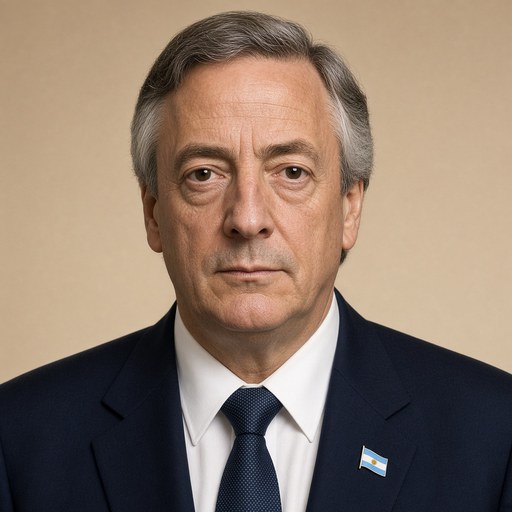
Néstor Kirchner at the opening of the congressional sessions, 2007
 Néstor Kirchner · President of Argentina
- Context
- Kirchner addressed the Argentine Congress on March 1, 2007, delivering the annual state of the nation address at the opening of legislative sessions.
- Main themes
- State of the nation address, economic growth and transformation, social inclusion and equity, debt reduction and fiscal surplus, reindustrialization, education investment, science and technology, rule of law and democracy, infrastructure development, human rights, decent work creation, sustainable development
- Duration
- ~161 min
- Words
- 19,371
- Sentences
- 664
- Readability
- 32
- Grade
- 15.7
- Syntax
- 3.26
- Vocabulary
- 2.27
Translated from Spanish
The broad sphere of national life a sentence belongs to. Every sentence has an Arena, so it is the denominator the other indices are read against.
Other664 sentences in 297 paragraphs
Mr. Vice President of the Nation; Presidents of the Honorable Legislative Chambers; Governors; Ministers of the National Executive Power; Ministers of the Honorable Supreme Court of Justice; Members of the Diplomatic Corps; Chiefs of the Armed Forces and Security; Legislators; National, Provincial, and Municipal Authorities; Representatives of Human Rights Organizations; Ladies and Gentlemen: I come to inaugurate the sessions of the Honorable Congress of the Nation, as provided by Article 99 of the Constitution of the Argentine Nation in its subsection 8.
In carrying out this opening of the sessions, we come to report on the state of the Nation. From the very first day of our government, we have recognized the need to build collective practices of cooperation that transcend individual discourses of diagnosis and opposition.
By popular mandate, by historical understanding, and by political decision, the name of our future is change: Argentina is undergoing a profound transformation; it is time for cultural and moral change. As a result of the deep paradigm shift we need, the success of management must be judged from the perspectives of the common good, the full functioning of the rule of law, the validity of effective democracy, the proper management of government affairs, and the exercise of political power in favor of the well-being of the people.
In a Nation plunged into a deep abyss, with a sustained and joint effort, rebuilding and reindustrializing, we are trying to emerge from hell so that we can say on December 10 that we find ourselves at the very gates of purgatory.
It is time to look high and far to lay the foundations of a plural and diverse Argentina that calls us and contains us. That is the current situation; that is the current state of the affairs of the Nation.
Having overcome the worst moments, with all that has been accomplished in our memory, we must undertake the effort to invent a future by innovating with a view to integration, equitable growth, social inclusion, and sustainable development. A growing Argentina, which is leaving behind many of its infrastructure deficiencies based on a formidable public and private investment that in turn contributes to the growth of the economy, has the opportunity to decide the characteristics of its future.
The strong debt reduction, the orderly programming of its future obligations, the recovery of domestic credit, the existence and consolidation of twin surpluses, support for innovation, the development of science, technology, and technique, the increasing financing in education, educational transformation, and advances in all aspects must be the best foundation for a strategic national development.
An Argentine model with growth and inclusion, based on the creation of decent work, a model in which the Argentine people are the main actors and beneficiaries, without copying canned recipes, that stands up our capacity to act collectively, must be the guiding principle of our society, with a solid foundation in what we have achieved so far.
The Argentine economy is experiencing its fifth consecutive year of growth at a strong rate of around 8 to 9 percent annually, showing no signs of slowing down and with firm expectations that in 2007 the growth process will continue at a still elevated rate.
It is confirmed that, after the most severe economic and financial crisis in memory, far from experiencing a rebound, as specialists said, the economy underwent a decisive change in its mode of operation. The results are eloquent on all fronts, despite some worthy and brilliant representatives of the economic schools that have been advising us daily.
A high fiscal surplus is maintained, consistent with the country's debt reduction strategy and with the management of economic policy in the upward phase of the economic cycle. Monetary policy supports economic growth and contributes to macroeconomic stability by bolstering the competitiveness of the tradable sectors of the economy and ensuring, through the accumulation of international reserves, the necessary coverage against potential turbulence in international markets, while expanding domestic credit, especially directed at SMEs.
At this moment, I estimate that reserves must be exceeding 35 billion dollars.
Economic growth occurs within the framework of a solidity in the external accounts of the economy that is practically unparalleled in other stages of the country's history. Indeed, the economy continues to show a substantial trade surplus and current account surplus, despite imports reflecting the high growth of activity. More than 41 percent of our imports are capital goods, which clearly indicates that investment is clearly directed towards consolidating growth in capital goods.
The increase in the stock of international reserves is fundamentally due to this surplus, and not as a result of an irresponsible process of external indebtedness. You remember that in previous reserves, when Argentina reached approximately the same figure, international loans were taken from the Fund and the World Bank to maintain the level of reserves in order to sustain, through indebtedness, the famous convertibility. Today, the reserves we have are absolutely genuine.
Investment, a crucial component to ensure the sustainability of growth, has accumulated an increase from its most recent historical low and has already surpassed the maximum levels of the 1990s, even though in that decade the currency appreciation provided enormous facilities for importing capital goods, indebting the country.
Indeed, in terms of the investment-to-GDP ratio, it reached 21.5 percent. Within investment spending, the evolution of durable goods purchases stands out, which after 4 years of growth showed a year-on-year increase of 22.4 percent in the third quarter of 2006, more than double the growth of the product, and already reaches the maximum of convertibility, close to 9 percent of GDP.
Private consumption accompanies the evolution of the product; the recovery of consumption is mainly associated with the greater participation of the wage mass in the product, which has been possible due to the creation of new job opportunities and the increase in real wages in the economy.
Economic growth for 2006 was approximately 8.5 percent. We still need to see what the growth of financial activities was to have the definitive growth figure for 2006. Due to a strong increase in public and private investment and a high rate of variation in exports, growth is increasingly spreading to all sectors of the economy and to all regions of the national territory.
Sectoral evolution shows that the diffusion of growth is consolidating: in the second half of 2006, a new acceleration of growth in the agricultural sector began, and it is expected that next year, thanks to the achievement of a new record harvest, this sector will even surpass the remarkable dynamism exhibited during 2005.
Industry grew by 8.3 percent in the last year, and all productive blocks continue to show high growth rates. The increase in the utilization of installed capacity in some sectors has led to investment projects to expand their production capacity this year, as is the case with steel and paper.
The good performance of the industry is increasingly joined by the service-producing sectors. Among these, a significant recovery of the financial sector is already perceived, while commerce, transport, and communications continue to show significant growth rates.
This economic recovery, after almost 5 years, continues to show positive effects on social indicators. We Argentines made a tremendous effort; an increasing number of compatriots were able to join the labor market, and the measurement of the last quarter of 2006, when we expected it for 2007, marked a decrease in unemployment, after 14 years, to a single digit. We can say that we have an unemployment rate of 8.7 percent, breaking through the barrier of two digits, characteristic of the previous decade. This is only one-third of what we suffered when we took over the management of the national state.
Only between the third quarter of 2005 and the same period of 2006, the net creation of jobs recorded was 658,000, and since 2003, 3.4 million jobs have been created.
As my colleague Cristina says, I had the honor of being the president of history, voted for only – and grateful to those voters – by 22.7 percent of the citizens, but the unemployment rate was 27 percent, meaning that the unemployment rate was higher than the votes I received. Thank you very much, Argentines, truly, for your trust.
But not only thousands of Argentines joined the labor market in 2006; the purchasing power of families also increased. The nominal salary of registered workers, which averaged 949 pesos in May 2003, reached 1,631 pesos in September of last year, representing a growth of 72 percent.
In the same period, the salaries of low-income workers increased by 110 percent, and the remuneration of the unregistered workers also increased in greater proportion than that of the registered workers, in response to the active wage policy undertaken by the national government with the support of the Argentine working sectors to whom we are permanently grateful.
This recovery is the result of agreements between employers and workers, within the framework of collective bargaining in full freedom, an institution that had fallen into disuse and that we have recovered as a tool for income redistribution and social inclusion.
In 2006, wages improved by 19 percent, against an inflation rate of 9.8 percent. Today, all workers under collective agreements receive wages that exceed the poverty line.
The participation of wage earners in GDP rose from 34.3 percent in 2003 to 38.6 percent at the end of 2005 and continued to improve in 2006, estimating that by the end of this year we will be at 41.1 percent. Obviously, we are still not at the 50 percent of the great times when General Perón led the country, but we are at 41 percent of income participation.
The Gini coefficient of household income, which measures inequality, improved from 0.537 in the third quarter of 2003 to an average of 0.441 in 2006. This means that the participation of workers in Gross Domestic Product has significantly improved, and income distribution has also improved. These are two really very important data points in this policy of growth with spillover, that spillover that we were so often told about in the 1990s.
The public finances of the Nation continue to show a healthy maintenance of the primary fiscal surplus in terms of GDP. Meanwhile, due to a lower interest burden, the financial surplus could be maintained around 1.5 percent of the product. The increase in revenue continues to outpace nominal product, a sign of a systematic improvement in collection efficiency. The greater revenue allowed for expansion, addressing needs in public investment, especially in infrastructure and social assistance.
One of the main challenges we face related to the role of the State is to once again prioritize investment in public works and infrastructure as one of the priorities of state management, considering its capacity to improve quality of life, rapidly motorize the level of activity, and generate better economic and social competitiveness.
For this, we have also fought on the plane of ideas; we had to struggle against a deeply rooted thought in certain sectors that active policies in infrastructure and public works mean spending and not investment.
The lack of planning, or the manifest decision of its absence, present for many years in Argentina, exacerbated the territorial imbalances of the country, accentuating the peripheral position of many of our provinces in parallel with the impoverishment of our population. In contrast, in our management, the State has taken on an active role, and planning in investment and infrastructure has been one of the axes. We are working for balanced social and territorial growth, and the construction industry undoubtedly acts as an effective tool for development.
Investment in public works has continued to increase and today represents ten times more than what was executed in 2002 and six times more than what was executed in 2003.
In 2006, the highest historical records were achieved in terms of the number of housing solutions completed and underway since the implementation of the FONAVI system. This was made possible by the increase in investment made by the National Government and the joint work with provincial and municipal administrations. By the end of 2006, there were 185,000 housing solutions in progress, including new homes and improvements to existing homes, which will address the housing situation of 850,000 Argentines and represent more than 2.5 times the number that were underway in 2003. In 2006 alone, 66,000 homes were completed, benefiting 300,000 Argentine brothers and sisters.
In 2006, nearly 4 billion pesos were invested in road works, 8 times more than in 2003 and 13 times more than in 2002. The magnitude of this investment means that it covers 91 percent of the national road network, with interventions taking place on 35,000 kilometers of the network, and ongoing investments totaling 12 billion pesos.
The ongoing investments in highway construction represent 2,400 new kilometers of highways, which are strategically important for territorial integration, such as the Rosario – Córdoba highway, the Gualeguaychú – Paso de los Libres highway, used as the main road communication route with MERCOSUR; the provincial route No. 6 highway, which constitutes the last bypass of the metropolitan region of Buenos Aires, and the Pilar-Pergamino highway, which is the construction of the first highway initiated by private initiative, among many others.
Among the works to be initiated soon, the highway No. 19 in the provinces of Santa Fe and Córdoba, the highway No. 3, Comodoro Rivadavia – Caleta Olivia, in the provinces of Chubut and Santa Cruz; the highway number 3, Trelew- Puerto Madryn in Chubut, among others, and several initiatives that have been declared of public interest, such as the Luján – Carlos Casares highway, the Parque Perón highway, and the Río Cuarto – Córdoba highway should also be highlighted.
The paving and improvement works on many routes and roads in different areas of the country should also be emphasized, such as the works on National Route 40, National Route 35 in La Pampa, National Route 3 in Tierra del Fuego, National Route 101 in Misiones, the construction of Route 234 in Neuquén, and National Route 23 in Río Negro. With this level of investment, the level of activity in the road sector reached a historical maximum in 2006 as a result of public and private investments.
In terms of railways, we are reversing decades of disinvestment. Our policy of recovering the railway as an element of territorial articulation has been based on the reorganization, recovery, and modernization of the railway system. Considering that we must have a very good memory, the railways were dismantled here, they were auctioned off, “branch that stops, branch that closes” was the policy of those who governed in the 90s. All Argentines want to recover what developed countries have, which are connected by a railway network that allows them to interconnect, not seeking financial profitability but social profitability, the profitability of integration, the profitability of social inclusion. Therefore, we must see where we started, how they left them, because many who left them as they did still speak today as if the Argentine people had no memory. But it is time for things to be expressed with absolute clarity.
During 2006, the National State invested 550 million in works to continue improving the metropolitan railway service and the already reestablished inter-jurisdictional services. There are 82 works underway, with an investment amount exceeding 2.5 billion pesos. 300 kilometers of tracks were built and 650 cars were repaired.
The synthetic construction indicator continued to grow, reaching new historical records in 2006 that surpassed the figures achieved in 2005. The expansion has had its correlate in the growth of formal employment in the sector, also registering new historical highs in this area.
Construction. I always get emotional when I go to each town in the Republic of Argentina and see the yellow hats that had practically disappeared from Argentina, as we had reached a point of having only 60 or 70,000 workers affiliated with UOCRA. Today we are nearing 400,000 workers across Argentina putting their capacity and effort into carrying out this project.
Construction has been the most dynamic sector of the economy in the last 3 years, reaching rates of 34.4 percent in 2003, 29.4 percent in 2004, and 20.4 percent in 2005. For 2006, a growth of around 20 percent is projected. In the third quarter of 2006, more than 352,000 jobs in dependent relationships were surpassed – we must also consider all the indirect jobs – contributing to the Integrated Retirement and Pension System.
The planning of the development of the energy structure is a priority and strategic issue. The growing and sustained demand for electricity generated by the economic reactivation has required regulatory adjustments and the intervention of the National State in order to regenerate market conditions that encourage investment in the energy sector. Already in May 2004, we structured the National Energy Plan 2004 – 2008, with a projected investment of more than 27.4 billion pesos. These investments include the incorporation of 4,605 new megawatts of power, the construction of 5,127 km of extra high voltage lines, which represent an increase of more than 50 percent over the current network, and the expansion of more than 27 million cubic meters/day of natural gas transport capacity, which represents a 22 percent increase in our trunk gas pipeline system. We completed the first expansion of natural gas transport capacity, incorporating 4.7 million cubic meters/day.
We have completed the construction of the Choele Choel – Puerto Madryn line, which allowed the interconnection of the Patagonian electrical system to the National Interconnected System. The power supply of the electrical system during peak hours increased by 350 megawatts, with the installation of the transformer of the Río Grande Hydroelectric Power Plant, the level of Yacyretá was raised to 78 meters above sea level, adding 350 megawatts of generation, and 52 works of adjustment and supply security on the SADI were completed, and the works of compensation for the third and fourth ternas, Comahue – Buenos Aires Line were carried out. Both projects allowed us to incorporate additional power transport of nearly 700 megawatts and the incorporation of 1,300 megawatts of transformation.
Works worth nearly 10 billion pesos are underway, which also integrate our National Energy Plan, such as the construction of 1,811 kilometers of extra high voltage lines, the completion plan for Yacyretá, civil works to complete Atucha II, the laying of the Güemes – Salta Norte lines, regional distribution gas pipelines, and the expansion of 22.2 million cubic meters/day of natural gas transport capacity. We are also working on 2,962 kilometers of extra high voltage lines such as Comahue – Cuyo, Pico Truncado – Río Gallegos, and the NOA – NEA line, which will cross the provinces of Tucumán, Salta, Jujuy, Santiago del Estero, Chaco, and Formosa, for a total of approximately 15 billion pesos. These investments by the National Government in public works have produced direct effects on the productive structure, supporting the expansion of various indicators such as the level of activity, job creation, and demand for inputs and suppliers.
I believe that Argentina is making an investment in energy, in gas pipelines, that is unparalleled in time. Since 2003, they have been announcing the energy chaos, since 2003 they said that Argentina would run out of electricity, since 2003 they said that Argentina was experiencing an energy crisis. What I say is that it is true, we have been and are fighting at the limit because Argentina is growing, thank God, in truly incomparable terms compared to the rest of our history, but I believe that we have been up to the historical moment and we are providing the responses that need to be given, we are investing in energy, there is energy, we have reached maximum consumption points, like on Saturday when we reached 17,800 megawatts as the historical record of Argentina and the energy is there.
Sometimes one also, with tremendous Christian charity, asks for degrees of understanding of the Argentina that we had to take on. They threw all of Argentina on our backs. We were not the ones who led Argentina into recession, we were not the ones who stopped investing in energy in Argentina, we were not the ones who wanted to make a service-based country; we dreamed, like you and most Argentines, of making a productive country, an industrial country, and obviously a country that needs its energy to develop.
Now, when there is a danger of an energy crisis, some media outlets headline it with all their might, when we have record consumption and a somewhat normal behavior, it comes out tiny. It doesn’t matter, strength Argentines, let’s believe in each other, let’s firmly believe that Argentines must recover our self-esteem and that we can truly do it!
These investments by the Government, these examples highlight the existence of a virtuous circle that links greater economic activity, the double surplus, better revenue, greater public investment, better infrastructure that improves competitiveness and lowers costs, which in turn feeds back into economic growth and maintains the firmness of public accounts.
On the financing side, the emissions made during 2006 reflected a notable decrease in the yields paid and an extension of terms. The last emission of the year was complemented at a rate of 8 percent per year, the lowest of the entire year with a maturity of 7 years. The debut of 2007 could not have been more auspicious; in the context of offers for amounts 5 times higher than the nominal emission, the rate continued to drop and stood at 7.7 percent. The success of the placements occurs in a context in which the country risk continues to break historical lows and Argentina even sees this indicator improve in relative terms to other emerging rates.
The other day I said, due to some issues that some dream that the country should be run by managers, that the country must be run by those who represent the people, putting their faces forward those who represent the people and having the initiative that corresponds, we already know what happened to us in the country of managers. It was not about that issue, it was really because there had been a significant purchase of bonds and then a significant sale of Argentine bonds in international markets. They said: “for this or that reason, country risk in Argentina has risen.” I hadn’t checked and then I went, marked the computer: country risk 224. I had to rise with 7,000 country risk. Please, please Argentines!
I tell you seriously, I say it with all affection, that the important thing is to discuss ideas, debate ideas, and for Argentina to move forward, but now reaching that quality… Argentines do not deserve that.
The truth is that sometimes one thinks that some would like things to go wrong just for the sake of it, but even more risky is when they have to make an objective analysis of reality. They have to inform, they have to study, they have to investigate; it is not only those who are going to assume public and political positions who have to study, journalists, scientists, everyone must study; in Argentina, the time has come to investigate and study, that is really very important.
In 2006, the inflation rate was reduced compared to what occurred in 2005. The CPI recorded an increase of 9.8; 2.5 points less than what occurred during 2005. In this way, the increasing trend observed during 2004 and 2005 was broken when the CPI exhibited a doubling of its rate year after year; 3.7 percent in 2003, 6.1 percent in 2004, and 12.3 percent in 2005.
The results of 2006 confirm the containment of inflation expectations. According to private estimates from the Market Expectations Survey conducted by the Central Bank of the Argentine Republic, the inflation forecast for 2006 had reached 12 percent a year ago with some forecasts predicting up to 14 percent and some told me it would be 20 percent. But well, thank God, Argentines had 9.8 percent and we will continue working. Because in a country that grows, a country where there is investment, in a country where there is consumption, it is natural for certain variables to have certain mobility. During the 1990s, we had deflation but we had 60 percent poverty. They doubt the indices now, I don’t know if it was true or not that it dropped by 0.2, who knows, I don’t know! But we had deflation, the truth is that we had 60 percent poverty. Now we have some inflation but we have already dropped to 31.8 from the 60 we had and we hope to continue dropping and we will surely break the 30 percent mark.
Moderation in expectations is also reflected in the reduction of cost inflation. During 2006, wholesale prices of the IPIM showed a significant deceleration, observing a year-on-year increase of 7.1 percent compared to a rise of 10.7 percent in 2005 and a year-on-year peak in February 2006 of 13.8 percent. This situation implies a recomposition of marketing margins both at the retail level, mainly in services, whose relative price continues to recover, and in the distribution stage.
It is important to emphasize that the lower wholesale inflation was not due to an exogenous reduction in international prices, but to an internal price dynamic that reflects lower inflation expectations. Indeed, the index of national manufactured products showed an increase of 7.4 percent in 2006, one percentage point lower than the previous year. In manufactured goods, the increase of 5.6 percent in wholesale food and beverages was almost half of the increase that occurred in 2005, which had shown a rise of 10.8 percent. These results would be anticipating an even greater easing of inflationary expectations in retail food prices for the coming months.
Let us also consider that we are not going to resort to the orthodox measures that tell us to restrict consumption so that inflationary processes are lower. That is to say, they walk the path of silence or the peace of cemeteries where they try to lower inflation and where people cannot consume, cannot evolve, cannot have upward mobility. We want a vibrant society. That is why we will continue to be heterodox, we still believe in these mechanisms, we still believe that consumption in society must be increased, and we still believe that Argentina can have a model that responds to the needs of Argentines with increasing strength.
The external front of the economy continues to show extraordinary results, despite the economy growing at a dizzying pace, the trade surplus continues to exceed 11 billion dollars, which represents approximately 6 percent of GDP. Meanwhile, the current account surplus has been maintained above 3 percent of GDP for the past three years.
Exports of goods continue to grow at a very high rate. In 2006, a record of just over 46.5 billion dollars was achieved, 15 percent above the levels reached a year ago and also above those at the beginning of 2006.
In the last four years, annual exports accumulated a growth of 82 percent, rising from 25.65 billion dollars in 2002 to 46.569 billion dollars in 2006. In that context, last year the trade surplus reached 12.409 billion dollars, 6.4 percent higher than in 2005.
This surplus, which is due both to the increase in prices and to the volumes placed in third markets, was made possible mainly thanks to the federalization of foreign trade with the active participation of the provinces in the development of strategies and external promotion action programs.
Exports of manufactured goods performed very well, and as a consequence, the increase in exported quantities is growing at a rate of almost 10 percent annually in the case of agricultural products and 15 percent in industrial products, with a very significant contribution from the automotive industry.
Imports continue to reflect the growth rate of the country, totaling just over 34 billion dollars in 2006 and showing a growth of 19 percent. Thus, the elasticity of imports to GDP continues to decrease and reaches a value close to 2, approximately half of what it was in the 1990s. The contribution of capital goods imports to this result remains very strong, with their volume growing by 23 percent overall during the year.
It is worth highlighting especially the behavior of real service exports, which include tourism, which has doubled in the last four years. The development of tourism conceived as a state policy has proven to be a driver of the economy. Incoming tourism increased by 16 percent of foreign tourists compared to 2005, along with a 25 percent increase in total spending compared to the previous year.
Likewise, domestic tourism grew by 6 percent, which represented a 15 percent increase in spending compared to the previous season.
Regarding investments, there are currently more than 250 new hotel establishments under construction throughout the country, with a total investment amounting to 1.9 billion pesos among international chains, national companies, and independent entrepreneurs.
On the financial account side, Argentina continues to receive capital inflows, highlighting the participation of foreign direct investment with significant income from profit reinvestment and income from financial and commercial loans. As a result of the current account surplus and capital inflows, as we have already said, international reserves are fluctuating, I believe they are currently exceeding 35 billion dollars.
The recovery has been very rapid; in less than a year, reserves have doubled. Do you remember when specialists said, the technicians, the economists, the advisors from the Fund, well... from all the schools that have impressive titles, said: "It is madness what this man is doing by paying the International Monetary Fund debt because we are going to run out of reserves and we will be exposed to the vulnerability of any international crisis."
We paid 10.2 billion, 10.3 billion dollars, we went to 17 billion in reserves, and after a year and a little more, we have double the reserves for all Argentines, and we no longer have the dictatorship of the International Monetary Fund managing the destinies of Argentines.
Now they say: "It is an exaggeration the reserves you have, you can function with 25 percent of what you emit, we will be a solvent country." Let us remain in our primary quality of managing the economy, because the truth is, with all due respect and without ignoring your intellectual capacity and what you have studied, between what you proposed and what we did, there is an abyss. What you proposed led us to 60 percent poverty, 30 percent indigence, 20 percent unemployment, we had private external debt, the Fund's debt. We have paid almost more than 26 billion dollars, 27 billion dollars in total of what they left us. With the primary attitude we have had of having a rational sense of administration with all our will, with the great capacity of technicians and politicians with a national, Argentine, popular sense, for loving the homeland and the Argentine land, I believe we have had a different result.
In this, we Argentines must learn the lesson of history. The truth is, excuse me if I stray from this speech, after all, you have it on your desk, the good thing is that we can talk like this.
A few days ago, when the Minister of Economy told the people of the Paris Club: "Gentlemen, we want to pay the debt," our Spanish brothers quickly said: "We think it's great, we will settle for 6 years." The debt, I tell you, those 1 billion - to you, to those who are watching us on television, I say - that we settled, that Argentina is paying, that Argentina is paying, that we are all paying, are from the famous "blindaje." Do you remember the famous "blindaje," from that takeover at the Quinta de Olivos? The "blindaje." We are paying for it now, we settled it, and we started paying it for all Argentines. Look at what the "blindaje" cost us! But well...
Regarding the debt with the Paris Club, they tell us: "You have to make an agreement with the International Monetary Fund so that you can pay the debt with the Paris Club." We told them: "Gentlemen, we are sovereign; we want to pay the country's debt but from here on we are not going to make an agreement with the International Monetary Fund; under no circumstances, under no aspect. We are willing and want to pay it because we are a stable and predictable country.
Thus, today the bonds issued to compensate for the asymmetric pesification, between February 2002 and April 2003, with scheduled maturities for dates ranging from May 2005 to October 2020, we paid one hundred percent of the maturities for a total of 12.565 billion dollars.
I also want to clarify another issue here: all the bonds that were issued adjusted for inflation, to carry things forward at the time, were not made or issued during my administration. I would not have done it that way, and I want to say this with total sincerity as well. And they were all placed in 2006, 2007, 2008, practically the largest maturities. Those that some economic wizards solved in 2002 were pushed to 2006, 2007, and 2008, and we are paying for them among all Argentines, but I had nothing to do with the adjustment of those bonds that are in the market that are adjusted for inflation. We, when we made the bonds for the debt reconversion, adjusted them to Argentine growth, paying and adjusting the values in the way that Argentina grew. This is very important because sometimes it seems that some do not have a good memory, and it is good to refresh the good memory.
Argentina grows and reduces its debt and faces the payment of the crisis, having gained autonomy by canceling the debt with the International Monetary Fund and undergoing structural reform. The strength shown by the economic numbers facilitates that in some interested views a false image explodes that the only good thing happening in our country is economic growth. However, the transformative task has been much deeper than what the figures alone express; we are building a new country based on paradigms that move us away from those in the past decade.
We seek to incentivize industrial production with strong active policies that have allowed us to enhance its growth and feed back the virtuous circle of activity growth and fiscal revenue.
We have structurally rethought the functioning of MERCOSUR, and in doing so, we have given renewed impetus to the integration of our countries, overcoming a long period of difficulties, deepening it and expanding it.
Here I ask a question, Argentines: from here, for years we were indebting ourselves and subordinating to the central countries, to international organizations, at incredible rates and conditions. Today, when I hear that we are about to deepen MERCOSUR, that we believe in the construction of the peoples of South America, regardless of who governs in each of their countries by the will of their own peoples, that in Argentina it can and must be done, to have deep relations with the countries of South America, when we issue bonds and these bonds are often bid and bought by Venezuela itself, without any type of conditions, they question the approach to a brotherly people that collaborates with Argentina and helps Argentina. Tell me what risk we Argentines have, what is the risk of sharing and having the Bono del Sur and bidding it together with the sister Bolivarian Republic of Venezuela, when the other day we bid 1.5 billion dollars and had 12 billion dollars in offers, exercising our sovereignty.
Gentlemen, it is time for us to reach maturity, to have our decision and not to be afraid because no one is subordinated ideologically to anyone. This country will always be a Latin Americanist, independent, plural, and broad country with all the peoples of South America.
We managed to pass the Competitive Adaptation Mechanism, that is, the possibility of establishing tariff measures within MERCOSUR in the face of sectoral damages. This mechanism is of special relevance as a long-term signal for our investors and consolidates the consistency of MERCOSUR. Progress has also been made in negotiations that involve sectoral limitations on imports from Brazil in those sectors most vulnerable or sensitive at this stage to subsidies from our trading partner.
The negotiation of the automotive regime with that country is also a clear signal for the establishment of investments in the country and the growth of Argentina's industrial exports, as has been made clear in the evolution of this sector in 2006. This new trade strategy is reflected in all the negotiations that our country undertakes abroad.
In July of last year, negotiations concluded for the expansion and deepening of the bilateral agreement with Mexico, achieving preferential access to that market for 2,700 products, which represent 30 percent of our total exports to that country. The success of this negotiation has been recognized by all industrial sectors. This result is complemented by the negotiation, completed in April 2006, also with Mexico, for the automotive sector, which established free trade for vehicles and light utility vehicles traded between both countries, where Argentina has a strong surplus.
In the context of MERCOSUR, we have recently witnessed one of the most significant events since its creation, both politically and economically. I refer to the incorporation as a new member of the Bolivarian Republic of Venezuela.
Our industrial complementarity and complementarity with Venezuela provides Argentine entrepreneurs with an important potential market to direct their production and offers the possibility of attracting new investments that enhance the development of the national industry.
As we can see, we are not only growing; Argentina is undergoing a process of profound transformations and significant changes, building a new model that recognizes education, science, and technology as fundamental pillars.
Education is a government priority. All of you, who have responsibilities, know that the elimination of technical schools, the establishment of a Federal Law that did not work, and the abandonment of excellence in research have brought increasing headaches to Argentines. Even today, companies that demand labor cannot employ thousands of Argentine youth because they still lack the necessary training, and this has led us to confront this problem head-on. We have made significant progress with the new enactment of the Technical Education Law, with the new Education Law, which you, of course, passed at the end of last year here in this Honorable Congress, and with allocating 6 percent of the Gross Domestic Product by 2006 to finance education, so that education in Argentina can definitively stop being the servant of public policies and become the tool for national reconversion.
This Education Law is the result of extensive and in-depth debate involving 750,000 teachers and more than 2 million students from 44,000 educational institutions across the country, which received over 900 contributions from representative institutions from various sectors of society. The National Education Law will allow us to build a pluralistic and content-rich educational system. It is the beginning of the Argentina with inclusion and social recovery that we dream of, where the State regains its primary and non-delegable responsibility in education.
The law by itself will not change reality if it is not accompanied by medium- and long-term policies that promote the achievement of its objectives, regardless of the government in power, but the political decision and existing consensus imply a profound strategic change; that change is underway.
During 2006, progress has already been made in implementing the Education Financing Law, as I just mentioned, enacted in December 2005, which provides for strategies and instruments to achieve a progressive increase in total investment in education.
There was an increase in consolidated spending on education, science, and technology, amounting to 31,985 million, equivalent to 5.09 percent of GDP. This spending represents a nominal increase of 32 percent compared to 2005. The mechanisms and instruments provided for in this law have been put into operation, and 22 bilateral agreements were signed between the Nation and the provinces, setting the goals to be met and the resources to be allocated during the 2006-2007 period by each level of government.
Additionally, with the teacher salary compensation program, several provinces were assisted to achieve a minimum net salary of 840 pesos nationwide for primary school teachers. With the last increase, we aim to reach 1,040, when in May 2003 it was at 278 pesos. I still remember when I had to go to Entre Ríos with Minister Filmus, when teachers went months without being paid, and later to the province of San Juan and then to other provinces. We have increased that minimum figure of 278 pesos that each teacher earned by 274 percent. That is to say, that despite the natural discussions existing in some provinces, during the period 2003-2007, teachers' salaries have tripled.
Regarding the National Fund for Teacher Incentives, transfers were made to benefit nearly 800,000 teachers, with a monthly quota of 110 pesos per position or equivalent, and payments for the allocations corresponding to 2004 and part of 2005 were settled.
During 2006 – as I just mentioned – the Technical Professional Education Law was enacted, the National Council for Education, Labor, and Production was established with representation from labor and business sectors, and the Federal Registry of Technical Professional Education Institutions was created, in which 2,787 institutions are registered, of which 1,394 are technical and agrotechnical institutions.
The Budget Law for the year 2006 allocated budgetary resources for national universities amounting to 3,359 million. This is an increase of 44 percent compared to 2005.
In 2006, the budget for the operational expenses of national universities was increased by 80 million pesos, and for science and technology by 10 million pesos.
General collective bargaining agreements were reached, resulting in an additional budget allocation of 340 million pesos, representing an average salary increase of 34 percent for 137,000 university and pre-university teachers and an average of 28 percent for 37,000 non-teaching staff.
In scientific and technological matters, the National Strategic Plan for Science, Technology, and Innovation Bicentennial, 2006-2010 was completed. Within the framework of the policy to elevate the status of scientific and technological activity, the average stipends for doctoral and postdoctoral scholarships granted by CONICET were increased by 121 percent and 117 percent, respectively. Our beloved CONICET, long forgotten and so important for the country's overall development.
During the same period, the average salary increase for CONICET researchers was 190 percent for an assistant researcher, 100 percent for an independent researcher, and 87 percent for a senior researcher. These and other actions are compelling and irrefutable evidence of the priority of education as a strategy for sustainable and rational growth.
We have focused on strengthening the domestic market, helping to promote demand from lower-income sectors with a successful multiplier effect.
The Salary Council, that fundamental institution that returned to normality with our Government; it is important to remember that in May 2003, the minimum wage was just 200 pesos; in 2006, with the participation of all Argentine workers and social and business sectors, the Council raised it to 800 pesos.
A large part of our management and efforts are focused on improving the quality of employment. We aim for formal employment; the results are evident, the growth of registered employment has been accelerating and has accumulated a 28 percent increase in 2003. According to data from the integrated retirement and pension system, that is, based on salaries actually paid, we have one million more registered jobs than there were at the best moment of the 1990s.
The National Labor Regulation Plan is the pillar of this inclusion policy; without a doubt, it is the obligation of employers to register their workers, and the State's duty is to ensure that labor regulations are enforced. Since the launch of the plan, 320,000 establishments have been monitored, and the situation of more than 1 million workers has been verified, as well as the incorporation of 400 new inspectors, restoring the control function of the Ministry of Labor.
With economic growth, we have advanced in transforming some assistance programs into active labor and productive insertion policies for the unemployed population. By the end of 2006, more than 790,000 beneficiaries of the Heads of Household Plan had already entered registered work, thank God.
Last year, the Training and Employment Insurance was launched; its mission is to create conditions to stimulate the transition of beneficiaries of the Heads of Household Program to formal work through training and job search guidance.
The Temporary Employment Program in Local Public Works, with material contributions, supported the construction of community and productive infrastructure. With the participation of beneficiaries of social programs, since June 2003, 5,800 projects have been approved, involving 122,000 beneficiaries, with a total material contribution of more than 147 million pesos.
We have recovered another basic institution of social security, Unemployment Insurance; we have advanced in the evaluation and redesign of the comprehensive unemployment benefits system; amounts have been increased; the coverage period has been extended; a special extension of insurance for workers over 45 years old has also been granted, equivalent to 70 percent of the benefit.
The process of income recomposition has also included our beloved retirees and other vulnerable sectors. We have implemented 10 increases in pensions and retirements in three years of management, after years of freezing. The first increase in August 2003 raised the minimum to 220 pesos; starting in January 2007, that benefit reached 560 pesos if we add the 30 pesos subsidy granted by PAMI; moreover, for the first time in fifteen years, there was an increase – approved by you – in all scales of retirement benefits.
On the other hand, we responded to workers who were in a situation that until recently had no solution, as they had all the required years of contributions but did not meet the age requirement to retire, a result of privatizations and other factors, making it extremely difficult for them to enter the labor market to survive. Thus, the Early Unemployment Benefit System was created, a milestone in the pension history of our country, which has already provided coverage to more than 70,000 Argentines.
The validity of special pension regimes for teachers and scientific and technological researchers has been restored, creating a supplement to pay 82 percent of the last salary received.
We have designed and implemented a broad pension moratorium, without precedents, which allowed one million workers to be included in the system. We chose to exercise solidarity to rectify an injustice and restore the dignity of the elderly to have the right to their pension and health insurance after so many years of work and effort.
A separate paragraph deserves the modification to the pension regime that allows for free retirement options; we ended the dictatorship, and workers can once again choose which system they will retire under.
I can assure you that it was a step I have always dreamed of; we always said we wanted to take it. I believe it is a significant issue, so significant that it was largely supported by this Congress. The main benefit of this reform is indisputable: the freedom to choose between the distribution system or the capitalization system; the possibility for 15 million Argentines to choose which pension system they want for their future.
Family allowances are part of a system that allows a worker to receive assistance from the State according to the vulnerability of their situation, whether due to the condition of their family group or their salary condition. Based on that premise, we have decided on a recent 20 percent increase in the values of family allowances already in effect, and a new modification in the salary scales to be able to receive them. Since the beginning of this management, family allowances have increased by 80 to 100 percent. Social security is the transparent instrument that a government has when it comes to income redistribution; hence our sustained effort to make the greatest resources of the economy available to Argentines who need them the most.
The coverage rate, which is the number of people over 65 years old who receive a social security benefit, was 64.9 in 2002. This means that 35 out of every 100 of our elderly were condemned to indigence. Today, the coverage rate in Argentina has risen to almost 90 points, with 9 out of 10 elderly people covered.
Throughout the national territory, we have implemented strong social solidarity, working to rebuild the social fabric destroyed by the crisis. In the area of social development, structural changes are also taking place.
The fall is always instantaneous; the return to levels of dignity is costly and laborious. For every point of decline in Gross Domestic Product during the crisis, three points of growth are needed to repair the damage caused to the productive structure and the most humble population. But there is no quantitative data that reflects the human effort that accompanies each action.
Argentina has made progress in meeting the Millennium Development Goals, aiming to eradicate extreme poverty and hunger. In 2003 and 2006, it practically halved the population below the indigence level and reduced to almost a third those below the poverty line. And it is still a shame. It is good that many who supported policies that led us to this poverty say so, and to those who today are concerned about poverty, they are very concerned about poverty; I believe they are genuinely concerned.
It is also good that those who did not see or who remained silent when these poverty policies were implemented, who should have raised their voices from every source of doctrine, as some say, and did not do so, are also concerned about poverty. We, who have reduced it by half, continue to say with total humility that we still feel shame for the number of poor Argentines there are, because our goal is to bring them to the levels that Argentines deserve.
The gap between the incomes of poor households and the poverty line for these same households has also significantly decreased, as a result of the improvement in distribution.
Regarding the achievement of universal basic education, it should be noted that the net enrollment rate of children aged 6 to 11 years grew, from 1991, from 96.9 percent to 98.1 percent. For the 5-year-old classrooms, it increased from 57.5 in the 1980s to 90.8 percent today.
In terms of reducing infant mortality, the rate decreased from 25.6 per thousand in 1990 to 13.3 per thousand. The main causes are conditions originating in the prenatal period, congenital malformations, respiratory and infectious diseases. The causes are mostly reducible through prevention, work, and investment, as one of the subjects we consider pending, and we hope to carry it out in the next period, strengthening public health as it should be, public hospitals as the guiding axis of our health, consolidating, of course, the backbone, accompanied by private health but definitely having public hospitals that honor all Argentines.
We believe in the person with rights, in the construction of citizenships, not in the captive person, because there is no more important opportunity than to participate and commit.
We have left behind one-size-fits-all recipes, we are solving problems that had been abandoned in terms of the provision of drinking water, community organization, sanitation policies, the environment, and housing.
We are working with social investment and a policy of rights and territorial equity, with the highest budget execution in history, 97.8 percent, of 3,912.7 million in 2006.
We are installing capacities for those who did not have the opportunity, and we are doing it together, the State, civil society participating in daily practices, defending the rights of Argentines.
To strengthen the policy of recovering social rights, we have three national plans. The national plan for local development and social economy "Manos a la Obra" was created to generate work and social development in the lower-income social sectors; it covers local and regional development strategies with comprehensive projects aimed at improving the competitiveness and marketing of social enterprises. The plan implemented a financial combination of subsidies, credits, and training, and likewise promoted adequate mechanisms for the scale of the social economy, to facilitate social purchasing and national purchasing through the State.
In 2006, 34,950 new productive ventures were initiated, which allows us to total 67,000 productive units, carried out by 552,000 entrepreneurial Argentines.
Around 17,300 productive entrepreneurs joined the National Registry of Development and Social Economy Effectors in 2006.
With the implementation of the recent National Law sanctioned by the Honorable Congress of the Nation, Law 26117, on the Promotion of Microcredits, we expect to continue expanding social inclusion to the most vulnerable sectors, from access to credit without asset guarantees and with solidarity guarantees.
The cooperatives and social workshops of the Ministry of Social Development produced 208,300 school uniforms in the last 15 months, which represents almost one-third of the total purchased in the year, successfully passing the quality controls carried out by the National Institute of Industrial Technology.
Comprehensive centers for the development of the social economy were also created, and productive support with supplies and machinery was provided to the cooperatives.
The National Plan "Manos a la Obra" invested 145 million pesos in 2006, reaching a cumulative total since the beginning of the administration of 414 million pesos.
The National Families Plan addresses, from a comprehensive approach to families, different lines of work, assistance, containment, protection, and promotion of children, adolescents, and the elderly. Currently, it reaches 878,000 families with family incomes, corresponding to 503,000 to pensions and 375,000 to monthly family incomes, which represents in the latter case 1,030,000 minors assisted.
The enrollment rate of the groups reached from 88.6 percent to 97.4. In 2006, 2,660 million pesos were invested, including pensions and families, which means an increase of 56 percent compared to 2005. The projected goals were met one hundred percent.
The annual investment of the National Families Plan was 2,951 million pesos in 2006, reaching a total investment in the three and a half years of management of 7,261 million pesos.
To further disseminate the right to a dignified old age, 443 field operations were carried out throughout the country for training, advice, and initiation of pensions.
The Food Security Plan constitutes an uninterrupted state policy. In the history of national food policies, for various reasons, there had never been continuity.
We have transferred monetary resources to the provinces, municipalities, and governmental and non-governmental organizations for 741 million pesos during the year 2006, totaling 2,450 million since the beginning of the administration.
More than 7 million people are assisted complementarily and through the National Food Security Plan. We are working to ensure that at least 90 percent of families receive magnetic cards or vouchers for the purchase of food, seeking to recover family meals, bringing together and committing the family nucleus in their social ties around food and health.
This form of provision is already operating in some municipalities in the province of Buenos Aires, the City of Buenos Aires, Neuquén, Capital, Córdoba Capital, Catamarca, Santa Cruz, Chubut, Entre Ríos, La Pampa, Mendoza, Río Negro, Santa Fe, Tierra del Fuego, La Rioja, and part of Santiago del Estero. This modality, which already reaches 63 percent of the country, was unthinkable in other times when food was used as a means of clientelistic work.
Last year, 933 work cooperatives were created, of which 596 were established within the framework of national emergency plans, in coordination with the ministries of Social Development, Planning, Public Investment, and Services. There are 9,536 cooperative workers. These cooperatives, along with those established in the three previous years, total 3,500, with approximately 55,000 workers participating.
This year is decisive for health, as it marks the limit of an unprecedented experience of the Federal Health Plan 2004-2007, the result of an agreement with all provincial governments. With it, we have begun to reverse the privatizing and centralizing model, demonstrating the convenience of progressively elaborating consensuses with provincial and municipal governments, the concerted planning of the sectors of this system, equity, and the transparent application of resources, and the consolidation of common goals.
By strengthening the public sector, we have begun to invest in a system that had been exclusively centralized in the care of diseases; no one dared to change that structure. In less than four years, we expanded public prevention and assistance networks with 175 community integrative centers and 6,433 primary care providers throughout the country. Consequently, medical consultations in primary care centers and hospitals increased by 46 percent.
We are also progressively reallocating more budget to strengthen hospital infrastructure. In that sense, we have already invested more than 600 million pesos in 40 hospitals across the country. We need to invest much more because the country needs more, and because the country has been left very behind in this area, and we must address the pending subjects.
The "Plan Nacer" is one of the main operational responses to achieve that goal. At the end of 2006, we extended it to the entire national territory, investing more than 1,700 million pesos, providing coverage and benefits to 2,500,000 mothers and children under 6 years old without health insurance.
Our investment in infrastructure, equipment, and supplies was accompanied by extensive training for health personnel. That is why, in addition to reorienting and strengthening residences, together with national universities, we have trained 4,900 professionals in the rational use of medications, and we have also been consolidating the Community Physicians Program, which is now the largest program of its kind in the world.
The National Program for Sexual Health and Responsible Procreation, a true advance in the matter that shows the maturity of the Argentine people as a whole, provided free access to contraceptive methods to 2 million people. We are not against any religious objection; we only base ourselves on a humanitarian reason: we intend for the poorest to also access the products that are freely sold in all pharmacies in our country.
Today we can say that Argentina has the highest level of access to medications in its history; we are world leaders in prescribing medications by their generic name, with 80 percent of prescriptions thus formulated. For its part, the REMEDIAR program makes such an essential good as medications available to the most needy. It is the largest free medication provision program in the world, reaching more than 15 million people.
Regarding another contentious point arising from the profound crisis we come from, that of renegotiating public service contracts, we have reached the conclusion of the last stage. A small number of renegotiations remain to be discussed. It is obvious that an adequate resolution will also contribute to the sustainable growth of the economy.
It has been proven that contracts could be renegotiated without having a capitulating policy in terms of rates and other concessions that were usually made. We renegotiated the contracts with dignity, with seriousness, trying to affect as little as possible – I believe we have done so – the pockets of Argentines. When some still tell us today that it was the first matter to resolve. Therefore, gentlemen, I believe it is a vital precedent for all Argentines the way in which the contracts have been renegotiated. The Government defended the interests of citizens, of public service users, and of the people. Interests have been discussed, and the balance is that it has been possible to reach agreements without the tariff issue being central. With the participation of this Congress, agreements have been reached that will allow for greater competitiveness in our economy, improve services, and eliminate litigation in all agreed cases, establishing clear and stable rules.
The agreements already signed and those that will surely be successfully concluded reinforce our relative position that no arbitrator or court can replace the direct negotiation of the parties.
The contract with Aguas Argentinas had to be rescinded due to constant contractual breaches in the provision of the service. Consequently, when the national company AYSA, Agua y Saneamientos Argentinos Sociedad Anónima, took control of the situation, it required numerous adjustments and improvements. As soon as AYSA took over the provision of the service, we launched the Immediate Action Plan with an investment of 117 million pesos. For this, the necessary measures were taken to obtain guarantees in the distribution of drinking water with strict compliance with current regulations. The issue of nitrates has already been resolved, and all the water provided by AYSA now complies with current regulations.
Additionally, a Five-Year Plan 2007-2011 has been developed, along with a 15-year sanitation master plan, alongside a new regulatory framework. Through the Five-Year Plan, we aim to invest 5,700 million pesos over 5 years to achieve, by 2011, 100 percent coverage of the population served with drinking water and 80 percent of the population with sewage systems, achieving the proposed objectives 12 years earlier than the former concessionaire. Look at what we Argentines can achieve!
At this point, it is already possible to compare the management of AYSA with the management of Aguas Argentinas in 2005, such as the increase in sales due to higher consumption and the incorporation of new users, and the percentages of collection and a shorter delay in user attention.
The total amount of water released to the network increased by 3.4 percent compared to 2005; the volume of treated sewage effluents increased by 10 percent, and different institutional mechanisms were implemented for the control of the public regime.
In terms of communications, since the national government resumed management of the Official Mail of the Argentine Republic, we have achieved distinctly positive results. Not only has the quality of service been guaranteed, but sales have also improved, surpassing by 35 percent what was recorded in 2003. The mail service has the most extensive network in the country with over 5,400 points of sale, serving approximately 200,000 customers daily. Today, the Official Mail is the only postal service in Argentina that has a quality management system certified under ISO 9001-2000 standards.
The national government also regained control of the radio spectrum at the end of 2003 due to repeated non-compliance by the concessionaire. This new situation generated the perception of greater resources in terms of revenue from radio rights.
In today's world, the state and Argentine capital must regain prominence in critical areas of national interest.
In August 2006, we launched the Nuclear Reactivation Plan for 3.5 billion pesos, which includes the relaunch of the completion works for Atucha II, with an estimated commissioning in 2009; the completion of the project and construction of the national reactor CAREM 25, with a completion deadline of 5 years; the promotion of uranium mining and the recovery of the uranium enrichment plant; the reactivation of the heavy water plant in the province of Neuquén, at the ENSI plant, a company with majority state participation. At the same time, within this nuclear plan, the construction of the fourth nuclear power plant is under full study and evaluation.
The actions we are developing in the energy field imply a present and active state articulating and planning. A clear example of this is the creation of ENARSA, as a benchmark company that represents the recovery of state participation in the Argentine international energy market.
In this framework, ENARSA is involved in a large number of projects with other associated companies and is also working on "inshore" and "offshore" projects.
ENARSA is generating a comprehensive database of hydrocarbons in the Republic of Argentina, which constitutes a strategic information management and control tool for the country.
On the other hand, we have guaranteed the supply of natural gas from our brother country Bolivia at 27 million cubic meters per day for the next 20 years, and we have signed one of the most important agreements in recent years in the energy sector with that country. This agreement is very important for the Northeast gas pipeline project, which we hope to tender soon so that the provinces of northern Argentina can end the ignominy of not having gas.
It is enough to see that I was struck by the situation in the province of Chaco, where they were using artificial gas tubes, gas cylinders that people had to supply themselves with when we have gas right there that can provide power for industry and bring gas to Chaco, Formosa, Santiago del Estero, to all our northern provinces, gas that will definitely integrate them and give the same opportunities to all Argentines. It is inexplicable that for so many years they have been at the mercy of God, especially in the northwest with Bolivia, which is fundamental and central.
ENARSA will take charge of the construction, commissioning, and subsequent operation and maintenance of the Northeast gas pipeline, which will configure a transportation system of 28 million cubic meters per day.
This gas pipeline, as I said, will allow the provinces of Formosa, Chaco, Corrientes, and Misiones, which still do not use natural gas, to join it and enable the use of this fluid to expand to traditional applications and encourage the establishment of new industrial or agro-industrial ventures. It is a transformative and reconversion element for all our provinces.
At the international level, ENARSA has an agreement with Petroamazonas for crude oil and derivatives marketing projects and also for the development of oil fields; work has been carried out in the Republic of Venezuela, and other agreements are being negotiated with the Republic of Bolivia.
The establishment of the Argentine company Satelital S.A., ARSAT, with majority state participation, will encourage the manufacture of communication satellites through the national industry. ARSAT will have national and foreign investments and will be able to provide satellite solutions from positions 81° West and 72° West.
To this end, ARSAT signed a contract with INVAP State Society, which will culminate in the launch of the Argentine Geostationary Satellite System proposed five years ago, with an associated investment of 500 million pesos, allowing our country to occupy the assigned satellite positions, which constitutes a strategic resource, thus placing Argentina among the group of countries with its own satellite technology and industry.
In terms of hydrocarbons, the Promotion Law for Exploration and Exploitation was also enacted, establishing a promotion regime for the exploitation and exploration of hydrocarbons in areas where there is no development.
The Hydrocarbons Law was also enacted, which will promote the execution of works to replace natural gas networks; the Energy Infrastructure Law and the Hydrogen Promotion Law, through which a financing system is generated to promote research and the application of hydrogen as fuel and as an energy vector.
The Biofuels Law has as its basic objective the promotion of biofuel production for the domestic market and the granting of tax benefits exclusively for agricultural companies and, fundamentally, for small and medium-sized agricultural enterprises and regional economies. The regulation proposes simple parameters for the production of biofuels for self-consumption, which will allow agricultural producers to form different associative schemes to supply their own fuel. The target set for 2010 implies a production of more than 600,000 cubic meters of diesel and 250,000 cubic meters of bioethanol. Additionally, by focusing the biofuels program on the agricultural sector, a new paradigm in wealth distribution is generated, as it will allow participation in the distribution of the income generated in the energy sector, also creating a new dynamic factor in certain areas with potential to engage in agricultural production from "energy crops." Because fuel not only adds greater value to the agricultural goods produced in the country but also paves the way for the cultivation of new varieties and areas of the country currently considered marginal.
In short, the introduction of biofuels into our energy matrix not only has enormous environmental benefits but will also allow us to diversify our energy supply, reducing the weight of non-renewable fuel and increasing the share of renewable fuels.
Within the framework of the National Mining Plan, mining reached a new historical record of investments, with a year-on-year growth of 56 percent. There are 275 projects, with a planned investment of 12 billion. The gross value of production increased by 67 percent, and we achieved a historical record in exports with a year-on-year growth of 71 percent for the period 2005-2006.
Risk exploration is also at historical levels with a growth of 19.5 percent compared to 2005.
Mining has also proven to be another sector capable of generating genuine employment, increasing direct employment generation by 20.5 percent and indirect mining employment by 37.1 percent in the period 2005-2006.
We committed to an investment plan for Río Turbio Coalfields, the eternally forgotten, in order to enhance the productive scale of the deposit, placing it technologically among the most advanced in the world, incorporating added value to the natural resource at the mine mouth of the Río Turbio deposit and including it in the national energy matrix with the call for international bidding for 1.506 billion pesos for a thermal power plant of 240 megawatts. It is possible with coal too.
A fundamental step in strengthening justice and improving the institutional quality of the Republic was the reduction to 5 members of the composition of the Supreme Court of Justice of the Nation with the enactment of Law 26.183. How many things we had to endure! That it was looking for six members, that it was looking for seven members, that it was looking for eight members, that it was looking for a compliant Court.
Gentlemen: from day one we have worked for an independent Court; from day one we want independent justice to be definitively consolidated in Argentina, and the step of the Court was a substantial issue.
We regret the speculations of those who have become accustomed to that kind of mafia speculation. It was never our intention to create a Court to our liking in number or in terms of who makes it up or in terms of the quality of the people; on the contrary, we tried to appeal, every time we proposed an appointment, to have the highest intellectual qualities to hold that position and the greatest qualities of independence.
There it is, we returned to what our Constitution said: the Supreme Court of Justice has five members. I do not know why so many things are sometimes written without taking a minute to reflect.
The new composition of the Council of the Judiciary will contribute to endow the body with the agility and efficiency that was aimed for when Law 26.080 was enacted. In order to increase institutional quality, the regulation, after thirteen years of the 1994 reform being enacted, of the constitutional institutes of emergency decrees, delegated decrees, and partial vetoes is inscribed.
Also, in order to promote access to justice for the lowest-income sectors, various mechanisms such as the Multipurpose Office and the Houses of Justice have been enabled, which seek to utilize alternative conflict resolution methods and provide free legal assistance and social care services.
The respect and defense of human rights in our country also guide our actions in the international arena. Our flag is held high in international forums where this issue, so dear to our history and to the history of humanity, is addressed. Argentina was elected to be part of the newly formed Human Rights Council. Together with France, our country actively participated in the process of adopting the International Convention for the Protection of All Persons from Enforced Disappearance.
This document, inspired by our immense tragedy, is the first universally binding legal instrument that recognizes that crime as a crime against humanity. We must acknowledge here the work of the Mothers and Grandmothers of Plaza de Mayo, that historic achievement. We accompany that path of dignity that they undertook.
Eight Human Rights Observatories have been launched in different provinces of the Republic of Argentina.
The issue of human rights also deserves a comment and analysis here, in the National Congress, before the eyes, the gazes, and the ears of all Argentine citizens and the representatives of the Argentine people.
It has been said that this Government does not want reconciliation, that this Government seeks revenge, that this Government must forget the past for Argentina to function, and that what this Government should do is work for forgetfulness, to not divide Argentines. And I want to tell all Argentines, to the Mothers, to the Grandmothers, to the Children of the disappeared, to the persecuted, whatever their ideas and whatever differences we may have, that this Government is not against reconciliation nor seeks revenge; this Government desires what the majority of the Argentine people want: reconciliation with justice, with memory, and with truth.
Let each one assume their responsibility before history. Gentlemen, this is a historical turning point, and it is very important that there is justice, that there is memory, and that this sad chapter of Argentine history, which took a plural generation, of diverse ideas but a great generation of Argentines, never again becomes part of our history and that this turning point, which today, I always say, with the vanguard of Grandmothers, Mothers, and Children, has been inscribed, we honor it.
I do not want revenge, I hold no grudges against anyone, life has been exceedingly generous with me, it has rewarded me continuously, beyond the various things that each one has had to go through; what I have seen as an Argentine and now as President is the long cry, the wounded feeling, and the empty arms of mothers who raised from the cradle the child they no longer have, because a madness of crazies did what we never thought could happen in a civilized society, nothing more. I want to promote from the government that I have the honor to preside over, and I believe you must do the same, that there is justice, that they can defend themselves, that they are not shot in the night nor thrown from airplanes; that they have all the defenses in trial that correspond. The only thing I always ask is that they have common prisons like any criminal, which is what is appropriate, which is the most central and essential right.
That is why I ask, before the Honorable Congress, the Court of Cassation, and all judges, to expedite the processes, always within the framework of the terms of the law. But gentlemen, we need the steps of justice to start being felt quickly, respecting the terms as I say. It is time for all the effort made by everyone to start to be clear in order to generate the framework for the applicability of justice.
The policy of INADI has been strengthened in the name of valuing social and cultural pluralism, diversity, and the elimination of all discriminatory, xenophobic, or racist attitudes.
Initiatives aimed at implementing legal and institutional reforms intended to improve the quality and effectiveness of the criminal justice system have been developed. Among others, the fulfillment of international human rights obligations. The National Government issued a decree that for the first time in history allows the exercise of voting rights for those detained.
The implementation of the National Mechanism for the Protection of the Protocol against Torture was also promoted, through the establishment of a national committee made up of specific social organizations, addressing the seriousness and complexity of the phenomenon in the prison system and detention facilities in the country.
2006 has been the year of the realization of trials for violations of human rights. The first convictions have just appeared, and one of them brought us terrible pain. The conviction of the criminal murderer and torturer Etchecolatz, I say this as President of the Nation, brought about the disappearance of Mr. Julio López, a popular activist who went to testify in a trial. We are doing everything we can to achieve clarification and to locate our friend alive, but it is evident that chains of impunity still operate in Argentina, and we must work hard. It is evident that there are some institutions and some retired members of certain institutions that protect or allow these types of operations to take place in Argentina. Let us not try to diminish the effect of such an action, which is shameful to happen, but if it happens, it is because they also count on the complicity, surely, of some who are outside the institutions and perhaps some who are still inside.
A process like the one Argentina experienced cannot be purified overnight, which is why we must be absolutely vigilant, hence the ongoing attempt that occurred when the disappearance of Jerez took place, to say that it was a political maneuver. How can they think that those who suffered to the last instance the lack of respect for the most basic human rights, who suffered persecution, imprisonment, who suffered all kinds of humiliations, can be thinking this way? In what mind can it fit that a political operation of this type is needed? What it is about is nothing more than to dirty. We all know where the path of the responsible leads, and as President of the Argentines, I will put all my strength, because as I said one day, I am not afraid of them, I know what we are facing, I know what we are exposing ourselves to, but as President of the Argentines, I must be at the forefront of this battle for justice and truth and ensure that our witnesses can come forward to testify peacefully. Moreover, everything they have had to suffer.
That is why I tell you that it can be done and that we can work politically in a thousand ways, what we must do as Argentines is to ensure that the legal institutional framework, the one that corresponds, definitely clarifies these issues. But there is still much to be done, we are just starting, and there is a long way to go, let us be clear about that. We must work hard so that the institutions can serve again, and this is a task for the rulers, for you, and for all of us, because unfortunately, these things do not happen by chance. But for those who work in fear, those who work to instill fear, I know that the conscience of the Argentines will be the greatest response, and to every attitude that seeks to generate fear and terror, there must be a rational, responsible, and collective reaction that overcomes fear, terror, and murder by working together, in solidarity, and in a pluralistic manner so that Argentines can finally enjoy freedom.
That is why in this Congress I want to remember my friend López, his family with whom I met, telling them that we are doing and will do everything we can to move forward. But it is no coincidence that there have been 30,000 disappearances in Argentina, there are still some germs floating around, some inside and others outside, let us be vigilant.
2006 has been the year of the realization of trials for violations of human rights and the first convictions occurred, which had been prevented by the laws of Obedience Due and Full Stop and by the famous pardons. We are also waiting, regarding the pardons, for the Court to rule so that they have all the constitutionality that corresponds. We have always said that we did not agree with the pardons, but we will not make any mistakes to later justify what some want us to do out of anxiety. God willing, those who need to rule will do so soon and make the decision that many, the majority of Argentines, are waiting for.
We can say that we are approaching the rule of justice and the punishment of the genocides, as a reaction, those who were already celebrating their impunity were producing events like the ones I mentioned. You know, many know, that in circles of Argentine politics before 2003, there was talk of how to declare the constitutionality of the laws of Obedience Due and Full Stop. More than one tried to knock on the door when they were surprised that I was president to see how they could do it. It was a way to achieve an agreement, a consensus, those agreements that have been repeated so many times in Argentina. Before taking office, I was told that they could solve that problem for me and that the constitutionality of Obedience Due and Full Stop could be established - this is the first time I say it, but I do so before the Honorable Congress of the Nation - that they could establish the constitutionality with that independent Court that existed at that time and end that problem so that I could govern peacefully. I told them, "Why don’t you leave it to me so I can gain political advantage?" I could win that week, and we could start this new time and this new course, but do not doubt that a new great agreement was prepared to guarantee impunity in Argentina again. We have broken those agreements of impunity and have definitely advanced in the search for reconciliation with justice, truth, and memory.
One day, as they say every politician writes their book, if anyone dares to say that it is not true, I will place all the names in that book. Everyone knows more or less who they are, there are from all parties or almost all.
In another order, different measures and actions against money laundering and the financing of terrorism have been promoted, such as the drafting of the Draft Law on the Typification of Terrorist Illicit Associations and Financing of Terrorism, which provides for the modification of the Argentine Penal Code, in cooperation with the Secretariat of the Attorney General of the Nation.
The modifications made to the structure of the Financial Information Unit will also contribute to a faster and more efficient management.
In the fight against corruption, Argentina continues to lead the process of implementing the monitoring mechanism of the Inter-American Convention against Corruption on the continent, and in May 2006, the law approving the United Nations Convention against Corruption was enacted, a project originally presented by the Executive Power to the Honorable Congress of the Nation.
Regarding the AMIA attack, actions were taken to ensure the investigation of the attack and its cover-up and to obtain the sanction of responsibilities. Thus, the Secretariat of Criminal Policy became a plaintiff in the case related to the cover-ups and irregularities of the investigation. After 6 years of delay in the instruction and 6 months since the Government presented itself as a plaintiff, various prosecutions of officials and other implicated actors were achieved, with the embargo of their assets.
International migrations have been considered during 2006 as one of the most significant issues on the international agenda, which provided the appropriate framework for the presentation of Argentine migration policy in different areas, achieving notable support and important recognition from the international community.
In this framework, the National Program for the Normalization of Migration Documentation, Patria Grande, seeks to regularize the situation of those foreigners who were already residing in Argentina and to implement what was agreed upon in the MERCOSUR framework regarding the treatment of migratory flows from member countries. Through the granting of precarious residency, more than 323,000 immigrants are already authorized to work, study, enter, remain, and leave the Republic of Argentina legally. Also, during 2006, the migratory situation of more than 71,000 foreigners was resolved, outside of what was mentioned in the program, which means that there is a total of almost 400,000 foreigners who have regularized their legal situation fully complying with the guidelines that mark respect for human rights, the interests of Argentina, and the international commitments undertaken.
In another important fight, taking the total seizures of narcotics produced by the state system, which includes the actions of the Security Forces and the General Directorate of Customs in investigations on drug trafficking, the growth of cocaine seizures in the last year compared to 2005 was 37 percent, and that of marijuana rose to 177 percent. Despite the improvements, it remains an increasingly concerning matter, so it deserves the constant and renewed effort of the entire population and all institutions.
In defense matters, we are conducting a comprehensive modernization process of the sector, whose primary objective is to strengthen civilian leadership prioritizing the enhancement of the operational capacity of the Armed Forces as well as the consolidation of their integration.
After 18 years, the National Defense Law was regulated through decree 727/06, central to achieving necessary joint planning in terms of organization, geographical deployment, training, and acquisitions of weapons and equipment, significantly strengthening the role of the Joint Chiefs of Staff. It is clearly determined as the primary responsibility of the Armed Forces the defense of our sovereignty and territorial integrity against state military aggression and non-intervention in internal security matters.
For the first time since the restoration of democracy, the National Executive Power issues precise instructions on deployment issues, organizations, and missions, as well as priorities in terms of capabilities and services.
Also, for the first time since the enactment of the National Defense Law, the National Defense Council met to develop a diagnosis of the national strategic situation.
The process of transferring the Air Regions Command to the civil sphere is also advanced, contributing to its professionalization and adaptation to international standards. In this direction, the National Meteorological Service was transferred to the Ministry of Defense.
In order to provide adequate readiness of the material and human resources of the Armed Forces, and to ensure transparent and efficient management, we have taken numerous initiatives.
These include the establishment of the Budget Policy Committee, to increase transparency in the preparation and control of the jurisdiction's budget and the establishment of an integrated investment management system for defense. It also includes the modernization of the regime for the importation of secret military material. The first external audit of the state of the Armed Forces' aerial material has been carried out. We have created the Joint Equipment Plan for peacekeeping operations. The acquisition of 11 radars for air traffic control to be developed and built in the country by the company INVAP is being finalized.
We are adapting the educational processes of the sector to the new demands of the national and international context, seeking to integrate the Armed Forces into the national educational system; to inform content and methodologies and to professionalize the civilian authorities responsible for defense. In this line, the Consultative Council of the Educational Reform of the Armed Forces was convened.
A set of measures has been implemented aimed at incorporating the theme of human rights into the design and implementation of sector policies.
It is essential to highlight the drafting of a comprehensive project for the reform of the military justice system. Specifically, the reform promotes the elimination of military jurisdiction, granting military personnel the possibility of being judged by common judges on equal footing with other citizens, the definitive eradication of the death penalty from the Argentine legal system, and the establishment of a disciplinary system compatible with the full observance of due process guarantees.
In that same line, the conditions for entry and permanence in the Armed Forces have been adjusted by eliminating requirements that prevented access for women with children and interrupted the careers of those who became pregnant. The full right of parents to recognize their children has been restored, repealing an existing impediment, and requirements based on merely aesthetic characteristics have been removed, making the entry requirements for military institutions a concrete case of discrimination for inadmissible reasons in a democratic context that respects human dignity.
On the other hand, work has been done as part of the human rights policy with special attention to the gender perspective. For the first time, an observatory on the situation of women in the Armed Forces has been established, and specific innovations have been developed with the National Council of Women.
In order to consolidate the region as a true zone of peace and democracy, Argentina continues to actively participate with contingents and observers in peace operations under the command of the United Nations.
The performance of the United Nations Stabilization Mission in Haiti is noteworthy, where, in addition to providing the peaceful environment that facilitated the development of free elections leading to the institutional normalization of the country, collaboration with the civilian population was also carried out. It is also noteworthy that a combined force with Chile has been formed to operate in these missions, a fact without precedent in the history of the region.
In the field of foreign policy, this Government has firmly and consistently maintained the unwavering defense of national interest, the protection of national sovereignty, the defense of democracy, respect for fundamental human rights, a genuine vocation for disarmament and non-proliferation, and condemnation of the threat of terrorism.
Regarding the dispute over sovereignty over the Falkland Islands, South Georgia, and South Sandwich Islands and the corresponding insular maritime spaces, Argentina will not yield in its legitimate aspiration to recover the exercise of that sovereignty by peaceful means as provided by the National Constitution.
Therefore, we reiterate our firm willingness to engage in dialogue to resolve the sovereignty dispute. The issue of the Falklands received special attention in 2006 and will continue to do so in 2007, as reflected in the presentation of the case by the Chancellor to the new Secretary of the UN. The diplomatic action has been intense, and the actions reveal that our negotiating will is imbued with a great peaceful intent.
As a non-permanent member of the United Nations Security Council and in the exercise of its presidency, we have always maintained a responsible and consistent attitude in our vocation for peace, strengthening multilateralism and collective security mechanisms, while all our diplomatic actions have been aimed at preventing conflict resolution.
At all times, Argentina's action has been oriented towards improving the development of the Security Council's tasks in two fundamental issues, peace operations and the decision-making process, in order to make it more transparent and democratic for the entire international community.
In the context of the Organization of American States, the resolution on the Right to Truth presented by Argentina was approved by consensus. This resolution represents a contribution from our country to the Inter-American System for the Protection and Promotion of Human Rights.
Our commitment to peace is also expressed in our commitment to disarmament and non-proliferation. Argentina has clearly stated its position in international forums regarding the respect for the inalienable right of each country to develop a nuclear program for peaceful purposes, a principle enshrined in the Non-Proliferation Treaty, and at the same time the obligation to cooperate with the International Atomic Energy Agency in the application of its safeguards system.
For us, Latin American integration is an inseparable part of our foreign policy. Our aspiration for integration, for reducing our inequalities, for fighting hunger and poverty, are also objectives shared with our brother countries in the region.
The Southern Common Market constitutes the central axis of the projection of actions not only economic but also institutional and social of our country towards the region. MERCOSUR is the axis of our country's regional integration. We consider MERCOSUR to be a true hope for our continent.
Our actions are aimed at consolidating and progressing the bloc, both from a commercial and institutional and social perspective.
If we want to be part of a process of South American regional integration that evolves in a solid and dynamic way, we need to deepen and extend MERCOSUR. The incorporation of Venezuela constitutes an important path.
In Argentina, we understand that the pairs of integration and development and democracy and human rights protect and mutually reinforce each other while allowing us to fight against poverty and inequity.
The MERCOSUR agenda has justly incorporated the issue of asymmetries. In 2006, structural funds were approved and launched, constituting the first community fund to finance development and social cohesion in the least relatively developed countries.
Regarding the countries closest in geography and affection from a bilateral perspective, Argentina strengthens its relationship with Brazil, deepens its integration with the countries of MERCOSUR, and its partnership with Chile. It also supports the democratic process in Bolivia and multiplies its agreements with Venezuela and advances the potential of its relationship with Mexico. With Paraguay, Peru, Ecuador, and Colombia, we are regaining a dynamism in line with our highest historical levels.
We have also strengthened relations with other regions of the world through a work agenda aimed at enhancing Argentina's insertion into the world, promoting access to new export destination markets to achieve the objectives of industrial complementarity.
I could not conclude without referring to the circumstance that Argentina and Uruguay maintain a controversy generated by the projects for the production of pulp and related installation on the left bank of the Uruguay River, which is a shared resource between both countries. This controversy arose because Uruguay unilaterally authorized the construction of the projected plants in open violation of a bilateral treaty between both countries, the 1975 Uruguay River Statute, and other environmental law standards to which it refers.
At the beginning of 2006, after the period for bilateral negotiations aimed at reaching a solution to the controversy had elapsed without an agreement being reached, the recourse to the International Court of Justice in The Hague, provided for in Article 60 of the Statute, was enabled.
Both Chambers of Congress approved declarations in which they maintained their support for the National Executive Power to submit this dispute with the Oriental Republic of Uruguay to the International Court of Justice if necessary.
A year ago, in my opening speech for the ordinary sessions of this Honorable Congress of the Nation, I urged my counterpart, Dr. Tabaré Vázquez, to negotiate to find a suitable solution. The meeting in Santiago de Chile on March 11, 2006, could have constituted the starting point for the resolution of the dispute; however, the negotiations, which had a promising start, unfortunately were interrupted when the Oriental Republic of Uruguay decided to end the bilateral dialogue.
The failure of these multiple dialogue efforts, in the context of the continued construction of the projected plants - or the projected plant, we must say that ENCE accepted to relocate - left Argentina with no option but to assert its rights before the International Court of Justice, as the competent international instance.
At the same time, despite this existing procedure, there are Argentine efforts to find a negotiated bilateral solution that is compatible with the 1975 Statute. During the last Ibero-American Summit in Montevideo held in November 2006, I requested His Majesty, the King of Spain, to intervene to bring the two parties closer together in order to attempt a negotiation for the resolution of the dispute.
Argentina deeply appreciates the generous acceptance of that request by His Majesty, the King of Spain, and the initiation of the task of rapprochement between the two parties by his representative, Ambassador Yáñez Barnuevo. Argentina has expressed its confidence in this facilitation mission, which is currently underway and does not exclude the continuation of the procedure before the International Court as long as an agreement has not been reached.
Gentlemen: this is a matter to which we must pay close attention. We are justly claiming. We have not been the ones who violated the Uruguay River Treaty. It truly pains us to not find a negotiating will to relocate and reach a point of agreement that synthesizes the interests of both countries. It is very difficult to negotiate when it is said: "this is done or nothing." Uruguayan brothers, whom we love so much, how is this done or nothing? Let us do something that encompasses us all. That is the practice of brotherhood.
I believe that in historical terms, with that attitude, you are making a strategic error, and we Argentines will continue within the framework of the broad defense of environmental rights, respect for the Uruguay River Treaty, carrying in all forums the defense of what we consider legitimate, absolutely legitimate, and of course also before the instance of the Court in The Hague to which we have arrived. But the theory of fait accompli may serve for a little while, for a longer time, but not for all times. For all times, we must work in the spirit of brotherhood. Artigas, San Martín, Belgrano, Moreno, and so many heroes mark that course.
That is why we always seek peace, without provoking, with brotherhood, trying to make it understood that there must be and that I hope we can find the necessary dialogue to resolve this issue. From Argentina, from the Argentine Government, the utmost humility. Now, when the brother president of the Uruguayan Republic says he wants to negotiate, I say here from this Congress: to negotiate is to grant, to concede relative truths, to seek interests that contain both countries, dear Tabaré. Negotiating by only doing what you believe should be done, no matter how good your intentions are, is to comply, it is not to negotiate, to dialogue. We want to dialogue, negotiate, peace, and brotherhood between Uruguay and Argentina.
In terms of trade promotion, Argentina's successful evolution in external markets continuously since 2003 has been the result of proactive and strategic management that readjusted our external profile and allowed for better exports. The very structure of our sales abroad is changing. The joint growth of the manufacturing sector now represents two-thirds of our total sales to the world.
Likewise, the actors have diversified, and destination markets have multiplied. Thousands of small and medium-sized enterprises have joined the exporting sector each year, incorporating hundreds of thousands of workers into the process and an increasing participation of the various regional economies.
In this context, the joint work being carried out by the public and private sectors deserves to be highlighted. The State today plays a role as a facilitator of exporters' activities while striving to introduce the genuine change of evolving towards a decidedly proactive stance in the export process.
The protection of a healthy environment is at the center of our State policies. We have committed to making sustainable development and environmental care a true State policy, definitively incorporating the environmental dimension into the actions of the Government, at all levels of Government. This is reflected in the institutional strengthening given to the Secretariat of Environment and the increase in its budget, which we have quintupled, while we have doubled that of the Federal Council for the Environment.
With provinces and municipalities, we are implementing policies aimed at industrial reconversion towards models of clean production. We are strategically addressing the critical environmental situation of the Matanza-Riachuelo Basin, tackling it comprehensively, and for this purpose, we created by Law 26.168 the authority of the Matanza-Riachuelo Basin as an inter-jurisdictional public law entity within the scope of the Secretariat of Environment and Sustainable Development.
In conjunction with the Government of the Province of Buenos Aires and the Autonomous City of Buenos Aires, we will execute the comprehensive plan for the Matanza-Riachuelo Basin.
We have submitted to this Congress a bill for minimum environmental budgets for the protection of native forests and a project establishing minimum budgets for the environmental impact assessment procedure.
We have consolidated a management of National Parks, based on a deeply humanistic conception of the conservation of natural and cultural heritage as powerful engines of local development, convinced that this development must be environmentally sustainable, culturally diverse, and socially equitable.
The administration budget for National Parks increased by 270 percent during this Government. More than 300 million pesos have been invested in various areas for infrastructure works.
Regarding transparency in government purchases, the National State Procurement Portal "Argentina Compra" was launched, available for suppliers wishing to supply the State and citizens who want to see and control how state funds are managed. In addition, the use of the electronic procurement system for this direct operation through simplified procedures was made mandatory. This system is an advanced technological tool that will allow us to carry out the procurement management entirely over the internet, enabling the tracking of the progress of the procurement process.
In terms of public employment, the general collective labor agreement of the National Public Administration was homologated, and through Decree 2031/06, a gradual transition from those hired by Decree 1184/2001 to the regime of Decree 1421/2002 was defined, allowing access to social security, bonuses, retirement, and vacations.
The Commission for the Administration of the Permanent Fund for Training and Labor Requalification was launched, which will help strengthen the labor capacities of public employees.
The digital signature was implemented, an initiative aimed at "de-papering" procedures with significant reductions in time and costs.
The reconstruction of the social solidarity fabric, damaged by the structural adjustment policies implemented in the last decade of the last century, is a necessary condition to recreate community ties, strengthen expressive capacities, and generate a democratic, plural, and participatory culture. Therefore, we have sought to implement a model of cultural policy that contains but at the same time surpasses the diversity of social and artistic manifestations that exist in the country. It is not only about democratizing access to culture but also about fostering the creative capacities of our people. In this sense, the actions developed in cultural policy aimed to incorporate the most vulnerable sectors of society and include a federal criterion, expand citizenship, and revitalize our identity as a Nation.
Thus, for example, through the Community Development Cultural Program, subsidies were granted for the financing of cultural projects of non-profit social organizations that work to transform social reality through culture.
Also, in order to support the processes of revaluation of indigenous cultures in the country, subsidies were granted to indigenous communities.
On the other hand, and for the first time, all citizens can access through the Internet the largest compendium of cultural information in electronic format, produced in the country, which was made possible through the Cultural Information System of Argentina.
We are only three years away from celebrating the 200th anniversary of the establishment of our first Patriotic Government. In this context, we have implemented a set of actions that contribute to revitalizing our national identity, which include public debate, collective reflection on historical changes, and also actions such as the transformation of the Post and Telecommunications Palace into the Bicentennial Cultural Center.
As we can see, there is much that we Argentines have been able to achieve, so much that it is impossible to summarize in a speech, no matter how long it may be.
It is clear that we are moving away from the depths of the crisis, as it is clear that we must continue the institutional and economic reconstruction, without falling into another crisis, achieving sustainability. Argentina needed a new direction, a profound change in its politics and culture. We must pursue this sustained action of Government in favor of the well-being of the people, deploying all our potential to overcome difficulties.
On the path to realizing this formidable work that we are all doing together, the ideological taboos that condemned us to recurrent crises have been falling.
Argentina can grow and redistribute, demonstrating that there is no conflict between more equity and more growth. Argentina can grow and increase investments without the tutelage of multilateral organizations. Argentina can grow and achieve deep and structural reforms. Argentina was able to plan and carry out works that improve its infrastructure and grant it more competitiveness, while positively influencing the economic cycle.
This Argentina with sustainable growth, work, national production, and social inclusion is the counterpoint to the Argentina of recurrent crises that we are leaving behind.
It is necessary to highlight that, just as stability allows the least advantaged sectors to progressively regain citizenship and improve their participation in income by obtaining work and negotiating wages, crises facilitate the concentration and strengthening of the powerful.
In crises, executing phenomenal adjustments, the most concentrated sectors of the economy and their propagandists obtain phenomenal profits and increase their share in income distribution. In those crises, experience has taught that the recipes advised by the International Monetary Fund have been nothing but tools for those sectors to implement measures that favor them under the pretext of a supposed international isolation of the country.
In crises, they achieve measures that cannot be discussed or delayed. Here, there were laws that were voted on Sundays and Saturdays, supposedly for national salvation. Ah, better not to remember them.
But those recipes saved the powerful and sank the people. This growth of the Argentine Republic shows that there is another way. When politicians applied those recipes, they accumulated loss of credibility and delegitimized politics and institutions. When, as today, national interests are defended and politics is directed to work for the happiness of the people, institutions regain legality and legitimacy, and politics reconciles with society.
When some talk about institutional quality... Institutional quality! Gentlemen, to build the institutional quality that we are building, and of course we are starting from minus fifty, there is no greater institutional quality than being able to educate oneself, to be able to work, to be able to eat, to be able to have freedom, to be able to have respect for human rights, to be able to have the right to work, to be able to have the right to dream. What institutional quality are you talking about? About that Argentina that voted for the laws requested by the Fund, about that Argentina that condemned millions of Argentines to poverty, about that Argentina that condemned our retirees to permanent hunger after having worked a lifetime, about that Argentina that worked and generated laws to save the banks over the Argentines? You all know it, and so do the Argentines. Is that institutional quality? Institutional quality with agreements among friends to try to force and save the interests of a few against the interests of many. What are we talking about institutional quality when we talk about the Supreme Court we had or how the corporations of judges moved, which some still do, that was the institutional quality?
Gentlemen, friends, and Argentine friends: we are building institutional quality, of course we have a long way to go, but we are building it and we are restoring the basic rights that Argentines deserve. Not a Government, Argentines are winning the basic rights they deserve, they are winning them for their own dignity, for their capacity for resistance, and for their commitment to the struggle for a better country. This is the reality; no particular sector has the paternity of certain situations and events that are occurring; we are all Argentines.
What we want is for this time in history to be remembered as the resurgence of a new dawn, where Argentina began to think that it could dream. But as we are coming out of hell, and we hope to emerge on December 10, 2007, we must first exit hell, and then purgatory will come, where with all the strategic vision we have, we will discuss and debate all the strategic ideas. But to get out of hell, where one Argentine falls and millions of Argentines were falling every day, we had to overcome that situation.
On the day I arrived at the Casa de Gobierno, on May 26, 2003, to govern already, after May 25, I had already gone through May 25, and when I closed the door and stayed with Cristina and my children, I said: "And now what..." This is the truth, which is why when I see some cowards disqualifying my poor kids who live like any normal kid, poor kids who have to endure, support, and accompany their parents, sometimes, when we fight these struggles for convictions and ideas, and you know it well. But the concrete reality is that the other day I had to receive all the leaders, and then there were a hundred thousand people in the square, mobilization here, mobilization in an Argentina that was burning. You know well that there were all the pending issues that had not been resolved; a path had been made to reach institutionalization, but all the pending issues had to be resolved. I did not know if I would last a day, two, three, or four, but I always said and will say: you will never see a president resigning, capitulating, or escaping in a helicopter, but fighting there, from that chair that the Argentine people had given me to fight for the interests of the Homeland.
And from the first speech we delivered in this chamber, when I took office on May 25, 2003, and looking at the facts, it is evident to me that in our case, governing, beyond the successes and errors inherent in any human task, perfectible, has been a very strong demonstration of coherence. Confronting what was said with what was done requires intellectual honesty on the part of those who said it, but also on the part of those who dedicate themselves to criticism. We always chose to side with the interests of the people, and in every solution, we are driven by the results we will obtain in this struggle to recover a country. This is how we govern, and the facts show that the state of the Nation has improved significantly over these years.
We are on the threshold of a new country, and it depends on us to forge a model that is not tied to rigid canned recipes, a model where the axis of definitive recovery is work.
We have the obligation and the challenge to consolidate an integrated and just country, in which all regions have the same opportunities, a country capable of standing out for the quality of its production, with clear rules, with innovative and creative entrepreneurs, connected to the world, but dignifiedly defending their interests; a country where children can live better than their parents, based on equality of opportunity and personal effort; a country that opposes false dichotomies that generate useless and exhausting confrontations, an Argentina where it is not worth wanting or seeking the failure of others and where the challenge is continuous improvement.
We have achieved, in the time we have been entrusted with political initiative, with almost all plans and projects – and even more – with which we went to the electoral struggle. Judged from the perspective of the common good, the full functioning of the rule of law, the validity of effective democracy, the correct management of government affairs, the exercise of political power in favor of the well-being of the people, we feel that we have fulfilled.
Our dream is to be able to express at the end of the mandate that we find ourselves at the very gates of purgatory, with hopes placed in the consolidation of a new Argentina. This hopeful dream is of the same substance as the dreams of our founding patriots, of our immigrant grandparents, of our pioneers, of our generation that gave its all. Making it a reality, with God's help, is the task of all.
Argentina has a great opportunity. We, who are involved in politics, must go to elections constantly and we must be accountable for our actions. There are many who, if we analyze them throughout history and if we look at the last 30 years, have the noble mission of writing and who do not go to elections; not all, but many do not withstand scrutiny. And you know that they do not withstand scrutiny; they have been writing as the wind blows or according to the interests they were supposed to represent.
That is why it is very important that democratization reaches everywhere, and that we all take responsibility for everything; the construction of democracy is a responsibility of all. They tell me: “shut your mouth, don’t speak, don’t say this.” I say, since I am not afraid of those, I am also not afraid of those who write. With affection, with care, I tell you: you are also part of Argentina; we must think that it is good for us to do well too, and we must have a sense of constructive criticism. It cannot be that everything is done wrong, that everything is wrong, or that things are written that have nothing to do with reality, because the support of the Argentine people for those who write some things is evident.
That is why I also want to say in this Assembly that we must all engage in self-criticism, we must all be humble, we must all correct things; we all do things that surely, out of six or seven things we do daily, we make mistakes in half of them. It happens to the Government and it happens to you, because there are some leaders who also have blinders on, who believe they do everything right and that they are perfection itself. And you know that they say so, and that is another mistake that does not help the consolidation of a quality democracy because institutional quality must have an opposition with proposals, an opposition with the capacity for debate, with a strategic project, that can rise above the quality of grievances and that can raise the banner of ideas, as Moreno, San Martín, Yrigoyen, and Perón did, with all their strength.
And as they also clearly indicate, it is possible to be in government with ideas and with constructive criticism and with strategic construction; you will see, and some get nervous about this, that sometimes in the government there are sectors that think differently. Welcome, because we will all have the intellectual richness to contribute to a superior project. They say, “how can it be that they think differently,” they criticize me saying that I am authoritarian and then get angry when they think differently; it is incomprehensible, it is the desire to criticize for the sake of criticizing, what can be done, that’s how they are.
It is like this, we think differently, and obviously it is also good that in our opposition they think differently among themselves and develop ideas, but it is essential that we establish the debate of ideas, without aggression and without disqualification. This is not a Manichean issue of good and evil, but about building Argentina, that Argentina that we need.
I deeply thank you for listening with such respect to this long speech, for me extremely long, but I must comply with constitutional precepts, lest the institutional quality decline.
I also want to tell you from the heart that we have more desire than ever, more strength than ever, and that for a strong working class, for national entrepreneurs growing, with a middle class with upward mobility, so that our children are better than us, and that with a helping hand we can join together to build Argentina with strength, even thinking differently. It doesn’t matter; today one governs and tomorrow another governs; that is decided by the Argentine people. What is important is that those who are not in power can fulfill the task of opposition control, which is logical and perfect, but that it also be a perfect space for developing ideas, that moves away from destructive criticism to have the constructive opposition that Argentina needs, to build an Argentina with nuances, that truly expresses the positions we have regarding the Argentine reality.
It is beautiful to be able to think differently; how much we have fought to be able to think differently. Let us engage in the debate, with dignity, with level, with propriety, with intellectual dignity, so that Argentines begin to feel proud of us, that definitely the Argentine political class, in its various qualities, has begun to grow.
The first example is being tried to be given by the Government, with all its limitations; we also extend our hand to you, so that together, with the limitations of both, we can find the synthesis that Argentines deserve. Thank you very much.
The original Spanish. The tags above are read on the English translation's sentences.
Señor vicepresidente de la Nación; señores presidentes de las Honorables Cámaras Legislativas; señores gobernadores; señores ministros del Poder Ejecutivo Nacional; señores ministros de la honorable Corte Suprema de Justicia; miembros del Cuerpo Diplomático; señores jefes de las Fuerzas Armadas y de Seguridad; señores legisladores; autoridades nacionales, provinciales y municipales; representantes de organismos de derechos humanos; señoras y señores: vengo a dejar inauguradas las sesiones del Honorable Congreso de la Nación, como los dispone el artículo 99 de la Constitución de la Nación Argentina en su inciso 8°.
Al llevar a cabo esta apertura de las sesiones venimos a dar cuenta del estado de la Nación. Nos hemos planteado desde el primer día de nuestro gobierno la necesidad de construir prácticas colectivas de cooperación que superaran los discursos individuales de diagnóstico y oposición.
Por mandato popular, por comprensión histórica y por decisión política, el nombre de nuestro futuro es el cambio: Argentina protagoniza una profunda transformación, es hora del cambio cultural y moral. Producto del profundo cambio de paradigma que necesitamos, el éxito de la gestión tiene que ser juzgado desde las perspectivas del bien común, el funcionamiento pleno del estado de derecho, la vigencia de una efectiva democracia, la correcta gestión de los asuntos de gobierno y el ejercicio del poder político a favor del bienestar del pueblo.
En una Nación desbarrancada en un profundo abismo, con un esfuerzo conjunto y sostenido, reconstruyendo y reindustrializando, intentamos salir del infierno para poder decir el próximo 10 de diciembre que nos encontramos en las puertas mismas del purgatorio.
Es hora de mirar alto y lejos para echar las bases de un proyecto de una Argentina plural y diversa que nos convoque y contenga. Esa es la situación actual, ese es el estado actual de los asuntos de la Nación.
Superados los peores momentos, con todo lo realizado ante nuestra memoria, debemos emprender el esfuerzo de inventarnos un futuro innovando con vistas a la integración, el crecimiento con equidad, la inclusión social y el desarrollo sustentable. Una Argentina en crecimiento económico sostenido, que viene dejando atrás muchas de sus carencias de infraestructura en base a una formidable inversión pública y privada que a su vez aporta al crecimiento de la economía, tiene la oportunidad de decidir las características de su futuro.
El fuerte desendeudamiento, la programación ordenada de sus obligaciones futuras, la recuperación del crédito interno, la subsistencia y consolidación de superávit gemelos, el apoyo a la innovación, el desarrollo de la ciencia, la técnica y la tecnología, el financiamiento creciente en la educación, la transformación educativa, los avances en todos los aspectos, tiene que ser la mejor base para un desarrollo nacional estratégico.
Un modelo argentino con crecimiento e inclusión, a partir de la creación de trabajo digno, un modelo en que el pueblo argentino resulte el principal actor y beneficiario, sin copiar recetas enlatadas, que ponga de pie nuestra capacidad de actuar colectivamente, tiene que ser el norte de nuestra sociedad, con sólida base en lo que hemos logrado hasta aquí.
La economía argentina está transitando su 5° año consecutivo de crecimiento a un fuerte ritmo que ronda entre el 8 y el 9 por ciento anual, sin mostrar signos de desaceleración y con firmes expectativas de que en el año 2007 continuará el proceso de crecimiento a una tasa todavía elevada.
Se confirma que, luego de la crisis económica y financiera más grave de la que se tenga memoria, lejos de experimentar un rebote, como decían los especialistas, la economía experimentó un cambio decisivo en su modo de funcionamiento. Los resultados son elocuentes en todos los frentes, a pesar de algunos representantes dignos y brillantes de las escuelas económicas que nos vienen asesorando diariamente.
Se mantiene un superávit fiscal elevado, consistente con la estrategia de desendeudamiento del país y con el manejo de la política económica en la fase ascendente del ciclo económico. La política monetaria acompaña al crecimiento económico y contribuye a la estabilidad macroeconómica al apuntalar la competitividad de los sectores transables de la economía y al asegurar, vía acumulación de reservas internacionales, la cobertura necesaria frente a eventuales turbulencias en los mercados internacionales, al tiempo que se expande el crédito doméstico especialmente el dirigido a las PYMES.
En estos momentos calculo que las reservas deben estar pasando los 35 mil millones de dólares.
El crecimiento económico se produce en el marco de una solidez en las cuentas externas de la economía que prácticamente no tiene parangón en otras etapas de la historia del país. En efecto, la economía sigue mostrando un cuantioso superávit comercial y en cuenta corriente, a pesar de que las importaciones reflejen el alto crecimiento de la actividad. Más del 41 por ciento de nuestras importaciones son de bienes de capital, lo que está marcando con toda claridad que la inversión está dirigiéndose claramente a consolidar el crecimiento en bienes de capital.
El incremento en el acervo de reservas internacionales se produce fundamentalmente como consecuencia de dicho superávit, y no como efecto de un proceso irresponsable de endeudamiento del exterior. Ustedes se acuerdan que en las anteriores reservas, cuando la Argentina llegó más o menos a la misma cifra, para mantener la relación convertibilidad-emisión se tomaban créditos internacionales en el Fondo y en el Banco Mundial para mantener el nivel de reservas para poder mantener, con endeudamiento, la famosa convertibilidad. Hoy las reservas que tenemos son absolutamente genuinas.
La inversión, un componente crucial para asegurar la sostenibilidad del crecimiento, acumuló un incremento de su mínimo histórico más reciente y ya se han superado los niveles máximos de la década de los 90, aún cuando en dicha década la apreciación cambiaria proveía de enormes facilidades para importar bienes de capital endeudando al país.
En efecto, en términos de la relación de inversión y PBI, la misma alcanzó el 21,5 por ciento. Dentro del gasto de inversión se destaca la evolución de la compra de equipo durable, que luego de 4 años de crecimiento mostró en el tercer trimestre de 2006 un alza interanual del 22,4 por ciento más del doble de lo que viene creciendo el producto y ya alcanza el máximo de la convertibilidad, cercano al 9 por ciento del PBI.
El consumo privado acompaña la evolución del producto, la recuperación del consumo está asociada, principalmente, a la mayor participación en el producto de la masa salarial, que ha sido posible en virtud de la creación de nuevas oportunidades de empleo y del aumento de los salarios reales de la economía.
El crecimiento económico para 2006 fue aproximadamente el 8,5 por ciento. Falta aquí ver cuál fue el crecimiento de las actividades financieras para tener el crecimiento definitivo del 2006. Por un fuerte incremento en la inversión pública y privada y una alta tasa de variación de las exportaciones, se difunde cada vez más a todos los sectores de la economía y a todas las regiones del territorio nacional.
La evolución sectorial demuestra que se consolida la difusión del crecimiento: en la segunda mitad del 2006 comenzó a producirse una nueva aceleración del crecimiento del sector agropecuario y se espera en el próximo año, merced al logro de una nueva cosecha récord, que este sector supere, incluso, el notable dinamismo exhibido durante el año 2005.
La industria creció un 8,3 en el último año y todos los bloques productivos siguen exhibiendo altas tasas de crecimiento. El aumento de la utilización de la capacidad instalada en algunos sectores tuvo como respuesta proyectos de inversión para ampliar durante este año su capacidad de producción, como es el caso de la siderurgia y el papel.
Al buen desempeño de la industria se suman cada vez más los sectores productores de servicios. Entre estos ya se percibe una importante recuperación del sector financiero, tanto el comercio como el transporte y las comunicaciones continúan exhibiendo tasas significativas de crecimiento.
Esta recuperación económica, después de casi 5 años, sigue mostrando efectos positivos sobre los indicadores sociales. Los argentinos hicimos un esfuerzo enorme, un número creciente de compatriotas se pudo sumar al empleo y la medición del último trimestre del 2006, cuando la esperábamos para el 2007, marcó un descenso de la desocupación, después de 14 años, a un dígito. Podemos decir que tenemos el 8,7 de desocupación, perforando la barrera de los dos dígitos, característica de la década anterior. Esta es sólo un tercio de la que padecíamos al hacernos cargo de la gestión del Estado nacional.
Sólo entre el tercer trimestre de 2005 y el mismo período de 2006, la creación neta de puestos de trabajo registrada fue de 658.000 y desde 2003, se han creado 3.400.000 empleos.
Como dice mi compañera Cristina, a mí me tocó ser el presidente de la historia votado solamente –y agradecido a esos votantes- por el 22,7 por ciento de los ciudadanos, pero la tasa de desocupación era del 27 por ciento, es decir que era más alta la tasa de desocupación que los votos que obtuve. Muchas gracias argentinos, realmente, por confiar.
Pero no sólo miles de argentinos se sumaron al mercado del trabajo en 2006, además aumentó el poder adquisitivo de las familias. El salario nominal de los trabajadores registrados, que alcanzaba en promedio 949 pesos en mayo de 2003, llegó en septiembre del año pasado a 1.631 pesos, lo que representa un crecimiento del 72 por ciento.
En mismo período los salarios de los trabajadores de menores ingresos aumentaron un 110 por ciento y también la remuneración de los no registrados aumentó en mayor proporción que los registrados, como respuesta a la política activa de salarios encarada por el Gobierno nacional con el acompañamiento de los sectores trabajadores argentinos a quienes estamos permanentemente agradecidos.
Esta recuperación es fruto de los acuerdos entre empresarios y trabajadores, en el marco de la negociación colectiva en plena libertad, institución que había caído en desuso y que hemos recuperado como herramienta de redistribución del ingreso y de la inclusión social.
En 2006 los salarios mejoraron un 19 por ciento, contra una inflación del 9,8 por ciento. Hoy todos los trabajadores bajo convenio colectivo reciben salarios que superan la línea de pobreza.
La participación de los asalariados en el PBI subió del 34,3 en 2003, al 38,6 a fines de 2005 y siguió mejorando en el 2006, estimándose que a fines de este año estaremos en el 41,1 por ciento. Obviamente, todavía no estamos en el 50 por ciento de los grandes tiempos cuando conducía el país el general Perón, pero estamos en el 41 por ciento de la participación de los ingresos.
El coeficiente de Gini del ingreso familiar de las personas, que mide la desigualdad, mejoró del 0,537 en el tercer trimestre del 2003 al 0,441 promedio en el año 2006. Es decir que ha mejorado la participación de los trabajadores en el Producto Bruto Interno ostensiblemente y también ha mejorado la distribución del ingreso. Son dos datos realmente muy importantes en esta política de crecimiento con derrame, ese derrame de que tanto nos hablaron en la década del 90.
Las finanzas públicas de la Nación siguen mostrando un saludable sostenimiento del superávit fiscal primario en términos del PBI. Mientras tanto, debido a una menor carga de intereses, el superávit financiero se podría mantener en torno al 1,5 por ciento del producto. El incremento en la recaudación sigue superando al producto nominal, signo de una sistemática mejora en la eficacia recaudatoria. La mayor recaudación permitió expandir, atender las necesidades en materia de inversión pública, especialmente de infraestructura y asistencia social.
Uno de los principales desafíos que enfrentamos vinculados con el papel del Estado es volver a poner a la inversión en obra pública e infraestructura, como una de las prioridades de la gestión estatal, considerando su capacidad de mejorar la calidad de vida, de motorizar rápidamente el nivel de actividad y generar mejor competitividad económica y social.
Para ello hemos dado la pelea también en el plano de las ideas, tuvimos que luchar contra un pensamiento muy arraigado en determinados sectores acerca de que las políticas activas en materia de infraestructura y obras públicas, significan un gasto y no una inversión.
La falta de planificación, o la decisión manifiesta de su ausencia, presente durante muchos años en la Argentina, agudizó los desequilibrios territoriales del país, acentuando la posición periférica de muchas de nuestras provincias en paralelo al empobrecimiento de nuestra población. En cambio, en nuestra gestión, el Estado asumió un rol activo y la planificación en inversión e infraestructura ha sido uno de los ejes. Estamos trabajando por un crecimiento equilibrado social y territorial, y la industria de la construcción actúa indudablemente como una eficaz herramienta para el desarrollo.
La inversión en obras públicas ha continuado incrementándose y hoy representa diez veces más de lo que fue ejecutado en el 2002 y seis veces más que lo ejecutado en 2003.
Durante el 2006 se alcanzaron los mayores registros históricos en materia de cantidad de soluciones de viviendas terminadas y en ejecución desde la aplicación del sistema del FONAVI. Esto fue posible por el incremento de la inversión realizada por el Gobierno Nacional y el trabajo conjunto con las administraciones provinciales y municipales. Al finalizar el 2006 se encontraban en ejecución 185.000 soluciones habitacionales entre viviendas nuevas y mejoramiento de las viviendas existentes que permitirán solucionar la situación habitacional de 850.000 argentinos y que representan más de 2,5 veces a las que se tenían en ejecución en el 2003. Solamente en el 2006 se finalizaron 66.000 viviendas beneficiando a 300.000 hermanos argentinos.
En el 2006 se ejecutaron cerca de 4.000 millones de pesos en obras viales, 8 veces más que en el 2003 y 13 veces más que en el 2002. La magnitud de esta inversión significa que cubre el 91 por ciento de la red vial nacional, se producen intervenciones en 35.000 kilómetros de la red y las inversiones en marcha son por un total de 12.000 millones de pesos.
Las inversiones en marcha en construcción de autopistas representan 2.400 nuevos kilómetros de autovías, de importancia estratégica para la integración territorial, como es el caso de la autopista Rosario – Córdoba, la autovía Nº 14 Gualeguaychú – Paso de los Libres, utilizada como principal vía de comunicación carretera con el MERCOSUR; la autovía ruta provincial Nº 6, que constituye la última circunvalación de la región metropolitana de Buenos Aires y la autopista Pilar- Pergamino, que es la construcción de la primera autovía por iniciativa privada, entre muchas otras.
Entre las obras a iniciarse próximamente pueden destacarse la autopista Nº 19 de las provincias Santa Fe y Córdoba, la autovía Nº 3, Comodoro Rivadavia – Caleta Olivia, en las provincias de Chubut y Santa Cruz; la autovía número 3, Trelew- Puerto Madryn en Chubut, entre otras, y varias iniciativas que han sido declaradas de interés público, como la autovía Luján – Carlos Casares, la autopista Parque Perón y la autovía Río Cuarto – Córdoba.
También deben destacarse las obras de pavimentación y mejoras de muchas rutas y caminos de diferentes zonas del país, como por ejemplo los trabajos en la Ruta Nacional 40, la Ruta Nacional 35 en La Pampa, la Ruta Nacional 3 en Tierra del Fuego, la Ruta Nacional 101 en Misiones, la construcción de la Ruta 234 en Neuquén y la Ruta Nacional 23 en Río Negro. Con este nivel de inversión, el nivel de actividad en el sector vial alcanzó en el 2006 el máximo histórico producto de las inversiones públicas y privadas.
En materia ferroviaria estamos revirtiendo décadas de desinversión. Nuestra política de recuperación del ferrocarril como elemento de articulación territorial ha tenido como base la reorganización, la recuperación y la modernización del sistema ferroviario. Teniendo en cuenta que hay que tener muy buena memoria, acá se desarticularon los ferrocarriles, se los remató, “ramal que para, ramal que cierra” fue la política de quienes gobernaron en los 90. Todos los argentinos queremos volver a recuperar lo que tienen los países desarrollados del mundo, que están unidos por una red ferroviaria que les permite interconectarse, no buscando la rentabilidad financiera sino la rentabilidad social, la rentabilidad de integración, la rentabilidad de inclusión social. (Aplausos) Por ello hay que ver de dónde partimos, cómo los dejaron, porque muchos que los dejaron como los dejaron aún hoy hablan como si el pueblo argentino no tuviera memoria. (Aplausos) Pero es hora de que las cosas sean expresadas con absoluta claridad.
Durante el año 2006 el Estado Nacional invirtió 550 millones en obras para seguir la mejora del servicio ferroviario metropolitano y de los servicios interjurisdiccionales ya reestablecidos. Se encuentran en ejecución 82 obras, por un monto de inversión superior a los 2.500 millones de pesos. Se construyeron 300 kilómetros de vías y se repararon 650 coches.
El indicador sintético de la construcción siguió creciendo, alcanzando durante 2006 nuevos registros históricos que superan las cifras alcanzadas en el 2005. La expansión ha tenido su correlato en el crecimiento del empleo formal del sector, registrándose también en este ámbito nuevos máximos históricos de la serie.
La construcción. Siempre me emociono cuando voy a cada pueblo de la República Argentina y veo los gorritos amarillos que habían desaparecido prácticamente de la Argentina, ya que habíamos llegado a tener nada más que 60 ó 70.000 trabajadores afiliados a la UOCRA. Hoy estamos pisando los 400.000 trabajadores que están en toda la Argentina colocando su capacidad y esfuerzo para llevar adelante este proyecto.
La construcción ha sido el sector más dinámico de la economía en los últimos 3 años, alcanzando tasas del 34,4 por ciento en el 2003, 29,4 por ciento en el 2004, 20,4 por ciento en el 2005. Para el 2006 se proyecta un crecimiento del orden del 20 por ciento. En el tercer trimestre del 2006, se superaron los 352.000 puestos de trabajo en relación de dependencia –hay que ver también todos los puestos indirectos- aportantes al Sistema Integrado de Jubilaciones y Pensiones.
La planificación del desarrollo de la estructura energética es una cuestión prioritaria y estratégica. La creciente y sostenida demanda de energía eléctrica generada por la reactivación económica ha requerido ajustes regulatorios y la intervención del Estado Nacional con el objeto de regenerar las condiciones de mercado que alientan la inversión en el sector energético. Ya en mayo de 2004 estructuramos el Plan Energético Nacional 2004 – 2008, con una inversión prevista de más de 27.400 millones de pesos. Estas inversiones incluyen la incorporación de 4.605 nuevos megavatios de potencia, la construcción de 5.127 km de líneas de extra alta tensión, que representan un incremento de más del 50 por ciento sobre el tendido actual, y la ampliación de más de 27 millones de metros cúbicos/día de la capacidad de transporte de gas natural, que representa ampliar nuestro sistema de gasoductos troncales en un 22 por ciento. Concluimos la primera ampliación de la capacidad de transporte de gas natural, incorporando 4,7 millones de metros cúbicos/día.
Hemos terminado la construcción de la línea Choele Choel – Puerto Madryn, que permitió interconectar el sistema eléctrico patagónico al Sistema Interconectado Nacional. Se incrementó la oferta de potencia del sistema eléctrico en las horas pico en 350 megavatios, con instalación del transformador de la potencia de la Central Hidroeléctrica Río Grande, se elevó la cota de Yacyretá a 78 metros sobre el nivel del mar, adicionando 350 megavatios de generación y se finalizaron 52 obras de adecuación y seguridad de abastecimiento sobre el SADI y se realizaron las obras de la compensación de la tercera y cuarta ternas, Línea Comahue – Buenos Aires. Ambos proyectos nos permitieron incorporar transporte adicional de potencia por casi 700 megavatios e incorporación de 1.300 megavatios de transformación.
Se encuentran en ejecución obras por casi 10.000 millones de pesos, que también integran nuestro Plan Energético Nacional, como es la construcción de 1.811 kilómetros de líneas extra alta tensión, el plan de terminación de Yacyretá, las obras civiles para terminar Atucha II, el tendido de las líneas Güemes – Salta Norte, gasoductos regionales de distribución y la ampliación en 22,2 millones de metros cúbicos/día de la capacidad de transporte de gas natural. Asimismo estamos trabajando en 2.962 kilómetros de línea de extra alta tensión como Comahue – Cuyo, Pico Truncado – Río Gallegos, y la línea NOA – NEA, que atravesará las provincias de Tucumán, Salta, Jujuy, Santiago del Estero, Chaco y Formosa, por un total aproximado de 15.000 millones de pesos. Estas inversiones del Gobierno Nacional en obra pública han producido efectos directos en la estructura productiva apoyando la expansión de los distintos indicadores como el nivel de la actividad, la creación de empleo, la demanda de insumos y proveedores.
Yo creo que la Argentina está teniendo una inversión en el tema energético, en gasoductos, incomparable en el tiempo. Desde el 2003 nos vienen anunciando el caos energético, desde el año 2003 dijeron que la Argentina se quedaba sin luz, desde el año 2003 dijeron que la Argentina vivía una crisis energética. Lo que yo digo es que es verdad, que hemos estado y estamos luchando al límite porque la Argentina crece, gracias a Dios, en términos realmente incomparables respecto del resto de nuestra historia, pero creo que hemos estado a la altura de la historia y estamos dando las respuestas que hay que dar, se invierte en energía, hay energía, hemos alcanzado máximos puntos de consumo, como el día sábado que llegamos a 17.800 megavatios como el récord histórico de la Argentina y la energía la tenemos allí.
Uno a veces también, con tremenda caridad cristiana, pide grados de comprensión de la Argentina que nos tocó tomar. Nos tiraron toda la Argentina sobre nuestras espaldas. No fuimos nosotros los que llevamos a la recesión a la Argentina, no fuimos nosotros los que dejamos de invertir en energía en la Argentina, no fuimos nosotros los que quisimos hacer un país de servicios; nosotros soñábamos, como ustedes y la mayoría de los Argentinos, con hacer un país productivo, un país industrial y obviamente un país que para desarrollarse necesita su energía.
Ahora, cuando hay peligro de una crisis energética algunos medios lo titulan con todas sus fuerzas, cuando tenemos récord de consumo y un comportamiento medianamente normal sale chiquititito. ¡No importa, fuerza argentinos, a creernos entre nosotros, a creer con firmeza que los argentinos tenemos que recuperar nuestra estima y los argentinos realmente podemos!
Estas inversiones del Gobierno, estos ejemplos ponen en evidencia la existencia de un círculo virtuoso que enlaza la mayor actividad económica, el doble superávit, la mejor recaudación, la mayor inversión pública, la mejor infraestructura que mejora la competitividad y baja los costos, lo que a su vez realimenta el crecimiento económico y mantiene la firmeza de las cuentas públicas.
Del lado del financiamiento, las emisiones realizadas durante el 2006 reflejaron una notoria baja en los rendimientos pagados y en un alargamiento de plazos. La última emisión del año se complementó a una tasa del 8 por ciento anual, la mínima de todo el año con una maduración de 7 años. El debut del 2007 no pudo ser más auspicioso; en el marco de las ofertas por montos 5 veces superiores a la emisión nominal, la tasa siguió bajando y se situó en el 7,7 por ciento. El éxito de las colocaciones se da en un contexto en el cual el riesgo país continúa perforando mínimos históricos y Argentina incluso ve mejorar este indicador en términos relativos a otras tasas emergentes.
Yo el otro día decía, por algunas cuestiones de que algunos sueñan que el país sea manejado por los gerentes, que el país lo tienen que manejar los que representan al pueblo, poner la cara los que representan al pueblo y tener la iniciativa que corresponde, ya sabemos lo que nos pasó en el país de los gerentes. No era por ese tema, era realmente porque había habido una compra de bonos importante y después una venta importante de bonos argentinos en los mercados internacionales. Decían:”por tal o cual tema ha subido el riesgo país en la Argentina”. Yo no me había fijado y entonces fui, marqué la computadora: riesgo país 224. A mí me tocó subir con 7.000 de riesgo país. ¡Por favor, por favor argentinos!
Les digo en serio, se los digo con todo cariño, es decir, lo importante es discutir ideas, debatir ideas y que la Argentina vaya adelante, pero ahora llegar a esa calidad… Los argentinos no se merecen eso.
La verdad es que a veces uno piensa que algunos quisieran que las cosas salgan mal porque salgan mal, pero más aún riesgoso es cuando esos tienen que hacer un análisis objetivo de la realidad. Tienen que informar, tienen que estudiar, tienen que investigar; tienen que estudiar no solamente los que van a asumir cargos públicos y políticos, tienen que estudiar los periodistas, los científicos, todos; en la Argentina llegó la hora de investigar y estudiar, eso realmente es muy importante.
En el 2006 se redujo la tasa de inflación respecto a lo ocurrido en el 2005. El IPC registró un aumento del 9,8; 2,5 puntos menos que lo ocurrido durante el 2005. De esta manera se logró quebrar la tendencia creciente observada durante el 2004 y el 2005 cuando el IPC exhibía año a año una duplicación de su tasa; 3,7 por ciento en el 2003, 6,1 por ciento en el 2004 y 12,3 por ciento en el 2005.
Los resultados del 2006 confirman la contención de las expectativas de inflación. De acuerdo con las estimaciones privadas del Relevamiento de Expectativas del Mercado realizado por el Banco Central de la República Argentina, el pronóstico inflacionario para el 2006 había alcanzado el 12 por ciento hace un año con algunas previsiones que vaticinaban hasta un 14 por ciento y algunos por allí me dijeron que iba a ser del 20 por ciento. Pero bueno, gracias a Dios los argentinos tuvimos un 9,8 por ciento y vamos a seguir trabajando. Porque en un país que crece, un país donde hay inversión, en un país que hay consumo, es natural que ciertas variables tengan determinada movilidad. Durante la década del ´90 tuvimos deflación pero teníamos 60 por ciento de pobreza. Tanto dudan de los índices ahora, no sé si era cierto o no que bajaba el 0,2, ¡vaya a saber, qué se yo! Pero teníamos deflación, la verdad que teníamos el 60 por ciento de pobreza. Ahora tenemos algo de inflación pero ya bajamos al 31,8 de pobreza del 60 que teníamos y esperamos seguir bajando y seguramente estaremos por romper el 30 por ciento de la misma.
La moderación en las expectativas se refleja además en la reducción de la inflación de costos. Durante el 2006 los precios mayoristas del IPIM exhibieron una importante desaceleración, observando un incremento interanual del 7,1 por ciento frente a un aumento en 2005 del 10,7 y un pico interanual en febrero de 2006 del 13,8 por ciento. Esta situación supone una recomposición de los márgenes de comercialización tanto a nivel minorista, principalmente los servicios, cuyos precio relativo se sigue recuperando, como en la etapa de distribución.
Es importante recalcar que la menor inflación mayorista no se debió a una reducción exógena de los precios internacionales, sino a una dinámica de precios internos que refleja menores expectativas de inflación. En efecto, el índice de productos manufacturados nacionales exhibió en el 2006 un aumento del 7,4 por ciento, un punto porcentual inferior al año pasado. En los manufacturados el aumento del 5,6 en los alimentos y bebidas mayoristas fue casi la mitad del incremento ocurrido en el 2005, que había exhibido un alza del 10,8 por ciento. Estos resultados estarían anticipando una todavía mayor atenuación de las expectativas inflacionarias en los precios de alimentos minoristas para los próximos meses.
Tengamos en cuenta también que nosotros no vamos a recurrir a las medidas ortodoxas que nos dicen que hay que restringir el consumo para que los procesos inflacionarios sean menores. Es decir, caminan por el rumbo o el silencio o la paz de los cementerios donde tratan de bajar la inflación y donde la gente no pueda consumir, no pueda evolucionar, no pueda tener movilidad ascendente. Nosotros queremos que haya una sociedad viva. Por eso vamos a seguir siendo heterodoxos, seguimos creyendo en estos mecanismos, seguimos creyendo que hay que aumentar el consumo en la sociedad y seguimos creyendo que la Argentina puede tener un modelo que responda a la necesidad de los argentinos cada vez con más fuerza.
El frente externo de la economía sigue mostrando resultados extraordinarios, a pesar de que la economía crece a un ritmo vertiginoso el superávit comercial sigue superando los 11.000 millones de dólares, lo que nos presenta aproximadamente un 6 por ciento del PBI. En tanto el superávit de cuenta corriente se sostiene por encima del 3 por ciento del PBI desde hace ya 3 años.
Las exportaciones de bienes siguen creciendo a una tasa muy elevada. En el 2006 se logró un récord de algo más de 46.500 millones de dólares, 15 por ciento por encima de las alcanzadas un año atrás y también por las vigentes a principios de 2006.
En los últimos 4 años las exportaciones anuales acumularon un crecimiento del 82 por ciento, pasando de 25.650 millones de dólares en el 2002 a 46.569 millones de dólares en el 2006.En ese marco, el pasado año el superávit comercial alcanzó los 12.409 millones de dólares, un 6,4 más elevado que en el 2005.
Este superávit que obedece tanto al aumento de los precios como a los volúmenes colocados en terceros mercados, fue posible principalmente gracias a la federalización del comercio exterior con la participación activa de las provincias en la elaboración de estrategias y programas de acciones de promoción externa.
Las exportaciones de manufacturas tuvieron un muy buen desempeño y como consecuencia el aumento de las cantidades exportadas está creciendo a un ritmo de casi un 10 por ciento anual en el caso de las agropecuarias y un 15 por ciento de las industriales, con una contribución muy importante de la industria automotriz.
Las importaciones siguen reflejando el ritmo de crecimiento del país, sumaron en el 2006 algo más de 34.000 millones de dólares y exhibieron un crecimiento del 19 por ciento. De esta manera la elasticidad-producto de las importaciones sigue disminuyendo y alcanza un valor cercano a 2, aproximadamente la mitad de la década de los ´90. Sigue siendo muy fuerte la contribución a este resultado de las importaciones de bienes de capital cuyo volumen en general creció un 23 por ciento en el año.
Vale la pena destacar especialmente el comportamiento de las exportaciones de servicios reales que incluyen turismo, que se duplicó en los últimos 4 años. El desarrollo del turismo concebido como política de Estado se ha mostrado como motor de la economía. El turismo receptivo se incrementó en un 16 por ciento de turistas extranjeros con respecto al 2005 y en un crecimiento en el gasto total del 25 por ciento respecto al año anterior.
Asimismo el turismo interno tuvo un crecimiento del 6 por ciento lo cual representó un aumento del gasto del 15 por ciento respecto a la temporada anterior.
En cuanto a las inversiones, en la actualidad se encuentran en construcción más de 250 nuevos establecimientos hoteleros en todo el país y por un monto total de inversión que asciende a 1.900 millones de pesos entre cadenas internacionales, nacionales y empresarios independientes.
Del lado de la cuenta financiera, Argentina continúa recibiendo ingresos de capital destacándose la participación de la inversión extranjera directa con ingresos significativos por la inversión de utilidades e ingresos por préstamos financieros y comerciales. Como resultado del superávit de cuenta corriente del ingreso de capitales, ya lo dijimos, las reservas internacionales están oscilando, creo que en este momento están pasando los 35.000 millones de dólares.
La recuperación ha sido muy acelerada; en menos de un año las reservas duplican las existentes. ¿Se acuerdan ustedes cuando los especialistas dijeron, los técnicos, los economistas, los asesores del Fondo, bueno…de todas las escuelas que tienen unos títulos bárbaros decían: “es una locura lo que está haciendo este señor de pagarle al Fondo Monetario Internacional la deuda porque nos vamos a quedar sin reservas y quedamos expuestos a la vulnerabilidad de cualquier crisis internacional”.
Pagamos 10.200, 10.300 millones de dólares, nos fuimos a 17.000 millones de reservas y al cabo de un año y un poco más tenemos el doble de reservas todos los argentinos y ya no tenemos más la dictadura del Fondo Monetario Internacional manejando los destinos de los argentinos.
Ahora dicen: “es una exageración las reservas que tienen, se puede funcionar con el 25 por ciento de lo que emiten, vamos a ser un país solvente”. Déjennos en nuestra calidad primaria de administración de la economía, porque la verdad, con todo respeto y sin ignorar su capacidad intelectual y lo que han estudiado, entre lo que ustedes nos proponían y lo que hicimos nosotros hay un abismo. Lo que nos propusieron ustedes nos llevó al 60 por ciento de pobreza, 30 por ciento de indigencia, 20 por ciento de desocupación, tuvimos la deuda externa privada, la deuda del Fondo. Hemos pagado casi más de 26.000 millones de dólares, 27.000 millones de dólares en total de lo que nos han dejado. Con la actitud primaria que hemos tenido nosotros de tener un sentido racional de administrar con toda nuestra voluntad, con la gran capacidad de los técnicos y políticos con sentido nacional, argentino, popular, por amar la patria y la tierra argentina, nosotros creo que hemos tenido un resultado distinto.
En esto los argentinos tenemos que aprender la lección de la historia. La verdad discúlpenme si me salgo de este discurso, total ustedes lo tienen en su escritorio, lo bueno es que podamos hablar así.
Días pasados cuando la ministra de Economía le dice a la gente del Club de París: “señores queremos pagar la deuda”, nuestros hermanos españoles rápidamente dijeron: “nos parece bárbaro arreglamos a 6 años”. La deuda, les cuento, esos 1.000 millones -a ustedes, a los que nos miran por televisión, les digo- que arreglamos, que la Argentina está pagando, que la Argentina está pagando, que estamos pagando todos, son del famoso blindaje. ¿Se acuerdan del famoso blindaje, de aquella toma en la Quinta de Olivos? El blindaje. Lo estamos pagando ahora, lo arreglamos y lo empezamos a pagar todos los argentinos. ¡Miren lo que nos costó el blindaje! Pero bueno…
Sobre la deuda del Club de París nos dicen: “tienen que hacer un acuerdo con el Fondo Monetario Internacional para que puedan pagar la deuda con el Club de París”. Nosotros les dijimos: “señores, nosotros somos soberanos; nosotros queremos pagar la deuda del país pero “de acá” que vamos a volver a hacer un acuerdo con el Fondo Monetario Internacional; bajo ningún sentido, bajo ningún aspecto. Estamos dispuestos y queremos pagarla porque somos un país estable y previsible.
Es así, hoy los bonos emitidos para compensar la pesificación asimétrica, entre febrero de 2002 y abril de 2003, con vencimientos programados para fechas que van desde mayo de 2005 hasta octubre de 2020 abonamos el ciento por ciento de los vencimientos por un total de 12.565 millones de dólares.
También acá quiero aclarar otro tema: todos los bonos que se emitieron adecuados a la inflación, para llevar las cosas para adelante en su momento, no fueron realizados ni emitidos durante mi gestión. Yo no lo hubiera hecho así y lo quiero decir con total sinceridad también. Y fueron todos colocados 2006, 2007, 2008, prácticamente los vencimientos más grandes. Esos que solucionaron algunos magos de la economía en el 2002 los pasaron a 2006, 2007 y 2008 y lo estamos pagando entre todos los argentinos, pero yo no tuve nada que ver con la adecuación de esos bonos que están en el mercado que son adecuados por la inflación. Nosotros, cuando hicimos los bonos de la reconversión de la deuda, los adecuamos al crecimiento argentino, ir pagando y adecuando los valores en la forma que creciera la Argentina. Esto es muy importante porque a veces pareciera ser que algunos no tienen buena memoria y la buena memoria es bueno que la refresquen.
Argentina crece y se desendeuda y afronta el pago de la crisis, ha ganado autonomía cancelando la deuda con el Fondo Monetario Internacional y se reforma estructuralmente. La fortaleza que muestran los números de la economía facilita que en algunas visiones interesadas explote una falsa imagen de que lo único bueno que ocurre en nuestro país es el crecimiento económico. Sin embargo, la tarea transformadora ha sido mucho más profunda que la que solamente las cifras expresan, estamos construyendo un nuevo país sobre la base de paradigmas que nos alejan de los vigentes en la pasada década.
Buscamos incentivar la producción industrial con fuertes políticas activas que han permitido potenciar su crecimiento y retroalimentar el círculo virtuoso del crecimiento de la actividad y de la recaudación fiscal.
Hemos replanteado estructuralmente el funcionamiento del MERCOSUR y al hacerlo hemos dado el impulso renovado a la integración de nuestros países superando un largo período de dificultades, profundizándolo y ampliándolo.
Yo acá me hago una pregunta, argentinos: desde acá, durante años nos estuvimos endeudando y subordinando a los países centrales, a los organismos internacionales, a tasas y a condicionamientos increíbles. Hoy cuando escucho que nosotros estamos por profundizar el MERCOSUR, que creemos en la construcción de los pueblos de América del Sur, más allá de quienes gobiernen en cada uno de sus pueblos por voluntad de sus pueblos mismos, que en la Argentina se puede, y debe hacerlo, tener relaciones profundas con los países de América del Sur, cuando nosotros emitimos bonos y estos bonos son muchas veces licitados y comprados por la propia Venezuela, sin ningún tipo de condicionamientos, cuestionan el acercamiento a un pueblo hermano que colabora con la Argentina y ayuda a la Argentina. Díganme cuál es el riesgo que los argentinos tenemos, cuál es el riesgo de compartir y de tener el Bono del Sur y licitarlo juntamente con la hermana República Bolivariana de Venezuela, cuando el otro día licitamos 1.500 millones de dólares y tuvimos 12.000 millones de dólares de oferta, ejerciendo nuestra soberanía.
Señores, es hora que tengamos la mayoría de edad, que tengamos nuestra decisión y no tengamos miedo porque nadie se subordina ideológicamente a nadie. Este país siempre será un país latinoamericanista, independiente, plural y amplio con todos los pueblos de América del Sur.
Logramos sancionar el Mecanismo de Adaptación Competitiva, es decir la posibilidad de establecer medidas arancelarias al interior del MERCOSUR frente a daños sectoriales. Este mecanismo es de especial relevancia como señal de largo plazo para nuestros inversores y consolida la consistencia del MERCOSUR. Se ha avanzado, asimismo, en negociaciones que implican limitaciones sectoriales a las importaciones de Brasil en aquellos sectores más vulnerables o sensibles en esta etapa a los subsidios de nuestro socio comercial.
La negociación del régimen automotriz con ese país es también una señal clara para la radicación de inversiones en el país y el crecimiento de las exportaciones industriales de Argentina, como ha quedado claro en la evolución de este sector en el 2006. Esta nueva estrategia comercial se plasma en todas las negociaciones que encara nuestro país en el exterior.
En el pasado mes de julio concluyeron las negociaciones para la ampliación y profundización del acuerdo bilateral con México, logrando acceso preferencial a dicho mercado para 2.700 productos, que representan el 30 por ciento del total de nuestras exportaciones a ese país. El éxito de esta negociación ha sido reconocido por todos los sectores industriales. A este resultado se suma el de la negociación, culminada en abril de 2006, también con México, para el sector automotriz, que estableció el libre comercio para los vehículos y utilitarios livianos, comerciados entre ambos países, donde la Argentina tiene fuerte saldo superavitario.
En el ámbito del MERCOSUR hemos asistido, recientemente, a uno de los hechos más destacados desde su creación, tanto en términos políticos como económicos. Me refiero a la incorporación como nuevo socio de la República Bolivariana de Venezuela.
Nuestra complementación y complementariedad industrial con Venezuela brinda a los empresarios argentinos un importante mercado potencial hacia donde orientar su producción y ofrece la posibilidad de captar nuevas inversiones que potencien el desarrollo de la industria nacional.
Como vemos no sólo estamos creciendo, Argentina vive un proceso de profundas transformaciones e importantes cambios, construye un nuevo modelo que reconoce como pilares fundamentales la educación, la ciencia y la tecnología.
La educación es una prioridad de Gobierno. Todos ustedes, los que tienen responsabilidades saben que la eliminación de la escuela técnica, la conformación de una Ley Federal que no funcionó, el abandono de la excelencia en la investigación, nos trajo crecientes dolores de cabeza a los argentinos. Aún hoy empresas que demandan trabajo no pueden darle trabajo a miles de chicos argentinos porque aún no tienen su capacitación y ello nos llevó a nosotros a afrontar a fondo ese problema. Y avanzamos fuertemente con la nueva sanción de la Ley de Educación Técnica, con la nueva Ley de Educación, que sancionaron, por supuesto, ustedes, a fines del año pasado aquí, en este Honorable Congreso y con colocar 6 puntos del Producto Bruto Interno hacia el 2006 para financiar la educación, para que definitivamente la educación en la Argentina deje de ser la sirvienta de las políticas públicas para convertirse en la herramienta de la reconversión nacional.
Esta Ley de Educación es el resultado del extenso y profundo debate del que participaron 750 mil docentes y más de 2 millones de alumnos de los 44 mil establecimientos educativos de todo el país, que recibieron más de 900 aportes de instituciones representativas de los más diversos sectores de la sociedad. La Ley de Educación Nacional nos permitirá construir un sistema educativo plural y con contenido. Es el inicio de la Argentina con inclusión y recuperación social que soñamos, en donde el Estado recupera su responsabilidad principal e indelegable en la educación.
La ley por sí misma no cambiará la realidad, si no va acompañada de políticas de mediano y largo plazo, que promuevan el cumplimiento de los objetivos de las mismas, sin importar el gobierno de turno, pero la decisión política y el consenso existente implican un profundo cambio estratégico, ese cambio está en marcha.
Durante el 2006 ya se ha avanzado en la implementación de la Ley de Financiamiento Educativo, como recién les decía, sancionada en diciembre de 2005, que prevé las estrategias y los instrumentos para realizar un aumento progresivo de la inversión total en la educación.
Se verificó un incremento en el gasto consolidado de la educación, ciencia y tecnología, que asegura 31.985.000 millones, equivalentes al 5.09 del PBI. Este gasto implica un aumento del 32 por ciento nominal respecto del año 2005. Se pusieron en marcha los mecanismos e instrumentos previstos en esta ley, se filmaron 22 convenios bilaterales entre la Nación y las provincias, que fijan las metas a cumplir y los recursos a asignar en el período 2006-2007, por parte de cada nivel de Gobierno.
Asimismo con el programa de compensación salarial docente se asistió a varias provincias para alcanzar un salario de bolsillo mínimo de 840 pesos en todo el país, para el maestro de grado. Con el último incremento aspiramos a llegar a 1.040, cuando en mayo de 2003 se ubicaba en 278 pesos. Aún me acuerdo cuando tuve que ir a Entre Ríos, con el ministro Filmus, cuando meses y meses estaban los docentes sin cobrar y posteriormente a la provincia de San Juan y así a otras provincias. Hemos incrementado esa cifra de 278 pesos mínimos que ganaba cada docente, en un 274 por ciento. Es decir que más allá de las naturales discusiones existentes en algunas provincias, en el período 2003-2007 los salarios docentes se han triplicado.
En lo que se refiere al Fondo Nacional del Incentivo Docente se realizaron las transferencias para beneficiar a casi 800 mil docentes, con la cuota mensual de 110 pesos por cargo o equivalente y se cancelaron los pagos de las partidas correspondientes a 2004 y parte del 2005.
Durante el 2006 – yo les decía recién – se sancionó la Ley de Educación Técnico Profesional, se constituyó el Consejo Nacional de la Educación, el Trabajo y la Producción con representación de los sectores gremiales y empresarios, y se creó el Registro Federal de Instituciones de Educación Técnica Profesional, en el cual están inscriptos 2.787 instituciones, de las cuales 1.394 son instituciones técnicas y agrotécnicas.
La Ley de Presupuesto para el año 2006 asignó recursos presupuestarios para las universidades nacionales por 3.359 millones. Esto es un incremento del 44 por ciento respecto del 2005.
En el 2006 se incrementó el presupuesto para gastos del funcionamiento de las universidades nacionales, por 80 millones de pesos, y para ciencia y tecnología por 10 millones de pesos.
Se celebraron acuerdos paritarios generales que significan una asignación presupuestaria adicional de 340 millones de pesos, representando una mejora salarial promedio del 34 por ciento para 137 mil docentes universitarios y preuniversitarios y de 28 por ciento promedio para 37 mil no docentes.
En materia científica y tecnológica se concluyó la elaboración del Plan Estratégico Nacional de Ciencia Tecnológica e Innovación Bicentenario, 2006-2010. En el marco de la política de jerarquización de la actividad científica y tecnológica los estipendios promedios de las becas doctorales y posdoctorales que otorga el CONICET, fueron incrementados en 121 por ciento y 117 por ciento. Nuestro querido CONICET, durante tanto tiempo olvidado y que tan importante es para el desarrollo global del país.
En el mismo período el incremento salarial promedio de los investigadores del CONICET fue del 190 por ciento para un investigador asistente, del 100 por ciento para un independiente, del 87 por ciento para un superior. Estas y otras acciones son pruebas contundentes e irrefutables de la prioridad de la educación como estrategia de crecimiento sustentable y racional.
Hemos puesto acento en el fortalecimiento del mercado interno, ayudando a promover la demanda de sectores de menores ingresos con un exitoso efecto multiplicador.
El Consejo del Salario, esa institución fundamental que con nuestro Gobierno volvió a la normalidad; es importante recordar que en mayo de 2003 el salario mínimo era de apenas 200 pesos; en el 2006, con la participación de todos los trabajadores argentinos y los sectores sociales y empresarios, el Consejo lo llevó a 800 pesos.
Una gran parte de nuestra gestión y de los esfuerzos están puestos en mejorar la calidad del empleo. Apuntamos al empleo en blanco, los resultados están a la vista, el crecimiento del empleo registrado se viene acelerando y acumula un 28 por ciento en el 2003. De acuerdo con los datos del sistema integrado de jubilaciones y pensiones, es decir sobre salarios realmente pagados, tenemos un millón más de empleos registrados que los que habían en el mejor momento de la década del 90’.
El Plan Nacional de Regulación del Trabajo es el pilar de esta política de inclusión, sin lugar a dudas la obligación de los empresarios es registrar a sus trabajadores y la del Estado es que la normativa laboral se cumpla. Desde el lanzamiento del plan se controlaron 320 mil establecimientos y se verificó la situación de más de 1 millón de trabajadores, así como la incorporación de 400 nuevos inspectores se recuperó la función de control del Ministerio de Trabajo.
A partir del crecimiento económico hemos avanzado en la transformación de algunos programas asistenciales, en políticas activas de inserción laboral y productivas para la población desocupada. A fines de 2006 más de 790. 000 beneficiarios del Plan Jefes ya se había incorporado al trabajo registrado, gracias a Dios.
El año pasado se puso en marcha el Seguro de Capacitación y Empleo, su misión es generar las condiciones para estimular el traspaso de beneficiarios del Programa Jefas y Jefes de Hogar al trabajo formal, a través de la formación y la orientación en la búsqueda del empleo.
El Programa de Empleo Transitorio en Obra Pública Local, con aportes de materiales, apoyó la construcción de infraestructuras de utilidad comunitaria y productiva. Con la participación de beneficiarios y beneficiarias de programas sociales, desde junio de 2003 se aprobaron 5.800 proyectos, en los que participaron 122 mil beneficiarios, con un aporte total en materiales de más de 147 millones de pesos.
Recuperamos otra institución básica de la seguridad social, el Seguro por Desempleo; se avanzó en la evaluación y rediseño del sistema integral de prestaciones por desempleo; se incrementaron los montos; se amplió el período de cobertura; se concedió, además, una extensión especial de seguro para los trabajadores mayores de 45 años, por un valor equivalente al 70 por ciento de la prestación.
El proceso de recomposición de ingresos también incluyó a nuestros queridos jubilados y a otros sectores vulnerables. Hemos dispuesto 10 aumentos de jubilaciones y pensiones en tres años de gestión, luego de años de congelamiento. La primera suba en agosto de 2003 llevó el mínimo a 220 pesos, a partir de enero de 2007 esa prestación alcanzó los 560 pesos si sumamos los 30 pesos de subsidio que otorgó el PAMI; además por primera vez en quince años hubo un aumento – que fue aprobado por ustedes – en todas las escalas de los haberes jubilatorios.
Por otra parte, se dio respuesta a trabajadores que se encontraban en una situación hasta hace poco sin solución, al tratarse de personas que contaban con todos los años de aportes exigidos, pero no le alcanzaban la edad para jubilarse, fruto de las privatizaciones y demás, resultándoles sumamente difícil la incorporación al mercado laboral para subsistir. Así se creó el Sistema de Prestación Anticipada por Desempleo, un hito en la historia previsional de nuestro país, que ya dio cobertura a más de 70 mil argentinos.
Se restableció la vigencia de los regímenes previsionales especiales para docentes e investigadores científicos y tecnológicos, creando un suplemento destinado a abonar el 82 por ciento del último sueldo recibido.
Hemos diseñado y llevado adelante una amplia moratoria previsional, si precedentes, que permitió que un millón de trabajadores puedan estar incluidos en el sistema. Optamos por el ejercicio de la solidaridad para reparar una injusticia y recuperar la dignidad de los adultos mayores a tener derecho a su jubilación y a su obra social luego de tantos años de trabajo y esfuerzo.
Un párrafo aparte merece la modificación al régimen previsional que posibilita la libre opción jubilatoria, terminamos con la dictadura, los trabajadores pueden volver a optar por qué sistema se van a jubilar.
La verdad que les puedo asegurar que fue un paso con el que siempre soñé, siempre nos dijimos que lo queríamos dar. Creo que es un tema trascendente, tan trascendente que fue apoyado mayoritariamente por este Congreso. El principal beneficio de esta reforma es indiscutible, la libertad de elegir entre el régimen de reparto o el de capitalización; la posibilidad para 15 millones de argentinos de poder elegir qué sistema jubilatorio quieren para su futuro.
Las asignaciones familiares son parte de un sistema que le permite a un trabajador tener asistencia del Estado de acuerdo a la vulnerabilidad de su situación, ya sea por la condición de su grupo familiar como por la condición salarial. En base a esa premisa hemos decidido un reciente aumento del 20 por ciento en los valores de las asignaciones familiares ya en vigencia, y una nueva modificación en las escalas salariales para poder percibirlas. Desde el comienzo de esta gestión las asignaciones familiares han tenido un aumento que van del 80 al 100 por ciento. La seguridad social es el instrumento transparente que tiene un gobierno a la hora de la redistribución del ingreso, de allí nuestro esfuerzo sostenido de poner a disposición de los argentinos los mayores recursos de la economía para quienes más los necesitan.
La tasa de cobertura, que es la cantidad de gente mayor de 65 años que es alcanzada por una prestación de la seguridad social, en el 2002 era del 64.9. Esto significa que 35 de cada 100 abuelos nuestros estaban condenados a la indigencia. Hoy la tasa de cobertura en la Argentina subió a casi 90 puntos, estando cubiertos 9 de cada 10 abuelos.
En todo el territorio nacional pusimos en ejecución una fuerte solidaridad social, trabajando para reconstruir el tejido social destruido por la crisis. En el terreno del desarrollo social también se operan cambios estructurarles.
La caída siempre es instantánea, el retorno a los niveles de dignidad cuesta y es trabajoso. Por cada punto de caída del Producto Bruto en la crisis se necesitan tres del ciclo de crecimiento para reparar el daño causado a la estructura productiva y a la población más humilde. Pero no hay dato cuantitativo que refleje la tarea humana que acompaña cada acción.
La Argentina ha realizado avances en el cumplimiento de los objetivos del milenio, apuntando a erradicar la pobreza extrema y el hambre. En el 2003 y en 2006 redujo prácticamente a la mitad la población bajo el nivel de indigencia, y casi a un tercio a la que está debajo del la línea de pobreza. Y todavía es una vergüenza. Es bueno que lo digan muchos de los que ampararon políticas que nos llevaron a esta pobreza, y a los que hoy les preocupa la pobreza, mucho les preocupa la pobreza, yo creo que les preocupa en serio.
También es bueno que aquellos que no vieron o que callaron cuando se implementaban estas políticas de pobreza, que tenían que haber levantado su voz desde cada fuente de doctrina, como dicen algunos, y no lo hicieron, también es bueno que les preocupe la pobreza. Nosotros, que la hemos bajado a la mitad, seguimos diciendo con total humildad que todavía sentimos vergüenza por la cantidad de pobres argentinos que hay, porque nuestro objetivo es llevarlos a los niveles que los argentinos nos merecemos.
También bajó sensiblemente la brecha entre los ingresos de los hogares pobres y la línea de pobreza de estos mismos hogares, como consecuencia de la mejora en la distribución.
En cuanto a alcanzar la educación básica universal, debe señalarse que la tasa neta de escolarización de niños entre 6 y 11 años creció, desde 1991, del 96.9 por ciento al 98.1 por ciento. Para las salas de 5 años pasó del 57.5 en los años 80 al 90.8 por ciento en la actualidad.
En cuanto a la reducción de la mortalidad infantil la tasa se redujo del 25,6 por mil en 1990 al 13.3 por mil. Las principales causas son afecciones originadas en el período prenatal, malformaciones congénitas, enfermedades respiratorias e infecciosas. Las causas son mayoritariamente reducibles mediante prevención, trabajo, inversión, como una de las asignaturas que nosotros consideramos pendientes, y que esperamos la podamos llevar adelante en el próximo período, fortaleciendo como corresponde la salud pública, los hospitales públicos como el eje rector de nuestra salud, consolidando, por supuesto, la columna vertebral, acompañado por la salud privada pero teniendo definitivamente hospitales públicos que honren a todos los argentinos.
Creemos en la persona con derechos, en la construcción de ciudadanías, no en la persona cautiva, porque no existe oportunidad más importante que participar y comprometerse.
Dejamos atrás las recetas únicas, estamos resolviendo problemáticas que habían sido abandonadas en materia de provisión de agua potable, de la organización de la comunidad, políticas de saneamiento, medio ambiente y viviendas.
Estamos trabajando con inversión social y una política de derechos y de equidad territorial, con la ejecución presupuestaria más alta de la historia, el 97.8 por ciento, de 3.912,7 millones en el 2006.
Estamos instalando capacidades para los que no tuvieron la oportunidad y lo estamos haciendo juntos, el Estado, la sociedad civil participando en las prácticas cotidianas, defendiendo el derecho de los argentinos.
Para fortalecer la política de recuperación de derechos sociales contamos con tres planes nacionales. El plan nacional de desarrollo local y economía social Manos a la Obra fue creado para generar trabajo y desarrollo social en los sectores sociales de menos recursos; cubre estrategias de desarrollo local y regional con proyectos integrales que apuntan a mejorar la competitividad y comercialización de los emprendimientos sociales. En el plan se implementó una combinación financiera de subsidios, de créditos y capacitación, de igual manera se impulsaron para la escala de economía social mecanismos adecuados, para facilitar el compre social y el compre nacional a través del Estado.
En el 2006 se iniciaron 34.950 nuevos emprendimientos productivos, los cuales nos permiten totalizar 67 mil unidades productivas, realizadas por 552 mil argentinos emprendedores.
Alrededor de 17.300 emprendedores productivos se incorporaron al Registro Nacional de Efectores de Desarrollo y Economía Social en el año 2006.
Con la implementación de la reciente Ley Nacional sancionada por el Honorable Congreso de la Nación, la 26117, de Promoción de Microcréditos, se espera seguir expandiendo la inclusión social a los sectores más vulnerables, desde el acceso al crédito sin garantías patrimoniales y con garantías solidarias.
Las cooperativas y talleres sociales del Ministerio de Desarrollo Social confeccionaron en los últimos 15 meses 208.300 guardapolvos, lo que representa casi la tercera parte del total comprado en el año, pasando satisfactoriamente los controles de calidad realizados por el Instituto Nacional de Tecnología Industrial.
Se crearon además centros integrales para el desarrollo de la economía social, además se dio apoyo productivo con insumos y maquinarias a las cooperativas.
El Plan Nacional de Manos a la Obra invirtió en el 2006, 145 millones de pesos, alcanzando un acumulado desde el inicio de la gestión de 414 millones de pesos.
El Plan Nacional Familias encara, desde el abordaje integral de las familias, diferentes líneas de trabajo, asistencia, contención, protección y promoción de niños, adolescentes y mayores. Actualmente llega con ingresos familiares a 878 mil familias, correspondiendo 503 mil a pensiones y 375 mil a ingresos mensuales familiares, lo que representa en este último caso 1.030.000 de menores asistidos.
La tasa de escolaridad de los grupos alcanzó del 88.6 por ciento al 97.4. En el 2006 se invirtieron 2.660 millones de pesos, incluyendo pensiones y familias, lo que significa un aumento respecto al 2005 del 56 por ciento. Las metas proyectadas fueron cumplidas en el ciento por ciento.
La inversión anual del Plan Nacional Familias fue de 2.951 millones de pesos en el 2006, alcanzando una inversión total en los tres años y medio de gestión de 7.261 millones de pesos.
Para difundir aún más el derecho a una vejez digna se realizaron en todo el país 443 operativos de campo para capacitación, asesoramiento e inicio de pensiones.
El Plan de Seguridad Alimentaria constituye una política de Estado ininterrumpida. En la historia de las políticas nacionales alimentarias por destinas causas nunca había habido continuidad.
Hemos transferido recursos monetarios a las provincias, a los municipios, a los organismos gubernamentales y no gubernamentales por 741 millones de pesos en el transcurso del año 2006, totalizando desde el inicio de la gestión 2.450 millones.
Son más de 7 millones las personas asistidas complementariamente y a través del Plan de Nacional de Seguridad Alimentaria. Estamos trabajando para que por lo menos el 90 por ciento de las familias reciban tarjetas magnéticas o vales para la compra de alimentos, buscando recuperar la comensalidad familiar, reuniendo y comprometiendo al núcleo familiar en sus vínculos sociales en torno a la alimentación y a la salud.
Esta forma de prestación ya opera en algunos municipios de la provincia de Buenos Aires, Ciudad de Buenos Aires, Neuquén, Capital,Córdoba Capital, Catamarca, Santa Cruz, Chubut, Entre Ríos, La Pampa, Mendoza, Río Negro, Santa Fe, Tierra del Fuego, La Rioja y parte de Santiago del Estero. Esta modalidad que ya alcanza el 63 por ciento del país, era impensable en otras épocas donde se usó el alimento como modo de trabajo clientelar.
Se crearon el año pasado 933 cooperativas de trabajo, de las cuales 596 se constituyeron en el marco de planes de emergencia nacional, en coordinación con los ministerios de Desarrollo Social, de Planificación, Inversión Pública y Servicios. Son 9.536 trabajadores cooperativistas. Estas cooperativas, junto a las constituidas en los tres años anteriores, totalizan 3.500, de las que participan aproximadamente 55 mil trabajadores.
En salud este año resulta determinante, porque marca el límite de una experiencia inédita del Plan Federal de Salud 2004-2007, fruto de un acuerdo con todos los gobiernos provinciales. Con él hemos comenzado a revertir el modelo privatizador y centralista, demostrando la conveniencia de la progresiva elaboración de consensos con los gobiernos provinciales y municipales, la planificación concertada los sectores de este sistema, la equidad y la transparente aplicación de recursos, y la consolidación de metas comunes.
Reforzando el sector público hemos empezado a invertir en un sistema que se había centralizado exclusivamente en la atención de enfermedades, nadie se atrevía a cambiar esa estructura. En menos de cuatro años ampliamos las redes públicas de prevención y asistencia con 175 centros integradores comunitarios y 6.433 efectores de atención primaria en todo el país. En consecuencia aumentaron en un 46 por ciento las consultas médicas en los centros de atención primaria y hospitales.
Asimismo estamos reasignando progresivamente más presupuesto para reforzar la infraestructura hospitalaria. En ese sentido ya hemos invertido más de 600 millones de pesos en 40 hospitales de todo el país. Tenemos que invertir muchísimo más, porque el país necesita más y porque al país lo han dejado muy atrasado en esta materia y hay que ir rindiendo las asignaturas pendientes.
El Plan Nacer es una de las principales respuestas operativas para lograr ese objetivo. A fines del 2006 lo extendimos a todo el territorio nacional, invirtiendo más de 1.700 millones de pesos, pudiendo dar coberturas y beneficios 2.500.000 madres y niños menores de 6 años sin obra social.
Nuestra inversión en infraestructura y equipamiento e insumos fue acompañada por un amplio trabajo de capacitación personal y de salud. Es por ello que además de reorientar y reforzar las residencias, junto con las universidades nacionales hemos formado 4.900 profesionales en el uso racional de medicamentos, y también fuimos consolidando el Programa de Médicos Comunitarios, que hoy es el programa más grande del mundo en este tipo.
El Programa Nacional de Salud Sexual y Procreación Responsable, verdadero avance en la materia que muestra la madurez del pueblo argentino en su conjunto, brindó acceso gratuito a métodos anticonceptivos a 2 millones de personas. No estamos en contra de ninguna objeción religiosa, sólo nos fundamos en una razón humanitaria: pretendemos que los más pobres también accedan a los productos que se venden libremente en todas las farmacias de nuestro país.
Hoy podemos decir que la Argentina tiene el más alto nivel de acceso a los medicamentos de toda su historia, somos líderes en el mundo en prescripción de medicamentos por su nombre genérico, con un 80 por ciento de las recetas así confeccionadas. Por su parte, el programa REMEDIAR pone al alcance de los más necesitados un bien tan esencial como son los medicamentos. Es el mayor programa de provisión gratuita de medicamentos del mundo, llegando a más de 15 millones de personas.
En orden a otro punto conflictivo derivado de la profunda crisis de la que venimos, el de la renegociación de contratos de los servicios públicos, arribamos a la conclusión de la última etapa. Un pequeño número de renegociaciones restan por discutir. Resulta obvio que una resolución adecuada aportará también al crecimiento sustentable de la economía.
Queda probado que se podían renegociar los contratos sin tener una política claudicante en materia de tarifas y otras concesiones que solían hacerse. Renegociamos los contratos con dignidad, con seriedad, tratando de afectar lo menos posible – creo que lo hemos hecho- el bolsillo de los argentinos. Cuando algunos todavía hoy nos dicen que era la primera materia a resolver. Por eso, señores, creo que es un antecedente vital para todos los argentinos la forma en que se han renegociado los contratos. El Gobierno defendió el interés de los ciudadanos, de los usuarios de los servicios públicos y del pueblo. Se han discutido intereses y el saldo es que ha sido posible arribar a acuerdos sin que el tema tarifario fuera lo central. Con la participación de este Congreso se ha arribado a acuerdos que permitirán dotar de más competitividad a nuestra economía, mejorar los servicios, y eliminar la litigiosidad en todos los casos acordados, fijando reglas claras y estables.
Los acuerdos ya firmados y los que seguramente se culminarán con éxito, refuerzan nuestra postura relativa de que ningún árbitro ni tribunal podrá sustituir la negociación directa de las partes.
El contrato de Aguas Argentinas tuvo que ser rescindido por los constantes incumplimientos contractuales en la prestación del servicio. En consecuencia, cuando la empresa nacional AYSA, Agua y Saneamientos Argentinos Sociedad Anónima, asume el control de la situación, requería de numerosos ajustes y mejoras. Apenas AYSA asumió la prestación del servicio pusimos en marcha el Plan de Acción Inmediata con una inversión de 117 millones de pesos. Para ello se tomaron las medidas conducentes para obtener garantías en la distribución de agua potable con estricto cumplimiento de la normativa vigente. La cuestión de los nitratos ya fue solucionada y toda el agua provista por AYSA cumple hoy con la normativa vigente.
Complementariamente, se ha desarrollado un Plan Quinquenal 2007-2011, y un plan director de saneamiento a 15 años, junto a un nuevo marco regulatorio. A través del Plan Quinquenal nos proponemos realizar una inversión de 5.700 millones de pesos en 5 años para alcanzar en 2011 una cobertura del 100 por ciento de la población servida con agua potable y un 80 por ciento de la población con desagües cloacales, logrando 12 años antes los objetivos propuestos por la ex concesionaria. ¡Miren si podemos los argentinos!
A esta altura ya es posible realizar una comparación de la gestión de AYSA con la gestión de Aguas Argentinas en 2005 como, por ejemplo, el incremento de las ventas por mayor consumo e incorporación de nuevos usuarios, y de los porcentajes de cobranza y en una menor demora en la atención del usuario.
También se incrementó el total de agua liberada a la red en 3,4 por ciento respecto a 2005; el volumen de efluentes cloacales tratados aumentó un 10 por ciento y se implementaron diferentes mecanismos institucionales para el control del régimen público.
En materia de comunicaciones, desde que el Estado nacional retomó la gestión del Correo Oficial de la República Argentina, se han obtenido resultados netamente positivos. No sólo se ha garantizado la prestación del servicio con calidad, sino que se han mejorado las ventas, llegando a superar en un 35 por ciento lo registrado en 2003. El correo dispone de la red más extensa del país con más de 5.400 puntos de venta, atendiendo aproximadamente 200 mil clientes diarios. Hoy el Correo Oficial es el único servicio postal en la Argentina que cuenta con un sistema de gestión de la calidad certificado bajo normas ISO 9001-2000.
El Estado nacional también recuperó la gestión del espectro radioeléctrico a finales de 2003 a causa de reiterados incumplimientos por parte del concesionario. Esta nueva situación generó la percepción de mayores recursos en concepto de recaudación por derechos radioeléctricos.
En el mundo actual, el Estado y los capitales argentinos deben recuperar protagonismo en las áreas críticas del interés nacional.
En agosto de 2006 hemos lanzado el Plan de Reactivación Nuclear por 3.500 millones de pesos, en el cual se incluye el relanzamiento de las obras de terminación de Atucha II, con puesta en servicio estimada en 2009; la finalización del proyecto y construcción del reactor nacional CAREM 25, con un plazo de terminación en 5 años; el impulso a la minería de uranio y la recuperación de la planta de enriquecimiento de uranio; la reactivación de la planta de agua pesada en la provincia de Neuquén, en la planta de ENSI, una empresa con participación mayoritaria del Estado nacional. Paralelamente, dentro de este plan nuclear, se encuentra en pleno estudio y evaluación la construcción de la cuarta central nuclear.
Las acciones que desarrollamos en el campo de la energía suponen un Estado presente y activo articulando y planificando. Un claro ejemplo de ello es la creación de ENARSA, como una empresa testigo que supone la recuperación de la participación del Estado en el mercado energético argentino internacional.
En este marco, ENARSA se encuentra involucrada en una gran cantidad de proyectos con otras empresas asociadas y también está trabajando en proyectos “costa adentro” y “costa afuera”.
ENARSA está generando un banco de datos integral de hidrocarburos de la República Argentina, el cual constituye un instrumento de administración y control de información de carácter estratégico para el país.
Por otra parte, hemos garantizado la provisión de gas natural proveniente del hermano país boliviano por 27 millones de metros cúbicos/día para los próximos 20 años y hemos suscripto con ese país uno de los acuerdos más importantes de los últimos años en materia energética. Este acuerdo es muy importante para el proyecto del gasoducto del Noreste, que Dios quiera que lo podamos licitar prontamente para que las provincias del norte argentino terminen con la ignominia de no tener gas.
Basta ver que a mí me quedó grabada la situación de la provincia del Chaco explotando tubos de gas artificial, garrafas con que la gente se tiene que aprovisionar cuando tenemos ahí nomás el gas que nos puede dar fuerza para la industria y para hacer llegar a Chaco, Formosa, a Santiago del Estero, a todas nuestras provincias del norte argentino, el gas que definitivamente los integre y que le dé la misma posibilidad a todos los argentinos. Es inexplicable que durante tantos años hayan estado de la mano de Dios, justo el noroeste con Bolivia, que es fundamental y central.
ENARSA se hará cargo de la construcción, puesta en servicio y posterior operación y mantenimiento del gasoducto del Noreste, el cual configurará un sistema de transporte de 28 millones de metros cúbicos por día.
Este gasoducto, como les decía, permitirán que las provincias de Formosa, Chaco, Corrientes y Misiones, que aún no usan gas natural, puedan incorporarse al mismo y posibilitar que el uso de este fluido pueda expandirse a las aplicaciones tradicionales y alentar la radicación de nuevos emprendimientos industriales o agroindustriales. Es un elemento de transformación y de reconversión para todas nuestras provincias.
En el ámbito internacional, ENARSA cuenta con un acuerdo con Petroecuador para proyectos de comercialización de crudos y derivados y también de desarrollo de campos petroleros; se han concretado trabajos en la República de Venezuela y se están negociando otros acuerdos con la República de Bolivia.
La constitución de la empresa argentina Satelital S.A., ARSAT, con participación estatal mayoritaria, incentivará la fabricación de satélites de comunicación a través de la industria nacional. ARSAT contará con inversiones nacionales y extranjeras y estará en condiciones de brindar soluciones satelitales de las posiciones 81º Oeste, y 72º Oeste.
Para ello, ARSAT suscribió un contrato con INVAP Sociedad del Estado, que culminará con la puesta en órbita del Sistema Satelital Geoestacionario Argentino planteado hace 5 años y con una inversión asociada de 500 millones de pesos, permitiendo a nuestro país ocupar las posiciones satelitales asignadas, lo que constituye un recurso estratégico, colocando de esta manera, a la Argentina dentro del grupo de países con tecnología e industria satelital propias.
En materia de hidrocarburos se promulgó además la Ley de Promoción de Exploración y Explotación que establece un régimen de promoción en la explotación y exploración de hidrocarburos en áreas donde no hay desarrollo.
También se dictó la Ley de Hidrocarburos que fomentará la ejecución de obras para reemplazar las redes de gas natural; la Ley de Infraestructura Energética y la Ley de Promoción de Hidrógeno, a través de la cual se genera un sistema de financiamiento para promoción de la investigación y la aplicación de hidrógeno como combustible y como vector energético.
La Ley de Biocombustible tiene como objetivo básico el fomento de la producción de biocombustible para el mercado interno y el otorgamiento de beneficios fiscales destinados exclusivamente a sociedades agropecuarias y, fundamentalmente, a pymes agropecuarias y economías regionales. La reglamentación propone parámetros simples para la producción de biocombustibles para autoconsumo, lo cual va a permitir que los propios productores agropecuarios puedan formar distintos esquemas asociativos para proveerse su propio combustible. El objetivo planteado para 2010, implica una producción mayor a los 600 mil metros cúbicos de gasoil y 250 mil metros cúbicos de bioetanol. Adicionalmente, al centrar el programa de biocombustibles en el sector agropecuario, se genera un nuevo paradigma en la distribución de la riqueza ya que podrá participar de la distribución de la renta generada en el sector energético, generando también un nuevo factor dinamizador en ciertas zonas con potencial para incorporarse a la producción agrícola a partir de los “cultivos energéticos”. Porque el combustible no sólo le da mayor valor a los bienes agrícolas que se producen en el país, sino que abre paso a la siembra de nuevas variedades y zonas del país hoy consideradas marginales.
En definitiva, la introducción de biocombustibles en nuestra matriz energética, no sólo tiene enormes beneficios ambientales, sino que nos va a permitir diversificar nuestra oferta energética, disminuyendo el peso del combustible no renovable e incrementando la participación de combustibles renovables.
En el marco del Plan Minero Nacional, la minería alcanzó un nuevo récord histórico de inversiones, con un crecimiento interanual del 56 por ciento. Existen 275 proyectos, hay una inversión prevista de 12 mil millones. El valor bruto de la producción aumentó el 67 por ciento y alcanzamos un récord histórico en las exportaciones con un crecimiento interanual del 71 por ciento para el período 2005-2006.
La exploración del riesgo también se encuentra en niveles históricos con un crecimiento del 19,5 por ciento respecto a 2005.
La minería demostró también ser otro sector capaz de generar empleo genuino y aumentó en un 20,5 por ciento la generación de empleo directo y un 37,1 el empleo indirecto minero en el período 2005-2006.
Nos comprometimos con un plan de inversiones para Yacimientos Carboníferos Río Turbio, la eterna olvidada, a los efectos de potenciar la escala productiva del yacimiento colocándolo tecnológicamente con los más avanzados del mundo en materia, incorporando valor agregado al recurso natural en boca de mina del Yacimiento de Río Turbio y la inclusión del mismo en la matriz energética nacional con el llamado a licitación internacional por 1.506 millones de pesos para una central térmica de 240 megavatios. Se puede con el carbón también.
Un paso fundamental en el fortalecimiento de la Justicia y el mejoramiento de la calidad institucional de la República, fue la reducción a 5 miembros de la composición de la Corte Suprema de Justicia de la Nación con la sanción de la Ley 26.183. ¡Cuántas cosas debimos y debí soportar! Que está buscando seis miembros, que está buscando siete miembros, que está buscando ocho miembros, que está buscando una Corte adicta.
Señores: nosotros, desde el primer día trabajamos para una Corte independiente; desde el primer día queremos que en la Argentina definitivamente se consolide la justicia independiente y el paso de la Corte fue un tema sustancial.
Nosotros lamentamos las especulaciones de aquellos que se acostumbraron a ese tipo de especulaciones mafiosas. Jamás estuvo en nosotros generar una Corte a nuestro buen andar y entender en número o en cuanto a quiénes la integren o en cuanto a la calidad de las personas; por el contrario, tratamos de apelar, cada vez que propusimos un nombramiento, a que tenga las mayores calidades intelectuales para ejercer ese cargo y las mayores calidades de independencia.
Allí está, volvimos a lo que decía nuestra Constitución: la Corte Suprema de Justicia tiene cinco miembros. Yo no sé por qué a veces se escriben tantas cosas sin tomarse un minuto de reflexión.
La nueva composición del Consejo de la Magistratura contribuirá a dotar al organismo de la agilidad y la eficiencia que se tuvo en miras al sancionarse la Ley 26.080. En orden al incremento de la calidad institucional se inscribe la reglamentación, luego de trece años de sancionada la reforma de 1994, de los institutos constitucionales de decretos de necesidad y urgencia, decretos delegados y veto parcial.
También con el objeto de promover el acceso a la justicia de los sectores de más bajos recursos, se habilitaron diversos mecanismos como la Oficina Multipuertas y las Casas de Justicia, que buscan la utilización de métodos alternativos de resolución de conflictos y la prestación de servicios de asistencia jurídica gratuita y atención social.
El respeto y la defensa de los derechos humanos en nuestro país también guían nuestras acciones en el ámbito internacional. Nuestra bandera está muy alta en los foros internacionales donde se trata el tema tan caro para nuestra historia y para la historia de la humanidad. La Argentina fue electa para integrar el flamante Consejo de Derechos Humanos. Junto con Francia nuestro país participó activamente en el proceso de adopción de la Convención Internacional de la Protección de Todas las Personas contra las Desapariciones Forzadas.
Este documento que se inspira en nuestra inmensa tragedia, es el primer instrumento jurídico vinculante de carácter universal que reconoce ese delito como un crimen de lesa humanidad. Debemos reconocer aquí las tareas de Madres y Abuelas de Plaza de Mayo, esa histórica conquista. Nosotros acompañamos ese camino de dignidad que ellas emprendieron.
Se pusieron en marcha ocho Observatorios de Derechos Humanos en diferentes provincias de la República Argentina.
El tema de los derechos humanos también merece un comentario y un análisis acá, en el Congreso de la Nación, ante los ojos, las miradas y los oídos de todos los ciudadanos argentinos y de los representantes del pueblo argentino.
Se habló y se dice que este Gobierno no quiere la reconciliación, que este Gobierno busca venganza, que este Gobierno debe olvidar el pasado para que la Argentina pueda funcionar y que lo que debería hacer este Gobierno es trabajar para el olvido, para no dividir a los argentinos. Y yo les quiero decir a todos los argentinos, a las Madres, a las Abuelas, a los Hijos de desaparecidos, a los perseguidos, cualquiera fuera su idea y cualquiera pueda ser la diferencia que tengamos, que este Gobierno no está contra la reconciliación ni busca la venganza, este Gobierno desea lo que quiere la mayoría del pueblo argentino: reconciliación con justicia, con memoria y con verdad.
Que cada uno asuma su responsabilidad ante la historia. Señores, es un punto de inflexión histórica y es muy importante que haya justicia, que haya memoria y que definitivamente esa triste etapa de la historia argentina, que nos llevó una generación plural, de diversas ideas pero una gran generación de argentinos, nunca más vuelva a ser parte de nuestra historia y que este punto de inflexión que hoy, yo siempre digo, con la vanguardia de Abuelas, Madres e Hijos, se fue inscribiendo, lo honremos.
Yo no quiero venganza, yo no tengo rencores contra nadie, la vida conmigo ha sido generosa por demás, me ha premiado permanentemente, más allá de las distintas cosas que a cada uno le haya tocado pasar; lo que sí me tocó ver como argentino y ahora como Presidente es el llanto largo, el sentimiento golpeado y los brazos vacíos de madres que criaron desde la propia cuna al pibe que hoy no tienen, porque un sinrazón de locos hizo lo que jamás nosotros pensábamos que en una sociedad civilizada podía pasar, nada más. Yo quiero impulsar desde el gobierno que me toca presidir, y creo que ustedes tienen que hacer lo mismo, que haya justicia, que se puedan defender, que no los fusilen en la noche ni los tiren de los aviones; que tengan todas las defensas en juicio que correspondan. Lo único que pido siempre es que tengan cárceles comunes como cualquier delincuente, que es lo que corresponde, que es el derecho más central y esencial.
Por eso pido, ante el Honorable Congreso, a la Cámara de Casación y a todos los jueces, que apuren los procesos, siempre dentro del marco de los términos de la ley. Pero señores, necesitamos que rápidamente también los pasos de la justicia, respetando los términos como digo, se empiecen a hacer sentir. Es hora que todo el esfuerzo hecho por todos empiece a verse claro para generar el marco de la aplicabilidad de la justicia.
Se potenció la política del INADI en aras de la valoración del pluralismo social y cultural, la diversidad y la eliminación de todas aquellas actitudes discriminatorias, xenófobas o racistas.
Se desarrollaron iniciativas orientadas a instrumentar reformas legales e institucionales destinadas al mejoramiento de la calidad y eficacia del sistema penal. Entre otras el cumplimiento de obligaciones internacionales de derechos humanos. El Gobierno Nacional dictó un decreto que posibilita por primera vez en la historia el ejercicio del sufragio de los procesados privados de libertad.
También se promovió la implementación del Mecanismo Nacional de Protección del Protocolo contra la Tortura, mediante la conformación del comité nacional integrado por organizaciones sociales específicas, atendiendo a la gravedad y complejidad del fenómeno en el ámbito carcelario y establecimientos de detención del país.
El 2006 ha sido el año de las concreciones de los juicios por violaciones de los derechos humanos. Recién han aparecido las primeras condenas y una de ellas nos trajo un terrible dolor. La condena del delincuente asesino y torturador Etchecolatz, lo digo como presidente de la Nación, trajo la desaparición de don Julio López, un militante popular que fue a declarar a un juicio. Nosotros estamos haciendo todo lo que podemos por lograr el esclarecimiento y poder ubicar con vida a nuestro amigo, pero es evidente que todavía en la Argentina funcionan, y hay que trabajar fuertemente, cadenas de impunidad. Es evidente que hay algunas instituciones y algunos retirados de algunas instituciones que protegen o permiten que se hagan este tipo de operaciones en la Argentina. No tratemos de disminuir el efecto de una acción de este tipo, que es vergonzante que pase, pero si pasa es porque también cuentan con la complicidad, con seguridad, de algunos que están fuera de las instituciones y por ahí de algunos que todavía están dentro.
Un proceso como vivió la Argentina no se purifica de un día para el otro, por eso tenemos que estar absolutamente atentos, por eso el intento permanente que ha habido también cuando se produjo la desaparición de Jerez, de tratar de decir que había sido una maniobra política. ¿Cómo pueden pensar que los que sufrieron hasta última instancia la falta de respeto a los más elementales derechos humanos, que sufrieron la persecución, la cárcel, que sufrieron todo tipo de vejámenes, pueden estar pensando así? ¿En qué cabeza puede caber que se necesita hacer una operación política de este tipo? Lo que se trata es nada más que de ensuciar. Todos sabemos por dónde camina el rumbo de los responsables y como Presidente de los argentinos pondré toda la fuerza, porque como dije un día no les tengo miedo, sé frente a qué estamos, sé a lo que nos estamos exponiendo, pero como Presidente de los argentinos debo estar al frente de esta batalla de justicia y de verdad y hacer que nuestros testigos puedan acudir tranquilos a declarar. Además todo lo que les ha tocado sufrir.
Por eso les digo que se puede hacer y se puede trabajar políticamente de mil formas, lo que tenemos que hacer los argentinos es que la institucionalidad jurídica legal, la que corresponde, definitivamente esclarezca estos temas. Pero todavía falta, estamos empezando y falta mucho, tengámoslo bien claro. Tenemos que trabajar fuertemente para que las instituciones vuelvan a servir y esta es una tarea de los gobernantes, de ustedes y todos nosotros, porque lamentablemente estas cosas no se dan por casualidad. Pero para aquellos que trabajan en el temor, aquellos que trabajan para el miedo, yo sé que la conciencia de los argentinos va a ser la mayor respuesta, y a cada actitud que quiera genera miedo y temor tiene que estar la reacción racional, responsable y colectiva de que al miedo, al temor y al asesinato se lo vence trabajando en forma conjunta, solidaria y plural para que los argentinos definitivamente podamos gozar de la libertad.
Por eso en este Congreso quiero recordar al amigo López, a la familia de él con quien estuve reunido, diciéndoles que estamos haciendo y vamos a hacer todo lo que podamos llevar adelante. Pero no es casualidad que en la Argentina haya habido 30.000 desaparecidos, todavía quedan algunos gérmenes dando vuelta, algunos adentro y otros afuera, estemos atentos.
El 2006 ha sido el año de la concreción de los juicios por violaciones de los derechos humanos y se produjeron las primeras condenas, que habían sido impedidas por la ley de Obediencia Debida y Punto Final y por los famosos decretos de indulto. También estamos esperando, respecto a los indultos, que la Corte se expida para que tengan toda la constitucionalidad que corresponda. Siempre dijimos que no estábamos de acuerdo con los indultos pero no vamos a cometer ningún error para justificar después lo que algunos quieren que hagamos por ansiedad. Dios quiera que prontamente quienes se tienen que expedir se expidan y saquen la decisión que muchos, la mayoría de los argentinos estamos esperando.
Podemos decir que nos acercamos al imperio de la justicia y el castigo a los genocidas, como reacción, quienes ya festejaban su impunidad, fueron produciendo hechos como los que nombré. Ustedes saben, muchos saben, que en círculos de la política argentina antes del 2003 se conversaba cómo se declaraba la constitucionalidad de las leyes de Obediencia Debida y Punto Final. Más de uno intentó golpear la puerta cuando se sorprendieron de que yo era presidente para ver cómo hacían. Era la forma de lograr un acuerdo, un consenso, esos acuerdos que tantas veces se repitieron en la Argentina. Antes de asumir me dijeron que podían solucionarme ese problema y que podía salir la constitucionalidad de la Obediencia Debida y Punto Final -es la primera vez que lo digo pero lo hago ante el Honorable Congreso de la Nación-, que podían sacar la constitucionalidad con esa Corte independiente que había en aquel momento y terminar ese problema para que yo pudiera gobernar tranquilo. Yo les dije “por qué no me lo dejan a mí así puedo sacar un rédito político”. Pude ganar esa semana y pudimos empezar este nuevo tiempo y este nuevo rumbo, pero no tengan ninguna duda que estaba preparado un nuevo gran acuerdo para volver a garantizar la impunidad en la Argentina. Hemos roto esos acuerdos de impunidad y hemos avanzado definitivamente en la búsqueda de la reconciliación con justicia, verdad y memoria.
Algún día, como dicen que todo político escribe su libro, si alguno osa decir que no es cierto colocaré todos los nombres en ese libro. Todos saben más o menos cuáles son, hay de todos los partidos o de casi todos.
En otro orden, se han promovido diferentes medidas y acciones contra el lavado de dinero y financiamiento del terrorismo, como la elaboración del Anteproyecto de Ley de Tipificación de Asociaciones Ilícitas Terroristas y Financiación del Terrorismo, que prevé la modificación del Código Penal Argentino, en cooperación con la Secretaría de la Procuración General de la Nación.
También las modificaciones realizadas en la estructura de la Unidad de Información Financiera, contribuirán a una gestión más rápida y eficiente.
En materia de lucha contra la corrupción la Argentina sigue liderando el proceso de implementación del mecanismo de seguimiento de la Convención Interamericana contra la Corrupción en el continente y en mayo de 2006 fue sancionada la ley aprobatoria de la Convención de las Naciones Unidas contra la Corrupción, proyecto originariamente presentado por el Poder Ejecutivo al Honorable Congreso de la Nación.
Con referencia al atentado de la AMIA, se ejecutaron acciones tendientes a garantizar la investigación del atentado y su encubrimiento y obtener la sanción de responsabilidades. Así la Secretaría de Política Criminal se constituyó en parte querellante de la causa vinculada a los encubrimientos e irregularidades de la investigación. Luego de 6 años de demora en la instrucción y 6 meses desde la presentación del Gobierno como parte querellante, se lograron distintos procesamientos de funcionarios y otros actores imputados, con el embargo de sus bienes.
Las migraciones internacionales han sido consideradas durante el año 2006 como uno de los temas de mayor trascendencia de la agenda internacional, la cual propició el marco adecuado para la presentación de la política migratoria argentina en diferentes ámbitos, logrando un notable apoyo e importante reconocimiento de parte de la comunidad internacional.
En este marco el Programa Nacional de Normalización de Documentación Migratoria, Patria Grande, busca regularizar la situación de aquellos extranjeros que ya se encontraban residiendo en la Argentina y poner en ejecución lo convenido en el ámbito del MERCOSUR respecto al tratamiento de las corrientes migratorias provenientes de los países miembros. Mediante el otorgamiento de una residencia precaria ya se hallan autorizados a trabajar, a estudiar, a ingresar, permanecer y salir de la República Argentina en forma legal más de 323.000 inmigrantes. Asimismo durante el año 2006 se resolvió la situación migratoria de más de 71.000 extranjeros, fuera de lo mencionado en el programa, lo que determina que hay un total de casi 400.000 extranjeros que regularizaron su situación legal cumpliendo acabadamente con los lineamientos que marcan el respeto por los derechos humanos, el interés de la Argentina y los compromisos internacionales asumidos.
En orden a otra importante lucha, tomando el total de incautaciones de estupefacientes que produjo el sistema estatal, que incluye la actuación de las Fuerzas de Seguridad y la Dirección General de Aduanas en investigaciones sobre el narcotráfico, el crecimiento de los secuestros de cocaína del último año con respecto al 2005 fue del 37 por ciento y el del marihuana ascendió al 177 por ciento. No obstante las mejoras, sigue siendo una materia cada vez más preocupante, de modo que merece el esfuerzo constante y renovado de toda la población y todas las instituciones.
En materia de defensa conducimos un proceso integral de modernización del sector, cuyo objetivo primordial es afianzar la conducción civil priorizando el fortalecimiento de la capacidad operativa de las Fuerzas Armadas así como la consolidación de su inserción.
Luego de 18 años se reglamentó a través del decreto 727/06 la Ley de Defensa Nacional, central para alcanzar una necesaria planificación conjunta en materia de organización, despliegue geográfico, entrenamiento, y adquisiciones de armas y equipos, fortaleciendo de manera significativa el rol del Estado Mayor Conjunto. Se determina claramente como responsabilidad primaria de las Fuerzas Armadas la defensa de nuestra soberanía y la integración territorial ante agresiones militares estatales y la no intervención en cuestiones de seguridad interior.
Por primera vez desde la reinstauración democrática, el Poder Ejecutivo Nacional emite instrucciones precisas sobre cuestiones de despliegue, organizaciones y misiones, así como prioridades en materia de capacidades y servicios.
También por primera vez desde la sanción de la Ley de Defensa Nacional se reunió el Consejo de Defensa Nacional para la elaboración de un diagnóstico de la situación estratégica nacional.
Se encuentra también avanzado el proceso de traspaso del Comando de Regiones Aéreas a la esfera civil, contribuyendo a su profesionalización y adaptación a los estándares internacionales. En esta dirección fue transferido el Servicio Meteorológico Nacional a la órbita del Ministerio de Defensa.
A fin de proveer el adecuado alistamiento de los medios materiales y humanos de las Fuerzas Armadas, y a una transparente y eficiente gestión, hemos tomado numerosas iniciativas.
Se destacan la constitución del Comité de Política Presupuestaria, para incremento de la transparencia en la elaboración y control del presupuesto de la jurisdicción y el establecimiento del sistema integral de gestión de inversiones para la defensa. Cuenta allí también la modernización del régimen de importación de material bélico secreto. Se realizó la primera auditoría externa del estado del material aéreo de las Fuerzas Armadas. Hemos creado el Plan de Equipamiento Conjunto para operaciones de mantenimiento de paz. Se concreta la adquisición de 11 radares para el control del tránsito aéreo para ser desarrollados y construidos en el país por la empresa INVAP.
Estamos adaptando los procesos educativos del sector a las nuevas exigencias del contexto nacional e internacional, procurando integrar las Fuerzas Armadas al sistema educativo nacional; informar contenidos y metodologías y profesionalizar a los responsables civiles de la defensa. En esta línea se convocó al Consejo Consultivo de la Reforma Educativa de las Fuerzas Armadas.
Se han implementado un conjunto de medidas destinadas a incorporar la temática de los derechos humanos en el diseño e implementación de las políticas del sector.
Es esencial destacar la redacción de un proyecto integral de reforma del sistema de la justicia militar. Concretamente la reforma impulsa la eliminación del fuero militar, otorgándoles a los militares la posibilidad de ser juzgados por jueces comunes en pie de igualdad con los demás ciudadanos, la erradicación definitiva de la pena de muerte del ordenamiento jurídico argentino y el establecimiento de un sistema disciplinario compatible con la plena vigencia de las garantías del debido proceso.
En esa misma línea se adecuaron las condiciones de ingreso y permanencia a las Fuerzas eliminando requisitos que impedían el acceso de mujeres con hijos e interrumpían la carrera de quienes resultaran embarazadas. Se ha restablecido el pleno derecho de los padres a reconocer a sus hijos, derogando un impedimento vigente y se sacaron exigencias que basándose en características meramente estéticas, hacían de los requisitos de ingreso a las instituciones militares un caso concreto de discriminación por motivos inadmisibles en un contexto democrático respetuoso de la dignidad humana.
Por otra parte, se ha trabajado como parte de la política de los derechos humanos con especial atención la perspectiva del género. Por primera vez se instaló un observatorio sobre situación de las mujeres en las Fuerzas Armadas y se desarrollaron innovaciones específicas con el Consejo Nacional de la Mujer.
A fin de consolidar la región como una verdadera zona de paz y democracia, Argentina continúa participando activamente con contingentes y observadores y operaciones de paz bajo el mando de las Naciones Unidas.
Se destaca la actuación de la Misión de Estabilización de las Naciones Unidas en Haití, donde además de brindar el entorno de paz que facilitó el desarrollo de las elecciones libres conducentes a la normalización institucional del país, se colaboró con la población civil. También es de destacar la conformación de una Fuerza combinada con Chile que operará en dichas misiones, hecho sin antecedentes en la historia de la región.
En el ámbito de política exterior este Gobierno ha mantenido firme y sostenidamente la inclaudicable defensa de interés nacional, la protección de la soberanía nacional, la defensa de la democracia, el respeto a los derechos humanos fundamentales, una vocación genuina por el desarme y la no proliferación y la condena a la amenaza de terrorismo.
En lo que respecta a la disputa de la soberanía sobre las Islas Malvinas, Georgias y Sandwichs del Sur y los espacios marítimos insulares correspondientes, la Argentina no cederá en su legítima aspiración de recuperar el ejercicio de esa soberanía por medios pacíficos como lo dispone la Constitución Nacional.
Por ello reiteramos nuestra más firme voluntad de diálogo para resolver la disputa de soberanía. La cuestión de Malvinas fue objeto de especial atención en el año 2006 y lo será en el 2007 como lo refleja la presentación del caso por parte del Canciller ante el nuevo Secretario de la ONU. La acción diplomática fue intensa y las acciones revelan que nuestra voluntad negociadora está imbuida de una gran voluntad pacífica.
Como miembro no permanente del Consejo de Seguridad de las Naciones Unidas y en ejercicio de su presidencia, mantuvimos siempre una actitud responsable y consistente en nuestra vocación de paz, fortaleciendo el multilateralismo y los mecanismos de seguridad colectiva, al tiempo que todas nuestras acciones diplomáticas fueron orientadas a la prevención de la resolución de conflictos.
En todo momento la acción argentina se orientó a mejorar el desarrollo de las tareas del Consejo de Seguridad en dos cuestiones fundamentales, las operaciones de paz y el proceso de toma de decisiones, con el fin de volverlo más transparente y democrático para toda la comunidad internacional.
En el ámbito de la Organización de Estados Americanos se aprobó por consenso la resolución sobre el Derecho a la Verdad presentada por la Argentina. Esta resolución implica un aporte de nuestro país al Sistema Interamericano de Protección y Promoción de los Derechos Humanos.
Nuestro apego hacia la paz se expresa también en el compromiso con el desarme y la no proliferación. La Argentina ha planteado en forma muy clara en los foros internacionales su posición de respeto al derecho inalienable de cada país a desarrollar un programa nuclear con fines pacíficos, principio consagrado en el Tratado de No Proliferación y al mismo tiempo la obligación de cooperar con el Organismo Internacional de Energía Atómica en la aplicación de su sistema de salvaguardias.
Para nosotros la integración latinoamericana es parte indisoluble de nuestra política exterior. Nuestra aspiración de integración, de reducción de nuestras desigualdades, de lucha contra el hambre y la pobreza, también son objetivos que se comparten con los países hermanos de nuestra región.
El Mercado Común del Sur constituye el eje central de la proyección de las acciones no sólo económicas sino también políticas institucionales y sociales de nuestro país hacia la región. El MERCOSUR constituye el eje de la integración regional de nuestro país. Consideramos al MERCOSUR como una verdadera esperanza para nuestro continente.
Nuestras acciones se orientan hacia la consolidación y al progreso del bloque, tanto desde el punto de vista comercial como institucional y social.
Si queremos formar parte de un proceso de integración regional sudamericano que evolucione en forma sólida y dinámica, necesitamos profundizar y extender el MERCOSUR. La incorporación de Venezuela constituye un importante camino.
En la Argentina entendemos que los binomios integración y desarrollo y democracia y derechos humanos se protegen y retroalimentan mutuamente al tiempo que permiten luchar contra la pobreza e inequidad.
La agenda del MERCOSUR ha incorporado con justicia el tema de las asimetrías. En el 2006 se han aprobado y puesto en marcha los fondos estructurales que constituyen el primer fondo comunitario para financiar el desarrollo y la cohesión socil en los países de menor desarrollo relativo.
En cuanto a los países más cercanos en la geografía y en el afecto desde el punto de vista bilateral, la Argentina fortalece su relación con Brasil, profundiza su integración con los países del MERCOSUR y la sociedad con Chile. También acompaña al proceso democrático en Bolivia y multiplica sus acuerdos con Venezuela y avanza en el potencial de su relación con México. Con Paraguay, Perú, Ecuador y Colombia estamos recobrando un dinamismo acorde con nuestros más altos niveles históricos.
Hemos afianzado también las relaciones con otras regiones del mundo a través de una agenda de trabajo destinada a fortalecer la inserción de la Argentina en el mundo, promover el acceso a nuevos mercados de destino de exportaciones para lograr los objetivos de complementación industrial.
No podía concluir sin referirme a la circunstancia de que la Argentina y el Uruguay mantienen una controversia generada por los proyectos de producción de pasta celulosa e instalación conexa sobre la margen izquierda del río Uruguay, que es un recurso compartido entre ambos países. Dicha controversia se suscitó en razón de que el Uruguay autorizó unilateralmente la construcción de las plantas proyectadas en abierta violación de un tratado bilateral entre ambos países, el estatuto del Río Uruguay de 1975 y las demás normas de derecho ambiental a las que este reenvía.
A principios del año 2006, tras cumplirse el período para las negociaciones bilaterales tendientes a lograr una solución de la controversia, sin haberse llegado a un acuerdo, quedó habilitado el recurso en la Corte de Justicia de La Haya, previsto en el artículo 60 del Estatuto.
Ambas Cámaras del Congreso aprobaron declaraciones en las que mantuvieron su apoyo para que, en caso de resultar necesario, el Poder Ejecutivo Nacional sometiera a la Corte Internacional de Justicia este diferendo con la República Oriental del Uruguay.
Hace un año atrás en mi discurso de apertura de las sesiones ordinarias de este Honorable Congreso de la Noción, exhorté a mi par, el doctor Tabaré Vazquez, a negociar para encontrar una solución acorde. El encuentro de Santiago de Chile el 11 de marzo de 2006 pudo haber constituido el punto de partida para la solución del diferendo, sin embargo las negociaciones que tuvieron un inicio auspicioso lamentablemente se interrumpieron cuando la República Oriental del Uruguay decidió poner fin al diálogo bilateral.
El fracaso de estos múltiples esfuerzos de diálogo, en el contexto de una construcción continuada de la plantas proyectadas -o de la planta proyectada, debemos decir que ENCE aceptó hacer la relocalización- no dejó a la Argentina otra opción que la de hacer valer sus derechos ante la Corte Internacional de Justicia, en tanto instancia internacional competente.
Paralelamente, no obstante este procedimiento existente, existen esfuerzos argentinos para encontrar una solución negociada bilateralmente que sea compatible con el Estatuto de 1975. Durante la última Cumbre Iberoamericana en Montevideo celebrada en noviembre de 2006 solicité a Su Majestad, el Rey de España que interviniera para acercar a las dos partes a fin de intentar una negociación para la solución del diferendo.
La Argentina agradece profundamente la generosa aceptación de esa solicitud por parte de su Majestad, el Rey de España y el inicio de la tarea de acercamiento entre las dos partes por parte de su representante el embajador Yáñez Barnuevo. La Argentina ha manifestado su confianza en esta misión de facilitación que se encuentra en pleno desarrollo y que no excluye la continuación del procedimiento ante la Corte Internacional mientras no se haya logrado un acuerdo.
Señores: es un tema al que debemos prestar mucha atención. Nosotros estamos reclamando con justicia. No hemos sido los que hemos violado el Tratado del río Uruguay. Nos duele en el alma realmente no encontrar una voluntad negociadora para relocalizar y alcanzar un punto de acuerdo que sintetice los intereses de los dos países. Es muy difícil negociar cuando se dice: “se hace esto o nada”. Hermanos uruguayos, a quienes tanto queremos, ¿cómo se hace esto o nada? Hagamos algo que nos contenga a todos. Esa es la práctica de la hermandad.
Creo que en términos históricos con esa actitud están cometiendo un error estratégico y nosotros los argentinos seguiremos en el marco de la amplitud de la defensa del derecho del medio ambiente, del respeto al Tratado del río Uruguay, llevando en todos los foros la defensa de lo que consideramos legítimo, absolutamente legítimo y por supuesto también ante la instancia de la Corte de La Haya a la cual hemos llegado. Pero la teoría del hecho consumado puede servir para un tiempito, para un tiempo más largo, pero no para todos los tiempos. Para todos los tiempos hay que trabajar en el sentido de hermandad. Artigas, San Martín, Belgrano, Moreno y tantos próceres marcan ese rumbo.
Por eso nosotros siempre en paz, sin provocar, con hermandad, tratando de que se comprenda que tiene que haber y que espero que podamos encontrar el diálogo necesario para resolver este tema. Desde la Argentina, desde el Gobierno argentino, la mayor de las humildades. Ahora, cuando el hermano presidente de la República uruguaya dice que quiere negociar, yo le digo acá desde este Congreso: negociar es otorgar, conceder verdades relativas, buscar intereses que nos contengan a ambos países, querido Tabaré. Negociar haciendo solamente lo que ustedes creen que hay que hacer, por más buena fe que tengan, es acatar, no es negociar, dialogar. Nosotros queremos dialogar, negociar, paz y hermandad entre Uruguay y Argentina.
En materia de promoción comercial la exitosa evolución argentina en los mercados externos en forma continuada a partir del 2003 fue el resultado de una gestión proactiva y estratégica que reacomodó nuestro perfil externo y que permitió exportar mejor. Está cambiando la estructura misma de nuestras ventas al exterior. El crecimiento conjunto del sector manufacturero ya representa dos tercios de nuestras ventas totales al mundo.
Asimismo se han diversificado los actores y se multiplicaron los mercados de destino. Miles de pequeñas y medianas empresas se incorporaron cada año al sector exportador, lo que incorpora a cientos de miles de trabajadores al proceso y una participación cada vez mayor de las distintas economías regionales.
En este contexto merece destacarse el trabajo conjunto que vienen realizando los sectores público y privado. El Estado cumple hoy un rol de facilitador de las actividades de los exportadores al tiempo que brega por introducir el auténtico cambio de evolucionar hacia una postura decididamente proactiva en el proceso exportador.
La protección de un ambiente sano está en el centro de nuestras políticas de Estado. Asumimos el compromiso de convertir el desarrollo sustentable y el cuidado del ambiente en una verdadera política de Estado, incorporando definitivamente la dimensión ambiental a las acciones del Gobierno, a todos los niveles del Gobierno. Así lo refleja el fortalecimiento institucional dado a la Secretaría de Ambiente y el incremento de su presupuesto que hemos quintuplicado, mientras duplicamos el del Consejo Federal del Medioambiente.
Con provincias y municipios instrumentamos políticas destinadas a la reconversión industrial hacia modelos de producción limpia. Abordamos con visión estratégica la situación ambiental crítica de la Cuenca Matanza-Riachuelo, encarándola en forma integral, creando a tal fin por Ley 26.168 la autoridad de la Cuenca Matanza- Riachuelo como ente de derecho público interjurisdiccional en el ámbito de la Secretaría de Ambiente y Desarrollo Sustentable.
En forma conjunta con el Gobierno de la provincia de Buenos Aires, y de la Ciudad Autónoma de Buenos Aires ejecutaremos el plan integral de la Cuenca Matanza- Riachuelo.
Hemos enviado para su tratamiento a este Congreso un proyecto de ley de presupuestos mínimos ambientales para la protección de los bosques nativos y un proyecto estableciendo los presupuestos mínimos sobre el procedimiento de evaluación del impacto ambiental.
Hemos consolidado una gestión de Parques Nacionales, basada en una concepción profundamente humanista de la conservación del patrimonio natural y cultural como potentes motores del desarrollo local, convencidos de que este desarrollo debe ser ambientalmente sustentable, culturalmente diverso y socialmente equitativo.
El presupuesto de administración de Parques Nacionales sufrió un incremento del 270 por ciento durante este Gobierno. Se han invertido en distintas áreas más de 300 millones de pesos en obras de infraestructura.
Respecto de las transparencias en las compras gubernamentales se lanzó el Portal de Contrataciones del Estado Nacional “Argentina Compra”, disponible para proveedores que desean abastecer al Estado y ciudadanos que quieren ver y controlar cómo se administran los fondos del Estado. Además se estableció la obligatoriedad del uso del sistema electrónico de contrataciones para esta operación directa por trámite simplificado. Este sistema es una herramienta tecnológica avanzada que nos permitirá efectuar la gestión de compras íntegramente a través de internet, permitiendo el seguimiento del estado de avance del proceso de contratación.
En materia de empleos públicos se homologó el convenio colectivo de trabajo general de la Administración Pública Nacional, y a través del Decreto 2031/06 se define un pasaje gradual de los contratados por decreto 1184/2001 al régimen del decreto 1421/2002, permitiendo su acceso a la obra social, a aguinaldo, jubilación y vacaciones.
Se puso en marcha la Comisión de Administración del Fondo Permanente de Capacitación y Recalificación Laboral, que contribuirá a fortalecer las capacidades laborales del empleado público.
Se puso en marcha la firma digital, iniciativa tendiente a “despapelizar” los trámites con importantes reducciones de tiempos y costos.
La reconstrucción del tejido de solidaridad social, dañado por las políticas de ajuste estructural implementadas en la última década del siglo pasado, es una condición necesaria para recrear los vínculos comunitarios, fortalecer las capacidades expresivas y generar una cultura democrática, plural y participativa. Por ello hemos procurado implementar un modelo de política cultural que contenga pero al mismo tiempo supere la diversidad de manifestaciones sociales y artísticas que existen en el país. No sólo se trata de democratizar el acceso a la cultura, sino de fomentar las capacidades creativas de nuestro pueblo. En este sentido las acciones desarrolladas en materia de política cultural tuvieron el objetivo de incorporar a los sectores más vulnerables de la sociedad e incorporar un criterio federal, ampliar la ciudadanía y revitalizar nuestra identidad como Nación.
Así, por ejemplo, a través del Programa Cultural de Desarrollo Comunitario se otorgaron subsidios para el financiamiento de proyectos culturales de organizaciones sociales sin fines de lucro, que trabajan para transformar la realidad social a través de la cultura.
También y con el fin de apoyar los procesos de revalorización de las culturas indígenas en el país se otorgaron subsidios para las comunidades indígenas.
Por otra parte, y por primera vez, todos los ciudadanos pueden acceder a través de Internet al mayor compendio de información cultural en formato electrónico, realizado en el país, lo cual fue posible a través del Sistema de Información Cultural de la Argentina.
Nos encontramos a sólo tres años de cumplir los 200 años de instalación de nuestro primer Gobierno Patrio. En este marco implementamos un conjunto de acciones que contribuyen a revitalizar nuestra identidad nacional, que incluyen el debate público, la reflexión colectiva acerca de los cambios históricos y también acciones como la transformación del edificio del Palacio de Correos y Telecomunicaciones en el Centro Cultural del Bicentenario.
Como vemos es mucho lo que hemos podido concretar los argentinos, tanto que es imposible resumir en un discurso por largo que éste resulte.
Está claro que nos estamos alejando de lo profundo de la crisis, como está claro que debemos continuar la reconstrucción institucional y económica, sin caer en otra crisis, obteniendo la sustentabilidad. Argentina necesitaba un nuevo rumbo, un cambio profundo de su política y de su cultura. Debemos andar esta sostenida acción de Gobierno a favor del bienestar del pueblo, desplegando todo nuestro potencial para sobreponernos a las dificultades.
En el camino de la concreción de este formidable trabajo que venimos entre todos realizando, se han ido cayendo los tabúes ideológicos que nos condenaban a las recurrentes crisis.
Argentina puede crecer y redistribuir, demostrando que no hay conflicto entre más equidad y más crecimiento. Argentina puede crecer e incrementar las inversiones sin el tutelaje de los organismos multilaterales. Argentina puede crecer y concretar profundas y estructurales reformas. Argentina pudo planificar y concretar obras que mejoran su infraestructura y le otorgan más competitividad, a la vez influyendo positivamente en el ciclo económico.
Esta Argentina con crecimiento sustentable, trabajo, producción nacional e inclusión social, es la contracara de la Argentina de la crisis recurrente que estamos dejando atrás.
Forzoso es destacarlo, así como la estabilidad permite que progresivamente los sectores que menos tienen vayan recuperando ciudadanía y mejorando su participación en los ingresos al obtener el trabajo y discutir salarios, las crisis facilitan la concentración y el fortalecimiento de los poderosos.
En las crisis, ejecutando fenomenales ajustes, los sectores más concentrados de la economía y sus propagandistas obtienen fenomenales ganancias e incrementan su participación en la distribución del ingreso. En esas crisis la experiencia ha enseñado que las recetas aconsejadas por el Fondo Monetario Internacional no han sido sino herramientas para que esos sectores pudieran concretar las medidas que los favorecen so pretexto de un supuesto aislamiento internacional del país.
En las crisis logran medidas que no pueden ser discutidas ni demoradas. Acá hubo leyes que se votaron los domingos y los sábados, supuestamente para la salvación nacional. Ah, mejor no recordarlas.
Pero esas recetas salvaban a los poderosos y hundían al pueblo. Este crecimiento de la República Argentina muestra que existe otro camino. Cuando los políticos aplicaban aquellas recetas sumaban pérdida de credibilidad y deslegitimaban a la política y a las instituciones. Cuando como hoy se defiende los intereses nacionales y se endereza a la política a trabajar por la felicidad del pueblo, las instituciones recuperan legalidad y legitimidad y la política se reconcilia con la sociedad.
Cuando algunos hablan de calidad institucional… ¡Calidad institucional! Señores, para construir la calidad institucional que estamos construyendo, y claro que estamos partiendo de menos cincuenta, no hay mayor calidad institucional que poder educarse, poder trabajar, poder comer, poder tener libertad, poder tener respeto a los derechos humanos, poder tener derecho a trabajar, poder tener derecho a soñar. ¿De qué calidad institucional me hablan? ¿De esa Argentina que votaba las leyes que pedía el Fondo, de esa Argentina que condenó a millones de argentinos a la pobreza, de esa Argentina que condenó a nuestros jubilados al hambre permanente, después de haber trabajado una vida, de esa Argentina que trabajó y generó leyes para salvar a los bancos sobre los argentinos? Todos ustedes lo saben y lo saben los argentinos. ¿Esa es la calidad institucional? La calidad institucional con acuerdos entre amigos para tratar de forzar y salvar intereses de unos pocos contra los intereses de muchos. ¿De qué estamos hablando de calidad institucional cuando hablamos, de la Corte Suprema que teníamos o de cómo se movían las corporaciones de jueces, que todavía algunos lo siguen haciendo, esa era la calidad institucional?
Señores, amigos y amigas argentinos: estamos construyendo la calidad institucional, claro que nos falta, pero la estamos construyendo y estamos devolviendo los derechos básicos que los argentinos nos merecemos. No un Gobierno, están ganando los argentinos los derechos básicos que se merecen, lo están ganando los argentinos por su propia dignidad, por su capacidad de resistencia y por su apego a la lucha por un mejor país. Esta es la realidad, ningún sector en particular tiene en sí mismo la paternidad de determinadas situaciones y de determinados hechos que se van dando, somos todos los argentinos.
Nosotros lo que queremos es que este tiempo de la historia sea recordado como el resurgir de un nuevo amanecer, donde la Argentina empezó a pensar que se podía soñar. Pero como se está saliendo del infierno, y esperamos salir el 10 de diciembre de 2007, hay que salir del infierno primero y ya vendrá el purgatorio, donde con toda la visión estratégica que tenemos discutiremos y debatiremos todas las ideas estratégicas. Pero para salir del infierno, donde se nos cae un argentino y se nos caían millones de argentinos todos los días, había que superar esa situación.
Yo el día que llegué a la Casa de Gobierno, el 26 de mayo de 2003, a gobernar ya, después del 25 de mayo, ya me había pasado el 25 de mayo que cuando cerré la puerta y me quedé con Cristina y mis hijos dije: “Y ahora qué…” Esta es la verdad, por eso cuando veo que algunos cobardes descalifican a mis pobres pibes que viven como cualquier chico normal, pobres chicos lo que tienen que aguantar, soportar y acompañar a los padres, a veces, cuando damos estas luchas por convicciones e ideas y ustedes lo saben bien. Pero la realidad concreta es que el otro día tuve que recibir a todos los mandatarios y después había cien mil personas en la plaza, movilización acá, movilización en una Argentina que estaba ardiendo. Ustedes saben bien que estaban todas las materias pendientes, que no se habían resuelto, se había hecho un camino de llegar por la institucionalidad, pero había que resolver todas las materias pendientes. Yo no sabía si iba a durar un día, dos, tres o cuatro, pero siempre lo dije y lo diré: nunca en mí iban a ver un presidente renunciando, claudicando o escapándose en helicóptero, sino luchando allí, desde ese sillón que me había dado el pueblo argentino para pelear por los intereses de la Patria.
Y desde el primer discurso que pronunciamos en este recinto, cuando asumí el 25 de mayo de 2003, y mirando los hechos, me resulta evidente que en nuestro caso gobernar, más allá de los aciertos y errores propios de toda tarea humana, perfectible, ha sido una muestra muy fuerte de coherencia. Confrontar lo dicho con lo hecho exige honestidad intelectual por parte de quien lo ha dicho, pero también por parte de los que se dedican a criticar. Nosotros siempre elegimos ponernos del lado de los intereses de la gente, y en cada solución nos desvelan los resultados que obtendremos en esta lucha por recuperar un país. Así gobernamos y los hechos demuestran que el estado de la Nación ha mejorado ostensiblemente en todos estos años.
Estamos a la puerta de un nuevo país y depende de nosotros que forjemos un modelo que no esté atado a rígidas recetas enlatadas, un modelo donde el eje de la definitiva recuperación sea el trabajo.
Tenemos la obligación y el desafío de consolidar un país integrado y justo, en el que todas las regiones tengan las mismas posibilidades, un país capaz de destacarse por la calidad de su producción, con las reglas claras, con empresarios innovadores y creativos, conectados al mundo, pero defendiendo dignamente sus intereses; un país donde los hijos puedan vivir mejor que sus padres, sobre la base de la igualdad de oportunidades y el esfuerzo propio; un país que se oponga a las falsas dicotomías que generen inútiles y desgastantes enfrentamientos, una Argentina en que no valga la pena querer o buscar el fracaso del otro y donde el desafío sea la continua superación.
Hemos concretado en el tiempo en que se nos ha responsabilizado con la iniciativa política, con la casi totalidad de planes y proyectos – y aún más- con los que fuimos a la lucha electoral. Juzgados desde la perspectiva del bien común, el funcionamiento pleno del estado de derecho, la vigencia de una efectiva democracia, la correcta gestión de los asuntos de Gobierno, el ejercicio del poder político a favor del bienestar del pueblo, sentimos que hemos cumplido.
Nuestro sueño es poder expresar al final del mandato que nos encontramos en las puertas mismas del purgatorio, con las esperanzas puestas en la consolidación de una nueva Argentina. Este sueño esperanzado es el de la misma materia de los sueños de nuestros patriotas fundadores, de nuestros abuelos inmigrantes, de nuestros pioneros, de nuestra generación que puso todo. Hacerlo realidad, con la ayuda de Dios, es tarea de todos.
La Argentina tiene una gran posibilidad. Nosotros, los que hacemos política, tenemos que ir a elecciones permanentemente y tenemos que rendir cuentas de nuestras cosas. Hay muchos que si los analizamos a lo largo de la historia y si nos ponemos a analizar los últimos 30 años, que tienen la noble misión de escribir y que no van a elecciones, no todos, pero hay muchos que no resisten el archivo. Y ustedes saben que no resisten un archivo, han ido escribiendo como el viento venía o de acuerdo con los intereses que debían representar.
Por eso es muy importante que la democratización llegue a todos lados, y que todos nos hagamos responsables de todo, la construcción democrática es una responsabilidad de todos. A mí me dicen: “callate la boca, no hablés, no digas esto”. Yo digo, como no les tengo miedo a aquellos, tampoco les tengo miedo a los que escriben. Con afecto, con cariño les digo: ustedes también son parte de la Argentina, hay que pensar que es bueno que nos vaya bien también, y hay que tener un sentido de crítica constructiva. No puede ser que todo se haga mal, que todo esté mal o que se escriban cosas que no tengan nada que ver con la realidad, porque está visto el acompañamiento del pueblo argentino a los que escriben algunas cosas.
Por eso quiero también decir en esta Asamblea que todos debemos hacernos autocríticas, todos debemos ser humildes, todos debemos corregir cosas, todos hacemos cosas que seguramente, de seis o siete cosas que hacemos diarias, nos equivocamos en la mitad de ellas. Le pasa al Gobierno y les pasa a ustedes, porque hay algunos dirigentes que también tienen anteojeras, que creen que hacen todo bien y que son la perfección en sí misma. Y ustedes saben que así lo dicen, y ese es otro error que no ayuda a la consolidación de una democracia de calidad porque la calidad institucional tiene que tener una oposición con propuestas, una oposición con capacidad de debate, con proyecto estratégico, que pueda superar la calidad de los agravios y que pueda levantar la bandera de las ideas, como las levantaron Moreno, San Martín, Yrigoyen y Perón, con todas sus fuerzas.
Y como también marcan con claridad que se puede ser oficialista con ideas y con crítica constructiva y con construcción estratégica, ustedes verán, y algunos se ponen nerviosos por eso, que a veces en el oficialismo hay sectores que piensan diferente. Bienvenidos, porque tendremos todos la riqueza intelectual para aportar un proyecto superador. Dicen “cómo puede ser que piensen diferente”, mi critican diciendo que soy autoritario y después se enojan cuando piensan diferente, es incomprensible, son las ganas de criticar por criticar, qué se le va hacer, son así.
Es así, pensamos cosas diferentes, y obviamente que también en nuestra oposición es bueno que entre ellos mismos piensen cosas diferentes y elaboren, pero es fundamental que establezcamos el debate de ideas, sin la agresión y sin la descalificación. Acá no es una cuestión maniqueísta de buenos y malos, sino de construir la Argentina, esa Argentina que nosotros necesitamos.
Les agradezco profundamente que hayan escuchado con tanto respeto este discurso tan largo, para mí extremadamente largo, pero tengo que cumplir con los preceptos constitucionales, no sea que baje la calidad institucional.
También quiero decirles de corazón que tenemos más ganas que nunca, más fuerza que siempre, y que por una clase trabajadora fuerte, por empresarios nacionales creciendo, con una clase media con movilidad ascendente, porque nuestros hijos estén mejor que nosotros, y que con una mano solidaria nos podamos tomar para construir la Argentina con fuerza, aún pensando diferente. No importa, hoy gobierna uno y mañana gobierna otro, eso lo decide el pueblo argentino, lo importante es que el que no le toca gobernar pueda cumplir con la tarea de control de la oposición, que es lógica y perfecta, pero que también sea un perfecto espacio elaborador de ideas, que salga de la crítica destructiva para tener la oposición constructiva que le hace falta a la Argentina, para construir una Argentina con matices, que exprese realmente las posiciones que tenemos ante la realidad argentina.
Es hermoso poder pensar diferente, cuánto luchamos por poder pensar diferente. Demos el debate, con altura, con nivel, con propiedad, con dignidad intelectual, para que los argentinos empiecen a sentirse orgullosos de nosotros, de que definitivamente la clase política argentina, en sus diversas calidades, ha empezado a crecer.
El primer ejemplo lo está tratando de dar el Gobierno, con todas sus limitaciones, le tendemos la mano también a ustedes, para que juntos, con las limitaciones de ambos, podamos encontrar la síntesis que los argentinos merecen. Muchísimas gracias.