




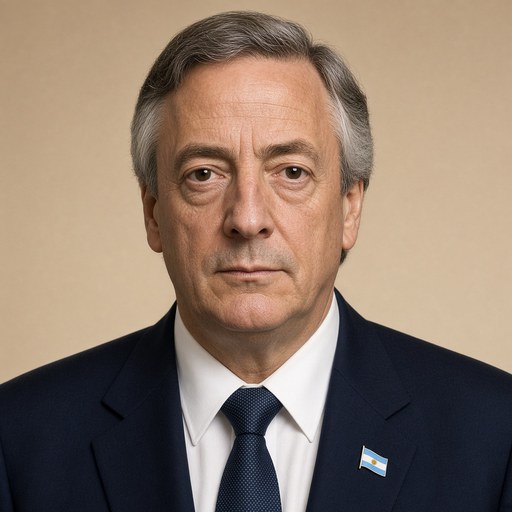
Néstor Kirchner at the National Assembly of Venezuela, 2006
 Néstor Kirchner · President of Argentina
- Context
- Kirchner addressed the Venezuelan National Assembly in July 2006 at a special session commemorating the 195th anniversary of Venezuelan independence.
- Main themes
- Latin American integration, Argentina-Venezuela bilateral relations, independence anniversary commemoration, poverty eradication, economic development, regional inequality, South American solidarity, PDVSA energy cooperation, historical liberators San Martín and Bolívar, social inclusion, sustainable development, rule of law
- Duration
- ~21 min
- Words
- 2,528
- Sentences
- 63
- Readability
- 19
- Grade
- 20.2
- Syntax
- 3.46
- Vocabulary
- 2.36
Translated from Spanish
The broad sphere of national life a sentence belongs to. Every sentence has an Arena, so it is the denominator the other indices are read against.
Other63 sentences in 34 paragraphs
Mr. President of the Bolivarian Republic of Venezuela, dear friend Hugo Chávez; Mr. President of the Republic of Bolivia, dear friend Evo Morales; presidents and vice presidents of the Legislative Chamber of the Congress of the Bolivarian Republic of Venezuela; legislators of MERCOSUR; authorities, friends: I deeply thank Mr. President Nicolás Maduro Moro for the honor he has bestowed upon me by inviting me to be the keynote speaker at this special session of the Honorable National Assembly of the Bolivarian Republic of Venezuela to commemorate the 195th anniversary of independence.
I want to take this pleasant opportunity to convey, on behalf of the Argentine people and government, a fraternal greeting and the testimony of the results of a bilateral relationship that strengthens day by day and fills us with pride for its concrete impact on the well-being of our compatriots.
Our liberators, San Martín and Bolívar, had a common goal, which was to ensure the success of the emancipation of our great homeland. “Divided we will be slaves; united, I am sure we will defeat them,” San Martín asserted. “One should be the homeland of all Americans,” said Simón Bolívar. There our coincidences were born. But in addition to the historical and cultural coincidences that have always brought Venezuela and Argentina closer, we share today, in the Latin American concert, the conviction that our region cannot continue to be characterized as a set of potentially rich countries with poor peoples.
The recipes applied in the last decade resulted in a growth rate of only 2.6 percent in Latin America during the period 1990-2003, less than half of that of the period 1950-1980.
This slow and unstable growth translated into weak labor markets, with a marked increase in informality, growing income gaps between skilled and unskilled workers, and poverty rates higher than in the 1980s. But at the same time, Latin America has transformed into the area that harbors the highest levels of inequality in the world, failing to uphold basic social rights within its territory.
Therefore, our goal is to eradicate poverty, achieve sustained economic growth, and promote sustainable development while we must advance towards national and global economic systems based on the principles of justice, equity, democracy, respect for human rights, participation, responsibility, transparency, and social inclusion.
Thus, we have a comprehensive and inclusive vision of development, a development that encompasses the rule of law, environmental care, education, health, production, and decent work. This is how we have understood it, and in this sense, Argentina and Venezuela, Venezuela and Argentina guide their bilateral relationship and regional integration.
Throughout this time that I have had the responsibility of governing, I cannot fail to recognize every opportunity I have to meet with a Venezuelan, the emotional and concrete solidarity that Argentina received at the worst moment it had to go through in one of its greatest institutional, social, and economic crises, always the supportive hand of the Venezuelan government and people.
The generosity and trust of the Venezuelan government, demonstrated in the purchase of Argentine bonds, helped us to climb some steps out of the hell in which we are still located.
In this sense, cooperation has guided bilateral technical projects in health, social development, agriculture, sports, and science and technology, which we are undertaking together as joint actions regarding third brother countries. I want to highlight that Argentina and Venezuela carry out essentially productive exchanges that generate employment and added value. Our oil company… Our country collaborates with the colossal Venezuelan oil industry. And I said “our Venezuelan oil company” because it is the Latin American oil company that has been absolutely supportive of the Argentine people in very difficult times when we began our management, and the Venezuelan oil company, PDVSA, the oil company of the Venezuelan people today, helped us and continues to help us to overcome all the problems we may have in energy matters that have allowed us to consolidate Argentine growth.
Therefore, brothers and sisters Venezuelan legislators, I want to deeply thank you for this gesture of yours and of the dear Venezuelan people and, of course, of my dear friend the President.
At the same time that we receive this collaboration, we try to provide agricultural machinery, technical elements, and research so that the Venezuelan economic reconversion process can continue to advance to consolidate the construction that the President of Venezuela is carrying out, which is a country with economic independence, with self-determination, and with the possibilities of consolidating production, and is really doing an excellent job in which Argentina will continue to collaborate and work permanently in everything that is necessary. Elevators, nuclear technology for medical uses, central services for electricity and cranes, thus, in multiple paths that lead to consolidating productive exchange, we are giving and generating a true example for the construction of the great homeland that San Martín and Bolívar dreamed of.
Each visit of President Chávez to my country and mine to this dear Venezuela implies concrete advances in our productive integration that, far from grandiloquent statements, resolve essential aspects for our development.
This valuable bilateral exchange, the mutual friendship that characterizes us is enhanced by the development within the framework of Latin American integration. The energy integration project, which seeks to supply the region in its path of industrialization, has Venezuela as one of its cornerstones. This and other equally strategic projects, such as those related to road infrastructure, embody the old adage of resolving our own needs with our own resources, and this is valid in all fields.
This integrationist vocation of our countries is strongly reflected in the incorporation yesterday, as a full member of MERCOSUR, of the Bolivarian Republic of Venezuela. A shared dream with the presidents of MERCOSUR, with President Lula and President Chávez, to achieve this incorporation that was accomplished yesterday and that we consider a true turning point and that generates a consolidation of the region that allows us to visualize that it is increasingly true that the great homeland and Latin American integration are absolutely possible.
For us, it is an honor that this circumstance occurs under the pro tempore presidency that I have the privilege to exercise in MERCOSUR in a transitory and circumstantial manner. But I want to tell you, Venezuelan sisters and brothers, that it will be something that I will carry engraved in the history of my life that during my term as pro tempore president of MERCOSUR, we were able to achieve the integration of Venezuela into it. I believe these are transcendent steps, and I always say that from the task of public service, what one takes away are these types of results that are the most important because they mark history.
The significance and power that MERCOSUR acquires, adding Venezuela, Brazil, Paraguay, Uruguay, and Argentina, undoubtedly constitute an important contribution to the process of regional integration, granting the same rights and obligations that the current signatory states of the Treaty of Asunción have. Adhering to this foundational document will not only transform it into an essential engine of the economic process but will also fully incorporate it into the political process by adhering to the protocols that are part of the Treaty of Asunción.
MERCOSUR is much more than a magnificent economic bloc that seeks to perfect the free movement of goods, mitigate asymmetries, and promote structural convergence; it is also a political and social instrument in which democracy, peace, and human rights are basic principles and concrete realities to be upheld by member countries.
The Ushuaia Protocol, on democratic commitment, known as the Democratic Clause of MERCOSUR, constitutes a preventive and punitive instrument against potential ruptures of the democratic order.
The Ushuaia Declaration, which establishes the bloc as a zone of peace, commits us to avoid arms races or violent options for conflict resolution, as well as to support in the multilateral forums in which we participate, respect for international agreements aimed at promoting the peaceful use of nuclear energy and non-proliferation in all its aspects.
On the other hand, the recent Asunción Protocol on commitment to the promotion and protection of human rights of MERCOSUR, with a mechanism equivalent to that of the democratic clause, advances in a fundamental and emblematic aspect for countries like ours that have suffered the terrible experience of state terrorism. As you know, for Argentina, democracy and human rights constitute two sides of the same coin, which is why my country vehemently promotes their validity and respect in accordance with International Law and through multilateral organizations.
I do not want to forget in this brief message, while reiterating the gratitude of all Argentines, the permanent support of Venezuela for our claim of sovereignty over the Malvinas Islands. Thank you very much, gestures like these further unite us and motivate us to redouble our efforts to build a freer and more sovereign Latin America.
The proximity of the bicentennials of our independences is the ideal framework to achieve that freedom and sovereignty, withheld for decades and that our heroes dreamed of. Today we can demonstrate our loyalty to those ideals by making them a reality based on the integration and solidarity of our peoples.
Strong winds of change are blowing in Latin America. And in this true end of an era, we find Venezuelans and Argentines strongly united once again.
The consolidation of democracy, which we must protect and defend, has given rise to new leaderships, established new agendas, and achieved hopeful results for our peoples in different countries, such as the one we recently experienced with our friend and comrade President of Bolivia, Evo Morales.
Those who want to halt history by compromising ongoing processes that make them lose benefits and privileges resort to anachronistic and worn-out concepts to try to cast shadows over light, attempting to classify our countries and leaders from different latitudes into supposedly populist governments and those that are not. From the Parliament of Caracas, from the Parliament of the Bolivarian Republic of Venezuela to the whole world: our governments do not engage in demagoguery or populism; we want to be governments that truly represent national and popular interests that definitively reclaim the dignity of our peoples.
It is a moment of great historical strength, of a high level of consciousness. I said it, and I was accompanied by the President of Spain, José Luis Rodríguez Zapatero, in these concepts that we must end the capiti diminutio that is sought to be constructed over the processes that are being built in Latin America, that we have several obligations to our peoples, but those of us who govern in this time of history must not only arrive at government with national, popular, and progressive ideas, but we must have the courage and bravery to exercise and make national and progressive decisions while governing, fulfilling the commitments made to our peoples, which is an essential task to consolidate credibility.
Also, they must understand, definitively, that defending national interests, that exercising the definitive struggle against social exclusion, against the poverty that afflicts our peoples, against indigence and unemployment, that the defense of national wealth under no circumstances can be qualified or defined with a tint of populism, but fundamentally, dear brothers of the world, when you analyze these processes, see in them the rebirth of honesty, the struggle against corruption, the defense of national interests, the defense of the poor, the defense of national entrepreneurs, the defense of work, the defense of dignity, the defense of identity, the defense of the concept of our region that must definitely take the place and role that corresponds to it.
We are, with great effort alongside our peoples, trying to generate the spaces, and we want all the capital of the world to come to work in our countries, to come to work and produce in our countries, but to come to share the profitability with our peoples, to come to associate with our destinies, which is the central and essential thing that must be carried forward.
We are living in a time where I believe we are at a turning point, dear brothers. The step taken yesterday with the incorporation of Venezuela into MERCOSUR is much more than a decision for the construction of an economic bloc; it is the region's decision to strengthen and build the space of the countries of South America, to have a voice in the world that resonates strong and united, so that we can speak with all the blocs of the world, Asia, Africa, the Middle East, the European Economic Community, as a bloc, as a region, defending the interests of our peoples in a united and supportive manner.
I believe that the Act of Independence that the Congresswoman read marks with absolute clarity and vision those who, 195 years ago, had the courage to declare the independence of Venezuela.
We are approaching the bicentennial, and we cannot wait another 200 years to build countries with equity, with justice; we need to start consolidating them now, as there are many brothers and sisters who suffer in Latin America, and we, as governments, must seek with all our strength the results that our peoples are expecting.
I want to tell you that today I was moved during the commemoration of the anniversary at the parade that took place at the central event of Independence Day, when I saw thousands and thousands of faces, hands raised by Latin American brothers, Venezuelans, sharing the parade, sharing the hope of building a new country, of constructing a new order of justice that you and your President aspire to, a people absolutely hopeful like the rest of the peoples of America, waiting for us to be up to the height of history and circumstances. That is why I always ask God to give us the strength to be loyal to our convictions. When you reach where we have reached, there is no room for a tie, dear friends; it is the path of triumph for our peoples that can generate transcendence.
Therefore, to conclude, on the Day of Independence of the Bolivarian Republic of Venezuela, I want to tell the peoples of the world that here, in Venezuela, I have been able to share, not only this time but in all the times I have come, a full democracy that fights for justice, open, that fights for equality, that integrates with the rest of the peoples of Latin America to consolidate solidarity and the search for the destinies that our peoples deserve. I also want to say that this July 5, 2006, I know is significant for you, Venezuelan sisters and brothers; stay strong, consolidate your convictions, consolidate Venezuela. There is a people, which I was able to see today, that dreams and is hopeful like the peoples of America, like the people of Bolivia, like the people of Uruguay, like the people of Chile, like the people of Paraguay, like the people of Brazil, and the rest of the American peoples, who once and for all want us to at least look with the strength that corresponds to the legacy of our heroes. Thank you very much, and I am at your service.
The original Spanish. The tags above are read on the English translation's sentences.
Señor Presidente de la República Bolivariana de Venezuela, querido amigo Hugo Chávez; señor Presidente de la República de Bolivia, querido amigo Evo Morales; señores presidentes y vicepresidentes de la Cámara Legislativa del Congreso de la República Bolivariana de Venezuela; señores legisladores del MERCOSUR; autoridades, amigos y amigas: agradezco profundamente al señor presidente don Nicolás Maduro Moro, el honor con el que me ha distinguido al invitarme a ser el orador de orden de esta sesión especial de la Honorable Asamblea Nacional de la República Bolivariana de Venezuela para conmemorar el 195º aniversario de la independencia.
Quiero aprovechar tan grata ocasión para transmitirles, en nombre del pueblo y Gobierno argentinos, un saludo fraterno y el testimonio de los resultados de una relación bilateral que se fortalece día a día y que nos llena de orgullo por su impacto concreto en el bienestar de nuestros compatriotas.
Nuestros libertadores, San Martín y Bolívar, tenían un objetivo común, el cual era asegurar el éxito de la emancipación de nuestra Patria grande. “Divididos seremos esclavos; unidos, estoy seguro, que los batiremos”, sostenía San Martín. “Una deber ser la Patria de todos los americanos”, dijo Simón Bolívar. Allí nacieron nuestras coincidencias. (APLAUSOS) Pero además de las coincidencias históricas y culturales que siempre han acercado a Venezuela y a Argentina, compartimos hoy, en el concierto latinoamericano, la convicción de que nuestra región no puede seguir caracterizándose como un conjunto de países potencialmente ricos con pueblos pobres.
Las recetas aplicadas en la última década, dieron como resultado que en el período 1990-2003 la tasa de crecimiento de América latina fue apenas del 2,6 por ciento, menos de la mitad que la del período 1950-1980.
Este crecimiento lento e inestable, se tradujo en mercados laborales débiles, con un marcado aumento de la informalidad, crecientes brechas de los ingresos entre los trabajadores calificados y no calificados y tasas de pobreza superiores a la década del ’80. Pero al mismo tiempo, América latina se ha transformado en el área que alberga los mayores niveles de desigualdad en el mundo incumpliéndose en su territorio derechos sociales básicos.
Por eso, nuestra meta es erradicar la pobreza, lograr un crecimiento económico sostenido y promover un desarrollo sustentable al tiempo que debemos avanzar hacia sistemas económicos nacionales y mundiales basados en los principios de justicia, equidad, democracia, respecto por los derechos humanos, participación, responsabilidad, transparencia e inclusión social.
Tenemos así una visión integral e inclusiva del desarrollo, un desarrollo que comprende el Estado de derecho, el cuidado del ambiente, la educación, la salud, la producción y el trabajo decente. Así lo hemos entendido y, en ese sentido, Argentina y Venezuela, Venezuela y Argentina guían su relación bilateral y su integración regional.
En todo este tiempo que he tenido la responsabilidad de gobernar, no puedo dejar de reconocer en cada oportunidad en la que me encuentro con un venezolano, la solidaridad emotiva y concreta que la Argentina recibió en el momento peor que le tocaba atravesar en una de sus mayores crisis institucionales, sociales y económicas, siempre la mano solidaria del Gobierno y del pueblo venezolanos.
La generosidad y la confianza del Gobierno venezolano, demostrada en la compra de bonos argentinos, nos ayudó para poder subir algunos escalones del infierno en el cual todavía estamos.
En este sentido, en la cooperación ha guiado los proyectos técnicos bilaterales en materia de salud, desarrollo social, agricultura, deportes y ciencia, tecnología, que estamos encarando así en forma conjunta como acciones conjuntas respecto a hermanos terceros países. Quiero destacar que la Argentina y Venezuela realizan intercambios esencialmente productivos generadores de empleo y valor agregado. Nuestra petrolera…Nuestro país colabora con la colosal industria de la petrolera venezolana. Y dije “nuestra petrolera venezolana” porque es la petrolera latinoamericana que ha sido absolutamente solidaria con el pueblo argentino en momentos muy difíciles cuando empezábamos la gestión y la petrolera venezolana, PDVSA, la petrolera del pueblo venezolano hoy, nos ayudó y nos ayuda permanentemente a seguir superando con mucha fuerza todos los problemas que podamos tener en materia energética que han permitido consolidar el crecimiento argentino.
Por eso, hermanos y hermanas legisladores venezolanos, quiero agradecer profundamente este gesto de ustedes y del querido pueblo venezolano y, por supuesto, de mi querido amigo el señor Presidente.
Al mismo tiempo que recibimos dicha colaboración, tratamos de proveer de maquinarias agrícolas, de elementos técnicos y de investigación para que el proceso venezolano de reconversión económica pueda seguir avanzando para consolidar la construcción que está llevando adelante el señor Presidente de Venezuela que es un país con independencia económica, con autodeterminación y con posibilidades de consolidar la producción y realmente está haciendo un excelente trabajo en el cual la Argentina va a seguir colaborando y trabajando permanentemente en todo aquello que sea necesario. Ascensores, tecnología nuclear para usos médicos, servicios centrales para eléctricas y grúas, así, en múltiples caminos que llevan a consolidar el intercambio productivo, estamos dando y generando un verdadero ejemplo para la construcción de la Patria grande que soñaron San Martín y Bolívar.
Cada visita del presidente Chávez a mi país y las mías a esta querida Venezuela, implican avances concretos en nuestra integración productiva que, lejos de las declaraciones grandilocuentes, resuelven aspectos esenciales para nuestro desarrollo.
Este valioso intercambio bilateral, la mutua amistad que nos caracteriza se potencia al desenvolvimiento en el marco de la integración latinoamericana. El proyecto de integración energética, que busca abastecer a la región en su camino de industrialización, tiene en Venezuela uno de sus puntales. Éste y otros proyectos igualmente estratégicos, como los relativos a la infraestructura vial, recogen el viejo apotegma de resolver con recursos propios las necesidades propias y esto es válido en todos los campos.
Esta vocación integracionista de nuestros países, se ve plasmada con fuerza en la incorporación en el día de ayer, como miembro pleno del MERCOSUR, de la República Bolivariana de Venezuela. Sueño compartido con los presidentes del MERCOSUR, con el presidente Lula y con el presidente Chávez, de lograr esta incorporación que ayer se logró y que nosotros consideramos que es un verdadero punto de inflexión y que genera una consolidación de la región que nos permite visualizar que cada vez es más cierto que la Patria grande y la integración latinoamericana es absolutamente posible.
Para nosotros resulta un honor que esta circunstancia se produzca bajo la presidencia pro tempore que me toca ejercer en el MERCOSUR en forma transitoria y coyuntural. Pero les quiero decir, hermanas y hermanos venezolanos, que va a ser algo que llevaré grabado en la historia de mi vida que durante mi gestión como presidente pro tempore del MERCOSUR, pudimos lograr la integración de Venezuela al mismo. Creo que son pasos trascendentes y yo siempre digo que de la tarea de la función pública, uno lo que se lleva son este tipo de resultados que son los más importantes porque van marcando la historia.
La significación y potencia que adquiere el MERCOSUR, sumando Venezuela, Brasil, Paraguay, Uruguay y la Argentina, constituyen, sin duda alguna, una importante contribución al proceso de integración regional, otorgándole los mismos derechos y obligaciones que tienen hoy los Estados partes firmantes del Tratado de Asunción. La adhesión a dicho documento fundacional, no solo la transformará en un motor esencial del proceso económico, sino que, al adherir a los protocolos que forman parte del Tratado de Asunción, se incorpora plenamente al proceso político del mismo.
Es que el MERCOSUR es mucho más que un magnífico bloque económico, que busca perfeccionar la libre circulación de bienes, atenuar las asimetrías y promover la convergencia estructural, es también un instrumento político y social en que democracia, paz y derechos humanos, son principios básicos y realidades concretas a sostener por los países miembros.
El Protocolo de Ushuaia, sobre compromiso democrático, conocido como Cláusula Democrática del MERCOSUR, se constituye en un instrumento preventivo y punitorio ante eventuales rupturas del orden democrático.
La Declaración de Ushuaia, que fija al bloque como zona de paz, nos compromete a evitar carreras armamentistas u opciones violentas de resolución de conflictos, así como apoyar en los foros multilaterales, en los que participamos, el respeto por los acuerdos internacionales orientados a promover el uso pacífico de la energía nuclear y la no proliferación en todos sus aspectos.
Por otra parte, el reciente Protocolo de Asunción sobre compromiso con la promoción y protección de los derechos humanos del MERCOSUR, con un mecanismo equivalente al de la cláusula democrática, avanza en un aspecto fundamental y emblemático para los país que, como el nuestro, han sufrido la terrible experiencia del terrorismo de Estado. Como ustedes saben, para la Argentina, democracia y derechos humanos constituyen las dos caras de una misma moneda, por lo que mi país promueve en forma vehemente su vigencia y respeto de acuerdo al Derecho Internacional y a través de los organismos multilaterales.
No quiero olvidar en este breve mensaje, al reiterarle el agradecimiento de todos los argentinos, el permanente apoyo de Venezuela a nuestro reclamo de soberanía sobre las islas Malvinas. Muchas gracias, gestos como estos nos hermanan aún más y nos motivan a redoblar nuestros esfuerzos de construir una América latina más libre y soberana.
La proximidad de los bicentenarios de nuestras independencias, es el marco ideal para lograr esa libertad y soberanía, retaceadas por décadas y que nuestros próceres soñaron. Hoy podemos demostrar nuestra lealtad a esos ideales haciéndolos realidad sobre la base de la integración y solidaridad de nuestros pueblos.
Soplan fuertes vientos de cambio en América latina. Y en este verdadero final de época, nos encuentra a venezolanos y argentinos fuertemente unidos una vez más.
La consolidación de la democracia, que debemos cuidar y defender, ha hecho surgir nuevos liderazgos, ha establecido nuevas agendas y se han obtenido en distintos países resultados esperanzadores para nuestros pueblos, como el que vivimos recientemente del amigo y compañero presidente de Bolivia, Evo Morales.
Los que quieren frenar la historia comprometiendo los procesos en curso que les hacen perder beneficios y privilegios, acuden a anacrónicos y desgastados conceptos para tratar de echar sombra sobre luz, intentan clasificar en categorías divisorias a nuestros países y a los dirigentes de distintas latitudes, entre supuestamente gobiernos que ejercen el populismo y quienes no. Desde el Parlamento de Caracas, desde el Parlamento de la República Bolivariana de Venezuela al mundo entero: nuestros gobiernos no hacen ejercicio ni de la demagogia ni del populismo, queremos ser gobiernos que sí representemos los intereses nacionales y populares que reivindiquen definitivamente la dignidad de nuestros pueblos.
Es un momento de mucha fortaleza histórica, de un alto nivel de conciencia. Yo lo decía y fui acompañado por el presidente de España, José Luis Rodríguez Zapatero, en estos conceptos de que hay que terminar con la capiti diminutio que se quiere construir sobre los procesos que se están construyendo en América latina, que nosotros tenemos varias obligaciones con nuestros pueblos, pero a quienes nos toca gobernar en este tiempo de la historia, no solo pasa por llegar al gobierno con ideas nacionales, populares y progresistas, sino que tenemos que tener el coraje y la valentía de ejercer y tomar las decisiones nacionales y progresistas ejerciendo el gobierno, cumpliendo con la palabra empeñada con nuestros pueblos, que es una tarea esencial para consolidar la credibilidad.
También que entiendan, definitivamente, que defender los intereses nacionales, que ejercer la lucha definitiva contra la exclusión social, contra la pobreza que azota a nuestros pueblos, contra la indigencia y el desempleo, que la defensa de la riqueza nacional bajo ningún aspecto puede ser calificada o definida con un tinte de populismo, sino fundamentalmente, queridos hermanos del mundo, cuando analizan estos procesos, vean en ellos el renacer de la honestidad, de la lucha contra la corrupción, de la defensa de los intereses nacionales, de la defensa de los pobres, la defensa de los empresarios nacionales, la defensa del trabajo, la defensa de la dignidad, la defensa de la identidad, la defensa del concepto de nuestra región que definitivamente tiente que tomar el lugar y el rol que le corresponde.
Nosotros estamos, con mucho esfuerzo junto a nuestros pueblos, tratando de generar los ámbitos y queremos que vengan todos los capitales del mundo a trabajar a nuestros países, que vengan a trabajar y a producir en nuestros países, pero que vengan a compartir la rentabilidad con nuestros pueblos, que vengan a asociarse a nuestros destinos, que esto es lo central y esencial que debe ser llevado adelante.
Vivimos una etapa donde yo creo que estamos ante un punto de inflexión, queridos hermanos. El paso que se dio ayer de la incorporación de Venezuela al MERCOSUR es mucho más que una decisión de la construcción de un bloque económico, es la decisión de la región de entrar a fortalecer y construir el espacio de los países de América del Sur, de tener una voz ante el mundo que resuene fuerte y unida, que podamos hablar con todos los bloques del mundo, Asia, África, Medio Oriente, la Comunidad Económica Europea, como bloque, como región, defendiendo los intereses de nuestros pueblos en forma mancomunada y solidaria.
Creo que el Acta de la Independencia que leía la señora Diputada marca con claridad absoluta y visionaria de quines hace 195 años tuvieron el coraje de declarar la independencia de Venezuela.
Nos acercamos al bicentenario y nosotros no podemos esperar 200 años más para construir países con equidad, con justicia; necesitamos empezar a consolidarlos ya, son muchos hermanos y hermanas que sufren en Latinoamérica y tenemos, como gobiernos, que buscar con todas nuestras fuerzas los resultados que nuestros pueblos están esperando.
Yo les quiero decir que hoy me emocioné en la recordación del aniversario en el desfile que se llevaba adelante en el acto central del recordatorio del Día Independencia, cuando vi miles y miles de rostros, de manos que se alzaban de hermanos latinoamericanos, venezolanos, compartiendo el desfile, compartiendo la esperanza de construir un nuevo país, de construir un nuevo orden de justicia al que aspiran ustedes y su Presidente, un pueblo absolutamente esperanzado como el resto de los pueblos de América, esperando que nosotros estemos a la altura de la historia y de las circunstancias. Por eso siempre le pido a Dios que nos de la fuerza de ser leales a nuestras convicciones. Cuando se llega adonde llegamos nosotros, no hay lugar para el empate, queridos amigos, es el camino del triunfo de nuestros pueblos lo que puede generar la trascendencia.
Por eso, para terminar, en el Día de la Independencia de la República Bolivariana de Venezuela, le quiero decir a los pueblos de mundo que acá, en Venezuela, he podido compartir, no solo esta vez sino en todas las que he venido, una democracia plena, que lucha por la justicia, abierta, que lucha por la igualdad, que se integra al resto de los pueblos de Latinoamérica para consolidar la solidaridad y la búsqueda de los destinos que nuestros pueblos merecen y también quiero decir que este 5 de julio de 2006 sé que es trascendente para ustedes, hermanas y hermanos venezolanos, sigan firmes, consoliden sus convicciones, consoliden a Venezuela, hay pueblo, que yo lo pude ver hoy, que sueña y está esperanzado como los pueblos de América, como el pueblo de Bolivia, como el pueblo de Uruguay, como el pueblo de Chile, como el pueblo de Paraguay, como el pueblo de Brasil y el resto de los pueblos americanos, que de una vez por todas quieren que nosotros estemos por lo menos mirando con la fuerza que corresponde el legado de nuestros próceres. Muchísimas gracias y a vuestras órdenes.