





- Context
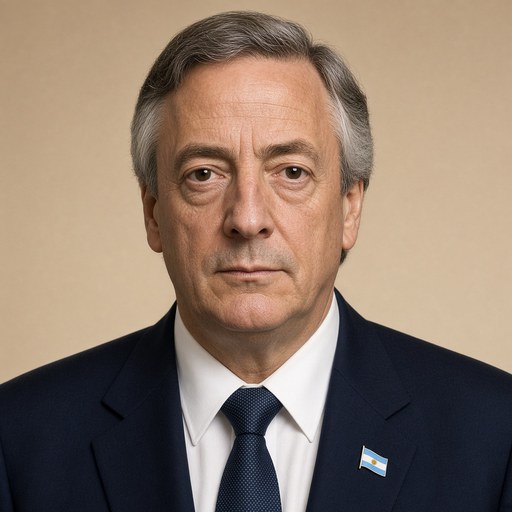
- Kirchner addressed the Argentine Legislative Assembly on March 1, 2006, delivering the annual state of the nation address at the opening of ordinary congressional sessions.
- Main themes
- Economic recovery, external debt restructuring, fiscal discipline, poverty reduction, job creation, industrial growth, Mercosur integration, memory truth and justice, social cohesion, export diversification, income distribution, national progress
- Duration
- ~144 min
- Words
- 17,274
- Sentences
- 566
- Readability
- 27
- Grade
- 16.8
- Syntax
- 3.21
- Vocabulary
- 2.31
Translated from Spanish
The broad sphere of national life a sentence belongs to. Every sentence has an Arena, so it is the denominator the other indices are read against.
Other566 sentences in 313 paragraphs
Mr. Vice President of the Nation; Mr. Provisional President of the Senate; Mr. President of the Chamber of Deputies; Governors; Ministers of the National Executive Power; Chiefs of the Joint Chiefs of Staff and the General Staffs of the Armed Forces; Legislators; Members of the Diplomatic Corps; Ladies and Gentlemen: I come to inaugurate the sessions of the Honorable Congress of the Nation as provided by paragraph 8 of article 99 of the Constitution of the Argentine Nation, on this occasion foreseen by our Fundamental Law for me, in my capacity as President, to report to the Legislative Assembly on the state of the Nation, reviewing what we have accomplished so far, verifying what we are doing, and marking the paths we must follow; that is what it is about.
It is always necessary to remember from what situation we come; we are gradually overcoming with effort what constituted the worst crisis in our history; we are climbing step by step what has been and still is the Calvary of Argentina. We come from hell still trying to get out of it, which is why we must act with memory. We must review the facts that sometimes clearly mark how much we have advanced, other times how much we still have to go, and many times how difficult it is to rebuild what has been destroyed.
The very nature of the problems we face today indicates that the course has been the right one and also indicates that the effort must be continued. Our recurrent crises have hindered the permanence of the correct policies, preventing us from continuing on the same path. We do not want to return to the past; we want to build the foundations of a solid future with memory, truth, and justice.
The past year will be remembered as the year in which we managed to structure a strategic solution to the problem of the external debt of the Argentine Republic, remaining true to our conviction to avoid further sacrifices and suffering for our people and strengthening the autonomous capacity of our country.
The Argentine economy has begun a process of sustained growth. What was initially interpreted by the usual analysts as a mere temporary recovery can now undoubtedly be considered the beginning of a new stage in the functioning of the country's economy. Fiscal discipline, reduction of the debt burden, monetary prudence, external surplus, growth of reserves, vigorous growth and diversification of exports, increase in productive investment, reversal of capital flight, creation of millions of genuine jobs, recovery of the purchasing power of wages, reduction of poverty and indigence, and the beginning of the reversal of the deterioration in income distribution are just some of the characteristic traits that signal the start of this new stage, which must result in a genuine development process that allows us to leave behind years of persistent decline.
As a consequence of the inadequate and at times irresponsible economic policies of the past, Argentina lost its place among prosperous nations decades ago and is still a notably impoverished and particularly unjust country; we have not yet emerged from hell. Consolidating this new situation is the starting point to begin to reverse this history and to reestablish the notion of progress and social cohesion in our Homeland.
Our economy has experienced 15 consecutive quarters, to be more precise, 37 months of uninterrupted growth, and GDP has accumulated a 36 percent increase since the lowest point of the depression. This is an unprecedented fact in the last 100 years of our country's economic history.
In 2005, economic activity closed with a growth of 9.1 percent, one of the highest growth rates in the world. Thus, GDP has already exceeded the pre-crisis highs by more than 7 percent. In per capita terms, after a contraction of more than 23.2 percent since the beginning of the recession, we have recovered the previous levels in a short period with an average growth of almost 7.3 percent per year in per capita output.
Once again, we must go back to the early decades of the last century to find a similar performance. The vigorous growth of recent years has been characterized by a notable recovery of production, of activities that generate or save crucial foreign currency for a debt-ridden country like ours. The share at current prices in these sectors in GDP fell from 23.5 percent in 2001 to 36 percent in 2005. Within this group of activities, the industrial sector clearly led the recovery, showing a growth of over 50 percent and contributing to the increase in GDP by almost a quarter of the total since the end of the crisis, which highlights the emphasis of current policies on the reconstruction of the damaged industrial fabric.
In this line, the recent agreements reached with our main partner in Mercosur, embodied in the competitive adaptation mechanism, will allow for healthy productive integration and a balanced and dynamic expansion of regional trade. These agreements are the eloquent signal of the priority that the government gives to the process of reindustrialization of the country and to the recovery of the original spirit that guided the design of the first integrative agreements.
Likewise, among the foreign currency-generating activities, the agricultural sector was characterized by remarkable dynamism in response to the favorable profitability conditions generated by the combination of a competitive parity and a favorable context of international prices. During the last agricultural campaign, record harvest levels of 84 million tons were reached. The favorable performance of this sector translated into a palpable improvement in the situation of several regional economies that were one of the engines of the recovery, which today implies that economic growth is much more balanced from the perspective of the vast geography of our country.
Unlike what happened during the last decade, however, the growth process tended to encompass all economic activities in a balanced manner, also generalizing to the sectors producing non-tradable goods and services, among which those with the best performance turned out to be those most related to the tradable production sector. The strong recovery of construction activity, especially that for reproductive purposes, which doubled its production since the crisis, and the transport and communications sectors, as well as commerce, each experienced an increase of more than 40 percent since the worst of the crisis. Furthermore, despite the magnitude of the financial crisis that led to the collapse of convertibility, the situation of the banking system experienced a remarkable improvement, rapidly restoring its liquidity.
Since early 2004, credit to the private sector began to recover, and today these loans maintain an annual growth rate close to 30 percent. The strong growth of employment, the recovery of real wages, greater consumer confidence, and the reappearance of credit resulted in a significant increase in consumption, which grew by 30 percent since the end of the crisis.
The contribution of consumption to growth was accompanied, however, by the contribution of other components of aggregate demand, crucial to ensuring the sustainability of the ongoing growth process. In particular, a notable dynamism of the investment rate was observed after the collapse of 60 percent in real terms of these variables during the crisis that led to the collapse of convertibility. Thanks to the subsequent recovery of approximately 150 percent, capital formation is now at the maximum levels of 1998.
To put into perspective the severity of the crisis and the remarkable subsequent recovery, the investment rate in terms of GDP rose from 11 percent, a percentage that is not even enough to replace the capital that depreciates annually, to more than 21 percent by the third quarter of 2005. Of course, we must reinforce this trend by increasing it by 2 or 3 points at least.
Thus, after the crisis caused a contraction in the capital stock, the economy has returned to expand its installed capacity, and it is expected that this year, thanks in large part to the stimulus policies adopted, it will do so vigorously, given the numerous projects underway and about to be executed. The accumulation of capital and its correlate of job creation also found particularly favorable conditions as a result of the certainty for the business horizon resulting from the successful process of restructuring public debt.
The existence of a sustainable fiscal outlook undoubtedly contributes to a scenario of greater predictability when projecting the future behavior of clear macroeconomic variables. Indeed, one of the foundations of the path toward economic consolidation originates in the significant improvement in the situation of public accounts. Thanks to a prudent spending policy, adequate tax administration, and the very result of the economic recovery, the consolidated primary surplus of 2004 and 2005 recorded unprecedented levels averaging over 4.8 percent of GDP, a value that constitutes another historical record.
In this improvement of the consolidated fiscal result, the enhancement of controls and greater tax compliance by taxpayers was crucial, giving rise, after years of wasteful management of public affairs, to a virtuous circle of austerity in the management of fiscal resources and a consequent greater willingness of citizens to support government policies with their contributions.
The strong position of public finances has allowed for the recovery of the use of fiscal policy for what it was created, on the one hand, to contribute to smoothing the ups and downs of the economy through counter-cyclical policies and, on the other, to resume the noble purposes of economic policy using the available tools to help moderate arbitrariness in the distribution of wealth.
For its part, the successful completion of the sovereign debt restructuring process in default, with an unprecedented saving of 67 billion dollars, allowed us to begin to restore the long-term solvency of public finances.
Looking to the future, by helping to eliminate a recurring factor of uncertainty, aligning financial commitments with the country's true payment capacity, the restructuring decisively contributed to the sustainability of the ongoing growth process, reinforcing the foundations of the current macroeconomic configuration. Although sustained efforts of fiscal savings will undoubtedly be required from now on, the level and profile of public debt are now manageable. The debt-to-GDP ratio reached 64 percent in July 2005, and if reserves were netted, it would only be 42 percent.
Solvency indicators showed a remarkable improvement when compared to those of December 2001. The stock of gross debt, for example, went from representing 5.4 times exports to only 3.5 times. Vulnerability due to currency mismatches has also been reduced, as the debt denominated in pesos grew from 3 percent to 47 percent of the total. The strategy of gradual but systematic reduction of the debt burden that has recurrently conditioned the country's economic performance over the last three decades did not end there. In this line, a true milestone has been the historic decision to fully and prematurely cancel liabilities of around 10 billion dollars to the International Monetary Fund after almost 50 years of financial dependence on this organization. This implied a reduction of around 5 additional points of GDP on the consolidated gross debt.
The payment to the International Monetary Fund also translated into a significant reduction in short-term financing needs, while allowing for substantial interest savings. Even more importantly, it eliminated one of the conditionality factors that constrained the possibility of deploying an autonomous economic policy in line with the true needs of our country and our society.
Let there be no mistake, then; the margin of maneuver and the degrees of freedom recovered as a result of this historic step are precisely what will allow us to deploy a responsible development policy and leave behind the permanent sacrifice policies that always fell on the same sectors in pursuit of a supposed future well-being that ultimately led to the economic ruin of the country.
Let there be no mistake, then; this is not just a triumph and a merit of this government; it is an achievement of all the Argentine people and of the Republic of Argentina, as it was not a particular government that was a debtor but the entire country. It is worth clarifying, as many opposing voices seem to be saddened when these positive results are obtained.
On the external front, the current account surplus, which will likely be over 2.5% of GDP this year, has been achieved thanks to a remarkable expansion of exports that already reaches 40 billion dollars annually and does not include what is obtained in foreign currency from tourism that comes to the country and that all countries in the world do include, meaning our exports would already be above these 40 billion dollars.
Perhaps an even more important fact is that our sales abroad have begun to change their profile. Argentina is increasingly selling high value-added products; industrial exports today are 60 percent higher in volume than the average during the convertibility period. During the past year, the quantities exported of agricultural and industrial manufactured goods grew by 15 percent. Diversification also extends to the destinations of our exports. On average during the convertibility period, we sold to 160 countries; today Argentina sells in more than 200 markets abroad, and regarding industrial exports, the number of destinations has increased from 130 to 180.
The increase in exports has allowed for a necessary recovery of imports, but the resulting foreign currency was not primarily used to acquire consumer goods as in the past; purchases are now concentrated, and this is very important, on capital goods and production inputs, which have grown by 70 and 50 percent respectively since the end of the crisis. Imports of consumer goods, which represented almost 20 percent during the convertibility period, now only account for 10 percent of our purchases. Even with this increase in imports, Argentina maintained high trade surpluses; the trade balance recorded an average annual surplus of around 13 billion dollars over the last three years.
Meanwhile, the capital flight has been reversed, and since 2004, net inflows of funds from abroad have been observed; we implemented a set of policies to regulate capital flows with the aim of maintaining external savings at a level compatible with its positive contribution to long-term growth, thus avoiding the entry of speculative short-term capital into the country.
The accumulation of reserves has been significant, growing from a minimum of 8.250 billion to 28 billion dollars, enabling the historic decision to cancel the debt with the Fund and mitigating risks faced by our economy, increasing autonomy in decision-making regarding economic policy.
In summary, on the fiscal and external fronts, the Argentine economy shows healthy twin surpluses in each of the last three years, an unprecedented situation in the contemporary economic history of our country. The economic recovery has also led to a notable improvement in social indicators. The new macroeconomic environment favorable to employment-intensive activities has allowed for a significant improvement in the situation of workers; the unemployment rate fell from 23.3 in May 2002 to 10.7 in the third quarter of 2005 and to 10.1 in the fourth quarter of 2005.
God willing, by the end of 2006, we can approach a single-digit unemployment rate to recover something that has always been historic in the Argentine Republic.
This abrupt reduction in unemployment is even more commendable because it occurred in a context where many Argentines re-entered the job search due to the sustained improvement in labor market prospects. In this way, the economy created 2 million 800 thousand genuine jobs since the beginning of the recovery. This allowed more than 1 million 700 thousand Argentines to stop being unemployed and for 1.1 million additional workers to enter the labor market. By the end of 2005, the number of unemployed was half of what it was at the beginning of 2003.
Additionally, during 2005, nearly 300 thousand genuine jobs were created; of every 100 new salaried workers, 92 are registered employees who have retirement contributions and social protection, whereas in the previous decade the ratio was only 60 out of 100.
Formal private sector employment grew in the last year at a rate of 9.7, the highest in the last decade, with 60 thousand companies created during that period employing a total of 200 thousand workers.
During the past year, the minimum wage increased from 450 pesos to 630, representing a 40 percent increase, well above inflation. The minimum retirement benefit rose from 308 to 390, implying a 27 percent increase, and for those over 65 years old, the benefit had an additional increase of 30 pesos, resulting in a total increase of 36 percent. Meanwhile, the purchasing power of registered employees grew by 28 percent from its lowest point in September 2002, and by 12 percent in this last year.
In 2005, 568 agreements and collective bargaining agreements were homologated, which is 63 percent more than the 348 in 2004, with 83 percent of those negotiations stipulating salary increases.
The increase in employment, the recovery of real wages in a context of heightened labor productivity, and the Government's income policies have allowed for a significant reduction in levels of poverty and indigence, which had reached unprecedented values for our country during the crisis. Thus, from a peak of poverty at 57.5 percent and indigence at 27.5 percent of the population, we moved to a poverty rate of 34 percent and an indigence rate of 12.5 percent respectively. This means that around 6 million people managed to escape poverty and 4.5 million Argentines left their condition of indigence.
Starting from this first day of March, no Argentine teacher will be below the poverty line as they will be guaranteed a minimum monthly salary of 840 pesos.
These factors have translated into an improvement in income distribution indicators, although this path shows itself to be rough and winding. The Gini coefficient, a standard measure of income distribution, shows a continuous improvement, especially since the end of 2003, when it observed a drop of 4 percentage points.
All the results mentioned, while constituting a set of necessary conditions, in no way exhaust the desirable policies to achieve sustained, stable, and socially inclusive economic progress. We face a set of challenges fundamentally related to maintaining stability, the sustained increase of the investment rate, and the payment of social debt. A stable macroeconomic configuration, which is not based on social imbalances but on the preservation of basic balances in the fiscal and external realms, is the sine qua non condition for its sustainability and to avoid the pronounced volatility typical of the Argentine economic cycle, thus limiting the probability of new macroeconomic financial crises, which are the most regressive and disproportionately affect the poorest.
At the same time, it is crucial for them to preserve an unprecedented feature of the exit from the crisis, which was maintaining a low inflation environment despite the significant depreciation of our currency. Precisely in recent months, a certain inflationary acceleration has been observed, which recognizes its origin in a series of concomitant factors. On one hand, the rise in international prices of commodities and the increasing exports of food have caused some imported inflation.
Additionally, in a context of growth and strong recovery of aggregate demand, the generalization of greater economic activity across all sectors of the economy has translated into an expected adjustment of relative prices between services and goods, which occurs in the form of a temporary rise in price levels.
On the other hand, after observing an increase in firms' profit margins, a relative recomposition of the situation of employees has occurred, as a consequence of greater bargaining power associated with the notable recovery of employment.
In some cases, these changes have caused some pressure on the cost side. In this sense, the growth of productivity and profitability must be taken into account when acting consistently regarding wage evolution, in order to give a timely and fair course to the distributive conflict. In this context, it is crucial to avoid that agents interpret an inflationary phenomenon, which is of a transitory nature, as permanent, and that the State and consumers themselves adopt an active attitude in defense of interests in this struggle. Capital holders must change their behavior. In the old model, they increased their profit margins through unemployment and lower wages, generating impoverishment.
It must be understood that our model of growth with equity and inclusion is rooted above all in the increase of internal demand and cannot allow a few to take advantage of the rest, unbalancing through prices, so that with the same income, less can be purchased each time.
Increasing production by investing, maintaining the virtuous circle of demand, production, investment, competitive prices, and greater internal consumption is central. We have strongly promoted the necessary price agreements to stabilize expectations and avoid the emergence of propagation mechanisms that give rise to second-round effects and threaten to impose their own inertia on the price increase process.
Even though some believe that we should resort to the recipes that led us to recession in the years 2000 and 2001 and that brought the consequences that this country has, we will continue and strongly trust in the Argentine productive sectors and in the labor sectors, but never again the orthodox and exclusive recipes that have led the people to confrontation and hunger.
We will act firmly in defense of consumers' pockets, using all the tools at our disposal, to prevent the greed of some from affecting the purchasing capacity of our people through price increases. This strategy is complemented by a rational administration of consistent macroeconomic policies that ensure the convergence of the economy at the pace of sustainable long-term growth, by stimulating investments that will determine a continuous increase in the supply of goods and services.
In this way, the renewed impetus for investment will constitute the starting point for laying the foundations for continuous development in quantity and quality of our productive forces; more investment means more productivity, innovations, macroeconomic stability, higher wages, and a credible perspective for national development.
It is necessary to continue with the policies that have allowed for the modification of the signs of social indicators. The creation of decent jobs, with fair wages, that allow workers to access social security and a decent retirement, is the starting point for any country that prides itself on wanting to achieve not only economic but also social and human development. Decent work is the main source of wealth creation, the vehicle through which men and women support their families, and a basic tool for social progress. Decent work ensures social mobility, community cohesion, long-term development, and economic transformation towards a country in which it is worth seeing our children grow.
We seek that employment once again becomes the engine of growth, the main mechanism for income distribution, and the most important social inclusion policy. We have been able to establish new operational guidelines in the dynamics of employment that we must protect and consolidate. The pursuit of improving the quality of work and the consequent reduction of labor informality had in the National Labor Regulation Plan its best tool. At its launch, nearly 200 thousand companies were audited, surveying more than 600 thousand workers, with 50 percent of these audits conducted during 2005. The expansion of job opportunities allowed a significant number of beneficiaries of the Heads of Household Program to have genuine employment; since the beginning of the current administration, more than 400 thousand beneficiaries have entered the labor market.
Actions have been developed aimed at the beneficiaries of the Heads of Household Program, of which more than 1 million 200 thousand already receive payments with a magnetic card, ensuring better levels of transparency in the collection of benefits. Today we can say that 150 thousand beneficiaries have undertaken training actions for work or are finishing their education, meaning they have been included in the formal education system. Additionally, nearly 151,450,000 pesos have been invested in the purchase of materials for small public works projects in 1,482 municipalities and communes, improving through 5,700 projects the educational, health, and sanitary infrastructure with the participation and work of 123 thousand beneficiaries of the Heads of Household Program.
In this framework, the National Government has progressively begun to reformulate social income programs, especially the most extensive one, Heads of Unemployed Households, which includes more than 1.4 million beneficiaries.
These reforms today have two objectives: to enable the labor insertion or reinsertion of beneficiaries likely to enter the formal labor market and to reduce the social vulnerability of those in a more disadvantaged structural situation. This includes the programs Training and Employment Insurance managed by the Ministry of Labor, Employment and Social Security, and the Families for Social Inclusion program managed by the Ministry of Social Development. Both programs will include more than 700,000 current beneficiaries of the Heads of Household program in 2006, expanding to one million in 2007. Additionally, new initiatives are expected to be formulated to provide better responses to the situation of beneficiaries who do not fit into those programs.
Every day we fight against the culture of "it cannot be done." An important role in this struggle is played in the construction of a present, promoting State that manages in favor of the common good. Planning and investment in public works have had and will have direct effects on modifying the productive structure, consolidating the expansion of the level of activity, creating jobs, and increasing the demand for inputs and suppliers. The budget for works and investment in 2005 was 7.678 billion pesos, 79 percent higher than in 2004, with an execution rate 14 percent higher than the previous year.
We have executed housing works for 3.109 billion pesos, which is 2.6 times more than in 2004, and 4.4 times more than in 2003. Federal programs have allowed for the construction of 175,000 housing solutions and the completion of 60,000 housing solutions that benefit more than one million people.
We were able to provide water service to more than one million people and lay 2,000 kilometers of pipes. With the Water Work Plan, which has a very relevant social impact, water networks are being constructed through cooperatives formed by unemployed workers and beneficiaries of the Heads of Household Plan.
In the Greater Buenos Aires area and Tucumán, more than 3,300 families have been reintegrated into the labor market, 425,000 neighbors have been provided with drinking water, and more than 6,000 household connections have been made.
In terms of hospital infrastructure, the hospital in Florencio Varela is under construction, and works will begin at the Maternal and Child Hospital in the city of La Rioja, the Nicolás Avellaneda Clinical Hospital in San Miguel de Tucumán, the Guillermo Rawson Hospital in San Juan, and the Dr. Héctor Quintana Children's Hospital in San Salvador de Jujuy.
In the national program of 700 schools, all educational establishments have been tendered with an investment of 1.2 billion pesos. This program will accommodate more than 500,000 students in 717 schools, representing 7,000 classrooms and one million square meters to be built. To date, we have already completed 60 schools.
During 2005, specific agreements were signed for the execution of 70 works in 22 national universities for 88 million pesos, and there are currently 40 works in progress, 3 completed, and 27 works in tender.
Investment in road works was 40.2 percent higher than in 2004. There are 247 road works underway for 6.750 billion pesos, and works have been tendered for 2.585 billion pesos. When we took office, the committed investments covered 51 percent of the network. Today, the committed investments cover 90 percent of the network, 34,353 kilometers.
To achieve these figures, the execution of works has been increasing, reaching 2.000 billion pesos in 2005, four times more than what was executed in 2003.
In addition to maintenance works on the road network, strategically important works are being carried out, such as the Rosario – Córdoba highway, the completion of the Paso de Jama road corridor in Jujuy; the completion of works on National Route 7, YPF Potrerillos Distillery in Mendoza; National Route 35 (Ataliva Roca – Santa Rosa) in La Pampa; the Capricorn Axis corridor in the provinces of Formosa and Salta; the construction of National Route 101 in Misiones (Bernardo de Irigoyen – Deseado); the construction of Route 234 in Neuquén; the construction of Route 23 (Valcheta-Ramos Mexia) in the province of Río Negro; access to Los Glaciares National Park in Santa Cruz. High engineering works have been undertaken, such as the completion of the sheds in Mendoza, with an investment of 28 million pesos, or the changes being made to the Road Obenques in the Zárate Brazo Largo complex, which is an investment of 70 million pesos.
Regarding the works to be executed, we can point to the national route 19 highway in the provinces of Santa Fe and Córdoba; the dual carriageway national route 14 in the provinces of Entre Ríos and Corrientes; the dual carriageway Comodoro Rivadavia in the province of Chubut; the reconstruction of national route 16 in the provinces of Salta and Santiago del Estero.
The political decision to pave national route 40 is strategically important, for which studies and projects are being carried out for the paving of the missing sections in Jujuy, Salta, Catamarca, La Rioja, San Juan, Mendoza, Chubut, and Santa Cruz.
In terms of water infrastructure works for flood control, the National Government is executing 154 works with an investment of 1.500 billion pesos. The most significant intervention corresponds to the Federal Plan for flood control in the central pampean area, whose total investment reaches 875 million pesos, allowing for the recovery of 2 million hectares, generating annual benefits of 120 million pesos. These works are complemented by the actions and financing of the Master Plan for the Salado River in the province of Buenos Aires.
Transport in its various modalities is an excellent tool for territorial integration. After decades of neglect, Argentina has resumed investments and developed projects in transport infrastructure.
Regarding rail transport, the year 2003 marked the beginning of a process of transformation and development of the national railway system, estimating its completion for 2008, with investments expected to be around 11.000 billion pesos. In 2004 and 2005, works were approved for the metropolitan and inter-jurisdictional railway system, valued at 964 million pesos, some of which are completed and others in process, reaching an execution level of 502 million pesos.
The completed investments in the public passenger rail transport service in the metropolitan area of Buenos Aires, include works on tracks, purchase of rolling stock, signaling, telecommunications, and social works. The State has resumed the reconstruction of the system by repealing decree 1.168/92, which had eliminated this service, leaving the entire country without the rail modal option. The damage caused was absolute and tremendous, as it completely disarticulated it and practically left it on the verge of disappearance. We are in the titanic task of recovering a service that was fundamental for the country.
In this context, the Buenos Aires – Córdoba – Tucumán line was reestablished; the Bahía Blanca – Carmen de Patagones/General Guido, General Madariaga – Aguara – Carmen de Patagones, and Belgrano Cargas Sociedad Anónima lines.
In the framework of improving the railway transport system, the concession contract with Metropolitano Sociedad Anónima was rescinded on the San Martín Railway branch, due to repeated non-compliance with the contract by the previous concessionaires. It was launched in January 2005, through a provider designated by the national State, with very good results in operation and the beginning of recovery with investments in infrastructure and rolling stock in this railway.
Several projects aimed at improving rail transport are underway, one very important that we announced for a long time, which I went to the beloved city of Rosario to announce, but like so many things in Argentina, when we went to look for the project, it was not there. Now it is nearing completion, and together with the authorities of Rosario, I estimate that we will soon be signing the work for the Rosario Circumventor, fundamental to consolidating Argentine progress. The Ferroautomotor Terminal of Mar del Plata and La Plata, another work that also had no project and that we are on the verge of launching; the La Picasa lagoon, which will allow the passage of the Interurban Railway between Buenos Aires and Mendoza - it also had no project - and the Central Trans-Andean among many others.
Rolling stock was acquired from Portugal and Spain, which will be repaired in workshops in the Republic of Argentina and assigned to the various corridors in operation or to be rehabilitated. We have also set out to recover the railway industry through the reactivation of small and large workshops.
This recovery process will involve improvements in the areas of influence of Rosario, Córdoba, Chascomús, Santa Fe, Entre Ríos, Tucumán, and Junín; generating new sources of work and putting into operation the workshops and factories that remained inactive for more than a decade.
Significant progress has been made in the Paraná-Paraguay Waterway Project, and dredging and buoying tasks are being carried out on the Uruguay River up to the port of Concepción, with an estimated investment between 2006 and 2008 of 90 million pesos.
We are improving and modernizing the ports of Quequén, Puerto Madryn, and we also wish to do so with Río Grande. In the port of Buenos Aires, the call for tenders for the concession of the operation of Terminal 6 and for the emergency dredging of the interior access channels has been made.
The revitalization of the shipbuilding industry is bearing fruit; ships have been incorporated into the national flag for a total of 341,000 tons, which has involved absorbing more than a thousand crew members into the Argentine labor regime.
Due to measures from the National Bank of Argentina and tariff measures from the National State, national shipyards have increased their productivity to 60 percent of their total operational capacity.
The communications sector has vigorously accompanied the growth of the entire economy and has recorded development parameters worthy of the most advanced models. During 2005, 100,000 new fixed telephone lines were installed, bringing the lines in service in Argentina to 8.8 million at this time.
Regarding mobile telephony, the growth compared to 2004 was 63 percent, rising from 13.5 million to 22.1 million phones in service. Growth for the current year is estimated at 6.5 million new lines.
Our country currently has 2.3 million Internet subscribers, with an 11 percent increase compared to 2004. Users are estimated at 6.8 million, which means that 17.8 percent of the population uses this service.
Investment in energy infrastructure has accompanied sustained economic growth in recent years, allowing us to compare reality with the forecasts provided once again by the usual specialists, who during 2004 and 2005 announced energy shortages and disaster. We are breaking the logic of the self-fulfilling prophecy, which so many proponents still maintain in the country.
Regarding short-term operational measures, we have consolidated for 2006 the import of gas from Bolivia up to 7.7 million cubic meters per day; the supply of liquid fuel to thermal power plants has been perfected, and an important energy agreement is being carried out with the sister Republic of Brazil.
In terms of infrastructure, the compensation of the lines of the Argentine Interconnection System corresponding to the Comahue / Greater Buenos Aires and NEA (Yacyretá)/Litoral/Greater Buenos Aires corridors has been carried out; the installation of a power transformer at the Río Grande Hydroelectric Plant (Córdoba) allows for an increase in power supply capacity during peak hours, with an investment of 6.5 million pesos.
By the end of this month, we will conclude the necessary works that will allow us to raise the water level of Yacyretá, which will imply a greater generation capacity of the dam with a total investment that will amount to 42 million pesos by that time.
The 52 works executed by the Argentine Interconnection System have been completed, which has improved the reliability and security of the system; among which we can highlight and cite the completion of the high voltage line Choele-Choel – Puerto Madryn, which links Patagonia with the wholesale electricity market; the expansions of gas transport capacity in gas pipelines of Transportadoras de Gas del Sur (TGS) have been completed, and the last stage of expansion carried out on Transporte de Gas del Norte (TGN) is nearing completion. Both expansions required a total investment of almost 1.450 billion pesos.
We have reached hundreds of agreements with the deregulated sectors of the energy sector, that is, with hydrocarbon producers and with electricity generators, in both cases with a high degree of adherence and consensus.
In the medium-term measures related to infrastructure, the installation of 1,600 megawatts through mixed investment between generators and the National State stands out; the partial increases in quota and the completion of Yacyretá, the completion of the Atucha II Nuclear Power Plant, and the expansion of high-voltage electricity transport, for which the execution of approximately 4,550 kilometers of 500-kilovolt lines is planned, representing an expansion of more than 43 percent of the existing facilities.
There are regional projects aimed at the sector, such as the "Energy Ring," a joint initiative of the governments of Argentina, Brazil, Chile, Paraguay, Peru, and Uruguay, with Bolivia participating as an observer, and the "Gas Interconnection Argentina, Brazil, and Venezuela," aimed at studying and analyzing the technical and economic feasibility of establishing a South American gas pipeline network.
The Northeast Argentine Gas Pipeline, for its part, is a bilateral initiative between the governments of the Argentine Republic and Bolivia, which has the capacity to reasonably complement the supply to our country, allowing us to ensure that the provinces of Chaco, Corrientes, Formosa, and Misiones are finally incorporated into the use of natural gas in their jurisdictions, with the improvement in quality of life that this implies. And in turn, that the provinces of Córdoba, Entre Ríos, Salta, and Santa Fe improve their level of supply.
In this regard, we are restarting institutional dialogue with the new authorities of the sister Republic of Bolivia.
We continue the operation of Correo Sociedad Anónima, ensuring the continuity of service, maintaining the employees of the agency, and reducing costs without assistance from the National Treasury, significantly increasing profits compared to the previous year.
The Río Turbio Coal Mine has resumed its activities, with a production of 1,500 tons per day, which, combined with intense mining development projects in San Juan, Catamarca, Mendoza, and Jujuy, generates investments of more than 3.3 billion pesos. In 2005, exports increased by 30 percent.
Tourism is an important tool for economic, social, and cultural transformation. We have set out to create competitive conditions to boost tourism; for this, we combine the promotional role of the State with the expectations, values, and daily needs of people; for the first time, the tourism balance has been reversed, that is, the difference between the arrival of foreign tourists and the departure of Argentines abroad. We achieved sustained growth in activity of around 12 percent compared to 2004, having surpassed 3,700,000 foreign tourists, which has resulted in over 3.1 billion dollars in foreign exchange earnings from tourism, which obviously increases our export output.
For this year, a growth of more than 15 percent is expected regarding economic income from inbound tourism, which would translate into the capture of 3.5 billion dollars, while regarding the arrival of tourists, arrivals are expected to be around 4,200,000.
Regarding domestic tourism, the outlook is also extremely promising, with an annual growth of around 10 percent, having increased from 28 million arrivals in 2003 to 34 million in 2005. This exponential growth in activity has generated investments in the sector of more than 450 million pesos during 2005, with an investment expected for this year that would exceed 1.4 billion pesos.
That is to say, the tourism sector's pending issue is the costs of recreation. We are all happy about job creation, about investment in infrastructure, but from this Honorable Chamber and from this message, I also call on the tourism sectors and those who market tourism to have a clear sense of responsibility, both internally and externally, so that it can be increased. They should take great care in the costs of recreation, because what is important is that profitability grows not with the same volume and taking advantage of a certain situation, but that the volume grows and if the growth of volume leads to the growth of profitability, it should be without higher costs. This is crucial for the tourism industry to consolidate definitively. So I make a special request to the gentlemen of the sector that we never again have recreation costs like those we had in January of this year, which was a great tourist year with the negative aspect of the growth of their costs.
The development of the Federal Strategic Plan for Sustainable Tourism has been completed, which is configured as a consensual, flexible, and federal management tool that indicates the course to follow until 2016. Its general objective is the construction of a concerted model of sustainable tourism development for the Argentine Republic.
The implementation of a strategic and common action with the private sector in the different regions of our country has allowed Argentina to have a presence at fairs and international meetings in priority, strategic, or potential markets, increasing participation by 112 percent compared to 2003.
We also continued with the policy of intensifying aspects related to the development of social tourism, understanding this as a vehicle to achieve access to tourism for all sectors of the population.
With our dreams, our ideals, and our convictions intact, we are ready to fight the battles necessary to consolidate that new Argentina we envision. Dreams do not materialize magically; that is why we are willing to give our best to make it a reality. Making them a reality will not be easy because it touches on important interests. We do not fear, we will not stop; with the support that our people give us, we will forge the changes that our Homeland needs.
This Honorable Congress has decided to extend the deadlines and mechanisms for the most important pending discussion of interests: the renegotiation of public service contracts.
We have referred here to our vision regarding the importance that this issue entails; in this discussion, the Argentina that must replace the one of looting, exploitation, shady deals, the exploitation of dominant positions, and easy profits at the expense of those who have the least is outlined. We firmly and decisively assume the defense of public interests, the defense of citizens, the defense of public service users, and the people to demand contracts that ensure the best possible service, its universalization, and the greatest investment to accompany the country's growth.
We want the result of this negotiation to increase the competitiveness of our economy, generate jobs, and provide adequate services with reasonable profits for entrepreneurs. We do not intend for anyone to be forced to continue if they think they are losing money; we do not intend to force anyone to lose what is theirs; we understand that we are discussing economic interests, and everyone knows which side we are on. In this renegotiation, the Argentine people have in their Government the first defender of their interests. We will not hesitate to make the decisions that need to be made.
We will seek the point at which public and private interests can be reconciled. Of course, it will help if those who represent the concessionaires look at the numbers of our recovery and the future flows of income and profits; it will help if they understand that we cannot continue tied to contracts that correspond to an economic and social model that has empirically and tragically demonstrated its unviability.
The social policy that we have designed and implemented since the beginning of the management has been conceived as a central strategy towards inclusion, equity, and social justice, overcoming the merely assistentialist vision that predominated in the country in recent decades.
We reject the fatalistic views that take for granted the existence of permanently excluded sectors of the population. On the contrary, we firmly believe that social policy centers on the promotion of the person as a value and principle, with the conviction that a just society is built on equity.
We have built this strategy on the concept of inclusive citizenship, understanding that a citizen is one who can effectively enjoy their rights. There is no full citizenship without the essentials for a reasonably healthy and active life.
We have managed for the State to recover its central role as a social articulator, but also, with the goal of the Millennium Objectives, we are strengthening the capacity of all society for the exercise of social responsibility. Although initially, due to the seriousness of the situation we faced, it was necessary to continue with plans aimed at addressing urgency, we have gradually developed initiatives aimed at social inclusion to repair and rebuild the social fabric, allowing the recovery of projects and the lives of many Argentines.
In this sense, our objective has been to generate initiatives and plans that do not deepen dependency but promote the development of the person and the social collective, where the misunderstood assistentialism produced clients, insertion must promote citizens.
It is not our vocation to distribute food parcels, although sometimes it is necessary to do so. We do not deny the immediate and circumstantial solution that sometimes direct assistance implies, but our people want more than food or community kitchens; they want to work and return to the family table earning their own bread.
One of the axes of social policy has been the articulation of various actors and institutions. We are integrating, along with the provinces, municipalities, social organizations, and the private sector, a Federal Network of Social Policies to avoid clientelistic, discretionary, and merely assistentialist practices. Territorial articulation is a milestone in the formulation and execution of social policy.
To facilitate that coordination, 500 Community Integrating Centers are being built, of which 150 are already completed, and one more is added every day. These centers deepen actions of social promotion and socio-health and community prevention and have the national contribution of social workers and community doctors.
Furthermore, through the National Council of Social Policies, coordinated and associated management has been promoted among the ministries of Social Development, Health, Labor, Education, Federal Planning, and Economy.
The quality of information about what has been done by all programs and areas has been substantially improved, as well as the identification and characterization of beneficiary family groups, current and potential, which has allowed the Government this year to qualify its social investment, avoiding unproductive expenses, generating savings of more than 106 million that could be reassigned to plans with direct benefits for the community.
We are aware that job creation is a fundamental solution to social problems, but while we consolidate that path, we are complementing it with other collective projects, ventures, and productive chains, installing social infrastructure and equipment throughout the country.
In addition, from the conviction that democracy is much more than choosing our rulers, we are constantly recreating spaces for participation in social development, and we do this through the concrete application of the national plans Family, Food Security, and Local Development and Social Economy.
The Family Plan prioritizes the promotion of opportunities by creating patrimonial assets at the family and community level. It does this by installing capacities and tools to help overcome both material deficiencies and the absence of opportunities. Thus, we have reached the point where 244,258 single-parent families, with children and no income, could receive a monthly income related to the number of children.
In health matters, there cannot be health for the poor and health for the rich. That is why we work to achieve more and better health for all, regardless of the socioeconomic level of each Argentine.
In 2005, important results were verified. As established in the Federal Health Plan, the Government prioritizes primary health care as a joint strategy with the provinces and municipalities, as well as with the national programs themselves.
This strategy has made it possible that in less than three years of management, consultations made in the network of Primary Care Centers have increased by 50 percent, which today represent more than half of the total consultations carried out in all public providers in the country.
Infant mortality has experienced the most pronounced decline in recent decades. With great pride, we can say that in the last three years we have managed to save more than 3,500 children from all over the country who would have died before reaching their first year of age.
The Nacer Argentina Plan has been implemented in the nine provinces of Northeast and Northwest Argentina, already covering 21,600 mothers and 291,000 children. In 2006, it will be extended to the rest of the provinces and to the Autonomous City of Buenos Aires.
The reduction of adolescent pregnancies is one of the main objectives of the National Program for Sexual Health and Responsible Procreation, which has, just over two years since its implementation, 2 million beneficiaries. The adolescent fertility rate has decreased by 6% in two years.
The national drug policy shows, among other aspects, three years of validity in the law for the prescription of medications by their generic name. As of today, 79 percent of medical prescriptions made in the Federal Capital and Greater Buenos Aires and 71 percent in the rest of the country.
All provincial districts have adapted their legislation to align with the National Generic Law.
Our policy is complemented by the provision of free medications in hundreds of primary care centers, the increase in Social Security coverage for the price of medications from 40 to 70 percent for chronic patients; the National AIDS Plan, the Oncology Medications Program, the tax exemption for critical supplies, the promotion of national production, the increase in the operational capacity of quality control laboratories and the drug inspection system.
The HIV/AIDS mortality rate has decreased by 36 percent since 1996. The State ensures free coverage of 100 percent of medications and supplies for 29,600 people who need such treatment.
Remediar, the largest program for the free provision of outpatient medications in America, currently covers more than 17 million people, distributes more than 34 million treatments per year in 5,900 primary care centers, and is carried out by the fieldwork of more than 25,000 members of health teams in each center.
The medications distributed cost the State one-tenth of the market price. A recent agreement has been signed with the Federative Republic of Brazil for the joint production of medications within the framework of a relationship linked to Mercosur.
Argentina has become the second country in the world to provide the hepatitis A vaccine free of charge, which has been administered to 750,000 children. The national vaccination campaign against measles, which covered more than 3 million girls and boys across the country, is also noteworthy, as a way to be prepared and ready for a possible global expansion of bird flu, which fortunately did not reach our country; a working group has been formed consisting of various ministries of our government to coordinate all necessary actions.
In three years, we have doubled the number of transplants in our country, but we have much more to do. On November 30, 2005, the Honorable Congress of the Nation approved the Presumed Donor Law for Organs and Tissues, by which every deceased person over 18 years old is considered a donor, except for those who express their contrary will during their lifetime.
The first National Survey on Nutrition and Health has also been conducted. This survey, which involved contacting 300,000 households across the country, is considered the only one in its field and the most important ever conducted in Latin America. Throughout 2006, as we complete the processing of the data, the definitive results will be disseminated, allowing us to define and apply the corresponding actions.
Regarding social security, on December 29, the expansion of the Mandatory Medical Program came into effect, which entails a substantial change in the healthcare model.
Our country was chosen to preside over the Executive Committee of the Pan American Health Organization during the year and was selected as the coordinating country of a health network on drug policies for all Ibero-America.
We provided humanitarian aid to people affected by Hurricane Katrina in New Orleans, United States; this team, along with the White Helmets, was the only foreign delegation that operated in the area in the first days following the disaster.
Regarding PAMI, special benefits for the most serious and urgent pathologies are being improved. We delivered 26,000 hearing aids, performed 45,000 cataract surgeries, and provided 15,000 special items such as wheelchairs, canes, and special beds. The coverage of free outpatient medications has increased fifteenfold, reaching more than 165,000 affiliates per month. In previous years, the same amount of money only served 10,000. If we also include affiliates receiving medications for oncological treatments, the total rises to 210,000 affiliates.
Due to savings from fund recovery and increased revenue, 1,012,000 affiliates have been receiving a health subsidy of 30 pesos since last June along with their pension; the Food Program serves 440,000 people, so retirees and pensioners earning up to 600 pesos receive social assistance from the institution.
We have implemented a new socio-healthcare service model in much of the country that eliminates intermediaries and improves the situation of providers. We want to improve the quality of care and provide comfort during waiting times, in line with the growing influx of requesting affiliates.
Recreational and self-care activities contribute to improving the quality of life of our elderly; more than 160,000 affiliates participated in cultural shows, sports, tourism, mini-tourism, workshops, and special parties. We will promote primary health care through senior centers that provide nursing and pedicure services.
Transparency in bidding projects is being achieved, and corruption is being combated; the Permanent Fiscal Investigation Unit established at the Institute has conducted more than 500 preliminary investigations. The reduction in costs recovers funds to improve services.
Regarding environmental policy, Argentina presided over the Conference of the Parties to the United Nations Framework Convention on Climate Change (COP 10) in 2004 and 2005, demanding at successive meetings the commitment of wealthy countries to recognize their responsibility and finance concrete actions to mitigate the consequences of climate change.
In this context, in February 2005, Argentina held the presidency of the Convention that in Japan determined the implementation of the Kyoto Protocol, by which developed countries commit to reducing their emissions of greenhouse gases and acid rain.
We established the Argentine Carbon Fund, an initiative aimed at promoting investments in clean technologies, also embedded in the Kyoto Protocol. Thus, we have become the first developing country to promote this innovative way of mitigating the effects of climate change.
We have also launched the National Strategy for the Integrated Management of Urban Solid Waste, which aims for a progressive elimination of open-air dumps, and we inaugurated the Laboratory for the Control of Vehicle Gas Emissions, which operates with cutting-edge technologies and is a model in its field.
The Social Forest Program has been executed, providing technical and financial assistance to local initiatives for the restoration and sustainable use of native forest areas and increasing the national forested area with intensive job creation and improvement of the social conditions of the population.
At this point, I want to pause specifically. It is known that the Republic of Argentina has a controversy with the Eastern Republic of Uruguay regarding the project to install two industrial plants for the production of cellulose and their related facilities on the left bank of the Uruguay River, a resource shared between both countries.
We do not conceive this issue from any xenophobia or exaggerated nationalism. We understand it as it is: an environmental problem with economic implications and a possible impact on the quality of life of human beings living on either side of a border.
This controversy with our Uruguayan brothers arose when Uruguay unilaterally authorized these ventures on three occasions, violating the Statute of the Uruguay River.
In contradiction with basic principles of international law that protect the environment, Uruguay ignored the repeated requests for information that Argentina made. It also ignored our country's repeated requests to suspend the construction of the planned plants until the cumulative transboundary impact could be objectively and reliably determined.
We have always been people of dialogue and are willing to engage in dialogue. What we cannot do is stand idly by. When it comes to people and the environment, what we are ultimately talking about is quality of life.
I want to thank the important support of the Honorable Congress of the Nation for the initiative to resort, if necessary, to the International Court of Justice, which is, moreover, the specific means of dispute resolution agreed upon since 1975.
In this framework, I invite President Tabaré Vázquez to find an immediate solution that addresses all the environmental issues involved. I also appeal to Uruguayans and Argentinians, Argentinians and Uruguayans, to restore a climate of brotherhood and cooperation.
With that spirit, I also invite my friend President Vázquez to suspend the works for a period of ninety days so that during that time we can receive an authorized and independent opinion that clearly establishes the criteria and requirements that must be adopted to ensure that the quality of life of Argentinians and Uruguayans living near the Uruguay River is not affected by the eventual installation of the plants.
Dear Uruguayan people and President of Uruguay, just 90 days, nothing more than 90 days, for the best environmentalists in the world to help two brotherly peoples resolve this issue as it should be and avoid these painful spectacles that we witness as those who believe in Latin American unity and the unity between the Argentine and Uruguayan people.
I ask this with the utmost humility, dear friend and brother President of Uruguay. It is 90 days that will allow this study to be conducted. We want the Uruguayan people to do very well, for their government to do very well, just like all our Latin American brothers, and let us demonstrate to the world that we have that minute of reflection. Let us not be pushed, let us not be driven by those empty nationalisms that, instead of uniting Latin America, have permanently separated it. What is the point of the dispute, of raising tensions or raising language between Argentinians and Uruguayans? It is to renounce our own history. That is why I beg you to listen to me, to accept this humble request we make, just 90 days. In the long history that Argentina and Uruguay have, 90 days is just a sigh. God willing, we can do it.
Education is one of the fundamental policies for the construction of a country where social justice becomes a strategy that characterizes the model of economic-social development.
Knowledge, science, and technology are the main elements in generating a productive nation capable of placing the ability to add value based on the quality of work of its people as the central axis of a strategy for sustained growth and social equality.
In this direction, during 2005 we made historically significant advances regarding the construction of a high-quality educational system for all Argentinians.
The increase in educational investment to an unprecedented magnitude has allowed us to address some of the main material problems that Argentine education has faced in recent decades. We developed active policies to make the right to education a reality.
Having completed the bidding process provided for in the program for the construction of 700 schools, more than 1.2 billion pesos will be invested to create 400,000 new places in schools at all levels; 400,000 new educational opportunities so that each of them represents a possibility of full social inclusion.
We have increased the number of scholarships for students with socio-economic difficulties from 350,000 to 500,000, and the Ministry of Education of the Nation supports the 2,000 poorest basic schools in the country, where nearly 1 million students receive books, computers, school supplies, and pedagogical advice.
We have opened programs for children and young people who dropped out of school to resume their education. In the last year, through joint work with community organizations and schools, we managed to bring 32,000 kids back to school.
More than 50,000 young people and adults with whom society had one of the most significant debts have joined the literacy learning process through the Literacy Plan.
To compensate for regional and origin inequalities, the Ministry has also distributed more than 7 million books in the last year, doubling the presence of textbooks in our schools over the last three years.
We are making progress in the introduction of new information and communication technologies in the school environment, and with the 20,000 computers that we are distributing these days, we complete the first 50,000 intended for schools with fewer resources, teacher training, and technical training institutions.
Undoubtedly, two of the main milestones have been legislative in nature; I once again thank the Honorable Congress of the Nation for approving laws that reaffirm our commitment to Argentina's rightful destiny, which are the laws on Technical Education and Vocational Training and the Law on Educational Financing, which is another fundamental law for the development of the country's educational project.
The Technical Education law recovers one of the best traditions of Argentine education: the quality of work of its technicians. At the same time, it re-establishes the possibility for our youth to embrace the culture of work and effort to progress in life.
The approval of the law meant an increase in the budget from 15 million pesos to 260 million. This allows for the re-equipping of all technical schools in the country within a year, granting each of them an average of 200,000 pesos to begin their modernization. In this way, we ensure that our youth do not study the history of technology with obsolete machinery, but have the opportunity to train with the most modern technologies.
There is a 15 percent of Argentines, thanks to the enlightened attitude of those who eliminated our technical schools, who could have jobs today that companies and Argentine development demand, but cannot find work precisely due to a lack of skills. God willing, we will begin to address this pending issue here.
Regarding the Law on Educational Financing, it is undoubtedly the most important and forward-looking regulation that has been approved in recent years in the country.
Due to its content, its objectives, the participation of all governors, the high degree of consensus reached among all actors in society, and the support of teachers, we are facing a true state policy whose scope far exceeds the possibilities of any particular or temporary government.
The law proposes realistic objectives that Argentina commits to achieving by the year 2010. We want the Bicentennial of the May Revolution to find an Argentina without illiterates, with all children and young people enrolled in initial, basic, and secondary education; with the extension of schools to a full day for those in greatest need, with higher educational quality, with the massive inclusion of new technologies and the teaching of a second language, and primarily with an educational system that provides equal opportunities to all inhabitants without exception.
Also with universities and high-level scientific-technological research, innovative, creative, and deeply committed to their regional context and the future of the country.
To achieve these objectives, we have set a goal of progressively reaching an investment of 6 percent of GDP in the next 5 years. It is true that just over a decade ago, Argentina had already set a similar goal, but it is also true that no concrete mechanisms had been put in place to realize it, and it became a new frustration for Argentines.
On this occasion, the law provides the strategies and precise instruments to achieve the objective. Thus, the investment that the Nation and the provinces will make this year already reaches 4.7 percent of GDP, one of the highest in history, which means more than 5 billion pesos additional to improve the functioning of our educational and scientific system.
The first fruits of this increase in investment are already visible; for the first time in the country, a scholarship program has been launched that addresses all children aged 6 to 14 who have dropped out of basic education. It is not possible for us to continue waiting for them passively in schools; it is necessary to go out and find them. This is one of the greatest social debts we have in Argentina, and we must settle it once and for all.
Also, for the first time in the country, the law provides for the creation of a teacher salary equalization fund that has allowed us to help provinces with greater needs to achieve a salary increase that has just ensured that no teacher receives a salary that places them below the poverty line. A claim that has meant decades of struggle and that has now transformed into a conquest that will improve the teaching and learning conditions for all our teachers and students.
We have made significant progress in financing aspects, but another major pending debt is related to raising the quality of learning. In education, it is necessary to banish prejudices, demagoguery, opportunism, and hypocrisy. The State must guarantee resources and planning; teachers must provide knowledge, which directly impacts quality; families must provide commitment and demand; students must provide the sacrifice and personal effort required for any learning process. Without the confluence of these four factors, it is impossible to improve education. This is the true educational equation: state responsibility, teacher responsibility, family responsibility, and personal responsibility.
We are preparing to tackle the central problem of education, which is the quality of the learning that our students receive.
In the responsibility that falls to the State in the equation we are discussing, we have announced a unique minimum salary for teachers across the country that significantly raises the income of those belonging to the most disadvantaged provinces.
In the same direction, we have restored retirement at 82 percent of the last salary for all teachers and researchers, repealing a regulation that had been imposed in the 1990s, and we have increased and extended until 2005 the salary incentive that covers all teachers in the country.
More than 200,000 teachers have attended training programs organized between the Ministry and the jurisdictions. We have granted scholarships to the best students to choose a teaching career and financed universities and higher education institutions to generate training opportunities within the schools that have reached the most disadvantaged institutions.
The Federal Council of Education decided to create the National Institute for Teacher Training, both initial and continuous, to raise quality and overcome the current fragmentation of teacher training.
Having a national body that is regulatory, that sets quality parameters and establishes common evaluation mechanisms, will be fundamental to closing the existing gap in the quality of teacher training.
But we must go further. This year we will launch the debate on the contents that the necessary new National Education Law should have, which will be discussed by the legislators and will be fundamental to consolidating our country project.
More than 12 years after its approval, it is necessary to conduct a thorough evaluation of the impact that the Federal Education Law has had. We consider it essential to overcome the deep fragmentation and inequality that currently prevail in education and Argentine society in order to reconstitute a true system that, while respecting its federal characteristic and local and regional particularities, places education back at the center of building a Nation with roots, realities, and common projects.
The new law should have as its central objective the excellence and quality of educational work. But at the same time, they must legislate so that the State and society assume their own responsibilities so that this quality benefits absolutely everyone, especially those who most need public school as a basic institution for generating equal opportunities.
No actor can be left out of this debate. Education is a matter for all, and everyone must participate. We will call on teachers, parents, students, labor and production forces, religious faiths, and non-governmental organizations to fully engage.
This year is key to building the solid foundations that will allow us to open Argentine education to the challenges of the new century.
There are no global experiences that have managed to transform the socioeconomic model into a true knowledge society that have done without the contribution of their universities, research centers, and scientists.
We will grow sustainably and with high levels of social equity if we invest in science and technology. We need universities and excellent scientists solidly committed to the needs of our people.
Today, sovereignty is defined by the possession of high-level science and technology, and we are determined to build an independent country by taking on the knowledge challenges of the 21st century.
The tripling of resources allocated to research and the sustained increase in the university budget have produced a profound transformation of the culture in these sectors, which had been rooted in a more resistant attitude than in a proactive one.
In 2005, the willingness to work together among the national State, universities, and Conicet has allowed us to deepen medium- and long-term programs that address some of the main issues facing the country.
In the case of universities, for example, specific support programs for engineering and exact and natural sciences are beginning to bear fruit. Among other results, we have managed to start shifting the vocation of our youth towards these areas, which, as we know, have seen a decrease in enrollment due to the lack of industrial and productive development policies.
In the field of scientists, we have developed a strategy with unprecedented continuity. We are incorporating 500 researchers and 1,500 fellows into the Conicet structure for the third consecutive year. This has significantly lowered the average age of our researchers, which exceeded 50 years, and opened new areas of research and technological transfer by setting priorities based on a Multiannual Scientific and Technical Development Plan, which was a pending issue.
Today, our Agency for Scientific Research is financing many times, often with contributions from other official and private institutions, three times more research, technological development, and innovation projects than in 2003.
The inclusion of science and technology in the new Financing Law and the significant increase in private investment in science allow for objectives that seemed impossible for our country to now be anticipated in the near future.
The current pace of investments provides the possibility of reaching 1 percent of GDP in science and technology by 2010. It will be an additional reason to celebrate the Bicentennial of the Homeland.
All these policies have allowed one of the most important phenomena of recent decades to occur. Through special repatriation programs for scientists developed by Conicet and the Secretariat of Science and Technology, today not only has the brain drain to central countries been halted, but a return flow of many of our best professionals who are based abroad has begun.
More than 200 top-level Argentine scientists have decided today to return to Argentina and can develop their talent in the country. Many of them know that here they will have working conditions that cannot be compared to those of the laboratories where they were developing their activities, but they have still chosen to invest in their homeland.
This commits us even more. We will not fail them, and we will continue to support the efforts of them and all scientists determined to work to place science and technology at the service of the needs of our people.
Culture encompasses the collective ways of building social life.
To promote a national project that involves all Argentines, it is essential to democratize and federalize culture, aiming for social inclusion, the consolidation of citizenship, and the strengthening of identity amid diversity.
Understanding culture as a tool for social inclusion, subsidies have been granted for Cultural Projects totaling 811,144 pesos for 80 culturally-based projects developed by non-profit social organizations.
In the same spirit, a program was implemented in primary schools that connects children and their communities with the fundamental cultural expressions of their belonging, and indigenous leaders were consulted to express their proposals, demands, and opinions regarding policies for the preservation of cultural diversity, the recognition of rights, and the strengthening of identities.
Cultural policy has been developed with a federal and cultural integration criterion that has allowed for the consensual establishment of the main guidelines of Argentina's cultural policy.
Additionally, the creation of a Federal Incentives Fund was agreed upon, which will allocate 500,000 pesos from the 2006 budget to provincial cultural programs that work with at-risk sectors.
For the first time, a unique database was established, unprecedented in the country, which allows access to updated information on the activities carried out by cultural agencies at the national and provincial levels, in order to understand their impact on the local population, the budget required, and the specific needs of each region, among other issues.
The Permanent Committee for the Bicentennial of the May Revolution 1810 – 2010 was launched, within which commemorative activities are being prepared.
After six years of delay, national, regional, and initiation awards for artistic, literary, and scientific production were granted to more than 200 artists, writers, and scientists. A total of 478,000 pesos was allocated to settle this outstanding account.
On another note, we are re-equipping all security forces to develop thorough work in security, protection, intelligence production, task coordination, and the production and dissemination of related information.
There has been an increase in positive results in the fight against drug trafficking and other forms of organized crime.
A substantial decrease in the most impactful criminal modalities has been achieved, which has initially allowed for an exponential reduction in the perception of insecurity among the population.
We have initiated the National Program for Migratory Document Normalization Patria Grande, following the signing of an agreement with the Provincial States, aimed at regularizing all irregular immigrants from Mercosur and associated countries who request it and live in the country. This program is expected to reach an estimated population of between 750,000 and 1,000,000 people.
This can be complemented by the scope of the Mi Pueblo Program, aimed at populations of less than 5,000 inhabitants, which reached 107 municipalities in 11 provinces: Chubut, Río Negro, Neuquén, Mendoza, San Juan, La Rioja, Tucumán, Salta, Misiones, Corrientes, and Córdoba, benefiting 364,606 citizens with a total amount of 4,983,109 pesos, along with the Agreements for the Exchange of Best Practices implemented by the Ministry of the Interior.
The national defense policy as a state policy upholds the conception of defense as an active component of foreign policy.
In this context, Argentina has a proverbial peaceful and friendly vocation towards all the peoples of the world, which constitutes the essential axis on which our defense policy is based, oriented towards cooperation on common regional challenges and towards solidarity wherever peace is an urgent need to build.
If a peaceful environment is promoted and developed in the region, this will act as a multiplier of national capacities, aiming to achieve, in the long term, the establishment of a common subregional defense policy.
We have set out to strengthen the civilian leadership of the National Defense System and consolidate the professionalization of the Armed Forces.
The creation of a human rights area within the Ministry is an important milestone. Emphasis has been placed on training military personnel in human rights, humanitarian law, and international human rights law, incorporating these topics into the curricula of training schools, as well as promoting working days, seminars, workshops, and congresses with the participation of military personnel, academics, and expert leaders in the field.
The Project for the Modernization of the Military Justice System is being concluded to bring it up to international standards and in line with the international treaties to which the country is a party, which will be submitted for consideration to the Honorable Congress.
A marked prominence has been achieved in participation in peacekeeping operations under the mandate of the United Nations, including the deployment of troops and the contribution of personnel for individual posts, as well as training for peace operations under various modalities, highlighting the Minustah operation (Haiti) in conjunction with Mercosur countries and the Unficyp operation (Cyprus) where, under the Argentine flag, sections from Chile, Peru, and Paraguay and staff officers from other countries in the region are integrated.
With the sister Republic of Chile, progress has been made in planning the creation of a Combined Argentine-Chilean Battalion for the execution of peace operations.
A restructuring of the area is underway, for which, among other things, the functions of the National Aeronautical Police have been transferred to the new Airport Security Police; it is planned to transform the Air Regions Command and create a civil aeronautical authority that guarantees the same or higher standards regarding ICAO requirements.
A new profile in obtaining means for defense is being prioritized, seeking to recover production and research capacity for defense, linking it with national objectives in economic and social development and technological progress.
In this context, concrete actions are being developed for the modernization of military equipment for the development of national technology, such as the project for the construction in Argentine shipyards of five high-seas patrol boats through a regional project together with the Navies of Argentina, Brazil, Chile, Peru, Uruguay, and Venezuela, conceived on the basis of common engineering and similar equipment.
The development of a surveillance and control system for airspace is also highlighted, which addresses both the security of commercial and general air traffic movement and the prevention of violations of our airspace sovereignty.
To this end, contracts for the manufacture of eleven secondary radars and for the modernization of three long-range mobile radars are in process for formalization.
The development of dual-use technologies is promoted, with military purposes but applicable in the civil sector.
In terms of public management, with the aim of associating politics with the will of the citizens, we have been developing the Citizen Audit Program, whose central objective is to issue an informed opinion on the quality of democratic practices in the various municipalities of the country, contributing to formulating an agenda of local public issues to improve institutions and governance.
Close to one hundred municipalities in Argentina, encompassing a population of nearly thirteen million inhabitants, are being subjected to the rules of the Program in order to deepen the democratic civic culture, improve the treatment of citizens, promote accountability in management, and encourage participation in the formation of public policies.
We have enacted regulations that guarantee citizens' access to information regarding all acts issued by them.
In that same vein, in the coming days we will launch the National Electronic Government System, which will allow citizens not only to access the necessary information on aspects related to management but also to find a simplified system of procedures that can be carried out electronically.
As a substantive part of the National Electronic Government Plan, the Electronic Purchasing System will be launched. The regime, certified last December by the Inter-American Development Bank and considered one of the most advanced in the world, will allow companies wishing to participate in public tenders to make their offers and procedures through the network.
With total transparency, citizens will have complete information regarding the entire process of purchasing goods and contracting services by the national government.
In the same framework of the National Electronic Government System, the implementation of digital signatures will grant full legal validity to different procedures that can henceforth be carried out electronically without the need for paper documentation. From tax procedures to notifications and judicial orders, with the approval of the digital signature, the national government will expedite procedures by "de-papering" bureaucracy in favor of the social whole.
It is also the national government's intention that, alongside processes of administrative transparency, a clear improvement in the provision of public service is developed through a gradual qualification of its agents. In this line of thought, the recently announced new General Framework Agreement for Public Employment is inscribed. With it, for the first time in history, we have managed to democratize labor relations within the National State.
As a corollary of that democratization and institutionalization of public labor relations to which I refer, more than seventy-five thousand agents have been covered under the recognition of fundamental rights such as equality of opportunity and treatment, with special reference to working women and agents with disabilities, and the eradication of all forms of labor violence.
In pursuit of optimizing the human resources of the State, we will implement the Integrated Information System for Employed and Contracted Persons of the National Public Sector, non-military civilians, and the Financial Public Sector. With it, we will articulate the existing personnel information mechanisms, which are currently partial and disconnected, allowing us to have a better situational overview through the personnel files.
As you well know, since May 25, 2003, it has been our aim to work decisively on improving the institutional quality of the Republic. This includes actions that concluded with the resignation or removal of various members of the Supreme Court of Justice of the Nation and the appointment in those vacancies by the National Executive Power of lawyers of recognized technical and moral solvency.
The annulment of the laws that guaranteed the impunity of those accused of human rights violations that occurred during the last military dictatorship has had the same significance. This is not about voluntarist theories or merely dogmatic definitions; it is about social realities that cannot be altered with grandiloquent speeches.
The Republic will improve its quality if we all assume the weaknesses of the system and commit to carrying out the reforms that strengthen it.
Good managers of public resources, parliamentarians with knowledge, commitment, and responsibility in state policies, and judges who dispense justice will bring peace of mind to the citizenry and solidify the foundations of a better Republic. These, and no others, have been the foundations upon which we have developed our ongoing management. This and no other is the vocation that drives each measure we take.
At this point, it is essential to understand that the quality of institutions must be measured in terms of their capacity to represent the popular will and build a state of law. It must be said when for some old elites, institutions evidently have more quality the further they are from the people. Legitimacy and legality cannot be dissociated; democracy and law complement each other.
In particular, regarding the administration of justice, the national government maintains its policy so that everyone can access more and better justice, in a timely manner. This is a great responsibility to the people, especially the common people, the most humble, who suffer from the failures of the judicial system and who will benefit as its functioning improves. It is a shared responsibility among all state bodies. Each one in the area that corresponds to them, delineated by the National Constitution. Each one must fulfill their obligations well; none of them should interfere in the actions of the others. Achieving those goals requires continuing to strengthen the institutions of democracy, both judicial and others.
The impartiality of judges is a fundamental element for this institutional strengthening, and our government, through its conduct, has provided the most complete evidence of respect for judicial bodies and functions, without attempting to influence any case submitted to the courts. Since the judicial function is inherent to magistrates, they must be the first to work to improve their daily performance. They must always keep in mind that their task is, above all, to ensure that justice reaches the people.
The Legislative and Executive Powers must also contribute by transforming observations and reflections into public policies for the improvement of the judicial function, without remaining in theoretical or abstract declarations. Necessary concrete decisions must be adopted and implemented in legislative and administrative actions.
We do this permanently, without yielding to pressures from sectors, much less when they behave in a corporate manner, seeking to obtain or retain benefits or privileges. Our political obligation is to the Argentine people, who have elected us to govern.
In that conceptual order, the importance of the enactment and promulgation of the law that reforms the Council of the Judiciary must be noted, with the aim of endowing it with transparency, efficiency, and agility in its management. Or can anyone believe that the current Council of the Judiciary possesses these qualities?
It is essential that the very modified body, in improving its actions, practically refutes the interested, malicious, and unfounded accusations that have been made during the parliamentary discussion of its reform, which is another step forward in achieving the ideal of institutional quality that we pursue.
Those of us who made the decision with the Court to guarantee its independence; those of us who dared to end the impunity that shamed Argentines with the laws of Obedience Due and Final Point, which have had a thousand justifications, are we going to seek to create an independent justice with a Council of the Judiciary like this? We have brought a new law to Congress and have worked together because the current functioning of the Council of the Judiciary in its expenses, in its qualities, and in the guarantee of security and justice it can provide to society is shameful. That is why we have decided to move forward on this issue.
It is not idle to highlight that, combined, the opposition and the corporations maintain an absolute majority. And we are not seeking majorities; we have acted with total morality and transparency at all times. We can make mistakes; everyone can make mistakes, but we can look the entire Argentine people in the eye, and we do so from this Congress of the Nation. What happens is that we believe that this Nation, this country, has been subjected to the pseudo-morality of these corporations that have been complicit in the systems that prevented justice from reaching our people. That is why it is a step forward, which can be improved, and if it is improved, welcome. We will always be open to dialogue; we are not interested in triumphing over other Argentines; we are interested in Argentina triumphing and in definitively consolidating an independent justice.
I say this as I have said everywhere; I have had the experience of being a mayor with only one councilor in favor, I have been a governor with only 7 deputies in favor, and I started in 2003 as the president perhaps with the least support that history remembers, with 22 percent of the votes. I know what it is to start working and begin to seek the consensus of the citizenry, practically in tremendously difficult situations that I have faced successively to begin to govern.
It is fundamental, central, essential, that even though many times one has a project and does not have a majority to inspire it in this honorable chamber, how I would have liked as an Argentine that in front of the project of the Council of the Judiciary that we support as the ruling party, there had been another project so that the Argentine people could see a discussion that would have honored this Congress.
In line with our human rights policy, it is worth remembering that social exclusion, corruption, and authoritarian practices have led to the State being perceived not as a guarantor of fundamental rights and freedoms, but as one of the main threats to the constitutional order, normatively proclaimed in our Constitution.
A human rights policy is linked not only to respect for the values inherent to the human condition but also to an improvement in its institutional quality. A human rights policy in today's Argentina implies fighting against other types of threats that go beyond the conquest of political and civil rights and lead us to the field of social and economic rights. The construction of citizenship will be possible to the extent that the excluded are included in a process of social integration, capable of guaranteeing not only the ownership of rights but also the possibility of full exercise by all.
This Government has set out to recover the ethical foundations of the State, a State governed by law and not by arbitrariness, a State capable of eradicating impunity and its perverse effects. One of which, immediate and not minor, is the loss of legitimacy in the pursuit of common crime, to the extent that crimes against humanity, committed through the apparatus of the State, remain unpunished.
It is necessary to train police and security forces and the penitentiary service and provide them with the means and infrastructure necessary to increase their professional capacity and their attitudes for the respect and guarantee of human rights.
Working for memory and justice is not a cause of division in society; on the contrary, it stimulates unity. Fighting against discrimination is to recover the State as the main guarantor of human rights. In this sense, we have deepened the policies and programs for the promotion and strengthening of human rights.
The Ministry of Justice participated in the process of amicable settlement before the Inter-American Commission on Human Rights in the AMIA case, that terrible crime against the Argentine people. Through the signing of decree 812/05, the responsibility of the Argentine State for the violation of rights contained in the American Convention on Human Rights was recognized.
We continued with the collection, updating, and preservation of files and information related to the violation of human rights by state terrorism. The National Archive of Memory conducted a survey of files and documentation in various agencies and signed agreements with agencies from other countries for the exchange of experiences, technologies, information, and documentation.
It should be highlighted that the National State ceded to the City of Buenos Aires the site of the Argentine Federal Police where the clandestine detention center "El Olimpo" operated and to the Municipality of Morón the former Regional CCD of the Buenos Aires Intelligence, dependent on the Argentine Air Force.
We are fully complying with the reparation laws.
The document titled: "Towards a National Plan Against Discrimination. Discrimination in Argentina: Diagnosis and Proposals," was approved by decree 1.086/2005, which proposes specific measures to combat discrimination, xenophobia, and other forms of intolerance.
The reorganization of the Federal Penitentiary Service has begun, placing as its primary and basic mission the reintegration into society of persons deprived of liberty in prisons. The National Penitentiary Infrastructure Plan has been launched, which will conclude with the creation of more than 3,500 places.
We must raise awareness, both the National Government and provincial governments, to make a profound transformation and permanent improvement of the penitentiary systems. Events have occurred in 2005 in Argentina that must not happen again. And the first self-critics are those of us who have public responsibilities; both the Executive Power and the Legislative Powers must strive to guarantee the norms so that the full exercise of Justice does not imply, under any circumstances, that the penitentiary systems become centers of violations of human rights or discrimination. Justice with all firmness, but respecting the rights of all Argentine citizens.
On another note, the Commission of Experts for the Reform of the Penal Code has advanced in its work, drafting the modifications to the foundations and the general part of the Code, and is focused on the reform of its special part.
In terms of foreign relations, we aim to project internationally the image of a country with its own criteria, just, predictable, reliable, and with firm convictions.
Under the premise that foreign policy is indissolubly linked to the country we are and the country we want to build, Argentina participates actively and constructively in favor of a new world order that is more balanced, capable of contemplating the interests and needs of developing countries, in order to guarantee a strategy of sustainable development with social inclusion.
The regional integration in which we are advancing uninterruptedly presents challenges and problems of great complexity, to which we will respond resolutely by seeking more and better integration.
Our policy towards Latin America leads us to consolidate a network of physical, commercial, and cultural relations at the level of the excellent political dialogue we maintain with all sister nations.
The Argentine Republic has carried out a series of actions on the international stage seeking a safer, more stable, and equitable world, based on the values of democracy, human rights, and international security, with the purpose that all nations can address, with greater chances of success, the goals of development and overcoming poverty.
One of the main events of our foreign policy during 2005 was the IV Summit of the Americas, held in the city of Mar del Plata. This Summit brought together 34 heads of State and Government, under the slogan "Creating jobs to combat poverty and strengthen democratic governance."
In Mar del Plata, a dialogue was crowned that, despite some predictable and well-founded discussions, built a solid consensus on the importance of the dignity of work.
The Mar del Plata Declaration and its Action Plan emphasize the need to generate employment while ensuring labor rights and social protection, while we assume unwavering commitments against all forms of labor discrimination and against the scourge of child labor, while it was agreed that the creation of more and better jobs is the main way to combat poverty and prevent social exclusion.
And in Mar del Plata, MERCOSUR also set a true example of unity, cohesion, and defense of the interests of the region, which I believe will also be part of the great history of our country.
Our country's participation in the Security Council has been based on the principle of strengthening collective security mechanisms and multilateralism, as well as supporting effective diplomatic actions aimed at the prevention and resolution of conflicts. The management strategy participates in general guidelines that tend to prioritize our country's integration into the world through consensuses aimed at strengthening international law, promoting values associated with international peace and democracy, respecting human rights, and seeking a balanced trade system that contemplates a better distribution of the benefits of globalization and a democratization of the decision-making system in international organizations.
We are firmly committed to multilateralism, establishing serious, mature, and rational relationships with the rest of the countries.
We participate actively and constructively in the realm of international organizations in favor of peace, through the construction of broad consensuses that allow for an effective promotion of socioeconomic development and the fight against poverty.
We confront international terrorism, transnational organized crime, and drug trafficking, encouraging all international actions that contribute to the pursuit, control, and elimination of these scourges, respecting international human rights law.
Promoting and protecting human rights constitutes a state policy that is part of our identity as a nation, which is why it is one of the central axes of the foreign policy carried out by the Foreign Ministry.
We have unwaveringly upheld the claim of sovereignty over the Malvinas Islands, South Georgia, and South Sandwich Islands, and the surrounding maritime spaces.
We strive for a politically stable, prosperous, and united Latin America, based on ideals of democracy and social justice. The relationship with Latin American countries is one of the pillars of our foreign policy, due to the vital historical, cultural, political, and economic ties that unite us.
We advocate for the opening of the country to the world in a realistic manner, within the framework of deepening regional integration policies, particularly through MERCOSUR, understanding that this area constitutes the best strategic response to promote regional development and face the new challenges posed by globalization and scientific and technological advancement.
We promote nuclear and space cooperation for peaceful purposes and continue our active policy on disarmament and non-proliferation both in the multilateral and regional spheres.
As can be seen, it is impossible to summarize in a speech the immense number of actions that we are producing daily to achieve our escape from the hell from which we come.
This tight summary has the virtue of showing us how capable we are of standing up the Argentine Republic together. We have a country, we have a homeland, and we have the necessary fiber to make things better.
The recovery of the self-esteem of Argentines is at the base of every achievement, big or small. We are bending the course of events to straighten them towards a common destiny.
The main challenge for the Argentine people and their government is, in addition to preserving macroeconomic balances and stability, to lay the foundations that will finalize the configuration of a strategy of sustained growth with equity and social inclusion.
Economic development with inclusion requires successfully reinserting Argentina into the world, though not naively.
Our international relations should not be focused exclusively on the financial realm. On the contrary, we must take advantage of the trade and investment opportunities provided by the globalization process while minimizing its risks at the same time.
Economic development with inclusion must mean deepening the ongoing regional integration processes, ensuring reciprocal gains for all partners, making the most of the productive complementarity of our countries.
Economic development with inclusion must involve promoting investment and the continuous increase of productivity through a dense network of innovation that allows for the incorporation of skilled labor and innovations based on research and development into the production process.
Economic development with inclusion will require continuing on the path of the monumental task of institutional reconstruction that strengthens the role of the State, equipped with highly qualified personnel and a full commitment to service, ensuring the stability of the rules of the game for all and the effective possibility of fulfilling the contractual commitments made.
But economic development, above all, must be synonymous with equity in the distribution of the fruits of economic growth through the sustained creation of genuine employment opportunities and the continuous improvement of incomes, not as a result of an always elusive "trickle-down" of those fruits, but as an indispensable prerequisite for the materialization and implementation of that same growth.
These are the axes that guide the medium and long-term framework of our program. We have initiated a process of sustained growth and we must deepen the changes.
The valorization of Argentine work, the emphasis on education, science, and technology as means to create equality of opportunity and social progress, to bring us up to the global demand, narrowing the gap with the most developed countries.
Argentine society is showing an extraordinary capacity for recovery, moving forward strongly and shedding its fears.
At this end of an era, the majority of our society has taken up the banner of change and is ready to engage in the daily battle to advance, without spectacle but without rest, to take the future into its own hands.
In Argentina, recovering morally and reconciling day by day the institutions with society, we are redefining, together and for the better, a word that, due to injustice and impunity, sounded empty and strange to us, the word govern.
To govern must now mean the capacity to do and transform collectively. The capacity to grow, distribute, do things, discuss interests for the benefit of the Nation.
The power to defend national production, improve the quantity and quality of exports. To defend Argentina's right to have its own industry, powerful and deployed; to defend the right of Argentines to preserve their savings, to generate them honestly, to guarantee the purchasing power of their wages.
In that framework, discussing politics will be to dispute the initiative to lead our Homeland towards a better destiny.
Accessing the Presidency of the Nation will be to obtain the honor of guiding our country, step by step, towards a more solid, fairer, more equitable position. When that happens, we will have consolidated the changes we are trying to implement today.
We are in the year 2006, just 23 days away from the 30th anniversary of the most horrific institutional coup that Argentine history remembers. We are 23 days away from remembering a date that sullied the institutions and that consolidated 30,000 disappearances for thinking differently in the Homeland. This is not a minor issue; it is a matter that must lead Argentines and their leadership to understand that the right to think differently is an essential and central task, that the right to have the capacity for relative truth is also a fundamental issue, that the power to discuss and have different views on each topic enriches the Homeland, but that lies, insults, disqualifications, dirtying, and exhausting the institutions in trying to express sometimes discourses that have nothing to do with reality while trying to smear others, is what generated in Argentina the possibility of reaching extremes that we never thought we could reach. And that materialized on March 24, 1976.
That is why, as an Argentine, as a committed activist at that time and in that era, who does not evade my history, I was young like many young people, and I do not absolve myself of my responsibility because of the age I was, as that would be an act of historical reductionism, I assume my responsibility, the age I had and the time I had with that generation that was right and wrong, but that had the dignity to depend, to believe, to access, to present their ideas to society to try to contribute to the change that Argentina needed, and that was sullied by the violent, by those who did not understand that Argentina was built with peace, with love, with superior thoughts.
Therefore, in closing this speech that I have the honor of delivering, the penultimate as President of the Republic in my term that ends on December 10, 2007, if you allow me, gentlemen legislators, I want to pay a great and sincere tribute to Argentina and to those 30,000 Argentines - I do not care how each one thought - in this Congress of the Nation, so that this is written in the pages of history, that it never happens again and that they be the spiritual content in the difference and in the plurality of the times when Argentina needs us. Far from violence, far from believing that coexistence is based on impunity and that among all of us, each one in the responsibility they have, is capable of finding justice, memory, and equality, that this country still needs and that we are all trying to achieve with great effort.
The rest is the daily practice of democracy; discussing a country is the daily practice of democracy. It will not make us better or worse, whether we think one way or another. It is good to have firm convictions, it is good to discuss firmly, it is good to contribute ideas so that the things being done can be improved. At least while I am President, they will always be welcome. I am never interested in silencing those who think differently; on the contrary, I enjoy discussing with those who think differently, but I also want to add all the positive aspects of those who think differently because it may be that there lies a little more synthesis of all Argentines.
Thank you very much for your presence.
The original Spanish. The tags above are read on the English translation's sentences.
Señor Vicepresidente de la Nación; señor presidente provisional del Senado; señor presidente de la Cámara de Diputados; señores gobernadores; señores ministros del Poder Ejecutivo Nacional; señores jefes del Estado Mayor Conjunto y de los Estados Mayores Generales de las Fuerzas Armadas; señores legisladores; miembros del Cuerpo Diplomático; señoras y señores: vengo a dejar inauguradas las sesiones del Honorable Congreso de la Nación como lo dispone el inciso 8 del artículo 99 de la Constitución de la Nación Argentina, en esta ocasión prevista por nuestra Ley Fundamental para que en mi carácter de Presidente dé cuenta ante la Asamblea Legislativa del estado de la Nación, repasando lo que hasta aquí hemos recorrido, verificar lo que estamos haciendo y marcar los rumbos que debemos seguir, de eso se trata.
Es preciso siempre recordar de qué situación venimos; vamos de a poco superando con esfuerzo lo que constituyó la peor crisis de nuestra historia; vamos escalando peldaño a peldaño lo que ha sido y todavía es el calvario de la Argentina. Venimos del infierno intentando todavía salir de él, por eso debemos actuar con memoria. Deberemos repasar los hechos que marcan con toda contundencia a veces cuánto hemos avanzado, otras veces cuánto nos falta recorrer y otras tantas cuánto cuesta reconstruir lo que ha sido destruido.
La propia naturaleza de los problemas que hoy enfrentamos nos marca que el rumbo ha sido el correcto y nos marca también que el esfuerzo debe ser continuado. Nuestras crisis recurrentes han obstaculizado la permanencia de las políticas correctas, han impedido que se continúe un mismo rumbo. No queremos volver al pasado, queremos con memoria, verdad y justicia construir las bases de un sólido futuro.
El año que pasó será recordado como el año en que logramos estructurar una solución estratégica al problema de la deuda externa de la República Argentina, permaneciendo fieles a nuestra convicción de evitar más sacrificios y sufrimientos a nuestro pueblo y fortaleciendo la capacidad autónoma de nuestro país.
La economía argentina ha iniciado un proceso de crecimiento sostenido. Lo que en un principio fue interpretado por los analistas de siempre como una mera recuperación temporaria puede ya considerarse sin lugar a dudas como el inicio de una nueva etapa en el modo de funcionamiento de la economía del país. Disciplina fiscal, reducción de la carga de la deuda, prudencia monetaria, superávit externo, crecimiento de las reservas, vigoroso crecimiento y diversificación de las exportaciones, aumento de la inversión productiva, reversión de la fuga de capitales, creación de millones de puestos de trabajo genuinos, recuperación del poder adquisitivo de los salarios, reducción de la pobreza y la indigencia, inicio de la reversión del deterioro en la distribución del ingreso, son solo algunos de los rasgos característicos que señalan el comienzo de esta nueva etapa que debe resultar un proceso genuino de desarrollo que permita dejar atrás años de declinación persistente.
Como consecuencia de las inadecuadas y en ocasiones irresponsables políticas económicas del pasado, Argentina perdió hace décadas su lugar entre las naciones prósperas y es todavía un país notoriamente empobrecido y particularmente injusto; todavía no hemos salido del infierno. Consolidar esta nueva situación es el punto de partida para comenzar a revertir esta historia y para volver a instalar la noción de progreso y cohesión social de nuestra Patria.
Nuestra economía lleva 15 trimestres, para ser más precisos 37 meses consecutivos de crecimiento ininterrumpido y el PBI acumula desde el punto mínimo de la depresión un incremento del 36 por ciento. Este es un hecho inédito en los últimos 100 años de la historia económica de nuestro país.
Durante 2005 el crecimiento de la actividad económica cerró con un alza del 9,1 por ciento, una de las tasas de crecimiento más elevadas del mundo. De esta manera el PIB ya ha superado en más de un 7 por ciento los máximos correspondientes del período de la precrisis. En términos per cápita luego de una contracción superior al 23,2 por ciento desde el inicio de la recesión, hemos recuperado en un corto lapso los niveles previos con un crecimiento promedio del producto por habitante de casi un 7,3 por ciento anual.
Nuevamente hay que remontarse hasta las primeras décadas del siglo pasado para encontrar un desempeño semejante. El vigoroso crecimiento de los últimos años se vio caracterizado por una notoria recuperación de la producción, de las actividades generadoras o ahorradoras de divisas cruciales para un país endeudado como el nuestro. La participación a precios corrientes en estos sectores en el PIB bajó así del 23,5 por ciento del 2001 al 36 por ciento en el 2005. Dentro de este grupo de actividades fue el sector industrial el que lideró claramente la recuperación al mostrar un crecimiento superior al 50 por ciento y una contribución al aumento del PIB de casi un cuarto del total desde el fin de la crisis, lo que pone de manifiesto el énfasis de las políticas actuales en la reconstrucción del dañado tejido industrial.
En esta línea, los recientes acuerdos alcanzados con nuestro socio mayor del Mercosur, plasmados en el mecanismo de adaptación competitiva, permitirá una sana integración productiva y una expansión equilibrada y dinámica del comercio regional. Estos acuerdos son la señal elocuente de la prioridad que el gobierno le otorga al proceso de reindustrialización del país y a la recuperación del espíritu original que guió el diseño de los primeros acuerdos integradores.
Asimismo, entre las actividades generadoras de divisas, el sector agropecuario se caracterizó por un notable dinamismo en respuesta a las favorables condiciones de rentabilidad generadas por la combinación de una paridad competitiva y un favorable contexto de los precios internacionales. Durante la última campaña agrícola se alcanzaron niveles récords de cosechas de 84 millones de toneladas. El favorable desempeño de este sector se tradujo en una palpable mejora de la situación de varias economías regionales que fueron uno de los motores de la recuperación de lo que hoy implica que el crecimiento económico sea mucho más equilibrado desde el punto de vista de la vasta geografía de nuestro país.
A diferencia de lo ocurrido durante la década pasada, sin embargo el proceso de crecimiento tendió a abarcar de manera equilibrada al conjunto de las actividades económicas, generalizándose también a los sectores productores de bienes y servicios no transables, entre ellos los de mejor desempeño resultaron ser aquellos con mayor relación con el sector productor de transables. Se destacó la fuerte recuperación de la actividad de la construcción en especial aquella con fines reproductivos que duplicó su producción desde la crisis y los rubros de transporte y comunicaciones y la actividad del comercio experimentaron cada uno de ellos un aumento de más del 40 por ciento desde lo peor de la crisis. Además y pese a la magnitud de la crisis financiera que indujo el colapso de la convertibilidad, la situación del sistema bancario experimentó una notable mejoría recomponiendo aceleradamente su liquidez.
Desde principios de 2004 el crédito al sector privado comenzó a recuperarse y hoy estos préstamos mantienen una tasa de aumento cercana al 30 por ciento anual. El fuerte crecimiento del empleo, la recuperación de los salarios reales, la mayor confianza de los consumidores y la reaparición del crédito, redundaron en una significativa alza del consumo que creció un 30 por ciento desde el fin de la crisis.
La contribución del consumo al crecimiento estuvo acompañada no obstante por el aporte de otros componentes de la demanda agregada, cruciales para garantizar la sostenibilidad del proceso de crecimiento en curso. En particular se observó un notable dinamismo de la tasa de inversión luego del derrumbe del 60 por ciento en términos reales de estas variables durante la crisis que condujo al colapso de la convertibilidad. Gracias a la recuperación posterior de aproximadamente 150 por ciento la formación de capitales ya se ubica en los niveles máximos de 1998.
Para poner en perspectiva la gravedad de la crisis y la notable recuperación subsiguiente, la tasa de inversión en términos del PIB pasó del 11 por ciento, un porcentaje que no alcanza siquiera para reponer el capital que se amortiza anualmente, a más del 21 por ciento al tercer trimestre del 2005. Por supuesto que tenemos que reforzar esta tendencia incrementándola 2 ó 3 puntos por lo menos.
De este modo, luego de que la crisis provocara una contracción en el stock de capital, la economía volvió a ampliar su capacidad instalada y se espera que este año, merced en buena medida a las políticas de estímulo adoptadas, vuelva a hacerlo en forma vigorosa, habida cuenta de los numerosos proyectos en curso y próximos a ser ejecutados. La acumulación de capitales y su correlato de creación de empleo, encontraron también condiciones particularmente propicias como consecuencia de la certidumbre para el horizonte de negocios resultante del exitoso proceso de reestructuración de la deuda pública.
La existencia de un panorama fiscal sostenible contribuye indudablemente a un escenario de mayor previsibilidad a la hora de proyectar el comportamiento futuro de variables macroeconómicas claras. En efecto, uno de los fundamentos del camino hacia la consolidación económica halla su origen en la sensible mejora operada en la situación de las cuentas públicas. Merced a una prudente política del gasto, a una adecuada administración tributaria y al propio resultado de la recuperación económica, el superávit primario consolidado de 2004 y 2005 registró niveles inéditos superiores en promedio al 4,8 del PIB, un valor que constituye otro récord histórico.
En esta mejora del resultado fiscal consolidado fue crucial la mejora de los controles y el mayor cumplimiento tributario por parte de los contribuyentes, dando lugar luego de años de despilfarro del manejo de la cosa pública a un círculo virtuoso de austeridad en el manejo de los recursos fiscales y consecuente mayor disposición de los ciudadanos a sostener con sus aportes las políticas gubernamentales.
La fuerte posición de las finanzas públicas ha permitido recuperar el uso de la política fiscal para lo que fue creada, por un lado para contribuir a suavización de los vaivenes de la economía mediante las políticas contrasísmicas y por el otro para retomar los fines nobles de la política económica utilizando las herramientas disponibles para ayudar a moderar arbitrariedades en la distribución de la riqueza.
Por su parte, la exitosa culminación del proceso de reestructuración de deuda soberana en cesación de pago, con el inédito ahorro de 67.000 millones de dólares, permitió comenzar a restablecer la solvencia de largo plazo de las finanzas públicas.
De cara al futuro, al contribuir a eliminar un factor de incertidumbre recurrente, alineando los compromisos financieros con la verdadera capacidad de pago del país, la reestructuración contribuyó de manera decisiva a la sostenibilidad del proceso de crecimiento en curso, reforzando los fundamentos de la actual configuración macroeconómica. Aunque se exigirán sin duda sostenidos esfuerzos de ahorro fiscal de aquí en más el nivel y el perfil de la deuda pública son hoy manejables. La relación deuda-PIB alcanzaba en julio de 2005 el 64 por ciento y si se neteasen las reservas sólo el 42 por ciento.
Los indicadores de solvencia mostraron una notable mejoría al compararlos con los de diciembre de 2001. El stock de deuda bruta, por ejemplo, pasó a representar de 5, 4 veces las exportaciones a sólo 3,5 veces. También se ha reducido la vulnerabilidad por descalce de monedas, al crecer la deuda denominada en pesos de un 3 por ciento al 47 por ciento del total. La estrategia de reducción paulatina pero sistemática de carga de la deuda que durante las últimas tres décadas condicionó en forma recurrente el desempeño económico del país, no terminó allí. En esta línea, un verdadero hito ha sido la histórica decisión de cancelar en forma anticipada y completa los pasivos por alrededor de 10.000 millones de dólares por el Fondo Monetario Internacional después de casi 50 años de dependencia financiera con este organismo. Lo que implicó una reducción de alrededor de 5 puntos del PIB adicionales sobre la deuda bruta consolidada.
El pago al Fondo Monetario Internacional se tradujo además en una reducción sensible de las necesidades de financiamiento de corto plazo, al tiempo que permitió un sustancial ahorro de intereses. Mucho más importante aún, eliminó uno de los factores de condicionalidad que atenazaba la posibilidad de desplegar una política económica autónoma en línea con las verdaderas necesidades de nuestro país y de nuestra sociedad.
A no equivocarse entonces, el margen de maniobra y los grados de libertad recuperados como consecuencia de este histórico paso son los que permitirán precisamente desplegar una política de desarrollo responsable y dejar atrás las políticas de sacrificio permanentes que siempre recaían sobre los mismos sectores en aras de un supuesto bienestar de futuro que sólo condujeron en definitiva a la ruina económica del país.
A no equivocarse entonces, este no es sólo un triunfo y un mérito de este gobierno, es un logro de todo el pueblo argentino y de la República Argentina, en tanto no era deudor un gobierno en particular sino todo el país. Vale aclararlo, ya que muchas voces opositoras parecieran entristecerse cuando se obtienen estos resultados positivos.
En el frente externo el superávit en cuenta corriente, que se situará este año seguramente sobre el 2,5 del PIB, se ha logrado gracias a una notable expansión de las exportaciones que ya alcanza los 40.000 millones de dólares anuales y que no incluye aquí lo que se obtiene en divisas por turismo que viene al país y que todos los países del mundo sí lo incluyen, con lo cual nuestras exportaciones estarían ya por arriba de estos 40.000 millones de dólares.
Un dato quizás más importante aún es que nuestras ventas al exterior han comenzado a modificar su perfil. Argentina vende cada vez más productos de alto valor agregado, las exportaciones industriales son hoy en volumen un 60 por ciento superiores a las del promedio de la convertibilidad. Durante el año que pasó las cantidades exportadas de manufacturas de origen agropecuario e industrial crecieron un 15 por ciento. La diversificación también alcanza a los destinos de nuestras exportaciones. En promedio durante la convertibilidad vendíamos a 160 países, hoy Argentina vende en más de 200 plazas en el exterior y en cuanto a las exportaciones industriales la cantidad de destinos pasó de 130 a 180.
El aumento de las exportaciones permitió sostener una necesaria recuperación de las importaciones, pero de éstas a su vez las divisas resultantes no fueron utilizadas para adquirir principalmente bienes de consumo como en el pasado; las compras ahora se concentran, y esto es muy importante, en bienes de capital e insumos para la producción, que crecieron desde el fin de la crisis en un 70 y 50 por ciento respectivamente. Las importaciones de bienes de consumo que representaban casi un 20 por ciento durante la convertibilidad, hoy solamente representan un 10 por ciento de nuestras compras. Aún con este aumento de las importaciones, Argentina mantuvo elevados saldos comerciales superavitarios, la balanza comercial registró durante los últimos 3 años un superávit promedio anual de alrededor de los 13.000 millones de dólares.
La fuga de capitales entre tanto ser revirtió, y desde el 2004 se observan entradas netas de fondos del exterior; implementamos un conjunto de políticas de regulación de los flujos de capital con el objetivo de mantener el ahorro externo, el nivel compatible con su contribución positiva al crecimiento a largo plazo, evitando así el ingreso al país de capitales especulativos de corto plazo.
Ha sido importante la acumulación de reservas que de un mínimo de 8.250 crecieron hasta 28.000 millones de dólares posibilitando la histórica decisión de cancelar la deuda con el Fondo y mitiga riesgos que enfrenta nuestra economía, aumentando la autonomía en la toma de decisiones de la política económica.
En suma, en los frentes fiscal y externo la economía argentina muestra saludables superávit gemelos en cada uno de los últimos 3 años, una situación inédita en la historia económica contemporánea de nuestro país. La recuperación económica produjo asimismo una notoria mejora de los indicadores sociales. El nuevo entorno macroeconómico favorecedor de las actividades intensivas en empleo, permitió una apreciable mejora en la situación de los trabajadores; la tasa de desocupación pasó del 23,3 en mayo de 2002 a un 10,7 en el tercer trimestre de 2005 y a 10,1 en el cuarto trimestre del 2005.
Dios quiera que a fines del año 2006 nos podamos acercar a un dígito en la tasa de desocupación para recuperar algo que siempre fue histórico en la República Argentina.
Esta abrupta reducción del desempleo es más meritoria todavía porque se dio en un contexto en el que muchos argentinos se reincorporaron a la búsqueda de empleo por la sostenida mejora de las perspectivas del mercado de trabajo. De esta manera la economía creó 2 millones 800 mil empleos genuinos desde el comienzo de la recuperación. Esto permitió que más de 1 millón 700 mil argentinos dejaran de ser desempleados y que 1.100.000 trabajadores adicionales se incorporaran al mercado del trabajo. Al final de 2005 la cantidad de desempleados era la mitad de los que se contaban a principios de 2003.
Además durante el 2005 se crearon casi 300 mil puestos de trabajo genuinos; de cada 100 nuevos asalariados, 92 son asalariados registrados que cuentan con aportes jubilatorios y protección social, cuando en la década anterior la relación era de cada 100 sólo 60.
El empleo formal del sector privado creció en el último año a una tasa de 9,7 resultando la más alta de la última década, se crearon en ese período 60 mil empresas que ocupan en conjunto 200 mil trabajadores.
Durante el año que pasó el salario mínimo se elevó de 450 pesos a 630, lo que representa un aumento del 40 por ciento, muy por encima de la inflación. El haber jubilatorio mínimo pasó de 308 a 390, lo que implica un aumento del 27 por ciento, y para los mayores de 65 años el haber tuvo un aumento adicional de 30 pesos, lo que implica un aumento total del 36 por ciento. Mientras tanto el poder adquisitivo de los asalariados registrados creció un 28 por ciento de su punto mínimo, setiembre del 2002, y un 12 por ciento en este último año.
En el 2005 se homologaron 568 acuerdos y convenios colectivos, es decir un 63 por ciento más que los 348 del 2004, un 83 por ciento de esas negociaciones estipularon aumentos salariales.
El aumento del empleo, la recuperación de los salarios reales en un contexto de acentuado de la productividad del trabajo y las políticas de ingreso del Gobierno han permitido una importante reducción de los niveles de pobreza e indigencia, que durante la crisis habían alcanzado valores inéditos para nuestro país. Así de un pico de pobreza del 57,5 por ciento y de indigencia del 27,5 por ciento de la población se pasó a una tasa de pobreza del 34 por ciento y a una indigencia del 12,5 por ciento respectivamente. Lo que significa que alrededor de 6 millones de personas lograron dejar la pobreza y 4 millones y medio de argentinos abandonaron su condición de indigentes.
A partir de este primer día de marzo ningún docente argentino estará por debajo de la línea de pobreza pues se le garantizarán 840 pesos mensuales de haber mínimo inicial.
Estos factores se tradujeron en una mejora en los indicadores de la distribución del ingreso, aunque este camino muestra ser ríspido y sinuoso. El coeficiente Gini, una medida standard de distribución de los ingresos, observa una mejora continua, especialmente desde fines del 2003, fecha a partir de la cual observó una caída de 4 puntos porcentuales.
Todos los resultados mencionados, si bien constituyen un conjunto de condiciones necesarias de ninguna manera agotan las políticas deseables para alcanzar el progreso económico, sostenido, estable y socialmente inclusivo. Tenemos por delante un conjunto de desafíos relacionados fundamentalmente con el mantenimiento de la estabilidad, el aumento sostenido de la tasa de inversión y el pago de la deuda social. Una configuración macroeconómica estable, que no esté basada en desequilibrios sociales sino en la preservación de equilibrios básicos que los planos fiscal y externo, es la condición sine qua non para su sostenibilidad y para evitar la acentuada volatilidad típica del ciclo económico argentino, limitando así la probabilidad de nuevas crisis macroeconómicas financieras, que son las más regresivas, que afectan de manera desproporcionada a los más pobres.
Al mismo tiempo, para ellos resulta crucial preservar un rasgo inédito de la salida de la crisis, que fue haber mantenido un entorno de baja inflación pese a la significativa depreciación de nuestra moneda. Precisamente en los últimos meses se ha observado una cierta aceleración inflacionaria que reconoce su origen en una serie de factores concomitantes. Por un lado la suba de precios internacionales de los commodities y las crecientes exportaciones de alimentos que han provocado cierta inflación de origen importado.
Además, en un contexto de crecimiento y de fuerte recuperación de la demanda agregada, la generalización de la mayor actividad económica de todos los sectores de la economía se ha traducido en un esperable ajuste de precios relativos entre servicios y bienes que se da bajo una forma de alza transitoria de niveles de precios.
Por otro lado, luego de observarse un aumento en los márgenes de beneficio de las firmas se ha producido una recomposición relativa de la situación de los asalariados, como consecuencia de un mayor poder de negociación asociado a la notoria recuperación de empleo.
En algunos casos estos cambios han provocado cierta presión por el lado de los costos. En este sentido el crecimiento de la productividad y la rentabilidad deben ser tenidos en cuenta a la hora de actuar con consistencia respecto a la evolución salarial, a fin de darle un curso oportuno y justo al conflicto distributivo. En este contexto resulta crucial evitar que los agentes interpreten como permanente un fenómeno inflacionario, que es de naturaleza transitoria, y que el Estado y los propios consumidores asuman una actitud activa en defensa de los intereses en esta lucha. Los poseedores de capital deben modificar su comportamiento. En el viejo modelo aumentaban sus márgenes de ganancias vía desocupación y salarios a la baja generando empobrecimiento.
Tiene que entenderse que nuestro modelo de crecimiento con equidad e inclusión está arraigado sobre todo en el incremento de la demanda interna y no puede permitirse que unos pocos se aprovechen del resto, desequilibrando vía precios, de modo que con los mismos ingresos pueda comprarse cada vez menos.
Incrementar la producción invirtiendo, cuidar el círculo virtuoso de la demanda, producción, inversión, precios competitivos, mayor consumo interno, es central. Hemos dado fuerte impulso a los acuerdos de precios necesarios para estabilizar expectativas y evitar la aparición de mecanismos de propagación que den lugar a efectos de segunda vuelta y amenacen con imprimir una inercia propia al proceso de suba de precios.
Por más que algunos crean que debemos recurrir a las recetas que nos llevaron a la recesión en los años 2000 y 2001 y que trajo las consecuencias que este país tiene, seguiremos y confiamos fuertemente en los sectores productivos argentinos y en los sectores del trabajo, pero nunca más las recetas ortodoxas y exclusivas que han llevado al pueblo al enfrentamiento y al hambre.
Actuaremos con firmeza en defensa del bolsillo de los consumidores, utilizando todas las herramientas con que contamos, para evitar que la avaricia de algunos afecte por vía de aumento de precios la capacidad de consumo de nuestro pueblo. Esta estrategia se complementa con una administración racional de políticas macroeconómicas consistentes, que logren asegurar la convergencia de la economía al ritmo del crecimiento sostenible de largo plazo, al estimular inversiones que determinarán un aumento continuo de la oferta de bienes y servicios.
De esta manera el renovado impulso de la inversión constituirá el punto de partida para asentar las bases de un desarrollo continuo en cantidad y calidad de nuestras fuerzas productivas, más inversión significa más productividad, innovaciones, estabilidad macroeconómica, mayores salarios y una perspectiva creíble de desarrollo nacional.
Es necesario continuar con las políticas que han permitido modificar el signo de los indicadores sociales. La creación de empleos dignos, con salarios justos, que permitan a los trabajadores acceder a la seguridad social y a una jubilación decorosa, es el punto de partida para todo país que se precie de querer alcanzar un desarrollo no sólo económico sino también social y humano. El trabajo decente es la principal fuente de creación de riquezas, el vehículo que a través hombres y mujeres sostienen a sus familias y una herramienta básica para el progreso social. El trabajo decente asegura la movilidad social, la cohesión de las comunidades, el desarrollo de largo plazo y la transformación económica hacia un país en el cual valga la pena ver crecer a nuestros hijos.
Buscamos que el empleo vuelva a ser el motor del crecimiento, el principal mecanismo de distribución del ingreso, lo más importante como política social de inclusión. Pudimos instalar nuevas pautas de funcionamiento en la dinámica de empleo que debemos proteger y consolidar. La búsqueda de la mejora de la calidad del trabajo y la consecuente reducción de la informalidad laboral tuvo en el Plan Nacional de Regulación del Trabajo a su mejor herramienta. En su lanzamiento se fiscalizaron casi 200 mil empresas, relevando a más de 600 mil trabajadores, el 50 por ciento de estas fiscalizaciones se realizaron durante el 2005. La expansión de oportunidades laborales permitió que un número significativo de beneficiarios del Programa Jefes de Hogar tengan empleo genuino, desde el inicio de la actual gestión más de 400 mil beneficiarios se incorporaron al mercado del trabajo.
Se han desarrollado acciones destinadas a las personas beneficiarias del Programa Jefes de Hogar, de los cuales más de 1 millón 200 mil ya cobran con tarjeta magnética garantizando mejores niveles de transparencia en el cobro de los beneficios. Hoy podemos decir que 150 mil beneficiarios han realizado acciones de formación para el trabajo o se encuentran finalizando su escolaridad, es decir que han sido incluidos en el sistema formal de educación. Además se han invertido casi 151.450.000 mil pesos en la compra de materiales para pequeños proyectos de obras públicas en 1.482 municipios y comunas, mejorando a través de 5.700 proyectos la infraestructura educativa, sanitaria y de salud con la participación y el trabajo de 123 mil beneficiarios del Programa Jefes de Hogar.
En este marco el Gobierno Nacional ha iniciado progresivamente la reformulación de los programas de ingresos sociales, en especial el más extenso, Jefas y Jefes de Hogar Desocupados, que comprende a más de 1.400.000 beneficiarios.
Estas reformas tienen hoy dos objetivos: posibilitar la inserción o reinserción laboral de los beneficiarios con probabilidad de ingresar en el mercado laboral formal y la disminución de la vulnerabilidad social de los que se ubican en una situación estructural más desventajosa. Allí se inscriben los programas Seguro de Capacitación y Empleo a cargo del Ministerio de Trabajo, Empleo y Seguridad Social, y el programa Familias por la Inclusión Social a cargo del Ministerio de Desarrollo Social. Ambos programas incluirán durante 2006 a más de 700 mil beneficiarios actuales del programa Jefas y Jefes de Hogar ampliándose a un millón en el 2007. Se prevé además la formulación de nuevas iniciativas que den respuesta superadora a la situación de los beneficiarios que no encuadren en aquellas.
Diariamente damos la pelea contra la cultura del no se puede. Un papel importante en esta lucha se juega en la construcción de un Estado presente, promotor, que gestione a favor del bien común. La planificación y la inversión en obras públicas han tenido y tendrán efectos directos en la modificación de la estructura productiva, la consolidación de la expansión del nivel de actividad, la creación de empleo, la demanda de insumos y proveedores. El presupuesto para obras e inversión en el 2005 fue de 7.678 millones, un 79 por ciento mayor que en el 2004, con un ritmo de ejecución el 14 por ciento superior al año anterior.
Hemos ejecutado en viviendas obras por 3.109 millones de pesos, es decir 2,6 veces más que en el 2004, un 4,4 veces más que en el 2003. Los programas federales han permitido poner en construcción 175 mil soluciones habitacionales y terminar 60 mil soluciones habitacionales que benefician a más de un millón de personas.
Se pudo dar servicio de agua a más de un millón de personas y colocar 2.000 kilómetros de cañerías. Con el Plan Agua Trabajo, de un impacto social muy relevante, se construyen redes de agua a través de cooperativas conformadas por trabajadores que se encontraban desocupados y beneficiarios del Plan Jefas y Jefes de Hogar.
En el conurbano bonaerense y Tucumán se ha conseguido reincorporar al ámbito laboral a más de 3.300 familias, proveer de agua potable a 425 mil vecinos y realizar más de 6 mil conexiones domiciliarias.
En materia de infraestructura hospitalaria se encuentra en construcción el hospital de Florencio Varela y se iniciarán obras en el hospital Materno Infantil de la ciudad de La Rioja, el Hospital de Clínicas Nicolás Avellaneda de San Miguel de Tucumán, el Hospital Guillermo Rawson de San Juan, el Hospital de Niños doctor Héctor Quintana de San Salvador de Jujuy.
En el programa nacional de 700 escuelas se han licitado la totalidad de los establecimientos educativos con una inversión de 1.200 millones de pesos. Este programa permitirá albergar a más de 500 mil alumnos en 717 escuelas que representan 7.000 aulas y 1 millón de metros cuadrados a construir. A la fecha ya hemos terminado 60 escuelas.
Durante el 2005 se firmaron convenios específicos para la ejecución de 70 obras en 22 universidades nacionales por 88 millones de pesos, y actualmente hay 40 obras en ejecución, 3 finalizadas y 27 obras en licitación.
La inversión en obras viales fue un 40,2 superior al año 2004. Se encuentran en ejecución 247 obras viales por 6.750 millones de pesos y se han licitado obras por 2.585 millones de pesos. Cuando asumimos el Gobierno las inversiones comprometidas alcanzaban para cubrir el 51 por ciento de la red. Hoy las inversiones comprometidas cubren el 90 por ciento de la red, 34.353 kilómetros.
Para alcanzar estas cifras se ha ido incrementando la ejecución en obras que en el 2005 alcanzaron los 2.000 millones de pesos, cuatro veces más que lo ejecutado en el 2003.
Además de las obras de mantenimiento de la red vial se vienen llevando a cabo obras de importancia estratégica como la autopista Rosario – Córdoba, la culminación del corredor vial Paso de Jama en Jujuy; la finalización de obras Ruta nacional 7, Destilería YPF Potrerillos en Mendoza; la Ruta nacional número 35 (Ataliva Roca – Santa Rosa) en La Pampa; el corredor Eje de Capricornio en la provincia de Formosa y Salta; la construcción de la ruta nacional 101 en Misiones (Bernardo de Irigoyen – Deseado); la construcción de la Ruta 234 en Neuquén; la construcción de la Ruta 23 (Valcheta-Ramos Mexia) en la provincia de Río Negro; el acceso al parque nacional Los Glaciares en Santa Cruz. Se encararon obras de alto grado de ingeniería como la finalización de los cobertizos en Mendoza, inversión de 28 millones de pesos, o el cambio que se está realizando en los Obenques Carreteros en el complejo Zárate Brazo Largo, que es una inversión de 70 millones de pesos.
En cuanto a las obras a ejecutar, podemos señalar a la autopista ruta nacional número 19, en las provincias de Santa Fe y Córdoba; la autovía ruta nacional número 14 en las provincias de Entre Ríos y Corrientes; la autovía Comodoro Rivadavia en la provincia de Chubut; la reconstrucción de la ruta nacional número 16 en las provincias de Salta y Santiago del Estero.
Es estratégicamente importante la decisión política de pavimentar la ruta nacional número 40, para lo cual se están realizando los estudios y proyectos para la pavimentación de los tramos faltantes en Jujuy, Salta, Catamarca, La Rioja, San Juan, Mendoza, Chubut y Santa Cruz.
En materia de obras de infraestructura hídrica para el control de las inundaciones el Gobierno Nacional se encuentra ejecutando 154 obras con una inversión de 1.500 millones de pesos. La intervención de mayor envergadura corresponde al Plan Federal para el control de las inundaciones en el área pampeana central, cuya inversión total alcanza los 875 millones de pesos, que permiten recuperar 2 millones de hectáreas, generando beneficios anuales por 120 millones de pesos. A estas obras se agregan las acciones y el financiamiento del Plan Maestro del río Salado en la provincia de Buenos Aires.
El transporte en sus diversas modalidades es una herramienta de excelencia para la integración territorial. Después de décadas de abandono la Argentina ha vuelto a realizar inversiones y desarrollar proyectos en infraestructura de transporte.
En cuanto a transporte ferroviario el año 2003 marcó el comienzo de un proceso de transformación y desarrollo del sistema ferroviario nacional, estimando su finalización para el 2008, previendo inversiones por valores aproximados a los 11.000 millones de pesos. En 2004 y 2005 se aprobaron obras para el sistema ferroviario metropolitano e interjurisdiccional, por un valor de 964 millones de pesos, de las cuales algunas obras están terminadas y otras en proceso, alcanzando un nivel de ejecución de 502 millones de pesos.
Las inversiones terminadas en proceso de ejecución y a ejecutar en el servicio público de transporte ferroviario de pasajeros del área metropolitana de Buenos Aires, incluyen trabajos en vías, compra de material rodante, señalamiento, telecomunicaciones y obras sociales. El Estado ha reasumido la reconstrucción del sistema derogando el decreto 1.168/92, que había suprimido dicho servicio dejando a todo el país sin la opción modal ferroviaria. El daño causado fue absoluto y tremendo, ya que lo desarticuló totalmente y prácticamente lo dejó en vías de desaparición. Estamos en la titánica tarea de recuperar un servicio que fue fundamental para el país.
En este marco se restableció la línea Buenos Aires – Córdoba – Tucumán; la línea Bahía Blanca – Carmen de Patagones/General Guido, General Madariaga – Aguara – Carmen de Patagones y Belgrano Cargas Sociedad Anónima.
En el marco de mejorar el sistema de transporte ferroviarios se rescindió el contrato de concesión con Metropolitano Sociedad Anónima, en el ramal Ferrocarril San Martín, a los anteriores concesionarios por incumplimiento reiterado del contrato. Se puso en marcha a partir de enero del 2005, a través de un prestador designado por el Estado nacional, con muy buenos resultados en la operación y comienzo de la recuperación con inversiones en infraestructura y material rodante en este ferrocarril.
Se encuentran en curso varios proyectos destinados a mejorar el transporte ferroviario, uno muy importante que anunciamos durante mucho tiempo, que yo fui a la querida ciudad de Rosario a anunciarlo, pero como tantas cosas en la Argentina cuando fuimos a buscar el proyecto no estaba. Ahora ya se está terminando y junto con las autoridades de Rosario calculo que pronto estaremos firmando la obra del Circunvalar Rosario, fundamental para consolidar el progreso argentino. La Terminal Ferroautomotor de Mar del Plata y de La Plata, otra obra que tampoco tenía proyecto y que ya estamos al borde de poner en marcha; la laguna La Picasa, que permitirá el paso del Ferrocarril Interurbano entre Buenos Aires y Mendoza -tampoco tenía proyecto- y el Trasandino Central entre muchos otros.
Se adquirió material rodante ferroviario a Portugal y España que va a ser reparado en talleres de la República Argentina y asignado a los distintos corredores en explotación o a rehabilitar. También nos hemos propuesto la recuperación de la industria ferroviaria a través de la reactivación de los pequeños y grandes talleres.
Este proceso de recuperación implicará mejoras en la zonas de influencia Rosario, Córdoba, Chascomús, Santa Fe, Entre Ríos, Tucumán y Junín; generación de nuevas fuentes de trabajo y puesta en funcionamiento de los talleres y fábricas que permanecieron sin funcionar durante más de una década.
Se realizaron importantes avances en el Proyecto de la HidrovÍa Paraná-Paraguay y en el Río Uruguay se están ejecutando tareas de dragado y balizamiento hasta el puerto de Concepción, con una inversión aproximada entre el año 2006 y el 2008 de 90 millones de pesos.
Estamos mejorando y modernizando los puertos de Quequén, Puerto Madryn y deseamos hacerlo también con el de Río Grande. En el puerto de Buenos Aires se ha procedido al llamado a licitación para la concesión de la explotación de la Terminal 6 y para el dragado de emergencia de los canales de acceso interior.
La dinamización de la industria naval está dando sus frutos; se han incorporado buques a la bandera nacional por un total de 341 mil toneladas, lo que implicó absorber en el régimen laboral argentino a más de mil tripulantes.
Por medidas del Banco Nación de la Nación Argentina y arancelarias del Estado Nacional los astilleros nacionales han incrementado su productividad hasta el 60 por ciento de su capacidad operativa total.
El sector de comunicaciones ha acompañado vigorosamente el crecimiento del conjunto de la economía y ha registrado parámetros de desarrollo digno de los modelos más avanzados. Durante el 2005 se instalaron 100 mil nuevas líneas de telefonía fija, llegando las líneas en servicio en la Argentina a 8,8 millones en este momento.
En lo referido a la telefonía móvil el crecimiento respecto al 2004 fue del 63 por ciento, pasando de 13 millones y medio a 22.100.000 de teléfonos en servicio. El crecimiento para el presente año se estima en 6.500.000 nuevas líneas.
Nuestro país tiene actualmente 2.300.000 abonados a Internet, registrándose un 11 por ciento de aumento respecto del 2004. Los usuarios se estiman en 6.800.000, lo que implica que un 17.8 de los habitantes utilizan este servicio.
La inversión en infraestructura energética viene acompañando el crecimiento económico sostenido en estos años, lo cual nos permite comparar la realidad con los pronósticos brindados otra vez por los especialistas de siempre, que durante los años 2004 y 2005 anunciaban la escasez energética y el desastre. Estamos rompiendo la lógica de la profecía autocumplida, que tantos cultores todavía conserva en el país. (Aplausos).
En lo relativo a medidas operativas de corto plazo hemos consolidado para el año 2006 la importación de gas de Bolivia hasta 7 millones 700 mil metros cúbicos al día; se ha perfeccionado el abastecimiento de combustible líquido a centrales térmicas y se lleva adelante un importante convenio energético con la hermana República de Brasil.
En cuanto a infraestructura se realizó la compensación de las líneas del Sistema Argentino de Interconexión correspondiente a los corredores Comahue / Gran Buenos Aires y NEA (Yacyretá)/ Litoral / Gran Buenos Aires; la instalación de un transformador de potencia en la Central Hidráulica Río Grande (Córdoba) que permite incrementar la capacidad de oferta potencia en las horas pico, con una inversión de 6 millones y medio de pesos.
Hacia fines de este mes concluiremos las obras necesarias que permitirá elevar el nivel de embalse de Yacyretá, lo cual implicará una mayor capacidad de generación de la represa con una inversión que totalizará, para ese entonces, 42 millones de pesos.
Se han concluido las 52 obras ejecutadas por el Sistema Argentino de Interconexión, lo que ha permitido mejorar la confiabilidad y seguridad del sistema; entre las que se destacan y podemos citar están la finalización de la línea de alta tensión Choele-Choel – Puerto Madryn, que vincula a la Patagonia con el mercado eléctrico mayorista; se encuentran concluidas las ampliaciones de la capacidad de transporte de gas en gasoductos de Transportadoras de Gas del Sur (TGS) y está próxima a concluirse la última etapa de expansión realizada sobre Transporte de Gas del Norte (TGN). Ambas expansiones demandaron una inversión total de casi 1.450 millones de pesos.
Hemos arribado a cientos de acuerdos con los sectores desregulados del sector energético, esto es con los productores de hidrocarburos y con los generadores de energía eléctrica, en ambos casos con un alto grado de adhesión y consenso.
En las medidas de mediano plazo previstas vinculadas con infraestructura, se destaca la instalación de 1.600 megavatios por inversión mixta entre generadores y el Estado Nacional; los incrementos parciales de cota y la terminación de Yacyretá, la terminación de la Central Nuclear Atucha II y la expansión del transporte de energía eléctrica en alta tensión, para lo cual se prevé la ejecución de aproximadamente 4.550 kilómetros de líneas en 500 kilovoltios, que representan una expansión de más del 43 por ciento de las instalaciones existentes.
Existen proyectos de carácter regional destinados al sector, como el «Anillo Energético», iniciativa conjunta de los gobiernos de Argentina, Brasil, Chile, Paraguay, Perú y Uruguay, con Bolivia participando como observador y la «Interconexión Gasífera Argentina, Brasil y Venezuela», destinada a estudiar y analizar la viabilidad técnico económica de concretar una red sudamericana de gasoductos.
El Gasoducto Noreste Argentino, por su parte, es una iniciativa bilateral entre los gobiernos de la República Argentina y de Bolivia, que tiene la capacidad de complementar razonablemente el abastecimiento a nuestro país, al permitirnos garantizar que las provincias de Chaco, Corrientes, Formosa y Misiones se incorporen de una vez por todas al uso de gas natural en sus jurisdicciones, con la mejora de calidad de vida que ello implica. Y a su vez que las provincias de Córdoba, Entre Ríos, Salta y Santa Fe mejoren su nivel de abastecimiento.
Al respecto estamos reiniciando el diálogo institucional con las nuevas autoridades de la hermana República de Bolivia.
Continuamos la explotación del Correo Sociedad Anónima garantizando la continuidad del servicio, manteniendo los empleados del organismo y reduciendo los costos sin auxilio del Tesoro Nacional, incrementando notablemente las utilidades respecto al año anterior.
Reinició sus actividades el Yacimiento Carbonífero Río Turbio, con una producción de 1.500 toneladas diarias, lo que sumado a los proyectos de desarrollo minero intenso en San Juan, Catamarca, Mendoza y Jujuy, genera inversiones por más de 3.300 millones de pesos. En 2005 se incrementaron las exportaciones en un 30 por ciento.
El turismo es una importante herramienta de transformación económica, social y cultural. Nos hemos propuesto crear las condiciones competitivas para impulsar el turismo, para ello conjugamos el rol promotor del Estado con las expectativas, valores y necesidades cotidianas de las personas; se ha revertido por primera vez la balanza turística, es decir la diferencia entre llegada de turistas extranjeros y la salida de argentinos al exterior. Logramos un crecimiento sostenido de la actividad del orden del 12 por ciento respecto del año 2004, habiendo superado los 3.700.000 turistas extranjeros, lo que nos ha significado superar los 3.100 millones de dólares de ingreso de divisas por turismo, que aumenta obviamente nuestro producido en exportaciones.
Para este año se prevé un crecimiento de más del 15 por ciento en lo que respecta a ingresos económicos por turismo receptivo, lo que se traduciría en la captación de 3.500 millones de dólares, mientras que en lo relativo a la llegada de turistas se prevén arribos por alrededor de 4.200.000.
En lo relativo a turismo interno el panorama es también sumamente auspicioso, dándose un crecimiento del orden del 10 por ciento anual, habiendo pasado de 28 millones de arribos en el 2003, a 34 millones en el 2005. Este crecimiento exponencial de la actividad ha generado inversiones en el sector de más de 450 millones de pesos durante el año 2005, previéndose una inversión para este año que estaría por superar los 1.400 millones de pesos.
Es decir que el sector turismo la asignatura pendiente que tiene son los costos por esparcimiento. Estamos todos felices por la generación de trabajo, por la inversión en infraestructura, pero desde esta Honorable Cámara y desde este mensaje también llamo a los sectores del turismo y a quienes comercializan el turismo a que tengan un claro sentido de responsabilidad, tanto en lo interno como en lo externo, para que se pueda incrementar. Que tengan un alto cuidado en los costos del esparcimiento, porque lo importante es que la rentabilidad crezca no con el mismo volumen y aprovechando una determinada situación, sino que crezca el volumen y si el crecimiento del volumen lleva al crecimiento de la rentabilidad que sea sin mayores costos. Esto es importantísimo para que la industria del turismo se consolide definitivamente. Así que les hago un pedido especial a los señores del sector para que nunca más tengamos costos de esparcimiento como los que tuvimos en enero de este año, que fue un gran año turístico con lo negativo del crecimiento de sus costos.
Se ha finalizado el desarrollo del Plan Federal Estratégico de Turismo Sustentable que se configura como una herramienta de gestión consensuada, flexible y de carácter federal que indica el rumbo a seguir hasta el año 2016. Su objetivo general es la construcción de un modelo concertado de desarrollo turístico sustentable para la República Argentina.
La implementación de una acción estratégica y común con el sector privado en las diferentes regiones de nuestro país ha permitido a la Argentina tener presencia en ferias y encuentros internacionales en mercados prioritarios, estratégicos o potenciales, incrementando la participación en un 112 por ciento respecto al 2003.
También se continúo con la política de intensificar los aspectos vinculados al desarrollo del turismo social, entendiendo éste como vehículo para lograr la posibilidad de acceso al turismo a todos los sectores de la población.
Con nuestros sueños, nuestros ideales y nuestras convicciones intactas nos disponemos a dar las batallas que sean necesarias para consolidar esa nueva Argentina que vislumbramos. Los sueños no se concretan mágicamente, por eso estamos dispuestos a dejar lo mejor de nosotros para hacerlo realidad. Concretarlos no será fácil porque tocan importantes intereses. No tememos, no nos detendremos; con el apoyo que nos brinda nuestro pueblo forjaremos los cambios que nuestra Patria necesita.
Este Honorable Congreso dispuso prorrogar los plazos y los mecanismos para la más importante discusión de intereses pendiente: la renegociación de los contratos de servicios públicos.
Hemos referido aquí nuestra visión respecto de la importancia que el tema encierra; en esta discusión se perfila la Argentina que tiene que sustituir a la del saqueo, la expoliación, el negociado, el aprovechamiento de la posición dominante y las ganancias fáciles a costas de los que menos tienen. Asumimos con firmeza y decisión la defensa de los intereses públicos, la defensa de los ciudadanos, la defensa de los usuarios de servicios públicos y del pueblo para exigir contratos que aseguren el mejor servicio posible, su universalización y la mayor inversión para acompañar el crecimiento del país.
Queremos que como resultado de esta negociación se incremente la competitividad de nuestra economía, se genere trabajo y se brinden servicios adecuados con ganancias razonables para los empresarios. No pretendemos que nadie se vea forzado a seguir si piensa que pierde plata, no pretendemos obligar a nadie a perder lo suyo, comprendemos que discutimos intereses económicos y todos saben de qué lado estamos. En esta renegociación el pueblo argentino tiene en su Gobierno el primer defensor de sus intereses. No nos temblará el pulso para tomar las decisiones que haya que tomar.
Buscaremos el punto en que los intereses públicos y privados puedan compatibilizarse. Por supuesto, ayudará si quienes representan a los concesionarios miran los números de nuestra recuperación y los flujos futuros de ingresos y utilidades; ayudará si comprenden que no podemos seguir atados a contratos que corresponden a un modelo económico y social que demostró empírica y trágicamente su inviabilidad.
La política social que diseñamos e implementamos desde el inicio de la gestión ha sido concebida como una estrategia central hacia la inclusión, la equidad y la justicia social, superando la visión meramente asistencialista que predominó en el país en las últimas décadas.
Descartamos las visiones fatalistas que dan por hecho la existencia de sectores de la población excluidos en forma permanente. Por el contrario, creemos firmemente que la política social tiene en el centro la promoción de la persona como valor y principio, con la convicción de que una sociedad justa se construye a partir de la equidad.
Esta estrategia la hemos construido sobre el concepto de ciudadanía inclusiva, entendiendo que un ciudadano es quien puede gozar en forma efectiva de sus derechos. No hay ciudadanía plena sin lo esencial para una vida razonablemente saludable y activa.
Logramos que el Estado recupere su rol central como articulador social, pero también y teniendo como meta los Objetivos del Milenio, estamos fortaleciendo la capacidad de toda la sociedad para el ejercicio de la responsabilidad social. Si bien inicialmente, debido a la gravedad de la situación que enfrentamos fue necesario continuar con planes destinados a atender la urgencia, en forma paulatina hemos desarrollado iniciativas destinadas a la inclusión social para reparar y reconstruir el tejido social permitiendo la recuperación de los proyectos y la vida de muchos argentinos.
En este sentido nuestro objetivo ha sido la generación de iniciativas y planes que no profundicen la dependencia, sino que promuevan el desarrollo de la persona y el colectivo social, allí donde el mal entendido asistencialismo produjo clientes la inserción debe promover ciudadanos.
No es nuestra vocación el reparto de bolsones de alimentos, aunque a veces resulte forzoso hacerlo. No negamos la solución inmediata y coyuntural que implica a veces la asistencia directa, pero nuestra gente quiere más que comida o comedores comunitarios, trabajar y volver a la mesa familiar ganándose su propio pan.
Uno de los ejes de la política social ha sido la articulación de los diversos actores e instituciones. Estamos integrando, junto con las provincias, los municipios, las organizaciones sociales y el sector privado, una Red Federal de Políticas Sociales para evitar prácticas clientelísticas, discrecionales y meramente asistencialistas. La articulación territorial es un hito en la formulación y en la ejecución de la política social.
Para facilitar aquella coordinación se construyen 500 Centros Integradores Comunitarios, de los cuales ya hay 150 terminados y cada día se incorpora uno más. Estos centros profundizan acciones de promoción social y prevención sociosanitaria y comunitaria y cuentan con el aporte nacional de trabajadores sociales y médicos comunitarios.
Asimismo se promovió, a través del Consejo Nacional de Políticas Sociales, la gestión coordinada y asociada entre los ministerios de Desarrollo Social, Salud, Trabajo, Educación, Planificación Federal y Economía.
Se mejoró sustantivamente la calidad de la información sobre lo realizado por todos los programas y áreas, y la identificación y caracterización de los grupos familiares beneficiarios, actuales y potenciales, lo que permitió que el Gobierno en este año pudiera cualificar su inversión social evitando gastos improductivos, generando un ahorro de más de 106 millones que pudieron ser reasignados en planes con beneficio directo para la comunidad.
Somos conscientes que la generación de trabajo es una solución de fondo para la problemática social, pero mientras consolidamos ese camino estamos complementándolo con otros proyectos colectivos, emprendimientos y cadenas productivas, instalando a lo largo y ancho del país infraestructura y equipamiento social.
Además, desde la convicción de que la democracia es mucho más que elegir a nuestros gobernantes, recreamos permanentemente los ámbitos de participación para el desarrollo social y ello lo hacemos desde la aplicación concreta de los planes nacionales Familia, Seguridad Alimentaria, y el de Desarrollo Local y Economía Social.
El Plan Familia prioriza la promoción de oportunidades creando activos patrimoniales a nivel familiar y comunitario. Ello lo hace instalando capacidades y herramientas para ayudar a superar tanto las carencias materiales como la ausencia de oportunidades. Así llegamos a que 244.258 familias monoparentales, con hijos y sin ingresos, pudieran percibir un ingreso mensual en relación con el número de hijos.
En materia de salud, no puede haber salud de los pobres y salud de los ricos. Por eso trabajamos para lograr más y mejor salud para todos, independientemente del nivel socieconómico de cada argentino.
En el año 2005 se han verificado resultados importantes. Tal como fue establecido en el Plan Federal de Salud, el Gobierno tiene como prioridad la atención primaria de la salud como estrategia conjunta con las provincias y municipios, así como con los propios programas nacionales.
Esta estrategia ha posibilitado que en menos de tres años de gestión hayan aumentado en un 50 por ciento las consultas realizadas en la red de Centros de Atención Primaria, las que hoy representan más de la mitad del total de consultas llevadas a cabo en todos los efectores públicos del país.
La mortalidad infantil ha verificado el descenso más pronunciado experimentado en las últimas décadas. Con gran orgullo podemos decir que en los últimos tres años hemos logrado que sobrevivan más de 3.500 niños de todo el país que hubieran fallecido antes de cumplir su primer año de edad.
El Plan Nacer Argentina se ha implementado en las nueve provincias del Nordeste y Noroeste Argentino, cubriendo ya a 21.600 madres y 291.000 niños y niñas. En el año 2006 se extenderá al resto de las provincias y a la Ciudad Autónoma de Buenos Aires.
La disminución de los embarazos adolescentes es una de los principales objetivos del Programa Nacional de Salud Sexual y Procreación Responsable, ya que tiene a poco más de dos años de implementado 2 millones de beneficiarios. La tasa de fecundidad adolescente disminuyó en un 6% en dos años.
La política nacional de medicamentos muestra entre otros aspectos ya tres años de vigencia en la ley de prescripción de medicamentos por su nombre genérico. Al día de hoy el 79 por ciento de las recetas médicas que se realizan en Capital Federal y Gran Buenos Aires y el 71 por ciento en el resto del país.
La totalidad de distritos provinciales ha adaptado su legislación para adecuarla a la Ley Nacional de Genéricos.
Nuesta política se complementa con la provisión de medicamentos gratuitos en los cientos de atención primaria, el aumento de la cobertura de la Seguridad Social en el precio de medicamentos del 40 al 70 por ciento para pacientes crónicos; el Plan Nacional del SIDA, el Programa de Medicamentos Oncológicos, la desgravación impositiva de insumos críticos, el impulso a la producción nacional, el incremento de la capacidad operativa de los laboratorios de control de calidad y del sistema de inspecciones de medicamentos.
La tasa de mortalidad HIV Sida se redujo en un 36 por ciento desde 1996. El Estado asegura la cobertura gratuita del cien por ciento de los medicamentos e insumos para 29.600 personas que necesitan dicho tratamiento.
Remediar, el mayor programa de provisión gratuita de medicamentos ambulatorio de América, cubre actualmente a más de 17 millones de personas, distribuye más de 34 millones de tratamientos por año en 5.900 centros de atención primaria y es llevado a cabo por el trabajo en terreno, fuera de los edificios de los hospitales, de más de 25.000 integrantes de los equipos de salud en cada centro.
Los medicamentos distribuidos le cuestan al Estado una décima parte del precio del mercado. Se ha firmado recientemente un acuerdo con la República Federativa del Brasil para la producción conjunta de medicamentos en el marco de una relación enlazada con el Mercosur.
La Argentina se constituyó en el segundo país en el mundo en proveer gratuitamente la vacuna contra la hepatitis A, la que se aplicó a 750 mil niños. Es también de relieve la campaña nacional de vacunación contra el sarampión que cubrió a más de 3 millones de niñas y niños en todo el país, como una forma de estar prevenidos y preparados cuando una posible expansión mundial de la gripe o influenza aviar, que afortunadamente no llegó a nuestro país; se ha formado un grupo de trabajo constituido por diversos ministerios de nuestro gobierno para coordinar todas las acciones necesarias.
En tres años hemos duplicado la cantidad de transplantes en nuestro país, pero nos queda mucho por hacer. El 30 de noviembre de 2005 fue aprobada por el Honorable Congreso de la Nación, la ley del Donante Presunto de Organos y Tejidos por la cual toda persona fallecida mayor de 18 años es considerada donante, con excepción de quienes manifiesten en su vida la voluntad contraria de hacerlo.
También se realizó la primera Encuesta Nacional de Nutrición y Salud. Este relevamiento que significó haber tomado contacto con 300 mil hogares de todo el país, es considerado el único en el rubro y el más importante realizado en América latina en toda la historia. Durante el 2006, a medida que vayamos complementando el procesamiento de los datos, se difundirán los resultados definitivos que permitirán definir y aplicar las acciones correspondientes.
Respecto a las obras sociales el 29 de diciembre pasado comenzó a regir la ampliación del Programa Médico Obligatorio, que conlleva un cambio sustancial en el modelo de atención sanitaria.
Nuestro país fue elegido para presidir durante el año el Comité Ejecutivo de la Organización Panamericana de la Salud y fue seleccionado como país coordinador de una red sanitaria sobre políticas de medicamentos para todo Iberoamérica.
Se colaboró con ayuda humanitaria a personas afectadas por el huracán Katrina en Nueva Orleans, Estados Unidos; este equipo junto con el de Cascos Blancos fue la única delegación extranjera que operó en la zona en los primeros días posteriores al desastre.
En cuanto al PAMI se mejoran las prestaciones especiales para las patologías más graves y urgentes. Se entregaron 26 mil audífonos, se realizaron 45 mil cirugías de cataratas, se entregaron 15 mil elementos especiales como sillas de ruedas, bastones y camas especiales. Se multiplicó por 15 veces la cobertura de medicamentos gratuitos ambulatorios, llegando hoy a más de 165 mil afiliados por mes. En años anteriores por el mismo dinero se atendía sólo a 10 mil. Si sumamos también a los afiliados que reciben medicamentos por tratamientos oncológicos, la suma crece hasta 210 mil afiliados.
Por ahorros de recuperación de fondos y mayor recaudación, 1.012.000 afiliados reciben desde junio pasado un subsidio sanitario de 30 pesos junto con el haber previsional; el Programa Alimentario atiende a 440 mil personas, de modo que los jubilados y pensionados que ganan hasta 600 pesos reciben ayuda social de la institución.
Pusimos en marcha en gran parte del país el nuevo modelo prestacional socio-sanitario que elimina intermediaciones y mejora la situación de los prestadores. Queremos mejorar la calidad de la atención y dotar de comodidad la espera, en función del crecimiento de la afluencia de afiliados requirentes.
Las actividades recreativas y de autocuidado contribuyen a la mejora de calidad de vida de nuestros mayores, más de 160 mil afiliados participaron de espectáculos culturales, deportivos, turismo, miniturismo, talleres y fiestas especiales. Promoveremos la atención primaria de la salud a través de los centros de jubilados que brindan el servicio de enfermería y pedicuría.
Se gana transparencia en los proyectos licitatorios, se combate la corrupción; la Unidad Fiscal de Investigaciones instalada permanentemente en el Instituto, ha realizado más de 500 investigaciones preliminares. La baja de los costos producida recupera fondos para mejorar las prestaciones.
En cuanto a la política ambiental, la Argentina presidió durante 2004 y 2005 la Conferencia de las Partes de la Convención Marco de Naciones Unidas sobre Cambio Climático (COP 10), exigiendo en los sucesivos encuentros el compromiso de los países ricos para reconocer su responsabilidad y financiar acciones concretas a fin de paliar las consecuencias del cambio climático.
En ese contexto, en febrero del 2005 la Argentina ocupó la presidencia de la Convención que en Japón determinó la puesta en vigencia del Protocolo de Kyoto, por el cual los países desarrollados se comprometen a reducir sus emisiones de gases productores del efecto invernadero y de lluvia ácida.
Determinamos la creación del Fondo Argentino de Carbono, iniciativa destinada a la promoción de inversiones en tecnologías limpias, inserta asimismo en el Protocolo de Kyoto. Así nos hemos convertido en el primer país en desarrollo en promover esta innovadora forma de mitigar los efectos de los cambios del clima.
Hemos lanzado también la Estrategia Nacional para la Gestión Integral de los Residuos Sólidos Urbanos, que apunta a una progresiva eliminación de los basurales a cielo abierto e inauguramos el Laboratorio de Control de Emisiones Gaseosas Vehiculares que opera con tecnologías de punta y es modelo en su género.
Se ha ejecutado el Programa Social de Bosques, brindando asistencia técnica y financiera a iniciativas locales para la realización de obras de restauración y aprovechamiento sustentable de las masas forestales nativas y de incremento del área forestada nacional con generación de empleo intensivo y mejora de las condiciones sociales de la población.
En este punto quiero detenerme especialmente. Se sabe que la República Argentina mantiene con la República Oriental del Uruguay una controversia con relación al proyecto de instalar dos plantes industriales de producción de celulosa y sus instalaciones conexas sobre la margen izquierda del río Uruguay, recurso compartido entre ambos países.
No concebimos esta cuestión desde ninguna xenofobia ni desde ningún exagerado nacionalismo. Lo entendemos tal cual es: un problema ambiental con ribetes económicos y posible impacto en la calidad de vida de seres humanos que viven a uno y otro lado de una frontera.
Esta controversia con nuestros hermanos uruguayos se suscitó cuando en tres oportunidades el Uruguay autorizó unilateralmente dichos emprendimientos, incumpliendo el Estatuto del Río Uruguay.
En contradicción con preceptos básicos del derecho internacional que protegen al medio ambiente, el Uruguay ignoró los reiterados requerimientos de información que la Argentina le formuló. Ignoró asimismo los reiterados pedidos de nuestro país para que se suspenda la construcción de las plantas proyectadas hasta que pueda determinarse, de manera objetiva y fidedigna, el impacto transfronterizo acumulado.
Siempre fuimos gente de diálogo y estamos dispuestos a dialogar, Lo que no podemos hacer es quedarnos de brazos cruzados. Cuando se trata de gente y de medio ambiente, de lo que estamos hablando es, en definitiva, de calidad de vida.
Quiero por eso agradecer el importante apoyo del Honorable Congreso de la Nación a la iniciativa de recurrir, si resulta necesario, a la Corte Internacional de Justicia, que es, por otra parte, el modo específico de solución de controversias pactado desde 1975.
En este marco, invito al señor presidente Tabaré Vázquez a encontrar una solución inmediata que contemple el conjunto de los problemas ambientales involucrados. Apelo también a uruguayos y argentinos, argentinos y uruguayos, a restablecer un clima de hermandad y cooperación.
Con ese espíritu invito también a mi amigo el presidente Vázquez a suspender las obras por un período de noventa días a los efectos de que durante ese plazo recibamos una opinión autorizada e independiente que nos establezca con claridad los criterios y exigencias que se deben adoptar para asegurar que la calidad de vida de argentinos y uruguayos vecinos del río Uruguay no se vea afectada por la eventual instalación de las plantas.
Querido pueblo uruguayo y presidente de Uruguay, sólo 90 días, nada más que 90 días, para que los mejores ambientalistas del mundo ayuden a dos pueblos hermanos a resolver este tema como corresponde y evitar estos espectáculos dolorosos que nos toca ver a quienes creemos en la unidad latinoamericana y la unidad entre el pueblo argentino y uruguayo.
Se lo pido con la mayor de las humildades, querido amigo y hermano presidente del Uruguay. Son 90 días que van a permitir hacer este estudio. Nosotros queremos que al pueblo uruguayo le vaya muy bien, que a su gobierno le vaya muy bien, como a todos los hermanos de Latinoamérica, y demostremos ante el mundo que tenemos ese minuto de reflexión. No nos dejemos empujar, no nos dejemos impulsar por aquellos nacionalismos vacíos de contenido que en vez de unir a América Latina la separaron permanentemente. ¿De qué vale la disputa, el levantar la tensión o levantar el lenguaje entre argentinos y uruguayos? Es renunciar a nuestra propia historia. Por eso le ruego que me escuche, que acepte este pedido humilde que le hacemos, solamente 90 días. En la larga historia que tienen Argentina y Uruguay. 90 días es apenas un suspiro. Dios quiera que lo podamos hacer.
La educación es una de las políticas fundamentales para la construcción de un país donde la justicia social se convierte en una estrategia que caracteriza el modelo de desarrollo económico-social.
El conocimiento, la ciencia y la tecnología resultan los elementos principales de la generación de una nación productiva capaz de colocar la capacidad de agregar valor a partir de la calidad de trabajo de su gente como el eje central de una estrategia de crecimiento sostenido y de igualdad social.
En esta dirección, durante el año 2005 hemos producido avances de una proyección histórica en lo que respecta a la construcción de un sistema educativo de alta calidad para todos los argentinos.
El aumento de la inversión educativa en una magnitud sin precedentes ha permitido que durante el pasado año se atendieran algunos de los principales problemas materiales por los que atravesó la educación argentina en las últimas décadas. Desarrollamos políticas activas para que el derecho a la educación se transforme en una realidad.
Culminado el proceso de llamado a licitación previsto en el programa de construcción de 700 escuelas, se invertirán más de 1.200 millones de pesos para crear 400 mil nuevas vacantes en escuelas de todos los niveles; 400 mil nuevas oportunidades educativas para que cada una de ellas signifique una posibilidad de inclusión social plena.
Hemos elevado de 350 mil a 500 mil las becas para los estudiantes que tienen dificultades socioeconómicas y se apoya desde el Ministerio de Educación de la Nación a las 2 mil escuelas básicas más pobres del país, donde se concentran cerca de 1 millón de alumnos que reciben libros, computadoras, elementos escolares y asesoramiento pedagógico.
Hemos abierto programas para que los niños y jóvenes que abandonaron la escuela puedan retomar su escolaridad. En el último año, a través de un trabajo conjunto con organizaciones de la comunidad y las escuelas, logramos que 32 mil chicos vuelvan a la escuela.
Más de 50 mil jóvenes y adultos con los cuales la sociedad sostenía una de las deudas más importantes se han incorporado al proceso de aprendizaje de la lecto-escritura por el Plan de Alfabetización.
Para compensar las desigualdades regionales y de origen el Ministerio también ha distribuido en el último año más de 7 millones de libros, duplicando la presencia de libros de texto en nuestras escuelas en los últimos tres años.
Avanzamos en la introducción de las nuevas tecnologías de la información y la comunicación en el ámbito escolar y con las 20 mil computadoras que estamos distribuyendo en estos días completamos las primeras 50 mil destinadas a las escuelas con menores recursos, la formación docente y los establecimientos de formación técnica.
Sin lugar a dudas, dos de los principales hitos han sido de orden legislativo; agradezco nuevamente el acompañamiento del Honorable Congreso de la Nación, aprobando leyes que nos reivindican con el destino propio de la Argentina, que son las leyes de Educación Técnica y Formación Profesional y la Ley de Financiamiento Educativo, que es otra ley fundamental para el desarrollo del proyecto educativo del país.
La ley de Educación Técnica recupera una de las mejores tradiciones de la educación argentina: la calidad del trabajo de sus técnicos. Al mismo tiempo, vuelve a colocar la posibilidad de que nuestros jóvenes retomen la cultura del trabajo y el esfuerzo para progresar en la vida.
La aprobación de la ley significó un incremento del presupuesto que de 15 millones de pesos pasó a 260. Esto posibilita reequipar en un año todas las escuelas técnicas del país, otorgando a cada una de ellas un promedio de 200 mil pesos para comenzar su modernización. De esta manera aseguramos que nuestros jóvenes no estudien la historia de la tecnología con maquinarias obsoletas, sino que tengan la oportunidad de formarse con las más modernas tecnologías.
Hay un 15 por ciento de argentinos, gracias a esta actitud iluminada que tuvieron aquellos que eliminaron nuestras escuelas técnicas, que podrían tener trabajo hoy, que las empresas y el desarrollo argentino demandan, pero no pueden conseguir trabajo precisamente por la falta de oficio. Dios quiera que aquí empecemos a saldar esta asignatura pendiente.
En lo que respecta a la ley de Financiamiento Educativo, se trata sin lugar a dudas de la norma más importante y con mayor proyección a futuro de las que han sido aprobadas en los últimos años en el país.
Por su contenido, por sus objetivos, por la participación de todos los gobernadores, por el altísimo grado de consenso alcanzado entre todos los actores de la sociedad y el apoyo de los docentes, estamos ante una verdadera política de Estado cuyos alcances superan largamente las posibilidades de un gobierno en particular o temporal.
La ley nos propone objetivos realistas que la Argentina se compromete a cumplir hacia el año 2010. Queremos que el Bicentenario de la Revolución de Mayo encuentre una Argentina sin analfabetos, con todos los chicos y jóvenes escolarizados en el nivel inicial, básico y medio; con la extensión de las escuelas a una jornada completa para los más necesitados, con mayor calidad educativa, con la inclusión masiva de las nuevas tecnologías y la enseñanza de una segunda lengua, y principalmente con un sistema educativo que brinde igualdad de oportunidades a todos los habitantes sin excepción.
También con universidades e investigación científico-tecnológica de alto nivel, innovadoras, creativas y profundamente comprometidas con su contexto regional y el futuro del país.
Para arribar a estos objetivos nos hemos propuesto alcanzar progresivamente una inversión del 6 por ciento del PBI en los próximos 5 años. Es verdad que hace algo más de una década la Argentina ya se había fijado una meta similar, pero también es verdad que no se habían arbitrado los mecanismos concretos para efectivizarla y se convirtió en una nueva frustración para los argentinos.
En esta ocasión, la ley prevé las estrategias y los instrumentos precisos para alcanzar el objetivo. Es así que la inversión que la Nación y las provincias harán en el presente año ya llega al 4,7 por ciento del PBI, una de las más altas de la historia y que significa más de 5.000 millones de pesos adicionales para mejorar el funcionamiento de nuestro sistema educativo y científico.
Los primeros frutos de este aumento de inversión ya están a la vista, por primera vez en el país se pone en marcha un programa de becas que atiende a todos los niños que teniendo entre 6 y 14 años han abandonado la educación básica. No es posible que los sigamos esperando pasivamente en las escuelas, es necesario salir a buscarlos. Esta es una de las máximas deudas sociales que tenemos en la Argentina y debemos saldarla de una vez por todas.
También por primera vez en el país la ley prevé la creación de un fondo de equiparación salarial docente que nos ha permitido ayudar a las provincias con mayores necesidades para lograr un incremento salarial que acaba de lograr que ningún docente perciba un sueldo que lo coloque por debajo de la línea de la pobreza. Una reivindicación que ha significado décadas de lucha y que ahora se ha transformado en una conquista que redundará en la mejora de las condiciones de enseñanza y aprendizaje para todos nuestros docentes y estudiantes.
Hemos logrado avanzar fuertemente en los aspectos del financiamiento pero otra gran deuda pendiente está vinculada a la elevación de la calidad de los aprendizajes. En materia de educación es necesario que desterremos prejuicios, demagogias, oportunismos e hipocresías. El Estado tiene que garantizar los recursos y la planificación; los docentes el conocimiento, que impacta directamente en la calidad; la familia, el compromiso y la exigencia; los alumnos, el sacrificio y esfuerzo personal que requiere todo proceso de aprendizaje. Sin la confluencia de estos cuatro factores es imposible mejorar la educación. Es esta la verdadera ecuación educativa: responsabilidad estatal, responsabilidad docente, responsabilidad familiar y responsabilidad personal.
Nos disponemos a encarar la solución del problema central de la educación, que es la calidad de los aprendizajes que reciben nuestros alumnos.
En la responsabilidad que le cabe al Estado en la ecuación de la que hablamos, hemos anunciado un piso único para los docentes de todo el país que elevaba sustantivamente el ingreso de quienes pertenecían a las provincias más postergadas.
En la misma dirección recuperamos la jubilación con el 82 por ciento del último salario para todos los docentes e investigadores, derogando una normativa que se había impuesto en la década de los 90, y aumentamos y prorrogamos hasta 2005 el incentivo salarial que abarca a todos los docentes del país.
Más de 200.000 maestros y profesores asistieron a programas de capacitación organizados entre el Ministerio y las jurisdicciones. Hemos becado a los mejores alumnos para que elijan la carrera docente y financiado a las universidades e institutos de formación superior para generar instancias de capacitación institucional en la propia escuela que llegaron a los establecimientos más necesitados.
El Consejo Federal de Educación decidió la creación del Instituto Nacional de formación Docente, inicial y continua, para elevar la calidad y superar la actual fragmentación de la formación de maestros y profesores.
Contar con un organismo nacional que sea rector, que fije parámetros de calidad y establezca mecanismos de evaluación comunes, será fundamental para cerrar la brecha existente en la calidad de la formación docente.
Pero tenemos que ir por más. En el presente año lanzaremos el debate sobre los contenidos que deberá tener la necesaria nueva Ley Nacional de Educación, que deberán discutir los señores legisladores y será fundamental para consolidar nuestro proyecto de país.
A más de 12 años de su aprobación, es necesario realizar una profunda evaluación del impacto que ha tenido la Ley Federal de Educación. Consideramos imprescindible superar la profunda fragmentación y desigualdad que hoy impera en la educación y en la sociedad argentina a los efectos de volver a constituir un verdadero sistema que, respetando la característica federal del mismo y las particularidades locales y regionales, vuelva a colocar a la educación como el eje de la construcción de una Nación con raíces, realidades y proyectos comunes.
La nueva ley deberá tener como objetivo central la excelencia y la calidad del trabajo educativo. Pero al mismo tiempo deberán legislar para que el Estado y la sociedad asuman sus responsabilidades propias para que esta calidad beneficie absolutamente a todos, principalmente a quienes más necesitan de la escuela pública como institución básica para la generación de igualdad de posibilidades.
Ningún actor puede estar al margen de este debate. La educación es una cuestión de todos y todos deben participar. Convocaremos a docentes, padres, alumnos, fuerzas del trabajo y la producción, credos religiosos y organizaciones no gubernamentales, para que se involucren plenamente.
El presente año es clave para construir las bases sólidas que nos permitan abrir la educación argentina a los desafíos del nuevo siglo.
No existen experiencias mundiales que hayan logrado transformar el modelo socioeconómico en una verdadera sociedad del conocimiento que hayan prescindido del aporte de sus universidades, centros de investigación y científicos.
Creceremos en forma sostenida y con altos niveles de equidad social, si invertimos en ciencia y tecnología. Necesitamos universidades y científicos de excelencia sólidamente comprometidos con las necesidades de nuestra gente.
Hoy la soberanía se define a partir de la posesión de ciencia y tecnología de alto nivel y estamos empecinados en construir un país independiente a partir de asumir los desafíos del conocimiento propios del siglo XXI.
La triplicación de los recursos destinados a la investigación y el sostenido aumento del presupuesto universitario han producido una profunda transformación de la cultura de estos sectores, que estaban afirmados en una actitud más proclive a la resistencia que a la propuesta.
En el año 2005 la disposición al trabajo conjunto del Estado nacional, las universidades y el Conicet ha permitido profundizar programas de mediano y largo plazo que atienden a algunas de las principales problemáticas del país.
En el caso universitario, por ejemplo, los programas específicos de apoyo a las ingenierías y a las ciencias exactas y naturales comienzan a dar sus frutos. Entre otros resultados hemos logrado comenzar a inclinar la vocación de nuestros jóvenes hacia estas áreas que, como bien sabemos, vieron disminuir la matrícula fruto de la falta de políticas de desarrollo industrial y productivo.
En el campo de los científicos hemos desarrollado una estrategia con una continuidad sin precedentes. Estamos incorporando por tercer año consecutivo 500 investigadores y 1.500 becarios a la estructura del Conicet. Ello permitió bajar sensiblemente el promedio de edad de nuestros investigadores, que superaba los 50 años, y abrir nuevas áreas de investigación y transferencia tecnológica fijando las prioridades a partir de un Plan Plurianual de Desarrollo Científico y Técnico, que era una asignatura pendiente.
Hoy nuestra Agencia de Investigaciones científicas está financiando muchas veces con contraparte de otras instituciones oficiales y privadas, tres veces más proyectos de investigación, desarrollo tecnológico e innovación, que en el año 2003.
La inclusión de la ciencia y la tecnología en la flamante Ley de Financiamiento y el sensible aumento de la inversión privada en ciencia permiten que objetivos que parecían imposibles para nuestro país ahora estén previstos en un futuro próximo.
El actual ritmo de inversiones brinda la posibilidad de llegar al 1 por ciento del PBI en ciencia y tecnología en 2010. Será una razón adicional para festejar el Bicentenario de la Patria.
Todas estas políticas han permitido que ocurra uno de los fenómenos más importantes de las últimas décadas. A partir de programas especiales de repatriación de científicos desarrollados por el Conicet y la Secretaría de ciencia y Tecnología, hoy en día no sólo se ha frenado el drenaje de cerebros hacia los países centrales, sino que se ha iniciado una corriente de retorno de muchos de nuestros mejores profesionales que están radicados en el exterior.
Más de 200 científicos argentinos de primer nivel han decidido hoy volver a la Argentina y pueden desarrollar su talento en el país. Muchos de ellos saben que aquí contarán con condiciones de trabajo que no se pueden equiparar con las de los laboratorios donde venían desarrollando su actividad, pero igualmente han preferido apostar por la patria.
Ello nos compromete más aún. No les vamos a fallar y continuaremos apoyando sostenidamente el esfuerzo de ellos y de todos los científicos decididos a trabajar en función de colocar a la ciencia y la tecnología al servicio de las necesidades de nuestro pueblo.
La cultura comprende a los modos colectivos de construir la vida social.
Para impulsar un proyecto nacional que involucre a todos los argentinos es indispensable democratizar y federalizar la cultura, apuntando a la inclusión social, a la consolidación de la ciudadanía y al afianzamiento de la identidad en medio de la diversidad.
Entendiendo a la cultura como un instrumento para la inclusión social, se han otorgado subsidios para Proyectos Culturales por un total de 811.144 pesos para 80 proyectos de base cultural elaborados por organizaciones sociales sin fines de lucro.
Con el mismo espíritu se implementó un programa en escuelas primarias que conecta a los niños y sus comunidades con las expresiones culturales fundamentales de su ámbito de pertenencia y se consultó a referentes de los pueblos indígenas para que manifestasen sus propuestas, demandas y opiniones acerca de las políticas para la preservación de la diversidad cultural, el reconocimiento de los derechos y el fortalecimiento de las identidades.
La política cultural se desarrolló con un criterio federal y de integración cultural que permitió establecer en forma consensuada los principales lineamientos de la política cultural de la Argentina.
Además fue acordada la creación de un Fondo de Incentivos Federales que destinará a 500.000 pesos del presupuesto de 2006 a programas culturales provinciales que trabajen con los sectores en situación de riesgo.
Se constituyó por primera vez un banco único de datos, inédito en el país, que permite acceder a la información actualizada sobre las actividades llevadas a cabo por los organismos de cultura a nivel nacional y provincial, con el fin de conocer su repercusión en la población local, el presupuesto requerido y las necesidades particulares de cada región, entre otros temas.
Se puso en marcha el Comité Permanente del Bicentenario de la Revolución de Mayo 1810 – 2010 en cuyo marco se preparan las actividades conmemorativas.
Se otorgaron tras seis años de demora a más de 200 artistas, escritores y científicos, los premios nacionales, regionales y de iniciación a la producción artística, literaria y científica. Se destinaron 478.000 pesos a saldar esta cuenta y asignatura pendiente.
En otro orden, estamos reequipando a la totalidad de las fuerzas de seguridad para poder desarrollar un exhaustivo trabajo en materia de seguridad, protección, producción de inteligencia, coordinación de tareas y producción y divulgación de información relacionada.
Hubo un incremento de resultados positivos en la lucha contra el narcotráfico y otras modalidades de crimen organizado.
Se obtuvo una sustancial disminución de las más impactantes modalidades delictivas, que ha permitido en primera instancia reducir exponencialmente la percepción de inseguridad en la población.
Hemos iniciado el Programa Nacional de Normalización Documentaria Migratoria Patria Grande, a partir de la firma de un convenio con los Estados Provinciales, cuyo objetivo es regularizar a todos los inmigrantes del Mercosur y países asociados en situación irregular que lo soliciten y que vivan en el país. Este programa alcanzará a una población estimada entre 750.000 y 1.000.000 de personas.
A esto pueden sumarse los alcances del Programa Mi Pueblo, destinado a poblaciones de menos de 5.000 habitantes, que alcanzó a 107 municipios de 11 provincias, Chubut, Río Negro, Neuquén, Mendoza, San Juan, La Rioja, Tucumán, Salta, Misiones, Corrientes y Córdoba, favoreciendo a 364.606 ciudadanos con un monto global de 4.983.109 pesos y los Acuerdos para el Intercambio de Buenas Prácticas implementados ambos por la Secretaría del Interior.
La política de defensa nacional como una política de Estado sostiene la concepción de la defensa como componente activo de la política exterior.
En este marco, la Argentina tiene una proverbial vocación pacífica y de amistad hacia todos los pueblos del mundo, lo cual constituye el eje esencial en el cual se apoya nuestra política de defensa, orientada hacia la cooperación sobre los desafíos comunes de la región y hacia la solidaridad en todo lugar donde la paz sea una necesidad imperiosa de construir.
Si se promueve y desarrolla un ambiente de paz en la región, esto actuará como multiplicador de las capacidades nacionales, tendiendo a lograr en el largo plazo el establecimiento de una política de defensa subregional común.
Nos hemos propuesto fortalecer la conducción civil del Sistema de Defensa Nacional y consolidar la profesionalización de las Fuerzas Armadas.
La creación de un área de derechos humanos en el ámbito del Ministerio resulta un importante hito. Se ha puesto énfasis en la formación de los cuadros militares en materia de derechos humanos, derecho humanitario y derecho internacional de los derechos humanos y del derecho humanitario, incorporando estos temas en los currículos de las escuelas de formación, así como también promoviendo jornadas de trabajo, seminarios, talleres y congresos con participación de militares, de académicos y de dirigentes expertos en la materia.
Se está concluyendo el Proyecto de Modernización del Sistema de Justicia Militar a los efectos de colocarlo a la altura de los estándares internacionales y en consonancia con los pactos internacionales de los que el país es parte, el cual será sometido a consideración del Honorable Congreso.
Se logró un marcado protagonismo en la participación en operaciones de mantenimiento de la paz bajo el mandato de las Naciones Unidas incluyendo el despliegue de tropas y el aporte de efectivos para puestos individuales, así como la instrucción para operaciones de paz bajo diversas modalidades, destacándose la operación Minustah (Haití) conjuntamente con países del Mercosur y la operación Unficyp (Chipre) en donde bajo bandera argentina se integran secciones de Chile, Perú y Paraguay y oficiales de Estado Mayor de otros países de la región.
Con la República hermana de Chile se ha avanzado en el planeamiento para la creación de un Batallón Combinado argentino-chileno para la ejecución de operaciones de paz.
Se está procediendo a una reestructuración del área, para lo cual entre otras cosas se han transferido las funciones de la Policía Aeronáutica Nacional a la nueva Policía de Seguridad Aeroportuaria; se prevé transformar el Comando de Regiones Aéreas y crear una autoridad aeronáutica civil que garantice los mismos o superiores estándares respecto de las exigencias de OACI.
Se está priorizando un nuevo perfil en la obtención de medios para la defensa para lo cual se busca recuperar la capacidad de producción e investigación para la defensa, vinculándola con los objetivos nacionales en materia de desarrollo económico y social y progreso tecnológico.
En este marco, se están desarrollando acciones concretas para la modernización del equipo militar para el desarrollo de tecnología nacional, como por ejemplo el proyecto de construcción en astilleros argentinos de cinco patrulleros de alta mar a través de un proyecto regional juntamente con las Armadas de Argentina, Brasil, Chile, Perú, Uruguay y Venezuela, concebido sobre la base de una ingeniería común y un equipamiento similar.
También se destaca el desarrollo de un sistema de vigilancia y control del espacio aéreo, que atienda tanto a la seguridad del movimiento del tránsito aéreo comercial y general como a impedir la violación de la soberanía de nuestro aeroespacio.
A tal efecto, se encuentran en trámite para su formalización sendos contratos para la fabricación de once radares secundarios y para la modernización de tres radares móviles de gran alcance.
Se promueve el desarrollo de tecnologías duales, con fines militares pero con aplicación en el medio civil.
En materia de gestión pública, con el propósito de asociar a la política con la voluntad ciudadana, venimos desarrollando el Programa de Auditoria Ciudadana, cuyo objetivo central es el de emitir una opinión informada sobre la calidad de las prácticas democráticas en los distintos municipios del país, que contribuya a formular una agenda de asuntos públicos locales con el fin de mejorar las instituciones y la gobernabilidad.
Cerca de cien intendencias de la Argentina que nuclean una población cercana a los trece millones de habitantes, están siendo sometidas a las reglas del Programa en pos de profundizar la cultura cívica democrática, mejorar el trato al ciudadano, favorecer la rendición de cuentas de la gestión y favorecer la participación en la conformación de políticas públicas.
Hemos dictado las normas que garantizan el acceso a la información por parte de los ciudadanos respecto de todos los actos por él dictados.
En esa misma tónica, en los próximos días pondremos en marcha el Sistema Nacional de Gobierno Electrónico que le permitirá a la ciudadanía no sólo acceder a la información necesaria sobre aspectos vinculados a la gestión, sino también encontrar un sistema simplificado de trámites que podrán realizarse electrónicamente.
Como parte sustantiva del Plan Nacional de Gobierno Electrónico, se pondrá en marcha el Sistema Electrónico de Compras. El régimen, certificado en diciembre último por el Banco Interamericano de Desarrollo y considerado uno de los más avanzados en el mundo entero, va a permitirles a las empresas que quieran participar de licitaciones públicas hacer sus ofertas y trámites a través de la red.
Con total transparencia, la ciudadanía contará con absoluta información respecto de todo el proceso de compra de bienes y contratación de servicios por parte del Estado nacional.
En el mismo marco del Sistema Nacional de Gobierno Electrónico, la puesta en marcha de la firma digital otorgará plena validez jurídica a diferentes trámites que en lo sucesivo podrán realizarse electrónicamente sin necesidad de su respaldo en papel documental. Desde trámites impositivos, hasta notificaciones y oficios judiciales, con la aprobación de la firma digital, el Estado nacional agilizará los trámites «despapelizando» la burocracia a favor del conjunto social.
También es propósito del Gobierno nacional que, junto a los procesos de transparencia administrativa, se desarrolle un claro mejoramiento en la prestación del servicio público a través de una paulatina calificación laboral de sus agentes. En este orden de ideas se inscribe el nuevo Convenio Marco General del Empleo Público recientemente anunciado. Con él, por primera vez en la historia, hemos logrado democratizar los vínculos laborales en el seno del Estado Nacional.
Como corolario de esa democratización e institucionalización de las relaciones del trabajo público a las que aludo, más de setenta y cinco mil agentes han quedado amparados en el reconocimiento de derechos trascendentales como el de igualdad de oportunidades y trato, con especial referencia a la mujer trabajadora y a los agentes con discapacidades, y la erradicación de toda forma de violencia laboral.
En procura de la optimización de los recursos humanos del Estado, pondremos en marcha el Sistema Integrado de Información de Personas Empleadas y Contratadas del Sector Público Nacional, civiles no militares, y del Sector Público financiero. Con él articularemos los mecanismos de información de personal existentes, hoy parciales e inconexos, lo que nos permitirá tener un mejor cuadro de situación a través de los legajos del personal empleado.
Como ustedes bien saben, desde el 25 de mayo de 2003, ha sido nuestro propósito trabajar decididamente en el mejoramiento de la calidad institucional de la República. En ello se inscriben las acciones que concluyeron con la renuncia o remoción de diversos miembros de la Corte Suprema de Justicia de la Nación y la designación en esas vacantes por parte del Poder Ejecutivo Nacional de letrados de reconocida solvencia técnica y moral.
Idéntico sentido ha tenido la anulación de las leyes que garantizaban la impunidad de los imputados por violaciones a los derechos humanos ocurridos durante la última dictadura militar. No se trata de teorías voluntaristas ni de definiciones meramente dogmáticas, se trata de realidades sociales que no pueden ser alteradas con discursos altisonantes.
La República mejorará su calidad si todos asumimos las debilidades del sistema y nos comprometemos a llevar adelante las reformas que la fortalezcan.
Buenos administradores de los recursos públicos, parlamentarios con conocimiento, compromiso y responsabilidad en las políticas de Estado y jueces que impartan justicia, llevarán tranquilidad a la ciudadanía y solidificarán las bases de una mejor República. Esas, y no otras, han sido las bases sobre las cuales desarrollamos nuestra gestión permanente. Esa y no otra es la vocación que da impulso a cada medida que tomamos.
En este punto, es preciso entender que la calidad de las instituciones debe medirse en función de la capacidad que tengan para representar la voluntad popular y construir un estado de derecho. Es preciso decirlo cuando para algunas viejas elites evidentemente las instituciones tienen más calidad cuando más lejos del pueblo se encuentran. No se puede disociar legitimidad y legalidad, democracia y derecho se complementan.
En particular, con relación a la administración de justicia, el Gobierno nacional mantiene su política para que todos puedan acceder a más y mejor justicia, en tiempo oportuno. Esta es una gran responsabilidad ante la gente, sobre todo la gente común, la más humilde, que es la que sufre por las fallas del sistema judicial y la que se ha de beneficiar a medida que vaya mejorando su funcionamiento. Es una responsabilidad compartida entre todos los órganos estatales. Cada uno en el ámbito que le corresponde, delimitado por la Constitución Nacional. Cada uno debe cumplir bien sus obligaciones, ninguno de ellos debe interferir en el accionar de los otros. Lograr aquellos fines requiere seguir fortaleciendo las instituciones de la democracia, tanto las judiciales como las demás.
La imparcialidad de los jueces es un elemento fundamental para este fortalecimiento institucional, y nuestro Gobierno, con su conducta, ha dado las más acabadas pruebas de respeto por los órganos y funciones judiciales, sin intentar influir en causa alguna sometida a los tribunales. Por ser la función judicial propia de los magistrados, deben ser ellos los primeros en trabajar para mejorar su desempeño cotidiano. Deben tener siempre presente que su tarea es más que cualquier otra cosa, hacer que la Justicia llegue a la gente.
El Poder Legislativo y el Poder Ejecutivo también deben hacer su aporte, transformando observaciones y reflexiones en políticas públicas para el mejoramiento de la función judicial, sin quedarse en declaraciones teóricas o abstractas. Hay que adoptar las necesarias decisiones concretas e instrumentarlas en acciones legislativas y administrativas.
Lo hacemos permanentemente, sin ceder ante las presiones de los sectores, mucho menos cuando se comportan de manera corporativa, procurando obtener o retener beneficios o privilegios. Nuestra obligación política es ante el pueblo argentino, que nos ha elegido para gobernar.
En ese orden conceptual debe advertirse la importancia del dictado y de la promulgación de la ley que reforma el Consejo de la Magistratura con ánimo de dotarlo de transparencia, eficiencia y agilidad en su gestión. ¿O alguno puede creer que el actual Consejo de la Magistratura tuvo estas calidades?
Es preciso que el propio organismo modificado, en la mejora de su accionar, desmienta en la práctica las interesadas, maliciosas e infundadas acusaciones que se han vertido en el curso de la discusión parlamentaria de su reforma, que es un avance más para lograr el ideal de calidad institucional que perseguimos.
Quienes tomamos la decisión con la Corte de garantizar su independencia; quienes nos animamos a terminar con la impunidad que avergonzaba a los argentinos con las leyes de Obediencia Debida y Punto Final, que han tenido mil justificaciones, ¿vamos a buscar crear una justicia independiente con un Consejo de la Magistratura como este? Hemos traído al Congreso una nueva ley y hemos trabajado en forma conjunta porque es vergonzante el actual funcionamiento del actual Consejo de la Magistratura en sus gastos, en sus calidades y en la garantía de seguridad y justicia que le puede dar a la sociedad. Es por eso que hemos decidido avanzar sobre ese tema.
No resulta ocioso destacar que, sumadas, la oposición y las corporaciones mantienen la mayoría absoluta. Y no estamos buscando mayorías, hemos actuado con total moral y cristalinidad permanentemente. Podemos cometer errores, todos los pueden cometer, pero podemos mirar de frente a todo el pueblo argentino y lo hacemos desde este Congreso de la Nación. Lo que pasa es que creemos que esta Nación, este país, ha estado sometido a la pseudo moral de estas corporaciones que permanentemente han sido cómplices de los sistemas que impidieron que llegue la justicia a nuestro pueblo. Por eso es un paso adelante, que puede ser mejorado, y si es mejorado bienvenido. Nosotros siempre estaremos abiertos al diálogo, no nos interesa triunfar sobre otros argentinos, nos interesa que triunfe la Argentina y que definitivamente se consolide una justicia independiente.
Lo digo como lo dije en todos lados, me ha tocado ser intendente y tener un solo concejal a favor, me ha tocado ser gobernador y tener solo 7 diputados a favor, y me ha tocado empezar en el 2003 como el presidente por ahí con menos apoyo que recuerde la historia, con el 22 por ciento de los votos. Sé lo que es empezar a trabajar y comenzar a buscar el consenso de la ciudadanía, prácticamente en situaciones tremendamente difíciles que me han tocado sucesivamente para comenzar a gobernar.
Es fundamental, central, esencial, que aunque muchas veces uno tenga un proyecto y no tenga mayoría para inspirarlo en este honorable recinto, cómo me hubiera gustado como argentino que frente al proyecto del Consejo de la Magistratura que nosotros apoyamos como oficialismo hubiera habido otro proyecto para que el pueblo argentino hubiera podido ver una discusión que hubiera enaltecido a este Congreso.
En orden a nuestra política de derechos humanos conviene recordar que la exclusión social, la corrupción y las prácticas autoritarias llevaron a que el Estado fuera percibido no como garantía de los derechos y libertades fundamentales, sino como una de las principales amenazas al orden constitucional, proclamado normativamente en nuestra Carta Magna.
Una política de derechos humanos se vincula no sólo al respeto a los valores inherentes a la condición humana sino también a una mejora en su calidad institucional. Una política de derechos humanos en la Argentina de hoy implica luchar contra otro tipo de amenazas que superan la conquista de los derechos políticos y civiles y nos llevan al campo a los derechos sociales y económicos. La construcción de ciudadanía será posible en la medida en que se incluya a los excluidos en un proceso de integración social, capaz de garantizar no solamente la titularidad de los derechos sino la posibilidad del ejercicio pleno por parte del conjunto.
Este Gobierno se ha propuesto recuperar los fundamentos éticos del Estado, un Estado gobernado por la ley y no por la arbitrariedad, un Estado capaz de erradicar la impunidad y sus efectos perversos. Uno de los cuales inmediato y no menor, es la pérdida de legitimidad en la persecución del delito común, en la medida que los crímenes de lesa humanidad, cometidos a través del aparato del Estado, continúen impunes.
Es necesario formar a las fuerzas policiales y de seguridad y al servicio penitenciario y dotarlos de los medios y la infraestructura necesaria para aumentar su capacidad profesionales y sus actitudes para el respeto y garantía de los derechos humanos.
Trabajar por la memoria y la justicia no es causal de división en la sociedad, sino por el contrario estimula la unidad. Luchar contra la discriminación es recuperar al Estado como el principal garante de los derechos humanos. En ese sentido, hemos profundizado las políticas y programas de promoción y fortalecimiento de los derechos humanos.
El Ministerio de Justicia participó del proceso de solución amistosa ante la Comisión Interamericana de Derechos Humanos en el caso AMIA, ese terrible crimen contra el pueblo argentino. Mediante la firma del decreto 812/05 se reconoció la responsabilidad del Estado Argentino por la violación de derechos contenidos en la Convención Americana sobre Derechos Humanos.
Se continúo con la recolección, actualización y preservación de los archivos e informaciones vinculados a la violación de los derechos humanos por el terrorismo de Estado. El Archivo Nacional de la Memoria realizó el relevamiento de archivos y documentación en varios organismos y se firmaron convenios con organismos de otros países para el intercambio de experiencias, tecnologías, información y documentación.
Debe destacarse la cesión por parte del Estado Nacional a la Ciudad de Buenos Aires del predio de la Policía Federal Argentina donde funcionó el centro clandestino de detención «El Olimpo» y a la Municipalidad de Morón del ex CCD Regional de la Inteligencia de Buenos Aires, dependiente de la Fuerza Aérea Argentina.
Se está dando pleno cumplimiento a las leyes de reparación.
Fue aprobado por decreto 1.086/2005 el documento titulado: «Hacia un Plan Nacional contra la Discriminación. La discriminación en Argentina: diagnóstico y propuestas», que propone medidas especificas para combatir la discriminación, la xenofobia y otras formas de intolerancia.
Se inició la reorganización del Servicio Penitenciario Federal colocando, como misión primaria y básica de la fuerza, la reinserción en la sociedad de las personas privadas de la libertad en las cárceles. Se puso en marcha el Plan Nacional de Infraestructura Penitenciaria, que concluirá con la creación de más de 3.500 plazas.
Tenemos que tomar conciencia, tanto el Gobierno Nacional como los gobiernos provinciales, en hacer una profunda transformación y mejoramiento permanente de los sistemas penitenciarios. Han pasado y han sucedido hechos en el 2005 en la Argentina que no deben volver a suceder. Y los primeros autocríticos somos los que tenemos responsabilidades públicas, tanto el Poder Ejecutivo como los Poderes Legislativos tienen que tender a garantizar las normas para que el pleno ejercicio de la Justicia no implique, bajo ningún aspecto, que los sistemas penitenciarios se conviertan en centros de violaciones de los derechos humanos o la discriminación. Justicia con toda firmeza, pero respetando los derechos de todos los ciudadanos argentinos.
En otro orden, la Comisión de Expertos para la Reforma del Código Penal avanzó en su labor, redactando las modificaciones de los fundamentos y de la parte general del Código, encontrándose abocada a la reforma de su parte especial.
En materia de relaciones exteriores, apuntamos a proyectar internacionalmente la imagen de un país con criterio propio, justo, previsible, confiable y de firmes convicciones.
Bajo la premisa de que la política exterior está indisolublemente ligada al país que somos y al proyecto de país que queremos construir, la Argentina participa de manera activa y constructiva a favor de un nuevo orden mundial más equilibrado, capaz de contemplar los intereses y necesidades de los países en desarrollo, a fin de poder garantizar una estrategia de desarrollo sustentable con inclusión social.
La integración regional en la que avanzamos ininterrumpidamente, presenta desafíos y problemas de gran complejidad, a los que responderemos resueltamente con la búsqueda de más y mejor integración.
Nuestra política hacia América latina nos lleva a consolidar una red de relaciones físicas, comerciales y culturales a la altura del excelente diálogo político que sostenemos con todas las naciones hermanas.
La República Argentina ha realizado una serie de acciones en el escenario internacional procurando un mundo más seguro, estable y equitativo, basado en los valores de la democracia, los derechos humanos y la seguridad internacional, con el propósito de que todas las naciones puedan abordar, con mayores posibilidades de éxito, las metas de desarrollo y superación de la pobreza.
Uno de los principales acontecimientos de nuestra política exterior durante el 2005 fue la realización de la IV Cumbre de las Américas, en la ciudad de Mar del Plata. Esta Cumbre reunió 34 jefes de Estado y Gobierno, bajo el lema «Crear trabajo para enfrentar la pobreza y fortalecer la gobernabilidad democrática».
En Mar del Plata se coronó un diálogo que, a pesar de algunas previsibles y fundadas discusiones, construyó un sólido consenso sobre la importancia de la dignidad del trabajo.
La Declaración de Mar del Plata y su Plan de Acción sostienen la necesidad de generar empleo asegurando los derechos laborales y la protección social, al tiempo que asumimos compromisos inclaudicables contra todo tipo de discriminación laboral y contra el flagelo del trabajo infantil, a la vez que se acordó que la creación de más y mejor empleo es la vía principal para enfrentar la pobreza y evitar la exclusión social.
Y en Mar del Plata, también, el MERCOSUR dio un verdadero ejemplo de unidad, de cohesión y defensa de los intereses de la región, que yo creo que también va ser parte de la historia grande de nuestro país.
La participación de nuestro país en el Consejo de Seguridad ha tenido como principio fortalecer los mecanismos de seguridad colectiva y el multilateralismo, así como también apoyar acciones diplomáticas efectivas dirigidas a la prevención y la resolución de conflictos. La estrategia de gestión participa de lineamientos de carácter general que tienden a priorizar la integración de nuestro país al mundo mediante consensos orientados al fortalecimiento del derecho internacional, a la promoción de valores asociados a la paz internacional y a la democracia, al respeto a los derechos humanos y a la búsqueda de un sistema de comercio equilibrado que contemple una mejor distribución de los beneficios de la globalización y una democratización del sistema de decisiones en los organismos internacionales.
Nos comprometemos de manera decidida al multilateralismos, estableciendo relaciones serias, maduras y racionales con el resto de los países.
Participamos de manera activa y constructiva en el ámbito de los organismos internacionales en pro de la paz, mediante la construcción de consensos amplios que permitan una eficaz promoción del desarrollo socioeconómico y el combate contra la pobreza.
Enfrentamos al terrorismo internacional, a la delincuencia transnacional organizada y al narcotráfico, alentando todas las acciones internacionales que contribuyan a la persecución, control y eliminación de estos flagelos, respetando el derecho internacional de los derechos humanos.
Promover y proteger los derechos humanos constituye una política de Estado que forma parte de nuestra identidad como nación, razón por la cual constituye uno de los ejes centrales de la política exterior llevada a cabo por la Cancillería.
Hemos sostenido inclaudicablemente el reclamo de soberanía sobre las islas Malvinas, Georgias del Sur y Sándwich del Sur y los espacios marítimos circundantes.
Bregamos por una América latina políticamente estable, próspera y unida, basada en ideales de democracia y justicia social. La relación con los países latinoamericanos es uno de los pilares de nuestra política exterior, por los vitales lazos históricos, culturales, políticos y económicos que nos unen a ellos.
Propugnamos la apertura del país al mundo de manera realista, en el marco de la profundización de políticas de integración regional, en particular a través del MERCOSUR, entendiendo que dicho ámbito constituye la mejor respuesta estratégica para impulsar el desarrollo regional y hacer frente a los nuevos desafíos que imponen la globalización y el avance científico y tecnológico.
Propiciamos la cooperación nuclear y espacial con fines pacíficos y continuamos nuestra activa política en materia de desarme y no proliferación tanto en el ámbito multilateral como regional.
Como se ve, resulta imposible resumir en un discurso la inmensa cantidad de hechos que diariamente vamos produciendo para lograr salir del infierno del que venimos.
Este apretado resumen tiene la virtud de mostrarnos lo capaces que somos de poner entre todos de pie a la República Argentina. Tenemos país, tenemos Patria y tenemos la fibra necesaria para hacer que las cosas mejoren.
La recuperación de la autoestima de los argentinos está en la base de cada logro, grande o pequeño. Estamos torciendo el rumbo de los acontecimientos para enderezarlos hacia un destino común.
El principal desafío del pueblo argentino y de su gobierno es, además de preservar los equilibrios macroeconómicos y la estabilidad, cimentar los pilares que terminen de configurar una estrategia de crecimiento sostenido con equidad e inclusión social.
Desarrollo económico con inclusión requiere reinsertar a la Argentina exitosamente, aunque no de manera ingenua, en el mundo.
Nuestras relaciones internacionales no deben estar centradas exclusivamente en el plano financiero. Por el contrario, debemos aprovechar las oportunidades comerciales y de inversión brindadas por el proceso de globalización pero minimizando al mismo tiempo sus riesgos.
Desarrollo económico con inclusión debe significar la profundización de los procesos de integración regional en marcha, asegurando ganancias recíprocas para todos los socios, aprovechando al máximo la complementación productiva de nuestros países.
Desarrollo económico con inclusión debe implicar la promoción de la inversión y el aumento continuo de la productividad a través de una densa red de innovación que permita incorporar mano de obra calificada e innovaciones basadas en la investigación y el desarrollo al proceso productivo.
Desarrollo económico con inclusión exigirá continuar en la senda de la mayúscula tarea de reconstrucción institucional que fortalezca el rol del Estado, dotado de neuronas de alta calificación y plena vocación de servicio, asegurando la estabilidad de las reglas de juego para todos y la posibilidad efectiva de dar cumplimiento a los compromisos contractuales asumidos.
Pero desarrollo económico, por sobre todas las cosas, debe ser sinónimo de equidad en el reparto de los frutos del crecimiento económico a través de la creación sostenida de oportunidades de empleo genuino y de la mejora continua de los ingresos, no como resultado de un siempre elusivo «derrame» de dichos frutos, sino como prerequisito indispensable para la materialización y puesta en marcha de ese mismo crecimiento.
Estos son los ejes que guían el esquema de mediano y largo plazo de nuestro programa. Hemos iniciado un proceso de crecimiento sostenido y debemos profundizar los cambios.
La valorización del trabajo argentino, el acento puesto en la educación, la ciencia y la tecnología como medios para crear igualdad de oportunidades y progreso social, para ponernos a la altura de la exigencia mundial, achicando la distancia con los países más desarrollados.
La sociedad argentina está dando muestras de una extraordinaria capacidad de recuperación, avanza fuerte y pierde sus miedos.
En este final de época, la mayor parte de nuestra sociedad ha tomado la bandera del cambio y se dispone a dar la batalla cotidiana de avanzar, sin espectacularidades pero sin descanso, para tomar el futuro en sus propias manos.
En la Argentina, recuperándonos moralmente y reconciliando día a día las instituciones con la sociedad, estamos redefiniendo, entre todos y para bien, una palabra que a fuerza de injusticia e impunidad, nos sonaba vacía de contenido y extraña, la palabra gobernar.
El gobernar tiene que ser, de ahora en más, la capacidad de hacer y transformar colectivamente. La capacidad de crecer, distribuir, hacer cosas, discutir intereses en beneficio de la Nación.
El poder de defender la producción nacional, mejorar la cantidad y calidad de las exportaciones. Defender el derecho de la Argentina de tener su propia industria, poderosa y desplegada; defender el derecho de los argentinos a conservar sus ahorros, a generarlos honestamente, a garantizar el poder de compra de sus salarios.
En ese marco, discutir la política, será disputar la iniciativa para conducir nuestra Patria hacia un destino mejor.
Acceder a la Presidencia de la Nación será obtener el honor de conducir el tránsito de nuestro país, peldaño a peldaño, hacia una posición más sólida, más justa, más equitativa. Cuando ello ocurra habremos consolidado los cambios que hoy tratamos de concretar.
Estamos en el año 2006, apenas a 23 días de que se cumplan 30 años del golpe más horroroso institucional que recuerde la historia argentina. Estamos a 23 días de recordar una fecha que mancilló las instituciones y que consolidó 30 mil desapariciones por pensar diferente en la Patria. No es un tema menor, es un tema que debe llevar a los argentinos y a su clase dirigente a entender que el derecho a pensar diferente es una tarea esencial y central, que el derecho a tener la capacidad de la verdad relativa también es un tema fundamental, que el poder discutir y tener visiones distintas sobre cada tema es algo que enriquece la Patria, pero que la mentira, el agravio, la descalificación, el ensuciar, el gastar las instituciones en tratar de expresar a veces discursos que nada tienen que ver con la realidad tratando de ensuciar al otro, fue lo que generó en la Argentina la posibilidad de llegar hasta extremos a los que nunca pensamos los argentinos que se podía llegar. Y eso se materializó el 24 de marzo de 1976.
Por eso como argentino, como militante comprometido en aquel tiempo y en aquella época, que no eludo mi historia, era joven como tanto jóvenes, y no me quito mi responsabilidad por la edad que tenía porque sería un acto de reduccionismo histórico, asumo mi responsabilidad, la edad que tenía y el tiempo que tenía con esa generación que acertó y se equivocó, pero que tuvo la dignidad de depender, de creer, de acceder, de plantear sus ideas ante la sociedad para tratar de aportar al cambio que la Argentina necesitaba, y que fue mancillada por los violentos, por los que no entendían que la Argentina se construía con paz, con amor, con pensamientos superadores.
Por eso, en el cierre de este discurso que me toca, el anteúltimo como Presidente de la República en mi mandato que termina el 10 de diciembre de 2007, si ustedes me permiten señores legisladores, yo quiero rendir un homenaje grande y sincero a la Argentina y a esos 30 mil argentinos -que no me importa cómo pensaba cada uno- en este Congreso de la Nación, para que esto quede escrito en las páginas de la historia, que nunca más vuelva a suceder y que ellos sean el contenido espiritual en la diferencia y en la pluralidad de los tiempos en que la Argentina nos necesita. Lejos de la violencia, lejos de creer que la convivencia se encuentra en base a la impunidad y que entre todos nosotros, cada uno en la responsabilidad que tiene, sea capaz de encontrar la justicia, la memoria y la igualdad, que este país sigue necesitando y que estamos tratando de lograr todos con mucho esfuerzo.
Lo demás es práctica cotidiana de la democracia, el discutir un país es práctica cotidiana de la democracia. No nos va a hacer más buenos ni más malos, aunque pensemos de una forma o de otra. Es bueno tener convicciones firmes, es bueno discutir con firmeza, es bueno aportar las ideas para que se puedan superar las cosas que se van realizando. Por lo menos mientras me toque ser Presidente siempre serán bienvenidas. Nunca me interesa castrar al que piensa diferente, por el contrario me gusta discutir con el que piensa diferente, pero también sumar todo aquello positivo del que piensa diferente porque puede ser que allí esté sintetizando un poquito más a todos los argentinos.
Muchísimas gracias por vuestra presencia.