




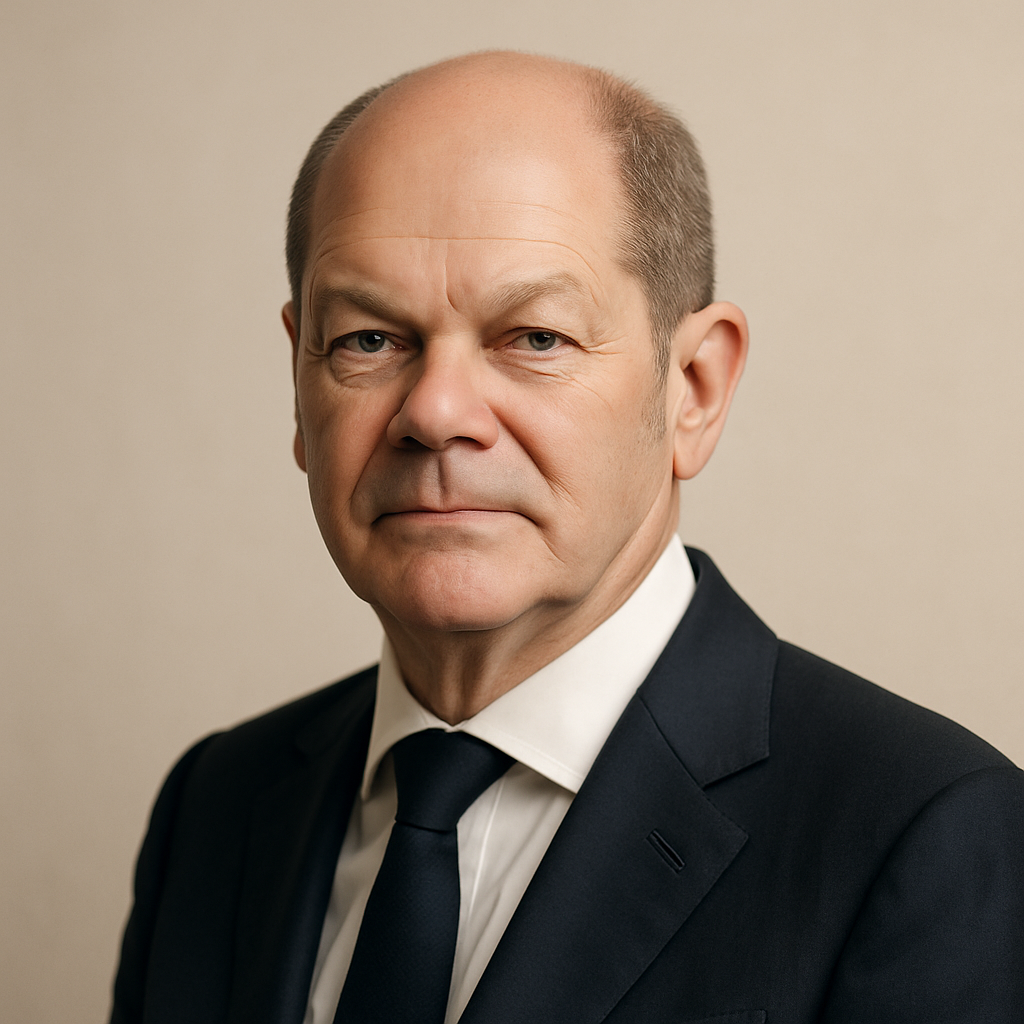
Speech by Chancellor Scholz at the 23rd German Banking Day on April 23, 2024, in Berlin
 Olaf Scholz · Member of the Bundestag
- Context
- Scholz addressed the 23rd German Banking Day in Berlin on April 23, 2024, speaking on economic challenges and the banking sector's role in Germany's transformation.
- Main themes
- German banking sector resilience, economic transformation, energy transition, skilled worker shortage, infrastructure investment, digitization, competitiveness, post-fossil age, renewable energy expansion, private capital and financing, bureaucracy reduction, climate neutrality
- Duration
- ~26 min
- Words
- 3,120
- Sentences
- 179
- Readability
- 53
- Grade
- 10.0
- Syntax
- 2.79
- Vocabulary
- 2.01
Translated from German
The broad sphere of national life a sentence belongs to. Every sentence has an Arena, so it is the denominator the other indices are read against.
Other179 sentences in 37 paragraphs
Dear Mr. Sewing,
dear Mr. Herkenhoff,
ladies and gentlemen,
I am pleased to be part of the Banking Day again, here in the Berlin West Harbor, in close proximity to water and ships. As a Hamburger, I particularly like that. The accompanying motto "Navigating through turbulent times" is aptly chosen. For the times are turbulent, and in rough seas, navigation is especially important. Navigating in maritime terms means two things: first, determining the location of a ship, and second, keeping it on the right course.
Let us start with the location. Where do we stand as an industrial nation and as an economy, and where do the banks stand?
In the global financial crisis of 2008, the banks were at the center of criticism. Today we can say: legislators and banking supervision, but especially the banks themselves, have learned from the financial crisis. They have implemented far-reaching and effective reforms. For example, the establishment of higher capital buffers has strengthened the resilience of your institutions. Unlike in the financial crisis of 2008, the banks today are not part of the problem, but part of the solution. When we launched large rescue and stabilization programs during the COVID-19 pandemic and the energy crisis, you were by our side and by the side of your customers. You provided financing and liquidity, thus making a significant contribution to resolving the crisis. For that, I want to express my gratitude to you today. Thank you!
But we need strong banks not only as crisis firefighters. Without a capable financial sector, there is no transformation. That must be clear to everyone. Because the global restructuring of our economies for the post-fossil age and the digitization of our societies require and enable investments that can only be made with private capital, in the form of loans, but also with equity investments. Mario Draghi recently mentioned the figure of 500 billion euros per year. That is quite a lot. Even if one might not need to fully embrace this figure, it does illustrate the scale of the task.
Determining our location also requires a sober look at our economy and its competitiveness. It is clear: stagnation last year, 0.2 percent growth this year ‑ that is too little; we can do more. When we look closely, we see that there are reasons for this, primarily external reasons. The global economy is cooling down. China is growing significantly slower than before. We had to completely forgo energy from Russia within a few months, resulting in skyrocketing energy prices. Within a year, interest rates have risen by about four percentage points from a historically low level.
In addition, there are of course also structural growth issues. There is no shortage of work, but a shortage of workers. We have done too little for too long to secure a reliable, affordable energy supply in Germany. We are hampering ourselves with bureaucracy and overregulation in many areas. We also need to catch up on serious shortcomings in investments in infrastructure and digitization.
We are addressing all these obstacles, ladies and gentlemen. This is for me the core of a modern supply policy in times of transformation and change.
This brings me to the second part of navigation, the right course. The goal is clear. We want, and we must, become climate-neutral in a world with probably nearly ten billion inhabitants by 2045. We want to remain a strong industrial nation. To achieve this, we have changed course.
First:
We are pulling all levers to have more qualified workers in Germany. Because the shortage of workers is the factor that most strongly hinders our growth. That is why we have created the Skilled Workers Immigration Act. That is why we support training and further education in companies. That is why we are investing in the expansion of all-day care. That is why we promote and need AI investments in our companies. That is why I advocate making it even more attractive to work voluntarily beyond the statutory retirement age.
Second:
We are ensuring sufficient affordable energy. In the future, we will have to import much less of it, but produce it here. In the expansion of renewable energies in Germany, we have nearly reached the pace we need to produce 80 percent of electricity from renewable sources by 2030. Mind you, it will be more electricity than we need today. In solar energy, we are already exceeding the target. In onshore wind, the approved capacity has nearly doubled in the past year. The approval record is the expansion record in one or two years. We are also seeing that the development of transmission networks is picking up speed. Until now, the construction of lines always took longer than planned; now, for the first time, it is going faster than previously planned. At the same time, we have prepared for times when there is no wind and the sun is not shining. With what has been somewhat abstractly discussed in the media as a power plant strategy, we are ensuring that with the construction of modern, highly flexible, and climate-friendly power plants, energy will be available even when environmental conditions do not allow for immediate solar and wind energy. 24 hours of electricity a day, seven days a week, and much more than today, is what we need for the economy and industry of the future. The framework for our hydrogen core network is also in place, by the way, privately financed, albeit state-secured. With that, we now have almost all the elements for the future energy supply in Germany.
Third:
We will be faster and simpler. I just spoke about the accelerated ramp-up in the expansion of renewable energies. The reason for this is that we have given this goal legal priority in planning processes. This is having an effect. That is why we have also introduced such a priority for electricity networks, hydrogen networks, and railway lines. We are also working on a simpler building law, and we are working closely with the states. At the end of last year, we reached an agreement on what is called the Germany Pact. Together, we are accelerating and simplifying planning and approval processes in a quantity and dimension that has not been seen in Germany in the last 30 or 40 years. We have a lot to do. Because in the last 30 or 40 years ‑ if you look closely and reflect, you will see that it probably goes back much further ‑ we have lovingly and painstakingly ensured that it has become increasingly difficult and complicated to obtain permits. Now we must put in as much effort and the same love and care to turn it all back in the other direction.
Many business associations were closely involved in the creation. For this reason, the Germany Pact will bring real improvements. To ensure that this is not just an announcement, we will review in May, together with the states, how far we have come and where we need to pick up the pace. Because I want Germany to truly change course.
Perhaps I may also speak about something that always concerns me. There may be situations in companies, also in banks and capital institutions, but certainly also in politics, where one does not start because one thinks one will not finish anyway. This is a significant challenge in a federal state. Those responsible are always the ones who appear in the evening news, in "Tagesschau," "heute," and various other news programs, which are discussed after 8 p.m. But sometimes those who are responsible do not appear there, which, by the way, leads to some situations, as you experience, where one can quite shamelessly direct demands at the non-responsible.
An example aside from what concerns approval processes, the digitization of foreign authorities: There are exactly 560 responsible parties in Germany for this. But should we therefore refrain from getting things done because it might not work out? ‑ My answer is no. That is why we have managed to argue for so long that we now have a firm agreement on the digitization of all foreign authorities in Germany.
This also applies to the many planning and approval processes throughout Germany. There is always someone responsible. If you follow the consultants who always give you the wrong advice, you would say: Don't start the thing! You are only responsible for a part. If you later say: "I have a success," people will tell you: "This and that and that won't work," which you cannot change at all. ‑ Therefore, in the federal state, which is the strength and power of Germany, we must also manage to implement efficient regulations by organizing something like a hook and then taking the acceleration steps at all levels that can only succeed together, and as politicians, take the risk that we will be held accountable for failures that we do not even have control over. But doing nothing is no longer an alternative.
Just recently, we have also relieved companies of unnecessary bureaucracy. Overall, the last relief package we decided on last summer saves about three billion euros annually. This is not a large amount for everyone given the size of the German economy, but it is something we are doing.
It is also clear, and you will feel this every day: We are still a long way from our goal. That is why we are continuing to drive change forward with great consistency. The view towards Brussels is, of course, very important in this regard. Commission President Ursula von der Leyen has promised to abolish at least 25 percent of reporting obligations. I would say: That would be a start! Because, to be honest, a large part ‑ perhaps even the largest part ‑ of what we now perceive as bureaucratic obligations comes from regulations that were once decided in Brussels, and it is even more difficult to implement a change there because you do not know who to hold accountable as a voter for all the many decisions that are made there. But still, it would be a start. Moreover, we have firmly allied with France that we want to work on this after the European elections.
By the way, we will also ensure that the financial industry benefits from the reduction of bureaucracy. Because it has been shown that there are some regulations that have gone beyond the target. We are therefore advocating for a review and simplification of the financial market regulations. There is much to be done, especially regarding reporting and notification obligations.
Fourth:
We are addressing the investment backlog and targeting funds where economic growth can be triggered. This year, that amounts to nearly 110 billion euros for fiber optic lines, for the renewal of railways, better roads and new bridges, for programs that promote a comprehensive charging station network, the hydrogen ramp-up, the transformation of industrial processes, energy-efficient building renovations, or microelectronics. We have also planned high federal investments for the coming years. In addition, there are the investments from the states and municipalities.
Before my trip to China, an expert told me that the automotive industry must build smartphones on wheels instead of cars in the future. That is certainly an exaggeration. But one thing is true: In the competition for mobility, the one who builds the most powerful batteries, manufactures the best semiconductors, and programs the best software will be at the forefront. As a broadly positioned export country, we must ensure that we secure our technological sovereignty and our industrial competitiveness in many fields, because it is clear that we will not maintain our position with the cheap production of mass goods, but by being at the forefront in technology and innovation. That has always characterized Made in Germany, and it should remain so.
To achieve this, we, the state and companies, are investing significant sums in research and development, three percent of our gross domestic product. I want to emphasize this point once again. When you look at the major nations of Europe, we are the only one spending more than three percent on research and development, and if you look at the global ranking of those who invest heavily in research and development, you find the USA, China, Japan, and Germany, and then there is a long gap before any other European state appears, and especially not the European Union as a whole, which should actually be at the forefront—right at the front—if everyone were to invest at this scale. Sometimes one ponders the reasons for the export surplus of the German economy or why we are currently ranked third in terms of global economic power, despite having only 84 million inhabitants. But this is closely related to this very topic. Research and development must remain high, both privately and publicly. Only together does this provide the foundation for growth and progress for tomorrow.
Furthermore, we are also decisively investing in the promotion of key technologies. The many new establishments we have attracted to Germany—in semiconductors, battery technology, artificial intelligence, and pharmaceuticals—bring not only technological sovereignty and immediate value creation but also great benefits for the respective region, for start-ups, and for the German Mittelstand. Such investments attract further establishments and thus create entire clusters. Creating the right environment for this is the key to being successful in the ongoing, profound transformation, which can only be compared in its scope to the industrial revolution.
It is clear that in order for Germany, with one percent of the world’s population, and for the EU, with just over five percent of the world’s population, to remain globally competitive, to improve growth and innovation financing, we need not only public but also a lot of private capital. I have already mentioned Mario Draghi's estimate of 500 billion euros per year and just want to emphasize it once again: it is a lot, and it is predominantly not state-funded, which I will also present everywhere in Brussels.
To even begin to meet this demand, we need a deeper and more efficient capital market in Europe. We must provide companies, including start-ups, with financing options and capital for investments so that they want to come to Germany and Europe instead of having to move to other continents to grow and expand. I know: banks and international financial investors are ready, but they often fail due to nationally organized capital markets in Europe. Therefore, I want to make it very clear: it is my conviction that the essential difference in growth prospects between the USA and Europe lies in the lack of a capital market union and also the lack of a banking union. We will have to make this a top priority, moving away from any expert committees to ensure that it is driven politically.
There is so much to consider regarding this issue. I will touch on just one topic, which I may elaborate on in a moment, the insolvency law. Yes, perhaps there are 27 versions of the best insolvency law in the world. But perhaps it would be better if we had the second-best, but uniformly for all 27. This does not have to extend to all areas of insolvency law, but this perspective must exist! Of course, some have benefited in the past from taking advantage of special benefits from their regulations or tax practices. But if defending that means we cannot fully realize the size of the European capital market, then it means giving up growth, and that cannot be replaced by any state investment and innovation fund. We can help with what we do, but we cannot replace what private capital must achieve. We need more dynamism, we need more progress, and we need more willingness to cut old ties.
Substantial progress in deepening the capital market union is therefore necessary. Given the investment needs, this is crucial for the future of Europe and our competitiveness, as I just mentioned. It is indeed time, to emphasize this once again, to tackle the tougher challenges. We need a harmonization of insolvency law, as I said. We want more common tax standards. We want a stronger harmonization of capital market supervision, without everything being consolidated in one place, but in a way that it fits together. We want to strengthen the securitization market to finance the real economy, and we want private investors to have access to a broader range of financial products.
On all these points, we are working intensively with the French government on concrete proposals, and this is important to us because we need to apply pressure now to make things happen, and we hope that if we proceed together, it will motivate everyone else to join in as well. We just had the debate in the European Council; you mentioned it. It was very interesting. We still have some work ahead of us! Many people expressed their excitement. But now it is about daring to tackle these issues and not letting them linger any longer.
That we also need to complete the banking union, I may not need to say here, but I still want to emphasize it. It is important to me that this is not forgotten; because it is good and right that we have established common rules for banking supervision and resolution in the European Union. But the banking union is more than just a common safety net, as some think. We need a common market for banking services. We particularly need better framework conditions for cross-border banks. They must have full flexibility in deploying their capital and liquidity within the banking union.
We also need a more efficient, better, and cheaper access to financing. Let me add: we are fully committed to further strengthening the financial center of Germany. Because this strengthening also includes networking with the important regulatory authorities, I am very pleased that we have succeeded in establishing the new EU Anti-Money Laundering Authority in Frankfurt.
Ladies and gentlemen, yes, the times are turbulent. Germany is not unaffected by this. But we are navigating through it well. This is also shown by some important indicators. Inflation is at its lowest in three years. Many experts expect interest rates to fall again soon. The number of employees is at an all-time high, and production figures in Germany are also rising again: in February, 5.7 percent growth in the automotive industry, 4.6 percent in the chemical industry, 7.9 percent in construction, and 4.2 percent in particularly energy-intensive companies. We know where we stand, our goal is clear, and we have set our sails correctly. The further necessary tailwind comes especially from you, from the financial sector, and that is why thank you very much for the invitation!
The original German. The tags above are read on the English translation's sentences.
Sehr geehrter Herr Sewing,
sehr geehrter Herr Herkenhoff,
meine Damen und Herren,
ich freue mich, wieder beim Bankentag dabei zu sein, und das hier im Berliner Westhafen in unmittelbarer Nähe zu Wasser und Schiffen. Das gefällt mir als Hamburger besonders gut. Auch das dazugehörige Motto „Navigieren durch unruhige Zeiten“ ist treffend gewählt. Denn die Zeiten sind unruhig, und in rauer See kommt es besonders auf die Navigation an. Navigieren bedeutet im Seewesen zwei Dinge, erstens, den Standort eines Schiffes zu bestimmen und, zweitens, es auf dem richtigen Kurs zu halten.
Fangen wir mit dem Standort an. Wo stehen wir als Industrieland und als Volkswirtschaft, und wo stehen die Banken?
In der weltweiten Finanzkrise des Jahres 2008 standen die Banken im Fokus der Kritik. Heute können wir sagen: Gesetzgeber und Bankenaufsicht, aber besonders auch die Banken selbst haben aus der Finanzkrise gelernt. Sie haben weitreichende und wirksame Reformen durchgeführt. So hat etwa der Aufbau höherer Eigenkapitalpuffer die Widerstandsfähigkeit Ihrer Institute gestärkt. Anders als in der Finanzkrise 2008 sind die Banken heute nicht Teil des Problems, sondern Teil der Lösung. Als wir in der Coronapandemie und während der Energiekrise große Rettungs- und Stabilisierungsprogramme aufgelegt haben, waren Sie an unserer Seite und an der Seite Ihrer Kundinnen und Kunden. Sie haben Finanzierungen und Liquidität bereitgestellt und so ganz maßgeblich zur Krisenlösung beigetragen. Dafür will ich Ihnen heute ausdrücklich danken. Danke!
Aber wir brauchen starke Banken nicht nur als Krisenfeuerwehr. Ohne einen leistungsfähigen Finanzsektor keine Transformation. Das muss jedem klar sein. Denn der globale Umbau unserer Volkswirtschaften für das postfossile Zeitalter und die Digitalisierung unserer Gesellschaften erfordern und ermöglichen Investitionen, die überhaupt nur mit privatem Kapital zu leisten sind, in Form von Krediten, aber auch mit Kapitalbeteiligungen. Mario Draghi hat kürzlich die Zahl von 500 Milliarden Euro pro Jahr in den Raum gestellt. Das ist eine ganze Menge. Auch wenn man sich diese Zahl vielleicht nicht eins zu eins zu eigen machen muss, zeigt sich doch die Dimension der Aufgabe.
Zur Standortbestimmung gehört auch ein nüchterner Blick auf unsere Volkswirtschaft und ihre Wettbewerbsfähigkeit. Klar ist: Die Stagnation im vergangenen Jahr, 0,2 Prozent Wachstum in diesem Jahr ‑ das ist zu wenig; da geht mehr. Wenn wir es genau betrachten, dann sehen wir, dass es Gründe dafür gibt, zum Beispiel zuallererst externe Gründe. Die Weltkonjunktur kühlt sich ab. China wächst deutlich langsamer als früher. Wir mussten innerhalb weniger Monate vollständig auf die Energie aus Russland verzichten mit der Folge explodierender Energiepreise. Innerhalb eines Jahres sind die Leitzinsen von einem historisch außergewöhnlichen Tief um etwa vier Prozentpunkte gestiegen.
Daneben gibt es natürlich auch strukturelle Wachstumsthemen. Es fehlt nicht an Arbeit, aber an Arbeitskräften. Wir haben zu lange zu wenig getan, um eine verlässliche, bezahlbaren Energieversorgung in Deutschland zu sichern. Wir hemmen uns selbst mit Bürokratie und Überregulierung in vielen Bereichen. Wir müssen auch schwere Versäumnisse bei Investitionen in Infrastruktur und Digitalisierung aufholen.
Alle diese Hemmnisse, meine Damen und Herren, gehen wir an. Das ist für mich der Kern einer modernen Angebotspolitik in Zeiten der Transformation und Veränderung.
Damit bin ich beim zweiten Teil der Navigation, dem richtigen Kurs. Das Ziel ist klar. Wir wollen, und wir müssen in einer Welt mit dann wahrscheinlich knapp zehn Milliarden Einwohnern bis 2045 klimaneutral werden. Wir wollen dabei ein starkes Industrieland bleiben. Damit das gelingt haben wir umgesteuert.
Erstens:
Wir setzen alle Hebel in Bewegung, um mehr qualifizierte Arbeitnehmerinnen und Arbeitnehmer in Deutschland zu haben. Denn der Mangel an Arbeitskräften ist der Faktor, der unser Wachstum am stärksten bremst. Deswegen haben wir das Fachkräfteeinwanderungsgesetz geschaffen. Deswegen unterstützen wir bei der Aus- und Weiterbildung in den Unternehmen. Deswegen investieren wir in den Ausbau der Ganztagesbetreuung. Deswegen fördern und brauchen wir KI-Investitionen in unseren Unternehmen. Deswegen setze ich mich dafür ein, dass es noch attraktiver wird, freiwillig über den gesetzlichen Renteneintritt hinaus zu arbeiten.
Zweitens:
Wir sorgen für ausreichend bezahlbare Energie. Diese werden wir zukünftig viel weniger importieren müssen, sondern hier herstellen. Beim Ausbau der erneuerbaren Energien in Deutschland haben wir annähernd das Tempo erreicht, das wir brauchen, um 2030 Strom zu 80 Prozent aus erneuerbaren Energien zu produzieren. Wohlgemerkt, es wird mehr Strom sein als heute, den wir dann brauchen. Bei der Solarenergie liegen wir schon über dem Soll. Beim Wind an Land hat sich die genehmigte Leistung innerhalb des vergangenen Jahres beinahe verdoppelt. Der Genehmigungsrekord ist der Ausbaurekord in ein, zwei Jahren. Auch beim Ausbau der Übertragungsnetze sehen wir, dass die Entwicklung Fahrt aufnimmt. Bisher dauerte der Bau von Leitungen immer länger als vorgesehen; nun geht es zum ersten Mal schneller als zwischenzeitlich geplant. Zugleich haben wir für Zeiten, in denen kein Wind weht und die Sonne nicht scheint, vorgesorgt. Mit dem, was in den Medien ein bisschen abstrakt als Kraftwerksstrategie diskutiert wurde, sorgen wir dafür vor, dass mit dem Bau moderner, hochflexibler und klimafreundlicher Kraftwerke auch dann Energie zur Verfügung steht, wenn es mit Sonne und Wind umweltbedingt nicht gleich funktioniert. 24 Stunden Strom am Tag, sieben Tage die Woche und auch viel mehr als heute, das brauchen wir für die Wirtschaft und Industrie der Zukunft. Auch der Rahmen für unser Wasserstoffkernnetz steht, übrigens privat finanziert, wenn auch staatlich abgesichert. Damit haben wir mittlerweile alle Elemente für die Energieversorgung der Zukunft in Deutschland fast beisammen.
Drittens:
Wir werden schneller und einfacher. Über den beschleunigten Hochlauf beim Ausbau der erneuerbaren Energien habe ich eben gesprochen. Grund dafür ist, dass wir diesem Ziel gesetzlichen Vorrang in Planungsprozessen eingeräumt haben. Das wirkt. Deswegen haben wir solch einen Vorrang auch bei Stromnetzen, Wasserstoffnetzen und bei Bahntrassen eingeführt. Wir arbeiten aber auch an einem einfacheren Baurecht, und wir arbeiten eng mit den Ländern zusammen. Ende des vergangenen Jahres haben wir uns auf einen sogenannten Deutschlandpakt verständigt. Gemeinsam beschleunigen und vereinfachen wir Planungs- und Genehmigungsverfahren in einer Menge und Dimension, wie es in Deutschland in den letzten 30 oder 40 Jahren noch nicht der Fall gewesen ist. Wir haben richtig viel vor. Denn die letzten 30 oder 40 Jahre ‑ wenn man sich genau umblickt und zurückschaut, dann sieht man, dass es wahrscheinlich noch viel länger zurückreicht ‑ haben wir mit viel Liebe und Mühe dafür gesorgt, dass es immer schwieriger und komplizierter wurde, Genehmigungen zu bekommen. Nun müssen wir uns eben entsprechend viel anstrengen und genauso viel Liebe und Mühe aufwenden, um das alles wieder in die andere Richtung zu drehen.
Viele Wirtschaftsverbände waren an der Erstellung eng beteiligt. Auch deswegen wird der Deutschlandpakt echte Verbesserungen bringen. Damit das alles nicht nur Ankündigung bleibt, schauen wir im Mai gemeinsam mit den Ländern, wie weit wir schon sind und wo wir noch mehr Tempo brauchen. Denn ich will, dass Deutschland wirklich umsteuert.
Vielleicht darf ich an dieser Stelle auch über eine Sache sprechen, die mich immer umtreibt. Es gibt vielleicht in Unternehmen, auch in Banken und Kapitalinstitutionen, aber auf alle Fälle auch in der Politik Situationen, in denen man nicht anfängt, weil man denkt, man werde sowieso nicht fertig. Das ist in einem föderalen Staat eine ganz große Herausforderung. Verantwortlich sind immer die, um die es abends in der „Tagesschau“, bei „heute“ und in den verschiedenen anderen Nachrichtensendungen geht, was nach 20 Uhr diskutiert wird. Aber zuständig sind manchmal diejenigen, die dort nicht vorkommen, was übrigens bei manchen der Dinge, wie Sie erleben, dazu führt, dass man ziemlich ungeniert als Zuständiger Forderungen an die Unzuständigen richten kann.
Ein Beispiel abseits dessen, was Genehmigungsprozesse betrifft, die Digitalisierung von Ausländerbehörden: Dafür gibt es genau 560 Verantwortliche in Deutschland. Aber sollen wir deshalb, weil es ja nicht klappen kann, sich zu streiten, darauf verzichten, die Dinge hinzubekommen? ‑ Meine Antwort ist nein. Deshalb haben wir es einfach einmal geschafft, uns so lange zu streiten, bis wir jetzt eine feste Vereinbarung über die Digitalisierung sämtlicher Ausländerbehörden in Deutschland haben.
Das gilt natürlich auch für die vielen Planungs- und Genehmigungsverfahren überall in Deutschland. Immer ist irgendjemand zuständig. Wenn man den Beratern folgt, die einem immer die falschen Ratschläge geben, dann würde man sagen: Fang die Sache nicht an! Du bist nur für einen Teil zuständig. Wenn du hinterher sagst: „Ich habe einen Erfolg“, dann sagen dir die Leute: „Das und das und das klappt nicht“, woran du gar nichts ändern kannst. ‑ Deshalb müssen wir im föderalen Staat, der die Stärke und die Kraft Deutschlands ausmacht, es aber auch schaffen, effiziente Regelungen durchzusetzen, indem wir so etwas wie ein Unterhaken organisieren und dann auf allen Ebenen die Beschleunigungsschritte gehen, die tatsächlich nur zusammen einen Erfolg haben, und als Politiker das Risiko eingehen, dass wir für Misserfolge, die wir selbst gar nicht in der Hand haben, mit haftbar gemacht werden. Aber Nichtstun ist keine Alternative mehr.
Gerade erst haben wir auch die Unternehmen weiter von unnötiger Bürokratie entlastet. Insgesamt spart das letzte Entlastungspaket, das wir im vergangenen Sommer beschlossen haben, rund drei Milliarden Euro jährlich. Das ist bei der Größe der deutschen Volkswirtschaft nicht bei jedem ein großer Betrag, aber es ist schon einmal etwas, was wir tun.
Klar ist aber auch, und das werden Sie jeden Tag empfinden: Wir sind noch lange nicht am Ziel. Deshalb treiben wir die Veränderung auch weiter mit großer Konsequenz voran. Ganz wichtig ist dabei selbstverständlich der Blick nach Brüssel. Die Kommissionspräsidentin Ursula von der Leyen hat versprochen, mindestens 25 Prozent der Berichtspflichten abzuschaffen. Ich sage einmal: Das wäre einmal ein Anfang! Denn, ehrlich gesagt, stammt auch ein großer Teil ‑ vielleicht sogar der allergrößte Teil ‑ der Dinge, die wir heute als bürokratische Pflichten empfinden, aus Regulierungen, die einmal in Brüssel beschlossen worden sind, und da ist es ja noch schwieriger, eine Veränderung durchzusetzen, weil man überhaupt nicht weiß, wen man denn so als Wähler verantwortlich machen soll für die ganzen vielen Entscheidungen, die da getroffen worden sind. Aber trotzdem, es wäre ein Anfang. Außerdem haben wir uns mit Frankreich fest verbündet, dass wir nach den Europawahlen genau daran arbeiten wollen.
Wir werden übrigens auch darauf achten, dass die Finanzindustrie vom Bürokratieabbau profitiert. Denn es hat sich gezeigt, dass es an einigen Stellen über das Ziel hinausgeschossene Regelungen gibt. Wir setzen uns deswegen für eine Überprüfung und Vereinfachung des Finanzmarktregelwerkes ein. Besonders bei den Berichts- und Meldepflichten gibt es da manches zu tun.
Viertens:
Wir gehen den Investitionsstau an und setzen Mittel gezielt dort ein, wo das volkswirtschaftliche Wachstum ausgelöst werden kann. In diesem Jahr sind das insgesamt fast 110 Milliarden Euro für Glasfaserleitungen, für die Erneuerung von Schienen, bessere Straßen und neue Brücken, für Programme, mit denen ein flächendeckendes Ladesäulennetz, der Wasserstoffhochlauf, die Transformation von Industrieprozessen, energetische Gebäudesanierung oder Mikroelektronik gefördert werden. Auch für die kommenden Jahre haben wir hohe Investitionen des Bundes geplant. Dazu kommen noch die Investitionen der Länder und Kommunen.
Vor meiner Chinareise hat ein Experte zu mir gesagt, die Autoindustrie müsse statt Autos künftig Smartphones auf Rädern bauen. Das ist sicher übertrieben. Aber eines stimmt: Im Mobilitätswettbewerb vorne mit dabei ist derjenige, der die leistungsstärksten Batterien baut, der die besten Halbleiter herstellt und die beste Software programmiert. Als breit aufgestelltes Exportland müssen wir für sehr viele Felder sicherstellen, dass wir unsere technologische Souveränität und unsere industrielle Wettbewerbsfähigkeit sichern, weil doch klar ist, dass wir nicht mit der billigen Produktion von Massengütern unseren Platz behaupten werden, sondern, indem wir bei Technologie und Innovation spitze sind. Das macht Made in Germany seit jeher aus, und das soll auch so bleiben.
Um das zu erreichen, geben wir, Staat und Unternehmen, erhebliche Summen für Forschung und Entwicklung aus, drei Prozent unseres Bruttoinlandsprodukts. Auch an der Stelle will ich das noch einmal kurz unterstreichen. Wenn man die großen Nationen Europas anschaut, dann sind wir die einzige mit mehr als drei Prozent für Forschung und Entwicklung, und wenn man sich das Weltranking derjenigen anschaut, die viel Geld für Forschung und Entwicklung ausgeben, sind da die USA, China, Japan und Deutschland, und dann ist da ganz lange kein anderer europäischer Staat, aber vor allem auch nicht die Europäische Union als Gesamtheit, die eigentlich vorne liegen müsste ‑ ganz vorne, wenn alle das in dieser Größenordnung machen würden. Manchmal macht man sich ja Gedanken über die Gründe für den Exportüberschuss der deutschen Volkswirtschaft oder darüber, warum wir nach manchen Rechnungen, was die weltwirtschaftliche Kraft angeht, jetzt auf Platz drei liegen, obwohl wir nur 84 Millionen Einwohner haben. Aber das hat ganz viel mit genau diesem Thema zu tun. Forschung und Entwicklung müssen weiter hoch bleiben, privat und staatlich. Nur zusammen bringt das die Grundlage für das Wachstum und den Fortschritt für morgen.
Wir investieren im Übrigen auch ganz entschlossen in die Förderung von Schlüsseltechnologien. Die vielen Neuansiedlungen, die wir so für Deutschland gewinnen konnten ‑ bei Halbleitern, in der Batterietechnologie, bei künstlicher Intelligenz und im Pharmabereich ‑, bringen neben technologischer Souveränität und unmittelbarer Wertschöpfung auch großen Nutzen für die jeweilige Region, für Start-ups und für den deutschen Mittelstand. Denn solche Investitionen ziehen weitere Ansiedlungen nach sich und lassen so ganze Cluster entstehen. Dafür das richtige Umfeld zu schaffen, das ist der Schlüssel, um erfolgreich zu sein in der laufenden, tiefgreifenden Transformation, die in ihren Ausmaßen wohl nur mit der industriellen Revolution verglichen werden kann.
Dabei ist klar: Um als Deutschland mit einem Prozent der Weltbevölkerung, um als EU mit reichlich fünf Prozent der Weltbevölkerung global vorne dabei zu bleiben, um Wachstums- und Innovationsfinanzierung zu verbessern, brauchen wir nicht nur öffentliches, sondern auch viel privates Kapital. Ich habe Mario Draghis Schätzung von 500 Milliarden Euro im Jahr eben schon erwähnt und will das einfach nur noch einmal unterstreichen: Es ist eine Menge, und das ist überwiegend nicht staatlich, was ich auch in Brüssel überall einmal vortragen werde.
Um uns diesem Bedarf auch nur anzunähern, brauchen wir einen tieferen und leistungsfähigeren Kapitalmarkt in Europa. Wir müssen Unternehmen, darunter auch Start-ups, Finanzierungsmöglichkeiten und Kapital für Investitionen bieten, damit sie nach Deutschland und Europa wollen, anstatt auf andere Kontinente ausweichen zu müssen, um dort zu wachsen und zu expandieren. Ich weiß: Die Banken und internationale Finanzinvestoren stehen bereit, scheitern jedoch häufig an national organisierten Kapitalmärkten in Europa. Deshalb will ich hier sehr klar sagen: Es ist meine Überzeugung, dass der wesentliche Unterschied für die Wachstumsperspektiven der USA oder Europas in der fehlenden Kapitalmarktunion und auch der fehlenden Bankenunion liegt. Wir werden das zu einem Thema größter Priorität machen müssen, weg von irgendwelchen Fachexpertenausschüssen, hin dazu, dass das politisch vorangetrieben wird.
Es gibt so viel, was man bedenken muss bei dieser Frage. Ich greife nur ein Thema auf, über das ich gleich vielleicht noch zwei Sätze sagen werde, das Insolvenzrecht. Ja, vielleicht gibt es 27 Mal das beste Insolvenzrecht der Welt. Aber vielleicht wäre es besser, wir hätten einmal das zweitbeste, aber einheitlich für alle 27. Das muss sich ja gar nicht auf alle Bereiche des Insolvenzrechts erstrecken, aber diese Perspektive muss sein! Natürlich haben einige in der Vergangenheit davon profitiert, dass sie ein bisschen von Sondervorteilen ihrer Regulierung oder Steuerpraxis Gebrauch gemacht haben. Aber wenn, das zu verteidigen, heißt, dass wir die Größe des europäischen Kapitalmarkts nicht voll zur Entfaltung bringen können, dann bedeutet das, auf Wachstum zu verzichten, und das kann kein staatlicher Investitions- und Innovationsfonds ersetzen. Wir können helfen mit dem, was wir da machen, aber wir können nicht das ersetzen, was privates Kapital zustande bringen muss. Wir brauchen mehr Dynamik, wir brauchen mehr Fortschritt, und wir brauchen mehr Bereitschaft, alte Zöpfe abzuschneiden.
Substanzielle Fortschritte bei der Vertiefung der Kapitalmarktunion sind also notwendig. Angesichts des Investitionsbedarfs ist das für die Zukunft Europas und unserer Wettbewerbsfähigkeit, wie ich eben gesagt habe, von entscheidender Bedeutung. Es ist eben die Zeit, um das noch einmal zu unterstreichen, die dickeren Bretter zu bohren. Wir brauchen eine Harmonisierung des Insolvenzrechts, wie ich gesagt habe. Wir wollen mehr gemeinsame Steuerstandards. Wir wollen eine stärkere Harmonisierung der Kapitalmarktaufsicht, ohne dass alles gleich an einer Stelle zusammengefasst wird, aber so, dass es zusammenpasst. Wir wollen eine Stärkung des Verbriefungsmarktes zur Finanzierung der Realwirtschaft, und wir wollen, dass Privatanleger Zugang zu einer breiteren Palette von Finanzprodukten erhalten.
Hinsichtlich all dieser Punkte arbeiten wir mit der französischen Regierung intensiv an konkreten Vorschlägen, und das ist uns wichtig, weil wir jetzt den Druck machen müssen, damit etwas passiert, und hoffen, dass, wenn wir dabei gemeinsam vorgehen, das alle anderen motiviert, auch mitzumachen. Wir hatten gerade die Debatte im Europäischen Rat; Sie haben das angesprochen. Es war sehr interessant. Da haben wir noch etwas vor uns! Es haben sich sehr viele gemeldet, ganz aufgeregt. Aber es geht jetzt darum, dass wir uns trauen, diese Dinge auch anzugehen und sie nicht weiter schleifen zu lassen.
Dass wir auch noch eine Vollendung der Bankenunion brauchen, das muss ich hier vielleicht nicht sagen, aber will ich trotzdem noch einmal vertiefen. Es ist für mich wichtig, dass das nicht vergessen wird; denn es ist gut und richtig, dass wir in der Europäischen Union gemeinsame Regeln zur Bankenaufsicht und Abwicklung geschaffen haben. Aber die Bankenunion ist mehr als nur ein gemeinsames Sicherheitsnetz, wie manche denken. Wir brauchen einen gemeinsamen Markt für Bankdienstleistungen. Wir brauchen insbesondere bessere Rahmenbedingungen für grenzüberschreitend tätige Banken. Sie müssen volle Flexibilität dabei haben, ihr Kapital und ihre Liquidität innerhalb der Bankenunion einzusetzen.
Wir benötigen ebenfalls einen effizienteren, besseren und günstigeren Zugang zur Finanzierung. Lassen Sie mich hinzufügen: Wir setzen uns mit ganzer Kraft dafür ein, gerade den Finanzstandort Deutschland dabei weiter zu stärken. Weil zu dieser Stärkung auch die Vernetzung mit den wichtigen Regulierungsbehörden gehört, freue ich mich sehr, dass es gelungen ist, die neue EU-Anti-Geldwäschebehörde in Frankfurt anzusiedeln.
Meine Damen und Herren, ja, die Zeiten sind unruhig. Auch an Deutschland geht das nicht spurlos vorbei. Aber wir navigieren da gut hindurch. Das zeigen ja nun auch einige wichtige Kennzahlen. Die Inflation liegt so niedrig wie seit drei Jahren nicht. Viele Experten rechnen demnächst wieder mit sinkenden Zinsen. Die Zahl der Beschäftigten ist so hoch wie nie, und auch die Produktionszahlen in Deutschland springen wieder an: im Februar 5,7 Prozent Wachstum in der Automobilindustrie, 4,6 Prozent in der Chemieindustrie, 7,9 Prozent im Baugewerbe, 4,2 Prozent bei den besonders energieintensiven Unternehmen. Wir wissen, wo wir stehen, unser Ziel ist klar, und wir haben die Segel richtig gesetzt. Der weiter nötige Rückenwind, der kommt besonders auch von Ihnen, von der Finanzwirtschaft, und gerade deshalb schönen Dank für die Einladung!