




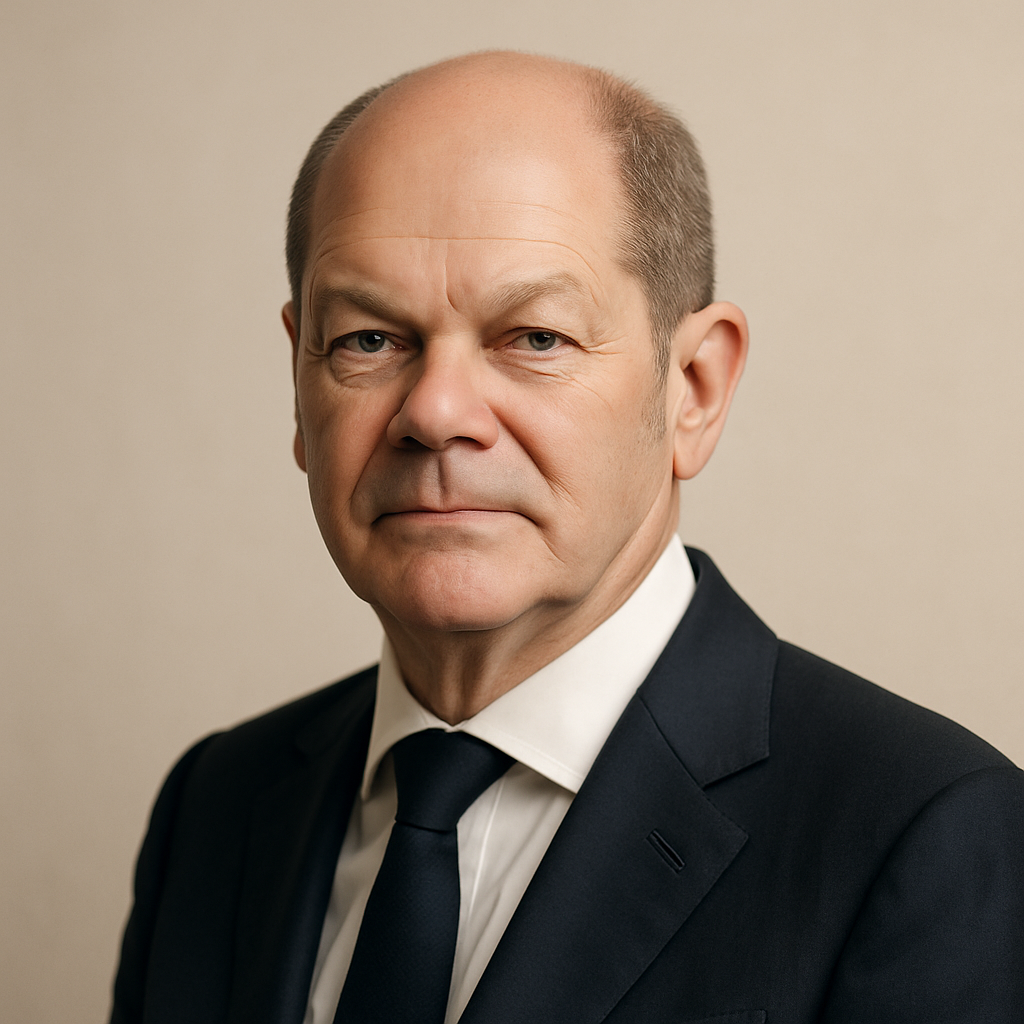
Speech by Federal Chancellor Olaf Scholz at the 27th German Savings Bank Day on May 31, 2023, in Hanover:
 Olaf Scholz · Member of the Bundestag
- Context
- Scholz addressed the 27th German Savings Bank Day on May 31, 2023, in Hanover, speaking on the role of savings banks and Germany's response to major current challenges.
- Main themes
- Savings banks, German Sparkassen Day, financial stability and trust, Russia-Ukraine war, energy transition, medium-sized business financing, renewable energy, relief measures for citizens, European peace order, Bundeswehr funding, civic engagement, decarbonization
- Duration
- ~20 min
- Words
- 2,357
- Sentences
- 161
- Readability
- 54
- Grade
- 9.2
- Syntax
- 2.73
- Vocabulary
- 2.13
Translated from German
The broad sphere of national life a sentence belongs to. Every sentence has an Arena, so it is the denominator the other indices are read against.
Other161 sentences in 50 paragraphs
Dear Mr. Schleweis,
dear Mr. Mang,
dear Professor Reuter,
dear Minister President, dear Stephan,
dear Mayor Onay,
ladies and gentlemen!
I am pleased to be back at the Sparkassen Day. The last one took place in Hamburg. For a Hamburger, that is naturally hard to top. At that time, I was there as Federal Minister of Finance. But I must say quite openly: As Federal Chancellor here at the Sparkassen Day in Hanover, I am at least just as happy.
Speaking of Hamburg: The first savings bank in the world was, it is said, founded in Hamburg. That was in 1778. At that time, the city's upper class had gathered in the "Society for the Promotion of Arts and Useful Trades." Together, they wanted to tackle the problems of their time with civic engagement.
The idea of the first savings bank was that of a provision institution – but not for the wealthy citizens, but precisely for the many others – for servants, day laborers, female workers, and sailors, so that they too could save the little money they had with interest, so that they too could provide for their old age.
This idea was new at the time. At its core, it still exists today; for it has proven itself. The savings banks are still by the side of those who work hard in our country, who advance our country. They stand by the savers who invest something for their old age – by the way, even when it is not about millions. They stand by young families who want to move into their own four walls and finance a house or an apartment. They are the most important financiers of our medium-sized businesses, which face major investments in digitization and sustainability in the coming years. It is this medium-sized sector that keeps our economy running with its flexibility and innovative strength.
The savings banks have always stood for stability and security, for trust and permanence. These values are associated with our country worldwide. That is why the savings banks fit so well with Germany.
At the same time, we all notice: In times like these – we live in a time of great upheaval – it is not easy to fulfill this promise of stability and trust.
First and foremost, there is the terrible, inhumane war of aggression by Russia against Ukraine.
I am very pleased that Irina Scherbakowa is here today. In December, I had the honor of presenting her with the Marion Dönhoff Prize and congratulating her on it. With this award, her courageous and important work was rightly recognized. At that time, I said she received this prize also on behalf of all Russians who can imagine a better, brighter future for Russia. The time for that will come; for Putin's imperialism is regressive. This imperialism will not prevail. On the contrary. Putin is missing every single one of his war goals. In the end, a free, democratic, nation-solidified Ukraine will stand, which will become a member of the European Union.
Unfortunately, it is not yet the case. Russia's bloody war continues. Ukrainians must defend themselves against aggression day after day. They do so with impressive courage and encouraging success. We support them for as long as necessary. We reaffirmed this just recently in Japan, at the meeting of the economically strong democracies, the G7.
You have drafted the Hanover Declaration. At the forefront, it states that this war on European soil, the termination of the European peace order by Russia, has fundamental consequences for our country as well. I spoke of a turning point.
Since then, we have already made significant progress: We have better equipped the Bundeswehr financially. We have strengthened our European and international partnerships and alliances. We have restructured our energy supply and built liquefied gas terminals in a new German speed in a very short time.
Nevertheless, the high energy prices have been an enormous burden for citizens and still are for many. This is especially true for those who have little money or could save little. That is why we, as the federal government, have initiated multi-billion euro relief measures.
It is also clear: No state in the world can subsidize energy permanently. Therefore, energy prices in Germany must continue to fall. This is only possible if we rely on those energies, those energies that are cheaply available – here in Germany, in Europe, and worldwide. These are renewable energies.
For those who sometimes doubt, one can calculate what electricity would cost in some parts of Germany if it were not integrated into the entire German electricity market. The price would be extraordinarily low. Therefore, the goal we must achieve is that this applies to our entire country, and that within a very short time.
However, for energy supply and for the decarbonization of the economy, we need private investments. They are crucial. To mobilize these investments, we need the savings banks as financiers of our medium-sized businesses, also as financiers of the energy transition.
That is why I am pleased that you clearly state in your Hanover Declaration: "Only a powerful energy transition secures long-term prosperity." That is exactly right.
We have removed the many obstacles that have existed in the expansion of wind and solar power, with new area targets and legal priority for renewable energies. We have already halved the time for planning and approval of wind power plants, for example, in the first months of our government. And we will stay on this. An important goal is to conclude a pact with the federal states this year so that the processes run even faster.
After years in which far too little has happened, such changes do not only receive applause. Some are also worried. We must be clear about that.
This also applies to the question of how we will heat in the future. I believe this has already been discussed. Therefore, a very central message to the citizens is: No one will be overwhelmed by what we will decide and implement. We will take care of that, and we will also promote it specifically.
The truth also includes: The prices for heating with fossil energy will continue to rise. We must not close our eyes to that. At the same time, there is a broad consensus in our country: We want to become climate-neutral by 2045, and we want to provide good living opportunities for future generations. For this, we will decarbonize our industry and also our transport.
I am grateful to you for conveying to your customers: The money we invest today – for example, in a modern heating system, in a solar system, in a well-insulated roof – we will save tomorrow.
Becoming climate-neutral and remaining a strong industrial country is a generational task. How well we succeed in this will be decided very concretely on the ground, in our 11,000 cities and municipalities, where 359 savings banks with their over 11,000 branches are firmly rooted. For your customers, this means short distances. Some can still reach their savings bank on foot. Not everyone.
A large part of this close network was already established 60 to 70 years ago. Then came the digital revolution. Today, many conduct their banking transactions with their smartphones. Just as the world is changing, so too are your business models. The savings banks offer innovative solutions.
Yet, even though much is possible today in online banking, personal contact, the trust built over years, and the short distances remain important. Often, these are unique selling points of the savings banks on the ground.
Your customers know you – but you also know your customers. You do not assess them merely with an algorithm from afar, but can gauge their situation on the ground. This allows you to provide targeted advice on important financial decisions. One of them is: Can I afford a property? Affordable housing is one, if not the central question of our time.
The federal government has set the goal of building 400,000 apartments annually. Even if the times are currently very stormy regarding this goal, we will not give up on it – not even in light of the rising interest rates. Of course, these do not make it easier to achieve our goal. However, it is also true: What we are currently experiencing is a rather abrupt adjustment, but not a systemic crisis. Building is fundamentally possible even at higher interest rates. That has been the case for decades. In the early 1970s, we built over 800,000 apartments in West and East combined, and that at an interest rate level that was around 9 percent at the time – twice as high as today.
In addition, we have some levers that the federal government, states, municipalities, the construction industry, and financial institutions can work on together to lower construction costs: more serial and modular construction, fewer standards that drive costs up, faster planning and approval, digital building applications, more building land in the municipalities.
As a federal government, we have planned funding of 14.5 billion euros for social housing from 2022 to 2026. This is a record sum. At the same time, we still need private investments. That is why I am extremely grateful that you, on behalf of the savings banks here in Hanover, have explicitly committed to financing new buildings and also subsidized apartments. Thank you very much for that.
You have also committed to the development of suitable areas and the renovation of properties in your home regions. Yes, the interest rate environment has become more difficult. What we need all the more now is perseverance and indeed trust.
This also applies to the financial markets. To be clear: The current situation is not comparable to the years 2008 and 2009. Legislators and banking supervision, but also banks and savings banks have learned from the global financial crisis. The reforms were far-reaching, and they are effective.
Unlike in 2008, banks in recent years have not been part of the problem, but part of the solution. During the COVID pandemic, they provided liquidity to companies and businesses, but also to some households. They helped implement our programs. In the energy crisis last winter, the savings banks also played a stabilizing role. For that, I would like to thank you today.
All of this was possible because banks, and especially savings banks, have done their homework. Higher capital buffers make them more resilient. Further benefits are now paying off: better regulation, more effective supervision, and stricter crisis management.
Europe has already implemented a large part of the new Basel standards. I am well aware that some regulations can pose significant hurdles for smaller and medium-sized banks. Even as Minister of Finance – many here know this – I advocated for more proportionality, more appropriateness in banking regulation – particularly with regard to the German savings banks and cooperative banks.
This is reflected in the easements we agreed upon in the banking package of 2019, which particularly benefit the public banking sector. I can assure you: Even in the ongoing negotiations on the final Basel III package, we are advocating for proportionality and tailored solutions.
The joint banking supervision in the euro area has also proven effective. It stabilizes the financial market and ensures high uniform standards, fair competition relations, and the protection of taxpayers.
The question remains how we deal with banks that may encounter difficulties despite all these safety systems. In recent years, we have well filled our toolbox for such crises. It secures deposits, mitigates contagion effects, and protects taxpayers.
The European Commission recently presented a reform proposal to close gaps in the existing legal framework. We welcome this goal. After all, the recent turbulence in the American and Swiss banking markets underscores the necessity of effective crisis management. However, the Commission's proposals foresee a very far-reaching and, in my view, overly extensive restructuring of the existing system. In Germany and in other member states, we have well-functioning safety systems for smaller banks. We should not throw these out without necessity.
That is why we have clearly committed ourselves in the coalition agreement to maintaining institutional protection. This remains our guideline for negotiations in Brussels. The savings banks and cooperative banks must and will remain a stable pillar of our German financial system. The federal government stands by your side – not least because you are guarantors of stability and trust.
This is the most important currency in a time when our country is facing perhaps the greatest upheaval and transformation in decades. Many see the opportunity that lies in this, especially for an innovation-driven industrial country like Germany. This is evidenced by significant investments across the country. Others, however, look more skeptically at such changes.
It is important that we as a society stay together, that we take everyone along. The savings banks also make an indispensable contribution to this. Since the first savings bank was founded in Hamburg in 1778, they have not only opened up economic perspectives but also social and cultural opportunities. The sponsorship of the local football club, the support of the city festival or the citizens' initiative, the art exhibition in a place that does not have the wide selection of museums and galleries like Hanover, Hamburg, or Berlin – the savings banks stand for this as well, and this is particularly important right now.
Those who advocate for cohesion lay the foundation for a good future. We are doing this. This "we" includes the savings banks, and it has been so for about 250 years.
For 50 of those years, you, dear Mr. Schleweis, have dedicated yourself to the savings banks, the past five years as President of the German Savings Banks and Giro Association. Before you hand over to Mr. Reuter at the end of this year, my heartfelt thanks go especially to you.
I fondly remember the many confidential conversations we have had, the good advice I received. You have rendered very valuable services to your association, the savings banks, and thus to our country.
Wishing you all the best already and thank you very much for the invitation.
The original German. The tags above are read on the English translation's sentences.
Sehr geehrter Herr Schleweis,
sehr geehrter Herr Mang,
sehr geehrter Herr Professor Reuter,
sehr geehrter Herr Ministerpräsident, lieber Stephan,
sehr geehrter Herr Oberbürgermeister Onay,
meine Damen und Herren!
Ich freue mich, wieder beim Sparkassentag zu sein. Der letzte fand in Hamburg statt. Das ist für einen Hamburger natürlich schwer zu toppen. Seinerzeit war ich als Bundesfinanzminister dabei. Aber ich muss ganz offen sagen: Als Bundeskanzler hier beim Sparkassentag in Hannover bin ich mindestens genauso gern.
Apropos Hamburg: Die erste Sparkasse der Welt wurde, so wird gesagt, in Hamburg gegründet. Im Jahr 1778 war das. In der „Gesellschaft zur Beförderung der Künste und nützlichen Gewerbe“ hatte sich damals die städtische Oberschicht versammelt. Gemeinsam wollte sie mit bürgerschaftlichem Engagement die Probleme ihrer Zeit angehen.
Die Idee der ersten Sparkasse war die einer Versorgungsanstalt – aber nicht für die wohlhabenden Bürgerinnen und Bürger, sondern gerade auch für die vielen anderen – für Dienstboten, Tagelöhner, Handarbeiterinnen und Seeleute, damit auch sie das wenige Geld, das sie hatten, mit Zinsen sparen konnten, damit auch sie fürs Alter vorsorgen konnten.
Diese Idee war damals neu. Im Kern besteht sie bis heute; denn sie hat sich bewährt. Die Sparkassen stehen auch heute an der Seite derer, die in unserem Land hart arbeiten, die unser Land voranbringen. Sie stehen an der Seite der Sparerinnen und Sparer, die etwas fürs Alter anlegen – übrigens auch, wenn es nicht um Millionensummen geht. Sie stehen an der Seite junger Familien, die in die eigenen vier Wände ziehen und ein Haus oder eine Wohnung finanzieren wollen. Sie sind der wichtigste Finanzierer unseres Mittelstands, der in den kommenden Jahren vor großen Investitionen in Digitalisierung und Nachhaltigkeit steht. Es ist dieser Mittelstand, der mit seiner Flexibilität und Innovationskraft unsere Wirtschaft am Laufen hält.
Die Sparkassen stehen seit jeher für Stabilität und Sicherheit, für Vertrauen und Beständigkeit. Diese Werte werden weltweit mit unserem Land verbunden. Deshalb passen die Sparkassen auch so gut zu Deutschland.
Zugleich merken wir alle: In Zeiten wie diesen – wir leben in einer Zeit großer Umbrüche – ist es nicht leicht, dieses Versprechen von Stabilität und Vertrauen einzulösen.
Da ist zuallererst der furchtbare, menschenverachtende Angriffskrieg Russlands gegen die Ukraine.
Ich freue mich sehr, dass Irina Scherbakowa heute hier ist. Im Dezember durfte ich ihr den Marion-Dönhoff-Preis mit verleihen und ihr dazu gratulieren. Mit ihm wurde zu Recht ihre mutige und wichtige Arbeit gewürdigt. Damals habe ich gesagt, sie erhalte diesen Preis auch stellvertretend für alle Russinnen und Russen, die sich eine bessere, eine hellere Zukunft Russlands vorstellen können. Die Zeit dafür wird kommen; denn Putins Imperialismus ist rückwärtsgewandt. Dieser Imperialismus wird nicht siegen. Im Gegenteil. Putin verfehlt jedes einzelne seiner Kriegsziele. Am Ende wird eine freie, demokratische, als Nation gefestigte Ukraine stehen, die Mitglied in der Europäischen Union werden wird.
Noch ist es leider nicht soweit. Noch dauert Russlands blutiger Krieg an. Noch müssen sich die Ukrainerinnen und Ukrainer Tag für Tag gegen die Aggression verteidigen. Sie tun das mit beeindruckendem Mut und mit mutmachendem Erfolg. Dabei unterstützen wir sie, so lange wie das nötig ist. Das haben wir gerade in Japan, beim Treffen der wirtschaftsstarken Demokratien, der G7, noch einmal bekräftigt.
Sie haben die Hannoveraner Erklärung verfasst. Ganz vorn steht darin, dieser Krieg auf europäischem Boden, die Aufkündigung der europäischen Friedensordnung durch Russland, habe grundlegende Folgen auch für unser Land. Von einer Zeitenwende habe ich gesprochen.
Seither haben wir schon viel vorangebracht: Wir haben die Bundeswehr finanziell besser ausgestattet. Wir haben unsere europäischen und internationalen Partnerschaften und Bündnisse gestärkt. Wir haben unsere Energieversorgung umgestellt und in kürzester Zeit in einer neuen Deutschlandgeschwindigkeit, Flüssiggasterminals gebaut.
Trotzdem waren die hohen Energiepreise für die Bürgerinnen und Bürger eine enorme Belastung und sind es für viele immer noch. Das gilt gerade für diejenigen, die wenig in der Tasche haben oder wenig sparen könnten. Deshalb haben wir als Bundesregierung milliardenschwere Entlastungen auf den Weg gebracht.
Völlig klar ist aber auch: Kein Staat der Welt kann Energie dauerhaft subventionieren. Deshalb müssen die Energiepreise in Deutschland weiter sinken. Das ist nur möglich, wenn wir auf jene Energien setzen, jene Energien nutzen, die günstig verfügbar sind – hier in Deutschland, in Europa und weltweit. Das sind die erneuerbaren Energien.
Für jene, die manchmal zweifeln, kann man sich ja ausrechnen lassen, was wohl der Strom an einigen Stellen Deutschlands kosten würde, wenn er nicht in den gesamten deutschen Strommarkt eingebunden wäre. Der Preis wäre außerordentlich gering. Deshalb lautet das Ziel, das wir erreichen müssen, dass das für unser ganzes Land gilt, und zwar innerhalb ganz kurzer Zeit.
Für die Energieversorgung und für die Dekarbonisierung der Wirtschaft brauchen wir allerdings private Investitionen. Sie sind entscheidend. Um diese Investitionen zu mobilisieren, brauchen wir die Sparkassen als Finanzierer unseres Mittelstands, auch als Finanzierer der Energiewende.
Deshalb freut es mich, wenn Sie in Ihrer Hannoveraner Erklärung ganz unzweideutig festhalten: „Nur eine kraftvolle Energiewende sichert langfristig Wohlstand.“ Genauso ist es.
Wir haben die vielen Bremsklötze gelöst, die es beim Ausbau von Wind- und Sonnenstrom bislang gab, mit neuen Flächenzielen und gesetzlichem Vorrang für die erneuerbaren Energien. Wir haben die Zeit für die Planung und Genehmigung etwa von Windkraftanlagen schon in den ersten Monaten unserer Regierungszeit im Schnitt nahezu halbiert. Und wir bleiben hier am Ball. Ein wichtiges Ziel ist es, noch in diesem Jahr gemeinsam mit den Bundesländern einen Pakt zu schließen, damit die Verfahren noch schneller laufen.
Nach Jahren, in denen viel zu wenig passiert ist, sorgen solche Veränderungen nicht nur für Beifall. Manche machen sich auch Sorgen. Das muss uns klar sein.
Das gilt auch für die Frage, wie wir künftig heizen. Darüber wurde, glaube ich, schon gesprochen. Deshalb lautet eine ganz zentrale Botschaft an die Bürgerinnen und Bürger: Niemand wird überfordert von dem, was wir beschließen und umsetzen werden. Dafür werden wir Sorge tragen, und wir werden auch gezielt fördern.
Zur Wahrheit gehört auch: Die Preise fürs Heizen mit fossiler Energie werden weiter steigen. Davor dürfen wir die Augen nicht verschließen. Zugleich besteht in unserem Land ein breiter Konsens: Wir wollen bis 2045 klimaneutral werden, und wir wollen den nachfolgenden Generationen gute Lebenschancen bieten. Dafür werden wir unsere Industrie und auch unseren Verkehr dekarbonisieren.
Ich bin Ihnen dankbar, wenn Sie Ihren Kundinnen und Kunden vermitteln: Das Geld, das wir heute investieren – zum Beispiel in eine moderne Heizung, in eine Solaranlage, in ein gut gedämmtes Dach –, sparen wir morgen.
Klimaneutral zu werden und ein starkes Industrieland zu bleiben, ist eine Generationenaufgabe. Wie gut sie uns gelingt, entscheidet sich ganz konkret vor Ort, in unseren 11.000 Städten und Gemeinden, dort, wo 359 Sparkassen mit ihren über 11.000 Geschäftsstellen fest verwurzelt sind. Für Ihre Kundinnen und Kunden bedeutet das kurze Wege. Manche können ihre Sparkasse immer noch zu Fuß erreichen. Nicht alle.
Ein großer Teil dieses engen Netzes ist bereits vor 60 bis 70 Jahren entstanden. Dann kam die digitale Revolution. Heute machen viele ihre Bankgeschäfte mit dem Smartphone. So wie sich die Welt verändert, so verändern sich auch Ihre Geschäftsmodelle. Die Sparkassen bieten innovative Lösungen an.
Doch auch wenn heute vieles im Onlinebanking möglich ist, bleiben der persönliche Kontakt, das über Jahre gewachsene Vertrauen und die kurzen Wege wichtig. Oft sind das Alleinstellungsmerkmale der Sparkassen vor Ort.
Ihre Kundinnen und Kunden kennen Sie – aber Sie kennen auch Ihre Kundinnen und Kunden. Sie beurteilen sie eben nicht nur mit einem Algorithmus aus der Ferne, sondern können deren Lage vor Ort einschätzen. So können Sie bei wichtigen finanziellen Entscheidungen gezielt beraten. Eine davon ist: Kann ich mir eine Immobilie leisten? Bezahlbares Wohnen ist eine, wenn nicht die zentrale Frage unserer Zeit.
Die Bundesregierung hat sich das Ziel gesetzt, jährlich 400.000 Wohnungen zu bauen. Selbst wenn die Zeiten, was dieses Ziel betrifft, gerade sehr stürmisch sind, lassen wir davon nicht ab – auch nicht angesichts der gestiegenen Zinsen. Natürlich machen es diese nicht leichter, unser Ziel zu erreichen. Richtig ist allerdings auch: Was wir derzeit erleben, ist eine ziemlich abrupte Anpassung, aber keine Systemkrise. Bauen ist grundsätzlich auch bei höheren Zinssätzen möglich. Das war jahrzehntelang der Fall. Anfang der 70er Jahre haben wir in West und Ost zusammen über 800.000 Wohnungen gebaut, und das bei einem Zinsniveau, das damals um die 9 Prozent lag – doppelt so hoch wie heute.
Hinzu kommt: Wir haben einige Stellschrauben, an denen Bund, Länder, Kommunen, Bauwirtschaft und Finanzinstitute gemeinsam ansetzen können, damit die Baukosten sinken: mehr serielles und modulares Bauen, weniger Normen, die die Kosten in die Höhe treiben, schnellere Planung und Genehmigung, digitale Bauanträge, mehr Bauland in den Kommunen.
Als Bund haben wir von 2022 bis 2026 eine Förderung von 14,5 Milliarden Euro für den sozialen Wohnungsbau vorgesehen. Das ist eine Rekordsumme. Zugleich brauchen wir auch weiterhin private Investitionen. Deshalb bin ich Ihnen außerordentlich dankbar dafür, dass Sie sich seitens der Sparkassen hier in Hannover ganz ausdrücklich zur Finanzierung von Neubauten und auch von geförderten Wohnungen bekennen. Schönen Dank dafür.
Sie haben sich auch zur Entwicklung geeigneter Flächen und zur Sanierung von Immobilien in Ihren Heimatregionen bekannt. Ja, das Zinsumfeld ist schwieriger geworden. Was wir deshalb umso mehr brauchen, sind Beharrlichkeit und eben Vertrauen.
Das gilt auch für die Finanzmärkte. Um es klar zu sagen: Die aktuelle Situation ist nicht mit den Jahren 2008 und 2009 vergleichbar. Gesetzgeber und Bankenaufsicht, aber auch Banken und Sparkassen haben aus der weltweiten Finanzkrise gelernt. Die Reformen waren weitreichend, und sie sind wirksam.
Anders als 2008 waren die Banken in den vergangenen Jahren nicht Teil des Problems, sondern Teil der Lösung. In der Coronapandemie haben sie Unternehmen und Betriebe, aber auch manchen Haushalt mit Liquidität versorgt. Sie haben geholfen, unsere Programme umzusetzen. In der Energiekrise im vergangenen Winter haben die Sparkassen ebenfalls eine stabilisierende Rolle gespielt. Auch dafür sage ich Ihnen heute herzlichen Dank.
Das alles war möglich, weil die Banken und ganz besonders auch die Sparkassen ihre Hausaufgaben gemacht haben. Höhere Eigenkapitalpuffer machen sie widerstandsfähiger. Weiteres zahlt sich jetzt aus: eine bessere Regulierung, eine effektivere Aufsicht und ein stringenteres Krisenmanagement.
Europa hat einen Großteil der neuen Baseler Standards bereits umgesetzt. Mir ist durchaus bewusst, dass manche Regelungen gerade für kleinere und mittlere Banken große Hürden darstellen können. Schon als Finanzminister – das wissen hier viele – habe ich mich daher für mehr Proportionalität, mehr Verhältnismäßigkeit, in der Bankenregulierung stark gemacht – und dies insbesondere mit Blick auf die deutschen Sparkassen und Volksbanken.
Das spiegelt sich in den Erleichterungen wider, die wir im Bankenpaket 2019 vereinbart haben und die besonders dem öffentlichen Bankensektor zugutekommen. Ich kann Ihnen zusagen: Auch in den laufenden Verhandlungen über das finale Basel-III-Paket setzen wir uns für Proportionalität und für passgenaue Lösungen ein.
Bewährt hat sich auch die gemeinsame Bankenaufsicht im Euroraum. Sie stabilisiert den Finanzmarkt, und sie sorgt für hohe einheitliche Standards, für faire Beziehungen im Wettbewerb und für den Schutz der Steuerzahlerinnen und Steuerzahler.
Bleibt die Frage, wie wir mit Banken umgehen, die trotz all dieser Sicherungssysteme womöglich in Schwierigkeiten geraten. In den vergangenen Jahren haben wir unseren Werkzeugkasten für solche Krisen gut gefüllt. Er sichert Einlagen, dämmt Ansteckungseffekte ein und schützt die Steuerzahlerinnen und Steuerzahler.
Die Europäische Kommission hat jüngst einen Reformvorschlag vorgelegt, um Lücken im bestehenden Rechtsrahmen zu schließen. Dieses Ziel begrüßen wir. Schließlich unterstreichen die jüngsten Turbulenzen im amerikanischen und Schweizer Bankenmarkt, dass ein wirksames Krisenmanagement notwendig ist. Die Vorschläge der Kommission sehen allerdings eine sehr weitreichende und aus meiner Sicht an einigen Stellen zu weitreichende Umgestaltung des bestehenden Systems vor. In Deutschland und in anderen Mitgliedstaaten haben wir gut funktionierende Sicherungssysteme für kleinere Banken. Diese sollten wir nicht ohne Not über den Haufen werfen.
Deshalb haben wir uns im Koalitionsvertrag ganz klar zum Erhalt der Institutssicherung bekannt. Das bleibt unsere Richtschnur für die Verhandlungen in Brüssel. Die Sparkassen und Genossenschaftsbanken müssen und werden eine stabile Säule unseres deutschen Finanzsystems bleiben. Die Bundesregierung steht an Ihrer Seite – nicht zuletzt, weil Sie Garanten für Stabilität und Vertrauen sind.
Das ist die wichtigste Währung in einer Zeit, in der unser Land vor dem wohl größten Umbruch und Aufbruch seit Jahrzehnten steht. Viele sehen die Chance, die gerade für ein innovationsstarkes Industrieland wie Deutschland darin liegt. Dafür sprechen große Investitionen landauf und landab. Andere aber blicken eher skeptisch auf solche Veränderungen.
Wichtig ist, dass wir als Gesellschaft zusammenbleiben, dass wir alle mitnehmen. Auch dazu leisten die Sparkassen einen unverzichtbaren Beitrag. Seit im Jahr 1778 in Hamburg die erste Sparkasse gegründet wurde, eröffnen sie nicht allein wirtschaftliche Perspektiven, sondern auch soziale und kulturelle Möglichkeiten. Das Trikotsponsoring für den lokalen Fußballverein, die Förderung des Stadtfestes oder der Bürgerinitiative, die Kunstausstellung an einem Ort, der nicht die große Auswahl an Museen und Galerien hat wie Hannover, Hamburg oder Berlin – auch dafür stehen die Sparkassen, und auch darauf kommt es an, gerade jetzt.
Wer sich für den Zusammenhalt einsetzt, legt die Grundlage für eine gute Zukunft. Das tun wir. Dieses „Wir“ schließt die Sparkassen ein, und das seit rund 250 Jahren.
50 Jahre davon haben Sie sich, lieber Herr Schleweis, für die Sparkassen eingesetzt, die vergangenen fünf Jahre als Präsident des Deutschen Sparkassen- und Giroverbands. Bevor Sie Ende dieses Jahres an Herrn Reuter übergeben, gilt deshalb mein herzlicher Dank besonders Ihnen.
Ich erinnere mich gern an die vielen vertraulichen Gespräche, die wir geführt haben, den guten Rat, den ich bekommen habe. Sie haben Ihrem Verband, den Sparkassen und damit unserem Land sehr wertvolle Dienste geleistet.
Schon jetzt alles Gute und schönen Dank für die Einladung.