




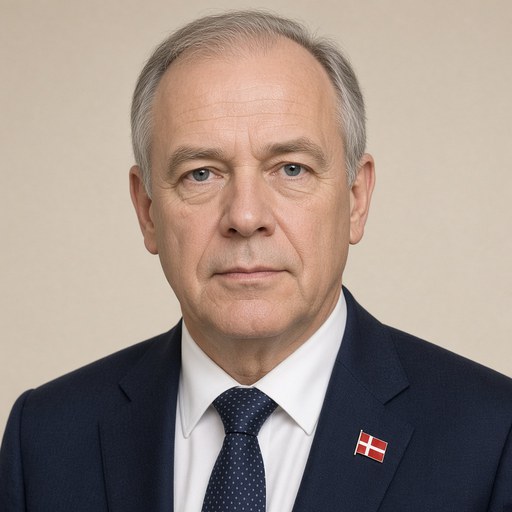
Denmark and Europe. The Government's proposal for dialogue
 Poul Nyrup Rasmussen · Prime Minister of Denmark
- Context
- Rasmussen presented the Danish government's proposal for national dialogue on Denmark's EU role following the September 2000 Danish referendum rejecting the euro.
- Main themes
- Danish EU membership, EU enlargement to Central and Eastern Europe, Danish opt-outs and euro referendum, future of Europe debate, Nice Treaty negotiations, Danish public dialogue on European policy, EU federalism concerns, Folketing engagement, EU institutional reform
- Duration
- ~11 min
- Words
- 1,260
- Sentences
- 94
- Readability
- 51
- Grade
- 9.2
- Syntax
- 2.41
- Vocabulary
- 2.19
Translated from Danish
The broad sphere of national life a sentence belongs to. Every sentence has an Arena, so it is the denominator the other indices are read against.
Other94 sentences in 40 paragraphs
1. An active Danish line – proposal for dialogue and debate
The government will actively engage in the discussion about the future of Europe. This is a debate that extends several years into the future, and therefore no conclusions should be drawn at this time. Instead, it requires thorough preparation.
Two fundamental points are clear:
In the government's view, the EU should continue to contribute to solving the problems that member states cannot solve on their own. We live in a world characterized by globalization, where there is an ongoing need for us to cooperate on new issues within the EU. Denmark must seek influence and shape the common solutions with full respect for the Danish opt-outs.
The EU should not develop into a federation or a United States of Europe that replaces the member states. This question is not on the agenda that shapes the debate in Europe. The EU should continue to evolve in line with the development of common tasks and problems.
On this basis, the government will promote the Danish debate on Denmark's role in the EU.
The government encourages the parties in the Folketing to take new initiatives that can strengthen the debate and the public's participation in it, including the Folketing's work on EU issues. This is a debate that should not only take place in the Folketing and among the parties, but should also be extended to, for example, folk high schools, public service channels, and all other places where possible. One of the means will be public hearings.
The government has decided to prepare a white paper. It should provide the best possible basis for a comprehensive Danish debate on European policy. The white paper will map out the issues that emerge as central themes on the European agenda following the European Council in Nice. The white paper can serve as a good starting point for the discussions in Denmark in the coming years with a view to ensuring an active Danish line in the EU.
The government is open to the themes that the white paper should address and will listen to the parties' viewpoints.
2. We do not turn our backs on Europe – the framework for Danish European policy after the referendum
The referendum on September 28 was a clear no to Denmark's participation in the common currency. The government will, of course, fully respect the outcome. Referendums on the repeal of the Danish opt-outs are not on the agenda.
The government will pursue an active Danish line in the areas that have Denmark's and the Danes' special interest and with responsibility for the common European future. We do not turn our backs on Europe.
For Denmark, it will continue to be a primary objective to help break down the political, economic, and social divides of the post-war period. The EU's most important task is the enlargement with the countries of Central and Eastern Europe. Therefore, it is crucial that the intergovernmental conference concludes at the European Council in Nice, and that there is no need for new intergovernmental conferences before the enlargement.
The tasks ahead of us are crucial for Denmark's and Europe's future. There are several areas where Denmark can and should make an effort. We must also continue to help further develop the EU in Denmark's and Europe's interest.
On this basis, the government will initiate a dialogue about Denmark and the EU in the coming years. The meeting with the parties today is the first step in this dialogue. It will be a process that should take the time necessary. The government is prepared to listen. There is a need for all of us to think carefully.
3. The Accession Treaty: Negotiations on the Nice Treaty
The Danish government places decisive emphasis on maintaining the goal of the Nice Treaty: that the EU is ready for enlargement. The EU must be ready to admit the first countries by the end of 2002. The Nice Treaty should henceforth be referred to as 'the EU's Accession Treaty'.
The government's negotiating position is known. It constitutes a framework that will be continuously filled in. A contribution to this was the debate and adoption in the Folketing on October 5.
The government will maintain close contact with the parties in the Folketing and the Folketing's European Committee in order to discuss the Danish positions as the negotiations progress.
4. The agenda after Nice
The government will help shape the debate about the future of Europe. A debate that can only lead to new treaty amendments when the first candidate countries have become EU members. The debate about the EU's future concerns us all – in Denmark and in the other EU member states – and the debate has intensified. This debate must not affect the intergovernmental conference on enlargement.
For the government, a broad and important agenda is emerging after Nice:
Enlargement is at the center. It is the task that will require the greatest efforts in European cooperation in the coming years. Enlargement will fundamentally change the entire European cooperation.
Developments in other areas should largely be seen as a consequence of enlargement. It is, in fact, considerations about what challenges the enlarged EU will face.
The EU's role on the global stage is important. The EU can play a central economic and political role – even outside Europe's borders.
There is an ongoing development of the individual policy areas. Employment, environment, consumer policy, food safety are some of the topics.
The common currency is central for the countries participating in the euro.
Cooperation on justice and home affairs is developing. The enlargement towards the East has sharpened the interest in developing cooperation.
The development of the European effort in crisis management and the defense dimension is also well underway. Concrete decisions will be made in Nice. This will continue after Nice.
Denmark will participate in the work on this agenda with full respect for the Danish opt-outs.
* * *
At the same time, the government proposes that Denmark actively engages in the broader discussion about the EU's development and functioning. The debate has already started. A number of elements are included in this debate. The government particularly wishes to emphasize:
A more democratic and open EU. There should be a strengthening of the democratic function and openness in the EU. The role of national parliaments should be discussed.
A clearer division of labor between the EU and the member states. Several different ideas are available, for example, the idea of strengthening the principle of subsidiarity. The idea of a political declaration on division of labor. The old German idea of a catalog of competencies has also resurfaced.
The fundamental rights, i.e., citizens' rights vis-à-vis the EU's institutions, including the possibility of incorporating the EU Charter of Fundamental Rights into the Treaty.
Simplification of the treaty so that it becomes easier to read and understand.
The European Council in Lisbon defined a new working method, where common goals are set, and the results achieved in the individual countries are compared. For example, in areas such as women's employment and stopping social exclusion.
* * *
The government hopes that the European Council in Nice will outline guidelines for further discussions on all these issues.
The government proposes a thorough debate on this entire agenda. It is a discussion that will take time. Everyone agrees on that. Several topics may lead to treaty amendments. There is broad agreement among the member states that there should be no further treaty amendments before the enlargement with the first new countries.
The original Danish. The tags above are read on the English translation's sentences.
1. En aktiv dansk linje – oplæg til dialog og debat
Regeringen vil gå aktivt ind i diskussionen om Europas fremtid. Det er en debat, som rækker adskillige år ud i fremtiden, og som der derfor ikke bør konkluderes på allerede nu. Til gengæld kræver den grundig forberedelse.
To grundlæggende forhold ligger fast:
EU bør efter regeringens opfattelse også fremover bidrage til at løse de problemer, som medlemslandene ikke kan løse selv. Vi lever i en verden præget af globaliseringen, hvor der løbende er behov for, at vi samarbejder om nye spørgsmål i EU. Danmark skal søge indflydelse og præge de fælles løsninger med fuld respekt for de danske forbehold.
EU skal ikke udvikle sig til en føderation eller et Europas Forenede Stater, der erstatter medlemsstaterne. Dette spørgsmål er heller ikke en dagsorden, som præger debatten i Europa. EU skal også fremover udvikle sig i takt med, at de fælles opgaver og problemer udvikler sig.
På dette grundlag vil regeringen fremme den danske debat om Danmarks rolle i EU.
Regeringen opfordrer Folketingets partier til at tage nye initiativer, der kan styrke debatten og befolkningens deltagelse heri, herunder Folketingets arbejde om EU- spørgsmål. Det er en debat, som ikke kun bør finde sted i Folketinget og i partierne, men som også bør bredes ud til for eksempel højskoler, public service kanalerne og alle andre steder, hvor det er muligt. Ét af midlerne vil være folkehøringer.
Regeringen har besluttet at udarbejde en hvidbog. Den skal give det bedst mulige grundlag for en samlet dansk europapolitisk debat. Hvidbogen skal kortlægge de spørgsmål, der tegner sig som centrale temaer på den europæiske dagsorden efter Det Europæiske Råd i Nice. Hvidbogen kan udgøre et godt udgangspunkt for de kommende års diskussioner i Danmark med henblik på at sikre en aktiv dansk linje i EU.
Regeringen er åben overfor de temaer, hvidbogen skal behandle og vil lytte til partiernes synspunkter.
2. Vi vender ikke ryggen til Europa – rammerne for dansk Europapolitik efter folkeafstemningen
Folkeafstemningen den 28. september var et klart nej til Danmarks deltagelse i den fælles valuta. Regeringen vil selvsagt respektere resultatet fuldt og helt. Folkeafstemninger om ophævelse af de danske forbehold er ikke aktuelle.
Regeringen vil forfølge en aktiv dansk linje på de områder, som har Danmarks og danskernes særlige interesse og med ansvar for den fælles europæiske fremtid. Vi vender ikke Europa ryggen.
For Danmark vil det fortsat være en hovedmålsætning at være med til at nedbryde efterkrigstidens politiske, økonomiske og sociale skel. EU’s vigtigste opgave er udvidelsen med landene i Central- og Østeuropa. Derfor er det helt centralt, at regeringskonferencen afsluttes på Det Europæiske Råd i Nice, og at der ikke bliver behov for nye regeringskonferencer inden udvidelsen.
Opgaverne foran os er afgørende for Danmarks og Europas fremtid. Der er en række områder, hvor Danmark kan og skal gøre en indsats. Vi skal også fremover være med til at videreudvikle EU i Danmarks og i Europas interesse.
Regeringen vil på denne baggrund lægge op til dialog om Danmark og EU i de kommende år. Mødet med partierne i dag er første led i denne dialog. Der vil være tale om en proces, som skal have den tid, der er nødvendig. Regeringen er indstillet på at lytte. Der er behov for, at vi alle tænker os godt om.
3. Udvidelsestraktaten: Forhandlingerne om Nice-traktaten
Den danske regering lægger afgørende vægt på at fastholde målet for Nice-traktaten: At EU bliver klar til udvidelsen. EU skal være klar til at optage de første lande med udgangen af 2002. Nice-traktaten bør af eftertiden kunne betegnes 'EU’s udvidelsestraktat'.
Regeringens forhandlingsgrundlag er kendt. Det udgør en ramme, som løbende skal udfyldes. Et bidrag hertil var debatten og vedtagelsen i Folketinget den 5. oktober.
Regeringen vil holde tæt kontakt med Folketingets partier og Folketingets Europaudvalg med henblik på at drøfte de danske holdninger, efterhånden som forhandlingerne skrider frem.
4. Dagsordenen efter Nice
Regeringen vil være med til at præge debatten om fremtidens Europa. En debat, der tidligst kan føre til nye traktaktændringer, når de første kandidatlande er blevet medlemmer af EU. Debatten om EU’s fremtid optager os alle – i Danmark og i de andre EU-medlemslande - og debatten er taget til. Denne debat må ikke påvirke regeringskonferencen om udvidelsen.
For Regeringen tegner der sig en bred og vigtig dagsorden efter Nice:
Udvidelsen står i centrum. Det er den opgave, som vil kræve de største anstrengelser i det europæiske samarbejde i de kommende år. Udvidelsen vil grundlæggende ændre hele det europæiske samarbejde.
Udviklingen på andre områder skal i høj grad ses som en konsekvens af udvidelsen. Det er i virkeligheden overvejelser om, hvad det er for udfordringer, det udvidede EU står overfor.
EU’s rolle på den globale scene er vigtig. EU kan spille en central rolle økonomisk og politisk – også uden for Europas grænser.
Der er en udvikling i gang af de enkelte politikområder. Beskæftigelsen, miljø, forbrugerpolitik, fødevaresikkerhed er nogle af emnerne.
Den fælles valuta står i centrum for de lande, som deltager i euroen.
Samarbejdet om retlige og indre anliggender er i udvikling. Udvidelsen mod Øst har skærpet interessen for at udvikle samarbejdet.
Også udviklingen af den europæiske indsats i krisestyring og forsvarsdimensionen er i fuld gang. Der vil blive truffet konkrete beslutninger i Nice. Det vil fortsætte efter Nice.
Danmark vil deltage i arbejdet med denne dagsorden i fuld respekt for de danske forbehold.
* * *
Regeringen lægger samtidig op til, at Danmark engagerer sig aktivt i den mere tværgående diskussion om EU’s udvikling og måde at fungere på. Debatten er allerede startet. En række elementer indgår i denne debat. Regeringen skal især fremhæve:
Et mere demokratisk og åbent EU. Der bør ske en styrkelse af den demokratiske funktion og åbenhed i EU. De nationale parlamenters rolle bør drøftes.
En klarere arbejdsdeling mellem EU og medlemslandene. Flere forskellige ideer foreligger, f.eks. tanken om en styrkelse af nærhedsprincippet. Ideen om en politisk erklæring om arbejdsdeling. Også den gamle tyske ide om et kompetencekatalog er kommet op igen.
De grundlæggende rettigheder, d.v.s. borgernes rettigheder overfor EU’s institutioner, herunder muligheden for at indskrive EU-charteret for grundlæggende rettigheder i Traktaten.
Forenkling af traktaten, så den bliver lettere at læse og forstå.
Det Europæiske Råd i Lissabon definerede en ny arbejdsmetode, hvor der sættes fælles mål, og de opnåede resultater i de enkelte lande sammenlignes. F.eks. på områder som kvinders beskæftigelse og stop for social udstødning.
* * *
Regeringen ser gerne, at Det Europæiske Råd i Nice udstikker retningslinier for de videre drøftelser om alle disse spørgsmål.
Regeringen lægger op til en grundig debat om hele denne dagsorden. Det er en diskussion, som vil tage tid. Det er alle enige om. Flere emner kan føre til traktatændring. Der er bred enighed om blandt medlemslandene, at der ikke skal ske flere traktatændringer før udvidelsen med de første nye lande.