




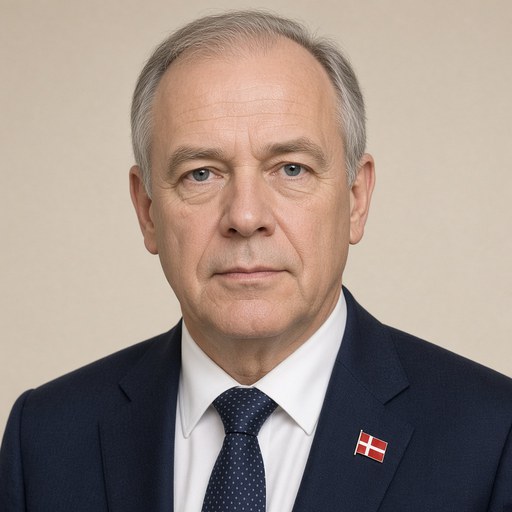
Prime Minister Poul Nyrup Rasmussen's speech at NKT on September 19, 2000
 Poul Nyrup Rasmussen · Prime Minister of Denmark
- Context
- Rasmussen addressed employees at NKT company on 19 September 2000, campaigning for a 'yes' vote in Denmark's upcoming referendum on adopting the euro.
- Main themes
- Euro referendum, Danish EU membership, currency speculation and krone vulnerability, economic interdependence, foreign investment, employment and welfare, European integration, financial market pressure, historical currency crises
- Duration
- ~24 min
- Words
- 2,927
- Sentences
- 142
- Readability
- 60
- Grade
- 9.9
- Syntax
- 3.05
- Vocabulary
- 1.89
Translated from Danish
The broad sphere of national life a sentence belongs to. Every sentence has an Arena, so it is the denominator the other indices are read against.
Other142 sentences in 32 paragraphs
Good morning everyone.
Today, I would like to try to explain, as best as I can, what it is that we are going to vote on, and what arguments have led the government and me to recommend a yes on September 28.
You have probably followed the debate among us politicians about the state pension over the past few days. We are not voting on that! – And that is why I have emphasized the need to achieve a political majority that states we are not voting on it. And that was actually what succeeded yesterday. There is now a very broad political majority that we will, of course, decide on the state pension ourselves. That is the first point that I think is very fundamental to establish. The debate so far has been heavily influenced by many questions that do not really have anything directly to do with the euro. And now we have about a week left before it is you who decide on September 28….
It is primarily about us realizing that Denmark is no longer in a situation like we were just 15 – 20 years ago. Denmark is even more dependent on other countries than we have ever been before. Our economic dependence on other countries is very severe today. It is both a colossal opportunity for us, but it is, of course, also a great challenge for us. And it is a challenge that constantly demands that our country positions itself as best as possible in relation to others.
This company, NKT, is a good example of how cooperation, trade, and good contacts in Europe mean an incredible amount for employment and progress. We may not think about it much in our daily lives, but the truth is in our country that what is good for Danish companies and Danish employment is actually also good for the revenues of our society and thus for Danish welfare. If our companies are doing poorly, then employment suffers, and so does our welfare, which we cannot afford. Conversely, if there is strong employment growth, then there is also more welfare to be gained.
What drives me is that a no risks having a number of long-term effects on our investments, on our resilience in relation to financial markets and speculation against the Danish krone. A no also risks having long-term effects on our political influence in Europe. A no risks creating some uncertainty around Denmark – for Denmark's future.
I would ask you for a moment to imagine that you are on your way to Europe with new international investments. You do not know much about the various councils in the European countries, but you can at least see for a moment, if you move up in a helicopter, that there are 12 countries that have decided on the euro, and then there is one country, Denmark, that stands outside the 12. If I were an international investor looking to invest in new research, in new companies, I would invest in the area of the 12 countries. It is a larger area and a safer area than our small area.
And similarly, if I were a financier who worked daily on the international financial markets speculating to make money by buying and selling different countries' currencies, I would quickly realize that pressuring the euro is much harder than pressuring the krone. We must reckon that behind the krone stand 5 million inhabitants and good Danish companies, but behind the euro stand 350 million inhabitants and many more strong companies. It is like when we talk about solidarity. You can break a single matchstick, but you cannot break a whole handful when you hold on to it.
You see, we have been through speculative crises many times in our country. In 1998, just 2 years ago, when we implemented some tightening in our economy – I am talking about the 'Pentecost package' – which might not have been so necessary if there had not been pressure on our currency. I do not know if you knew this, but the National Bank actually had to draw about 40 billion kroner from the currency reserves 2 years ago. 40 billion – what is that? Yes, it is as much as we spend on hospital expenses in a year in Denmark. The money came back then, it is under control, but I cannot always guarantee that the money will come back if the financial crisis is very, very harsh.
In 1993, the same thing happened.
In 1986 – when we had the great 'potato cure' under the then government – I must say that the extent of it and the nature of the intervention also had something to do with the financial speculation pressure on the krone.
And again in 1982 – under the then Anker Jørgensen government – they tried to devalue their way out of it. But some of you may remember that interest rates rose to 23 percent, and we had to implement some extensive interventions.
I just want to remind you that in 1992, Sweden had to try to withstand the pressure. Sweden tried to raise interest rates to 500 percent for a couple of days, but they could not withstand the pressure. Sweden had to implement a devaluation of the Swedish krona and later let the krona float, and Sweden implemented extensive social cuts in student grants, childcare benefits, family benefits, and unemployment benefits. It is all of this that makes me feel that the time is now to say yes to a mighty opportunity. An opportunity to be together with the others, where one can protect oneself once and for all against financial crises. Just think, that we no longer need to look over our shoulders when we are shaping our budget for next year, but that we can concentrate all our efforts on our welfare, our companies, our production, and employment. That is why it is very concrete when I say that yes is the safe option, no is the uncertain one. And that is why I talk about it being serious. If you look at today’s newspapers, you will see that interest rates have started to rise. There is the largest interest rate difference between Germany and the other European countries and Denmark in the last 5 years. This is serious, because we know well who gets hit when there are financial crises in Denmark. We are of course trying to 'soften the air for the shorn sheep', but I must tell you that the times we have had financial crises in Denmark have meant unemployment – and that those who entered the job market last have been the first to go. Those with business cards and all will manage – they will always manage! The people I am talking about are ordinary people, average families, you. There is a need for a society that can provide a decent offer and a society that can ensure that companies can operate stably.
There are many who say, 'But doesn’t this end with the United States of Europe? What about our independence?', and I am just as concerned about that as any other Dane. 'Does it mean that if we say yes, our independence will come under pressure?'
In 1982 – that is, 18 years ago – the then government decided to liberalize, as it is called, our capital movement, just as all other countries did in Europe. It was simply a condition for being able to trade. From that point on, it meant that we actually gave up our monetary policy and our interest rate policy to the others. From then on, we have followed the interest rate developments in Germany. When the German Bundesbank raised interest rates, we raised interest rates – when the German Bundesbank lowered interest rates, we lowered interest rates. We cannot simply disregard our monetary policy dependence on others, but we can regain some of the independence we have lost as a result of internationalization by joining with the others.
Germany relinquished its dominance of European monetary policy by entering the common European bank. Before, it was Deutsche Bank that determined the interest rate – now it is the European Central Bank that determines the interest rate. If we say yes, we can regain a bit – a large part – of our monetary independence, because we will sit on the same board as the others with our national bank director, with our own vote. It will not be exactly as it was 20 years ago – that is clear – but together with the others, we will have a bit more influence than we have today, where we passively have to adapt to the others.
Dear friends – it will never be the United States of Europe. Who would wish for that? Imagine if the French Ministry of Finance were to move to Brussels, or if the German Ministry of Finance were to move to Brussels, or if the Danish Ministry of Finance were to move to Brussels. No one would accept that.
No, it is much more important to establish that European cooperation is something special. It is a cooperation between independent countries, each with their own constitution, but which have seen that there are some problems they cannot solve alone, but only together. Therefore, they need some tools and mechanisms that allow them to make decisions together. And therefore, they have given up a little of their sovereignty – not all, but a little – to solve those problems together – neither more nor less.
Some then say, 'But won’t everything be harmonized?'. That is what I believe the Socialist People’s Party calls 'pressure on welfare'. To that, I would like to say: There is pressure on welfare – there is. But what kind of pressure is it – and where does the pressure come from? The pressure on welfare comes from the fact that we are competing in an international world that is extremely tough. We are competing on tax levels – not so much in Europe – the others also have high tax levels – but we are mainly competing with Asia; we are competing on wage levels, you know; we are competing on many different things.
There is a fierce pressure in the international world. We cannot escape that by saying no – the pressure will be even stronger on us if we say no, because then we stand alone. It is not about standing together with England and Sweden, because they pursue a different currency policy than we do. We stand alone if we say no. And you must be completely clear that a no does not mean that the pressure on us disappears or that internationalization disappears. A no means that we have weaker opportunities to defend ourselves against the negative sides of internationalization than with a yes. That pressure comes from Asia and from the USA. Within Europe – if we say yes to the community – there is not that type of pressure. There is something else that I would also like to mention a few words about:
The other countries are also under pressure from Asia and the USA and will also want their welfare and they work hard for it in their respective countries. But they can see that our tax sources risk being eroded if we do not take good care.
Let me mention one thing: The Irish government has gradually lowered the corporate tax rate more and more. And they do this to attract some investments from other countries in Europe. If we are not careful, we risk one day that our income sources for corporate tax will be eroded, and therefore you will see a tax harmonization in the European cooperation area. But it will not be a top-down tax harmonization, but a bottom-up one aimed at protecting our revenues. So – I am sure that in a few years we can agree that the corporate tax should be a certain minimum. That as a member of the EU area, one cannot go below a certain minimum.
I also envision that in a few years we will have some minimum taxes in the environmental area – you know, we have a CO2 tax here in the country and also some energy taxes. I believe that all countries can realize that it does not work for us to compete each other down the hole on all these things. That to protect our welfare society, we must have some minimum taxes in these areas. But note that I always say minimum taxes – I do not say maximum – but minimum to protect our revenues. How much higher we want to go is up to us.
If we can get a yes on the 28th, then I believe that companies will get the boost they need to continue their investment plans, export plans, personnel policies, educational policies, and development policies. NKT is, in my opinion, one of the most outstanding examples of what is being done in the new business today. What NKT is actually doing is saying: We will not just passively watch as others in Asia and the USA come and outcompete us. We will develop new production, new technology, new competition. A prerequisite for being able to do that is that you are inside together with the others. I am not saying that we cannot manage outside, it will just be harder to manage outside – it will be more negative to manage outside.
And finally, for your own family's sake. I mentioned earlier that the interest rate difference was the largest in relation to Germany and the others in 5 years. Some tell me that an interest rate difference of half a percent does not mean much. But I can assure you that it can.
If you look at the individual family's wallet, an interest rate difference of half a percent or three-quarters of a percent can mean quite a lot. If you are to establish a home, you can easily imagine that you need to take a loan of a million kroner, for example, and then an interest rate difference of half to three-quarters of a percent means quite a lot. It could be the hundred kroner a month that tips the balance so that you cannot make it work. And similarly, if you get a little older and want to live in something that does not have so many square meters, then an interest rate difference also means a lot when you need to get a home loan.
In practice, finally, if we say yes, it will happen in such a way that in 4 years we will get the new Danish euro. There will be organized a process where the transition to the new Danish euro will take place smoothly and problem-free for each individual Dane in our society. The conversion of the state pension, the conversion of salaries, the conversion of payment cards, plastic cards, bank balances, loans, etc., will occur without costs for any of you. The purchasing power will be the same because the price conversions will take place simultaneously.
Some have said, "But the euro has fallen in value against the dollar." Yes, that is true, but what is really important? When we had the D-mark, which we were dependent on, it fell in value against the dollar by more than double. That was not talked about much back then. Sometimes the D-mark was worth more against the dollar, sometimes less. The relationship between Europe and the USA fluctuates depending on who has the most momentum and who has the most growth. Sometimes Europe has the most growth, other times it is the USA. When the USA has the highest growth and progress, then the dollar is stronger than ours - when we have the highest growth, then ours is stronger than theirs. And that will also be the case in the future. The crucial thing is the idea itself – that the euro secures the purchasing power of our pensions, wages, savings – and that is good. I think we should also keep that in mind when we have to make a decision on the 28th.
In short – not so much for my sake, political work has its ups and downs – that’s how it is! But for Denmark’s sake – for the sake of ordinary people, for the sake of wage earners, a yes on the 28th, as far as I can see, is the best.
I do not consider it a real loss that we must give up devaluation. We actually renounced that 18 years ago. And the disadvantages that may exist, such as feeling that one is giving up their national identity and some of their Danishness, I do not see as a disadvantage, because that is not what happens!
Danishness, for me, is solidarity. Danishness, for me, is equal access for everyone to get an education and a job, and to be treated in our hospitals. Danishness, for me, is that we have a welfare society that we can stand together for. And that welfare society will fare best when we are not exposed to financial crises or speculation, and when we can take advantage of good conditions for our businesses. That is why I am whistling around 24 hours a day these days to talk to people, so we can get what is best for Denmark; a yes on the 28th.
Thank you for listening.
The original Danish. The tags above are read on the English translation's sentences.
Godmorgen alle sammen.
Jeg vil gerne i dag prøve at redegøre for, så godt som jeg kan det, hvad det er, vi skal stemme om, og hvilke argumenter, der har gjort, at regeringen og jeg har besluttet at anbefale et ja den 28. september.
I har sikkert de seneste par dage fulgt debatten mellem os politikere om folkepensionen. Den skal vi ikke stemme om! – Og derfor har jeg lagt vægt på at få et politisk flertal, der siger, at den skal vi ikke stemme om. Og det var faktisk det, der lykkedes i går. Der er nu et meget bredt politisk flertal for, at folkepensionen bestemmer vi naturligvis selv. Det er det første, som jeg synes, er meget grundlæggende at få slået fast. Debatten indtil nu har været meget præget af mange spørgsmål, som ikke egentlig har noget direkte med euroen at gøre. Og nu har vi så en uges tid tilbage, inden det er jer, der bestemmer den 28. september….
Det handler først og fremmest om, at vi bliver klar over, at Danmark ikke længere er i en situation, som vi var i for bare 15 – 20 år siden. Danmark er endnu mere afhængig af andre lande, end vi nogensinde har været før. Vores økonomiske afhængighed af andre lande er meget hård i dag. Det er både en kolossal chance for os, men det er naturligvis også en stor udfordring for os. Og det er en udfordring, som hele tiden stiller krav til os om, at vores land placerer sig bedst muligt i forhold til de andre.
Denne virksomhed, NKT, er et godt eksempel på, at samarbejde, samhandel, gode kontakter i Europa betyder utrolig meget for beskæftigelsen og fremgangen. Vi tænker måske ikke så meget over det til daglig, men sandheden er jo i vores land, at hvad der er godt for danske virksomheder og dansk beskæftigelse, det er faktisk også godt for indtægterne til vores samfund og dermed for dansk velfærd. Hvis det går dårligt for vores virksomheder, så går det dårligt for beskæftigelsen, og for vores velfærd, som vi ikke har råd til. Og omvendt er der en stærk beskæftigelsesfremgang, jamen, så er der også mere velfærd at hente.
Det, der driver mig, er, at et nej risikerer at få en række langsigtede virkninger for vores investeringer, - for vores modstandskraft i forhold til finansmarkeder og spekulation mod den danske krone. Et nej risikerer også at få langsigtede virkninger for vores politiske indflydelse i Europa. Et nej risikerer at skabe noget usikkerhed omkring Danmark – for Danmarks fremtid.
Jeg vil bede jer om et øjeblik at forestille jer, at I er på vej til Europa med nye internationale investeringer. I kender ikke så meget til de forskellige råd i de europæiske lande, men I kan i hvert fald se et øjeblik, hvis I bevæger jer op i helikopteren, at der er 12 lande, som har besluttet sig for euroen, og så er der et land, Danmark, der står uden for de 12. Hvis jeg var international investor og ville investere i ny forskning, i nye virksomheder, så ville jeg investere i de 12 landes område. Det er et større område og sikrere område, end vores lille område.
Og tilsvarende hvis jeg var finansmand, som til daglig arbejdede på de internationale finansbørser med at spekulere i at tjene penge på at købe og sælge forskellige landes valutaer, så ville jeg hurtigt være klar over, at presse euroen er meget sværere end at presse kronen. Vi skal regne med, at bag kronen står 5 mio. indbyggere og gode danske virksomheder, men bag euroen står 350 mio. indbyggere og mange flere stærke virksomheder. Det er ligesom, når vi taler om solidaritet. Man kan knække en enkelt tændstik, men man kan ikke knække en hel håndfuld, når man holder fast om den.
Se, vi har jo været igennem spekulationskriser mange gange i vores land. I 1998, for bare 2 år siden, hvor vi gennemførte nogle stramninger i vores økonomi – jeg taler om 'pinsepakken' – som måske ikke havde været så nødvendige, hvis der ikke havde været et pres på vores valuta. Jeg ved ikke, om I vidste det, men Nationalbanken måtte faktisk for 2 år siden hente ca. 40 mia. kroner i valutakassen. 40 mia. – hvad er det? Ja, det er lige så meget som vi bruger på sygehusudgifter om året i Danmark. Pengene kom tilbage dengang, der er styr på det, men jeg kan jo ikke altid garantere, at pengene kommer tilbage, hvis finanskrisen er meget, meget barsk.
I 1993 skete det samme.
I 1986 – da vi havde den store 'kartoffel-kur' under den daværende regering - må jeg sige, at omfanget af den og indgrebets karakter også havde noget at gøre med, at der var finansspekulationspres på kronen.
Og igen i 1982 – under den daværende Anker Jørgensen-regering - forsøgte man dengang at devaluere sig ud af det. Men nogle af jer husker måske, at renten steg til 23 procent, og vi måtte gennemføre nogle omfattende indgreb.
Jeg vil bare minde jer om, at i 1992 måtte Sverige prøve at modstå presset. Sverige prøvede at hæve renten til 500 procent et par dage, men de kunne ikke modstå presset. Sverige måtte gennemføre en devaluering af den svenske krone og senere lade kronen flyde, og Sverige gennemførte omfattende sociale nedskæringer i SU, i børnepasnings ydelser, familieydelser, dagpenge. Det er alt det, der gør, at jeg føler, at tiden nu er til, at vi siger ja til en mægtig chance. En chance for at være sammen med de andre, hvor man kan værne sig én gang for alle mod finanskriser. Tænk engang, at vi ikke længere behøver at kigge os over skulderen, når vi skal forme vores finanslov for næste år, men at vi kan koncentrere hele vores kraft om vores velfærd, vores virksomheder, vores produktion og beskæftigelse. Det er derfor, det er meget konkret, når jeg siger, at ja’et er det sikre, nej’et er det usikre. Og det er derfor, jeg taler om, at det er alvor. Hvis I ser på dagens aviser, vil I se, at renten er begyndt at stige. Der er den største renteforskel mellem Tyskland og de andre europæiske lande og Danmark i de seneste 5 år. Det er alvorligt, for vi ved jo godt, hvem der bliver ramt, når der er finanskriser i Danmark. Vi prøver selvfølgelig 'at mildne luften for de klippede får', men jeg er nødt til at sige til jer, at de gange, vi har haft finanskriser i Danmark, har det betydet arbejdsløshed – og at dem, som kom sidst i arbejde, har været dem, der først ryger ud. Dem med business card og det hele skal nok klare sig – de kan altid klare sig! Dem, jeg taler om, er almindelige mennesker, jævne familier, jer. Der er brug for et samfund, der kan give et ordentligt tilbud og et samfund, der kan sørge for, at virksomhederne kan arbejde stabilt.
Der er er mange, som siger 'Jamen, ender det her ikke med Europas forenede Stater? Hvad med vores selvstændighed?', og det er jeg lige så optaget af som alle andre danskere. 'Betyder det, at vi siger ja, at vores selvstændighed kommer under pres?'
I 1982 – altså for 18 år siden – besluttede den daværende regering at frigøre, som man kalder det, vores kapitalbevægelse, ligesom alle andre lande gjorde i Europa. Det var simpelthen betingelsen for at kunne handle. Fra det tidspunkt betød det, at vi faktisk i vores pengepolitik og vores rentepolitik blev opgivet af de andre. Fra da af har vi fulgt renteudviklingen i Tyskland. Når den tyske forbundsbank satte renten op, satte vi renten op, - når den tyske forbundsbank satte renten ned, satte vi renten ned. Vores pengepolitiske afhængighed af de andre kan vi ikke sætte en streg over, men vi kan genvinde en del af den selvstændighed, vi har tabt som følge af internationaliseringen ved at gå sammen med de andre.
Tyskland opgav sin dominans af europæisk pengepolitik ved at gå ind i den fælles europæiske bank. Før var det Deutsche Bank, der bestemte renten – nu er det Den Europæiske Centralbank, der bestemmer renten. Hvis vi siger ja, kan vi få lidt tilbage – en stor del tilbage – af vores pengepolitiske selvstændighed, fordi vi kommer til at sidde i den samme bestyrelse som de andre med vores nationalbankdirektør, med vores egen stemme. Det bliver ikke helt, som det var for 20 år siden – det er klart, - men i fællesskab med de andre får vi lidt mere indflydelse, end vi har i dag, hvor vi passivt må tilpasse os de andre.
Kære venner - det bliver ikke Europas forenede stater nogensinde. Hvem skulle ønske det? Forestil jer, at Frankrigs finansministerium skulle flytte til Bruxelles, eller at Tysklands finansministerium skulle flytte til Bruxelles, eller at Danmarks finansministerium skulle flytte til Bruxelles. Det er der ingen, der vil acceptere.
Nej, det er meget vigtigere at slå fast, at det europæiske samarbejde er noget specielt. Det er et samarbejde mellem selvstændige lande, med hver deres grundlov, men som har set, at der er nogle problemer, de ikke kan klare alene, men kun i fællesskab. Derfor skal de have nogle redskaber og mekanismer, der gør, at de kan beslutte noget i fællesskab. Og derfor har de afgivet lidt af deres suverænitet – ikke alt, men lidt – til at få løst de problemer i fællesskab – hverken mere eller mindre.
Nogle siger så, 'Jamen, bliver det hele ikke harmoniseret?'. Det er det, jeg tror, SF kalder 'et pres på velfærden'. Dertil vil jeg gerne sige: Der er et pres på velfærden – det er der. Men hvad er det for et pres – og hvor kommer presset fra? Presset på velfærden kommer af, at vi konkurrerer i en international verden, der er benhård. Vi konkurrerer på skattetrykket – ikke så meget i Europa - de andre har også et højt skattetryk - men vi konkurrerer hovedsageligt med Asien; vi konkurrerer på løn-niveau, det ved I; vi konkurrerer på mange forskellige ting.
Der er et benhårdt pres i den internationale verden. Det pres kan vi heller ikke løbe fra ved at sige nej – preset vil være der i endnu stærkere grad på os, hvis vi siger nej, for så står vi alene. Det er ikke noget med at stå sammen med England og Sverige, for de fører en anden valutakurspolitik, end vi gør. Vi står alene, hvis vi siger nej. Og I skal være fuldstændig klar over, at et nej betyder ikke, at presset på os forsvinder eller at internationaliseringen forsvinder. Et nej betyder, at vi har svagere muligheder for at forsvare os mod internationaliseringens negative sider end ved et ja. Det pres kommer fra Asien og fra USA. Inden for Europa – hvis vi siger ja til fællesskabet - er der ikke den type pres. Der er noget andet, som jeg gerne også vil nævne to ord om:
De andre lande er jo også under pres fra Asien og USA og vil også have deres velfærd og de arbejder hårdt for den i hver deres lande. Men de kan se, at vores skattekilder risikerer at blive udhulet, hvis vi ikke passer godt på.
Lad mig nævne en enkelt ting: Den irske regering har gradvis sænket selskabsskatten mere og mere. Og det gør de for at tiltrække nogle investeringer fra andre lande i Europa. Hvis vi ikke passer på, risikerer vi en skønne dag, at vores indkomstkilder for selskabsskat bliver udhulet, og derfor vil I se en skatteharmonisering på det europæiske samarbejdsområde. Men det bliver ikke en skatteharmonisering fra oven, men en fra neden, der sigter på at beskytte vores indtægter. Altså – jeg er sikker på, at vi om nogle år kan blive enige om, at selskabsskatten skal være et vist minimum. At man som medlem på EU-området ikke kan gå under et vist minimum.
Jeg ser også for mig om nogle år, at vi får nogle mindsteafgifter på miljøområdet – I ved, vi har en CO
2
-afgift her i landet og også nogle energiafgifter. Jeg tror på, at alle lande godt kan indse, at det dutter ikke, at vi konkurrerer hinanden ned i hullet om alle de ting. At vi for at beskytte vores velfærdssamfund må have nogle mindsteafgifter på de områder. Men læg mærke til, at jeg hele tiden siger mindsteafgifter - jeg siger ikke maximum - men minimum for at beskytte vores indtægter. Hvor meget højere, vi vil gå, er op til os selv.
Hvis vi kan få et ja den 28., så tror jeg på, at virksomheder får det rygstød, der skal til for at fortsætte investeringsplanerne, eksportplanerne, personalepolitikken, uddannelsespolitikken, udviklingspolitikken. NKT er efter min mening et af de mest fremragende eksempler på, hvad man gør i den ny virksomhed i dag. Det, NKT reelt gør, er at sige: Vi vil ikke bare passivt se på, at de andre i Asien og USA kommer og udkonkurrerer os. Vi vil udvikle ny produktion, ny teknologi, ny konkurrence. En forudsætning for at man kan, det er altså, at man er indenfor sammen med de andre. Jeg siger ikke, at vi ikke kan klare os udenfor, det bliver bare sværere at klare sig udenfor – det bliver mere negativt at klare sig udenfor.
Og så til allersidst for jeres egen families skyld. Jeg sagde lige før, at renten var den største forskel i forhold til Tyskland og de andre i 5 år. Nogle siger til mig, at en renteforskel på en halv procent ikke betyder ret meget. Men jeg kan love jer for, at den godt kan.
Hvis man ser på den enkelte families pengepung, kan en renteforskel på en halv procent eller trekvart procent godt betyde ganske meget. Hvis man skal stifte hjem, kan man sagtens forestille sig, at man skal tage et lån på en million kroner f.eks., og da betyder en renteforskel på en halv til trekvart procent ret meget. Det kan være de hundrede kroner om måneden, der lige får balancen til at tippe, så man ikke kan få det til at hænge sammen. Og tilsvarende, hvis man bliver lidt ældre og gerne vil bo i noget, der ikke har så mange kvadratmeter, da betyder en renteforskel også meget, når man skal have ejerskiftelån.
I praksis til allersidst, hvis vi siger ja, vil det komme til at foregå på den måde, at vi om 4 år vil få den nye danske euro. Der vil blive tilrettelagt et arbejde, hvor overgangen til den nye danske euro vil foregå gnidningsløst og problemfrit for hver enkelt dansker i vores samfund. Omregningen af folkepension, omregningen af løn, omregningen af købekort, plastikkort, bankindeståender, udlån osv., vil ske uden omkostninger for nogen af jer. Købekraften vil være den samme, fordi prisomregningerne vil foregå samtidig.
Nogle har sagt; 'Jamen, euroen er jo faldet i værdi i forhold til dollaren'. Ja, det er rigtigt, men hvad er det egentlig, der er vigtigt. Da vi havde D-marken, vi var afhængige af, da faldt den over dobbelt så meget i værdi i forhold til dollaren. Det snakkede man ikke så meget om dengang. Nogle gange var D-marken mere værd i forhold til dollaren, nogle gange mindre værd. Forholdet mellem Europa og USA svinger efter, hvem der har mest fart på, og hvem har mest vækst. Nogle gange har Europa mest vækst, andre gange er det USA. Når USA har den største vækst og fremgang, ja, så er dollaren stærkere end os - når vi har den største vækst, så er vores stærkere end deres. Og sådan vil det også være i fremtiden. Det afgørende er selve idéen – at euroen sikrer købekraften af vor pension, løn, opsparing – og det er godt. Det synes jeg også, vi skal tænke på, når vi skal tage stilling den 28.
Kort sagt – ikke så meget for min skyld, politisk arbejde er opture og det modsatte – sådan er det! Men for Danmarks skyld – for almindelige menneskers skyld, for lønmodtagernes skyld er et ja den 28., så vidt jeg kan se det, det bedste.
Jeg betragter det ikke som et reelt tab, at vi må opgive devalueringen. Det har vi i virkeligheden fraskrevet os for 18 år siden. Og de ulemper, der måtte være i øvrigt, om at føle, at man opgiver sin nationale identitet og noget af sin danskhed, betragter jeg heller ikke en ulempe, fordi det gør man ikke!
Danskhed er for mig sammenhold. Danskhed er for mig lige adgang for alle til at få en uddannelse og et job, og blive behandlet på vore sygehuse. Danskhed er for mig, at vi har et velfærdssamfund, vi kan holde sammen om. Og det velfærdssamfund vil have det bedst, når vi ikke er udsat for finanskriser eller spekulation, og når vi kan udnytte gode forhold for vore virksomheder. Derfor fløjter jeg rundt i døgnets 24 timer i disse dage for at tale med mennesker, så vi kan få det, der er bedst for Danmark; et ja den 28.
Tak fordi I lyttede.