




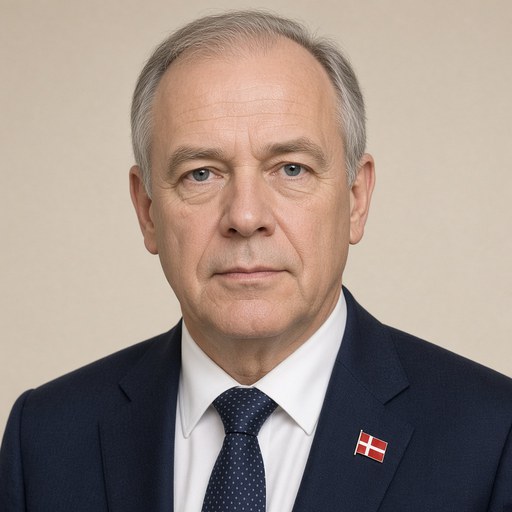
Prime Minister Poul Nyrup Rasmussen's speech at the "Seminar on Political Journalism. From Observer to Actor – in a New Form of Democracy"
 Poul Nyrup Rasmussen · Prime Minister of Denmark
- Context
- Rasmussen addressed a seminar on political journalism in Denmark on November 1, 2000, reflecting on media's evolving role in democracy.
- Main themes
- Political journalism, media uniformity, democracy and public discourse, journalism-politics relationship, news values and selection, media competition, welfare state debate, role of television news, political communication, diversity of information, conflict-driven reporting, democratic accountability
- Duration
- ~10 min
- Words
- 1,248
- Sentences
- 67
- Readability
- 54
- Grade
- 10.4
- Syntax
- 2.99
- Vocabulary
- 2.05
Translated from Danish
The broad sphere of national life a sentence belongs to. Every sentence has an Arena, so it is the denominator the other indices are read against.
Other67 sentences in 25 paragraphs
"Anna, Anna, come in from the kitchen. Hurry up a bit. Come and see. They have cut the head off a fax over in Copenhagen." It is said, albeit with a twinkle in the eye, that the people at one of our nationwide TV stations use Anna and the fax as the ultimate test of whether something is news. If it has the same caliber as the news that Anna absolutely must see, it should be broadcast immediately!
Whether the nationwide newspapers use the same criteria remains unsaid. But it is crystal clear that the starting point for whether something becomes a political news story has changed radically over the past few decades. This raises new demands and questions for journalists and politicians.
We may know it well, but it is still liberating to map out how political journalism has crystallized over time to become a political institution in itself.
An institution that has become so strong that it must necessarily be scrutinized. And that is precisely what Ove Kaj Pedersen and Erik Meier Carlsen, along with other knowledgeable people, have done.
It has resulted in an exciting study of political journalism and the news media's coverage of the democratic process, which was also a theme that occupied the Media Committee in the report on the media in democracy.
Without me pretending to be an expert on Luhmann, who provides part of the theoretical foundation for this investigation, part of his systems theory seems to suggest that every system has some blind spots that it cannot observe itself.
In short, you need another system, which in this case is a number of competent researchers who, with a knack for pinpointing exactly where it hurts the most, have observed political journalism. And let it be said right away. There are many good observations and thought-provoking conclusions, but I will, given the limited time, focus on a few points.
We are well aware of it. That the conditions have changed. That purely referential journalism is a remnant of a soon-to-be-forgotten past. That cozy meetings in the Snapsetinget, where journalists and politicians in an almost lodge-like camaraderie arranged the story, belong to a bygone era.
Today, it is more about a professional partnership, where journalists and politicians work separately yet in respect of the mutual dependency that exists. I would be the last to lament a development that, as pointed out in the report, has in many ways created a more open and democratic agenda.
But the question is whether the pace and competition among the various media still create a healthy development? Journalists assign roles and speaking positions to themselves and other actors in a new broad political field, as stated in the report. It points out that the intensified competition among the media, contrary to what one might think, has led to the media becoming increasingly uniform. Is this a good thing for those it really concerns: the viewers, the readers, the Danes, and the voters?
Do we only want to pick news and information from the same shelf? Has diversity in reality become a scarce commodity within political journalism? Is it in the readers' interest that news stories today primarily emerge from a conflict perspective? Who has an interest in the conflict? The one who builds the story or the reader?
I readily admit that politicians contribute significantly to giving a story life, but when all is said and done, it is still the journalist's pen or rather the mouse and the editor's choice that determines where the story is placed and gains news value.
Studies of the coverage of the Finance Act in TV-Avisen in 1965 and 1991 show that the segments have been cut down from ten minutes to a couple of minutes. What consequences does this have when 70 percent of viewers indicate that DR's TV-Avis matters for how they take political positions?
Sometimes one is tempted to ask whether it is even possible for politicians to conduct a debate on controversial issues without it ending up in individual cases within ten seconds. The risk is that one becomes frightened out of one's wits and perhaps precisely for that reason refrains from taking the necessary debate about, for example, how the welfare state should develop.
As a politician, one's task is to constantly ask whether our democracy is functioning? What new initiatives can we create? How can we do it differently and better? Is the answer public hearings or something entirely different? In the same way, the media must conversely consider whether they are fulfilling their part of the task well enough.
What concerns me most about the report's conclusions is that even though we have a varied supply of news media, the news has become more and more uniform!
The news – those that shape the Danes' perception of reality – has become increasingly one-dimensional. The same story, the same angle in all media. This is bad. For the political reality has multiple dimensions, has multiple truths.
We must ensure that there is also room for the stories that the report points out today suffer from the silence of news. While national politicians are allocated relatively much column space, it apparently struggles for local Denmark to break through in the nationwide column millimeters. Where have the everyday stories gone? Those that deal with what is happening in the rest of Denmark?
Who ensures that things connect in depth? Is the readers' spokesperson part of the answer? Currently, as far as I know, it is the only media outlet here at home that has appointed a spokesperson as the readers' voice and the newspaper's neutral instance.
The spokesperson continuously assesses, among other things, the newspaper's news stories based on their own criteria of fairness, objectivity, and general proportions. The readers' spokesperson is of course only part of the answer, but nonetheless an opportunity to perhaps take a step further and a shovel deeper for the Danish media.
The national news perspective apparently wins, according to the report, over both local and international news, where especially part of the EU system apparently has no voice in the Danish media. Both we national politicians and the press have a responsibility to ensure that we are not heading down the famous slippery slope, where a one-sided focus on individual cases and persons makes us completely forget the larger and smaller contexts in news coverage.
We all have the opportunity to give the democratic debate and thus also political journalism a fair chance to be just as relevant as we want it to be. But it requires that we come to terms with ourselves about which way we want to go.
Part of the discussion could, for example, revolve around whether newspapers, as is the case today, absolutely must compete with the TV medium or rather create their own path and news coverage.
But it is also about not wanting to dig trenches between the local and national news levels. There must and should be room for both – also in the nationwide newspapers. And it certainly wouldn’t hurt if the news had even more nuances and angles than those we know today.
Proximity in news coverage is not only about describing the processes surrounding the Finance Act or the elderly package, but even more about what it means for the individual Dane. "What’s in it for me," one is sometimes tempted to ask. Regardless of whether it is about Anna and the fax she absolutely had to see.
The original Danish. The tags above are read on the English translation's sentences.
'Anna, Anna, kom ind fra køkkenet. Skynd dig lidt. Kom og se. De har klippet hovedet af en fax ovre i København.' Det siges, godt nok med et glimt i øjet, at folkene på en af vores landsdækkende TV-stationer bruger Anna og faxen som den ultimative test på, om noget er en nyhed. Har den samme kaliber, som den nyhed Anna absolut skal se, bør den straks blæses ud!
Om de landsdækkende aviser benytter sig af samme kriterier skal være usagt. Men det er soleklart, at udgangspunktet for, om noget bliver til en politisk nyhed har ændret sig radikalt i løbet af de seneste årtier. Det stiller andre krav og rejser nye spørgsmål til journalister og politikere.
Vi ved det måske godt, men alligevel er det befriende at få kortlagt, hvordan den politiske journalistik med tiden har udkrystalliseret sig til at blive en politisk institution i sig selv.
En institution der efterhånden er blevet så stærk, at den nødvendigvis må gås efter i sømmene. Og det er jo netop, hvad Ove Kaj Pedersen og Erik Meier Carlsen sammen med andre kyndige folk har gjort.
Det er blevet til et spændende studie af den politiske journalistik og nyhedsmediernes dækning af den demokratiske proces, som også var et tema, der optog Medieudvalget i betænkningen om medierne i demokratiet.
Uden at jeg skal gøre mig klog på Luhmann, som leverer en del af denne undersøgelses teoretiske fundament, går noget af hans systemteori vist ud på, at ethvert system har nogle blinde pletter, som den ikke selv er i stand til at iagttage.
Man behøver kort sagt et andet system, som i dette tilfælde er en række kompetente forskere, der med sans for at jage fingeren ned lige der, hvor det gør allermest ondt, har iagttaget den politiske journalistik. Og lad det være sagt med det samme. Der er mange gode betragtninger og tankevækkende konklusioner, men jeg vil, den begrænsede tid taget i betragtning, koncentrere mig om nogle få punkter.
Vi er godt klar over det. At betingelserne har ændret sig. At den udelukkende refererende journalistik er et levn fra en snart glemt fortid. At hyggemøder i Snapsetinget, hvor journalister og politikere i en næsten loge-agtig samhørighed lagde historien til rette, hører datiden til.
I dag er der nærmere tale om et professionelt partnerskab, hvor journalister og politikere arbejder hver for sig og alligevel i respekt for, at der hersker en gensidig afhængighed. Jeg skal være den sidste til at begræde en udvikling, der, som påpeget i rapporten, på mange måder har skabt en mere åben og demokratisk dagsorden.
Men spørgsmålet er, om tempoet og konkurrencen mellem de forskellige medier alligevel skaber en sund udvikling? Journalister tildeler roller og talepositioner til sig selv og andre aktører i et nyt bredt politisk felt, hedder det i rapporten. Der peges på, at den forstærkede konkurrence mellem medierne stik mod, hvad man måske skulle tro, har ført til, at medierne er blevet stadig mere ensartede. Er det et gode for dem, det i virkeligheden handler om: Seerne, læserne, danskerne og vælgerne?
Ønsker vi kun at plukke nyheder og information fra den samme hylde? Er mangfoldigheden i virkeligheden blevet en mangelvare inden for den politiske journalistik? Er det i læsernes interesse, at nyhedshistorierne i dag primært bliver til ud fra et konfliktperspektiv? Hvem har interesse i konflikten? Den, der byger historien op eller læseren?
Jeg medgiver gerne, at politikerne et langt stykke hen ad vejen er med til at give en historie liv, men når alt kommer til alt, er det fortsat journalistens pen eller rettere mus og redaktørens valg, hvor historien placeres og får nyhedsmæssig værdi.
Undersøgelser af Finanslovens dækning i TV-Avisen i 1965 og 1991 viser, at indslagene er skåret ned fra ti minutter til et par minutter. Hvilke konsekvenser får det, når 70 procent af seerne angiver, at DRs TV-Avis betyder noget for, hvordan de tager politisk stilling?
Nogle gange fristes man til at spørge, om de overhovedet er muligt for politikere at føre en debat om kontroversielle emner uden, at det i løbet af ti sekunder ender i enkeltsager. Risikoen er at man bliver skræmt fra vid og sans og måske netop derfor afholder sig fra at tage den nødvendige debat om for eksempel, hvordan velfærdssamfundet skal udvikle sig.
Som politiker er ens opgave konstant at spørge, om vores demokrati fungerer? Hvilke nye tiltag kan vi skabe? Hvordan kan vi gøre det anderledes og bedre? Er svaret folkehøringer eller noget helt andet? På samme måde må medierne omvendt forholde sig til, om de varetager deres del af opgaven godt nok.
Det som bekymrer mig mest ved rapportens konklusioner er, at selv om vi har et varieret udbud af nyhedsmedier, så er nyhederne blevet mere og mere ens!
Nyhederne – dem som former danskernes virkelighedsopfattelse – er blevet mere og mere én-dimensionelle. Den samme historie, den samme vinkel i alle medier. Det er skidt. For den politiske virkelighed har flere dimensioner, har flere sandheder.
Vi bliver nødt til at sikre, at der er også er plads til de historier, som rapporten peger på i dag lider under nyhedens stumhed. Mens landspolitikere tildeles forholdsmæssigt megen spalteplads kniber det åbenbart for det lokale Danmark at trænge igennem på de landsdækkende spaltemillimetre. Hvor bliver hverdagshistorierne af? Dem der handler om det, der rører sig i resten af Danmark?
Hvem sikrer, at tingene hænger sammen i dybden? Er læsernes talsmand en del af svaret? Aktuelt er så vidt vides det eneste medie herhjemme, der har udnævnt en talsmand som læsernes talerør og avisens neutrale instans.
Talsmanden vurderer løbende blandt andet avisens nyhedshistorier ud fra sine egne krav om fairness, objektivitet og generelle proportioner. Læsernes talsmand er selvfølgelig kun en del af svaret, men dog en mulighed for måske at komme et skridt videre og et spadestik dybere for de danske medier.
Det nationale nyhedsperspektiv vinder tilsyneladende, ifølge rapporten, både over de lokale og internationale nyheder, hvor især en del af EU-systemet åbenbart ikke har noget talerør i de danske medier. Både vi nationale politikere og pressen har et ansvar for, at vi ikke er på vej ud på den berømte glidebane, hvor en ensidig fokusering på enkeltsager og personer gør, at vi helt glemmer de store og små sammenhænge i nyhedsdækningen.
Vi har alle muligheder for at give den demokratiske debat og dermed også den politiske journalistik en fair chance for at være nøjagtig så vedkommende, som vi ønsker det. Men det kræver, at vi gør op med os selv, hvilken vej vi vil.
En del af diskussionen kunne for eksempel handle om, hvorvidt aviserne, som tilfældet er i dag, absolut skal konkurrere med TV-mediet eller nærmere skabe sin helt egen vej og nyhedsdækning.
Men det handler også om, at vi ikke ønsker at grave kløfter mellem det lokale og nationale nyhedsniveau. Der må og skal være plads til begge dele – også i de landsdækkende aviser. Og så gør det selvfølgelig heller ikke noget, hvis nyhederne fik endnu flere nuancer og vinkler, end dem vi kender i dag.
Nærhed i nyhedsdækningen handler jo ikke kun om beskrivelse af processerne omkring finansloven eller ældrepakken, men i endnu højere grad om, hvad det betyder for den enkelte dansker. 'What’s in it for me', fristes man nogle gange til at spørge. Uanset om det handler om Anna og den fax, hun absolut skulle se.