




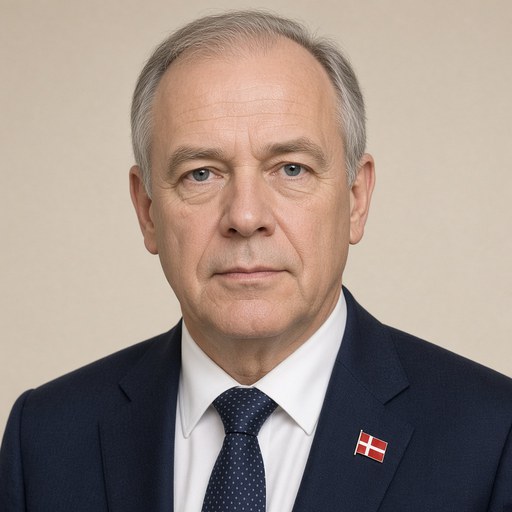
Response to inquiry F 18 by Ole Løvig Simonsen (S) et al. (all parties) regarding the domestic and foreign political situation on Thursday, June 25, 1998.
 Poul Nyrup Rasmussen · Prime Minister of Denmark
- Context
- Rasmussen addressed the Danish Parliament on June 25, 1998, reviewing the parliamentary year's domestic and foreign political developments in response to a formal inquiry.
- Main themes
- Domestic political situation, economic stability, welfare state modernization, parliamentary cooperation, fiscal responsibility, employment growth, Denmark's international standing, minority government governance, Pentecost Package, social inclusion
- Duration
- ~32 min
- Words
- 3,822
- Sentences
- 221
- Readability
- 52
- Grade
- 10.2
- Syntax
- 2.79
- Vocabulary
- 2.03
Translated from Danish
The broad sphere of national life a sentence belongs to. Every sentence has an Arena, so it is the denominator the other indices are read against.
Other221 sentences in 104 paragraphs
We made it through - Denmark on the right track
Rarely has so much been at stake for Denmark's future as in this parliamentary year.
Rarely have so many international events turned out so well for Denmark as in the past parliamentary year.
Rarely have so many significant domestic political events and elections been carried out in such a short time.
This parliamentary year will be remembered as a year of hard work. It was not an end in itself. But it was necessary to ensure a continued stable trajectory for Denmark internally.
There were times when tensions ran high. There were times when few of us could expect top marks for the artistic impression here in the Parliament.
But we made it through. We did not come to a standstill. Denmark could move forward on a track.
I would like to express my gratitude for a tremendous effort in the Danish Parliament. There has truly been hard work. And results have been achieved.
The course has been maintained for Denmark's development and trajectory all the way through.
Danish politics has certainly not been idle.
And the population has been patient with us when we have, with rather short intervals, asked Danish voters to take a stand. It is not the government's goal to continue initiating elections with such short intervals! I can promise that - we will see if the Parliament agrees!
There must be order in the economy
The parliamentary election in March created new clarity for the working conditions of the Parliament in the coming years. As we see it, the voters gave the government a mandate to continue its work in creating a modern welfare society in the years to come, capable of thriving in the new international world.
In the new government platform, we have clearly confirmed that ambition.
Keeping Denmark on the narrow economic path of progress is a main task for the government. It has also clearly influenced the work of the Parliament over the past year.
The year both started and ended with an adjustment of economic policy.
In October last year, the government implemented an extra pension savings scheme in collaboration with the Liberal Party, the Conservative Party, and the Christian Democrats. The Finance Act for 1998 was finalized in broad cooperation, including participation to varying degrees from the Socialist People's Party, the Liberal Party, the Christian Democrats, and the Conservative People's Party. A week ago, the government negotiated the so-called Pentecost Package with the participation of the Socialist People's Party and the Red-Green Alliance - after several, unfortunately unsuccessful, attempts to reach a broader agreement involving the center-right parties.
I think it says a lot about the workplace we have here in the Parliament. A minority government must collaborate - and that is also best for Denmark - but a minority government must also seek to get as much of its policy through as possible every time.
We have one of the most well-functioning societies in the world. We have every opportunity to succeed if we approach things correctly. Over the past five years, we have strengthened our foundation to ensure that all those who have not yet been included in society get new chances.
But it can quickly go the wrong way again if we do not dare. Make decisions that we know are not popular, but necessary.
And right now, we need to make an extra effort for the community again. Because the overall economic development is moving a bit too fast. - It is essentially just as bad as if it were moving too slowly or if things completely came to a standstill, as the situation appeared when we formed the government five years ago.
After five years of hard work from everyone in Denmark, the country is progressing. Employment, the economy - yes, we are better off in Denmark. Not everyone yet - but many more than before.
Now it is about holding on and staying on track.
The Pentecost Package, which is currently being negotiated here in the Parliament, is about responsibility. Responsibility to ensure that the Danish economy continues to develop as one of the strongest and healthiest in Europe. Care to ensure continued solid growth in employment and a stable surplus in finances and the balance of payments.
Order in the economy is not an end in itself, but a means to achieve all the things we so dearly want. We know from bitter experience who gets hit if the economy goes off track. We saw that during the Potato Cure in 1986 - we have seen it on previous occasions.
It must not happen again.
After the first five years of progress in Denmark, I have a hope and wish that we can embark on the next big step: that after the Pentecost Package, we can seriously start to improve quality and reduce debt because we need both.
The government has an ambition to build the modern welfare society, the modern community, where there is room for the individual - for all of us - where there are opportunities for everyone - where care and respect for one another are greater.
Implementing the next step - better conditions for the elderly and the marginalized - costs.
Giving our children and parents the opportunity to be together more - that costs.
Making our hospitals, elderly care, and the conditions for the mentally ill even better - that costs.
It all costs.
I know well that not all elderly people receive the service they actually need. It pains us all. We must do better - even if it takes longer.
With the new municipal agreements, we have ensured a slightly slower rate of increase in public expenditures without conflicting with the political goals of gradually improving service and quality levels. That line will be maintained in the upcoming negotiations in the autumn regarding the Finance Act for 1999.
And one thing is certain: If there is no order in the economy - it will affect our community, and we cannot live up to the promises we have made to the population.
I know well that some say: why me - why not the neighbor? The government's answer is that we must all pull together, for we all have a shared responsibility for the future of our society.
The Pentecost Package that we are now finalizing is not just a traditional economic intervention. It is more than that. It is, in fact, a consistent continuation of the direction in tax policy that the governing parties have worked for and been a part of since 1986.
In 1986, we began the first phase of tax policy renewal. The Social Democrats and the Radicals were part of the overall agreement complex - together with the center-right, then governing parties.
In 1993, it became the next phase in the same tax policy development - the Social Democrats and the Radical Left were part of the majority that the then majority government was based on.
And now here in 1998, we are essentially shaping the third phase in the continued tax policy development. Again, it is the two current governing parties that are participating - but this time with different political parties than in 1986 and 1993.
The fundamental structure in the renewal of the tax system is a continuation of the main components we have already worked with over the past ten years: a broader tax base, lower income tax, gradual relief with green taxes, and a better distribution policy.
That is the consequence, that is the maintained course. Anyone who has had the opportunity to familiarize themselves with the government's proposal for 'Denmark 2005' from May 1997 knows the direction of the government's considerations.
* * *
Thus, the Pentecost Package is also part of an overall economic strategy for Denmark:
I will not for a second hide the fact that this is an economic tightening for families in Denmark. But the burdens are distributed fairly, humanely, and take into account that the broadest shoulders should bear the heaviest burdens.
It is important that families in Denmark also know that the extra effort we are all making right now serves a reasonable purpose for the benefit of all of us.
The alternative to the tax and fee adjustment we are making right now is simply frightening: If we were to achieve the same economic adjustment through a traditional fiscal tightening - yes, then we would have to face cuts of around 15 billion kroner over the next few years. Then we could well wave goodbye to new improvements in the areas that are so central to us: hospitals, elderly care, family conditions, public schools, education.
It is that simple: the government simply could not deviate from the course that the Pentecost Package represents. It would have been deeply irresponsible to abandon the economic policy by leaving an unresolved task - or by - in addition to the planned, strict expenditure policy we have now agreed with the municipalities, imposing new cuts and tax increases on society - which I can assure most homeowners would have found far more painful.
To the business community, I would like to say: let peace break out again. The government wishes for continued good cooperation as we have had over the past five years. It has gone well for the business community with high earnings, significant export growth, and extensive investments in new jobs - let us continue that line.
We would have liked to agree on a lower corporate tax now. That would also secure business taxation. But that must wait a bit. It is the government's ambition to return with proposals for a gradual easing of corporate tax - as soon as a majority can ensure responsible financing.
An intense year of work.
Politics is about making a difference - not just administering.
When the government presented its opening statement in October last year, we also put forward a number of proposals for new reforms - they were implemented.
We promised to strengthen the fight against crime, gang crime, drug crime, and violent crime. We promised to enhance preventive efforts. To improve police working conditions, to strengthen efforts against illegal immigration and human trafficking in border areas. We continued the work for the establishment of an independent court ruling. All this was implemented, often with a broad majority in the Parliament.
We promised a strengthened effort for the environment. A revision of water environment legislation. Tightening of pesticide taxes. In these days, Denmark has once again made its mark on the environmental map with the new global Aarhus Convention, which ensures the broad public arrangement that is so fundamental for a sustainable global environmental policy. All of this is reality with broad support in the Parliament.
The government promised to secure patients' legal status in hospital treatment. This has been implemented with a broad majority.
The government has renewed its efforts in the cultural sector with the establishment of a new development fund and a better distribution of lottery funds. This has been implemented with a broad majority.
The government has promised to strengthen family policy at the beginning of the parliamentary year with improved parental leave, especially for men. This has been implemented with a broad majority.
The government has implemented a modernization of the workers' compensation insurance law, so occupational diseases and sudden lifting injuries can be financed in a better way than before, while also relieving the costs for businesses. This has been done with a broad majority.
The government has promised to legislate for greater food safety and quality. Better animal welfare. This has been implemented with a broad majority.
All this work has been carried out quietly, but at a high pace, here in the Parliament. It is a good working style that we should continue into the autumn.
An international world and a decisive year for Denmark.
In international work, we will long remember a parliamentary year where so many important pieces in foreign policy fell nicely into place for Denmark.
Just think of NATO expansion: At NATO's summit in Madrid in July last year, it was decided to invite Poland, the Czech Republic, and Hungary to accession negotiations. Already in February 1998, the Parliament ratified Denmark's ratification of the expansion with a very broad majority behind it. Now we are engaged in the practical work. And from the Danish side, we also succeeded in Madrid in ensuring that the door for new members remains open for other Central and Eastern European countries, including the Baltic states.
Just think of the expansion work within the EU: At the summit in Luxembourg in December 1997, we made a historic decision to begin expanding the EU with the new applicant countries from Central Europe as well as Cyprus. It was clearly stated that all - and I repeat all - 11 candidate countries, including the three Baltic states, should be admitted based on the same principles, rules, and criteria. This is not an expansion process that is cut off, but a coherent process, where we start with the five, but where the others are not forgotten. That expansion is a Danish hallmark - the largest peace project our generation has had the chance to secure.
And think of the Danish presidency of the OSCE, which at the turn of the year has set an agenda for work that will leave its mark in the coming time.
But first and foremost, we must remember that the parliamentary year included perhaps the most important foreign policy decision made by a majority of the Danish population - I am thinking of the referendum on the Amsterdam Treaty.
We have received a handshake from the population that Denmark belongs in European cooperation - that we should not isolate ourselves, that we do not belong on the sidelines. We have also received it in a way that signals that Denmark is a part of Europe, yes, and Europe is a part of Denmark - but only a part. We can do this with the new Amsterdam Treaty.
At the recent summit in Cardiff, preparatory steps have already been taken to implement the Amsterdam Treaty’s possibilities for better environmental cooperation, for better employment cooperation in practice.
Politics is about making a difference - the characteristic of the Danish population is that they want to make a difference. That has also succeeded in the foreign policy area this year.
The Realm
In the very recent weeks, the Kingdom has demonstrated its fundamental sustainability. Despite difficulties, it has succeeded. One might, when looking at the developments over the past year—especially in the relationship between Denmark and the Faroe Islands—ask oneself the small question: What was it, in the end, that carried us through? What is it, really, that holds us together—Denmark and the Faroe Islands?
Yes, as I said yesterday during the parliamentary debate, it is precisely a community between Denmark, the Faroe Islands, and Greenland. A community that fundamentally has little to do with individual legal paragraphs, but something entirely different that no paragraph can replace:
It is our human, historical, and cultural bonds.
It is self-esteem. It is self-determination in our societies that carries us.
It is also the mutual respect for one another. It is a community that is built on solidarity, in short.
The history of our Kingdom has also had its dramas and intense discussions. In more recent times, I primarily think of the new historiography regarding the Thule base in Greenland and the economic crisis that the Faroese society went through in the late 1980s and early 1990s. I deliberately mention these two main examples, where we nevertheless managed to come through with solutions that both parties could accept, even though they were extremely sensitive areas for our populations.
Now we have written a new piece of crucial history in our cooperation between Denmark and the Faroe Islands. With the new agreement of June 10, we have closed a chapter in our cooperation that has been painful and prolonged.
I am also pleased that a broad majority in the Folketing expressed support yesterday for the line that the government and the Faroese Lagting agree upon regarding a forward-looking cooperation around the Faroe Islands' desire for extended self-government. The debate must start and be clarified among the Faroese people, the government, and the Lagting—once again. The very best foundation.
In our cooperation with Greenland, it is important that we here in Denmark also remember that Greenland is the world's largest island—with an immensely beautiful, but also harsh nature. This places extraordinary demands on the Greenlandic society's ability to function as a society. Demands for communication and transport have a connection between remote towns and settlements.
I am glad that the government and the Greenlandic government have conducted block grant negotiations for the period 1999-2001. We have a good agreement in place that ensures a reasonable basis for continued cooperation.
Regarding Greenland's need for building renovations in the coming years, the government has indicated with the agreement on the block grant that we are prepared to continue discussions with the Greenlandic home rule.
In the newly formed government's first 100 days, we have consistently continued our work to ensure a sound economic foundation for continued progress in Denmark and for a modern Danish welfare society in a new international era.
The government's visions for the modern welfare society are very fundamental:
The Danish way, the social and human security upon which we build—and which is the foundation for, in reality, Europe's highest employment. That path is crucial for the transitional period we are living in—European, international, and national.
That is what drives us in the government:
To ensure the modern welfare society—to ensure that we, despite the roaring international competition, do not experience a development where more and more fall by the wayside, but the opposite. It is a task that we cannot accomplish in a season. Never before have so many been subjected to such extensive changes in such a short time.
We have now presented the first part of a new, major effort to renew our working life and labor market in Denmark. I am thinking of the family policy report.
There must be room for our diversity. For everyone who can. There must be space, and there must be flexibility to meet the different needs and opportunities we have in the various sections of our working life.
The family policy report received a somewhat harsh reception. Perhaps this is related to the fact that many had imagined that the legislation could be implemented from one day to the next and that all needs could be met here and now. That is, of course, not the case. It is a process that we now have underway. Just think that over the past five years, we have created 140,000 new childcare opportunities. It is a small revolution in the labor market that cannot be achieved solely with legal paragraphs. That task can only be accomplished in cooperation—between the legislation here, the labor market parties through agreements, the employees and management of companies, the municipalities' opening hours, and last but not least, the individual families' own prioritization between time and things—such cooperation is a prerequisite for us to achieve a more family-friendly labor market in the coming years.
We also see it as part of the renewal in the labor market that we will address in the fall.
Foreigners in Denmark
There is another area that is also important to lay a long-term sustainable foundation for: It is the foreigners in our society.
It is not always easy to be a foreigner in Denmark. And it is not good if one feels like a foreigner in one's own country. Therefore, we must find the balance. The balance that maintains rights and obligations for all. That maintains that the language—the Danish—must be learned by all. That maintains that we all have a place in society with the right to a job and to education and to make an effort.
With the new immigration legislation and the new integration law, we have found a basis for addressing that task. Under the steadfast and persistent leadership of the Minister of the Interior in the political negotiations, we are now only a hair's breadth away from establishing a good and secure foundation for both municipalities, us here, and not least the population and the foreigners to find a safe basis for cooperation in the years to come. Humanism has been maintained, but the consequences clarified—in relation to combating and crime.
There are many emotions in this matter. There are many human considerations that must be taken into account in this matter. We do not benefit from dragging out the pain for Danish society. When viewed from the perspective of the Liberal and Conservative parties, if they cannot get what they think is the very best, then they should take the second best for the sake of society. I hope that they will do so tomorrow when the button is to be pressed.
A country of bridge builders
In almost symbolic fashion, this parliamentary session concludes with a completion of one of the largest construction projects in Denmark's history—the people's bridge, the Great Belt Bridge. A fantastically beautiful and large construction project—carried out with ideas and engineering efforts and, above all, by Danish workers, bridge builders, blacksmiths, earth and concrete workers. In close cooperation with European workers.
The Danes have embraced the bridge. It shows again that we need solidarity and something decent to believe in and look forward to.
Denmark is a nation of bridge builders. Now bridges are being built between the different regions and all of us in Denmark. Let us also take that bridge as a symbol of all the bridges we are in the process of building after the fall of the wall, the Soviet dictatorship, and the Cold War. That bridge is also a connection between peoples and to peace and fewer refugees. That bridge is a reminder of the responsibility we have for one another in the modern welfare society—as individuals and as a people.
In other countries, triumphal arches are built—sometimes with assistance from Danish architects. But many of them tend to be too narrow for everyone to get through.
The bridges we build are wide enough and strong enough for everyone to cross. That is what makes politics in Denmark make a difference. That is the innermost idea of the welfare society.
The time is not for political trenches. We are far too early in the new electoral period for that. The time is for cooperation. I have listened with interest to the signals that have also come from the right in recent weeks. I look forward to us resuming our broad cooperation in the fall.
There are many areas over which we need to build bridges. That is the government's ambition when we resume work in October.
The original Danish. The tags above are read on the English translation's sentences.
Vi kom igennem - Danmark på ret spor
Sjældent har så meget stået på spil for Danmarks fremtid som i dette Folketingsår.
Sjældent er så mange internationale begivenheder faldet så godt ud for Danmark, som i det forgangne Folketingsår.
Sjældent er så mange store indenrigspolitiske begivenheder og politiske valg gennemført på så kort tid.
Dette Folketingsår vil blive husket som et overarbejdsår. Det var ikke et mål i sig selv. Men det var nødvendigt for at sikre en fortsat stabil fremgangslinie for Danmark indadtil.
Der var tidspunkter, hvor bølgerne gik højt. Der var tidspunkter, hvor de færreste af os kunne forvente topkarakterer for det kunstneriske indtryk her i Folketinget.
Men vi kom igennem. Vi gik ikke i stå. Danmark kunne komme videre på et spor.
Jeg vil gerne kvittere for en meget stor arbejdsindsats i det danske Folketing. Der er virkelig blevet arbejdet. Og der er skabt resultater.
Kursen er fastholdt for Danmarks udvikling og fremgangslinie hele vejen igennem.
Dansk politik har sandelig ikke ligget på den lade side.
Og befolkningen har båret over med os, når vi med temmelig korte mellemrum har bedt danske vælgere om at tage stilling. Det er ikke regeringens mål at fortsætte med at tage initiativ til valg-handlinger med så korte mellemrum! Det kan jeg godt love - så må vi se om Folketinget er enig!
Der skal være orden i økonomien
Folketingsvalget i marts skabte ny klarhed for Folketingets arbejdsvilkår i de kommende år. Som vi ser det, gav vælgerne regeringen mandat til at fortsætte sit arbejde med at skabe et moderne velfærdssamfund i årene fremover, der kan klare sig i den ny internationale verden.
I det nye regeringsgrundlag har vi klart bekræftet den ambition.
At holde Danmark på fremgangsliniens smalle økonomiske vej er en hovedopgave for regeringen. Det har også sat sit tydelige præg på Folketingets arbejde gennem det seneste år.
Året både startede og sluttede med en justering af den økonomiske politik.
I oktober sidste år gennemførte regeringen en ekstra pensionsopsparing i samarbejde med V, K og CD. Finansloven for 1998 kom på plads i et bredt samarbejde med bl.a. deltagelse i forskellig udstrækning af SF, Venstre, CD og Det konservative Folkeparti. For en uge siden forhandlede regeringen den såkaldte Pinsepakke på plads med deltagelse af SF og Enhedslisten - efter flere, desværre forgæves, forsøg på at få et bredere forlig igennem med deltagelse af de borgerlige partier.
Jeg synes det siger meget om den arbejdsplads vi har her i Folketinget. En mindretalsregering skal samarbejde - og det er også bedst for Danmark - men en mindretalsregering må også søge hver gang at få så meget af sin politik igennem som muligt.
Vi har et af de mest velfungerende samfund i verden. Vi har alle muligheder for at klare os, hvis vi griber tingene rigtigt an. Gennem de seneste 5 år har vi styrket vort fundament for at sikre, at alle de mennesker, som ikke er kommet med i samfundet endnu, får nye chancer.
Men det kan hurtigt gå den forkerte vej igen, hvis vi ikke tør. Træffe beslutninger, som vi godt ved ikke er populære, men nødvendige.
Og lige nu skal vi gøre en ekstra indsats for fællesskabet igen. For det går lige lovligt stærkt i den samlede økonomiske udvikling. - Det er i grunden lige så galt som hvis det går for langsomt eller tingene helt går i stå, som situationen jo tegnede sig, da vi dannede regering for 5 år siden.
Efter 5 års hårdt arbejde fra alle i Danmark er landet i fremgang. Beskæftigelsen, økonomien - ja, vi har fået det bedre i Danmark. Ikke alle endnu - men mange flere end før.
Nu gælder det om at holde fast og holde os på sporet.
Den Pinsepakke, som i disse dage forhandles her i Tinget, handler om ansvarlighed. Ansvar for at sikre, at dansk økonomi fortsat udvikler sig som et af de stærkeste og sundeste i Europa. Omhu for at sikre fortsat solid vækst i beskæftigelsen og stabilt overskud på finanser og betalingsbalance.
Orden i økonomien er jo ikke et mål i sig selv, men et middel til at gøre alt det, vi så gerne vil. Vi ved jo af bitter erfaring, hvem der bliver ramt, hvis økonomien ryger af sporet. Det så vi under Kartoffelkuren i 1986 - det har vi set ved tidligere lejligheder.
Det må ikke ske igen.
Efter de første 5 års fremgang i Danmark har jeg et håb og ønske om, at vi kan tage fat på det næste store træk: at vi efter Pinsepakken kan gå i gang med for alvor at få kvaliteten op og gælden ned for vi har brug for begge dele.
Regeringen har en ambition om at opbygge det moderne velfærdssamfund, det moderne fællesskab, hvor der både er plads til den enkelte - til os alle sammen - hvor der er muligheder for alle - hvor omsorgen og respekten er større for hinanden.
At gennemføre næste træk - bedre vilkår til ældre og udstødte - koster.
At give vore børn og forældre mulighed for at være mere sammen - det koster.
At gøre vore hospitaler, ældre pleje, de psykisk syges vilkår endnu bedre - det koster.
Det koster alt sammen.
Jeg ved godt, at ikke alle ældre får den service, de i virkeligheden har behov for. Det piner os alle. Det skal vi gøre bedre - selvom det tager længere tid.
Vi har med de nye kommuneaftaler sikret en lidt langsommere stigningstakt for de offentlige udgifter uden, at det kommer i konflikt med de politiske mål om gradvist løft i service- og kvalitetsniveau. Den linje vil blive fastholdt ved de kommende forhandlinger i efteråret om Finansloven for 1999.
Og én ting er sikkert: Hvis der ikke er orden i økonomien - så går det ud over vort fællesskab, så kan vi ikke leve op til de løfter, vi har stillet i udsigt for befolkningen.
Jeg ved godt, at nogen siger: hvorfor lige mig - hvorfor ikke naboen? Svaret fra regeringen er, at vi skal løfte i flok allesammen, for vi har alle et medansvar for vores samfunds fremtid.
Den Pinsepakke, vi nu lægger sidste hånd på, er ikke bare et traditionelt økonomisk indgreb. Det er mere end det. Det er i virkeligheden en konsekvent fortsættelse af den retning på det skattepolitiske område, som regeringspartierne har arbejdet for og været en del af siden 1986.
I 1986 tog vi fat på første trin i den skattepolitiske fornyelse. Socialdemokratiet og de Radikale var en del af det samlede aftalekompleks - sammen med de borgerlige, daværende, regeringspartier.
I 1993 blev det til næste fase i den samme skattepolitiske udvikling - Socialdemokratiet og det Radikale Venstre var en del af det flertal, som den daværende flertalsregering byggede på.
Og nu her i 1998 former vi i virkeligheden tredje fase i den videreførte, skattepolitiske udvikling. Igen er det de to nuværende regeringspartier, der deltager - men denne gang med andre politiske partier end i hhv. 1986 og 1993.
Grundkonstruktionen i fornyelsen af skattesystemet er en videreførelse af de hovedbrikker, vi allerede har arbejdet med igennem de seneste 10 år: et bredere skattegrundlag, lavere indkomstskat, gradvis aflastning med grønne afgifter og en bedre fordelingspolitik.
Det er konsekvensen, det er den fastholdte kurs. Alle, der har haft lejlighed til at sætte sig ind i regeringens oplæg for 'Danmark år 2005' fra maj 1997 kender retningen i regeringens overvejelser.
* * *
Dermed er Pinsepakken også en del af en samlet økonomisk strategi for Danmark:
Jeg skal ikke et sekund lægge skjul på, at der er tale om en økonomisk stramning for familierne i Danmark. Men byrderne fordeles ordentligt, menneskeligt og tager hensyn til, at de bredeste skuldre skal bære de største byrder.
Det er vigtigt, at familierne i Danmark også véd, at den ekstra indsats vi gør alle sammen lige nu, tjener et fornuftigt formål til gavn for os alle sammen.
Alternativet til den skatte- og afgiftsjustering, vi foretager lige nu, er simpelthen skræmmende: Hvis vi skulle have opnået den samme økonomiske justering ved en traditionel finanspolitisk stramning - ja, så skulle vi ud i besparelsesrunder af størrelsesorden 15 milliarder kroner de næste par år. Så kunne vi godt vinke farvel til nye forbedringer på de områder, der er så centrale for os: sygehusene, ældreplejen, familiernes vilkår, folkeskolen, uddannelse.
Så enkelt er det i virkeligheden: regeringen kunne simpelthen ikke fravige den kurs, Pinsepakken er udtryk for. Det ville have været dybt uansvarligt at opgive den økonomiske politik ved at efterlade en uløst opgave - eller ved - oven i den planlagte, stramme udgiftspolitik, vi nu har aftalt med kommunerne, at pålægge samfundet nye nedskæringer og skatteforhøjelser - som jeg kan forsikre for de fleste husejere villet have fundet langt mere smertefulde.
Til erhvervslivet vil jeg gerne sige: lad freden bryde ud igen. regeringen ønsker et fortsat godt samarbejde som vi har haft det i de forløbne 5 år. Det er jo gået godt for erhvervslivet med stor indtjening, stor eksportfremgang og omfattende investeringer i nye arbejdspladser - lad os fortsætte den linje.
Vi ville gerne fra regeringens side have aftalt en lavere selskabsskat nu. Det ville samtidig sikre erhvervsbeskatningen. Men det må altså vente lidt. Det er regeringens ambition at komme tilbage med forslag om en gradvis lempelse af selskabsskatten - efterhånden som et flertal vil sikre en forsvarlig finansiering.
Et intenst arbejdsår.
Politik er at gøre en forskel - ikke bare administrere.
Da regeringen fremlagde sin åbningsredegørelse i oktober sidste år stillede vi samtidig en række forslag om nye reformer - De blev gennemført.
Vi lovede at forstærke indsatsen mod kriminaliteten, rockerkriminaliteten, narko og voldskriminalitet. Vi lovede at forstærke den forebyggende indsats. At forbedre politiets arbejdsvilkår, at styrke indsatsen mod illegal indvandring og menneskesmugling i grænseområdet. Vi videreførte arbejdet for oprettelse af en uafhængig domsstolsafgørelse. Alt dette blev gennemført, - ovenikøbet oftest med et bredt flertal i Folketinget.
Vi lovede en forstærket indsats for miljøet. En revision af vandmiljølovgivningen. Opstramning af pesticidafgifter. I disse dage har Danmark igen har sat sig på det miljømæssige landkort med den nye globale Århus-konvention, der sikrer det brede folkelige arrangement, som er så fundamentalt for en langtidsholdbar, global miljøpolitik. Alt det er realiteter med bredt flertal i Folketinget.
Regeringen lovede en sikring af patienternes retsstilling ved hospitalsbehandling. Det er gennemført med et bredt flertal.
Regeringen har på kulturområdet fornyet indsatsen med oprettelsen af den nye udviklingsfond og en bedre fordeling af tipsmidlerne. Det er gennemført med et bredt flertal.
Regeringen har til styrkelse af familiepolitikken i starten af folketingsåret lovet en forbedret barselsorlov for specielt mænd. Det er gennemført med et bredt flertal.
Regeringen har gennemført en modernisering af arbejdsskadeforsikringsloven, så erhvervssygdomme og pludselige løfteskader kan finansieres på en bedre måde end før, samtidig med, at erhvervslivets omkostninger aflastes. Det er sket med et bredt flertal.
Regeringen har lovet at en lovgive om større fødevaresikkerhed og kvalitet. Bedre dyrevelfærd. Det gennemført med et bredt flertal.
Hele dette arbejde er stille og roligt, men i højt tempo, gennemført her i Folketinget. Det er en god arbejdsstil, vi bør fortsætte til efteråret.
En international verden og et afgørende år for Danmark.
I det internationale arbejde skal vi lede længe efter et folketingsår, hvor så mange vigtige brikker i det udenrigspolitiske faldt fint ud for Danmark.
Tænk bare på NATO-udvidelsen: På NATO’s topmøde i Madrid i juli sidste år blev det besluttet, at indbyde Polen, Tjekkiet og Ungarn til optagelsesforhandlinger. Allerede i februar her i 1998 tiltrådte Folketinget Danmarks ratifikation af udvidelsen med et meget bredt flertal bag. Nu er vi i gang med det praktiske arbejde. Og fra dansk side lykkedes det os også i Madrid, at få sikret, at døren for nye medlemmer fortsat står åben for andre central- og østeuropæiske lande, heriblandt også de baltiske lande.
Tænk bare på udvidelsesarbejdet indenfor EU: På topmødet i Luxembourg i december 1997 traf vi en historisk beslutning om at gå i gang med at udvide EU med de nye ansøgerlande fra Centraleuropa samt Cypern. Det blev slået klart fast, at alle - og jeg gentager alle - 11 kandidatlande, herunder de tre baltiske, skal optages på grundlag af de samme principper, regler og kriterier. Der er ikke tale om en udvidelsesproces, der er klippet over, men om en sammenhængende proces, hvor vi starter med de 5, men hvor de andre ikke glemmes. Den udvidelse er en dansk mærkesag - det største fredsprojekt vores generation har haft chancen for at sikre.
Og tænk på det danske formandsskab for OSCE, som ved årsskiftet med en dagsordenssætning for arbejdet, der sætter sig spor i den kommende tid.
Men først og sidst skal vi huske, at folketingsåret omfattede måske den vigtigste udenrigspolitiske beslutning, som blev truffet af et flertal i den danske befolkning - jeg tænker på folkeafstemningen om Amsterdam-traktaten.
Vi har fået et håndslag fra befolkningen om, at Danmark hører til i det europæiske samarbejde - at vi ikke skal isolere os, at vi ikke hører til på sidelinien. Vi har også fået det på en måde, som signalerer, at Danmark er en del af Europa ja, og Europa er en del af Danmark - men også kun en del. Det kan vi gøre med den nye Amsterdam-traktat.
På det seneste topmøde i Cardiff, er der allerede taget forberedende skridt til at omsætte Amsterdam-traktatens muligheder for bedre miljøsamarbejde, for bedre beskæftigelsessamarbejde i praksis.
Politik er at gøre en forskel - den danske befolknings særkende er, at man vil gøre en forskel. Det er også lykkedes på det udenrigspolitiske område i år.
Rigsfællesskabet
I de allerseneste uger har rigsfællesskabet vist sin grundlæggende bærekraft. På trods af vanskeligheder er det lykkedes. Man kan godt, når man ser på forløbet gennem det senere år - især i forholdet mellem Danmark og Færøerne - stille sig selv det lille spørgsmål: Hvad var det egentlig, der bar igennem til sidst? Hvad er det egentlig, der holder os sammen - Danmark og Færøerne?
Ja, som jeg sagde i går under Folketingsdebatten, så er det netop et fællesskab mellem Danmark, Færøerne og Grønland. Et fællesskab, som dybest set ikke har så meget at gøre med enkelte lovparagraffer, men noget helt andet, som ingen paragraf kan erstatte:
Det er vores menneskelige, historiske og kulturelle bånd
Det er selvværdet. Det er selvbestemmelsen i vore samfund, der bærer.
Det er også den gensidige respekt for hinanden. Det er et fællesskab, der bygger på solidaritet kort sagt.
Vores rigsfællesskabs historie har også haft sine dramaer og intense diskussioner. I nyere tid tænker jeg først og fremmest om den ny historieskrivning om Thule-basen i Grønland og om den økonomiske krise, det færøske samfund har været igennem i slutningen af 80’erne og begyndelsen af 90’erne. Jeg nævner bevidst disse 2 hovedeksempler, hvor det trods alt lykkedes os at komme igennem med løsninger, som begge parter kunne acceptere, selvom det var ekstremt følsomme områder for vore befolkninger.
Nu har vi skrevet et nyt stykke afgørende historie i vores samarbejde mellem Danmark og Færøerne. Med den ny aftale af 10. juni har vi lukket et kapitel i vort samarbejde, der har været smertefuldt og langvarigt.
Jeg glæder mig også over, at et bredt flertal i Folketinget i går gav udtryk for støtte til den linie, regeringen og det færøske Lagting er enige om, når det gælder om et fremadrettet samarbejde omkring Færøernes ønske om udvidet selvstyre. Debatten må starte og afklares hos det færøske folk, landsstyre og Lagting - endnu engang. Det allerbedste grundlag.
I vort samarbejde med Grønland er det vigtigt, at vi også her i Danmark husker på, at Grønland er verdens største ø - med en umådelig smuk, men også voldsom natur. Det stiller helt ekstraordinære krav til det grønlandske samfunds muligheder for at fungere som samfund. Krav til kommunikation og transport har sammenhæng mellem fjerntliggende byer og bygder.
Jeg er glad for, at regeringen og det grønlandske landsstyre har gennemført bloktilskudsforhandlinger for perioden 1999-2001. Vi har en god aftale i hus, som sikrer et fornuftigt grundlag for et fortsat samarbejde.
Når det gælder Grønlands behov for bygningsrenoveringer de kommende år, har regeringen tilkendegivet med aftalen om bloktilskuddet, at vi er indstillet på at fortsætte drøftelserne med det grønlandske hjemmestyre.
I den nydannede regerings første 100 dage har vi konsekvent videreført vort arbejde for at sikre det sunde økonomiske grundlag for en fortsat fremgang i Danmark og for et moderne danske velfærdssamfund i en ny international tid.
Regeringens forestillinger om det moderne velfærdssamfund er meget grundlæggende:
Den danske vej, den sociale og menneskelige tryghed, som vi bygger på - og som er fundamentet for i virkeligheden Europas højeste beskæftigelse. Den vej er helt afgørende for den brydningstid, vi lever i - europæisk, internationalt og nationalt.
Det er det, der driver os i regeringen:
At sikre det moderne velfærdssamfund - at sikre, at vi, trods den brølende internationale konkurrence ikke vil opleve en udvikling, hvor flere og flere falder af i svinget, men det modsatte. Det er en opgave, vi ikke klarer på en sæson. Aldrig før har så mange været udsat for så omfattende forandringer på så kort tid.
Vi har nu fremlagt første del af en ny, stor indsats for at forny vort arbejdsliv og arbejdsmarked i Danmark. Jeg tænker på den familiepolitiske redegørelse.
Der skal være plads til vor forskellighed. Til alle, der kan. Der skal være rum, og der skal være fleksibilitet til at imødekomme de forskellige behov og muligheder, vi har i de forskellige afsnit af vort arbejdsliv.
Den familiepolitiske redegørelse fik en lidt barsk modtagelse. Måske hænger det sammen med, at mange havde forestillet sig, at lovgivningen kunne gennemføres fra den ene dag til den anden og alle behov imødekommes her og nu. Det gælder naturligvis ikke. Det er en proces, vi nu har i gang. Tænk blot på, at vi gennem de seneste 5 år har fået skabet 140.000 nye pasningsmuligheder for børn. Det er en lille revolution på arbejdsmarkedet, som ikke kan løftes alene med lovparagraffer. Den opgave kan kun klares i et samarbejde - mellem lovgivningen herinde, arbejdsmarkedets parter gennem overenskomsterne, virksomhedernes medarbejdere og ledelse, kommunernes åbningstider og sidst og først de enkelte familiers egen priotering mellem tid og ting - et sådant samvirke er en forudsætningen for, at vi kan få et mere familievenligt arbejdsmarked over de kommende år.
Vi ser det også som en del af fornyelsen på arbejdsmarkedet, vi tager fat på i efteråret.
Udlændinge i Danmark
Der er en anden del, der også er vigtigt at få lagt et langtidsholdbart grundlag for: Det er de fremmede i vort samfund.
Det er ikke altid nemt at være fremmed i Danmark. Og det er heller ikke godt, hvis man føler sig som fremmed i sit eget land. Derfor skal vi finde balancen. Balancen, som fastholder rettigheder og pligter for alle. Som fastholder, at sproget - det danske - skal læres af alle. Sm fastholder, at vi alle har en plads i samfundet med ret til job og til uddannelse og til at gøre en indsats.
Med den nye udlændingelovgivning og den nye integrationslov har vi fundet et grundlag for at løfte den opgave. Under indenrigsministerens stædige og vedholdende ledelse af de politiske forhandlinger er vi nu kun et mulehår fra at få tilrettelagt et godt og sikkert grundlag for at både kommuner, vi herinde og ikke mindst befolkningen og de fremmede kan finde et trygt samarbejdsgrundlag i årene fremover. Humanismen er fastholdt, men konsekvensen præciseret - så i forhold til bekæmpelse og kriminalitet.
Der er mange følelser i denne sag. Der er mange menneskelige hensyn, der skal tages i denne sag. Vi har ikke godt af at trække pinen i langdrag for det danske samfund. Når man set fra V og K’s side ikke kan få det, de synes er allerbedst - så bør man tage det næstbedste for samfundets skyld. Det håber jeg, man vil gøre i morgen, når der skal trykkes på knappen.
Et land af brobyggere
På næsten symbolsk vis slutter denne Folketingssæson med en afrunding på et af de største bygningsværker i Danmarks historie - folkets bro Storebæltsbroen. Et fantastisk smukt og stort bygningsværk - udført med idé og ingeniørindsats og først og fremmest af danske arbejdere, brobisser, smede, jord- og beton. I tæt samarbejde med europæiske arbejdere.
Danskerne har taget broen til sig. Det viser igen, at vi har brug for solidaritet og noget ordentligt at tro på og se frem til.
Danmark er en nation af brobyggere. Nu bliver der bygget bro mellem de forskellige landsdele og os alle sammen i Danmark. Lad os også tage den bro som et symbol på alle de broer, vi er i gang med at bygge efter murens fald, Sovjet diktaturet og den kolde krig. Den bro er også en forbindelse mellem folk og til fred og færre flygtninge. Den bro er en påmindelse om det ansvar, vi har for hinanden i det moderne velfærdssamfund - som enkeltmenneske og som folk.
I andre lande bygger man triumfbuer - ind imellem med bistand fra danske arkitekter. Men mange af dem har det med at være for smalle til at alle kan komme igennem.
De broer, vi bygger, er brede nok og stærke nok til at alle kan komme over. Det er det, der gør, at politik i Danmark gør en forskel. Det er det, der er den inderste idé med velfærdssamfund.
Tiden er ikke til politiske skyttegrave. Dertil er vi alt for kort inde i den ny valgperiode. Tiden er til samarbejde. Jeg har lyttet med interesse til de signaler, der i de senere uger også er kommet fra borgerlig side. Jeg ser frem til, at vi i efteråret kan genoptage vores brede samarbejde.
Der er mange felter, vi skal bygge broer over. Det er regeringens ambition, når vi genoptager arbejdet til oktober