




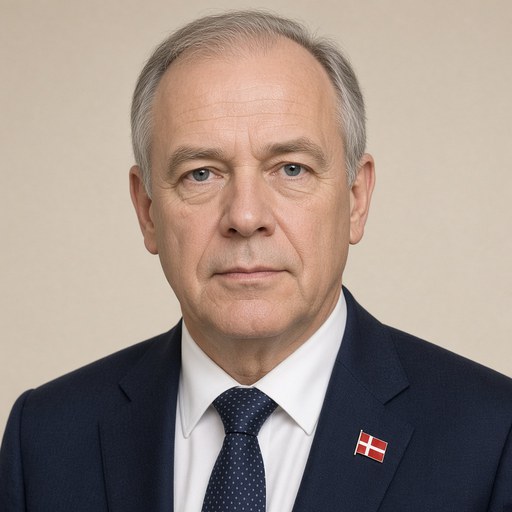
Prime Minister Poul Nyrup Rasmussen's statement of special character in the Folketing on February 19, 1998.
 Poul Nyrup Rasmussen · Prime Minister of Denmark
- Context
- Rasmussen addressed the Folketing on February 19, 1998, announcing the dissolution of parliament and calling a general election for March 11, 1998.
- Main themes
- Announcement of general election, government achievements, economic policy, employment and labor market, welfare and healthcare, education reform, environment and animal welfare, immigration and refugee policy, Amsterdam Treaty referendum, political stability, work-family balance, international rule of law
- Duration
- ~7 min
- Words
- 815
- Sentences
- 50
- Readability
- 43
- Grade
- 9.6
- Syntax
- 2.55
- Vocabulary
- 2.04
Translated from Danish
The broad sphere of national life a sentence belongs to. Every sentence has an Arena, so it is the denominator the other indices are read against.
Other50 sentences in 35 paragraphs
Yesterday, the Folketing adopted, with a broad majority, a mandate for the government to concretely affirm Denmark's shared responsibility for upholding the international rule of law. The government is thus assured the necessary capacity to act in the time to come, as we had wished.
Today, it is therefore time to take stock, outline the future, and make decisions.
* * *
The first five years under this government's leadership have been good years for Denmark.
Denmark today has a stronger economy, better employment, and a more equitable distribution of resources than most other countries in Europe.
We have implemented important reforms. We have made significant progress in areas such as the environment, education, childcare, and care for the elderly and sick.
In recent days, we have achieved a good result with the water environment agreement.
* * *
But significant challenges lie ahead of us. The government is ready. Our economic policy must be maintained. The debt must be reduced. The quality across our society must be improved.
We can ensure this with Denmark on the rise. We will do this particularly in six areas:
We must ensure a better balance between work and family life, especially benefiting families with children.
We must pave the way for new significant progress for the environment, for healthy food, and for proper animal welfare.
We must create jobs - also for the most vulnerable. There must be room for everyone in the labor market.
We must ensure that our hospitals and elderly care function much better.
We must improve our public school system and the quality of our entire education system.
We must prevent and mitigate refugee problems in the world, where oppression and conflicts rage. And we must simultaneously intensify our efforts against human trafficking and illegal immigration to the country. But we must also continue to be ready to help persecuted people who come here. This is a task for all of Denmark, for all the country's municipalities. This is what the government's new immigration law ensures.
* * *
On May 28, we will have a referendum on Denmark's position regarding the Amsterdam Treaty. This is one of the most important decisions about our future that the Danish people will make.
* * *
All these tasks can be solved - I am convinced of that. The future looks bright for Denmark.
But this requires two things:
that
the course and progress line are maintained that there continues to be a broad willingness to cooperate in the Folketing, for it is this willingness to cooperate that the government has built upon in the past five years.
I believe that there is a willingness to cooperate among the parties - but hardly any longer on this side of a new election.
I believe it is important that both the referendum and all our political work for Denmark can take place in an atmosphere of stability.
We need stability and a willingness to cooperate in the Folketing to make the necessary and responsible decisions that can lead Denmark well into the new century, as a country - a leading country - where the economy and employment continue to grow solidly, and where consideration for the environment and welfare for all people is paramount.
* * *
I have carefully considered the situation in the past few days. I have come to the following conclusion: Rather than going through a long, exhausting election campaign in the coming 5-6 months with the risk of jeopardizing much of what we have achieved - due to a lack of necessary decisions and costly promises from parties that have no coverage - I have found it best that the voters are now asked whether they want to compose a Folketing that can continue and ensure the stable line that has been established over the past five years.
* * *
The government is going to the election with an appeal to voters for support to continue our work and take the next big political step for Denmark.
The government asks for a mandate to continue a policy that is characterized by our society always providing the necessary support for the weak and vulnerable.
The government asks for a mandate to continue a policy that keeps Denmark on the map as a leading country in employment, economy, welfare, and environment.
I have found it best that the Danes now have the peace to discuss the future, and that the voters thus have the opportunity to decide who should be entrusted with the responsibility of keeping Denmark on the path of progress in the coming four years.
I have therefore recommended to Her Majesty the Queen that an election to the Folketing be called for Wednesday, March 11, 1998.
For the sake of good order, I must inform you that the government will not resign in connection with the calling of the election.
The original Danish. The tags above are read on the English translation's sentences.
I går vedtog Folketinget med et bredt flertal at give regeringen mandat til, at vi konkret kan vedstå os Danmarks medansvar for at håndhæve den internationale retsorden. Regeringen er hermed sikret den nødvendige handlekraft i den kommende tid, sådan som vi havde ønsket det.
I dag er det derfor tid at gøre status, trække linierne op for fremtiden og træffe beslutninger.
* * *
De første 5 år under denne regerings ledelse har været gode år for Danmark.
Danmark står i dag med stærkere økonomi, bedre beskæftigelse og mere retfærdig fordeling af goderne end i de fleste andre lande i Europa.
Vi har gennemført vigtige reformer. Vi har nået væsentlige fremskridt, når det drejer sig om miljø, uddannelse, børnepasning og omsorg for ældre og syge.
De seneste dage har vi nået et godt resultat med vandmiljøaftalen.
* * *
Men store udfordringer ligger foran os. Regeringen er klar. Vores økonomiske linie skal fastholdes. Gælden skal ned. Kvaliteten i hele vort samfund skal op.
Det kan vi sikre med Danmark i fremgang. Det vil vi gøre inden for især 6 områder:
Vi skal sikre en bedre sammenhæng mellem arbejde og familieliv til gavn for ikke mindst børnefamilierne.
Vi skal bane vejen for nye store fremskridt for miljøet, for sunde fødevarer og ordentligt dyrevelfærd.
Vi skal skaffe arbejde - også til de mest udsatte. Der skal være plads til alle på arbejdsmarkedet.
Vi skal sikre, at vore sygehuse og ældreomsorgen kommer til at fungere langt bedre.
Vi skal forbedre vores folkeskole og kvaliteten i hele vort uddannelsessystem.
Vi skal forebygge og afbøde flygtningeproblemer ude i verden, hvor undertrykkelser og konflikter raser. Og vi skal samtidig skærpe vor indsats mod menneskesmugling og illegal indvandring til landet. Men vi skal også fortsat være parat til at hjælpe forfulgte mennesker, der kommer hertil. Det er en opgave for hele Danmark, for alle landets kommuner. Det er det, regeringens nye udlændingelov sikrer.
* * *
Vi skal den 28. maj have en folkeafstemning om Danmarks stilling til Amsterdamtraktaten. Det er en af de allervigtigste afgørelser om vores fremtid, den danske befolkning her skal træffe.
* * *
Alle disse opgaver kan vi løse - det er jeg overbevidst om. Fremtiden tegner godt for Danmark.
Men det forudsætter 2 ting:
at
kursen og fremgangslinien fastholdes
at
der fortsat er bred samarbejdsvilje i Folketinget, for det er jo den samarbejdsvilje, som regeringen har bygget på i de forgangne 5 år.
Jeg tror på, at der blandt partierne er vilje til samarbejde - men næppe længere på denne side af et nyvalg.
Jeg tror, det er vigtigt, at både folkeafstemningen og hele vort politiske arbejde for Danmark kan finde sted i en atmosfære af stabilitet.
Vi har brug for stabilitet og samarbejdsvilje i Folketinget for at træffe de nødvendige og ansvarlige beslutninger, der kan føre Danmark godt ind i det nye århundrede, som et land - et foregangsland - hvor økonomi og beskæftigelse fortsat er i solid fremgang, og hvor hensynet til miljø og velfærd for alle mennesker er i højsædet.
* * *
Jeg har nøje overvejet situationen i de seneste par dage. Jeg er nået frem til følgende: Frem for at vi i de kommende 5-6 måneder skal igennem en lang, opslidende valgkamp med risiko for at sætte store dele af alt det, vi har nået, over styr - gennem mangel på nødvendige beslutninger og dyre løfter fra partierne, der ikke er dækning for - har jeg fundet det rigtigst, at vælgerne nu spørges, om de vil sammensætte et Folketing, der kan videreføre og sikre den stabile linie, der er lagt gennem de seneste 5 år.
* * *
Regeringen går til valg med en appel til vælgerne om støtte til at fortsætte vort arbejde og tage det næste store politiske tag for Danmark.
Regeringen beder om mandat til at fortsætte en politik, der kendes på, at vort samfund altid giver det nødvendige rygstød for de svage og de udsatte.
Regeringen beder om mandat til at fortsætte en politik, der holder Danmark på landkortet som et foregangsland i beskæftigelse, økonomi, velfærd og miljø.
Jeg har fundet det rigtigst, at danskerne nu får ro til at diskutere fremtiden, og at vælgerne dermed får lejlighed til at afgøre, hvem der skal betroes afsvaret for at holde Danmark på fremgangens spor i de kommende 4 år.
Jeg har derfor indstillet til Hendes Majestæt Dronningen, at der udskrives valg til Folketinget til afholdelse onsdag den 11. marts 1998.
Jeg skal for god ordens skyld oplyse, at regeringen ikke træder tilbage i forbindelse med valgets udskrivelse.