




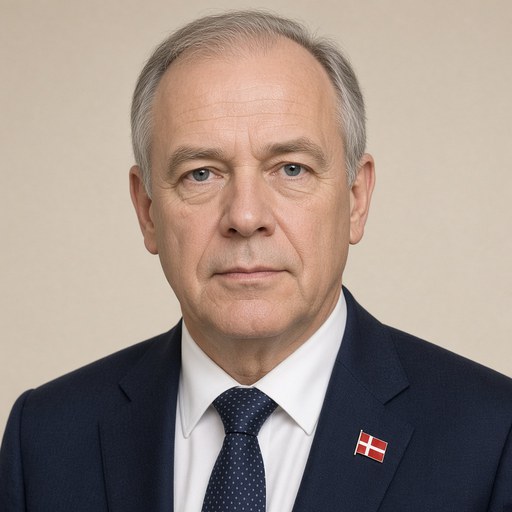
Statement in the Parliament on Wednesday, March 25, 1998, at 12:00 PM.
 Poul Nyrup Rasmussen · Prime Minister of Denmark
- Context
- Rasmussen addressed the Danish Parliament on March 25, 1998, outlining his re-elected government's agenda and urging a yes vote in the upcoming Amsterdam Treaty referendum.
- Main themes
- Amsterdam Treaty referendum, Danish welfare state, European cooperation, economic progress, employment policy, EU expansion eastward, Danish opt-outs, environmental regulation, social inclusion, Danish values in Europe, 21st century governance
- Duration
- ~23 min
- Words
- 2,763
- Sentences
- 169
- Readability
- 47
- Grade
- 10.2
- Syntax
- 2.74
- Vocabulary
- 2.07
Translated from Danish
The broad sphere of national life a sentence belongs to. Every sentence has an Arena, so it is the denominator the other indices are read against.
Other169 sentences in 91 paragraphs
On March 11, the voters formed a new Parliament.
A new job can begin. A new chapter for Denmark.
But it will not be a job that continues as if nothing has happened.
The voters wanted more than that.
The government perceives the election results as an expression that the voters also took a clear stance on which main road we should choose for the positive changes in Danish society into the 21st century.
Denmark is well on its way.
The government builds its new political work on two tracks:
we will uncompromisingly maintain the economic course that has ensured the remarkable progress for Denmark over the past 5 years, and we will embark on a whole new era in our societal development, where we all - with reason and responsibility - must use the new progress over the past 5 years to reduce debt and improve quality in our society.
* * *
But we want more than that:
It is our ambition to ensure that Denmark can thrive in the 21st century in international competition and at the same time do so in a way that includes everyone - neither more nor less.
The welfare state must create good and secure frameworks for our life’s unfolding. Our society must not be divided, so that some are inside and some are outside. We want to unite personal freedom, community, and a sense of belonging - and the way to do that is for us all to contribute - and for us all to have real opportunities to contribute.
These are the values we build on in Danish society. These are the values we will fight for.
* * *
On these values, the government’s platform has been formulated, and thus the main lines for the political work in the coming years - as the government sees it.
We have about 3 months of work ahead of us here in Parliament - with a special period of about 3 weeks leading up to the referendum.
The government is in no doubt: In the political work of the coming months, the most important task is precisely the upcoming referendum on the Amsterdam Treaty.
The population's decision on May 28 will be of crucial importance for the opportunities we will have as we enter the 21st century.
We have a good starting point to assert ourselves in Europe. This applies both politically and economically. The truth is also that order in the economy is a prerequisite for other countries to listen to us. Just as clearly, a precise political stance and effective negotiating power are prerequisites for making an impact.
We have good experiences from recent years in international work. We have shown that a smaller country - driven by the idea of human rights, driven by solidarity and a decent welfare foundation, driven by the idea that we should all be here - can assert itself internationally. We have shown that we can make a difference.
This is an important starting point for the population's position on Denmark's place in Europe. Progress, freedom, and community are not just something we create within our own country's borders - but also between countries. The goals we have set for ourselves cannot be achieved alone. We must have close cooperation with others.
We have learned from the referendums on June 2, 1992, and May 18, 1993. We have listened and we have learned.
The Danes want to be part of Europe. Europe can also be part of Denmark - but only as a part. We want to be ourselves - but we must never be enough unto ourselves.
There are three crucial reasons why the government recommends that the Danish population vote yes in the upcoming referendum:
firstly
the Amsterdam Treaty is a prerequisite for the EU's expansion to the east to begin. It is simply the crucial contribution to lasting peace and stability in Europe in the 21st century.
secondly
the Amsterdam Treaty is simply a better treaty in a number of areas. Better than the one we have now. Because greater emphasis has been placed on a number of Danish key issues.
thirdly
the four Danish opt-outs remain intact, as the government has promised the population. The opt-outs can only be changed by a new referendum - and only by the Danish population.
It is largely a Danish-Nordic mindset that has influenced the new treaty. A path we share with many other like-minded governments in Europe. The Amsterdam Treaty shows that Denmark naturally belongs in European cooperation. With a yes to the Amsterdam Treaty, our work for Danish values in Europe can continue with great strength.
Unemployment in Europe is also the story of the folly that has previously characterized our cooperation - or rather the lack of cooperation since the 1970s, when the first international oil crisis hit us. Now employment is placed with clear positions and goals - which makes it possible for us to avoid the mistakes of the past - to avoid exporting difficulties to each other in downturns and to ensure that we create more employment in upturns.
The new environmental regulations give the EU a position as the regional cooperation organization in the world with the most ambitious environmental goals. This was also clearly evident at the recent UN conference in Kyoto, Japan.
With the new treaty, we have taken a step towards a much more conscious cooperation on human terms.
The new international crime must be fought internationally. Therefore, we must participate in the intergovernmental police cooperation, which is also part of the Amsterdam Treaty. We ensure the Nordic passport union while we can expand cooperation with other countries - with full respect for our opt-outs.
This also applies to better European cooperation on refugee policy.
But most importantly: With the new treaty, we can begin the construction of a whole and undivided Europe. This must be remembered in a time when each day's news tends to overshadow yesterday's events, regardless of their significance. Denmark has worked hard for a whole Europe since 1993. Now we are closer than ever: We are the first generation that can hope not to experience more wars.
Now we can extend a hand to the new democracies - a hand for membership - and no one will be left in uncertainty.
I am convinced that a Danish yes in the upcoming referendum is the foundation for Denmark's opportunities to influence the peace process that is now underway. It is also crucial for our own self-esteem. And it is crucial for our political significance as we enter the 21st century. Politics, economy, and self-esteem both inwardly and outwardly are interconnected.
The referendum we will go through on May 28 is not just another in the series. We are dealing with one of the most important votes in the post-war period because we must decide whether we want to support the unification of east and west. Because we must reach across history and take hold of the new era that can replace the old Cold War. Because we can secure Denmark's influence and position in Europe. The government does not want Denmark to be a passive observer on the sidelines. The government wants to see Denmark as a country that makes an impact and makes a difference, as we have shown so far.
A yes in the upcoming referendum will outline a perspective for Denmark in Europe. A no will place Denmark on the sidelines. That is not where we want to be.
* * *
With Denmark in progress - with a clear vision of Denmark's role in Europe, we can also lay the groundwork for Danish domestic policy leading up to the year 2005.
We will maintain the course that has been set in economic policy, which has yielded such impressive results in less than 5 years. That is the only responsible approach.
Order in the economy is the prerequisite for freedom and welfare. For the individual and society as a whole.
A large and increasing surplus in public finances is the prerequisite for significantly reducing debt in the coming years, so that the next generation does not have to bear the burdens of old debt.
But economic progress must be secured and used wisely.
Therefore, the government proposes a series of reforms in the coming years that will bind the line of progress for Denmark together in an increasingly robust society that gives everyone good chances for a decent life.
The welfare state also means avoiding divisions in the Danish population.
The government will therefore prioritize higher quality in the welfare state for all in precisely those areas that really matter for people's everyday lives in Denmark:
hospitals must function better and waiting lists must be reduced.
Home care and elderly care must be secured so that everyone receives the necessary service.
We must help create frameworks for parents to have more time for their children, so that work life and family life fit better together. This is not a task we in Parliament can solve alone; it requires that the labor market cooperates and that each family prioritizes it. The labor market must create space for both the slightly older and the vulnerable, without weakening our employment growth.
Schools and all educational institutions - including adult and continuing education - must function even better so that we can cope in the next century.
The government wants culture to be high on the political agenda, whether it concerns music, visual arts, literature, theater, film, or sports.
The Danish National Church remains a cornerstone of our society's value foundation.
The green environmental policy line will be continued and strengthened. The government is committed to ensuring that future generations do not inherit an environmental debt in the form of degraded water environments, hidden waste deposits, and a poorer nature. We want to leave a smaller environmental debt than the one we inherited. The use of pesticides must be minimized. Collective environmentally friendly transport must be strengthened. Taxes and duties must contribute to solutions.
The quality of Danish food must be ensured, among other things based on better animal welfare. We must be a pioneer in the production of healthy food.
The government will work for the simplification of public benefits and critically examine special rules and unfortunate interactions that may mean that people who enter the workforce experience that the gains are eaten up by such unfortunate interaction problems. Through a social tax ceiling, it must be ensured that there is an extra gain from working.
The government is very aware of making an extra effort for the sick, the vulnerable, the mentally ill, the disabled, and the elderly who need help.
In short, economic progress must be used to give everyone the opportunity to participate in social life. We must not only plan a long-term policy aimed at a richer society but also at a better society with greater quality and humanity.
* * *
We must build on a responsible economic policy. We must build on a competitive business sector with secure progress. The government's business policy, education and research policy - and a continued renewal of our labor market policy - must ensure us a good foundation for the future.
* * *
Responsibility - rights and duties - care and less fussiness must give Denmark a good start in the 21st century. The government will strengthen the preventive Denmark - the welfare state must to a much greater extent prevent rather than patch up problems when they arise.
This applies in the justice policy. We must build new, secure prison facilities, for that is necessary. But not only that. We must avoid more young people entering the criminal path through effective preventive policy.
We must maintain a humane and effective immigration policy. We must repatriate rejected asylum seekers and false refugees. But we must do more than that. We must rebuild the poor developing countries so that people can return there and new streams of refugees can be avoided.
We must strengthen our housing and urban social efforts in the larger cities and thereby prevent new divisions in the population.
We must ensure an ever-improving healthcare system and shorter waiting lists in our hospitals. But we must do more than that. We must prevent workplace injuries through a much more effective effort.
We must clean our groundwater. But we must do more than that: we must invest in a consistent environmental policy that ensures us clean water in the future.
We must make a much more effective effort that once and for all stops exclusion in our society and ensures that everyone comes back in. But we must do more than that. We must organize the public school and our educational offerings so that youth dropout ceases.
Here at the turn of the century, we bid farewell to a repair society and say hello to prevention and a vision of a self-sustaining society.
* * *
In relation to the realm, the government will also address a number of concrete cooperation tasks. This applies both to Greenland and the Faroe Islands. This cooperation must be developed and continue to be based on mutual understanding and respect.
With the governments of the Faroe Islands and Greenland, the government has initiated negotiations on block grants for 1999 with a view to a prompt conclusion.
The government views with understanding any Faroese desire from the newly elected Lagting to discuss changes to the 50-year-old home rule arrangement - with a view to expanding the Faroe Islands' self-government.
The government will also take the initiative with a newly elected Lagting to ensure that outstanding issues regarding the Faroe Islands are negotiated as soon as possible, so that balanced solutions can be found to the satisfaction of both parties. This applies both to the banking issue and to the upcoming negotiations on debt repayment, where the government reaffirms its commitment to finding solutions that take into account the sustainability of Faroese society.
The government will also, in cooperation with the Greenlandic home rule, implement a reform of the Greenlandic judiciary once the Greenlandic judicial commission has completed its work. We will also promptly implement the agreed changes to resource management.
* * *
The voters have formed a Parliament on March 11, which the government invites to broad cooperation.
The government sees good opportunities for collaboration ahead. We are convinced that it is precisely the breadth of cooperation that ensures the sustainability of the solutions we will seek to achieve.
We want to give Denmark the best possible start in the 21st century. Therefore, our political work is not only about continuing the current course. It is also about the next big leap: a society that is reformed and renewed economically and environmentally - a society with far more choices for the individual. Where personal freedom is genuine and real, because it is supported by a strong, well-functioning community.
A Denmark where the vitality of the welfare state is secured - not shaped by centralist legislation - but through broad cooperation, where everyone is included.
The government has presented its platform. It is not a complete answer sheet for the political work of the coming years, but an outline of the tasks we prioritize highly.
The government's working method is the method of cooperation - in the Parliament and in harmony with all parts of society. We therefore place crucial emphasis on:
strengthening cooperation with municipalities and counties to enhance the quality of public service, while maintaining a responsible economic line.
cooperation with labor market partners through tripartite discussions about the future labor market. This concerns both the consideration of family life, senior policy, and the social responsibility that companies must bear to a greater extent in the future.
Collaboration with businesses and other organizations on the major new development tasks regarding research, education, and simplification.
Collaboration with voluntary organizations and networks - from organizations for the elderly to youth organizations. Without them, we cannot tackle the significant task of involving all people in an active life in Denmark.
The government is initiating a collaborative process where the most important questions arise from our values and our awareness of the new world that Denmark is a part of. We readily acknowledge that we do not have answers to everything - but we are convinced that we will find the best answers through broad cooperation - both here and in the Parliament and with all population groups.
The government invites everyone here in the Parliament to a good collaboration for the benefit of Denmark's future.
The original Danish. The tags above are read on the English translation's sentences.
Den 11. marts sammensatte vælgerne et nyt folketing.
Et nyt arbejde kan gå i gang. Et nyt kapitel for Danmark.
Men det bliver ikke et arbejde, der forsætter, som om intet er hændt.
Vælgerne ville mere end det.
Regeringen opfatter valgets resultat som udtryk for, at vælgerne også tog klar stilling til, hvilken hovedvej vi skal vælge for det danske samfunds positive forandringer ind i det 21. århundrede.
Danmark er godt på vej.
Regeringen bygger det ny politiske arbejde på to spor:
vi vil kompromisløst fastholde den økonomiske kurs, som har sikret den forrygende fremgang for Danmark gennem 5 år, og
vi vil tage fat på en hel ny tid i vores samfundsudvikling, hvor vi alle - med fornuft og ansvar - skal bruge den nye fremgang igennem de seneste 5 år, til at bringe gælden ned og kvaliteten op i vort samfund
* * *
Men vi vil mere end det:
Det er vores ambition at sikre, at Danmark kan klare sig godt i det 21. århundrede i den internationale konkurrence og samtidig gøre det på en sådan måde, at alle er med - hverken mer’ eller mindre.
Velfærdssamfundet skal skabe gode og trygge rammer for vores livsudfoldelse. Vort samfund skal ikke opdeles, så der er nogle, der er indenfor og nogle der er udenfor. Vi vil forene den personlige frihed, samhørigheden og fællesskabsfølelsen - og vejen til at gøre det er, at vi alle bidrager - og at vi alle får reelle muligheder for at bidrage.
Det er de værdier, vi bygger på i det danske samfund. Det er de værdier, som vi vil kæmpe for.
* * *
På de værdier er regeringsgrundlaget udformet og dermed hovedlinierne for de kommende års politiske arbejde - som regeringen ser det.
Vi har vel små 3 måneders arbejde foran os her i Folketinget - med en særlig periode på ca. 3 uger op til folkeafstemningen.
Regeringen er ikke i tvivl: I de kommende måneders politiske arbejde er den allervigtigste opgave netop den forestående folkeafstemning om Amsterdam-traktaten.
Befolkningens beslutning den 28. maj bliver af afgørende betydning for, hvilke muligheder vi får her ved indgangen til det 21. århundrede.
Vi har et godt afsæt for at gøre os gældende i Europa. Det gælder både politisk og økonomisk. Sandheden er jo også den, at orden i økonomien er en forudsætning for, at de andre lande lytter til os. Lige så klart er det, at en præcis politisk holdning og effektiv forhandlingskraft er forudsætningen for at sætte sig spor.
Vi har gode erfaringer fra de senere år i det internationale arbejde. Vi har vist, at et mindre land - båret af ideen om menneskerettigheder, båret af sammenhold og et ordentligt velfærdsgrundlag, båret af ideen om, at vi skal være her allesammen - kan gøre sig gældende internationalt. Vi har vist, at vi kan gøre en forskel.
Det er vigtigt som udgangspunkt for befolkningens stilling til Danmarks placering i Europa. Fremgang, frihed og fællesskab er ikke blot noget, vi skaber inden for vort eget lands grænse - men også mellem landene. De mål, vi har sat os, kan vi ikke nå alene. Vi må have et tæt samarbejde med andre.
Vi har lært af folkeafstemningen den 2. juni 1992 og den 18. maj 1993. Vi har lyttet og vi har lært.
Danskerne vil godt være en del af Europa. Europa må også godt være en del af Danmark - men også kun en del. Vi vil gerne være os selv - men vi skal aldrig være os selv nok.
Der er tre afgørende grunde til, at regeringen anbefaler den danske befolkning at stemme ja ved den kommende folkeafstemning:
for det første
er Amsterdam-traktaten en forudsætning for, at EU’s udvidelse mod øst kan gå i gang. Det er simpelthen dét afgørende bidrag til varig fred og stabilitet i Europa i det 21. århundrede.
for det andet
er Amsterdam-traktaten ganske enkelt en bedre traktat på en lang række områder. Bedre end den, vi har nu. Fordi der er lagt større vægt på en række danske mærkesager.
for det tredje
står de fire danske forbehold uantastet, sådan som regeringen har lovet befolkningen. Forbeholdene kan kun ændres ved en ny folkeafstemning - og kun af den danske befolkning.
Det er i høj grad en dansk-nordisk tankegang, der har sat sit præg på den nye traktat. En vej vi deler med mange andre ligesindede regeringer i Europa. Amsterdam-traktaten viser, at Danmark hører naturligt hjemme i det europæiske samarbejde. Med et ja til Amsterdam-traktaten kan vores arbejde for danske værdier i Europa videreføres med stor styrke.
Arbejdsløsheden i Europa er jo også historien om den dårskab, der tidligere har præget vort samarbejde - eller rettere manglen på samarbejde siden 70’erne, hvor den første internationale oliekrise ramte os. Nu er beskæftigelsen placeret med klare holdninger og mål - der gør det muligt for os at undgå fortidens fejl - at undgå, at vi eksporterer vanskeligheder til hinanden i nedgangstider og sikre, at vi får mere beskæftigelse frem i opgangstider.
De nye miljøbestemmelser giver EU en placering, som den regionale samarbejdsorganisation i verden, der har de mest ambitiøse miljømålsætninger. Det fremgik også klart på den seneste FN-konference i Kyoto i Japan.
Med den ny traktat har vi taget et skridt i retning af et langt mere bevidst samarbejde på menneskers betingelser.
Den ny europæiske virkelighed kan ikke tackles med den gamle tids værktøjer.
Den nye internationale kriminalitet må bekæmpes internationalt. Derfor skal vi være med til at deltage i det mellemstatslige politi-samarbejde, som også er en del af Amsterdam-traktaten. Vi sikrer den nordiske pasunion samtidig med, at vi kan udbygge samarbejdet med de andre lande - under fuld respekt for vores forbehold.
Det gælder også et bedre europæisk samarbejde om flygtningepolitikken.
Men allervigtigst: Med den ny traktat kan vi begynde opbygningen af et helt og udelt Europa. Det skal huskes i en tid, hvor hver dags nyhed har det med at overskygge gårsdagens begivenheder, uanset deres betydning. Danmark har arbejdet hårdt for et helt Europa siden 1993. Nu er vi så tæt på som aldrig før: Vi er den første generation, der kan gøre os håb om ikke at opleve flere krige.
Nu kan vi give de nye demokratier et håndslag - et håndslag om medlemskab - og ingen vil blive efterladt i usikkerhed.
Jeg er overbevist om, at et dansk ja ved den kommende folkeafstemning er fundamentet for Danmarks muligheder for sætte sig præg på den fredsproces, der nu er i gang. Det er også afgørende for vores eget selvværd. Og det er afgørende for vores politiske betydning på vej ind i det 21. århundrede. Politik, økonomi og selvværd indadtil og udadtil hænger sammen.
Den folkeafstemning, vi skal igennem den 28. maj, er ikke blot endnu en i rækken. Vi har at gøre med en af de vigtigste afstemninger i efterkrigstiden, fordi vi skal tage stilling til, om vi vil bakke foreningen af øst og vest op. Fordi vi skal række ind over historien og tage fat på den ny tid, der kan erstatte den gamle, kolde krig. Fordi vi kan sikre Danmarks indflydelse og placering i Europa. Regeringen ønsker ikke Danmark som passiv iagttager på sidelinien. Regeringen ønsker at se Danmark som et land, der sætter spor og gør en forskel, sådan som vi har vist det indtil nu.
Et ja ved den kommende folkeafstemning vil tegne et perspektiv for Danmark i Europa. Et nej vil sætte Danmark på sidelinien. Der skal vi ikke være.
* * *
Med Danmark i fremgang - med en klar vision om Danmarks rolle i Europa kan vi også i dansk indenrigspolitik lægge sporene frem til år 2005.
Vi vil fastholde den kurs, der er lagt i den økonomiske politik, og som har givet så flotte resultater på mindre end 5 år. Det er det eneste ansvarlige.
Orden i økonomien er forudsætningen for frihed og velfærd. For den enkelte og samfundet som helhed.
Et stort og stigende overskud på de offentlige finanser er forudsætningen for, at gælden kan nedbringes afgørende i de nærmere år, så den næste generation ikke skal trækkes med store byrder af gammel gæld.
Men den økonomiske fremgang skal sikres og anvendes med fornuft.
Derfor lægger regeringen op til en række reformer i de kommende år, der skal binde fremgangslinien for Danmark sammen i et stadigt mere robust samfund, der giver alle gode chancer for et ordentligt liv.
Velfærdssamfundet betyder jo også at undgå kløfter i den danske befolkning.
Regeringen vil derfor prioritere højere kvalitet i velfærdssamfundet for alle på præcist de områder, der virkelig betyder noget for menneskers hverdag i Danmark:
sygehusene skal fungere bedre og ventelisterne skal ned.
Hjemmehjælpen og ældreomsorgen skal sikres, så alle får den nødvendige service.
Vi skal medvirke til at skabe rammer for, at forældre får mere tid til deres børn, at arbejdsliv og familieliv kommer til at passe bedre sammen. Det er ikke en opgave vi her i tinget kan løse alene, det forudsætter, at arbejdsmarkedet medvirker, og at den enkelte familie prioriterer det. Arbejdsmarkedet skal skabe plads til både de lidt ældre og til de svage, uden at vores beskæftigelsesfremgang svækkes.
Skolen og alle uddannelser - inklusive voksen- og efteruddannelserne - skal fungere endnu bedre, så vi kan klare os i det næste århundrede.
Regeringen ønsker kulturen sat højt på den politiske dagsorden, hvad enten det gælder musik, billedkunst, litteratur, teater, film eller idræt.
Den danske folkekirke er fortsat et bærende led i vort samfunds værdigrundlag.
Den grønne miljøpolitiske linie vil blive fortsat og forstærket. Regeringen har sat sig for, at de kommende generationer ikke skal overtage en miljøgæld i form af forringet vandmiljø, bortgemte affaldsdepoter og en ringere natur. Vi vil aflevere en mindre miljøgæld, end den vi overtog. Anvendelsen af bekæmpelsesmidler skal minimeres. Den kollektive miljøvenlige trafik skal styrkes. Skatter og afgifter skal bidrage til løsninger.
Kvaliteten af danske fødevarer skal sikres, bl.a. på baggrund af bedre dyrevelfærd. Vi skal være foregangsland i produktion af sunde fødevarer.
Regeringen vil arbejde for forenkling af de offentlige ydelser og kritisk se på særregler og uheldigt samspil, som kan betyde, at mennesker, der kommer i arbejde, oplever, at gevinsten bliver spist op af netop sådanne uheldige samspilsproblemer. Gennem et socialt skatteloft skal det sikres, at der er en ekstra gevinst ved at arbejde.
Regeringen er meget bevidst om at gøre en ekstra indsats for de syge, de udsatte, de sindslidende, de handicappede og de ældre, der har behov for hjælp.
Den økonomiske fremgang skal kort sagt bruges til at give alle mulighed for at deltage i samfundslivet. Vi skal ikke blot tilrettelægge en langsigtet politik, der sigter på et rigere samfund, men også på et bedre samfund med større kvalitet og menneskelighed.
* * *
Vi skal bygge på en ansvarlig økonomisk politik. Vi skal bygge på et konkurrencedygtigt erhvervsliv med sikker fremgang. Regeringens erhvervspolitik, uddannelses- og forskningspolitik - og en fortsat fornyelse af vores arbejdsmarkedspolitik - skal sikre os et godt grundlag for fremtiden.
* * *
Ansvarlighed - rettigheder og pligter - omsorg og mindre emsighed skal give Danmark en god start i det 21. århundrede. Regeringen vil styrke det forebyggende Danmark - velfærdssamfundet skal i langt højere grad forebygge, fremfor at lappe på problemer, når de er skabt.
Det gælder i retspolitikken. Vi skal bygge nye, sikre fængselsafdelinger, for det er nødvendigt. Men ikke kun det. Vi skal undgå, at flere unge kommer ind i den kriminelle løbebane gennem effektiv forebyggende politik.
Vi skal fastholde en human og effektiv udlændingepolitik. Vi skal hjemsende afviste asylansøgere og falske flygtninge. Men vi skal mere end det. Vi skal genopbygge de fattige udviklingslande, så mennesker kan vende tilbage dertil og nye flygtningestrømme undgås.
Vi skal styrke vor bolig- og bysociale indsats i de større byer og derigennem forebygge nye kløfter i befolkningen.
Vi skal sikre et stadigt bedre sundhedsvæsen og kortere ventelister på vores sygehuse. Men vi skal mere end det. Vi skal forebygge på arbejdspladsen, at der opstår arbejdsmiljøskader gennem en langt mere effektiv indsats.
Vi skal rense vores grundvand. Men vi skal mere end det: vi skal satse på en konsekvent miljøpolitik, der sikrer os rent vand i fremtiden.
Vi skal gøre en langt mere effektiv indsats, der én gang for alle standser udstødningen i vores samfund og sikrer, at alle kommer med igen. Men vi skal mere end det. Vi skal indrette folkeskolen og vore uddannelsestilbud, så unges frafald ophører.
Her ved århundredskiftet vinker vi farvel til et reparationssamfund og siger goddag til forebyggelse og en vision om et selvbærende samfund.
* * *
I forhold til rigsfællesskabet vil regeringen ligeledes tage fat på en række konkrete samarbejdsopgaver. Det gælder både i forhold til Grønland og Færøerne. Det samarbejde skal udvikles, og fortsat bygge på gensidig forståelse og respekt.
Med Færøernes og Grønlands landsstyrer har regeringen indledt forhandlinger om bloktilskuddene for 1999 med henblik på en snarlig afslutning.
Regeringen ser med forståelse på et evt. færøsk ønske fra det nyvalgte lagting om at drøfte ændringer af den 50 år gamle hjemmestyreordning - med henblik på at udvide Færøernes selvstyre.
Regeringen vil overfor et nyvalgt lagting også tage initiativ til, at udestående spørgsmål i forhold til Færøerne forhandles snarest, så der kan findes afbalancerede løsninger til begge parters tilfredshed. Det gælder såvel i bankspørgsmålet, som i de kommende forhandlinger om gældsafvikling, hvor regeringen vedstår sig tilsagnet om at finde løsninger, der tager hensyn til bæredygtigheden i det færøske samfund.
Regeringen vil også i samarbejde med et grønlandske hjemmestyre gennemføre en reform af det grønlandske retsvæsen, når den grønlandske retsvæsenkommission har færdiggjort sit arbejde. Vi vil ligeledes snarest gennemføre de aftalte ændringer af råstofforvaltningen.
* * *
Vælgerne har den 11. marts sammensat et Folketing, som regeringen indbyder til et bredt samarbejde.
Regeringen ser gode samarbejdsmuligheder foran sig. Vi er overbevidst om, at netop bredden i samarbejdet sikrer langtidsholdbarheden i de løsninger, vi vil søge at nå.
Vi vil give Danmark den bedst mulige start i det 21. århundrede. Derfor drejer vores politiske arbejde sig ikke alene om en fortsættelse af den nuværende linie. Det drejer sig også om det næste store ryk: Et samfund, der er reformeret og fornyet økonomisk og miljømæssigt - et samfund med langt flere valgmuligheder for den enkelte. Hvor den personlige frihed er ægte og reel, fordi den er båret af et stærkt velfungerende fællesskab.
Et Danmark, hvor velfærdssamfundets vitalitet er sikret - ikke formet i centralistisk lovgivning - men i et bredt samarbejde, hvor alle er med.
Regeringen har fremlagt sit regeringsgrundlag. Det er ikke en fuldstændig facitliste over de kommende års politiske arbejde, men et omrids af de opgaver, vi prioriterer højt.
Regeringens arbejdsmetode er samarbejdets metode - i Folketinget og i samklang med alle dele af samfundslivet. Vi lægger derfor afgørende vægt på:
at forstærke samarbejdet med kommuner og amter, for at løfte kvaliteten i den offentlige service, og samtidig fastholde en ansvarlig økonomisk linie.
samarbejde med arbejdsmarkedets parter gennem trepartsdrøftelser om fremtidens arbejdsmarked. Det gælder både hensynet til familielivet, seniorpolitikken og det sociale ansvar, som virksomhederne må bære i større omfang i fremtiden.
Et samarbejde med erhvervsliv og andre organisationer om de store nye udviklingsopgaver, når det gælder forskning, uddannelse og forenkling.
Et samarbejde med frivillige organisationer og netværk - fra ældreorganisationer til ungdomsorganisationer. Uden dem kan vi heller ikke løfte den store opgave, det er at få alle mennesker med i et aktivt liv i Danmark.
Regeringen sætter en samarbejdsproces i gang, hvor de vigtigste spørgsmål udspringer af vort værdigrundlag og vores bevidsthed om den nye verden, Danmark er en del af. Vi vedstår os gerne, at vi ikke har svar på alt - men vi er overbeviste om, at vi finder det bedste svar gennem et bredt samarbejde - både her og i Folketinget og med alle befolkningsgrupper.
Regeringen inviterer alle her i Folketinget til et godt samarbejde til gavn for Danmarks fremtid.