




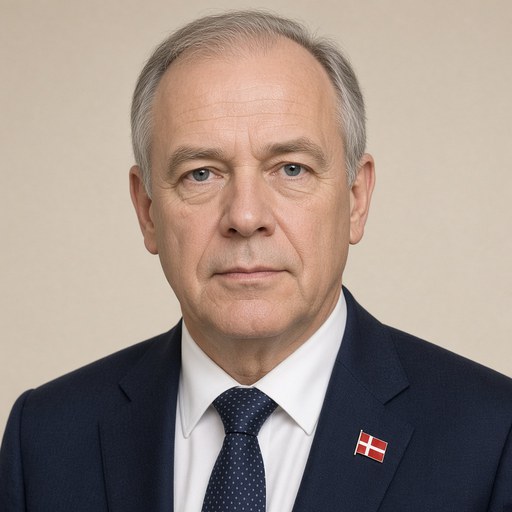
Prime Minister Poul Nyrup Rasmussen's speech at the State of Israel's 50th anniversary celebration in Copenhagen, Sunday, April 26, 1998.
 Poul Nyrup Rasmussen · Prime Minister of Denmark
- Context
- Rasmussen addressed the Jewish community in Copenhagen on April 26, 1998, at a celebration marking the State of Israel's 50th anniversary.
- Main themes
- Israel's 50th anniversary, Danish-Jewish relations, Denmark-Israel friendship, rescue of Danish Jews in 1943, Yitzhak Rabin tribute, Oslo peace process, Israeli democracy and resilience, integration and identity, immigration and multiculturalism, kibbutz movement, Israeli economic development
- Duration
- ~14 min
- Words
- 1,731
- Sentences
- 116
- Readability
- 65
- Grade
- 7.8
- Syntax
- 2.67
- Vocabulary
- 1.91
Translated from Danish
The broad sphere of national life a sentence belongs to. Every sentence has an Arena, so it is the denominator the other indices are read against.
Other116 sentences in 32 paragraphs
Heartfelt congratulations on the 50 years. 50 years since the establishment of the State of Israel, the modern state of Israel. Although it was only 5 years ago that I had the opportunity to speak to members of the Jewish community in Denmark, on the occasion of the 50th anniversary of October 1943, there is still reason to remind that the action back then - was not an action of a special character, it was an action of a completely natural character to save 'the neighbor' - 'the fellow human being'. And the effort was not governed by some artificial divide between them and us, between the Danish population, Jews and non-Jews. No, it was an action for us and by us. It is clear when you ask the former ambulance driver, or fisherman - why did you do it, really? And the answer is Danish - I just did what we had to do. Because Danish Jews in Denmark have always been regarded as Danish - at the same time as we find it completely, completely natural and fundamental that there are such strong ties that also connect the Danish Jews to Israel.
It is certainly the same for all of us. There are many of us who have been there, and many have read, many who feel so strongly connected to Israel.
When you look over time at the contributions of Jews to the social, cultural, and public life in Denmark, you must say that a rather small group has contributed quite a lot. In the whole way Danish Jews have been integrated into Danish society without losing their Jewish identity, is one of the strong examples we can all learn from. Not least in these times when the political discussion has unfortunately sometimes taken a turn, so that one almost gets the impression - from certain voices in the political choir - that now it is goodnight for the country's cultural identity, at least we are close to doom when other people from a foreign culture seek refuge here, or seek integration here.
Already in my first year, I had the opportunity, as Prime Minister together with Lone, to visit Israel. I will never forget it. It was all there. The history. The very early history, where any Israeli could take their spoon, go out and dig in the ground and find their roots. There! A fantastic country, and a fantastic people. David Ben-Gurion was also there in his own way, in the more recent history. One of the first essays I wrote, I remember, in high school was precisely about David Ben-Gurion. It was one of those I was more engaged in. More troublesome essays came later.
The modern society of Israel was there too. Is there. The visible conflicts, also the non-visible conflicts. The kibbutz was there - everything I had dreamed of as a boy was there.
Denmark has always been one of Israel's warmest friends. It is no coincidence that we Danes in tens of thousands over the years have contributed to building Israel. Many through shorter or longer stays in the kibbutzim, and many have through emigration to Israel chosen to stake their future on the country's happiness and development. A strong human and political network has been built up between Israel and Denmark.
Lone's and my visit took place at a favorable time. The optimism among my conversation partners was great after the signing of the first Oslo agreement a few months earlier. The hope was present - the hope that Israel could live without fear - in peace and security.
At the same time, we also visited leading politicians of the Palestinian people, and felt there the hope for the future and the optimism.
Most vividly stands a particular meeting for me, with my host and colleague, Yitzhak Rabin, who spoke so vividly and strongly about his plans and for the further negotiations with the Palestinians and the other neighbors. He was so happy, he was so strong in hope. He spoke for reconciliation, he often used that word in his speeches during our stay. Reconciliation between Israelis and Arabs.
And then, less than two years later, we lost an extraordinary political leader, who with his struggle as a soldier and politician, with his honesty and his uncompromising will to always find the right way - even when it looked the worst, the darkest - was a shining example for us all. And then his funeral and the sorrow, the pain. And today, an Israel that has once again shown that it can shake off all the hard events - not from itself - but manage it and lift it.
Israel has throughout its history shown a colossal ability to withstand even the hardest blows. Almost in defiance, the country has built up a democratic state. The ability to integrate millions of immigrants from almost all corners of the world. Immigrants who, although they had Judaism in common, had much that was not common. Vastly different backgrounds.
Now we see a state, a modern state, a high-tech state. It is impressive. Back then a developing country with 600,000 Jews who resolutely proclaimed their state in 1948. Today 5 million Jews, a gross national product per capita that exceeds that of several European countries. An export - not just tropical fruits, but mostly technology and knowledge - a country that creates more information technology jobs outside the USA than any other country. Progress, material progress - impressive.
And then there is the other thing that I would actually allow myself to talk about at the end here this evening.
A Danish proverb says 'he who risks nothing wins nothing'. 50 years after its painful birth, Israel today stands as a fulfilled example that the courage, the willingness to sacrifice, and the determination that thousands and thousands have put into the development of Israel over the years has won. Visions that in the first half of the century were dismissed as illusions are today a reality. And the courage - the courage. When you think of 'courage', you often think of great courage. Of the stuff that war heroes are made of. And Israel has delivered its heroes. But there is also another kind of courage. Which may seem smaller. The courage to compromise. The courage to bend. The courage to extend a hand. The courage and strength to overcome oneself, one's feelings, one's old attitudes and to think anew.
Dear everyone - a just, lasting, and comprehensive peace with cooperation across borders provides far greater security than occupation and strife.
The Oslo agreements now give us precisely 1 year, 1 more year. We have 1 more year to reach an agreement with the Palestinians on the outstanding, very difficult questions. I sincerely hope and urge all of you here to make your personal contribution so that by May 1999 there will be an opportunity to resolve the major and sensitive questions. The question of Gaza and the West Bank's final status, the status of Jerusalem, refugees, settlements, and water. You know, and I know, that much is at stake. It is in reality the most crucial test of strength that is now taking place. Not only between the State of Israel and the neighboring states of Israel. It may also be within the State of Israel itself. The future just beneath the material progress, for the next 50 years.
Remember the text from the Book of Ecclesiastes. A text that has been used over time both in the church and in the synagogue. It goes like this:
"To everything there is a season. For everything that happens under heaven, there is a time.
A time to be born, a time to die.
A time to plant, a time to uproot.
A time to tear down, a time to build up.
A time to weep, a time to laugh.
A time to be silent, a time to speak.
A time to love, a time to hate.
A time for war, a time for peace."
Mr. Ambassador! Your predecessor as ambassador here emphasized when we celebrated October '43 a few years ago the difference between war and peace. The difference is that in times of war, it is the parents who bury their sons and daughters. In times of peace, it is the other way around. And so it must be again.
And the time now is for peace. We know how great the courage it requires from the Israeli people. I have also been on an official visit to Poland and seen Auschwitz. But again, if no progress is made, we will likely witness new downward spirals of mistrust, violence, terror, and regression. Only when there is peace between Israel and all its neighbors in dignity and mutual respect can cooperation develop - and all peoples in the Middle East enjoy the fruits of peace.
New 50 years ahead of us.
Denmark is, the Danes are, and will continue to be among Israel's warmest friends. Therefore, we have allowed ourselves this evening to point out that we find reason for concern. For we believe that through open dialogue and a willingness to understand others' viewpoints, one can go the farthest. I would consider it to be bad friends who keep their concerns to themselves. I am quite sure that the Israeli people will also manage that task.
They have the courage. They have the vision.
And finally, allow me once again to congratulate Israel on its first 50 years. In Denmark, we often joke that a person is not an adult until they are 50 years old. Israel has had a fate that forced them into early skill and the ability to stand on their own two feet. I would like to take this opportunity to express my respect to all those who have made it possible to celebrate this anniversary - thanks to their incredibly hard work, dedication, and strength.
I have happily noted that Denmark and Israel share some common values - democracy and social welfare. And politically we have strong ties. We should be proud of these common values. My greatest wish for Israel is that the country will soon achieve peace and cooperation with all its neighbors, so that Israel, the neighbors, and everyone else can enter the next millennium in the right spirit of peace, security, and cooperation.
The original Danish. The tags above are read on the English translation's sentences.
Hjertelig tillykke med de 50 år. 50 år for staten Israel, den moderne stat Israels oprettelse. Selvom det kun er 5 år siden jeg havde lejlighed til at tale for medlemmer af den jødiske menighed i Danmark, i anledning af 50 års dagen for oktober 1943, er der alligevel grund til at minde om, at aktionen dengang - ikke var en aktion af særlig karakter, det var en aktion af helt naturlig karakter for at redde 'naboen' - 'medmennesket'. Og indsatsen var ikke styret af et eller andet kunstigt skel mellem dem og os, mellem den danske befolkning, jøder og ikke-jøder. Nej det var en aktion for os og af os. Det fremgår tydeligt når man spørger den tidligere ambulance chauffør, eller fisker - hvorfor gjorde du det egentlig? Og svaret er dansk - jeg gjorde bare det, vi måtte gøre. Fordi danske jøder i Danmark altid betragtes som danske - samtidig med at vi synes, at det er helt, helt naturligt og fundamentalt, at der er så stærke bånd, der også knytter de danske jøder til Israel.
Det er der sandelig også for alle os andre. Vi er mange der har været der, og mange har læst, mange der føler sig så stærkt forbundet med Israel.
Når man gennem tiderne så i øvrigt ser på jøders bidrag til det sociale, kulturelle og offentlige liv i Danmark, så må man sige, at en ret lille gruppe har bidraget med ret meget. I hele den måde danske jøder er blevet integreret i det danske samfund på, uden at den jødiske identitet er gået tabt, er vel et af de stærke eksempler vi alle kan lære af. Ikke mindst i disse tider hvor den politiske diskussion ulykkeligvis ind imellem har taget en drejning, så man nærmest for indtryk af - fra visse stemmer i det politiske kor - at nu er det godnat med landets kulturelle identitet, i hvert fald er vi tæt på undergang når andre mennesker af en fremmed kultur søger ly her, eller søger integration her.
Allerede i mit første år havde jeg lejlighed til, som statsminister sammen med Lone at besøge Israel. Jeg glemmer det aldrig. Det hele var der. Historien. Den meget tidlige historie, hvor enhver israeler kunne tage sin ske, gå ud og grave i jorden og finde sine rødder. Der! Et fantastisk land, og et fantastisk folk. David Ben-Gurion var der også på sin vis, i den nyere historie. En af de første stile jeg skrev, husker jeg, i gymnasiet var netop om David Ben-Gurion. Det var én af dem jeg var mere optaget af. Der kom mere plagsomme stile senere.
Det moderne samfund Israel var der også. Er der. De synlige konflikter, også de ikke synlige konflikter. Kibbutzen var der - alt det jeg som dreng havde drømt om, var der.
Danmark har altid været én af Israels varmeste venner. Det er ikke nogen tilfældighed, at vi danskere i ti-tusindvis gennem årene har bidraget til at opbygge Israel. Mange ved kortere eller længere ophold i kibbutzerne, og mange har gennem udvandring til Israel, valgt at satse deres fremtid på landets lykke og udvikling. Et stærkt menneskeligt og politisk netværk er bygget op mellem Israel og Danmark.
Lones og mit besøg fandt i øvrigt sted på et gunstigt tidspunkt. Optimismen hos mine samtalepartnere var stor efter undertegnelsen af den første Oslo-aftale få måneder forinden. Håbet var nærværende - håbet om, at Israel kunne leve uden frygt - i fred og i sikkerhed.
På samme tid besøgte vi også ledende politikere for det palæstinensiske folk, og mærkede også der håbet for fremtiden og optimismen.
Aller stærkest står et bestemt møde for mig, med min vært og kollega, Yitzbak Rabin, som talte så levende og så stærkt om sine planer og for de videre forhandlinger med palæstinenserne og de andre naboer. Han var så glad, han var så stærk i håbet. Han talte for forsoning, han brugte ofte det ord i sine taler undervejs i vort ophold. Forsoning mellem israelere og arabere.
Og så, mindre end to år senere mistede vi en enestående politisk leder, der med sin kamp som soldat og politiker, med sin ærlighed og sin kompromisløse vilje til altid at finde den rigtige vej - selv når det så aller værst ud, sortest ud - var et lysende eksempel for os alle. Og så hans begravelse og sorgen, smerten. Og i dag, et Israel som igen har vist, at det kan ryste alle de hårde begivenheder - ikke af sig - men klare det og løfte det.
Israel har gennem hele sin historie vist en kolossal evne til at klare selv de hårdeste anslag. Næsten i trods har landet bygget en demokratisk stat op. Evnet at integrere millioner af indvandrere fra næsten alle hjørner af verden. Indvandrere, der selvom de havde jødedommen tilfælles, havde meget der ikke var fælles. Vidt forskellig baggrund.
Nu ser vi en stat, en moderne stat, en højteknologisk stat. Der er imponerende. Dengang et u-land med 600.000 jøder der beslutsomt udråbte deres stat i 1948. I dag 5 millioner jøder, et bruttonationalprodukt pr. indbygger, der overstiger en række europæiske landes. En eksport - ikke sydfrugter alene, men mest teknologi og viden - et land som skaber flere informationsteknologiske arbejdspladser uden for USA end noget andet land. Fremgang, materiel fremgang - imponerende.
Og så er der det andet, som jeg egentlig ville tillade mig at tale om til sidst her i aften.
Et dansk ordsprog siger 'hvo intet vover, intet vinder'. 50 år efter sin smertefuld fødsel står Israel i dag som et fuldbyrdet eksempel på, at det mod, den offervilje og den målrettethed, som tusinder og atter tusinder gennem årene har lagt i udviklingen af Israel, har vundet. Visioner, som i den første halvdel af århundrede blev affærdiget som illusioner, er i dag en realitet. Og modet - modet. Når man tænker på 'mod', tænker man tit på det store mod. På det stof, som krigens helte er lavet af. Og Israel har leveret sine helte. Men der er imidlertid også en anden slags mod. Som måske kan synes mindre. Mod til at indgå kompromis. Mod til at bøje af. Mod til at strække hånden frem. Mod og styrke til at overvinde sig selv, sine følelser, sine gamle holdninger og at tænke nyt.
Kære alle sammen - en retfærdig, varig og samlet fred med samarbejde over grænserne giver langt større sikkerhed end besættelse og strid.
Oslo-aftalerne giver os nu præsis 1 år til, 1 år endnu. Vi har 1 år endnu til at opnå enighed med palæstinenserne om de udestående, meget svære spørgsmål. Jeg håber inderligt og opfordrer alle Jer her til at yde hvert Jeres personlige bidrag til, at der inden maj 1999 bliver mulighed for at løse de store og de følsomme spørgsmål. Spørgsmålet om Gaza og Vestbreddens endelige status, om Jerusalems status, om flygtninge, om bosættelser og om vand. I ved, og jeg ved, at meget står på spil. Det er i virkeligheden den mest afgørende styrkeprøve, der nu finder sted. Ikke alene mellem staten Israel, og staten Israels naboer og omgivelser. Det er måske også i staten Israel selv. Fremtiden lige under den materielle fremgang, for de næste 50 år.
Husk teksten fra Prædikerens Bog. En tekst som gennem tiderne er blevet brugt både i kirken og i synagogen. Den lyder sådan her:
'Alting har en tid. For alt, hvad der sker under himlen, er der et tidspunkt.
En tid til at fødes, en tid til at dø.
En tid til at plante, en tid til at rydde.
En tid til at rive ned, en tid til at bygge op.
En tid til at græde, en tid til at le.
En tid til at tie, en tid til at tale.
En tid til at elske, en tid til hade.
En tid til krig, en tid til fred'.
Hr. ambassadør! Deres forgænger som ambassadør her understregede da vi festede for oktober `43 for få år siden forskellen mellem krig og fred. Den er, at i krigstider er det forældrene der begraver deres sønner og døtre. I fredstider er det omvendt. Og sådan skal det blive igen.
Og tiden nu er til fred. Vi ved hvor stort mod det kræver af det israelske folk. Jeg har også været på officielt besøg i Polen og set Auschwitz. Men igen, hvis der ikke sker fremskridt vil vi sandsynligvis blive vidner til nye nedadgående spiraler af mistillid, vold, terror og tilbagegang. Først når der i værdighed og gensidig respekt er fred mellem Israel og alle dets naboer, kan samarbejdet udvikle sig - og alle folk i Mellemøsten nyde fredens frugter.
Nye 50 år foran os.
Danmark er, danskerne er og vil fortsat være blandt Israels aller varmeste venner. Derfor har vi tilladt os også i aften at påpege, at vi finder grund til ængstelse. For vi tror på, at man gennem fordomsfri dialog og vilje til at forstå andres synspunkter kommer længst. Jeg vil anse det for at være dårlige venner, der holder deres bekymring for sig selv. Jeg er ret sikker på, at det israelske folk vil klare også den opgave.
De har modet. De har visionen.
Og endelig, tillad mig endnu engang at ønske Israel tillykke med sine første 50 år. I Danmark siger vi ofte som en joke at en person ikke er voksen før han er 50 år. Israel har haft en skæbne som tvang dem til tidlig dygtighed og evne til at stå på egne fødder. Jeg vil ved denne lejlighed udtrykke min respekt til alle dem, der har gjort det muligt at festligholde dette jubilæum - takket være deres utroligt hårde arbejde, hengivelse og styrke.
Jeg har med glæde noteret at Danmark og Israel har nogle fælles værdier - demokrati og social velfærd. Og politisk har vi stærke bånd. Vi skal være stolte over disse fælles værdier. Mit største ønske for Israel er at landet snart vil opnå fred og samarbejde med alle dets naboer, således at Israel, naboerne og alle andre kan gå ind i det næste årtusinde i den rigtige ånd af fred, sikkerhed og samarbejde.