




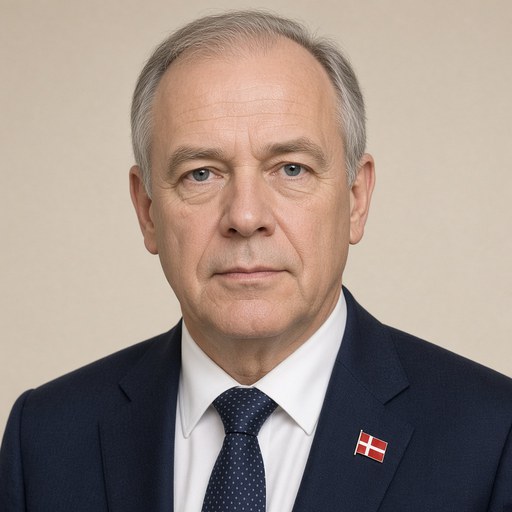
The Prime Minister's speech in the Folketing on September 6, 2000, during the third reading of L288.
 Poul Nyrup Rasmussen · Prime Minister of Denmark
- Context
- Rasmussen addressed the Folketing during the third reading of the bill enabling Denmark's September 28, 2000 referendum on joining the euro.
- Main themes
- Euro referendum, Danish sovereignty, European Monetary Union, federal state concerns, social welfare harmonization, public deficit rules, Danish welfare model, EU integration, economic policy, no side arguments, fiscal rules
- Duration
- ~20 min
- Words
- 2,350
- Sentences
- 108
- Readability
- 56
- Grade
- 10.6
- Syntax
- 2.98
- Vocabulary
- 1.98
Translated from Danish
The broad sphere of national life a sentence belongs to. Every sentence has an Arena, so it is the denominator the other indices are read against.
Other108 sentences in 21 paragraphs
Before long, we will vote on the third reading of this bill, which is the basis for the population to hold a referendum on September 28. We have had nearly six months of debate. We have gone through many things. We have four weeks ahead of us. In the six months of debate we have gone through, we can both recognize traits from previous referendums, and there are, of course, also new issues that the population must take into account when each individual must make a decision.
Among the traits from previous referendum debates that I can recognize, we have touched on many today. The question of a slippery slope towards a federal state formation in Europe, a so-called superstate, is not a new viewpoint that has been put forward by the no side. We have experienced that since 1972. Today, we have clearly and unequivocally refuted it. No one wants a federal state in Europe. There is much misunderstanding surrounding the issue. Even Germany does not want a European federal state. No people want that. It has been claimed that a yes to the third phase of the Economic and Monetary Union, to the euro, will be synonymous with subsequent political integration. I take that as a non-polemical remark from one of those who has put it forward most strongly, namely Mr. Holger K. Nielsen, who has called it logic for guinea fowl. I must say that I cannot see the logic, nor the guinea fowl. The truth is that what is being created in these years is something quite special, which cannot be recognized in the USA or in any other federal state formation. The common currency is equipped with some rules that each individual country within the common currency must adhere to. That is precisely the alternative to the superstate. If there were no rules, then one would have to have a state formation. That is precisely why we have those rules. Why do we have those rules? Well, we have them also to protect each other from the dominance of large states in relation to small ones.
There are no provisions in the current treaties or in the proposal for the intergovernmental conference in Nice that even give a minimum hint of or basis for the standard of living and welfare in Denmark being pressured downwards or harmonized. That viewpoint has been put forward: Well, indirectly it will probably happen anyway. I will say to everyone in the Folketing now and to the entire Danish population that that is not true either. There is no logic, not even for guinea fowl.
If I were to engage with the no side's argumentation for how it would lead to harmonization and political integration in the social area, I have heard the arguments. One is: If there is a future economic downturn within the EU area, then Denmark will have to do something to avoid the deficit becoming too large, and since we have a predominantly tax-financed system, we must harmonize our social welfare. That is not correct. The Danish sovereign state, like all other member states in the EU, including those within the euro area, has complete freedom to compose its revenues for its welfare society. We have complete freedom to handle future economic downturns under one condition, that we comply with the rule of having a maximum deficit of 3 percent in public finances.
The second point that must be completely clear today is that the rule regarding the maximum deficit of 3 percent of public finances says nothing about and does not impose any limitations on how large the public sector should be. The 3 percent applies to a large public sector, and the 3 percent applies to a small public sector. The crucial thing is to conduct a sound economic policy. It does not lead to social harmonization that we have this excellent, very reasonable rule that the money must be there before we can use it. It will also be the case in the future that we can improve the old-age pension here in the country if we decide to do so and procure the money for it. The money must be there before we can use it. That is not something the EU has come up with. It is something that is very reasonable. It is something we have adhered to for many, many years - at least under the current government, but also under most previous ones.
The third argument I have heard is: Well, in other countries, there are predominantly employer-financed and employee-financed contributions, and here we have predominantly tax-financed contributions to our welfare. To that, I must say that it is too simplified a picture. We are not facing a clear, common European model on one side and the Danish welfare society on the other side. There are very large differences between the countries. Also in other countries, there are solidarity-based tax revenues, and there is, of course, an overlay on labor market contributions. But even that argument does not hold up, for the fact is that Denmark at any time has the sovereign right to determine how tax revenues should be composed. So: If we are in an economic downturn, the Danish government, together with a majority here in the Folketing, can decide whether our revenues to cover a deficit in public finances should predominantly be income tax, tax increases, or contribution increases for the labor market parties. Every serious working member of the Folketing here in the chamber knows that this is the case. It will also be so in the future. It will be a sovereign right for us in Denmark to decide whether it is more revenues or fewer expenses, or whether it is combinations thereof.
There is no logic, not even for guinea fowl, in the claim that social harmonization will be sneaked in through the back door. It does not exist in anyone's world other than in the theoretical reality of the no-sayers. I say this because the worst thing we can almost encounter in a Folketing debate like this one and also in a debate about a referendum is to scare people into a panic.
In addition, there is another very simple consideration, and here I speak from seven and a half years of personal experience at the negotiating table in the European Council. I speak from experience from many conversations with my colleagues around Europe. In all modesty, I am the one who now has the highest seniority of them all. I speak of hard, long night negotiations, I speak of many meetings and travels around the capitals of Europe. There is no one, and I repeat, there is no one who has ever expressed that it was an independent goal to harmonize Danish welfare - no one. And why would they ever wish to do so? What on earth would they wish that for? They have a completely different desire: that their welfare societies can also improve, that their people can also have better social conditions and better security, that their workers and employees can also have more jobs. That is the desire they have. No one wishes to push us down. Everyone wishes to lift their own societies up. That is my private, personal experience, which is now also written down in clear conclusions from the penultimate summit in Lisbon. In Lisbon, for the first time in history - and I think that is a fantastic handshake to the Danish people - we have a handshake to the populations that now not only Denmark has set the continued welfare state as a goal for the future, but now each individual member state within the EU has set the continued development of the welfare state as their own goals. We have even said at that summit, and it is all written down, that we have committed each other to say: That is our goal. Full employment is our goal, employment for women in the labor market is our goal, for that is the crucial path to equality in our society.
Stopping social exclusion is our goal. Lifelong education, so our people do not get caught in the future's internationalization, is our goal. How we will achieve those goals, we have also said in Lisbon, is up to us. It is in each of our societies up to us to use the resources we have tradition for, cultural background for, and ambitions about. We set ourselves some good, common goals, and we go home and implement those goals with the traditional methods or with new methods and with the resources we use in each of our countries. I think that is a fantastic breakthrough and a clarity for the Danish people. Now the Danish population can know for themselves that it is no longer up for discussion whether we should have a superstate or something else - by the way, no one wants a superstate - now it is mapped out and documented that our method of cooperation in the future in some of these areas is about us learning a little from each other, setting ourselves some common goals, and ensuring through the common currency to have a stable basis for achieving those goals. The other is the suspicion from the no side or a hint that there is something we are hiding from the population. I would like to say to the population and to the members of the Folketing here in the chamber: There is nothing we are hiding.
The Minister of Foreign Affairs has already said it: The Nice Treaty is completely like an open book to read, and everyone is welcome. The purpose of the Nice Treaty in December is to resolve the outstanding issues so that the enlargement can get underway. There is nothing in the Nice Treaty that can be used to harmonize our or other countries' social conditions.
I would therefore summarize what I think is the most important aspect of this referendum: We have spent 100 years building our welfare society in Denmark. Our idea behind building our welfare society has been that we must create some human frameworks around the market economy so that people can have a decent life, so that people do not fall by the wayside, so that there is cohesion and community and social care.
That is, in fact, what we are now setting out to ensure is taken care of to a greater extent at the European level. And why? Because we can no longer be sure that what we do in Denmark is sufficient to secure us a welfare society in the future.
I have the following reasons for recommending a yes on September 28: My first reason and my first emphasis to the population is: Denmark must not be isolated, we must not stand outside and be exposed to the pressures of international market forces. We must be inside a community that once and for all protects us against the pressures of international forces on us.
Secondly: Denmark's workplaces are best off, and Danish companies are best off when they can sell in a large market, where the majority of our exports take place. And I believe that everyone who is employed in the public sector, when they think it through, knows that what is good for Danish companies is also good for public workplaces, as it provides money to further develop our welfare.
Thirdly: Democracy is presence. It can never be more democratic to keep out of an international scene and battleground where decisions are made that affect us. Democracy is being present where decisions are made, so we can safeguard Denmark's interests.
And then I will say what has already been hinted at: I would also like to express respect for both Mr. Jørn Jespersen's and Ms. Margrete Auken's viewpoints and arguments. I believe we as individuals, members of the Folketing, as a country always have a duty to make a difference if we can make a difference.
I believe this country's tradition and this Folketing's political work for the most part has always dealt with: What is our role in the world? Can we, through our efforts, ease the conditions for those who are oppressed, or those who live under poor conditions?
And may I therefore also say to the Folketing: In Eastern Europe, the peoples have experienced top-down communism. In Southern Europe, the peoples have experienced the abominable fascism. In Western Europe, over in the United Kingdom, people have experienced Thatcherism. The peoples of Europe now see that what lies ahead of them and us is the idea of a welfare society, which is an alternative to the American idea, which is not a tail end to the USA or to the dollar area, but an offer to our own people and to the peoples of the world.
I was pleased with what was said by Mr. Jørn Jespersen and Ms. Margrete Auken earlier, that Europe has a unique historical chance to take on global leadership, which we have never had before. A leadership that has nothing to do with a superstate, but is unique.
A number of countries in Europe have an idea, have an economic power, have an opportunity to influence the WTO negotiations, an opportunity to influence the G7, G8 negotiations on the future of financial markets, an opportunity to realize the Kyoto environmental goals.
Now that all the peoples in Europe agree that the welfare idea is the right one, should we then doubt? Now that all the peoples in Europe think that Denmark is welcome in the company, we should not doubt. A yes is best for Denmark, a yes is best for all the people in Denmark who need a welfare society, a yes is best for our own self-esteem, for our own value, which also means that we can make an effort for others. On that basis, for a more peaceful Europe, for a fairer Europe, for the sake of global solidarity and for Denmark's own sake, I recommend a yes on September 28.
The original Danish. The tags above are read on the English translation's sentences.
Inden så længe skal vi stemme ved tredjebehandlingen af dette lovforslag, som er grundlaget for, at befolkningen kan gå til folkeafstemning den 28. september. Vi har haft næsten 6 måneders debat. Vi har været mange ting igennem. Vi har 4 uger foran os. I de 6 måneders debat, vi har været igennem, kan vi både genkende træk fra tidligere folkeafstemninger, og der er selvsagt også nye problemsæt, som befolkningen naturligvis må inddrage, når hver enkelt skal tage stilling.
Blandt de træk fra tidligere folkeafstemningsdebatter, jeg kan genkende, har vi berørt mange i dag. Spørgsmålet om en glidebane mod en føderal statsdannelse i Europa, en såkaldt superstat, er jo ikke et nyt synspunkt, der er blevet fremført fra nejsiden. Det har vi oplevet siden 1972. Vi har i dag tilbagevist det klart og entydigt. Ingen ønsker en føderal stat i Europa. Der er megen sprogforbistring omkring sagen. Selv Tyskland ønsker ikke en europæisk forbundsstat. Ingen folk ønsker det. Det er blevet fremført, at et ja til Den Økonomiske og Monetære Unions tredje fase, til euroen, bliver ensbetydende med en efterfølgende politisk integration. Jeg tager det som en upolemisk bemærkning af en af dem, der har fremført det stærkest, nemlig hr. Holger K. Nielsen, der har kaldt det logik for perlehøns. Jeg må sige, at jeg kan ikke se logikken, ej heller perlehønsene. Sandheden er jo, at det, der bliver skabt i de her år, er noget ganske særligt, som ikke kan genkendes i USA eller i nogen anden føderal statsdannelse. Den fælles valuta er udstyret med nogle spilleregler, som hvert enkelt land inden for den fælles valuta skal overholde. Det er netop alternativet til superstaten. Hvis man ikke havde spillereglerne, så måtte man have en statsdannelse. Netop derfor har man de regler. Hvorfor har man de regler? Jamen det har man også for at beskytte hinanden mod de store staters dominans i forhold til små.
Der findes ingen bestemmelser i nugældende traktater eller i forslaget til regeringskonferencen i Nice, som så meget som giver et minimum af antydning af eller grundlag for, at levestandarden og velfærden i Danmark vil blive presset nedad eller harmoniseret. Det synspunkt har så været fremført: Jamen indirekte kommer det nok alligevel. Jeg vil sige til alle i Folketingssalen nu og til hele den danske befolkning, at det holder heller ikke. Der er ingen logik, ikke engang for perlehøns.
Hvis jeg skulle sætte mig ind i nejsidens argumentation for, hvordan det skulle føre til en harmonisering og en politisk integration på det sociale område, så har jeg hørt argumenterne. Det ene er: Hvis der kommer en fremtidig konjunkturnedgang inden for EU-området, så vil Danmark være nødt til at foretage sig noget for at undgå, at underskuddet bliver for stort, og da vi har en overvejende skattefinansiering, så er vi nødt til at harmonisere vores sociale velfærd. Det er ikke rigtigt. Den danske suveræne stat har ligesom alle andre medlemsstater i EU, også dem inden for euro-området, fuldstændig frihed til at sammensætte sine indtægter til sit velfærdssamfund. Vi har fuldstændig frihed til at håndtere fremtidige konjunkturnedgange under én betingelse, at vi overholder reglen om maksimalt at have 3 pct. underskud på de offentlige finanser.
Det andet, der skal stå fuldstændig klart i dag, er, at reglen om det maksimale underskud på 3 pct. af de offentlige finanser siger intet om og lægger heller ikke begrænsninger på, hvor stor den offentlige sektor skal være. De 3 pct. gælder for en stor offentlig sektor, og de 3 pct. gælder for en lille offentlig sektor. Det afgørende er at føre en sund økonomisk politik. Det fører altså heller ikke til social harmonisering, at vi har denne udmærkede, meget fornuftige regel, at pengene skal være der, før vi kan bruge dem. Det vil også i fremtiden være sådan, at vi kan forbedre folkepensionen her i landet, hvis vi beslutter os til det og fremskaffer pengene til det. Pengene skal være der, før vi kan bruge dem. Det er ikke noget, EU har fundet på. Det er noget, der er meget fornuftigt. Det er noget, vi har efterlevet i mange, mange år - i hvert fald under den nuværende regering, men også under de fleste tidligere.
Det tredje argument, jeg har hørt, er: Jamen i de andre lande har man overvejende arbejdsgiverfinansierede og lønmodtagerfinansierede bidrag, og her har vi overvejende skattefinansierede bidrag til vores velfærd. Dertil må jeg sige, at det er et for forenklet billede. Vi står ikke foran en entydig, fælleseuropæisk model på den ene side og det danske velfærdssamfund på den anden side. Der er meget store forskelle landene imellem. Også i andre lande har man solidariske skatteindtægter, og man har selvfølgelig en overbygning på arbejdsmarkedsbidragene. Men selv det argument taget i betragtning står heller ikke distancen, for sagen er jo også den, at Danmark til enhver tid har suveræn ret til at bestemme, hvordan skatteindtægterne skal sammensættes. Altså: Hvis vi er i et konjunkturtilbageslag, kan den danske regering sammen med et flertal her i Folketinget selv beslutte, om vores indtægter til at dække et underskud på de offentlige finanser overvejende skal være indkomstskat, afgiftsforhøjelser eller bidragsforhøjelser for arbejdsmarkedets parter. Ethvert seriøst arbejdende folketingsmedlem her i salen ved godt, at det forholder sig sådan. Sådan vil det også være i fremtiden. Det vil være en suveræn ret for os i Danmark selv at bestemme, om det er flere indtægter eller færre udgifter, eller om det er kombinationer deraf.
Der er ingen logik, ikke engang for perlehøns, i påstanden om, at den sociale harmonisering bliver sneget ind ad bagdøren. Det eksisterer ikke i andres verdener end i nejsigernes teoretiske virkelighed. Jeg siger det, fordi det værste, vi næsten kan komme ud for i en folketingsdebat som denne her og også i en debat om en folkeafstemning, er at jage folk en skræk i livet.
Dertil kommer en anden meget enkel betragtning, og her taler jeg virkelig af syvethalvt års personlig erfaring ved forhandlingsbordet i Det Europæiske Råd. Jeg taler af erfaring fra masser af samtaler med mine kolleger rundtomkring i Europa. I al ubeskedenhed er jeg den, der nu har den højeste anciennitet af dem alle. Jeg taler om benhårde nattelange forhandlinger, jeg taler om masser af møder og rejser rundt til Europas hovedstæder. Der er ingen, og jeg gentager, der er ingen, der nogen sinde har givet udtryk for, at det var et selvstændigt mål at harmonisere den danske velfærd - ingen. Og hvorfor skulle de i øvrigt nogen sinde ønske det? Hvad i alverden skulle de ønske det for? De har et helt andet ønske: at også deres velfærdssamfund kan blive bedre, at også deres folk kan få bedre sociale vilkår og bedre tryghed, at også deres arbejdere og funktionærer kan få flere job. Det er det ønske, de har. Ingen har et ønske om at presse os ned. Alle har et ønske om at presse deres egne samfund op. Det er så min private, personlige erfaring, som oven i købet nu er skrevet ned i klare konklusioner fra det næstsidste topmøde i Lissabon. I Lissabon får vi for første gang i historien - og det synes jeg er et fantastisk håndslag til den danske befolkning - et håndslag til befolkningerne om, at nu har ikke alene Danmark sat sig den fortsatte velfærdsstat som mål i fremtiden, nu har hvert enkelt medlemsland inden for EU sat sig den fortsatte udbygning af velfærdsstaten som deres egne mål. Vi har oven i købet også sagt på det topmøde, og det er alt sammen skrevet ned, at vi har forpligtet hinanden til at sige: Det er vores mål. Fuld beskæftigelse er vores mål, beskæftigelse for kvinder på arbejdsmarkedet er vores mål, for det er nu engang den afgørende vej til ligestilling i vores samfund.
Standsning af social udstødelse er vores mål. Livslang uddannelse, så vore folk ikke kommer i klemme i fremtidens internationalisering, er vores mål. Hvordan vi så skal nå de mål, har vi så også sagt i Lissabon, er op til os selv. Det er i hvert vores samfund op til os selv at bruge de midler, vi nu engang har tradition for, kulturel baggrund for og ambitioner om. Vi sætter os nogle gode, fælles mål, og vi går hjem og gennemfører de mål med de traditionelle metoder eller med nye metoder og med de midler, vi nu engang bruger i hvert vores land. Det synes jeg er et fantastisk gennembrud og en klarhed over for det danske folk. Nu kan den danske befolkning vide med sig selv, at det ikke længere er til diskussion, om vi skal have en superstat eller noget andet - der er i øvrigt ingen, der ønsker en superstat - nu er det kortlagt og dokumenteret, at vores samarbejdsmetode fremover på nogle af disse områder handler om, at vi lærer lidt af hinanden, at vi sætter os nogle fælles mål, og at vi sørger for gennem den fælles valuta at have et stabilt grundlag for at nå de mål. Det andet er mistænkeliggørelsen fra nejsiden eller en antydning af, at der er noget, vi skjuler for befolkningen. Jeg vil gerne sige til befolkningen og til folketingsmedlemmerne her i salen: Der er ikke noget, vi skjuler.
Udenrigsministeren har allerede sagt det: Nicetraktaten er fuldstændig som en åben bog at læse i, og alle er velkomne. Det, der er formålet med Nicetraktaten til december, er at løse de udestående problemer, så udvidelsen kan komme i gang. Der er intet i Nicetraktaten, der kan bruges til at harmonisere vores eller andre landes sociale vilkår.
Jeg vil derfor sammenfatte, hvad jeg synes er det vigtigste ved denne her folkeafstemning: Vi har brugt 100 år på at opbygge vores velfærdssamfund i Danmark. Vores idé bag at opbygge vores velfærdssamfund har været, at vi måtte skabe nogle menneskelige rammer omkring markedsøkonomien, så folk kunne få et ordentligt liv, så folk ikke faldt af i svinget, så der var sammenhold og samhørighed og social omsorg.
Det er i virkeligheden det, vi nu sætter os for i højere grad skal varetages på europæisk plan. Og hvorfor? Fordi vi ikke længere kan være sikker på, at det, vi gør i Danmark, er tilstrækkeligt til at sikre os et velfærdssamfund i fremtiden.
Jeg har da følgende bevæggrunde for at anbefale et ja den 28. september: Min første bevæggrund og min første understregning til befolkningen er: Danmark skal ikke isoleres, vi skal ikke stå udenfor og være udsat for de internationale markedskræfters pres. Vi skal være indenfor i et fællesskab, der én gang for alle værner os mod internationale kræfters pres på os.
For det andet: Danmarks arbejdspladser har det bedst, og danske virksomheder har det bedst ved at kunne afsætte på et stort marked, hvor hovedparten af vores eksport finder sted. Og jeg tror, hver eneste, der er ansat i det offentlige, når man tænker det igennem, godt ved, at hvad der er godt for danske virksomheder, er også godt for offentlige arbejdspladser, for det giver jo penge til at videreudvikle vores velfærd.
For det tredje: Demokrati er tilstedeværelse. Det kan aldrig blive mere demokratisk og holde sig uden for en international scene og kampplads, hvor der træffes beslutninger, der påvirker os. Demokrati er at være til stede dér, hvor der træffes beslutninger, så vi kan varetage Danmarks interesser.
Og så vil jeg sige det, som allerede er blevet antydet: Jeg vil også gerne give udtryk for respekt både for hr. Jørn Jespersens og for fru Margrete Aukens synspunkter og argumentation. Jeg synes, vi som enkeltpersoner, medlemmer af Folketinget, som land altid har en pligt til at gøre en forskel, hvis vi kan gøre en forskel.
Jeg synes, dette lands tradition og dette Folketings politiske arbejde for så stor en dels vedkommende altid har beskæftiget sig med: Hvad er vores rolle i verden? Kan vi ved hjælp af en indsats lempe vilkårene for de folk, der er undertrykte, eller de folk, der lever under fattige vilkår?
Og må jeg derfor også sige til Folketinget: I Østeuropa har folkene prøvet den topstyrede kommunisme. I Sydeuropa har folkene prøvet den afskyelige fascisme. I Vesteuropa ovre i Storbritannien har folk prøvet thatcherismen. Folkene i Europa ser nu, at det, der ligger foran dem og os, er et velfærdssamfunds idé, som er alternativet til den amerikanske idé, som ikke er et halehæng til USA eller til dollarens område, men et tilbud til vores egne folk og til verdens folk.
Jeg var glad for det, der blev sagt fra hr. Jørn Jespersens side og fra fru Margrete Aukens tidligere, om, at Europa har en enestående historisk chance for at påtage sig et globalt lederskab, som vi aldrig nogen sinde har haft før. Et lederskab, der ikke har noget med en superstat at gøre, men er unikt.
Et antal lande i Europa har en idé, har en økonomisk kraft, har en mulighed for at påvirke WTO-forhandlingerne, en mulighed for at påvirke G7-, G8-forhandlingerne om finansmarkedernes fremtid, en mulighed for at realisere Kyoto-miljømålene.
Når nu alle folk i Europa er enige om, at velfærdsideen er den rigtige, skulle vi så komme i tvivl? Når nu alle folk i Europa synes, at Danmark er velkommen i selskabet, skal vi ikke komme i tvivl. Et ja er bedst for Danmark, et ja er bedst for alle de folk i Danmark, der har brug for et velfærdssamfund, et ja er bedst for vores eget selvværd, for vores egen værdi, som også er ensbetydende med, at vi kan gøre en indsats for andre. På det grundlag vil jeg for et fredeligere Europas skyld, for et retfærdigere Europas skyld, for den globale solidaritets skyld og for Danmarks egen skyld anbefale et ja den 28. september.