




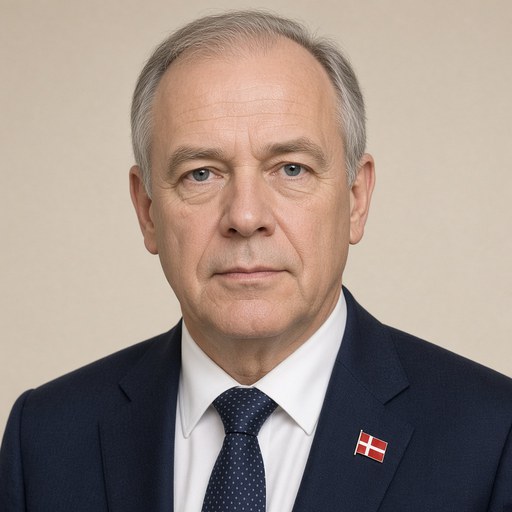
Prime Minister Poul Nyrup Rasmussen's speech on September 4, 2000, at the Craftsmen's Association.
 Poul Nyrup Rasmussen · Prime Minister of Denmark
- Context
- Rasmussen addressed the Craftsmen's Association in Horsens on September 4, 2000, urging a 'yes' vote in the upcoming Danish euro referendum on September 28.
- Main themes
- Danish euro referendum, currency speculation and financial vulnerability, European monetary union, defense of the Danish krone, financial market power, Danish welfare state, international currency crises, labor movement and social democracy
- Duration
- ~24 min
- Words
- 2,825
- Sentences
- 138
- Readability
- 64
- Grade
- 9.4
- Syntax
- 2.93
- Vocabulary
- 1.88
Translated from Danish
The broad sphere of national life a sentence belongs to. Every sentence has an Arena, so it is the denominator the other indices are read against.
Other138 sentences in 23 paragraphs
Is there anyone who can lend me 20 kroner? What does the mayor say? He has a dollar. I have witnesses that you will get it back.
Look at this little crown, 20 kroner with the Queen's portrait has served us well for many years. Sometimes this crown has been under severe pressure. It is not more than 2 years ago that the crown faced colossal pressure. There were financiers somewhere in the world who had figured out that they could make money by pressuring the Danish krone - and you know and I know that pressure on the Danish krone is pressure on the society of Denmark. In 1998, we actually had to go into the Danish currency reserve and retrieve 40 billion kroner to protect the crown.
Do you understand, it works in such a way that if you are out in the world as a financial speculator and suspect that if you try to pressure the crown and it falls in value, then you can sell it at a high price now, buy it back a little cheaper later, and thus make money on our currency. Last time, 2 years ago, we managed to escape. We had to retrieve the 40 billion kroner to protect the crown, but there are times when we have not managed to escape.
The first major international event that happened when I became Prime Minister was one evening in my office in the ministry - I call it the aquarium - where things went wrong. Suddenly, speculation began in Europe. The speculators pounced on our money in all of Europe's countries, and onto my desk came, with a half-hour interval, one fax after another. You know how I feel about such faxes… They came onto my desk with a half-hour interval, then the currency reserve was this high, then it was this high, then it fell this much and then it fell this much. Then I realized what it is we are up against. That evening in 1993, a few months after I became Prime Minister, I suddenly saw with bright clarity how small a society we are when it comes to the great financial powers. We had to give up the entire European currency system because we believed that an agreement could hold against the financial powers - but it could not, it collapsed, and we then had to find new ways to stabilize ourselves in Europe.
Dear everyone, it is the same forces that broke the Bank of England in 1992, when the British had to devalue the British pound, and it is the same forces that pressured Sweden in 1993 into a severe devaluation. Even Sweden tried in 1993 to prevent a depreciation of the Swedish crown by raising interest rates to 500%. It did not succeed. The then Social Democratic opposition had to reach an agreement with the bourgeois government in Sweden and implement the most terrifying social cuts I have ever experienced in the post-war period; family benefits, child benefits, sick pay, unemployment benefits, etc.
My point is that we are now in a time - without us, the family Denmark, perhaps noticing it in our daily lives - where financial markets have much greater power than they have had before. We must remember that at any hour of the day, there is somewhere in the world a stock exchange that is open, where people buy and sell securities, bonds, stocks - also in companies here in Horsens without us really knowing it.
What I want to say is that we have had some crises in Denmark that we could have avoided if we had had a stronger currency cooperation in Europe. The great potato package in 1986, which the Schlüter government implemented, was harsh - it came too late, it hit skewed - and it was extensive because it also dealt with defending the Danish krone.
In 1993, I had my experiences and society with me. In 1998, we saw it again. Time and again we have seen that this crown, when it is to serve us, is also vulnerable if it stands alone. And I would very much like to be part of, on September 28, 2000, creating a foundation, a community, where we can stand together and say, now it is over with international financial powers being able to pounce on us and pressure and threaten us. Now we want to be able to tell the Danish population that we do not need to look back to see if anyone intends to pressure us. Now we will concentrate all our efforts on our own community and community with others. Behind this crown stands 5 million inhabitants and a lovely society. Behind the Danish euro, if we say yes, stands a number of good societies and about 350 million inhabitants and the world's richest region, you cannot topple that.
You can break a single matchstick, but you cannot break a whole handful of matchsticks - you can topple a single crown, but you cannot topple a common Danish euro.
Thus, I would also like to say to you that the Danish labor movement, the Danish Social Democracy, and the trade union movement have, since its inception, its start and the building of the Danish welfare state, been born of two things. Here we have our idea, our value, our vision, our dream, and our hope. Here we have our reality. When reality changes, we could not think of just continuing to use the same tools. When reality changes, we take new tools into use to achieve new progress for the ideas we believe in and are united around.
Social Democracy is the link between idea and reality. We have seen it through the building of the entire Danish welfare state - many businesses will not use the same production methods today as they did 10 years ago. Our way of working today in Danish society is not the same as it was 20 years ago. We are constantly adopting new methods and forms of cooperation because reality is changing, but we never abandon our values. And in the same way with Europe and the new reality I have just described to you. We cannot stop internationalization and globalization. We cannot say: 'Stop the world, I want to get off'. We cannot slow it down - we can do something else. We can seek together in new communities to regain the self-determination that was taken from us in the wake of internationalization. When capital movements became so-called 'free' in 1980-1982 in Denmark and in all other countries in Europe, from that time it was over with believing that we could determine our own interest rates. Now money can move across borders in a tenth of a second, and we must, of course, if we are to survive, face that reality head-on. Therefore, I believe that the parties and movements in Denmark that oppose this project, the common currency - it is fair enough to have that opinion - but if they oppose it because they try to give the population the impression that we determine everything ourselves, as we have always been able to, then those are the wrong premises. Then it is a wrong basis on which to ask the population to take a stand.
I ask the population to take a stand based on the reality that Denmark finds itself in, and I say to each and every one of you, I would prefer it that way. Anker Jørgensen and I talked a bit about it the other day. He said: 'It is also a bit annoying that we do not determine everything'. Yes, it is, but we do not. Dear friends, 2-3 years ago we could set our own interest rate according to the Deutsche Bundesbank. Back then, Germany dominated European monetary policy to such an extent that we just had to follow along. Today we must set our interest policy according to the European Central Bank, but there is a crucial difference. Before, there was no possibility of sitting on the board of the German Bundesbank - it was only for Germans, now they all sit at one table and we can also get to sit there. And we have one vote each, 5 million Danes, 80 million Germans, one vote each, it is almost unfair, but we have it and we will hold on to it. My point: we can now tell about Denmark, make our influence felt, if we want to, on a monetary policy development, while we can protect ourselves.
When I was a kid in Esbjerg, I have - just like you have seen it here in Horsens and in Randers and Aalborg, the three places I have been today - seen unemployment. We have also sensed where that unemployment came from. Joint union representative Jan Duelund from Vestfrost in Esbjerg and 1,700 employees who produce refrigerators and quite good products, some of the best in the world, he says: 'If exchange rates suddenly change and the Danish krone changes value in relation to the British pound or the German mark, then we can produce the world's best refrigerators, but it does not work, because they become too expensive on the world market and the markets I am talking about. Then there is a meeting the next day in the cooperation committee with one item on the agenda: Layoffs!'.
And that is why I say to you, I have at least decided in my adult life to do everything I can to ensure that this society Denmark is protected as well as we can do it and get the best basis. Never again mass unemployment in Denmark - it is not a threat, but a goal, and every time I can see that there is a new basis for reaching that goal, I recommend that we seize the new basis. And that is how it is with the common currency.
It is good for businesses to vote yes on September 28, 2000, because the majority of the businesses we have here are export companies. I would believe that two-thirds of their turnover goes abroad and that most goes to the 12 euro countries, and I would guess that if we say yes in Horsens, we are also saying yes to the future of businesses. Not only their future but also to the Horsens project, which I mentioned in my opening speech. If the Horsens project 'Everyone in work' succeeds, it is also connected to a yes on September 28, 2000, because it is clear that if things go well for the businesses, they are much more willing and better able to take in the people who need to be employed – whether they are named Ahmed or Rasmussen, they need to be employed.
September 28, 2000, is also about believing in ourselves. We can make a difference, we can make our influence felt, all of us. I almost want to say that the entire history of this society is built on a belief in ourselves. We have never wanted to accept in the Danish Social Democracy and in the Danish Trade Union Movement, yes, in our democracy, that there were a few who should decide over the many. From the start 129 years ago, we said that now we must unite. It is necessary for the sake of democracy and it is necessary to create a development where we can all be here. And in the same way now. We must join with others to make our influence felt, and we can do it. Three examples: The employment chapter in the Amsterdam Treaty did not come without us. The environmental regulations did not come without us. Food production and the new requirements for food, which are now slowly but surely coming through in the European machinery, did not come without us. We can do it, and the others know it well. We are the power of example, which is the strongest argument one can have if one wants to bind reality and theory together. It is a good thing to be able to do that.
Did you know that everything we earn and live off in Denmark has come in cooperation with abroad, and did you know how respected our country is outside our borders? A country like Denmark should not close itself off, should not build on closedness and intolerance, should not build on the illusion that the country can return to the village idyll it once was by saying no on September 28, 2000 - and by the way, was it really that idyllic?! We must remember in 1968, there were still agricultural workers who only had ice-cold water to wash themselves in. Is that what we want to go back to? We can certainly enjoy the ducks in the village lakes, I will do my part, but I do not want to go back to the time when agricultural workers and industrial workers had terrible conditions.
Then there is something else. I know that many of you say, what about Denmark? Are we not drowning in the big Europe? No, we are not drowning in the big Europe, and listen: Why do we have rules in Denmark? Why did the party build rules in Denmark? We did not do it for the sake of people in business class, we did it for the sake of the small ones in society. We have rules in Denmark to protect ordinary people from abuse. We have a welfare state that benefits us all. And in the same way in Europe. Here we have rules so that the big countries do not dominate the small. We have rules so that it is not the law of the jungle we have in Europe. Therefore, we also have rules of play in the economic cooperation so that the big ones do not just stab us in the back.
One thing is that we are giving up a little sovereignty this time, we are, yes. We are all renouncing the right to devalue the Danish krone by switching to the common currency, but so is Germany, and France, Italy, and all the others. I have vivid memories of 1982, the very last devaluation we made in Denmark. Interest rates rose to over 20%, inflation rose massively, and you know about devaluation. As Per Hækkerup has said: 'It warms a little at first, but then it gets quite cold quickly later'. Devaluations are really about us writing down the krone so that we gain an advantage and can take some jobs from the neighbor. That is over now: Instead, we must build jobs together with the neighbor. In the wake of devaluation follows high inflation, which erodes the real wages of ordinary people. Only people with large fortunes benefit from that. Therefore, we have an interest in renouncing devaluation and looking forward to a large area of value where we can trust each other and be secure with each other.
We will not have a United States of Europe. No one wants that. Germany does not want it, the federal states do not want it, the federal government's administration does not want it. France does not really want it either. When Joschka Fischer talks about a federal state, he means something else. He talks about there needing to be clear lines between what the EU takes care of and what the federal state takes care of. Let us discuss where those lines should be drawn - it is very clear. The problems that we cannot solve individually, we should try to solve together - I have mentioned some of them - no more, no less.
We should not be isolated, we should not stand outside - we should stand together with others. For the sake of ordinary families, for our self-esteem, for the sake of our country's culture, and remember one thing. Poor people in Eastern and Central Europe have experienced the top-down communism with all the suffering that followed. They have turned against it, they have protested, they have been set free. Poor people in Southern Europe have experienced fascism in Greece, Spain, and Portugal. They have turned against it, and rightly so. Thatcherism in the United Kingdom, the ultra-total liberalism, they have experienced it, they do not want it, and rightly so. They have experienced the extreme.
Europe is now on its way to go after the welfare state and the values we are built upon, and I can understand that. Should we then have doubts?! The stench of this century belongs to us, the values of the labor movement are breaking through with certainty and enthusiasm among the people of other countries - so we should not have doubts and turn our backs on them. We should be here together with them, have something to offer, be known by our example.
Thank you for listening.
The original Danish. The tags above are read on the English translation's sentences.
Er der nogen, der kan låne mig 20 kroner? Hvad siger borgmesteren? Han har en daler. Jeg har vidner på, at du får den igen.
Se denne lille krone, 20 kroner med Dronningens portræt har tjent os godt og vel i mange år. Sommetider har kronen her været under voldsomt pres. Det er såmænd ikke mere end 2 år siden, at kronen kom ud for et kolossalt pres. Der var finansmænd et eller andet sted i verden, som havde fundet ud af, at de kunne tjene penge på at presse den danske krone - og I ved og jeg ved, at et pres på den danske krone, det er et pres på samfundet Danmark. I 1998 måtte vi faktisk ned i den danske valutakasse og hente 40 milliarder kroner op for at beskytte kronen.
Forstår I, det foregår på den måde, at hvis man ude i verden som finansspekulant har en mistanke om, at hvis man prøver at presse kronen og den falder i værdi, så kan man jo sælge den halvdyrt nu, købe den lidt billigere senere og dermed tjene penge på vores valuta. Sidste gang for 2 år siden lykkes det os at gå fri. Vi måtte hente de 40 milliarder kroner for at beskytte kronen, men det er nogle gange, hvor det ikke er lykkes os at gå fri.
Det første, der skete af store internationale begivenheder, da jeg blev statsminister, det var en aften på mit kontor i ministeriet - akvariet kalder jeg det - hvor gik det galt. Pludselig begyndte spekulationen i Europa. Spekulanterne kastede sig over vores penge i alle Europas lande og ind på mit bord kom, med en 1⁄2 times mellemrum, den ene fax efter den anden. I ved, hvordan jeg har det med sådan nogle telefaxer… De kom ind på mit bord med en 1⁄2 times mellemrum, så var valutakassen så høj, så var den så høj, så faldt den så meget og så faldt den så meget. Da blev jeg klar over, hvad det er, vi er oppe imod. Den aften i 1993, nogle måneder efter at jeg var blevet statsminister, så jeg pludselig med lysende klarhed, hvor lille et samfund vi er, når det gælder de store finanskræfter. Vi måtte opgive hele det europæiske valutasystem, fordi vi troede, at en aftale kunne holde overfor finanskræfterne - men det kunne det ikke, det brød sammen og vi måtte så finde nye veje for at stabilisere os i Europa.
Kære alle sammen, det er de samme kræfter, der knækkede Bank of England i 1992, da briterne måtte devaluere det britiske pund, og det er de samme kræfter, der pressede Sverige i 1993 til en voldsom devaluering. Selv Sverige prøvede i 1993 at forhindre en nedskrivning af den svenske krone ved at hæve renten til 500%. Det lykkedes ikke. Den daværende socialdemokratiske opposition måtte indgå forlig med den borgerlige regering i Sverige og gennemføre de mest uhyggelige sociale nedskæringer, jeg overhovedet har været ude for i efterkrigstiden; familieydelser, børneydelser, sygedagpenge, arbejdsløshedsdagpenge osv.
Min pointe er, at vi nu befinder os i en tid - uden at vi, familien Danmark, måske lægger mærke til det i vores hverdag - hvor finansmarkederne har meget større magt, end de har haft før. Vi skal huske, at i hvert af døgnets 24 timer er der et eller andet sted på jorden en fondsbørs, der har åben, hvor man køber og sælger værdipapirer, obligationer, aktier - også i virksomheder her i Horsens uden vi rigtig ved det.
Det, jeg vil sige, er, at vi har haft nogle kriser i Danmark, som vi ville have kunnet undgået, hvis vi havde haft et stærkere valutasamarbejde i Europa. Den store kartoffelkur i 1986, som Schlüter-regeringen gennemførte, var barsk - den kom for sent, den ramte skævt - og den var omfattende, fordi den også handlede om at forsvare den danske krone.
I 1993 havde jeg mine oplevelser og samfundet med. I 1998 så vi det igen. Gang på gang har vi set, at denne krone, når den skal betjene os, er den også sårbar, hvis den står alene. Og jeg vil så gerne være med til, den 28. september 2000, at skabe et afsæt, et fællesskab, hvor vi kan stå sammen om at sige, nu er det slut med, at internationale finanskræfter kan kaste sig over os og presse og true os. Nu vil vi over til at kunne sige til den danske befolkning, at vi ikke behøver at kigge bagud, om nogen har tænkt sig at presse os. Nu vil vi koncentrere alle vores kræfter om vores eget fællesskab og fællesskab med de andre. Bag denne krone står 5 millioner indbyggere og et dejligt samfund. Bag den danske euro, hvis vi siger ja, står der en række gode samfund og ca. 350 millioner indbyggere og verdens rigeste region, den vælter man ikke omkuld.
Man kan knække en enkelt tændstik, men man kan ikke knække en hel håndfuld tændstikker - man kan vælte en enkelt krone, men man kan ikke vælte en fælles dansk euro.
Dermed vil jeg også gerne sige til jer, at den danske arbejderbevægelse, det danske socialdemokrati og fagbevægelsen jo siden sin opvækst, sin start og opbygning af det danske velfærdssamfund har været født af 2 ting. Her har vi vores idé, vores værdi, vores vision, vores drøm og vores håb. Her har vi vores virkelighed. Når virkeligheden ændrer sig, kunne vi ikke finde på bare at blive ved med at bruge de samme værktøjer. Når virkeligheden ændrer sig, tager vi nye værktøjer i brug for at nå nye fremskridt for de idéer, vi tror på og er samlet om.
Socialdemokratiet er remtrækket mellem idé og virkelighed. Vi har set det gennem opbygningen af hele det danske velfærdssamfund - masser virksomheder vil jo ikke bruge de samme produktionsmetoder i dag som for 10 år siden. Vores måde at arbejde på i dag i det danske samfund er ikke den samme som for 20 år siden. Vi tager hele tiden nye metoder og samarbejdsformer i brug, fordi virkeligheden forandrer sig, men vi svigter aldrig vores værdier. Og på samme måde med Europa og den nye virkelighed, jeg lige har beskrevet for jer. Internationaliseringen og globaliseringen kan vi ikke stoppe. Vi kan ikke sige: 'Stop verden, jeg står af'. Vi kan ikke bremse det - vi kan gøre noget andet. Vi kan søge sammen i nye fællesskaber for at generobre den selvbestemmelse, som blev taget fra os i kølvandet af internationaliseringen. Da kapitalbevægelserne blev såkaldt 'frie' i 1980-1982 i Danmark og i alle andre lande i Europa, fra den tid var det slut med at tro, at vi selv kunne bestemme vores egen rente. Nu kan pengene på en tiendedel af et sekund bevæge sig over grænserne og vi må selvfølgelig, hvis vi overhovedet skal klare os, se den realitet lige direkte i øjnene. Derfor mener jeg, at de partier og bevægelser i Danmark, som er modstandere af dette her projekt, den fælles valuta - det er fair nok at have den holdning - men hvis de er modstandere, fordi de prøver at give befolkningen det indtryk, at vi selv bestemmer alting, som vi altid har kunnet det, så er det forkerte præmisser. Så er det et forkert grundlag, hvorpå man beder befolkningen tage stilling.
Jeg beder befolkningen tage stilling ud fra den virkelighed, Danmark befinder sig i, og jeg siger til hver eneste af jer, jeg vil da helst have det sådan. Anker Jørgensen og jeg snakkede lidt om det forleden. Han sagde: 'Det er da også pokkers, at vi ikke bestemmer alting'. Ja, det er det, men det gør vi altså ikke. Kære venner, for 2-3 år siden kunne vi indrette vores egen rente efter Deutsche Bundesbank. Dengang dominerede Tyskland i den grad Europas pengepolitik og vi måtte bare følge med. I dag må vi så indrette vores rentepolitik efter den Europæiske Centralbank, men der er en afgørende forskel. Før var der ikke en mulighed for at komme til at sidde i den Tyske Forbundsbanks bestyrelse - det var kun for tyskere, nu sidder de der jo alle sammen ved ét bord og der kan vi også komme til at sidde. Og vi har en stemme hver, 5 millioner danskere, 80 millioner tyskere, en stemme hver, det er næsten uretfærdigt, men det har vi altså og det holder vi fast på. Min pointe: vi kan komme til nu at fortælle om Danmark, gøre vores indflydelse gældende, hvis vi vil det, på en pengepolitisk udvikling, samtidig med at vi kan beskytte os.
Da jeg var knægt i Esbjerg, har jeg - ligesom I har set det her Horsens og i Randers og Aalborg, de tre steder jeg har været i dag - set arbejdsløsheden. Vi har også anet, hvor den arbejdsløshed kom fra. Fællestillidsmand Jan Duelund fra Vestfrost i Esbjerg og 1.700 medarbejdere, der producerer køleskabe og ganske gode varer, nogle af verdens bedste, han siger: 'Hvis valutakurserne pludselig ændrer sig og den danske krone ændrer værdi i forhold til det britiske pund eller tyske D-mark, så kan vi producere verdens bedste køleskabe, men det duer ikke, for de bliver for dyre på verdensmarkedet og de markeder jeg taler om. Så er der møde næste dag i samarbejdsudvalget og med 1 punkt på dagsorden: Fyringer!'.
Og derfor er det, jeg siger til jer, jeg har i hvert fald besluttet mig for i mit voksne liv at gøre alt, hvad jeg kan for, at dette samfund Danmark bliver værnet, så godt vi kan gøre det og få den bedste basis. Aldrig nogensinde mere massearbejdsløshed i Danmark - det er ikke en trussel, men et mål, og hver gang jeg kan se, at der er ny basis for at nå det mål, anbefaler jeg, at vi griber den ny basis. Og sådan er det med den fælles valuta.
Det er godt for virksomhederne at stemme ja den 28. september 2000, fordi hovedparten af de virksomheder, vi har her, vel er eksportvirksomheder. Jeg vil tro, at 2/3 dele af deres omsætning går til udlandet og at hovedparten går til de 12 eurolande, og jeg vil gætte på, at hvis vi siger Ja i Horsens, så siger vi også Ja til virksomhedernes fremtid. Ikke alene deres fremtid, men også til projekt Horsens, som jeg tog op i min åbningstale. Hvis Horsens’ projekt 'Alle i arbejde' lykkes, hænger det også sammen med et Ja den 28. september 2000, for det er da klart, at går det godt med virksomhederne, så er de meget mere villige og kan bedre tage de mennesker, man skal have i arbejde – hvad enten de hedder Ahmed eller Rasmussen, så skal de i arbejde.
Den 28. september 2000 handler også om at tro på os selv. Vi kan godt gøre en forskel, vi kan godt gøre vores indflydelse gældende, alle sammen. Jeg havde nær sagt, at hele dette samfunds historie bygger jo på en tro på os selv. Vi har aldrig villet acceptere i det danske Socialdemokrati og i Dansk Fagbevægelse, ja, i vort demokrati, at der var nogle få, der skulle bestemme over de mange. Fra det startede for 129 år siden, sagde vi jo, at nu må vi slå os sammen. Det er nødvendigt af hensyn til demokratiet og det er nødvendigt af hensyn til at skabe en udvikling, hvor vi kan være her alle sammen. Og på samme måde nu. Vi skal da gå sammen med de andre for at gøre vores indflydelse gældende og vi kan godt. Tre eksempler: Beskæftigelseskapitlet i Amsterdamtraktaten kom ikke uden os. Miljøbestemmelserne kom ikke uden os. Fødevareproduktionen og de nye krav til fødevarerne, der nu langsomt, men sikkert, kommer igennem i det europæiske maskineri, kom ikke uden os. Vi kan godt og de andre ved det godt. Vi er eksemplets magt, der er det stærkeste argument, man kan have, hvis man skal binde virkelighed og teori sammen. Det er en god ting at kunne det.
Vidste I, at alt det, vi går og tjener og lever af i Danmark, er kommet i samvirke med udlandet, og vidste I, hvor respekteret vores land er uden for vores lands grænser? Et land som Danmark skal ikke lukke sig inde, skal ikke bygge på lukkethed og intolerance, skal ikke bygge på den illusion, at landet ved at sige nej den 28. september 2000 kan komme tilbage til landsbyidyllen, som det engang var - og i øvrigt var det så også idyllisk?! Vi skal huske i 1968, da var der stadig landarbejdere, der kun havde det iskolde vand at vaske sig i. Er det dét, vi skal tilbage til? Vi kan sagtens få det med ænderne i landsbysøerne, jeg skal nok gøre mit, men jeg vil ikke tilbage til den tid, hvor landarbejdere og industriarbejdere havde elendige vilkår.
Så er der noget andet. Jeg ved, at mange af jer siger, hvad så med Danmark? Drukner vi ikke i det store Europa? Nej, vi drukner netop ikke i det store Europa, og lyt engang: Hvorfor har vi regler i Danmark? Hvorfor byggede partiet regler op i Danmark? Det gjorde vi jo ikke af hensyn til mennesker på business-class, det gjorde vi af hensyn til de små i samfundet. Vi har regler i Danmark for at beskytte jævne mennesker mod overgreb. Vi har et velfærdssamfund, der er til gavn for os alle sammen. Og på samme måde i Europa. Her har vi regler for, at de store lande ikke skal dominere de små. Vi har regler for, at det ikke er junglelov, vi har i Europa. Derfor har vi også spilleregler i det økonomiske samarbejde, så de store ikke bare falder os i ryggen.
En ting er, at vi afgiver lidt suverænitet denne gang, det gør vi, ja. Vi fraskriver os alle sammen retten til at devaluere den danske krone ved at gå over til den fælles valuta, men det gør Tyskland jo også, og Frankrig, Italien og alle de andre. Jeg er fuld af erindringer om 1982, den allersidste devaluering, vi foretog i Danmark. Renten steg til over 20%, inflationen steg massivt, og I ved godt det der med devaluering. Som Per Hækkerup har sagt: 'Det varmer lidt til at begynde med, men så bliver det ret koldt, hurtigt senere'. Devalueringer handler i virkeligheden om, at vi nedskriver kronen, så vi får en fordel og kan tage nogle arbejdspladser fra naboen. Det er slut nu: I stedet for skal vi bygge arbejdspladser op sammen med naboen. I kølvandet af devalueringen følger høj inflation, som udhuler reallønnen for almindelige mennesker. Det har kun folk med store formuer gavn af. Derfor har vi en interesse i at fraskrive os devalueringen og se frem til et stort værdiområde, hvor vi kan stole på hinanden og være sikre på hinanden.
Vi får ikke et Europas forenede stater. Det er der ingen, der ønsker. Tyskland ønsker det ikke, delstaterne ønsker det ikke, forbundsstatens regering ønsker det ikke. Frankrig ønsker det i realiteten heller ikke. Når Joschka Fischer taler om forbundsstaten, mener han noget andet. Han taler om, at der skal være klare linier mellem, hvad EU tager sig af og hvad forbundsstaten tager sig af. Lad os diskutere, hvor de linier skal drages - det er meget klart. De problemer, vi ikke kan løse hver for sig, skal vi prøve at løse i fællesskab - jeg har nævnt nogle af dem - ikke mere, ikke mindre.
Vi skal ikke isoleres, vi skal ikke stå udenfor - vi skal stå sammen med andre. For almindelige familiers skyld, for vores selvværds skyld, for vores lands kultur skyld og husk lige en enkelt ting. Fattige folk i Øst- og Centraleuropa har prøvet den topstyrede kommunisme med alle de lidelser, der fulgte deraf. De har vendt sig, de har protesteret, de er sluppet fri. Fattige folk i Sydeuropa har prøvet fascismen i Grækenland, Spanien og Portugal. De har vendt sig imod det og med rette. Thatcherismen i Storbritannien, den ultra totale liberalisme, de har prøvet det, de vil ikke have det og med rette. De har prøvet det ekstreme.
Europa er på vej til nu at gå efter velfærdsstaten og de værdier, vi bygger på og det kan jeg godt forstå. Skulle vi så komme tvivl?! Stanken af dette århundrede tilhører os, arbejderbevægelsens værdier trænger igennem med en sikkerhed og en begejstring hos de andre landes folk - så skal vi da ikke komme i tvivl og vende dem ryggen. Så skal vi være her sammen med dem, have noget at byde på, kendes ved vores eksempel.
Tak fordi I ville lytte.