




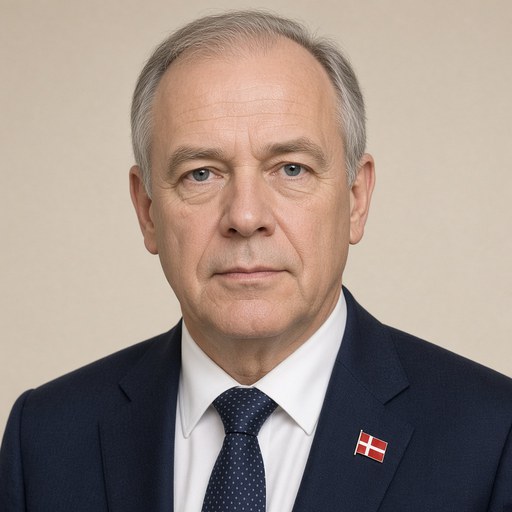
Prime Minister Poul Nyrup Rasmussen's speech at the Danish Broadcasting Corporation's Anniversary Concert, Friday, March 31, 2000.
 Poul Nyrup Rasmussen · Prime Minister of Denmark
- Context
- Rasmussen addressed guests at the Danish Broadcasting Corporation's 75th Anniversary Concert on March 31, 2000, celebrating DR's cultural legacy.
- Main themes
- Danish Broadcasting Corporation's 75th anniversary, Danish cultural identity, history of public broadcasting, radio and television evolution, shared national memory, public service media, childhood memories and programs, sports broadcasting, community and togetherness, music and entertainment heritage
- Duration
- ~10 min
- Words
- 1,174
- Sentences
- 81
- Readability
- 61
- Grade
- 7.7
- Syntax
- 2.73
- Vocabulary
- 2.21
Translated from Danish
The broad sphere of national life a sentence belongs to. Every sentence has an Arena, so it is the denominator the other indices are read against.
Other81 sentences in 34 paragraphs
Your Majesty, Dear Danish Broadcasting Corporation, Esteemed listeners and viewers, Ladies and gentlemen,
Do you remember: (Dong, di dong, di dong di dong) The melody: I dreamed a dream last night – the Danish anthem – from the time when most were De’s.
For 75 years, the Danish Broadcasting Corporation has been our faithful companion in sound and image, in great and small matters. We have been excited and moved. Informed and absorbed. Entertained and provoked.
Society has evolved,
and so
has the Danish Broadcasting Corporation. Sometimes a little faster than people could keep up with – and other times a little slower.
There is a long way from Royal Chamber Singer Holm's State Radio to Toothbrushes and Beating Teams.
But perhaps you do not remember the time of State Radio before the world fell apart and everyone became familiar with each other. There was certainly no room for nonsense back then.
Radio was for the educated Danes – not for dancing modern to it. Polite speech, long lectures, and strict rules about what kind of music State Radio could broadcast – that was the order of the day. It is possibly here that inspiration was found for the fourth radio channel that is being talked about so much these days. Time will tell.
But back then, a demand arose from the People. A rebellion simmered. The Danes demanded lighter tones. And they got them. Quite slowly, peu à peu. Soon, one could hear dance music from Restaurant Wivex on Sundays with clinking forks and knives, and I ask:
Would you have missed the Wish Concert on Sunday morning with a lump in your throat when Frans Andersson – förlåt - sang so beautifully about The Holy City? Good word again. Or Jussi Björling's and Stefan Islan's touching The Pearl Fisher.
Soon, the Danish Broadcasting Corporation truly lived up to its name. It became the Danes' radio. Although there were still plenty of programs with Uncle-expert lectures and Captain Jespersen whipping us through the maintenance of the body. Soon, the radio was no longer De’s with the Danes. Now we said we. We were to have fun. And we did every Saturday night with Knud Pheiffer and Phieselbach and many others.
Or we listened to Goooooong RADIO THEATER's first 'gaderydder', The Melody of Murder. I believe it was here that one could read in the lunch newspapers that the country's restaurateurs were being murdered because the Danish Broadcasting Corporation was pulling the Danes off the streets.
It was also at that time that wealthy Danes who could afford to invest in a television set could get a full three hours of TV broadcasts a week from the Danish Broadcasting Corporation's new TV studio. For an extra 50 kroner a year. Culture Minister: Have you thought about that – in connection with the latest media agreement?
And what did you get for your money? Here, the Danish Broadcasting Corporation has truly managed to create something. I mean, you got the world into your living room with the great Hungary collections, the landing on the moon, and much more.
And then you got the children's hour! Think of what has been created here. Think of Ingrid and Lillebror – with 'What shall we play, we ask each other' – we say that from time to time at the government's minister meetings.
Or for that matter, Kaj and Andrea with 'Even though there is a difference between us two – we are good friends, you can believe' – that is what Marianne Jelved and I hum from time to time.
Or Pirate Sally, Bamse and Kylling, and a long string of Christmas calendars. All are just as fun to watch for adults as for children. At least.
In that way, the Danish Broadcasting Corporation, when all is said and done, is a part of all of us, all Danes' upbringing, our childhood memories, and what we have taken with us into life.
There is no sporting event that the Danish Broadcasting Corporation has not brought into the living rooms of a sports-enthusiastic populace in sound or image. It does make me a little worried about whether people will have time to go to the referendum on September 28 in the middle of the Olympics!
* * *
And have you, by the way, thought about the fact that DR is responsible for us not only becoming familiar with each other – but also familiar with the animals, Poul Thomsen and Balder – De’s with the pigeons, as witty souls say. And then Søren Rye Pedersen has shown us on open screen how to take care of the du-er. This is how DR has continually surprised and challenged us.
* * *
But now, for 75 years, the Danish Broadcasting Corporation has given us music – wonderful music, song, information, grand politics, entertainment, and food for thought. The Danish Broadcasting Corporation has brought us closer together and made us a little wiser.
In an increasingly global world – an unpredictable world, we need a point of reference, to 'feel where it really is that we come from'. We need to acknowledge that we have something in common. That we should not just be selfish and each for themselves, but that there still exists, somewhere, a national community – a set of values – that is worth fighting for and protecting. And that is really the foundation that we and the Danish Broadcasting Corporation should build upon in the future.
Here – right here we must really be attentive when it comes to the electronic media landscape, which is soon to become truly digital.
We must ensure the genuine popular appeal that the Danish Broadcasting Corporation has so beautifully upheld for 75 years. My hope is that the Danish Broadcasting Corporation can also – in the next 75 years – be a part of the glue that binds our society together.
And remember, there must be room for imagination and joy – without those two elements, it won't work.
Remember Gunnar Nu Hansen! When we ran and played on the cobblestones, each in our cities, we simply could not do without when it sounded through the steam radio: 'And at this moment, the red/white colors are running onto the green – and this could get dangerous...'.
I mean, imagination takes care of the rest. We followed our players, in all details, in all feints. Now it is different. Now it is both in color, in slow motion, and hold – and the referee was right anyway! I would like to warn against that! Remember, there must be room for imagination!
* * *
On Sunday, Lone and I are traveling to the EU summit in Egypt. For a whole new and very exciting collaboration with the continent that may have been forgotten along the way, Africa. Therefore, it is fitting to conclude with the Danish Broadcasting Corporation’s famous correspondents. It could be Ib Rene, or Alfredo Tesio – Rome.
Heartfelt congratulations, Danish Broadcasting Corporation.
Poul Nyrup Rasmussen – Cairo.
The original Danish. The tags above are read on the English translation's sentences.
Deres Majestæt, Kære Danmarks Radio, Ærede lyttere og seere, Mine damer og herrer,
Kan De huske: (Dong, di dong, di dong di dong) Melodien: Drømte mig en drøm i nat – den danske ursang – fra dengang de fleste var De’s.
Gennem 75 år har Danmarks Radio i lyd og i billede været vores trofaste følgesvend i stort og i småt. Vi er blevet begejstret og bevæget. Oplyst og opslugt. Underholdt og provokeret.
Samfundet har udviklet sig,
så
har Danmarks Radio. Nogle gange lidt hurtigere end folk kunne følge med – og andre gange lidt langsommere.
Der er langt fra Kongelig Kammersanger Holms Statsradiofoni til Tandbørster og Tæskehold.
Men måske husker De ikke Statsradiofoniens tid før verden gik af lave og alle blev dus med hinanden. Her var sandelig dengang ikke plads til tant og fjas.
Radiofoni var til for dannede danskerne - ikke til for at man skulle danse moderne til den. Høvisk tale, lange foredrag og strenge regler for, hvilken slags musik Statsradiofonien kunne lægge lydbølger til - det var dagens orden. Det er muligvis her, man har fundet inspirationen til den fjerde radiokanal, der tales så meget om i disse dage. Det må tiden vise.
Men dengang rejste der sig et krav fra Folket. Et oprør ulmede. Danskerne krævede lettere toner. Og det fik de. Ganske langsomt, peut en peut. Man hørte snart dansemusik fra Restaurant Wivex om søndagen med klirrende gafler og knive og jeg spørger:
Ville De have undværet Ønskekoncerten søndag formiddag med klumpen i halsen, når Frans Andersson – förlåt - sang så smukt om Den hellige stad. Godt ord igen. Eller Jussi Bjørlings og Stefan Islandis rørende Perlefiskeren.
Snart levede Danmarks Radio virkelig op til sit navn. Man
blev
danskernes radio. Selvom der stadig var masser programmer med Onkel-ekspert-foredrag og Kaptajn Jespersen piskede os igennem kroppens vedligeholdelse. Snart var radioen ikke længere De’s med danskerne. Nu sagde man vi. Vi skulle more os. Og det gjorde vi hver lørdag aften med Knud Pheiffer og Phieselbach og mange andre.
Eller vi lyttede til Goooooong RADIOTEATRETS første 'gaderydder', Mordets Melodi. Jeg tror, at det var her man kunne læse i frokostaviserne, at landets restauratører var ved at blive myrdet, fordi Danmarks Radio trak danskerne væk fra gaden.
Det var også på den tid, at velhavende danskere med råd til at investere i et fjernsynsapparat kunne få hele tre sendetimer TV om ugen fra Danmarks Radios nye TV-studie. For 50 kroner ekstra om året. Kulturminister: Har du tænkt på det – i forbindelse med det seneste medieforlig?
Og hvad fik man så for pengene? Her har Danmarks Radio virkelig formået at skabe noget. Jeg mener, man fik verden ind i dagligstuen med de store Ungarns-indsamlinger, landingen på månen og meget mere.
Og så fik man børnetimen! Tænk, hvad man har skabt her. Tænk på Ingrid og Lillebror – med 'Hvad skal vi lege, spørger vi hinanden' – det siger vi af og til på regeringens ministermøder.
Eller for den sags skyld, Kaj og Andrea med 'Selv om der er forskel på os to – så er vi gode venner kan I tro' – det nynner Marianne Jelved og jeg af og til.
Eller Sørøver Sally, Bamse og Kylling og en lang perlerække af julekalendere. Alle er de lige så sjove at se for voksne som for børn. Tihvertifald.
På den måde er Danmarks Radio, når alt kommer til alt, en del af os alle, alle danskeres opvækst, vores barndomsminder og det vi har taget med os ud i livet.
Der er ikke den sportsbegivenhed Danmarks Radio ikke i lyd eller billede har bragt ind i stuerne hos et sportsbegejstret folkefærd. Det kan godt få mig til at blive en lille smule bekymret for, om folk nu overhovedet har tid til at gå til folkeafstemning den 28. september midt i Olympiaden!
* * *
Og har I for resten tænkt over, at DR er skyld i, at vi ikke alene er blevet du’s med hinanden – men også du’s med dyrene, Poul Thomsen og Balder – De’s med duerne, som vittige sjæle siger. Og så har Søren Rye Pedersen for åben skærm vist os, hvordan man tager livet af de du-er. Sådan har DR til stadighed overrasket og udfordret os.
* * *
Men nu har Danmarks Radio igennem 75 år givet os musik – pragtfuld musik, sang, informationer, storpolitik, underholdning og stof til eftertanke. Danmarks Radio har bragt os tættere på hinanden, og gjort os lidt klogere.
I en stadig mere global verden – en uforudsigelig verden har vi brug for et holdepunkt, for at 'mærke hvor det egentlig er, vi kommer'. Vi har behov for at vedkende os, at vi har noget til fælles. At vi ikke blot skal være egoister og enhver sig selv nærmest, men at der stadig, et eller andet sted, eksisterer et nationalt fællesskab – et sæt af værdier - som det nok er værd at slås for og værne om. Og det er egentlig det fundament, som vi og Danmarks Radio skal bygge videre på i fremtiden.
Her – lige her skal vi virkelig være opmærksomme, når det gælder det elektroniske mediebillede, der snart for alvor bliver digitalt.
Vi skal sikre den ægte folkelighed, som Danmarks Radio har løftet så flot i 75 år. Mit håb er, at Danmarks Radio også kan – i de næste 75 år - være en del af det kit, der binder vort samfund sammen.
Og husk, der skal være plads til fantasien og glæden – uden de to dele går det ikke.
Husk Gunnar Nu Hansen! Når vi løb og legede på stenbroen, hver i vore byer, kunne vi simpelthen ikke undvære når det gennem dampradioen lød: 'Og i dette øjeblik løber de rød/hvide farver ind på grønsværen – og det kan blive farligt dette her..'.
Jeg mener, fantasien sørger jo for resten. Vi fulgte jo vore spillere, i alle detaljer, i alle finter. Nu er det anderledes. Nu er det jo både på farve, i slow motion, og fasthold – og dommeren havde alligevel ret! Det vil jeg gerne advare imod! Husk, der skal være plads til fantasien!
* * *
På søndag rejser Lone og jeg til EU topmøde i Egypten. Til et helt nyt og meget spændende samarbejde med det kontinent, som måske er blevet glemt undervejs, Afrika. Derfor må det være på sin plads at slutte med Danmarks Radio’s berømte korrespondenter. Det kan være Ib Rene, eller Alfredo Tesio – Rom.
Hjertelig tillykke, Danmarks Radio.
Poul Nyrup Rasmussen – Kairo.