




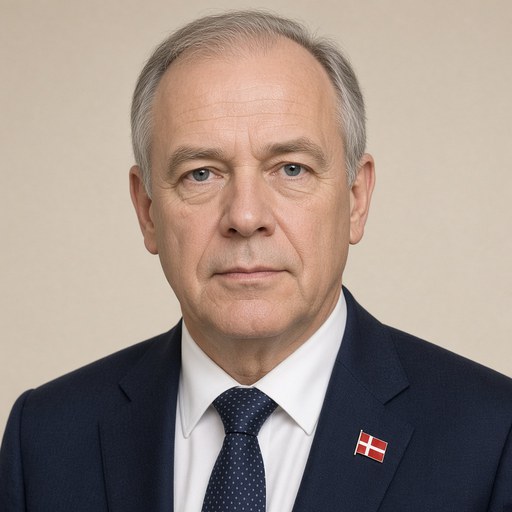
Prime Minister Poul Nyrup Rasmussen's speech at the LO Trade Union Pensioners' Spring Celebration on April 7, 2000.
 Poul Nyrup Rasmussen · Prime Minister of Denmark
- Context
- Rasmussen addressed LO Trade Union pensioners at their Spring Celebration on 7 April 2000, reviewing seven years of Social Democratic government achievements in employment and public services.
- Main themes
- Employment and unemployment reduction, Social Democratic governance record, economic policy and fiscal responsibility, healthcare system improvements, childcare expansion, historical economic crises, working-class welfare, pension security, Danish political landscape
- Duration
- ~45 min
- Words
- 5,442
- Sentences
- 368
- Readability
- 73
- Grade
- 6.7
- Syntax
- 2.69
- Vocabulary
- 1.74
Translated from Danish
The broad sphere of national life a sentence belongs to. Every sentence has an Arena, so it is the denominator the other indices are read against.
Other368 sentences in 35 paragraphs
I think we should show that we can sing before we start the speech, when I see a red flag waving without music. Are you ready?
We'll take the first verse, and I would like to sing.
When I see a red flag waving.....
That was beautiful.
Dear everyone, I can feel that the DSU still has a lot to learn. You sing so beautifully and so strongly.
I was sitting by myself this morning humming another song, which I believe is very well-known, called - We have today a weather, a sunny weather. I think we have it in more than one sense. I mean, after all the individual cases with fax machines and trivialities, I feel that we have started to discuss politics again. And you know how it is every time we start to discuss politics again over there at Christiansborg, the Liberal Party immediately goes on the defensive, because we are simply best at discussing the future of society, the everyday problems that we are all deeply concerned about.
But when we start to discuss politics, I can feel that many, many people say, we have certainly been waiting for that. Can you remember what it looked like seven years ago? Seven years ago, I believe many of you can remember that we all knew someone who had become unemployed. Every single family knew that there was one person who was uncertain about whether there was even a job. There was a shortage of many apprenticeships, and there was uncertainty about whether one could even get an education for one's children and grandchildren. Today, everyone knows someone who has found work, and I think that is the most important thing. If I had to point out one single thing that I would say if I were asked: 'what do you value most in the seven years we have had a Social Democratic-led government'? I would say that people have found work. There you have it. That people have found work. Seven years ago, we had 350,000 unemployed. Today, we are far, far below half of that.
There is still much to be done, I know that. But there are enormously many people who have gotten a better life. I also think it is right to say that we have spent the money wisely. We have built 170,000 new childcare places, daycare institutions for your children and grandchildren. And we have spent some more money in the healthcare system and in the hospital sector. I would have liked to see the results clearer, but the curves have started to bend. Waiting times for heart surgeries are now going down. We have secured a treatment guarantee. Waiting times for cancer diseases are now going down. Within the next six months, we will have a treatment guarantee in place there as well. We must do something every single day to reduce the common diseases and the waiting times for them even further. It did not look good in 1993 when we looked at the healthcare system back then. The Conservative government had cut back on it, and there was much to correct.
Some people occasionally say to me, Poul, don't you talk too much about the economy in there? And it is true that we have put a lot of effort into it, I will say to you. We have put a lot of effort into two things over the past seven years. To get control of the money. And to get people into work. And when we have done that, it is not because the money itself is important. People are more important. But it is because we all remember who is affected when the economy goes wrong. Each and every one of you can remember the first oil crisis in 1973/74. There was one thing we were happy about back then. It was Erling Jensen with red suspenders on television and car-free Sundays. But that was also the only bright spot because in reality, unemployment rose dramatically from 1973/74. And again in 1979, you remember - we had the second major oil crisis that hit our small country, and unemployment continued to rise. Such a thing must not happen again, and in reality, it has taken us seven years to bring unemployment down to what it was twenty-four years ago.
But when the Conservative government came to power in 1982, they did not get any wiser. They did not pursue a responsible economic policy where there was control over the money. It went wrong in 1986. Can you remember the potato cure – my goodness! And can you remember when unemployment rose and rose? And all of that, you understand, I have told myself from the start in 1993. That must not happen again. We do not want an economic crisis like the one we had in 1982. When Knud Heinesen said, we are approaching the abyss. We do not want a crisis like the one we had in 1986. With the potato cure. We do not want that. Because we know for sure that every time there is an economic crisis in our country, we know who is affected. It is not those in Business Class. It is those at the back. It is the pensioners who only have the state pension and nothing else. It is the young people who never believed there would be work for them, who come last into work, who are the first to go out. We do not want economic crises in our country. Not if I can do something to prevent it. And that is what has driven us. That is why we have put so much effort into bringing this country forward among the front runners, and that is what we are now, everyone.
Dear trade union pensioners, are you aware, and I can sense that you are, that right now our little country called Denmark is the country in Europe that has the strongest opportunity to secure seven good new years on top of the seven we have already created. We have the lowest unemployment together with the Netherlands in all of Europe. We have the best control over financial matters in all of Europe. We actually also, believe it or not, have the best social security in all of Europe. It is possible, it can get better. But now I am talking about how it is in relation to other countries. There are many people, especially in the conservative part of Denmark, who always put down our country, who always criticize our society. Talking about a second-class society. But that is not a true picture of how Denmark looks today. Our Denmark is one of the best societies to live in at all. And our Denmark has only become what it is because of your efforts. Because of your generation's efforts and because of the new generation's efforts. Therefore, the older people in our country are not a burden. And that is why I have also told all those who are writing reports in the government, spare me the term elderly burden or caregiver burden. Because older people in our country are not a burden. They have made their colossal effort to make this society the best. They have paid their taxes. They have worked hard. And fortunately, most of them are healthy and active. And they write letters to the editor. And they criticize. Especially that Nyrup. No, you didn't have to say yes that loudly! But my point is crucial, that now we must move on from here, to where we have come. Now we must ask ourselves some questions about how we will now use our money, our economy, our society – wisely? Because each and every one of you knows well that we cannot do everything at once, we must choose from and we must choose to. And each and every one of you also knows well that if all people in this country are to have everything, all the time, then there will be less for everyone, and then there will be some who do not get what they need. Therefore, we must say to each other, what will we use our main efforts for in the next two years leading up to the next parliamentary election? And what will we use the next six - seven years for?
We will use them for four things. We will use them for better elderly care. And here I am especially talking about the weakest elderly. I am talking about the elderly who cannot manage without care and support. That is where we will primarily focus in relation to our elderly people. In nursing homes, in their own homes, in sheltered housing, that is where we will especially focus.
There is also a need for it. We can see that the intake of home helpers is not as high as it should be. We can see that the intake of nurses is not as high as it should be. There is a need for a stronger effort. Educationally but also economically. And we must do that.
The second thing we will use our money for in the next couple of years is the hospitals. I will not bore you with all the figures, but just say that we have allocated money to the hospitals in the last seven years. More than Poul Schlüter did in the previous ten years and more than the Anker Jørgensen government had the opportunity to do because there was an economic crisis at that time. Back then in the late 70s and up until 1982. I believe it is like a ketchup effect. You work hard to get it out of the bottle, and suddenly the results start to show. I can see that waiting times are now starting to go in the right direction for the hospitals. They are getting better at collaborating across regions, and the specialties are also being better organized. Waiting times are going down. There is something about the hospitals that irritates me. When you have worked for seven years to make the hospitals better and invested a lot of money in the hospitals, you really want to see the results faster. But I have often thought that it is probably also related to the fact that we have become better at treating people. We should not complain about that; we should be glad about it. May I give an example – in the mid-80s, if you had cataracts and needed surgery back then, ten to fifteen years ago, you had to be admitted to the hospital, and it could take two or three days. And then there was a recovery period, it could take a week or more before you went through a cataract operation. Today, if you need cataract surgery, you go to your specialist and you get a little, if you need it, calming medication an hour beforehand. Then you sit down in a chair, and a specialist in eye surgery comes with their laser beam, and overall it takes three hours, if there are no complications, on average three hours for a cataract operation. And still, there is a bit of waiting time for cataracts. Not as much as there has been.
But it is also related to something else. In the old days, you were operated on for cataracts when you could not see; nowadays, you are also operated on for cataracts when you need a new driver's license. Yes, yes, our own demands for our everyday life and our quality of life are of course also increasing – and that is fine. We should be happy about that. There is nothing wrong with it. My point is again just to say to you, the more skilled the nurses and doctors and the operations become at curing us, the greater our expectations are for a quality life as we get a little older, and that is how it should be. I just say to you. Measure those things against each other. Rejoice in how much the hospitals can handle in modern life. And give us, when we get a little older, a little higher quality and a little less trouble with our bodies and our physical condition. But bear with us a little that the healthcare system sometimes needs its time to adapt to the new times.
The third thing we will use our money for is the public school and families. How stressed those young families are nowadays. And many of you sit and say to yourselves, when you have visits from your son and daughter-in-law, or daughter and son-in-law – I should not interfere. But when you have visits from them, you still sit and say to yourselves, they are a bit ambitious, those young people. They want their own house before we others even reached that after thirty to forty years when we had jobs. And then they want a car at the same time; they would prefer to have two. And then they want a nice dog. And then they want a couple of children as well. And you sit and say to yourselves. Can those young people afford that? And then they work hard to manage it all. And then you help them a bit along the way. I ask myself, can we not, yes, I was just about to say it, but I thought it, make it a little better? Can we not try to arrange our labor market so that young families, during the periods when they have newborn children and the first couple of years, can work a little less? We know it well, and you know it well from your own lives when you were young. Back then, you had the whole package in the labor market. When you got married and had children, you also had the whole package in the labor market, but you would have liked a little more time.
And what I ask myself is whether we cannot arrange working life more so that it fits the course we go through in our adult lives. First, we develop our skills, get educated, enter the labor market, then start a family, and then the children grow up. And then we are again in the labor market for a period until we reach retirement age, where we really want to get to work. Modern working life should be arranged more according to the different parts of our adult lives so that it better fits our needs. That is what we will also use the money for. Now the trade union movement has created, in my opinion, a fantastic agreement back then in the private sector. The four-year collective agreement they have made is good. And it is quite unique. I cannot remember, and you cannot either, I am sure, that we have passed a collective agreement with eighty percent of the votes for a four-year agreement. That is incredibly impressive. And it certainly provides some opportunities to shape working life so that it better fits individual people. We have come to a time now where people should not have to adapt to machines, but where machines should increasingly adapt to people. And we can do it. We have the new technology within reach. We have the new information technology within reach, and we can make it our servant and not let information technology dictate over us.
And then there is the matter of the public school. Are the grandchildren we have now better at reading, writing, and arithmetic than when you were their age? Yes, now you are not entirely capable, I know that, but I think they could write a little better. I have here a little letter from Marie, who is 9 years old. She writes:
'Dear Poul Nyrup
I am a social democrat. But I am not really a social democrat because I am only 9 years old. I want to be a doctor without borders when I grow up. I hope you will be happy to receive my letter, because I can tell you, if you get something from any of those dog heads and hangers-on who criticize you, then I am on your side.
Best regards,
Marie
I think Marie has seen Olsen Gang movies along the way. But I want to say to you, I sat and read that letter, and then I wrote my own handwritten letter back to Marie. And I could of course see that I could feel the warmth in Marie's letter and was so happy. I think she has a couple of social democratic parents as well. And that counts for everything in these times. But I could see that there were some spelling mistakes along the way. And I think we need to do more in primary school so that they teach young people to write and to calculate.
These are the four priorities we will try to use our welfare efforts for in the next two to four years. Elderly care, hospitals, and also health policy, I would say. Primary school and family are important. And finally, there is the need to make room in the labor market for those who are a bit different, those who are not one hundred percent efficient. We also want to make use of them. Now Danish companies also need to take on their social responsibility. Those who are no more than 70% efficient certainly also have something to do in the Danish labor market. And the good thing is that now we have brought unemployment down so far that there is now a need for those people in the labor market. There will also be a need for seniors in the labor market.
I was so pleased when I saw the other day a statistic that showed that employment for seniors in the labor market aged 57, 58, 60 – 61 is now increasing. Unemployment is falling. It is not something that the companies have done entirely voluntarily, but it is because they need those people now. And therefore, unemployment must continue to be the highest priority in the fight against it. I believe we can do it wisely. I believe we can succeed with the political effort I am talking about here. And I am quite sure that a majority of the population agrees with us that these are the four things we should focus our efforts on. I also believe that you must help us, help me, to explain to all of Denmark that the Danish welfare society is not a machine from which you pull benefits. The Danish welfare society that you have built is a society in which one has a responsibility. A society that is based on rights and duties. A society where one must give and enjoy. A society where we must care more for each other. A society where people come before money and a society where we have a special responsibility for the weakest.
I have celebrated Christmas Eve for the past four years with my old mother in a nursing home. And a year ago, I had a really good experience. We were sitting there on Christmas Eve and first there was Frank Sinatra's "I’m dreaming of a white Christmas," you know it well. And then there are all the other good Christmas songs, and when we had eaten, the lady in the wheelchair on one side of the table from the nursing home part said to my mother, who was sitting on the other side of the table: "Vera" (that’s my mother) "Vera, who is the young man sitting next to you?" And my mother said a little happily: "Yes, that is my son." Then the lady over on the other side of the table said: "Vera, where does he work?" And I thought I better take over, so I said: "Yes, I work in Copenhagen." And the lady sat there thinking a bit until she said: "Can you get a permanent job there?" And I said, as it is true: "Yes, it is seasonal work." But there was still a warmth, and when we were to sing the songs, the Christmas songs, it took place in another room, then the nursing home section said, we sing number 11, and then one of the ladies from the sheltered housing said, we sing number 7! And then I could feel my mother's elbow in my side, and she said, she whispered: "Now you must intervene." And I said: "Maybe we could sing number 9." And that became the national compromise that evening, the experience confirmed to me that Christmas Eve in many of our nursing homes and elderly centers is a good evening.
Last Christmas Eve, there was also something I noticed a lot. There were some elderly people who did not receive Christmas gifts. And there were no children. And they were very alone. Until suddenly one of the staff came with a gift and said, it is from the circle of friends. I talked to the elderly person. I suddenly realized that in the nursing home where my mother is, there is a circle of friends. And I think it is about that some in the modern fast-paced life have forgotten what it is to stick together. What it is to take care of. What it is to have a circle of friends. And my vision for our nursing homes and elderly centers is that in every single elderly center there is a circle of friends, where relatives, where children are part of it, where the neighbor is also part of it. Where we are a little proud of our elderly center, do you understand? It is about solidarity, as it was called in the old days and as it is still called. And in general, it is about rediscovering a sense of community that has been a bit away from us for some time. When Stauning formed a government in the 1920s, yes, the poorest in our society were you. Two-thirds of the citizens of Danish society were poor workers, and they agreed with themselves that solidarity was also about standing together. Quietly demanding from the rich, the top third. Solidarity was about taking and getting justice. And building a welfare society. We have done that. In the year 2000, solidarity is no longer about taking. Two-thirds of those who were the poorest have now moved up into the middle group and are doing quite well. Therefore, solidarity is no longer about taking, but about giving. The two-thirds are now the best off, and the bottom third are those who need to be given to. And you can well, dear all social democrats, here today, ask yourselves the question. Can the pants of solidarity hold now that it is no longer about taking or giving? But it is about giving. I am sure of it. We just need to talk clearly about it. And we need to tell each other what we can and what we cannot. That now we can focus on the four areas I have talked about. But then we cannot focus on so much else. And we need to talk about each other's responsibilities in this society. If we do that loudly and clearly, then I am sure we can succeed again.
Denmark is in a new situation now. To the right in the Danish Parliament stands the Liberal Party, Venstre, and the Danish People's Party and whatever they are all called. They are trying to build an enemy image of the new Danes who come to the country. They are trying to create fear among you and among you. They are trying to tell the older part of the population: "You know what, the more of the new Danes we can keep out, the more money there will be for the elderly." You know it well. Don’t believe it. That is not how it is. Believe and be sure that it is with the new Danes as it was with the beet girls from Poland. As it was with all the others who have come to our country over the centuries. That if we just ensure that rights and duties are established. If we just ensure that they get to work. Or in "arbede" as Thorkild Simonsen always used to say. If we ensure that the newcomers get to work, and if we ensure that they also respect the fundamental values of this society. And the values of this society are that one can decide for oneself who to live one’s life with. And the value of this society is that one has a responsibility for one’s children. And the value of this society is that one learns the Danish language. If it goes that way, then they can also manage it. And we can survive and we can develop as a country and as a nation. This country must never become an apartheid country. This country must be a country where we can all be here. But we must also not, in misguided tolerance, refrain from making demands on each other. It should be as I said in my New Year’s speech. You must be able to speak the language, you must have a job, some education, and you must respect the fundamental values; there is nothing degrading in that or anything to criticize. It is the right thing to do.
On the other side stands the left wing, SF and the Red-Green Alliance. They are the ones who want to use the gross national product one, two, three times. And that doesn’t work either. And here in the middle is the great Social Democracy. The great Social Democracy that must build bridges. That must be the bridge builders of the twenty-first century. That must smooth out the divides, that must reject all the forces that want to divide our country. That want to create discord and fear and anxiety. Social Democracy and its values are the values of the twenty-first century.
I have not spoken to a single person in Poland, a single person in Estonia, Latvia, and Lithuania, a single person in Germany, Hungary, and the Czech Republic, and whatever they are all called, who does not ask about Denmark. They long to have a country in Poland, Turkey, Hungary, and the Czech Republic, and whatever they are all called, that resembles the country we have built. They have tried it with the top-down Soviet communism. And over in England, they have also tried Margaret Thatcher's total liberalism. Are you aware that there is a movement in Europe right now that is increasingly approaching the values we have fought for and believe in? Then we should not doubt. Then we should not start discussing among ourselves whether what we believe in is the right thing. It is the right thing. And it will be the platform of the 21st century. There was a little boy I met in a residential institution I was involved in inaugurating. One of those that stays open longer for the workers who are on shift. So he came cycling, the little boy, and he looks at me, he is about four or five years old or so. Then he says, Are you the Minister of State? And I had to say, yes I am. Then he said: That can’t be true. Because a Minister of State is someone who has to do with numbers all over the place and only says something when it is necessary. I have thought about that for a long time since – and there is something to it. May I say to all of you, it is windy in the prime minister's job. It blows constantly all the time and sometimes there are hurricane forces. I met Anker recently, and when we were sitting and having a cup of coffee, we also remembered the periods when it was windy for Anker. That’s how it is. A social democratic prime minister is blown at. Not away but at – that makes a difference. And there is nothing else but to stand up, rise defiantly in the crowd and say, I believe in this, I stand for this. You can count on it, that is the way we should go. And then know that there is a large and strong social democracy and there is an LO of Trade Union Pensioners and there are thousands of passionate individuals who know that the social democratic and labor movement's values are timeless and are also gaining ground internationally now.
We will soon vote on September 28. The world has changed. We are in a completely different and new situation now. A Bill Gates in the USA, who in the course of a day lost 5 billion dollars. That is almost as much as we spend on the healthcare system in Denmark in a year. Do you understand, international capitalism has gained a power. Has gained a hysteria that can be dangerous for small countries like us. Little Denmark is a good country and a strong country. And we have control over the money, yes. But just take Sweden, less than 5 years ago, one of the international speculators, George Soros is his name, could break Sweden. The Swedish state tried to protect the Swedish crown against speculation and raised interest rates to 500%, and yet the Swedish crown had to be devalued and written down. And then the then finance minister, Göran Persson, who is now the prime minister, had to implement extensive social cuts. Sweden has not yet overcome that. I do not want to subject Denmark to that.
We have an agreement now with the 11 Euro countries, yes. But it is a line of credit. Denmark is a small boat that rocks on a large, large international sea. And big waves can rise in no time. And if we are not together in a community with the other 11 countries, then we risk being weak when international economic crises come. We cannot rule that out; they will come again. And therefore, for four reasons, it is completely important and crucial that we say yes on September 28. Reason number 1 is security in our economy. Reason number 2 is security against speculation. And reason number 3 is security that jobs will come to Denmark. If Denmark stands out on the sidelines, then not many will be so interested in investing in our country as if we are part of a community. And reason number 4, we must make a difference, as we did when we made the Amsterdam Treaty, where we put environmental issues on the agenda and employment issues on the agenda.
Some try to give you the impression that if we say yes to the common currency, then our social policy will be harmonized. It will not. Now we have been a member of the EU for 25 years. And it is not the case that the Danish welfare society has been cut down to the socks. It is the opposite. It is not about harmonization; it is about setting some human goals and doing it in the way we now think is right. Therefore, my conclusion – for the sake of the weakest in our country. For the sake of our elderly in our country. For the sake of all those who need a welfare society, we are best served with a yes on September 28. Do you believe, when you deep down ask yourselves that question, can the Danish welfare society fare better together with the others than in an isolated position? If you ask the question that way, I do not think you need to doubt.
What drives me to recommend a yes on September 28 is that if we say no, we risk interest rates rising, rents rising, and employment not being what it has been. If we say yes, we have good opportunities to continue the stable upward trend we have. I will conclude by saying to you that the Social Democrats have put a sustainable society on the agenda. A society that is about unity and community. A society that is also about the warm hand and loving care in elderly care. And care for the young people who need a proper education. There is good reason for us to be proud of our country. And there is good reason for us to say that today we have weather, a sunny weather.
Thank you for today everyone and have a great celebration.
The original Danish. The tags above are read on the English translation's sentences.
Jeg synes lige vi, inden vi går i gang med talen skal vise, at vi godt kan synge, når jeg ser et rødt flag smælde uden musik. Er I klar?
Vi tager lige første vers og jeg vil gerne synge for.
Når jeg ser et rødt flag smælde.....
Det var flot.
Kære alle sammen, jeg kan mærke, at DSU har meget at lære endnu. I synger jo så flot og så stærkt.
Jeg sad med mig selv her til morgen og nynnede en anden sang, som jeg tror er meget kendt, der hedder - Vi har i dag et vejr et solskinsvej. Jeg synes, vi har det i mere end en forstand. Jeg mener efter alle de enkeltsager med faxmaskiner og petitesser synes jeg, at vi er begyndt at diskutere politik igen. Og I ved, hvordan det er hver gang, vi begynder at diskutere politik igen derinde på Christiansborg, så kommer partiet Venstre straks i defensiven, for vi er nu engang bedst til at diskutere samfundets fremtid, hverdagsproblemerne, som vi alle sammen er dybt optaget af.
Men når vi begynder at diskutere politik, så kan jeg mærke at mange mange mennesker siger, det har vi vel nok ventet på. Kan I huske, hvordan her så ud for 7 år siden. For 7 år siden, der tror jeg mange af jer godt kan huske, at der kendte vi alle sammen en, der var blevet arbejdsløs. Hver eneste familie vidste, at der var én, der var i tvivl om, om hvorvidt der overhovedet var et job. Der var mangel på masser af praktikpladser og der var usikkerhed om, hvorvidt man overhovedet kunne få en uddannelse for ens børn og ens børnebørn. I dag kender alle en, der er kommet i arbejde og det synes jeg, er det vigtigste. Hvis jeg skulle udpege en eneste ting, som jeg ville sige, hvis jeg blev spurgt: 'hvad lægger du mest vægt på i de 7 år vi har haft en socialdemokratisk ledet regering'? Så vil jeg sige, at folk er kommet i arbejde. Der kan I bare høre. At folk er kommet i arbejde. For 7 år siden havde vi 350.000 arbejdsløse. I dag er vi langt, langt under halvdelen.
Der er meget at gøre endnu, det ved jeg godt. Men der er enormt mange mennesker, der har fået et bedre liv. Jeg synes også, det er rigtigt at sige, at vi har brugt pengene klogt. Vi har fået bygget 170.000 nye børnepasningsmuligheder, daginstitutioner til jeres børn og børnebørn. Og vi har fået brugt nogle flere penge i sundhedsvæsenet og i sygehusvæsnet. Jeg ville gerne have set, at resultaterne var tydeligere, men kurverne er dog begyndt at knække. Ventetiderne på hjerteoperationer er på vej ned nu. Vi har fået sikret en behandlingsgaranti. Ventetiderne på kræftsygdomme er på vej ned nu. I løbet af det næste halve år har vi en behandlingsgaranti på plads der også. Vi skal gøre noget hver eneste dag for at få folkesygdommene og ventetiderne på dem endnu længere ned. Det så heller ikke for godt ud i 1993, da vi så sygehusvæsnet dengang. Den borgerlige regering havde skåret ned på det og der var meget at rette op.
Nogle siger en gang imellem til mig, Poul, snakker I ikke for meget om økonomien derinde. Og det er jo rigtig nok, at vi har brugt mange kræfter, det vil jeg sige til jer. Vi har brugt mange kræfter på to ting i de syv år. At få styr på pengene. Og at få mennesker i arbejde. Og når vi har brugt det, er det jo ikke fordi pengene i sig selv er vigtige. Mennesker er vigtigere. Men så er det fordi vi alle sammen godt kan huske, hvem det er der bliver ramt, når det går galt med økonomien. Hver eneste af jer kan godt huske den første oliekrise i 1973/74. Der var en ting, vi var glade for dengang. Det var Erling Jensen med røde seler i fjernsynet og bilfrie søndage. Men det var så også det eneste lyspunkt for i virkeligheden steg arbejdsløsheden jo voldsomt fra 1973/74. Og igen i 1979 kan I huske det - fik vi den anden store oliekrise, der ramte vores lille land og arbejdsløsheden fortsatte med at stige. Sådan noget må ikke ske igen og i virkeligheden har det taget os syv år at få banket den arbejdsløshed ned til, hvad den var for fireogtyve år siden.
Men da så den borgerlige regering kom til i 1982, så blev de jo ikke klogere. De førte jo ikke en ansvarlig økonomisk politik, hvor der var styr på pengene. Det gik jo galt i 1986. Kan I huske kartoffelkuren – hvor herre bevares! Og kan I huske, da arbejdsløsheden steg og steg. Og alt det forstår I, har jeg sagt til mig selv fra starten i 1993. Det dér, det må ikke gentage sig. Vi vil ikke have en økonomisk krise, som den vi havde i 1982. Da Knud Heinesen sagde, vi nærmer os afgrunden. Vi vil ikke have en krise, som den vi havde i 1986. Med kartoffelkuren. Vi vil ikke have det. Fordi vi ved med sikkerhed, at hver eneste gang, der er økonomisk krise i vores land, så ved vi, hvem det er, der bliver ramt. Det er jo ikke dem på Business Class. Det er jo de bageste. Det er de folkepensionister, der kun har folkepensionen og ikke noget som helst andet. Det er de unge mennesker, der aldrig har troet, der var arbejde til dem, som kom sidst i arbejde, der kommer først ud. Vi vil ikke have økonomiske kriser i vores land. Ikke hvis jeg kan gøre noget for at undgå det. Og det er det, der har drevet os. Det er derfor, vi har brugt så meget kraft på at få det her land bragt frem blandt de forreste og det er det nu, alle sammen.
Kære faglige pensionister er I klar over, og det kan jeg fornemme I er, at lige nu er vores lille land, der hedder Danmark, det land i Europa, som har den stærkeste mulighed for at sikre syv gode nye år oven i de syv, vi allerede har skabt. Vi har den laveste arbejdsløshed sammen med Holland i hele Europa. Vi har mest styr på pengesagerne i hele Europa. Vi har i virkeligheden også, tro det, den bedste sociale tryghed i hele Europa. Det er muligt, det kan blive bedre. Men nu taler jeg om, hvordan det er i forhold til andre lande. Der er masser af folk især i den borgerlige del af Danmark, der altid rakker ned på vores land, der altid hakker på vores samfund. Taler om anden klassessamfundet. Men det er jo ikke et rigtigt billede af, hvordan Danmark ser ud i dag. Vores Danmark er et af de bedste samfund at leve i overhovedet. Og vores Danmark er kun blevet til det, det er i kraft af jeres indsats. I kraft af jeres generations indsats og i kraft af den nye generations indsats. Derfor er de ældre mennesker i vores land ikke nogen byrde. Og derfor har jeg også sagt til alle dem, der går og skriver rapporter i regeringen, fri mig for udtrykket ældrebyrden eller forsørgerbyrden. For ældre mennesker i vores land er ikke nogen byrde. De har ydet deres kolossale indsats til, at dette samfund er det bedste. De har betalt deres skat. De har slidt og de har slæbt. Og heldigvis er de fleste raske og rørrige. Og skriver læserbreve. Og kritiserer. Især ham Nyrup. Nej, så højt behøvede I nu ikke at sige ja! Men min pointe er den afgørende, at nu skal vi videre herfra, hvortil vi er kommet. Nu skal vi stille os selv nogle spørgsmål, der hedder, hvordan vil vi nu bruge vores penge, vores økonomi, vores samfund – klogt? For hver eneste af jer ved jo godt, at vi kan ikke det hele på en gang, vi må vælge fra og vi må vælge til. Og hver eneste af jer ved også godt, at hvis alle mennesker i det her land skal have alting, hele tiden, så bliver der mindre til alle og så vil der være nogen, der ikke får det, de har behov for. Derfor må vi sige til hinanden, hvad vil vi bruge vore hovedkræfter til de næste to år og frem til næste folketingsvalg? Og hvad vil vi bruge de næste seks - syv år til?
Vi vil bruge dem til fire ting. Vi vil bruge dem til en bedre ældreomsorg. Og her taler jeg især om de svageste ældre. Jeg taler om de ældre, der ikke kan klare sig selv uden pleje og omsorg. Dér vil vi først og fremmest sætte ind i forhold til vores ældre mennesker. På plejehjemmene, i egen bolig, i beskyttede boliger, dér vil vi især sætte ind.
Der er også behov for det. Vi kan se, at tilgangen af hjemmehjælpere ikke er så høj, som den skal være. Vi kan se, at tilgangen af sygeplejersker ikke er så høj, som den skal være. Der er behov for en stærkere indsats. Uddannelsesmæssigt men også økonomisk. Og det må vi gøre.
Det andet, vi vil bruge vores penge til de næste par år, det er sygehusene. Jeg skal ikke trætte jer med alle pengestørrelserne, men bare sige, at sygehusene har vi afsat penge til i de sidste syv år. Mere end Poul Schlüter har gjort i de foregående ti år og mere end Anker Jørgensen regeringen havde mulighed for, fordi der var jo økonomisk krise på det tidspunkt. Dengang i slutningen af 70’erne og frem til 1982. Jeg tror, det er ligesom med en ketchup-effekt. Man arbejder hårdt for at få det ud af flasken og pludselig begynder resultaterne at vise sig. Jeg kan se, at ventetiderne begynder nu at gå i den rigtige retning for sygehusene. De bliver bedre til at samarbejde på tværs af amterne og specialerne bliver også bedre opbygget. Ventetiderne er på vej ned. Der er noget med de sygehuse, der er irriterer mig. Når man har arbejdet i syv år for, at sygehusene skal blive bedre og placeret mange penge i sygehusene, vil man jo frygtelig gerne se resultaterne hurtigere. Men jeg har tit tænkt på, at det hænger nok også sammen med, at vi er blevet bedre til at behandle mennesker. Det skal vi ikke beklage, det skal vi være glade for. Må jeg give et eksempel – i midten af 80’erne, hvis man havde grå stær og skulle opereres dengang for ti til femten år siden, da skulle man jo indlægges på sygehuset og det kunne godt tage to eller tre dage. Og så var der en efterperiode, det kunne tage en uge eller mere, inden man kom igennem en gråstæroperation. I dag, hvis man skal opereres for grå stær, jamen så går man hen til sin specialist og man får lige lidt, hvis man har brug for det, beroligende en times tid inden. Så sætter sig man sig ind i en stol og der kommer en specialist i øjenoperationer med sin laserstråle og samlet set tager det tre timer, hvis der ikke er komplikationer, samlet set i gennemsnit tre timer for en gråstæroperation. Og alligevel er der lidt ventetid på grå stær. Ikke så meget som der har været.
Men det hænger så også sammen med noget andet. I gamle dage var det sådan, at man blev opereret for grå stær, når man ikke kunne se, nu om stunder er det også sådan, at man bliver opereret for grå stær, når man skal have et nyt kørekort. Ja, ja vores egne krav til vores hverdag og vores kvalitet i vores liv stiger selvfølgelig også – og det er også i orden. Det skal vi glæde os over. Det er der ikke noget forkert i. Min pointe er igen bare at sige til jer, jo dygtigere sygeplejerskerne og lægerne og operationerne bliver til at kurere os, jo større forventninger har vi til et liv i kvalitet også, når vi bliver lidt ældre og sådan skal det også være. Jeg siger bare til jer. Mål de der ting op mod hinanden. Glæd jer over, hvor meget sygehusene kan klare i det moderne liv. Og giv os, når vi bliver lidt ældre lidt højere kvalitet og lidt mindre besvær med vores krop og vores fysik. Men bær så også lidt over med, at sygehusvæsnet af og til skal have sin tid til at tilpasse sig den ny tid.
Det tredje vi vil bruge vore penge på, det er folkeskolen og det er familierne. Hvor er de dog stressede de der unge familier nu om stunder. Og mange af jer sidder og siger til jer selv, når I har besøg af jeres søn og svigerdatter, eller datter og svigersøn – det skal jeg jo ikke blande mig i. Men når I har besøg af dem, så sidder I alligevel og siger til jer selv, de er nu lidt ambitiøse de unge mennesker. De vil jo have eget hus, før vi andre, vi overhovedet nåede det efter en tredive til fyrre år, da vi havde arbejde. Og så vil de have bil samtidig, de vil helst have to. Og så vil de have en flot hund. Og så vil de have et par børn også. Og I sidder og siger til jer selv. Har de råd til det de unge mennesker? Og så knokler de ellers derudaf for at klare det hele. Og så hjælper I jo dem lidt undervejs. Jeg siger til mig selv, kan vi ikke, ja, jeg var lige ved at sige det, men jeg tænkte det, gøre det lidt bedre? Kan vi ikke prøve at indrette vores arbejdsmarked sådan, at de unge familier i de perioder, hvor de får helt nyfødte børn og de første par år, kan gå lidt ned i tid. Vi kender det jo godt og I kender det jo godt fra jeres eget liv, da I var unge. Der fik den hele armen på arbejdsmarkedet. Da I så giftede jer og fik børn, så fik den også hele armen på arbejdsmarkedet, men I ville egentlig godt have haft lidt mere tid.
Og det jeg spørger mig selv om, det er om, om vi ikke kan indrette arbejdslivet mere, så det passer til det forløb, vi har igennem vores voksenliv. Først dygtiggør vi os, uddanner os, går ud på arbejdsmarkedet og så stifter vi familie og så vokser børnene op. Og så er vi igen en periode på arbejdsmarkedet indtil vi når pensionsalderen, hvor vi har lyst til virkelig at tage fat. Det moderne arbejdsliv skal i højere grad indrettes efter de forskellige dele af vores voksenliv, så det passer bedre til vores behov. Det vil vi også bruge pengene til. Nu har fagbevægelsen skabt efter min mening en brandgod overenskomst dengang i den private sektor. Den fireårige overenskomstaftale man har lavet er god. Og den er ret enestående. Jeg kan ikke huske, og I kan heller ikke, er jeg sikker på, at vi har fået vedtaget en overenskomst med firs procent af de afgivne stemmer for en fireårig overenskomst. Det er enormt flot. Og det giver selvfølgelig nogle muligheder for at forme arbejdslivet, så det bedre passer til de enkelte mennesker. Vi er kommet i en tid nu alle sammen, hvor mennesker ikke skal indrette sig efter maskinerne, men hvor maskinerne i højere grad, skal indrette sig efter menneskene. Og vi kan gøre det. Vi har den ny teknik inden for rækkevidde. Vi har den nye informationsteknologi inden for rækkevidde og vi kan få den til at blive vores tjener og ikke informationsteknologien, der skal bestemme over os.
Og så er der det med folkeskolen. De børnebørn vi har nu, er de bedre til at læse og skrive og regne end da I selv var på deres alder? Ja, nu er I jo ikke helt habile, det ved jeg godt, men jeg synes godt de kunne skrive lidt bedre. Jeg har her et lille brev fra Marie på 9 år. Hun skriver:
'Kære Poul Nyrup
Jeg er socialdemokrat. Men jeg er ikke rigtig socialdemokrat for jeg er kun 9 år. Jeg vil være læge uden grænser når jeg bliver stor. Jeg håber, du bliver glad for at få mit brev, for jeg kan sige dig, hvis du får noget fra nogen af alle de hundehoveder og hængemulere, der kritiserer dig, så holder jeg med dig.
Kærlig hilsen
Marie'
Jeg tror Marie har set Olsen-bandefilm undervejs. Men jeg vil sige til jer, jeg sad og læste det brev, og så har jeg skrevet mit eget håndskrevne brev tilbage til Marie. Og jeg kunne selvfølgelig godt se, at jeg kunne mærke varmen i Maries brev og blev så glad. Jeg tror, hun har et par socialdemokratiske forældre også. Og det tæller jo alt sammen i de her tider. Men jeg kunne se, at der var nogen stavefejl undervejs. Og jeg tror, vi er nødt til at gøre noget mere i folkeskolen for, at de lærer de unge mennesker at skrive og at regne.
Det er de fire prioriteringer, vi vil prøve at bruge vores velfærdsindsats til i de næste to til fire år. Ældreomsorgen, sygehusene og også sundhedspolitikken vil jeg sige. Folkeskolen og familien er vigtige. Og så er der endelig at få plads på arbejdsmarkedet til dem, der er lidt skæve, dem der ikke er hundrede procent effektive. Dem vil vi også have i brug. Nu skal de danske virksomheder også til at påtage sig deres sociale ansvar. Dem, der ikke er mere end 70% effektive har selvfølgelig også noget at gøre på det danske arbejdsmarked. Og det gode af det hele er jo, at nu har vi fået arbejdsløsheden så langt ned, at nu begynder der at blive behov for de mennesker på arbejdsmarkedet. Der bliver også behov for seniorerne på arbejdsmarkedet.
Jeg glædede mig sådan, da jeg så forleden dag en statistik, der viste at beskæftigelsen for seniorerne på arbejdsmarkedet 57 år, 58 år, 60 – 61 er stigende nu. Arbejdsløsheden er faldende. Det er jo ikke noget, de har gjort helt frivilligt de virksomheder, men det er fordi, de har brug for de mennesker nu. Og derfor skal arbejdsløsheden også fortsat have højeste prioritet som bekæmpelse. Jeg tror godt, vi kan gøre det klogt. Jeg tror godt, vi kan komme igennem med den politiske indsats jeg snakker om her. Og jeg er helt sikker på, at et flertal i befolkningen er enig med os i, at det er de 4 ting, vi skal samle vores kræfter om. Jeg tror så også, at I må hjælpe os med, mig med, at forklare også hele Danmark, at det danske velfærdssamfund er jo ikke en automat, man trækker ydelser ud af. Det danske velfærdssamfund som I har opbygget, det er jo et samfund man har et ansvar i forhold til. Et samfund, der bygger på rettigheder og pligter. Et samfund, hvor man må yde og nyde. Et samfund, hvor vi må kere os mere om hinanden. Et samfund, hvor mennesker kommer før penge og et samfund, hvor vi har et særligt ansvar for de svageste.
Jeg har fejret juleaften i de seneste 4 år sammen med min gamle mor på et plejehjem. Og for et år siden havde jeg en virkelig god oplevelse. Vi sidder der juleaften og først er der jo Frank Sinatra 'I’m dreaming of a white Christmas' I kender den godt. Og så er der alle de andre gode julesange og da vi så har spist, så siger damen i kørestolen på den ene side af bordet fra plejehjemsdelen til min mor som sidder på den anden side af bordet: 'Vera' (det er min mor) 'Vera, hvem er den unge mand, der sidder ved siden af dig?' Og min mor siger lidt glad:' Ja, det er min søn' Så siger damen ovre på den anden side af bordet: 'Vera, hvor arbejder han?' Og jeg synes ligesom, at jeg må hellere tage over, så jeg siger så: 'Ja, jeg arbejder i København' Og den sad damen og tænkte lidt over indtil hun sagde: 'Kan man få fast arbejde dér?' Og jeg sagde så, som sandt er: 'Ja, det er jo noget sæsonbetonet' Men der var alligevel en varme og da vi så skulle synge sangen, julesangene, det foregik inde i et andet rum, så siger plejehjemssektionen, vi synger nummer 11, og så siger en af damerne fra beskyttet boliger, vi synger nr. 7! Og så kunne jeg mærke min mors albue i siden til mig, så siger hun, hvisker hun: ' Nu må du gribe ind' Og jeg siger så: 'Måske kunne vi synge nr. 9' Og det blev så det nationale kompromis den aften, oplevelsen bekræftede mig i, at juleaften på mange af vore plejehjem og ældrecentre er en god aften.
Her sidste juleaften var der også noget jeg lagde meget mærke til. Der var nogle ældre, der ikke fik julegaver. Og der var ikke nogen børn. Og de var meget alene. Indtil der pludselig kom en af personalerne med en gave og sagde, det er fra vennekredsen. Jeg fik snakket med den ældre. Jeg blev pludselig klar over, at i det plejecenter, hvor min mor er, der er der en vennekreds. Og jeg tror det handler om, at nogen i det moderne hastige liv, har glemt, hvad det er at holde sammen. Hvad det er at tage sig af. Hvad det er at have en vennekreds. Og min vision for vores plejehjem og ældrecenter er, at der i hver eneste ældrecenter er en vennekreds, hvor de pårørende, hvor børnene er en del af det, hvor naboen også er en del af det. Hvor vi er lidt stolte af vores ældrecenter, forstår I? Det handler jo om solidaritet, som det hed i gamle dage og som det stadigvæk hedder. Og i det hele taget handler det om at genfinde en fællesskabsfølelse, som har været lidt væk fra os i nogen tid. Da Stauning dannede regering i 20’erne, ja, da var de fattigste i vores samfund jer. 2/3 af det danske samfunds borgere, var fattige arbejdere og de blev enige med sig selv om, at solidaritet også var at stå sammen. Stille krav til de rige, den øverste tredjedel. Solidaritet handlede om at tage og få retfærdighed. Og bygge velfærdssamfund op. Det har vi så gjort. I år 2000 handler solidaritet ikke længere om at tage. 2/3 af dem, der var de fattigste, er nu kommet op i den mellemste gruppe og har det ret godt. Derfor handler solidaritet ikke længere om at tage, men om at give. De 2/3 er nu de bedst stillede og den bageste tredjedel er dem, der skal gives til. Og man kan jo godt, kære alle socialdemokrater, her i dag, stille sig selv det spørgsmål. Kan solidaritetens bukser holde nu, hvor det ikke længere handler om at give eller tage. Men handler om at give. Jeg er sikker på det. Vi skal bare tale tydeligt om det. Og vi skal sige til hinanden, hvad vi kan og hvad vi ikke kan. At nu kan vi satse på de 4 områder jeg har talt om. Men så kan vi til gengæld ikke satse på så meget andet. Og vi skal tale om hinandens ansvar i det her samfund. Hvis vi gør det højt og tydeligt, så er jeg sikker på, at vi kan vinde frem igen.
Danmark er i en ny situation nu,. Til højre i det danske Folketing står Det Liberale Parti Venstre og Dansk Folkeparti og hvad de hedder alle sammen. De prøver at bygge et fjendebillede op af de nye danskere, der kommer til landet. De prøver at skabe angst mellem jer og blandt jer. De prøver at sige til den ældre del af befolkningen: 'ved I hvad, jo flere af de nye danske vi kan holde udenfor, jo flere penge bliver der til de ældre' I kender det jo godt. Tro det ikke. Sådan er det ikke. Tro og vær sikker på at, det er med de nye danskere, som det var med roepigerne fra Polen. Som det var med alle de andre, der er kommet til vores land igennem århundreder. At hvis vi bare sørger for at stille rettigheder og pligter op. Hvis vi bare sørger for at komme i arbejde. Eller i 'arbede' som Thorkild Simonsen altid pleje at sigeHvis vi søger for, at de nye kommer i arbejde, og hvis vi sørger for, at de også respekterer dette samfunds grundlæggende værdier. Og dette samfunds værdier er, at man selv kan bestemme, hvem man skal leve sit liv med. Og dette samfunds værdi er, at man har et ansvar for sine børn. Og dette samfunds værdi er, at man lærer det danske sprog. Hvis det går sådan, så kan de også godt klare det. Og vi kan overleve og vi kan udvikle os som land og som nation. Det her land må aldrig blive til et apartheid-land. Det her land skal være et land, hvor vi alle sammen kan være her. Men vi skal heller ikke i misforstået tolerance lade være at stille krav til hinanden. Det skal være som jeg sagde i min nytårstale. Du skal kunne sproget, du skal have noget arbejde, noget uddannelse og du skal respektere de grundlæggende værdier, det er der ikke noget nedværdigende i eller noget kritisabelt i. Det er det rigtige at gøre.
På den anden side står venstrefløjen, SF og Enhedslisten. Det er dem, der vil bruge bruttonationalproduktet en to tre gange. Og det går heller ikke. Og her i midten er der så det store Socialdemokrati. Det store Socialdemokrati, som skal bygge bro. Som skal være det enogtyvende århundredes brobyggere. Som skal tvære kløfterne ud, som skal afvise alle de kræfter, der gerne vil dele vores land op. Der gerne vil skabe splid og angst og frygt. Socialdemokratiet og dets værdier er det enogtyvende århundredes værdier.
Jeg har ikke talt med en eneste i Polen, en eneste i Estland, Letland og Litauen, en eneste i Tyskland, i Ungarn og Tjekkiet og hvad de hedder alle de nye lande, som ikke spørger om Danmark. De længes efter at få et land i Polen, Tyrkiet og Ungarn og Tjekkiet og hvad de hedder alle sammen, som ligner det land, vi har bygget op. De har jo prøvet det med den topstyrede sovjetkommunisme. Og ovre i England har de også prøvet Margret Thatchers totale liberalisme. Er I klar over, at der er en bevægelse i Europa lige nu, der mere og mere nærmer sig de værdier, vi har kæmpet for og tror på. Så skal vi da ikke komme i tvivl. Så skal vi da ikke begynde at diskutere indbyrdes om, hvorvidt det vi tror på, er det rigtige. Det er det rigtige. Og det bliver det 21 århundredes platform. Der var en lille fyr som jeg mødte i en døgninstitution, jeg var med til at indvie. En af dem der holder længere åbent for de arbejdere, der er på skiftehold. Så kom han cyklende den lille fyr, så kigger han på mig, han er vel fire fem år eller sådan. Så siger han. Er du statusminister? Og jeg måtte jo sige, jo det er jeg. Så sagde han: Det kan ikke passe. For en statusminister, det er en, der har med tal over det hele og kun siger noget, når det er nødvendigt. Det har jeg tænkt på længe og siden – og der er jo noget om det. Må jeg sige til jer alle sammen, det blæser i det statsministerjob. Det blæser konstant hele tiden og sommetider er der orkanstyrke. Jeg mødte Anker for nylig og da vi sad og drak en kop kaffe, kom vi også i tanke om de perioder, hvor det blæste på Anker. Sådan er det. En socialdemokratisk statsminister blæses der på. Ikke ad men på – det gør en forskel. Og der er ikke andet end at stå op, rejse sig trodsigt i vrimlen og sige, det tror jeg på, det står jeg for. Det kan I regne med, det er den vej vi skal. Og så vide, at der er et stort og et stærkt socialdemokrati og der er et LO Faglige Pensionister og der er tusindvis af ildsjæle, der ved at de socialdemokratiske og arbejderbevægelsens værdier er eviggyldige og vinder frem nu også internationalt.
Nu skal vi snart stemme den 28. september. Verden har forandret sig. Vi er en hel, hel anden og ny situation nu. En Bill Gates i USA, der i løbet af et døgn mistede 5 milliarder dollars. Det er næsten lige så meget, som vi bruger på sygehusvæsnet i Danmark om året. Forstår I, den internationale kapitalisme har fået en magt. Har fået en hysteri over sig som kan være farlig for små lande som os. Lille Danmark er et godt land og et stærkt land. Og vi har styr på pengene, ja. Men tag bare i Sverige, for mindre end 5 år siden kunne en af de internationale spekulanter, George Sorrows hedder han, knække Sverige. Den svenske stat prøvede og værne den svenske krone mod spekulationer og hævede renten til 500% og alligevel måtte den svenske krone devalueres og nedskrives. Og så måtte den daværende finansminister, Göran Persson, som nu er statsminister i gang med at gennemføre omfattende sociale nedskæringer. Det har Sverige ikke overvundet endnu. Det vil jeg ikke udsætte Danmark for.
Vi har en aftale nu med de 11 Eurolande, ja. Men det er en kassekredit. Danmark er en lille båd, der gynger på et stort, stort internationalt hav. Og store bølger kan rejse sig i løbet af ingen tid. Og hvis vi ikke er sammen i et fællesskab med de 11 andre lande, så risikerer vi, at vi er svage, når der kommer internationale økonomiske kriser. Det kan vi ikke udelukke, der kommer igen. Og derfor er det af 4 grunde fuldstændig vigtigt og afgørende, at vi siger ja den 28. september. Grund nr. 1 er at tryghed i vores økonomi. Grund nr. 2 er tryghed mod spekulation.. Og grund nr. 3 er tryghed for, at der kommer arbejdspladser til Danmark. Hvis Danmark står derude på sidelinien, så er der ikke mange, der er interesser sig så meget for at investere i vores land, som hvis vi er en del af et fællesskab. Og grund nr. 4 vi skal da gøre en forskel, som vi har gjort det, da vi lavede Amsterdamtraktaten, hvor vi satte miljøspørgsmålet på dagsordenen og beskæftigelsesspørgsmålet på dagsordenen.
Nogen prøver at give jer det indtryk, at hvis vi siger ja til den fælles valuta, så bliver vores sociale politik harmoniseret. Det gør den ikke. Nu har vi været medlem af EU i 25 år. Og det er jo ikke sådan, at det danske velfærdssamfund er skåret ned til sokkeholderne. Det forholder sig omvendt. Det handler ikke om harmonisering, det handler om at sætte sig nogle menneskelige mål og gør det på den måde, vi nu synes er det rigtige. Derfor er min konklusion – af hensyn til de svageste i vores land. Af hensyn til vores ældre i vores land. Af hensyn til alle dem, der har brug for et velfærdssamfund, er vi bedst tjent med et ja den 28. september. Tror I, når I inderst inde stiller jer det spørgsmål, kan det danske velfærdssamfund klare sig bedre sammen med de andre end i en isoleret position. Hvis man stiller spørgsmålet på den måde, tror jeg ikke, man behøver at være i tvivl.
Det, der driver mig til at anbefale jer et ja den 28.september. Det er, at hvis vi siger nej, så risikerer vi, at renten stiger, huslejerne stiger, beskæftigelsen er ikke, hvad den har været. Hvis vi siger ja, så har vi gode muligheder for at videreføre den stabile fremgangslinie vi har. Jeg vil slutte med at sige til jer, at nu har Socialdemokratiet sat et holdbart samfund på dagsordenen. Et samfund som handler om sammenhold og fællesskab. Et samfund som også handler om den varme hånd og kærlige omsorg i ældreplejen. Og omsorg for de unge mennesker, der skal have en ordentlig uddannelse. Der er god grund til, at vi er stolte af vores land. Og der er god grund til, at vi kan sige, vi har i dag et vejr, et solskinsvejr.
Tak for i dag alle sammen og ha’ en god fest.