




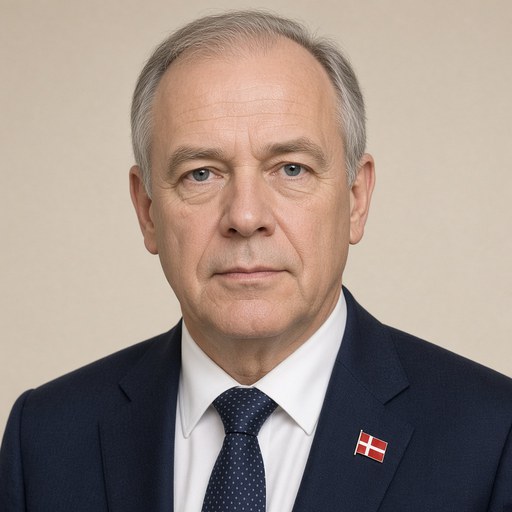
Prime Minister Poul Nyrup Rasmussen's speech from the Folketing's podium during inquiries F 51 and F 53 regarding the EMU, Tuesday, April 11, 2000.
 Poul Nyrup Rasmussen · Prime Minister of Denmark
- Context
- Rasmussen addressed the Danish Folketing on April 11, 2000, presenting the government's position during parliamentary inquiries on Denmark's upcoming EMU referendum.
- Main themes
- Danish EMU referendum, euro adoption, economic security, Denmark's international standing, national identity and Danishness, political debate quality, jobs and welfare, protection from currency speculation, social cohesion
- Duration
- ~9 min
- Words
- 1,031
- Sentences
- 41
- Readability
- 54
- Grade
- 11.9
- Syntax
- 3.20
- Vocabulary
- 2.26
Translated from Danish
The broad sphere of national life a sentence belongs to. Every sentence has an Arena, so it is the denominator the other indices are read against.
Other41 sentences in 22 paragraphs
I would like to make three overarching remarks as an introduction to the government's statement today.
The first remark is: The common currency is something we know. It is not theoretical; it is something we know. It is something that 11 countries have introduced. Therefore, it also means that the referendum we are going to have is somewhat simpler than we have been used to in recent years. It is not a thick treaty that can be debated. It is a common currency that is a reality, where the question for Denmark is: What promotes Denmark's welfare society best, a yes or a no? Inside or outside, what is best for Denmark?
My second observation is that there are four fundamental reasons that serve Denmark's future best; there are four fundamental reasons that serve Denmark's future best.
First: I am absolutely certain that the security Denmark needs for its economic progress is best achieved from within rather than from the sidelines in a side position.
Second: I am confident that the insurance we share in common with others, if we join together with others, is a 100 percent insurance against being run over by international speculation, for I do not believe anyone can argue that there will be security in the future that there will not be more international currency crises - there will naturally be - an insurance that ensures Denmark is not a small boat rocking on a large, frothing sea, but is safe and secure together in a community with others.
Third: A security for keeping the jobs we have, and the most secure basis for further developing the jobs we can get.
And finally, fourth: Something about Denmark's self-esteem, something about Denmark's international standing. Denmark can make a difference. Denmark should not sit on the sidelines. Denmark can assert itself, not as a large military power, but as a country that knows where we are headed, a country that, by virtue of its example, can inspire others, share our experiences, our good experiences - of course also our less good ones. Denmark's international standing will be stronger if we are together with others than if we are alone outside.
And then there is the fourth and final observation I would like to make today. It is a hope for a good debate leading up to September 28, a hope that our debate is good, factual, decent, based on mutual respect, and thus also a good debate that does not revolve around who is the most Danish. I have seen that there are a few debaters and parties that want to claim ownership of Danishness. I must strongly advise against that.
Several have attempted to define what Danishness really is.
Just take Halfdan Rasmussen, who in one of his poems 'Something about Heroes', and I quote, Mr. Chairman, from the fifth verse:
"There are plenty of Danish heroes, who are Danish all day and walk around tightening their belts"
..and then they shout something that I probably should not say here from the podium of the Folketing, but everyone knows the poem, end quote.
We are all Danish, and we are that all day, and no one is more Danish than others here in Denmark, and to avoid any doubt, I would like to bring forth another well-known Dane, Benny Andersen, who so beautifully in his poem about "Creation Swedes" defines what Danishness really is, and I quote from the poem "Creation Swedes":
"Is there anything as Danish as a potato? The potato comes from South America. Is there anything as Danish as the Dannebrog itself? It fell from the sky once in Estonia and resembles the Swiss flag"
It is not me saying this; it is the famous Benny Andersen, and then it comes:
"Is there anything more authentically Danish than the music to the musical Elverhøj? Composed by a German with diligent use of Swedish folk melodies."
And then comes the crucial argument in Benny Andersen's words, be careful, now it gets difficult:
"Are there any more Danish than the Danes? Descendants of the Danes, a folk tribe in Sweden, invaded our land once in the 300s, while the original Danes, the heralds, the noble and brave, but numerically inferior heralds were driven out by the grim Swedish Danes, had to wander homeless around in the Europe of that time for several hundred years, until it finally succeeded for a few thousand of these original Danes to reach Sweden and settle there under the dubious designation of Swedes."
I say this because, honestly - we all need to be here together, and we also need to be here together after September 28, and I would therefore allow myself today to express the hope that we do not hit each other over the head with the idea that those who have one viewpoint are indeed almost traitors to the country, and they are certainly not Danish, and those who have the opposite viewpoint are more Danish than the others.
Shall we not shake hands today on the understanding that we can disagree, and we have disagreed on many things, and that is fair enough, but we measure each other by the argument, we measure.
Shall we not shake hands today on the understanding that we can disagree, and we have disagreed on many things, and that is fair enough, but we measure each other by the argument, we measure each other by the way we conduct a debate, and we do not throw in each other's faces that one is more Danish than the other. We conduct a debate on a decent and factual basis; I think that would be immensely refreshing, and I believe, in fact, that the population would prefer it that way, and as I said, once again: We are all Danish, and no one is more Danish than others; we are all that and all day.
I will conclude by expressing the wish that over the coming months we can shed light on the common currency as the task we now have to relate to in a good and factual manner, and with these words, I invite you to a good debate today.
The original Danish. The tags above are read on the English translation's sentences.
Jeg vil gøre tre overordnede bemærkninger som indgang til redegørelsen for regeringen har i dag.
Den første bemærkning er: Den fælles valuta er noget, vi kender. Det er ikke noget teoretisk, det er noget, vi kender. Det er noget, 11 lande har indført. Det betyder derfor også, at den folkeafstemning, vi skal have, er noget enklere, end vi har været vant til i de senere år. Det er ikke en tommetyk traktat, der kan være diskussion om. Det er en fælles valuta, der er en realitet, hvor spørgsmålet til Danmark er: Hvad fremmer Danmarks velfærdssamfund bedst, et ja eller et nej? Indenfor eller udenfor, hvad er bedst for Danmark?
Min anden betragtning er, at der er fire grundlæggende årsager, der tjener Danmarks fremtid bedst, er fire grundlæggende det tjener Danmarks fremtid bedst.
For det første: Jeg er helt sikker på, at den tryghed, Danmark har brug for i sin økonomiske fremgang, den får vi bedst inden for i stedet for på sidelinjen i en sidepositon.
For det andet: Jeg er sikker på, at den forsikring, vi deler i fællesskab med de andre, hvis vi går sammen med de andre i fællesskab, det er en 100 pct. forsikring mod at blive rendt over ende af international spekulation, for jeg tror ikke, nogen kan mene, at der i al fremtid vil være sikkerhed for, at der ikke kommer flere internationale valutakriser - det gør der naturligvis - en forsikring, som sikrer, at Danmark ikke er en lille båd, der gynger på et stort, frådende hav, men er i sikkerhed og i tryghed sammen i et fællesskab med de andre.
For det tredje: En tryghed for at beholde de job, vi har, og det mest trygge grundlag for at videreudvikle de job, vi kan få.
Og endelig for det fjerde: Noget med Danmarks selvværd, noget med Danmarks placering internationalt. Danmark kan godt gøre en forskel. Danmark skal ikke sidde ude på sidelinjen. Danmark kan gøre sig gældende, ikke som en stor, militær magt, men som et land, der ved, hvor vi skal hen, et land, der i kraft af sit eksempel kan inspirere andre, fortælle om vores erfaringer, vores gode erfaringer - selvfølgelig også om vore mindre gode. Danmarks internationale placering vil være stærkere, hvis vi er sammen med de andre, end hvis vi er alene udenfor.
Og så er der den fjerde og sidste betragtning, som jeg gerne vil gøre i dag. Det er et håb om at få en god debat frem til den 28. september, et håb om, at vores debat er god, saglig, ordentlig, byggende på gensidig respekt, og dermed også en god debat, der ikke handler om, hvem der er mest dansk. Jeg har set, at der er enkelte debattører og partier, der vil tage patent på danskheden. Det må jeg advare meget imod.
Der er adskillige, der har forsøgt at definere, hvad danskhed egentlig er.
Tag nu bare Halfdan Rasmussen, som i et af sine digte 'Noget om helte', og jeg citerer, formand, fra femte vers:
»Der er nok af danske helte, som er danske hele dagen og går rundt og spænder bælte«
..og så råber de noget, som jeg vist ikke må sige her fra Folketingets talerstol, men alle godt kender digtet, citat slut.
Vi er alle danske, og vi er det hele dagen, og der er ikke nogen, der er mere danske end andre her i Danmark, og for at man ikke skal være i tvivl, vil jeg gerne endnu fremdrage en kendt dansker, Benny Andersen, som så smukt i sit digt om skabssvenskere definerer, hvad danskhed egentlig er, og jeg citerer fra digtet »Skabssvenskere«:
»Er der noget så dansk som en kartoffel? Kartoflen stammer fra Sydamerika. Er der noget så dansk som selve Dannebrog? Det faldt fra himlen ned engang i Estland og minder om det schweiziske flag«
Det er ikke mig, der siger det, det er den berømte Benny Andersen, og så kommer det:
»Klinger noget mere ægte dansk end musikken til syngestykket Elverhøj? Komponeret af en tysker med flittig brug af svenske folkemelodier.'
Og så kommer det afgørende argument med Benny Andersens ord, pas på, nu bliver det svært:
»Findes der nogen mere danske end danskerne? Efterkommere af danerne, en folkestamme i Sverige, invaderede vort land engang i 300-tallet, mens de oprindelige danskere, herolderne, de ædle og tapre, men talmæssigt underlegne herolder blev fordrevet af de grumme svenske danere, måtte flakke hjemløse om i datidens Europa i flere hundrede år, til det omsider lykkedes nogle få tusinder af disse urdanskere at nå op til Sverige og bosætte sig der under den tvivlsomme betegnelse svenskere.«
Jeg siger det, fordi ærlig talt - vi skal være her alle sammen, og vi skal også være her alle sammen efter den 28. september, og jeg vil derfor tillade mig i dag at udtrykke det håb, at vi nu ikke slår hinanden i hovedet med, at de, der har ét standpunkt, de er sandelig nærmest landsforrædere, og de er i hvert fald ikke danske, og dem, der har det modsatte standpunkt, de er mere danske end de andre.
Skal vi ikke give hinanden håndslag om i dag, at vi kan være uenige, og det har vi været om mangt og meget, og det er fair nok, men vi måler hinanden på argumentet, vi måler.
Skal vi ikke give hinanden håndslag om i dag, at vi kan være uenige, og det har vi været om mangt og meget, og det er fair nok, men vi måler hinanden på argumentet, vi måler hinanden på måden at føre en debat på, og vi river ikke hinanden noget i næsen om, at den ene er mere dansk end den anden. Vi fører en debat på et ordentligt og på et sagligt grundlag, det synes jeg ville være så umådelig forfriskende, og det tror jeg i virkeligheden også, befolkningen har det bedst med, og som sagt, endnu en gang: Danske er vi alle sammen, og ingen er mere dansk end andre, vi er det alle sammen og hele dagen.
Jeg vil slutte med at udtrykke ønsket om, at vi henover månederne kan få belyst den fælles valuta som den opgave, vi nu har at skulle forholde os til på en god og på en saglig måde, og med disse ord byder jeg op til en god debat i dag.