




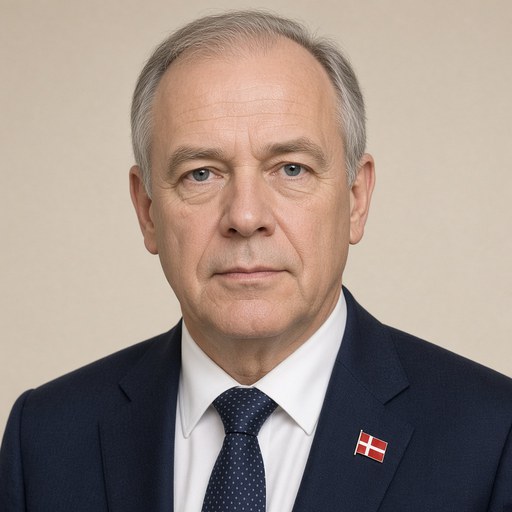
Prime Minister Poul Nyrup Rasmussen's speech at the Nordic Council's 51st Session in Stockholm on November 9, 1999.
 Poul Nyrup Rasmussen · Prime Minister of Denmark
- Context
- Rasmussen addressed the Nordic Council's 51st Session in Stockholm on November 9, 1999, outlining Denmark's Nordic Council presidency priorities for 2000.
- Main themes
- Nordic welfare state model, xenophobia and racism rejection, refugee and integration policy, democracy and human rights, fall of the Berlin Wall anniversary, Nordic cooperation, nationalism in Europe, Balkans conflict, WTO and global trade standards, violence prevention, Danish EU presidency priorities, Eastern European democratic transition
- Duration
- ~23 min
- Words
- 2,700
- Sentences
- 185
- Readability
- 38
- Grade
- 10.8
- Syntax
- 2.61
- Vocabulary
- 2.26
Translated from Danish
The broad sphere of national life a sentence belongs to. Every sentence has an Arena, so it is the denominator the other indices are read against.
Other185 sentences in 89 paragraphs
Danish Presidency for Nordic Cooperation Year 2000
'The Nordic Welfare States, Professional Insight and Human Perspective'.
* * *
Madam President, ladies and gentlemen.
The 20th century is coming to an end very soon. It has been a century marked by two terrible world wars. With unimaginable suffering.
But also with new breakthroughs for democracy and human rights in our part of the world - in Eastern Europe. A century that ends with hope and opportunities for us all. Opportunities that we have a deep political obligation to seize and help make a reality for our people and the generations that come after us.
Today marks 10 years since the fall of the Berlin Wall. A breakthrough for humanity, freedom, and democracy - for which most had worked and fought so hard - but perhaps had not believed possible.
We created a new, democratic, and free beginning for Eastern Europe. Germany was reunified. Poland, Hungary, and the Czech Republic have joined NATO. The EU is in the process of being expanded.
In 10 years, a completely new perspective has emerged - and a very strong shared responsibility to shape the future.
The Nordic societal model has never had better opportunities to make its mark on the world than now. It is now that Nordic self-awareness must be visible and clear. Not to be understood as us lecturing others in a know-it-all manner. But we must be aware of the cornerstones and values upon which our societies are built.
* * *
From within and from outside, new, strong changes have come - and will continue to come - at a rapid pace. Changes that require political - yes, Nordic - responses. Changes that require renewal.
For with the upheaval also came a downside. Nationalist undercurrents suddenly swelled as oppression disappeared. What we thought was unthinkable has become reality. We have again experienced war in Europe, in the Balkans - between peoples we thought had learned to live together.
Unfortunately, we also see other sides of nationalism in Europe these years - even in the wealthiest societies. We see parties trying to win votes on xenophobic attitudes - yes, xenophobia and tendencies to divide populations into two kinds of people.
When hatred of foreigners shows its face, we must distance ourselves and say no - not to the voters in our democracies - but to the attitudes and the view of humanity that certain parties are trying to gain electoral success on. My message today must be clear and unequivocal: Hatred of foreigners and tendencies towards racism must be clearly rejected. In our own countries. In the Nordics. In Europe. Globally.
We are fully aware that to prevent hatred of foreigners from gaining a foothold in Europe, it requires us to address the real problems. We must purposefully tackle the causes of people's concerns: Illegal immigration, the horrific human trafficking, social problems, tendencies towards violence and crime. We must focus on a good and forward-looking integration policy that can ensure even better that the people who have been granted residence in our countries can be integrated with full respect for our societies' values and equal rights and obligations.
In the program for Denmark's presidency, we propose that a Nordic Integration Prize be established - for companies or individuals who have exemplary ensured the integration of refugees and immigrants.
We emphasize that we should benefit from each other's experiences through increased exchange of experiences - and we must ensure that refugees and immigrants are best prepared for voluntary repatriation.
We must create solutions that work, and that requires action and cooperation both at home and abroad. At the EU summit in Finland last month, we also made it clear that we distance ourselves from hatred of foreigners and xenophobia. We have initiated work in a number of areas of great importance for Europe's refugee policy.
The Nordic voice can and must shape the future of refugee cooperation in Europe.
* * *
Just as clearly as we distance ourselves from xenophobic attitudes, we equally clearly distance ourselves from violence in our societies. Regardless of whether it comes from the far right or from extreme autonomous groups of young people who create fear in the population. Violence can never be a solution to anything in our societies. It must be stopped. Consistently through resolute intervention and equally consistently through prevention.
* * *
We in the Nordics are champions of human rights and humanism.
Human rights are something completely fundamental and one of the Nordic countries' crucial focal points.
Therefore, we will continue the cooperation to maintain our global leadership in relation to aid to developing countries, through the UN and bilaterally. We must also set demands on the global market and world trade in the upcoming WTO negotiations. Europe and the Nordics must now take the lead with regional leadership, so that workers' rights, environmental regulations, and bans on child labor are included in the negotiation round. We must maintain and expand our close Nordic cooperation on human rights issues - both globally in the UN, regionally in the OSCE and EU - and in the Council of Europe.
Nordic common values
We in the Nordics have chosen a societal model that rests on clear common values:
Equal rights and obligations for all who live in our countries - regardless of origin and ethnic background.
Equal opportunities regarding education, work, healthcare, cultural experiences, and a clean environment.
Social security that one can rely on.
Solidarity-based financing.
We have created societies that combine sensible public regulation with social security, safety, and a well-functioning private sector. We have built on education and skill development and a well-functioning public sector. We have created a Nordic model for the labor market that has ensured stability, growth, and employment. With rights and obligations.
It is my clear opinion that the Nordics have something to offer if we raise our ambitions and continue our close cooperation - preferably in an even more binding direction.
The Nordic welfare model
We are in the midst of the age of globalization.
The global community meets
The welfare society. From the Nordic side, we can make a difference. We can inspire others. We have shown that social security and competitiveness are not opposites, but prerequisites for each other.
And at the same time, our own societal model is also facing new challenges:
How do we maintain solidarity in our populations while placing the rights and opportunities of the individual citizen at the center?
How do we handle economic globalization?
On the one hand there are immense opportunities for growth and development.
On the other hand the enormous centrifugal force of globalization has also created a risk of new marginalization and exclusion in society.
And how do we ensure that we can continue to finance our welfare societies when a well-educated population demands more and better welfare services, while in the coming 10-15 years there will be fewer young people and more elderly in our societies?
We need solidarity-based answers - Nordic answers. The weakest and most vulnerable must never be the losers.
We have strong Nordic anchors:
We must maintain a positive economic policy that ensures continued growth in employment and creates space in the labor market for people - who have not had opportunities until now. Under the Danish presidency, we will exchange the best experiences in this regard.
We must invest in a high level of education and knowledge so that we prevent a new polarization in our societies. It is necessary to promote competence in all areas. Lifelong education and research are cornerstones in the survival of the welfare state. Areas that provide great Nordic benefits. The demands for quality and content in research are being sharpened. Therefore, Nordic cooperation on education and research is absolutely necessary. The presidency will therefore create a strengthened, cross-sector advisory structure regarding lifelong education, just as we will hold the conference 'The Nordics in the World - The World in the Nordics - the role of education in the new millennium'. Close Nordic cooperation in the IT area is in line with that effort. It is a Danish wish that we make Nordic IT cooperation a prioritized area of effort in the new century. We must create an example to follow - a Nordic IT model.
We must ensure quality in our societies. This requires prioritization, rethinking, and renewal. But we must maintain the crucial fundamental characteristic of the Nordic model: Solidarity with the weakest in society, based on cohesion, a society without group egoism and polarization. In our work program, we propose joint Nordic experience exchange on quality measurement in healthcare. We must ensure social equality in health. We therefore propose that an epidemiological study be initiated on differences in mortality and life expectancy.
We must continue to work to create a sustainable society in all areas. The Danish presidency gives high priority to promoting sustainable development in our countries and self-governing areas as well as in the neighboring areas. A clean environment is a key factor in the welfare state - a 'green' Nordics. The presidency will follow up on the prime minister's declaration from last year, so that the action plan on 'A Sustainable Nordics' can be presented at next year's session in Reykjavik. Let me, in this context - on my own behalf and on behalf of all the Nordic prime ministers - congratulate the Agenda 21 office in Åland on receiving the Nordic Council's Nature and Environment Prize. You can fully trust our care for and love for the Baltic Sea.
* * *
The neighboring areas
Madam President.
Never before have we had the opportunity to create a new whole in our region of the world. Our vision is that the Baltic Sea region - with the Baltic countries and Northwest Russia - can become the very practical proof of the inter-people solidarity that is based on freedom, democracy, and welfare.
We must therefore help create the conditions for stable democratic and economic development in our neighboring countries. All states must take on a social responsibility.
Therefore, the Danish presidency will continue and strengthen the common Nordic programs to create better conditions for children and young people in the Baltics and Northwest Russia.
Therefore, we will continue to support the development of social and human networks.
* * *
We are the ones who have created the Nordic welfare societies. And it will be us who must be the driving force if welfare, employment, and the environment are to be at the center of the Baltic Sea cooperation. There is no one else for that.
The expansion of the EU with the new democracies from Eastern Europe is our best opportunity to create peace, security, and stability in our neighboring areas.
I look forward to us being able to finally and formally decide in December this year, under the Finnish EU presidency, that Latvia and Lithuania can also be included in the first group of applicant countries. It is a breakthrough for our work - now all three Baltic countries are in the same group. It is an independent - and completely crucial - contribution to our close cooperation in the Baltic Sea region.
* * *
From the Danish side, we will actively work to ensure that the Nordic countries develop contacts to Kaliningrad, which must not be forgotten. Denmark has already made a special effort for Kaliningrad in the EU. This has led to a prominent position for the area in the EU's policy for the Northern Dimension.
We have also initiated the establishment of a Common Nordic Fund that will provide financial support for the implementation of a number of cooperation projects. This opens up great opportunities to promote inter-people understanding in the region. People to people. Human to human.
The Arctic
Under the Danish presidency, an initiative will be taken to develop a strategy for sustainable development in the Arctic - an Arctic Agenda 21. The work in the Arctic Council will be strengthened. Sustainable business development in tourism, fishing, and hunting aligns well with the priorities we have laid down in the common Nordic cooperation - not least under the Icelandic presidency.
The presidency will also - as desired by Greenland - work to establish 'an Arctic window' in the Northern Dimension.
It is also gratifying that a West Nordic project for climate research in ocean currents is now taking its final form. A project that the Faroe Islands have convincingly argued for.
Europe and the Nordics
Nordic cooperation does not stand alone. We are part of a larger community in Europe, either as members of the EU or of the EEA.
The financing of the welfare society requires high employment. Therefore, Denmark has prioritized cooperation on employment policy and working environment in the EU. The same applies to consumer policy, sustainable development, and clean energy.
The Nordic countries can make a stronger mark on European cooperation, including in the food sector. The presidency will therefore hold a conference on food safety from field/fjord to table. At the same time, we will strengthen the interplay between consumer policy and business policy and enhance consumer research in the Nordics.
* * *
In monetary policy, a new common currency has been implemented. The euro is a reality today. The currencies are locked in. Euro cooperation provides the opportunity to create a European response to international economic challenges.
It is not just a new, large currency that we now see emerging. Europe is set to become the only region in the world that combines a common currency with a strong effort for employment, for the environment, for securing human rights and respect for minorities - along with a fight for some of the fundamental welfare principles.
We must put a Nordic stamp on the economic policy that will be pursued in Europe. The opportunities are better than ever before.
* * *
We must each make our decisions in our Nordic countries regarding the relationship with the euro. But the EU and EEA area is in any case such a large cohesive economic unit that there are great advantages in cooperating and coordinating efforts. It is also in the interest of the Nordics.
* * *
There is a need for the Nordics - we can make a difference.
Madam President.
The changes we have experienced in Europe and globally over the past 10 years require continued clear political responses. There is more need for the Nordic voice - not less. The populations look forward to, dream of, and hope for the building of societies that share the best with our Nordic communities.
It is my belief that together we can do better in the Nordic region. That we can utilize each other more effectively - that we can make a stronger impact on the developments around us if we decide to do so.
Our cooperation underwent significant changes in 1995 when Sweden and Finland became members of the European Union. We initiated a renewal process with sensible results. The pace of development is so rapid that even now - five years later - there is good reason to consider whether we have found the right form and content in our Nordic cooperation.
It is therefore very useful that the Nordic cooperation ministers have established a panel of wise women and men to take on the challenge. The panel is to provide insights on Nordic cooperation on the threshold of the new century. I look forward to the panel's conclusions when it reports to the Nordic Council's 52nd session next year.
I hope it will serve as a proposal for more binding cooperation in the Nordic region. Perhaps also a cooperation that focuses on the crucial issues we find most important.
The Nordic region can make a difference in the 21st century. Therefore, there is a need for more cooperation in the Nordic region - not less.
Five swans in a flock go further than a solitary swallow.
I look forward to an exciting and challenging year - the year 2000 - for Nordic cooperation. At the same time, Iceland deserves great thanks for its excellent handling of the presidency in the past year.
The original Danish. The tags above are read on the English translation's sentences.
Dansk formandskab for det nordiske samarbejde år 2000
'De nordiske velfærdsstater, faglig indsigt og menneskeligt udsyn'.
* * *
Fru Præsident, mine damer og herrer.
Det 20. århundrede rinder ud om ganske kort tid. Det blev et århundrede mærket af to forfærdelige verdenskrige. Med ufattelige lidelser.
Men også med nye gennembrud for demokratiet og menneskerettigheder i vor del af verden - i Østeuropa. Et århundrede, der slutter med håb og muligheder for os alle. Muligheder, som vi har en dyb politisk forpligtelse til at gribe og medvirke til at gøre til en realitet for vore folk og de generationer, der kommer efter os.
Netop i dag er det 10 år siden Berlinmuren faldt. Et gennembrud for menneskelighed, frihed og demokrati - som de fleste havde arbejdet og kæmpet så hårdt for - men måske ikke havde troet mulig.
Vi fik skabt en ny, demokratisk og fri start for Østeuropa. Tyskland blev forenet. Polen, Ungarn og Tjekkiet er trådt ind i NATO. EU er i færd med at blive udvidet.
På 10 år er der skabt et helt nyt perspektiv - og et meget stærkt fælles ansvar for at forme fremtiden.
Den nordiske samfundsmodel har heller aldrig haft bedre muligheder for at sætte sit præg på omverdenen end nu. Det er nu, at den nordiske selvbevidsthed skal være synlig og klar. Ikke sådan at forstå, at vi på bedrevidende manér skal docere over for andre. Men vi skal være bevidste om de grundpiller og værdier, som vore samfund bygger på.
* * *
Indefra og udefra er der kommet - og vil der fortsat komme - nye, stærke forandringer i voldsomt tempo. Forandringer som kræver politiske - ja nordiske - svar. Forandringer som kræver fornyelse.
For med opbruddet fulgte også en bagside. Nationalistiske understrømme svulmede pludselig op, da undertrykkelsen forsvandt. Det, vi troede var utænkeligt, er blevet til virkelighed. Vi har igen oplevet krig i Europa, på Balkan - mellem folk, vi troede havde lært at leve sammen.
Vi ser desværre også andre sider af nationalismen i Europa i disse år - selv i de rigeste samfund. Vi ser igen partier forsøge at vinde stemmer på fremmedfjendske holdninger - ja, fremmedhad og tendenser til at opdele befolkningerne i to slags mennesker.
Når fremmedhadet viser sit ansigt, må vi tage afstand og sige fra - ikke over for vælgerne i vore demokratier - men over for de holdninger og det menneskesyn, som visse partier prøver at vinde vælgermæssig fremgang på. Mit budskab i dag skal være klart og entydigt: Fremmedhad og tendens til racisme må klart afvises. I vore egne lande. I Norden. I Europa. Globalt.
Vi er fuldstændig klar over, at skal vi undgå, at fremmedhadet får fodfæste i Europa, så kræver det, at vi tager fat om de reelle problemer. Vi må tage målbevidst fat på årsagerne til menneskers bekymringer: Ulovlig indvandring, den uhyggelige menneskesmugling, de sociale problemer, tendenser til vold og kriminalitet. Vi må tage fat om en god og fremadrettet integrationspolitik, som endnu bedre kan sikre, at de mennesker, der har fået ophold i vore lande, kan blive indpasset med fuld respekt for vore samfunds værdier og lige rettigheder og pligter.
I programmet for Danmarks formandskab foreslår vi, at en Nordisk Integrationspris indstiftes - til virksomheder eller privatpersoner, der på forbilledlig vis har sikret integration af flygtninge og indvandrere.
Vi påpeger, at vi skal nyde godt af hinandens erfaringer ved øget erfaringsudveksling - og vi skal sikre, at flygtninge og indvandrere forberedes bedst muligt på frivillig repatriering.
Vi skal skabe løsninger, der virker, og det kræver handling og samarbejde både hjemme og ude. På EU-topmødet i Finland i sidste måned gjorde vi også klart, at vi tager afstand fra fremmedhad og fremmedfjendskhed. Vi har sat arbejde i gang på en række områder af stor betydning for Europas flygtningepolitik.
Nordens stemme kan og skal sætte præg på fremtidens flygtningesamarbejde i Europa.
* * *
Ligeså klart vi tager afstand fra fremmedfjendske holdninger, lige så klart tager vi afstand fra vold i vore samfund. Uanset det kommer fra det yderste højre eller fra ekstreme autonome grupper af unge, som skaber frygt i befolkningen. Vold kan aldrig blive løsning på noget som helst i vore samfund. Det skal stoppes. Konsekvent ved resolut indgriben og ligeså konsekvent forebyggelse.
* * *
Vi i Norden er menneskerettighedernes og humanismens forkæmpere.
Menneskerettigheder er noget fuldstændig fundamentalt og ét af de nordiske landes afgørende omdrejningspunkter.
Derfor vil vi fortsætte samarbejdet om at fastholde vor globale lederskab i forhold til bistand til udviklingslandene, via FN og bilateralt. Vi skal også stille krav til verdensmarkedet og verdenshandelen ved de kommende WTO-forhandlinger. Europa og Norden må nu lægge sig i spidsen med et regionalt lederskab, således at arbejdstagerrettigheder, miljøbestemmelser og forbud mod børnearbejde tages med ind i forhandlingsrunden. Vi skal fastholde og udbygge vort tætte nordiske samarbejde om menneskerettighedsspørgsmål - både globalt i FN, regionalt i OSCE og EU - og i Europarådet.
Nordens fælles værdier
Vi har i Norden valgt en samfundsmodel, der hviler på klare fælles værdier:
Lige rettigheder og pligter for alle, der bor i vore lande - uanset herkomst og etnisk baggrund.
Lige muligheder med hensyn til uddannelse, arbejde, sygdomsbehandling, kulturelle oplevelser og et rent miljø.
Social tryghed man kan regne med.
Solidarisk finansiering.
Vi har skabt samfund, der kombinerer en fornuftig, offentlig regulering med social tryghed, sikkerhed og et velfungerende privat erhvervsliv. Vi har bygget på uddannelse og dygtiggørelse og en velfungerende offentlig sektor. Vi har skabt en nordisk model for arbejdsmarkedet, som har sikret stabiliteten, væksten og beskæftigelsen. Med rettigheder og pligter.
Det er min klare opfattelse, at Norden har noget at byde på, hvis vi sætter vore ambitioner højere og fortsætter vort tætte samarbejde - og helst i endnu mere forpligtende retning.
Den nordiske velfærdsmodel
Vi står midt i globaliseringens tidsalder.
Verdenssamfundet møder
Velfærdssamfundet. Vi kan fra Nordens side gøre en forskel. Vi kan inspirere andre. Vi har vist, at social sikkerhed og konkurrencekraft ikke er modsætninger, men hinandens forudsætninger.
Og samtidig står vores egen samfundsmodel også over for nye udfordringer:
Hvordan opretholder vi solidariteten i vore befolkninger, samtidig med at den enkelte borgers rettigheder og udfoldelsesmuligheder er i centrum?
Hvordan håndterer vi den økonomiske globalisering?
På den ene side
er der uanede muligheder for vækst og udvikling.
På den anden side
har globaliseringens enorme centrifugalkraft også skabt risiko for ny marginalisering og udstødning i samfundet.
Og hvordan sikrer vi, at vi fortsat kan finansiere vore velfærdssamfund, når en veluddannet befolkning efterspørger flere og bedre velfærdsydelser, samtidig med at der i de kommende 10-15 år bliver færre yngre og flere ældre i vore samfund?
Vi skal have solidariske svar - nordiske svar. De svageste og de mest sårbare må aldrig blive taberne.
Vi har stærke nordiske holdepunkter:
Vi skal fastholde en positiv økonomisk politik, der sikrer fortsat fremgang i beskæftigelsen og skaber rum på arbejdsmarkedet for mennesker - som ikke har haft muligheder hidtil. Under det danske formandsskab vil vi udveksle de bedste erfaringer herom.
Vi skal investere i et højt uddannelses- og vidensniveau, så vi forebygger en ny polarisering i vore samfund. Det er nødvendigt at fremme
kompetencen
på alle områder. Livslang uddannelse og forskning er krumtapper i velfærdsstatens overlevelse. Områder der giver stor nordisk nytte. Kravene til kvalitet og indhold i forskningen skærpes. Derfor er nordisk samarbejde om uddannelse og forskning helt nødvendigt. Formandskabet vil derfor skabe en styrket, tværgående rådgivningsstruktur vedrørende livslang uddannelse, ligesom vi vil afholde konferencen 'Norden i Verden - Verden i Norden - uddannelsens rolle i det nye årtusinde'. Et tæt nordisk samarbejde på IT-området er i tråd med dén satsning. Det er et dansk ønske, at vi gør nordisk IT-samarbejde til et prioriteret indsatsområde i det nye århundrede. Vi skal skabe et eksempel til efterlevelse - en nordisk IT-model.
Vi skal sikre kvaliteten i vore samfund. Det kræver prioritering, nytænkning og fornyelse. Men vi må fastholde det afgørende grundtræk i den nordiske model: Solidariteten med de svageste i samfundet, baseret på samhørighed, samfund uden gruppeegoisme og polarisering. I vort arbejdsprogram lægger vi op til fælles nordisk ERFA-udveksling om kvalitetsmåling i sundhedsvæsenet. Vi skal sikre social lighed i sundheden. Vi foreslår derfor, at en epidemiologisk undersøgelse iværksættes om forskelle i dødelighed og middellevetid.
Vi skal fortsat arbejde for at skabe et bæredygtigt samfund på alle områder. Det danske formandskab giver høj prioritet til fremme af en bæredygtig udvikling i vore lande og selvstyreområder samt i nærområderne. Et rent miljø er en nøglefaktor i velfærdsstaten - et 'grønt' Norden. Formandskabet vil følge op på statsministerdeklarationen fra sidste år, så handlingsplanen om 'Et holdbart Norden' kan lægges frem på næste års session i Reykjavik. Lad mig i den forbindelse - på egne vegne og på samtlige nordiske statsministres vegne - lykønske Agenda 21-kontoret på Åland med modtagelsen af Nordisk Råds Natur- og Miljøpris. Vi deler til fulde jeres omsorg for og kærlighed til Østersøen. Det kan I trygt stole på.
* * *
Nærområderne
Fru Præsident.
Aldrig før har vi haft mulighed for at skabe en ny helhed i vor region af verden. Vor vision er, at Østersøregionen - med de baltiske lande og Nordvest-rusland - kan blive selve det praktiske bevis for den mellemfolkelige samhørighed, der bygger på frihed, demokrati og velfærd.
Vi skal derfor hjælpe med at skabe forudsætninger for en stabil demokratisk og økonomisk udvikling hos vores naboer. Alle stater skal påtage sig et socialt ansvar.
Derfor vil det danske formandskab videreføre og styrke de fællesnordiske programmer for at skabe bedre vilkår for børn og unge i Baltikum og Nordvestrusland.
Derfor vil vi fortsat støtte udviklingen af de sociale og menneskelige netværk.
* * *
Det er os, der har skabt de nordiske velfærdssamfund. Og det bliver os, der må være drivende, hvis velfærd, beskæftigelse og miljø skal være i centrum i Østersøsamarbejdet. Der er ingen andre til det.
Udvidelsen af EU med de nye demokratier fra Østeuropa er vores bedste mulighed for at skabe fred, sikkerhed og stabilitet i vore nærområder.
Jeg ser frem til, at vi i december i år, under det finske EU-formandskab, endeligt og formelt kan beslutte, at også Letland og Litauen kan indgå i den første gruppe af ansøgerlande. Det er et gennembrud for vort arbejde - nu er alle tre baltiske lande i samme gruppe. Det er et selvstændigt - og helt afgørende - bidrag til vores tætte samarbejde i Østersøregionen.
* * *
Fra dansk side vil vi aktivt arbejde for, at de nordiske lande udvikler kontakterne til Kaliningrad, som ikke må blive glemt. Danmark har allerede ydet en særlig indsats for Kaliningrad i EU. Det har ført til en fremtrædende placering for området i EU's politik for Den Nordlige Dimension.
Vi har også taget initiativ til oprettelse af en Fællesnordisk fond, der skal yde økonomisk støtte til gennemførelse af en række samarbejdsprojekter. Det åbner store muligheder for at fremme den mellemfolkelige forståelse i regionen. Folk til folk. Menneske til menneske.
Arktis
Under det danske formandskab skal der tages initiativ til at udarbejde en strategi for bæredygtig udvikling i Arktis - en arktisk Agenda 21. Arbejdet i Arktisk Råd skal styrkes. En bæredygtig erhvervsudvikling indenfor turisme, fiskeri og fangst stemmer godt overens med de prioriteringer, vi har lagt til grund i det fællesnordiske samarbejde - ikke mindst under det islandske formandskab.
Formandskabet vil samtidig - som ønsket af Grønland - arbejde for, at der etableres 'et arktisk vindue' i Den Nordlige Dimension.
Det er også glædeligt, at et vestnordisk projekt for klimaforskning i havstrømme nu er ved at tage sin endelige form. Et projekt, som ikke mindst Færøerne har argumenteret overbevisende for.
Europa og Norden
Det nordiske samarbejde står ikke alene. Vi er en del af et større fællesskab i Europa, enten som medlemmer af EU eller af EØS.
Velfærdssamfundets finansiering kræver høj beskæftigelse. Derfor har Danmark prioriteret samarbejde om beskæftigelsespolitik og arbejdsmiljø i EU. Det samme gælder forbrugerpolitik, bæredygtig udvikling og ren energi.
De nordiske lande kan sætte stærkere præg på det europæiske samarbejde, bl.a. på fødevareområdet. Formandskabet vil derfor holde en konference om fødevaresikkerhed fra jord/fjord til bord. Vi vil samtidig styrke samspillet mellem forbrugerpolitikken og erhvervspolitikken samt styrke forbrugerforskningen i Norden.
* * *
I pengepolitikken er gennemført en ny fælles valuta. Euroen er en kendsgerning i dag. Valutaerne er låst fast. Euro-samarbejdet giver muligheden for at skabe et europæisk svar på de internationale økonomiske udfordringer.
Det er ikke blot en ny, stor valuta, vi nu ser vokse frem. Europa tegner til at blive den eneste region i verden, hvor man kombinerer en fælles valuta med en stærk indsats for beskæftigelsen, for miljøet, for sikring af menneskerettigheder og respekt for mindretallene - sammen med en kamp for nogle af de grundlæggende velfærdsprincipper.
Vi skal sætte et nordisk præg på den økonomiske politik, der skal føres i Europa. Mulighederne er bedre end nogensinde før.
* * *
Vi må hver for sig i vore nordiske lande træffe vore beslutninger om forholdet til euroen. Men EU og EØS-området er under alle omstændigheder så stor en sammenhængende økonomisk enhed, at der er store fordele ved at samarbejde og koordinere indsatsen. Det er også i Nordens interesse.
* * *
Der er brug for Norden - vi kan gøre en forskel.
Fru præsident.
De forandringer vi har gennemlevet i Europa og globalt i de seneste 10 år, kræver fortsat klare, politiske svar. Der er
mere
brug for den nordiske stemme - ikke
mindre. Befolkningerne ser frem til, drømmer om, håber på opbygning af samfund, der har det bedste til fælles med vore nordiske samfund.
Det er min opfattelse, at vi sammen kan gøre det bedre i Norden. At vi kan bruge hinanden bedre - at vi kan sætte stærkere præg på udviklingen omkring os, hvis vi beslutter os for det.
Vort samarbejde gennemgik store forandringer i 1995, da Sverige og Finland blev medlemmer af den Europæiske Union. Vi igangsatte et fornyelsesarbejde med fornuftige resultater. Udviklingen går så stærkt, at der allerede nu - fem år senere - er god grund til at overveje, om vi har fundet rette form og rette indhold i vort nordiske samarbejde.
Det er derfor meget nyttigt, at de nordiske samarbejdsministre har nedsat et panel af vise kvinder og mænd til at tage udfordringen op. Panelet skal komme med bud på det nordiske samarbejde på tærsklen til det nye århundrede. Jeg ser meget frem til panelets konklusioner, når det til næste år skal afrapportere til Nordisk Råds 52. session.
Jeg håber, det vil blive et oplæg til mere forpligtende samarbejde i Norden. Måske også et samarbejde, der samler sig om de afgørende spørgsmål, vi finder vigtigst.
Norden kan gøre en forskel i det 21. århundrede. Derfor er der brug for mere samarbejde i Norden - ikke mindre.
Fem svaner i flok kommer længere end en enlig svale.
Jeg ser frem til et spændende og udfordrende år - år 2000 - for det nordiske samarbejde. Samtidig skal Island have en stor tak for fornem varetagelse af formandskabet i det forgangne år.