




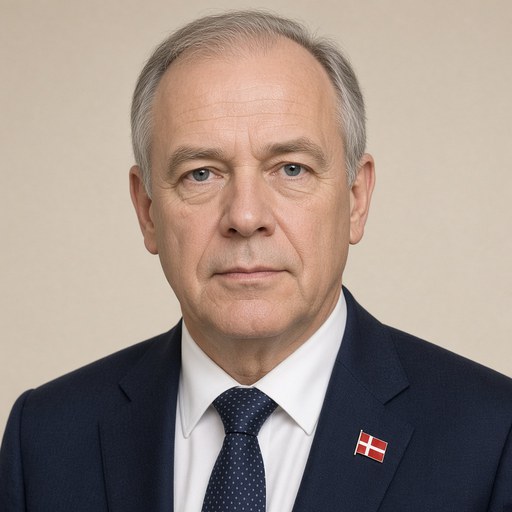
Prime Minister Poul Nyrup Rasmussen's speech at the Danish Business Investment Conference on October 12, 1999. "The Danish Way"
 Poul Nyrup Rasmussen · Prime Minister of Denmark
- Context
- Rasmussen addressed the Danish Business Investment Conference on October 12, 1999, outlining Denmark's economic and labor market achievements and future policy priorities.
- Main themes
- Danish economic model, labor market reform, unemployment reduction, active labor market policy, adult and continuing education, IT strategy, business policy, macroeconomic stability, workforce mobility, rights and obligations, tax reform, competitiveness
- Duration
- ~45 min
- Words
- 5,351
- Sentences
- 351
- Readability
- 55
- Grade
- 9.1
- Syntax
- 2.72
- Vocabulary
- 1.97
Translated from Danish
The broad sphere of national life a sentence belongs to. Every sentence has an Arena, so it is the denominator the other indices are read against.
Other351 sentences in 111 paragraphs
The Danish road is not a gilded highway where only the fastest have room. It is also not a crawl space where time stands still. It is a road that leads to progress across a broad front, because from the very beginning of our government term in 1993, we have emphasized that we lift together. Almost everyone is included, mind you, without it hindering the dynamism of our country.
'A soft country with a hard currency.'
A road where we must continue to create space for even more – for everyone. Not only because it is a good principle, and because it has always been our stance in Denmark. It is also because it is a necessary principle if businesses are to continue to secure the necessary workforce, and if the workforce is to continue to develop skills to maintain competitiveness.
* * *
So how does it look right now? When it comes to the major employment efforts since 1993, we can see that employment has not only come in the public sector. For 80% of it, it has actually come in the private sector. And it is not only the immediately employment-oriented individuals who have found work; it is actually also the long-term unemployed. And above all, it is the young people who have found work. Unemployment today is the lowest we have had in over 20 years.
This has not happened by itself. The secret behind being able to bring unemployment down so far, without serious bottleneck problems, is a combination of our active economic policy and an active labor market policy.
The implementation of the three labor market reforms has caused some unrest along the way. But I believe that the results are respected today. Not least by the people who have benefited from the reforms: The people who have found work, and the businesses that have employed them. Therefore, we do not abandon the active line, which is based on rights and obligations. Our strategy is to reach the unemployed as early as possible. We will not change that strategy.
We should also not rush into reducing unemployment benefits. That is socially and humanly completely wrong. If anyone were to do that anyway, they would encounter a reasonable demand for us to introduce very long notice periods in the Danish labor market. That is not in the interest of either employees or businesses in the modern global economy.
The combination of a satisfactory level of unemployment benefits and high educational activity, rights and obligations is the very core of understanding that Denmark has the highest mobility in the private labor market in Europe.
It can get better. It can always get better. And it can become even more targeted. It will also. We will continue to place a strong emphasis on qualifications. That is the fundamental idea upon which everything rests. The next step will be an increased effort for adult and continuing education. People need to get started earlier – even earlier than today. An inclusive labor market, a flexible labor market, and an employment-oriented tax policy. That characterizes Denmark.
Now some of you may say: Does it hold up? My answer is yes. The strategy is based on gradually easing income tax on work and finding the revenue from the environment, as has been the case in recent years. The principle of rights and obligations will be modified slightly, without us thereby running away from it. It needs to be adjusted and made more targeted to the group of people we now need to engage in the labor market. The group that has been away from the labor market the longest or perhaps never had the chance to enter the labor market.
* * *
Next, if we take the general economic situation, we have received an AAA rating from an international credit rating agency. That is the highest rating one can receive. It is an expression that our strategy has largely succeeded, and it is also an expression that we have a good foundation to move forward.
So how do we move forward? Yes, we must continue our reform work. Develop our political, professional, and business responses to future challenges. We have, among other things, implemented two comprehensive tax reforms in the last 6-7 years, three labor market reforms, a early retirement reform, and an energy reform.
The next two major political exercises are the adult and continuing education effort and the IT strategy. These are the two areas, along with business policy, that I would like to comment on today.
We do not have a small niche in the government's policy called business policy. The government's business policy is based on three pillars: Macroeconomic policy, i.e., general economic policy, structural policy, and general business policy.
We have already seen the grades for macroeconomic policy. The three A's are supported by an A in inflation control, an A in the economy with a surplus in public finances and control over the balance of payments, and an A when it comes to the interaction between the public and private sectors. Structural policy lies ahead of us. Therefore, let me elaborate a bit on our thoughts regarding business policy.
Business policy is framed by an intense inter-ministerial effort that has now been initiated. I expect that the results of this work can be presented at a government seminar in February. The Minister of Business will, during the process, reach out to representatives of the business community to ensure that all viewpoints are heard.
The business strategy that we are developing is based on six main areas: First: Education, research, and development. IT.
Second: Capital for businesses, especially for entrepreneurs and smaller companies that need risk capital.
Third: A new competition law. Competition and consumer interests must weigh more heavily.
Fourth: Better global opportunities for smaller companies. We are working towards a streamlined export promotion system, a streamlined export service.
Fifth: The social and environmental responsibility of companies.
Sixth: A number of administrative simplifications. The latter includes a checklist for business services.
And then to the dimensioning of the adjustments in the business sector and the interaction with the public sector. The costs of businesses consist primarily of wage costs. From 1993 to the year 2000, wage costs increased by 34%. The legally mandated costs have only increased by a couple of percent.
I mention this to keep the proportions in mind when we discuss the cost elements in the competitiveness of businesses. Our decisive competitive strength does not lie in price per unit or per kilo. It lies in innovation capacity and the ability to translate knowledge into practical production. The ability to deliver high quality, a high just-in-time adaptability, a high general adaptability, primarily among employees and management. And for management, especially a crucial responsibility for and ability to make quicker decisions and think strategically.
Regarding the administrative hassle, we will continue to push to develop our business service concept and eliminate a number of fees, as is also indicated in the government's legislative catalog. Otherwise, it concerns research and development, development contracts between researchers and businesses, innovation, and capital acquisition.
If we look a little closer, there should also be a few words about environmental responsibility, educational responsibility, and social responsibility.
The driving idea and force of our society is the collaboration between businesses, trade unions, employees, the state, and the government. Companies have already shown their environmental responsibility. In a number of areas, we see that the environmental development of companies makes them frontrunners compared to their European competitors. Our experiences, for better or worse, actually mean that many companies are ahead in competitiveness in an increasingly strong and environmentally conscious Europe.
We can be completely sure that environmental requirements in the internal market will become increasingly intense. And it won't be long before we see this in the WTO negotiations when the World Trade Organization takes on its next round late this autumn.
At the EU summit in Cologne, I actually managed to get a number of demands included. Now we must see if it has an impact on a global scale. I have no doubt that the environment will be high on the agenda in global competition. Therefore, it is incredibly important that we, also regarding working conditions, assert ourselves more strongly than before.
Regarding companies' educational responsibility, I would like to mention adult and continuing education. This will be a difficult issue. There are good organizations that will take care of their interests. I hope that we can find a good balance between the responsibilities of companies and the public sector, so that both parties – together with the organizations of employees – can collaborate on modernizing the educational effort.
We all need to lift a little more. Companies also need to lift a little more. The social responsibility of companies is probably one of the most challenging aspects to make work. And we also in the state and in municipalities struggle to make it work. It is about trying to find space for those people who are not 100% efficient but can still make an effort. We have plenty of good models and good experiences, especially from large companies. But we should aim to take a step further. Because it is indeed better that people can make an effort – big or small – than that we simply give them a check and ask them to stay away. Buy your beer, buy a dog, pet the dog, and clap! That won't do anymore! We must find a way forward on the constructive path.
How is Danish society actually geared for the future? From the World Economic Forum and from Davos, we have reports from a number of young business leaders who have tried to assess: How adaptable are the Western societies really? Whether we take the World Economic Forum, IMD, Børsen's News Magazine, or the Future of Readiness Index, Denmark stands 'quite nicely.'
We stand quite nicely, and we have a good foundation for the 21st century. I say this without implying that we should rest on our laurels. We also have some problems. We have some current issues with competitiveness. The cost increases are a bit too high. That should certainly not be underestimated. It should not be downplayed either. But it should not overshadow the realities: That we have had strong growth in employment in the private sector, that earnings are good, that the buildup of equity and solidity has improved, stock prices are higher, and the number of bankruptcies is at a low. Things are going better than we have seen in a long time, even when we look at the KFX index.
But as I said: We will not rest on our laurels; we must move forward. Therefore, we have a number of new initiatives underway.
First, one should not underestimate the significant demands on us to make labor market reform 3 work. You can see it in the regional labor market policy. You can see it in the local community; there is much to be done here. The implementation is far from complete. It has only just begun.
Second, we have a new early retirement scheme that will take effect from July this year, and third, the Pentecost package also needs to be implemented. Macroeconomically, there is much to suggest that the Pentecost package is functioning according to the overarching goals we had.
For the opposition, it is of course easy to make counter-offers. We all know that. There has been no shortage of unfounded checks from the opposition over the summer!
But the government maintains its course. And the crucial thing is that we still recognize that we are on the right track. Now it is about moving forward with the next big step.
The first crossroads we now face is our ability to make long-term decisions. There are sometimes in life – in one's own life, but also in Danish history – moments when one must be completely clear about the magnitude of the problems we need to address.
I will allow myself today to place the euro and information technology on par with two other passages in our history. When we had severe economic crises in Denmark in the 1920s and 1930s, we made some principled decisions to develop our welfare state and welfare society.
'Welfare or chaos' – to put it bluntly. We wanted to develop the public sector alongside the private – not in opposition to the private. We wanted to lift each other in an exciting new interaction, and we actually succeeded!
We had the courage to hold on to the long lines of society. In the late 1960s and early 1970s, we were again in a situation where we made a new, significant, and very decisive decision for Danish society. We said yes to European cooperation in 1972, and that has proven to be very crucial for us.
Here at the turn of the millennium, we now face two new, major, and decisive decisions: First, the euro, which I will return to, and second, information technology, which I would like to dwell on a bit.
Anyone can say yes to IT. It is modern, and it is certainly important, many seem to think. But very few realize what it really is that we are talking about. And how important it is that we approach it as a strategic task that can only be solved if we all choose a coherent, common strategy. One could almost speak of a new world order.
The new economic world order that information technology lays the groundwork for is about internet commerce, electronic marketing, and intensified competition. It will significantly change the daily worldview for even the most advanced companies in Denmark.
Let me give a couple of examples:
Nowadays, if one wants to capture market share around the world, one either thinks of having a subsidiary here or there, a joint venture here or there – or in some other way being present. One also naturally thinks about protecting one's home market.
Here we are, standing at the great new crossroads: Trade in e-commerce and the next generation of IT leaps will completely change the global landscape. We will be able to trade goods, knowledge, products, and innovation on the Internet, along with the associated decision-making pathways. We will be in direct global competition. A knowledge economy will develop on the business side, which will be unparalleled in our history.
In a way, one could say that the world has truly become a global market economy. I am not saying that this will happen today or tomorrow, but I am saying that it will come with greater speed than we had actually realized. It presents great opportunities, but it also poses significant challenges for us. Electronic marketing creates its new markets, but also its new dimension in competition. New markets, new products, new services, new information pathways, new communication methods, and new opportunities for enlightenment and education. The new intensified competition demands adaptability and requires colossal retraining and updating of our way of leading, our way of managing, and our way of making decisions.
My feeling right now is that we are lagging a bit behind. Now I am talking about the whole. We are in the process of benchmarking in the government. My feeling is that we are falling behind in Danish society. We still have time, but we do not have much time. We have just enough time to take a series of initiatives together and do it wisely. Therefore, the government is placing a strong emphasis on information technology in the coming period. Based on the work that has been initiated regarding digital Denmark, we will develop a new coherent strategy. We are currently building a new IT lighthouse in Amager in the form of the IT Academy, where we have the opportunity to build service offerings.
A little further down the line are the cornerstones of Danish IT policy: Information technology must be made accessible and be for everyone. We should not divide society into those who can and have – and those who cannot and do not have. Therefore, it is necessary to have:
a future-proof education system,
a flexible public sector with systematic and increasingly extensive use of IT, and adaptable companies in a modern, high-tech society.
And precisely this modern high-tech society must still be a welfare society, built on the same values that we have relied on all these years, but which makes proactive use of the new information technology.
But there is room for more lighthouses than the one we are currently building in Amager in the form of the IT Academy. Our ambition is actually to start Denmark's first network society within the next year, where citizens, businesses, and the public sector can utilize information technology. The network society should be located somewhere in Denmark where the IT potentials are already at their peak. In other words, I envision a region where we say, this is where we start with what we want to achieve for the rest of Denmark.
* * *
At the business level, we need to stimulate small businesses and their opportunities to raise capital. Let me dwell a bit on access to capital.
Businesses have different capital needs at their various stages along the way:
In the earlier phase, there is a need for capital, often from the informal part of the capital market: The private, individual investors in the startup phase, as we see it today. Sometimes we also see institutional investors getting involved already in the startup phase.
In the slightly later phase, it is the banks and development companies that are on the verge of stepping in.
Then come the 'heavyweights' a bit later, if I may call it that: The banks, pension funds, ATP, and LD, but again, with variations a bit earlier in the process.
Finally, it is the stock exchange that comes in when it comes to other financing.
The government is currently looking at barriers to risk capital. We would like to help remove even more barriers to ensure that risk capital can flow in. This, of course, also applies to pension savings, including ATP and LD.
What barriers am I talking about here?
First, there is asymmetric information: The fact that people know different things. Different knowledge about the project between the entrepreneur and the investor is often not as it should be. Ideally, there should be a high level of information and preferably not too much difference and asymmetry between the entrepreneur and the investor.
The second is uncertainty about the project's further progress. Who will take over in the next phase if we step in now? We also need to help each other with that. What is the next capital financing step if we now enter the startup phase?
And finally, conflicts of interest between daily management and shareholders. I know that this is not something that can be solved once and for all, but we should at least be aware of this among public initiatives.
What public initiatives can be taken to create a more efficient market for risk capital?
First: The Growth Fund. It was established in 1992 with a state capital of 2 billion DKK. It can and should co-finance development projects in both new and existing businesses.
Second: Innovation funds. We would like to expand the Growth Fund's area of work. The Growth Fund can now inject capital into time-limited innovation funds that can contribute risk capital and expertise in the early phases of project development. The idea is that the innovation funds are established together with private investors who must contribute at least 1/3 of the total capital. After the innovation fund's term, for example, after 10 years, the profits are distributed between the Growth Fund and the private investors.
Next is to develop the scheme for development companies. We aim to develop the venture market in Denmark. Development companies can contribute new capital and at the same time provide expertise, create business plans, and assemble boards – of course, for negotiation purposes. Here we will provide a state loss guarantee of 50%. The scheme was established in 1994 and was incorporated into the Growth Fund in 1999. Let us use it and let us use it even more offensively in our mutual interest.
Third: In the Parliament, there is something called Mezzanine. It is a middle layer. On the capital side, the term covers a middle ground between loan financing and equity. Companies do not have to relinquish influence, and the loans do not require additional security. They are suitable for financing growth and development in specific situations. Mezzanine capital is on the rise. May I just mention that since the beginning of 1997, we have lent more than 300 million DKK to 60 companies – a development that continues, and which we expect to rise to 400 million here in 1999.
Fourth – and here is something I would like to emphasize. It is business development associations. These are intermediaries for investments in the undergrowth of Danish companies. Investors come together in business investment associations to spread the risk. In the old days, and it is not that long ago, the associations could only invest up to 10% in unlisted shares. May I remind you that since 1998, that limit has been completely removed. Now one can go in and cover 100% in unlisted shares. I mention this because I often encounter surprise that this is now possible. I would like to encourage creativity here: Both institutional investors and other investors can come together and lift companies – also with risk diversification and with a coverage of capital needs that is much greater than before.
Fifth, we have the authorized marketplaces: The alternative stock exchanges for small and medium-sized enterprises. The first was established in June this year, and another is on the way.
I would like to say that our goal for venture capital here in Denmark is to reach the same level as the Netherlands. The Netherlands is in a situation where their venture capital market covers 1 percent of GDP. This corresponds in Denmark to about 10 billion DKK. We would like to see this as a goal we could set for ourselves. We currently have a venture market of about 1/3 of that market. I believe we have good opportunities to reach it. And it is absolutely necessary according to my arguments from before.
Pension savings in Denmark is a very crucial factor for strategic thinking. Total private savings follow the economic cycles in a very specific way.
The institutionalized savings are the stable factor of society. It is what ensures that we always – if we are clever enough to make it flexible – have financial access, even in periods of recession. We can still do this even better. A higher degree of trust in each other means that we have a great opportunity to long-term finance our strategy even more than before.
The growth of pension assets in Denmark is moving forward quite robustly. In 1980, pension assets accounted for about 30% of GDP, and in 1998 we are up to 90%, and one day we will go even further. Do not be afraid of that. These are actually reasonable, professional partners who have the same fundamental goals for the future of our society.
I would like to make a couple of remarks about ownership. Some believe that it does not matter who owns our companies. Whether they are Danish-owned or foreign-owned, it is irrelevant. We compete on the best.
One could argue that. But conversely, I would point out the advantages associated with national Danish ownership. And thus provide an answer to whether ownership of Danish companies should, to the greatest extent possible, be retained in Denmark. Let me clarify that the interest in Danish companies does not mean that foreign companies are unwelcome in Denmark – far from it! They are welcome, and they are here!
Let me also clarify that investors should always follow three tracks: Ensure the highest return, ensure that there is a reasonable security for the money, and ensure a long-term real return that looks reasonable.
That is precisely why I say: There are indeed some advantages that we must not forget when investing in Danish jobs.
These are the fundamental arguments for Danish-owned jobs in Denmark:
There are the Danish norms and values.
There are decision-making centers located in Denmark, and it is never an advantage for a Danish society that decision-making centers in other countries should make strategic decisions for Denmark.
When it comes to research and idea development in Denmark, I am also quite sure that there is a certain correlation between a national decision-making center in one's corporate structure and the research and idea development that takes place in our country.
When it comes to the long-term investments' dependence on a number of considerations, one has a good partner in the institutional investor in Denmark, who does not get thrown off course just because there is a year where things may not go perfectly, but who looks at the long-term development trends.
Finally, reconstructions should not be taboo. I can see that it has blown a bit over the various investors. But I belong to those who, for example, would point out that we would hardly have seen VESTAS as such a large and dynamic company if there had not been visionary people, at the right time, who said: OK, we think this is a good idea. We think these are enterprising and skilled people who are ready to make an effort. We would like to help finance that.
I believe that it is indeed possible for us to help each other think long-term, act long-term, and be resilient. We are on the right track. Now it is just a matter of maintaining it.
That is why you have also seen that we have implemented a number of relaxations in the investor rules. The Pentecost package has meant a lot, and the easing of the stock investment ceiling has meant a lot. Let us now use the new opportunities wisely.
* * *
Now to the European side of the matter, which I will conclude with. What we see in Europe right now is of great importance to Denmark. When we today have unemployment in Europe of 17-18 million people, it is not due to 'too much EU,' but 'too little EU.' In the 1970s, we experienced two setbacks due to the two oil crises. How we have long lacked a well-thought-out, strategic, and well-organized cooperation on what we do when our part of the world faces 'external shocks.' Now we know enough about our mutual economic interdependence – and we can hopefully act a bit more wisely across borders than back then.
Denmark is in a special situation. Our employment and business rates for men and women are the highest in Europe.
But let us, as a small thought experiment, imagine that the other countries reach the same employment rates for men and women that we have in Denmark. I believe they are on their way to that because women in Europe now want to work. It is in the cards, it is in the equality work. Then it would mean that 30 million new jobs would be created in Europe. I say this to raise a signal about how much dynamic force is at play if we are smart and understand how to exploit the new opportunities.
It pays to cooperate. If we consider each country separately, we know that 1/3 of a country's production comes from abroad or is exported. Each country is therefore dependent on the outside world on average by 1/3 – it can be a bit larger, it can be a bit smaller.
If we take the EU as a whole, and look at how the European Union as a whole is, then an interesting new realization is emerging. We have been talking about it in Denmark for many years, but now it is spreading in Europe. It turns out that the internal market in Europe - Europe's home market - only has a trade relationship with the outside world of 7-8 percent. This tells us that the mutual internal dependence in the EU's internal market is much greater than we think. It also indicates that our degrees of freedom to work together and lift ourselves up are much greater than we believe. This tells us that we have a potential that is quite large. On our investment side, on our education side, and on our growth side. This is, of course, what we very much want to influence.
Thus, I am moving towards the euro: Is this something we should say yes or no to? I believe we should say yes. Let me briefly try to justify why.
In the past, Denmark faced three major currencies: the American dollar, the German D-mark, and the Japanese yen. In the past, when the German Bundesbank raised or lowered interest rates, we had about 30 seconds to adjust in Denmark. But with the new euro, we are no longer facing the dollar, the yen, and the D-mark; we are facing the euro. Now we have about 14 seconds to adjust to it!
The difference is that we have the opportunity to sit at the table in the European Central Bank, which we, as you know, did not have in the German Bundesbank.
If we say yes to the euro, we have the opportunity to shape European society with the strategy I tried to develop just before. The difference is, of course, primarily that saying yes to the euro gives Denmark and Danish companies stability. It gives society security against external speculation at unfortunate times. The difference is to give companies better competitiveness, save on insurance costs and exchange costs, and gain access to and participate in a market that is much more dynamic.
* * *
For me, the period leading up to the referendum we will soon embark on should be used to develop the reasonable arguments for Denmark's Yes.
Let me summarize the picture for the euro: It is not just a technical project. It is an economic project, and it is a political project. It is a question of having a place where one can exert influence. I do not like that others make decisions about our country if we cannot be part of it ourselves.
It is also a question of standing up to the liberal market and speculation pressure. In 1998, Portugal, Italy, Spain, and France were exempt. They were on their way into the euro. Denmark was not exempt. I will not go into what it cost us in currency reserves – they have come home again. But Denmark was not exempt! The other countries were exempt.
Therefore, our answer is that the euro issue is not just a currency that competes with the dollar. It is much more than that. It is a common currency for the most dynamic home market in the world. It is a common currency for a market with minimum requirements in the environmental area and in the employment area. It is a common currency for a region that respects human rights and minorities. Thus, it is also – from a political perspective – a region that can take on 'global social leadership', where we will try to spread our ideas in practice and create a global market on fair competitive terms on a human basis that we ourselves find reasonable.
It is that simple, and yet so difficult to achieve. Therefore, it is important that the population has the opportunity to think carefully.
At some point, a conclusion must be drawn. It is up to us to cast off the chains we impose on ourselves. And it is up to us to make some reasonable decisions together. If we do that, the world lies open before us. The choice is ours.
* * *
Thank you.
The original Danish. The tags above are read on the English translation's sentences.
Den danske vej er ikke en forkromet motorvej, hvor der kun er plads til de hurtigste. Det er heller ikke et krybespor, hvor tiden står stille. Det er en vej, der fører til fremgang over en bred front, fordi vi fra starten af vor regeringsperiode i 1993 har lagt vægt på, at vi løfter i flok. Næsten alle er med, vel at mærke uden at det hæmmer dynamikken i vores land.
'Et blødt land med en hård valuta.'
En vej, hvor vi skal fortsætte med at skabe plads til endnu flere – til alle. Ikke alene fordi det er et godt princip, og fordi det altid har været vor holdning i Danmark. Det er også, fordi det er et nødvendigt princip, hvis erhvervslivet fortsat skal sikres den nødvendige arbejdskraft, og hvis arbejdskraften fortsat skal dygtiggøre sig for at bevare konkurrenceevnen.
* * *
Hvordan ser det så ud lige nu? Når det gælder den store beskæftigelsesindsats siden 1993, kan vi se, at beskæftigelsen ikke alene er kommet i den offentlige sektor. For 80% vedkommende er den faktisk kommet i den private sektor. Og det er ikke alene de umiddelbart beskæftigelsesorienterede mennesker, der er kommet i arbejde, det er faktisk også de langtidsledige. Og det er frem for alt de unge mennesker, der er kommet i arbejde. Arbejdsløsheden er i dag den laveste, vi har haft i over 20 år.
Det er ikke kommet af sig selv. Hemmeligheden bag det at kunne få arbejdsløsheden så langt ned, uden alvorlige flaskehalsproblemer, er en kombination af vores aktive økonomisk politik og en aktiv arbejdsmarkedspolitik.
Gennemførelsen af de tre arbejdsmarkedsreformer har givet uro undervejs. Men jeg tror, at resultaterne i dag respekteres. Ikke mindst af de mennesker, der har nydt godt af reformerne: De mennesker der er kommet i arbejde, og det erhvervsliv der har fået mennesker i arbejde. Derfor opgiver vi ikke aktiv-linien, der bygger på rettigheder og pligter. Vores strategi er, at få fat i de arbejdsløse så tidligt som muligt. Den strategi skifter vi ikke ud.
Vi skal heller ikke kaste os ud i at sætte dagpengeydelserne ned. Det er socialt og menneskeligt helt forkert. Hvis nogen ville gøre det alligevel, så ville man komme ud for et forståeligt krav om, at vi måtte indføre meget lange opsigelsesvarsler på det danske arbejdsmarked. Det er hverken lønmodtagerne eller virksomhederne tjent med i den moderne, globale økonomi.
Kombinationen af et tilfredsstillende dagpengeniveau og høj uddannelsesaktivitet, rettigheder og pligter er selve kernen til forståelsen af, at Danmark har Europas højeste mobilitet på det private arbejdsmarked.
Det kan blive bedre. Det kan det altid. Og det kan blive endnu mere målrettet. Det bliver det også. Vi vil fortsat lægge hovedvægt på kvalifikationer. Det er den grundidé, som det hele beror på. Næste træk bliver en øget indsats for voksen- og efteruddannelse. Folk skal tidligere i sving – endnu tidligere end i dag. Et rummeligt arbejdsmarked, et fleksibelt arbejdsmarked og en beskæftigelsesorienteret skattepolitik. Det kendetegner Danmark.
Nu vil nogen af jer sikkert sige: Holder det nu? Mit svar er ja. Strategien bygger på, at vi gradvist skal lempe indkomstskatten på arbejde og finde provenuet på miljøet, sådan som det har været tilfældet i de senere år. Princippet om rettigheder og pligter vil blive modificeret lidt, uden at vi dermed løber fra det. Det skal tilpasses og gøres mere målrettet til den gruppe af mennesker, vi nu skal have i sving på arbejdsmarkedet. Den gruppe, der har været væk længst tid fra arbejdsmarkedet eller måske aldrig fik chancen for at komme ind på arbejdsmarkedet.
* * *
Tager vi dernæst den generelle økonomiske situation, så har vi af et internationalt kreditvurderingsinstitut fået karakteren AAA. Det er den højeste karakter, man kan få. Det er udtryk for, at vores strategi i høj grad er lykkedes, og det er også udtryk for, at vi har et godt afsæt for at komme videre.
Hvordan kommer vi så videre? Ja, vi må fortsætte vores reformarbejde. Udvikle vores politiske, faglige og erhvervsmæssige svar på de fremtidige udfordringer. Vi har bl.a. gennemført to omfattende skattereformer i de sidste 6-7 år, tre arbejdsmarkedsreformer, en efterlønsreform og en energireform.
De to næste store politiske øvelser er voksen- og efteruddannelsesindsatsen og IT-strategien. Det er disse to områder samt erhvervspolitikken, jeg godt vil knytte nogle bemærkninger til i dag.
Vi har ikke en lille niche i regeringens politik, der hedder erhvervspolitik. Regeringens erhvervspolitik bygger på tre søjler: Makropolitikken, dvs. den generelle økonomiske politik, strukturpolitikken og den generelle erhvervspolitik.
Makropolitikken har vi allerede set karaktererne på. De tre A’er er jo båret af et A på inflationsbekæmpelsen, et A på samfundsøkonomien med overskud på de offentlige finanser og styr på betalingsbalancen, og et A når det gælder samspillet mellem den offentlige- og private sektor. Strukturpolitikken ligger i kortene foran os. Lad mig derfor omkring erhvervspolitikken prøve at uddybe vores tanker lidt.
Erhvervspolitikken bliver sat i ramme af et intenst tværministerielt arbejde, der nu er sat i gang. Jeg forventer, at resultatet af arbejdet kan præsenteres på et regeringsseminar i februar. Erhvervsministeren vil undervejs i processen tage kontakt til erhvervslivets repræsentanter, så vi er sikker på, at alle synspunkter bliver hørt.
Den erhvervsstrategi, som vi har i støbeskeen, bygger på seks hovedområder: For det første: Uddannelse, forskning og udvikling. IT.
For det andet: Kapital til erhvervslivet, især til iværksættere og mindre virksomheder, der har brug for risikovillig kapital.
For det tredje: En ny konkurrencelov. Konkurrence- og forbrugerhensynet må veje stærkere.
For det fjerde: Bedre globale muligheder for mindre virksomheder. Vi arbejder på at nå frem til et enstrenget eksportfremmesystem, en enstrenget eksportservice.
For det femte: Virksomhedernes sociale og miljømæssige ansvar.
For det sjette: En række administrative forenklinger. Det sidste gælder bl.a. en checkliste til erhvervsservice.
Og så til dimensioneringen af erhvervslivets tilpasninger og samspillet med den offentlige sektor. Erhvervslivets omkostninger består først og fremmest af lønomkostninger. I perioden fra 1993 til år 2000 er lønomkostningerne steget 34 %. De lovbestemte omkostninger er kun steget et par procent.
Jeg siger dette for at have proportionerne med, når vi diskuterer omkostningselementerne i erhvervslivets konkurrenceevne. Vores afgørende konkurrencekraft ligger ikke i pris pr. enhed eller pr. kilo. Den ligger i innovationsevne og i evnen til at omsætte viden i praktisk produktion. Evnen til at levere en høj kvalitet, en høj just-in-time tilpasningsevne, en høj generel tilpasningsevne, først og fremmest blandt medarbejderne og ledelse. Og for ledelsen især et afgørende ansvar for og evne til at træffe hurtigere beslutninger og tænke strategisk.
Omkring det administrative bøvl i øvrigt vil vi fortsat mase på for at udvikle vores erhvervsservicekoncept og afskaffe en række gebyrer, sådan som det også fremgår af regeringens lovkatalog. Ellers drejer det sig om forskning og udvikling, udviklingskontrakter mellem forskere og erhvervsliv, innovation og fremskaffelse af kapital.
Hvis vi går lidt tættere på, så bør der også fald et par ord om miljøansvaret, uddannelsesansvaret og det sociale ansvar.
Vores samfunds bærende idé og kraft er samarbejdet mellem erhvervsliv, fagbevægelse, lønmodtagere, staten og regeringen. Virksomhederne har allerede vist deres miljøansvar. På en række felter ser vi jo, at virksomhedernes miljøudvikling gør dem til foregangsvirksomheder i forhold til de europæiske konkurrenter. Vores erfaringer på godt og ondt gør i virkeligheden, at mange virksomheder er foran i konkurrencekraft i et Europa, der bliver stadigt stærkere og mere miljøbevidst.
Vi kan være fuldstændig sikre på, at miljøkravene på det indre marked bliver stadigt mere intense. Og der går såmænd ikke så lang tid, før vi ser det i WTO-forhandlingerne, når verdenshandelsorganisationen sent i efteråret tager fat på sin næste runde.
På EU-topmødet i Köln lykkedes det mig faktisk at få en række krav ind. Nu må vi så se, om det slår igennem på globalt plan. Jeg er ikke i tvivl om, at miljøet kommer til at stå højt på dagsordenen i den globale konkurrence. Derfor er det utroligt vigtigt, at vi, også når det gælder arbejdsmiljøet, markerer os stærkere end hidtil.
Omkring virksomhedernes uddannelsesansvar vil jeg nævne voksen- og efteruddannelsen. Det bliver en vanskelig sag. Der er gode organisationer, der nok skal varetage deres interesser. Jeg håber, at vi kan finde en god balance mellem virksomhedernes ansvar og det offentliges ansvar, som gør, at begge parter – sammen med lønmodtagernes organisationer – kan gå sammen om en modernisering af uddannelsesindsatsen.
Vi skal alle sammen løfte lidt mere. Virksomhederne skal også løfte lidt mere. Virksomhedernes sociale ansvar er nok noget af dét, der er sværest at få til at fungere. Og vi har også i staten og i kommunerne svært ved at få det til at fungere. Det drejer sig om at prøve at finde plads til de mennesker, der ikke er 100 % effektive, men som alligevel kan gøre en indsats. Vi har masser af gode modeller og gode erfaringer. Især fra de store virksomheder. Men vi skulle gerne nå et skridt længere. For det er altså bedre, at mennesker kan gøre en indsats – stor eller lille – end at vi bare spiser dem af med en check, og ellers beder dem om at holde sig væk. Køb dine øl, køb en hund, klap hunden og klap i! Det går ikke længere! Vi må se at komme videre ad den konstruktive vej.
Hvordan er det danske samfund egentlig gearet til fremtiden? Fra World Economic Forum og fra Davos har vi meldinger fra en række unge erhvervsledere, som har prøvet at vurdere: Hvor omstillingsparate er egentlig de vestlige samfund? Uanset vi tager World Economic Forum, IMD, Børsens Nyhedsmagasin eller Future of Readiness Index, så står Danmark 'ganske pænt.'
Vi står ganske pænt, og vi har et godt afsæt til det 21. århundrede. Det siger jeg, uden at jeg dermed lægger op til, at vi skal hvile på laurbærrene. Vi har også nogle problemer. Vi har nogle aktuelle problemer med konkurrenceevnen. Omkostningsstigningerne er lidt for høje. Det skal bestemt ikke undervurderes. Det skal heller ikke bagatelliseret. Men det skal heller ikke skygge for realiteterne: At vi har haft en kraftig vækst i beskæftigelsen i den private sektor, at indtjeningen er god, at opbygningen af egenkapital og soliditet er forbedret, aktiekurserne er højere og antallet af konkurser er i bund. Det går bedre, end vi har set længe, også når vi ser på KFX-indekset.
Men som jeg sagde: Vi vil ikke hvile på laurbærrene, vi skal videre. Derfor har vi en række nye initiativer undervejs.
For det første skal man ikke undervurdere, at det stiller store krav til os, at få arbejdsmarkedsreform 3 til at fungere. I kan se det i den regionale arbejdsmarkedspolitik. I kan se det i lokalsamfundet, der er meget at gøre her. Indfasningen er langt fra færdig. Den er først lige begyndt.
For det andet har vi en ny efterløn, der skal fungere fra 1. juli i år, og for det tredje skal Pinsepakken også køres ind. Makroøkonomisk tyder meget på, at Pinsepakken fungerer efter de overordnede målsætninger, vi havde.
For oppositionen er det naturligvis let at byde over. Det ved vi godt alle sammen. Det har ikke manglet på dækningsløse checks fra oppositionen hen over sommeren!
Men regeringen fastholder kursen. Og det afgørende er, at vi alligevel erkender, at vi er på ret spor. Nu gælder det om at komme videre med det næste store træk.
Den første skillevej vi nu står foran er vores evne til at træffe langsigtede beslutninger. Der er nogle gange her i livet – i ens eget liv, men også i Danmarkshistorien - hvor man skal gøre sig fuldstændig klart størrelsesordenen på de problemer, vi skal løfte.
Jeg vil tillade mig i dag at sætte euroen og informationsteknologien på niveau med to andre passager i vores historie. Da vi i tyverne og trediverne havde voldsomme økonomiske kriser i Danmark, traf vi nogle principbeslutninger om at ville udvikle vores velfærdsstat og velfærdssamfund.
'Velfærd eller kaos' - sat på spidsen. Vi ville udvikle den offentlige sektor sammen med den private – ikke i modstrid med den private. Vi ville løfte hinanden i et spændende nyt samspil, og det lykkedes faktisk!
Vi havde modet til at holde fast i samfundets lange linier. I slutningen af 60’erne og starten af 70’erne var vi igen i en situation, hvor vi traf en ny, stor og meget afgørende beslutning for det danske samfund. Vi sagde ja til det europæiske samarbejde i 1972, og det har vist sig siden at være meget afgørende for os.
Her ved årtusindeskiftet står vi nu over for to nye, store og afgørende beslutninger: For det første euroen, som jeg vil komme tilbage til, og for det andet informationsteknologien, som jeg godt vil opholde mig lidt ved.
Alle kan jo sige ja til IT. Det er moderne, og det er sikkert også vigtigt, synes mange at tænke. Men det er de færreste, der gør sig klart, hvad det egentlig er, vi taler om. Og hvor vigtigt det er, at vi forholder os til det som en strategisk opgave, der kun kan løses, hvis vi alle sammen vælger en sammenhængende, fælles strategi. Man kunne næsten tale om en ny verdensorden.
Den nye økonomiske verdensorden, som informationsteknologien lægger op til, handler om internethandel, om elektronisk markedsføring og skærpet konkurrence. Den vil i den grad ændre det daglige verdensbillede for selv de mest avancerede virksomheder i Danmark.
Lad mig give et par eksempler:
Nu om stunder er det jo sådan, hvis man gerne vil erobre markedsandel rundt om i verden, så tænker man enten i at have et datterselskab her eller der, en joint-venture her eller der – eller på anden måde være til stede. Man tænker selvfølgelig også på at beskytte sit hjemmemarked.
Her er det, vi står foran den store nye skillevej: Handel på internethandel, og næste generations IT-spring, vil fuldstændig forandre det verdensbillede. Vi vil være i stand til handle varer, viden, produkter og fornyelse på Internettet og dertil koblede beslutningsveje. Vi vil være i direkte global konkurrence. Der vil udvikle sig en vidensøkonomi på erhvervsiden, som vil være uden sidestykke i vores historie.
På en måde kan man tale om, at her er verden virkelig blevet en global markedsøkonomi. Jeg siger ikke, at det kommer i dag eller i morgen, men jeg siger, at det kommer med større hast, end vi egentlig havde gjort os klart. Det giver store muligheder, men stiller også store udfordringer til os. Den elektroniske markedsføring skaber sine nye markeder, men også sin nye dimension i konkurrencen. Nye markeder, nye produkter, nye ydelser, nye informationsveje, nye kommunikationsmåder og nye muligheder for oplysning og uddannelse. Den nye skærpede konkurrence stiller krav om omstillingsevne og stiller krav om kolossal efteruddannelse og opdatering af vores måde at lede på, vores måde at styre på og vores måde at træffe beslutninger på.
Min fornemmelse lige nu er, at vi halter lidt bagefter. Nu taler jeg om helheden. Vi er i gang med en bench-marking i regeringen. Min fornemmelse er, at vi halter bagud i det danske samfund. Vi har tid endnu, men vi har ikke megen tid. Vi har lige tid nok til at tage en række initiativer i fællesskab og gøre det klogt. Derfor satser regeringen meget stærkt på informationsteknologien i den kommende tid. På baggrund af det arbejde, der er sat i gang om det digitale Danmark, vil vi udvikle en ny sammenhængende strategi. Vi opbygger lige nu et nyt IT-fyrtårn på Amager i form af IT-højskolen, hvor vi har mulighed for at opbygge servicetilbud.
Lidt længere henne er hjørnestenene i dansk IT-politik: Informationsteknologien skal gøres tilgængelig og være for alle. Vi skal ikke opdele samfundet i dem, der kan og har – også dem, der ikke kan og ikke har. Derfor er det nødvendigt med:
et fremtidssikret uddannelsessystem,
en fleksibel offentlig sektor med systematisk og stadig større brug af IT, og
omstillingsparate virksomheder i et moderne, højteknologisk samfund.
Og netop det moderne højteknologiske samfund skal stadig være et velfærdssamfund, der bygger på de samme værdier, som vi har bygget på i alle årene, men som betjener sig offensivt af den nye informationsteknologi.
Men der er plads til flere fyrtårne, end det vi nu bygger op på Amager i form af IT-højskolen. Vores ambition er faktisk, at vi vil starte ud med Danmarks første netværkssamfund i løbet af næste år, hvor borgere, virksomheder og det offentlige kan udnytte informationsteknologien. Netværkssamfundet skal placeres et sted i Danmark, hvor IT-potentialerne i forvejen er i top. Jeg forestiller mig med andre ord en region, hvor vi siger, at her starter vi med det, vi gerne vil nå for hele resten af Danmark.
* * *
På virksomhedsniveau skal vi stimulere de små virksomheder og deres muligheder for at skaffe kapital. Lad mig blive lidt ved kapitaladgangen.
Virksomhederne har forskellige kapitalbehov på deres forskellige stadier på livets vej:
I den tidligere fase har man brug for kapital, ofte fra den uformelle del af kapitalmarkedet: De private, individuelle investorer i startfasen, som vi ser det i dag. Nogle gange ser vi i virkeligheden også de institutionelle investorer være med allerede i startfasen.
I den lidt senere fase er det pengeinstitutterne og udviklingsselskaberne, der er på spring.
Så kommer 'de tunge drenge' ind lidt senere, hvis jeg må kalde det sådan: Pengeinstitutterne, pensionsselskaberne, ATP og LD, men som sagt igen med varianterne lidt tidligere i processen.
Til sidst er det fondsbørsen, der går ind, når det gælder den øvrige finansiering.
Regeringen ser lige nu på barrierer for den risikovillige kapital. Vi vil gerne prøve at medvirke til at fjerne endnu flere barrierer for, at den risikovillige kapital kan komme til. Det gælder jo selvfølgelig igen pensionsopsparingen, inkl. ATP og LD.
Hvilke barrierer taler jeg her om?
For det første den asymmetriske information: Dét, at folk ved noget forskelligt. Forskellig viden om projektet hos entreprenøren og investoren er ofte ikke, som det skal være. Man skal helst have et højt informationsniveau og helst ikke for stor forskellighed og asymmetri mellem entreprenøren og investoren.
Det andet er usikkerhed om projektets videre forløb. Hvem tager fra i næste fase, hvis vi går ind nu? Også det skal vi hjælpe hinanden med. Hvad er næste kapitalfinansieringsskridt, hvis vi nu går ind i startfasen?
Og endelig, interessekonflikter mellem daglig ledelse og aktionærerne. Jeg ved godt, at dét løser man ikke én gang for alle, men vi skal i hvert fald blandt de offentlige initiativer, være opmærksomme herpå.
Hvilke offentlige initiativer, kan der kan tages for at skabe et mere effektivt marked for risikovillig kapital?
For det første: Vækstfonden. Den blev oprettet i 1992 med en statslig grundkapital på 2 mia. kr. Den kan og skal medfinansiere udviklingsprojekter i både nye og eksisterende virksomheder.
For det andet: Innovationsfonde. Vi ville gerne udvide vækstfondens arbejdsområde. Vækstfonden kan nu skyde kapital ind i tidsbegrænsede innovationsfonde, der kan bidrage med risikovillig kapital og kompetence i de tidlige faser af projektudviklingen. Tanken er, at innovationsfondene etableres sammen med private investorer, der skal bidrage med mindst 1/3 af den samlede kapital. Efter innovationsfondens udløb, f.eks. efter 10 år, fordeles overskuddet mellem vækstfonden og de private investorer.
Det næste er at udvikle ordningen for udviklingsselskaber. Vi sigter på at udvikle venture- markedet i Danmark. Udviklingsselskaberne kan bidrage med ny kapital og samtidig tilføre kompetencer, lave forretningsplaner og sammensætte bestyrelser - naturligvis i forhandlingsøjemed. Her vil vi yde en statslig tabsgaranti på 50 %. Ordningen blev etableret i 1994, og her i 1999 lagt ind under vækstfonden. Lad os bruge den og lad os bruge den endnu mere offensivt i fælles interesse.
For det tredje: I Folketinget er der noget, der hedder Mezzaninen. Det er en mellemetage. På kapitalsiden dækker begrebet over en mellemting mellem lånefinansiering og egenkapital. Virksomhederne skal ikke afgive indflydelse, og lånene kræver ikke ekstra sikkerhed. De er velegnet til at finansiere vækst og udvikling i konkrete situationer. Mezzanin-kapital er i vækst. Må jeg bare nævne, at vi siden starten af 1997 har udlånt for mere end 300 mio. kr. til 60 virksomheder – en udvikling der fortsætter, og som vi forventer stiger til 400 mio. her i 1999.
For det fjerde – og her er noget, jeg godt selv vil sætte en ekstra streg under. Det er erhvervsudviklingsforeninger. Der er tale om et mellemled til investeringer i underskoven af danske virksomheder. Investorer går sammen i erhvervsinvesteringsforeninger for at sprede risikoen. I gamle dage, og det er såmænd ikke så lang tid siden, var det sådan, at foreningerne kun kunne investere op til 10 % i unoterede aktier. Må jeg minde om, at fra 1998 er den grænse helt væk. Nu kan man gå ind og dække 100 % i unoterede aktier. Jeg siger det, fordi jeg ofte møder overraskelse over, at det nu er muligt. Jeg vil gerne opfordre til også at lade fantasien blomstre her: Både de institutionelle investorer og andre investorer kan gå sammen og løfte virksomheder - også med en risikospredning og med en dækning af kapitalbehovet, som er meget større end før.
For det femte har vi de autoriserede markedspladser: De alternative børser for små og mellemstore virksomheder. Den første er etableret i juni i år, og en anden er undervejs.
Jeg vil gerne sige, at vores målsætning for venture-kapitalen her i Danmark er at komme på samme niveau som Holland. Holland er i en situation, hvor deres venture kapitalmarked er oppe på at dække 1 procent af BNP. Det svarer i Danmark til ca. 10 mia. kr. Vi så gerne det som et mål, vi kunne sætte os. Vi har vel et venture marked i dag på omkring 1/3 af det marked. Jeg tror, at vi har gode muligheder for at nå det. Og det er helt nødvendigt jf. mine argumenter fra før.
Pensionsopsparingen i Danmark er en meget afgørende faktor for den strategiske tænkning. Den samlede private opsparing følger konjunkturerne på en ganske bestemt måde.
Den institutionaliserede opsparing er samfundets stabile faktor. Det er dét, der gør, at vi altid – hvis vi er dygtige nok til at gøre det fleksibelt – har en finansiel adgang, også i perioder med lavkonjunktur. Det kan vi fortsat gøre endnu bedre. Højere grad af tillid til hinanden betyder, at vi har alletiders chance for at langstidsfinansiere vores strategi i endnu højere grad end før.
Pensionsformuens vækst i Danmark bevæger sig i rimelig kraftig fremgang. I 1980 udgjorde pensionsformuen omkring 30 % af BNP, og i 1998 er vi oppe på 90 % og en skønne dag når vi længere. Lad være med at blive bange for det. Det er faktisk fornuftige, professionelle samarbejdsparter, som har de samme grundlæggende målsætninger for vort samfunds fremtid.
Jeg ville gerne gøre et par bemærkninger om ejerskabet. Nogle mener jo, at det er ligegyldigt, hvem der ejer vores virksomheder. Om de er dansk ejet eller udenlands ejet, det er ligegyldigt. Vi konkurrerer dog på det bedste.
Det kan man da argumentere for. Men omvendt vil jeg pege på de fordele, der knytter sig til et nationalt dansk ejerskab. Og dermed give et svar på, hvorvidt ejerskabet til danske virksomheder i størst mulig udstrækning bør bevares i Danmark. Lad mig slå fast, at interessen for danske virksomheder ikke betyder, at udenlandske virksomheder er uønskede i Danmark – langt fra! De er velkomne, og de er der jo også!
Lad mig også slå fast, at investorer altid bør følge tre spor: Sikre sig det største afkast, sikre sig at der er nogenlunde sikkerhed for pengene og sikre sig en langsigtet real forrentning, som ser fornuftig ud.
Netop derfor er det jeg siger: Der er altså nogle fordele, vi ikke må glemme ved at investere i danske arbejdspladser.
Det er de fundamentale argumenter for danske ejede arbejdspladser i Danmark:
Der er de danske normer og værdier.
Det er beslutningscentre, der ligger i Danmark, og det er aldrig en fordel for et dansk samfund, at beslutningscentre i andre lande skal træffe strategiske beslutninger for Danmark.
Når det gælder forskning og idéudviklingen i Danmark, er jeg også temmelig sikker på, at der er en vis sammenhæng mellem et nationalt beslutningscenter i ens virksomhedsstruktur og den forskning og idéudvikling, der foregår i vores land.
Når det gælder de langsigtede investeringers afhængighed af en række hensyn, så har man en god partner i den institutionelle investor i Danmark, som netop ikke lader sig slå ud af kurs, fordi der lige er et år, hvor det måske ikke går helt så perfekt, men at man netop ser på de langsigtede udviklingstendenser.
Endelig bør rekonstruktioner ikke være tabu. Jeg kan godt se, at det har blæst lidt hen over de forskellige investorer. Men jeg hører til dem, der f.eks. vil pege på, at vi vel næppe havde set VESTAS som en så stor og dynamisk virksomhed, hvis der ikke havde været fremsynede folk, på det rette tidspunkt, der sagde: OK, vi synes, det er en god idé. Vi synes, det er driftige og dygtige folk, der er parate til at gøre en indsats. Det vil vi gerne være med til at finansiere.
Jeg tror altså godt, at det kan lade sig gøre, at vi hjælper hinanden til at tænke langsigtet, handle langsigtet og være robuste. Vi er på ret kurs. Nu gælder det bare om at holde den.
Derfor har I også set, at vi har gennemført en række lempelser i investorreglerne. Pinsepakken har betydet meget, og opblødning af aktieinvesteringsloftet har betydet meget. Lad os nu bruge de nye muligheder fornuftigt.
* * *
Så til den europæiske side af sagen, som jeg vil slutte med. Dét vi ser i Europa lige nu, har stor betydning for Danmark. Når vi i dag har en arbejdsløshed i Europa på 17-18 mio. mennesker skyldes det ikke 'for meget EU', men 'for lidt EU.' I 70’erne fik vi to tilbageslag ved de to oliekriser. Hvor har vi dog længe manglet et gennemtænkt, strategisk og veltilrettelagt samarbejde om, hvad vi gør, når vores del af verden kommer ud for 'eksterne chok'. Nu véd vi tilstrækkelig meget om vores gensidige økonomiske afhængighed - og vi kan forhåbentlig agere lidt klogere på tværs af grænserne end dengang.
Danmark er i en særlig situation. Vores beskæftigelses- og erhvervsfrekvens for mænd og kvinder er den højeste i Europa.
Men lad os som et lille tankeeksperiment forestille os, at de andre lande når den samme erhvervsfrekvens for mænd og kvinder, som vi har i Danmark. Det tror jeg, at de er på vej til, fordi kvinderne i Europa nu vil arbejde. Det ligger i kortene, det ligger i ligestillingsarbejdet. Så vil det være ensbetydende med, at der i Europa bliver skabt 30 mio. nye arbejdspladser. Jeg siger det for at hejse et signal om, hvor megen dynamisk kraft, der er i gang, hvis vi er kloge og forstår at udnytte de nye muligheder.
Det kan betale sig at samarbejde. Hvis vi betragter hvert land for sig, så ved vi, at 1/3 af landets produktion får man ude fra eller eksporterer udadtil. Hvert land er altså afhængig af omverdenen på gennemsnit 1/3 – det kan være lidt større, det kan være lidt mindre.
Hvis vi derimod tager EU som helhed, og ser på hvordan den europæiske union som helhed er, så er det en interessant ny erkendelse, der kommer. Vi har i Danmark talt om det i mange år, men nu breder det sig i Europa. Det viser sig jo, at det indre marked i Europa - Europas hjemmemarked - kun har en samhandel med omverdenen på 7-8 pct. Det fortæller os, at den gensidige interne afhængighed på EU’s indre marked er meget større, end vi tror. Det siger også, at vores frihedsgrader til at arbejde sammen og løfte os selv op, er meget større end vi tror. Det siger os dermed, at vi har et potentiale, der er ganske stort. På vores investeringsside, på vores uddannelsesside og på vores vækstside. Det er selvfølgelig det, vi frygteligt gerne vil være med til at påvirke.
Dermed er jeg på vej over i euroen: Er det noget, vi skal sige ja eller nej til? Jeg mener, at vi skal sige ja. Lad mig ganske kort prøve at begrunde hvorfor.
Før i tiden var det sådan, at Danmark stod over for tre store valutaer: Den amerikanske dollar, den tyske D-mark og den japanske yen. Før i tiden var det sådan, at når den tyske forbundsbank satte renten op eller ned, så havde vi ca. 30 sekunder til at tilpasse os i Danmark. Men med den nye euro står vi ikke længere over for dollaren, yenen og D-marken, vi står over for euroen. Nu har vi ca. 14 sekunder til at tilpasse os den!
Forskellen er, at vi har mulighed for at sidde med ved bordet i den europæiske centralbank, det havde vi som bekendt ikke i den tyske forbundsbank.
Hvis vi siger ja til euroen, så har vi mulighed for at præge det europæiske samfund med den strategi, jeg prøvede at udvikle lige før. Forskellen er selvfølgelig først og fremmest også, at det at sige ja til euroen er at give Danmark og danske virksomheder en stabilitet. Give samfundet en tryghed imod ekstern spekulation på uheldige tidspunkter. Forskellen er at give virksomhederne en bedre konkurrenceevne, spare forsikringsomkostninger og vekselomkostninger og få adgang til og deltage i et marked, der er langt mere dynamisk.
* * *
For mig skal perioden op til den folkeafstemning, vi skal i gang med – inden så længe – bruges til at udvikle de fornuftige argumenter for Danmarks Ja.
Lad mig sammenfatte billedet for euroen: Det er ikke bare et teknisk projekt. Det er et økonomisk projekt, og det er et politisk projekt. Det er er spørgsmål om at have et sted, hvor man kan gøre sin indflydelse gældende. Jeg bryder mig ikke om, at andre træffer beslutninger om vores land, hvis vi ikke selv kan komme til at være med.
Det er også spørgsmålet om at stille noget op i forhold til det liberalistiske marked og spekulationspresset. I 1998 gik Portugal, Italien, Spanien og Frankrig fri. De var jo på vej ind i euroen. Danmark gik ikke fri. Jeg vil ikke ind på, hvad det kostede os på valutareserverne – de er jo kommet hjem igen. Men Danmark gik ikke fri! De andre lande gik fri.
Derfor er vores svar, at den euro-sag ikke bare er en valuta, der konkurrerer med dollaren. Det er langt mere end det. Det er en fælles valuta for det mest dynamiske hjemmemarked, der findes i verden. Det er en fælles valuta for et marked med mindstekrav på miljøområdet og på beskæftigelsesområdet. Det er en fælles valuta for en region, der respekterer menneskerettigheder og minoriteter. Det er dermed også – i det politiske perspektiv – en region, der kan påtage sig 'global social leadership', hvor vi vil prøve at udbrede vore ideer i praksis og skabe et globalt marked på ordentlige konkurrencevilkår på et menneskeligt grundlag, som vi selv synes er fornuftige.
Så enkelt er det, og dog så svært at opnå. Derfor er det vigtigt, at befolkningen får mulighed for at tænke sig godt om.
På et tidspunkt skal konklusionen drages. Det er op til os selv at kaste de lænker, vi pålægger os selv. Og op til os selv at træffe nogle fornuftige beslutninger i fællesskab. Gør vi det, så ligger verden åben foran. Valget er vores.
* * *
Tak.