




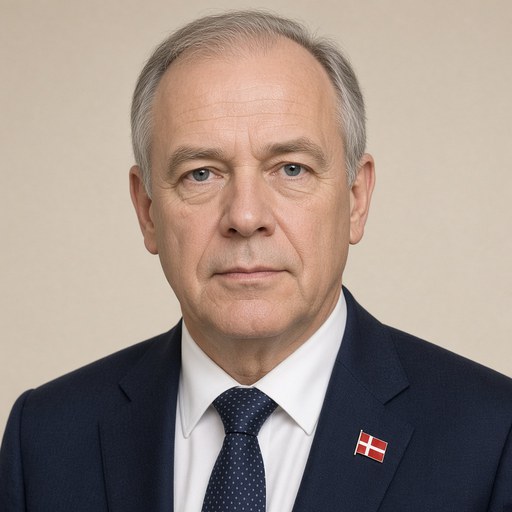
Prime Minister Poul Nyrup Rasmussen's reply at the opening debate in the Folketing on October 7, 1999.
 Poul Nyrup Rasmussen · Prime Minister of Denmark
- Context
- Rasmussen addressed the Folketing on October 7, 1999, delivering his reply during the annual opening debate, responding to multiple parties on domestic and foreign policy issues.
- Main themes
- Danish parliamentary debate, Greenland-Denmark relations, Faroe Islands autonomy negotiations, indigenous peoples' rights, Danish foreign aid workers, immigration and xenophobia, justice commission, Greenlandic children's welfare, realm cooperation, self-government
- Duration
- ~52 min
- Words
- 6,189
- Sentences
- 383
- Readability
- 62
- Grade
- 7.9
- Syntax
- 2.75
- Vocabulary
- 2.00
Translated from Danish
The broad sphere of national life a sentence belongs to. Every sentence has an Arena, so it is the denominator the other indices are read against.
Other383 sentences in 99 paragraphs
Thank you for the debate - until this moment.
It has been a very special debate today. There is an expression that goes: The cat is out of the bag! And it is not every day that two cats escape: The Liberal Party's tax considerations and the Danish People's Party's view of humanity!
I will not say that it has been a good day. But it has been a day that has brought greater clarity about where the various parties actually stand.
* * *
I will start where we left off in the first round and thank Ms. Helle Degn, who pointed out the great efforts of aid workers around the world. They represent Denmark in a wonderfully impressive and genuine way. They put their lives and limbs at risk for a cause and for a view of humanity that most of us here fortunately share. Whether it is in East Timor, Bosnia, or the rest of the Balkans, we see Danish aid workers of whom we can only be proud, and for whose work we can only be grateful.
This also confirms to me that the Danish people are not an inward-looking tribe with rituals and xenophobia, who go into panic and intolerance if a person from another tribe comes to visit.
* * *
Mr. Hans-Pavia Rosing spoke about the renovation work in Greenland. I can confirm that we have an agreement that includes, among other things, a financing system and a timeline. We have some goals that I believe we will achieve together.
The Eastern High Court has issued a ruling that is in many ways groundbreaking and characterized by great clarity on a number of crucial points. I believe that the Joint Declaration that Premier Jonathan Motzfeldt and I have formulated puts things in order in relation to the historical events.
Now we can look each other in the eye again. Now we have restored the respect that had been worn down in some places. Now we can look forward again. Let us develop our cooperation. Let us strengthen the Greenlandic profile in foreign policy based on the proposal that may come from the government.
To Ms. Ellen Kristensen, I would like to say that we are now awaiting the work of the Justice Commission, which will conclude in the spring of 2000. We will, of course, be ready to discuss matters, but I believe it should take place in the right order. Let us finish the commission's work first, and then let us analyze the results.
I do not think one can say that there are no realities in the words of the Folketing and the government about cohesion. There are realities when it comes to delegation and agreements on the transfer of self-government areas - most recently regarding the administrative responsibility related to resources in the underground. There are realities when it comes to our economic cooperation. I believe we have our cohesion, and I believe we have something to base it on.
I was pleased with Ms. Ellen Kristensen's words about Greenland's children. There is good reason to dwell a little on the Greenlandic children who are struggling and suffering. Who have had a difficult upbringing. This does not apply to all Greenlandic children, but it is a part. I am glad that both Ms. Ellen Kristensen and Mr. Hans-Pavia Rosing are concerned about this issue, just as the government and the premier are.
The Minister of Social Affairs has extended a hand for cooperation. This is a self-government area, but if there is a need for good advice and expertise, we are happy to help. I believe this is a common task that falls under the concept of 'cohesion'.
I was pleased with Mr. Hans-Pavia Rosing's reference to Denmark's and Greenland's efforts for indigenous peoples. It is moving in the right direction. We must maintain the perspective that has been outlined here. And we can do it with even greater strength after the Joint Declaration.
Regarding the helicopter service, I would just like to express the fundamental attitude that we will do what we can to ensure that Greenland's interests are met. Greenland has, of course, the right to have safety in order.
* * *
Mr. Oli Breckmann and Mr. Joannes Eidesgaard both noted that the section on the Faroe Islands took up more space in my opening speech this time. Both of them naturally know the reason. We are in a decisive phase in our cooperation!
To Mr. Oli Breckmann, I would like to say: The Danish government is not proposing to use the stick method.
In the name of mutual respect, it is my wish to speak clearly - without it being misunderstood. Without it being perceived as talking down. Clarity in the various phases is absolutely crucial for us to achieve a result that both the Faroese and the Danish people find satisfactory. I can confirm that the Danish government has gradually begun to prepare for the upcoming negotiations and discussions. The preliminary analyses and assessments we have made confirm that the room for maneuver, the possibilities within the framework of the realm, and with full respect for the constitution, are significantly greater than one sometimes gets the impression of in the debate.
I am glad that Mr. Joannes Eidesgaard has noted that what I wanted to say on Tuesday was that one must know the consequences of one's actions - whether one chooses one path or another between Denmark and the Faroe Islands. The Faroe Islands will be in a completely different situation outside the realm than within it. If the Faroe Islands remain within the framework of the realm, the Danish government will find it natural for the cooperation to expand into actual self-government.
Mr. Joannes Eidesgaard said something very principled to me about the concept of freedom and the principles of freedom. I can recognize the words about responsibility and freedom and the real concept of freedom. For personal freedom is hollow if one does not have a security to have it in. It is my assertion that one is not completely free if one is unemployed. One is not completely free if one is socially insecure. One is not completely free if one cannot see one's future, does not have a real hope of where one is going. Then one is not free. Therefore, I agree with the content of the concept of freedom that Mr. Joannes Eidesgaard mentioned.
I am confident that we will find a solution to the Faroese wishes for greater independence. The Danish government is ready to discuss the issue when the Faroese side is ready.
I look forward to good cooperation. I look forward to us doing it thoroughly. I look forward to us going through all aspects of the realm, so that no one can say, when we eventually reach a conclusion: Here is something they have forgotten. Here was something they had not considered. We owe this and future generations of Faroese and Danes that we make an effort and take the necessary time to find a solution.
* * *
The domestic political debate today has been characterized by opinions, values, and a number of concrete issues.
Today's debate has shown that the government shares a view of humanity and a value foundation with several of the parties in the Folketing. If one does not have a value foundation in politics, one can rightly ask why one is actually a politician. Those who seek power for the sake of power itself are in a situation where all paths to the goal are equally good. In other words, one must have a value foundation to choose which path is the right one. And that is perhaps what some parties struggle to clarify.
Therefore, it was good that we had a values debate today about views of humanity and the relationship with those who come from other countries, even though I must not hide that I am a bit disappointed. I am disappointed that there were two parties that did not state where they stand. I would have liked to see that. It would have been commendable.
* * *
The government's working method since 1993 has been that it is not only a question of legislating for tomorrow, but also for the day after tomorrow. That the political actions we propose and the political results we achieve must not only hold for next year, but also for the coming years. We have occasionally been criticized for this, but it has not changed our fundamental view. Politics is about steering society free from dangers, from shipwrecks, from the risk of new storms. If we can see that there are obstacles ahead of us that will affect innocent people, then we must have the courage to change the rules. We have done so when it concerned the labor market, and we have done so when it concerned early retirement. If it was necessary to secure early retirement in the future by changing it, then we changed it. And therefore, I am a bit sad that Ms. Ulla Tørnæs, on behalf of the Liberal Party, brought up that topic, for there is nothing to pursue with Ms. Ulla Tørnæs. The early retirement certificate was promised before the election. The early retirement certificate was adopted after the election. The content is completely clear. One knows what one has.
Early retirement is saved. I am not entirely sure that it was actually the Liberal Party's goal. Therefore, I will be a bit cautious about talking too much about promises - if I were Ms. Ulla Tørnæs, for then we would get a long, long list of promises that one could become completely overfed just by looking at. The promises the government has made will be kept!
I say this because the Liberal Party has focused a lot on my person. I counted how many times my job was mentioned; one is a bit vain sometimes. We reached a total of 38 times during Ms. Ulla Tørnæs' speech. I thank you for the attention shown. It may be a bit too much. But that said, let me focus on the content.
First about the Liberal Party's philosophy. There is no doubt that some of the Liberal Party's new goals are sympathetic. Regarding the healthcare system, the Liberal Party is, for example, of the opinion that everyone should be able to go to the hospital. That everyone should have equal access, and that it should not depend on the size of one's wallet. I can fully agree with that. Yes, it is almost completely identical to the government's policy. The difference is essentially only that we were the first to start addressing it.
That is not the problem. The problem is that the means they propose unfortunately have negative consequences. The Liberal Party says one thing, but the result of what they propose will be something else.
Take the hospitals, for example. We want free and equal treatment in hospitals, and we want it regardless of the size of the wallet. Fine, we agree on that. So what does the Liberal Party propose? What the Liberal Party proposes is that a parallel hospital system should be established. That there should be free choice between public and private hospitals. And if one chooses the private option, one should be able to receive state coverage of 85 percent of the total costs.
I have asked the Health Authority what a bypass operation costs. According to what has been reported to me, the price involves a personal payment of 22,588 DKK. I then asked what a hip and thigh bone operation costs. If we also have to pay 15 percent here, it will be 12,412 DKK. When we look at what a lung operation costs, it becomes truly frightening: 97,591 DKK. It is possible that there are some who can afford it, but that is not the path we want to take, and it is not what the Liberal Party says they want. In such a system, it largely depends on the thickness of one's wallet. Those who can afford it can pay their way out of the queue.
I see the same tendency to a large extent when it comes to other proposals from the Liberal Party. Just take the issue of childcare. We want increased choices for families with children regarding childcare. Fine, but what does the Liberal Party actually propose? They propose that the money should follow the child, or that it is the child that should follow the money. The problem is that if this were implemented, it would mean that far too many women either stay at home or return to the home. But that is the opposite of what we need in society. We need our society to have increased tax revenues in the coming years to finance our services and our welfare, especially for the elderly. The Liberal Party has a goal, but what they propose pulls in the opposite direction. They say one thing but want to do something else!
Now to the EMU discussion. I believe there is a majority in the Folketing today for Denmark to join the euro. I especially thank the Conservative People's Party for a clear statement. I do not believe that a debate about the EMU and its consequences is impossible as long as we have not set a date for a referendum. The debate changes character when we have set the date. In the initial phase, we can have a calm debate in folk high schools, in workplaces, and here in the chamber. I am glad that so many have recognized that this must be the case.
On the other hand, I am disappointed that Ms. Ulla Tørnæs quoted me as saying that the reservations will not be touched as long as I have a say in politics. Ms. Ulla Tørnæs, that is quote manipulation. The quote is taken from March 1998. What I actually said at that time was: 'The four reservations belong to the people, and it is the people who must decide their future. That is how it is today, that is how it will be in the coming years. And that will not be touched, you have my word on that, as long as I have a say in politics.' That was the last part that was referenced. It was not the whole sentence. I say this for the sake of clarity, because no one benefits from us imposing quotes on each other that are not correct. In other words: The reservations belong to the people. And they can only be changed by the people themselves. That is what I emphasized - and that still applies.
After the TV broadcasts this evening, I would also like to say about the Liberal Party's tax policy considerations: There have been several proposals. I have tried to listen carefully. I must admit that one does not become much wiser from it.
I have here two plans. I have, first of all, the Liberal Party's proposal for the finance bill for the year 2000, and then I have Peter Brixtofte's proposal. Which one should I take?
There is something else that we must also clarify this evening. What are the funds actually to be used for? I read Mr. Anders Fogh Rasmussen's statements in the latest electronic letter with great care. In it, it states that 'every single crown we can obtain by saving on interest expenses will be used to lower taxes.'
It does not quite align with what the Minister of Finance and Economy is saying. We will indeed use every single krone we save on the debt to both continue to reduce the debt and ensure welfare for the elderly. Are there many or few elderly people in our society? Are we talking about a lot or a little money?
Regardless of whether we take the projections from the Social Commission from 1993, the Ministry of Finance's projections from 1996, the Financial Council's assessment from 1998, or the economic advisors' projections for 1998, they all agree that the expenditure pressure will rise significantly over the next 20 years. We are talking about between 4 and 8 percent of everything we produce up to the year 2030. In today's kroner, that corresponds to a revenue need of between 50 and 100 billion kroner. So we are not talking about small amounts, and it underscores for me that we also need to say: If things are to add up, it will not help to promise tax cuts. Not even the tax cuts that may come from saved interest money as a result of a declining debt.
If one wants to promise the elderly acceptable, secure care, it must also be stated clearly: The saved interest money must be used for the care of the elderly and to continue to get the economy under control, rather than for tax cuts. There is no money for that. I think the honest answer is: Let us now concentrate on renewing and improving our welfare society. Let us use the money for that - rather than for tax cuts.
Furthermore, I will refrain from going into details about the Liberal Party's tax policy, for where should I start, and where should I end?
* * *
Instead, I would like to acknowledge Mr. Bendt Bendtsen's - yes, I was just about to say maiden speech - but in any case, the speech as the political leader of the Conservative People's Party. It was free of personal bickering, characteristically went straight to the political point. It is a line that can only be respected. We can disagree or agree, but I like the style. I will allow myself to say that.
In the course of a month, we will present the government's proposal for an adult and continuing education initiative. We emphasize discussing the matter with the labor market's parties. Once we have done that, once the government has completed its work, we will make our move.
In business policy, I actually believe that the Conservative People's Party and we share a common view on several things. Let me mention research and development work, efforts to expand the number of contracts between Danish universities and Danish businesses, information technology, and a new competition law.
The government is proposing a new competition law aimed at lowering prices in Denmark. As the Minister of Taxation has pointed out, there is indeed a need for that. The main explanation for the difference in price levels in border trade is not the difference in our tax levels, but rather differences in competition. Therefore, we need a new competition law. I very much hope that we can secure a broad majority behind it. That is what it is best served with. We owe each other to reach a level of insight into prices and competition that meets the demands we encounter elsewhere in Europe. I believe it would be a disservice to businesses if we do not support greater transparency, greater price comparability, and stronger price competition.
The Conservative People's Party was also involved in securing the progress regarding life-threatening diseases that we are now realizing. I hope that we can also see a continuation of the collaboration here. I know that the Conservative People's Party has interests in cancer treatment and in the ambulance sector. There are plenty of areas for collaboration that can be addressed.
On the other hand, we see things differently in the area of taxation. I do not think it was very sympathetic that the Conservative leader proposed tax cuts. Especially not after my remarks in the opening speech about the significant challenges ahead. I mentioned that 33,000 children in developing countries die every day, partly due to malnutrition, partly due to malaria. 1.5 billion people live every day on less than a dollar a day in the poorest part of the world. In that light, I do not think it is sympathetic to suggest that we Danes, who have increased our private consumption by 25 percent in the last 6.5 years, should now further expand private consumption through tax cuts that should be financed by cuts in development aid. That is not sympathetic. We will not be part of that. It is a different path we must take.
Our wealth must be created by ourselves through skill, through adult and continuing education, through the best-educated people, the most inventive people, and the best collaboration between public and private enterprises.
We look forward to the negotiations on a new police agreement. We know that the Conservative People's Party has insight in this area! I would like to quietly point out that the Conservative People's Party has a shared responsibility for how the figures look for the year 2000. When one criticizes us about the budget figures, I owe it to say: They are actually part of the agreement we entered into for the period 1996-1999. There is a provision for increased efficiency. The extra allocation of 80 million kroner that was added for the year 1999 is indeed the explanation for the current situation.
So let us not come to the table as soon as the time is ripe and see if we cannot reach each other. I believe that will be possible if we make an effort.
The government's approach to the matter is the right one. The police's work has been assessed. We have looked at the police's efficiency, the way things are organized. I think the signal is that we can organize things better and thereby also free up some resources. We must of course have those on the table when we negotiate a new agreement, so we can reach the goal that we agree on, namely that the police become more visible on the streets. What is up for discussion is how many more resources are needed. I believe that should be based on a factual and sober assessment.
* * *
So to Ms. Mimi Jakobsen, who spoke about dreams, about the future of the welfare society, about the need to occasionally talk in the Folketing about the everyday lives of ordinary people. I can follow that. However, I do not entirely share the characterization of the welfare society in Denmark right now. We are not that worn down and exhausted.
The healthcare system in Denmark is, for example, better than its reputation. We have allocated quite a few resources to the healthcare system in Denmark since 1993. When we took over the responsibility of government in 1993, healthcare expenditures were at a level that was one billion lower than in 1988. There was a lot, Ms. Mimi Jakobsen, that needed to be corrected. Now the results are beginning to show. The waiting time curve is bending, and we have made significant progress with the internal reform work of the healthcare system.
We have reached an agreement on life-threatening diseases.
If we take the children, I also think it should be noted that we have established 150,000 new childcare opportunities.
If we look at the mentally ill, improvements have been made. When it comes to children and young people, there are places where children and the elderly with senile dementia are together. We cannot accept that. Therefore, our work continues.
The elderly sector has also seen improvements over the years. The number of elderly housing units has increased from 60,000 to 66,000.
The welfare society is not quite as bad as that. It is actually the best in the world, but it can become even better.
Even the schools are doing better. We have entered into agreements with the municipalities in both 1998 and 1999, which means that capital expenditures in the public school sector will now increase significantly over the next three years. About 1.5 billion kroner compared to just under 1 billion kroner in the previous three years. The direction is right, and the efforts are beginning to yield results.
If we look at the older unemployed and Ms. Mimi Jakobsen's remarks about the activation area, I understand the background. We share the ambition. It must be possible to create a society where there is space and room in the labor market for those who are not 100 percent effective. Therefore, we are not talking about disagreeing on the goal, but we are talking about a joint effort to reach there.
The 50-59-year-olds are now better off than the rumor suggests. All those who get a job through the employment agency actually have a higher employment rate than those who are younger. The over 50s who have been placed in a job through the employment agency - for them, 63 percent of those placed get a job. For the younger ones, we are down to 45 percent, so the elderly can certainly keep up.
I therefore believe that we have something to discuss with both the CD and the SF if the necessary flexibility is present. If one does not fixate on a very specific solution. If one does not fixate on a very specific number. And if one does not close off the possibility that many can also be placed in the private sector. Yes, then we have something to discuss.
* * *
To Mr. Jes Lunde, I would like to say that Denmark will also take on a concrete obligation regarding the Rio agreement and its follow-up. We need to develop a national strategy. We need to get started with the preparations. We are already well underway, as is also evident from the Minister of Environment's new nature and environmental policy report.
In the Nordic context, we have taken the lead in this work. Now we need to set environmental quality goals for the Nordic region. We need to develop a Nordic sustainability strategy. We look forward to carrying out this work and, of course, also following it up in accordance with the Kyoto agreement.
Regarding the other question that Mr. Jes Lunde asked about flexibility in the Amsterdam Treaty, Mr. Jes Lunde knows that we have always emphasized equal competitive conditions in the internal market, including in the area of energy taxation. Therefore, it is doubtful whether we can immediately make use of the treaty's flexibility provisions in this area. But let us continue to work on the issue. The very basic idea that Europe should seek to agree on ambitious maximum CO2 emission targets is correct. Also, the idea of being able to trade quotas is fundamentally correct. We should be able to realize that through a common effort.
I was pleased with Mr. Jes Lunde's remarks about education and research, also about information technology. I miss a perspective that is very important to the government. It should be possible for us in the IT area to avoid it becoming a contribution to a new division between those who can and those who cannot. It requires a lot from us, high awareness in schools, high awareness in educational institutions, and high awareness in businesses and the public sector.
* * *
Mr. Jann Sjursen characterized our child policy as, yes, lying at a developing country level. I was a bit offended by that. But if Mr. Jann Sjursen promises me that he will not set Norway as the ambition - he does, Mr. Jann Sjursen - then I am still a bit offended. My point is not to criticize Norway, but my point is to make a small case for the fact that the money that follows the child, I still believe works counter to the goals that Mr. Jann Sjursen and we want to achieve.
I do not believe one can characterize Denmark as a developing country in terms of child policy. May I remind you of parental leave, may I remind you of maternity leave, may I remind you of collective agreements, of the right to sick leave. May I remind you of the childcare offerings in Denmark, which are more extensive than in any other country. May I remind you of a long, long list of other factors that make us rank well when it comes to our child policy. But there is much more to be done. I will not question that.
I would like to say about the abusers and the abuse problem in Denmark. Yes, a handshake to take it up politically, to do more than we do today. And yes, a handshake to gather experiences and translate them into a stronger effort for the very marginalized. For it is indeed true, as Mr. Jann Sjursen has said in slightly different words. We do not need to go far outside Christiansborg. Out in Nørrebro or Vesterbro, we can find some human destinies that we cannot just turn our backs on or close our eyes to.
* * *
Then Mr. Jørgen Estrup, like Mr. Jacob Buksti, made some very fundamental remarks about why we are politicians and about the government's view of humanity. I would like to use that as a starting point for some remarks to the Danish People's Party.
First, listen to a little story: She came to the country over 50 years ago. She fled from Hungary, where the communists were ravaging. And she had a good life in Denmark, for we had sympathy for her, and we understood why she fled. True, she was a Catholic, and some thought that since she came from Hungary, she was probably some kind of gypsy. But those 50 years went quite well, and in her old age, she could look back on a life with a Danish man who has now passed away, a brood of 4 children, and 12 grandchildren.
Most are doing well, but there is one exception. This one grandchild - apropos Mr. Jan Sjursen's remarks about the situation and needs of abusers - this one grandchild is a drug addict. And in his daily struggle for the daily dose, it happens more and more often that he assaults people to get money. It hurts to know for the grandmother who came from Hungary 50 years ago that her grandchild is violent, criminal, and increasingly spends more time inside than outside the prison walls.
She was lucky, the fine old lady from Hungary. She came to Denmark before Ms. Pia Kjærsgaard held a national meeting in Odense and said - I allow myself to quote: 'The Danish People's Party proposes that in cases where a second or perhaps third generation immigrant repeatedly commits crimes and no upbringing is possible, then not only the individual should be sent home and repatriated, but the whole family. That is the only thing they respect.'
There are many second- and third-generation immigrants in Denmark today, and one can at least say about the old grandmother from Hungary: One consolation is - she will at least not have to travel home all alone!
I will put it bluntly: what are we really talking about here? What we are talking about is, in reality, that the Danish People's Party is ready to introduce an ethnic principle in Danish politics – an ethnic policy that just a few months ago we fought to ensure would never be introduced in Kosovo.
There are some who believe that Mrs. Pia Kjærsgaard's party speaks for the little man's party. Throw the foreigners out. Lock up the young people and help the old a bit more. But what about the old lady from Hungary? And what about all the descendants of the Polish women who came to Denmark to harvest beets at the beginning of this century? And what about all the rest of us who cannot be completely sure that somewhere in our ancestral generations, we do not have an ancestor from a foreign country?
I have looked into the statistics. Mr. Søndergaard asked Mrs. Pia Kjærsgaard a question: If we line up 100 people with a foreign background, how many of them have had contact with the police? How many have been responsible for a criminal act?
There are many figures flying around. Be careful with comparisons, but still. Statistics Denmark published a study in January 1998 based on 1995 figures, which showed that out of every 1,000 immigrants, 46 were known to be guilty of crime, and out of every 1,000 Danes, 32 were known to be guilty of crime or had had contact with the police for one reason or another.
So: 46 out of 1,000 with a foreign background, and 32 out of 1,000 with a Danish background. These figures should be taken with great caution. Corrections need to be made across the board, but it does provide a direction for the answer to Mr. Søren Søndergaard's question. It also underscores that one cannot reasonably argue with the Danish population and say: They are all like that!
For there is also in the Danish People's Party's policy an attempt to build fear and hatred among the Danish population. A policy that is un-Danish, unacceptable, and xenophobic. That is not how foreigners are in Denmark. That is not how Danes are either. It affects a lot of innocent people. It affects the Palestinian who is a bicycle mechanic and good at it. It affects the Bosnian who is a strawberry producer and good at it. It affects the Turkish greengrocer who smiles even beyond regular working hours when you come to get fresh vegetables. We need people. We need more people with a foreign-sounding name to get jobs in Denmark.
I was asked by the television outside if I think the atmosphere in this debate has been hateful – it depends on how you look at it: When discussing such fundamental questions as we have discussed today about the view of humanity, about whether there should be a difference based on whether one has ancestors from a foreign country or not, even if one is a Danish citizen – I can understand that very harsh things are said up here about the Danish People's Party. I think all of them were well-founded.
Therefore, I say to the Danish People's Party: No matter how many efforts you make – from my perspective – you will never be respectable!
* * *
I will conclude by returning to my starting point. The speech I gave on Tuesday at the farewell to the 20th century was about our values and the cohesion of our society. It is based on duties and rights. It is based on the fact that duties and rights encompass all of us, not just those who are Danish – for we are all Danish – but also those who have a foreign-sounding name. Not just them. Not just the single mother at the bottom of society, but also the businesses and those at the top of society.
My speech was about us taking responsibility for our country. My speech was about us taking a special responsibility for the weakest in our country and that we take the consequences of that. Therefore, we must tell the population that not everyone can have everything. Because if everyone gets everything, then everyone gets less. And that can mean that those who have the greatest need get squeezed.
Therefore, we talk about choosing from and choosing to. And that is why we talk about the money needing to be there before it can be used. And that is why we invite to a realistic, sober, but also humanly sympathetic cooperation on all sides this autumn.
I was also asked here in the break outside the hall: What if the Danes still think that what we hear from the Danish People's Party is sympathetic? My answer was and is: The Danes do not think so!
And the reason I am convinced that the Danes do not think so, we have just seen proof of. We saw this spring that the entire Danish population stood together to protect the view of humanity in Kosovo. And the population held together strongly. Over 75 percent of the population truly stood together, even in the most difficult times this spring. When the television showed images of the children from Kosovo who did not know whether their brother or father was even still alive; when the television showed images of the old mother who, with her last strength, crossed the mountain ridge to enter a country where one can be a little safer – then the Danes showed what humanity is and what a decent view of humanity is. Then we stood together. And we also stood together when we had to welcome some Kosovo refugees here in the country. It was just before the Minister of the Interior received criticism for not acting quickly enough!
Therefore, I have no doubt! And I am incredibly glad not to be. Therefore, I do not think it has been a good debate today. But the debate has clarified what value foundation the Danish society must be built on. And the debate has shown what an enormous strength this society has when we affirm our view of humanity and our solidarity.
The original Danish. The tags above are read on the English translation's sentences.
Tak for debatten - indtil dette øjeblik.
Det har været en meget speciel debat i dag. Der findes et udtryk, som hedder: Der slap katten ud af sækken! Og det er ikke hver dag, at der er to katte, som slipper ud: Venstres skatteovervejelser og Dansk Folkepartis menneskesyn!
Jeg vil ikke sige, at det har været en god dag. Men det har været en dag, der har bragt større klarhed over, hvor det egentlig er, de forskellige partier står.
* * *
Jeg vil starte, hvor vi sluttede i første runde og sige tak til fr. Helle Degn, som gjorde opmærksom på nødarbejdernes store indsats rundt om i verden. De repræsenterer Danmark på en fantastisk flot og ægte måde. De sætter liv og lemmer på spil for en sag og for et menneskesyn, som de fleste af os herinde heldigvis deler. Uanset om det er i Østtimor, Bosnien eller den øvrige del af Balkan, ser vi danske nødhjælpsarbejdere, som vi kun kan være stolte af, og for hvis arbejde vi kun kan være taknemmelige.
Det bekræfter mig også i, at det danske folk ikke er en indadvendt stamme med ritualer og fremmedfjendskhed, som går i panik og intolerance, hvis et menneske fra en anden stamme kommer på besøg.
* * *
Hr. Hans-Pavia Rosing talte om renoveringsarbejdet i Grønland. Jeg kan bekræfte, at vi har en aftale, som bl.a. omfatter et finansieringssystem og en tidsramme. Vi har nogle målsætninger, som jeg tror, vi i fællesskab når.
Østre Landsret har afsagt en dom, som på mange måder er skelsættende og præget af stor klarhed på en række afgørende punkter. Jeg synes, at den Fælleserklæring, som landsstyreformand Jonathan Motzfeldt og jeg har udformet, på en god måde sætter tingene på plads i forhold til de historiske begivenheder.
Nu kan vi se hinanden i øjnene igen. Nu har vi genoprettet den respekt, som nogle steder var blevet slidt. Nu kan vi se fremad igen. Lad os udvikle vores samarbejde. Lad os styrke den grønlandske profil i udenrigspolitikken med udgangspunkt i det udspil, der måtte komme fra landsstyrets side.
Til Fru Ellen Kristensen vil jeg sige, at nu afventer vi Retsvæsenkommissionens arbejde, som slutter i foråret 2000. Vi vil naturligvis være rede til at drøfte tingene, men jeg synes det skal foregå i den rigtige rækkefølge. Lad os nu få afsluttet kommissionens arbejde først, og lad os så analysere resultatet.
Jeg synes ikke, at man kan sige, at der ikke er realiteter i Folketingets og regeringens ord om samhørighed. Der er realiteter, når det gælder uddelegering og aftale om overførsel af selvstyreområder - senest omkring forvaltningsansvaret i tilknytning til råstoffer i undergrunden. Der er realiteter, når det gælder vores økonomiske samarbejde. Jeg synes vi har vores samhørighed og jeg synes vi har noget at have den i.
Jeg var glad for fru Ellen Kristensens ord om Grønlands børn. Der er god grund til at opholde sig lidt ved de grønlandske børn, som har det tung og hårdt. Som har haft en vanskelig opvækst. Det gælder ikke alle grønlandske børn, men det er en del. Jeg er glad for, at både fru Ellen Kristensen og hr. Hans-Pavia Rosing er optaget af denne sag, ligesom landsstyret og landsstyreformanden er det.
Socialministeren har rakt hånden frem til samarbejde. Det her er jo et selvstyreområde, men hvis der er brug for gode råd og ekspertise, hjælper vi gerne. Jeg synes, det er en fælles opgave, som er omfattet af begrebet 'samhørighed'.
Jeg var glad for hr. Hans-Pavia Rosing reference til Danmarks og Grønlands indsats for de oprindelige folk. Det går i den rigtige retning. Vi skal fastholde det perspektiv, som her er ridset op. Og vi kan gøre det med endnu større styrke efter Den fælles Erklæring.
Omkring helikoptertjenesten vil jeg blot udtrykke den grundholdning, at vi vil gøre hvad vi kan for at Grønlands interesser tilgodeses. Grønland har naturligvis krav på, at sikkerheden er i orden.
* * *
Hr. Oli Breckmann og hr. Joannes Eidesgaard hæftede sig begge ved, at afsnittet om Færøerne fyldte mere i min åbningstale denne gang. Begge kender naturligvis begrundelsen. Vi er i en afgørende fase i vort samarbejde!
Til hr. Oli Breckmann vil jeg sige: Den danske regering lægger ikke op til at bruge stokkemetoden.
I den gensidige respekts navn er det mit ønske, at tale klart - uden at det misforstås. Uden at det opleves som at tale ned. Klarhed i de forskellige faser er fuldstændig afgørende for, at vi når et resultat, som både det færøske og det danske folk oplever som tilfredsstillende. Jeg kan bekræfte, at den danske regering så småt er gået i gang med at forberede sig til de kommende forhandlinger og drøftelser. De foreløbige analyser og vurderinger, vi har foretaget, bekræfter os i, at spillerummet, bevægelsesmulighederne inden for rigsfællesskabets rammer og med fuld respekt for grundloven, er betydeligt større, end man somme tider får indtrykket af i debatten.
Jeg er glad for, at hr. Joannes Eidesgaard har noteret sig, at dét, jeg har villet sige i tirsdags, har været, at man skal kende konsekvenserne af sine handlinger - uanset man nu vælger den ene eller den anden vej mellem Danmark og Færøerne. Færøerne vil være i en helt anden situation uden for rigsfællesskabet end inden for. Forbliver Færøerne inden for rigsfællesskabets rammer, vil den danske regering finde det naturligt, at samarbejdet udvides til et egentligt selvstyre.
Hr. Joannes Eidesgaard sagde for mig noget meget principielt om frihedsbegrebet og frihedsprincipperne. Jeg kan godt genkende ordene om ansvar og frihed og det reelle frihedsbegreb. For den personlige frihed er jo hul, hvis man ikke har en tryghed at have den i. Det er min påstand, at man ikke er fuldstændig fri, hvis man er arbejdsløs. Man er ikke fuldstændig fri, hvis man er socialt utryg. Man er ikke fuldstændig fri, hvis man ikke kan se sin fremtid, ikke har et reelt håb om, hvor man skal hen. Så er man ikke fri. Derfor er jeg enig i indholdet af det frihedsbegreb, som hr. Joannes Eidesgaard nævnte.
Jeg er sikker på, at vi finder en løsning på de færøske ønsker om større selvstændighed. Den danske regering er klar til at drøfte spørgsmålet, når man er klar fra færøsk side.
Jeg ser frem til et godt samarbejde. Jeg ser frem til, at vi gør det grundigt. Jeg ser frem til, at vi kommer igennem alle aspekter af rigsfællesskabet, så ingen kan sige, når vi til sin tid kommer frem til en konklusion: Her er noget, de har glemt. Her var der noget, som de ikke havde overvejet. Vi skylder denne og kommende generationer af færinger og danskere, at vi gør os umage og tager den fornødne tid til at finde en løsning.
* * *
Den indenrigspolitiske debat i dag har været præget af holdninger, værdier og en række konkrete emner.
Debatten i dag har vist, at regeringen deler menneskesyn og værdigrundlag med flere af folketingets partier. Hvis ikke man i politik har et værdigrundlag, kan man med rette spørge, hvorfor man så egentlig er politiker. Den der går efter magten for magtens egen skyld, er i den situation, at alle veje til målet er lige gode. Man skal med andre ord have et værdigrundlag for at vælge, hvilken vej der er den rigtige. Og det er måske det, som det kniber med for enkelte partier at gøre sig klart.
Derfor var det godt, at vi fik en værdidebat i dag om menneskesyn og forholdet til dem, der kommer fra andre lande, selv om jeg ikke skal skjule, at jeg er lidt skuffet. Jeg er skuffet over, at der var to partier, som ikke har meldt, hvor de står. Det havde jeg gerne set. Det havde været klædeligt.
* * *
Regeringens arbejdsmetode har siden 1993 været, at det ikke alene er et spørgsmål om at lovgive for i morgen, men også for i overmorgen. At de politiske handlinger vi lægger op til, og de politiske resultater vi når, ikke alene skal holde næste år, men også i de kommende år. Det har vi engang imellem fået skæld ud for, men det har ikke ændret vores grundsyn. Politik handler om at styre samfundet fri af farer, af skibbrud, af risiko for nye storme. Hvis vi kan se, at der er forhindringer foran os, som vil ramme uskyldige mennesker, så skal vi have modet til at ændre reglerne. Det har vi gjort, når tilfældet omhandlede arbejdsmarkedet, og det har vi gjort, når tilfældet omhandlede efterlønnen. Hvis det var nødvendigt at sikre efterlønnen i fremtiden ved at ændre den, ja så ændrede vi den. Og derfor er jeg lidt ked af, at fru Ulla Tørnæs på Venstres vegne tog det emne op, for der er ikke noget at komme efter fru Ulla Tørnæs. Efterlønsbeviset blev stillet i udsigt før valget. Efterlønsbeviset blev vedtaget efter valget. Indholdet er fuldstændig klart. Man ved, hvad man har.
Efterlønnen er reddet. Jeg er ikke helt sikker på, at det egentlig var Venstres målsætning. Derfor vil jeg være lidt forsigtig med at tale for meget om løfterne – hvis jeg var fru Ulla Tørnæs, for så får vi en lang, lang spiseseddel, som man kan blive helt overmæt af at se på. De løfter regeringen har stillet i udsigt holdes!
Jeg siger det, fordi Venstre har opholdt sig meget ved min person. Jeg talte, hvor mange gange mit job blev nævnt, man er jo lidt forfængelig engang imellem. Vi nåede hele 38 gange i løbet af fru Ulla Tørnæs’ tale. Jeg takker for udvist opmærksomhed. Det er måske en anelse for meget. Men når det er sagt, så lad mig opholde mig ved indholdet.
Først om Venstres filosofi. Der er ikke tvivl om, at nogle af Venstres nye mål er sympatiske. Omkring sygehusvæsenet er Venstres fx af den opfattelse, at alle skal kunne komme på sygehuset. At alle skal have lige adgang, og at det ikke skal komme an på pengepungen. Det kan jeg fuldt og helt skrive under på. Ja, det er næsten fuldstændig identisk med regeringens politik. Forskellen er sådan set kun, at vi var de første, der begyndte at tage fat på det.
Det er ikke problemet. Problemet er, at de midler man foreslår, desværre har negative konsekvenser. Venstre siger et, men resultatet af det, de foreslår, bliver noget andet.
Tag nu sygehusene. Vi vil have fri og lige behandling på sygehusene, og vi vil have det uanset tegnebogens størrelse. Fint, det er vi enige i. Hvad er det så Venstre foreslår? Det Venstre foreslår er, at der skal opbygges et parallelt sygehussystem. At der skal være frit valg mellem offentlige og private sygehuse. Og hvis man vælger det private skal man kunne få statslig dækning på 85 pct. af de samlede udgifter.
Jeg har spurgt i Sundhedsstyrelsen, hvad en bypass-operation koster. Efter hvad der foreligger oplyst for mig, så indebærer prisen en egenbetaling på 22.588 kr. Jeg har dernæst spurgt, hvad en hofte- og lårknogleoperation koster. Hvis vi også her selv skal betale 15 pct. bliver det 12.412 kr. Når vi ser på, hvad en lungeoperation koster, bliver det for alvor uhyggeligt: 97.591 kr. Det er muligt, at der er nogen, som har råd til det, men det er ikke den vej vi vil, og det er ikke det, som Venstre siger, at de vil. I sådan et system kommer det i høj grad an på pengepungens tykkelse. Dem, der har råd, kan betale sig udenom køen.
Jeg ser i høj grad samme tendens, når det gælder andre af Venstres forslag. Tag nu bare spørgsmålet om børnepasning. Vi vil have øgede valgmuligheder for børnefamilier, når det gælder børnepasningen. Fint, men hvad er det egentlig Venstre foreslår. De forslår, at pengene skal følge barnet, eller også er det barnet, der skal følge pengene. Problemet er, at hvis det blev gennemført, så ville det betyde, at alt for mange kvinder enten bliver hjemme eller går tilbage til hjemmet. Men det er jo det modsatte, vi har brug for i samfundet. Vi har brug for, at vort samfund får øgede skatteindtægter i de kommende år for at finansiere vores service og vores velfærd ikke mindst over for de ældre. Venstre har et mål, men det som de foreslår, trækker i modsat retning. De siger ét, men vil gøre noget andet!
Så til ØMU-diskussionen. Jeg tror, der er et flertal i Folketinget i dag for, at Danmark skal tilslutte sig euroen. Jeg takker ikke mindst Det Konservative Folkeparti for en klar tale. Jeg mener ikke, at en debat om ØMU’en og dens konsekvenser er umulig, så længe vi ikke har fastsat en afstemningsdato. Debatten ændrer karakter, når vi har fastsat datoen. I den indledende fase kan vi få en rolig debat på højskoler, på arbejdspladser og her i salen. Jeg er glad for, at så mange har erkendt, at sådan må det være.
Jeg er til gengæld ked af, at fru Ulla Tørnæs citerede mig for, at forbeholdene bliver der ikke rørt ved, så længe jeg har noget at skulle have sagt i politik. Fru Ulla Tørnæs, det er jo citatfusk. Citatet er tager fra marts 1998. Det jeg rent faktisk sagde på det tidspunkt var: 'De fire forbehold er befolkningens, og det er befolkningen, der skal afgøre deres fremtid. Sådan er det i dag, sådan er det i de kommende år. Og det bliver der ikke rørt ved, det har du også mit håndslag på, så længe jeg har noget at skulle have sagt i politik.' Det var det sidste, der blev refereret. Det var ikke hele sætningen. Jeg siger det for god ordens skyld, fordi ingen er tjent med, at vi pådutter hinanden nogle citater, der ikke er korrekte. Med andre ord: Forbeholdene er befolkningens. Og de kan kun ændres af befolkningen selv. Det var dét, jeg slog fast – og det gælder fortsat.
Efter TV-udsendelserne i aften vil jeg i øvrigt om Venstres skattepolitiske overvejelser sige: Der er kommet adskillige bud. Jeg har prøvet at slå ørene ud. Jeg må indrømme, at det bliver man ikke meget klogere af.
Jeg har her to planer. Jeg har for det første Venstres forslag til finanslov for år 2000, og så har jeg Peter Brixtoftes forslag. Hvad for en skal jeg tage?
Der er noget andet, som vi også må have på det rene i aften. Hvad skal pengene egentlig bruges til? Jeg læste hr. Anders Fogh Rasmussens tilkendegivelser i det seneste elektronikbrev med stor omhu. Heri står, at 'hver eneste krone vi kan skaffe ved besparelser på renteudgifterne, vil vi bruge til at sænke skatten'.
Det passer ikke helt med, hvad finans- og økonomiministeren siger. Vi vil nemlig bruge hver eneste krone, vi sparer på gælden til både fortsat at nedsætte gælden og sikre velfærden for de ældre. Er det mange eller få ældre, vi får i vores samfund? Er det mange eller få penge vi taler om?
Uanset vi tager Socialkommissionens fremskrivninger fra 1993, Finansministeriets fremskrivninger fra 1996, Finansrådets vurdering fra 1998 eller de økonomiske vismænds fremskrivninger for 1998 så er de enige om, at udgiftstrykket vil stige markant i de næste 20 år. Vi taler om mellem 4 og 8 pct. af alt det vi producerer frem til år 2030. I dagens kroner svarer det til et indtægtsbehov på mellem 50 og 100 milliarder kroner. Det er altså ikke småpenge vi taler om, og det understreger for mig, at vi er nødt til også at sige: Hvis tingene skal hænge sammen, så kan det ikke nytte, at vi stiller skattelettelser i udsigt. Heller ikke de skattelettelser, der kan komme ved sparede rentepenge som følge af en faldende gæld.
Hvis man vil love de ældre en acceptabel, tryg omsorg, så skal det også siges klart: De sparede rentepenge må bruges til de ældres omsorg og til fortsat at få styr på økonomien, fremfor til skattelettelser. Der er ikke råd til det. Jeg synes det ærlige svar er: Lad os nu koncentrere os om at forny og forbedre vores velfærdssamfund. Lad os bruge pengene til dét - fremfor til skattelettelser.
Jeg skal i øvrigt så undlade at gå i detaljer med Venstres skattepolitik, for hvor skal jeg starte, og hvor skal jeg slutte?
* * *
Jeg vil i stedet kvittere for hr. Bendt Bendtsens – ja jeg var lige ved at sige jomfrutale – men i hvert fald tale som Det Konservative Folkepartis politiske leder. Den var fri for personfnidder, karakteristisk gik den lige til det politiske bid. Det er en linje, som man kun kan respekteres. Vi kan være uenige eller enige, men jeg kan godt lide stilen. Det vil jeg tillade mig at sige.
I løbet af en måneds tid kommer vi med regeringens bud på en voksen- og efteruddannelsesindsats. Vi lægger vægt på, at drøfte sagen med arbejdsmarkedets parter. Når vi har gjort det, når regeringen er færdig med sit arbejde, så spiller vi ud.
I erhvervspolitikken tror jeg egentlig, at Det Konservative Folkeparti og vi har et fælles syn på flere ting. Lad mig nævne forskningen og udviklingsarbejdet, anstrengelserne for at udbygge antallet af kontrakter mellem danske universiteter og dansk erhvervsliv, informationsteknologien og en ny konkurrencelov.
Regeringen spiller ud med en ny konkurrencelov, som har til formål at sænke priserne i Danmark. Som bl.a. skatteministeren har påvist, er der sandelig brug for det. Hovedforklaringen på forskellen i prisniveauet i grænsehandelen er jo ikke forskellen i vores afgiftsniveauer, men derimod forskelle i konkurrencen. Derfor skal vi have en ny konkurrencelov. Jeg håber meget, at vi kan sikre et bredt flertal bag den. Det er den bedst tjent med. Vi skylder hinanden, at nå op på et niveau med indsigt i priser og konkurrence, der lever op til de krav, vi møder andre steder i Europa. Jeg tror, man vil gøre erhvervslivet en bjørnetjeneste, hvis man ikke støtter større gennemsigtighed, større prissammenlignelighed og stærkere priskonkurrence.
Det Konservative Folkeparti var jo også med til at sikre, de fremskridt hvad angår livstruende sygdomme, som vi nu er ved at realisere. Jeg håber, at vi også her kan se en viderebygning af samarbejdet. Jeg ved, at Det Konservative Folkeparti har interesser på kræftbehandlingsområdet og med hensyn til ambulanceområdet. Der er masser af samarbejdsfelter, som kan tages op.
Vi ser til gengæld forskelligt på skatteområdet. Jeg synes ikke, at det var så sympatisk, at den konservative leder foreslog skattelettelser. Specielt ikke efter mine bemærkninger i åbningstalen om de store udfordringer der venter. Jeg nævnte, at 33.000 børn i udviklingslandene dør hver dag, delvis på grund af fejlernæring, delvis på grund af malaria. 1,5 mia. mennesker lever hver dag for under en dollar om dagen i den fattigste del af verden. I det lys synes jeg ikke, at det er sympatisk at foreslå, at vi danskere, der har øget vores privatforbrug med 25 pct. i de sidste 61⁄2 år nu skal have privatforbruget yderligere udvidet gennem skattelettelser, der skal finansieres via nedskæringer i u-landsbistanden. Det er ikke sympatisk. Vi vil ikke være med til det. Det er en anden vej, vi skal gå.
Vores rigdom skal skabes af os selv gennem dygtighed, via voksen- og efteruddannelse, via det bedst uddannede folk, det mest opfindsomme folk, og det bedste samarbejde mellem offentlige og private virksomheder.
Vi ser frem til forhandlingerne om et nyt politiforlig. Vi ved, at det Konservative Folkeparti har indsigt på dette felt! Jeg vil stilfærdigt gøre opmærksom på, at Det Konservative Folkeparti har et medansvar for, hvordan tallene ser ud for år 2000. Når man hakker på os om budgettallene, så skylder jeg at sige: De indgår faktisk som en del af det forlig, vi indgik for perioden 1996-1999. Der er indlagt en forudsætning om effektivitetsforøgelse. Den ekstrabevilling på 80 mio. kr., som blev indsat for året 1999 er jo forklaringen på den nuværende situation.
Så skal vi ikke komme til biddet, så snart tiden er moden, og se om vi ikke kan nå hinanden. Det tror jeg vil være muligt, hvis vi anstrenger os.
Regeringens tilgang til sagen er den rigtige. Politiets arbejde er blevet vurderet. Vi har set på politiets effektivitet, måden at tilrettelægge tingene på. Jeg synes signalet er, at vi kan godt tilrettelægge tingene bedre og derigennem også få nogle ressourcer frigivet. Dem skal vi selvfølgelig have på bordet, når vi forhandler et nyt forlig, så vi kan nå det mål, som vi er enige om, nemlig at politiet bliver mere synlige på gaden. Det, der er til diskussion, det er, hvor mange flere ressourcer der er behov for. Det mener jeg skal bygge på en saglig og nøgtern vurdering.
* * *
Så til fru Mimi Jakobsen, der talte om drømmene, om velfærdssamfundets fremtid, om behovet for engang imellem her i Folketinget at tale om almindelige menneskers hverdag. Det kan jeg godt følge. Jeg deler nu ikke helt karakteristikken af velfærdssamfundet Danmark lige nu. Så lurvede og nedslidte er vi nu heller ikke.
Sygehusvæsenet i Danmark er fx bedre end sit rygte. Vi har tilført ganske mange ressourcer til sygehusvæsenet i Danmark siden 1993. Da vi overtog regeringsansvaret i 1993, var sygehusudgifterne på et niveau, der var en milliard lavere end i 1988. Der var meget, fru Mimi Jakobsen, der skulle rettes op. Nu begynder resultaterne at vise sig. Ventetidskurven knækker og vi er nået langt med sygehusvæsenets indre reformarbejde.
Vi har fået en aftale om de livstruende sygdomme.
Hvis vi tager børnene, synes jeg også, at det skal noteres, at vi har fået oprettet 150.000 nye børnepasningsmuligheder.
Hvis vi tager de psykisk syge mennesker er der sket forbedringer. Når det gælder børn og unge, er der steder, hvor børn og ældre med senildemens er sammen. Det kan vi ikke være bekendt. Derfor fortsætter vores arbejde.
Ældreområdet har også oplevet forbedringer gennem årene. Antallet af ældreboliger er øget fra 60.000 til 66.000.
Velfærdssamfundet er ikke helt så ringe endda. Det er faktisk verdens bedste, men det kan blive endnu bedre.
Selv skolerne har det bedre. Vi har både i 1998 og 1999 indgået aftaler med kommunerne, som betyder, at anlægsudgifterne på folkeskoleområdet nu øges meget kraftigt i de kommende tre år. Ca. 1,5 mia. kr. mod knap 1 mia. kr. i de foregående tre år. Retningen er rigtig og anstrengelserne begynder at give resultat.
Hvis vi ser på de ældre ledige og på fru Mimi Jakobsens bemærkninger om aktiveringsområdet, så forstår jeg godt baggrunden. Vi deler ambitionen. Det må være muligt at skabe et samfund, hvor der bliver plads og rum på arbejdsmarkedet til dem der ikke er 100 pct. effektive. Vi taler derfor ikke om at være uenige i målet, men vi taler om en fælles anstrengelser for at nå derhen.
De 50-59-årige har nu fået det bedre, end rygtet siger. Alle dem, der får et job via arbejdsformidlingen, har faktisk en højere ansættelsesprocent end dem der er yngre. De over 50-årige, der har fået formidlet et job via arbejdsformidlingen - for dem gælder, at 63 pct. af dem, der er formidlet, får job. For de yngre, ja der er vi nede på 45 pct., så de ældre kan godt være med.
Jeg tror derfor, at vi har noget at tale med både CD og SF om, hvis den nødvendige fleksibilitet er tilstede. Hvis man ikke fikserer sig på en ganske bestemt løsning. Hvis man ikke fikserer sig på et ganske bestemt antal. Og hvis man vel og mærke heller ikke lukker af for, at der også kan placeres ganske mange i den private sektor. Ja så har vi noget at drøfte.
* * *
Til hr. Jes Lunde vil jeg gerne sige, at spørgsmålet om Rio-aftalen og dens opfølgning vil Danmark også påtage sig en konkret forpligtelse til. Vi skal udarbejde en national strategi. Vi skal i gang med forberedelserne. Vi er allerede godt i gang, sådan som det også fremgår af miljøministerens nye natur- og miljøpolitiske redegørelse.
I det nordiske har vi lagt os i spidsen for det arbejde. Nu skal vi fastsætte miljøkvalitetsmål for Norden. Vi skal udarbejde en nordisk bæredygtighedsstrategi. Vi glæder os til at udføre det arbejde og naturligvis også følge det op i overensstemmelse med Kyoto-aftalen.
Når det gælder det andet spørgsmål, som hr. Jes Lunde stillede om fleksibilitet i Amsterdamtraktaten, så ved hr. Jes Lunde, at vi altid har lagt vægt på lige konkurrencevilkår i det indre marked også på energibeskatningsområdet. Derfor er det tvivlsomt, om vi umiddelbart kan gøre brug af traktatens fleksibilitetsbestemmelser på dette område. Men lad os arbejde videre med spørgsmålet. Selve grundideen om at Europa bør søge sammen om ambitiøse maksimale CO2-udledningsmål er rigtig. Også ideen om at kunne handle kvoter er grundlæggende rigtig. Det bør vi kunne realisere via en fælles anstrengelse.
Jeg var glad for hr. Jes Lundes bemærkninger om uddannelses- og forskningssiden, også om informationsteknologien. Jeg savner et synspunkt, som ligger regeringen meget på sinde. Det bør være mulig for os på IT-siden at undgå, at det bliver et bidrag til ny opdeling af dem, der kan, og dem, der ikke kan. Det kræver meget af os, høj bevidsthed i skolen, høj bevidsthed på uddannelsesstederne og høj bevidsthed herom på virksomhederne og i den offentlige sektor.
* * *
Hr. Jann Sjursen karakteriserede vores børnepolitik som ja, som liggende på ulandsniveau. Det blev jeg lidt stødt over. Men hvis hr. Jann Sjursen lover mig, at han ikke sætter Norge som ambition – det gør han, hr. Jann Sjursen – så er jeg stadig væk lidt stødt. Min pointe er ikke at kritisere Norge, men min pointe er at slå et lille slag for, et det med pengene, der følger barnet, tror jeg altså stadig væk virker kontra, virker modsat de mål, som hr. Jann Sjursen og vi gerne vil nå.
Jeg mener ikke, man kan karakterisere Danmark som et børnepolitisk uland. Må jeg minde om børnepasningsorlov, må jeg minde om barselsorlov, må jeg minde om overenskomstaftaler, om ret til sygefravær. Må jeg minde om daginstitutionstilbudene i Danmark, som er mere omfattende end i noget andet land. Må jeg minde om en lang, lang række andre faktorer, som gør, at vi ligger pænt til, når det gælder vores børnepolitiske ting. Men der er meget andet, der er meget at gøre. Det vil jeg ikke sætte spørgsmål ved.
Jeg vil gerne sige om misbrugerne og misbrugsproblemet i Danmark. Ja, håndslag til at tage det op politisk, at gøre noget mere end det, vi gør i dag. Og ja, håndslag til at indsamle erfaringer og få det omsat – en stærkere indsats for de alleryderste. For det er jo rigtigt, som hr. Jann. Sjursen har sagt det med lidt andre ord. Vi behøver såmænd ikke gå så langt her uden for Christiansborg. Ud på Nørrebro eller Vesterbro, der kan vi finde nogle menneskeskæbner, som vi ikke bare kan vende ryggen til eller lukke øjnene for.
* * *
Så gjorde hr. Jørgen Estrup ligesom hr. Jacob Buksti nogle meget grundlæggende bemærkninger om, hvorfor vi er politikere og om regeringens menneskesyn. Det vil jeg gerne bruge som afsæt til nogle bemærkninger til Dansk Folkeparti.
Hør først en lille historie: Hun kom til landet for godt 50 år siden. Hun flygtede fra Ungarn, hvor kommunisterne hærgede. Og hun fik et godt liv i Danmark, for vi havde sympati for hende, og vi forstod, hvorfor hun flygtede. Godt nok var hun katolik, og nogle mente, at når hun nu kom fra Ungarn, så var hun nok en slags sigøjner. Men de 50 år gik egentlig meget godt, og på sine gamle dage så kunne hun se tilbage på et liv med en dansk mand, der nu er død, en børneflok på 4 og 12 børnebørn.
De fleste klarer sig godt, men der er en enkelt undtagelse. Dette ene barnebarn – apropos hr. Jan Sjursens bemærkninger om misbrugernes situation og behov – dette ene barnebarn er narkoman. Og i sin daglige kamp for den daglige dosis, sker det oftere og oftere, at han slår mennesker ned for at få penge. Det gør ondt at vide for den bedstemor, der kom fra Ungarn for 50 år siden, at ens barnebarn er voldelig, kriminel og efterhånden opholder sig mere inden for end uden for fængslets mure.
Hun var heldig den fine gamle dame fra Ungarn. Hun kom til Danmark, før fru Pia Kjærsgaard holdt landsmøde i Odense og sagde - jeg tillader mig at citere: 'Dansk Folkeparti foreslår, at i tilfælde af, at en anden eller måske tredje generationsindvandrer gentagne gange begår kriminalitet og ingen opdragelse er mulig, ja så hjemsendes og repatrieres ikke alene den pågældende, men hele hans familie. Det er det eneste de har respekt for.'
Der er mange anden- og tredjegenerationsindvandrere i Danmark i dag, og man kan i hvert fald sige om den gamle bedstemor fra Ungarn: En trøst er - hun skal da i det mindste ikke rejste hjem helt alene!
Jeg sætter det på spidsen, for hvad er det egentlig, vi taler om her? Det, vi taler om, er i virkeligheden, at Dansk Folkeparti er parat til at indføre et etnisk princip i dansk politik – en etnisk politik som vi for få måneder siden kæmpede for aldrig skulle indføres i Kosovo.
Der er nogle, der synes, at fru Pia Kjærsgaards parti taler den lille mands parti. Smid de fremmede ud. Spær de unge inde og hjælp de gamle noget mere. Men hvad med den gamle dame fra Ungarn? Og hvad med alle efterkommerne efter de polske kvinder, der kom til Danmark for at hakke roer i starten af dette århundrede? Og hvad med alle os andre, der ikke kan vide os helt sikre på, at ikke vi et eller andet sted i vores fortids generationer, har en ane fra et fremmed land?
Jeg har undersøgt statistikken. Hr. Søndergaard stillede fru Pia Kjærsgaard et spørgsmål: Hvis vi stiller 100 mennesker op med en udenlandsk baggrund i række, hvor mange af dem har så haft kontakt til politiet? Hvor mange har været skyld i en kriminel handling?
Det flyver i luften med mange tal. Pas på med sammenligninger, men alligevel. Danmarks statistik offentliggjorde i januar 1998 en undersøgelse baseret på 1995 tal, der viste, at ud af hver 1.000 indvandrere var der 46, som var kendt skyldige i kriminalitet, og ud af hver 1.000 danskere var der 32, som var kendt skyldig i kriminalitet, eller havde haft kontakt til politiet af den ene eller den anden grund.
Altså: 46 ud af 1000 med udenlands baggrund, og 32 ud af 1000 med dansk baggrund. Tallene skal man tage med stor varsomhed. Der skal korrigeres på kryds og tværs, men det er dog en retning for svaret på hr. Søren Søndergaards spørgsmål. Det er også en understregning af, at man ikke kan argumentere med rimelighed over for den danske befolkning og sige: Sådan er de alle sammen!
For der ligger jo også i Dansk Folkepartis politik et forsøg på at bygge frygt og had op i den danske befolkning. En politik som er udansk, uacceptabel og fremmedfjendsk. Sådan er udlændinge ikke i Danmark. Sådan er danskerne heller ikke. Det går ud over en masse uskyldige mennesker. Det går ud over den palæstinenser, der er cykelsmed og god til det. Det går ud over den bosnier, der er jordbærproducent og god til det. Det går ud over den tyrkiske grønthandler, der smiler selv ud over almindelig arbejdstid, til en, når man kommer og skal have friske grønsager. Vi har brug for mennesker. Vi har brug for, at flere, der har et fremmedklingende navn som baggrund, kommer i arbejde i Danmark.
Jeg blev spurgt af fjernsynet udenfor, om jeg synes, stemningen i denne debat havde været hadsk - det kommer an på, hvordan man ser på det: Når man diskuterer så principielle spørgsmål, som vi har diskuteret i dag om menneskesynet, om at der skulle være forskel på, hvorvidt man nu har aner tilbage fra et fremmed land, eller man ikke har, selv om man er dansk statsborger - så kan jeg godt forstå, at der bliver sagt meget barske ting heroppe fra om Dansk Folkeparti. Jeg synes, at de alle sammen var velbegrundede.
Derfor siger jeg til Dansk Folkeparti: Uanset, hvor mange anstrengelser, man gør sig - set med mine øjne – stuerene, det bliver I aldrig!
* * *
Jeg vil runde af med at komme tilbage til mit udgangspunkt. Den tale, jeg holdt i tirsdags ved afskeden med det 20. århundrede, handlede om vores værdier og sammenhængskraften i vores samfund. Den bygger på pligter og rettigheder. Den er baseret på, at pligter og rettigheder omfatter os alle sammen, ikke alene dem, der er danske - for vi er danske alle sammen - men også dem der har et fremmedklingende navn. Ikke alene dem. Ikke alene den enlige mor nederst i samfundet, men også virksomhederne og dem øverst i samfundet.
Min tale handlede om, at vi påtager os et ansvar for vores land. Min tale handlede om, at vi påtager os et særligt ansvar for de svageste i vores land, og at vi tager konsekvensen deraf. Derfor må vi fortælle befolkningen, at alle kan ikke få alting. For hvis alle får alting, så får alle mindre. Og det kan betyde, at de der har mest behov, kommer i klemme.
Derfor taler vi om at vælge fra og vælge til. Og derfor taler vi om, at pengene skal være der, før de kan bruges. Og derfor inviterer vi til et realistisk, nøgternt, men også menneskeligt sympatisk samarbejde til alle sider i dette efterår.
Jeg blev også spurgt her i pausen udenfor salen: Hvad nu hvis danskerne alligevel synes, at det, vi hører fra Dansk Folkeparti er sympatisk? Mit svar var og er: Det synes danskerne ikke!
Og årsagen til at jeg er overbevist om, at danskerne ikke synes det, har vi lige set beviset på. Vi så i dette forår, at hele dan danske befolkning stod sammen om at værne menneskesynet i Kosovo. Og befolkningen holdt så stærkt sammen. Over 75 pct. af befolkningen stod reelt sammen, selv i de vanskeligste tider i dette forår. Da fjernsynet bragte billeder af børnene fra Kosovo, der ikke vidste, om deres bror eller deres far overhovedet længere levede; når fjernsynet bragte billeder af den gamle mor, der med sine sidste kræfter trak sig over bjergryggen for at komme ind i et land, hvor man kan være lidt mere tryg - da viste danskerne, hvad menneskelighed er, og hvad et ordentligt menneskesyn er. Da stod vi sammen. Og vi stod også sammen, da vi skulle tage imod nogle Kosovo-flygtninge her oppe i landet. Det var lige før, indenrigsministeren fik kritik for, at det ikke gik stærkt nok!
Derfor er jeg ikke i tvivl! Og det er jeg utrolig glad for ikke at være. Derfor synes jeg ikke, det har været en god debat i dag. Men debatten som har klaret op, hvilket værdigrundlag, det danske samfund må bygge på. Og debatten har vist, hvilken en enorm styrke dette samfund har, når vi vedstår os vores menneskesyn og vores samhørighed.