




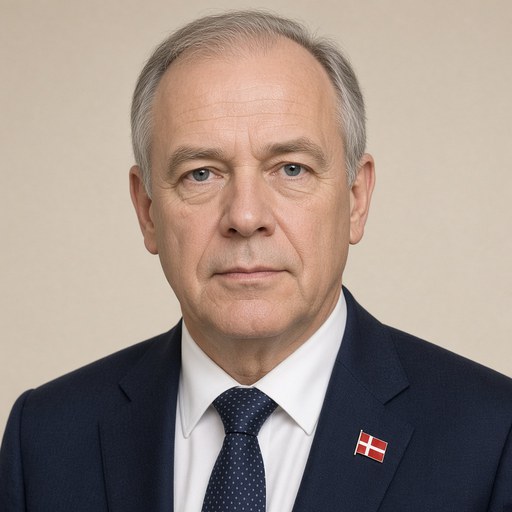
Speech at the 60th anniversary of Borgbjerg Mindepark, Skælskør. "We want the solidarity welfare."
 Poul Nyrup Rasmussen · Prime Minister of Denmark
- Context
- Rasmussen addressed a crowd at the 60th anniversary of Borgbjerg Mindepark in Skælskør on October 9, 1999, honoring the Danish labor movement's legacy.
- Main themes
- Solidarity and welfare state, Danish labor movement history, social democratic governance, economic progress and employment, wealth distribution and justice, F.J. Borgbjerg's legacy, political will and goal-setting, sustainability of progress, historical reflection on 20th century Denmark
- Duration
- ~37 min
- Words
- 4,464
- Sentences
- 330
- Readability
- 69
- Grade
- 6.9
- Syntax
- 2.61
- Vocabulary
- 1.88
Translated from Danish
The broad sphere of national life a sentence belongs to. Every sentence has an Arena, so it is the denominator the other indices are read against.
Other330 sentences in 77 paragraphs
Then and now
On the first Sunday in September 1939, World War II had just broken out. Nevertheless, Stauning came here and inaugurated Borgbjerg Mindepark. Stauning spoke at the inauguration of a park that people who did not have much money had raised funds for. A park in memory of a man who stood out. A man who meant something for the Danish labor movement and who was crucial for his time. His name was Frederik Hedegaard Jeppesen Borgbjerg. F.J. Borgbjerg, as he was called and called himself. It was 60 years ago.
Think about what can happen in 60 years. All that has been built up. It only came because we wanted it, because he wanted it, because people wanted it. And all that has been built up came only because we knew where we were going. We set clear goals, we had solidarity in order, we stood together.
That is Borgbjerg's message. Simple and direct, but far from self-evident.
In a few months, we will say goodbye to a century and a millennium of struggle. And we will say hello to a new one. We sense that we have opportunities like never before. We also sense that we are better off than we were years ago. We have will, and we have faith in a future that we can largely determine ourselves. But the prerequisite for us to find our way is that we know where we are going and know where we come from.
That is why we are here today.
It is a completely new and different time now than it was 60 years ago. We have gone through massive changes: World War II came. Hatred was built up between people. There was Nazism and bloody oppression. People were killed, not for what they did, but for what they were.
There were hard years in the 1950s. There was enormous progress in the 1960s. There were new setbacks during the major oil crises in the 1970s. And we fought our way through. We did not avoid setbacks in unemployment, but we got through it reasonably well. There was selfishness in the 1980s, and the country stagnated from 1986 for 7-8 years.
Now here in the 1990s, we can still be pleased that we have succeeded in putting the Social Democrats at the forefront of a renewal and one of the greatest periods of progress in Denmark.
It has gotten better for many
All of this is worth reflecting on today and worth sending a greeting to Borgbjerg. It all started with him and with his work. After 6 1⁄2 years of hard government work - work that has not always been easy - we must say that the project we set out to achieve has come a long way. We have corrected our society. We have greater welfare now than we had before, and significantly greater employment now than before.
We have achieved this in 6 1⁄2 years. 200,000 people have found work. The distribution of wealth in our country has not worsened but become more reasonable. Welfare is not perfect yet, but it is well on its way. Many more have gotten jobs. Many more have entered education. Billions of kroner have been allocated to hospitals. Not enough, but we are on our way. And contrary to what many may think, there are actually more hands helping the elderly.
What about families' own finances? 'They have been fleeced!' No, they actually have not. The fact is that households' private finances have increased by 25% in the last 6 1⁄2 years. You can feel that there is a little more now than there was before. More mobile phones, newer cars, houses that have been repaired, bought, and sold. Travels, computers, and much more. That is OK. It is extra OK because it is not just the elite that has felt the progress. It is actually the broad population that has felt that things have improved in Denmark.
Because we wanted it - because we did not turn our backs
I think we can allow ourselves to be a little proud today that our project succeeded. Just for a moment. Being the driving force in a period of progress that is stronger and more comprehensive than ever is no small feat. The first part of our project has succeeded. Now we must get started on the next big move. It will be our great political wish, our goal, that there will be a need for even more, yes for everyone in our country. We will work with heart and soul to ensure that the progress we now have does not just become a parenthesis with a new downturn. It must become a lasting stable line where more, yes the entire population, benefits and enjoys the progress. It is about justice. It is about welfare and quality. It is about sustainability.
Before we move on, I think we should clarify a couple of things for a moment.
Our country did not become this way by coincidence. It became this way because we wanted it to be so. With a hard political struggle over 6 1⁄2 years. We have come this far because we wanted it. Because we set ourselves some clear political goals. Because we had the political will and the ability to act, and because we thought long-term. That is why we passed the Pentecost Package last year. A piece of social democratic redistribution policy, but also a completely necessary intervention to keep us on track. And that is why we implemented changes to early retirement last year. We could not keep early retirement unchanged, because then it would abolish itself. But we could save early retirement through changes and modernization. That is what we did.
Do you understand, there is one thing that must be made completely clear in politics, as a social democratic leader and active trusted man and woman in the Danish Social Democrats: The easiest thing would be to turn our backs on the difficult, to close our eyes to all the challenges that lie ahead of us. That would be the easiest. Perhaps one could also receive some applause along the way, but it would be infinitely short-lived and infinitely irresponsible.
Today we have a country that has AAA - top ratings in the economy - not just once but three times from international institutions that assess how things are going in Denmark. They have taken our letter and repeated it three times! Can one demand better? I do not think so. It is under control. Not because it is a goal in itself, this with the economy. But I know that if the economy is not under control, then we will only be pressured to undertake a whole lot of negative things that risk hitting the unemployed and the most vulnerable in our country. Therefore, it must be under control.
That is why I see the Danish Social Democratic Party as the leadership of a large ship on a vast ocean, where the captain stands on his bridge and can see that if this ship maintains its course, then there is an iceberg that it will surely sail into. And here the captain can do two things: Either he can call the crew, the staff, and the passengers up on deck and say: You know what, we need to make a course change. It may be that a couple of coffee cups will fall to the floor, but then we are back on course after the iceberg. - Or he can choose not to. Put the telescope to the blind eye and pretend nothing is happening. But then it will go with him, the ship, and the crew and passengers as it went with the Titanic!
I will not do that, I cannot do that, and I will not do that.
We experienced in 1982 that Denmark was very close to the abyss. We experienced under Schlüter that Denmark implemented a potato cure too late, too roughly, and incorrectly in 1986. That our country stagnated for 7-8 years. With many unemployed as a result. We do not want that, we must not have that. We will intervene in time when necessary. We will continue with that working method. For we are determined to take good care of our society.
The money must be there before we can use it.
You know that, and I know that. But from both the right and left sides of Danish politics, I must assure you that some unsupported checks have been issued this summer.
Just take the party Venstre. The children should follow the money, right? That sounds good. Who wouldn’t want 36,000 kroner to keep their child at home? But that is actually quite bad. First of all, because in the coming ten years, it will be such that every time two people leave the labor market due to age or retirement, only one person will enter the labor market.
And are you aware that in the next 5-10 years, it will be such that 40%, I repeat 40% of public employees will retire due to age? Understand me correctly, the future recipe for the security and safety of the Danish welfare state is not to push women back to the kitchen, regardless of how large a check one tries to lure them back with.
The future is now, as before, that our welfare is best secured by as many as possible being in work. It is a prerequisite for welfare. And welfare is, of course, also a prerequisite for many being in work. Therefore, it is a bad idea to pay people to keep their children at home and take care of them themselves. It is the opposite of what we need. And it is also a bomb under the economy and is gender equality hostile.
Then there is the issue of the job deduction. Venstre proposes that companies should receive a deduction every time they hire a new employee. That job deduction should then be financed by abolishing the right to deduct union fees, right? You can see it, right? Then we finally got the shovel under them, they think.
But that is also a very bad idea. When there is progress in companies, we need to educate people, ensure that investments are underway, and that companies can hire more people. We should not give them a deduction. That is quite bad. And then there should be free choice on all shelves, I understand, also from Venstre. But what happens is that if we are to build a parallel healthcare system or a parallel unemployment benefit system or a parallel daycare system, then you can be sure of one thing, and that is that it will be more expensive. It sounds so good, but it is actually bad.
I feel after this summer that it has become far too easy to fish in the political waters without it costing them a dime in the opposition. It has become too easy to propose many suggestions without providing coverage for them. And therefore, a message also to Venstre and the Conservatives here for the budget exercises and to the left: Every time you propose a new expenditure item, please come and tell us where the money will come from or how coverage will otherwise be provided.
Equal treatment - also in illness
There is something else that I owe to say very clearly today. I believe many Danes have felt this summer that something went completely wrong in the healthcare debate. People must be tearing their hair out and saying to themselves, have they completely lost their minds in there? Those who smoke too much and those who weigh too much: To the back of the line. That impression could easily be gained. I just say, regardless of whether you smoke 10, 20, or 30 cigarettes a day and regardless of whether you weigh 10, 20, or 30 kg too much, you have the right to the same treatment in the hospital on equal terms with everyone else. That must be the case. It cannot be otherwise. I say this more for the sake of good order, so we do not misunderstand where we stand.
Equal rights. Independent of the thickness of the wallet and independent of who you are, but the right to be treated. But that does not mean that one cannot live a healthier life. I have not said that. Yes, you could take that and adjust a bit. But that is another discussion.
The next big move
What is it that we need to get started on now? We need to ensure that the weakest and those at the back in our country, who did not believe there was anything for them, can come into society. I know that some believe that our welfare state here at the turn of the century is in crisis, that the welfare state is now facing its sunset. My assertion is that the welfare state Denmark is at its dawn. At the beginning of the 21st century.
But it is also a new solidarity that we need to further develop again. We need to give the new solidarity words, feelings, and clothing so that it can be seen, understood, and inspire enthusiasm. When Borgbjerg campaigned around the country at his 200 meetings a year, he said: 'Solidarity is about building our society and also about the well-off giving to others.' For back then, when Stauning formed the government, when Borgbjerg campaigned, it was the two-thirds who were the poorest and the one-third who were the richest. Back then, solidarity was about taking - and building up.
Today it is something different. We are children of our own success. Today, two-thirds of our society's citizens are actually in the better part of society. And now solidarity is no longer about taking. But about giving!
That is what needs to be made clear. That is the challenge. It is, of course, also what is incredibly exciting to take on. In the very near future, there are plenty of tasks to tackle.
The new Danes
There are second-generation immigrants. Children and boys who never got the chance to learn what is right and reasonable and wrong. We need to take care of that, and that is why we have acted as quickly as we have in Odense. There needs to be more police to ensure that the population can be protected from those who have suffered so much in life that they cannot be immediately corrected.
And there are also many other young second-generation people whom you can give something meaningful to do. Last Sunday, I was in Jutland at Bavnehøj and spoke on the occasion of the Reunion. There was also a gymnastics association performing. Lots of girls and boys. Suddenly I see that there were two whose parents were not Danish. I believe they were Asians. And they were just as skilled as all the other Danish girls. And I said to myself and to the assembly: You have today sent a greeting to Odense. For Odense must understand that it is both a matter of protecting the population on the streets, but it is also a matter of ensuring that these young boys have something to do in a football club, boxing club, or gymnastics association. So they sleep at night instead of running around on the streets. That is also Odense's responsibility.
I would like everyone in Denmark to help lift this as well. For we all have a responsibility. And we must do both: We must ensure that there is safety on the streets. But we must also ensure that all the energy that such young men have can be channeled into sensible paths.
We must educate our people in our workplaces. Here, we must also remind employers and union representatives that even if your name is not Rasmussen or Jensen or Sørensen, but something in a foreign language, you can still be a skilled employee. A loyal wage earner and be capable of holding a job.
We cannot accept that unemployment - also among well-educated immigrants in this country - is at 20-25%. We need them too. In their interest and in our interest. Better quality in our society also means that we look ourselves in the eye.
Today is the day of solidarity.
After we Danes have had a private consumption increase of 25% over 6 years, I hear the Conservatives say: That is certainly not enough. We must lower taxes. The funding, we will get by cutting down on aid to developing countries. That is too poor. That they would admit it. Should we really, in our wealth, with our computers, with our new cars, with our repaired houses and newly purchased houses and cars, should we really say to the poor people in Africa, in Kosovo, and all the other places: 'Sorry, we must cut back on aid to you, because we need an extra computer, mobile phone, or an extra car'? We cannot accept that! That is not us. We know well what need is when we are finally called upon.
It is time that we also take on greater responsibility for each other and a responsibility for our society. It is the same line in Denmark as it is internationally, and I am sure that old Borgbjerg would nod when he heard this. I am sure he also spoke about it when he traveled the land and the realm as a 26-year-old at the end of the last century.
THE EURO
- security for the future
The international is not just something we sing about. When we say in Denmark that it should be the people who decide and not the money. When we say in Europe that it should also be that way there. Then we must be present and make our mark. Make our influence felt.
When the economy internationally becomes more and more raw, and speculative money can cross borders faster than we can follow them, shaking businesses across the country, we must protect ourselves - together with other countries. Therefore, I have not hidden the fact that Denmark is best served by saying YES to the common currency. Saying YES to joining others in the EURO - in our own interest and in our common interest.
It is a big decision to make. Therefore, we are opening up for debate now. Some may suffer from 'date mania'. But we should not let ourselves be distracted by that. We will discuss content and not dates. In every workplace, in the public as well as in the private sector. We will respect the population - for it is their decision. We will initiate a debate on the advantages and disadvantages. The population should not feel that they are buying a pig in a poke, or that they are being steamrolled from above. We know well that the wisest decisions are made when one has had time and space to think things through. And that decision must be the Danes' decision.
I know well that the Liberal Party would rather be rid of the reservations today than tomorrow. But our task is to keep the population together. Not to split the population. My own position is clear. I have not hidden that.
I have three reasons why Denmark is best served by joining the EURO.
First:
It is about security. It is about protecting ourselves in a harsh international speculative world. We have done that before. Since World War II, we have always been linked to another currency. We know well who gets hit when crises strike us. Have you thought about the fact that in 1998 - just one year ago - there was also a speculative crisis. The National Bank had to make support purchases in Denmark, whereas Portugal, Italy, and Spain - which are normally always hit - got off scot-free.
Second:
It is about employment and Danish jobs. It is about being able to plan and invest in an international world.
Third:
It is about politics! It is about being present where decisions about our country are made. That is where we need to be. But it is also about more than that. I am sure that many of the young people who are also here today hear something about international demands for trade. When I was a young student in the Workers' Movement's Business Council, I remember how concerned I was that Coca-Cola, IBM, and all the others could not just jump up and down on labor rights in other countries, could not just close their eyes to the exploitation of children in poor societies. Back then, we dreamed of an international world order where we could set demands for trade, respect for fundamental labor rights, respect for human rights, the right to organize, and a ban on child labor.
Many may have actually forgotten that. But suddenly we can see that the debate about the EURO area is also a debate about a new world order. In the upcoming negotiations on greater free trade, we must set demands for the others.
I am not saying that everything we dreamed of back then will become a reality tomorrow. I am not saying that it will automatically be that way. I am saying it can be that way if we decide to make it so. If we fight for it.
The EURO is therefore not just a currency that competes with the dollar; it is much more. It is a currency area that unites environmental values, human values, minority rights, and decent employment strategies in a large collective political effort. That is what we must fight for. It will not happen automatically, but it can happen if we fight for it.
That is why Denmark is best served by being within the EURO cooperation.
Our solidarity and our values are something lasting and strong.
Borgbjerg held 200 meetings in 1892, at the age of 26, around the small communities, with poor agricultural workers who had never heard the word solidarity. He traveled from village to village, agitating and speaking. He was in fact part of building the sense of community that has since carried our country. He came to the agricultural workers and spoke about a cause that was distant for them at first. He maintained the fight for a better society. It was he and Stauning and all those who helped create the foundation for what community is.
Now we must - at the farewell to this century - give our values new vitality again. Now we must say that duties and rights are not only for the single mother, for the unemployed, for the welfare recipient - but also for the bank! For the upper echelons of our society, it is also about duties and rights. Now we must talk about our responsibility. It is not only the government's responsibility. It is also the municipalities' responsibility. The individual person's responsibility for one another. If we simply absolve ourselves of our responsibility with a check from society once a month to the outcasts, then our society has become poorer and more vulnerable.
The community has not disappeared. The dark men are wrong when they think they can make politics focused on: 'me, me, and me'. The community is right here, now, today. We saw it during the Kosovo aid, when thousands of Danes did not hesitate when we had to help the old woman who, with her last strength, was pulled over the mountain edge and into the open.
When we asked the Danes: Should we not help the Kosovo people return to their country, no one was in doubt. A fantastic sense of community, which was not only about helping them, but which perhaps fundamentally also relates to the fact that we discovered something in ourselves, again, together with our neighbor.
Now we had something to stand together for. It was even about giving and helping. For many, I believe it actually meant that we discovered, rediscovered that sense of community. We experienced again that community and solidarity are something our society, our little niche also needs. Therefore, I believe there are good opportunities for this if we decide to do so. And especially if we build respect for one another more directly into the way our society functions.
Do not regard every single person in our country as a weak individual. For example, I am not sure that the physically disabled here in the country all want to be regarded as a social case. I am sure they do not. Physically disabled people in Denmark want to be treated with respect and with the right to be treated properly in our country. But they are not a social case. They also insist on taking on a social responsibility for all of us. We must understand that and thus also understand that this is the way to solidarity.
When it blows
I know well that - and Borgbjerg must have sensed it many times - it was blowing along the way. It was blowing very hard along the way - also last year in my job. I have long since gotten used to the fact that my job is also a place for slaps in the face. It is a job that, of course, also involves showing where it is that, in my best opinion, we should go, even if it means that some say - 'that is too bad'.
What kept me going in those moments when it was blowing hard was the awareness of what it is we are really fighting for in our party. The awareness that it is not just a question of doing what is popular today. It is a question of ensuring that the cohesion in society is intact, so that those who have not had a chance yet get one. And it is a question of ensuring that there is also something for the elderly in 5 and 10 years. Therefore, we promise no tax cuts. Therefore, we say that the debt must be reduced in our country, so the interest burden can come down, and we can spend money on the elderly, who are increasing in number.
For me, politics means these social democratic values: We have a responsibility for one another. We have a special responsibility for the weakest in our country. We build on duties and rights. We must protect all that cannot be measured in money.
If we hold on to that, then the future is on our side. We have done that for 100 years. We can do it for the next 100 years as well.
Remember that now. Thank you!
The original Danish. The tags above are read on the English translation's sentences.
Dengang og nu
Den første søndag i september 1939 var 2. Verdenskrig netop brudt ud. Alligevel tog Stauning hertil og indviede Borgbjerg Mindepark. Stauning talte ved indvielsen af en park, som folk, der ikke havde så mange penge, havde samlet ind til. En park til minde om en mand, der ragede op. En mand, der betød noget for den danske arbejderbevægelse og som var afgørende for sin tid. Han hed Frederik Hedegaard Jeppesen Borgbjerg. F.J. Borgbjerg, som han blev kaldt og kaldte sig. Det er 60 år siden.
Tænk, hvad kan der ske på 60 år. Alt det, der er bygget op. Det kom kun, fordi vi ville det, fordi han ville det, fordi folk ville det. Og alt det, der er bygget op, kom kun fordi vi vidste, hvor vi skulle hen. Vi satte os klare mål, vi havde solidariteten i orden, vi stod sammen.
Det er det, der er Borgbjergs budskab. Enkelt og direkte, men langt fra selvfølgeligt.
Om få måneder vinker vi farvel til et århundrede og et årtusinde i kamp. Og vi siger goddag til et nyt. Vi fornemmer, at vi har muligheder som aldrig før. Vi fornemmer også, at vi har det bedre, end vi havde det for år tilbage. Vi har vilje, og vi har tro på en fremtid, som vi i høj grad selv kan bestemme. Men forudsætningen for, at vi kan finde vej er, at vi ved, hvor vi skal hen, og ved hvor vi kommer fra.
Det er derfor, vi er her i dag..
Det er en helt ny og anderledes tid nu, end for 60 år siden. Kæmpemæssige forandringer har vi været igennem: 2. Verdenskrig kom. Der blev opbygget had mellem folk. Der var nazisme og blodig undertrykkelse. Folk blev slået ihjel, ikke for hvad de gjorde, men for det de var.
Der kom hårde år i 50’erne. Der kom enorm stor fremgang i 60’erne. Der kom nye tilbageslag under de store oliekriser i 1970’erne. Og vi kæmpede os vej. Vi undgik ikke tilbageslag i arbejdsløsheden, men kom dog nogenlunde igennem. Der kom egoisme i 80’erne og landet, der stod i stampe fra 1986 og 7-8 år frem.
Nu her i 90’erne kan vi alligevel glæde os over, at det lykkes for os igen at sætte Socialdemokratiet i spidsen for en fornyelse og en af de største fremgangsperioder i Danmark.
Det er blevet bedre for flere
Alt det er nok værd at tænke over i dag og nok værd at bringe en hilsen til Borgbjerg. Det var jo med ham og med hans det startede. Efter 6 1⁄2 års hårdt regeringsarbejde - et arbejde, der til tider ikke har været nemt - må vi sige, at det projekt, som vi satte os for, er vi nået et langt stykke af vejen med. Vi har fået rettet vores samfund op. Vi har større velfærd nu, end vi havde før og vel at mærke meget større beskæftigelse nu end før.
Det har vi nået på 6 1⁄2 år. 200.000 mennesker er kommet i arbejde. Fordelingen af rigdommen i vores land er ikke blevet ringere men mere rimelig. Velfærden er ikke perfekt endnu, men den er godt på vej. Mange flere har fået job. Mange flere er kommer i uddannelse. Milliarder af penge er tilført sygehusene. Ikke nok, men vi er på vej. Og modsat, hvad mange måske tror, er der faktisk også flere hænder, der hjælper de ældre.
Hvad så med familiernes egen økonomi? 'De er jo blevet flået!' Nej, det er de faktisk ikke. Sagen er den, at husholdningernes private økonomi er steget med 25% i de sidste 6 1⁄2 år. I kan godt mærke, at der er lidt mere nu, end der var før. Flere mobiltelefoner, nyere biler, huse, der er reparerede, købt og solgt. Rejser, computere og meget andet. Det er OK. Det er ekstra OK, fordi det ikke kun er eliten, der har mærket den fremgang. Det er faktisk den brede befolkning, der har mærket, at det er blevet bedre i Danmark.
Fordi vi ville - fordi vi ikke vendte ryggen til
Jeg synes godt, vi en dag som i dag kan tillade os at være lidt stolte af, at vores projekt lykkedes. Bare et øjeblik. At være den drivende kraft i en fremgangsperiode, der er stærkere og mere omfattende end nogensinde, er ikke så ringe. Den første del af vores projekt er lykkedes. Nu skal vi i gang med det næste store træk. Det bliver vores store politiske ønske, vores mål, at der bliver brug for endnu flere, ja for alle i vores land. Vi vil arbejde med liv og sjæl for, at den fremgang vi nu har, ikke bare bliver en parentes med ny nedtur. Det skal blive en varig stabil linie, hvor flere, ja hele befolkningen får del og gavn og glæde af fremgangen. Det handler om retfærdighed. Det handler om velfærd og kvalitet. Det handler om bæredygtighed.
Inden vi nu går videre, synes jeg, vi et øjeblik skal gøre os et par enkelte ting klar.
Vores land blev ikke sådan tilved en tilfældighed. Det blev sådan, fordi vi ønskede det skulle blive sådan. Med en benhård politisk kamp gennem 6 1⁄2 år. Vi er nået hertil, fordi vi ville det. Fordi vi satte os nogle klare politiske mål. Fordi vi havde politisk vilje og handlekraft til det, og fordi vi tænkte langsigtet. Derfor vedtog vi Pinsepakken sidste år. Et stykke socialdemokratisk fordelingspolitik, men også et helt nødvendigt indgreb for at holde os på sporet. Og derfor gennemførte vi ændringerne af efterlønnen sidste år. Vi kunne ikke holde efterlønnen uændret, for så ville den afskaffe sig selv. Men vi kunne redde efterlønnen gennem ændringer og moderniseringer. Det var det, vi gjorde.
Forstår I, der er én ting, man skal gøre sig fuldstændig klart i politik, som socialdemokratisk leder og aktiv tillidsmand- og kvinde i det danske Socialdemokrati: Det nemmeste vil være at lade være, at vende ryggen til det besværlige, at lukke øjnene for alle de udfordringer, der ligger foran os. Det vil være det nemmeste. Det kan man måske også høste lidt bifald for undervejs, men det bliver så uendeligt kortvarigt og så uendeligt uansvarligt.
Vi har i dag et land, der har AAA - topkarakterer i økonomi - ikke kun én gang men 3 gange fra internationale institutioner, der vurderer, hvordan går det nu i Danmark. De har taget vores bogstav, og de har gentaget det 3 gange! Kan man forlange det bedre. Jeg mener det ikke. Der er styr på det. Ikke fordi det er et mål i sig selv, det med økonomien. Men jeg ved, at hvis der ikke er styr på økonomien, så bestiller vi ikke andet end at være presset til at foretage os en hel masse negative ting, der risikerer at ramme de arbejdsløse og mest udsatte i vort land. Derfor skal der være styr på det.
Derfor ser jeg det danske socialdemokratiske parti som ledelse af et stort skib på et stort ocean, hvor kaptajnen står på sin bro og kan se, at hvis det her skib fastholder sin kurs, så er der et isbjerg, som man med sikkerhed sejler ind i. Og her kan kaptajnen foretage to ting: Enten kan han kalde mandskab, besætning og passagerer op på dækket og sige: Ved I hvad, vi er nødt til lige at foretage en kursændring. Det kan godt være, der er et par kaffekopper, som ryger på gulvet, men så er vi retskibs igen efter isbjerget. - Eller også kan han lade være. Sætte kikkerten for det blinde øje og lade som ingenting. Men så vil det gå med ham, skibet, og besætning og passagerer som det gik med Titanic!
Det vil jeg ikke, det kan jeg ikke, og det gør jeg ikke.
Vi har oplevet i 1982, at Danmark var meget tæt på afgrunden. Vi har oplevet under Schlüter, at Danmark gennemførte en kartoffelkur for sent, for groft og forkert i 1986. At vores land stod i stampe i 7-8 år. Med masser af arbejdsløse til følge. Det vil vi ikke, det skal vi ikke. Vi vil gribe ind i tide, når det er nødvendigt. Vi vil fortsætte med den arbejdsmetode. For vi er fast besluttet på at passe godt på vores samfund.
Pengene skal jo være der før vi kan bruge dem.
Det ved I, og det ved jeg. Men fra både højre og venstre side i dansk politik skal jeg ellers love for, at der blevet udstedt nogle dækningsløse checks her i sommer.
Tag bare partiet Venstre. Børnene skal følge pengene, ikke. Det lyder jo godt. Hvem vil ikke gerne have 36.000 kr. for at holde sit barn hjemme. Men det er faktisk ret skidt. For det første fordi i de kommende ti år vil det være sådan, at hver gang to mennesker forlader arbejdsmarkedet på grund af alder eller pension, så er det kun ét menneske, der kommer ind på arbejdsmarkedet.
Og er I klar over, at de næste 5-10 år vil det være sådan, at 40%, jeg gentager 40% af de offentligt ansatte vil gå på pension på grund af alder? Forstå mig ret, fremtidens opskrift for det danske velfærdssamfunds sikkerhed og tryghed er ikke at presse kvinderne tilbage til kødgryderne uanset, hvor stor en check, man prøver at trække dem tilbage med.
Fremtiden er nu som før, at vores velfærd sikres bedst, ved at flest mulige er i arbejde. Det er en forudsætning for velfærden. Og velfærd er selvfølgelig også forudsætningen for, at mange er i arbejde. Derfor er det en dårlig idé at betale mennesker for at holde deres børn hjemme og passe dem selv. Det er det modsatte, vi har brug for. Og det er i øvrigt også en bombe under samfundsøkonomien og det er ligestillingsmæssigt fjendtligt.
Så er der det med jobfradraget. Venstre foreslår, at virksomhederne skal have et fradrag, hver gang de ansætter en ny. Det jobfradrag skal så finansieres ved, at man afskaffer fradragsretten for faglige kontingenter, ikke. I kan godt se det, ikke. Så fik vi endelig skovlen under dem, tænker de .
Men det er jo også en meget dårlig idé. Når der er fremgang i virksomhederne skal vi uddanne folk, sørge for at investeringer er i gang, og at virksomhederne kan ansætte flere mennesker. Vi skal da ikke give dem et fradrag. Det er ret skidt. Og så skal der være frit valg på alle hylder, kan jeg forstå, også fra Venstre. Men det der sker er jo, at hvis vi skal opbygge et parallelt sygehusvæsen eller et parallelt dagpengesystem eller et parallelt daginstitutionssystem, så er man i hvert fald sikker på en ting, og det er, at det bliver dyrere. Det lyder så godt, men det er faktisk skidt.
Jeg føler efter denne sommer, at det er blevet alt for nemt at fiske i de politiske vande, uden at det koster dem en krone i oppositionen. Det er blevet for nemt at stille mange forslag uden at anvise dækning for det. Og derfor med besked også til Venstre og til Konservative her til finanslovsøvelserne og til venstrefløjen: Hver gang I foreslår en ny udgiftspost, så kom venligst og fortæl os, hvor pengene skal komme fra, eller hvordan der i øvrigt skal skaffes dækning.
Ligebehandling - også ved sygdom
Der er noget andet, som jeg skylder at sige meget tydeligt i dag. Jeg tror mange danskere har følt her i sommer, at der var noget, der gik helt galt i sygehusdebatten. Folk må rive sig i håret og sige til sig selv, er de nu gået helt fra snøvsen derinde. Dem, der ryger for meget og dem, der vejer for meget: Om bag i køen. Det indtryk kunne man nemt få. Jeg siger bare, uanset om man ryger 10, 20 eller 30 cigaretter om dagen og uanset om man vejer 10, 20 eller 30 kg for meget, så har man ret til den samme behandling på sygehuset på lige fod med alle andre. Sådan må det være. Det kan ikke være anderledes. Jeg siger det mere for god ordens skyld, så vi ikke misforstår, hvor det er vi står.
Lige ret. Uafhængighed af pengepungens tykkelse og uafhængighed af, hvem man er men ret til at blive behandlet. Men derfor kan man selvfølgelig godt leve et sundere liv. Det har jeg ikke sagt. Ja, det kunne I jo godt tage og rette jer lidt efter. Men det er jo en anden diskussion.
Det næste store træk
Hvad er det, vi skal i gang med nu? Vi skal i gang med at sikre, at de svageste og de bageste i vores land, som ikke havde troet, der var noget for dem, kan komme inden for i samfundet. Jeg ved godt, der er nogen, der mener, at vores velfærdssamfund her ved århundredskiftet, er i krise, at velfærdssamfundet nu står foran sin solnedgang. Min påstand er, at velfærdssamfundet Danmark står ved sin morgenrøde. Ved starten på det 21. århundrede.
Men det er også en ny solidaritet, vi skal videreudvikle igen. Vi skal give den nye solidaritet ord, følelser og klædedragt, så den kan ses, forstås og vække begejstring. Når Borgbjerg agiterede rundt om i landet på sine 200 møder på et år, så sagde han: 'Solidaritet handler om at bygge vores samfund op og handler også om, at de velbjærgede skal give til andre'. For den gang, da Stauning dannede regering, da Borgbjerg agiterede, der var det jo de to tredjedele, der var de fattigste og den ene tredjedel, der var de rigeste. Da handlede solidaritet om at tage - og bygge op.
I dag der er det jo noget anderledes. Vi er børn af vores egen succes. I dag er to tredjedele af vores samfunds borgere faktisk i den bedre del af samfundet. Og nu handler solidaritet ikke længere om at tage. Men om at give!
Det er det, der skal gøres klart. Det er det, der er udfordringen. Det er selvfølgelig også det, der er utrolig spændende at tage fat på. I den allernærmeste tid er der masser af opgaver at tage fat på.
De nye danske
Der er 2. generations indvandrere. Børn og knægte, som aldrig fik chancen for at lære, hvad der var ret og rimeligt og forkert. Vi er nødt til at tage hånd om det, og derfor har vi også handlet så hurtigt vi har gjort i Odense. Der skal mere politi for at sikre, at befolkningen kan være beskyttet mod dem, der har fået så mange skader i livet, at de ikke umiddelbart kan rettes op.
Og så er der også mange andre unge 2. generations folk, som I kan give noget fornuftigt at lave. Jeg var sidste søndag i Jylland på ejer Bavnehøj og tale i anledning af Genforeningen. Der optrådte også en gymnastikforening. Masser af piger og drenge. Pludselig ser jeg, at der var to, hvis forældre ikke var danske. Jeg tror, de var asiater. Og de var ligeså dygtige som alle de andre danske piger. Og jeg sagde til mig selv og til forsamlingen: I har i dag sendt en hilsen til Odense. For Odense er nødt til at forstå, at det både er et spørgsmål om at beskytte befolkningen på gaderne, men det er altså også et spørgsmål om, at de her unge knægte, de skal have noget at lave i en fodboldklub, bokseklub, eller gymnastikforening. Så de sover om natten i stedet for at rende rundt på gaderne. Det er også Odenses ansvar.
Det vil jeg gerne have, at alle danskere også er med til at løfte. For vi har et ansvar alle sammen. Og vi skal gøre begge dele: Vi skal sørge for, at der er tryghed på gaden. Men vi skal også sørge for, at al den energi sådan nogle knægte har, ja den kan komme over i nogle fornuftige baner.
Vi skal uddanne vores mennesker på vores arbejdspladser. Også her skal vi huske arbejdsgiverne og tillidsmændene på, at selvom man ikke hedder Rasmussen eller Jensen eller Sørensen, men hedder noget på et fremmed sprog, så kan man altså godt være en dygtig medarbejder. Loyal lønmodtager og være i stand til at løfte et job.
Vi kan ikke være bekendt, at arbejdsløsheden - også blandt veluddannede indvandrere her i landet -ligger på 20-25%. Dem har vi også brug for. I deres interesse og i vores interesse. Bedre kvalitet i vores samfund handler også om, at vi kigger os selv i øjnene.
Det er solidaritetens dag i dag.
Efter at vi danskere har haft en privat forbrugsfremgang på 25% på 6 år, så hører jeg De konservative sige: Det er skam ikke nok. Vi må sænke skatterne. Finansieringen, den skal vi få ved at sætte u-landshjælpen ned. Det er for ringe. At de vil være det bekendt. Skulle vi virkelig i vores rigdom, med vores computere, med vores nye biler, med vores reparerede parcelhuse og nykøbte parcelhuse og biler, skulle vi virkelig sige til de fattige folk i Afrika, i Kosovo, og alle de andre steder: 'Beklager, vi må skære ned på bistanden til jer, for vi skal lige have en ekstra computer, mobiltelefon eller en ekstra bil'. Det kan vi ikke være bekendt! Det er ikke os. Vi ved jo godt, hvad nød er, når der endelig kaldes på os.
Det er på tide, at vi også påtager os et større ansvar for hinanden og et ansvar for vores samfund. Det er den samme line i Danmark, som det er internationalt og jeg er helt sikker på, at gamle Borgbjerg ville nikke, når han hørte det. Jeg er helt sikker på, at han også talte om det, når han drog land og rige rundt som 26-årige i det forrige århundredes slutning.
EURO’en
- sikkerhed for fremtiden
Det internationale, er jo ikke bare noget vi synger om. Når vi siger i Danmark, at her skal det være menneskene, der bestemmer og ikke pengene. Når vi siger i Europa, at sådan skal det også være der. Så må vi da være til stede og sætte præg. Gøre vores indflydelse gældende.
Når økonomien internationalt bliver mere og mere rå, og spekulationspenge kan gå over grænserne hurtigere end vi kan nå at følge dem, ryste virksomheder over landet, så er vi nødt til at værne os - sammen med andre lande. Derfor har jeg ikke lagt skjul på, at Danmark er bedst tjent med at sige JA til den fælles mønt. Sige JA til at gå sammen med de andre om EURO’en - i egen interesse, og i vores fælles interesse.
Det er en stor beslutning at tage. Derfor lægger vi op til debat nu. Så er der nogen, der lider af 'datomani'. Men det skal vi jo ikke lade os distrahere af. Vi vil diskutere indhold og ikke dato. På enhver arbejdsplads, i det offentlige som i det private. Vi vil respektere befolkningen - for det er deres afgørelse. Vi vil igangsætte en debat om fordele og ulemper. Befolkningen skal ikke føle, de køber katten i sækken, eller at de bliver tromlet fra oven. Vi ved godt, at de klogeste beslutninger træffes, når man har haft tid og rum til at tænke sig godt om. Og den beslutning skal være danskernes beslutning.
Jeg ved godt, at partiet Venstre hellere ville af med de forbehold i dag end i morgen. Men vore opgaver er nu engang at holde sammen på befolkningen. Ikke splitte befolkningen. Min egen holdning er klar. Det har jeg ikke lagt skjul på.
Jeg har tre grunde til, at Danmark er bedst tjent med at tilslutte os EURO’en.
For det første:
Det handler om tryghed. Det handler om at beskytte os i en barsk international spekulationsverden. Det har vi i øvrigt gjort før. Siden 2. Verdenskrig har vi altid haft tilknytning til en anden valuta. Vi ved jo godt, hvem der bliver ramt, når kriser rammer os. Har I tænkt på, at i 1998 - bare for 1 år siden, - var der også en spekulationskrise. Nationalbanken måtte foretage støtteopkøb i Danmark, hvorimod Portugal, Italien og Spanien, - der normalt altid bliver ramt, - gik ram forbi.
For det andet:
Det handler om beskæftigelse og danske arbejdspladser. Det handler om, at vi kan planlægge og investere i en international verden.
For det tredje:
Det handler om politik! Det handler om at være til stede dér, hvor der træffes beslutninger om vores land. Der skal vi være, Men det handler også om mere end det. Jeg er sikker på, at mange af de unge, der også er her i dag, hører noget om internationale krav til handel. Da jeg var ung student i Arbejderbevægelsens Erhvervsråd, kan jeg huske, hvor optaget jeg var af, at Coca Cola, IBM og alle de andre ikke bare kunne hoppe op og falde ned på faglige rettigheder i andre lande, ikke bare kunne lukke øjnene for børns udnyttelse i de fattige samfund. Dengang drømte vi om en international verdensorden, hvor vi kunne sætte krav til handelen, respekt for faglige grundrettigheder, respekt for menneskerettigheder, ret til at organisere sig og forbud mod børnearbejde.
Mange har måske i virkeligheden glemt det. Men pludselig kan vi se, at debatten om EURO-området også er en debat om en ny verdensorden. Vi skal i de kommende forhandlinger om større frihandel stille krav til de andre.
Jeg siger ikke, at alt det, vi drømte om dengang, bliver en realitet i morgen. Jeg siger ikke, at det automatisk bliver sådan. Jeg siger, det
kan
blive sådan, hvis vi beslutter os for det. Hvis vi kæmper for det.
EURO’en er altså ikke bare en valuta, der konkurrerer med dollaren, det er meget mere. Det er et valutaområde, der forener miljøværdier, menneskeværdier, minoritetsrettigheder og ordentlige beskæftigelsesstrategier i en stor samlet politisk indsats. Det er det vi skal kæmpe for. Det bliver ikke sådan automatisk, men det kan blive sådan, hvis vi kæmper for det.
Det er derfor, Danmark er bedst tjent med at være inden for i EURO-samarbejdet.
Vores solidaritet og vores værdier er noget varigt og stærkt.
Borgbjerg holdt i 1892, 26 år gammel, 200 møder rundt omkring i de små samfund, hos fattige landarbejdere, der aldrig havde hørt ordet solidaritet. Han gik rundt fra landsby til landsby og agiterede og talte. Han var i virkeligheden med til at opbygge den fællesskabsfølelse, som siden har båret vores land. Han kom til landarbejderne og talte om en sag, der var fjern for dem i begyndelsen. Han fastholdt kampen for et samfund, der var bedre. Det var ham og Stauning og alle dem, der var med til at skabe fundamentet for, hvad fællesskab er.
Nu skal vi - ved afskeden til dette århundrede - give vores værdier ny livskraft igen. Nu skal vi sige, at pligter og rettigheder ikke alene er for den enlige mor, for den arbejdsløse, for bistandsklienten - men også for banken! Også for de øverste lag i vores samfund handler det om pligter og rettigheder. Nu skal vi tale om vores ansvar. Det er ikke kun regeringens ansvar. Det er også kommunernes ansvar. Det enkelte menneskes ansvar for hinanden. Hvis vi alene fraskriver os vores ansvar ved en check fra samfundet én gang om måneden til de udstødte, så er vores samfund blevet fattigere og mere sårbart.
Fællesskabet er ikke forsvundet. Mørkemændene tager fejl, når de tror de kan lave politik med fokus på: 'mig selv, mig selv og mig selv'. Fællesskabet ligger lige her, nu, i dag. Vi så det under Kosovo-hjælpen, da tusindvis af danskere ikke tøvede, da vi skulle hjælpe den gamle kone, der ved sine sidste kræfter fik sig trukket over bjergkanten og ind i det fri.
Da vi spurgte danskerne: Skal vi ikke hjælpe de kosovo-folk til at komme tilbage til deres land, så var ingen i tvivl. En fantastisk fællesskabsfølelse, som ikke alene handlede om at hjælpe dem, men som måske dybest set også handler om, at vi også opdagede noget i os selv, igen, sammen med naboen.
Nu havde vi noget at stå sammen om. Det handlede oven i købet om at give og hjælpe. For mange tror jeg i virkeligheden, det betød, at vi opdagede, genopdagede den fællesskabsfølelse. Vi oplevede igen, at fællesskabet og solidariteten, der er noget vores samfund, vores lille smørhul også har brug for. Derfor tror jeg, der er gode muligheder herfor, hvis vi beslutter os for det. Og især også hvis vi bygger respekten for hinanden mere direkte ind i vores samfunds måde at fungere på.
Lad være med at betragte hver eneste i vores land, som et svagt menneske. Jeg er f.eks. ikke sikker på, at de fysisk handicappede her i landet alle sammen ønsker at blive betragtet som et socialt tilfælde. Jeg er sikker på, det vil de ikke. Fysisk handicappede mennesker i Danmark vil behandles med respekt og med rettigheden til at blive behandlet ordentligt i vores land. Men de er da ikke et socialt tilfælde. De insisterer også på at påtage sig et socialt medansvar for alle os. Det skal vi forstå og dermed også forstå, at dér ligger vejen til solidaritet.
Når det blæser
Jeg ved jo godt, at - og det må Borgbjerg også have fornemmet mange gange - det blæste undervejs. Det blæste meget hårdt undervejs - også skaidste år i mit job. Jeg har for længst vænnet mig til, at mit job også er øretævernes holdeplads. Det er et job, som selvfølgelig også handler om at vise, hvor det er, vi efter min bedste opfattelse skal hen, selvom det indebærer, at nogen siger - 'det er for dårligt'.
Dét, der i de stunder, hvor det blæste meget, holdt mig oppe, det var bevidstheden om, hvad det egentlig er, vi slås for i vores parti. Bevidstheden om, at det ikke alene er spørgsmål om at gøre det, det er populært i dag. Det er et spørgsmål om at sikre, at sammenhængskraften i samfundet er intakt, så dem, der ikke har haft en chance endnu, får det. Og det er spørgsmål, om at sikre, at der også om 5 og 10 år er noget til de ældre. Derfor lover vi ingen skattelettelser. Derfor siger vi, at gælden skal ned i vores land, så rentebyrden kan komme ned, og vi kan bruge penge til de ældre, som bliver flere.
For mig er politik ensbetydende med disse socialdemokratiske værdier: Vi har et ansvar for hinanden. Vi har et særligt ansvar for de svageste i vores land. Vi bygger på pligter og rettigheder. Vi skal værne om alt det der ikke kan gøres op i penge.
Holder vi fast i det, så er fremtiden på vores side. Det har vi gjort i 100 år. Det kan vi også gøre i de næste 100 år.
Husk det nu. Tak!