




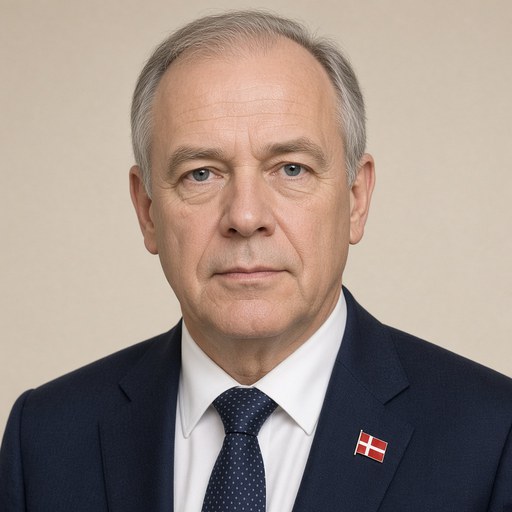
The Prime Minister's response to inquiry F 7 to the Prime Minister and the Minister of Foreign Affairs regarding Danish European policy after the referendum.
 Poul Nyrup Rasmussen · Prime Minister of Denmark
- Context
- Rasmussen addressed the Danish Folketing on November 21, 2000, responding to a parliamentary inquiry about Denmark's European policy following the September 28 euro referendum defeat.
- Main themes
- Danish European policy post-referendum, euro referendum rejection, EU opt-outs, EU enlargement to Central and Eastern Europe, public debate on European integration, employment and economic growth, environmental protection, consumer protection and food safety, fight against international crime, global responsibilities and development, Nice European Council summit, Denmark's role in the EU
- Duration
- ~21 min
- Words
- 2,480
- Sentences
- 157
- Readability
- 47
- Grade
- 10.2
- Syntax
- 2.63
- Vocabulary
- 2.13
Translated from Danish
The broad sphere of national life a sentence belongs to. Every sentence has an Arena, so it is the denominator the other indices are read against.
Other157 sentences in 62 paragraphs
A Broader Danish European Debate
F 7: 'What can the government inform about Danish European policy after the referendum?'
With just over two weeks until the meeting of the European Council in Nice, it is useful that we have the opportunity to discuss the challenges facing Danish European policy with this inquiry. Not only in the lead-up to Nice, but also in the longer term.
The result of the referendum on September 28 was a no to the common currency. 1.6 million Danes voted yes. 1.8 million Danes voted no. But not a no to Europe. The result of the referendum also means that new referendums on the lifting of the opt-outs are not on the agenda.
Denmark has not turned its back on Europe. Now we must unite our efforts for the forward-looking work for Denmark.
We need a broader Danish European debate in the Folketing and in Danish society as a whole.
I urge the parties to strengthen the considerations here in the Folketing regarding this forward-looking work. We must enhance the political and public debate about Denmark in Europe now and in the future, so that we can create the necessary popular anchoring of Denmark's European policy in a new dialogue with the population. I believe we should work towards integrating European policy questions increasingly into the domestic political debate and seeing them in connection with Denmark's response to global developments.
There is an opportunity for more initiatives in the Folketing. More, larger European policy questions should be debated in context, so that the debate becomes easier for the public to follow. The Folketing's European Committee will, of course, be a central forum in this work – but the subject committees should also take a greater role in setting the new agenda. It is important that we increasingly get a sense of how much the work for Danish politics and Denmark's future is connected with European politics – also in a global context, in relation to the WTO, in environmental cooperation, and in broader foreign policy contexts.
It is important that the debate about Denmark's role and future position in Europe does not only take place here in the Folketing. The debate must be broadened to all corners of society. Many of the most important questions that concern Danes actually have a clear European angle.
Public hearings in various forms are well-suited to broaden the debate. This is also the government's own experience.
Public hearings can be organized both here at Christiansborg and around the country, so that the large hearing debates are also anchored regionally. Our common goal must be to contribute to creating a democratically founded debate process that can renew the Danish European debate, where everyone, regardless of opinions, can participate actively.
I also believe it is important to pay attention to the local and regional aspects of this. It is here in the local community that the lines between the local and the national and international can be found. And thus also a greater recognition of the connection between Denmark's future and Europe's future.
* * *
Much to Fight For
Denmark has so many fundamental interests to safeguard in Europe.
Our economic and employment dependence on our neighbors in Europe is well known. Our political interests – and opportunities to solve a number of issues that we cannot solve alone – are equally vital.
Therefore, Denmark does not turn its back on our neighbors. We continue as active members of European cooperation – the European Union. The government will continue to work for Danish priorities and key issues in the EU. This applies not least to areas such as:
an increasingly coordinated effort in favor of employment and stable economic growth environmental protection better consumer protection and greater food safety the fight against international crime and illegal immigration and human trafficking active advocates for fulfilling our global responsibilities – both in relation to international financial forces, global environmental issues, trade problems, and ensuring fundamental rights and our responsibilities towards the developing world.
We will safeguard Denmark's interests. And we will contribute in solidarity to solving the common tasks.
* * *
The Most Important Political Task Ahead
The most important political task ahead of us is ultimately the enlargement with the new democracies in Central and Eastern Europe. The government welcomes the Commission's latest reports on enlargement. They are good, concrete reports that outline the path leading to enlargement as a goal. They are clearly positive in their assessment of the applicant countries' progress. The Commission's recommendations align very well with Denmark's positions and everything we have worked for since 1993.
The challenges and tasks ahead of us are many. They are of great significance for Denmark and Europe's future. We have previously shown that Denmark can make a difference. The negotiations on employment in Amsterdam and environmental cooperation are clear examples of this.
* * *
The Enlargement Treaty
Now it is about concluding the ongoing intergovernmental conference at the meeting of the European Council in Nice in December. For the sake of enlargement, it is crucial that the intergovernmental conference is concluded in Nice. The main objective of Danish European policy is precisely the enlargement of the EU with the countries of Central and Eastern Europe. The EU must help to break down the political, economic, and social divides of the post-war period. Hence the enlargement – hence the Nice Treaty.
From the beginning, the government has worked hard to bring the member states together on the reforms in the EU that are necessary for the sake of enlargement. This has been successful. It creates a good basis for achieving a result in Nice.
The negotiations in the intergovernmental conference have now entered the final phase.
For Denmark and for each of the EU's member states, there are significant interests at stake. It will be lengthy and difficult negotiations in Nice. The discussion at the informal meeting of the European Council in Biarritz confirmed that it will be challenging. But it also showed a widespread willingness among all member states to achieve a result in Nice. The EU countries are united in the desire to create the right foundation for enlargement. This is positive. Ultimately, it will be decisive for the success of the intergovernmental conference.
Good progress has been made in the negotiations.
But it is clear that crucial areas such as: the size and composition of the Commission, voting weights in the Council, and extended access to majority voting will only find their final negotiated solution in Nice.
It will be tough and difficult negotiations – it was the same in Amsterdam. But in Nice, we must reach a result.
The overarching, unifying line in Denmark's negotiations is clear: It is about equality, parity, and justice. We must safeguard Denmark's interests in all areas.
A number of smaller countries, including Denmark, still want a commissioner for each country in the future – even when we become many more than we are now. We are fighting for this. This principle that all countries are equal and on an equal footing is important to maintain throughout. We have seen other proposals for the future organization of the Commission – one of them concerns job rotation among countries in relation to the Commission. To this, we must, in consequence of what I have just outlined, maintain that the principle of equality and parity must apply to all member states – if such an arrangement is to have any relevance or significance.
It is important to uphold this principle of equality. It goes without saying that the new member states will also have this fundamental attitude. We must not break with the community's principle in this area.
In the negotiations on voting weights, there are similarly central interests at stake. Here, we must maintain from Denmark's side the positive extra voting weight that smaller countries receive. The positive extra voting weight that smaller countries have today and which we must also fight to the greatest extent possible to carry forward in the new reform.
There are still important points outstanding regarding the content of the cooperation – questions that require active Danish efforts in the remainder of the negotiation period leading up to Nice. I believe that it will be possible to reach a comprehensive result in Nice. Because we are all committed to this. Because a no to the Nice Treaty will be seen as a blockage to enlargement – our greatest peace obligation.
The Danish government has as a crucial objective that the Nice Treaty is seen in hindsight as 'the enlargement treaty' – the last stone that was removed on the path to making a whole and peaceful Europe a reality.
The government's negotiating basis is well known. The same applies to the Folketing's resolution of October 5. The government will maintain close contact with the parties in the Folketing and the Folketing's European Committee during the final negotiations.
The Minister of Foreign Affairs will provide further details on the negotiations at the intergovernmental conference.
* * *
Any debate on how we should improve European cooperation must start from how we can better take care of the interests of the population – the citizens. This will not be less important in an EU that is becoming larger with more members. Without a better anchoring in the populations of our countries, cooperation cannot function.
The EU can only function well and solve the common problems if the cooperation appears acceptable, reasonable, and relevant to solving precisely the problems that the population needs to have solved.
Denmark is part of Europe. Europe is part of Denmark – but also only a part. This is how I believe we can summarize the signal from the Danish population.
The reform ideas that we can see the debate sprouting around in the years after Nice are interesting and important. If we are to reform the working methods in the EU, the changes must lead to decisions that entail greater openness and understandability.
There are several paths for future cooperation. Here too, our ideas and opinions are important to discuss broadly in Denmark.
We do not believe in a federal Europe. We do not want it either. We oppose it. A European federation with a president and government is not the answer. Neither do governments or national parliaments in reality want this in Europe. The distance will grow between people and governments; this is the opposite of what we need.
There are good opportunities to strengthen our ability to solve our common problems in the EU through the practical path we are currently collaborating on. The Council of Ministers from the member states is the crucial decision-making forum. I believe this should continue to be the foundation for cooperation.
At the same time, we can further develop cooperation in specific areas. May I just refer to the employment chapter in the Amsterdam Treaty as a good example. This method of cooperation entails that we pursue some common goals at the EU level, inspire each other through reporting and recommendations – but it is in our national politics that the goals must be realized. At the same time, we avoid undermining each other in economic policy.
It is important to see the Lisbon Summit this year as a further development of this excellent working method. I would very much like to see this method expanded to other and more areas. It can be further developed in a wide range of fields, which we are already working on in the employment area and in the entire area that deals with stopping social exclusion and getting people in our countries into work.
The reinforced cooperation will be an area that we will also follow closely in the coming years.
Among our key issues for an upcoming debate on the long-term development of the EU, I would especially highlight:
Our continued work for greater openness, transparency in how the EU operates. We must always be frontrunners in the effort to strengthen the democratic function. I see good opportunities here for national parliaments to gain a stronger position in the entire cooperation.
We want greater proximity between the populations of the countries and EU cooperation. I believe this can be achieved if we establish a clearer division of labor between the EU and the member states – so it is completely clear what the EU should take care of: yes, it is precisely the tasks that each of the countries can solve alone. And the vast majority of decisions should still be taken and determined by each country. A clearer delineation of what the EU can and cannot do will be a good contribution to a better understanding and security among our populations.
Here, I believe that the work on a simplified fundamental treaty can be an important contribution. This also includes exciting ideas about incorporating the EU Charter of Fundamental Rights into a new treaty that can ensure citizens even better.
It is important to establish that we will not have an in-depth discussion of these issues at the European Council in Nice. However, the government would like to see some guidelines set for the discussions in the coming years on the agenda after Nice.
After Nice, an important debate about the future of the EU is emerging. It is a debate that Denmark must take an active part in – just like the rest of Europe.
It is important that this debate does not affect the intergovernmental conference. New conditions for enlargement must not be created through the debate. But it is also clear that the questions raised by this debate may at some point lead to new treaty changes. However, the government emphasizes that no new treaty changes should be implemented before the first enlargement. And it is important that the candidate countries are involved in this work.
Denmark must participate actively and engaged in the debate about the future of Europe. It is a debate that will take time and requires thorough preparation. We should not draw conclusions on it just yet.
It is against this background that the government has decided to prepare a white paper on the questions that are emerging on the European agenda after Nice, just as we did in 1992, 1993, and 1996. The white paper will also serve as a good starting point for the discussions in the coming years about Denmark's role in the EU.
I have today outlined the tasks and challenges facing Danish European policy. Denmark belongs in Europe. Our membership in the EU has given us many advantages. We have contributed to the European community. Denmark has made a difference in European cooperation. Many Danish priorities have made their way onto the EU agenda.
We have a fundamental interest in continuing our active efforts. We are part of the EU. We must assert our influence.
The original Danish. The tags above are read on the English translation's sentences.
En bredere dansk europadebat
F 7: 'Hvad kan regeringen oplyse om dansk Europapolitik efter folkeafstemningen?'
Med kun godt to uger til mødet i Det Europæiske Råd i Nice er det nyttigt, at vi med denne forespørgsel får lejlighed til at drøfte de udfordringer, dansk europapolitik står over for. Ikke kun frem mod Nice, men også på lidt længere sigt.
Resultatet af folkeafstemningen den 28. september var et nej til den fælles valuta. 1.6 mill. danskere stemte ja. 1.8 mill. danskere stemte nej. Men ikke nej til Europa. Resultatet af folkeafstemningen betyder samtidig, at nye folkeafstemninger om ophævelse af forbeholdene ikke er aktuelle
Danmark har ikke vendt ryggen til Europa. Nu skal vi samle kræfterne om det fremadrettede arbejde for Danmark.
Vi har brug for en bredere dansk europadebat i Folketinget og i det danske samfund som helhed.
Jeg vil opfordre partierne til at forstærke overvejelserne her i Folketinget om netop dette fremadrettede arbejde. Vi skal styrke den politiske og folkelige debat om Danmark i Europa nu og i fremtiden, sådan at vi i en ny dialog med befolkningen kan skabe den nødvendige folkelige forankring af Danmarks europapolitik. Jeg synes, at vi skal arbejde for, at europapolitiske spørgsmål i stigende omfang integreres i den indenrigspolitiske debat og ses i sammenhæng med Danmarks svar på den globale udvikling.
Her er der mulighed for flere initiativer i Folketinget. Flere, større europapolitiske spørgsmål bør debatteres i sammenhæng, sådan at debatten bliver lettere for befolkningen at følge med i. Folketingets Europaudvalg vil selvsagt være et centralt forum i dette arbejde – men også fagudvalgene bør i højere grad sætte den nye dagsorden. Det er vigtigt, at vi i større grad får en fornemmelse af, hvor meget arbejdet for dansk politik og Danmarks fremtid hænger sammen med europæisk politik – også i globalt sammenhæng, i forhold til WTO, i miljøsamarbejdet, i større udenrigspolitisk sammenhæng.
Det er vigtigt, at debatten om Danmarks rolle og fremtidige placering i Europa ikke alene finder sted her i Folketinget. Debatten skal bredes ud til alle hjørner af samfundet. Mange af de vigtigste spørgsmål, som optager danskerne har i virkeligheden en klar europæisk vinkel.
Folkehøringer i en række forskellige former er velegnet til at brede debatten ud. Det er også regeringens egen erfaring.
Folkehøringer kan organiseres både her på Christiansborg og rundt i landet, så de store høringsdebatter også forankres regionalt. Vort fælles mål må være at bidrage til at skabe en folkelig funderet demokratisk debatproces, som kan forny den danske europadebat, hvor alle uanset holdninger kan deltage aktivt.
Jeg tror også, at det er vigtigt at være opmærksom på de lokale og regionale aspekter heraf. Det er her i lokalsamfundet, at linierne mellem det nære og det nationale og internationale kan findes. Og dermed også en større erkendelse af sammenhængen mellem Danmarks fremtid og Europas fremtid.
* * *
Meget at kæmpe for
Danmark har så mange fundamentale interesser at varetage i Europa.
Vores økonomiske og beskæftigelsesmæssige afhængighed af vore naboer i Europa er velkendt. Vores politiske interesser – og muligheder for at få løst en række spørgsmål, vi ikke kan løse alene, er lige så vitale.
Derfor vender Danmark ikke ryggen til vores naboer. Vi fortsætter som aktive medlemmer af det europæiske samarbejde – den europæiske union. Regeringen vil fortsat arbejde for danske prioriteter og mærkesager i EU. Det gælder ikke mindst områder som:
stadig stærkere koordineret indsats til fordel for beskæftigelsen og den økonomiske stabile fremgang
sikring af miljøet
bedre forbrugerbeskyttelse og større fødevaresikkerhed
kamp mod international kriminalitet og illegal indvandring og menneskesmugling
aktive forkæmpere for at vi varetager vores globale ansvar – både i forhold til de internationale finanskræfter, de globale miljøproblemer, handelsproblemerne og sikring af grundlæggende rettigheder og vort ansvar i forhold til den tredje verden.
Vi vil varetage Danmarks interesser. Og vi vil bidrage i solidaritet til at løse de fælles opgaver.
* * *
Den allervigtigste politiske opgave foran os er til syvende og sidst udvidelsen med de nye demokratier i Central- og Østeuropa. Regeringen hilser kommissionens seneste rapporter om udvidelsen velkommen. Det er gode, konkrete rapporter, der tegner den vej op, som fører frem til udvidelsen som mål. De er klart positive i deres bedømmelse af ansøgerlandenes fremskridt. Kommissionens anbefalinger falder rigtig godt til med Danmarks holdninger og alt det, vi har arbejdet for siden 1993.
Udfordringerne og opgaverne foran os er mange. De er af stor betydning for Danmark og Europas fremtid. Vi har før vist, at Danmark kan gøre en forskel. Forhandlingerne om beskæftigelsen i Amsterdam og miljøsamarbejdet er klare eksempler herpå.
* * *
Udvidelsestraktaten
Nu gælder det afslutningen af den igangværende regeringskonference på mødet i Det Europæiske Råd i Nice i december. Af hensyn til udvidelsen er det helt afgørende, at regeringskonferencen afsluttes i Nice. Hovedmålsætningen i dansk Europapolitik er netop udvidelsen af EU med landene i Central- og Østeuropa. EU skal være med til at nedbryde efterkrigstidens politiske, økonomiske og sociale skel. Derfor udvidelsen – derfor Nice-traktaten.
Regeringen har fra starten arbejdet hårdt for at få samlet medlemslandene om de reformer i EU, som er nødvendige af hensyn til udvidelsen. Det er lykkedes. Det skaber et godt grundlag for at nå et resultat i Nice.
Forhandlingerne i regeringskonferencen er nu gået ind i den afsluttende fase.
For Danmark og for hvert af EU’s medlemslande er der store interesser på spil. Det vil blive langvarige og vanskelige forhandlinger i Nice. Drøftelsen på det uformelle møde i Det Europæiske Råd i Biarritz bekræftede, at det bliver svært. Men viste også en udbredt vilje blandt alle medlemslandene til at få et resultat i Nice. EU-landene er forenede i ønsket om at skabe det rigtige fundament for udvidelsen. Det er positivt. Det vil i sidste ende være udslagsgivende for regeringskonferencens succes.
Der er opnået gode fremskridt i forhandlingerne.
Men det er klart, at afgørende områder som: Kommissionens størrelse og sammensætning, stemmevægt i rådet og udvidet adgang til flertalsafgørelse først finder deres endelige forhandlingsløsning i Nice.
Det bliver hårde og vanskelige forhandlinger – det var det også i Amsterdam. Men i Nice skal vi nå et resultat.
Den gennemgående, samlende linie i Danmarks forhandlinger er klar: Det drejer sig om ligestilling, ligeværdighed og retfærdighed. Vi skal varetage Danmarks interesser på alle felter.
En række mindre lande og også Danmark ønsker fortsat en kommissær for hvert land i fremtiden – også når vi bliver mange flere end nu. Det kæmper vi for. Dette princip om, at alle lande er ligeværdige og ligestillede er vigtigt at fastholde hele vejen igennem. Vi har set andre udspil til kommissionens fremtidige organisering – et af dem handler om jobrotation mellem landene i forhold til kommissionen. Hertil må vi, i konsekvens af det jeg lige har redegjort for, fastholde, at princippet om ligeværdighed og ligestilling må gælde for alle medlemslande – hvis en sådan ordning overhovedet skal have aktualitet eller relevans.
Det er vigtigt at fastholde dette ligeværdighedsprincip. Det siger sig selv, at også de nye medlemslande vil have den grundholdning. Vi må ikke bryde med fællesskabets princip på dette felt.
I forhandlingerne om stemmevægtene er der tilsvarende centrale interesser på spil. Her skal vi fastholde fra Danmarks side den positive, ekstra stemmevægt, de mindre lande får. Den positive ekstra stemmevægt de mindre lande har i dag og som vi også skal kæmpe så langt det overhovedet er muligt for at videreføre i den nye reform.
Der udestår stadig vigtige punkter, når det gælder indholdet af samarbejdet – spørgsmål som kræver aktiv dansk indsats i resten af forhandlingsperioden frem til Nice. Jeg tror på, at det vil lykkes at nå et samlet resultat i Nice. Fordi vi alle sammen er forpligtet hertil. Fordi et nej til Nice-traktaten vil blive set som en blokering for udvidelsen – vores største fredsforpligtelse.
Den danske regering har som afgørende målsætning, at Nice-traktaten af eftertiden ses som 'udvidelsestraktaten' – den sidste sten, der blev fjernet på vejen til at vi nu kan nå at gøre til virkelighed et helt og fredeligt Europa.
Regeringens forhandlingsgrundlag er velkendt. Det samme gælder Folketingets vedtagelse den 5. oktober. Regeringen vil under de afsluttende forhandlinger holde tæt kontakt til Folketingets partier og Folketingets Europaudvalg.
Udenrigsministeren vil redegøre nærmere for forhandlingerne på regeringskonferencen.
* * *
Enhver debat om, hvordan vi skal forbedre det europæiske samarbejde må tage sit udgangspunkt i, hvordan vi bedre kan tage vare på befolkningens– medborgernes – interesser. Det bliver ikke mindre vigtigt i et EU, der bliver større med flere medlemmer. Uden en bedre forankring i befolkningerne i vore lande kan samarbejdet ikke fungere.
EU kan kun fungere godt og løse de fælles problemer, hvis samarbejdet fremstår som acceptabelt, fornuftigt og relevant for at løse netop de problemer befolkningen har brug for at få løst.
Danmark er en del af Europa. Europa er en del af Danmark – men også kun en del. Sådan tror jeg vi kan sammenfatte signalet fra den danske befolkning.
De reformtanker, som vi kan se debatten spirer omkring i årene efter Nice er interessante og vigtige. Skal vi reformere arbejdsmetoderne i EU, må forandringerne føre til beslutninger, som indebærer større åbenhed og forståelighed.
Der findes flere veje for det fremtidige samarbejde. Også her er vores ideer og holdninger vigtige at gennemdrøfte bredt i Danmark.
Vi tror ikke på et føderalt Europa. Vi ønsker det heller ikke. Vi er modstandere af det. En europæisk føderation med præsident og regering er ikke svaret. Det er der heller ikke regeringer eller nationale parlamenter som i realiteten ønsker i Europa. Afstanden vil blive større mellem folk og regeringer, det er det modsatte vi har brug for.
Der er gode muligheder for at styrke vores evne til at løse vores fælles problemer i EU ad den praktiske vej, som vi samarbejder på i dag. Rådet af ministre fra medlemslandene er det afgørende beslutningsforum. Det tror jeg også fremover bør være fundamentet for samarbejde.
Samtidig kan vi videreudvikle samarbejdet på særlige fagområder. Må jeg bare henvise til beskæftigelseskapitlet i Amsterdamtraktaten, som et godt eksempel. Denne samarbejdsmetode indebærer jo, at vi forfølger nogle fælles mål på EU-niveauet, inspirer hinanden gennem rapportering og anbefalinger – men det er i vores nationale politik, at målene skal realiseres. Samtidig undgår vi at modarbejde hinanden i den økonomiske politik.
Det er vigtigt at se Lissabon-topmødet i år som en videreudvikling af denne udmærkede arbejdsmetode. Jeg ser meget gerne denne metode udvidet til andre og flere områder. Det kan videreudvikles på en lang række felter, som vi allerede er i gang med på beskæftigelsesområdet og på hele det område, der handler om at sætte stop for social udstødning og få mennesker i vore lande i arbejde.
Det forstærkede samarbejde vil være et område, som vi også med opmærksomhed vil følge i de kommende år.
Blandt vore mærkesager for en kommende debat om EU’s langsigtede udvikling skal jeg især fremhæve:
Vort fortsatte arbejde for større åbenhed, gennemsigtighed i hvordan EU arbejder. Vi skal altid være frontløbere i arbejdet for at styrke den demokratiske funktion. Jeg ser her er gode muligheder for de nationale parlamenter kan få en stærkere placering i hele samarbejdet.
Vi ønsker en større nærhed mellem befolkningerne i landene og EU-samarbejdet. Det tror jeg kan nås, hvis vi får tilrettelagt en tydeligere arbejdsdeling mellem EU og medlemslandene – så det står fuldstændig klart, hvad skal EU tage sig af: ja det er præcist de opgaver, som hver af landene kan løse alene. Og langt den dominerende del af beslutninger skal hvert land fortsat tage sig af og selv bestemme. En tydeligere afgrænsning af, hvad EU kan og hvad EU ikke kan, vil være et godt bidrag til en bedre forståelse og tryghed hos vore befolkninger.
Her tror jeg, at arbejdet med en forenklet grundlæggende traktat kan være et vigtigt bidrag. Her indgår også spændende tanker om at indskrive EU-chartret om grundlæggende rettigheder i en ny traktat, der kan sikre borgerne endnu bedre.
Det er vigtigt, at slå fast, at vi ikke på det Europæiske råd i Nice får en dybtgående diskussion om disse spørgsmål. Vi ser dog gerne i regeringen, at der udstikkes nogle pejlemærker for de kommende års drøftelser af dagsordenen efter Nice.
Efter Nice tegner der sig en vigtig debat om EU’s fremtid. Det er en debat, som Danmark skal tage aktiv del i – ligesom resten af Europa.
Det er vigtigt, at denne debat ikke påvirker regeringskonferencen. Der må heller ikke gennem debatten skabes nye betingelser for udvidelsen. Men det er samtidig klart, at de spørgsmål, som denne debat rejser, på et tidspunkt vil kunne føre til nye traktatændringer. Regeringen lægger imidlertid vægt på, at der ikke gennemføres nye traktatændringer inden den første udvidelse. Og det er vigtigt, at kandidatlandene inddrages i dette arbejde.
Danmark skal deltage aktivt og engageret i debatten om fremtiden i Europa. Det er en debat som vil tage tid, og som kræver grundig forberedelse. Vi skal ikke konkludere på den allerede nu.
Det er på den baggrund, regeringen har besluttet at udarbejde en hvidbog om de spørgsmål, der tegner sig på den europæiske dagsorden efter Nice, sådan som vi også gjorde i 1992, 1993 og 1996. Hvidbogen vil samtidig kunne udgøre et godt udgangspunkt for de kommende års diskussioner om Danmarks rolle i EU.
* * *
Jeg har i dag redegjort for de opgaver og udfordringer dansk Europapolitik står over for. Danmark hører til i Europa. Vores medlemskab af EU har givet os mange fordele. Vi har bidraget til det europæiske fællesskab. Danmark har gjort en forskel i det europæiske samarbejde. Mange danske prioriteringer har fundet vej til EU’s dagsorden.
Vi har en grundlæggende interesse i at fortsætte vor aktive indsats. Vi er med i EU. Vi skal gøre vores indflydelse gældende.