




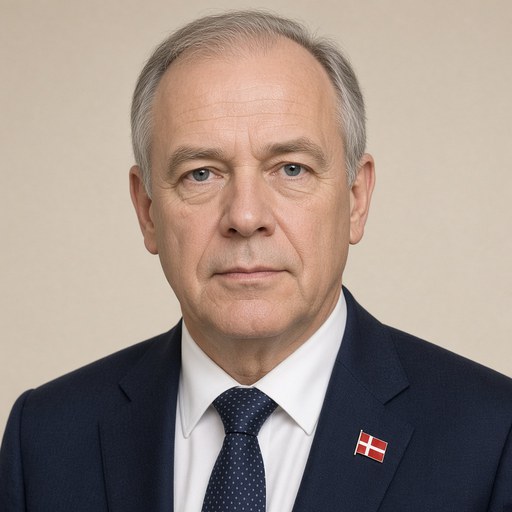
Response to the inquiry from the Socialist Party and the Socialist People's Party regarding the conditions of families with children, February 6, 1998.
 Poul Nyrup Rasmussen · Prime Minister of Denmark
- Context
- Rasmussen responded in the Danish Parliament on February 6, 1998, to a Socialist Party inquiry about government plans to improve conditions for families with children.
- Main themes
- Family well-being, work-life balance, childcare and parental leave, welfare state development, labor market participation, social contract, flexible work arrangements, women's employment, public services for families, unemployment reduction
- Duration
- ~23 min
- Words
- 2,767
- Sentences
- 178
- Readability
- 52
- Grade
- 9.7
- Syntax
- 2.66
- Vocabulary
- 1.93
Translated from Danish
The broad sphere of national life a sentence belongs to. Every sentence has an Arena, so it is the denominator the other indices are read against.
Other178 sentences in 102 paragraphs
"What can the government, based on the Prime Minister's New Year's speech about the conditions of families with children, inform us about the government's plans to improve the working, time-related, and social conditions of families with children?"
The spoken word is valid.
Introduction
In Denmark, people are working like never before. Only in very few countries are men and women as active in the labor market as they are in Denmark. In fact, Danish women have the highest employment rate in the EU. The reason that Danish society can provide so many welfare services is simply that the Danish population works as it does. Conversely, there is no high employment in the Danish manner without a well-functioning society.
When the government took office five years ago, one of the most important tasks was to tackle unemployment, to restore optimism and progress in the economy, and to initiate the necessary modernization of the public sector.
We have actually made a very good start on that. Now it is time to take the next big step in the development of the welfare state.
One of the government's highest wishes is to prioritize the well-being of families. It is very good that we are among the most working people in the world. But we must also ensure balance. Parents must have the opportunity to be both good parents and have a good work life.
Children need time with their parents, and families need time with each other. This requires conscious choices and priorities from all of us.
Now we must initiate a joint project.
In my New Year's speech, I wanted to place the well-being of families with children high on the agenda. I have taken this initiative because we need a new social contract. A social contract between the following five groups: the two parties in the labor market, businesses, municipalities, we politicians here in the Parliament, and not least, the parents.
What can we do to ease the everyday life of the hundreds of thousands of families who often find it difficult to balance work life and family life, where time is a constant scarcity?
The task is certainly not to roll back development 30 years or to have women withdraw from the labor market again. What is needed, on the contrary, is to create a labor market and public services that are more aligned with the needs of families. But also to create a change in attitudes so that the opportunities we have for more flexible arrangements can be utilized in practice. Today, we are lagging behind.
A little rhetorically, one might ask, why do we care so much about this family? Is the concept of family not, in a certain sense, overtaken by a development where we all increasingly live our own lives?
The answer is fortunately no. The concept of family has probably become more inclusive over the years. The family has changed. There are more single parents, but the number of divorces is stagnating. The family is still the dominant form of cohabitation in Denmark. About two-thirds of all children spend their entire childhood and youth with both parents. So the family persists.
And the security that a well-functioning ordinary Danish family can provide its child is still the best start in life for that child. That is why it is so important that we provide families with decent conditions.
The government has created good frameworks for families with children over the past five years.
I would especially like to point out three areas:
First: Better childcare and parental leave
With the labor market reform in 1994, childcare leave was significantly improved. Approximately 200,000 parents have since January 1, 1994, benefited from the scheme one or more times.
The maximum leave period was extended, so there is now the possibility of leave for up to one year. The requirement for reappointment was removed.
The reappointment requirement was unnecessarily bureaucratic. The requirement made it random which families could benefit from the scheme.
That was not fair.
The target group for childcare leave was expanded. The right now includes everyone entitled to unemployment benefits in case of illness or childbirth.
Municipalities were given the opportunity to provide subsidies as a supplement to the leave benefit if it fit into the municipality's priorities.
This year, parental leave is being extended by two weeks, which is reserved for the father.
The series of improvements in the leave area since 1994 is long. Many have benefited from it since then.
The childcare leave that we initially introduced as a pilot scheme has, in short, come to stay. The scheme was made permanent in connection with the agreement on the finance bill for 1995.
Second: Better childcare options
One of the first things I, as Prime Minister, advocated was a guarantee for childcare. I have been criticized a lot for that since then.
I have not regretted it for a second. For it must become a natural thing in all municipalities.
I believed - and still believe - that the question of how family life can be reconciled when parents return to work is one of the biggest uncertainties that today's parents face.
Although there is not a childcare guarantee everywhere, the government, together with the municipalities, has created an additional 120,000 childcare places since 1993.
Among other things, due to the government's agreements with the municipalities, childcare is the service area that has grown the most throughout the 1990s.
New nurseries, kindergartens, after-school care, etc., have been built.
There are still waiting lists, but this must be seen in light of the fact that the demand for daycare has increased due to rising employment, and thus more people have a need for childcare, that informal childcare has been replaced by regular daycare, and finally, that the birth rate has increased more than anyone could have predicted.
The coverage rate has increased. About three-quarters of children aged 0-9 now have a childcare offer compared to two-thirds in 1993.
That is not too shabby.
And the municipalities have continued to prioritize the expansion in light of the unmet need in 1998. And I am convinced and expect that the last municipalities will also come on board soon.
But it is not just about the number of places. It is also about developing quality and flexibility, including regarding opening hours.
Third: The public sector has taken the lead
Through collective agreements, the public sector has taken the lead in providing better frameworks for the working lives of families with children.
In the public labor market, significant progress has been made in entering framework agreements that facilitate opportunities for remote work. If designed sensibly, this can be a tool to increase flexibility in work organization. To create better opportunities for coherence between work life and family life.
Efforts to limit overtime and convert it into time off should also be seen in this context.
Individual employees have been given better opportunities to vary their working hours. Over the week and over the year.
In many areas, there is already the opportunity to work from home in connection with a child's illness, etc.
On the child's first day of illness, there is full or partial paid leave for care.
At the same time, there is the possibility of part-time work in almost all state sectors.
The state provides full pay during parental leave. Leave can begin six weeks before the expected birth, where the contractual right is four weeks.
State employees have been granted a total of 10 care days per child. The care days can be used flexibly. In connection with parental leave, before the expected birth, or after the 24 weeks of parental leave. They can also be used without connection to parental leave either as individual days or hours.
The private labor market is generally lagging behind, but there have also been improvements for families with children in certain areas of the private labor market.
The government hopes that this development will continue and that the conditions for families with children will remain high on the agenda - also for the labor market parties - in the coming years.
What is now needed?
We have already come a long way. But we must move forward. We all have a contribution to make.
1. Employers and employees must, in collective agreements and through concrete actions in companies, provide much better and more flexible opportunities for parents to have both a productive work life and a family life with time for presence.
2. The municipalities that are lagging behind must make an extra effort to ensure enough childcare offers of good quality. The guidelines that the government, the Danish Teachers' Association, and the Danish Municipalities Association have jointly set for the public school must be followed up. So that we have schools everywhere where children both thrive and learn something. And more must be done for good leisure offers so that children and young people have something meaningful to do. So they are not relegated to street corners.
3. The government and Parliament must, with respect for the socio-economic possibilities, design laws and regulations that support efforts for a flexible and family-friendly labor market and good services in the municipalities.
Even though it is an election year, I hope all parties will refrain from unrealistic proposals and instead engage realistically and openly in the debate about what we can concretely do both in the short and long term.
4. Parents - both mothers and fathers - must be aware of their responsibilities. Choices must be made - and choices must be made. In the choice between things and time, I also believe it provides better quality of life to prioritize in favor of children's needs.
* * *
Childcare leave has become popular. So popular that we have had to adjust it along the way.
Its success is not due to it being a labor market policy measure, but primarily because it is perceived as a significant step in the development of a more family-friendly welfare society.
There is criticism that the benefit is too low. If the state budget were unlimited, we would also like it to be even better. But when looking at the total compensation from the leave benefit, saved childcare costs, and in some municipalities a supplementary subsidy, the scheme is actually quite good.
In the state collective agreements, there are already funds for supplements up to full pay during educational leave. Such funds should gradually be extended to the entire labor market - and also include childcare leave.
One criticism of childcare leave is also that it is not flexible enough because one must take at least three months in a row. The government would like to discuss the possibilities for greater flexibility, for example, through the option for shorter periods than today.
We will discuss this with the parties and with the labor market parties after the ongoing collective bargaining negotiations are concluded. For it is important that the arrangements are seen in connection with the various conditions and circumstances in the overall labor market.
The challenge is to find the right balance between several opposing considerations: The desire for more time, consideration for both parents, but also for the socio-economic possibilities.
Collective agreements
Through collective agreements, the labor market affects the working conditions and everyday life of families with children.
And the parties play an important role in formulating and influencing the family policy attitudes that prevail in the labor market.
The government will not interfere in the collective bargaining negotiations that are currently underway. For about one-fifth of the labor market. Nor will we suggest that we will indirectly do so when the negotiations are concluded. But it is clear that the more the collective bargaining negotiations can contribute to creating better coherence between family and work life now and in the coming years, the better. Here I would like to remind you again of a number of things that have been implemented in the public labor market:
Family-friendly working time regulations, better parental leave provisions, care days, etc.
But as I said, this is a matter for negotiation.
However: We must maintain the whole and thus also point out how crucial it is that better frameworks for families' everyday lives in the labor market are agreed upon.
The effort at the workplace
How do we organize ourselves so that parents with children can both function in the labor market and be good parents?
This is largely about attitudes and priorities in the labor market, among businesses, colleagues, and within families themselves.
This is especially true locally at the individual workplace. The government believes that it is especially here that there is now a need for targeted action!
In general, I would like to emphasize the following: Collective agreements and regulations are important. No doubt about that. But for the declarations to be translated into daily practice, the prerequisite is that attitudes follow suit. The organizations in the labor market bear a responsibility for this to happen.
Many businesses have already come a long way in developing family-friendly workplaces, and others are following suit.
There is no ready-made recipe for what initiatives should be taken to make a workplace family-friendly, but the possibilities are many and must be adapted to local needs.
Among possible elements that could be included in family policy at the individual company are:
Introduction of flexible hours so that meeting times and working hours can better fit the everyday life of families with children.
Fluid working hours with the possibility for work to be scheduled as needed.
Accumulation of overtime or borrowing of time that can be used when the family has special needs.
Part-time work permanently or for periods.
Care days for use in case of illness, medical visits, and special family events.
Scheduling of working hours and vacations that take into account the family's needs.
All of these are examples of how one can formulate a concrete family-friendly policy locally at the individual workplace within the existing frameworks and agreements.
It is important that companies now jointly formulate a real family policy that takes into account the special conditions that apply in that particular company.
It should be a given in 1998 that parents of young children have the assurance that at least they can take a significant part of their vacation together with their children during the school summer holidays. Unfortunately, that is not always the case.
In many places, it is still practiced that those who have been employed the longest choose their vacation first. It should be the families with children who should be allowed to choose first.
The government will take the initiative to shed light on this problem so that we can gain clarity on its scope. We must then find out whether it can be resolved through agreements or whether it should be included in the work of the ongoing holiday law committee.
It should be a natural thing for the cooperation committees in all companies to formulate and agree on each company's family policy. It is also worth considering whether the systematic workplace assessments that are now being introduced for the working environment should also include the conditions of families with children.
The conditions of families with children in the workplace should be on the agenda and up for debate in all companies. I believe that this alone will shift attitudes and make more people realize that competitiveness and family-friendly working conditions do not have to be opposites.
Families themselves and their priorities
Let me conclude with the families themselves and their own priorities.
The public cannot and should not take on the parents' responsibilities. Legislation, agreements, and company contracts should provide some good, reasonable frameworks and set direction. Parents must then choose and prioritize, even if it may cost a little on the household budget.
Parents have obligations. It is the children who have rights.
Children are the best we have. And a well-functioning family, where there is time and presence, provides the best conditions for their upbringing that we can give them.
* * *
After today's debate, the government will continue its work for families with children. I look forward to presenting the first concrete proposal for a multi-year effort at the beginning of May this year, which will involve the labor market parties, individual companies, municipalities, our work here, and, of course, the family itself in Denmark.
We all have a task - we all have a contribution to make. Together, these many contributions will create a better framework for the well-being of families with children in Denmark.
The original Danish. The tags above are read on the English translation's sentences.
'Hvad kan regeringen på baggrund af statsministerens nytårstale om børnefamiliernes vilkår oplyse om regeringens planer om forbedring af børnefamiliernes arbejdsmæssige, tidsmæsige og sociale forhold'
Det talte ord gælder.
Indledning
I Danmark arbejdes der som ingensinde før. Det er kun i ganske få lande, at mænd og kvinder er så aktive på arbejdsmarkedet som i Danmark. Og faktisk har de danske kvinder den højeste beskæftigelsesgrad i EU. Årsagen til, at det danske samfund kan stille så mange velfærdsydelser til rådighed, er ganske enkelt, at den danske befolkning arbejder, som den gør. Og omvendt: Ingen høj beskæftigelse på dansk manèr uden et velfungerende samfund.
Da regeringen trådte til for fem år siden, var en af de vigtigste opgaver at få bugt med arbejdsløsheden, at få genskabt optimismen og fremgangen i økonomien og at få sat de nødvendige moderniseringer af den offentlige sektor i gang.
Det er vi faktisk kommet rigtigt godt i gang med. Nu er det tid til at tage fat på det næste store skridt i velfærdssamfundets udvikling.
Et af regeringens højeste ønsker er, at familiernes trivsel opprioriteres. Det er meget godt, at vi er blandt de mest arbejdende folk i verden. Men vi skal også sikre balancen. Forældrene skal have mulighed for både at være gode forældre og have et godt arbejdsliv.
Børn har behov for tid med deres forældre, og familierne har behov for tid med hinanden. Det kræver bevidste valg og prioriteringer af os alle.
Nu skal vi igangsætte et fælles projekt.
Jeg har i min nytårstale ønsket at sætte børnefamiliernes trivsel højt på dagsordenen. Jeg har taget dette initiativ, fordi vi har brug for en ny social kontrakt. En social kontrakt mellem følgende 5 grupper: de to parter på arbejdsmarkedet, virksomhederne, kommunerne, vi politikere her i Folketinget, og ikke mindst forældrene.
Hvad kan vi gøre for at lette hverdagen for de hundredetusinder af familier, der ofte oplever, at det svært at få arbejdsliv og familieliv til at hænge sammen, og hvor tid er en konstant mangelvare?
Opgaven består selvsagt ikke i at rulle udviklingen 30 år tilbage, eller at kvinderne trækker sig ud af arbejdsmarkedet igen. Det, der er behov for, er derimod at skabe et arbejdsmarked og en offentlig service, der i højere grad indretter sig på de behov, som familierne har. Men også at skabe en holdningsændring, således at de muligheder, vi har for at indrette os mere fleksibelt, kan blive udnyttet i praksis. I dag halter vi bagefter.
Lidt retorisk kan man selvfølgelig spørge, hvorfor er det, vi går så meget op i denne familie? Er familiebegrebet ikke i en vis forstand overhalet af en udvikling, hvor vi alle i stigende grad lever hver vores tilværelse?
Svaret er heldigvis nej. Familiebegrebet er nok blevet mere rummeligt med årene. Familien har ændret sig. Der er flere enlige forsørgere, men antallet af skilsmisser er stagnerende. Familien er stadigvæk den dominerende samlivsform i Danmark. Cirka 2/3 af alle børn lever hele deres barndom og ungdom med begge forældre. Så familien består.
Og den tryghed, som en almindelig dansk velfungerende familie kan give sit barn, er fortsat dette barns bedste start på tilværelsen. Derfor er det så vigtigt, at vi giver familien nogle ordentlige betingelser.
Regeringen har de sidste fem år skabt gode rammer for børnefamilierne
Jeg vil især pege på 3 områder:
For det første: Bedre børnepasnings- og barselsorlov
Med arbejdsmarkedsreformen i 1994 blev børnepasningsorloven forbedret markant. Ca. 200.000 forældre har siden 1. januar 1994 én eller flere gange haft glæde af ordningen.
Den maksimale orlovsperiode blev forlænget, så der nu er mulighed for orlov i op til 1 år. Kravet om genbesættelse blev fjernet.
Genbesættelseskravet var unødigt bureaukratisk. Kravet gjorde det tilfældigt, hvilke familier, der kunne få gavn af ordningen.
Det var ikke rimeligt.
Målgruppen for børnepasningsorlov blev udvidet. Retten omfatter nu alle med ret til dagpenge ved sygdom eller fødsel.
Kommunerne fik mulighed for at yde tilskud som supplement til orlovsydelse, hvis det passede ind i kommunens prioriteringer.
I år udvides barselsorloven med 2 uger, som er forbeholdt faderen.
Rækken af forbedringer på orlovsområdet fra 1994 er lang. Det har mange siden nydt godt af.
Den børnepasningsorlov, vi i sin tid indførte som en forsøgsordning, er kort sagt kommet for at blive. Ordningen blev gjort permanent i forbindelse med aftalen om finansloven for 1995.
For det andet: Bedre pasningsmuligheder
En af de første ting, jeg som statsminister gik ud og talte varmt for, var pasningsgaranti. Det er jeg blevet skoset meget for siden hen.
Jeg har ikke fortrudt et sekund. For det må blive en naturting i alle kommuner.
Jeg mente - og mener stadig - at spørgsmålet om, hvordan familielivet kan hænge sammen, når forældrene begynder at arbejde igen, er et af de største usikkerhedsmomenter nutidens forældre står overfor.
Selvom der ikke er pasningsgaranti alle steder, har regeringen siden 1993 sammen med kommunerne skabt ekstra 120.000 pasningstilbud.
Blandt andet i kraft af regeringens aftaler med kommunerne er børnepasning det serviceområde, der er vokset mest igennem 1990’erne.
Der er blevet bygget nye vuggestuer, børnehaver, fritidshjem osv.
Der er stadig ventelister, men det skal ses i lyset af,
at efterspørgslen efter dagtilbud er steget som følge af den øgede beskæftigelse, og at flere dermed har fået et pasningsbehov,
at sort dagpleje er erstattet af et almindeligt dagtilbud,
og endelig, at fødselstallet er øget mere, end nogen kunne forudse.
Dækningsgraden er steget. Ca. 3⁄4 af de 0-9 årige har nu et pasningstilbud mod to tredjedele i 1993.
Det er ikke så ringe endda.
Og kommunerne har i lyset af det udækkede behov fortsat udbygningen højt på dagsordenen også i 1998. Og jeg er overbevist om og forventer, at de sidste kommuner også snart kommer med.
Men det handler ikke kun om antal pladser. Det handler også om at udvikle kvalitet og fleksibilitet, bl.a. med hensyn til åbningstider.
For det tredje: Det offentlige er gået foran
Gennem overenskomsterne er det offentlige gået foran med bedre rammer for børnefamiliernes arbejdsliv.
På det offentlige arbejdsmarked er man langt fremme med at indgå rammeaftaler, som skal lette mulighederne for distancearbejde. Det kan fornuftigt udformet være et redskab til at øge fleksibiliteten i arbejdstilrettelæggelsen. Til at skabe bedre mulighed for sammenhæng mellem arbejdsliv og familieliv.
Bestræbelserne på at begrænse overarbejde og omsætte det til afspadsering skal også ses i denne sammenhæng.
Den enkelte medarbejder har fået bedre muligheder for at variere sin arbejdstid. Over ugen og over året.
På mange områder er der allerede mulighed for at arbejde hjemme i forbindelse med barns sygdom mv.
På barnets første sygedag er der hel eller delvis frihed med løn til pasning.
Samtidig er der mulighed for deltid på stort set alle statslige områder.
Staten giver fuld løn under barsel. Orloven kan begyndes 6 uger før forventet fødsel, hvor den overenskomstmæssige ret er 4 uger.
Statsansatte har fået ret til i alt 10 omsorgsdage pr. barn. Omsorgsdagene kan anvendes fleksibelt. I tilknytning til barselsorloven, før forventet fødsel eller efter de 24 ugers barsel. De kan også anvendes uden tilknytning til barselsorloven enten som enkelte dage eller timer.
Det private arbejdsmarked halter generelt bagefter, men der er også på det private arbejdsmarked på enkelte områder sket forbedringer for børnefamilierne.
Regeringen håber, at denne udvikling vil fortsætte, og at børnefamiliernes vilkår vil stå højt på dagsordenen - også for arbejdsmarkedets parter - i de kommende år.
Hvad er der nu behov for?
Vi er allerede kommet langt. Men vi skal videre. Alle har vi et bidrag at yde.
1. Arbejdsgivere og lønmodtagere må i overenskomster og aftaler og gennem konkret handling i virksomhederne give langt bedre og fleksible muligheder for, at forældre både kan have et produktivt arbejdsliv og et familieliv med tid til nærvær.
2. De kommuner, der halter bagefter, må gøre en ekstra indsats for at sikre nok børnepasningstilbud af en god kvalitet. De sigtelinier, som Regeringen, Danmarks lærerforening og kommunernes landsforening sammen har udstukket for folkeskolen, må følges op. Så vi alle steder får en skole, hvor børnene både trives og lærer noget. Og der må gøres mere for gode fritidstilbud, så børn og unge har noget fornuftigt at tage sig til. Så de ikke henvises til gadehjørnerne.
3. Regering og Folketing må under respekt for de samfundsøkonomiske muligheder indrette love og regler, så de understøtter bestræbelserne for et fleksibelt og familievenligt arbejdsmarked og en god service i kommunerne.
Selv om det er valgår, håber jeg alle partier vil afstå fra urealistiske overbudsforslag, men gå realistisk og fordomsfrit ind i debatten om, hvad vi konkret kan gøre både på kort og længere sigt.
4. Forældrene - både mødre og fædre - må være deres ansvar bevidst. Der må vælges fra - og vælges til. I valget mellem ting og tid, tror jeg også det giver bedre livskvalitet at prioritere til fordel for børnenes behov.
* * *
Børnepasningsorloven er blevet populær. Så populær, at vi har været nødt til at justere den undervejs.
Dens succes skyldes ikke, at det er en arbejdsmarkedspolitisk foranstaltning, men først og fremmest, at den opleves som et stort skridt i udviklingen af et mere familievenligt velfærdssamfund.
Der er kritik af, at ydelsen er for lav. Hvis statskassen var ubegrænset ville vi da også gerne, at den kunne være endnu bedre. Men når man ser på den samlede kompensation fra orlovsydelsen, sparede pasningsudgifter og i nogle kommuner et supplerende tilskud, er ordningen faktisk ganske god.
I de statslige overenskomster er der allerede puljer til supplement op til fuld løn under uddannelsesorlov. Sådanne puljer burde efterhånden kunne udbredes til hele arbejdsmarkedet - og også omfatte børnepasningsorlov.
Et kritikpunkt mod børnepasningsorloven er også, at den ikke er fleksibel nok, fordi man mindst skal holde 3 måneder i træk. Regeringen vil gerne drøfte mulighederne for en større fleksibilitet, f.eks. gennem mulighed for kortere perioder end i dag.
Det vil vi drøfte med partierne og med arbejdsmarkedets parter, efter afslutningen af de igangværende overenskomstforhandlinger. For det er vigtigt, at ordningerne ses i sammenhæng med de forskellige vilkår og forhold på det samlede arbejdsmarked.
Udfordringen er at finde den rette balance mellem flere modsatrettede hensyn: Ønsket om mere tid, hensynet til begge forældre, men også til de samfundsøkonomiske muligheder.
Overenskomsterne
Gennem overenskomster påvirker arbejdsmarkedet børnefamiliernes arbejdsvilkår og hverdag.
Og parterne spiller en vigtig rolle i formuleringen og påvirkningen af de familiepolitiske holdninger, der hersker på arbejdsmarkedet.
Regeringen vil ikke blande sig i de overenskomstforhandlinger, som nu er i gang. For cirka 1/5 del af arbejdsmarkedet. Eller stille nogen i udsigt at vi indirekte vil gøre det, når forhandlingerne er afsluttede. Men det er da helt klart, at jo mere overenskomstforhandlingerne nu og i de næste år kan bidrage til at skabe bedre sammenhæng mellem familie og arbejdsliv desto bedre. Her vil jeg igen minde om en række af de ting, der er gennemført på det offentlige arbejdsmarked:
Familievenlige arbejdstidsbestemmelser, bedre barselsbestemmelser, omsorgsdage osv.
Men som sagt. Det er forhandlingsstof.
Men: Vi må fastholde helheden og dermed også påpege, hvor afgørende det er, at der aftales bedre rammer for familiernes hverdag på arbejdsmarkedet.
Indsatsen på arbejdspladsen
Hvordan indretter vi os, så børneforældre både kan fungere på arbejdsmarkedet og være gode forældre?
Det handler i høj grad om holdninger og prioriteringer på arbejdsmarkedet, blandt virksomheder, kollegaer og hos familierne selv.
Dette gælder ikke mindst lokalt på den enkelte arbejdsplads. Regeringen finder, at det især er her, der nu er behov for målrettet handling!
Helt generelt vil jeg gerne slå følgende fast: Overenskomster og paragraffer er vigtige. Ingen tvivl om det. Men skal erklæringerne omsættes til daglig praksis, er forudsætningen, at holdningerne følger med. Organisationerne på arbejdsmarkedet bærer et ansvar for, at det sker.
Mange virksomheder er allerede kommet et langt stykke af vejen med hensyn til udvikling af familievenlige arbejdspladser, og andre følger trop.
Der er ikke nogen færdig opskrift på, hvilke initiativer der skal tages for at gøre en arbejdsplads familievenlig, men mulighederne er mange og må afpasses efter de lokale behov.
Blandt mulige elementer, der kunne indgå i familiepolitik på den enkelte virksomhed, kan nævnes
Indførelse af flekstid, så mødetid og arbejdstidsophør bedre kan tilpasses børnefamiliens hverdag
Flydende arbejdstid med mulighed for, at arbejde kan placeres efter behov
Opsparing af overarbejde eller lån af tid, som kan bruges, når familien har særlige behov
Deltidsarbejde permanent eller i perioder
Omsorgsdage til brug for fx sygdom, lægebesøg og særlige begivenheder i familien
Tilrettelæggelse af arbejdstid og ferie, der tager hensyn til familiens behov.
Alt sammen eksempler på, hvordan man lokalt på den enkelte arbejdsplads kan formulere en konkret familievenlig politik inden for de eksisterende rammer og aftaler.
Det er vigtigt, at man på virksomhederne nu i fællesskab får formuleret en egentlig familiepolitik, som tager udgangspunkt i de særlige forhold, der gælder i den pågældende virksomhed.
Det burde være en selvfølge i 1998, at forældre til mindre børn har sikkerhed for som det mindste - at kunne holde en væsentlig del af deres ferie sammen med børnene i skolernes sommerferie. Desværre forholder det sig ikke altid sådan.
Mange steder praktiserer man stadig, at de, der har været længst ansat, vælger ferie først. Det burde være børnefamilierne, der fik lov at vælge først.
Regeringen vil tage initiativ til at få belyst dette problem, så vi kan få klarhed over dets omfang. Så må vi finde ud af, om det kan løses aftalemæssigt, eller det evt. skal indgå i arbejdet i det igangværende ferielovsudvalg.
Det burde være en naturlig ting, at samarbejdsudvalgene i alle virksomheder formulerer og aftaler den enkelte virksomheds familiepolitik. Det er også værd at overveje, om de systematiske arbejdspladsvurderinger, der nu indføres for arbejdsmiljøet, også burde omfatte børnefamiliernes vilkår.
Børnefamiliernes vilkår på arbejdspladsen bør på dagsordenen og til debat i alle virksomheder. Jeg tror, at det i sig selv vil flytte holdninger og få flere til at indse, at konkurrencedygtighed og familievenligt arbejdsforhold ikke behøver at være modsætninger.
Familierne selv og deres prioritering
Lad mig slutte med familierne selv og deres egen prioritering.
Det offentlige kan og skal ikke påtage sig forældrenes ansvar. Lovgivning, overenskomster, virksomhedsaftaler skal lægge nogle gode, fornuftige rammer og udstikke retning. Forældrene skal så vælge og prioritere. Også selv om det måske koster lidt på husholdningsbudgettet.
Forældre har pligter. Det er børnene, som har rettigheder.
Børn er det bedste, vi har. Og en velfungerende familie, hvor der er tid og nærvær, er de bedste opvækstvilkår, vi kan give dem.
* * *
Efter debatten i dag, vil regeringen forsætte sit arbejde for børnefamilierne. Jeg ser frem til, at vi allerede ved starten af maj måned i år kan fremlægge det første konkrete oplæg til en flerårig indsats, der både omfatter arbejdsmarkedets parter, de enkelte virksomheder, kommunerne, vort arbejde herinde og - naturligvis familien selv i Danmark.
Alle har vi en opgave - alle har vi et bidrag at yde. Tilsammen bliver de mange bidrag til en bedre ramme for børnefamiliernes trivsel i Danmark.