




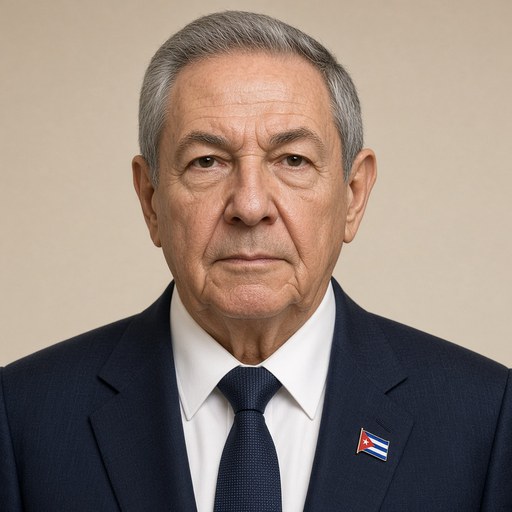
Speech delivered at the Extraordinary Summit of the Rio Group, Costa de Sauipe, Salvador, Bahia.
 Raúl Castro · President of Cuba
- Context
- Raúl Castro addressed the Extraordinary Summit of the Rio Group in December 2008 in Salvador, Bahia, celebrating Cuba's historic admission to the group.
- Main themes
- Cuba's admission to the Rio Group, Cuban revolutionary history, U.S.-Cuba relations and the blockade, Bay of Pigs and missile crisis, Cuban national defense and military self-reliance, guerrilla struggle and survival in the Sierra Maestra, Latin American solidarity, Cold War secrets and Soviet Union, Fidel and Raúl Castro's early revolutionary experience
- Duration
- ~16 min
- Words
- 1,916
- Sentences
- 62
- Readability
- 48
- Grade
- 13.9
- Syntax
- 3.46
- Vocabulary
- 2.18
Translated from Spanish
The broad sphere of national life a sentence belongs to. Every sentence has an Arena, so it is the denominator the other indices are read against.
Other62 sentences in 28 paragraphs
I hope that my comrade and dear friend Lula does not protest, because I speak less than Chávez. Simply put, I had planned to take the floor to thank everyone, those who have spoken and those who have not spoken, all those who agreed, this exemplary unanimity that they have shown with the admission of Cuba to the Group of Rio. I do not know what you all will think, but for us it is a momentous time in our history.
Like a quick movie, hundreds of different scenes and thousands of faces of comrades fallen in this struggle paraded through my mind, because the struggle of the Cuban people is not just the blockade; after the aggression of Playa Girón in 1961, the missile crisis that brought the world to the brink of the third world war, it is a consequence of that same aggression. When that was discussed, some comrades had doubts until not long ago when documents were declassified by the U.S. government that showed that they could not remain with that defeat on their shoulders, and they had planned a direct aggression with their troops against Cuba. That is the reason for the presence of the missiles and the moments that were lived.
As an agreement was reached between a murdered president and a deposed prime minister, I refer to Nikita Khrushchev, the doubt always remained, and every time there was a change of government in the United States, a journalist, a second-rate spokesperson, in response to an apparently naive question, would answer that that agreement no longer existed, that efforts had to be made so that through diplomatic and not public channels they would be informed that that agreement no longer existed.
Our surprise was great when we learned, and from a reliable source, that we were alone, completely alone, to such an extent that Fidel and I decided to keep it a secret. I informed the Bureau that I had just returned from the Soviet Union and that there was a topic I proposed that only he and I should know, because if the U.S. government found out, any of them, with a few exceptions, would have known how to take advantage of that.
Today is different. Since Reagan took power, we decided to take the matter into our own hands, and today I can perhaps say that there is more understanding and rationality in the military organs of the United States than in the political area, in the area of the State Department.
Today we can say that we are invulnerable from a military point of view, through our own efforts. It has been more than 20 years since we acquired any weaponry, except for telescopic sights for snipers and, naturally, a certain number of parts.
For us, avoiding war has always meant the main victory, and we said: "Avoiding war is equivalent to winning it; but to win it by avoiding it, rivers of sweat must be shed and not a few economic resources," and that is how we did it.
The defense of the country has cost a lot, and it continues to cost us. We have built thousands of kilometers of tunnels of all sizes, to such an extent that in Cuba there is no significant military unit on the surface of the earth, but in its depths, including aviation.
That is why all those events passed through my mind, and how many there will be. Imagine that on December 18, practically in two days, I will be in Brasília on an official visit, by a kind invitation from President Lula, and that day will mark 52 years since the disaster of December 5 after the landing from Mexico, in which the guerrilla detachment that came from there was practically destroyed... That is why I say that our armed forces were born in Mexico, because the Rebel Army was their predecessor, as was the mambí army, the Liberating Army, which fought against European colonialism, let us say. From the 5th to the 18th, 13 days passed; Fidel thought I was dead, I thought he was dead; most of the comrades fell, others were killed after being captured wounded or exhausted. I resisted a siege with five from my platoon; out of twenty-some men, only five of us remained, and we resisted a siege for a week, where we could only feed on some canes of sugarcane, without water or food of any kind; we did not expend energy moving, until some dizziness indicated to us that it was time to take the risk and break out of the siege.
It was like this that 13 days later — as I was saying — on December 18, already in the Sierra Maestra, the peasants united two groups: one was Fidel's and the other was mine. After the initial embrace, at midnight when the meeting took place, he separated me and asked me: "How many rifles do you have?" I answered: "Five." And he said: "And two that I have, seven. Now we can win the war!" This that I am going to tell you, I told after the war and I did not dare to write it in the diary: "The brother has gone crazy!" That was what I thought. He criticized me later: "How could you not have hope that we would triumph?" "Yes, but that we would not be alive."
Thus, the circumstance arises, perhaps unique in history, where after such a long journey, of more than half a century, part of the main leaders of our Revolution are alive, and without realizing it, we have assimilated a gigantic experience in every sense, including the economic, although we are not economists.
After that resolution of the missile crisis, to which I referred, a so-called Plan Mangosta emerged, developed by the CIA, which lasted five years, a kind of internal civil war — not a civil war, a fight against the bands; there were moments of fighting against 179 bands in the six provinces of the republic that we had then, until the Political Administrative Division approved in 1975 and applied in 1976, from six to 14 provinces.
That struggle lasted five years. I would arrive at the Ministry of Defense and four or five aides would come simultaneously to bring me the lists, to inform me what had happened the night before, or the last 24 hours — we did not have the effective communications that we have today — and I would tell them: "Tell me the most important." "So many fires in the sugarcane fields, so many tobacco curing houses burning, so many battles fought in the central region, where they became entrenched in the mountains. And as I said, on two occasions they were in the six provinces, including the south of the province of Havana — where it was one, now there are two — where the capital was located. That struggle lasted until January 1966, after which it became sporadic.
How many comrades fell in that struggle, and many more, as a consequence of the state terrorism that we have been suffering for years? 3,478 Cubans died, including some smaller numbers of children, women, innocents who were not participating in any struggle; 2,099 were incapacitated; a total of 5,577 Cubans, including even attacks on our embassies, and one, even, at the UN. That was universal: consulates, embassies, diplomatic officials, etc.
We resisted, I believe that is the greatest merit of our people, our greatest merit; we resisted and we are here, and this momentous event is taking place, which just a moment ago I was telling Felipe: How I regret that it is not Fidel who is sitting here! although he must be watching us on television.
In recounting these anecdotes, which I ask you to forgive me for, I did so to highlight why for us this is an event of enormous significance; and therefore, I move on to the written text, and I apologize for having gone a few minutes over what I had planned.
Dear and esteemed President Felipe Calderón;
Distinguished presidents, heads of state and government:
I wish above all to express our gratitude to those governments, to all, who promoted the full incorporation of Cuba into the Group of Rio. The decision adopted by the foreign ministers on November 13 in Mexico, in the city of Zacatecas, reflects the singular moment that Latin America and the Caribbean are experiencing.
To you, President Calderón, I wish to thank you for your words, as well as to all those who have made use of them this afternoon, and to express Cuba's recognition of the role played by your country in strengthening the Group of Rio since it assumed the Pro Tempore Secretariat in March of this year.
We share the aspiration that the Group of Rio becomes increasingly representative, with the incorporation of all the nations that make up this vast Latin American and Caribbean region.
Cuba joins the Group of Rio with the purpose of fostering cooperation and solidarity among our nations. It does so with the desire to work for justice, peace, development, and understanding among all our peoples.
It participates sharing the mutual adherence to International Law, to the Charter of the United Nations, and to the fundamental principles that govern the development of relations among nations, above all, non-interference in the internal affairs of states, rejection of aggression, threats, and the use of force, and the use of unilateral coercive measures, in order to prevent any state from exercising the right to choose its own political, economic, and social system. That is precisely the purpose of the cruel and vengeful blockade imposed by the government of the United States, which our people have had to endure, and of the data that I provided in my initial remarks.
We join with the commitment to be faithful to the principles of the foreign policy of the Cuban Revolution, in which we have been educated by comrade Fidel, master of solidarity and architect of the values that have characterized it.
This unchanging ethic is the foundation of the bonds of brotherhood with the peoples of the continent, and it is our firm will to continue strengthening them. I do not refer at all to the OAS, because I consider it a joke from comrade Zelaya, do not misinterpret his words when he appeared on television on a global scale, and as always there are some who were not paying attention, they will believe it is a serious proposal, at least I understand it as a joke.
Before Cuba enters the OAS, and forgive me, not the Secretary of the OAS, I greet him, and perhaps I will meet with him, but the politician that he is, the political personality, who is our friend Insulza, first, as Martí said, "the sea of the north will unite with the sea of the south and a serpent will be born from an eagle's egg."
Evo even said that Cuba should be a member of an OAS without Americans. We cannot, for the reasons I was explaining and many others that would make this meeting lengthy, with Americans or without Americans, enter the OAS. That acronym should disappear, that is our opinion. We respect yours, for those who continue to belong to the OAS. We belong and will belong to the Group of Rio.
Thank you very much for the patience you have had in listening to these last words.
The original Spanish. The tags above are read on the English translation's sentences.
Espero que el compañero y querido amigo Lula no proteste, porque yo hablo menos que Chávez (Risas). Sencillamente, había planificado pedir la palabra para agradecer a todos, a los que han hablado y a los que no han hablado, a todos los que estuvieron de acuerdo, esta unanimidad ejemplar que han manifestado con el ingreso de Cuba al Grupo de Río. No sé qué pensarán ustedes, pero para nosotros es un momento trascendental de nuestra historia.
Como una rápida película, por mi mente desfilaban cientos de escenas diferentes, miles de rostros de compañeros caídos en esta lucha, porque la lucha del pueblo cubano no es solo el bloqueo; después de la agresión de Playa Girón en 1961, la crisis de los cohetes que puso al mundo al borde de la tercera guerra mundial, es consecuencia de esa misma agresión. Cuando eso se discutió, algunos compañeros tenían duda hasta que no hace tanto tiempo fueron desclasificados por el gobierno norteamericano documentos que demostraban que el mismo no se podía quedar con esa derrota encima, y habían planificado una agresión directa con sus tropas a Cuba. Ese es el motivo de la presencia de los cohetes y los momentos que se vivieron.
Como se llegó a un acuerdo entre un presidente asesinado y un primer ministro destituido, me refiero a Nikita Jruschov, siempre quedó la duda y cada vez que había un cambio de gobierno en Estados Unidos, un periodista, un vocero de segunda categoría, ante una pregunta aparentemente ingenua, contestaba que ese acuerdo ya no existía, que había que hacer gestiones para que por conductos diplomáticos y no públicos se les hiciera saber que ese acuerdo no existía.
Grande fue nuestra sorpresa cuando supimos, y de buena tinta, que estábamos solos, totalmente solos, a tal extremo que Fidel y yo decidimos mantener el secreto. Informó en el Buró que yo acababa de regresar de la Unión Soviética y que había un tema que proponía que solo lo supiéramos él y yo, porque de enterarse el gobierno norteamericano, cualquiera de ellos, con alguna que otra excepción, hubieran sabido hacer uso de esa ventaja.
Hoy es diferente. Desde que Reagan asumió el poder, decidimos tomar el asunto por nuestras manos, y hoy tal vez puedo decir que hay más comprensión y racionalidad en órganos de fuerza de Estados Unidos que en el área de los políticos, en el área del Departamento de Estado.
Hoy podemos decir que somos invulnerables desde el punto de vista militar, con nuestro propio esfuerzo. Hace más de 20 años que no adquirimos un armamento, salvo mirillas telescópicas para los francotiradores y, como es natural, alguna cantidad determinada de piezas.
Para nosotros evitar la guerra siempre significó la victoria principal, y lo decíamos : Evitar la guerra equivale a ganarla; pero, para ganarla evitándola, hay que derramar ríos de sudor y no pocos recursos económicos, y así lo hicimos.
La defensa del país ha costado mucho, y sigue costándonos. Miles de kilómetros de túneles de todos los tamaños hemos construido, a tal extremo que en Cuba no hay ninguna unidad militar importante en la superficie de la tierra, sino en sus profundidades, incluida la aviación.
Es por eso que por la mente me pasaban todos esos acontecimientos, y cuántos serán. Imagínense ustedes que el día 18 de diciembre, prácticamente dentro de dos días, estaré en Brasilia en una visita oficial, por una amable invitación que nos ha hecho el presidente Lula, y ese día hará 52 años de que después del desastre del 5 de diciembre luego del desembarco proveniente de México, en que fue prácticamente destruido el destacamento guerrillero que de allá salió... Por eso yo digo que en México nacieron nuestras fuerzas armadas, porque el Ejército Rebelde fue su antecedente, como antes lo fue el ejército mambí, el Ejército Libertador, que luchó contra el colonialismo europeo, vamos a decir. Del 5 al 18 pasaron 13 días, Fidel me creía muerto, yo lo creía muerto a él; la mayoría de los compañeros cayeron, otros fueron asesinados después de ser capturados heridos o agotados. Resistí un cerco con cinco de mi pelotón; de veintitantos hombres, solo quedamos cinco y resistimos un cerco una semana, donde solo pudimos alimentarnos con unos canutos de caña de azúcar, sin agua ni comida de ningún tipo; no gastamos energía moviéndonos, hasta que ya algunos mareos nos indicaron que era el momento de correr el riesgo y salir del cerco.
Fue así como 13 días después como les decía, el 18 de diciembre, ya en la Sierra Maestra, los campesinos unieron dos grupos: uno era el de Fidel y el otro el mío. Después del abrazo inicial, en una medianoche en que se produjo el encuentro, me separó y me preguntó : ¿Cuántos fusiles traes? Yo le contesté : Cinco. Y dice él : Y dos que tengo yo, siete. ¡Ahora sí ganamos la guerra! (Risas.) Esto que les voy a decir a ustedes se lo conté después de la guerra y no me atreví ni a ponerlo en el diario : ¡Se me volvió loco el hermano! (Risas). Fue lo que pensé. Él me criticaba después : ¿Cómo que tú no tenías esperanzas en que íbamos a triunfar? Sí, pero que no íbamos a quedar vivos nosotros.
Es así que se da la circunstancia, tal vez única en la historia, donde después de un recorrido tan largo, de más de medio siglo, estén vivos parte de los dirigentes principales de nuestra Revolución, y sin darnos cuenta hemos asimilado una gigantesca experiencia en todos los sentidos, incluido el económico aunque no somos economistas.
Después de esa solución de la crisis de los cohetes, a que les hice referencia, surgió un llamado Plan Mangosta, elaborado por la CIA, que duró cinco años, una especie de guerra civil interna no guerra civil, lucha contra las bandas-; hubo momentos de estar luchando contra 179 bandas en las seis provincias de la república que teníamos entonces, hasta la División Político Administrativa aprobada en 1975 y aplicada en 1976, de seis a 14 provincias.
Esa lucha duró cinco años. Yo llegaba al Ministerio de Defensa y venían cuatro o cinco ayudantes simultáneamente a traerme las listas, a informarme lo que había pasado la noche anterior, o las últimas 24 horas no disponíamos de las comunicaciones eficaces que tenemos hoy, y yo les decía: Díganme lo más importante. Tantos incendios en los cañaverales, tantas casas de curar tabaco ardiendo, tantos combates librados en la región central, en que se hicieron fuertes en las montañas. Y como les decía, en dos ocasiones estuvieron en las seis provincias, incluyendo el sur de la provincia La Habana donde era una sola, ahora son dos en la que se encontraba la capital. Hasta enero de 1966 duró esa lucha, después fue esporádica.
¿Cuántos compañeros cayeron en esa lucha, y muchos más, como consecuencia del terrorismo de Estado que llevamos años padeciendo? Murieron 3 478 cubanos, incluyendo algunas cantidades menores de niños y niñas, mujeres, inocentes que no estaban participando en ninguna lucha; incapacitados, 2 099; total, 5 577 cubanos y cubanas, incluyendo hasta atentados a nuestras embajadas, y uno, incluso, en la ONU. Eso fue universal: consulados, embajadas, funcionarios diplomáticos, etcétera.
Resistimos, creo que es el mérito mayor de nuestro pueblo, el mérito mayor nuestro; resistimos y estamos aquí, y se está produciendo este acontecimiento trascendental, que hace un instante yo le decía a Felipe : ¡ Cuánto lamento que no sea Fidel el que esté sentado aquí!, aunque nos debe estar viendo por televisión (Aplausos).
Al narrarles estas anécdotas, que pido me disculpen, lo hacía para resaltar por qué para nosotros este es un acontecimiento de enorme trascendencia; y, por lo tanto, paso al texto escrito, y pido disculpas por haberme pasado unos minutos de los que tenía planificado.
Estimado y querido Presidente Felipe Calderón;
Distinguidos y distinguidas presidentas, jefes de Estado y de Gobierno:
Deseo ante todo expresar nuestro agradecimiento a aquellos gobiernos, a todos, que promovieron la plena incorporación de Cuba al Grupo de Río. La decisión adoptada por los cancilleres el pasado 13 de noviembre en México, en la ciudad de Zacatecas, es reflejo del momento singular que viven América Latina y el Caribe.
A usted, Presidente Calderón, deseo agradecerle sus palabras, como a todos los que han hecho uso de ella en la tarde de hoy, y expresarle el reconocimiento de Cuba al papel desempeñado por su país a favor del fortalecimiento del Grupo de Río desde que asumió la Secretaría Pro Tempore, en marzo de este año.
Compartimos la aspiración de que el Grupo de Río sea cada vez más representativo, con la incorporación de todas las naciones que componen esta vasta región latinoamericana y caribeña.
Cuba ingresa al Grupo de Río con el propósito de fomentar la cooperación y solidaridad entre nuestras naciones. Lo hace con el deseo de trabajar a favor de la justicia, la paz, el desarrollo y el entendimiento entre todos nuestros pueblos.
Participa compartiendo el apego mutuo al Derecho Internacional, a la Carta de las Naciones Unidas y a los principios fundamentales que rigen el desarrollo de las relaciones entre las naciones, sobre todo, la no injerencia en los asuntos internos de los Estados, el rechazo a la agresión, a la amenaza y al uso de la fuerza, y al empleo de medidas coercitivas unilaterales, con el fin de impedirle a cualquier Estado el ejercicio del derecho a escoger su propio sistema político, económico y social. Ese es precisamente el propósito del cruel y vengativo bloqueo impuesto por el gobierno de los Estados Unidos, que nuestro pueblo ha tenido que sufrir, y de los datos que en mis palabras iniciales les ofrecí.
Nos incorporamos con el compromiso de ser fieles a los principios de la política exterior de la Revolución Cubana, en los que nos ha educado el compañero Fidel, maestro de la solidaridad y artífice de los valores que la han caracterizado.
Esa ética invariable es fundamento de los lazos de hermandad con los pueblos del continente, y es nuestra firme voluntad continuar fortaleciéndolos. No me refiero en nada a lo de la OEA, porque estimo que es una broma del compañero Zelaya, no vayan a interpretarse mal sus palabras al salir por la televisión a escala mundial, y como siempre hay algunos que no estaban atendiendo bien, van a creer que es una proposición seria, por lo menos yo lo entiendo como una broma.
Antes de que Cuba entre a la OEA, y que me perdone, no el Secretario de la OEA, lo saludo, y tal vez me reúna con él, sino al político que es, la personalidad política, que es nuestro amigo Insulza, primero, como dijo Martí, se unirá el mar del norte al mar del sur y nacerá una serpiente de un huevo de águila.
Evo, incluso, decía que Cuba debe ser miembro de una OEA sin norteamericanos. Nosotros no podemos, por las razones que les estuve explicando y otras muchas que harían extensa esta reunión, con norteamericanos o sin norteamericanos, ingresar a la OEA. Esa sigla debe desaparecer, es nuestra opinión. Respetamos la de ustedes, el que siga perteneciendo a la OEA. Nosotros pertenecemos y perteneceremos al Grupo de Río (Aplausos).
Muchas gracias por la paciencia que han tenido escuchando estas últimas palabras (Aplausos).