




- Context
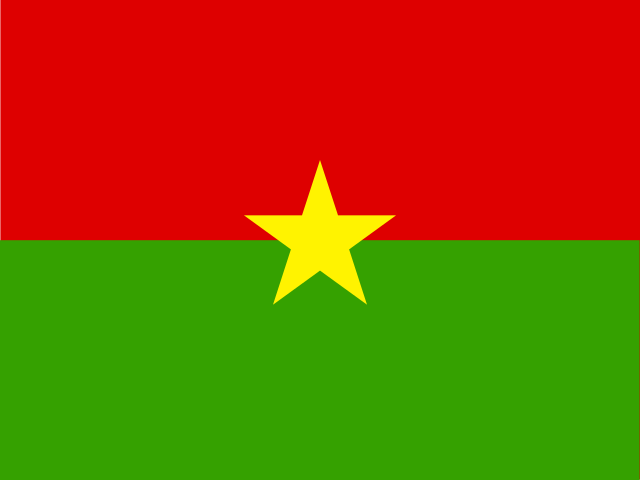
- Sankara welcomed Nicaraguan President Daniel Ortega and his delegation to Burkina Faso on August 27, 1986, pledging solidarity with the Sandinista revolution against the contras and imperialism.
- Main themes
- Solidarity between Burkina Faso and Nicaragua, welcome of President Ortega, non-alignment and rejection of bloc politics, condemnation of imperialism and neocolonialism, Sandinista revolution and Sandino, the contras and United States hostility, apartheid in South Africa and occupation of Namibia, Zionism and Palestine, invasion of Grenada and aggression against Libya, Group of 77 and Non-Aligned Movement, right of peoples to choose their own system
- Duration
- ~11 min
- Words
- 1,278
- Sentences
- 89
- Readability
- 58
- Grade
- 8.7
- Syntax
- 2.46
- Vocabulary
- 2.48
Translated from French Source: thomassankara.net ↗
The broad sphere of national life a sentence belongs to. Every sentence has an Arena, so it is the denominator the other indices are read against.
Other89 sentences in 40 paragraphs
Comrade President:
Allow me first of all, on behalf of the Burkinabè people and on my own behalf, to welcome you and the delegation accompanying you to the free African land of Burkina Faso. It is with a feeling of pride and joy that the Burkinabè people and I welcome you today.
Comrade Ortega:
To those who might wonder what interest Nicaragua and Burkina could have in common, I would answer that beyond the oceans, beyond the seas and the continents, our two countries share the same ideal of peace, justice and freedom for peoples and intend to join forces to defend and safeguard that ideal at a time when imperialism is arrogantly spreading its tentacles. Moreover, a whole network of ties and diverse interests unites us, whether as developing countries, through our membership in the Group of 77 and the Non-Aligned Movement, or as nations that have chosen the path of freedom and dignity.
Comrade President:
Neither Nicaragua nor Burkina can afford to accept the Manichean division according to which whoever does not pledge allegiance to the West is working for the East. We Non-Aligned countries consider bloc politics harmful to world peace. We agree to be neither the backyards of the countries of the West nor the bridgeheads of the East. Although we agree to cooperate with the one as well as with the other, we demand the right to be different.
But let no one expect us to be indifferent spectators of a match played between the great powers, with our most fundamental interests serving as their ball. We too are actors in international life, and we have the right to choose the political and economic system that best matches our aspirations and the duty to fight for a more just and more peaceful world, even though our states possess neither great industrial cartels nor nuclear arsenals.
That is why, Comrade President, you and I, alongside our peoples, have chosen to condemn colonialism, neocolonialism, apartheid, racism, Zionism and all forms of aggression, occupation, domination and foreign interference, wherever they come from.
We condemn and fight against apartheid in South Africa just as we do against Zionism in Palestine; we protest against the aggression ion in Nicaragua just as against that perpetrated against Libya and s of the Front Line; we denounce the invasion of Grenada just as we denounce the occupation of Namibia. We will not cease to do so as long as justice has not been done to these peoples.
What is Nicaragua to us? To say that it is a country in America is not enough. It would even be to conceal the truth by an unforgivable omission. Nicaragua is first of all four centuries of the harshest of colonisations, one hundred years of struggle between cliques over the division of the spoils, fifty years of a greedy and bloody dictatorship. Nicaragua is the struggle against domination, exploitation and oppression. It is the struggle against foreign domination; it is the direct confrontation, out in the open, against imperialism and its local henchmen.
Against this slavery, there were, there are, there will always be these men, these women, these children. They number nearly three million. Against humiliation, there are these Marxists, these intellectuals, these peasants, these believers, these non-believers, these bourgeois and these rich people who love their homeland. There are also the poor. All of them are companeros in combat. They fight and die for the same ideal, writing into the great book of the history of Latin America the most beautiful pages, among the noblest.
Millions of children have died in combat, women have fallen after being tortured and raped, fighters have been mown down, priests have interrupted Mass to drive back the enemies of the people with the Kalashnikov, which then spat fire in the name of the progressive gospel.
Comrades, how difficult it is to be free!
Dear brothers of Nicaragua, we understand the sufferings of your flesh and those of your soul. Yes, there are countries that luck does not visit. Sad Nicaragua, so far from God and so close to the United States. Yes, in these conditions, it is difficult to be born and to live free.
But heroes die standing. They never say that they are dying for their homeland. They simply die. And their blood fertilises the soil of the revolution. Thus Sandino shed his blood, and the Sandinista revolution triumphed one summer day in 1979. The Sandinista National Liberation Front victoriously led the struggle of the Nicaraguan people. And on 19 July 1979, God passed through Nicaragua. The whole world hailed this new dawn. The United States did too. It was not enough to be born; one had to live. How difficult it is to live free!
Did the celebration of the Nicaraguan people have to be disrupted, darkened by so much hostility?
In Nicaragua, people saw an explosive situation in Latin America. The machinations began. First there was talk of an appeal to reason, then came rumours of negotiations, stifled by threats and invective, a North American public opinion troubled and divided. The Nicaraguan regime was denounced as Marxist-Leninist, and there were cries of a new Cuba. This was the campaign to discredit Nicaragua. It was labelled a dictatorship, operations to destabilise its neighbours were invented for it, and it was claimed to be manipulated from outside, so as to justify the hatred.
Then the Somocistas and their guards awoke, those who over there are called las bestias, los perros, that is to say, the beasts, the dogs. They were heavily aided with dollars. Brother countries and neighbours sheltered them, trained them, equipped them. Counter-revolution was institutionalised. And here are the contras, a new breed of carnivores of terror.
Then sometimes, from time to time, a lull was observed. People hoped it would last forever. But the fire kept smouldering, then broke out again.
To live free, merely to hope for a better future, is not easy when one is Nicaraguan. That is why the Burkinabè people sing with you this poem, born not of its poetic inspiration but of its revolutionary commitment to say what it thinks:
"The imperialists are prowling.
From the depths of the blazing earth,
Rise the clamours of a determined people.
For every day is a day of struggle.
Of battles that announce to the enemy his fall.
But how heavy is the price to pay!
What floods of blood must be shed each day!
Mothers have wept for their children dead at the front.
Children have buried their fathers, groping in the dark.
In this darkness of the contras (counter-revolutionaries), babies have lost their bottles.
They have grabbed the Kalashnikov instead and found themselves boys.
The white veils of brides have been stained with blood. Patriotic priests have seen in this a sign of the times. How difficult it is to live free and be Nicaraguan! How sweet it is to die for one's fellow human beings.
Nicaragua will win! Already the people can read. It writes and heals itself, cultivates its fields and rediscovers its smile.
The revolution will triumph! For the contras: no pasardn!
Your land, our land, will know, thanks to our genius, the true manna.
Beside Nicaragua there will be Burkina.
For the revolution is invincible and the people will reign. Then from the depths of the sweet and fragrant earth Will rise the fraternal clamours of the completed symphony."
It is for all these reasons, comrades, that I have the honour and the pleasure of presenting to you, on behalf of the Burkinabè people, a symbol of its pride to see regard.
A free homeland or death!
Homeland or death, we shall overcome!
The original French. The tags above are read on the English translation's sentences.
Camarade président :
Permettez-moi tout d’abord, au nom du peuple burkinabè et au mien propre, de vous souhaiter la bienvenue à vous ainsi qu’à la délégation qui vous accompagne, en terre libre africaine du Burkina Faso. C’est avec un sentiment de fierté et de joie que le peuple burkinabè et moi-même vous accueillons aujourd’hui.
Camarade Ortega :
A ceux qui s’interrogeraient sur l’intérêt que le Nicaragua et le Burkina pourraient avoir en commun, je répondrais qu’au-delà des océans, au-delà des mers et des continents, nos deux pays ont le même idéal de paix, de justice et de liberté pour les peuples et entendent unir leurs forces pour défendre et sauvegarder cet idéal à un moment où l’impérialisme déploie avec arrogance ses tentacules. De plus, tout un réseau de liens et d’intérêts divers nous unit, que ce soit en tant que pays en voie de développement, à cause de notre appartenance au Groupe des 77 et des Non-alignés ou en tant que nations ayant choisi la voie de la liberté et de la dignité.
Camarade président :
Ni le Nicaragua, ni le Burkina ne peuvent se permettre d’accepter la division manichéenne qui veut que celui qui ne fait pas allégeance à l’Ouest travaille à l’Est. Nous pays Non-alignés estimons que la politique des blocs est néfaste à la paix mondiale. Nous n’acceptons d’être ni les arrière-cours des pays de l’Ouest ni les têtes de pont de l’Est. Bien que nous acceptions de coopérer aussi bien avec l’un qu’avec l’autre, nous réclamons le droit à la différence.
Mais qu’on n’attende pas de nous que nous soyons les spectateurs indifférents d’un match que se livreraient les grands, nos intérêts les plus primordiaux leur servant de ballon. Nous sommes, nous aussi, des acteurs de la vie internationale et nous avons le droit de choisir le système politique et économique le plus conforme à nos aspirations et le devoir de militer pour un monde plus juste et plus pacifique, bien que nos États ne possèdent ni grands cartels industriels ni arsenal nucléaire.
C’est pourquoi, camarade président, vous et moi, aux côtés de nos peuples, avons choisi de condamner le colonialisme, le néocolonialisme, l’apartheid, le racisme, le sionisme et toutes les formes d’agression, d’occupation, de domination et d’ingérence étrangère d’où qu’elles viennent.
Nous condamnons et luttons contre l’apartheid en Afrique du sud tout comme le sionisme en Palestine ; nous protestons contre l’agression ion au Nicaragua tout comme celle perpétrée contre la Libye et s de la Ligne de front ; nous dénonçons l’invasion de la Grenade tout comme l’occupation de la Namibie. Nous ne cesserons de le faire tant que justice ne sera pas rendue à ces peuples’.
Qu’est-ce qu’est le Nicaragua, pour nous ? Dire que c’est un pays d’Amérique ne suffit pas. Ce serait même masquer par omission impardonnable la vérité. Le Nicaragua, c’est d’abord quatre siècles de la plus rude des colonisations, cent ans de lutte de coteries pour le partage des dépouilles, cinquante ans d’une dictature cupide et sanglante. Le Nicaragua, c’est la lutte contre la domination, l’exploitation et l’oppression. C’est la lutte contre la domination étrangère ; c’est l’affrontement direct à ciel ouvert contre l’impérialisme et ses suppôts locaux.
Contre cet esclavage, il y avait, il y a, il y aura toujours ces hommes, ces femmes, ces enfants. Ils sont près de trois millions. Contre l’humiliation, il y a ces marxistes, ces intellectuels, ces paysans, ces croyants, ces non-croyants, ces bourgeois et ces riches qui aiment leur patrie. Il y a aussi les pauvres. Tous sont des companeros combattants. Ils luttent et meurent pour un même idéal, inscrivant dans le grand-livre d’histoire de l’Amérique latine, les pages les plus belles parmi les plus nobles.
Des millions d’enfants sont morts aux combats, des femmes sont tombées après avoir été torturées et violées, des combattants ont été fauchés, des prêtres ont interrompu la messe pour repousser les ennemis du peuple à l’aide de la Kalachnikov qui, alors, a craché le feu au nom de l’évangile progressiste.
Camarades, comme il est difficile d’être libre !
Chers frères du Nicaragua, nous comprenons les souffrances de votre chair, celles de votre âme. Oui, il y a des pays que la chance ne visite pas. Triste Nicaragua, si loin de Dieu et si près des Etats-Unis. Oui, dans ces conditions, il est difficile de naître et de vivre libre.
Mais les héros meurent debout. Ils ne disent jamais qu’ils meurent pour leur patrie. Ils meurent simplement. Et leur sang fertilise le sol de la révolution. Ainsi Sandino a versé son sang et la révolution sandiniste a triomphé un jour d’été 1979. Le Front sandiniste de libération nationale conduit victorieusement la lutte du peuple nicaraguayen. Et le 19 juillet 1979, Dieu est passé par le Nicaragua. Le monde entier a salué cette aube nouvelle. Les Etats-Unis aussi. Il ne suffisait pas de naître ; il fallait vivre. Qu’il est difficile de vivre libre !
Fallait-il que la fête du peuple nicaraguayen soit perturbée, assombrie par tant d’hostilités ?
On a vu avec le Nicaragua une situation explosive en Amérique latine. Les machinations commencèrent. On parla d’abord d’appel à la raison, puis ce furent des rumeurs de négociations qu’étouffèrent les menaces et les invectives, une opinion nord-américaine troublée, divisée. On dénonça le régime nicaraguayen comme marxiste-léniniste et on cria au nouveau Cuba. Ce fut la campagne de discrédit contre le Nicaragua. On le qualifia de dictature, on lui inventa des opérations de déstabilisation de ses voisins, en prétendant qu’il était manipulé de l’extérieur pour justifier la haine.
Alors se réveillèrent les Somozistes et leurs gardes, ceux que là-bas on nomme las bestias, los perros, c’est-à-dire, les bêtes, les chiens. Ils furent fortement aidés à coups de dollars. Des pays-frères et voisins les abritèrent, les entraînèrent, les équipèrent. On institutionnalisa la contre-révolution. Et voilà les contras une race nouvelle de carnassiers de la terreur.
Puis parfois, de temps en temps, l’on constata une accalmie. L’on espéra qu’elle s’éterniserait. Mais le feu continua de couver, puis se déchaîna de nouveau.
Vivre libre, espérer seulement un avenir meilleur, ce n’est pas facile quand on est Nicaraguayen. C’est pourquoi le peuple burkinabé chante avec vous ce poème, qui est né, non de son inspiration poétique mais de son engagement révolutionnaire à dire ce qu’il pense :
« Les impérialistes rôdent.
Des profondeurs de la terre embrasée,
Montent les clameurs d’un peuple décidé.
Car chaque jour est un jour de lutte.
De combats qui annoncent pour l’ennemi sa chute.
Mais qu’il est lourd le prix à payer !
Que de flots de sang, il faut chaque jour verser !
Des mères ont pleuré leurs enfants morts au front.
Des enfants ont enterré leur père à tâtons.
Dans cette obscurité des contras (contre-révolutionnaires), des bébés ont perdu leur biberon.
Ils ont empoigné la Kalachnikov à la place et se sont retrouvés garçons.
Les voiles blancs des mariées ont été tachés de sang’. Des prêtres patriotes y ont vu un signe des temps. Qu’il est difficile de vivre libre et être nicaraguayen ! Comme il est doux de mourir pour ses frères humains.
Nicaragua vaincra ! Déjà le peuple sait lire. Il écrit et se soigne, cultive ses champs et redécouvre le sourire.
La révolution triomphera ! Pour les contras : no pasardn!
Votre terre, notre terre, connaîtra grâce à notre génie la vraie manne.
À côté du Nicaragua il y aura le Burkina.
Car la révolution est invincible et le peuple régnera. Alors des profondeurs de la terre suave et embaumée Monteront les clameurs fraternelles de la symphonie achevée ».
C’est pour toutes ces raisons camarades, que j’ai l’honneur et le plaisir de vous remettre au nom du peuple burkinabè, un symbole de sa fierté à voir égard.
La patrie libre ou mourir !
La patrie ou la mort, nous vaincrons !