




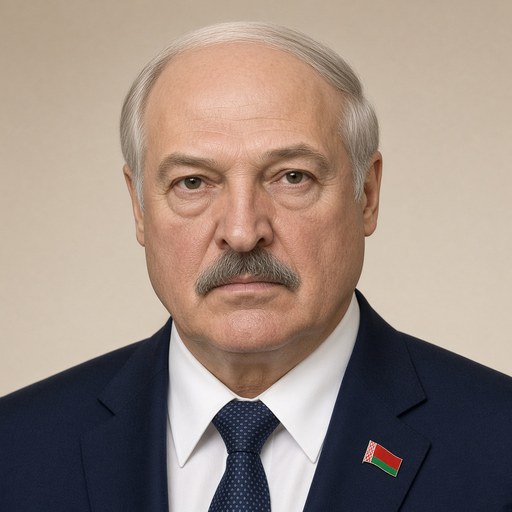
The speech of the President of Belarus A.G. Lukashenko at a meeting with students of BGU.
 Alexander Lukashenko · President of Belarus
- Context
- Lukashenko addressed students at Belarusian State University in Minsk on February 12, 2008, discussing education investment and Belarus's role in the modern world.
- Main themes
- Belarus's place in the modern world, higher education investment, Belarusian State University development, state ideology and public opinion, youth and student engagement, historical identity of Belarus, journalism and social sciences education, infrastructure and campus modernization, qualified specialists training, national budget priorities
- Duration
- ~103 min
- Words
- 12,415
- Sentences
- 850
- Readability
- 61
- Grade
- 8.3
- Syntax
- 2.69
- Vocabulary
- 1.99
Translated from Russian
The broad sphere of national life a sentence belongs to. Every sentence has an Arena, so it is the denominator the other indices are read against.
Other850 sentences in 151 paragraphs
Dear friends, I want to congratulate you on your new home. You have made a good gift to the city of Minsk. Thank you for bringing this corner of our common home into order. For those who will work and study here, this is truly a worthy place. Of course, this corner should be much warmer. Everything should be dignified and beautiful, as is fitting in a cozy home.
I am pleased to see how you are settling into this educational and research complex, which meets the most modern requirements and European standards. A good library, technical equipment in the classrooms, the creation of a real television studio, and a number of other innovations — all of this will enhance the quality of the educational process and the level of training for our specialists. It will help the talents and abilities of the future stars of our domestic journalism to shine brighter. And probably not just journalism.
I must note that since my last visit to Belarusian State University, much has changed here, I think mostly for the better. An educational and hotel complex, a building for future lawyers, and a new building for your faculties have been constructed. But the university's new buildings do not end here, and I was pleased to hear today that the grand new constructions are coming to an end, while the modernization and major repairs of the existing ones will continue. Not started, but continued.
These years have been years of difficulties, a time of heavy transformations, both in the country and here at BGU. It is very important that you have managed to restore the status of the main university, the leading educational and scientific center of our state. To strengthen your main asset — a qualified teaching staff and the highest level of education.
We are interested in ensuring that the brand and prestige of BGU are maintained at a high level both in Belarus and beyond its borders. So that other universities and educational institutions look up to you. Everything possible is being done for this.
The words that education is a priority direction for the socio-economic development of Belarus do not diverge from our actions. Only this year, one-fifth of the consolidated republican budget will be invested in this sphere.
In recent years, two new regional universities have been established in the country, and 10 facilities for higher educational institutions have been put into operation at a cost of more than 200 billion rubles. All types of scholarships are increasing annually. Since 2008, additional payments to teachers and researchers for academic degrees and titles have been significantly increased.
In the coming years, new educational buildings and dormitories for more than 14,000 places will be built in Belarusian universities. For these purposes, 900 billion rubles will be allocated.
I believe that capital investments in the development of education and the training of qualified specialists are the most reliable and correct investments in the future of our young state.
Dear friends! I greatly value meetings and conversations with people. Especially interested and candid discussions with student youth. They allow us to see many problems from a new, more systematic perspective, and, as they say, to rise above the daily routine to find unconventional solutions to pressing issues.
At our previous meeting in the main building of the university, we discussed the problem of Belarus's historical choice. Those who participated in this, especially the teachers, can now evaluate from the perspective of that time whether we chose the right path and whether it was a historical choice for our country. I will not agitate you again, returning to that meeting. I think those who need it and are interested can today assess the path we have taken during this time and the choice we made.
This was prompted by the fact that there were many complaints from teachers, students, and simply concerned people about what certain figures in the field of domestic and even world history did during the post-perestroika period. Everything was turned upside down, distorted, and not a single place was left untouched. I will say directly, after that discussion of the historical topic, specific tasks were set before Belarusian scholars. And as a result — a significant improvement in school and university textbooks.
Today our conversation takes place in a special audience. Here are future journalists, philosophers, sociologists, political scientists — people who will soon influence the development of state ideology and policy and will create it, shaping public opinion. Therefore, I think the topic of today's conversation will be close and interesting to you. I think it could be framed as follows: what is the place of our Belarus in the modern world?
I am far from giving you a lecture. I am simply presenting a certain point of view and would like you to express your opinions later by asking questions.
Let’s start with the main thing: what does the modern world represent and how does our country look in it?
The turn of the millennium has become a time for the emergence and rapid development of a new world order. Its main features are the formation of a unipolar world and globalization.
The second half of the 20th century entered history as the era of the "Cold War," the core of which was the escalating arms race. It defined the two main leaders on the world stage — primarily the United States of America and the Soviet Union. However, paradoxically, it was military power and threat that guaranteed the preservation of balance in the world community. The collapse of the Soviet Union was the greatest geopolitical catastrophe of the 20th century. Primarily due to the destruction of the existing system of a bipolar world. Probably, it is unlikely that even in this audience, both young and older, there will be a single person who will dispute the indisputable: that we destroyed the Soviet Union in vain and that it was a catastrophe.
Vasily Ivanovich (Strazhev) still remembers my deputy years and the first presidential elections. Back then, not everyone thought so. And from here, from BGU, it will not be said to your offense, many voices were raised: what a happiness it is that we have destroyed the country and finally we are independent and sovereign. Over time, we have realized that this is not just bad, it is catastrophically dangerous for our planet. And if we do not manage to balance the situation in the world, and if we do not manage to set our world, our planet, our "little ball" on several supports, we will continue to balance on the edge of danger. This, in my opinion, is the danger of a unipolar world.
This power, this confrontation, ensured balance primarily from a military perspective. Many hoped that the end of the "Cold War" would free us from large military expenditures, and that the released resources would be directed towards solving global, very important tasks for humanity: food, energy, ecological, and other problems. How many of these problems exist in the world!
But these expectations, as we see today, have not been fulfilled. In place of the "Cold War" came an even fiercer struggle for energy resources. Essentially, a new division of the world began. Any means are being used, including the occupation of independent states, as happened in Iraq. Or the ongoing military conflicts on the African continent.
Unipolarity is a dangerous disease that can lead to the degradation and destruction of the world. After all, it fundamentally kills competition — the fundamental principle of the development of human civilization, which underlies its forward movement.
However, there is always a remedy for any disease. New centers of power are forming on the political map of the Earth and actively asserting themselves, capable of countering the imperial ambitions of a single superpower.
Belarus's foreign policy strategy is built on three fundamental principles: political sovereignty, economic openness, and equal partnership relations between countries.
The golden rule of Belarusian foreign policy is multi-vectority and interest in mutually beneficial contacts. We do not isolate ourselves from anyone with an iron curtain. On the contrary, we actively strive for cooperation with all states. And first of all with such giants as Russia, China, India, the countries of Asia and Latin America, and today also Africa. Objective reality pushes us towards this.
About 70 percent of everything we produce in our country goes for export; we sell all of this to live normally, to buy what we need. How can we close ourselves off from the whole world and then try to sell it? If we close ourselves off from someone, then that person will close off from us in the same way. I sometimes hear: we should be tougher, they do this, and we do that, look at how many levers... We must remember the main thing: if we turn very harshly and sharply here, they will turn to us in the same way. We need to find that equilibrium so as not to set our potential and current partners against us, but also to never lose the face of a sovereign and independent state.
The voice of our country today confidently sounds in the United Nations, at the forums of the Non-Aligned Movement, and in other international organizations. Belarus is known and respected as a bastion of peace, tranquility, and stability. We are initiators of preventing human trafficking, terrorism, and military methods of resolving inter-state problems.
Certain so-called opposition figures love to talk a lot about how Belarus is almost in international isolation today. They say it is not recognized in the European Union and the USA. I will say that after Russia, our second largest trading partner is the European Union.
The portrayal of Belarus exclusively in gray and black tones has become almost a good tone in odious domestic and foreign media and on various internet sites. Even our obvious successes, such as the conclusion of mutually beneficial contracts for the supply of products to new regions for us or victories in the "Eurovision" contests, are downplayed and distorted.
And it is not at all about whether the current political regime in our country and the President who leads the country are good or bad. The dislike for Belarus is caused by completely different reasons. They relate to geopolitical and economic spheres. First of all, certain Western circles are dissatisfied with Belarus's active role in the processes of integration in the post-Soviet space, in strengthening the Union with Russia. There are many reasons for our integration activity in the post-Soviet space. This is primarily beneficial for us from an economic point of view. After all, this is our market. And we must be united here; we are all interested in this. Because 70 percent of what is produced in Belarus, as I have already said, needs to be sold. And why today should we replace the markets of the post-Soviet space and look for new ones far across the ocean? This market must be retained; this market must not be lost. And what we find in Africa, Latin America, and Asia will be a plus to that. Because the economy needs to develop; we need to be richer. To be richer, so that you have larger scholarships — we need to produce more, sell more and at higher prices. And that means we need to make our products of higher quality. That's all. And this does not depend on the President, whether he is good or bad. If it does depend, then only a little. Everything depends on us. Therefore, we are actively engaged in integration processes in the post-Soviet space.
And the second pragmatic thing that drives me to this is the defense of our country, ensuring the independence and sovereignty of our state. First of all, the military component. Can we solve this issue alone? No. But when we gather at one table, all the heads of twelve states, unfortunately not fifteen, this is an enormous potential, more than 300 million people, self-sufficient republics that today have everything: from natural gas and oil to the highest space technologies. Is this beneficial for us? Yes, it is. This is pragmatism. I am not even mentioning that we are essentially one people; we are people who grew up in one house, we speak the same language. And, fortunately, the world today has turned in this direction, where we live. And we must not, under any circumstances, turn away from each other. But I emphasize again: we are ready to cooperate with both Russia and our other neighbors; they are from God, neighbors are not chosen, we all understand this perfectly. But only taking into account our national interests. Everyone must understand and remember forever that there is such a country, the name of which is Belarus! And it will definitely find its place in this world sooner or later. It is actively fighting for its place in the sun today. And this must be perceived as a given. This is what I tell my presidential colleagues and what, in the end, I demand from those who impose excessive claims on me and my country.
Secondly. Why are we treated this way? The expansion of our participation in world trade, the development of new markets, and the development of cooperation with countries in Latin America, Asia, and Africa. Who will like a new competitor in markets that are considered the domain, the "zone of national interests" of one state?
In other words, we have become a serious competitor. I will give one example. Our heavy-duty trucks, BelAZ, account for 30 percent of the world market. And "Caterpillars," "KamaTsus" — trucks from American and Japanese firms? 30 percent! They would like to take that piece. But for now, they cannot. And not only that. Take our Minsk Tractor Works. Today, more than 90 percent of all tractors in the entire Soviet Union are produced by MTZ.
We sell our tractors, cars, and other products starting from the United States of America and ending in Australia. Of course, we compete. Of course, we do not allow someone into these segments as a result of competition. Of course, our competitors do not like this, and they constantly try to push us out. I perceive this as a normal phenomenon. I understand that if, for example, a large businessman from the United States goes to the U.S. government, the State Department, and starts saying that they need to help in competing against the Belarusians, or in short, to squeeze them with various sanctions as much as possible, the State Department and the U.S. government will accommodate him. But since they conduct a fierce policy, they do not particularly hide these methods. We are not as strong as the United States, but when the leaders of our Belarusian enterprises come to me and ask for appropriate assistance in this competitive struggle, of course, I help them and set the Government on this. Of course, if Vasily Ivanovich Strazhev comes to me and says: listen, help me so that BGU can compete well, whether against Harvard or other universities, of course, I will carefully support him as much as is possible today. That is what we are doing. And we are winning in this struggle. Who will like such a policy? No one. That is the whole answer to the question of whether the President is good or bad and whether the political course we are following or have created in our country is good or bad. The question is absolutely not about that. Life is much more pragmatic, and the world has become absolutely pragmatic.
The United States, having become the only superpower after the collapse of the Soviet Union, unfortunately took a hard line towards building a unipolar world. In modern conditions, Russia, China, India, and the countries of Latin America can serve as a counterbalance to this imperial strategy. I was convinced of this after my last visit there. And Africa will not remain silent either. New centers of power are emerging that can save our planet. And one of these centers of power is located here, at the crossroads of Russia and Belarus. Hence the attitude towards us.
They conduct such a policy. And they try to involve other states in this policy, including the European Union.
Belarus is, of course, a natural, historical ally of Russia, with which it is connected by military-technical cooperation, spiritual ties, and economic interests. About half of all our country's exports go to Russia. Within the framework of the Union State, it is much easier for us to ensure our sustainable development. A simple example: last year, the foreign trade turnover with the Russian Federation reached 26 billion dollars — this is more than half of all of Belarus's foreign trade.
Our country does not aspire to NATO and does not allow the placement of missiles on its territory aimed at a fraternal state. We advocate for the formation of a pan-European security system for all states without exception.
Belarus independently chooses its friends and allies, without asking for advice from American sages. It cooperates with China, Iran, Venezuela, and other states, which irritates the United States.
Look at how actively and dynamically we have begun our cooperation with Venezuela. Our country, figuratively speaking, has cut a window into South America. We have gained access to the richest oil resources. We have opened a new market for our goods and services. We have acquired a reliable political ally in the person of perhaps someone not so loved, Hugo Chavez.
Belarusian-Venezuelan relations are a real contribution of our countries to the formation of a multipolar world. Together we represent a force that even superpowers cannot ignore.
Many, especially among the youth, reading individual statements on websites, listening to our very "knowledgeable" and "aware" people, wonder: why do we need Venezuela? I want to explain these things to you in simple terms. We did not go to Venezuela just because we want to be friends with them. That is too far. But why did we go there? Because we were invited, and they are waiting for us there. Because we do not have what they have there. And they do not have what we have. We organized this visit very strongly, powerfully, presenting an exhibition of the best Belarusian products. Everything we brought was purchased by Venezuela. All the goods were bought at decent prices. This is beneficial for us because they have a lot of money today. That is how the situation has developed. Hugo Chavez asks me: well, what do you need, just say, and we will do everything for Belarus. I reply: you understand what we lack. We would like to come and not just buy oil from you, but to extract it ourselves. The advanced technologies that Belarus possesses in oil extraction are of the highest world standards. We will transfer these technologies to you. You will treat us like your own people, but you help us too. He opens a map and asks: which field are you interested in? Of course, we knew all these fields, and we show him two fields — we want to work here. He sends a message to the minister: make it so that the Belarusians can work there. Our Government comes to me six months later: Alexander Grigoryevich, we will develop these fields in two years. We would like Belarusian oil to be produced by the New Year. I ask: what do we need for this? We need to ask Chavez to give us a well on the operating fields. And what do you think? He invites his main company, which extracts up to 100 million tons of oil a year, and says: we need to create a joint venture with the Belarusians on the operating fields. And they give us part of the shares of this company (60 to 40, I think) and say: please, extract. And what to extract? Everything is already being pumped, refined, and ready oil is going out. And when I was in Venezuela, he tells me: I want to take you and show you where the Belarusians extract oil.
Well, tell me, which state today makes such gifts? Even the state closest to us — Russia — unfortunately did not do this. And when I put questions to the Russians, negotiating with the President, I say: why should we go to the ends of the earth? We have something to pay with, allow us to extract oil and gas as foreigners. We know how to do all this, our people are still there, who drilled these wells, they work, and they will be happy to work for their country. They respond to me with signals: yes, yes, yes — that is right, that is necessary... But eight years have passed under the current President, and not a single question has been resolved. And here we resolved the issue within a year. Why should we refuse this?
But the most important thing: Venezuela is a country that has enormous material resources. Until Chavez, it was practically a colonial country. Americans were extracting oil from there and paying one dollar per ton. Today, a ton of oil costs 500 — 600 dollars. They extracted resources for free! Of course, Chavez took this under his wing by nationalizing it. Now they have started a fight against him, trying to arrest assets and so on. He declared: oil will not go to America. And it immediately jumped to nearly 100 dollars in price. This is a major player in international oil markets. There are oil reserves there that are now estimated to be more promising than those in Russia.
A very rich country! Oil is not extracted at depths of five kilometers or three, as we do in Belarus, but at seven hundred meters. The gas reserves are colossal. And everything they have, we have. We asked them: buy our potash fertilizers. Within six months, the issue was resolved. We supply half a million tons of potash fertilizers there. We tell them: come and see what we produce. Chavez looked — and I want this, and this, and this... I say: fine, we will do this for you, pay the money. No problem, immediately half a billion dollars for a year was set aside in the budget, take it, Belarusians, build what is necessary. Tell me, is that bad? No.
A wonderful country with a beautiful capital, with a wonderful climate. Yet many people live in huts. We offered them five options for construction. They gave us the center of Caracas — do it. They were completely amazed by the work of our architects. And we will build. And this is big money that they pay.
Why should we turn away from this cooperation?
A firm, independent position in international affairs is by no means a lack of freedom and democracy, but the main reason why threats and sanctions are being poured upon us. A telling example is the actions against the Belneftekhim concern. This concern operates in Venezuela and Iran, which have given it oil and gas fields for development. This can only be called economic blackmail from unscrupulous competitors who seek to prevent Belarusian enterprises from entering the Latin American market. By the way, for several years there have been threats to arrest the bank accounts not only of Lukashenko but also of other leaders of Belarus. So what? Have you been informed at least through the Internet where my accounts and those of our country's leaders are? Maybe someone knows? Read? Finding nothing, they decided to tighten the economic noose around state enterprises where thousands of people work. Today we are threatened: we will arrest their accounts! Such methods cannot be justified in any way. Their discriminatory nature is seen not only by us but also by other countries that support us.
Our approaches are extremely constructive: we need not dictatorship, but dialogue! We are very interested in cooperation with Western countries, especially the European Union. Today, I have already said, the EU accounts for 40 percent of Belarus's exports.
The EU market is our second most important market after Russia. Economic partnership with the countries of this region contributes to attracting investments, modern technologies, and modernization of production to Belarus. On the other hand, trade with Belarus and participation in ensuring Belarusian transit are among the most important elements of economic, and therefore social stability for our closest neighbors, primarily the Baltic states and Poland.
With the accession of these states to the EU, with which Belarus shares common historical roots and comprehensive political and economic relations, the importance of comprehensive dialogue with the European Union has increased many times over. You know that today, even on the slightest issues of foreign policy and economics, our neighbors are increasingly forced to look to the central bodies of the European Union. The borders of these states with Belarus are now the external border of the EU, the regulation of which is subject to pan-European rules, including those provided for in the Schengen Agreement.
I would like to note that we have repeatedly told our Western partners about the possible problems that the peoples of our countries may face after the expansion of the Schengen zone.
Moreover, unilaterally, we have simplified the issuance of Belarusian visas for citizens of the European Union as much as possible. We have even departed from the principle of reciprocity, establishing for citizens of Poland, Lithuania, Latvia, and Estonia a visa fee of 25 euros instead of 60, and initiated a number of proposals to establish special, more favorable conditions for border populations and certain categories of citizens crossing the border.
In short, we are doing everything possible to avoid turning the border with the European Union into a new iron curtain, which will only be allowed to cross by those with deep pockets.
The common border is not only a matter of visa relations but also a whole complex of interrelated problems, including the fight against transnational crime. As well as joint actions for the clear operation of transport infrastructure, sustainable development of border regions, which are interconnected by inseparable economic, ethnic, and cultural ties.
All this determines the real mutual interest of Belarus and the European Union in developing genuinely partnership relations in all areas of cooperation. And we have always proceeded from the fact that the foundation of such a partnership should be mutual respect, equality, consideration of each other's interests, and non-interference in internal affairs.
And today, the number of supporters of precisely such a pragmatic approach is noticeably growing in the political and economic circles of EU members.
It is no coincidence that recently the movement along the Brussels-Minsk axis has noticeably intensified. Several rounds of political consultations between Belarus and the EU have taken place, and a direct dialogue is being formed in the areas of energy, transport, transit, and ecology.
Negotiations on the establishment of a full-fledged representation of the European Union in our country are in the final stages, with which we have special hopes for the development of mutually beneficial partnership with Europe. Hungary and Sweden have made decisions to open embassies in Belarus.
I want to emphasize that we were not the initiators of the deterioration of political relations with the European Union. European officials have boxed themselves into a corner due to fabricated themes of political prisoners and human rights. But we have also gone to meet them. I mean the early, conditional release of some individuals of interest to them, who acted at their behest, and therefore they advocate for them. People to whom the West has special feelings. You know that these individuals served time for specific criminal offenses in accordance with a court verdict. And their release is in no way related to the justification of the crimes committed but is conditioned solely by humanitarian considerations. We have closed this painful chapter in our relations with the West and are the first to propose moving forward. Now it is the EU's turn to demonstrate its good intentions towards the Belarusian people. And soon we will see what this movement towards us will be like.
What I have said, I say for the first time. We should talk about this in more detail in the media, on our television.
Dear friends! The foundation of Belarus's sovereignty and its worthy position in the world community is our economy, which has been developing dynamically and sustainably for the past ten years. Experts from various countries around the world are increasingly discussing the special Belarusian model of socio-economic development. Indeed, we have the right to be proud that we did not copy someone else's experience. We creatively developed and tested our own model in practice, taking into account the realities of our Belarus. But I can now speak freely about how we chose our special model and so on. However, there was no one to copy from. We could have followed Russia's path with all its costs. We see those costs now, but we did not see them then. We rushed to create the same laws as in the Russian Federation. But, as I understand now, our country and our people would not have endured the shock that the Russian people experienced. Russia was fortunate that oil and gas prices skyrocketed. What if that had not happened? After all, at one time, a barrel of oil cost 8 dollars, now it is close to a hundred. Accordingly, natural gas has also become more expensive. What if we had driven our state and our people into a hole through shock privatization, stopping all enterprises, selling off and destroying probably half of the enterprises — what would have remained for us? I was presented with a thousand models, laid on the table, persuaded. And I really struggled for days, trying to figure out which path to take. And everyone looked at me, some with regret, some with interest, and some — and there were quite a few of them — thought: "Let him take this option, he'll 'crash', well, that's where he belongs." And when it was hard for me, I went to the people, including the youth. And there I found answers to all my questions. And we created that path together, not just me. Life created it. And we calmly, "pamyarkouna," in a Belarusian way, emerged from the situation we found ourselves in in the mid-90s.
I am not saying that we are very successful here. But we have stepped back from the brink, doubling production. Why do we not live as richly as we would like? Because we still do not know how to trade. We produce excellent goods, but we sell them for a pittance. We are also helped by unscrupulous intermediaries. And the objective fact is: we are fighting for our place in the sun. We strive to find our niche in the economy, in foreign trade, to conquer it. Because there are no empty spaces. And to conquer, we sometimes even have to lower prices on our good products. This is an objective fact.
I will give you one example. Our main wealth and asset from natural resources is potash fertilizers. When I became President, I remember being convinced that the best scheme was to sell through the International Potash Company (Moscow). I asked my heads of associations: how much does your product cost in external markets? Well, for example, we sell to China and India, but how much does a ton of potash fertilizer cost there? They did not know. They paid us, as I remember, 65 dollars at the factory, they took the potash fertilizers near the fence, about 7 million tons, and took them away to sell. I was then afraid to destroy this market, I lacked knowledge, and everyone was interested in the existing scheme. Then I created the Belarusian Potash Company in Minsk. And I told the global players: whoever wants, join us. Immediately, one Russian came. And we became leaders in this market. At that time, we sold potash fertilizers worth 600 million, the largest amount was 700 million dollars. This year it will be one billion three hundred. And the same volumes.
The same was true with our metal, the same was true with engines, with cars, and so on. They came here, took them away, and sold them there. Here they paid one-fifth of the value of these goods on the world market. Is that normal? And we gradually navigated out of this situation every year and received more and more income for our country. I often give one example. When I became President, I metaphorically did not see money in the country. It was good if we had a budget of 2.5 — 3 billion dollars. Today, the budget of our country is 17 billion dollars. This means the economy is working. Money does not come from thin air. Of course, this is still little, this is not everything. But I would ask you, when evaluating the policy in the state and what is happening here, to approach it soberly. It is necessary to compare with what it once was. Vasily Ivanovich (Strazhev) reports to me about the average salary in the country for the teaching staff for the past year. It is about 500 — 550 dollars. And I remember those times when you brought rectors and teachers to me by the hand, when you were a minister, and they did not even have fifty dollars. And not much time has passed — and the situation is different! I emphasize again, I am far from self-admiration and from thinking that we have taken God by the beard, we have solved all problems. No, there are still many problems. But these problems now lie in the plane not so much of President Lukashenko, but of yours. Because the path, the concept by which the country should develop, the direction that has been developed today, is not even criticized by you. And this is my job and that of those who work with me. We have defined, we have shown this path. Let's now walk it together. And only in this case will we be richer. Shouting in the streets, engaging in criticism — this is not our way. We can lose a lot because of this. Those who strive to come to our country will simply leave us.
There is a lot of talk about individual entrepreneurs now. But who knows what is really happening? Recently, one of the leaders reported to me. Our good supporters in the European Union say: "Why are you doing this, let this small business develop, why are you stifling it?" This is how they perceive it in Europe. And when our leader told them, they said: "What?! Do you still have such relationships?" And what is the essence? There are so-called individual entrepreneurs. What did we used to call them?
In Soviet times, they were called speculators. Bought somewhere, resold... But the market came, and "shuttle traders" appeared. At that time, there was nowhere for physicists, mathematicians, or historians to go — there were no salaries. The state was to blame. Not me, but that state, which after the collapse of the Union pushed many out of teaching auditoriums, smart, talented people, and they began to trade in underwear, bras, axes, hammers. It was such a time. No one hindered this. I tried to bring it into a normal channel. We provided them with benefits, but I said: keep in mind that these benefits will soon end, you will have to compete with the huge trading complexes that we are building, super- and hypermarkets, and so on — these are their direct competitors. You will have to compete fairly with our light industry if you bring in clothes of dubious origin. Here is your relief at the border — you do not pay taxes, VAT, and so on, a simplified tax for you, so that accounting is less. But this will go away over time, because it is abnormal, it is bad. We helped, supported, protected them. I myself traveled through these markets in my time, forced the authorities to create councils, to consult, to protect from the owners who run these markets. They liked it. But we agreed that this is temporary. If they do not pay taxes on goods, for example, that they bring in, I emphasize again, mostly of poor quality, then they create unfair competition for our enterprises, which pay 100 percent of taxes. What kind of price competition can there be then? Is this normal? It is not normal. Moreover. This "window" at the border, I, for example, say, or benefits in tax legislation have led to the fact that many businessmen, large legal entities, began to trade and work through them (since they have benefits). And we discovered that one individual entrepreneur has a turnover for the year greater than the largest enterprise. Why? Because documents are processed through them, these businessmen also do not pay taxes, that is, a criminal "relief" has appeared. And the criminalization of the economy began. Then the Government made a decision: if you are an individual entrepreneur — work and you can hire your relatives, but no more. Some had 100, 300, 500, there were no limits on workers through whom all this goods went. But this is no longer an individual entrepreneur. The Government proposed an option: let's ban this. They were outraged. But it should have been done differently. I have already said this more than once, and the Europeans agreed. There should be a unified approach for everyone: there is a VAT rate of 25, 30, 40 percent — pay; there is a profit tax — like everyone else, pay. And there is no need to prohibit anyone from anything. Hire whoever you want. And when we told them this, they no longer wanted to walk the streets of Minsk. But I honestly and openly say that this will happen, and very soon. This is where the conflict lies. We are not "suffocating" anyone.
And then, I will say frankly, I asked our relevant services: go and see how these individual poor entrepreneurs live, what cars they drive to work. They filmed everything and put it on my desk. You know, I have never seen such brands of foreign cars, exclusive all around. These "poor," "destitute," "deprived," who gather before the eyes of students of BGU, cry and demand: come out and support us...
So what are the elements of our own economic model?
First of all, it is a socially oriented market economy. If we are talking about the market, then I primarily accept and support competition in this market. Competition is what we need to take without looking, and we do this. Competition always leads to good results. But the fact that this is a socially oriented market is undeniable. We cannot leave our people like this, without any support. But today you should keep in mind that we do not intend to pamper anyone excessively. Everyone today has the opportunity to have a job in the country and earn. It is not enough to have one job, as unpopular as it may sound from my lips, go for two, for three jobs. This is not the mid-90s, when there was nowhere to go. When I remember being at "Horizont," there was mainly a female team, women were crying: Alexander Grigoryevich, it is impossible to live on 30 dollars, and not everyone receives that, help us, at least a little, at least up to 50 dollars. Therefore, a socially oriented market economy is one of the foundations of our economic model.
Secondly, an unconditional refusal from shock reforms that led to the impoverishment of the people, the application of evolutionary methods of transformation.
Thirdly, the formation of an effective management system — a vertical of power.
Fourthly, an active organizing and regulating role of the state in all socio-economic processes. For this, I have been constantly criticized. Why does the state not leave the economy, business, and so on? To which I simply replied: we leave where we cannot cope. Where we can manage, we will manage, delve into, and under no circumstances will we privatize what is working well today and bringing results. The time will come, we will privatize.
Do you want an example? I can give one, I have never mentioned these figures anywhere. Recently, we sold a share in Belarus in VELCOM, a well-known company. We did not invest anything there at all. But we received about 600 million dollars for our share. And this is not a controlling stake.
Today we are already being offered billions for the controlling stake in another company.
I say: wait, we must control MTS, we are the owners there, to prevent robbery in this market. Today, for the third operator — "BeST" — we are offered a billion to buy it with all debts. We will think...
Fifthly, a balanced foreign economic policy, comprehensive cooperation with Russia and the CIS member countries.
I especially want to note that we have managed to optimally use new market methods and elements of prospective scientific forecasting. We have revived five-year plans for the country's development, introducing such an innovation as the identification of national priorities. This allowed us to concentrate forces and resources on the main areas of development in the most difficult conditions. All this was achieved with great difficulty. Your parents probably still remember with horror the turbulent 90s, when Belarus almost perished in the storm of liberal economic reforms.
From 1991 to the mid-90s, production fell at a catastrophic pace. Inflation reached one and a half to two thousand percent per year. Today we say: 12 — 15 — that is a lot. Unemployment increased rapidly. The financial system was absent, it was not just collapsed — it was completely absent. The weakness of state power and complete legal nihilism spawned rampant corruption and organized crime. To prevent further degradation of the economy, a completely different policy was needed, one that would allow the country to be pulled back from the brink. We walked, as they say, from life, on thin ice, by trial and error, developing a strategy and tactics for the development of the state. And we achieved victory over the crisis and lawlessness.
Today you see a completely different country, a completely different Minsk. A calm, cozy European country and, I am sure, a prosperous one in the future.
According to the United Nations, Belarus ranks first among CIS countries in the Human Development Index. In the world, our country ranks 60th in this indicator and is in the group of states with a high level of development. And these are not our, not my assessments.
We were the first among CIS countries in terms of industrial production to surpass the level of 1990. This was our highest indicator in Soviet times.
Over the past ten years, we have ensured an annual GDP growth of more than seven percent. This is significantly higher than the average in Europe. Even last year, despite rising energy prices, GDP increased by more than 8 percent.
Belarus has been able to give people the most important thing — the opportunity to work and earn a decent living on their land, to support themselves and their families with honestly earned income.
The unemployment rate has been reduced to one percent. We do not always realize what a blessing this is. After all, in many Western countries, unemployment is a major scourge. Imagine how you would feel if you knew that almost one in five university graduates would end up without a job. And there would not be so many of you here. There would not be, because you would not be needed by anyone.
We ensure annual growth in the population's income. Currently, the average salary in the country is 350 dollars. This is almost five times more than in the mid-1990s. The average labor pension is over 160 dollars and is one of the highest among the CIS countries.
Our people, most importantly, are not divided into a handful of super-rich oligarchs and a destitute majority. In particularly difficult situations, the state always lends a helping hand to the people.
It should be noted that our citizens pay less than half of their housing and communal services costs, less than half. The state covers the rest. Although the tariffs for these services are rising, they do not exceed 5 dollars a year (for the last three years).
I cannot help but touch on the issues that are actively discussed in society and in the media: the regulation of social benefits for the population. Believe me, there is no other country with such a volume and scale of benefits and preferences that we had until recently. It was impossible to place such a burden on the economy any longer. All social benefits are funded from the state budget, which is mainly formed from enterprise revenues and tax contributions from the population. And here the principle of social justice is important, so that budget funds go to those who need them most. Therefore, the goal of the measures taken recently was to move away from mass, indiscriminate social benefits and to implement a mechanism for targeted assistance.
The freed-up funds are directed towards solving urgent social tasks: supporting large families, financing the "Children of Belarus" program, significantly increasing child benefits, and noticeably expanding the volume of housing loans (essentially, interest-free loans given the current inflation), with partial debt repayment being carried out.
Why am I saying this? The most important, catastrophically frightening problem for our state is that we have too few people today. We should have about 30 million people living here. Without people, there will be no one to protect the land. Therefore, the main emphasis today is on ensuring that you, those present here, have at least three children each. If a family has three children, we will solve all problems. If we "struggle" with one child in the family, there will be no country. And no one will even talk about sovereignty and independence later. Some may smile today, but I think it is a kind smile, supporting me. Today, we provide benefits to families with three or more children; if there are five, they get a free apartment. When has this happened before? Although we are not so rich today, we are forced to do this.
Constant monitoring of all processes related to the regulation of benefits, and analysis of the work of state structures will show what adjustments need to be made for the system to work effectively. We do not refuse to give more money to those who need it. If a rector does not have enough funds for free student transportation when it is really necessary, we will give the rector as much money as he says, so that he can honestly spend it on those students who need it. You decide here for yourselves. You are from the village, and I am from the village. I used to travel home every Saturday and Sunday to bring potatoes, lard, and other things to live normally for a week. I remember this well; it was not long ago. And I believe that this should be preserved. But indiscriminately, no matter how unpopular it may sound in this audience, no one will travel for free. We simply have no other option; we have not devised another mechanism to trust the leadership of the university, which will spend this money.
Or I am told: "Here are the pensioners, your stronghold and hope; they are against you. Everyone is against the cancellation of these benefits." But I do not understand why in the hero city of Minsk, where we invest billions and billions to improve sidewalks, have better stores nearby, and pharmacies, should a pensioner travel for free? Where to? The store is nearby, the pharmacy is nearby, and there are plenty of goods today—thank God. We need to pay and help both the pensioner and those in need, just so they can obtain what they need for life. And it is right there—step outside, even go down to the first floor to the store, buy. This is not in the village, where sometimes a poor pensioner has to walk two or three kilometers. You see, the pensioners of Minsk have been offended. How have they been offended? If you want to travel every day from one end of Minsk to the other to take a chocolate bar to your granddaughter or grandson, to spend time with your children—buy a ticket and go.
Today, Belarus, and Russia has not yet increased the retirement age. This is a long-overdue problem. But I promised that I would not do this. Pensioners do not care anymore. But those who will retire tomorrow (and we will all retire, some of us sooner, some later) do not want the retirement age to be 65 for men instead of 60, and 60 for women instead of 55. They do not want that. Well, fine, if you do not want it, I understand you. But do not torment the leadership for canceling free travel in the city of Minsk. There is no such reaction in the village. Moreover, we calculated how much, if these benefits, these pennies are broken down, each person receives. After all, not everyone uses the benefits. It turned out to be less than 3 dollars a year! And you did not notice that I added 5 to 7 dollars to the pension twice. If you need to travel, take that money and pay. Why be upset with me? Those who are upset are not the ones who spent 3 dollars a year on these benefits, but perhaps 300 dollars, but there are very few of them in the country.
Next. The principle of justice. What kind of principle of justice is there if we take from one and everyone screams that taxes are high? Here is Natalia Vladimirovna (Petkevich), who is present here, the Deputy Head of the Administration; she was tasked with organizing this entire process. And she comes to me and says: "Alexander Grigoryevich, we cannot figure it out; to cancel the benefits, we need to know them." As we delved into these benefits, it turned out that some benefits had remained since Stalin's time. Benefits from those times! I asked: who uses them? The answer: who knows?
But the most important thing is that travel is not free. The budget compensated transport owners for their expenses. Tell me, how do you count the people who show pension and other identification every day on buses? How do you account for them? No one accounts for them. They wrote, they drew. They came and said: let's allocate 200 billion a year! And the budget gave it. This is absurd! There were trips worth 200 billion; no one counted. They created dependents. Is that normal? That is not normal. So there was a whole complex of problems. But the main problem is the problem of injustice. But again, we do not take anything from anyone indiscriminately. For example, I was in favor of keeping the travel benefit for students. But what kind of benefit, I also suggested. I was recommended several options: to increase scholarships, and so on. I said: give the money to the rectors if you do not know how to do it. Let them calculate. Establish an order, and then we will check where the same Strazhev spent this money. He should only spend it on travel. This is where the idea arose to give the rector the right to manage the funds. As much as he says, we will give, and then we will double-check. I am confident that it will be to the penny. In every group, I again recall my student years, we all knew what was needed for each student. Whether he can live without help or not. Today, among you, there are many people who absolutely do not need this help, whose parents earn normally.
Such people will never come and say: give this guy or girl something. I am sure. Therefore, you decide for yourselves here, and over time we will develop this system—who and how to help. Everything must be precise and fair. So do not be offended by these decisions.
Today, our country is a country with an open economy. The Republic today trades with more than 170 countries around the world. The share of exports in GDP is about 70 percent. The economy itself forces us to seek new and maintain traditional markets for our products, as well as raw material sources to ensure the production cycle.
Maintaining high rates of economic growth and improving people's well-being is only possible through more efficient use of energy resources. We must not forget that energy is the foundation of the national economy, and therefore of the national security and sovereignty of the country.
Building a modern, reliable nuclear power plant will guarantee Belarus cheaper electricity. Its construction will reduce the state's need for imported energy carriers by almost a third.
Our opponents are trying to earn political dividends by speculating on the radiophobia of some of our Belarusian citizens. They deliberately conceal that modern nuclear power plants are several orders of magnitude more reliable than the Chernobyl nuclear power plant. At the same time, they cause significantly less harm to the environment than thermal power plants. The fact that the use of nuclear power plants is safe and beneficial is evidenced by the example of France, where more than eighty percent of electricity is provided by nuclear stations. Today, many countries—the USA, the UK, Germany, Sweden, Japan, Russia, and China—are actively developing nuclear energy. And we cannot lag behind global trends.
I also want to express one thought. I am often asked: what are you proud of from what has been done during your presidency? I will frankly say what I want to be proud of. First—our entry into space; we will definitely do this. All the infrastructure and the Flight Control Center are being created in Belarus today. And second—the construction of a nuclear power plant. These are not ordinary things. You must understand that this is your future. To become a space power, we need, perhaps, a leap in the intellectual development of the country. And I went for this not because we urgently need to explore the Earth and see what is happening. No. But so that we have a scientific school. So that we are significantly smarter. So that we can later, selling our brains, earn good money. So that not only tractors, bolts, and spare parts are distributed around the world, but that we carry our intellectual property worth a billion in one diplomatic pouch. This is why I made the decision, and today I am forcing the spending of money on these most modern, cutting-edge technologies. As a result, other countries, including China, are asking us: we want a satellite like the one you are building. The equipment for photographing any part of the Earth is the most modern in Belarus, and it has become even more advanced and modern. Because we invested money. And our scientists and manufacturers were able to produce even more modern equipment. No one in the world produces it. And today, instead of this project—BelKA—(unfortunately, the rocket with seventeen satellites fell and crashed), in two years there will be a new, even more modern one. As we say, if it weren't for happiness, misfortune helped. We are filming a matchbox on Earth with our equipment from space! The Russians are interested and are offering: let's include you in the space programs in Russia. And this is profitable; this is money. But this is already a much higher level. And we have too few specialists for this. So go, strive, earn this money. Here, at BGU, both applied mechanics and mathematics are at the highest level. This is done for you!
And what about nuclear power plants? What, are we going to send people from the best Minsk factory there, and they will be able to work? Even today, BGU is primarily involved in preparing people to work at the nuclear power plant; we are creating a new direction in both science and education.
The nuclear power plant will initially replace 15 to 20 percent of energy. This is also important. But this is the first block, and there will be a second, maybe a third, fourth, and after me, maybe even more will be built. But I am firmly convinced that we must do this not only from the standpoint of economic or energy security of our state. This is an increase in intellect.
The main priority of the social policy of the Belarusian state is the harmonious development of the individual, the formation of effective systems of healthcare, education, and the development of science and innovative activities.
The year 2006 was declared the Year of the Mother in our country, and 2007 was the Year of the Child. The state's close attention to families and children, and the strengthening of their state support, have yielded positive results. Only in January to November 2007, the number of births increased by almost 8 percent compared to 2006. Here is Vice Premier Alexander Kosinets, whom I tasked first when I appointed him: look at the children, make sure that we have the lowest mortality rates among children and mothers. I told him right away that we would not achieve anything through directives until you take every child's death under your control. Make sure that all information comes to you. And ask for it strictly. And the result is almost the best in the world. And only two years have passed.
This year has been declared the Year of Health. And this should be understood in the broadest sense. The Year of Health will be a time for implementing a number of important nationwide initiatives. A complete health check of the entire population of the country will be conducted. We need healthy people.
We will launch targeted work to engage citizens in regular physical activity, and we will conduct a nationwide campaign to promote a healthy lifestyle. In short, the distinguishing feature of this year will be a fashion for health, physical perfection, and moral beauty. Therefore, I urge you and all Belarusian students to mark the Year of Health by giving up all bad habits. Get used to regular physical activity. This is what I can recommend to you 100 percent.
However, while addressing health, we will not forget about the further development of education and science. After all, there is nothing more useless and dangerous for society than a healthy fool.
The domestic higher education system is a subject of our legitimate pride. In Belarus, there are 425 students for every 10,000 people. This is one of the highest rates among European countries. Today, more than five thousand foreigners are studying in our institutions, which confirms the competitiveness of Belarusian higher education. There will be even more of them. And wherever I go, the first question is almost always: can you prepare specialists for us in all fields? Previously, it was said: only doctors or engineers. Venezuela is also ready to train a huge number of students with us. This is also a good source of income for our universities.
Belarus has become a common cozy home for people of different nationalities and faiths. We form a single historical community — the Belarusian people. We have common goals and tasks — strengthening the sovereignty of the country, developing the economy, and improving the well-being of our people. It is in the unity of the people that our strength lies and is the key to successful progress.
Each of us must realize that he is, first and foremost, a citizen of the Republic of Belarus, and only then — a Belarusian, Russian, Ukrainian, Jew, Tatar, believer, or atheist.
Our ill-wishers have repeatedly tried to interfere in the internal affairs of the country, playing the national card, artificially inflating the "Polish" and "Jewish" issues.
A fresh example is the adoption by the Polish Sejm of the law "On the Pole's Card." I am warned: it can cause significant harm to our state. I must say: it will not work!
Not so long ago, by the way, Hungary tried to introduce a similar card for its diasporas. However, sharp protests immediately followed from Romania, Slovakia, and Austria. At that time, international organizations recognized such practices as a violation of human rights, mind you.
Unfortunately, there has not yet been such a united and coordinated position from European countries. And once again, we have to face double standards in defending our legitimate rights and interests. We will manage...
Belarus is interested in good-neighborly partnership relations with Poland. Our peoples are connected by centuries-old traditions, friendship, and mutual understanding, and living in one state.
We highly value the contribution of all confessions and nationalities to the formation of the common culture of the Belarusian people, providing people with broad rights and opportunities to satisfy their religious needs and develop national cultures, and to observe customs. But we will never allow a split in society based on religious or national grounds. Any manifestations of intolerance and discord, incitement of hatred and extremism will meet with the most resolute resistance from us.
Western media love to accuse us of allegedly hindering the development of civil society. What hindrance is there when more than 2,000 public associations are currently operating in our country? There are 15 political parties. Isn't this the best proof of the existence of civil society in Belarus?
I believe that the foundation of our civil society, based on our traditions, consists of local Councils of Deputies, trade union, youth, veteran, and women's organizations. Together, they unite more than six and a half million people. This is a great force. The other matter is that it does not always manifest itself actively enough.
The necessity of preserving and strengthening the unity of the Belarusian people is the starting point in the relationship between the state and civil society. Not instead of, but together — this principle should become the basis for their interaction.
State bodies need to involve the public more broadly in the development of draft legal acts that affect the interests of the majority of citizens. Their opinions and proposals should be taken into account.
Speaking about the political system of the country, I cannot overlook two favorite topics of our opponents — the absence of democracy in Belarus and the persecution of the opposition. I will say directly: these are dishonest speculations. Look, the most important issues are resolved here only through the direct expression of the will of the citizens. Referendums, elections, all-Belarusian people's assemblies — these are the forms of real people's power that allow us to consider the country a democratic state in the truest sense of the word. We have developed an optimal electoral system. Perhaps the Belarusian model of democracy differs from that adopted in Western countries, which has been formed over 300-400 years. But democracy is a building that needs to be constructed gradually, starting from the foundation. This is, first of all. And who said that all these buildings should look like those built in Germany or America? It is also important to cultivate respect for the existing legislation, for what we have. It is not necessary to change it, but to comply with it, to get used to order, to the system. Then people's legal consciousness will be high.
Recently, qualitatively new relations between the state and the citizen have significantly strengthened in Belarus.
However, the movement of the state towards the person should not be one-sided. I have already mentioned this several times. We need to eradicate legal nihilism even at the everyday level.
It seems to be ordinary situations: crossing the road in the wrong place, drinking in parks and squares, swearing on the bus. Often we put up with them: well, who hasn't done that? But all of this is an offense that is incompatible with the status of a self-respecting citizen of a democratic legal state.
Let us build a legal state together, brick by brick, rather than hoping for some other uncle who will come and do something for us in an instant.
After all, it is precisely such deceitful sweet tales that the so-called opposition tries to tell us, as I always say. And once again, I want to confirm to you, may God grant every president such an opposition. They say: why should you think, strive, and work yourself, it is better to reshape the country at the behest of the West — and everyone will immediately become rich and happy. I will say frankly: the opposition that exists on foreign money (and no one among you will deny this) — is not an opposition, it is a combat unit for conducting foreign interests and policies in our country. This is what they are engaged in. You may ask: why do you tolerate this? We tolerate it as long as it is tolerable...
I often tell them: if you destabilize the existing situation in the country — you will get it full blast. While you deceive the West, which throws millions at you, I see this as an investment in our society: someone built a house, someone bought a car, someone went to the store — they... None of them work, yet they live well. An extra million dollars will remain in the country. After all, they have children, they need to be educated, clothed, and fed. They will go to the store, buy — this is also an investment in our country. I always say this half-jokingly. And I have always tried to act decently towards them.
I will give one example. Remember what they call it, the Belarusian "Maidan" or "Maidan" (this was invented by journalists)? It was all so laughably funny (excuse the tautology). When they saw that the "Maidan" was not working out and that with one click they would be thrown off that square, they turned to me through their people: tell the President that we need to save face, let them not touch us, let us sit here in front of Western journalists for a day, two, three, a week, let them endure. I said: fine, okay, we need to save the opposition's face, let's save it. They sat for a day, they sat for two. We tolerated drinking and smoking there. I will say frankly, we even tolerated drug use for a day. But then Mayor Mikhail Pavlov came and reported that they had set up a toilet by placing tents over a sewer manhole, and they had made a mess there. I suggested talking, maybe they would agree to clean it up, after all, there were still three days left, I promised.
But as soon as the special services recorded calls from Brussels with instructions on how to hold on and how to act, and we saw that the "tide" was starting, I said: this is already a violation of our agreement, one hour — and there should be no one there. At four in the morning, there was no one there. So why should I be offended for that?!
What kind of opposition are they to me, such opponents? I need to cherish and nurture them so that there are no others, just so that they remain. Well, that is our opposition, what can we do...
In Belarus, by the way, there are eight opposition parties. Here, I will ask you in this audience: can you recall even one good deed they have done? Well, name it. Let the teachers name it; their memory is longer. Some of them sympathized with our opposition. I perceived this normally. So name these good deeds. You know what they are telling me today: Alexander Grigoryevich, to look more respectable for the parliamentary elections — let you bring opposition members into Parliament, let twenty of them sit there. I said: wait, you are democrats, you are for a legal state, how can I bring them in and seat them?
I am simply telling you: if you want to live in a normal, peaceful society, raise children, if you want to walk peacefully through Minsk with your child in a stroller anywhere, think about your future. Build your state. I will be primarily interested in this. I will participate in this. If you don't want to — soon there will be presidential elections. But there will be order in the country. This is our image, this is our greatest asset. You just don't know how many Russians today, primarily Muscovites, are asking us for at least a piece of land. How many normal people, large businessmen, wealthy people! I ask them: listen, is there not enough land in Russia? They say: oh, this is not for ourselves. — For whom? — For the family, for the children, we want them to live with you, we will earn money, Alexander Grigoryevich, you give us, we will build stores, something else, whatever you say, just give us a piece of land for the family. This is worth a lot. In the image of Belarus — this is the most valuable thing for me as President.
And therefore, whether you like this order or not, while I am President — I will maintain this order in our country, no matter how difficult it may be. But no one today (for the most part, if they are not guilty themselves) will say that they are afraid to go out on the street, even in such a metropolis as Minsk. And when I visit new agrotowns in the countryside, people thank me for normal schools, normal kindergartens.
And we will restore all this in five years. Our Belarusian deserves to live in a good state, in a good house. And he will live. And we will definitely do this.
I am an advocate of widely involving young people in the activities of all government bodies, including local councils. Today, the share of deputies under 30 years old is already 6 percent.
The best path to civil society is participation in the work of public associations. Please participate. I can talk about our youth union, which is recognized by you. Yes, it is criticized, and there are reasons for that: for certain facts of formalism, maximalism. But sift through everything, and in the dry residue, you will see a lot of good.
A crucial component of our society is the mass media. The influence of television, the press, and the Internet is felt in virtually all areas of our lives. They not only inform us about everything happening in the country and the world. They also educate, nurture, introduce us to culture, and entertain.
The media is one of the most operational and reliable barometers of public opinion. They are called to ensure feedback between the authorities and the people, to raise problematic issues before government bodies.
And I often tell my journalists: you are the eyes of our society; it sees everything that happens in the world and in our country through your eyes, through your hearts and souls.
Today, five national channels operate in the information space of Belarus, including the satellite channel "Belarus-TV." More than 200 television and radio programs are broadcast, and over 1,200 periodicals are published, both state-owned and privately owned.
There are more than two and a half million Internet users in the country. And this number is constantly growing.
The media in Belarus is a serious force that largely determines people's views, opinions, and perceptions. It influences political decision-making. It is no coincidence that it is said: if a certain event was not on television, in the mass media, then it did not happen at all.
The state has paid and will continue to pay great attention to the media, providing all possible support. But, as they say, to whom much is given, much will be required.
Alongside the growth of the authority and influence of the media, their responsibility to society for the truthfulness of information increases.
Today, I was shown a good, solid television center, which, of course, needs to be completed and properly organized. And I want not just to ask the heads of our channels, but to instruct them that this television center should be utilized by you at 100 percent and be profitable for BGU. And here, it is necessary not only to teach people but also to produce a good product, only good. I have great respect for journalists and follow their work.
In ideology, it is difficult to replace the profession of a journalist, and it is impossible to replace the mass media. For this reason, they cannot be privatized.
I do not want to say much about the Internet, because although I highly value this "worldwide web," it is also a decent garbage can. Without addresses, without responsibility, and so on... You know this no worse than I do. Hence my attitude towards the Internet. But I see significantly more of our advantages, the good that the Internet has brought today. That is why we are developing it, starting from BGU, which has a very extensive system, and extending it throughout the country. And this has been appreciated by the United Nations. And we do not intend to hinder this development today. That would be wrong.
The social responsibility of the mass media begins with the conscience of each individual journalist and should be based on honesty, integrity, objectivity, and a sense of civic duty.
In concluding my speech today, I want to wish you success in your studies, in your scientific and public work. I also want to congratulate all of you on Valentine's Day. I know that this holiday is gaining increasing popularity among students. Youth and love are rightly considered synonyms in all countries of the world, in all cultures. Therefore, I wish you happiness, well-being, and may Love always be by your side.
Thank you.
The original Russian. The tags above are read on the English translation's sentences.
Дорогие друзья, я хочу вас поздравить с новосельем. Хороший вы сделали подарок городу Минску. Спасибо вам, что вы привели в порядок этот уголок нашего общего дома. Для того, кто будет здесь работать, учиться, — это действительно достойное место. Конечно, этот уголок должен быть гораздо теплее. Все должно быть достойно и красиво, как это и положено в уютном доме.
Мне приятно видеть, как вы обживаете на сегодняшний день этот учебно–исследовательский комплекс, отвечающий самым современным требованиям и европейским стандартам. Хорошая библиотека, техническая оснащенность аудиторий, создание настоящей телестудии, ряд других новшеств — это все позволит повысить качество учебного процесса и уровень подготовки наших специалистов. Поможет ярче проявиться талантам и способностям будущих звезд нашей отечественной журналистики. И не только, наверное, журналистики.
Должен отметить, что со времени моего предыдущего посещения Белорусского государственного университета здесь многое изменилось, думаю, в основном в лучшую сторону. Построены учебно–гостиничный комплекс, корпус для будущих юристов и новое здание для ваших факультетов. Но на этом университетские новостройки не заканчиваются, и мне приятно сегодня было услышать, что новостройки грандиозные заканчиваются, а вот модернизация, капитальный ремонт существующего — будет продолжен. Не начат, а продолжен.
Эти годы были годами непростых, временем тяжелых преобразований, как в стране, так и здесь, в БГУ. Очень важно, что вам удалось вернуть статус главного вуза, ведущего учебного и научного центра нашего государства. Укрепить свое основное богатство — квалифицированный преподавательский корпус и высочайший уровень образования.
Мы заинтересованы в том, чтобы марка и престиж БГУ достойно поддерживались как в Беларуси, так и за ее пределами. Чтобы на вас равнялись другие университеты и учебные заведения. Для этого делается все возможное.
Слова о том, что образование — приоритетное направление социально–экономического развития Беларуси, у нас не расходятся с делом. Только в нынешнем году в эту сферу будет вложена одна пятая часть средств консолидированного республиканского бюджета.
За последние годы в стране созданы два новых региональных университета, введены в эксплуатацию 10 объектов для высших учебных заведений на сумму более 200 миллиардов рублей. Ежегодно повышаются все виды стипендий. Начиная с 2008 года значительно увеличены доплаты преподавателям и научным работникам за ученые степени и звания.
В ближайшие годы в белорусских вузах вырастут новые учебные корпуса и общежития более чем на 14 тысяч мест. На эти цели будет выделено 900 миллиардов рублей.
Считаю, что капитальные вложения в развитие образования, подготовку квалифицированных специалистов — это самые верные и правильные инвестиции в перспективу нашего молодого государства.
Дорогие друзья! Для меня огромную ценность представляют встречи и беседы с людьми. Особенно заинтересованные и откровенные разговоры со студенческой молодежью. Они позволяют по–новому, более системно и, как говорится, поднявшись над текучкой будней, увидеть многие проблемы, находить нестандартные решения актуальных задач.
На предыдущей встрече в главном корпусе университета мы обсуждали проблему исторического выбора Беларуси. Тот, кто принимал в этом участие, особенно преподаватели, могут уже с позиции того времени оценить, правильно ли мы выбрали тот путь, по которому идем, и исторический ли это был выбор для нашей страны. Я не буду опять вас агитировать, возвращаясь к той нашей встрече. Думаю, те, кому это надо и кто этим интересуется, сегодня могут оценить путь, пройденный за это время, и тот выбор, который нами был осуществлен.
Это было вызвано тем, что очень уж много нареканий и от учителей, и от учащихся, и от студентов, и просто от неравнодушных людей тогда было на то, что натворили в постперестроечное время определенные деятели в сфере отечественной, да и мировой истории. Всё перевернули, исказили, живого места не оставили. Прямо скажу, после того обсуждения исторической темы перед белорусскими учеными были поставлены конкретные задачи. И как результат — существенное улучшение школьных и вузовских учебников.
Сегодня наш разговор проходит в особой аудитории. Здесь находятся будущие журналисты, философы, социологи, политологи — люди, которые вскоре будут влиять на развитие государственной идеологии и политики и будут творить ее, формировать общественное мнение. Поэтому, думаю, вам будет близка и интересна тема сегодняшней беседы. Я думаю, ее можно было бы обозначить так: каково же место нашей Беларуси в современном мире?
Я далек от того, чтобы читать вам лекцию. Я просто выступаю перед вами с определенной точкой зрения и хотел бы, чтобы потом вы, задавая вопросы, могли высказать мнение свое.
Начнем с главного: что представляет собой современный мир и как выглядит в нем наша страна?
Смена тысячелетий стала временем зарождения и бурного развития нового мирового порядка. Его главные признаки — формирование однополюсного мира и глобализация.
Вторая половина ХХ столетия вошла в историю как эпоха «холодной войны», стержнем которой являлась набирающая обороты гонка вооружений. Именно она определила двух главных лидеров на мировой арене — прежде всего Соединенные Штаты Америки и Советский Союз. Однако, как ни парадоксально это звучит, именно военная сила и угроза были гарантами сохранения равновесия мирового сообщества. Развал Советского Союза был величайшей геополитической катастрофой ХХ века. В первую очередь из–за разрушения существовавшей системы биполярного мира. Наверное, вряд ли уже даже в этой аудитории и молодежной, и возрастной найдется хоть один человек, который будет оспаривать неоспоримое: — что Советский Союз мы разрушили зря и это была катастрофа.
Василий Иванович (Стражев) помнит еще те депутатские мои годы и первые выборы Президента. Тогда так не все считали. И отсюда, из БГУ, не будет вам это в обиду сказано, раздавалось от многих: какое, мол, счастье, что мы развалили страну и наконец мы независимы и суверенны. Спустя время мы убедились, что это не просто плохо, это катастрофически опасно для нашей планеты. И если нам не удастся сбалансировать ситуацию в мире, и если нам наш мир, нашу планету, наш «шарик» не удастся поставить на несколько опор, до тех пор мы будем балансировать на грани опасности. В этом, с моей точки зрения, опасность однополярного мира.
Эта мощь, это противостояние, оно обеспечивало баланс прежде всего с точки зрения военной. Многие надеялись, что окончание «холодной войны» станет избавлением от больших военных расходов, а высвободившиеся ресурсы будут направлены на решение глобальных, очень важных для человечества задач: продовольственных, энергетических, экологических и других проблем. Сколько этих проблем в мире!
Но эти ожидания, как мы видим сегодня, не оправдались. На смену «холодной войне» пришла еще более ожесточенная борьба за энергетические ресурсы. По сути, начался новый передел мира. В ход идут любые средства, вплоть до оккупации независимых государств, как это произошло с Ираком. Или незатухающие военные конфликты на Африканском континенте.
Однополярность — это опасная болезнь, которая может привести к деградации и гибели мира. Ведь она в корне убивает конкуренцию — основополагающий принцип развития человеческой цивилизации, лежащий в основе ее движения вперед.
Однако от любой болезни обязательно найдется лекарство. На политической карте Земли формируются и активно заявляют о себе новые центры силы, способные противостоять имперским амбициям одной сверхдержавы.
Внешнеполитическая стратегия Беларуси строится на трех основополагающих принципах: политический суверенитет, экономическая открытость и равные партнерские отношения между странами.
Золотое правило белорусской внешней политики — многовекторность и заинтересованность во взаимовыгодных контактах. Мы ни от кого не отгораживаемся железным занавесом. Наоборот, активно стремимся к сотрудничеству со всеми государствами. И в первую очередь с такими гигантами, как Россия, Китай, Индия, страны Азии и Латинской Америки, а сегодня и Африки. Нас объективная реальность к этому подталкивает.
Около 70 процентов всего, что мы производим в нашей стране, уходит на экспорт, все это мы продаем, чтобы нормально жить, чтобы покупать то, что нам надо. Как можно закрыться от всего мира, а потом это попробовать продать? Если мы от кого–то закроемся, то точно так он закроется от нас. Я порой слышу: вот надо было бы пожестче, вот они так, а мы вот этак, смотрите, сколько рычагов... Надо помнить о главном, что если мы здесь очень жестко и резко повернемся, точно так же повернутся и к нам. Надо найти ту равнодействующую, чтобы не настроить против себя наших потенциальных и нынешних партнеров, но и ни в коем случае не потерять лицо суверенного и независимого государства.
Голос нашей страны сегодня уверенно звучит и в Организации Объединенных Наций, и на форумах Движения неприсоединения, в других международных организациях. Беларусь знают и уважают как форпост мира, спокойствия и стабильности. Мы выступаем инициаторами недопущения торговли людьми, терроризма, военных методов решения межгосударственных проблем.
Отдельные так называемые оппозиционные деятели любят много говорить о том, что сегодня Беларусь находится чуть ли не в международной изоляции. Мол, ее не признают в Евросоюзе и США. Я скажу, что после России наш второй по величине партнер в торговле — Евросоюз.
Показ Беларуси исключительно в серых, черных красках стал едва ли не хорошим тоном в одиозных отечественных и зарубежных средствах массовой информации и на различных интернет–сайтах. Даже наши явные успехи, например, заключение взаимовыгодных контрактов на поставки продукции в новые для нас регионы или победы на конкурсах «Евровидение», стараются принизить и исказить.
И дело вовсе не в том, хорош или плох нынешний политический строй нашей страны и Президент, который руководит страной. Нелюбовь к Беларуси вызвана совсем другими причинами. Они касаются геополитической и экономической сфер. Во–первых, определенные западные круги не устраивает активная роль Беларуси в процессах интеграции постсоветского пространства, в укреплении Союза с Россией. Можно перечислить много причин такой нашей интеграционной активности на постсоветском пространстве. Это, прежде всего, выгодно для нас с точки зрения экономики. Ведь это наш рынок. И мы должны здесь быть едиными, мы все в этом заинтересованы. Потому что 70 процентов произведенного в Беларуси, как я уже сказал, надо продавать. И зачем сегодня замещать рынки постсоветского пространства и искать новые далеко за океаном? Этот рынок надо удержать, этот рынок надо не потерять. А то, что мы найдем в Африке, Латинской Америке, в Азии, — это будет плюс к тому. Потому что экономике нужно развиваться, нам надо быть богаче. Чтобы быть богаче, чтобы вы имели большие стипендии — надо больше производить, больше и дороже продавать. А значит, качественнее надо делать продукцию. Вот и всё. И это не зависит от Президента, от того, плохой он или хороший. А если и зависит, то немного. Все зависит от нас. Поэтому мы активно себя ведем в интеграционных процессах на постсоветском пространстве.
И вторая прагматичная вещь, которая толкает меня к этому, — это оборона нашей страны, обеспечение независимости и суверенитета нашего государства. Прежде всего военная составляющая. Мы можем в одиночку этот вопрос решить? Нет. А когда мы за одним столом, все главы двенадцати государств, к сожалению, не пятнадцати, собираемся — это огромнейший потенциал, это более 300 миллионов человек, это самодостаточные республики, которые сегодня имеют всё: от природного газа, нефти до высочайших космических технологий. Нам это выгодно? Выгодно. Это — прагматизм. Я уже не говорю о том, что мы фактически один народ, мы люди, которые выросли в одном доме, мы разговариваем на одном языке. И, к счастью, мир сегодня повернулся именно в эту сторону, где мы живем. И нам ни в коем случае нельзя уходить друг от друга. Но я еще раз подчеркиваю: мы готовы сотрудничать и с Россией, и с другими нашими соседями, они от Бога, соседей не выбирают, мы это все прекрасно понимаем. Но только с учетом наших национальных интересов. Надо навсегда всем понять и запомнить, что есть такая страна, имя которой — Беларусь! И она обязательно найдет свое место в этом мире рано или поздно. Она сегодня активно борется за свое место под солнцем. И это надо воспринимать как данность. Это то, что я говорю своим коллегам–президентам и что, в конце концов, требую от тех, кто ко мне предъявляет и к моей стране излишние претензии.
Во–вторых. Почему к нам так относятся? Расширение нашего участия в мировой торговле, освоение новых рынков и развитие сотрудничества со странами Латинской Америки, Азии, Африки. Кому будет нравиться новый конкурент на рынках, которые считаются вотчиной, «зоной национальных интересов» одного государства?
То есть мы превратились в серьезного конкурента. Я приведу один пример. Наши большегрузные автомобили БелАЗы — это 30 процентов мирового рынка. А «катерпиллеры», «камацу» — грузовики американских, японских фирм? 30 процентов! Им бы хотелось этот кусок взять. Но пока не могут. И не только это. Возьмите наш Минский тракторный завод. Сегодня больше 90 процентов тракторов всего Советского Союза выпускает МТЗ.
Мы продаем свои тракторы, автомобили и прочие наши продукты начиная с Соединенных Штатов Америки и заканчивая Австралией. Конечно, мы конкурируем. Конечно, мы кого–то в эти сегменты в результате конкуренции не пускаем. Конечно, это не нравится нашим конкурентам и они постоянно стараются потеснить нас. Я это воспринимаю как нормальное явление. Я понимаю, что, если, допустим, крупный бизнесмен Соединенных Штатов Америки идет в правительство США, госдепартамент и начинает говорить, что вот надо бы помочь в конкуренции против белорусов, а короче говоря, прижать их разными санкциями, насколько это возможно, госдеп и правительство США идут ему навстречу. Но поскольку они проводят оголтелую политику, то особо и не прячут эти методы. Мы не так сильны, как Соединенные Штаты Америки, но когда ко мне приходят руководители наших белорусских предприятий и просят соответствующей помощи в этой конкурентной борьбе, — конечно же, я им помогаю и настраиваю Правительство на это. Конечно, если ко мне придет Василий Иванович Стражев и скажет: слушайте, помогите мне, чтобы БГУ достойно победил, соревнуясь хоть с Гарвардом, хоть с другими университетами, — конечно же, я буду аккуратно поддерживать его, насколько это сегодня возможно. Что мы и делаем. И побеждаем в этой борьбе. Кому будет нравиться такая политика? Никому. Вот и весь ответ на вопрос, плох или хорош Президент и тот политический курс, который сегодня мы исповедуем или создали в нашей стране. Вопрос абсолютно не в этом. Жизнь гораздо прагматичнее, и мир стал абсолютно прагматичным.
Соединенные Штаты Америки, ставшие после краха Советского Союза единственной сверхдержавой, взяли, к сожалению, жесткий курс на построение однополярного мира. Противовесом этой имперской стратегии в современных условиях может быть и Россия, и Китай, и Индия, и страны Латинской Америки поднимаются. В этом я убедился после своего последнего визита туда. Да и Африка не будет молчать. Появляются новые центры силы, которые могут спасти нашу планету. И один из таких центров силы находится здесь, на перекрестке путей России и Беларуси. Отсюда и такое отношение к нам.
Такую политику проводят они. И пытаются в эту политику втянуть и другие государства, в том числе и Европейский союз.
Беларусь, конечно же, естественный, исторический союзник России, с которой она связана военно–техническим сотрудничеством, духовными узами, экономическими интересами. Около половины всего экспорта нашей страны — это Россия. В рамках Союзного государства нам гораздо легче обеспечить свое устойчивое развитие. Простой пример: внешнеторговый оборот с Российской Федерацией в прошлом году достиг 26 миллиардов долларов — это больше половины всей внешней торговли Беларуси.
Наша страна не стремится в НАТО и не допускает размещения на своей территории ракет, нацеленных на братское государство. Мы выступаем за формирование общеевропейской системы безопасности для всех государств без исключения.
Беларусь самостоятельно выбирает друзей и союзников, не спрашивая советов американских мудрецов. Сотрудничает и с Китаем, и с Ираном, и с Венесуэлой, и другими государствами, чем вызывает раздражение США.
Посмотрите, как активно и динамично мы начали свое сотрудничество с Венесуэлой. Наша страна, образно говоря, прорубила окно в Южную Америку. Получила доступ к богатейшим нефтяным ресурсам. Открыла новый рынок для своих товаров и услуг. Приобрела надежного политического союзника в лице, может быть, кем–то так не любимого Уго Чавеса.
Белорусско–венесуэльские отношения — это реальный вклад наших стран в формирование многополярного мира. Вместе мы представляем силу, не считаться с которой не могут даже сверхдержавы.
Многие, особенно среди молодежи, читая отдельные высказывания на сайтах, слушая наших очень «грамотных» и «свядомых» размышляют: ну что вы, зачем нам нужна Венесуэла? Я хочу вам объяснить эти вещи популярно. Мы ведь в Венесуэлу пошли не потому, что мы хотим только лишь с ними дружить. Слишком это далеко. Но почему же мы туда пошли? Потому что нас туда позвали и нас там ждут. Потому что у нас нет того, что есть там. А у них нет того, что есть у нас. Этот визит мы оформили очень сильно, мощно, представили выставку лучшего белорусского. Все, что мы привезли, было закуплено Венесуэлой. Весь товар был скуплен по приличным ценам. Нам это выгодно, потому что денег у них сегодня много. Так сложилась ситуация. У меня Уго Чавес спрашивает: ну а что тебе надо, вот скажи, и мы все сделаем для Беларуси. Я отвечаю: ты же понимаешь, чего у нас нет. Мы хотели бы прийти и не просто купить у вас нефть, а сами добывать. Передовые технологии, которыми обладает Беларусь в нефтедобыче, — они высочайших мировых стандартов. Мы передадим вам эти технологии. Вы будете нам как свои люди, но и вы помогите нам. Он открывает карту, спрашивает: какое вас интересует месторождение? Конечно, мы знали все эти месторождения и мы ему показываем два месторождения — мы хотим здесь. Он отсылает министру: сделайте, чтобы белорусы там работали. Наше Правительство приходит через полгода ко мне: Александр Григорьевич, эти месторождения через два года мы разработаем. Вот нам бы до Нового года чтобы уже нефть белорусская была. Я говорю: а что для этого надо? Надо попросить Чавеса, чтобы он на действующих месторождениях дал нам скважину. И что вы думаете? Он приглашает свою основную компанию, которая добывает до 100 миллионов тонн нефти в год, и говорит: надо с белорусами создать совместное предприятие на действующих месторождениях. И они отдают нам часть акций этой компании (60 на 40, по–моему) и говорят: пожалуйста, добывайте. А что добывать? Там уже все качается, очищается и нефть готовая идет. И вот когда я был в Венесуэле, он мне говорит: я хочу тебя завезти и показать, где белорусы добывают нефть.
Ну скажите, какое государство сегодня делает такие подарки? Даже самое близкое нам государство — Россия — этого не сделало, к сожалению. И когда я ставлю перед россиянами вопросы, веду переговоры с Президентом, я говорю: зачем нам за тридевять земель ехать? У нас есть чем рассчитаться, разрешите нам добывать как иностранцам у вас нефть, газ. Мы все это умеем делать, наши люди там еще остались, которые бурили эти скважины, работают, с удовольствием будут и на свою страну работать. Они мне в ответ подают сигналы: да, да, да — это правильно, это надо... Но прошло уже 8 лет работы нынешнего Президента и ни один вопрос не решен. А здесь мы в течение года решили вопрос. Почему мы должны отказываться от этого?
Но самое главное: Венесуэла — это страна, которая имеет огромные материальные ресурсы. Там фактически до Чавеса была колониальная страна. Американцы оттуда выкачивали нефть и платили за тонну один доллар. Сегодня тонна нефти стоит 500 — 600 долларов. За бесплатно выкачивали ресурсы! Конечно, Чавес забрал это под крыло, национализировав. Вот они сейчас драку против него устроили, пытаются арестовать активы и так далее. Он заявил: в Америку нефть не пойдет. И она сразу подскочила чуть ли не под 100 долларов по цене. Это — крупный игрок на международных нефтяных рынках. Там запасы нефти, которые сегодня оцениваются в перспективе выше, чем в России.
Богатейшая страна! Нефть на глубине не пяти километров или трех, как мы добываем в Беларуси, а на семистах метрах. Газовые запасы колоссальные. И все, что у них есть, есть у нас. Мы их попросили: купите наши калийные удобрения. В течение полугода вопрос решен. Полмиллиона тонн мы поставляем туда калийных удобрений. Мы им говорим: приезжайте, посмотрите, что мы производим. Чавес посмотрел — и это хочу, и это, и это... Я говорю: хорошо, мы вам это сделаем, платите деньги. Нет вопросов, сразу полмиллиарда долларов на год из бюджета отложили в фонд, берите, белорусы, стройте то, что необходимо. Скажите, это что, плохо? Нет.
Страна прекрасная с прекрасной столицей, с прекрасным климатом. А многие люди в хижинах живут. Мы им предложили пять вариантов застройки. Они отдали нам центр Каракаса — сделайте. Они вообще были поражены работой наших архитекторов. И мы построим. А это большие деньги, которые они платят.
Почему мы должны от этого уходить или отворачиваться от этого сотрудничества?
Твердая, независимая позиция в международных делах — это отнюдь не недостаток свободы и демократии, главная причина, из–за которой на нас сыплются угрозы и санкции. Красноречивый пример — действия в отношении концерна «Белнефтехим». Этот концерн работает в Венесуэле, Иране, которые дали ему месторождения нефти и газа к разработке. Ничем иным, как экономическим шантажом со стороны недобросовестных конкурентов, стремящихся не допустить белорусские предприятия на латиноамериканский рынок, это назвать нельзя. Кстати, на протяжении нескольких лет звучали угрозы арестовать банковские счета не только Лукашенко, но и других руководителей Беларуси. Ну и что? Проинформировали вас хотя бы через Интернет, где нашли мои счета и руководителей нашей страны? Может, кто–то знает? Прочитал? Ничего не найдя, решили набросить экономическую удавку на государственные предприятия, на которых работают тысячи людей. Сегодня нам угрожают: мы арестуем уже их счета! Такие методы ничем нельзя оправдать. Их дискриминационный характер видим не только мы, но и другие страны, поддерживающие нас.
Наши подходы предельно конструктивны: нужен не диктат, нужен диалог! Мы очень заинтересованы в сотрудничестве со странами Запада, особенно Европейского союза. Сегодня на долю ЕС, я уже сказал, приходится 40 процентов белорусского экспорта.
Рынок Евросоюза является для нас вторым по значимости после российского. Экономическое партнерство со странами этого региона способствует привлечению в Беларусь инвестиций, современных технологий и модернизации производства. С другой стороны, торговля с Беларусью, участие в обеспечении белорусского транзита являются одним из важнейших элементов экономической, а следовательно, и социальной устойчивости для наших ближайших соседей, прежде всего прибалтийских государств и Польши.
Со вступлением в ЕС этих государств, с которыми Беларусь связывают общие исторические корни, всесторонние политические, экономические взаимоотношения, многократно возросла важность всестороннего диалога с Европейским союзом. Вы знаете, что сегодня даже по малейшим вопросам внешней политики и экономики наши соседи вынуждены всё в большей степени оглядываться на центральные органы Евросоюза. Границы этих государств с Беларусью — теперь уже внешняя граница ЕС, регулирование которой подчинено общеевропейским правилам, в том числе предусмотренным в Шенгенском договоре.
Хотел бы отметить, что мы неоднократно говорили нашим западным партнерам о возможных проблемах, с которыми народы наших стран могут столкнуться после расширения Шенгенской зоны.
Более того, в одностороннем порядке мы максимально упростили выдачу белорусских виз для граждан Европейского союза. Даже отошли от принципа взаимности, установили для граждан Польши, Литвы, Латвии и Эстонии стоимость виз в размере 25 евро вместо 60, инициировали целый ряд предложений по установлению особых, более льготных условий пересечения границы приграничным населением и отдельными категориями граждан.
Словом, делаем всё возможное, чтобы избежать превращения границы с Европейским союзом в новый железный занавес, пересекать который будет позволено только лицам с тугими кошельками.
Общая граница — не только вопрос визовых отношений, но и целый комплекс взаимосвязанных проблем, включая борьбу с трансграничными преступлениями. А также совместные действия для четкой работы транспортной инфраструктуры, устойчивого развития приграничных регионов, связанных между собой неразрывными экономическими, этническими и культурными связями.
Всё это обусловливает реальный взаимный интерес Беларуси и Евросоюза к развитию подлинно партнерских отношений во всех областях сотрудничества. И мы всегда исходили из того, что основой такого партнерства должны быть взаимоуважение, равноправие, учет интересов друг друга и невмешательство во внутренние дела.
И сегодня число сторонников именно такого прагматичного подхода заметно растет в политических и экономических кругах членов ЕС.
Не случайно в последнее время движение на оси Брюссель — Минск заметно активизировалось. Состоялось несколько раундов политических консультаций Беларуси и ЕС, формируется прямой диалог в области энергетики, транспорта, транзита и экологии.
В завершающей стадии находятся переговоры о создании у нас полноценного представительства Европейского союза, с которым мы связываем особые надежды в развитии взаимовыгодного партнерства с Европой. Решения об открытии посольств в Беларуси приняли Венгрия и Швеция.
Хочу подчеркнуть, что не мы были инициаторами ухудшения политических отношений с Европейским союзом. Европейские чиновники сами себя загнали в угол в связи с надуманными темами политзаключенных и прав человека. Но мы и тут пошли навстречу. Я имею в виду досрочное, условное освобождение некоторых интересующих их людей, которые действовали по их указке, и поэтому они за них так ратуют. Людей, к которым Запад испытывает особые чувства. Вы знаете, что данные лица отбывали срок за конкретные уголовные преступления в соответствии с приговором суда. И их освобождение никоим образом не связано с оправданием совершенных преступлений, а обусловлено лишь гуманными соображениями. Мы закрыли эту болезненную страницу в наших отношениях с Западом и первыми предлагаем движение вперед. Теперь очередь Евросоюза продемонстрировать свои добрые намерения в отношении белорусского народа. И в ближайшее время мы увидим, каким будет это движение навстречу нам.
То, что я сказал, я говорю впервые. Мы более подробно в средствах массовой информации, на нашем телевидении об этом должны сказать.
Дорогие друзья! Основой суверенитета Беларуси и ее достойного положения в мировом сообществе является наша экономика, которая на протяжении десяти лет развивается динамично и устойчиво. Эксперты разных стран мира с возрастающим интересом говорят об особой, белорусской модели социально–экономического развития. Действительно, мы вправе гордиться тем, что не копировали чужой опыт. Творчески, с учетом реалий нашей Беларуси создавали и апробировали на практике собственную модель. Но это я сейчас так свободно могу говорить, что вот мы выбрали, у нас особая модель и так далее. Но копировать было не с кого. Могли пойти по пути России со всеми издержками. Мы–то сейчас их — издержки — видим, но тогда их не видели. Мы бросились создавать те же законы, что и в Российской Федерации. Но, как я сейчас понимаю, того шока наша страна и наш народ не выдержали бы, что пережил российский народ. России повезло, что подскочили цены на нефть и газ. А если б этого не произошло? Ведь баррель нефти в свое время стоил 8 долларов, сейчас — под сто. Соответственно и природный газ подорожал. А если бы мы загнали в яму свое государство и свой народ через шоковую приватизацию, остановку всех предприятий, распродажу и уничтожение, наверное, половины предприятий — и что бы осталось у нас? Мне тысячу моделей приносили, клали на стол, уговаривали. И я действительно сутками терзался, каким же путем пойти? А все смотрели на меня, кто с сожалением, кто заинтересованно, а кто–то — и их было немало — думал: «Пусть берет этот вариант, «грохнется», ну, туда ему и дорога». И когда мне было тяжело, я шел к людям, в том числе и к молодежи. И там я находил ответы на все вопросы. И тот путь мы создавали вместе, не я один. Жизнь его создавала. И мы спокойно, «памяркоўна», по–белорусски, выходили из той ситуации, в которой оказались в середине 90–х.
Я не говорю, что мы тут очень успешны. Но отошли от пропасти, в два раза увеличили производство. Почему мы так богато еще не живем, как нам хотелось бы? Потому что мы еще не умеем торговать. Производим прекрасный товар, а продаем за бесценок. Еще нам недобросовестные посредники «помогают». И объективная вещь: мы ведем борьбу за наше место под солнцем. Мы стремимся найти в экономике, во внешней торговле нашу нишу, завоевать ее. Потому что пустых мест нет. А чтобы завоевать, где–то надо даже на хорошие наши товары понизить цены. Это объективная вещь.
Я вам приведу один пример. Главное наше богатство и достояние из природных ресурсов — это калийные удобрения. Когда я стал Президентом, меня, помню, убеждали, что самая лучшая схема — это когда надо продавать через МКК — Международную калийную компанию (Москва). Я спрашиваю у своих руководителей объединений: а сколько стоит ваш товар на внешних рынках? Ну вот, допустим, в Китай и Индию продаем, а сколько там стоит тонна калийных удобрений? Не знают. Нам платили, как сейчас помню, 65 долларов на заводе, возле забора забирали калийные удобрения, около 7 миллионов тонн, и увозили продавать. Я тогда боялся разрушить этот рынок, знаний не хватало, а все были заинтересованы в существовавшей схеме. А потом создал Белорусскую калийную компанию в Минске. И сказал мировым игрокам: кто хочет, присоединяйтесь. Сразу один россиянин пришел. И мы стали лидерами на этом рынке. Мы тогда продавали на 600 миллионов, самое большое — на 700 миллионов долларов калийных удобрений. В этом году будет — миллиард триста. И те же объемы.
Точно так было с нашим металлом, точно так было с двигателями, с автомобилями и так далее. У нас приходили, забирали здесь и продавали там. Здесь платили пятую часть от стоимости этих товаров на мировом рынке. Это что, нормально? И мы потихоньку каждый год выруливали из этой ситуации и все больше и больше получали доходов для своей страны. Я часто привожу один пример. Став Президентом, я, образно говоря, не видел денег в стране. Хорошо, если у нас 2,5 — 3 миллиарда долларов был бюджет. Сегодня 17 миллиардов долларов бюджет нашей страны. Значит, экономика работает. Деньги же из воздуха не берутся. Конечно, это еще мало, это еще не все. Но я просил бы, оценивая политику в государстве и то, что происходит здесь, все–таки подходить к этому трезво. Надо сравнивать с тем, что когда–то было. Василий Иванович (Стражев) мне докладывает о средней зарплате по стране профессорско–преподавательского состава за прошлый год. Она примерно 500 — 550 долларов. А я ведь помню те времена, когда вы ко мне за руку, будучи министром, приводили ректоров и преподавателей, у которых и пятидесяти не было долларов. А ведь прошло совсем немного времени — и ситуация иная! Еще раз подчеркиваю, я далек от самолюбования и от того, что мы вот Бога за бороду взяли, мы все проблемы решили. Нет, есть еще масса проблем. Но эти проблемы уже лежат в плоскости не столько Президента Лукашенко, сколько в вашей. Потому что тот путь, ту концепцию, по которой должна развиваться страна, то направление, которое сегодня выработано, оно даже вами не критикуется. А это моя работа и тех, кто со мной работает. Мы определили, мы показали этот путь. Давайте теперь вместе по нему идти. И только в этом случае мы будем богаче. Кричать на улицах, заниматься критиканством — это не наш путь. Мы из–за этого очень–очень много можем потерять. От нас просто уйдут те, кто к нам стремится в страну.
Сейчас много разговоров об индивидуальных предпринимателях. Но кто знает, что, по сути, происходит? Вот приехал один из руководителей, недавно мне докладывал. Хорошие наши сторонники в Евросоюзе говорят: «Ну зачем вы так, пусть этот мелкий бизнес развивается, зачем вы его там душите?» Это они так в Европе воспринимают. И когда наш руководитель им рассказал, ему говорят: «Да вы что?! Что, у вас до сих пор такие отношения сохранились?» А в чем суть? Есть так называемые индивидуальные предприниматели. Раньше мы их называли как?
В советские времена их называли спекулянтами. Где–то купил, перепродал... Но пришел рынок, появились «челноки». Тогда некуда было деваться ни физикам, ни математикам, ни историкам — зарплат не было. Государство было виновато. Не я, а то государство, которое после развала Союза вытолкнуло многих из аудиторий преподавательских, умных, талантливых людей, и они начали торговать трусами, бюстгальтерами, топорами, молотками. Такое было время. Никто этому не препятствовал. Я попытался это привести в нормальное русло. Предоставили им льготы, но я сказал: имейте в виду, что эти льготы скоро прекратятся, вам надо будет конкурировать с огромными торговыми комплексами, которые мы строим, супер–, гипермаркетами и так далее, — это ж их прямые конкуренты. Вам надо будет конкурировать добросовестно с нашей легкой промышленностью, если вы сюда шмотки завозите сомнительного происхождения. Вот вам отдушина на границе — вы не платите налоги, НДС там и так далее, упрощенный для вас налог, чтоб бухгалтерия была меньше. Но это со временем уйдет, ведь это ненормально, это плохо. Помогли, поддержали, защитили их. Я сам по этим рынкам в свое время ездил, заставил органы власти советы создать, советоваться, защитить от хозяев, которые содержат эти рынки. Им понравилось. Но ведь мы договорились, что это временно. Если они не платят налоги на вещи, к примеру, которые они завозят, еще раз подчеркиваю, в основном некачественные, то они составляют недобросовестную конкуренцию нашим предприятиям, которые 100 процентов платят налогов. Какая ж тогда конкуренция по цене может быть? Нормально это? Ненормально. Более того. Это «окно» на границе, я, к примеру, так говорю, или льготы в налоговом законодательстве породили то, что многие бизнесмены, крупные юридические лица, начали торговать и работать через них (коль у них льготы). И мы обнаружили, что один индивидуальный предприниматель имеет товарооборот за год больше, чем крупнейшее предприятие. Почему? Потому что через них оформляются документы, эти бизнесмены тоже не платят налоги, то есть появилась криминальная «отдушина». И началась криминализация экономики. Потом принято было Правительством решение: коль ты индивидуальный предприниматель — работай и можешь нанять своих родственников, но не больше. А то у некоторых было 100, 300, 500, неограниченно было работников, через которых шел весь этот товар. Но это уже не индивидуальный предприниматель. Правительство предложило вариант: давайте это запретим. Они возмутились. А надо было сделать не так. Я уже об этом не единожды говорил, с чем и европейцы согласились. Для всех должен быть единый подход: есть ставка НДС 25, 30, 40 процентов — плати; есть налог на прибыль — как все, плати. И не надо никому ничего запрещать. Нанимай кого хочешь. А когда мы об этом им сказали, им расхотелось ходить по улицам Минска. Но я честно и откровенно говорю, что это будет, и очень скоро. Вот в чем конфликт. Мы никого не «душим».
И потом, я уже откровенно скажу, попросил наши соответствующие службы: поезжайте и посмотрите, как живут эти индивидуальные бедные предприниматели, на каких машинах приезжают на работу. Они это все засняли и мне положили на стол. Вы знаете, я таких марок иностранных автомобилей ни разу и не видел, эксклюзив кругом. Это «бедные», «нищие», «обездоленные», которые на глазах у студентов БГУ собираются, плачутся и требуют: выходите нас поддерживать...
Так что же это за элементы собственной экономической модели?
Во–первых, это социально ориентированная рыночная экономика. Если уж говорить о рынке, то я прежде всего в этом рынке приемлю и поддерживаю конкуренцию. Вот конкуренция — это то, что надо не глядя брать, и мы это делаем. Конкуренция всегда приводит к хорошим результатам. Но то, что это социально ориентированный рынок, — безусловно. Мы не можем наш народ бросить вот так, без всякой поддержки. Но сегодня вы должны иметь в виду, что и излишне баловать мы никого не собираемся. Каждый сегодня имеет возможность в стране иметь работу и зарабатывать. Мало одной, как бы это и непопулярно звучало из моих уст, идите на две, на три работы. Это не середина 90–х, когда некуда было пойти. Когда я, помню, на «Горизонте» был, там в основном женский коллектив, женщины рыдали: Александр Григорьевич, невозможно за 30 долларов прожить, и то не каждый получает, помогите, хоть чуть–чуть, хоть до 50 долларов. Поэтому рыночная социально ориентированная экономика — это одна из основ нашей экономической модели.
Во–вторых, отказ, непременный отказ от шоковых реформ, приводивших к обнищанию народа, применение эволюционных методов преобразований.
В–третьих, формирование эффективной системы управления — вертикали власти.
В–четвертых, активная организующая и регулирующая роль государства во всех социально–экономических процессах. Вот за это меня постоянно критиковали. Почему государство не уходит из экономики, из бизнеса и так далее? На что я очень просто отвечал: мы уходим там, где не можем справиться. Там, где мы можем управлять, там и будем управлять, вникать, и ни в коем случае не будем приватизировать то, что сегодня хорошо работает и приносит результаты. Придет время, приватизируем.
Хотите пример? Могу привести, я нигде эти цифры не называл. Совсем недавно мы продали долю в Беларуси в VELCOM, всем известная компания. Мы вообще туда ничего не вложили. Но порядка 600 миллионов долларов получили за свою долю. И это не контрольный пакет акций.
Сегодня нам предлагают уже миллиарды за контрольный пакет другой компании.
Я говорю: подождите, мы должны МТС контролировать, там мы хозяева, чтобы разбоя не было на этом рынке. Сегодня за третьего оператора — «БеСТ» — нам предлагают миллиард, чтобы купить его со всеми долгами. Подумаем...
В–пятых, взвешенная внешнеэкономическая политика, всестороннее сотрудничество с Россией и странами — членами СНГ.
Особо хочу отметить, что мы сумели оптимально использовать новые рыночные методы и элементы перспективного научного прогнозирования. Возродили пятилетние планы развития страны, внеся в них такое новшество, как выделение общегосударственных приоритетов. Это позволило в сложнейших условиях сконцентрировать силы и средства на главных направлениях развития. Всё это давалось с большущим трудом. Ваши родители, наверное, и сегодня с содроганием вспоминают лихие 90–е, когда Беларусь чуть не погибла в шторме либеральных экономических реформ.
В период с 1991 года до середины 90–х годов производство снижалось катастрофическими темпами. Инфляция достигала полутора — двух тысяч процентов в год. Сегодня мы говорим: 12 — 15 — много. Стремительно увеличивалась безработица. Финансовая система отсутствовала, не развалена была — она вообще отсутствовала. Слабость государственной власти и полный правовой нигилизм порождали разгул коррупции и организованной преступности. Чтобы предотвратить дальнейшую деградацию экономики, необходима была совершенно иная политика, такая, которая позволила бы отвести страну от пропасти. Мы шли, как говорят, от жизни, по тонкому льду, методом проб и ошибок, разрабатывали стратегию и тактику развития государства. И одержали победу над кризисом и беспределом.
Сегодня вы видите совсем другую страну, совсем другой Минск. Спокойную, уютную европейскую страну и, я уверен, благополучную в будущем.
По данным Организации Объединенных Наций, Беларусь находится на первом месте среди стран СНГ по индексу человеческого потенциала. В мире по данному показателю наша страна занимает 60–е места и входит в группу государств с высоким уровнем развития. И это не наши, не мои оценки.
Мы первыми среди государств СНГ по объемам промышленного производства превзошли рубеж 1990 года. Это наш самый высокий был показатель в советские времена.
За последние десять лет обеспечен ежегодный прирост ВВП более семи процентов. Это значительно выше, чем в среднем по Европе. Даже в минувшем году, несмотря на рост цен на энергоносители, ВВП увеличился более чем на 8 процентов.
Беларусь смогла дать людям самое главное — возможность работать и достойно зарабатывать на своей земле, на честно полученные доходы содержать себя и свою семью.
Уровень безработицы снижен до одного процента. Мы не всегда осознаем, какое это благо. Ведь во многих западных странах безработица — это главный бич. Представьте, как бы вы чувствовали себя, если бы знали: почти каждый пятый выпускник вуза окажется без работы. Да и вас бы в таком количестве не было бы. Не было бы, потому что вы никому не нужны были бы.
У нас обеспечивается ежегодный рост доходов населения. Сейчас средняя зарплата по стране составляет 350 долларов. Это почти в 5 раз больше, чем в середине 90–х. Размер трудовой пенсии составляет в среднем более 160 долларов и является одним из самых высоких среди стран СНГ.
Наш народ, это самое главное, не расколот на кучку сверхбогатых олигархов и нищее большинство. В особо трудных ситуациях государство всегда подставляет людям плечо.
Надо учитывать то, что наши граждане оплачивают менее половины жилищно–коммунальных расходов, менее половины. Остальное берет на себя государство. Тарифы на них хоть и растут, но не более 5 долларов в год (последние три года).
Не могу не затронуть вопросы, которые активно обсуждаются в обществе и в средствах массовой информации: упорядочение социальных льгот для населения. Поверьте, ни в одной стране нет такого объема и масштаба льгот и преференций, которые были у нас до последнего времени. Дальше такую нагрузку на экономику возлагать было невозможно. Все социальные блага оплачиваются из государственного бюджета, который формируется в основном из доходов предприятий и налоговых поступлений от населения. И здесь важен принцип социальной справедливости, чтобы средства из бюджета поступали наиболее нуждающимся. Поэтому целью принятых в последнее время мер было уйти от массовых, огульных социальных льгот и внедрить механизм адресной помощи.
Высвободившиеся средства направляются на решение первоочередных социальных задач: поддержку многодетных семей, финансирование программы «Дети Беларуси», существенно увеличены размеры пособий на детей, заметно расширился объем жилищных кредитов (по сути, бесплатных кредитов при нынешней инфляции), осуществляется частичное погашение задолженности по ним.
Почему я об этом говорю? Самая главная, катастрофически страшная проблема для нашего государства — слишком мало у нас сегодня населения. У нас должно жить около 30 миллионов человек. Нет людей — и землю некому будет защитить. Поэтому главный упор сегодня делается на то, чтобы вот вы, присутствующие здесь, имели как минимум по трое детей. Будет в семье трое детей — решим все проблемы. Будем «кувыркаться» с одним ребенком в семье — не будет страны. А о суверенитете и независимости потом никто и говорить не будет. Кто–то сегодня улыбается, но, я думаю, по–доброму улыбается, поддерживая меня. Мы сегодня льготируем семьи, у которых трое и больше детей, пятеро — уже бесплатная квартира. Когда такое было? Хоть мы сегодня не так богаты, но мы вынуждены на это идти.
Постоянный мониторинг всех процессов упорядочения льгот, анализ работы государственных структур покажет, какие корректировки надо внести, чтобы система работала эффективно. Мы не отказываемся от того, что где–то, кому–то надо дать больше денег. Если у ректора не хватит средств на бесплатный проезд студентов, когда это действительно необходимо, то мы дадим денег ректору столько, сколько он скажет, для того, чтобы честно потратить их на тех студентов, кому это надо. Вы определяйтесь здесь сами. И вы из села, и я из села. Я в субботу, воскресенье постоянно ездил домой для того, чтобы привезти картошки, сала, еще чего–то, чтобы нормально прожить неделю. Я это прекрасно помню, это совсем недавно было. И я считаю, что это надо сохранить. Но огульно, как бы ни непопулярно не звучало в этой аудитории, никто бесплатно ездить не будет. Просто у нас выхода другого нет, мы другого механизма не придумали, как поверить руководству университета, вуза, который будет тратить эти деньги.
Или мне говорят: «вот пенсионеры, ваш оплот и надежда, вот они против вас. Все против отмены этих льгот». Но я не понимаю, почему в городе–герое Минске, где мы миллиарды и миллиарды вкладываем в то, чтобы и тротуары были лучше, и магазины рядом, и аптеки, пенсионер должен бесплатно ехать? Куда? Магазин рядом, аптека рядом, товаров сегодня — дай Бог. Платить же надо и помогать и пенсионеру, и тому, кто нуждается, только для того, чтобы он необходимое смог получить для жизни. А здесь оно рядом — выйди на улицу, даже вот на первый этаж спускайся в магазин, покупай. Это же не на селе, что порой надо за два — три километра бедному пенсионеру идти. Видите ли, обидели минских пенсионеров. Чем обидели? Если ты хочешь каждый день на другой край Минска с Востока на Запад ехать для того, чтобы внучке, внуку отвезти шоколадку, побыть у своих детей, — купи билет и езжай.
Сегодня Беларусь, ну еще Россия не увеличили пенсионный возраст. Это давно перезревшая проблема. Но я обещал, что этого не буду делать. Пенсионерам уже все равно. Но тот, кто завтра пойдет на пенсию (а все мы с вами пойдем на пенсию, мы раньше, вы позже), они не хотят, чтобы был пенсионный возраст не 60 лет у мужчин, а 65, а у женщин не 55, а 60. Не хотят. Ну ладно, не хотите, я вас понимаю. Но не надо терзать руководство за то, что бесплатный проезд отменили в городе Минске. На селе нет этой реакции. Более того, мы подсчитали, а сколько же, если эти льготы, эти копейки разложить, сколько же каждый получает? Ведь далеко не каждый же пользуется льготами. Вышло меньше 3 долларов в год! И вы не заметили, что я дважды по 5 — 7 долларов добавил пенсии. Надо тебе ехать, бери эти деньги и плати. Чего на меня обижаться? Обижаются те, кто не 3 доллара в год расходовал на эти льготы, а, может быть, 300 долларов, но таких совсем немного в стране.
Следующее. Принцип справедливости. Какой же здесь принцип справедливости, если мы у одного забираем и все кричат, что налоги высокие. Вот Наталья Владимировна (Петкевич) присутствует здесь, заместитель Главы Администрации, ей было поручено организовать этот весь процесс. И она приходит ко мне и говорит: «Александр Григорьевич, не можем разобраться, ведь, чтобы льготы отменить, надо их знать». Как влезли в эти льготы, оказалось, что от Сталина еще льготы остались. С тех времен льготы! Я говорю: а кто ими пользуется? В ответ: а кто его знает?
Но и самое главное — проезд, он не бесплатный. Бюджет компенсировал владельцам транспорта их расходы. Скажите, а как посчитать людей, которые каждый день в автобусах показывали пенсионные и прочие удостоверения? Как их учесть? Их же никто не учитывает. Написали, нарисовали. Пришли, говорят: давай 200 миллиардов в год! И бюджет отдавал. Это же абсурд! Было этих поездок на 200 миллиардов, нет — никто не считал. Иждивенцев порождали. Это нормально? Это ненормально. То есть был целый комплекс проблем. Но самая главная проблема — это проблема несправедливости. Но опять же, мы огулом ни у кого ничего не забираем. Я, например, был сторонником, чтобы студентам их проезд, льготу оставили. Но какую льготу, я тоже предложил. Мне рекомендовали несколько вариантов: стипендии повысить, еще что–то и так далее. Я говорю: отдайте, если не знаете, как это делать, ректорам деньги. Пусть они посчитают. Установите порядок, а потом проверим, куда тот же Стражев дел эти деньги. Он должен их отдать только на проезд. Вот отсюда родилась идея отдать ректору право распоряжаться средствами. Сколько он скажет, столько отдадим, потом перепроверим. Я уверен, что будет до копейки точно. В каждой группе, я опять вспоминаю свои студенческие годы, все мы знали, что нужно тому или иному студенту. Может он прожить без помощи или не может. Сегодня среди вас очень много людей, которым эта помощь абсолютно не нужна, у которых родители нормально зарабатывают.
Такие никогда не придут и не скажут: отдайте вот этому парню или девушке. Я уверен. Поэтому здесь вы сами определитесь, а со временем мы наработаем эту систему — кому и как помогать. Все должно быть точно и справедливо. Поэтому на эти решения не обижайтесь.
Сегодня наша страна — это страна с открытой экономикой. Республика сегодня торгует более чем со 170 государствами мира. Доля экспорта в ВВП около 70 процентов. Сама экономика заставляет нас искать новые и сохранять традиционные рынки сбыта нашей продукции, сырьевые источники для обеспечения производственного цикла.
Сохранение высоких темпов экономического роста и повышение благосостояния людей возможны только за счет более эффективного использования энергоресурсов. Нельзя забывать, что энергетика — фундамент национальной экономики, а значит, национальной безопасности и суверенитета страны.
Гарантированно обеспечить Беларусь более дешевой электроэнергией поможет строительство современной, надежной атомной электростанции. Ее возведение позволит снизить потребность государства в импортных энергоносителях почти на треть.
Наши оппоненты пытаются заработать себе политические дивиденды, спекулируя на радиофобии части наших белорусских граждан. Они намеренно умалчивают о том, что современные атомные электростанции на несколько порядков превосходят Чернобыльскую АЭС по уровню надежности. При этом они наносят значительно меньший вред окружающей среде, чем теплоэлектростанции. О том, что использование АЭС — дело безопасное и выгодное, свидетельствует пример Франции, где более восьмидесяти процентов электроэнергии обеспечивают именно атомные станции. Сейчас многие страны — США, Великобритания, Германия, Швеция, Япония, Россия и Китай — интенсивно развивают ядерную энергетику. И мы не можем отставать от мировых тенденций.
Еще хочу высказать одну мысль. Меня часто спрашивают: чем вы гордитесь из того, что сделано в ваш период президентства? Скажу откровенно, чем хочу быть горд. Первое — выход в космос, мы это обязательно сделаем. Вся инфраструктура и Центр управления полетами сегодня создаются в Беларуси. А второе — строительство атомной станции. Это не рядовые вещи. Вы должны понимать, что это ваше будущее. Для того чтобы стать космической державой, нужен, может быть, скачок на порядок в интеллектуальном развитии страны. И я пошел на это не потому, что нам так уж безотлагательно надо зондировать Землю и видеть, что делается. Нет. А для того, чтобы научная школа была. Для того, чтобы мы на порядок были умнее. Для того, чтобы мы могли потом, продавая, грубо говоря, свои мозги, получать хорошие деньги. Чтобы не только тракторы, болты и запчасти по миру развозили, а в одном дипломате на миллиард везли нашей интеллектуальной собственности. Вот для чего мной было принято решение, и я сегодня заставляю тратить деньги на эти современнейшие, новейшие технологии. В результате другие страны, в том числе Китай, нас просят: мы хотим такой спутник, который строите вы. Аппаратура для съемок любой части Земли самая современная в Беларуси, и она еще более прогрессивной и современной стала. Потому что деньги вложили. И наши ученые, и производственники смогли еще более современную аппаратуру произвести. Ее в мире никто не производит. И сегодня вместо этого проекта — БелКА — (упала, к несчастью, ракета, с семнадцатью спутниками, разбилась) через два года будет новый, еще более современный. Как мы говорим, не было бы счастья, да несчастье помогло. Спичечный коробок снимаем на Земле нашей аппаратурой из космоса! Россияне заинтересованы, предлагают: давайте включим вас в систему космических программ в России. А это выгодно, это деньги. Но это уже и на порядок выше уровень. И у нас специалистов для этого мало. Так что идите, стремитесь, зарабатывайте эти деньги. Тут, в БГУ, и прикладная механика, и математика — все на высочайшем уровне. Это же для вас сделано!
А атомные станции? Что, мы туда с лучшего минского завода направим людей, и они смогут работать? Уже сегодня, и БГУ прежде всего в этом участвует, чтобы подготовить людей для работы на атомной станции, мы создаем новое направление как в науке, так и в образовании.
Атомная станция заместит на первых порах 15 — 20 процентов энергии. Это тоже важно. Но это первый блок, а будет и второй, может, и третий, четвертый, после меня, может, и больше построят. Но я твердо убежден, что мы должны это сделать не только с точки зрения экономической или же энергетической безопасности нашего государства. Это — повышение интеллекта.
Главным приоритетом социальной политики белорусского государства является гармоничное развитие человека, формирование эффективных систем здравоохранения, образования, развитие науки, инновационной деятельности.
2006 год был в нашей стране Годом матери, 2007 — Годом ребенка. Пристальное внимание государства к семье и детям, усиление их государственной поддержки дали свои положительные результаты. Только в январе — ноябре 2007 года число родившихся возросло почти на 8 процентов по сравнению с 2006 годом. Вот здесь вице–премьер Александр Косинец находится, которому первое, что я поручил, когда его назначал на должность: посмотри на детишек, сделай так, чтобы у нас смертность среди детей и матерей была на самом низком уровне. Я ему сразу сказал, что ничего мы не сделаем директивно, пока ты каждую смерть ребеночка не возьмешь на свой контроль. Сделай так, чтобы вся информация приходила к тебе. И спрашивай за это железно. И результат едва ли не лучший в мире. А прошло–то всего два года.
Нынешний год объявлен Годом здоровья. И это надо понимать в самом широком смысле слова. Год здоровья станет временем осуществления ряда важных дел общенационального масштаба. Будет проведена полная диспансеризация всего населения страны. Нам нужны здоровые люди.
Мы развернем целенаправленную работу по вовлечению граждан в регулярные занятия физической культурой, проведем общенациональную кампанию по пропаганде здорового образа жизни. Словом, отличительной чертой нынешнего года станет мода на здоровье, физическое совершенство и нравственную красоту. Поэтому я призываю вас и всех белорусских студентов отметить Год здоровья отказом от всех вредных привычек. Приучите себя к регулярным занятиям физической культурой. Вот это я вам могу рекомендовать на 100 процентов.
Однако, занимаясь здоровьем, мы не будем забывать о дальнейшем развитии образования и науки. Ведь нет ничего бесполезнее и опаснее для общества, чем здоровый дурак.
Отечественная высшая школа — предмет нашей законной гордости. В Беларуси на 10 тысяч населения приходится 425 студентов. Это один из самых высоких показателей среди государств Европы. Сегодня в наших учреждениях обучаются более пяти тысяч иностранцев, что подтверждает конкурентоспособность белорусского высшего образования. Их еще больше будет. И куда бы я ни приехал, практически первый вопрос: можете ли вы нам подготовить специалистов по всем специальностям. Раньше говорили: только врачей или инженеров. Та же Венесуэла готова у нас готовить огромное количество студентов. Это тоже хороший источник доходов для наших вузов.
Беларусь стала общим уютным домом для людей разных национальностей и вероисповеданий. Мы составляем единую историческую общность — белорусский народ. У нас общие цели и задачи — укрепление суверенитета страны, развитие экономики, повышение благосостояния наших людей. Именно в единстве народа наша сила и залог успешного продвижения вперед.
Каждый из нас должен осознавать, что он прежде всего — гражданин Республики Беларусь, а потом уж — белорус, русский, украинец, еврей, татарин, верующий или атеист.
Наши недоброжелатели уже не раз пытались вмешаться во внутренние дела страны, разыгрывая национальную карту, искусственно раздувая «польский», «еврейский» вопросы.
Свежий пример — принятие Сеймом Польши закона «О карте поляка». Меня предупреждают: он может нанести ощутимый вред нашему государству. Должен сказать: не получится!
Не так давно, кстати, Венгрия пыталась ввести такую же карту для своих диаспор. Однако тут же последовали резкие протесты от Румынии, Словакии и Австрии. Тогда международные организации признали такую практику нарушением прав человека, заметьте.
К сожалению, сейчас такой дружной и согласованной позиции от европейских стран пока не последовало. И нам в очередной раз приходится сталкиваться с двойными стандартами в отстаивании своих законных прав и интересов. Обойдемся...
Беларусь заинтересована в добрососедских партнерских отношениях с Польшей. Наши народы связывают многовековые традиции, дружба и взаимопонимание и жизнь в одном государстве.
Мы высоко ценим вклад всех конфессий и национальностей в формирование общей культуры белорусского народа, даем людям широкие права и возможности для удовлетворения своих религиозных потребностей и развития национальных культур, соблюдения обычаев. Но мы никогда не допустим раскола общества по религиозному или национальному признаку. Любые проявления нетерпимости и розни, разжигание вражды и экстремизма у нас встретят решительнейший отпор.
Западные СМИ любят упрекать нас в том, что мы якобы препятствуем развитию гражданского общества. Какое препятствие, если у нас сегодня работает более 2 тысяч общественных объединений? Действует 15 политических партий. Разве это не лучшее доказательство существования в Беларуси гражданского общества?
Я считаю, что основу нашего гражданского общества, исходя из наших традиций, составляют местные Советы депутатов, профсоюзные, молодежные, ветеранские и женские организации. В совокупности они объединяют более шести с половиной миллионов человек. Это — большая сила. Другое дело, что она не всегда достаточно активно себя проявляет.
Необходимость сохранения и укрепления единства белорусского народа — отправная точка в отношениях государства и гражданского общества. Не вместо, а вместе — этот принцип должен стать основой их взаимодействия.
Государственным органам нужно шире привлекать общественность к разработке проектов правовых актов, затрагивающих интересы большинства граждан. Учитывать их мнения и предложения.
Говоря о политической системе страны, не могу обойти две излюбленные темы наших оппонентов — отсутствие в Беларуси демократии и преследование оппозиции. Прямо скажу: это недобросовестные спекуляции. Посмотрите, важнейшие вопросы решаются у нас только через прямое волеизъявление граждан. Референдумы, выборы, всебелорусские народные собрания — это те формы реального народовластия, которые позволяют считать страну демократическим государством в прямом смысле слова. У нас выработана оптимальная избирательная система. Может быть, белорусская модель демократии отличается от принятой в странах Запада, которая формировалась уже более 300 — 400 лет. Но ведь демократия — это здание, которое нужно строить постепенно, начиная с фундамента. Это во–первых. А кто сказал, что все эти здания должны быть похожи на те, которые построены в Германии или Америке? И здесь важно воспитывать уважение к действующему законодательству, к тому, что у нас есть. Не менять его надо, а исполнять, привыкать к порядку, к системе. Тогда и правосознание у людей будет высокое.
В последнее время в Беларуси значительно укрепляются качественно новые отношения между государством и гражданином.
Однако движение государства навстречу человеку не должно быть односторонним. Я уже об этом несколько раз говорил. Нам надо искоренять правовой нигилизм даже на бытовом уровне.
Казалось бы, обычные ситуации: переход дороги в неположенном месте, пьянки в парках и скверах, нецензурная брань в автобусе. Зачастую мы смиряемся с ними: мол, с кем не бывает? А ведь всё это — правонарушения, которые не совместимы со статусом уважающего себя гражданина демократического правового государства.
Давайте возводить правовое государство вместе, по кирпичику, а не надеяться на чужого дядю, который приедет и в один миг нам здесь что–то сделает.
Ведь именно такие лживые сладкие сказки пытается рассказывать нам так называемая, всегда так говорю, оппозиция. И в который раз хочу вам подтвердить, дай Бог каждому президенту такую оппозицию. Говорят: зачем вам самим думать, стараться и работать, лучше перекроить страну по указке Запада — и все сразу у нас станут богатыми и счастливыми. Скажу откровенно: оппозиция, существующая на зарубежные деньги (а это даже никто не станет среди вас отрицать), — это не оппозиция, это — боевые отряды по проведению чужих интересов и политики у нас в стране. Этим они и занимаются. Вы можете спросить: а почему Вы это терпите? Терпим, пока это терпится...
Я им часто говорю: будете дестабилизировать в стране существующее положение — на всю катушку получите. Пока вы обманываете Запад, который вам миллионы подбрасывает, я это рассматриваю как инвестиции в наше общество: кто–то дом построил, кто–то автомобиль купил, кто–то в магазин пошел, — они же.... Ни один не работает, а живут хорошо. Лишний миллион долларов, он же в стране останется. У них же, в конце концов, дети есть, их надо учить, одевать, кормить. Пойдут в магазин, купят — это тоже инвестиции в нашу страну. Я так, полушутя, всегда говорю. И я всегда старался порядочно поступать по отношению к ним.
Приведу один пример. Помните, как его называют, белорусский «майданчик» или «майдан» (это журналисты придумали)? Все же было ну до смешного смешно (извините за тавтологию). Когда они увидели, что «майдан» не получается и что с одного щелчка они вылетят с этой площади, они через своих людей обратились ко мне: скажите Президенту, что нам надо лицо сохранить, ну пусть нас не трогают, ну посидим мы тут перед западными журналистами сутки, двое, трое, ну неделю, ну пусть потерпит. Я говорю: хорошо, ладно, надо лицо сохранить оппозиции, давайте сохраним. Сидят день, сидят два. Мы терпели там пьянки, курево. Скажу откровенно, даже сутки терпели употребление там наркотиков. Но потом мэр Михаил Павлов пришел и доложил, что они устроили туалет, поставив палатки на люк канализации, всё там загадили. Я предложил поговорить, может, согласятся почистить, ведь еще же три дня, я же обещал.
Но как только спецслужбы зафиксировали звонки из Брюсселя с указаниями держаться и как действовать и мы увидели, что начинается «прилив», я говорю: это уже нарушение нашей договоренности, час времени — и там никого не должно быть. В четыре утра там никого не было. Так чего на меня за это обижаться?!
Какие они мне, такие оппозиционеры, оппоненты? Мне их надо беречь и лелеять, чтобы других не было, только чтоб они остались. Ну такая у нас оппозиция, что делать...
В Беларуси, кстати, восемь оппозиционных партий. Вот вам задам в этой аудитории вопрос: вспомните хоть одно доброе дело, которое они сделали? Ну, называйте. Преподаватели пусть назовут, у них память подлиннее. Некоторые из них сочувствовали нашей оппозиции. Я это нормально воспринимал. Ну так назовите эти хорошие дела. Мне уже, знаете, что сегодня говорят: Александр Григорьевич, чтобы респектабельнее выглядеть парламентским выборам, — в Парламент — проведите Вы туда оппозиционеров, пусть их человек двадцать там сидит. Я говорю: погодите, вы же демократы, вы же за правовое государство, как же я их должен провести туда и посадить?
Я вам просто говорю: если вы хотите жить в нормальном спокойном обществе, растить детей, если вы хотите со своим ребеночком, положив его в коляску, спокойно пройти по Минску в любом месте, вы думайте о своем будущем. Стройте свое государство. Я прежде всего буду в этом заинтересован. Я буду в этом участвовать. Не хотите — скоро президентские выборы. Но порядок в стране будет. Это наш имидж, это наше величайшее достояние. Вы просто не знаете, сколько сегодня россиян, прежде всего москвичей, просят у нас хотя бы клочок земли. Сколько нормальных людей, крупных бизнесменов, богатых людей! Я у них спрашиваю: слушайте, что, в России земли не хватает? Они говорят: а это не для себя. — А для кого? — Для семьи, для детей, мы хотим, чтобы они у вас жили, мы заработаем деньги, Александр Григорьевич, Вы дайте, мы магазины построим, еще что–то, что скажете, только дайте клочок земли для семьи. Это дорогого стоит. В имидже Беларуси — это самое ценное для меня как Президента.
И поэтому, нравится вам этот порядок или не нравится, пока я Президент — я буду этот порядок поддерживать в нашей стране, насколько бы это не было сложно, трудно. Но никто сегодня (по большому счету, если сам не виноват) не скажет, что мне страшно выйти на улицу, даже в таком мегаполисе, как Минск. А когда я приезжаю в новые агрогородки на село, там люди благодарят за нормальные школы, нормальные детские сады.
И мы за пять лет это все восстановим. Наш белорус достоин жить в хорошем государстве, в хорошем доме. И он будет жить. И мы это обязательно сделаем.
Я сторонник широкого привлечения молодежи к деятельности всех органов власти, и Советов, в том числе местных. Уже сегодня удельный вес депутатов до 30 лет — 6 процентов.
Лучший путь к гражданскому обществу — участие в работе общественных объединений. Пожалуйста, участвуйте. Я могу говорить о молодежном нашем союзе, который признан у вас. Да, его критикуют, и есть за что: за отдельные факты формализма, максимализм. Но просейте все, и в сухом остатке вы увидите много хорошего.
Важнейший компонент общества нашего — средства массовой информации. Влияние телевидения, прессы и Интернета ощущается буквально во всех сферах нашей жизни. Они не только информируют нас обо всём, что происходит в стране и мире. А еще учат, воспитывают, приобщают к культуре и развлекают.
СМИ являются одним из самых оперативных и надежных барометров общественного мнения. Они призваны обеспечивать обратную связь власти с народом, ставить проблемные вопросы перед органами госуправления.
А журналистам своим я часто говорю: вы — глаза нашего общества, именно вами оно видит все, что происходит в мире и в нашей стране, через ваши глаза, через ваши сердца и души.
Сегодня в информационном пространстве Беларуси работает пять общенациональных каналов, в том числе спутниковый канал «Беларусь–ТВ». Выходит свыше 200 телевизионных и радиопрограмм, более 1.200 периодических изданий как государственной, так и частной формы собственности.
В стране насчитывается свыше двух с половиной миллионов пользователей сети Интернет. И эта цифра все время растет.
СМИ в Беларуси — серьезнейшая сила, которая во многом определяет взгляды, мнения и представления людей. Влияет на принятие политических решений. Недаром говорят: если какого–то события не было на телевидении, в средствах массовой информации, значит, его не было вообще.
Государство уделяло и будет уделять СМИ большое внимание, оказывать всяческую поддержку. Но, как говорится, кому многое дано, с того многое и спросится.
Параллельно с ростом авторитета и влияния СМИ возрастает их ответственность перед обществом за правдивость информации.
Мне сегодня показали хороший, добротный телецентр, который, конечно же, надо завершить, сделать нормально. И я хочу не просто попросить руководителей наших каналов, а поручить им, чтобы этот телецентр был задействован вами на 100 процентов и был окупаем для БГУ. И здесь надо не только учить людей, но и выдавать хороший продукт, только хороший. Я с очень большим уважением отношусь к журналистам и слежу за их работой.
В идеологии профессию журналиста заместить трудно, а средства массовой информации — невозможно. В силу этого они не могут быть приватизированы.
Об Интернете не хочу много говорить, потому что хоть я очень высоко оцениваю эту «всемирную паутину», но ведь это и мусорный ящик приличный. Без адресов, без ответственности и прочего... Вы это знаете не хуже меня. Отсюда и мое отношение к Интернету. Но я вижу здесь значительно больше наших преимуществ, того хорошего, что принес сегодня Интернет. Поэтому мы его и развиваем, начиная от БГУ, который имеет очень разветвленную систему, и заканчивая всей страной. И это оценено Организацией Объединенных Наций. И препятствовать этому развитию мы сегодня не намерены. Это было бы неправильно.
Социальная ответственность средств массовой информации начинается с совести каждого конкретного журналиста и должна базироваться на честности, порядочности, объективности и чувстве гражданского долга.
Завершая свое выступление сегодня, хочу пожелать вам успехов в учебе, в научной и общественной работе. А еще хочу всех вас поздравить с Днем влюбленных. Я знаю, что всё большую популярность в студенческой среде приобретает этот праздник. Молодость, любовь не зря считаются синонимами во всех странах мира, во всех культурах. Поэтому я желаю счастья, благополучия и пусть всегда рядом с вами будет Любовь.
Спасибо вам. (Аплодисменты.).