





- Context
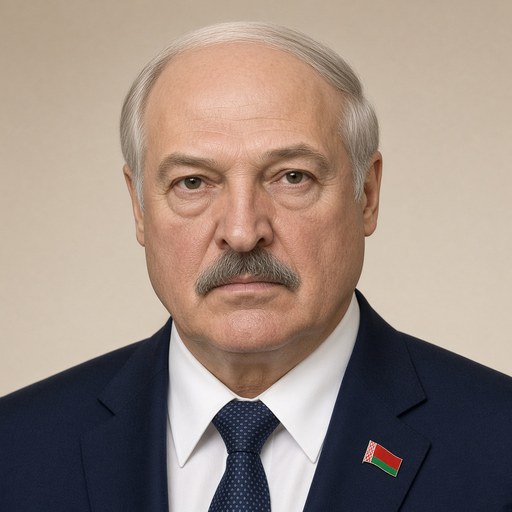
- Lukashenko addressed the First Congress of Scientists of Belarus on November 2, 2007, outlining national science strategy and demanding results-driven accountability from the scientific community.
- Main themes
- Scientific and technological development strategy, science-economy integration, accountability of scientists for results, reform of scientific system, Belarus five-year development plan, role of Academy of Sciences, scientific elite and national progress, presidential oversight of innovation
- Duration
- ~109 min
- Words
- 13,111
- Sentences
- 837
- Readability
- 52
- Grade
- 9.8
- Syntax
- 2.76
- Vocabulary
- 2.08
Translated from Russian
The broad sphere of national life a sentence belongs to. Every sentence has an Arena, so it is the denominator the other indices are read against.
Other837 sentences in 161 paragraphs
Dear delegates! Dear guests of the congress!
For the first time in the brief history of our state, such a representative scientific forum has gathered. Here are our best scientists, the scientific elite, the most authoritative people in the country. Each of you represents not only yourself but also the leading scientific teams of the republic. Therefore, our discussion is not narrow-corporate but large-scale, touching on the most important issues of Belarus's development.
At this congress, we must define the main tasks facing science today and outline ways to solve them. After all, the strategy for scientific and technological development that we outline will largely shape the face of our republic in ten years and beyond.
I truly insisted on holding our congress. And not just this year. We postponed it several times. The main thing for me, as well as for the leadership of our Academy of Sciences, was to hold the congress not just well and organized. We know how to do that. Moreover, few in the country can organize it as well as the current head of the Academy of Sciences. The matter also lay in ensuring that this event took place on time. You, as scientists, understand: an event held on time and in the right place always yields good results. An event held at the wrong time will not be effective.
We chose this year. Why did I insist on holding the congress? First, because we have laid, as you know, the foundation for the five-year development of you, the scientists. Your intellect, science, education. This has never happened before.
Second. For more than 10 years, frankly speaking, regardless of any scientific, great discoveries or achievements in the economy, we have developed somewhat intuitively. We achieved results by establishing basic order. As they say, we were going by feel. This period, dear friends, has ended. In the new century, moving forward is only possible on a scientific basis! Not a step without scientific groundwork. And I emphasize again, that time has passed into oblivion when we moved blindly. To shape life in the future, I am confident, will require educated people, not only in this five-year plan but also in the next.
Third. We have begun to improve the scientific system, reforming it in some areas. The congress should draw a line under all organizational activities in this direction. From now on, only results matter. They must be the measure of everything. Any discussions about us systematizing, reforming, or organizing ourselves — please, those are your internal discussions. They will not be discussed at the state level anymore. And do not even bring them to the President. Thus, the congress draws a line under these activities. The time has come, excuse me for saying this unpopularly in this audience, for a fundamental demand from scientists for results. This is said harshly, but honestly and openly, right in your faces. This is the peculiarity and importance of the current moment for you.
And one more remark. This has rarely been mentioned in the speeches of previous speakers, but I often hear it from scientists at meetings, in the media during the preparation for the congress and throughout the congress, that industry and the economy do not take the results of scientific research. I dare assure you that this is an old, thoughtless opinion expressed today. An old, worn-out thesis. I want to say directly: tell me, who does not take and what do they not take from you?
Name these people and put on the table that problem, that great discovery, and even if it is not great, which someone has not taken from you, the scientists. And then, you contradict yourselves. Mikhail Vladimirovich (Myasnikovich) spoke, referring to the head of industry as a talented scientist. How can this talented scientist not take your super-modern developments for his industry? Therefore, I ask you again: present your discoveries to me and tell me who should master or implement them. You may say: it is not the President's business to deal with this. But I will say: no, it is the President's business. Because we do not have so many discoveries, as you say, that the President could not take their implementation or realization under control. And besides, we have been working together for many years. You know that if a certain issue comes under the President's control, it will be resolved sooner or later, whether by hook or by crook.
Therefore, I want to tell you again: this thesis must be discarded in the new century. Especially since fundamental decisions have been made. The most important decision is the appointment of the chairman of the presidium of our Academy of Sciences, a person of national scale, who knows our country's economy well. And he knows which discovery needs to be submitted for consideration at a certain level and when, so that it can be implemented. He will not come with a raw proposal. And many, many other factors indicate that we do not have that thick bureaucracy today that hinders the mastering or implementation of your discoveries in the economy, in our lives.
You have spoken a lot about what hinders scientists from living and working normally. Subtly, carefully, as intelligent people do, of course, you have spoken. Among these issues is the remuneration of scientists. And what surprises me, even Mikhail Vladimirovich mentioned this: there is no regulatory framework to improve it. This refers to rewarding our scientists for good work. And it should not be with budget money, but with the money they have earned! My dear, you are the smartest people. Can you not bring 2 or 3 regulatory legal acts, projects for consideration by the Government or the President? Perhaps there are some other reasons here. If there are no reasons — submit them. They will always be supported because you are the foundation for the further development of our country. And not to adopt these decisions, reasonable decisions that you will propose, is simply impermissible for any politician or statesman.
And one more thing. Without risk, there are no new technologies. A very respected scientist spoke here and rightly compared it to Soviet times: if it were not for the fall of several dozen, or perhaps hundreds of rockets, there would be no missile shield. I absolutely agree that in science, risk is unavoidable. But, my dear, if Korolev had the current supercomputers and everything else you use today on his desk, there would be no need for those dozens of rockets to fall. Everything would have been modeled, as the head of the design bureau "Gomselmash" just told us about one of the models. Why do I say this? I understand that without risk, something can be modernized, painted, and so on, and lag behind. If you want something new, you have to take risks, I agree. But if all scientific activity and, at least, the proposals that come from you up to the President represent risks and mistakes, then we do not have extra funds to spend only on risks and mistakes. Therefore, let us still determine what the specific weight of this risk should be in scientific research.
Last year, dear friends, at the third All-Belarusian People's Assembly, we adopted a very ambitious Program for the socio-economic development of the Republic of Belarus until 2010. Its goal is to further significantly improve the level and quality of life of the population. This program provides for an innovative focus for economic development, stimulating effective investment projects, structural restructuring, technological re-equipment, and restructuring of production, and enhancing the national security of the country. Science is called to play a leading role in achieving these goals. We have the conditions for this.
In the Soviet Union, Belarusian science was always at the forefront. We developed the most important components of space programs, provided a large volume of orders for the military-industrial complex, and were pioneers in optical research, laser physics and technology, and in several areas of electronics. Belarusian varieties of agricultural plants were cultivated throughout the entire western zone of the vast country.
After the collapse of the Union, despite all the difficulties, we maintained the situation in science, preserved the main intellectual core, and ensured its active development. Currently, more than 300 organizations are engaged in scientific research in Belarus, employing over 18,000 people. Over the past 6 years, internal expenditures on research and development in the country have increased eightfold and now exceed 500 billion rubles.
Let us objectively look at what the return from our science is. What has the state and our society received from it?
You present me with annual reports, the Council of Ministers and the Presidential Administration report that there are positive changes, and the return is increasing. I agree. Large projects have been developed that are visible to everyone and deserve respect. For example, the supercomputer, the Belarusian satellite "BelKA." Belarusian scientists are helping with the extraction and processing of potash salts, organizing pipe production, and in other areas. But so far, these are isolated projects, and often a large share of them consists of equipment purchased, by the way, from abroad. At the same BMZ, only one-sixth is domestic developments, while the rest is imported. It should be the other way around.
I will say directly: so far, our scientists have done insufficient work for the economy of the country. We need to more energetically involve science in the production sphere, integrate it as much as possible into production. We must unite the efforts of various departments and teams to solve complex tasks, rather than scatter resources across separate small structures and topics.
Sometimes it seems that science functions on its own, while production develops on its own. Both spheres intersect little, and this is a serious shortcoming of all your scientific and technical programs. Scientists from the Academy of Sciences and universities write articles and monographs, present reports at scientific conferences, and defend dissertations. Meanwhile, designers and technologists, for example, from the tractor factory, independently work on the development and improvement of new tractor models, regardless of them. The same can be said for most other enterprises. But where is the guiding and organizing role of our science?
I know that you will again cite the United Institute of Mechanical Engineering of the Academy of Sciences of Belarus, headed by Mikhail Stepanovich Vysotsky, as an example. Undoubtedly, this institute does a lot for the automotive industry. But this is not an example of how science from the academy came to the enterprise; rather, it is an example of how it left the enterprise and moved to the Academy of Sciences. But does such an approach contribute to the innovative development of our enterprises? I understand that it should be the other way around! It is precisely within the enterprises that science should be developed and strengthened in every possible way, including with the help of our academy's scientists.
Six years ago, Mikhail Vladimirovich Myasnikovich became the head of the National Academy of Sciences. The task before him was very challenging: to turn its collective, all institutes and laboratories towards the needs of the republic, towards the national economy. To reorient scientists from the abstract problems of fundamental science to applied tasks focused on our economy. In short, to bring the Academy of Sciences out of its peculiar isolation from society and the state.
What is the result today?
It cannot be denied that much has been done. The themes of research have been more clearly structured, and the concentration of financial and other material resources on the most important areas closely linked to the plans for the innovative development of the country is ensured. Program-targeted planning in science has been implemented. Measures have been taken to update the themes of research. To concentrate efforts on the most important areas, the unification of closely related institutes is being carried out. Scientific and practical centers have been created and continue to be created. The Academy of Sciences provides invaluable assistance in conducting expertise on a wide variety of proposals in various sectors of the economy. In fact, no significant state project is considered today without the groundwork by academic scientists.
At the same time, the scientists themselves show insufficient initiative in improving scientific activity. Mostly everything comes from the top, from the leadership. Take the same scientific and practical centers in agricultural areas. This proposal did not come from scientists, but from the President. And scientists, on the contrary, even resisted the introduction of this new form. You remember when we, together with you, agrarians, and the leaders of the Academy of Sciences, walked through the fields, marveling at the wonderful varieties of corn and other plants. You told me (now you understand why I was interested in corn) about the wonderful varieties you cultivate. And practitioners, on the other hand, told me: Alexander Grigoryevich, do not believe it, all the wonderful things are those brought from France. Our people do not know how to create good corn seeds, we do not know how to harvest or store, and we only started to truly harvest corn for grain this year. And again — "under the stick" of the President.
At that time, being interested in corn, when practitioners said one thing and scientists said another, I suggested: listen, why don’t we give our institutes, which always complain that they have three hundred square meters, three thousand, six, or eight thousand hectares of land? Let them cultivate new varieties on these thousands of hectares. And then there will be no need to convince practitioners that these are good varieties. We did it. And this caused some resistance from the scientists. Well, you understand that this is a futile resistance because it was a normal decision, and it was not a great discovery. And what is the situation today? Today everyone says that we acted correctly, the scientific and practical centers are working, they are developing. And they will prove to every skeptic, and we have quite a few of them, as Semen Borisovich Shapiro said here, they will prove what science is in agriculture.
The same can be said for other areas and other industries.
In recent years, I have received several collective appeals signed by prominent scientists and academics. They are all in the hall. All of them concerned either the charter of the Academy of Sciences, or the procedure for the election of academicians and corresponding members, or other specific issues related to their internal academic life. However, what we need are concrete proposals for modernizing the economy, for large systemic projects that could bring significant benefits to the republic. Unfortunately, there are very few such projects.
You know, I have always held and continue to hold scientists, candidates, doctors of sciences, and academicians in great respect. They have always seemed to me to be people of a special sort, with special abilities, performing the most difficult work in society. Undoubtedly, they are our intellectual elite. And yet, I cannot help but mention one thing. I have been working as the President of the country for 13 years. During this time, I have had to raise numerous issues — in agriculture, industry, construction, education, and finance. However, the assistance from science has been minimal. And the proposals that have come from scientists have not always been sufficiently well-developed.
No matter how much we boast about our achievements, we still buy high-tech equipment, medicines, medical devices, electronics, cameras, computers, and even software from abroad. So what are our scientists doing in this regard? How actively are they participating in the state program for import substitution?
I do not want to belittle the achievements of those who are directly involved in the development of new productions and the creation of new products. These achievements are quite significant. But here the main credit belongs to the chief and lead designers of enterprises and their teams, who ensured the creation of new combines in a short time — primarily Andrei Anisimovich Dyuzhev and his predecessor. I must tell you: if it were not for his work and the team at Gomselmash, and the persistence of Zhmailik, we would have a completely different mood in this hall. Today, we would be facing the problem of 1998, or was it 1999, when we had no bread in the country and we, so to speak, went around Europe with baskets and bags, begging for at least a kilogram of any wheat or rye to feed the people, let alone feed the livestock. That was not even on the agenda... There we were taking concrete risks. He took risks, Zhmailik. He set up the first machine and said: Alexander Grigoryevich, come and see — I have invented a miracle. Maybe it was not quite a miracle, but the man was indeed doing something new. He proved that it was profitable.
In the second year, he took risks twice, creating two models. In the third — the most modern models, and in the fourth and fifth years, when I set the task to reach the level of German combines, so that we would not buy them, but create them ourselves at Gomselmash during one winter, all the scientific specialists cried out (well, Zhmailik was silent, it was also scary): such tasks were only set in Stalin's times, it is impossible, we developed the Don for eight years under Gorbachev! To which I replied that this is not Gorbachev and not the Soviet Union, we do not have such money and slackness. We cannot spend eight years inventing a combine. And we made the combine! This year, all specialists, all combine operators unanimously stated that this is a worthy machine. And today we can harvest the entire crop in the country with this combine, without buying imports.
There is the risk. A justified risk. A risk that could be "touched" at some stage. And it is not regrettable. We understand that probably those KZR-10s and others that we produced, we are still making them by order, but this is already, we happily note, the last century. But the money we spent on producing these combines is not regrettable! Because, having gone through these stages, spending this money, we invented the newest machine.
So it is at MTZ, and at MAZ, BelAZ, and at other enterprises.
I can say the same about energy-saturated tractors and harvesting equipment (chief designer Ivan Nikodimovich Uss), cars (chief designer Vladimir Vladimirovich Korsakov), buses (chief designer Alexander Pavlovich Myshko), unique quarry equipment (chief designer Alexander Nikolaevich Egorov). These and other developments have significantly ensured the economic independence of our country from imports.
But these are the successes of the Ministry of Industry. And although the ministry itself is headed by a good scientist, Doctor of Sciences Anatoly Maximovich Rusetsky, only a small fraction of our overall scientific potential is concentrated in his enterprises — less than one percent. In general, only about three percent of candidates and doctors of sciences in Belarus are involved in all sectors of the real economy. The majority work in institutions of the Ministry of Education and the National Academy. Almost all our academicians and corresponding members are concentrated there. And, unfortunately, this entire scientific potential is still extremely underutilized for the development of the national economy of the country.
There are many unresolved problems here. I will briefly touch on those that require the most serious involvement of science.
One of the top priorities is ensuring food security. This is the most important element of the national security of the state, which becomes especially evident at this time when there is a sharp rise in food prices worldwide. And when this sharp jump in food prices occurred in the world — this is no longer a factor of our national security, it is already a factor of our currency security.
You remember, when creating new complexes, we faced the fact that we would not have enough market. There would be nowhere to sell our products. I was genuinely worried because we were increasing production of both milk and meat and other products. Today, for the first time, we have produced enough grain, and we are practically not buying grain this year. Except for 100-150 thousand tons of hard varieties, to make spaghetti and good baked goods. Unfortunately, we have not yet learned to create such varieties, and they probably will not yield here. It is not scary if we buy them. But for the first time in the entire history of our state and the republic as a part of the Soviet Union, we have reached such a level.
And you know, if it weren't for happiness, misfortune helped.
Prices have skyrocketed. This is a good resource for our agrarians. Today I can tell them: well, where are those large volumes of milk and meat (not normal ones, they are normal, but large), through which we would receive an influx of currency into our country? You remember, we were "butting heads," otherwise it cannot be said, with the leadership of the Russian Federation for their food market. And what is happening today? A crazy rise in prices in the Russian Federation. And now the conversation is different: bring everything you can. Sometimes we bring so much that we begin to deplete our own markets. We must not forget that our own people must also be fed. They produced these products. But we can sell more. And thank God that we are now actively increasing. World prices for food will never fall, never! Because the real sector of the economy is being pulled up to those crazy prices that exist today for energy carriers and resources. We should not expect that oil prices will fall, we should not expect that resources will become cheaper. Probably, that will not happen either. There will be some fluctuations. That is not the main thing. Today, the scale of prices is completely different and tomorrow it will be even more different. The real sector, I emphasize, will be pulled up to these prices. That is all. This is what is happening in the world. Only, unfortunately, for many, this has happened abruptly in terms of food.
The overall deterioration of the ecological situation on the planet leads to the need to rethink the traditional attitude towards natural resources. In the 21st century, we need to solve two tasks that are largely contradictory to each other. On the one hand, support the food security of the state and increase the export potential of agricultural products, and on the other — preserve the ecology of land use.
The key to solving the problem is the radical modernization of all technologies used in agriculture, increasing the efficiency of crop and livestock production through close interaction between agrarians and science.
Unfortunately, the republic has lagged behind European countries for many years in the most promising direction in bioscience, which has the most direct relation to the food problem — transgenic engineering. Agricultural microbiology is also not sufficiently developed. More and more imported varieties are appearing in the fields. This worries me. Scientists say that the issue is being worked on, there are proposals for improving seed production. Well, let us gather a special meeting on this issue and see what we have developed.
Agricultural organizations have worked quite well this year. However, a yield of even 40-60 centners per hectare is no longer satisfactory for us. Our plant scientists need to develop varieties and hybrids with a potential productivity of at least 100-120 centners.
Today, the level of scientific support for the most important sector in the agro-industrial complex — animal husbandry — is insufficient. The Institute of Animal Husbandry has been working for decades, but the results of its work are still not very noticeable. Of course, the tasks are not easy. It is necessary to create a special dairy type of Belarusian breed with a productivity potential of up to 10 tons of milk per lactation. To breed pig breeds that provide weight gains from 900 grams to one kilogram per day with feed costs of up to 3.5 feed units per kilogram of gain. But that is what science is for, doctors and academicians, to solve such tasks.
However, growing crops, producing milk and meat is only half the battle. The second most important task in the field of food is the industrial processing of agricultural products. It is at this stage that the main added value is created. And here our technologies and production base are lagging far behind. And these are also questions of science.
In the modern world, biotechnology plays an increasingly important role. With its help, food products, food additives, biologically active substances, biopesticides, and enzymes are produced. I would like to note that biotechnological methods, unlike the use of chemical agents, ensure the production of environmentally friendly products that do not contain toxic, harmful components for health. That is why biotechnological production has received powerful development in other countries. The global market for products in this field is estimated at 400 billion dollars a year, and the profits of leading global biotechnology companies are comparable to the profits from the production of personal computers.
Belarus's demand for certain biopreparations exceeds their production within the country by tens of times and is therefore covered by imports. This situation requires immediate correction. Some necessary decisions have already been made by me: biotechnological research has been recognized as a priority, and the proposal of the Academy of Sciences for a state program "Biotechnology" has been supported. Now it is up to you, scientists.
Alexander Nikolaevich (Kosinets), this sector is now in your hands. Carefully analyze it and, if necessary, make proposals. But specific ones, with specific executors.
In the 21st century, energy has become the main global problem. The rapid rise of developing countries, along with the growing needs of economically developed states, will increasingly lead to shortages of oil, gas, and electricity. This will be the main cause of international tensions and conflicts. We are already witnessing an uncontrollable rise in prices for fuel resources. For Belarus, this is a difficult test, as we do not have any significant reserves of oil and gas.
In light of the upcoming challenges, we have adopted the Concept of Energy Security of the country until 2020. An important element of it is the course towards the diversification of fuel and energy resources. Two main directions have been identified in solving this problem: expanding the circle of suppliers of hydrocarbon raw materials and transitioning to alternative energy sources.
In the first direction, we have already done a lot of work. We have established friendly relations with countries that have large reserves of oil and gas. We are talking about Venezuela, Iran, Azerbaijan. I believe that we will also be able to reach an agreement with Russia. The leadership of these countries is ready for comprehensive economic cooperation with us, and we must not miss this opportunity. I mean for our own extraction of hydrocarbons in these lands. Proposals for joint extraction and processing of hydrocarbon raw materials are especially important for us. Moreover, Belarus will be able to obtain oil both for its own needs and for subsequent sale on the world market.
It is important not only to deliver hydrocarbon fuel to the country but also to ensure its maximum complete and effective use. The situation we have with oil refining, where the profitability of this highly profitable industry is only 1 percent, albeit with the help of our Russian brothers, cannot be considered satisfactory. Of course, this is due to the sharp increase in raw material prices, but the processed product could not help but rise in price. So why are we falling short? Because the existing reserves for the depth and quality of hydrocarbon raw material processing are not sufficiently utilized.
We allocate significant funds for improving oil refining technology. At the Mozyr Oil Refinery, a complex of alkylation and an extractive distillation unit for benzene have been built. As a result, the gasoline produced will fully comply with European standards for the content of aromatic hydrocarbons. And this is very important, as 80 percent of the products of this plant are supplied outside the country.
Preparations are underway to put new units into operation that will ensure even deeper processing of oil. All this will open up additional opportunities for increasing the production of high-octane gasoline, which will significantly enhance the competitiveness of the products produced and the plant's rating in foreign markets.
But further progress in this area is impossible without training high-quality specialists and scientific support. Why are there still no specialized scientific divisions in the Academy of Sciences that would address these tasks? We cannot disengage from solving such pressing problems.
As for alternative energy sources, we need to pursue two directions — the construction of our own nuclear power plant and the maximum use of local resources. The task is set: we must obtain at least 25 percent of our energy from our own sources. Then we will be able to ensure light in our homes and other vital needs even in critical situations, regardless of external conflicts in the energy market.
The construction of a nuclear power plant is an inevitable task for us. The question of whether to build or not is no longer relevant. The decision has been made. Today, it is a matter of choosing the site and the company to build the nuclear station. At the same time, I want to reproach the scientists — it is you, as specialists, who should prove to the people the necessity of such construction for our country. Nuclear scientists from the Academy of Sciences and BGU must convincingly and clearly explain to the public all issues of energy necessity and technical safety of modern nuclear power plants. Otherwise, you know, some doctors of science publish manifestos in the opposition press claiming that the leadership and the President are allegedly conducting a policy of "genocide against the Belarusian people." And this is against the backdrop of the costs that the state incurs to eliminate the consequences of the Chernobyl disaster! Are these scientists?! These are people either without brains or without conscience, and most likely, without both.
Mikhail Vladimirovich (Myasnikovich), you know better than many others about our plans to build the station. And I must honestly say that the scientists of the Academy of Sciences were the first and, at one point, the only people who advocated for the construction of this station 7 to 8 years ago when we first approached this issue.
We need to involve specialists and organize broadcasts on radio and television, discussions in the press, so that the people understand the situation and do not worry. Who better than a scientist-specialist in this field can explain the essence of the matter and convince people of the correctness of the decision made?
Of course, one nuclear power plant will not solve all of Belarus's energy problems. In modern conditions, the use of renewable energy sources — hydropower, solar energy, geothermal waters — is becoming promising. In this direction, we have done practically nothing. There are some advances in the development of hydropower, but there is still no sufficiently deep scientific support.
An important question is the use of the natural resources available in Belarus. The proven exploitable reserves of oil amount to 63 million tons, brown coal — 99 million tons, and combustible shales — over a billion tons. Unfortunately, this raw material is of low quality. It cannot be used by traditional methods. We need to know which technologies are the most economical for using this raw material. If there are not enough known ones, propose your own. This is where there is a field of activity for scientists, and you will never say that this will not be in demand, especially that it will not be paid for.
There is not enough development in the use of geothermal energy. For example, in the Pripyat Trough, a temperature of underground waters has been registered, as you have recorded, of about 100 degrees Celsius. But we still do not use it. Why?! I had to ask Pyotr Petrovich Prokopovich, as a former specialist during a visit to China, to have the Chinese show us how to heat residential premises using normal artesian water. And they are coming to Minsk soon to build a block of such housing. And here we have 100 degrees, not 15 — 17...
We cannot only focus on peat extraction and the use of wood, although that is also necessary. If we go down this extensive path, we could deforest our entire country and smoke our sky within a decade or two. We must remember future generations and leave them not a scorched and desolate land, but a country with clean and beautiful nature. Peat in deep processing technologies can be used more profitably — for the synthesis of many useful compounds. As I was told, based on developments carried out under the guidance of Academician Ivan Ivanovich Lishtvan, large-scale production of a whole range of conservation lubricants, oils, film-forming compositions, and corrosion inhibitors has already been established, various preparations that are used not only in our country but are also exported to Russia, Ukraine, and other states.
In general, I will say this to both the Government and the scientists: there has been enough general discussion, enough of these general discussions, Directive No. 3 has been signed, the Concept of Energy Security has been approved — act!
By the way, Sergey Sergeyevich (Sidorovsky), you have not yet presented the Program for the Development of the Energy Complex to me as Prime Minister.
The heart of our economy has been and remains industry. The Republic of Belarus rightfully prides itself on its machine and instrument engineering, chemical and electronic industries, and defense production complex. But scientific and technological progress does not stand still, and the country must keep pace with modern trends. The share of science in these and other industries must continuously and rapidly increase. After all, only a science-intensive and resource-saving economy can be competitive in the global market!
The state program for the innovative development of the country until 2010 provides for a radical renewal of the oil complex, microelectronics, forestry, woodworking, and pulp and paper industries. The creation of production of new types of cars, agricultural machinery, and medical preparations. The development of modern transport communications, communications, and housing construction.
It is planned to modernize 600 enterprises based on modern technologies — think about it! — and build 124 new productions. This process is already underway. This year, seamless pipes have begun to be produced at the Belarusian Metallurgical Plant in Zhlobin. In Bereza, the production of lacquered tin has been established. A new packaging production will also appear there. A modern enterprise for the production of newsprint is being built in Shklov. In Grodno, the production of biodiesel fuel based on rapeseed oil has begun at NPO "Azot." These are specific, real innovative projects that we are proud of and that will work for the economy of the country.
But I again set the task for scientists: we need more proposals for such projects, more active participation in the innovation process.
In the context of weakening scientific, technical, and economic ties with Russia, the problem of ensuring production with our own developments in a number of positions has arisen. This especially concerns diesel engineering, machine tool construction, forging and pressing, lifting and transport equipment, bearings, agricultural machinery, elevator construction, and the electrical engineering industry. Unfortunately, despite all the scientific and technical potential, we have practically nothing to rely on here. What prevents the Minister of Industry and the Chairman of the Presidium of the Academy of Sciences from gathering together and outlining a plan for joint solutions to these issues, linking scientists to these projects?
Of course, no one is setting the task of doing everything with our own forces. Reasonable cooperation with other countries is necessary and justified. But we must ensure the key issues that determine the efficiency of production and the quality of products ourselves.
We urgently need breakthroughs in microelectronics. I have supported the project for NPO "Integral," submitted by the Council of Ministers, which provides for the organization of submicron production. This will be a fundamentally new step in the development of science-intensive technologies. In this regard, proposals have emerged for Russian specialists to get involved in this issue.
We have repeatedly discussed these projects with our great friend, our person, our compatriot, Nobel laureate Zhores Ivanovich Alferov. But we need other projects that would allow us to increase the level of technological equipment and export potential of microelectronics, to prepare the basis for further technological development. There is a large field of activity for all scientists in the field of microelectronics.
The country needs energy-efficient LED technology, laser and optoelectronic systems for various purposes, including medical ones. We have useful developments for laser medicine, including those carried out at the Academy of Sciences. But we need to expand their application. I have already heard more than once about the design of new generation microchips. Perhaps Academician Labunov, together with Myasnikovich and Corresponding Member Yemelyanov, will move from discussions to action and make specific proposals?..
We continue to show unacceptable passivity in the development of new types of products. Yes, we have a well-developed heavy machine engineering sector. But what about other directions? The only achievement is the creation of a joint Belarusian-Iranian production, but its products are not yet visible. It turns out we can make multi-ton trucks, but we cannot make a cheap, simple car for the people? What are we lacking? Probably only the desire and the ability to see the prospects.
This also applies to the sore spot of the Belarusian economy — the light industry. The oversaturation of warehouses with finished products has long become a proverb. It would be fine if our internal market were fully saturated. But it is not — just look at the volumes of imported light industry products, especially "gray" ones. There is only one way out — to implement new technologies and develop new types of goods. In general, you may not implement any technologies, but please produce light industry products that can compete in global markets and that our people can buy, rather than running to the market to buy who knows what. And again, we cannot do without scientists here.
It has become an undeniable truth that the coming century is primarily the era of information technologies. And we must not lag behind in this area in any way. We have the prerequisites for successful work. We have sufficiently qualified personnel and a certain experience in this field. But these forces are fragmented. Therefore, we have made the decision to create our own so-called "Silicon Valley" — the High-Tech Park. This area of activity, without requiring large expenditures, can not only ensure the inflow of currency into the country but also stimulate breakthroughs in a number of areas of production and labor organization in Belarus.
The High-Tech Park is called upon to play a decisive role in this matter. But so far, the process is unfolding too slowly. Today, the Park is merely a "roof" (I may be speaking a bit harshly) for firms and small companies, providing them with tax exemptions. But we did not start this project just for that; we allocated a large area in a convenient location. Recently, at my meeting, we clearly defined an action plan for the construction of the High-Tech Park and set deadlines for implementation. Keep in mind, time is passing quickly, and soon we will have to report. And this concerns not only the director of the Park, Valery Vilyamovich Tsepkalo, but also the Prime Minister and the head of the Academy of Sciences.
It is not enough to beautifully build up this territory. The main thing is to develop a strategy for the development of the Park. So far, neither the leadership, nor the Park, nor the Council of Ministers have fully succeeded in this. After all, the Belarusian "Silicon Valley" will only come to fruition if it brings something fundamentally new to the economy of the country, as "Nokia" did in Finland.
The Park is one thing, but there are also other directions in the field of informatization. How many years have I been hearing about the information system "Electronic Belarus." Where is the Ministry of Communications? After all, this is its direct task. Cooperate with science and solve this issue.
The Belarusian space program remains relevant. Our country, our scientists contributed to the exploration of space back in the days of the USSR. We developed installations for simulating flights, produced equipment for spaceports and spacecraft. Therefore, our program to create our own satellite was a logical continuation of the existing experience.
I must say that some of our opponents openly rejoiced at the unsuccessful launch of the Belarusian satellite last year. But that was not our problem, not our failure. Belarusian developers had nothing to do with it. They completed their part of the work with quality. And I hope, Mikhail Vladimirovich (Myasnikovich), that there will not be a second failure with the launch of the rocket by the Russians, especially since it will be a new, non-conversion rocket.
Belarus must continue to develop its space program. In July of this year, at my request, the Academy of Sciences signed a contract for the creation of a new satellite. Work is underway on a prospective satellite system that will provide Earth surface studies with a spatial resolution of less than one meter. This is the cutting edge of science and technology. More promising developments have also begun for the creation of a satellite with characteristics that do not yet exist in the world.
But this is only half the job. The second half is the creation of our own ground control complex for the satellite's flight. I have supported all these initiatives from the Academy of Sciences and the State Military-Industrial Committee. At the beginning of next year, our specialists and scientists will report to me on the first stage of work on this project.
We closely cooperate with Russia in space, including within the framework of joint programs of the Union State. The second program is already nearing completion, and proposals for the third have been prepared. And this is good. But mutually beneficial cooperation in the exploration and use of outer space for peaceful purposes needs to be expanded. Why not work more actively with Ukraine, France, Middle Eastern countries, China, India? Moreover, proposals from many are coming in a steady stream. And they are offering money.
Science must also have its say in construction technologies. This is not only a scientific, technical, and economic task but also a political one. After all, housing construction is the top priority of our social policy.
Unfortunately, it seems that many leaders have forgotten about this. It has come to the point where apartment prices in Minsk have exceeded those in Berlin. Have our citizens' incomes reached the level of Western Europe? Or has the housing problem been completely resolved?
It must be stated that so far, few are concerned with making housing more affordable. Yet, there is an untapped field for industry science here. The Ministry of Architecture and Construction, together with the relevant scientific institutions, must develop a comprehensive program for the introduction of cheap and quality materials and technologies in construction.
The main tasks for the construction sector in the near future should be the modernization and reconstruction of construction production based on the introduction of modern energy- and resource-saving technologies and equipment, as well as the mastering of the production of highly efficient construction products. As a result, we must significantly reduce the cost of construction and thereby make housing more accessible for our citizens.
Construction, like agriculture, is experiencing a "golden" age today. If, as a result of this construction boom, our builders do not update their base — they will be worth little. This boom will not last long. Everything will be balanced and stabilized. But if during this time you cannot provide for yourselves and reach a normal level of operation, if you do not create a proper base, do not purchase new cranes, vehicles, and so on — well, then Godspeed, as I often say. And we simply will not allow you to do this at the expense of raising prices in the future. So where is the way out? The way out is in the new — to reduce costs, to lower the cost price. I reaffirm what I have said: 25-30 percent of costs in construction, as in many other sectors and in agriculture, is our disorganization. Here, we must first seek money. And, by the way, scientists are no longer your helpers here, nor are they the reason for what is happening in the construction sector.
The same applies to the entire housing and communal services complex. We still have a heating system that heats everything except residential premises. It is necessary to solve the problem of inefficiency and waste of funds in construction and housing and communal services as soon as possible based on the latest scientific developments.
I want to say a few words about the development of the military-industrial complex of the country, as the role of science here is particularly significant. You know that during the Soviet era, significant scientific forces and production capacities were concentrated in this area. Overall, we have managed to preserve this potential. And you remember that we did not go down the path of so-called conversion, to make basins, spoons, and forks at the factories that produced "Tunguskas" and other weapons, lasers, optics, mathematics for the army and space vehicles.
Today, our military-industrial complex performs a significant volume of work in the creation, production, and repair of weapons, military, and special equipment. At the same time, we serve not only ourselves but also export our services to Russia and other countries. And we do not hide this.
The defense sector of our economy includes more than fifty modern organizations related to radio engineering, electronics, optomechanics, aviation, electrical engineering, and instrument engineering industries. The samples of military equipment and dual-use products being developed and produced are largely unique and have no analogs in the CIS and the world. They are quite competitive in the global market and bring stable income to the republic. This is evidenced, in particular, by the diplomas we receive at international military-technical exhibitions. Take such a unique development as auto-compensators for anti-aircraft missile systems. These devices, costing several tens of thousands of dollars, are literally in high demand, with queues for them.
Belarusian "defense workers" can also be proud of developments in the field of communication and electronic warfare, space equipment, sights, and laser technologies, as well as projects for the modernization of several systems of armored and aviation weapons. The unitary enterprise "Minsk Wheel Tractor Plant," known worldwide, produces unique equipment for missile systems and super-modern complexes. It is used not only in Belarus but also in the Russian Federation and the People's Republic of China.
Regarding the Chernobyl problem. You know that Belarus, as they say, was neither involved nor aware of the Chernobyl disaster. The station was operated by Ukraine, built by the Union, and Belarus had to deal with the aftermath. Moreover, practically alone. And you know what it cost our state: the construction of new villages and settlements, the resettlement of families, measures for the rehabilitation of children, food control, the withdrawal of significant territories from economic circulation — and these were good lands in a favorable area for agriculture. But the state coped with all this.
Medical statistics clearly show that there has been no significant increase in oncological or other diseases in the Gomel and Mogilev regions compared to other regions. And these are accurate data that we can present to any expert, any opposition member. Moreover, the level of these diseases there does not exceed the average for our Europe! Remember, I still recall this from the Supreme Soviet of Belarus when we all shouted: oh, how scary! The only person who refuted everything was Shushkevich, who said, "It's not true, you know nothing, the situation is completely different"... But to determine who is right, we did not have data. We did not conduct research; we did not keep statistics in these regions during the Soviet Union before the Chernobyl tragedy to compare what was before Chernobyl and what is happening after Chernobyl. And we began to engage in this after the tragedy. And many years have passed, decades, and we are already comparing that full statistics with modern ones and drawing certain conclusions. Yes, the thyroid gland in children during the disaster was attacked by radioactive iodine, which led to certain problems. But radioactive iodine has long decayed, and some so-called scientists are still feeding off the fears of Chernobyl. First, they scare the population with their quasi-scientific research, and then they sell food additives and other products that supposedly remove hypothetical radionuclides from the body. And the scientists of the Ministry of Health and the Academy of Sciences, instead of giving a serious fight to these charlatans, tolerate such actions. After all, today the greatest harm to health does not come from radionuclides, the content of which in products, soil, and wood is strictly controlled, but from psychology, from the fear of this radiation that these science speculators are trying to instill in the people.
A few years ago, I made the decision to transfer all research on the Chernobyl theme to Gomel, where a center for radiation medicine and human ecology was created. Those who are genuinely interested in this problem should study it on the ground, not sitting in Minsk. We spare no expense for this center, but we demand concrete results from it. Including on the issue of using contaminated territories. After all, a significant portion of more than 20 percent of the total area of Belarus is attributed to them. These are colossal resources, and science is required to provide concrete proposals for their inclusion in the national economy with consideration for ecological safety.
I would like to elaborate on the problems of healthcare. In recent years, we have achieved a lot in this area. The most important thing is that we have managed to equip many hospitals and clinics with the latest equipment. This has allowed us to raise our diagnostics to the most modern level. And work in this direction will continue. By 2010, it is planned to carry out reconstruction and re-equipment of all children's hospitals and medical institutions at the republican level. Four new large scientific and practical centers will be created in various fields of medicine.
In recent years, our country has consistently ranked first in the CIS for the lowest indicator — infant mortality (mortality of children under one year). And this indicator continues to decline year after year. With the help of the latest technologies, our doctors have learned to save newborns weighing just over 500 grams! And I must tell you that regarding infant mortality, it has been falling very actively and intensively in recent years. With the arrival of Kosinets in the Government. When I instructed him: every deceased child must be under your control, and not just under control — doctors must specifically report to you about the death of this child. And what do you think? The curve sharply went down. What does this indicate? That even in our state, which is called dictatorial, there was still a place for some charlatans and slackers in healthcare institutions who could not go out and monitor newborns.
The introduction of modern medical and social technologies, along with the measures taken by the state to support families and motherhood, has allowed us to achieve a breakthrough in the demographic situation. In 2006, for the first time in Belarus, the number of deaths decreased by 2.4 percent, while the number of births increased by 6.2 percent, which allows us to look to the future with optimism. Slowly but surely, society is emerging from the demographic "pit."
I have no serious complaints about medical science. First, scientific research in the main areas of medicine is developing quite actively and is at a good level. Oncology, cardiology, neurosurgery, epidemiology, pediatrics, and other fields are represented in the republic by serious scientific organizations, prominent scientists, and specialists. Secondly, here, more than anywhere else, science is closely intertwined with practice.
If the situation with medical science in general is not bad, then the problems of providing medicine with medicines and equipment are very acute. We purchase most of the equipment and a colossal amount of medicines from abroad. Of course, we cannot do without imports here. No country, even much richer than Belarus, can provide itself with the entire range of medical devices and drugs. But we are capable of producing much more medicines and quality equipment ourselves.
We can only welcome the efforts of the Ministry of Health to improve the organizational structure of our healthcare system, to seek new organizational technologies in managing medical institutions and scientific-practical centers. As I am informed, from this year, cardiac surgeries are being performed in all regional centers, and open-heart surgeries are being conducted not only in Minsk but also in Gomel. Operations for knee and hip joint prosthetics have been mastered in all regional centers. This is undoubtedly a great success.
But I want to draw the minister's attention to the need for more careful selection of personnel for leadership positions in medical institutions, especially scientific-practical centers. After all, the attitude towards the patient and the organization of the entire process in the medical institution primarily depends on the leader. Authoritative scientists with sufficient professional and life experience and organizational skills should be selected for these positions. Rushed specialists will not do here.
I would especially like to focus on the role of social and humanitarian sciences in the development of our society. But before talking about this, I want to say to Zhores Ivanovich (Alferov). You probably noticed that I first spoke about education, about science, and so on, and then about health and medicine. Health is very important. But this somewhat contradicts what I once said. I know that scientists remember this. A sick person is a disaster, but if a healthy person is uneducated — well, that is just a healthy fool. Therefore, we have laid the foundation for everything, of course, in education. We need an educated and healthy person!
Now — about the social sciences. Economics, law, sociology, political science, and others are very important for the development of society and the state. It is they who should lay the legal relationships and the foundations of relations between citizens and the state, help shape internal and external policy, and provide guidelines in the economy.
Humanities are equally important, such as history, philology, philosophy, pedagogy, and cultural studies. All these sciences are especially relevant for our young state, where much is still being formed and is in the process of establishment.
Humanities need to pay more attention to the objective study of domestic history, the development of philosophical foundations of the Belarusian model of socio-economic development, which is recognized worldwide, the study of its political component, the improvement of integration mechanisms in the post-Soviet space, and the construction of the Union State of Belarus and Russia.
Believe me, today the country's leadership is in urgent need of your developments. We need a qualified and, most importantly, creative analysis of the economy of our country. Deep research is needed to determine the main guidelines for our economic development, approaches to organizing various sectors of the national economy. To outline directions for concentrating forces and resources, to develop forecasts for the future. And here there should be no general reflections, no retelling of foreign publications — everyone can already do that beautifully and well. We need concrete proposals with deep economic elaboration.
I do not want to say that we have nothing in this regard. Some proposals, for example, from the Institute of Economics of the Academy of Sciences, have proven useful. But overall, we do not yet feel true scientific support that would equip the Government, ministries, and enterprises. In some cases, we still have to rely solely on intuition and common sense.
The same applies to jurisprudence. In the modern world, one cannot take a step without lawyers. It is precisely well-thought-out laws and regulations, developed legal relations, and qualified work of the judicial system that create the framework on which society is built. Any defect in this framework reduces the effectiveness of our work and has a painful impact on our citizens.
And what do we have today? Draft laws and other regulatory acts do not undergo sufficient scientific scrutiny. As a result, they often turn out to be raw, contain errors, and contradict each other. Practically no document submitted to the Presidential Administration passes on the first attempt, as it raises a multitude of well-founded objections from the specialists of that institution. Is this order? Meanwhile, legal scholars are busy with dissertations on abstract topics that are little related to the practical needs of the state in this area.
The same can be said about other sciences. Take sociology. After all, it is not just sociological surveys. We have learned to do that. It is the analysis of the state of society — its problems, tensions, pressing issues, and the moods of people. It is from the research of sociologists that certain decisions regarding the social sphere should arise. And first and foremost, sociologists should explain the necessity and validity of these decisions, foresee their social consequences, in order to prevent conflicts and escalations within society. But so far, such systematic and multifaceted work has not been established.
The most important function of Belarusian science is the preservation and enhancement of the cultural and spiritual traditions of our people. No one will do this for us. While physics and mathematics are international and develop worldwide, Belarusian culture, literature, and history are exclusively our own value and our own concern.
History, philosophy, pedagogy, and other sciences must be tied to today’s society, responding to its demands. The development of science in these areas should not be isolated, should not be confined to narrow corporate frameworks. It should actively contribute to ensuring that every Belarusian citizen feels an inseparable connection with their homeland, its history, culture, and ideology. In this lies the crucial social and political role of the humanities. In short, our science must serve the people, the Belarusian nation.
Very briefly — about scientific personnel. The most important thing here is to give way to the youth. We respect older people. Here, I am already too specific; even scholars say that a 70-year-old professor should make way for the young. I highly value scholars and know that at 70, there can be a scholar who can outshine five, or perhaps even ten, young 30-year-olds. This is a very delicate matter. But if you truly feel that you have exhausted your strength in this motor work of leadership at 70 or however many years, you must make way for the young. But if you are as energetic and as wonderful an orator as our Zhores Alfyorov — I don’t know where he finds the strength to tackle many problems and be successful both in politics and elsewhere — such people should be welcomed. Who would give him any 70 years! Just look at him!
Therefore, dear friends, I do not dare to speak about age here. This is science. Sometimes a person, a scholar, only becomes a scholar at 70. Figure it out on the spot, figure out how it should be. But the young must be given a way. We must pull them along with us. We must not extinguish the sparkle in the young scholar's eyes that is present today in the eyes of many. If we extinguish it, it will probably never be rekindled. This is science! It is much more complicated here. Much is already connected with great psychology.
In our country, a system has been created that stimulates the attraction of talented youth to science. Scholarships for all graduate students have been significantly increased, and special scholarships from the President have been established for the best among them. On a competitive basis, up to 100 presidential supplements are awarded annually to the most talented young scientists. Recently, I signed a decree to significantly increase supplements for academic degrees. For the first time, supplements for academic titles have been introduced. All this significantly enhances the material support of people in science, raises their authority in society, and consequently, the attractiveness of the scientific field for youth.
But this is not enough. Young people must feel not only material but also moral incentives in their work. There is no need to be afraid to appoint them to key positions in science, to let them head laboratories and departments. Addressing the gray-haired scholars, I once again ask you: look around at the youth and support them. Supporting young personnel is an investment in the future.
Now — about the structure and organization of the scientific sphere. What do we envision for the organization of science in our country in the future?
It is obvious that the main scientific potential of any developed state is concentrated directly in firms. It is firm-based science that determines the level of scientific and technological development of the country. The integration of science with production, realized in firms, ensures their intensive development in competitive market conditions. The subordination of the activities of scientific and technical personnel to unified practical goals, the comprehensive development of scientific, technical, and technological issues carried out within a single enterprise — this is the path along which the scientific and technological progress of the most advanced countries in the world develops.
We have created a somewhat different system. And it is good that another wing of science is very developed. But now let’s focus on this direction.
Inheriting from the Soviet era a situation where design bureaus and sectoral institutes existed separately from factories and were scattered throughout the Union, we have not yet been able to create a serious scientific and technical core even at large enterprises that would ensure the intensive innovative development of production. Here, the primary task is to saturate the real sector of the economy with creative personnel.
The best specialists, university graduates, and the best graduate students should be prepared primarily for enterprises and in collaboration with enterprises. We need to devise a system so that the most capable graduates are more interested in going to the scientific divisions of enterprises than anywhere else. For it is precisely in modern science-intensive firms that new technologies and new products will be created. There will be the main "kitchen" of the innovative process.
Applied science, which is outside firms, should be as close to the consumer as possible. After all, if it is not applied anywhere, then it is either not applied science or not science at all.
As a form of organization for applied science, scientific and practical centers can be used. Last year, by my decree, a number of scientific and practical centers were established at the Academy of Sciences, as I mentioned, with an agricultural profile. Here, the possibility of a continuous process is laid out — from scientific development through experimental testing to commercial realization in real economic conditions.
And finally, fundamental science. We must not lose our fundamental science in any case, otherwise, we will cease to understand what is happening in the world. But we cannot afford to reach too broadly here, as we do not have sufficient material resources for that. It would be good if our scientists could make fateful discoveries. But, apparently, we cannot rely solely on that.
What functions should fundamental science then perform in a relatively poor, medium-sized country like ours? They are quite obvious. First, it is the training of specialists, including those of the highest qualification. If there is no science at the university, then it is no longer a university. Without developed fundamental science, a quality specialist cannot be prepared. The second function is the transfer of modern scientific knowledge to our soil. We must carefully monitor and be able to absorb the latest scientific ideas and approaches. And finally, it is the scientific expertise of various projects and proposals alongside the functions that our Belarusian fundamental science currently performs.
At present, we need to strengthen university science, primarily by enhancing its connection with academic science. And how best to do this — you should propose yourselves.
Of course, we expect a lot and demand a lot from our National Academy of Sciences. And this is correct. By definition, it is the main scientific organization of the country. But let’s look at the other organizations that carry out research and development. After all, the academy concentrates only 25 percent of the total number of scientific organizations in the country. How is the coordination of the other 75 percent of organizations ensured?
Sectoral ministries do not spare money for their subordinate institutes. But often the developments they order can be performed faster and better by the academic institutes, universities, or their joint efforts. Proper coordination and unified management are necessary here. Although the academy is mandated to coordinate fundamental and applied research across the country, it is not for nothing that it bears the title of National; however, these functions are not yet legislatively regulated. So let’s write this down in the relevant regulatory acts. I am addressing you, the smart people, who can do this in a week.
After all, the Academy of Sciences is not just a collection of academic institutes. It is primarily a gathering of the main scientific forces of the country. If not all interested departments are adequately represented in the presidium and divisions of the Academy of Sciences, then this must be corrected. But the National Academy must become the main arbiter, the planning and controlling body responsible for all science in the country.
And what is happening today? Each department organizes its own expert councils and even pays the members of these expert councils. Why did we establish supplements for academic degrees? Not only to encourage candidates or doctors of science to give lectures or engage in personal scientific work, but also for them to use their qualifications for training personnel, conducting scientific expertise, and working in scientific and expert councils. Moreover, all this is done during working hours.
We need to create a system so that all scientific projects on fundamental and applied research undergo a unified expertise based on the divisions of the Academy of Sciences. The divisions should have a network of expert councils — each according to its profile — to ensure scientific expertise of all projects in the field of fundamental and applied sciences from unified positions. But, of course, there should be sufficient representation of interested organizations and departments in the divisions and presidium of the academy to guarantee the objectivity of such expertise. The role of the divisions in forming the personnel composition of the academy should also increase.
In Belarus, we have everything necessary, including qualified scientific personnel, to bring our country to the most advanced frontiers. We have created a powerful education system that ensures the training of specialists and scientists in various fields. And this is also a guarantee of our success.
But I want to emphasize once again: a university department is not a place for promoting anti-state views and ideas. Every teacher must instill in students respect for their state. They have no other. The personal example of the educator should be the foundation of education and ideological work in higher education. Yet some rectors and professors seem to have forgotten that their task is not only to cram a certain amount of information into students' heads but also to raise them as citizens of their country. One should not forget the ancient wisdom: "He who excels in sciences but lags in morality lags more than he excels."
Every scientist of ours must be not only a high-class specialist but also a role model, a true patriot of their Homeland.
Dear friends! You have chosen a difficult path in life — that of science. And today, much depends on you in the development of our country. You are expected to bring forth new ideas and achievements, new "breakthrough" technologies. You largely shape the world in which the Belarusian people will live for decades to come.
Of course, today we speak, and we speak with pride, about what we have achieved. But let us not forget that we stand on the shoulders of those who, primarily in the last century and not only in the last century, created this foundation and this base. And many of you, we are from that last century, which was outlined and began in October 1917. On the eve of this great holiday, I want to congratulate all of you, wish you, each of you, health, well-being, personal happiness, and new creative successes for the good of our beloved Belarus.
Thank you.
Everything I said is not only mine. So there is no need to overly personalize it. Yes, I may have said or not said what my assistants advised me. Including academicians, your best friends and your colleagues. This is the result not only of my reflections. It is the result of everything we have developed together over the past years.
I have been demanding from scientists for probably seven or eight years: give me a normal system for organizing science in today’s modern independent Belarusian state. And it will differ from the Soviet science that we had here. That is what we should not have lost, and what was developed in Soviet times — scientific schools and so on. I went for the creation of a satellite, I will tell you frankly, not only because it was very much needed by our society and state. I was not just sorry, but catastrophically sorry to lose you, smart people, who once dealt with space. To lose the school in that way. And then the decision was made so that we not only preserved the space school but also reached a new level, new frontiers. We got involved with satellites. And I do not regret that we once spent time and resources on this. We did the right thing. Today we are in demand. Not only in our Russia but also in all those countries I mentioned here.
I waited for you for eight years. And you didn’t offer anything substantial. So I had to make the decision myself. To link science, the Academy of Sciences above all, with all the tasks, absolutely earthly, down-to-earth, perhaps somewhat distant from fundamental research. That’s when a manager appeared there. I told you that I was giving a person, taking him away from the state, the most capable, educated, who had gone through all the stages and knew our economy and our life. Then I said: this is how the Academy of Sciences will be, this is what its charter will be, and so on. Why are you upset with me? I was waiting for you, but you didn’t offer me anything.
So, well, bear with it. Let’s exhaust the potential of these decisions that have been made, and then we will move on to new ones — new charters, new academicians, new corresponding members. Although I say again: what is wrong? You say there is not enough money. Forgive me for this unpopular, harsh word — it’s all nonsense. There is more than enough money for good developments and even ideas. Even in Belarus!
But scientists from all over the world, even from great India, I’m not even talking about Russia or the People’s Republic of China, they have long known, they have been here, drawn conclusions that we have plenty of smart, capable people. The last visit — the former president of India, and he is an academician, he came from the Academy of Sciences of India to the presidency, he said that Belarusian scientists, Belarusian science is highly regarded in the world. And he started telling me about it because he was privy to this.
But today this is not enough. Yes, you are smart. But let’s have a product! After all, I didn’t bring you into this crazy market! I don’t perceive it with my soul or heart in many areas. But what can you do?! We all came there! Those who wanted came consciously, those who didn’t want were dragged in. It’s like a vacuum cleaner — the world economy. So what, are we going to puff up, resist, and slow down this process within one small country? We are not capable of doing that! Even America is not capable of doing that. A large empire, a huge country, a pole of the world. There are objective processes that pull us into this. The fiercest competition accompanies us. That’s why I always push you: faster, faster, we will fall behind — we won’t catch up. We do not possess the stamina and sprinting abilities at the finish line to overtake anyone. We need to not fall behind. And that is the main thing — not to lose what we have, not to lose what has been developed. That’s why we have united a bit, we have shrunk. Perhaps somewhat against academic principles, we created that system which today not only helps us but also gives a return.
Believe me, I know the academy well. Because my good acquaintance, and I will say my ally, Borisovich, once headed the Academy of Sciences. And I, while still aspiring to the presidency, often met with him. He introduced me, then still a young man, a deputy, to all the intricacies of academic science, openly told me what was happening.
And, having become President, I saw all this in reality. We could not stop and remain in the positions that were in the early 90s. We had to do something with science. I emphasize again: since you did not say what to do, I did it. Knowing the main principle: the President, a politician, must not, under any circumstances, “spread” his legs and arms, stop, stand, and watch. Especially in that revolutionary time. It was necessary to act, sending signals to society in all directions. Including to the most important, elite sector of our society. And I sent those signals. Because ignorance, when there are no signals and it is unknown where to go, is the most terrible thing. It is better to make a mistake but to do something than, without making mistakes, seemingly everything is fine, to do nothing.
I think that the Nobel Prize laureate (Zhores Alfyorov) can agree with me on this point with certain reservations. Therefore, I emphasize again: what has been done is done. Let’s move forward together, drawing this line today. Let’s discard what hinders us and what slows us down if we know that there is a replacement for it. If not — let’s work. Let’s work together. I emphasize again: it is not true that we have no money for new things. We will collect those 500 million dollars a year from anywhere, even by cutting benefits, no matter how you and others criticize me, and we will throw them into science. Tomorrow it will be better to live without benefits. Salaries will rise!
We should not provide benefits, but we should pay big money to these people, as we pay talented students, talented scientists, talented doctors. We have cried, Zhores Ivanovich (Alfyorov), that doctors are paid little. I say, maybe it is little. Well, let’s pay a lot, but for specific work. Determine for yourselves what very complex medical procedures and operations you have, determine. You have determined. Now, I say, let’s pay a lot to those who can do this. And they today receive not one thousand dollars a month, and no one looks to the West at our level of life, stability, and tranquility. But if you want to earn a lot, do it, not just as before — equalization. Everyone equally: both the one who does not go to work and the one who works for two hours, and the one who stands at the operating table, already darkened from exhaustion from this hard work — they all received the same... Who needs such equalization? No one needs it. Therefore, please, let’s pay those who deserve it on these principles. Who has earned it. If you have earned money yourself, it doesn’t matter who you are, a great specialist or you managed to earn money in this market through some combination, please, let’s adopt regulatory legal acts where you can divide a certain part of this money yourself. I am not against it. This is resolved in our state within a month at most.
Do not say that we lack something. In any state, there is enough of everything. And if the state lacks for science, then this state needs to think about what to do with itself. Because it is not a state that today has no money for science, education, and then — for health or simultaneously for everything.
Thank you once again.
M.V. Myasnikovich: Thank you very much, Alexander Grigoryevich, for your speech, for your sincere speech. The congress accepts all your directives for unconditional implementation.
A.G. Lukashenko: Maybe it hasn’t accepted yet, what are you...
M.V. Myasnikovich: I think everyone agrees — applause, and the hall stood up.
A.G. Lukashenko: In science, dictatorship is unacceptable. I told you at the beginning: “Mikhail Vladimirovich, the main thing at the congress is to let everyone speak, let them say, express themselves.”
M.V. Myasnikovich: 40 people have signed up to speak.
A.G. Lukashenko: Even 50. Write down everyone, write down all the ideas for which we need to pay, and report to me. We will look for money in the Government. And you don’t even need to look for them. They are allocated. We will pay if there is something to pay for. So express yourselves, determine, and give me what I need to make a decision on.
Thank you.
The original Russian. The tags above are read on the English translation's sentences.
Уважаемые делегаты! Уважаемые гости съезда!
Впервые за непродолжительную историю нашего государства собрался столь представительный научный форум. Здесь присутствуют наши лучшие ученые, научная элита, самые авторитетные люди страны. Каждый из вас представляет не только себя, но и ведущие научные коллективы республики. Поэтому разговор у нас не узкокорпоративный, а масштабный, затрагивающий важнейшие проблемы развития Беларуси.
На этом съезде мы должны определить основные задачи, стоящие сегодня перед наукой, и наметить пути их решения. Ведь стратегия научно–технического развития, которую мы с вами наметим, во многом будет формировать облик нашей республики через десять и более лет.
Я действительно настаивал на проведении нашего съезда. И не только в этом году. Мы его несколько раз переносили, откладывали. Главное для меня, как и для руководства нашей Академии наук, было то, чтобы съезд провести не просто хорошо и организованно. Это мы умеем делать. Тем более так, как это умеет нынешний руководитель Академии наук, наверное, в стране мало кто умеет делать. Дело еще состояло в том, чтобы это мероприятие прошло вовремя. Вы как ученые понимаете: вовремя, к месту проведенное мероприятие дает всегда хороший эффект. Не вовремя проведенное мероприятие эффективным не будет.
Мы выбрали этот год. Почему я настаивал на проведении съезда? Во–первых, потому что мы положили, как вы знаете, в основу пятилетнего развития вас, ученых. Ваш ум, науку, образование. Такого еще никогда не было.
Второе. Более 10 лет, скажем откровенно, какие бы научные, великие открытия, достижения ни были в экономике, мы развивались где–то интуитивно. Получали результат за счет наведения элементарного порядка. Что называется, шли от жизни. Этот период, уважаемые друзья, закончился. В новом веке движение вперед возможно только на научной основе! Ни шагу без научных проработок. И еще раз подчеркиваю, такое время ушло в небытие, когда мы двигались на ощупь. Делать жизнь в перспективе, уверен, не только в этой, но и предстоящей пятилетке будут только образованные люди.
Третье. Мы начали совершенствовать научную систему, где–то реформируя ее. Съезд должен подвести черту всем организационным мероприятиям в этом направлении. Дальше — только результат. Он должен быть мерилом всего. Всякие разговоры о том, что мы систематизируемся, реформируемся, организационно упорядочимся — это, пожалуйста, ваши внутренние разговоры. Они на уровне государства больше обсуждаться не будут. И на уровень Президента вы их даже не выносите. Съезд подводит таким образом черту под этими мероприятиями. Настало время, извините, скажу непопулярно в этой аудитории, капитального спроса с ученых за результат. Это сказано жестко, но честно и откровенно, прямо вам в глаза. В этом особенность и важность для вас нынешнего момента.
И еще одно замечание. Это редко звучало в выступлениях предыдущих ораторов, но я часто слышу это от ученых на совещаниях, в средствах массовой информации при подготовке съезда и по ходу съезда, мол, промышленность, экономика не берут результаты научных исследований. Смею заверить вас, что это старое, уже сегодня непродуманно высказанное мнение. Старый, заношенный тезис. Я вам прямо хочу сказать: скажите мне, кто не берет и что не берут от вас?
Назовите этих людей и положите на стол ту проблему, то открытие великое, и пусть даже не великое, которое у вас, у ученых, кто–то не взял. И потом, вы же сами себе противоречите. Михаил Владимирович (Мясникович) выступал, говорил о руководителе промышленности как о талантливом ученом. Так как этот талантливый ученый может не взять для своей промышленности ваши суперсовременные разработки? Поэтому еще раз прошу вас: изложите мне свои открытия и скажите, кто должен их осваивать или внедрять. Вы можете сказать: да не президентское дело этим заниматься. А я скажу: нет, президентское. Потому что не столько много у нас таких открытий, о которых вы говорите, чтобы Президент не мог взять на контроль их внедрение или реализацию. Ну и потом, мы же с вами не первый год работаем. Вы же знаете, если к Президенту попадает на контроль тот или иной вопрос, он рано или поздно не мытьем, так катаньем будет решен.
Поэтому еще раз хочу вам сказать: этот тезис надо выбрасывать в новом веке. Тем более что приняты решения, капитальные решения. Решение самое основное — о назначении председателя президиума нашей Академии наук, человека национального масштаба, хорошо знающего экономику нашей страны. И он знает, какое открытие в какое время нужно внести для рассмотрения на тот или иной уровень, чтобы оно было реализовано. Он не пойдет с сырым предложением. И много–много других факторов, которые говорят за то, что у нас сегодня нет той махровой бюрократии, которая мешает освоению или внедрению в экономику, в нашу жизнь ваших открытий.
Вы говорили много о том, что мешает нормально жить и работать ученым. Тонко, аккуратно, как умные люди, конечно, говорили. Среди этих вопросов — и оплата труда ученых. И что меня удивляет, даже Михаил Владимирович об этом сказал: нет нормативно–правовой базы, чтобы ее усовершенствовать. Имеется в виду — поощрить наших ученых за хороший труд. И не надо за бюджетные деньги, а за заработанные ими деньги! Дорогие мои, ну вы же самые умные люди. Неужели вы не можете 2 — 3 нормативных правовых акта, проекта внести на рассмотрение в Правительство или Президенту? Наверное, здесь какие–то другие есть причины. Если нет причин — вносите. Они всегда будут поддержаны, потому что вы — основа, фундамент дальнейшего развития нашей страны. И не принять эти решения, разумные решения, которые вы будете предлагать, просто непозволительно ни политику, ни государственному деятелю.
И еще. Без риска нет новых технологий. Выступал здесь очень уважаемый мною ученый и правильно говорил, приводя в сравнение советские времена: если бы не падение нескольких десятков, а может, и сотен ракет, не было бы ракетного щита. Я абсолютно согласен, что в науке без риска не обойтись. Но, дорогие мои, да если бы у Королева на столе стояли нынешние суперкомпьютеры и прочее, все, чем вы сегодня пользуетесь, не надо бы было падать этим десяткам ракет. Все это было бы смоделировано, как только что здесь нам рассказывал об одной из моделей руководитель конструкторского бюро «Гомсельмаша». Я к чему это говорю? Я понимаю, что без риска можно что–то модернизировать, подкрасить и так далее и плестись в хвосте. Если хочешь чего–то нового, надо рисковать, согласен. Но если вся научная деятельность и, по крайней мере, предложения, которые от вас исходят, вплоть до Президента, представляют собой риск и ошибки, то у нас нет лишних средств для того, чтобы их тратить только на риски и ошибки. Поэтому давайте все–таки как–то определимся, какой должен быть удельный вес этого риска в научных исследованиях.
В прошлом году, уважаемые друзья, на третьем Всебелорусском народном собрании мы приняли весьма амбициозную Программу социально–экономического развития Республики Беларусь до 2010 года. Она ставит своей целью дальнейшее значительное повышение уровня и качества жизни населения. Эта программа предусматривает инновационную направленность развития экономики, стимулирование эффективных инвестиционных проектов, структурную перестройку, технологическое перевооружение и реструктуризацию производства, повышение национальной безопасности страны. И ведущую роль в достижении этих целей призвана сыграть наука. Условия для этого у нас имеются.
В Советском Союзе белорусская наука всегда была на передовых позициях. Мы разрабатывали важнейшие компоненты космических программ, обеспечивали большой объем заказов военно–промышленного комплекса, были пионерами в оптических исследованиях, лазерной физике и технике, по ряду направлений электроники. Белорусские сорта сельхозрастений возделывались во всей западной зоне огромной страны.
После распада Союза, несмотря на все трудности, мы удержали ситуацию в науке, сохранили основной интеллектуальный костяк, обеспечили его активное развитие. В настоящее время в Беларуси научными исследованиями занимаются более 300 организаций, в которых работают свыше 18 тысяч человек. За последние 6 лет внутренние затраты на исследования и разработки в стране выросли в 8 раз и сегодня превышают 500 миллиардов рублей.
Давайте же объективно посмотрим, какова отдача от нашей науки? Что от нее получило государство и наше общество?
Вы представляете мне ежегодные отчеты, Совет Министров и Администрация Президента докладывают, что есть позитивные изменения, отдача увеличивается. Согласен. Разработаны крупные проекты, которые у всех на виду и заслуживают уважения. Например, суперкомпьютер, белорусский спутник «БелКА». Помогают белорусские ученые в вопросах добычи и переработки калийных солей, организации трубного производства, по другим направлениям. Но пока это единичные проекты и часто в них большой удельный вес занимает оборудование, закупаемое, кстати, за рубежом. На том же БМЗ лишь одна шестая часть — отечественные разработки, а остальное — импорт. А надо, чтобы было наоборот.
Прямо скажу: пока нашими учеными сделано недостаточно для экономики страны. Надо более энергично втягивать науку в производственную сферу, максимально интегрировать ее в производство. Объединить силы различных ведомств и коллективов для решения комплексных задач, а не распылять средства по отдельным мелким структурам и темам.
Иногда создается впечатление, что наука у нас функционирует сама по себе, а производство развивается само по себе. Обе сферы мало пересекаются, и это серьезный недостаток всех ваших научно–технических программ. Ученые Академии наук, вузов пишут статьи и монографии, выступают с докладами на научных конференциях, защищают диссертации. А в это время конструкторы и технологи, например, тракторного завода независимо от них занимаются разработкой и совершенствованием новых моделей тракторов. Точно так же можно говорить и о большинстве других предприятий. А где же направляющая и организующая роль нашей науки?
Я знаю, что вы опять приведете мне в пример Объединенный институт машиностроения Академии наук Беларуси, возглавляемый Михаилом Степановичем Высоцким. Безусловно, этот институт много делает для автомобильной промышленности. Но ведь это не пример того, как наука из академии пришла на предприятие, а, наоборот, как она ушла из предприятия и перешла в Академию наук. А разве такой подход способствует инновационному развитию наших предприятий? Я так понимаю, что должно быть наоборот! Именно в недрах предприятий надо всячески развивать и укреплять науку, в том числе и с помощью ученых нашей академии.
6 лет назад Национальную академию наук возглавил Михаил Владимирович Мясникович. Задача перед ним стояла очень непростая: повернуть ее коллектив, все институты и лаборатории лицом к нуждам республики, к народному хозяйству. Переориентировать ученых с привычных для них весьма отвлеченных проблем фундаментальной науки на прикладные задачи, ориентированные на нашу экономику. Словом, вывести Академию наук из своеобразной изоляции от общества и государства.
Каков же итог сегодня?
Нельзя не признать, что сделано многое. Более четко структурирована тематика исследований, обеспечивается концентрация финансовых и других материальных ресурсов на наиболее важных направлениях, тесно увязанных с планами инновационного развития страны. Внедрено программно–целевое планирование в науке. Приняты меры по актуализации тематики исследований. С целью концентрации усилий на наиболее важных направлениях осуществляется объединение близких по профилю институтов. Созданы и продолжают создаваться научно–практические центры. Неоценимую помощь Академия наук оказывает в проведении экспертизы самых разнообразных предложений в различных сферах экономики. По существу, без проработки академическими учеными сегодня не рассматривается ни один сколько–нибудь существенный государственный проект.
Вместе с тем сами ученые проявляют недостаточно инициативы по совершенствованию научной деятельности. В основном все идет сверху, от руководства. Взять те же научно–практические центры по аграрным направлениям. Ведь это предложение не ученых, а Президента. А ученые, наоборот, еще и сопротивлялись введению этой новой формы. Вы же помните, когда мы вместе с вами, аграриями, руководителями Академии наук, ходили по полю, ахали и охали, какие прекрасные сорта кукурузы и других растений. Вы мне рассказывали (теперь понимаете, почему я этим интересовался, речь о кукурузе), какие прекрасные сорта вы возделываете. А практики, с другой стороны, мне говорили: Александр Григорьевич, не верьте, все прекрасное — это то, что привезено из Франции. Не умеют наши создавать ни хороших семян кукурузы, не умеем мы ни убирать, ни заготавливать, да и на зерно кукурузу мы первый год только начали по–настоящему заготавливать. И тоже — «из–под палки» Президента.
Я тогда, интересуясь кукурузой, когда практики говорят одно, а ученые — другое, и предложил: слушайте, а давайте нашим институтам, которые жалуются всегда, что у них три сотки земли, дадим по 3 тысячи, по 6, по 8 тысяч гектаров земли. Пусть они новые сорта на этих тысячах гектаров возделывают. И тогда уже не надо будет убеждать практиков, что это хорошие сорта. Сделали. И вот это вызвало определенное сопротивление ученых. Ну вы понимаете, что это бесперспективное сопротивление, потому что это было нормальное решение, да и это невеликое открытие было. И что сегодня? Сегодня все говорят, что мы поступили правильно, научно–практические центры работают, они развиваются. И они каждому докажут скептику, а их у нас немало, как говорил здесь Семен Борисович Шапиро, докажут, что такое наука в сельском хозяйстве.
Точно так же и по другим направлениям, и по другим отраслям.
За последние годы я получил несколько коллективных обращений, подписанных крупными учеными, академиками. Они все в зале. Все они касались либо устава Академии наук, либо порядка выборов академиков и членкоров, либо других частных вопросов организации их внутриакадемической жизни. А ведь нам–то нужны конкретные предложения по модернизации экономики, по крупным системным проектам, которые могли бы дать республике значительный эффект. К сожалению, таких проектов крайне мало.
Знаете, я с большим уважением относился и продолжаю относиться к ученым, кандидатам, докторам наук, академикам. Мне они всегда представлялись людьми особого сорта, особых способностей, выполняющими самую тяжелую работу в обществе. Безусловно, это интеллектуальная элита наша. И все же не могу не сказать вот о чем. Уже 13 лет я работаю Президентом страны. Сколько за это время пришлось поднять проблем — на селе, в промышленности, в строительстве, в образовании, в финансовой сфере. Однако помощи от науки было немного. А те предложения, которые поступали от ученых, далеко не всегда были достаточно глубоко проработаны.
Ведь сколько бы мы ни хвастались своими достижениями, но до сих пор покупаем за границей высокотехнологичное оборудование, лекарства, медицинские приборы, электронику, фотоаппараты, компьютеры и даже программное обеспечение к ним. А что же делают в этом плане наши ученые? Насколько активно они участвуют в государственной программе по импортозамещению?
Не хочу принижать достижения тех, кто непосредственно занимается развитием новых производств, разработкой новой продукции. Эти достижения весьма значительны. Но здесь основная заслуга принадлежит генеральным и главным конструкторам предприятий и их коллективам, которые обеспечили создание в сжатые сроки новых комбайнов, – в первую очередь Андрей Анисимович Дюжев и его предшественник. Должен вам сказать: если бы не его работа и коллектива «Гомсельмаша», не настырность Жмайлика, у нас совсем другое было бы настроение в этом зале. Мы бы сегодня столкнулись с проблемой 98–го, по–моему, 99–го года, когда у нас в стране не было хлеба и мы, условно говоря, с корзинками, мешками ходили по Европе, вымаливая хотя бы килограмм любой пшеницы, ржи, чтобы прокормить народ, а не то чтобы накормить скот. Речь об этом уже не шла... Вот там мы конкретно рисковали. Вот он рисковал, Жмайлик. Он первую машину ставил и говорил: Александр Григорьевич, приедьте посмотрите — чудо изобрел. Может быть, это было и не совсем чудо, но человек действительно делал что–то новое. Он доказывал, что оно выгодно.
Во второй год он рисковал дважды, создавая два образца. В третий — уже самые современные образцы, а в четвертый — пятый годы, когда была поставлена мною задача выйти на уровень немецких комбайнов, чтобы мы не закупали их, а сами на «Гомсельмаше» создали в течение одной зимы, все ученые–специалисты закричали (ну Жмайлик молчал, тоже страшно было): это только в сталинские времена такие задачи ставили, это невозможно, мы «Дон» разрабатывали при Горбачеве восемь лет! На что я сказал, что это не Горбачев и не Советский Союз, у нас таких нет денег и расхлябанности. Восемь лет мы не можем комбайн изобретать. И сделали комбайн! В этом году все специалисты, все комбайнеры в один голос заявили, что это достойная машина. И сегодня весь урожай в стране мы можем убирать этим комбайном, не покупая импортные.
Вот он риск. Риск оправданный. Риск, который можно было на каком–то этапе «пощупать». И не жалко. Мы понимаем, что, наверное, те КЗР–10 и прочие, которые мы произвели, мы и сегодня по заказу их делаем, но это уже, мы с удовольствием отмечаем, — прошлый век. Но тех денег, которые мы затратили на производство этих комбайнов, их не жалко! Потому что, пройдя через эти этапы, затратив эти деньги, мы изобрели самую новую машину.
Так и на МТЗ, так и на МАЗе, БелАЗе, и на других предприятиях.
Я могу точно так сказать об энергонасыщенных тракторах и заготовительной технике (генеральный конструктор Иван Никодимович Усс), автомобилях (главный конструктор Владимир Владимирович Корсаков), автобусах (главный конструктор Александр Павлович Мышко), уникальной карьерной технике (генеральный конструктор Александр Николаевич Егоров). Эти и другие разработки в значительной мере обеспечили экономическую независимость нашей страны от импорта.
Но это успехи Министерства промышленности. И хотя само министерство возглавляет хороший ученый, доктор наук Анатолий Максимович Русецкий, на его предприятиях сосредоточена лишь малая доля нашего общего научного потенциала — менее процента. Вообще, во всех сферах реальной экономики задействовано всего около трех процентов кандидатов и докторов наук Беларуси. Большинство же работает в учреждениях Министерства образования и Национальной академии. Там же сосредоточены практически все наши академики и членкоры. И, к сожалению, весь этот научный потенциал пока крайне мало используется для развития народного хозяйства страны.
А ведь здесь нерешенных проблем очень много. Остановлюсь коротко на тех из них, решение которых требует самого серьезного участия науки.
На одном из первых мест — обеспечение продовольственной безопасности. Это важнейший элемент национальной безопасности государства, что становится особенно очевидным в настоящее время, когда наблюдается резкий рост цен на продовольствие во всем мире. И когда вот этот резкий скачок цен на продовольствие в мире произошел — это уже не фактор национальной нашей безопасности, это уже фактор нашей валютной обеспеченности.
Мы, помните, создавая новые комплексы, столкнулись с тем, что у нас не хватит рынка. Некуда будет продать нашу продукцию. Я действительно переживал, потому что мы прибавляли по производству и молока, и мяса, и другого. Сегодня мы уже зерна впервые произвели в достатке, мы уже практически не закупаем в этом году зерно. Кроме 100 — 150 тысяч тонн твердых сортов, чтобы спагетти, выпечку хорошую делать. У нас, к сожалению, такие сорта пока не научились создавать, и они, наверное, не будут здесь приносить урожай. Это не страшно, если мы их купим. Но впервые за всю историю нашего государства и республики в Советском Союзе как составной части мы вышли на такой уровень.
И знаете, не было бы счастья, да несчастье помогло.
Цены подскочили. Это хороший ресурс для наших аграриев. Сегодня я могу им сказать: ну а где те большие объемы молока и мяса (не нормальные уже, нормальные они есть, а большие), за счет которых мы бы получили приток валюты в нашу страну? Вы помните, мы «бодались», иначе не скажешь, с руководством Российской Федерации за их рынок продовольствия. А сегодня что происходит? Бешеный рост цен в Российской Федерации. И сегодня уже по–иному идет разговор: привезите все, что можете. Порой везем так, что свои рынки начинаем оголять. Об этом не надо забывать, что свой народ надо тоже кормить. Это он произвел эти продукты. Но продавать можем больше. И слава Богу, что мы прирастаем сейчас активно. Цены мировые никогда не упадут на продовольствие, никогда! Потому что реальный сектор экономики подтягивается к тем бешеным ценам, которые сегодня существуют на энергоносители и ресурсы. Не надо ждать, что на нефть цены упадут, не надо ждать, что ресурсы подешевеют. Наверное, этого тоже не будет. Будут какие–то колебания. Это не главное. Сегодня масштаб цен совершенно иной и завтра будет еще более иной. Реальный сектор, подчеркиваю, подтянется к этим ценам. Вот и все. То, что и происходит в мире. Только, к сожалению, для многих по продовольствию это произошло скачкообразно.
Общее ухудшение экологической ситуации на планете приводит к необходимости переосмыслить традиционное отношение к природным ресурсам. В XXI веке нам необходимо решить две во многом противоречащие друг другу задачи. С одной стороны, поддержать продовольственную безопасность государства и наращивать экспортный потенциал сельскохозяйственной продукции, а с другой — сохранить экологию землепользования.
Ключ решения проблемы — коренная модернизация всех используемых в сельском хозяйстве технологий, повышение эффективности растениеводства и животноводства путем тесного взаимодействия аграриев с наукой.
К сожалению, республика на многие годы отстала от европейских государств по наиболее перспективному направлению в бионауке, имеющему самое непосредственное отношение к продовольственной проблеме, — трансгенной инженерии. Не имеет должного развития и сельскохозяйственная микробиология. Все больше и больше на полях импортных сортов. Это меня беспокоит. Ученые говорят, что вопрос прорабатывается, есть предложения по совершенствованию семеноводства. Что ж, соберем по этому вопросу специальное совещание и там посмотрим, что у нас наработано.
Сельскохозяйственные организации в этом году потрудились неплохо. Однако урожайность даже 40 — 60 центнеров с гектара нас уже не устраивает. Нашим ученым–растениеводам необходимо вывести сорта и гибриды с потенциальной продуктивностью не менее 100 — 120 центнеров.
Недостаточен сегодня уровень научного обеспечения важнейшей в АПК отрасли — животноводства. Не одно десятилетие работает Институт животноводства, а результаты его труда пока мало заметны. Конечно, задачи стоят непростые. Необходимо создать специальный молочный тип белорусской породы с потенциалом продуктивности до 10 тонн молока за лактацию. Вывести породы свиней, обеспечивающие привесы от 900 граммов до килограмма в сутки при затратах корма до 3,5 кормовой единицы на 1 килограмм прироста. Но ведь на то и наука, доктора и академики, чтобы решить такие задачи.
Однако вырастить урожай, произвести молоко и мясо — это только полдела. Вторая важнейшая задача в области продовольствия — это промышленная переработка сельскохозяйственной продукции. Именно на этом этапе создается основная добавленная стоимость. И тут наши технологии и производственная база сильно отстают. А ведь это тоже вопросы науки.
В современном мире все возрастающую роль играет биотехнология. С ее помощью производятся продукты питания, пищевые добавки, биологически активные вещества, биопестициды, ферменты. Замечу, что биотехнологические методы в отличие от использования химических препаратов обеспечивают получение экологически чистой продукции, не содержащей токсических, вредных для здоровья компонентов. Именно поэтому биотехнологическое производство получило в других странах мощнейшее развитие. Мировой рынок продукции в этой сфере оценивается в 400 миллиардов долларов в год, а прибыль ведущих мировых биотехнологических компаний сравнима с прибылью от производства персональных компьютеров.
Потребность Беларуси по отдельным биопрепаратам превышает их производство внутри страны в десятки раз и поэтому покрывается за счет импорта. Такая ситуация требует немедленного исправления. Некоторые необходимые решения мною уже приняты: биотехнологические исследования признаны приоритетными, предложение Академии наук о государственной программе «Биотехнологии» поддержано. Теперь дело за вами, учеными.
Александр Николаевич (Косинец), сейчас эта отрасль за вами. Внимательно разберитесь и, если необходимо, внесите предложения. Но конкретные, с конкретными исполнителями.
В XXI веке энергетика стала главной мировой проблемой. Быстрый подъем развивающихся стран вместе с растущими потребностями экономически развитых государств будет все больше приводить к дефициту нефти, газа, электроэнергии. Именно это послужит главной причиной международных напряженностей и конфликтов. Мы уже наблюдаем безудержный рост цен на топливные ресурсы. Для Беларуси это непростое испытание, поскольку у нас нет сколько–нибудь значительных собственных запасов нефти и газа.
Учитывая предстоящие сложности, мы приняли Концепцию энергетической безопасности страны до 2020 года. Важнейшим ее элементом является курс на диверсификацию топливно–энергетических ресурсов. Определены два основных направления в решении данной проблемы: расширение круга поставщиков углеводородного сырья и переход на альтернативные источники энергии.
В первом направлении нами уже проделана немалая работа. Налажены дружественные отношения со странами, обладающими большими запасами нефти и газа. Речь идет о Венесуэле, Иране, Азербайджане. Думаю, что и с Россией мы сможем договориться. Руководство этих государств готово на всестороннее экономическое сотрудничество с нами, и мы не должны упускать данную возможность. Я имею в виду по собственной добыче углеводородов на этих землях. Особенно важны для нас предложения по совместной добыче и переработке углеводородного сырья. Причем Беларусь сможет получить нефть как для собственных нужд, так и для последующей продажи на мировом рынке.
Важно не только доставить в страну углеводородное топливо, но и обеспечить максимально полное и эффективное его использование. Сложившаяся у нас ситуация с нефтепереработкой, когда рентабельность этой сверхприбыльной отрасли составляет всего 1 процент, правда, с помощью наших братьев–россиян, не может считаться удовлетворительной. Конечно, это вызвано резким повышением цен на сырье, но ведь и продукт переработки не мог не подорожать. Почему же мы недобираем? Потому что недостаточно используются имеющиеся резервы по глубине и качеству переработки углеводородного сырья.
Мы выделяем большие средства на совершенствование технологии переработки нефти. На Мозырском НПЗ построены комплекс алкирования и установка экстрактивной дистилляции бензола. В результате производимый им бензин будет полностью соответствовать требованиям европейских стандартов по содержанию ароматических углеводородов. И это очень важно, ибо 80 процентов продукции этого завода поставляется за пределы страны.
Идет подготовка к введению в строй новых установок, обеспечивающих еще более углубленную переработку нефти. Все это откроет дополнительные возможности увеличения производства высокооктановых бензинов, что значительно повысит конкурентоспособность выпускаемой продукции и рейтинг завода на внешних рынках.
Но дальнейший прогресс в этой области невозможен без подготовки высококачественных специалистов и научного сопровождения. Почему же в Академии наук до сих пор нет специализированных научных подразделений, которые выполнили бы эти задачи? Нельзя самоустраняться от решения таких актуальных проблем.
Что касается альтернативных источников энергии, то здесь надо идти по двум направлениям — строительство собственной атомной электростанции и максимальное использование местных ресурсов. Задача стоит так: не менее 25 процентов энергии мы должны получать за счет собственных источников. Тогда мы сможем обеспечить свет в наших домах и другие жизненно важные потребности даже в критических ситуациях, независимо от внешних коллизий на энергетическом рынке.
Строительство АЭС — дело для нас неизбежное. Вопрос строить или не строить уже не стоит. Решение принято. Сегодня дело за выбором площадки и компании по строительству атомной станции. При этом хочу упрекнуть ученых — ведь именно вы как специалисты должны доказывать людям необходимость для нашей страны такого строительства. Ученые–ядерщики Академии наук и БГУ должны аргументированно и доходчиво объяснять народу все вопросы энергетической необходимости и технической безопасности современных АЭС. А то, знаете, некоторые доктора наук публикуют в оппозиционной прессе манифесты о том, что руководство и Президент якобы проводят политику «геноцида белорусского народа». И это при тех затратах, которые несет государство по ликвидации последствий чернобыльской аварии! Разве это ученые?! Это люди либо без мозгов, либо без совести, а скорее всего, без того и другого.
Михаил Владимирович (Мясникович), вы лучше многих других знаете о наших планах строительства станции. И должен честно сказать, что ученые Академии наук были первыми и в определенное время единственными людьми, которые ратовали за строительство этой станции лет 7 — 8 тому назад, когда мы впервые подходили к этому вопросу.
Надо привлечь специалистов и организовать передачи на радио и телевидении, обсуждение в печати, чтобы народ понял ситуацию и не волновался. Кто лучше ученого–специалиста в этой области сможет объяснить суть дела, убедить в правильности принятого решения?
Разумеется, одна АЭС не решит всех энергетических проблем Беларуси. В современных условиях перспективным становится использование возобновляемых источников энергии — гидроэнергетики, солнечной энергии, геотермальных вод. В этом направлении нами не сделано практически ничего. Кое–какие подвижки в развитии гидроэнергетики имеются, но достаточно глубокого научного обеспечения пока нет.
Немаловажным является вопрос об использовании имеющихся в Беларуси природных ресурсов. Только разведанные эксплуатационные запасы нефти составляют 63 миллиона тонн, бурого угля — 99 миллионов тонн, горючих сланцев — более миллиарда тонн. К сожалению, это сырье низкого качества. Традиционными способами его не употребишь. Нам надо знать, какие технологии наиболее экономичны в использовании этого сырья. Если недостаточно известных, предлагайте свои. Вот где поле деятельности для ученых, и вы никогда не скажете, что это не будет востребовано, тем более не оплачено.
Недостаточно разработок по использованию геотермальной энергии. Например, в Припятском прогибе зарегистрирована температура подземных вод, вами зарегистрирована, около 100 градусов по Цельсию. Но до сих пор мы ее не используем. Почему?! Я вынужден был Петра Петровича Прокоповича как бывшего специалиста во время визита в Китай попросить, чтобы нам китайцы показали, как отапливать жилые помещения с помощью нормальной артезианской воды. И вот они в ближайшее время в Минск приезжают и будут строить квартал такого жилья. А здесь 100 градусов, а не 15 — 17...
Нам нельзя набрасываться только на торфоразработки и использование древесины, хотя и это нужно. Если пойти по этому экстенсивному пути, то мы можем в течение десятка–двух лет обезлесить всю нашу страну и задымить свое небо. Мы должны помнить о будущих поколениях и оставить им не выжженную и опустошенную землю, а страну с чистой и прекрасной природой. Торф в технологиях глубокой переработки может быть использован более выгодно — для синтеза многих полезных соединений. Как мне сказали, по разработкам, выполненным под руководством академика Ивана Ивановича Лиштвана, уже налажено крупномасштабное производство целой гаммы консервационных смазок, масел, пленкообразующих составов и ингибиторов коррозии, различных препаратов, которые используются не только у нас в стране, но и экспортируются в Россию, Украину и другие государства.
В общем, и Правительству, и ученым скажу так: общих рассуждений достаточно было, хватит этих общих рассуждений, Директива № 3 подписана, Концепция энергобезопасности утверждена — действуйте!
Кстати, Сергей Сергеевич (Сидорский), Программу по развитию энергокомплекса вы как Премьер–министр мне так и не представили до сих пор.
Сердцем нашей экономики была и остается промышленность. Республика Беларусь по праву гордится своим машино– и приборостроением, химической и электронной промышленностью, комплексом оборонных производств. Но научно–технический прогресс не стоит на месте, и страна должна идти в ногу с тенденциями современности. Удельный вес науки в этих и других производствах должен непрерывно и достаточно быстро возрастать. Ведь только наукоемкая и ресурсосберегающая экономика может быть конкурентоспособной на мировом рынке!
Государственная программа инновационного развития страны до 2010 года предусматривает коренное обновление нефтекомплекса, микроэлектронной, лесной, деревообрабатывающей и целлюлозно–бумажной промышленности. Создание производства новых видов автомобилей, сельхозтехники, медицинских препаратов. Развитие современных транспортных коммуникаций, связи, жилищного строительства.
Планируется модернизировать на основе современных технологий — вдумайтесь! — 600 предприятий и построить 124 новых производства. Этот процесс уже идет. В нынешнем году в Жлобине на Белорусском металлургическом заводе начат выпуск бесшовных труб. В Березе налажено изготовление лакированной жести. Там же появится новое упаковочное производство. В Шклове строится современное предприятие по выпуску газетной бумаги. В Гродно на НПО «Азот» начато производство биодизельного топлива на основе рапсового масла. Это конкретные, реальные инновационные проекты, которыми мы гордимся и которые будут работать на экономику страны.
Но я опять ставлю ученым задачу: нужно больше предложений по таким проектам, более активное участие в инновационном процессе.
В условиях ослабления научно–технических и экономических связей с Россией возникла проблема обеспечения производства собственными разработками по ряду позиций. Это особенно касается дизелестроения, станкостроения, кузнечно–прессового и подъемно–транспортного оборудования, подшипников, сельхозмашиностроения, лифтостроения, электротехнической отрасли. К сожалению, несмотря на весь научно–технический потенциал, здесь нам опереться практически не на что. А что мешает министру промышленности и председателю президиума Академии наук собраться вместе и наметить план совместного решения этих вопросов, привязав к этим проектам ученых?
Конечно, никто не ставит задачу все делать собственными силами. Разумная кооперация с другими странами необходима и оправданна. Но ключевые вопросы, определяющие эффективность производства и качество продукции, мы должны обеспечить у себя.
Нам остро необходимы прорывы в микроэлектронике. Мною поддержан проект по НПО «Интеграл», внесенный Советом Министров, предусматривающий организацию субмикронного производства. Это будет принципиально новый шаг в развитии наукоемких технологий. В этом плане появились предложения и российских специалистов подключиться к этому вопросу.
Эти проекты мы неоднократно обсуждали с нашим большим другом, нашим человеком, нашим земляком, нобелевским лауреатом Жоресом Ивановичем Алферовым. Но нужны и другие проекты, которые позволили бы повысить уровень технологического оснащения и экспортный потенциал микроэлектроники, подготовить базу дальнейшего технологического развития. Здесь большое поле деятельности для всех ученых в области микроэлектроники.
Стране нужна энергоэффективная светодиодная техника, лазерные и оптико–электронные системы различного, в том числе медицинского, назначения. У нас есть полезные разработки для лазерной медицины, включая и выполненные в Академии наук. Но надо расширять их применение. Я уже не первый раз слышу о проектировании микросхем нового поколения. Может, академик Лабунов вместе с Мясниковичем и членом–корреспондентом Емельяновым от разговоров перейдут к делу и внесут конкретные предложения?..
Мы по–прежнему проявляем недопустимую пассивность в деле разработки новых видов продукции. Да, у нас хорошо развито тяжелое машиностроение. А другие направления? Единственное достижение — создание совместного белорусско–иранского производства, но и его продукции пока не видно. Получается, многотонные грузовики делать можем, а дешевую, простую легковушку для народа — нет? Чего же нам не хватает? Наверное, только желания и способности видеть перспективу.
Это касается и больного места белорусской экономики — легкой промышленности. Затоваренность складов готовой продукцией уже давно стала притчей во языцех. Ладно бы у нас был полностью насыщен внутренний рынок. Но ведь и этого нет — посмотрите на объемы импорта продукции легкой промышленности, особенно «серого». Выход только один — внедрять новые технологии и разрабатывать новые виды товаров. А вообще, можете и не внедрять никаких технологий, но, пожалуйста, производите продукцию в легкой промышленности такую, чтобы она могла конкурировать на мировых рынках и чтобы наш человек покупал наше, а не бежал на рынок и покупал непонятно что. И опять здесь без ученых нам не обойтись.
Истиной, не вызывающей сомнения, стало утверждение о том, что наступившее столетие — это уже прежде всего эра информационных технологий. И мы ни в коем случае не должны отстать в этой сфере. Предпосылки для успешной работы у нас есть. Мы располагаем достаточно квалифицированными кадрами и определенным опытом работы в этой области. Но эти силы разрозненны. Поэтому мы приняли решение о создании собственной так называемой «Силиконовой долины» — Парка высоких технологий. Эта сфера деятельности, не требуя больших затрат, может не только обеспечить приток валюты в страну, но и стимулировать прорывы в ряде областей производства и организации труда в Беларуси.
Парк высоких технологий призван сыграть в этом деле решающую роль. Но пока дело разворачивается слишком медленно. Сегодня Парк — это лишь «крыша» (я, может быть, несколько грубовато говорю) для фирм и фирмочек, обеспечивающая освобождение их от налогов. Но мы же не ради этого затевали дело, выделили большую территорию в удобном месте. Недавно у меня на совещании мы четко определили план действий по строительству Парка высоких технологий и установили сроки исполнения. Учтите, время идет быстро и скоро предстоит отчитываться. И это касается не только директора Парка Валерия Вильямовича Цепкало, но и Премьер–министра, и руководителя Академии наук.
Мало красиво застроить эту территорию. Главное — надо выработать стратегию развития Парка. Пока этого ни руководству, ни Парку, ни Совмину в полной мере не удалось. А ведь белорусская «Силиконовая долина» состоится только в том случае, если она привнесет что–то принципиально новое в экономику страны, как, например, это сделала «Нокиа» в Финляндии.
Парк парком, но есть и другие направления в области информатизации. Сколько лет я уже слышу про информационную систему «Электронная Беларусь». Где Минсвязи? Ведь это его прямая задача. Кооперируйтесь с наукой и решайте этот вопрос.
Актуальной остается белорусская космическая программа. Свой вклад в освоение космоса наша страна, наши ученые внесли еще во времена СССР. Мы разрабатывали установки для моделирования полетов, производили аппаратуру для космодромов и космических аппаратов. Поэтому наша программа создания собственного спутника была логичным продолжением развития имеющегося опыта.
Должен сказать, что некоторые наши оппоненты открыто радовались неудачному запуску белорусского спутника в прошлом году. Но это была не наша проблема, не наша неудача. Белорусские разработчики здесь ни при чем. Они свою часть работы выполнили качественно. И я надеюсь, Михаил Владимирович (Мясникович), что второй раз сбоя с пуском ракеты у россиян уже не случится, тем более это будет новая, не конверсионная ракета.
Беларусь должна продолжить развивать свою космическую программу. В июле этого года по моему поручению Академией наук подписан контракт на создание нового спутника. Ведется работа по перспективной спутниковой системе, обеспечивающей изучение поверхности Земли с пространственным разрешением менее одного метра. Это передовой край науки и техники. Начаты и еще более перспективные разработки по созданию спутника с характеристиками, которых еще нет в мире.
Но это лишь половина дела. Вторая половина — это создание собственного наземного комплекса управления полетом спутника. Я поддержал все эти инициативы Академии наук и Госкомвоенпрома. В начале следующего года наши специалисты и ученые доложат мне о первом этапе работ по этому проекту.
Мы тесно сотрудничаем по космосу с Россией, в том числе в рамках выполнения совместных программ Союзного государства. Уже заканчивается выполнение второй программы, подготовлены предложения по третьей. И это хорошо. Но взаимовыгодное сотрудничество в области исследования и использования космического пространства в мирных целях надо расширять. Почему не работать активнее с Украиной, Францией, странами Среднего Востока, Китаем, Индией? Тем более предложения от многих идут просто потоком. И деньги предлагают.
Свое слово наука должна сказать и в строительных технологиях. Это не только научно–техническая и экономическая, но и политическая задача. Ведь строительство жилья — это первейший приоритет нашей социальной политики.
К сожалению, создается впечатление, что многие руководители об этом забыли. Дошло до того, что цены на квартиры в Минске превысили цены в Берлине. Что, у нас доходы населения стали на уровне Западной Европы? Или жилищная проблема полностью решена?
Приходится констатировать, что пока мало кто заботится об удешевлении жилья. А ведь здесь непаханое поле для отраслевой науки. Министерство архитектуры и строительства совместно с соответствующими научными учреждениями должно разработать комплексную программу внедрения в строительство дешевых и качественных материалов и технологий.
Основными задачами строительного комплекса на ближайшую перспективу должны стать модернизация и реконструкция строительного производства на основе внедрения современных энерго– и ресурсосберегающих технологий и оборудования, освоение производства высокоэффективной строительной продукции. В результате мы должны существенно снизить себестоимость строительства и тем самым сделать жилье более доступным для наших граждан.
Строительство, как и сельское хозяйство, сегодня переживает «золотой» век. Если в результате этого строительного бума наши строители не обновят свою базу — грош им цена. Этот бум долго продолжаться не будет. Все будет сбалансировано и уравновешено. Но если за это время вы не сможете сами себя обеспечить и выйти на нормальный уровень работы, не создадите нормальную базу, не закупите новые краны, автомобили и прочее — ну что ж, тогда Господь вам в дорогу, как я часто говорю. А сделать это за счет повышения цен и в дальнейшем мы вам просто не позволим. Где же выход? Выход в новом — чтобы сократить затраты, снизить себестоимость. Еще раз подтверждаю сказанное мною: 25 — 30 процентов затрат в строительстве, как и во многих других отраслях, и в сельском хозяйстве, — это наша неорганизованность. Здесь надо искать прежде всего деньги. И здесь, кстати, уже не ученые вам помощники и не ученые причина того, что творится в строительном комплексе.
То же самое касается и всего комплекса ЖКХ. У нас до сих пор действует система отопления, при которой обогревается все, что угодно, кроме жилых помещений. Необходимо в кратчайший срок на основе новейших научных разработок решить проблему неэффективности и разбазаривания средств в строительстве и ЖКХ.
Хочу несколько слов сказать о развитии военно–промышленного комплекса страны, поскольку роль науки здесь особенно велика. Вы знаете, что в советское время в этой сфере были сосредоточены большие научные силы и производственные мощности. В целом нам удалось сохранить этот потенциал. И вы помните, что мы не пошли с вами по пути так называемой конверсии, чтобы на заводах, которые производили «Тунгуски» и другие вооружения, лазеры, оптику, математику для армии и космических аппаратов, делать тазики, ложки и вилки.
Сегодня наш военно–промышленный комплекс выполняет значительный объем работ по созданию, производству и ремонту вооружения, военной и специальной техники. При этом мы обслуживаем не только себя, но и экспортируем свои услуги в Россию и другие страны. И мы это не скрываем.
В состав оборонного сектора нашей экономики входит более полусотни современных организаций, которые относятся к радиотехнической, электронной, оптико–механической, авиационной, электротехнической, приборостроительной отраслям промышленности. Разрабатываемые и производимые образцы военной техники и продукции двойного назначения во многом уникальны и не имеют аналогов в СНГ и мире. Они вполне конкурентоспособны на мировом рынке и приносят республике стабильный доход. Об этом, в частности, свидетельствуют дипломы, которые мы получаем на международных военно–технических выставках. Взять такую уникальную разработку, как автокомпенсаторы для зенитно–ракетных комплексов. Эти устройства, стоящие несколько десятков тысяч долларов, идут буквально нарасхват, за ними очереди.
Белорусские «оборонщики» могут гордиться также разработками в области средств связи и радиоэлектронной борьбы, космической аппаратуры, прицелов и лазерных технологий, проектами модернизации ряда систем бронетанкового и авиационного вооружения. Во всем мире известно унитарное предприятие «Минский завод колесных тягачей», производящее уникальную технику для ракетных комплексов, суперсовременных комплексов. Она используется не только в Беларуси, но и в Российской Федерации, и в Китайской Народной Республике.
О чернобыльской проблеме. Вы знаете, что Беларусь, как говорится, ни сном ни духом не была причастна к чернобыльской аварии. Эксплуатировала станцию Украина, строил Союз, а расхлебываться пришлось Беларуси. Причем практически в одиночку. И вы знаете, что это стоило нашему государству: строительство новых деревень и поселков, переселение семей, меры по оздоровлению детей, контроль за продовольствием, выведение из хозяйственного оборота значительных территорий — причем хороших земель в благоприятной для села зоне. Но со всем этим государство справилось.
Медицинская статистика четко показывает, что существенного повышения онкологических или иных заболеваний в Гомельской и Могилевской областях по сравнению с другими регионами не наблюдается. И это точные данные, которые мы можем представить любому эксперту, любому оппозиционеру. Более того, уровень этих заболеваний там не превышает среднестатистический по нашей Европе! Помните, я еще это по Верховному Совету Беларуси помню, когда мы все кричали: а–я–яй, страшно! Правда, единственный человек, это был Шушкевич, который все опровергал — «неправда, н i чога не ведаеце, совсем ситуация не та»... Но, чтобы решить, кто прав, у нас не было данных. Мы не занимались исследованиями, мы не вели статистику в этих регионах во времена еще Советского Союза до чернобыльской трагедии, чтобы сравнить, что было до Чернобыля и что происходит после Чернобыля. И мы начали этим заниматься после этой трагедии. И уже прошло немало лет, десятки лет, мы уже сравниваем ту статистику, полную статистику нашу с современной и делаем определенные выводы. Да, щитовидная железа у детей в период аварии подверглась атаке радиоактивного йода, что привело к определенным проблемам. Но радиоактивный йод давно распался, а некоторые так называемые ученые все еще кормятся на чернобыльских страхах. Сначала запугивают население своими квазинаучными исследованиями, а потом продают пищевые добавки и прочее, которые якобы выводят гипотетические радионуклиды из организма. А ученые Минздрава и Академии наук, вместо того чтобы дать серьезный бой этим шарлатанам, мирятся с такими действиями. Ведь сегодня самый большой ущерб здоровью не от радионуклидов, содержание которых в продуктах, почве и древесине строго контролируется, а от психологии, от страха перед этой радиацией, который эти спекулянты от науки пытаются насаждать в народе.
Несколько лет назад я принял решение перевести все исследования по чернобыльской тематике в Гомель, где был создан центр радиационной медицины и экологии человека. Те, кто искренне интересуется этой проблемой, пусть изучают ее на месте, а не сидя в Минске. Денег на этот центр мы не жалеем, но требуем от него конкретной отдачи. В том числе по проблеме использования зараженных территорий. Ведь ни много ни мало, а к ним отнесено более 20 процентов общей площади Беларуси. Это колоссальные ресурсы, и от науки требуются конкретные предложения по их включению в народнохозяйственный оборот с учетом экологической безопасности.
Хотел бы более подробно остановиться на проблемах здравоохранения. За последние годы мы немало добились в этой сфере. Самое главное — удалось оснастить многие больницы и поликлиники новейшим оборудованием. Это позволило поднять нашу диагностику на самый современный уровень. И работа в данном направлении будет продолжена. К 2010 году планируется провести реконструкцию и переоснащение всех детских больниц и медицинских учреждений республиканского уровня. Будет создано 4 новых крупных научно–практических центра по различным направлениям медицины.
В течение последних лет наша страна устойчиво занимает первое место в СНГ по самому низкому показателю — младенческой смертности (смертности детей до года). И этот показатель из года в год продолжает снижаться. С помощью новейших технологий наши врачи научились выхаживать новорожденных весом, едва превышающим 500 граммов! И я вам должен сказать, что касается младенческой смертности, она в последние годы очень активно и интенсивно начала падать. С приходом Косинца в Правительство. Когда я ему поручил: каждый ребенок погибший должен у тебя быть на контроле, и не просто на контроле — врачи должны конкретно отчитываться у тебя за эту смерть этого ребенка. И что вы думаете? Резко кривая пошла вниз. Это говорит о чем? Что даже в нашем государстве, которое называют диктаторским, еще каким–то шарлатанам и бездельникам было место в учреждениях здравоохранения, которые не могли выходить, проконтролировать новорожденного.
Внедрение современных медицинских и социальных технологий, принятые государством меры по поддержке семьи и материнства позволили добиться перелома в демографической ситуации. В 2006 году в Беларуси впервые число умерших снизилось на 2,4 процента, а родившихся — возросло на 6,2 процента, что позволяет с оптимизмом смотреть в будущее. Медленно, но верно общество выбирается из демографической «ямы».
У меня нет серьезных претензий к медицинской науке. Во–первых, научные исследования по основным направлениям медицины развиваются у нас достаточно активно и находятся на неплохом уровне. Онкология, кардиология, нейрохирургия, эпидемиология, педиатрия и другие направления представлены в республике серьезными научными организациями, крупными учеными и специалистами. А во–вторых, здесь как нигде наука самым тесным образом переплетается с практикой.
Если дело с медицинской наукой в целом обстоит неплохо, то проблемы обеспечения медицины лекарствами и оборудованием стоят очень остро. Основное оборудование и колоссальное количество лекарств мы закупаем за рубежом. Конечно, без импорта нам здесь не обойтись. Ни одна страна, даже гораздо более богатая, чем Беларусь, не в состоянии обеспечить себя всем спектром медицинских приборов и препаратов. Но мы способны производить намного больше лекарств и качественного оборудования у себя.
Можно только приветствовать усилия Минздрава по совершенствованию организационной структуры нашего здравоохранения, поиску новых организационных технологий в управлении лечебными учреждениями и научно–практическими центрами. Как мне докладывают, с этого года кардиохирургические операции делают во всех областных центрах, а операции на открытом сердце — не только в Минске, но уже и в Гомеле. Во всех областных центрах освоены операции по протезированию коленных и тазобедренных суставов. Это, несомненно, большой успех.
Но хочу обратить внимание министра на необходимость более тщательного подбора кадров на должности руководителей медицинских учреждений, особенно научно–практических центров. Ведь прежде всего от руководителя зависит отношение к больному и организация всего дела в лечебном учреждении. На эти должности следует подбирать авторитетных ученых, имеющих достаточный профессиональный и жизненный опыт и обладающих организаторскими способностями. Скороспелые специалисты здесь не подойдут.
Особенно хотел бы остановиться на роли общественных и гуманитарных наук в развитии нашего общества. Но прежде чем об этом говорить, хочу сказать Жоресу Ивановичу (Алферову). Вы, наверное, заметили, что я прежде всего говорил об образовании, о науке и так далее, а потом — о здоровье и медицине. Здоровье очень важно. Но это несколько противоречит тому, что я когда–то сказал. Знаю, что ученые это помнят. Больной человек — беда, но если здоровый человек да необразованный — ну это же просто здоровый дурак. Поэтому в основу всего мы положили, конечно, образование. Нам нужен образованный и здоровый человек!
Теперь — об общественных науках. Экономика, юриспруденция, социология, политология и другие очень важны для развития общества и государства. Именно они должны закладывать правовые отношения и основы отношений граждан и государства, помогать формированию внутренней и внешней политики, давать ориентиры в экономике.
Столь же важны и гуманитарные науки, такие, как история, филология, философия, педагогика, культурология. Все эти науки особенно актуальны для нашего молодого государства, в котором многое еще формируется, находится в стадии становления.
Гуманитариям надо больше внимания уделять объективному исследованию отечественной истории, выработке философских оснований белорусской модели социально–экономического развития, которая признана во всем мире, изучению ее политической составляющей, совершенствованию механизмов интеграции на постсоветском пространстве, строительству Союзного государства Беларуси и России.
Поверьте, сегодня руководство страны остро нуждается в ваших разработках. Нам нужен квалифицированный и, главное, творческий анализ экономики нашей страны. Нужны глубокие исследования, позволяющие определить основные ориентиры нашего экономического развития, подходы к организации различных сфер народного хозяйства. Наметить направления концентрации сил и средств, разработать прогнозы на будущее. И здесь должны быть не общие рассуждения, не пересказ зарубежных публикаций — это все уже умеют делать красиво и хорошо. Нужны конкретные предложения с глубокой экономической проработкой.
Я не хочу сказать, что по этой части у нас ничего нет. Некоторые предложения, например, Института экономики Академии наук оказались полезными. Но в целом настоящей научной поддержки, которая вооружила бы Правительство, министерства и предприятия, мы пока не чувствуем. В ряде случаев по–прежнему приходится руководствоваться лишь интуицией и здравым смыслом.
То же самое в юриспруденции. В современном мире без юристов шагу нельзя ступить. Именно тщательно продуманные законы и подзаконные акты, развитые правовые отношения, квалифицированная работа судебной системы создают тот каркас, на котором строится общество. И любой дефект в этом каркасе снижает эффективность нашей работы, болезненно сказывается на наших гражданах.
А что мы имеем сегодня? Проекты законов и других нормативных актов не проходят достаточной научной проработки. В результате зачастую оказываются сырыми, содержат ошибки, противоречат друг другу. Практически ни один документ, поступающий в Администрацию Президента, не проходит с первого раза, так как вызывает массу вполне обоснованных возражений со стороны специалистов этого учреждения. Разве это порядок? А ученые–юристы в это время занимаются диссертациями на отвлеченные темы, мало связанные с практическими потребностями государства в этой сфере.
То же можно сказать и о других науках. Возьмите социологию. Ведь это не только социологические опросы. Это мы научились делать. Это анализ состояния общества — его проблем, напряженностей, наболевших вопросов и настроений людей. Именно из исследований социологов должны проистекать те или иные решения, касающиеся социальной сферы. И в первую очередь социологи должны объяснять необходимость и обоснованность этих решений, предвидеть их социальные последствия, чтобы упредить конфликты и обострения внутри общества. А пока что такая системная и многоплановая работа не налажена.
Важнейшая функция белорусской науки — сохранение и приумножение культурных и духовных традиций нашего народа. Никто этого за нас не сделает. Если физика и математика интернациональны и развиваются во всем мире, то белорусская культура, литература, история — это исключительно наша собственная ценность и наша собственная забота.
История, философия, педагогика, другие науки должны быть привязаны к сегодняшнему обществу, отвечать на его запросы. Развитие науки в этих сферах не должно быть изолированным, не должно замыкаться в узких корпоративных рамках. Оно должно активно способствовать тому, чтобы каждый белорусский гражданин чувствовал неразрывную связь со своей родиной, ее историей, культурой и идеологией. В этом важнейшая социальная и политическая роль гуманитарных наук. Словом, наша наука должна служить людям, белорусскому народу.
Очень коротко — о научных кадрах. Самое главное здесь — дать дорогу молодежи. Мы с уважением относимся к людям пожилого возраста. Тут мне уже слишком конкретно даже ученые говорят, чтобы 70–летний профессор уступил место молодому. Я очень ценю ученых и знаю, что в 70 лет может быть ученый, который фору даст пяти, а может быть, и десятку молодых 30–летних. Это очень тонкая материя. Но если действительно уже чувствуешь, что исчерпал свои силы на этой моторной работе руководителя в свои 70 или сколько лет, надо уступить место молодому. Но если ты такой заводной и такой прекрасный оратор, как наш Жорес Алферов — я не знаю, откуда у него силы хватает заниматься многими проблемами и быть успешным и в политике, и там, и там, — таких надо приветствовать. Кто ему даст каких–то там 70 лет! Вы на него посмотрите! (Аплодисменты.)
Поэтому, уважаемые друзья, я не берусь здесь говорить о возрасте. Это — наука. Порой человек, ученый, только в 70 лет становится ученым. Разберитесь на месте, разберитесь, как надо. Но молодым дорогу надо давать. Надо тащить их за собой. Надо не погасить тот блеск молодых глаз ученого, который сегодня в глазах многих. Погасим — он уже, наверное, никогда не зажжется. Это же наука! Здесь гораздо сложнее. Здесь уже многое связано с большой психологией.
У нас в стране создана система, стимулирующая привлечение в науку талантливой молодежи. Существенно повышены стипендии всем аспирантам, лучшим из них установлены специальные стипендии Президента. На конкурсной основе ежегодно устанавливаются до 100 президентских надбавок наиболее талантливым молодым ученым. Недавно я подписал указ о значительном увеличении надбавок за ученые степени. Впервые введены надбавки за ученые звания. Все это существенно повышает материальное обеспечение людей науки, повышает их авторитет в обществе и, следовательно, притягательность научной сферы для молодежи.
Но этого мало. Молодые люди должны ощущать не только материальные, но и моральные стимулы в своей работе. Не надо бояться назначать их на ключевые должности в науке, давать им возглавить лаборатории, отделы. Обращаясь к убеленным сединами ученым, еще раз прошу вас: посмотрите вокруг себя на молодежь и поддержите их. Поддержка молодых кадров — это инвестиции в будущее.
Теперь — о структуре и организации научной сферы. Какой нам видится организация науки нашей страны в будущем?
Очевидно, что основной научный потенциал любого развитого государства сосредоточен непосредственно в фирмах. Именно фирменная наука определяет уровень научно–технического развития страны. Интеграция науки с производством, реализуемая в фирмах, обеспечивает их интенсивное развитие в конкурентных условиях рынка. Подчинение деятельности научно–технического персонала единым практическим целям, комплексная разработка научных, технических, технологических вопросов, осуществляемых в рамках единого предприятия, — это тот путь, по которому развивается научно–технический прогресс наиболее передовых стран мира.
У нас создана несколько иная система. И хорошо, что у нас другое крыло науки очень развито. Но давайте теперь займемся этим направлением.
Унаследовав от советского времени ситуацию, когда конструкторские бюро и отраслевые институты существовали отдельно от заводов и были разбросаны по всему Союзу, мы пока не смогли даже на крупных предприятиях создать серьезное научно–техническое ядро, которое бы обеспечивало интенсивное инновационное развитие производства. Здесь прежде всего надо решить задачу насыщения реального сектора экономики творческими кадрами.
Лучшие специалисты, выпускники вузов, лучшие аспиранты должны готовиться в первую очередь для предприятий и совместно с предприятиями. Надо продумать такую систему, чтобы наиболее способные выпускники были бы больше заинтересованы идти в научные подразделения предприятий, чем куда–либо еще. Ибо именно в современных наукоемких фирмах будут создаваться новые технологии и новые изделия. Там будет главная «кухня» инновационного процесса.
Прикладная наука, находящаяся за пределами фирм, должна быть как можно больше приближена к потребителю. Ведь если она нигде не применяется, то это либо не прикладная наука, либо не наука вообще.
В качестве формы организации прикладной науки могут использоваться научно–практические центры. В прошлом году моим указом в Академии наук был создан ряд научно–практических центров, как я уже говорил, аграрного профиля. Здесь заложена возможность осуществления непрерывного процесса — от научной разработки через опытные испытания до коммерческой реализации в условиях реального хозяйства.
И наконец, фундаментальная наука. Мы ни в коем случае не должны потерять нашу фундаментальную науку, иначе мы перестанем понимать, что делается в мире. Но и не можем уже слишком здесь широко замахиваться, так как не обладаем для этого достаточными материальными ресурсами. Хорошо, если нашим ученым удастся сделать судьбоносные открытия. Но, видимо, только на это мы рассчитывать не можем.
Какие же функции тогда должна выполнять фундаментальная наука в такой сравнительно небогатой, средних размеров стране, как наша? Они достаточно очевидны. Во–первых, это подготовка специалистов, в том числе высшей квалификации. Если в университете нет науки, то это уже не университет. Без развитой фундаментальной науки качественного специалиста не подготовить. Вторая функция — это перенесение на нашу почву современного научного знания. Мы должны тщательно отслеживать и быть способными воспринять новейшие научные представления и подходы. И наконец, это научная экспертиза разного рода проектов и предложений наряду с теми функциями, которые сегодня осуществляет наша белорусская фундаментальная наука.
В настоящее время нам нужно усилить вузовскую науку, и прежде всего за счет укрепления ее связи с академической. А как это лучше сделать — это вы должны предлагать сами.
Конечно, мы многого ожидаем и много требуем от нашей Национальной академии наук. И это правильно. Она по определению — главная научная организация страны. Но давайте посмотрим на остальные организации, выполняющие исследования и разработки. Ведь в академии сосредоточено лишь 25 процентов от общего числа научных организаций в стране. А как обеспечивается координация 75 процентов других организаций?
Отраслевые министерства не жалеют денег для своих подопечных институтов. Но зачастую заказываемые им разработки могут быть выполнены быстрее и лучше силами академических институтов, вузами или их совместными усилиями. Здесь необходима должная координация и единое управление. Хотя академии и предписано осуществлять координацию фундаментальных и прикладных исследований по всей стране, недаром же она носит звание Национальной, однако законодательно эти функции пока не урегулированы. Так давайте это пропишем соответствующими нормативными актами. Это я к вам, умным людям, обращаюсь, которые это могут сделать за одну неделю.
Ведь Академия наук — это не просто собрание академических институтов. Это прежде всего собрание главных научных сил страны. Если не все заинтересованные ведомства достаточно представлены в президиуме и отделениях Академии наук, то это надо исправить. Но Национальная академия должна стать главным арбитром, планирующим и контролирующим органом, отвечающим за всю науку страны.
А что происходит сегодня? Каждое ведомство организует свои экспертные советы да еще и оплачивает работу членов этих экспертных советов. Для чего же мы установили надбавки за ученые степени? Не только для того, чтобы поощрить кандидата или доктора наук к чтению лекций или личной научной работе, но и для того, чтобы он использовал свою квалификацию для подготовки кадров, проведения научной экспертизы, для работы в научных и экспертных советах. Тем более что все это делается в рабочее время.
Надо создать такую систему, чтобы все научные проекты по фундаментальным и прикладным исследованиям проходили единую экспертизу на базе отделений Академии наук. Отделения должны иметь сеть экспертных советов — каждое по своему профилю — с тем, чтобы с единых позиций обеспечивать научную экспертизу всех проектов в области фундаментальных и прикладных наук. Но, конечно, в отделениях и президиуме академии должно быть обеспечено достаточно широкое представительство заинтересованных организаций и ведомств, чтобы гарантировать объективность такой экспертизы. Должна возрасти роль отделений и в формировании кадрового состава академии.
В Беларуси есть все необходимое, в том числе квалифицированные научные кадры, для того, чтобы вывести нашу страну на самые передовые рубежи. У нас создана мощная система образования, обеспечивающая подготовку специалистов и ученых по самым различным направлениям. И это тоже залог нашего успеха.
Но хочу еще раз подчеркнуть: вузовская кафедра — не место для пропаганды антигосударственных взглядов и идей. Каждый преподаватель обязан воспитывать в студентах уважение к своему государству. Другого у них нет. Личный пример педагога должен быть основой воспитания и идеологической работы в высшей школе. А то некоторые ректоры и профессора, видимо, забыли, что их задача — не только затолкать энное количество информации в головы студентов, но и вырастить из них граждан своей страны. Не следует забывать древнюю мудрость: «Кто успевает в науках, но отстает в нравственности, больше отстает, нежели успевает».
Каждый наш ученый должен быть не только высококлассным специалистом, но и образцом для подражания, подлинным патриотом своей Родины.
Дорогие друзья! Вы выбрали в жизни непростой путь науки. И сегодня именно от вас очень многое зависит в развитии нашей страны. От вас ждут новых идей и свершений, новых «прорывных» технологий. Вы во многом формируете тот мир, в котором будет жить белорусский народ спустя десятилетия.
Конечно, мы сегодня говорим, и не без гордости говорим, о том, чего мы достигли. Но давайте не будем забывать, мы стоим на плечах тех, кто в прошлом веке прежде всего, и не только в прошлом веке, создавал этот фундамент и эту базу. И многие из вас, мы — из того прошлого века, который был очерчен и начат с октября 1917–го. В канун этого великого праздника я хочу поздравить всех вас, пожелать вам, каждому из вас, здоровья, благополучия, личного счастья, новых творческих успехов на благо родной нашей Беларуси.
Благодарю вас.
(Аплодисменты.)
Все, что я сказал, это не только мое. Поэтому не надо это уж слишком персонифицировать. Да, я мог сказать или не сказать то, что мне посоветовали мои помощники. В том числе академики, ваши лучшие друзья и ваши коллеги. Это плод не только моих раздумий. Это плод всего того, что мы вместе с вами вырабатывали за последние годы.
Я от ученых требовал, наверное, семь или восемь лет: дайте нормальную систему организации науки в сегодняшнем современном независимом белорусском государстве. А она будет отличаться от той советской науки, которая у нас была здесь. Вот то, что мы не должны были потерять, и то, что наработано было в советские времена, — научные школы и так далее. Вот на создание спутника я пошел, скажу вам откровенно, не только потому, что уж очень он нужен был нашему обществу и государству. Мне вас, умных людей, которые когда–то занимались космосом, было не просто жаль, а катастрофически жаль потерять. Потерять таким образом школу. И тогда было принято решение, чтобы мы не просто сохранили школу космическую, а вышли на новый уровень, на новые рубежи. Мы и занялись спутниками. И я не жалею, что когда–то потратили время, средства на это. И правильно сделали. Сегодня мы востребованны. Не только в нашей России востребованны, но и во всех тех странах, которые я здесь называл.
Восемь лет я от вас ждал. И ничего ж не предложили существенного. И тогда мне пришлось принимать решение самому. Увязать науку, Академию наук прежде всего, со всеми задачами, абсолютно земными, приземленными, может, несколько далекими от фундаментальных исследований. Тогда и менеджер там появился. Я вам говорил, что человека отдаю, отрывая от государства, самого толкового, образованного, прошедшего все ступени и знающего нашу экономику и нашу жизнь. Тогда я сказал: вот такая будет Академия наук, вот такой устав у нее будет и так далее. Чего вы на меня обижаетесь? Я же от вас ждал, но вы же мне ничего не предложили.
Поэтому, ну уж потерпите. Давайте исчерпаем потенциал этих принятых решений, ну и выйдем уже потом на новые — новые уставы, новые академики, новые членкоры. Хотя еще раз говорю: а что неправильно? Вы говорите, денег мало. Простите меня за это непопулярное слово, грубое — чепуха все это. На хорошие разработки и даже идеи денег предостаточно. Даже в Беларуси!
Но уже ученые всего мира, даже великой Индии, я не говорю о России, о Китайской Народной Республике, они давно знают, они побывали здесь, сделали выводы, что у нас умных, толковых людей предостаточно. Последний визит — бывший президент Индии, а он академик, он пришел из Академии наук Индии на президентский пост, он говорил, что белорусские ученые, белорусская наука очень высоко котируются в мире. И начал мне об этом рассказывать, потому что он был посвящен в это.
Но сегодня этого мало. Да, вы умны. Но давайте продукт! Ведь в этот бешеный рынок не я ж вас привел! Я сам его ни душой не воспринимаю, ни сердцем по многим направлениям. Но куда денешься?! Мы все туда пришли! Кто хотел — сознательно пришел, кто не хотел — затянули. Это же как пылесос — мировая экономика. Ну и что, мы будем в рамках одной небольшой страны топорщиться, упираться, тормозить этот процесс? Да мы не в состоянии этого сделать! Даже Америка не в состоянии сделать. Крупная империя, огромная страна, полюс мира. Есть объективные процессы, которые нас в это затягивают. Жесточайшая конкуренция нас сопровождает. Поэтому я вас всегда и везде подталкиваю: быстрее, быстрее, отстанем – не до–го–ним. Мы не обладаем теми стайерскими и спринтерскими на финише способностями, чтобы кого–то обогнать. Нам надо не отстать. А это главное — не потерять то, что есть, не потерять наработанное. Вот почему мы объединились несколько, ужались. Может быть, несколько вопреки академическим принципам создали ту систему, которая сегодня не просто помогает нам, а дает отдачу.
Поверьте мне, я хорошо знаю академию. Потому что мой хороший знакомый, и скажу, что мой сподвижник, Борисевич, в свое время руководил Академией наук. И я, еще претендуя на пост Президента, часто с ним встречался. Он меня ввел, тогда еще молодого человека, депутата, во все хитросплетения академической науки, откровенно рассказал, что происходило.
И, став Президентом, я это увидел все наяву. Мы не могли остановиться и остаться на тех позициях, которые были в начале 90–х. Нам что–то надо было делать с наукой. Еще раз подчеркиваю: поскольку вы не сказали, что делать, это сделал я. Зная главный принцип: Президент, политик, не должен ни в коем случае, «растопырив» ноги и руки, останавливаться, стоять и смотреть. Особенно в то революционное время. Надо было действовать, давая сигналы обществу по всем направлениям. В том числе и важнейшему, элитному сектору нашего общества. И я эти сигналы давал. Потому что неведение, когда нет этих сигналов и неизвестно куда идти, — это самое страшное. Лучше ошибиться, но что–то делать, чем, не ошибаясь, вроде бы все хорошо, не делать ничего.
Я думаю, что и лауреат Нобелевской премии (Жорес Алферов) со мной в этом плане может с определенными издержками согласиться. Поэтому я еще раз подчеркиваю: уж что сделано, то сделано. Давайте вместе, подведя сегодня вот эту черту, будем двигаться дальше. Отбросим то, что нам очень мешает и что тормозит, если мы знаем, что есть этому замена. Если нет — давайте будем работать. Давайте будем работать вместе. Еще раз подчеркиваю: неправда, что у нас нет денег на новое. Мы будем откуда угодно, даже сокращая льготы, как бы вы и другие меня ни критиковали, эти 500 миллионов долларов в год соберем и бросим их на науку. Завтра без льгот будет лучше жить. Зарплаты будут расти!
Не льготы надо предоставлять, а надо платить большие деньги этим людям, как мы платим талантливым студентам, талантливым ученым, талантливым врачам. Плакали у нас, Жорес Иванович (Алферов), что врачам мало платят. Я говорю, может, и мало. Ну давайте много платить, но за конкретный труд. Определитесь сами, какие очень сложные у вас лечебные процедуры и операции, определитесь. Определили. Теперь, говорю, вот тем, кто умеет это делать, давайте им будем платить много. И они сегодня получают не одну тысячу долларов в месяц, и никто не смотрит на Запад при нашем уровне жизни, стабильности и спокойствии. Но если ты хочешь много получать, ты сделай это, а не просто как раньше — уравниловка. Всем поровну: и тот, кто на работу не ходит, и тот, кто два часа работает, и тот, кто у операционного стола, потемневши уже от изнурения, от этой тяжелой работы, стоит — тоже одинаково получали... Кому нужна такая уравниловка? Никому не нужна. Поэтому, пожалуйста, давайте вот на этих принципах будем платить тем, кто этого заслуживает. Кто заработал. Если вы сами заработали деньги, не важно, кто вы, великий специалист или вам удалось в этом рынке путем какой–то комбинации заработать деньги, пожалуйста, давайте примем нормативные правовые акты, где вы сами сможете определенную часть этих денег разделить. Я не против. Это в нашем государстве решается максимум в течение месяца.
Не надо говорить, что у нас чего–то не хватает. В любом государстве всего хватает. А если в государстве не хватает на науку, то этому государству надо подумать, что с собой делать. Потому что это не государство, которое сегодня не имеет денег на науку, образование, а затем — на здоровье или одновременно на все.
Спасибо вам еще раз. (Аплодисменты.)
М.В.Мясникович: Спасибо большое, Александр Григорьевич, за Ваше выступление, за искреннее выступление. Съезд принимает все Ваши установки к безусловному исполнению.
А.Г.Лукашенко: Может, еще не примет, чего Вы...
М.В.Мясникович: Я думаю, что все согласны — аплодисменты, и зал поднялся. (Аплодисменты.)
А.Г.Лукашенко: В науке диктатура недопустима. Я Вам говорил вначале: «Михаил Владимирович, главное на съезде — дать всем выступить, пусть скажут, выскажутся».
М.В.Мясникович: 40 человек записалось выступать.
А.Г.Лукашенко: Да хоть и 50. Запишите все, все идеи запишите, за что надо заплатить, и мне доложите. Будем в Правительстве искать деньги. Да их и искать не надо. Они выделены. Платить будем, если есть за что. Поэтому выскажитесь, определите и дайте мне то, по чему я должен принять решение.
Спасибо. (Аплодисменты.)