




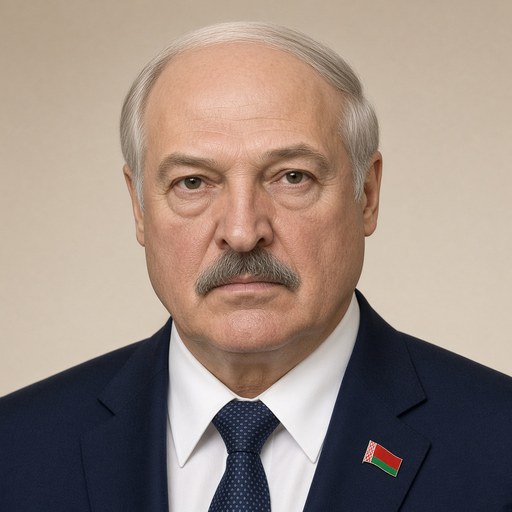
Speech at the 60th session of the United Nations General Assembly
 Alexander Lukashenko · President of Belarus
- Context
- Lukashenko addressed the 60th UN General Assembly in September 2005, criticizing US-led unipolarity and defending Belarusian sovereignty.
- Main themes
- Unipolar world order, US foreign policy criticism, UN reform and misuse, sovereignty and non-interference, Belarus national development, nuclear non-proliferation, democracy as political pretext, Iraq war, Afghanistan intervention, human rights selectivity, Russia-Belarus union, post-Soviet transformation
- Duration
- ~11 min
- Words
- 1,372
- Sentences
- 97
- Readability
- 62
- Grade
- 8.1
- Syntax
- 2.65
- Vocabulary
- 2.22
Translated from Russian
The broad sphere of national life a sentence belongs to. Every sentence has an Arena, so it is the denominator the other indices are read against.
Other97 sentences in 58 paragraphs
Dear Mr. Chairman!
Ladies and gentlemen!
A candid look at today’s world is what the leaders of our planet have gathered here for at the United Nations. We must together address the main question: are we leading our countries and humanity as a whole down the right path? We must answer this question for ourselves and for our peoples. Without this, we cannot emerge from the deadlock.
Fifteen years have passed since the collapse of my country, the USSR. This event completely changed the structure of the world. The Soviet Union, despite all the mistakes and failures of its leaders, was then a support and hope for many states and peoples. The Soviet Union provided balance to the global system.
Today, the world is unipolar. With all the ensuing consequences:
The flourishing Yugoslavia has been destroyed and disappeared from the map of Europe;
The long-suffering Afghanistan has turned into a hotspot of conflict and drug trafficking;
The bloody slaughter in Iraq continues to this day. The country has become a source of instability for a vast region;
Iran, North Korea, Colombia, Cuba, and other states have been put in the crosshairs.
Belarus is a country like most in this hall. Emerging from the ruins of the "Cold War," it has managed to become a knowledge-intensive, high-tech state with a ten-million strong, highly educated, and tolerant population. The UN has classified us as a developed country with a high level of human development.
We, like you, want little from the planet: peace and stability. The rest we will create ourselves, through our own labor.
In my country, there are no conflicts: different nations and ethnicities live together and peacefully, each practicing their own religion and way of life.
We do not create problems for our neighbors, we do not claim their territory, nor do we impose our choice of path on them.
We gave up our nuclear weapons, voluntarily renouncing the rights of a nuclear successor of the USSR.
Today, we are signing the International Convention for the Suppression of Acts of Nuclear Terrorism and declare that we have decided to join the Additional Protocol to the guarantees related to the Treaty on the Non-Proliferation of Nuclear Weapons.
We have created a strong and successful union with our close ally, Russia.
We are building our country with our own minds, based on our traditions.
But we see: it is precisely this choice of my people that is not liked by everyone. It is disliked by those who seek to govern a unipolar world.
And how to govern?
If there are no conflicts - create them.
If there are no pretexts for intervention - create virtual pretexts.
For this, a very convenient "flag" has been found - democracy and human rights. Moreover, not in the true sense of the power of the people and the dignity of individuals, but in the interpretation of the American leadership.
Has the world really become so black and white, deprived of the diversity of civilizations, the multicolored traditions and ways of life that respond to the aspirations of people?
Of course not! It is simply that this is not only a convenient pretext but also a lever for controlling other countries.
Unfortunately, the UN - our organization - allows itself to be used as an instrument of such politics. I speak of this with particular bitterness and pain as the President of a founding state of the UN, a state that sacrificed a third of its population in the Second World War for the freedom of itself, Europe, and the world.
The Human Rights Commission churns out resolutions on Belarus, Cuba, and other countries. They try to impose them on the UN General Assembly.
But does the UN not see the real troubles and disasters behind the contrived "problems"?.. Which no one, except the UN - the community of civilized nations - can resolve?
Let us look at the world as it is.
Just recently, we were shown maps and diagrams with weapons of mass destruction in Iraq in the neighboring hall. Where is this weapon?
It is absent. And Iraq is drenched in blood, torn apart, and its people are driven to the brink of despair. Terrorists threaten to use weapons of mass destruction against the cities of Europe and America.
Where is the open, independent, UN-monitored trial of the prisoners at Guantanamo? How many are there and who are they?
Who will protect the rights of the victims of torture in Abu Ghraib and punish all their tormentors without exception?
Under the pretext of fighting bin Laden, rockets and bombs have destroyed Afghanistan. Have they caught the "main terrorist" of the planet? Where is he?
Still at large, while the territories of Afghanistan and Iraq have begun to spawn international terrorists by the hundreds and thousands.
Foreign troops were introduced into independent Afghanistan, and as a result, drug production there has increased dozens and hundreds of times. Was this the reason for sending in troops?!
Today, Belarus, Tajikistan, Russia, and other post-Soviet states are literally overwhelmed by a wave of "traditional" drugs from Afghanistan and a counter-wave of previously unseen synthetic drugs from Europe.
The leaders of sovereign states - Yugoslavia and Iraq - have been thrown into prisons based on unverified absurd, fabricated accusations. It is more convenient to hide the truth about the destruction of their states this way.
The trial of Milosevic has long become a caricature. Saddam Hussein has been left at the mercy of the victor, as in the world of savages. Their rights have no one to protect, except the UN, because their states no longer exist; they have been destroyed.
They should be free and able to defend their rights, honor, and human dignity.
AIDS and other diseases are suffocating Africa and Asia.
Poverty and destitution have become a real, not a virtual weapon of mass destruction, and it is racially selective.
Who can put an end to this?
Who will demand that the powerful of this world cease their attacks on Cuba, Venezuela, and other states? These countries will determine for themselves how to live.
Human trafficking has become a thriving business. The sale of women and children into sexual slavery is a commonplace occurrence, almost a norm of life. Who will protect them and hold accountable the "consumers of live goods"?
How can we put an end to this shame of our civilization?
This is the brief and unflattering balance of the transition to a unipolar world order.
Was this the purpose for which the United Nations was created?
Perhaps it is time for the UN to put an end to internal corruption scandals and to truly address the pain and suffering of the world? The answer to this question, in our view, is crystal clear.
We cannot bury our heads in the sand like an ostrich.
The UN is us.
It is we who must take the fate of the planet into our own hands.
We must understand that a unipolar world is a one-dimensional world. Moreover, it is a one-dimensional world.
We must realize: the diversity of paths to progress is an enduring value of our civilization. Only it ensures stability in the world.
The freedom to choose a path of development is the main condition for a democratic world order. This is why our Organization was created.
I hope that the powerful of this world will understand this. After all, in the end, a unipolar world will turn against them. This was understood by the great U.S. presidents Woodrow Wilson and Franklin Roosevelt, who were at the origins of the League of Nations and the United Nations.
If we agree with each other on this main point, we will embody the principles of multipolarity, diversity, and freedom of choice in both real life and in the documents of our organization, which we must adhere to. We will protect the world from terrorism, and the weak, women, and children from slavery. We will take all the defenseless under our protection.
Then the UN will truly become an organization of united nations. This is the essence of UN reform, not merely an arithmetic increase in the members of the Security Council.
Thank you for your attention.
The original Russian. The tags above are read on the English translation's sentences.
Уважаемый господин Председатель!
Дамы и господа!
Честный взгляд на сегодняшний мир - это то, для чего здесь, в Организации Объединенных Наций, собрались лидеры государств нашей планеты. Мы должны вместе разобраться в главном: верной ли дорогой мы ведем свои страны и человечество в целом? На этот вопрос мы должны ответить себе и своим народам. Без этого нам не выйти из тупика.
Прошло 15 лет со времени распада моей страны - СССР. Это событие полностью изменило устройство мира. Советский Союз при всех ошибках и промахах его руководителей был тогда опорой и надеждой многих государств и народов. Советский Союз обеспечивал равновесие глобальной системы.
Сегодня мир однополярен. Со всеми вытекающими отсюда последствиями:
Разгромлена и исчезла с карты Европы цветущая Югославия;
Многострадальный Афганистан превратился в очаг конфликтов и наркотрафика;
Кровавая бойня в Ираке продолжается по сей день. Страна стала источником нестабильности огромного региона;
Взяты под оружейный прицел Иран, Северная Корея, Колумбия, Куба и другие государства.
Беларусь - страна, каких большинство в этом зале. Возникнув на обломках «холодной войны», ей удалось стать наукоемким, высокотехнологичным государством с десятимиллионным высокообразованным, толерантным народом. ООН отнесла нас к развитым странам с высоким уровнем человеческого развития.
Мы, как и вы, хотим от планеты немногого: мира и стабильности. Остальное мы создадим сами, своим трудом.
В моей стране нет конфликтов: вместе и мирно живут разные нации и народности, исповедуя каждая свою религию и уклад жизни.
Мы не создаем проблем соседям, не претендуем на их территорию, на их выбор пути.
Мы отдали свое ядерное оружие, добровольно отказавшись от прав ядерного наследника СССР.
Сегодня мы подписываем Международную конвенцию о борьбе с актами ядерного терроризма и заявляем, что приняли решение о присоединении к Дополнительному протоколу к гарантиям в связи с Договором о нераспространении ядерного оружия.
Мы создали прочный и успешный союз с близкой нам Россией.
Мы строим нашу страну своим умом, основываясь на своих традициях.
Но мы видим: именно этот выбор моего народа нравится не всем. Не нравится тем, кто стремится управлять однополярным миром.
И как управлять?
Если нет конфликтов - создать их.
Если нет предлогов для вмешательства - создать виртуальные предлоги.
Для этого найден очень удобный «флаг» - демократия и права человека. Причем не в подлинном значении власти народа и достоинства людей, а в трактовке американского руководства.
Разве мир стал таким черно-белым, обделенным многообразием цивилизаций, многоцветием традиций и укладов жизни, отвечающих чаяниям людей?
Конечно, нет! Просто в этом - не только удобный предлог, но и рычаг для управления другими странами.
К сожалению, ООН - наша с вами организация - позволяет использовать себя как инструмент такой политики. Говорю об этом с особой горечью и болью как Президент государства-учредителя ООН, государства, которое во Второй мировой войне за свободу свою, Европы и мира отдало жизни третьей части своего народа.
Комиссия по правам человека штампует резолюции по Беларуси, Кубе, другим странам. Пытаются навязывать их и Генеральной Ассамблее ООН.
Но неужели ООН за надуманными «проблемами» не видит настоящих бед и катастроф?.. Которые никто, кроме ООН - сообщества цивилизованных наций,- решить не сможет?
Посмотрим на мир как он есть.
Совсем недавно нам с вами в соседнем зале показывали карты и схемы с оружием массового уничтожения в Ираке. Где оно, это оружие?
Его нет. А Ирак залит кровью, растерзан, люди доведены до предела отчаяния. Террористы угрожают применением оружия массового уничтожения против городов Европы и Америки.
Где открытый, независимый, под наблюдением ООН судебный процесс над узниками Гуантанамо? Сколько их там и кто они?
Кто защитит права жертв пыток в Абу-Граиб и накажет всех без исключения их мучителей?
Под предлогом борьбы с бен Ладеном ракетами и бомбами разрушили Афганистан. Поймали «главного террориста» планеты? Где он?
По-прежнему на свободе, а территории Афганистана и Ирака стали порождать международных террористов сотнями и тысячами.
Ввели в независимый Афганистан иностранные войска, а в итоге производство наркотиков там возросло в десятки и сотни раз. Разве для этого вводили войска?!
Сегодня Беларусь, Таджикистан, Россию, другие постсоветские государства буквально захлестывает волна «традиционных» наркотиков из Афганистана и встречная волна невиданных ранее синтетических наркотиков из Европы.
Главы суверенных государств- Югославии и Ирака - по неподтвержденным абсурдным, надуманным обвинениям брошены в тюрьмы. Так удобнее спрятать правду об уничтожении их государств.
Суд над Милошевичем давно стал карикатурой. Саддам Хусейн вообще, как в мире дикарей, отдан на милость победителя. Их права некому защитить, кроме ООН, потому что их государств уже нет, они уничтожены.
Они должны быть на свободе и свободно защищать свои права, честь и человеческое достоинство.
СПИД, другие болезни душат Африку и Азию.
Бедность и нищета стали настоящим, а не виртуальным оружием массового уничтожения, причем расово избирательным.
Кто сможет положить этому конец?
Кто потребует от сильных мира сего прекратить нападки на Кубу, Венесуэлу и другие государства? Эти страны сами определят, как им жить.
Торговля людьми стала процветающим бизнесом. Продажа в сексуальное рабство женщин и детей - обыденное явление, едва ли не норма жизни. Кто защитит их и призовет к ответственности «потребителей живого товара»?
Как покончить с этим позором нашей цивилизации?
Таков краткий и неутешительный баланс перехода к однополярному устройству мира.
Разве для этого создавалась Организация Объединенных Наций?
Может быть, ООН уже пора покончить с внутренними коррупционными скандалами, заняться на деле болью и бедами мира? Ответ на этот вопрос, на наш взгляд, предельно ясен.
Нельзя прятать по-страусиному голову в песок.
ООН -это мы.
Именно мы с вами должны взять судьбу планеты в свои руки.
Мы с вами должны понять, что однополярный мир - это мир однолинейный. Более того- одномерный.
Мы с вами должны осознать: многообразие путей к прогрессу -непреходящая ценность нашей цивилизации. Только она обеспечивает стабильность в мире.
Свобода выбора пути развития - главное условие демократического устройства мира. Ради этого и создавалась наша Организация.
Надеюсь, это поймут и сильные мира сего. Ведь в конечном итоге однополярный мир обернется против них. Это осознавали великие президенты США Вудро Вильсон и Франклин Рузвельт, стоявшие у истоков Лиги Наций и Организации Объединенных Наций.
Если мы согласимся друг с другом в этом, главном, то мы воплотим принципы многополярности, многообразия, свободы выбора и в реальной жизни, и в документах нашей организации, которыми мы должны руководствоваться. Мы защитим мир от терроризма, а слабых, женщин и детей - от рабства. Мы возьмем под защиту всех беззащитных.
Тогда и ООН станет организацией по-настоящему объединенных наций. В этом - суть реформы ООН, а не в арифметическом увеличении членов Совета Безопасности.
Благодарю за внимание.